

Role of the intestinal microbiome and microbial-derived metabolites in immune checkpoint blockade immunotherapy of cancer
Open accessThe DOI matches its Crossref record; 70 of the 70 references it cites were found in a registry or an index.
Abstract
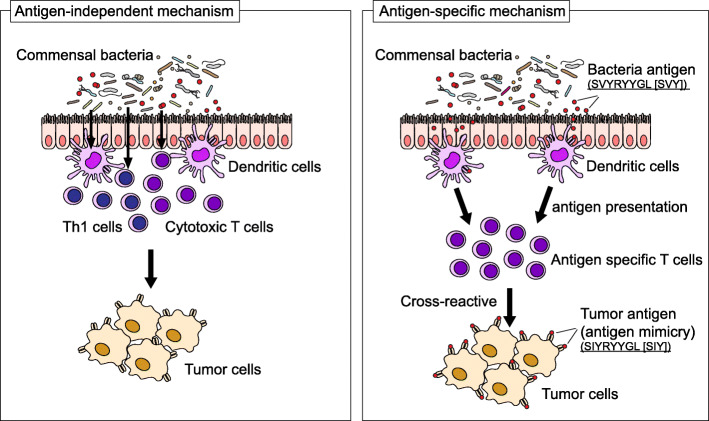
Immune checkpoint inhibitors (ICIs) are monoclonal antibodies that block immune inhibitory pathways. Administration of ICIs augments T cell-mediated immune responses against tumor, resulting in improved overall survival in cancer patients. It has emerged that the intestinal microbiome can modulate responses to ICIs via the host immune system and that the use of antibiotics can lead to reduced efficacy of ICIs. Recently, reports that fecal microbiota transplantation can lead to ICI therapy responses in patients previously refractory to therapy suggest that targeting the microbiome may be a viable strategy to reprogram the tumor microenvironment and augment ICI therapy. Intestinal microbial metabolites may also be linked to response rates to ICIs. In addition to response rates, certain toxicities that can arise during ICI therapy have also been found to be associated with the intestinal microbiome, including in particular colitis. A key mechanistic question is how certain microbes can enhance anti-tumor responses or, alternatively, predispose to ICI-associated colitis. Evidence has emerged that the intestinal microbiome can modulate outcomes to ICI therapies via two major mechanisms, including those that are antigen-specific and those that are antigen-independent. Antigen-specific mechanisms occur when epitopes are shared between microbial and tumor antigens that could enhance, or, alternatively, reduce anti-tumor immune responses via cross-reactive adaptive immune cells. Antigen-independent mechanisms include modulation of responses to ICIs by engaging innate and/or adaptive immune cells. To establish microbiome-based biomarkers of outcomes and specifically modulate the intestinal microbiome to enhance efficacy of ICIs in cancer immunotherapy, further prospective interventional studies will be required.
Overview
The claims and statistics of this paper haven’t been checked yet.
Free: it reads the open-access text and checks the first 5 claims that cite a source we can check. Create a free account to check every claim.
Integrity signals
Registry
Cites
Statistics
Figures
Verification
Claims the paper makes
The claims and statistics of this paper haven’t been checked yet.
Free: it reads the open-access text and checks the first 5 claims that cite a source we can check. Create a free account to check every claim.
Claims other papers make about this one
Each is checked against this paper’s own text: does it say what the citing paper says it does?
In the citing paper
“SCFAs, such as acetate, propionate, and butyrate, are products of microbial conversion of ingested dietary fiber and mucosal glycans and exert an impact on immune responses [73].”
From A Clinical Outcome of the Anti-PD-1 Therapy of Melanoma in Polish Patients Is Mediated by Population-Specific Gut Microbiome Composition (2022) · cites this paper as [73]
Self-check
Percentages, sums and reported differences re-computed from the paper’s own numbers.
The self-check needs the paper’s full text.
Citations
Cites
1 retracted
RETRACTED ARTICLE: Microbiome analyses of blood and tissues suggest cancer diagnostic approach
Poore, G. D., Kopylova, E., Zhu, Q., Carpenter, C., Fraraccio, S., Wandro, S., Kosciolek, T., Janssen, S., Metcalf, J., Song, S. J., et al. (2020) · Nature · doi:10.1038/s41586-020-2095-1 · Cited by 989 · cited 1×
“While sequencing center heterogeneity in technical and computational procedures are known to impact substantially on microbiome readouts [31, 32], this is primarily a challenge only when attempting to combine microbiome results from different groups and should not impact on single-center study results.”
BackgroundRetractedAdverse Renal Effects of Immune Checkpoint Inhibitors: A Narrative Review
Wanchoo, R., Karam, S., Uppal, N. N., Barta, V. S., Deray, G., Devoe, C., Launay-Vacher, V., Jhaveri, K. D., & on behalf of Cancer and Kidney International Network Workgroup on Immune Checkpoint Inhibitors (2017) · American Journal of Nephrology · doi:10.1159/000455014 · Cited by 15,256
Improved Survival with Ipilimumab in Patients with Metastatic Melanoma
Hodi, F. S., O'Day, S. J., McDermott, D. F., Weber, R. W., Sosman, J. A., Haanen, J. B., Gonzalez, R., Robert, C., Schadendorf, D., Hassel, J. C., et al. (2010) · New England Journal of Medicine · doi:10.1056/nejmoa1003466 · Cited by 15,155
Combined Nivolumab and Ipilimumab or Monotherapy in Untreated Melanoma
Larkin, J., Chiarion-Sileni, V., Gonzalez, R., Grob, J. J., Cowey, C. L., Lao, C. D., Schadendorf, D., Dummer, R., Smylie, M., Rutkowski, P., et al. (2015) · New England Journal of Medicine · doi:10.1056/nejmoa1504030 · Cited by 8,157
Safety and activity of anti-PD-L1 antibody in patients with advanced cancer
Brahmer, J. R., Tykodi, S. S., Chow, L. Q. M., Hwu, W.-J., Topalian, S. L., Hwu, P., Drake, C. G., Camacho, L. H., Kauh, J., Odunsi, K., et al. (2012) · New England Journal of Medicine · doi:10.1056/nejmoa1200694 · Cited by 7,945 · cited 1×
“treatments have been found to improve overall survival in patients with multiple cancer types [3, 5].”
BackgroundGut microbiome influences efficacy of PD-1-based immunotherapy against epithelial tumors
Routy, B., Le Chatelier, E., Derosa, L., Duong, C. P. M., Alou, M. T., Daillère, R., Fluckiger, A., Messaoudene, M., Rauber, C., Roberti, M. P., et al. (2018) · Science · doi:10.1126/science.aan3706 · Cited by 5,671
Gut microbiome modulates response to anti-PD-1 immunotherapy in melanoma patients
Gopalakrishnan, V., Spencer, C. N., Nezi, L., Reuben, A., Andrews, M. C., Karpinets, T. V., Prieto, P. A., Vicente, D., Hoffman, K., Wei, S. C., et al. (2018) · Science · doi:10.1126/science.aan4236 · Cited by 4,812 · cited 1×
“Ruminococcaceae family members in melanoma patients responding to anti-PD-1 antibody [26].”
BackgroundSelf-citationNivolumab plus Ipilimumab in Advanced Melanoma
Wolchok, J. D., Kluger, H., Callahan, M. K., Postow, M. A., Rizvi, N. A., Lesokhin, A. M., Segal, N. H., Ariyan, C. E., Gordon, R.-A., Reed, K., et al. (2013) · New England Journal of Medicine · doi:10.1056/nejmoa1302369 · Cited by 4,230
Interactions Between the Microbiota and the Immune System
Hooper, L. V., Littman, D. R., & Macpherson, A. J. (2012) · Science · doi:10.1126/science.1223490 · Cited by 4,173 · cited 1×
“The intestinal microbiome plays a particularly important role in shaping systemic immune responses [14, 15].”
BackgroundCommensal Bifidobacterium promotes antitumor immunity and facilitates anti–PD-L1 efficacy
Sivan, A., Corrales, L., Hubert, N., Williams, J. B., Aquino-Michaels, K., Earley, Z. M., Benyamin, F. W., Man Lei, Y., Jabri, B., Alegre, M.-L., et al. (2015) · Science · doi:10.1126/science.aac4255 · Cited by 3,888 · cited 1×
“Profiling of the intestinal bacterial composition of these mice using 16S ribosomal RNA (16S rRNA) analysis found that intestinal Bifidobacterium was associated with superior anti-tumor effects of antiPD-L1 antibody [25].”
BackgroundDuodenal Infusion of Donor Feces for Recurrent Clostridium difficile
van Nood, E., Vrieze, A., Nieuwdorp, M., Fuentes, S., Zoetendal, E. G., de Vos, W. M., Visser, C. E., Kuijper, E. J., Bartelsman, J. F. W. M., Tijssen, J. G. P., et al. (2013) · New England Journal of Medicine · doi:10.1056/nejmoa1205037 · Cited by 3,708 · cited 1×
“Evidence for potential benefits of reconstituting the intestinal microbiome of patients by introducing a FMT from a healthy donor has been well-demonstrated in randomized clinical studies of other types of colitis, including recurrent Clostridium difficile-associated colitis and inflammatory bowel disease [60, 61].”
BackgroundPD-1 Blockade with Nivolumab in Relapsed or Refractory Hodgkin's Lymphoma
Ansell, S. M., Lesokhin, A. M., Borrello, I., Halwani, A., Scott, E. C., Gutierrez, M., Schuster, S. J., Millenson, M. M., Cattry, D., Freeman, G. J., et al. (2015) · New England Journal of Medicine · doi:10.1056/nejmoa1411087 · Cited by 3,560
Anticancer immunotherapy by CTLA-4 blockade relies on the gut microbiota
Vétizou, M., Pitt, J. M., Daillère, R., Lepage, P., Waldschmitt, N., Flament, C., Rusakiewicz, S., Routy, B., Roberti, M. P., Duong, C. P. M., et al. (2015) · Science · doi:10.1126/science.aad1329 · Cited by 3,488
Intratumoral T Cells, Recurrence, and Survival in Epithelial Ovarian Cancer
Zhang, L., Conejo-Garcia, J. R., Katsaros, D., Gimotty, P. A., Massobrio, M., Regnani, G., Makrigiannakis, A., Gray, H., Schlienger, K., Liebman, M. N., et al. (2003) · New England Journal of Medicine · doi:10.1056/nejmoa020177 · Cited by 3,397
The commensal microbiome is associated with anti-PD-1 efficacy in metastatic melanoma patients
Matson, V., Fessler, J., Bao, R., Chongsuwat, T., Zha, Y., Alegre, M.-L., Luke, J. J., & Gajewski, T. F. (2018) · Science · doi:10.1126/science.aao3290 · Cited by 3,107
B cells and tertiary lymphoid structures promote immunotherapy response
Helmink, B. A., Reddy, S. M., Gao, J., Zhang, S., Basar, R., Thakur, R., Yizhak, K., Sade-Feldman, M., Blando, J., Han, G., et al. (2020) · Nature · doi:10.1038/s41586-019-1922-8 · Cited by 2,731 · cited 1×
“Recently, the potential role of B cells within tertiary lymphoid structures in the response to ICIs was also reported in patients with melanoma and renal cell carcinoma [30].”
BackgroundAdverse effects of immune-checkpoint inhibitors: epidemiology, management and surveillance
Martins, F., Sofiya, L., Sykiotis, G. P., Lamine, F., Maillard, M., Fraga, M., Shabafrouz, K., Ribi, C., Cairoli, A., Guex-Crosier, Y., et al. (2019) · Nature Reviews Clinical Oncology · doi:10.1038/s41571-019-0218-0 · Cited by 2,314 · cited 2×
“with resistance to development of ICI-associated colitis in a study of metastatic melanoma patients treated with anti-CTLA-4 antibody [59], a finding that was later reproduced by another study [8].”
BackgroundResultCommensal Bacteria Control Cancer Response to Therapy by Modulating the Tumor Microenvironment
Iida, N., Dzutsev, A., Stewart, C. A., Smith, L., Bouladoux, N., Weingarten, R. A., Molina, D. A., Salcedo, R., Back, T., Cramer, S., et al. (2013) · Science · doi:10.1126/science.1240527 · Cited by 2,251
Microbial tryptophan catabolites in health and disease
Roager, H. M., & Licht, T. R. (2018) · Nature Communications · doi:10.1038/s41467-018-05470-4 · Cited by 2,236 · cited 1×
“Most of dietary-derived tryptophan is taken up in the small intestine, but a fraction reaches the colon and is catabolized by the intestinal microbiome [51].”
BackgroundBenefits and limitations of genome-wide association studies
Tam, V., Patel, N., Turcotte, M., Bossé, Y., Paré, G., & Meyre, D. (2019) · Nature Reviews Genetics · doi:10.1038/s41576-019-0127-1 · Cited by 2,092
The Intestinal Microbiota Modulates the Anticancer Immune Effects of Cyclophosphamide
Viaud, S., Saccheri, F., Mignot, G., Yamazaki, T., Daillère, R., Hannani, D., Enot, D. P., Pfirschke, C., Engblom, C., Pittet, M. J., et al. (2013) · Science · doi:10.1126/science.1240537 · Cited by 2,050
Gut microbiota-derived metabolites as key actors in inflammatory bowel disease
Lavelle, A., & Sokol, H. (2020) · Nature Reviews Gastroenterology & Hepatology · doi:10.1038/s41575-019-0258-z · Cited by 2,015 · cited 2×
“They are protective in animal models of colitis and colitis-induced colorectal cancer, and can also exert antiproliferative effects on cancer cells [47].”
BackgroundCheckpoint blockade cancer immunotherapy targets tumour-specific mutant antigens
Gubin, M. M., Zhang, X., Schuster, H., Caron, E., Ward, J. P., Noguchi, T., Ivanova, Y., Hundal, J., Arthur, C. D., Krebber, W.-J., et al. (2014) · Nature · doi:10.1038/nature13988 · Cited by 1,974
Fecal microbiota transplant overcomes resistance to anti–PD-1 therapy in melanoma patients
Davar, D., Dzutsev, A. K., McCulloch, J. A., Rodrigues, R. R., Chauvin, J.-M., Morrison, R. M., Deblasio, R. N., Menna, C., Ding, Q., Pagliano, O., et al. (2021) · Science · doi:10.1126/science.abf3363 · Cited by 1,781 · cited 1×
“Two early single-arm clinical studies of FMT were found to potentially result in improved responses ICI therapy [38, 39].”
BackgroundFecal microbiota transplant promotes response in immunotherapy-refractory melanoma patients
Baruch, E. N., Youngster, I., Ben-Betzalel, G., Ortenberg, R., Lahat, A., Katz, L., Adler, K., Dick-Necula, D., Raskin, S., Bloch, N., et al. (2021) · Science · doi:10.1126/science.abb5920 · Cited by 1,757 · cited 2×
“A phase I clinical trial to assess the safety and feasibility of FMT and reinduction of anti-PD-1 antibody was performed in 10 patients with anti-PD-1-refractory metastatic melanoma [38].”
BackgroundMicrobiome-derived inosine modulates response to checkpoint inhibitor immunotherapy
Mager, L. F., Burkhard, R., Pett, N., Cooke, N. C. A., Brown, K., Ramay, H., Paik, S., Stagg, J., Groves, R. A., Gallo, M., et al. (2020) · Science · doi:10.1126/science.abc3421 · Cited by 1,407 · cited 1×
“identified a high abundance of the purine metabolite inosine in the serum and cecal contents of Bifidobacterium pseudolongum-monocolonized GF mice who exhibited enhanced anti-tumor responses by ICIs [54].”
BackgroundChaput, N., Lepage, P., Coutzac, C., Soularue, E., Le Roux, K., Monot, C., Boselli, L., Routier, E., Cassard, L., Collins, M., et al. (2017) · Annals of Oncology · doi:10.1093/annonc/mdx108 · Cited by 1,310
Metabolic Instruction of Immunity
Buck, M. D., Sowell, R. T., Kaech, S. M., & Pearce, E. L. (2017) · Cell · doi:10.1016/j.cell.2017.04.004 · Cited by 1,214
The Challenges of Tumor Mutational Burden as an Immunotherapy Biomarker
Jardim, D. L., Goodman, A., de Melo Gagliato, D., & Kurzrock, R. (2021) · Cancer Cell · doi:10.1016/j.ccell.2020.10.001 · Cited by 1,192
Clemente, C. G., Mihm, M. C., Bufalino, R., Zurrida, S., Collini, P., & Cascinelli, N. (1996) · Cancer · doi:10.1002/(sici)1097-0142(19960401)77:7<1303::aid-cncr12>3.0.co;2-5 · Cited by 1,171
A defined commensal consortium elicits CD8 T cells and anti-cancer immunity
Tanoue, T., Morita, S., Plichta, D. R., Skelly, A. N., Suda, W., Sugiura, Y., Narushima, S., Vlamakis, H., Motoo, I., Sugita, K., et al. (2019) · Nature · doi:10.1038/s41586-019-0878-z · Cited by 1,145 · cited 2×
“found that a consortium of 11 bacterial strains isolated from healthy human donor stool could robustly induce interferon-γ (IFNγ)-producing CD8 T cells in the intestine [29].”
BackgroundDubin, K., Callahan, M. K., Ren, B., Khanin, R., Viale, A., Ling, L., No, D., Gobourne, A., Littmann, E., Huttenhower, C., et al. (2016) · Nature Communications · doi:10.1038/ncomms10391 · Cited by 987 · cited 1×
“with resistance to development of ICI-associated colitis in a study of metastatic melanoma patients treated with anti-CTLA-4 antibody [59], a finding that was later reproduced by another study [8].”
ResultHarnessing innate immunity in cancer therapy
Demaria, O., Cornen, S., Daëron, M., Morel, Y., Medzhitov, R., & Vivier, E. (2019) · Nature · doi:10.1038/s41586-019-1593-5 · Cited by 957
Derosa, L., Hellmann, M. D., Spaziano, M., Halpenny, D., Fidelle, M., Rizvi, H., Long, N., Plodkowski, A. J., Arbour, K. C., Chaft, J. E., et al. (2018) · Annals of Oncology · doi:10.1093/annonc/mdy103 · Cited by 908
Management of immune checkpoint blockade dysimmune toxicities: a collaborative position paper
Champiat, S., Lambotte, O., Barreau, E., Belkhir, R., Berdelou, A., Carbonnel, F., Cauquil, C., Chanson, P., Collins, M., Durrbach, A., et al. (2016) · Annals of Oncology · doi:10.1093/annonc/mdv623 · Cited by 903
Daillère, R., Vétizou, M., Waldschmitt, N., Yamazaki, T., Isnard, C., Poirier-Colame, V., Duong, C. P. M., Flament, C., Lepage, P., Roberti, M. P., et al. (2016) · Immunity · doi:10.1016/j.immuni.2016.09.009 · Cited by 897
Towards standards for human fecal sample processing in metagenomic studies
Costea, P. I., Zeller, G., Sunagawa, S., Pelletier, E., Alberti, A., Levenez, F., Tramontano, M., Driessen, M., Hercog, R., Jung, F.-E., et al. (2017) · Nature Biotechnology · doi:10.1038/nbt.3960 · Cited by 893
Microbiota: a key orchestrator of cancer therapy
Roy, S., & Trinchieri, G. (2017) · Nature Reviews Cancer · doi:10.1038/nrc.2017.13 · Cited by 883 · cited 1×
“Previous microbiome studies have identified specific microbes that were associated with better anti-tumor T cell responses following cancer therapy [23].”
BackgroundTumor-infiltrating lymphocytes in the immunotherapy era
Paijens, S. T., Vledder, A., de Bruyn, M., & Nijman, H. W. (2021) · Cellular & Molecular Immunology · doi:10.1038/s41423-020-00565-9 · Cited by 880
Gros, A., Parkhurst, M. R., Tran, E., Pasetto, A., Robbins, P. F., Ilyas, S., Prickett, T. D., Gartner, J. J., Crystal, J. S., Roberts, I. M., et al. (2016) · Nature Medicine · doi:10.1038/nm.4051 · Cited by 829
The intestinal microbiota: Antibiotics, colonization resistance, and enteric pathogens
Kim, S., Covington, A., & Pamer, E. G. (2017) · Immunological Reviews · doi:10.1111/imr.12563 · Cited by 741 · cited 2×
“acetate, propionate, and butyrate [43].”
Fecal microbiota transplantation for refractory immune checkpoint inhibitor-associated colitis
Wang, Y., Wiesnoski, D. H., Helmink, B. A., Gopalakrishnan, V., Choi, K., DuPont, H. L., Jiang, Z.-D., Abu-Sbeih, H., Sanchez, C. A., Chang, C.-C., et al. (2018) · Nature Medicine · doi:10.1038/s41591-018-0238-9 · Cited by 740 · cited 1×
“In ICIassociated colitis, a case series of ICI-associated colitis treated with FMT has been reported [62].”
BackgroundSelf-citationFecal microbiota transplantation and emerging applications
Borody, T. J., & Khoruts, A. (2012) · Nature Reviews Gastroenterology & Hepatology · doi:10.1038/nrgastro.2011.244 · Cited by 677 · cited 1×
“Evidence for potential benefits of reconstituting the intestinal microbiome of patients by introducing a FMT from a healthy donor has been well-demonstrated in randomized clinical studies of other types of colitis, including recurrent Clostridium difficile-associated colitis and inflammatory bowel disease [60, 61].”
BackgroundNovel cancer immunotherapy agents with survival benefit: recent successes and next steps
Sharma, P., Wagner, K., Wolchok, J. D., & Allison, J. P. (2011) · Nature Reviews Cancer · doi:10.1038/nrc3153 · Cited by 642
Pinato, D. J., Howlett, S., Ottaviani, D., Urus, H., Patel, A., Mineo, T., Brock, C., Power, D., Hatcher, O., Falconer, A., et al. (2019) · JAMA Oncology · doi:10.1001/jamaoncol.2019.2785 · Cited by 626 · cited 2×
“Interestingly, while treatment with antibiotics prior to ICIs has been associated with reduced response rates to ICI therapies, antibiotics do not seem to impact on the frequency or severity of immunerelated adverse events [41].”
BackgroundSystemic short chain fatty acids limit antitumor effect of CTLA-4 blockade in hosts with cancer
Coutzac, C., Jouniaux, J.-M., Paci, A., Schmidt, J., Mallardo, D., Seck, A., Asvatourian, V., Cassard, L., Saulnier, P., Lacroix, L., et al. (2020) · Nature Communications · doi:10.1038/s41467-020-16079-x · Cited by 513 · cited 1×
“tions were associated with shorter progression-free survival in the Italian cohort (n = 45) [50].”
BackgroundIntestinal Commensal Microbes as Immune Modulators
Ivanov, I. I., & Honda, K. (2012) · Cell Host & Microbe · doi:10.1016/j.chom.2012.09.009 · Cited by 425
Cross-reactivity between tumor MHC class I–restricted antigens and an enterococcal bacteriophage
Fluckiger, A., Daillère, R., Sassi, M., Sixt, B. S., Liu, P., Loos, F., Richard, C., Rabu, C., Alou, M. T., Goubet, A.-G., et al. (2020) · Science · doi:10.1126/science.aax0701 · Cited by 396
Nomura, M., Nagatomo, R., Doi, K., Shimizu, J., Baba, K., Saito, T., Matsumoto, S., Inoue, K., & Muto, M. (2020) · JAMA Network Open · doi:10.1001/jamanetworkopen.2020.2895 · Cited by 396 · cited 1×
“examined fecal and plasma levels of SCFAs in patients with solid tumors treated with anti-PD-1 antibody [48].”
BackgroundSi, W., Liang, H., Bugno, J., Xu, Q., Ding, X., Yang, K., Fu, Y., Weichselbaum, R. R., Zhao, X., & Wang, L. (2022) · Gut · doi:10.1136/gutjnl-2020-323426 · Cited by 321
Sato-Kaneko, F., Yao, S., Ahmadi, A., Zhang, S. S., Hosoya, T., Kaneda, M. M., Varner, J. A., Pu, M., Messer, K. S., Guiducci, C., et al. (2017) · JCI Insight · doi:10.1172/jci.insight.93397 · Cited by 280
Ogino, S., Nowak, J. A., Hamada, T., Milner, D. A., & Nishihara, R. (2019) · Annual Review of Pathology: Mechanisms of Disease · doi:10.1146/annurev-pathmechdis-012418-012818 · Cited by 252
Bifidobacterium can mitigate intestinal immunopathology in the context of CTLA-4 blockade
Wang, F., Yin, Q., Chen, L., & Davis, M. M. (2018) · Proceedings of the National Academy of Sciences · doi:10.1073/pnas.1712901115 · Cited by 223 · cited 1×
“In another murine study using dextran sulfate sodium for induction of colitis, it was shown that Bifidobacterium could largely rescue mice treated with ICIs from immunopathology while preserving anti-tumor effects [58].”
BackgroundMetabolomic adaptations and correlates of survival to immune checkpoint blockade
Li, H., Bullock, K., Gurjao, C., Braun, D., Shukla, S. A., Bossé, D., Lalani, A.-K. A., Gopal, S., Jin, C., Horak, C., et al. (2019) · Nature Communications · doi:10.1038/s41467-019-12361-9 · Cited by 218 · cited 1×
“reported that kynurenine, a product of tryptophan catabolism, was the most significantly upregulated serum metabolite in response to anti-PD-1 antibody and an increased serum kynurenine/tryptophan ratio was associated with worse overall survival in melanoma and renal cell carcinoma patients [52].”
BackgroundBotticelli, A., Vernocchi, P., Marini, F., Quagliariello, A., Cerbelli, B., Reddel, S., Del Chierico, F., Di Pietro, F., Giusti, R., Tomassini, A., et al. (2020) · Journal of Translational Medicine · doi:10.1186/s12967-020-02231-0 · Cited by 209 · cited 2×
“Fecal levels of organic compounds such as 2-pentanone (ketone) and tridecane were associated with early progression of tumor in 11 non-small lung cell carcinoma patients treated with anti-PD-1 antibody [49].”
BackgroundElkrief, A., El Raichani, L., Richard, C., Messaoudene, M., Belkaid, W., Malo, J., Belanger, K., Miller, W., Jamal, R., Letarte, N., et al. (2019) · OncoImmunology · doi:10.1080/2162402x.2019.1568812 · Cited by 208
Resumption of Immune Checkpoint Inhibitor Therapy After Immune-Mediated Colitis
Abu-Sbeih, H., Ali, F. S., Naqash, A. R., Owen, D. H., Patel, S., Otterson, G. A., Kendra, K., Ricciuti, B., Chiari, R., De Giglio, A., et al. (2019) · Journal of Clinical Oncology · doi:10.1200/jco.19.00320 · Cited by 199
Commensal bacteria stimulate antitumor responses via T cell cross-reactivity
Bessell, C. A., Isser, A., Havel, J. J., Lee, S., Bell, D. R., Hickey, J. W., Chaisawangwong, W., Glick Bieler, J., Srivastava, R., Kuo, F., et al. (2020) · JCI Insight · doi:10.1172/jci.insight.135597 · Cited by 184
Ahmed, J., Kumar, A., Parikh, K., Anwar, A., Knoll, B. M., Puccio, C., Chun, H., Fanucchi, M., & Lim, S. H. (2018) · OncoImmunology · doi:10.1080/2162402x.2018.1507670 · Cited by 171
Katz, S. C., Pillarisetty, V. G., Bamboat, Z. M., Shia, J., Hedvat, C. V., Gönen, M., Jarnagin, W. R., Fong, Y., Blumgart, L. H., D'Angelica, M. I., et al. (2009) · Annals of Surgical Oncology · doi:10.1245/s10434-009-0585-3 · Cited by 153
Donnelly, D. M., Bajaj, S., Yu, J.-H., Hsu, M. M., Balar, A. V., Pavlick, A. C., Weber, J. S., Osman, I., & Zhong, J. (2019) · Journal for ImmunoTherapy of Cancer · doi:10.1186/s40425-019-0699-5 · Cited by 112
Karayama, M., Masuda, J., Mori, K., Yasui, H., Hozumi, H., Suzuki, Y., Furuhashi, K., Fujisawa, T., Enomoto, N., Nakamura, Y., et al. (2021) · Clinical and Translational Oncology · doi:10.1007/s12094-020-02421-8 · Cited by 84
Tsikala-Vafea, M., Belani, N., Vieira, K., Khan, H., & Farmakiotis, D. (2021) · International Journal of Infectious Diseases · doi:10.1016/j.ijid.2021.03.063 · Cited by 75
Kocher, F., Amann, A., Zimmer, K., Geisler, S., Fuchs, D., Pichler, R., Wolf, D. G. F., Kurz, K., Seeber, A., & Pircher, A. (2021) · Translational Lung Cancer Research · doi:10.21037/tlcr-20-380 · Cited by 65
Pitt, J. M., Vétizou, M., Gomperts Boneca, I., Lepage, P., Chamaillard, M., & Zitvogel, L. (2017) · OncoImmunology · doi:10.1080/2162402x.2015.1132137 · Cited by 64
Impact of the gut microbiota on immune checkpoint inhibitor-associated toxicities
Pezo, R. C., Wong, M., & Martin, A. (2019) · Therapeutic Advances in Gastroenterology · doi:10.1177/1756284819870911 · Cited by 55
The intestinal microbiome influences checkpoint blockade
Sears, C. L., & Pardoll, D. M. (2018) · Nature Medicine · doi:10.1038/nm.4511 · Cited by 43
Prognostic impact of a tumor-infiltrating lymphocyte subtype in triple negative cancer of the breast
Jamiyan, T., Kuroda, H., Yamaguchi, R., Nakazato, Y., Noda, S., Onozaki, M., Abe, A., & Hayashi, M. (2020) · Breast Cancer · doi:10.1007/s12282-020-01084-1 · Cited by 39
Lamberti, G., Andrini, E., Sisi, M., Federico, A. D., & Ricciuti, B. (2020) · Future Oncology · doi:10.2217/fon-2020-0215 · Cited by 36
Chen, D.-L., Li, Q., & Tan, Q.-Y. (2021) · Journal of Thoracic Disease · doi:10.21037/jtd-20-1953 · Cited by 19
Cited by
Cullin, N., Azevedo Antunes, C., Straussman, R., Stein-Thoeringer, C. K., & Elinav, E. (2021) · Cancer Cell · doi:10.1016/j.ccell.2021.08.006 · Cited by 578
“For instance, high fecal SCFA levels have been associated with longer progression-free survival or increased antitumor responses, whereas high systemic levels were associated with poorer treatment responses (Hayase and Jenq, 2021).”
Backgroundγδ T cells: origin and fate, subsets, diseases and immunotherapy
Hu, Y., Hu, Q., Li, Y., Lu, L., Xiang, Z., Yin, Z., Kabelitz, D., & Wu, Y. (2023) · Signal Transduction and Targeted Therapy · doi:10.1038/s41392-023-01653-8 · Cited by 382
Drug-microbiota interactions: an emerging priority for precision medicine
Zhao, Q., Chen, Y., Huang, W., Zhou, H., & Zhang, W. (2023) · Signal Transduction and Targeted Therapy · doi:10.1038/s41392-023-01619-w · Cited by 268
Potential Role of the Gut Microbiome In Colorectal Cancer Progression
Kim, J., & Lee, H. K. (2022) · Frontiers in Immunology · doi:10.3389/fimmu.2021.807648 · Cited by 259
The coming decade in precision oncology: six riddles
Wahida, A., Buschhorn, L., Fröhling, S., Jost, P. J., Schneeweiss, A., Lichter, P., & Kurzrock, R. (2023) · Nature Reviews Cancer · doi:10.1038/s41568-022-00529-3 · Cited by 205
Metadata
- Authors
- Hayase, E., & Jenq, R. R.
- Affiliations
- The University of Texas MD Anderson Cancer Center (US)
- Corresponding author
- Jenq, Robert R.
- Venue
- Genome Medicine
- Published
- 2021-06-23
- Volume
- 13
- Issue
- 1
- Pages
- 107-107
- ISSN
- 1756-994X (ISSN-L)
- PMC
- PMC8220726
- OpenAlex
- W3173553906
- Cited by
- 145
- References
- 70
- Citations by year
- 2026: 21 · 2025: 20 · 2024: 33 · 2023: 33 · 2022: 31 · 2021: 7
- FWCI
- 3.15
- Type
- journal article
- Language
- en
- Open access
- gold
- doi.org
- Licence
- cc-by
- creativecommons.org/licenses/by/4.0 (tdm)
- creativecommons.org/licenses/by/4.0 (vor)
- Locations
- Genome Medicine (publishedVersion, cc-by)
- PubMed Central (publishedVersion, cc-by)
- PubMed (publishedVersion)
- DOAJ (DOAJ: Directory of Open Access Journals) (submittedVersion, cc-by-sa)
- Funders
- Cancer Prevention and Research Institute of Texas (RR160089)
- Foundation for the National Institutes of Health (R01HL124112 and P30CA016672)
- Topics
- Health Sciences › Medicine › Oncology › Cancer Immunotherapy and Biomarkers
- Life Sciences › Biochemistry, Genetics and Molecular Biology › Molecular Biology › Gut microbiota and health
- Life Sciences › Immunology and Microbiology › Immunology › Immunotherapy and Immune Responses
- Keywords
- gut microbiota, immune checkpoint inhibitors, cancer immunotherapy, microbial metabolites, fecal microbiota transplantation, tumor microenvironment, microbiome biomarkers, immune checkpoint blockade
- MeSH terms
- Gastrointestinal Microbiome, Antineoplastic Agents, Immunological, Host Microbial Interactions, Immune Checkpoint Inhibitors, Anti-Bacterial Agents, Antineoplastic Combined Chemotherapy Protocols, Colitis, Humans, Models, Biological, Neoplasms, Metabolomics, Metabolome, Dysbiosis
About these checks
Registry, retraction, Cites and statistics results are computed, not judged, with one exception: a printed reference that no index lists is read once by a model before it counts as a citation error. Claims are extracted by a model and kept only when their quote appears verbatim in the text; each cited source is then checked, with a model’s help, for whether it says what the claim relies on. Those verdicts can be wrong — read the claim’s quote and the cited source before relying on one.
Statistics and arithmetic are recomputed, not judged.
Confidence bands are shown only for fields calibrated on our annotated test set. None is calibrated yet, so no band is shown.
What counts as a claim ›How we measure confidence ›How we check this ›
Are you an author, or do you see a problem with this page? Request a review
Data sources
Bibliographic data: Semantic Scholar, OpenAlex, Crossref.
Contains information from the Semantic Scholar Academic Graph Datasets, made available under the ODC Attribution License (ODC-BY 1.0).
Semantic Scholar’s data is described in: Kinney, R., et al. (2023). The Semantic Scholar Open Data Platform. arXiv:2301.10140.
