

DeepGAMI: deep biologically guided auxiliary learning for multimodal integration and imputation to improve genotype-phenotype prediction
Open accessPublished version of a preprint
The DOI matches its Crossref record; 156 of the 156 references it cites were found in a registry or an index.
Abstract
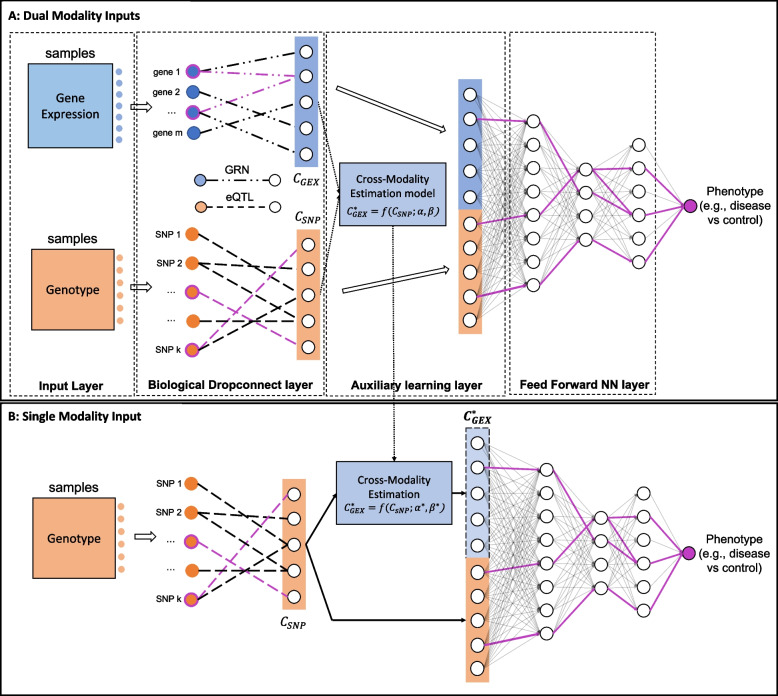
Background: Genotypes are strongly associated with disease phenotypes, particularly in brain disorders. However, the molecular and cellular mechanisms behind this association remain elusive. With emerging multimodal data for these mechanisms, machine learning methods can be applied for phenotype prediction at different scales, but due to the black-box nature of machine learning, integrating these modalities and interpreting biological mechanisms can be challenging. Additionally, the partial availability of these multimodal data presents a challenge in developing these predictive models. Method: To address these challenges, we developed DeepGAMI, an interpretable neural network model to improve genotype–phenotype prediction from multimodal data. DeepGAMI leverages functional genomic information, such as eQTLs and gene regulation, to guide neural network connections. Additionally, it includes an auxiliary learning layer for cross-modal imputation allowing the imputation of latent features of missing modalities and thus predicting phenotypes from a single modality. Finally, DeepGAMI uses integrated gradient to prioritize multimodal features for various phenotypes. Results: We applied DeepGAMI to several multimodal datasets including genotype and bulk and cell-type gene expression data in brain diseases, and gene expression and electrophysiology data of mouse neuronal cells. Using cross-validation and independent validation, DeepGAMI outperformed existing methods for classifying disease types, and cellular and clinical phenotypes, even using single modalities (e.g., AUC score of 0.79 for Schizophrenia and 0.73 for cognitive impairment in Alzheimer’s disease). Conclusion: We demonstrated that DeepGAMI improves phenotype prediction and prioritizes phenotypic features and networks in multiple multimodal datasets in complex brains and brain diseases. Also, it prioritized disease-associated variants, genes, and regulatory networks linked to different phenotypes, providing novel insights into the interpretation of gene regulatory mechanisms. DeepGAMI is open-source and available for general use.
Overview
The claims and statistics of this paper haven’t been checked yet.
Free: it reads the open-access text and checks the first 5 claims that cite a source we can check. Create a free account to check every claim.
Integrity signals
Registry
Cites
Statistics
Figures
Verification
Claims the paper makes
The claims and statistics of this paper haven’t been checked yet.
Free: it reads the open-access text and checks the first 5 claims that cite a source we can check. Create a free account to check every claim.
Claims other papers make about this one
Each is checked against this paper’s own text: does it say what the citing paper says it does?
In the citing paper
“Illustrative examples can be found in the study by Wan et al. (2013) and Chandrashekar et al. (2023), where a model trained with complete data is used to imputation for incomplete data.”
From A review of multimodal deep learning methods for genomic-enabled prediction in plant breeding (2024) · cites this paper as Chandrashekar et al. (2023)
Self-check
Percentages, sums and reported differences re-computed from the paper’s own numbers.
The self-check needs the paper’s full text.
Citations
Cites
Adam: A Method for Stochastic Optimization
Kingma, D. P., & Ba, J. (2014) · arXiv · doi:10.48550/arxiv.1412.6980 · Cited by 98,946
Scikit-learn: Machine Learning in Python
Pedregosa, F., Varoquaux, G., Gramfort, A., Michel, V., Thirion, B., Grisel, O., Blondel, M., Müller, A., Nothman, J., Louppe, G., et al. (2012) · arXiv · doi:10.48550/arxiv.1201.0490 · Cited by 71,016 · cited 1×
“Next, we applied StandardScaler() function from scikit-learn [87] for the two modalities separately which scales the data such that they have zero mean and unit variance.”
MethodPLINK: a tool set for whole-genome association and population-based linkage analyses.
Purcell, S., Neale, B., Todd-Brown, K., Thomas, L., Ferreira, M. A. R., Bender, D., Maller, J., Sklar, P., de Bakker, P. I. W., Daly, M. J., et al. (2007) · The American Journal of Human Genetics · doi:10.1086/519795 · Cited by 34,089 · cited 1×
“Thus, we calculated PRS for SCZ (binary trait) using three different methods: PLINK [140], LDpred2 [141], and PRSice [142] on our data.”
MethodSMOTE synthetic minority over-sampling technique
Chawla, N. V., Bowyer, K. W., Hall, L. O., & Kegelmeyer, W. P. (2002) · Journal of Artificial Intelligence Research · doi:10.1613/jair.953 · Cited by 32,865 · cited 1×
“…imbalance in the number of cells for each layer (L1: 262 cells; L2/3: 1097 cells; L4: 385 cells; L5: 1176 cells; L6: 734 cells), we applied SMOTE [121] oversampling technique on the training set to have a balanced number of cells for each layer in the training label and ended up with 941 cells…”
MethodMetascape provides a biologist-oriented resource for the analysis of systems-level datasets
Zhou, Y., Zhou, B., Pache, L., Chang, M., Khodabakhshi, A. H., Tanaseichuk, O., Benner, C., & Chanda, S. K. (2019) · Nature Communications · doi:10.1038/s41467-019-09234-6 · Cited by 14,611 · cited 2×
“We then perform enrichment analysis on these genes using Metascape [86].”
BackgroundMethodProceedings of the 24th international conference on Machine learning
(2007) · doi:10.1145/1273496 · Cited by 11,630
Finding the missing heritability of complex diseases
Manolio, T. A., Collins, F. S., Cox, N. J., Goldstein, D. B., Hindorff, L. A., Hunter, D. J., McCarthy, M. I., Ramos, E. M., Cardon, L. R., Chakravarti, A., et al. (2009) · Nature · doi:10.1038/nature08494 · Cited by 8,336
Biological insights from 108 schizophrenia-associated genetic loci
Schizophrenia Working Group of the Psychiatric Genomics Consortium (2014) · Nature · doi:10.1038/nature13595 · Cited by 7,577 · cited 1×
“Many genome-wide association studies (GWAS) determine the association of genetic variants with many heritable diseases [3, 4], including neurodegenerative and psychiatric diseases like Alzheimer’s disease (AD) [5–8] and schizophrenia (SCZ) [9, 10].”
BackgroundA systematic analysis of performance measures for classification tasks
Sokolova, M., & Lapalme, G. (2009) · Information Processing & Management · doi:10.1016/j.ipm.2009.03.002 · Cited by 7,515 · cited 1×
“Also, AUC works best in the binary classification setting and has inconsistencies in the multi-class problem [104, 105].”
BackgroundGenetic effects on gene expression across human tissues
GTEx Consortium (2017) · Nature · doi:10.1038/nature24277 · Cited by 4,036 · cited 3×
“We extracted 146,763 eQTLs from GTEx consortium [88] for the human brain frontal cortex (BA9), and used GRNs from the PsychENCODE consortium.”
MethodSystematic Localization of Common Disease-Associated Variation in Regulatory DNA
Maurano, M. T., Humbert, R., Rynes, E., Thurman, R. E., Haugen, E., Wang, H., Reynolds, A. P., Sandstrom, R., Qu, H., Brody, J., et al. (2012) · Science · doi:10.1126/science.1222794 · Cited by 3,716 · cited 1×
“For a mechanistic understanding from genotype to phenotype, several studies have shown that these variants influence disease risks by altering cell-type regulatory elements that affect the underlying gene expressions, which in-turn affect the disease phenotype [16, 17].”
BackgroundAlzheimer Disease Genetics Consortium (ADGC), Kunkle, B. W., The European Alzheimer’s Disease Initiative (EADI), Cohorts for Heart and Aging Research in Genomic Epidemiology Consortium (CHARGE), Genetic and Environmental Risk in AD/Defining Genetic, P. A. E. R. F. A. D. C. (., Grenier-Boley, B., Sims, R., Bis, J. C., Damotte, V., Naj, A. C., et al. (2019) · Nature Genetics · doi:10.1038/s41588-019-0358-2 · Cited by 2,946 · cited 1×
“Many genome-wide association studies (GWAS) determine the association of genetic variants with many heritable diseases [3, 4], including neurodegenerative and psychiatric diseases like Alzheimer’s disease (AD) [5–8] and schizophrenia (SCZ) [9, 10].”
BackgroundVõsa, U., Claringbould, A., Westra, H.-J., Bonder, M. J., Deelen, P., Zeng, B., Kirsten, H., Saha, A., Kreuzhuber, R., Yazar, S., et al. (2021) · Nature Genetics · doi:10.1038/s41588-021-00913-z · Cited by 2,607
Predicting effects of noncoding variants with deep learning–based sequence model
Zhou, J., & Troyanskaya, O. G. (2015) · Nature Methods · doi:10.1038/nmeth.3547 · Cited by 2,338 · cited 1×
“DeepWAS [35] predicted epigenomic functions of the genetic variants using DeepSEA [36] and then applied regression to predict the phenotype.”
MethodJansen, I. E., Savage, J. E., Watanabe, K., Bryois, J., Williams, D. M., Steinberg, S., Sealock, J., Karlsson, I. K., Hägg, S., Athanasiu, L., et al. (2019) · Nature Genetics · doi:10.1038/s41588-018-0311-9 · Cited by 2,277
A gene-based association method for mapping traits using reference transcriptome data
Gamazon, E. R., Wheeler, H. E., Shah, K. P., Mozaffari, S. V., Aquino-Michaels, K., Carroll, R. J., Eyler, A. E., Denny, J. C., GTEx Consortium, Nicolae, D. L., et al. (2015) · Nature Genetics · doi:10.1038/ng.3367 · Cited by 1,829 · cited 1×
“The effect of genetic variation on gene expression is first studied, and then these expression profiles are statistically associated with the traits [24–31].”
BackgroundThe personal and clinical utility of polygenic risk scores
Torkamani, A., Wineinger, N. E., & Topol, E. J. (2018) · Nature Reviews Genetics · doi:10.1038/s41576-018-0018-x · Cited by 1,623 · cited 1×
“Poly-genic Risk Scores (PRS) [14] is the widely used method that looks at the linear combined effect of several variants on the phenotype.”
MethodPRSice-2: Polygenic Risk Score software for biobank-scale data
Choi, S. W., & O'Reilly, P. F. (2019) · GigaScience · doi:10.1093/gigascience/giz082 · Cited by 1,532 · cited 1×
“Thus, we calculated PRS for SCZ (binary trait) using three different methods: PLINK [140], LDpred2 [141], and PRSice [142] on our data.”
MethodMulti-Omics Factor Analysis—a framework for unsupervised integration of multi-omics data sets
Argelaguet, R., Velten, B., Arnol, D., Dietrich, S., Zenz, T., Marioni, J. C., Buettner, F., Huber, W., & Stegle, O. (2018) · Molecular Systems Biology · doi:10.15252/msb.20178124 · Cited by 1,510 · cited 2×
“MOFA [56] uses Bayesian approach for cross-modality estimation by projecting the modalities onto a low-dimensional space.”
MethodReverse engineering of regulatory networks in human B cells
Basso, K., Margolin, A. A., Stolovitzky, G., Klein, U., Dalla-Favera, R., & Califano, A. (2005) · Nature Genetics · doi:10.1038/ng1532 · Cited by 1,404 · cited 1×
“They have proven helpful in mapping molecular interactions [38, 39] and biomarkers for brain diseases [40–42].”
BackgroundPolygenic risk scores: from research tools to clinical instruments
Lewis, C. M., & Vassos, E. (2020) · Genome Medicine · doi:10.1186/s13073-020-00742-5 · Cited by 1,360 · cited 2×
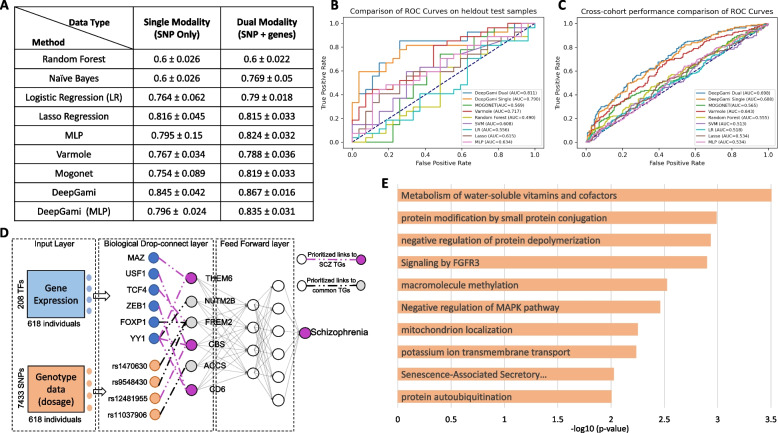
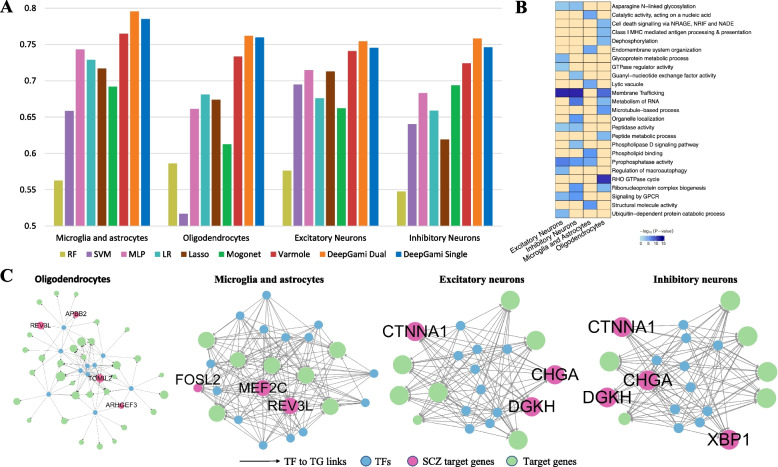
“As AUC is typically used for evaluating classification problems, out result show that DeepGAMI dual ( AUC = 0.895 ) and DeepGAMI single ( AUC = 0.867 ) perform better in comparison to the recently reported PRS score for SCZ ( AUC = 0.61 ) [76] and heritability of SCZ (0.8) [143].”
BackgroundResultInfluentialTrait-associated SNPs are more likely to be eQTLs: annotation to enhance discovery from GWAS
Nicolae, D. L., Gamazon, E., Zhang, W., Duan, S., Dolan, M. E., & Cox, N. J. (2010) · PLoS Genetics · doi:10.1371/journal.pgen.1000888 · Cited by 1,292 · cited 1×
“Many genome-wide association studies (GWAS) determine the association of genetic variants with many heritable diseases [3, 4], including neurodegenerative and psychiatric diseases like Alzheimer’s disease (AD) [5–8] and schizophrenia (SCZ) [9, 10].”
BackgroundCross-validation pitfalls when selecting and assessing regression and classification models
Krstajic, D., Buturovic, L. J., Leahy, D. E., & Thomas, S. (2014) · Journal of Cheminformatics · doi:10.1186/1758-2946-6-10 · Cited by 1,090 · cited 1×
“…cross-validation can be misleading when used for model selection, it can still be a useful technique for estimating the expected performance of the model on the test set and comparing results when the sample size is not large enough to split the data into separate train and test sets [138, 139].”
Hou, L., Kellis, M., Liu, Y., Park, Y., & Rinaldi, N. J. (2018) · DSpace@MIT (Massachusetts Institute of Technology) · doi:10.34944/dspace/4648 · Cited by 1,083
Oxidative stress in psychiatric disorders: evidence base and therapeutic implications
Ng, F., Berk, M., Dean, O., & Bush, A. I. (2008) · The International Journal of Neuropsychopharmacology · doi:10.1017/s1461145707008401 · Cited by 1,069
The neurodevelopmental model of schizophrenia: update 2005
Rapoport, J. L., Addington, A. M., Frangou, S., & Psych, M. R. C. (2005) · Molecular Psychiatry · doi:10.1038/sj.mp.4001642 · Cited by 993
Comprehensive functional genomic resource and integrative model for the human brain
Wang, D., Liu, S., Warrell, J., Won, H., Shi, X., Navarro, F. C. P., Clarke, D., Gu, M., Emani, P., Yang, Y. T., et al. (2018) · Science · doi:10.1126/science.aat8464 · Cited by 965 · cited 7×
“We extracted 146,763 eQTLs from GTEx consortium [88] for the human brain frontal cortex (BA9), and used GRNs from the PsychENCODE consortium [49].”
BackgroundMethodInfluentialSelf-citationOpportunities and challenges for transcriptome-wide association studies
Wainberg, M., Sinnott-Armstrong, N., Mancuso, N., Barbeira, A. N., Knowles, D. A., Golan, D., Ermel, R., Ruusalepp, A., Quertermous, T., Hao, K., et al. (2019) · Nature Genetics · doi:10.1038/s41588-019-0385-z · Cited by 917 · cited 1×
“A possible drawback in such association studies is that co-expressed gene patterns often lead to prioritizing non-causal genes [33].”
BackgroundMultimodal deep learning models for early detection of Alzheimer’s disease stage
Venugopalan, J., Tong, L., Hassanzadeh, H. R., & Wang, M. D. (2021) · Scientific Reports · doi:10.1038/s41598-020-74399-w · Cited by 732
LDpred2: better, faster, stronger
Privé, F., Arbel, J., & Vilhjálmsson, B. J. (2021) · Bioinformatics · doi:10.1093/bioinformatics/btaa1029 · Cited by 726
Regulatory element detection using correlation with expression
Bussemaker, H. J., Li, H., & Siggia, E. D. (2001) · Nature Genetics · doi:10.1038/84792 · Cited by 714 · cited 1×
“They have proven helpful in mapping molecular interactions [38, 39] and biomarkers for brain diseases [40–42].”
BackgroundLinking disease associations with regulatory information in the human genome
Schaub, M. A., Boyle, A. P., Kundaje, A., Batzoglou, S., & Snyder, M. (2012) · Genome Research · doi:10.1101/gr.136127.111 · Cited by 713 · cited 1×
“For a mechanistic understanding from genotype to phenotype, several studies have shown that these variants influence disease risks by altering cell-type regulatory elements that affect the underlying gene expressions, which in-turn affect the disease phenotype [16, 17].”
BackgroundWang, T., Shao, W., Huang, Z., Tang, H., Zhang, J., Ding, Z., & Huang, K. (2021) · Nature Communications · doi:10.1038/s41467-021-23774-w · Cited by 671 · cited 2×
“Recent advancements in graph learning have led to the use of graph neural networks (GNNs) for integrating multi-omics data and use relationships like MOGONET [51] and moGCN [52].”
BackgroundMethodCaptum: A unified and generic model interpretability library for PyTorch
Kokhlikyan, N., Miglani, V., Martin, M., Wang, E., Alsallakh, B., Reynolds, J., Melnikov, A., Kliushkina, N., Araya, C., Yan, S., et al. (2020) · arXiv · doi:10.48550/arxiv.2009.07896 · Cited by 658 · cited 1×
“IG is implemented using Captum [85] package in python. where i is the i th feature, x and x ′ are input and baseline, and ∂ F ( x ) ∂ x i is the gradient of F ( x ) along the i th feature.”
MethodExcitatory cortical neurons form fine-scale functional networks
Yoshimura, Y., Dantzker, J. L. M., & Callaway, E. M. (2005) · Nature · doi:10.1038/nature03252 · Cited by 613 · cited 2×
“Layer 4 is enriched with excitatory neurons and their activities [93, 124].”
BackgroundMethodA multi-omic atlas of the human frontal cortex for aging and Alzheimer’s disease research
De Jager, P. L., Ma, Y., McCabe, C., Xu, J., Vardarajan, B. N., Felsky, D., Klein, H.-U., White, C. C., Peters, M. A., Lodgson, B., et al. (2018) · Scientific Data · doi:10.1038/sdata.2018.142 · Cited by 598 · cited 4×
“Due to several factors (e.g., experimental costs, sample availability), multi-omics data will often be partially available for individuals [53], e.g., available genotypes versus limited gene expression, chromatin, or imaging data [54, 55].”
BackgroundMethodInfluentialCoon, K. D., Myers, A. J., Craig, D. W., Webster, J. A., Pearson, J. V., Lince, D. H., Zismann, V. L., Beach, T. G., Leung, D., Bryden, L., et al. (2007) · The Journal of Clinical Psychiatry · doi:10.4088/jcp.v68n0419 · Cited by 569 · cited 1×
“Many genome-wide association studies (GWAS) determine the association of genetic variants with many heritable diseases [3, 4], including neurodegenerative and psychiatric diseases like Alzheimer’s disease (AD) [5–8] and schizophrenia (SCZ) [9, 10].”
BackgroundGWAS on family history of Alzheimer’s disease
Marioni, R. E., Harris, S. E., Zhang, Q., McRae, A. F., Hagenaars, S. P., Hill, W. D., Davies, G., Ritchie, C. W., Gale, C. R., Starr, J. M., et al. (2018) · Translational Psychiatry · doi:10.1038/s41398-018-0150-6 · Cited by 564
Relations Between Two Sets of Variates
Hotelling, H. (1992) · Springer Series in Statistics · doi:10.1007/978-1-4612-4380-9_14 · Cited by 548
Revealing the architecture of gene regulation: the promise of eQTL studies
Gilad, Y., Rifkin, S. A., & Pritchard, J. K. (2008) · Trends in Genetics · doi:10.1016/j.tig.2008.06.001 · Cited by 544 · cited 1×
“Expression quantitative trait loci (eQTL) studies focus on associating genetic variants to gene expression instead of disease phenotypes [18–23].”
BackgroundIntegrated Morphoelectric and Transcriptomic Classification of Cortical GABAergic Cells
Gouwens, N. W., Sorensen, S. A., Baftizadeh, F., Budzillo, A., Lee, B. R., Jarsky, T., Alfiler, L., Baker, K., Barkan, E., Berry, K., et al. (2020) · Cell · doi:10.1016/j.cell.2020.09.057 · Cited by 538 · cited 4×
“Patch-seq dataset includes transcriptomics and electrophysiological (ephys) data for 4435 neuronal cells in mouse visual cortex [81].”
MethodInfluentialGusev, A., Mancuso, N., Won, H., Kousi, M., Finucane, H. K., Reshef, Y., Song, L., Safi, A., Schizophrenia Working Group of the Psychiatric Genomics Consortium, McCarroll, S., et al. (2018) · Nature Genetics · doi:10.1038/s41588-018-0092-1 · Cited by 491
Oxidative stress in schizophrenia: An integrated approach
Bitanihirwe, B. K. Y., & Woo, T.-U. W. (2011) · Neuroscience & Biobehavioral Reviews · doi:10.1016/j.neubiorev.2010.10.008 · Cited by 472
Sizing up human height variation
Visscher, P. M. (2008) · Nature Genetics · doi:10.1038/ng0508-489 · Cited by 460
Predicting alzheimer’s disease progression using multi-modal deep learning approach
Lee, G., Nho, K., Kang, B., Sohn, K.-A., Kim, D., Initiative, F. A. D. N., Weiner, M. W., Aisen, P., Petersen, R., Jack, C. R., et al. (2019) · Scientific Reports · doi:10.1038/s41598-018-37769-z · Cited by 406 · cited 1×
“Several studies have attempted to integrate multi-omics data for brain disease predictions like SCZ [43–45] and AD [46–48].”
BackgroundMultiVI: deep generative model for the integration of multi-modal data
Ashuach, T., Gabitto, M. I., Jordan, M. I., & Yosef, N. (2021) · doi:10.1101/2021.08.20.457057 · Cited by 385 · cited 1×
“(IV) Several methods focus on cross-modality estimation for single-cell multi-omics data (e.g., MOFA [56], MultiVI [78], Polarbear [79]) but not in the realm of disease types and clinical phenotypes.”
MethodThe determination of projection neuron identity in the developing cerebral cortex
Leone, D. P., Srinivasan, K., Chen, B., Alcamo, E., & McConnell, S. K. (2008) · Current Opinion in Neurobiology · doi:10.1016/j.conb.2008.05.006 · Cited by 382 · cited 1×
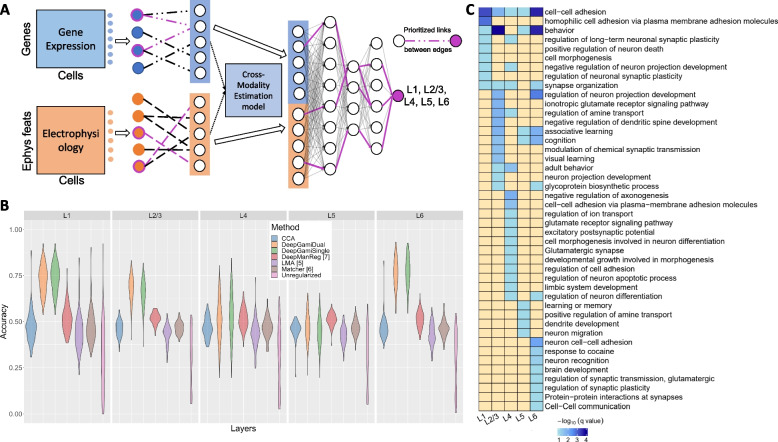
“Enriched terms like cell–cell adhesion and neuron projection development appear in all layers [123].”
BackgroundMorris, J. A. (2003) · Human Molecular Genetics · doi:10.1093/hmg/ddg162 · Cited by 376 · cited 1×
“5B) like organelle localization in inhibitory neurons [125], structural molecule activity in microglia and astrocytes [126], RHO GTPase cycle in oligodendrocytes [127], and regulation of macroautophagy in excitatory neurons [128].”
BackgroundApples-to-apples in cross-validation studies: pitfalls in classifier performance measurement
Forman, G., & Scholz, M. (2010) · ACM SIGKDD Explorations Newsletter · doi:10.1145/1882471.1882479 · Cited by 368 · cited 1×
“…cross-validation can be misleading when used for model selection, it can still be a useful technique for estimating the expected performance of the model on the test set and comparing results when the sample size is not large enough to split the data into separate train and test sets [138, 139].”
Akbarian, S., & Huang, H.-S. (2006) · Brain Research Reviews · doi:10.1016/j.brainresrev.2006.04.001 · Cited by 363
Sun, D., Wang, M., & Li, A. (2019) · IEEE/ACM Transactions on Computational Biology and Bioinformatics · doi:10.1109/tcbb.2018.2806438 · Cited by 338 · cited 1×
“For example, several studies have tried integrating copy number variations with DNA methylation [133], gene expression [134], and clinical data [135].”
BackgroundScaling and Benchmarking Self-Supervised Visual Representation Learning
Goyal, P., Mahajan, D., Gupta, A., & Misra, I. (2019) · 2019 IEEE/CVF International Conference on Computer Vision (ICCV) · doi:10.1109/iccv.2019.00649 · Cited by 330
Sieberts, S. K., Perumal, T. M., Carrasquillo, M. M., Allen, M., Reddy, J. S., Hoffman, G. E., Dang, K. K., Calley, J., Ebert, P. J., Eddy, J., et al. (2020) · Scientific Data · doi:10.1038/s41597-020-00642-8 · Cited by 318
Self-citationIntegrative Modeling Defines the Nova Splicing-Regulatory Network and Its Combinatorial Controls
Zhang, C., Frias, M. A., Mele, A., Ruggiu, M., Eom, T., Marney, C. B., Wang, H., Licatalosi, D. D., Fak, J. J., & Darnell, R. B. (2010) · Science · doi:10.1126/science.1191150 · Cited by 294 · cited 1×
“NOVA regulates genes critical for neuronal function [116] and known to affect patients with inhibitory motor control dysfunctions [117].”
BackgroundWen, X., Pique-Regi, R., & Luca, F. (2017) · PLOS Genetics · doi:10.1371/journal.pgen.1006646 · Cited by 264
Splicing Regulation in Neurologic Disease
Licatalosi, D. D., & Darnell, R. B. (2006) · Neuron · doi:10.1016/j.neuron.2006.09.017 · Cited by 255 · cited 1×
“NOVA regulates genes critical for neuronal function [116] and known to affect patients with inhibitory motor control dysfunctions [117].”
BackgroundChromatin accessibility dynamics in a model of human forebrain development
Trevino, A. E., Sinnott-Armstrong, N., Andersen, J., Yoon, S.-J., Huber, N., Pritchard, J. K., Chang, H. Y., Greenleaf, W. J., & Pașca, S. P. (2020) · Science · doi:10.1126/science.aay1645 · Cited by 251 · cited 1×
“Trevino et al. [136] integrated RNA-seq and ATAC-seq over a period of time, studying various genetic activities and disease susceptibility in various neuropsychiatric disorders.”
BackgroundOxidative Stress in Schizophrenia
Grabnar, I., Vovk, T., Kores Plesnicar, B., & Boskovic, M. (2011) · Current Neuropharmacology · doi:10.2174/157015911795596595 · Cited by 250
Reinforcement Learning with Unsupervised Auxiliary Tasks
Jaderberg, M., Mnih, V., Czarnecki, W. M., Schaul, T., Leibo, J. Z., Silver, D., & Kavukcuoglu, K. (2016) · arXiv (Cornell University) · doi:10.48550/arxiv.1611.05397 · Cited by 247 · cited 2×
“Auxiliary learning is a type of learning technique aimed at improving the generalization of the primary task by learning secondary tasks along with the primary task [60–63].”
BackgroundMethodThe genomic landscape of tuberous sclerosis complex
Martin, K. R., Zhou, W., Bowman, M. J., Shih, J., Au, K. S., Dittenhafer-Reed, K. E., Sisson, K. A., Koeman, J., Weisenberger, D. J., Cottingham, S. L., et al. (2017) · Nature Communications · doi:10.1038/ncomms15816 · Cited by 238 · cited 1×
“Due to several factors (e.g., experimental costs, sample availability), multi-omics data will often be partially available for individuals [53], e.g., available genotypes versus limited gene expression, chromatin, or imaging data [54, 55].”
BackgroundAge‐Related Sensory Impairments and Risk of Cognitive Impairment
Fischer, M. E., Cruickshanks, K. J., Schubert, C. R., Pinto, A. A., Carlsson, C. M., Klein, B. E. K., Klein, R., & Tweed, T. S. (2016) · Journal of the American Geriatrics Society · doi:10.1111/jgs.14308 · Cited by 233 · cited 1×
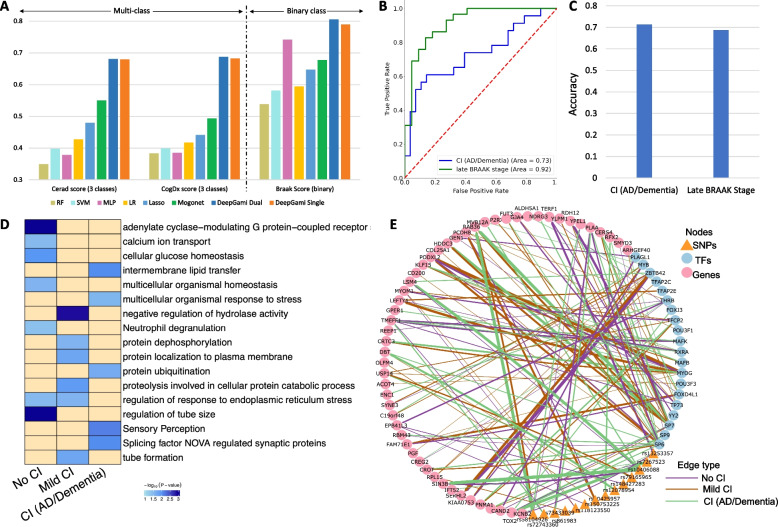
“Sensory perception impairment is known to affect cognition [113–115].”
BackgroundGenotype to phenotype: lessons from model organisms for human genetics
Lehner, B. (2013) · Nature Reviews Genetics · doi:10.1038/nrg3404 · Cited by 230
Label Distribution Learning on Auxiliary Label Space Graphs for Facial Expression Recognition
Chen, S., Wang, J., Chen, Y., Shi, Z., Geng, X., & Rui, Y. (2020) · 2020 IEEE/CVF Conference on Computer Vision and Pattern Recognition (CVPR) · doi:10.1109/cvpr42600.2020.01400 · Cited by 229 · cited 1×
“Auxiliary learning has been very successful in reinforcement learning [60, 66, 67], computer vision [62, 68, 69], and autonomous driving assistance [70, 71].”
BackgroundSelf-citationZhang, L., Lv, C., Jin, Y., Cheng, G., Fu, Y., Yuan, D., Tao, Y., Guo, Y., Ni, X., & Shi, T. (2018) · Frontiers in Genetics · doi:10.3389/fgene.2018.00477 · Cited by 203 · cited 1×
“For example, several studies have tried integrating copy number variations with DNA methylation [133], gene expression [134], and clinical data [135].”
BackgroundLayer 4 of mouse neocortex differs in cell types and circuit organization between sensory areas
Scala, F., Kobak, D., Shan, S., Bernaerts, Y., Laturnus, S., Cadwell, C. R., Hartmanis, L., Froudarakis, E., Castro, J. R., Tan, Z. H., et al. (2019) · Nature Communications · doi:10.1038/s41467-019-12058-z · Cited by 193 · cited 1×
“We extracted 112 (L4) neuronal cells patch-seq data [122] containing gene expression data but only a small set of electrophysiological data for independent testing.”
MethodAssociation of Sensory Impairments With Cognitive Decline and Depression Among Older Adults in China
Rong, H., Lai, X., Jing, R., Wang, X., Fang, H., & Mahmoudi, E. (2020) · JAMA Network Open · doi:10.1001/jamanetworkopen.2020.14186 · Cited by 175
Funk, A. J., McCullumsmith, R. E., Haroutunian, V. H., & Meador‐Woodruff, J. H. (2011) · Neuropsychopharmacology · doi:10.1038/npp.2011.267 · Cited by 174 · cited 1×
“We found several known functions and pathways related to SCZ, like signaling by FGFR3 [99, 100], negative regulation of MAPK pathway [101, 102], and senescence-associated secretory phenotype [103] (Fig.”
BackgroundMaking multi-omics data accessible to researchers
Conesa, A., & Beck, S. (2019) · Scientific Data · doi:10.1038/s41597-019-0258-4 · Cited by 173 · cited 1×
“Due to several factors (e.g., experimental costs, sample availability), multi-omics data will often be partially available for individuals [53], e.g., available genotypes versus limited gene expression, chromatin, or imaging data [54, 55].”
BackgroundscJoint integrates atlas-scale single-cell RNA-seq and ATAC-seq data with transfer learning
Lin, Y., Wu, T.-Y., Wan, S., Yang, J. Y. H., Wong, W. H., & Wang, Y. X. R. (2022) · Nature Biotechnology · doi:10.1038/s41587-021-01161-6 · Cited by 166 · cited 1×
“…uses a masking procedure to learn a joint representation of cells sequenced across technologies and the distribution of missing modalities. scJoint [59] integrates scRNA-seq and scATAC-seq data using cell-type label information from scRNA-seq through transfer learning and embedding the annotated…”
MethodBABEL enables cross-modality translation between multiomic profiles at single-cell resolution
Wu, K. E., Yost, K. E., Chang, H. Y., & Zou, J. (2021) · Proceedings of the National Academy of Sciences · doi:10.1073/pnas.2023070118 · Cited by 165 · cited 1×
“BABEL [57] trains a joint autoencoder on paired multimodal data to impute one modality from another by minimizing a reconstruction and cross-modality loss. scVAEIT [58] proposed a method for mosaic integration that uses a masking procedure to learn a joint representation of cells sequenced across…”
MethodLi, X., Ma, J., Leng, L., Han, M., Li, M., He, F., & Zhu, Y. (2022) · Frontiers in Genetics · doi:10.3389/fgene.2022.806842 · Cited by 158 · cited 1×
“Recent advancements in graph learning have led to the use of graph neural networks (GNNs) for integrating multi-omics data and use relationships like MOGONET [51] and moGCN [52].”
BackgroundIkeda, M., Takahashi, A., Kamatani, Y., Momozawa, Y., Saito, T., Kondo, K., Shimasaki, A., Kawase, K., Sakusabe, T., Iwayama, Y., et al. (2019) · Schizophrenia Bulletin · doi:10.1093/schbul/sby140 · Cited by 148 · cited 1×
“Many genome-wide association studies (GWAS) determine the association of genetic variants with many heritable diseases [3, 4], including neurodegenerative and psychiatric diseases like Alzheimer’s disease (AD) [5–8] and schizophrenia (SCZ) [9, 10].”
BackgroundAzam, S., Haque, M. E., Jakaria, M., Jo, S.-H., Kim, I., & Choi, D. (2020) · Cells · doi:10.3390/cells9020506 · Cited by 146 · cited 1×
“For example, controls were enriched for adenylate cyclase-modulating G protein-coupled receptors that are known to have a role in the pathological prognosis of AD [106, 107].”
BackgroundWelch, J. D., Hartemink, A. J., & Prins, J. F. (2017) · Genome Biology · doi:10.1186/s13059-017-1269-0 · Cited by 140
Caveats and pitfalls of ROC analysis in clinical microarray research (and how to avoid them)
Berrar, D., & Flach, P. (2012) · Briefings in Bioinformatics · doi:10.1093/bib/bbr008 · Cited by 136 · cited 1×
“Also, AUC works best in the binary classification setting and has inconsistencies in the multi-class problem [104, 105].”
BackgroundPrediction of Alzheimer’s disease using blood gene expression data
Lee, T., & Lee, H. (2020) · Scientific Reports · doi:10.1038/s41598-020-60595-1 · Cited by 136 · cited 1×
“For example, one study collected gene expression profiles from three publicly available AD datasets to predict the onset of AD disease using a variational autoencoder [34].”
BackgroundZhang, Y., Tang, H., & Jia, K. (2018) · Lecture notes in computer science · doi:10.1007/978-3-030-01237-3_15 · Cited by 127
Zhao, L., Dong, Q., Luo, C., Wu, Y., Bu, D., Qi, X., Luo, Y., & Zhao, Y. (2021) · Computational and Structural Biotechnology Journal · doi:10.1016/j.csbj.2021.04.067 · Cited by 127 · cited 1×
“Several studies have attempted to integrate multi-omics data for brain disease predictions like SCZ [43–45] and AD [46–48].”
BackgroundWu, J., Zhao, Z., Kumar, A., Lipinski, M. M., Loane, D. J., Stoica, B. A., & Faden, A. I. (2016) · Journal of Neurotrauma · doi:10.1089/neu.2015.4348 · Cited by 124
Polygenic scores: prediction versus explanation
Plomin, R., & von Stumm, S. (2022) · Molecular Psychiatry · doi:10.1038/s41380-021-01348-y · Cited by 121 · cited 1×
“They are mostly linear models that cannot tackle genomic variants’ nonlinear effects and involve association studies that predict the correlation between genotype and phenotype but cannot explain how the inherited mutations are associated with the phenotype [76, 77].”
BackgroundFibroblast Growth Factor Signalling in the Diseased Nervous System
Klimaschewski, L., & Claus, P. (2021) · Molecular Neurobiology · doi:10.1007/s12035-021-02367-0 · Cited by 120 · cited 1×
“We found several known functions and pathways related to SCZ, like signaling by FGFR3 [99, 100], negative regulation of MAPK pathway [101, 102], and senescence-associated secretory phenotype [103] (Fig.”
BackgroundGenome-wide association studies: the key to unlocking neurodegeneration?
Gandhi, S., & Wood, N. W. (2010) · Nature Neuroscience · doi:10.1038/nn.2584 · Cited by 114 · cited 1×
“Finally, the SNPs having small effect sizes go undetected as they do not meet the threshold criteria of the existing studies [11].”
BackgroundIdentifying gene regulatory networks in schizophrenia
Potkin, S. G., Macciardi, F., Guffanti, G., Fallon, J. H., Wang, Q., Turner, J. A., Lakatos, A., Miles, M. F., Lander, A., Vawter, M. P., et al. (2010) · NeuroImage · doi:10.1016/j.neuroimage.2010.06.036 · Cited by 113 · cited 1×
“They have proven helpful in mapping molecular interactions [38, 39] and biomarkers for brain diseases [40–42].”
BackgroundMulti-Head Attention for Speech Emotion Recognition with Auxiliary Learning of Gender Recognition
Nediyanchath, A., Paramasivam, P., & Yenigalla, P. (2020) · IEEE International Conference on Acoustics Speech and Signal Processing · doi:10.1109/icassp40776.2020.9054073 · Cited by 109 · cited 1×
“Auxiliary learning has been very successful in reinforcement learning [60, 66, 67], computer vision [62, 68, 69], and autonomous driving assistance [70, 71].”
BackgroundG Protein-Coupled Receptors (GPCRs) in Alzheimer’s Disease: A Focus on BACE1 Related GPCRs
Zhao, J., Deng, Y., Jiang, Z., & Qing, H. (2016) · Frontiers in Aging Neuroscience · doi:10.3389/fnagi.2016.00058 · Cited by 107 · cited 1×
“For example, controls were enriched for adenylate cyclase-modulating G protein-coupled receptors that are known to have a role in the pathological prognosis of AD [106, 107].”
BackgroundRole of endoplasmic reticulum Ca2+ signaling in the pathogenesis of Alzheimer disease
Popugaeva, E., & Bezprozvanny, I. (2013) · Frontiers in Molecular Neuroscience · doi:10.3389/fnmol.2013.00029 · Cited by 106 · cited 1×
“Mild CI was associated with protein dephosphorylation [108], response to endoplasmic reticulum stress [109–111] and proteolysis in cellular protein catabolic process [112].”
BackgroundGardiner, E. J., Cairns, M. J., Liu, B., Beveridge, N. J., Carr, V., Kelly, B., Scott, R. J., & Tooney, P. A. (2013) · Journal of Psychiatric Research · doi:10.1016/j.jpsychires.2012.11.007 · Cited by 103 · cited 2×
“E Function and pathway enrichments of prioritized schizophrenia SNPs to immune system which in turn is associated with SCZ [97].”
BackgroundMethodBayesian estimation of cell type–specific gene expression with prior derived from single-cell data
Wang, J., Roeder, K., & Devlin, B. (2021) · Genome Research · doi:10.1101/gr.268722.120 · Cited by 102 · cited 2×
“Notably, we used genotype and cell-type-specific gene expression imputed using bMIND [89] from a reference panel of four cell types: GABAergic (i.e., inhibitory) neurons, glutamatergic (i.e., excitatory) neurons, oligodendrocytes, and a remaining group composed mainly of microglia and astrocytes.”
MethodSelf-citationReese, L. C., Laezza, F., Woltjer, R., & Taglialatela, G. (2011) · Journal of Neurochemistry · doi:10.1111/j.1471-4159.2011.07447.x · Cited by 101 · cited 1×
“Mild CI was associated with protein dephosphorylation [108], response to endoplasmic reticulum stress [109–111] and proteolysis in cellular protein catabolic process [112].”
BackgroundSchubert, K. O., Föcking, M., Prehn, J. H. M., & Cotter, D. (2011) · Molecular Psychiatry · doi:10.1038/mp.2011.123 · Cited by 99 · cited 1×
“We also found common SCZ-associated functional pathways across cell types like asparagine N-linked glycosylation [129, 130], membrane trafficking [131], and signaling by GPCR [132].”
Zeng, B., Bendl, J., Kosoy, R., Fullard, J. F., Hoffman, G. E., & Roussos, P. (2022) · Nature Genetics · doi:10.1038/s41588-021-00987-9 · Cited by 96
Self-citationSex Differences in the Human Brain Transcriptome of Cases With Schizophrenia
Hoffman, G. E., Ma, Y., Montgomery, K. S., Bendl, J. M., Jaiswal, M. K., Kozlenkov, A., Peters, M. A., Dracheva, S. M., Fullard, J. F., Chess, A. J., et al. (2020) · Biological Psychiatry · doi:10.1016/j.biopsych.2021.03.020 · Cited by 92
Self-citationModeling the time-course of Alzheimer dementia
Ashford, J. W., & Schmitt, F. A. (2001) · Current Psychiatry Reports · doi:10.1007/s11920-001-0067-1 · Cited by 90
Cabral, C., Kambeitz-Ilankovic, L., Kambeitz, J., Calhoun, V. D., Dwyer, D. B., von Saldern, S., Urquijo, M. F., Falkai, P., & Koutsouleris, N. (2016) · Schizophrenia Bulletin · doi:10.1093/schbul/sbw053 · Cited by 87 · cited 1×
“Several studies have attempted to integrate multi-omics data for brain disease predictions like SCZ [43–45] and AD [46–48].”
BackgroundFibroblast Growth Factors in Schizophrenia
van Scheltinga, A. F. T., Bakker, S. C., & Kahn, R. S. (2009) · Schizophrenia Bulletin · doi:10.1093/schbul/sbp033 · Cited by 85 · cited 1×
“We found several known functions and pathways related to SCZ, like signaling by FGFR3 [99, 100], negative regulation of MAPK pathway [101, 102], and senescence-associated secretory phenotype [103] (Fig.”
BackgroundNovel Therapeutic GPCRs for Psychiatric Disorders
Komatsu, H. (2015) · International Journal of Molecular Sciences · doi:10.3390/ijms160614109 · Cited by 83
Implications of Newly Identified Brain eQTL Genes and Their Interactors in Schizophrenia
Cai, L., Huang, T., Su, J., Zhang, X., Chen, W., Zhang, F., He, L., & Chou, K. (2018) · Molecular Therapy — Nucleic Acids · doi:10.1016/j.omtn.2018.05.026 · Cited by 82
N-Glycosylation of GABAA Receptor Subunits is Altered in Schizophrenia
Mueller, T., Haroutunian, V. H., & Meador‐Woodruff, J. H. (2013) · Neuropsychopharmacology · doi:10.1038/npp.2013.190 · Cited by 81 · cited 1×
“We also found common SCZ-associated functional pathways across cell types like asparagine N-linked glycosylation [129, 130], membrane trafficking [131], and signaling by GPCR [132].”
BackgroundZhang, Y., Quick, C., Yu, K., Barbeira, A., Luca, F., Piqué-Regi, R., Im, H. K., & Wen, X. (2020) · Genome biology · doi:10.1186/s13059-020-02026-y · Cited by 80
Hellard, S. L., Mühleisen, T. W., Djurovic, S., Fernø, J., Ouriaghi, Z., Mattheisen, M., Vasilescu, C., Raeder, M. B., Hansen, T. F., Strohmaier, J., et al. (2008) · Molecular Psychiatry · doi:10.1038/mp.2008.110 · Cited by 78
DeepDiff: DEEP-learning for predicting DIFFerential gene expression from histone modifications
Sekhon, A., Singh, R., & Qi, Y. (2018) · Bioinformatics · doi:10.1093/bioinformatics/bty612 · Cited by 77 · cited 1×
“Similarly, DeepDiff [75] predicts cell-type-specific differential gene expression from epigenetics by using cell-type gene expression predictions as auxiliary tasks.”
BackgroundArloth, J., Eraslan, G., Andlauer, T. F. M., Martins, J., Iurato, S., Kühnel, B., Waldenberger, M., Frank, J., Gold, R., Hemmer, B., et al. (2020) · PLOS Computational Biology · doi:10.1371/journal.pcbi.1007616 · Cited by 74 · cited 1×
“DeepWAS [35] predicted epigenomic functions of the genetic variants using DeepSEA [36] and then applied regression to predict the phenotype.”
MethodAberrant glycosylation in schizophrenia: a review of 25 years of post-mortem brain studies
Williams, S., Mealer, R. G., Scolnick, E. M., Smoller, J. W., & Cummings, R. D. (2020) · Molecular Psychiatry · doi:10.1038/s41380-020-0761-1 · Cited by 74 · cited 1×
“We also found common SCZ-associated functional pathways across cell types like asparagine N-linked glycosylation [129, 130], membrane trafficking [131], and signaling by GPCR [132].”
BackgroundBoczek, T., Mackiewicz, J., Sobolczyk, M., Wawrzyniak, J., Lisek, M., Ferenc, B., Guo, F., & Żylińska, L. (2021) · Cells · doi:10.3390/cells10051228 · Cited by 70
Wang, H., Nie, F., Huang, H., Yan, J., Kim, S., Nho, K., Risacher, S. L., Saykin, A. J., Shen, L., & Initiative, F. T. A. D. N. (2012) · Bioinformatics · doi:10.1093/bioinformatics/bts411 · Cited by 69 · cited 2×
“Most of these attempts involve regression [12, 13].”
MethodTang, S., Buchman, A. S., Jager, P. L. D., Bennett, D. A., Epstein, M. P., & Yang, J. (2021) · PLoS Genetics · doi:10.1371/journal.pgen.1009482 · Cited by 69
Barbeira, A. N., Dickinson, S. P., Bonazzola, R., Zheng, J., Wheeler, H. E., Torres, J. M., Torstenson, E. S., Shah, K. P., Garcia, T., Edwards, T. L., et al. (2018) · Nature Communications · doi:10.1038/s41467-018-03621-1 · Cited by 69
Khibnik, L. A., Cho, K. K. A., & Bear, M. F. (2010) · Neuron · doi:10.1016/j.neuron.2010.04.012 · Cited by 68 · cited 1×
“Layer 4 is enriched with excitatory neurons and their activities [93, 124].”
BackgroundRule-injection hints as a means of improving network performance and learning time
Suddarth, S. C., & Kergosien, Y. L. (1990) · Lecture notes in computer science · doi:10.1007/3-540-52255-7_33 · Cited by 68 · cited 1×
“…task is a subtask to be trained along with the primary task where the features are shared between the tasks resulting in additional relevant feature extraction useful for the primary task, and thus is usually defined in terms of estimating entities relevant to solving the primary task [64].”
BackgroundFunctional analysis of schizophrenia genes using GeneAnalytics program and integrated databases
Sundararajan, T., Manzardo, A. M., & Butler, M. G. (2017) · Gene · doi:10.1016/j.gene.2017.10.035 · Cited by 59 · cited 1×
“Our model was able to prioritize SCZ-related genes like CBS [94, 95], THEM6 [96], and CD6 [97, 98] among others shown as pink circles in Fig.”
MethodLiang, S., Li, Y., Zhang, Z., Kong, X., Wang, Q., Deng, W., Li, X., Zhao, L., Li, M., Meng, Y., et al. (2018) · Schizophrenia Bulletin · doi:10.1093/schbul/sby091 · Cited by 58
Tong, L., Wu, H., & Wang, M. D. (2021) · Methods · doi:10.1016/j.ymeth.2020.07.008 · Cited by 56 · cited 1×
“For example, several studies have tried integrating copy number variations with DNA methylation [133], gene expression [134], and clinical data [135].”
BackgroundYang, T., Wang, J., Sun, Q., Hibar, D. P., Jahanshad, N., Liu, L., Wang, Y., Zhan, L., Thompson, P. M., & Ye, J. (2015) · IEEE International Symposium on Biomedical Imaging (ISBI) · doi:10.1109/isbi.2015.7164036 · Cited by 55 · cited 2×
“Most of these attempts involve regression [12, 13].”
MethodSelf-citationMicrobiome-based disease prediction with multimodal variational information bottlenecks
Grazioli, F., Siarheyeu, R., Alqassem, I., Henschel, A., Pileggi, G., & Meiser, A. (2022) · PLoS Computational Biology · doi:10.1371/journal.pcbi.1010050 · Cited by 53 · cited 1×
“MVIB [137] integrated gut microbial markers and abundance scores to classify various diseases.”
BackgroundMechanisms and therapeutic significance of autophagy modulation by antipsychotic drugs
Vucicevic, L. M., Misirkic-Marjanovic, M., Harhaji-Trajkovic, L. M., Marić, N. P., & Trajković, V. (2018) · Cell Stress · doi:10.15698/cst2018.11.161 · Cited by 50 · cited 1×
“5B) like organelle localization in inhibitory neurons [125], structural molecule activity in microglia and astrocytes [126], RHO GTPase cycle in oligodendrocytes [127], and regulation of macroautophagy in excitatory neurons [128].”
BackgroundDiverse proteins aggregate in mild cognitive impairment and Alzheimer’s disease brain
Kepchia, D., Huang, L., Dargusch, R., Rissman, R. A., Shokhirev, M. N., Fischer, W., & Schubert, D. (2020) · Alzheimer's Research & Therapy · doi:10.1186/s13195-020-00641-2 · Cited by 48 · cited 1×
“Mild CI was associated with protein dephosphorylation [108], response to endoplasmic reticulum stress [109–111] and proteolysis in cellular protein catabolic process [112].”
BackgroundDu, J.-H., Cai, Z., & Roeder, K. (2022) · Proceedings of the National Academy of Sciences · doi:10.1073/pnas.2214414119 · Cited by 48 · cited 1×
“…a joint autoencoder on paired multimodal data to impute one modality from another by minimizing a reconstruction and cross-modality loss. scVAEIT [58] proposed a method for mosaic integration that uses a masking procedure to learn a joint representation of cells sequenced across technologies and…”
MethodHu, K., Huang, Y., Huang, W., Tan, H. Y., Chen, Z., Zheng, Z., Li, X., Zhang, Y., & Gao, X. (2021) · Neurocomputing · doi:10.1016/j.neucom.2021.06.012 · Cited by 47 · cited 1×
“Recently, it has been used in the bio-medical domain with applications in screening skin cancer from microscopy images [72], and covid-19 detection from CT images [73].”
MethodEvaluation of PrediXcan for prioritizing GWAS associations and predicting gene expression
Li, B., Verma, S. S., Veturi, Y., Verma, A., Bradford, Y., Haas, D. W., & Ritchie, M. D. (2017) · Pacific Symposium on Biocomputing (PSB) · doi:10.1142/9789813235533_0041 · Cited by 46 · cited 1×
“PrediXcan [32] is another approach imputing gene expression from eQTLs and mapping trait-associated loci based on the imputed gene expression data.”
MethodLearning End-to-end Autonomous Driving using Guided Auxiliary Supervision
Mehta, A., Subramanian, A., & Subramanian, A. (2018) · Indian Conference on Computer Vision, Graphics and Image Processing · doi:10.1145/3293353.3293364 · Cited by 44 · cited 1×
“Auxiliary learning has been very successful in reinforcement learning [60, 66, 67], computer vision [62, 68, 69], and autonomous driving assistance [70, 71].”
BackgroundMultimodal Integration of Brain Images for MRI-Based Diagnosis in Schizophrenia
Salvador, R., Canales-Rodríguez, E., Guerrero-Pedraza, A., Sarró, S., Tordesillas-Gutiérrez, D., Maristany, T., Crespo-Facorro, B., McKenna, P., & Pomarol-Clotet, E. (2019) · Frontiers in Neuroscience · doi:10.3389/fnins.2019.01203 · Cited by 43 · cited 1×
“Several studies have attempted to integrate multi-omics data for brain disease predictions like SCZ [43–45] and AD [46–48].”
BackgroundA deep manifold-regularized learning model for improving phenotype prediction from multi-modal data
Nguyen, N. D., Huang, J., & Wang, D. (2022) · Nature Computational Science · doi:10.1038/s43588-021-00185-x · Cited by 42 · cited 3×
“We followed the data extraction and preprocessing as done in DeepMan-Reg [92] and ended up with 41 ephys features and 1000 genes for 3654 neuronal cells.”
MethodInfluentialSelf-citationJin, T., Rehani, P., Ying, M., Huang, J., Liu, S., Roussos, P., & Wang, D. (2021) · Genome Medicine · doi:10.1186/s13073-021-00908-9 · Cited by 40 · cited 1×
“We used cell-type-specific eQTLs [23] and applied scGRNom [91] to predict cell-type GRNs. (13) z = ( x − µ) σ”
MethodSelf-citationKunkle, B., Grenier-Boley, B., Sims, R., Bis, J., Naj, A., Boland, A., Vronskaya, M., van der Lee, S., Amlie-Wolf, A., Bellenguez, C., et al. (2018) · doi:10.1101/294629 · Cited by 35
(Micro)Glia as Effectors of Cortical Volume Loss in Schizophrenia
Mallya, A. P., & Deutch, A. Y. (2018) · Schizophrenia Bulletin · doi:10.1093/schbul/sby088 · Cited by 34 · cited 1×
“5B) like organelle localization in inhibitory neurons [125], structural molecule activity in microglia and astrocytes [126], RHO GTPase cycle in oligodendrocytes [127], and regulation of macroautophagy in excitatory neurons [128].”
BackgroundAgent Modeling as Auxiliary Task for Deep Reinforcement Learning
Hernández-Leal, P., Kartal, B., & Taylor, M. E. (2019) · Proceedings of the AAAI Conference on Artificial Intelligence and Interactive Digital Entertainment · doi:10.1609/aiide.v15i1.5221 · Cited by 33
Hawi, Z., Yates, H., Pinar, A., Arnatkevičiūtė, A., Johnson, B. P., Tong, J., Pugsley, K., Dark, C., Pauper, M., Klein, M., et al. (2018) · Translational Psychiatry · doi:10.1038/s41398-018-0329-x · Cited by 33
Learning On-Road Visual Control for Self-Driving Vehicles With Auxiliary Tasks
Chen, Y., Palanisamy, P., Mudalige, P., Muelling, K., & Dolan, J. M. (2019) · IEEE Winter Conference on Applications of Computer Vision · doi:10.1109/wacv.2019.00041 · Cited by 32
The role of inflammation and endoplasmic reticulum stress in obesity-related cognitive impairment
Liu, Y., Yu, J., Shi, Y., Zhang, Y., & Lin, S. (2019) · Life Sciences · doi:10.1016/j.lfs.2019.116707 · Cited by 32 · cited 1×
“Mild CI was associated with protein dephosphorylation [108], response to endoplasmic reticulum stress [109–111] and proteolysis in cellular protein catabolic process [112].”
BackgroundA molecular pathway analysis informs the genetic background at risk for schizophrenia
Crisafulli, C., Drago, A., Calabrò, M., Spina, E., & Serretti, A. (2014) · Progress in Neuro-Psychopharmacology and Biological Psychiatry · doi:10.1016/j.pnpbp.2014.12.009 · Cited by 28 · cited 1×
“We found several known functions and pathways related to SCZ, like signaling by FGFR3 [99, 100], negative regulation of MAPK pathway [101, 102], and senescence-associated secretory phenotype [103] (Fig.”
BackgroundSemi-supervised Single-Cell Cross-modality Translation Using Polarbear
Zhang, R., Meng-Papaxanthos, L., Vert, J., & Noble, W. S. (2022) · Lecture notes in computer science · doi:10.1007/978-3-031-04749-7_2 · Cited by 28
Peripheral Blood-Based Gene Expression Studies in Schizophrenia: A Systematic Review
Wagh, V. V., Vyas, P., Agrawal, S., Pachpor, T. A., Paralikar, V. P., & Khare, S. (2021) · Frontiers in Genetics · doi:10.3389/fgene.2021.736483 · Cited by 27 · cited 1×
“Our model was able to prioritize SCZ-related genes like CBS [94, 95], THEM6 [96], and CD6 [97, 98] among others shown as pink circles in Fig.”
MethodGene Regulatory Network Review
Liu, E., Li, L., & Cheng, L. (2018) · Elsevier eBooks · doi:10.1016/b978-0-12-809633-8.20218-5 · Cited by 25 · cited 1×
“They facilitate understanding of various cell operations which allows better understanding of disease initiation and progression [37].”
BackgroundThe 844ins68 polymorphism of the cystathionine beta-synthase gene is associated with schizophrenia
Голимбет, В. Е., Коровайцева, Г. И., Abramova, L. I., & Каледа, В. Г. (2009) · Psychiatry Research · doi:10.1016/j.psychres.2008.07.007 · Cited by 24 · cited 2×
“However, mutations in CBS leads to glia/astrocyte dysfunction which is associated with SCZ pathogenesis [94].”
BackgroundMethodBagewadi, S., Raschka, T., Naz, M., Simoes, R. D. M., Senger, P., & Hofmann‐Apitius, M. (2017) · Journal of Alzheimer s Disease · doi:10.3233/jad-170011 · Cited by 24
Solana, C., Pereira, D., & Tarazona, R. (2018) · Brain Sciences · doi:10.3390/brainsci8100188 · Cited by 24 · cited 1×
“We found several known functions and pathways related to SCZ, like signaling by FGFR3 [99, 100], negative regulation of MAPK pathway [101, 102], and senescence-associated secretory phenotype [103] (Fig.”
BackgroundScreening for rare epigenetic variations in autism and schizophrenia
Garg, P., & Sharp, A. J. (2019) · Human Mutation · doi:10.1002/humu.23740 · Cited by 24
Auxiliary Learning for Relation Extraction
Lyu, S., Cheng, J., Wu, X., Cui, L., Chen, H., & Miao, C. (2020) · IEEE Transactions on Emerging Topics in Computational Intelligence · doi:10.1109/tetci.2020.3040444 · Cited by 24 · cited 1×
“Auxiliary learning is a type of learning technique aimed at improving the generalization of the primary task by learning secondary tasks along with the primary task [60–63].”
MethodNguyen, N. D., Jin, T., & Wang, D. (2020) · Bioinformatics · doi:10.1093/bioinformatics/btaa866 · Cited by 23 · cited 2×
“Varmole [50] integrated gene expression and genotype (SNPs) using a deep neural network architecture where GRN and eQTLs guide the relationship between the input and the first hidden layer.”
MethodSelf-citationRhodus, E. K., Hunter, E. G., Rowles, G. D., Bardach, S. H., Parsons, K., Barber, J. M., Thompson, M., & Jicha, G. A. (2022) · Gerontology and Geriatric Medicine · doi:10.1177/23337214211068290 · Cited by 22 · cited 1×
“Sensory perception impairment is known to affect cognition [113–115].”
BackgroundYazdani, A., Méndez-Giráldez, R., Yazdani, A., Kosorok, M. R., & Roussos, P. (2020) · BMC Bioinformatics · doi:10.1186/s12859-020-03753-6 · Cited by 21 · cited 1×
“They have proven helpful in mapping molecular interactions [38, 39] and biomarkers for brain diseases [40–42].”
BackgroundSelf-citationHT-eQTL: integrative expression quantitative trait loci analysis in a large number of human tissues
Li, G., Jima, D. D., Wright, F. A., & Nobel, A. B. (2018) · BMC Bioinformatics · doi:10.1186/s12859-018-2088-3 · Cited by 20
Exploring the use of molecular dynamics in assessing protein variants for phenotypic alterations
Garg, A., & Pal, D. (2019) · Human Mutation · doi:10.1002/humu.23800 · Cited by 19
Prioritization of schizophrenia risk genes from GWAS results by integrating multi-omics data
He, D., Fan, C., Qi, M., Yang, Y., Cooper, D. N., & Zhao, H. (2021) · Translational Psychiatry · doi:10.1038/s41398-021-01294-x · Cited by 19 · cited 1×
“As AUC is typically used for evaluating classification problems, out result show that DeepGAMI dual ( AUC = 0.895 ) and DeepGAMI single ( AUC = 0.867 ) perform better in comparison to the recently reported PRS score for SCZ ( AUC = 0.61 ) [76] and heritability of SCZ (0.8) [143].”
ResultInfluentialLi, B., Veturi, Y., Verma, A., Bradford, Y., Daar, E. S., Gulick, R. M., Riddler, S. A., Robbins, G. K., Lennox, J. L., Haas, D. W., et al. (2021) · PLoS Genetics · doi:10.1371/journal.pgen.1009464 · Cited by 18
Huang, J., Sheng, J., & Wang, D. (2021) · Communications Biology · doi:10.1038/s42003-021-02807-6 · Cited by 14
Self-citationWang, Y., Cao, Y., Huang, X., Yu, T., Wei, Z., McGrath, J. J., Xu, F., Bi, Y., Li, X., Yang, F., et al. (2016) · Scientific Reports · doi:10.1038/srep26688 · Cited by 14
Rho GTPases in the Amygdala—A Switch for Fears?
Sarowar, T., & Grabrucker, A. M. (2020) · Cells · doi:10.3390/cells9091972 · Cited by 11 · cited 1×
“5B) like organelle localization in inhibitory neurons [125], structural molecule activity in microglia and astrocytes [126], RHO GTPase cycle in oligodendrocytes [127], and regulation of macroautophagy in excitatory neurons [128].”
BackgroundCorrelation Imputation for Single-Cell RNA-seq
Gan, L., Vinci, G., & Allen, G. I. (2022) · Journal of Computational Biology · doi:10.1089/cmb.2021.0403 · Cited by 9 · cited 1×
“Although auxiliary learning has not been applied for imputing multimodal data for genotype–phenotype prediction, the closest approach is SCENA [74] which estimates the gene–gene correlation matrix using ensemble learning and auxiliary information for single-cell RNA-seq (scRNA-seq) data where the…”
MethodBiological Knowledge Guided Deep Neural Network for Brain Genotype-Phenotype Association Study
Zhang, Y., Zhan, L., Thompson, P. M., & Huang, H. (2019) · Lecture notes in computer science · doi:10.1007/978-3-030-33226-6_10 · Cited by 8 · cited 1×
“For example, Zhang et al. [15] grouped several SNPs based on LD structure and used it as an input to the CNN model to predict AD progression.”
Method(2021) · doi:10.1101/2021.01.25.21250099 · Cited by 8 · cited 2×
“Expression quantitative trait loci (eQTL) studies focus on associating genetic variants to gene expression instead of disease phenotypes [18–23].”
BackgroundMethodSemi-supervised single-cell cross-modality translation using PolarbearPreprint
Zhang, R., Meng-Papaxanthos, L., Vert, J., et al. (2021) · bioRxiv (Cold Spring Harbor Laboratory) · doi:10.1101/2021.11.18.467517 · Cited by 6 · cited 1×
“(IV) Several methods focus on cross-modality estimation for single-cell multi-omics data (e.g., MOFA [56], MultiVI [78], Polarbear [79]) but not in the realm of disease types and clinical phenotypes.”
MethodSitu, N., Yuan, X., & Zouridakis, G. (2011) · PubMed · Cited by 6
Gockley, J., Montgomery, K. S., Poehlman, W. L., Liu, Y., Gerasimov, E. S., Greenwood, A. K., Wingo, A. P., Wingo, T. S., Mangravite, L. M., & Logsdon, B. A. (2020) · Alzheimer s & Dementia · doi:10.1002/alz.044839 · Cited by 3 · cited 1×
“The effect of genetic variation on gene expression is first studied, and then these expression profiles are statistically associated with the traits [24–31].”
BackgroundChandrashekar, P. B., Wang, J., Hoffman, G. E., et al. (2022) · bioRxiv (Cold Spring Harbor Laboratory) · doi:10.1101/2022.08.16.504101 · Cited by 2
Self-citationPeters, M. A. (2022) · Synapse · doi:10.7303/syn23234712 · Cited by 1
Research works printed but not linked: 5
- Sutton RS et al. Horde: a scalable real-time architecture for learning knowledge from unsupervised sensorimotor interaction. In: The 10th international conference on autonomous agents and multiagent systems-volume 2. 2011. p. 761–768.
- Lin X, Baweja H, Kantor G, Held D. Adaptive auxiliary task weighting for reinforcement learning. In: Proceedings of the 33rd Annual Conference on Neural Information Processing Systems (NIPS2019), Vancouver, BC, Canada; 2019.
- Paszke A, Gross S, Massa F, Lerer A, Bradbury J, Chanan G, Killeen T, Lin Z, Gimelshein N, Antiga L, Desmaison A. Pytorch: An imperative style, high-performance deep learning library. Adv Neural Inf Process Sys. 2019;32.
- Sundararajan M, Taly A, Yan Q. Axiomatic attribution for deep networks. In: Proceedings of the 34th International Conference on Machine Learning, Sydney, Australia. 2017;70:3319–28.
- Wang C, Mahadevan S. Alignment without correspondence. In: In Proceedings of the 21st International Joint Conferences on Artificial Intelligence. 2009.
Cited by
Practical AI application in psychiatry: historical review and future directions
Sun, J., Lu, T., Shao, X., Han, Y., Xia, Y., Zheng, Y., Wang, Y., Li, X., Ravindran, A. V., Fan, L., et al. (2025) · Molecular Psychiatry · doi:10.1038/s41380-025-03072-3 · Cited by 100
“DeepGAMI outperformed the Polygenic Risk Score for schizophrenia (AUC = 0.61) with dual (AUC = 0.895) and single (AUC = 0.867) models, indicating that its hidden layers effectively capture covariate effects [48].”
InfluentialTMO-Net: an explainable pretrained multi-omics model for multi-task learning in oncology
Wang, F.-A., Zhuang, Z., Gao, F., He, R., Zhang, S., Wang, L., Liu, J., & Li, Y. (2024) · Genome Biology · doi:10.1186/s13059-024-03293-9 · Cited by 51
A review of multimodal deep learning methods for genomic-enabled prediction in plant breeding
Montesinos-López, O. A., Chavira-Flores, M., Kiasmiantini, Crespo-Herrera, L., Saint Piere, C., Li, H., Fritsche-Neto, R., Al-Nowibet, K., Montesinos-López, A., & Crossa, J. (2024) · GENETICS · doi:10.1093/genetics/iyae161 · Cited by 47
Lee, H., Kim, W., Kwon, N., Kim, C., Kim, S., & An, J. (2025) · Genomics & Informatics · doi:10.1186/s44342-025-00040-9 · Cited by 21
“…integrated eQTLs and gene regulatory networks from PsychENCODE, ROSMAP, and GTEx, revealing novel genotype–phenotype relationships in brain diseases such as schizophrenia and AD while demonstrating the power of machine learning approaches in understanding complex neurological conditions [58].”
Multi‐Omics‐Augmented GWAS for Crop Improvement: From Mechanisms to Breeding
Mangi, N., Zhao, Q., Li, M., Li, C., Yan, L., Kong, L., Qin, A.-G., Zhou, Y.-P., Liu, H., Zhang, Y.-P., et al. (2025) · Modern Agriculture · doi:10.1002/moda.70032 · Cited by 13
Metadata
- Authors
- Chandrashekar, P. B., Alatkar, S., Wang, J., Hoffman, G. E., He, C., Jin, T., Khullar, S., Bendl, J., Fullard, J. F., Roussos, P., & Wang, D.
- Affiliations
- University of Wisconsin–Madison (US)
- University of Pittsburgh (US)
- Icahn School of Medicine at Mount Sinai (US)
- Nathan Kline Institute for Psychiatric Research (US)
- Corresponding author
- Wang, Daifeng
- ORCID
- Venue
- Genome Medicine
- Published
- 2023-10-31
- Volume
- 15
- Issue
- 1
- Pages
- 88-88
- ISSN
- 1756-994X (ISSN-L)
- PMC
- PMC10617196
- OpenAlex
- W4388035454
- Semantic Scholar
- 973e8d825f627a4f53f7fb2e051a4bb2d1816474
- Cited by
- 37
- References
- 150
- Citations by year
- 2026: 8 · 2025: 14 · 2024: 13 · 2023: 1
- FWCI
- 5.98
- Type
- journal article
- Language
- en
- Open access
- gold
- doi.org
- Licence
- cc-by
- creativecommons.org/licenses/by/4.0 (tdm)
- creativecommons.org/licenses/by/4.0 (vor)
- Locations
- Genome Medicine (publishedVersion, cc-by)
- bioRxiv (Cold Spring Harbor Laboratory) (acceptedVersion)
- PubMed Central (publishedVersion, cc-by)
- PubMed (publishedVersion)
- DOAJ (DOAJ: Directory of Open Access Journals) (submittedVersion, cc-by-sa)
- Funders
- National Institute on Aging (R01AG067025)
- National Institute of Mental Health (RF1MH128695)
- National Science Foundation (2144475)
- Topics
- Life Sciences › Biochemistry, Genetics and Molecular Biology › Genetics › Genetic Associations and Epidemiology
- Life Sciences › Biochemistry, Genetics and Molecular Biology › Molecular Biology › Bioinformatics and Genomic Networks
- Physical Sciences › Computer Science › Artificial Intelligence › Machine Learning in Healthcare
- Keywords
- genotype-phenotype prediction, multimodal data integration, auxiliary learning, interpretable neural networks, expression quantitative trait loci, gene expression regulation, integrated gradients, brain disorders, schizophrenia, Alzheimer's disease, cognitive impairment, electrophysiology, disease-associated variants, regulatory networks
- MeSH terms
- Machine Learning, Alzheimer Disease, Animals, Genotype, Phenotype, Neural Networks, Computer, Mice
About these checks
Registry, retraction, Cites and statistics results are computed, not judged, with one exception: a printed reference that no index lists is read once by a model before it counts as a citation error. Claims are extracted by a model and kept only when their quote appears verbatim in the text; each cited source is then checked, with a model’s help, for whether it says what the claim relies on. Those verdicts can be wrong — read the claim’s quote and the cited source before relying on one.
Statistics and arithmetic are recomputed, not judged.
Confidence bands are shown only for fields calibrated on our annotated test set. None is calibrated yet, so no band is shown.
What counts as a claim ›How we measure confidence ›How we check this ›
Are you an author, or do you see a problem with this page? Request a review
Data sources
Bibliographic data: Semantic Scholar, OpenAlex, Crossref.
Contains information from the Semantic Scholar Academic Graph Datasets, made available under the ODC Attribution License (ODC-BY 1.0).
Semantic Scholar’s data is described in: Kinney, R., et al. (2023). The Semantic Scholar Open Data Platform. arXiv:2301.10140.
