

The DOI matches its Crossref record; 40 of the 40 references it cites were found in a registry or an index.
Structural basis for pathogenic variants of GJB2 and hearing levels of patients with hearing loss
Open accessPublished version of a preprint
Abstract
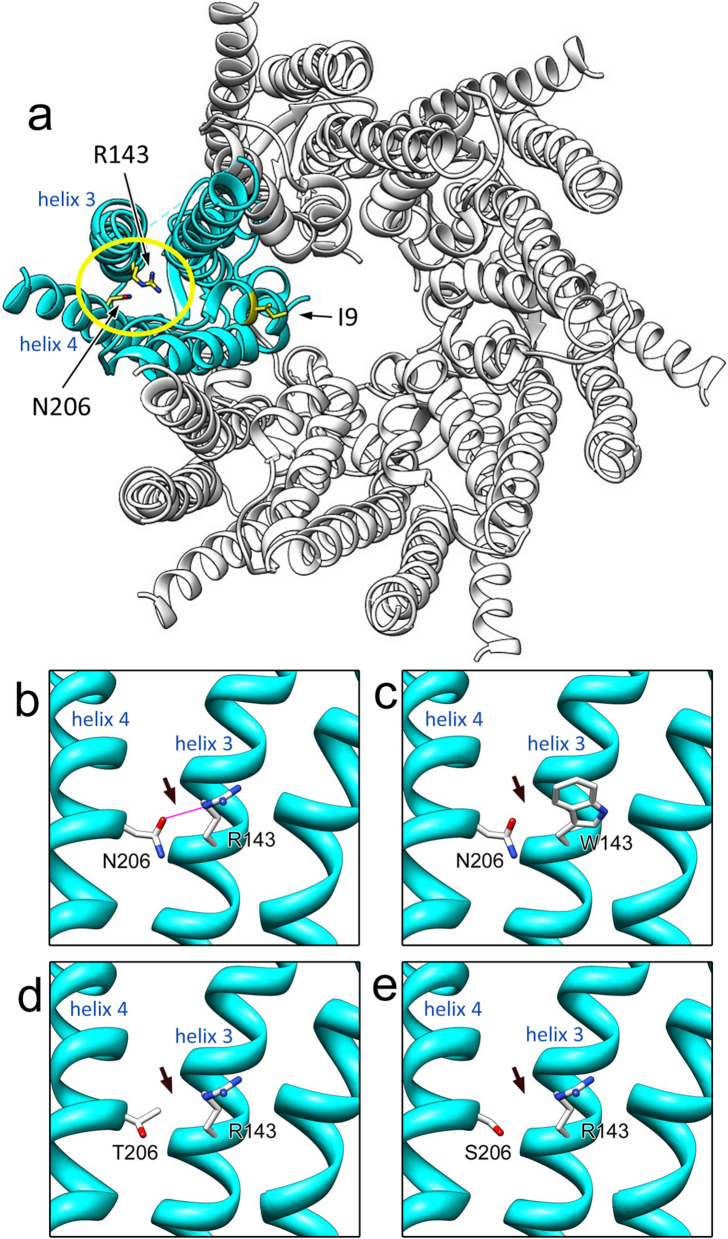
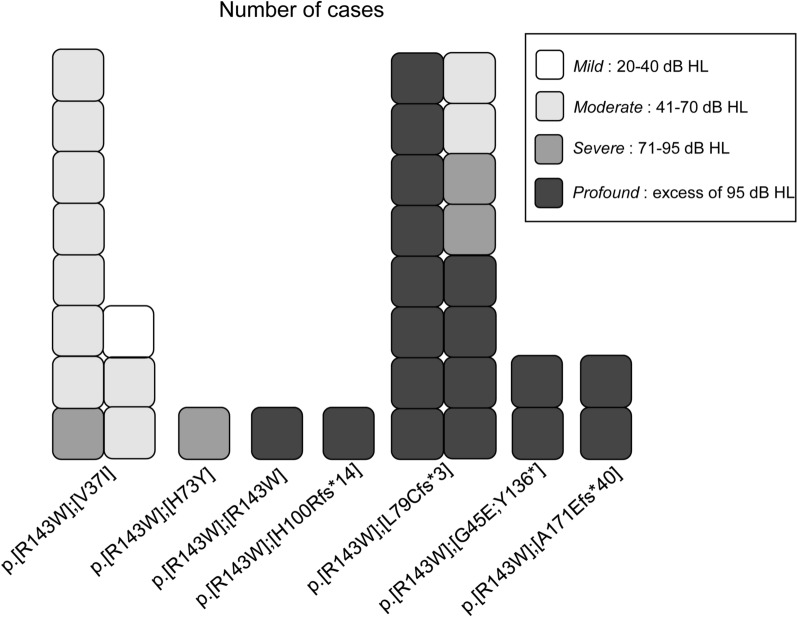
Objectives: The crystal structure of the six protomers of gap junction protein beta 2 (GJB2) enables prediction of the effect(s) of an amino acid substitution, thereby facilitating investigation of molecular pathogenesis of missense variants of GJB2 . This study mainly focused on R143W variant that causes hearing loss, and investigated the relationship between amino acid substitution and 3-D structural changes in GJB2. Methods: Patients with nonsyndromic hearing loss who appeared to have two GJB2 pathogenic variants, including the R143W variant, were investigated. Because the X-ray crystal structure of the six protomers of the GJB2 protein is known, R143W and structurally related variants of GJB2 were modeled using this crystal structure as a template. The wild-type crystal structure and the variant computer-aided model were observed and the differences in molecular interactions within the two were analyzed. Results: The predicted structure demonstrated that the hydrogen bond between R143 and N206 was important for the stability of the protomer structure. From this prediction, R143W related N206S and N206T variants showed loss of the hydrogen bond. Conclusion: Investigation of the genotypes and clinical data in patients carrying the R143W variant on an allele indicated that severity of hearing loss depends largely on the levels of dysfunction of the pathogenic variant on the allele, whereas a patient with the homozygous R143W variant demonstrated profound hearing loss. We concluded that these hearing impairments may be due to destabilization of the protomer structure of GJB2 caused by the R143W variant.
Overview
The claims and statistics of this paper haven’t been checked yet.
Run the check — free, no account needed. It reads the open-access text and checks the sources it cites.
Integrity signals
Registry
Cites
Statistics
Figures
Verification
Claims the paper makes
The claims and statistics of this paper haven’t been checked yet.
Run the check — free, no account needed. It reads the open-access text and checks the sources it cites.
Self-check
Percentages, sums and reported differences re-computed from the paper’s own numbers.
The self-check needs the paper’s full text.
Citations
Cites
UCSF Chimera—A visualization system for exploratory research and analysis
Pettersen, E. F., Goddard, T. D., Huang, C. C., Couch, G. S., Greenblatt, D. M., Meng, E. C., & Ferrin, T. E. (2004) · Journal of Computational Chemistry · doi:10.1002/jcc.20084 · Cited by 45,828
Highly accurate protein structure prediction with AlphaFold
Jumper, J., Evans, R., Pritzel, A., Green, T., Figurnov, M., Ronneberger, O., Tunyasuvunakool, K., Bates, R., Žídek, A., Potapenko, A., et al. (2021) · Nature · doi:10.1038/s41586-021-03819-2 · Cited by 43,764
SWISS-MODEL: homology modelling of protein structures and complexes
Waterhouse, A., Bertoni, M., Bienert, S., Studer, G., Tauriello, G., Gumienny, R., Heer, F. T., de Beer, T. A. P., Rempfer, C., Bordoli, L., et al. (2018) · Nucleic Acids Research · doi:10.1093/nar/gky427 · Cited by 13,067
ColabFold - Making protein folding accessible to all
Mirdita, M., Schütze, K., Moriwaki, Y., Heo, L., Ovchinnikov, S., & Steinegger, M. (2021) · doi:10.1101/2021.08.15.456425 · Cited by 9,391
The SWISS-MODEL workspace: a web-based environment for protein structure homology modelling
Arnold, K., Bordoli, L., Kopp, J., & Schwede, T. F. (2005) · Bioinformatics · doi:10.1093/bioinformatics/bti770 · Cited by 7,031
Assessment of protein models with three-dimensional profiles
Lüthy, R., Bowie, J., & Eisenberg, D. (1992) · Nature · doi:10.1038/356083a0 · Cited by 3,588
Highly accurate protein structure prediction for the human proteome
Tunyasuvunakool, K., Adler, J., Wu, Z., Green, T., Zielinski, M., Žídek, A., Bridgland, A., Cowie, A., Meyer, C., Laydon, A., et al. (2021) · Nature · doi:10.1038/s41586-021-03828-1 · Cited by 3,025
REVEL: An Ensemble Method for Predicting the Pathogenicity of Rare Missense Variants
Ioannidis, N. M., Rothstein, J. H., Pejaver, V., Middha, S., McDonnell, S. K., Baheti, S., Musolf, A., Li, Q., Holzinger, E., Karyadi, D., et al. (2016) · The American Journal of Human Genetics · doi:10.1016/j.ajhg.2016.08.016 · Cited by 2,908
A Method to Identify Protein Sequences That Fold into a Known Three-Dimensional Structure
Bowie, J. U., Lüthy, R., & Eisenberg, D. (1991) · Science · doi:10.1126/science.1853201 · Cited by 2,851
The SWISS-MODEL Repository and associated resources
Kiefer, F., Arnold, K., Künzli, M., Bordoli, L., & Schwede, T. F. (2008) · Nucleic Acids Research · doi:10.1093/nar/gkn750 · Cited by 2,003
A Medicinal Chemist’s Guide to Molecular Interactions
Bissantz, C., Kuhn, B., & Stahl, M. (2010) · Journal of Medicinal Chemistry · doi:10.1021/jm100112j · Cited by 1,731
Structure of the connexin 26 gap junction channel at 3.5 Å resolution
Maeda, S., Nakagawa, S., Suga, M., Yamashita, E., Oshima, A., Fujiyoshi, Y., & Tomitake Tsukihara, A. (2009) · Nature · doi:10.1038/nature07869 · Cited by 733
Zelante, L. (1997) · Human Molecular Genetics · doi:10.1093/hmg/6.9.1605 · Cited by 624
GJB2 Mutations and Degree of Hearing Loss: A Multicenter Study
Snoeckx, R. L., Huygen, P. L. M., Feldmann, D., Marlin, S., Denoyelle, F., Waligora, J., Mueller-Malesinska, M., Pollak, A., Ploski, R., Murgia, A., et al. (2005) · The American Journal of Human Genetics · doi:10.1086/497996 · Cited by 552
Expert specification of the ACMG/AMP variant interpretation guidelines for genetic hearing loss
Oza, A. M., DiStefano, M. T., Hemphill, S. E., Cushman, B. J., Grant, A. R., Siegert, R. K., Shen, J., Chapin, A., Boczek, N. J., Schimmenti, L. A., et al. (2018) · Human Mutation · doi:10.1002/humu.23630 · Cited by 485
GJB2 (connexin 26) variants and nonsyndromic sensorineural hearing loss: A HuGE review
Kenneson, A., Van Naarden Braun, K., & Boyle, C. (2002) · Genetics in Medicine · doi:10.1097/00125817-200207000-00004 · Cited by 395
Connexin 26 R143W Mutation Associated with Recessive Nonsyndromic Sensorineural Deafness in Africa
Brobby, G. W., Müller‐Myhsok, B., & Horstmann, R. D. (1998) · New England Journal of Medicine · doi:10.1056/nejm199802193380813 · Cited by 181
Mazzoli, M., Camp, G. V., Newton, V., et al. (2003) · Hearing Balance and Communication · doi:10.1080/16513860301713 · Cited by 180
Gap Junctions and Cochlear Homeostasis
Zhao, H.-B., Kikuchi, T., Ngezahayo, A., et al. (2006) · The Journal of Membrane Biology · doi:10.1007/s00232-005-0832-x · Cited by 162
Connexin 26 Studies in Patients With Sensorineural Hearing Loss
Kenna, M. A., Wu, B.-L., Cotanche, D. A., Korf, B. R., & Rehm, H. L. (2001) · Archives of Otolaryngology - Head and Neck Surgery · doi:10.1001/archotol.127.9.1037 · Cited by 132
Connexin 26 gene mutations in congenitally deaf children: pitfalls for genetic counseling.
Marlin, S., Garabedian, E. N., Roger, G., Moatti, L., Matha, N., Lewin, P., Petit, C., & Denoyelle, F. (2001) · PubMed · doi:10.1001/archotol.127.8.927 · Cited by 124
Shen, J., Oza, A. M., del Castillo, I., et al. (2019) · Genetics in Medicine · doi:10.1038/s41436-019-0535-9 · Cited by 99
DFNB1 Non-syndromic Hearing Impairment: Diversity of Mutations and Associated Phenotypes
del Castillo, F. J., & del Castillo, I. (2017) · Frontiers in Molecular Neuroscience · doi:10.3389/fnmol.2017.00428 · Cited by 96
Wattanasirichaigoon, D., Limwongse, C., Jariengprasert, C., Yenchitsomanus, P.-T., Tocharoenthanaphol, C., Thongnoppakhun, W., Thawil, C., Charoenpipop, D., Pho‐iam, T., Thongpradit, S., et al. (2004) · Clinical Genetics · doi:10.1111/j.1399-0004.2004.00325.x · Cited by 89
GJB2: The spectrum of deafness-causing allele variants and their phenotype
Azaiez, H., Chamberlin, G., Fischer, S. M., Welp, C. L., Prasad, S. D., Taggart, R. T., del Castillo, I., Camp, G. V., & Smith, R. J. (2004) · Human Mutation · doi:10.1002/humu.20084 · Cited by 83
Meşe, G., Londin, E. R., Mui, R., Brink, P. R., & White, T. W. (2004) · Human Genetics · doi:10.1007/s00439-004-1142-6 · Cited by 75
Functional analysis of connexin‐26 mutants associated with hereditary recessive deafness
Wang, H., Chang, W., Li, A. H.-L., Yeh, T., Wu, C., Chen, M.-S., & Huang, P. (2003) · Journal of Neurochemistry · doi:10.1046/j.1471-4159.2003.01555.x · Cited by 72
Wu, B.-L., Lindeman, N. I., Lip, V., Adams, A., Amato, R. S., Cox, G. F., Irons, M., Kenna, M. A., Korf, B. R., Raisen, J., et al. (2002) · Genetics in Medicine · doi:10.1097/00125817-200207000-00006 · Cited by 66
Palmada, M., Schmalisch, K., Böhmer, C., Schug, N., Pfister, M., Lang, F. J. W., & Blin, N. (2005) · Neurobiology of Disease · doi:10.1016/j.nbd.2005.10.005 · Cited by 62
GJB2-associated hearing loss undetected by hearing screening of newborns
Minami, S., Mutai, H., Nakano, A., Arimoto, Y., Taiji, H., Morimoto, N., Sakata, H., Adachi, N., Masuda, S., Sakamoto, H., et al. (2013) · Gene · doi:10.1016/j.gene.2013.08.094 · Cited by 52
Self-citationGJB2 and GJB6 Mutations in Non-Syndromic Childhood Hearing Impairment in Ghana
Adadey, S. M., Manyisa, N. R., Mnika, K., de Kock, C. A., Nembaware, V., Quaye, O., Amedofu, G. K., Awandare, G. A., & Wonkam, A. (2019) · Frontiers in Genetics · doi:10.3389/fgene.2019.00841 · Cited by 45
Molecular Genetics Applied to Clinical Practice: The Cx26 Hearing Impairment
Orzan, E., Polli, R., Martella, M., Vinanzi, C., Leonardi, E., & Murgia, A. (1999) · British Journal of Audiology · doi:10.3109/03005369909090112 · Cited by 41
Ambrosi, C., Walker, A. E., DePriest, A. D., Cone, A. C., Lu, C., Badger, J., Skerrett, I. M., & Sosinsky, G. E. (2013) · PLoS ONE · doi:10.1371/journal.pone.0070916 · Cited by 34
Prevalence of TECTA mutation in patients with mid-frequency sensorineural hearing loss
Yamamoto, N., Mutai, H., Namba, K., Morita, N., Masuda, S., Nishi, Y., Nakano, A., Masuda, S., Fujioka, M., Kaga, K., et al. (2017) · Orphanet Journal of Rare Diseases · doi:10.1186/s13023-017-0708-z · Cited by 27
Self-citationHearing and Hearing Loss Progression in Patients with GJB2 Gene Mutations: A Long-Term Follow-Up
Sakata, A., Kashio, A., Koyama, M., et al. (2023) · International Journal of Molecular Sciences · doi:10.3390/ijms242316763 · Cited by 18
Schrijver, I., & Chang, K. W. (2006) · International Journal of Pediatric Otorhinolaryngology · doi:10.1016/j.ijporl.2006.07.015 · Cited by 16
In silico modeling of the pore region of a KCNQ4 missense mutant from a patient with hearing loss
Namba, K., Mutai, H., Kaneko, H., Hashimoto, S., & Matsunaga, T. (2012) · BMC Research Notes · doi:10.1186/1756-0500-5-145 · Cited by 15
Self-citationPrevalence of p.V37I variant of GJB2 among Chinese infants with mild or moderate hearing loss.
Huang, Y., Yang, X., Chen, W., Duan, B., Lü, P., Wang, Y., & Xu, Z. (2015) · PubMed · Cited by 10
Du, Y., Huang, L., Cheng, X., Zhao, L., Ruan, Y., & Ni, T. (2016) · BioScience Trends · doi:10.5582/bst.2016.01096 · Cited by 9
Tsai, C., Lu, Y., Chan, Y., Radhakrishnan, N., Chang, Y.-Y., Lin, S., Liu, T., Hsu, C., Chen, P., Yang, L., et al. (2023) · Computational and Structural Biotechnology Journal · doi:10.1016/j.csbj.2023.11.026 · Cited by 9
Metadata
- Authors
- Namba, K., Mutai, H., Matsunaga, T., & Kaneko, H.
- Affiliations
- Tokyo Medical Center (JP)
- Nihon University (JP)
- Corresponding author
- Kaneko, Hiroki
- Venue
- BMC Research Notes
- Published
- 2024-05-10
- Volume
- 17
- Issue
- 1
- Pages
- 131-131
- ISSN
- 1756-0500 (ISSN-L)
- PMC
- PMC11083831
- OpenAlex
- W4396808728
- Cited by
- 3
- References
- 40
- Citations by year
- 2026: 1 · 2025: 2
- FWCI
- 0.84
- Type
- journal article
- Language
- en
- Open access
- gold
- doi.org
- Licence
- cc-by
- creativecommons.org/licenses/by/4.0 (tdm)
- creativecommons.org/licenses/by/4.0 (vor)
- Locations
- BMC Research Notes (publishedVersion, cc-by)
- Research Square (acceptedVersion, cc-by)
- PubMed Central (publishedVersion, cc-by)
- PubMed (publishedVersion)
- DOAJ (DOAJ: Directory of Open Access Journals) (submittedVersion, cc-by-sa)
- Funders
- Japan Society for Promotion of Sciences (18K09365, 17K11350)
- Grant-in-Aid for Clinical Research from the National Hospital Organization of Japan (H30-NHO(kankakuki)-01)
- Topics
- Life Sciences › Neuroscience › Sensory Systems › Hearing, Cochlea, Tinnitus, Genetics
- Life Sciences › Biochemistry, Genetics and Molecular Biology › Molecular Biology › Connexins and lens biology
- Health Sciences › Health Professions › Speech and Hearing › Hearing Loss and Rehabilitation
- Keywords
- GJB2, connexin 26, missense mutations, non-syndromic hearing loss, hydrogen bonding, protein crystal structure, molecular pathogenesis
- MeSH terms
- Connexin 26, Adolescent, Adult, Child, Child, Preschool, Female, Humans, Hydrogen Bonding, Male, Models, Molecular, Connexins, Crystallography, X-Ray, Amino Acid Substitution, Mutation, Missense, Hearing Loss
About these checks
Registry, retraction, Cites and statistics results are computed, not judged, with one exception: a printed reference that no index lists is read once by a model before it counts as a citation error. Claims are extracted by a model and kept only when their quote appears verbatim in the text; each cited source is then checked, with a model’s help, for whether it says what the claim relies on. Those verdicts can be wrong — read the claim’s quote and the cited source before relying on one.
Statistics and arithmetic are recomputed, not judged.
Confidence bands are shown only for fields calibrated on our annotated test set. None is calibrated yet, so no band is shown.
What counts as a claim ›How we measure confidence ›How we check this ›
Are you an author, or do you see a problem with this page? Request a review
Data sources
Bibliographic data: Semantic Scholar, OpenAlex, Crossref.
Contains information from the Semantic Scholar Academic Graph Datasets, made available under the ODC Attribution License (ODC-BY 1.0).
Semantic Scholar’s data is described in: Kinney, R., et al. (2023). The Semantic Scholar Open Data Platform. arXiv:2301.10140.
