

Replicated methylation changes associated with eczema herpeticum and allergic response
Open accessThe DOI matches its Crossref record; 58 of the 58 references it cites were found in a registry or an index.
Abstract
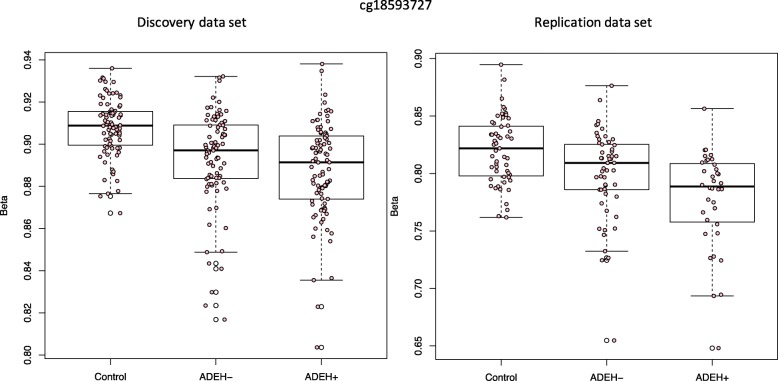
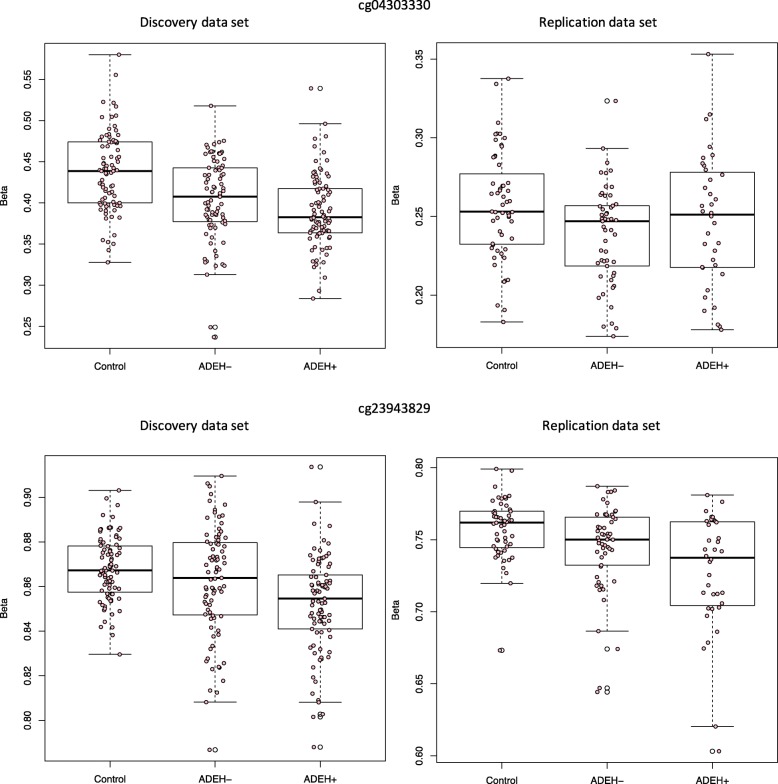
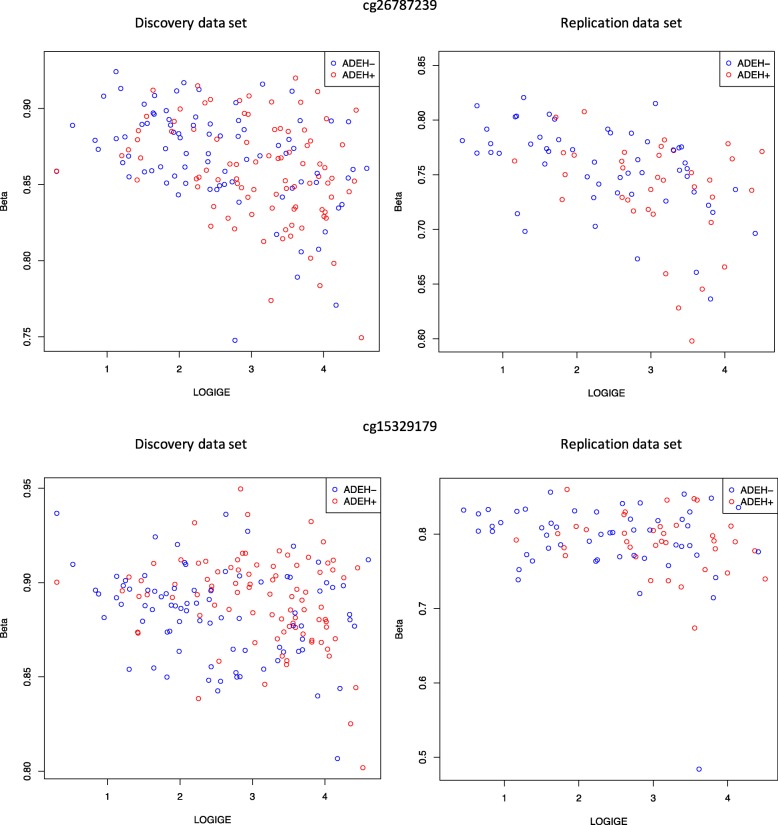
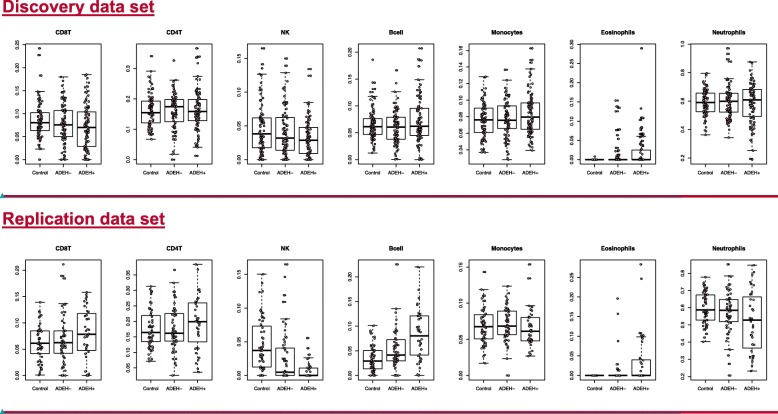
BACKGROUND: Although epigenetic mechanisms are important risk factors for allergic disease, few studies have evaluated DNA methylation differences associated with atopic dermatitis (AD), and none has focused on AD with eczema herpeticum (ADEH+). We will determine how methylation varies in AD individuals with/without EH and associated traits. We modeled differences in genome-wide DNA methylation in whole blood cells from 90 ADEH+, 83 ADEH-, and 84 non-atopic, healthy control subjects, replicating in 36 ADEH+, 53 ADEH-, and 55 non-atopic healthy control subjects. We adjusted for cell-type composition in our models and used genome-wide and candidate-gene approaches. RESULTS: We replicated one CpG which was significantly differentially methylated by severity, with suggestive replication at four others showing differential methylation by phenotype or severity. Not adjusting for eosinophil content, we identified 490 significantly differentially methylated CpGs (ADEH+ vs healthy controls, genome-wide). Many of these associated with severity measures, especially eosinophil count (431/490 sites). CONCLUSIONS: We identified a CpG in IL4 associated with serum tIgE levels, supporting a role for Th2 immune mediating mechanisms in AD. Changes in eosinophil level, a measure of disease severity, are associated with methylation changes, providing a potential mechanism for phenotypic changes in immune response-related traits.
Overview
The claims and statistics of this paper haven’t been checked yet.
Free: it reads the open-access text and checks the first 5 claims that cite a source we can check. Create a free account to check every claim.
Integrity signals
Registry
Cites
Statistics
Figures
Verification
Claims the paper makes
The claims and statistics of this paper haven’t been checked yet.
Free: it reads the open-access text and checks the first 5 claims that cite a source we can check. Create a free account to check every claim.
Claims other papers make about this one
Each is checked against this paper’s own text: does it say what the citing paper says it does?
The source backs part of the claim, not all of it — or backs it for a different population, condition or comparison.
In the citing paper
“The main epigenetic studies in AD are related to the DNA methylation of two genes, NLRP2 (involved in macrophage activity) and PITPNM2 (related to neutrophils), both associated with smoking.”
From Update on the pathogenesis of atopic dermatitis. (2024) · cites this paper as [43]
Experimental — accuracy not yet measuredThe cited source says what the claim attributes to it.
In the citing paper
“Also, the association of eczema herpeticum and serum IgE levels with methylation in the IL-4 and IL-13 genes.”
From Update on the pathogenesis of atopic dermatitis. (2024) · cites this paper as [43]
Self-check
Percentages, sums and reported differences re-computed from the paper’s own numbers.
The self-check needs the paper’s full text.
Citations
Cites
Williams, H. C., Leung, D. Y. M., Thestrup‐Pedersen, K., & David, T. J. (2000) · Cited by 4,599
Self-citationAryee, M. J., Jaffe, A. E., Corrada-Bravo, H., Ladd-Acosta, C., Feinberg, A. P., Hansen, K. D., & Irizarry, R. A. (2014) · Bioinformatics · doi:10.1093/bioinformatics/btu049 · Cited by 4,397
Atopic Dermatitis: Global Epidemiology and Risk Factors
Nutten, S. (2015) · Annals of Nutrition and Metabolism · doi:10.1159/000370220 · Cited by 3,055
Bieber, T. (2008) · New England Journal of Medicine · doi:10.1056/nejmra074081 · Cited by 1,780
Dupilumab Treatment in Adults with Moderate-to-Severe Atopic Dermatitis
Beck, L. A., Thaçi, D., Hamilton, J. D., Graham, N. M., Bieber, T., Rocklin, R., Ming, J. E., Ren, H., Kao, R., Simpson, E., et al. (2014) · New England Journal of Medicine · doi:10.1056/nejmoa1314768 · Cited by 1,421 · cited 2×
“As previous gene expression studies have identified higher expression of IL4 and IL13 in a specific disease group and have led to a treatment using a monoclonal antibody (dupilumab) to block these molecules [34], our hope is that a similar treatment could arise from the results of this study, in conjunction with furth…”
BackgroundResultSelf-citationAtopic dermatitis: a disease of altered skin barrier and immune dysregulation
Boguniewicz, M., & Leung, D. Y. M. (2011) · Immunological Reviews · doi:10.1111/j.1600-065x.2011.01027.x · Cited by 1,073 · cited 2×
“Using a set of 129 CpGs that belong to AD candidate genes of interest (FLG [5, 17, 18, 25, 29, 40], LCE1B [40, 41], RPTN [41, 42], IL4, IL13 [18, 30, 33–35, 40] and its receptors, IFNs [6, 7, 10] and TSLP [13, 14, 18, 30, 40], see Additional file 1 Table Fig.”
BackgroundSelf-citationAccounting for cellular heterogeneity is critical in epigenome-wide association studies
Jaffe, A. E., & Irizarry, R. A. (2014) · Genome Biology · doi:10.1186/gb-2014-15-2-r31 · Cited by 1,067 · cited 4×
“Jaffe AE, Irizarry RA.”
MethodInfluentialLiu, Y., Aryee, M. J., Padyukov, L., Fallin, M. D., Hesselberg, E., Runarsson, A., Reinius, L., Acevedo, N., Taub, M., Ronninger, M., et al. (2013) · Nature Biotechnology · doi:10.1038/nbt.2487 · Cited by 969
Self-citationGlobal variations in prevalence of eczema symptoms in children from ISAAC Phase Three
Odhiambo, J. A., Williams, H. C., Clayton, T. O., Robertson, C. F., & Asher, M. I. (2009) · Journal of Allergy and Clinical Immunology · doi:10.1016/j.jaci.2009.10.009 · Cited by 966
The genetics of asthma and allergic disease: a 21st century perspective
Ober, C., & Yao, T. (2011) · Immunological Reviews · doi:10.1111/j.1600-065x.2011.01029.x · Cited by 698 · cited 1×
“This analysis with adjustment for six default cell types (eosinophils and neutrophils combined as granulocytes) identifies biologically relevant signals strongly associated with different diseases from previous studies [40, 47].”
MethodJavierre, B. M., Fernandez, A. F., Richter, J., Al-Shahrour, F., Martin-Subero, J. I., Rodriguez-Ubreva, J., Berdasco, M., Fraga, M. F., O'Hanlon, T. P., Rider, L. G., et al. (2010) · Genome Research · doi:10.1101/gr.100289.109 · Cited by 668
Distinct 5-methylcytosine profiles in poly(A) RNA from mouse embryonic stem cells and brain
Amort, T., Rieder, D., Wille, A., Khokhlova-Cubberley, D., Riml, C., Trixl, L., Jia, X.-Y., Micura, R., & Lusser, A. (2017) · Genome Biology · doi:10.1186/s13059-016-1139-1 · Cited by 491
IgE, Mast Cells, and Eosinophils in Atopic Dermatitis
Liu, F.-T., Goodarzi, H., & Chen, H.-Y. (2011) · Clinical Reviews in Allergy & Immunology · doi:10.1007/s12016-011-8252-4 · Cited by 470
Seroprevalence of Herpes Simplex Virus Types 1 and 2--United States, 1999-2010
Bradley, H., Markowitz, L. E., Gibson, T., & McQuillan, G. M. (2014) · Journal of Infectious Diseases · doi:10.1093/infdis/jit458 · Cited by 432 · cited 1×
“The primary predisposing factor for EH is HSV-1 exposure (in 2005– 2010, 54% of persons in the USA aged 14–49 had HSV1 infection [4]).”
Backgroundthe BIOS Consortium, van Iterson, M., van Zwet, E. W., & Heijmans, B. T. (2017) · Genome biology · doi:10.1186/s13059-016-1131-9 · Cited by 421 · cited 1×
“P-value distribution adjustment was performed using bacon [53] and then FDR-adjusted q-values were estimated.”
MethodRecent insights into atopic dermatitis and implications for management of infectious complications
Boguniewicz, M., & Leung, D. Y. M. (2010) · Journal of Allergy and Clinical Immunology · doi:10.1016/j.jaci.2009.11.027 · Cited by 329 · cited 5×
“Using a set of 129 CpGs that belong to AD candidate genes of interest (FLG [5, 17, 18, 25, 29, 40], LCE1B [40, 41], RPTN [41, 42], IL4, IL13 [18, 30, 33–35, 40] and its receptors, IFNs [6, 7, 10] and TSLP [13, 14, 18, 30, 40], see Additional file 1 Table Fig.”
BackgroundInfluentialSelf-citationEpigenetics and Allergy: from Basic Mechanisms to Clinical Applications
Potaczek, D. P., Harb, H., Michel, S., Alhamwe, B. A., Renz, H., & Tost, J. (2017) · Epigenomics · doi:10.2217/epi-2016-0162 · Cited by 284
Phenotype of atopic dermatitis subjects with a history of eczema herpeticum
Beck, L. A., Boguniewicz, M., Hata, T., Schneider, L. C., Hanifin, J., Gallo, R., Paller, A. S., Lieff, S., Reese, J., Zaccaro, D., et al. (2009) · Journal of Allergy and Clinical Immunology · doi:10.1016/j.jaci.2009.05.020 · Cited by 260 · cited 2×
“Using a set of 129 CpGs that belong to AD candidate genes of interest (FLG [5, 17, 18, 25, 29, 40], LCE1B [40, 41], RPTN [41, 42], IL4, IL13 [18, 30, 33–35, 40] and its receptors, IFNs [6, 7, 10] and TSLP [13, 14, 18, 30, 40], see Additional file 1 Table Fig.”
BackgroundSelf-citationGenetic and epigenetic studies of atopic dermatitis
Bin, L., & Leung, D. Y. M. (2016) · Allergy, Asthma & Clinical Immunology · doi:10.1186/s13223-016-0158-5 · Cited by 242 · cited 5×
“Using a set of 129 CpGs that belong to AD candidate genes of interest (FLG [5, 17, 18, 25, 29, 40], LCE1B [40, 41], RPTN [41, 42], IL4, IL13 [18, 30, 33–35, 40] and its receptors, IFNs [6, 7, 10] and TSLP [13, 14, 18, 30, 40], see Additional file 1 Table Fig.”
BackgroundMethodInfluentialSelf-citationKhor, C. C., Chau, T. N. B., Pang, J., Davila, S., Long, H. T., Ong, R. T. H., Dunstan, S. J., Wills, B., Farrar, J., Van Tram, T., et al. (2011) · Nature Genetics · doi:10.1038/ng.960 · Cited by 218
An epigenome-wide association study of total serum immunoglobulin E concentration
Liang, L., Willis-Owen, S. A. G., Laprise, C., Wong, K. C. C., Davies, G. A., Hudson, T. J., Binia, A., Hopkin, J. M., Yang, I. V., Grundberg, E., et al. (2015) · Nature · doi:10.1038/nature14125 · Cited by 213 · cited 1×
“The CpG in the IL4 gene region, cg26787239, which was significantly associated with serum tIgE levels, was also the most significant signal in recent work performed in an asthma cohort [43].”
BackgroundThe importance of TSLP in allergic disease and its role as a potential therapeutic target
Cianferoni, A., & Spergel, J. (2014) · Expert Review of Clinical Immunology · doi:10.1586/1744666x.2014.967684 · Cited by 198 · cited 4×
“The importance of TSLP in allergic disease and its role as a potential therapeutic target.”
BackgroundInfluentialBaurecht, H., Hotze, M., Brand, S., Büning, C., Cormican, P., Corvin, A., Ellinghaus, D., Ellinghaus, E., Esparza-Gordillo, J., Fölster-Holst, R., et al. (2015) · The American Journal of Human Genetics · doi:10.1016/j.ajhg.2014.12.004 · Cited by 193 · cited 3×
“A set of 129 CpGs that mapped to a set of genes previously shown to be of interest in EH, specifically FLG, LCE1B, RPTN, IL4, IL13 and its receptors, IFNs, and TSLP was considered.”
BackgroundGao, P.-S., Rafaels, N. M., Mu, D., Hand, T., Murray, T., Boguniewicz, M., Hata, T., Schneider, L., Hanifin, J. M., Gallo, R. L., et al. (2010) · Journal of Allergy and Clinical Immunology · doi:10.1016/j.jaci.2010.03.016 · Cited by 170 · cited 4×
“The importance of TSLP in allergic disease and its role as a potential therapeutic target.”
BackgroundInfluentialSelf-citationRodríguez, E., Baurecht, H., Wahn, A. F., Kretschmer, A., Hotze, M., Kunze, S., Klopp, N., Illig, T., Schramm, K., Prokisch, H., et al. (2014) · Journal of Investigative Dermatology · doi:10.1038/jid.2014.87 · Cited by 146
Leung, D. Y. M., Gao, P.-S., Grigoryev, D. N., Rafaels, N. M., Streib, J. E., Howell, M. D., Taylor, P. A., Boguniewicz, M., Canniff, J., Armstrong, B., et al. (2011) · Journal of Allergy and Clinical Immunology · doi:10.1016/j.jaci.2011.02.010 · Cited by 138 · cited 3×
“A set of 129 CpGs that mapped to a set of genes previously shown to be of interest in EH, specifically FLG, LCE1B, RPTN, IL4, IL13 and its receptors, IFNs, and TSLP was considered.”
BackgroundSelf-citationPulendran, B., Miller, J., Querec, T. D., Akondy, R., Moseley, N., Laur, O., Glidewell, J., Monson, N., Zhu, T., Zhu, H., et al. (2008) · The Journal of Infectious Diseases · doi:10.1086/590187 · Cited by 132
Gene-set analysis is severely biased when applied to genome-wide methylation data
Geeleher, P., Hartnett, L., Egan, L. J., Golden, A., Raja Ali, R. A., & Seoighe, C. (2013) · Bioinformatics · doi:10.1093/bioinformatics/btt311 · Cited by 130
Current concepts of IgE regulation and impact of genetic determinants
Potaczek, D. P., & Kabesch, M. (2012) · Clinical & Experimental Allergy · doi:10.1111/j.1365-2222.2011.03953.x · Cited by 118 · cited 1×
“The selection of the IL4, IL13, and IL4R regions for investigation of serum tIgE levels was in fact based on prior work showing that suppression of these Th2 cytokines decreases serum tIgE levels [34], that these genes are involved in the pathway influencing cytokine- and receptor-mediated regulation of IgE [35], and…”
BackgroundOettgen, H. C. (2016) · Journal of Allergy and Clinical Immunology · doi:10.1016/j.jaci.2016.04.009 · Cited by 114 · cited 1×
“The selection of the IL4, IL13, and IL4R regions for investigation of serum tIgE levels was in fact based on prior work showing that suppression of these Th2 cytokines decreases serum tIgE levels [34], that these genes are involved in the pathway influencing cytokine- and receptor-mediated regulation of IgE [35], and…”
BackgroundPrenatal smoke exposure, DNA methylation, and childhood atopic dermatitis
Wang, I. ‐., Chen, S. ‐., Lu, T. ‐., Chuang, E. Y., & Chen, P. ‐. (2013) · Clinical & Experimental Allergy · doi:10.1111/cea.12108 · Cited by 107
Walker, C., Kägi, M. K., Ingold, P., BRAUN, P., Blaser, K., Bruijnzeel-Koomen, C. A. F. M., & Wüthrich, B. (1993) · Clinical & Experimental Allergy · doi:10.1111/j.1365-2222.1993.tb00310.x · Cited by 107
De Benedetto, A., Slifka, M. K., Rafaels, N. M., Kuo, I.-H., Georas, S. N., Boguniewicz, M., Hata, T., Schneider, L. C., Hanifin, J. M., Gallo, R. L., et al. (2011) · Journal of Allergy and Clinical Immunology · doi:10.1016/j.jaci.2011.02.014 · Cited by 105
Self-citationHeyn, H., Moran, S., & Esteller, M. (2013) · Epigenetics · doi:10.4161/epi.23366 · Cited by 104
The role of FcεRI expressed in dendritic cells and monocytes
Shin, J.-S., & Greer, A. M. (2015) · Cellular and Molecular Life Sciences · doi:10.1007/s00018-015-1870-x · Cited by 99
Association of the toll‐like receptor 2 A‐16934T promoter polymorphism with severe atopic dermatitis
Oh, D. ‐., Schumann, R. R., Hamann, L., Neumann, K., Worm, M., & Heine, G. (2009) · Allergy · doi:10.1111/j.1398-9995.2009.02066.x · Cited by 96
Liang, Y., Wang, P., Zhao, M., Liang, G., Yin, H., Zhang, G., Wen, H., & Lu, Q. (2011) · Allergy · doi:10.1111/j.1398-9995.2011.02760.x · Cited by 93
DE-kupl: exhaustive capture of biological variation in RNA-seq data through k-mer decomposition
Audoux, J., Philippe, N., Chikhi, R., Salson, M., Gallopin, M., Gabriel, M., Coz, J. L., Drouineau, E., Commes, T., & Gautheret, D. (2017) · Genome biology · doi:10.1186/s13059-017-1372-2 · Cited by 93
Maksimovic, J., Gagnon-Bartsch, J. A., Speed, T. P., & Oshlack, A. (2015) · Nucleic Acids Research · doi:10.1093/nar/gkv526 · Cited by 91 · cited 2×
“The missMethyl package was developed specifically for analysis of 450K and EPIC array data and offers an implementation of RUV-inverse [51] called RUVm [52] as a solution for removing batch effects and unknown, unwanted variation from the data.”
MethodZiyab, A. H., Karmaus, W., Holloway, J. W., Zhang, H., Ewart, S., & Arshad, S. H. (2013) · Journal of the European Academy of Dermatology and Venereology · doi:10.1111/jdv.12000 · Cited by 84 · cited 1×
“Using a set of 129 CpGs that belong to AD candidate genes of interest (FLG [5, 17, 18, 25, 29, 40], LCE1B [40, 41], RPTN [41, 42], IL4, IL13 [18, 30, 33–35, 40] and its receptors, IFNs [6, 7, 10] and TSLP [13, 14, 18, 30, 40], see Additional file 1 Table Fig.”
BackgroundEverson, T. M., Lyons, G., Zhang, H., Soto-Ramírez, N., Lockett, G. A., Patil, V. K., Merid, S. K., Sӧderhӓll, C., Melén, E., Holloway, J. W., et al. (2015) · Genome Medicine · doi:10.1186/s13073-015-0213-8 · Cited by 78 · cited 1×
“[44], which focused on both case-control differences in AD and a comparison of individuals with low or high IgE levels, 11 of our CpGs overlapped with the top 22 CpGs significantly different between individuals with AD compared to controls [44].”
ResultEpigenome-wide association study of asthma and wheeze in childhood and adolescence
Arathimos, R., Suderman, M. J., Sharp, G. C., Burrows, K., Granell, R., Tilling, K. M., Gaunt, T. R., Henderson, J., Ring, S. M., Richmond, R. C., et al. (2017) · Clinical Epigenetics · doi:10.1186/s13148-017-0414-7 · Cited by 77
Removing unwanted variation from high dimensional data with negative controls
Gagnon-Bartsch, J. A., Jacob, L., & Speed, T. P. (2013) · Cited by 75
Gao, P.-S., Leung, D. Y. M., Rafaels, N. M., Boguniewicz, M., Hand, T., Gao, L., Hata, T. R., Schneider, L. C., Hanifin, J. M., Beaty, T. H., et al. (2012) · Journal of Investigative Dermatology · doi:10.1038/jid.2011.374 · Cited by 69 · cited 1×
“Using a set of 129 CpGs that belong to AD candidate genes of interest (FLG [5, 17, 18, 25, 29, 40], LCE1B [40, 41], RPTN [41, 42], IL4, IL13 [18, 30, 33–35, 40] and its receptors, IFNs [6, 7, 10] and TSLP [13, 14, 18, 30, 40], see Additional file 1 Table Fig.”
BackgroundSelf-citationAn epigenome-wide association study of total serum IgE in Hispanic children
Chen, W., Wang, T., Pino-Yanes, M. D. M., Forno, E., Liang, L., Yan, Q., Hu, D., Weeks, D. E., Baccarelli, A., Acosta‐Pérez, E., et al. (2017) · Journal of Allergy and Clinical Immunology · doi:10.1016/j.jaci.2016.11.030 · Cited by 64 · cited 3×
“observed differences in methylation from whole blood between groups with different allergic disease phenotypes is a cross-sample variation in cell type composition, in particular, the eosinophil fraction [24, 31, 32].”
BackgroundResultBin, L., Edwards, M. G., Heiser, R., Streib, J. E., Richers, B., Hall, C. F., & Leung, D. Y. M. (2014) · Journal of Allergy and Clinical Immunology · doi:10.1016/j.jaci.2014.07.018 · Cited by 62 · cited 3×
“A set of 129 CpGs that mapped to a set of genes previously shown to be of interest in EH, specifically FLG, LCE1B, RPTN, IL4, IL13 and its receptors, IFNs, and TSLP was considered.”
BackgroundSelf-citationGenome-wide association study of recalcitrant atopic dermatitis in Korean children
Kim, K. W., Myers, R. A., Lee, J. H., Igartua, C., Lee, K. E., Kim, Y. H., Kim, E.-J., Yoon, D., Lee, J.-S., Hirota, T., et al. (2015) · Journal of Allergy and Clinical Immunology · doi:10.1016/j.jaci.2015.03.030 · Cited by 57 · cited 4×
“The importance of TSLP in allergic disease and its role as a potential therapeutic target.”
BackgroundInfluentialHowell, M. D., Gao, P., Kim, B. E., Lesley, L. J., Streib, J. E., Taylor, P. A., Zaccaro, D. J., Boguniewicz, M., Beck, L. A., Hanifin, J. M., et al. (2011) · Journal of Allergy and Clinical Immunology · doi:10.1016/j.jaci.2011.06.003 · Cited by 54
Self-citationAn association of TLR2–16934A>T polymorphism and severity/phenotype of atopic dermatitis
Potaczek, D. P., Nastałek, M., Okumura, K., Wojas‐Pelc, A., Undas, A., & Nishiyama, C. (2010) · Journal of the European Academy of Dermatology and Venereology · doi:10.1111/j.1468-3083.2010.03812.x · Cited by 53
Fleischer, A. B., & Boguniewicz, M. (2010) · PubMed · Cited by 38
Kim, H. S., Kim, J. H., Seo, Y. M., Chun, Y. H., Yoon, J.-S., Kim, H. H., Lee, J. S., & Kim, J. T. (2017) · Annals of Allergy, Asthma & Immunology · doi:10.1016/j.anai.2017.06.022 · Cited by 37
Schieck, M., Sharma, V., Michel, S., Toncheva, A. A., Worth, L., Potaczek, D. P., Genuneit, J., Kretschmer, A., Depner, M., Dalphin, J. ‐., et al. (2014) · Allergy · doi:10.1111/all.12450 · Cited by 35 · cited 1×
“In addition, genetic loci near IL13 were shown to be methyl-QTLs for CpGs in the promoter of IL13 indicating that methylation could play a functional role, linking genetics to outcome [46].”
BackgroundAltered Expression of Genes Encoding Cornulin and Repetin in Atopic Dermatitis
Trzeciak, M., Sakowicz‐Burkiewicz, M., Wesserling, M., Gleń, J., Dobaczewska, D., Bandurski, T., Nowicki, R. J., & Pawełczyk, T. (2017) · International Archives of Allergy and Immunology · doi:10.1159/000453452 · Cited by 35
Quraishi, B. M., Zhang, H., Everson, T. M., Ray, M. A., Lockett, G. A., Holloway, J. W., Tetali, S. R., Arshad, S. H., Kaushal, A., Rezwan, F. I., et al. (2015) · Clinical Epigenetics · doi:10.1186/s13148-015-0108-y · Cited by 30 · cited 1×
“However, we found no overlap with the top 140 CpGs presented in [45], which were the result of a related study that used random forests to compare individuals with and without eczema.”
Network of Myeloid and Plasmacytoid Dendritic Cells in Atopic Dermatitis
Novak, N., Peng, W., & Yu, C. (2007) · Advances in experimental medicine and biology · doi:10.1007/978-0-387-72005-0_10 · Cited by 26 · cited 1×
“While we were not able to find specific links between myeloid leukocyte differentiation and AD, we identified at least one reference discussing the role of myeloid dendritic cells in AD [48].”
BackgroundNarbutt, J., Wojtczak, M., Żalińska, A., Salinski, A., Przybyłowska-Sygut, K., Kuna, P., Majak, P., Sysa‐Jędrzejowska, A., & Lesiak, A. (2014) · Clinical and Experimental Dermatology · doi:10.1111/ced.12438 · Cited by 24
Ovsyannikova, I. G., Haralambieva, I. H., Kennedy, R. B., O’Byrne, M. M., Pankratz, V. S., & Poland, G. A. (2013) · The Journal of Infectious Diseases · doi:10.1093/infdis/jit341 · Cited by 23 · cited 3×
“A set of 129 CpGs that mapped to a set of genes previously shown to be of interest in EH, specifically FLG, LCE1B, RPTN, IL4, IL13 and its receptors, IFNs, and TSLP was considered.”
BackgroundWilkowska, A., Gleń, J., Zabłotna, M., Trzeciak, M., Ryduchowska, M., Sobjanek, M., Nedoszytko, B., Nowicki, R. J., & Sokołowska‐Wojdyło, M. (2013) · International Journal of Dermatology · doi:10.1111/ijd.12245 · Cited by 8
Cited by
Pathogenesis of allergic diseases and implications for therapeutic interventions
Wang, J., Zhou, Y., Zhang, H., Hu, L., Liu, J., Wang, L., Wang, T., Zhang, H., Cong, L., & Wang, Q. (2023) · Signal Transduction and Targeted Therapy · doi:10.1038/s41392-023-01344-4 · Cited by 376
“Monoclonal antibodies, including nemolizumab, a humanized monoclonal antibody targeting IL-31 receptor A (IL-31RA), relieve itching symptoms and IL-31 signal transduction in the pathogenesis of AD.”
BackgroundInfluentialEczema herpeticum in atopic dermatitis
Traidl, S., Roesner, L. M., Zeitvogel, J., & Werfel, T. (2021) · Allergy · doi:10.1111/all.14853 · Cited by 123
Genetics and epigenetics of atopic dermatitis: an updated systematic review
Martin, M. J., Estravís, M., García-Sánchez, A., Dávila, I., Isidoro-García, M., & Sanz, C. (2020) · Genes · doi:10.3390/genes11040442 · Cited by 99
“identified a significant association between IL4 and IL13 methylation and the AD phenotype, as well as with serum IgE levels [28].”
BackgroundInfluentialHost methylation predicts SARS-CoV-2 infection and clinical outcome
Konigsberg, I. R., Barnes, B., Campbell, M., Davidson, E., Zhen, Y., Pallisard, O., Boorgula, M. P., Cox, C., Nandy, D., Seal, S., et al. (2021) · Communications Medicine · doi:10.1038/s43856-021-00042-y · Cited by 84
Self-citationUpdate on the pathogenesis of atopic dermatitis.
Criado, P. R., Miot, H. A., Bueno-Filho, R., Ianhez, M., Criado, R. F. J., & de Castro, C. C. S. (2024) · Anais brasileiros de dermatologia · doi:10.1016/j.abd.2024.06.001 · Cited by 66
Metadata
- Authors
- Boorgula, M. P., Taub, M. A., Rafaels, N., Daya, M., Campbell, M., Chavan, S., Shetty, A., Cheadle, C., Barkataki, S., Fan, J., David, G., Beaty, T. H., Ruczinski, I., Hanifin, J., Schneider, L. C., Gallo, R. L., Paller, A. S., Beck, L. A., Leung, D. Y., Mathias, R. A., & Barnes, K. C.
- Affiliations
- University of Colorado Denver (US)
- Dana-Farber Cancer Institute (US)
- Qiagen (United States) (US)
- Johns Hopkins University (US)
- Rho (United States) (US)
- Oregon Health & Science University (US)
- Boston Children's Hospital (US)
- University of California San Diego (US)
- Northwestern University (US)
- University of Rochester (US)
- National Jewish Health (US)
- Corresponding author
- Barnes, Kathleen C.
- ORCID
- Venue
- Clinical Epigenetics
- Published
- 2019-08-23
- Volume
- 11
- Issue
- 1
- Pages
- 122-122
- ISSN
- 1868-7075 (ISSN-L)
- 1868-7083
- PMC
- PMC6706929
- OpenAlex
- W2969375765
- Semantic Scholar
- 4f3562f8f3695938d51211017a5bc0483b39a9db
- Cited by
- 28
- References
- 58
- Citations by year
- 2026: 1 · 2025: 3 · 2024: 1 · 2023: 5 · 2022: 6 · 2021: 5 · 2020: 6
- FWCI
- 1.41
- Type
- journal article
- Language
- en
- Open access
- gold
- doi.org
- Licence
- cc-by
- creativecommons.org/licenses/by/4.0/ (tdm)
- creativecommons.org/licenses/by/4.0/ (vor)
- Locations
- Clinical Epigenetics (publishedVersion, cc-by)
- PubMed Central (publishedVersion, cc-by)
- PubMed (publishedVersion)
- eScholarship (California Digital Library) (submittedVersion)
- eScholarship (California Digital Library) (submittedVersion, cc-by)
- Funders
- NIH/NIAID (U19 AI117673)
- Mary Beryl Patch Turnbull Scholar Program
- Topics
- Life Sciences › Biochemistry, Genetics and Molecular Biology › Molecular Biology › Epigenetics and DNA Methylation
- Health Sciences › Medicine › Dermatology › Dermatology and Skin Diseases
- Health Sciences › Medicine › Pulmonary and Respiratory Medicine › Asthma and respiratory diseases
- Keywords
- eczema herpeticum, atopic dermatitis, DNA methylation, epigenetics, IL-4, total IgE, eosinophil count, disease severity, Th2 immune response, whole blood
- MeSH terms
- Dermatitis, Atopic, Eosinophils, Female, Humans, Immunoglobulin E, Kaposi Varicelliform Eruption, Male, Severity of Illness Index, Interleukin-4, Case-Control Studies, Th2 Cells, CpG Islands, DNA Methylation, Epigenesis, Genetic, Genome-Wide Association Study
About these checks
Registry, retraction, Cites and statistics results are computed, not judged, with one exception: a printed reference that no index lists is read once by a model before it counts as a citation error. Claims are extracted by a model and kept only when their quote appears verbatim in the text; each cited source is then checked, with a model’s help, for whether it says what the claim relies on. Those verdicts can be wrong — read the claim’s quote and the cited source before relying on one.
Statistics and arithmetic are recomputed, not judged.
Confidence bands are shown only for fields calibrated on our annotated test set. None is calibrated yet, so no band is shown.
What counts as a claim ›How we measure confidence ›How we check this ›
Are you an author, or do you see a problem with this page? Request a review
Data sources
Bibliographic data: Semantic Scholar, OpenAlex, Crossref.
Contains information from the Semantic Scholar Academic Graph Datasets, made available under the ODC Attribution License (ODC-BY 1.0).
Semantic Scholar’s data is described in: Kinney, R., et al. (2023). The Semantic Scholar Open Data Platform. arXiv:2301.10140.
