

Detecting multiple differentially methylated CpG sites and regions related to dimensional psychopathology in youths
Open accessThe DOI matches its Crossref record; 71 of the 71 references it cites were found in a registry or an index.
Abstract
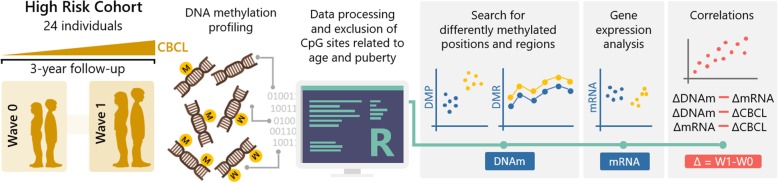
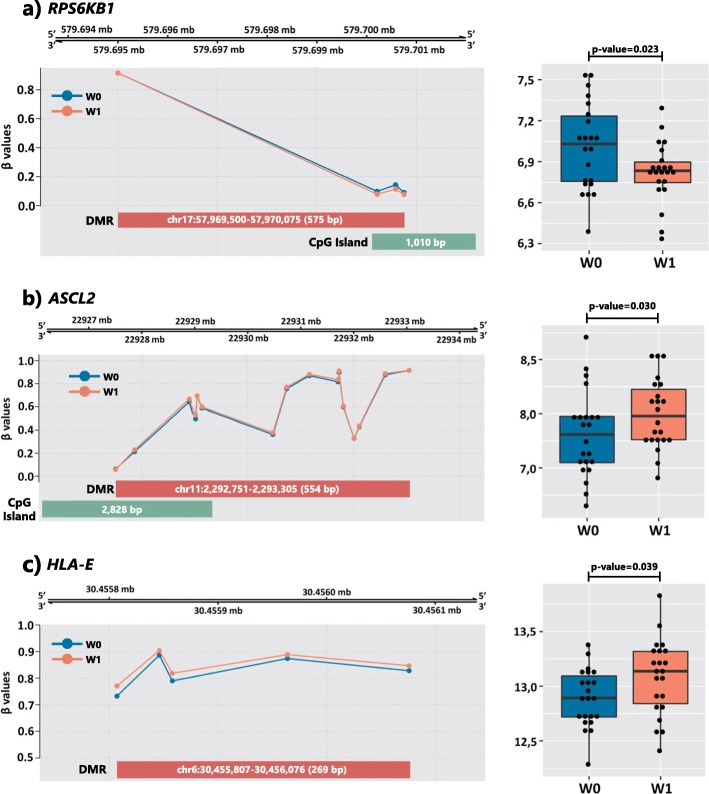
Background: Psychiatric symptomatology during late childhood and early adolescence tends to persist later in life. In the present longitudinal study, we aimed to identify changes in genome-wide DNA methylation patterns that were associated with the emergence of psychopathology in youths from the Brazilian High-Risk Cohort (HRC) for psychiatric disorders. Moreover, for the differentially methylated genes, we verified whether differences in DNA methylation corresponded to differences in mRNA transcript levels by analyzing the gene expression levels in the blood and by correlating the variation of DNA methylation values with the variation of mRNA levels of the same individuals. Finally, we examined whether the variations in DNA methylation and mRNA levels were correlated with psychopathology measurements over time. Methods: We selected 24 youths from the HRC who presented with an increase in dimensional psychopathology at a 3-year follow-up as measured by the Child Behavior Checklist (CBCL). The DNA methylation and gene expression data were compared in peripheral blood samples (n = 48) obtained from the 24 youths before and after developing psychopathology. We implemented a methodological framework to reduce the effect of chronological age on DNA methylation using an independent population of 140 youths and the effect of puberty using data from the literature. Results: We identified 663 differentially methylated positions (DMPs) and 90 differentially methylated regions (DMRs) associated with the emergence of psychopathology. We observed that 15 DMPs were mapped to genes that were differentially expressed in the blood; among these, we found a correlation between the DNA methylation and mRNA levels of RB1CC1 and a correlation between the CBCL and mRNA levels of KMT2E.Of the DMRs, three genes were differentially expressed:ASCL2, which is involved in neurogenesis;HLA-E, which is mapped to the MHC loci; and RPS6KB1, the gene expression of which was correlated with an increase in the CBCL between the time points. Conclusions: We observed that changes in DNA methylation and, consequently, in gene expression in the peripheral blood occurred concurrently with the emergence of dimensional psychopathology in youths. Therefore, epigenomic modulations might be involved in the regulation of an individual’s development of psychopathology.
Overview
The claims and statistics of this paper haven’t been checked yet.
Free: it reads the open-access text and checks the first 5 claims that cite a source we can check. Create a free account to check every claim.
Integrity signals
Registry
Cites
Statistics
Figures
Verification
Claims the paper makes
The claims and statistics of this paper haven’t been checked yet.
Free: it reads the open-access text and checks the first 5 claims that cite a source we can check. Create a free account to check every claim.
Claims other papers make about this one
Each is checked against this paper’s own text: does it say what the citing paper says it does?
In the citing paper
“One such study did not identify shared DNA methylation differences across different psychopathologies in the blood of World Trade Centre survivors23, while a second found multiple differentially methylated regions in resilient at-risk Brazilian adolescents when considering multi-dimensional psychopathology.26”
From The role of epigenetics in psychological resilience (2021) · cites this paper as [26]
Self-check
Percentages, sums and reported differences re-computed from the paper’s own numbers.
The self-check needs the paper’s full text.
Citations
Cites
Zhang, Q., Wang, C., Zheng, M., Li, Y., Li, J., Zhang, L., Shang, X., & Yan, C. (2015) · Cerebrovascular Diseases · doi:10.1159/000369778 · Cited by 11,533
Projections of Global Mortality and Burden of Disease from 2002 to 2030
Mathers, C. D., & Loncar, D. (2006) · PLoS Medicine · doi:10.1371/journal.pmed.0030442 · Cited by 11,386
Biological insights from 108 schizophrenia-associated genetic loci
Schizophrenia Working Group of the Psychiatric Genomics Consortium (2014) · Nature · doi:10.1038/nature13595 · Cited by 7,577
DNA methylation age of human tissues and cell types
Horvath, S. (2013) · Genome Biology · doi:10.1186/gb-2013-14-10-r115 · Cited by 7,075
Insel, T., Cuthbert, B., Garvey, M., Heinssen, R., Pine, D. S., Quinn, K., Sanislow, C., & Wang, P. (2010) · American Journal of Psychiatry · doi:10.1176/appi.ajp.2010.09091379 · Cited by 7,067
Functions of DNA methylation: islands, start sites, gene bodies and beyond
Jones, P. A. (2012) · Nature Reviews Genetics · doi:10.1038/nrg3230 · Cited by 6,061 · cited 1×
“Furthermore, although there are known to be significant differences in the overall and specific methylation levels between different tissue types [52], few methylation changes were observed in CpG shores between immune system cells [53].”
BackgroundWhiteford, H. A., Degenhardt, L., Rehm, J., Baxter, A. J., Ferrari, A. J., Erskine, H. E., Charlson, F. J., Norman, R. E., Flaxman, A. D., Johns, N., et al. (2013) · The Lancet · doi:10.1016/s0140-6736(13)61611-6 · Cited by 6,006
Aryee, M. J., Jaffe, A. E., Corrada-Bravo, H., Ladd-Acosta, C., Feinberg, A. P., Hansen, K. D., & Irizarry, R. A. (2014) · Bioinformatics · doi:10.1093/bioinformatics/btu049 · Cited by 4,397
Controlling the false discovery rate in behavior genetics research
Benjamini, Y., Drai, D., Elmer, G., Kafkafi, N., & Golani, I. (2001) · Behavioural Brain Research · doi:10.1016/s0166-4328(01)00297-2 · Cited by 4,146
Why do many psychiatric disorders emerge during adolescence?
Paus, T., Keshavan, M., & Giedd, J. N. (2008) · Nature Reviews Neuroscience · doi:10.1038/nrn2513 · Cited by 3,123
Howard, D. M., Adams, M. J., Clarke, T.-K., Hafferty, J. D., Gibson, J., Shirali, M., Coleman, J. R. I., Hagenaars, S. P., Ward, J., Wigmore, E. M., et al. (2019) · Nature Neuroscience · doi:10.1038/s41593-018-0326-7 · Cited by 2,565
Du, P., Zhang, X., Huang, C.-C., Jafari, N., Kibbe, W. A., Hou, L., & Lin, S. M. (2010) · BMC Bioinformatics · doi:10.1186/1471-2105-11-587 · Cited by 2,136
Analysis of shared heritability in common disorders of the brain
The Brainstorm Consortium, Anttila, V., Bulik-Sullivan, B., Finucane, H. K., Walters, R. K., Bras, J., Duncan, L., Escott-Price, V., Falcone, G. J., Gormley, P., et al. (2018) · Science · doi:10.1126/science.aap8757 · Cited by 1,924 · cited 1×
“brain disorders from GWAS identified a significant sharing of common variant risk among mental disorders and between mental disorders and brain phenotypes, including cognitive measures [3].”
BackgroundSelf-citationHelix-Loop-Helix Proteins: Regulators of Transcription in Eucaryotic Organisms
Massari, M. E., & Murre, C. (2000) · Molecular and Cellular Biology · doi:10.1128/mcb.20.2.429-440.2000 · Cited by 1,816
Goodman, R., Ford, T., Richards, H., Gatward, R., & Meltzer, H. (2000) · Journal of Child Psychology and Psychiatry · doi:10.1111/j.1469-7610.2000.tb02345.x · Cited by 1,755
mTOR is a key modulator of ageing and age-related disease
Johnson, S. C., Rabinovitch, P. S., & Kaeberlein, M. (2013) · Nature · doi:10.1038/nature11861 · Cited by 1,676
WEB-based GEne SeT AnaLysis Toolkit (WebGestalt): update 2013
Wang, J., Duncan, D., Shi, Z., & Zhang, B. (2013) · Nucleic Acids Research · doi:10.1093/nar/gkt439 · Cited by 1,498 · cited 1×
“lation results using the tools available in the WEB-based GEne SeT AnaLysis Toolkit (WEB-Gestalt) [30], selecting Gene Set Enrichment Analysis (GSEA) as the enrichment method.”
MethodKadoch, C., Hargreaves, D. C., Hodges, C., Elias, L., Ho, L., Ranish, J., & Crabtree, G. R. (2013) · Nature Genetics · doi:10.1038/ng.2628 · Cited by 1,458
Impact of cytosine methylation on DNA binding specificities of human transcription factors
Yin, Y., Morgunova, E., Jolma, A., Kaasinen, E., Sahu, B., Khund-Sayeed, S., Das, P. K., Kivioja, T., Dave, K., Zhong, F., et al. (2017) · Science · doi:10.1126/science.aaj2239 · Cited by 1,257
Accounting for cellular heterogeneity is critical in epigenome-wide association studies
Jaffe, A. E., & Irizarry, R. A. (2014) · Genome Biology · doi:10.1186/gb-2014-15-2-r31 · Cited by 1,067
De novo identification of differentially methylated regions in the human genome
Peters, T. J., Buckley, M. J., Statham, A. L., Pidsley, R., Samaras, K., V Lord, R., Clark, S. J., & Molloy, P. L. (2015) · Epigenetics & Chromatin · doi:10.1186/1756-8935-8-6 · Cited by 969 · cited 1×
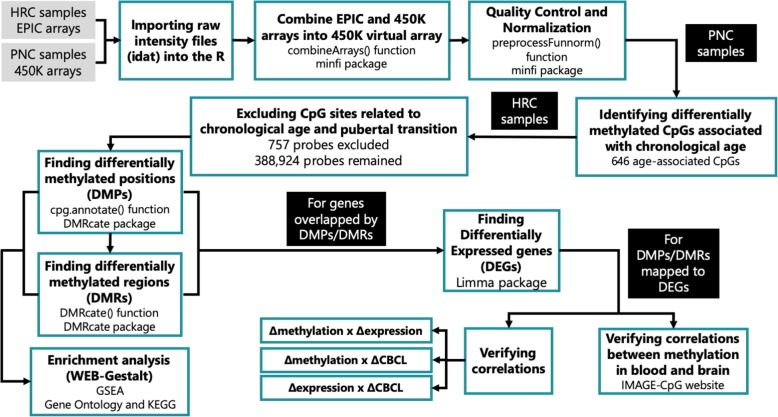
“We investigated the DMRs using the DMRcate package [28].”
MethodPreprocessing, normalization and integration of the Illumina HumanMethylationEPIC array with minfi
Fortin, J.-P., Triche, T. J., & Hansen, K. D. (2017) · Bioinformatics · doi:10.1093/bioinformatics/btw691 · Cited by 865 · cited 1×
“Based on Tanner’s classification [24], all 24 children from our sample had pubertal onset after W0 and before”
MethodBell, J. T., Tsai, P.-C., Yang, T.-P., Pidsley, R., Nisbet, J., Glass, D., Mangino, M., Zhai, G., Zhang, F., Valdes, A., et al. (2012) · PLoS Genetics · doi:10.1371/journal.pgen.1002629 · Cited by 685
Braun, P. R., Han, S., Hing, B., Nagahama, Y., Gaul, L. N., Heinzman, J. T., Grossbach, A. J., Close, L., Dlouhy, B. J., Howard, M. A., et al. (2019) · Translational Psychiatry · doi:10.1038/s41398-019-0376-y · Cited by 467
Hannon, E., Lunnon, K., Schalkwyk, L., & Mill, J. (2015) · Epigenetics · doi:10.1080/15592294.2015.1100786 · Cited by 455 · cited 1×
“However, these DMRs were mapped to the gene body, and the DNA methylation patterns between blood and brain are very distinct, particularly in the gene body [61].”
BackgroundThe role of genomic imprinting in biology and disease: an expanding view
Peters, J. (2014) · Nature Reviews Genetics · doi:10.1038/nrg3766 · Cited by 432
HOFSTRA, M. B., VAN DER ENDE, J., & VERHULST, F. C. (2002) · Journal of the American Academy of Child & Adolescent Psychiatry · doi:10.1097/00004583-200202000-00012 · Cited by 396
Genomic imprinting effects on brain development and function
Wilkinson, L. S., Davies, W., & Isles, A. R. (2007) · Nature Reviews Neuroscience · doi:10.1038/nrn2235 · Cited by 375
DNA methylation signatures in development and aging of the human prefrontal cortex
Numata, S., Ye, T., Hyde, T. M., Guitart-Navarro, X., Tao, R., Wininger, M., Colantuoni, C., Weinberger, D. R., Kleinman, J. E., & Lipska, B. K. (2012) · The American Journal of Human Genetics · doi:10.1016/j.ajhg.2011.12.020 · Cited by 364
From promises to practical strategies in epigenetic epidemiology
Mill, J., & Heijmans, B. T. (2013) · Nature Reviews Genetics · doi:10.1038/nrg3405 · Cited by 354
Hannon, E., Dempster, E., Viana, J., Burrage, J., Smith, A. R., Macdonald, R., St Clair, D., Mustard, C., Breen, G., Therman, S., et al. (2016) · Genome Biology · doi:10.1186/s13059-016-1041-x · Cited by 349 · cited 8×
“Moreover, 4 DMRs were located at genes that were found to be differentially methylated in the blood of chronic patients with SCZ [17], 11 DMRs were situated in MHC loci (the locus most strongly associated with SCZ [17]), and 5 DMRs were located upstream of imprinted genes (many imprinted genes affect behavior).”
BackgroundMethodInfluentialCell type–specific DNA methylation at intragenic CpG islands in the immune system
Deaton, A. M., Webb, S., Kerr, A. R. W., Illingworth, R. S., Guy, J., Andrews, R., & Bird, A. (2011) · Genome Research · doi:10.1101/gr.118703.110 · Cited by 284
The Genotype-Tissue Expression (GTEx) project
Lonsdale, J., Thomas, J., Salvatore, M., Phillips, R., Lo, E., Shad, S., Hasz, R., Walters, G., Garcia, F., Young, N., et al. (2013) · Nature Genetics · doi:10.1038/ng.2653 · Cited by 263 · cited 1×
“In addition, we found two DMRs that mapped to MOG (myelin oligodendrocyte glycoprotein) and PDE10A (phosphodiesterase 10A), genes that are highly expressed in the brain [47].”
BackgroundEpigenetic aging in major depressive disorder
Han, L. K. M., Aghajani, M., Clark, S. L., Chan, R. F., Hattab, M. W., Shabalin, A. A., Zhao, M., Kumar, G., Xie, L. Y., Jansen, R., et al. (2018) · American Journal of Psychiatry · doi:10.1176/appi.ajp.2018.17060595 · Cited by 260
The Philadelphia Neurodevelopmental Cohort: constructing a deep phenotyping collaborative
Calkins, M. E., Merikangas, K. R., Moore, T. M., Burstein, M., Behr, M. A., Satterthwaite, T. D., Ruparel, K., Wolf, D. H., Roalf, D. R., Mentch, F. D., et al. (2015) · Journal of Child Psychology and Psychiatry · doi:10.1111/jcpp.12416 · Cited by 245
Self-citationSalum, G. A., Gadelha, A., Pan, P. M., Moriyama, T. S., Graeff‐Martins, A. S., Tamanaha, A. C., Alvarenga, P., Krieger, F. V., Fleitlich‐Bilyk, B., Jackowski, A., et al. (2015) · International Journal of Methods in Psychiatric Research · doi:10.1002/mpr.1459 · Cited by 204
Self-citationRizzo, L. B., Costa, L. G., Mansur, R. B., Swardfager, W., Belangero, S. I., Grassi-Oliveira, R., McIntyre, R. S., Bauer, M. E., & Brietzke, E. (2014) · Neuroscience & Biobehavioral Reviews · doi:10.1016/j.neubiorev.2014.02.004 · Cited by 183
Self-citationThe mTOR pathway and its role in human genetic diseases
ROSNER, M., HANNEDER, M., SIEGEL, N., VALLI, A., FUCHS, C., & HENGSTSCHLAGER, M. (2008) · Mutation Research/Reviews in Mutation Research · doi:10.1016/j.mrrev.2008.06.001 · Cited by 182
A cross-package Bioconductor workflow for analysing methylation array data
Maksimovic, J., Phipson, B., & Oshlack, A. (2017) · F1000Research · doi:10.12688/f1000research.8839.3 · Cited by 178
Dong, S., Walker, M. F., Carriero, N. J., DiCola, M., Willsey, A. J., Ye, A. Y., Waqar, Z., Gonzalez, L. E., Overton, J. D., Frahm, S., et al. (2014) · Cell Reports · doi:10.1016/j.celrep.2014.08.068 · Cited by 170
BCL11A Haploinsufficiency Causes an Intellectual Disability Syndrome and Dysregulates Transcription
Dias, C., Estruch, S. B., Graham, S. A., McRae, J., Sawiak, S. J., Hurst, J. A., Joss, S. K., Holder, S. E., Morton, J. E. V., Turner, C., et al. (2016) · The American Journal of Human Genetics · doi:10.1016/j.ajhg.2016.05.030 · Cited by 163
Early life adversity, genomic plasticity, and psychopathology
Turecki, G., Ota, V. K., Belangero, S. I., Jackowski, A., & Kaufman, J. (2014) · The Lancet Psychiatry · doi:10.1016/s2215-0366(14)00022-4 · Cited by 149
Self-citationMEIOB Targets Single-Strand DNA and Is Necessary for Meiotic Recombination
Souquet, B., Abby, E., Hervé, R., Finsterbusch, F., Tourpin, S., Bouffant, R. L., Duquenne, C., Messiaen, S., Martini, E. M.-D., Bernardino-Sgherri, J., et al. (2013) · PLoS Genetics · doi:10.1371/journal.pgen.1003784 · Cited by 146
Sullivan, L. C., Clements, C. S., Rossjohn, J., & Brööks, A. G. (2008) · Tissue Antigens · doi:10.1111/j.1399-0039.2008.01138.x · Cited by 136
A cross-package Bioconductor workflow for analysing methylation array data
Maksimovic, J., Phipson, B., & Oshlack, A. (2016) · F1000Research · doi:10.12688/f1000research.8839.2 · Cited by 131
A cross-package Bioconductor workflow for analysing methylation array data
Maksimovic, J., Phipson, B., & Oshlack, A. (2016) · F1000Research · doi:10.12688/f1000research.8839.1 · Cited by 117
Epigenetics in eating disorders: a systematic review
Hübel, C., Marzi, S. J., Breen, G., & Bulik, C. M. (2019) · Molecular Psychiatry · doi:10.1038/s41380-018-0254-7 · Cited by 116
Pubertal development in healthy children is mirrored by DNA methylation patterns in peripheral blood
Almstrup, K., Lindhardt Johansen, M., Busch, A. S., Hagen, C. P., Nielsen, J. E., Petersen, J. H., & Juul, A. (2016) · Scientific Reports · doi:10.1038/srep28657 · Cited by 96 · cited 2×
“Therefore, we also excluded from the final analyses all CpGs associated with pubertal age (false discovery rate; FDR < 0.001), and all CpGs that were correlated with more than three of the five analyzed circulating reproductive hormones (FDR < 0.05) reported by Almstrup et al. (2016).”
BackgroundMethodInfluentialMLL5 (KMT2E): structure, function, and clinical relevance
Zhang, X., Novera, W., Zhang, Y., & Deng, L. (2017) · Cellular and Molecular Life Sciences · doi:10.1007/s00018-017-2470-8 · Cited by 96
Epigenetics and cerebral organoids: promising directions in autism spectrum disorders
Forsberg, S. L., Ilieva, M. S., & Michel, T. M. (2018) · Translational Psychiatry · doi:10.1038/s41398-017-0062-x · Cited by 88 · cited 1×
“There is a vast literature on DNA methylation studies in mental disorders [6, 7].”
BackgroundWnt signaling in neuropsychiatric disorders: Ties with adult hippocampal neurogenesis and behavior
Hussaini, S. M. Q., Choi, C.-I., Cho, C. H., Kim, H. J., Jun, H., & Jang, M.-H. (2014) · Neuroscience & Biobehavioral Reviews · doi:10.1016/j.neubiorev.2014.09.005 · Cited by 86
Blanken, L. M. E., Mous, S. E., Ghassabian, A., Muetzel, R. L., Schoemaker, N. K., El Marroun, H., van der Lugt, A., Jaddoe, V. W. V., Hofman, A., Verhulst, F. C., et al. (2015) · American Journal of Psychiatry · doi:10.1176/appi.ajp.2014.14040482 · Cited by 84
Widespread Enhancer Activity from Core Promoters
Medina-Rivera, A., Santiago-Algarra, D., Puthier, D., & Spicuglia, S. (2018) · Trends in Biochemical Sciences · doi:10.1016/j.tibs.2018.03.004 · Cited by 78
Axelrud, L. K., Santoro, M. L., Pine, D. S., Talarico, F., Gadelha, A., Manfro, G. G., Pan, P. M., Jackowski, A. P., Picon, F. A., Brietzke, E. M., et al. (2018) · American Journal of Psychiatry · doi:10.1176/appi.ajp.2017.17050529 · Cited by 75
Self-citationTracking age-correlated DNA methylation markers in the young
Freire-Aradas, A., Phillips, C., Girón-Santamaría, L., Mosquera‐Miguel, A., Gómez‐Tato, A., de Cal, M. C., Álvarez‐Dios, J. A., & Lareu, M. V. (2018) · Forensic Science International Genetics · doi:10.1016/j.fsigen.2018.06.011 · Cited by 63
How the epigenome contributes to the development of psychiatric disorders
Bredy, T. W., Sun, Y. E., & Kobor, M. S. (2010) · Developmental Psychobiology · doi:10.1002/dev.20424 · Cited by 51
Neurotrophin NT3 promotes ovarian primordial to primary follicle transition
Nilsson, E., Dole, G., & Skinner, M. K. (2009) · Reproduction · doi:10.1530/rep-09-0179 · Cited by 46
Mous, S. E., Muetzel, R. L., El Marroun, H., Polderman, T. J. C., van der Lugt, A., Jaddoe, V. W., Hofman, A., Verhulst, F. C., Tiemeier, H., Posthuma, D., et al. (2014) · Psychological Medicine · doi:10.1017/s0033291714000877 · Cited by 43
Chen, B., Yang, L., Zhang, R., Gan, Y., Zhang, W., Liu, D., Chen, H., & Tang, H. (2017) · PLoS ONE · doi:10.1371/journal.pone.0182891 · Cited by 39
Calais, J. B., Ojopi, E. B., Morya, E., Sameshima, K., & Ribeiro, S. (2015) · Neurobiology of Learning and Memory · doi:10.1016/j.nlm.2015.01.002 · Cited by 38
Dopamine gene methylation patterns are associated with obesity markers and carbohydrate intake
Ramos‐Lopez, O., Riezu‐Boj, J. I., Milagro, F. I., Martinez, J. A., & MENA Project (2018) · Brain and Behavior · doi:10.1002/brb3.1017 · Cited by 33
Braun, P., Han, S., Nagahama, Y., Gaul, L., Heinzman, J., Hing, B., Grossbach, A., Dlouhy, B., Howard, M., Kawasaki, H., et al. (2019) · European Neuropsychopharmacology · doi:10.1016/j.euroneuro.2017.08.029 · Cited by 28
Highly expressed genes within hippocampal sector CA1: implications for the physiology of memory
Meyer, M. A. (2014) · Neurology International · doi:10.4081/ni.2014.5388 · Cited by 26 · cited 1×
“PPP2R2D is selectively expressed in the mouse hippocampus and is upregulated in the hippocampus of rats during early rapid-eye-movement (REM) sleep after they are exposed to novel objects [41, 42].”
BackgroundAlisch, R. S., Van Hulle, C., Chopra, P., Bhattacharyya, A., Zhang, S.-C., Davidson, R. J., Kalin, N. H., & Goldsmith, H. H. (2017) · Translational Psychiatry · doi:10.1038/s41398-017-0047-9 · Cited by 25
Cordero‐Martínez, J., Reyes‐Miguel, T., Rodríguez‐Páez, L., Garduño‐Siciliano, L., Maldonado‐García, D., Roa-Espitia, A. L., & Hernández-González, E. O. (2018) · Journal of Cellular Biochemistry · doi:10.1002/jcb.26789 · Cited by 24
Model-Based Background Correction (MBCB): R Methods and GUI for Illumina Bead-array Data
Allen, J. D., Chen, M., & Xie, Y. (2009) · Journal of Cancer Science & Therapy · doi:10.4172/1948-5956.1000004 · Cited by 22
Retromer vesicles interact with RNA granules in haploid male germ cells
Ros, M. D., Hirvonen, N., Olotu, O., Toppari, J., & Kotaja, N. (2014) · Molecular and Cellular Endocrinology · doi:10.1016/j.mce.2014.11.026 · Cited by 11
Association of ribosomal protein S6 kinase 1 with cellular radiosensitivity of non-small lung cancer
Wang, Y., Mei, H., Shao, Q., Wang, J., & Lin, Z. (2017) · International Journal of Radiation Biology · doi:10.1080/09553002.2017.1294273 · Cited by 10
Chen, H., Lin, L., Chen, Y., Wan, J., Luo, J., Zhang, C.-Z., Li, X., Hu, Y.-M., Mai, J., Chen, W., et al. (2012) · PLoS ONE · doi:10.1371/journal.pone.0035524 · Cited by 7
Fetal growth restriction in a genetic model of sporadic Beckwith–Wiedemann syndrome
Tunster, S. J., de Pette, M. V., Creeth, H., Lefebvre, L., & John, R. M. (2018) · Disease Models & Mechanisms · doi:10.1242/dmm.035832 · Cited by 7
(2001) · Medical Entomology and Zoology
Cited by
Epigenome-wide association studies: current knowledge, strategies and recommendations
Campagna, M. P., Xavier, A., Lechner-Scott, J., Maltby, V., Scott, R. J., Butzkueven, H., Jokubaitis, V. G., & Lea, R. A. (2021) · Clinical Epigenetics · doi:10.1186/s13148-021-01200-8 · Cited by 227
The role of epigenetics in psychological resilience
Smeeth, D., Beck, S., Karam, E. G., & Pluess, M. (2021) · The Lancet Psychiatry · doi:10.1016/s2215-0366(20)30515-0 · Cited by 108
Natoli, V., Charras, A., Hofmann, S. R., Northey, S. J., Ruß, S., Schulze, F., McCann, L. J., Abraham, S., & Hedrich, C. M. (2023) · Frontiers in Immunology · doi:10.3389/fimmu.2023.1245876 · Cited by 33
“Since coordinated changes in DNA methylation in broader genomic regions may have greater downstream biological consequences and influence disease development and progression, we performed DMR analysis in the sub-cohorts of the study (96, 97).”
MethodKim, B. J., Kim, Y., Youn, D. H., Park, J. J., Rhim, J. K., Kim, H. C., Kang, K., & Jeon, J. P. (2020) · Scientific Reports · doi:10.1038/s41598-020-68325-3 · Cited by 26
Charras, A., Garau, J., Hofmann, S. R., Carlsson, E., Cereda, C., Ruß, S., Abraham, S., & Hedrich, C. M. (2021) · Frontiers in Cell and Developmental Biology · doi:10.3389/fcell.2021.746145 · Cited by 26
Metadata
- Authors
- Spindola, L. M., Santoro, M. L., Pan, P. M., Ota, V. K., Xavier, G., Carvalho, C. M., Talarico, F., Sleiman, P., March, M., Pellegrino, R., Brietzke, E., Grassi-Oliveira, R., Mari, J. J., Gadelha, A., Miguel, E. C., Rohde, L. A., Bressan, R. A., Mazzotti, D. R., Sato, J. R., Salum, G. A., Hakonarson, H., & Belangero, S. I.
- Affiliations
- Universidade Federal de São Paulo (BR)
- Children's Hospital of Philadelphia (US)
- University of Pennsylvania (US)
- Universidade Federal do ABC (BR)
- Universidade Federal do Rio Grande do Sul (BR)
- Corresponding author
- Belangero, Sintia I.
- ORCID
- Venue
- Clinical Epigenetics
- Published
- 2019-10-21
- Volume
- 11
- Issue
- 1
- Pages
- 146-146
- ISSN
- 1868-7075 (ISSN-L)
- 1868-7083
- PMC
- PMC6805541
- OpenAlex
- W2981323681
- Cited by
- 25
- References
- 71
- Citations by year
- 2026: 2 · 2025: 7 · 2024: 4 · 2023: 1 · 2022: 3 · 2021: 6 · 2020: 2
- FWCI
- 0.91
- Type
- journal article
- Language
- en
- Open access
- gold
- doi.org
- Licence
- cc-by
- creativecommons.org/licenses/by/4.0/ (tdm)
- creativecommons.org/licenses/by/4.0/ (vor)
- Locations
- Clinical Epigenetics (publishedVersion, cc-by)
- Europe PMC (PubMed Central) (publishedVersion, cc-by)
- PubMed Central (publishedVersion, cc-by)
- PubMed (publishedVersion)
- LA Referencia (Red Federada de Repositorios Institucionales de Publicaciones Científicas) (publishedVersion, other-oa)
- Americanae (AECID Library) (submittedVersion, cc-by-nc-sa)
- PUCRS Repository (Pontifical Catholic University of Rio Grande do Sul) (submittedVersion, cc-by-nc-sa)
- Funders
- Fundação de Amparo à Pesquisa do Estado de São Paulo (2014/07280-1, 2016/04983-7, 2017/05339-7)
- Topics
- Life Sciences › Biochemistry, Genetics and Molecular Biology › Molecular Biology › Epigenetics and DNA Methylation
- Social Sciences › Psychology › Clinical Psychology › Child and Adolescent Psychosocial and Emotional Development
- Life Sciences › Biochemistry, Genetics and Molecular Biology › Genetics › Genetic Associations and Epidemiology
- Keywords
- DNA methylation, dimensional models of psychopathology, youth psychopathology, differentially methylated regions, differentially methylated positions, epigenetic regulation, gene expression, RB1CC1, KMT2E, ASCL2, HLA-E, p70 S6 kinase, Child Behavior Checklist, high-risk cohort, longitudinal development, puberty, age correction, brain development
- MeSH terms
- Adolescent, Mental Disorders, Brazil, Child, Female, Gene Expression Regulation, Humans, Longitudinal Studies, Male, Sexual Maturation, CpG Islands, DNA Methylation, Gene Expression Profiling, Epigenesis, Genetic, Genome-Wide Association Study, Epigenomics
About these checks
Registry, retraction, Cites and statistics results are computed, not judged, with one exception: a printed reference that no index lists is read once by a model before it counts as a citation error. Claims are extracted by a model and kept only when their quote appears verbatim in the text; each cited source is then checked, with a model’s help, for whether it says what the claim relies on. Those verdicts can be wrong — read the claim’s quote and the cited source before relying on one.
Statistics and arithmetic are recomputed, not judged.
Confidence bands are shown only for fields calibrated on our annotated test set. None is calibrated yet, so no band is shown.
What counts as a claim ›How we measure confidence ›How we check this ›
Are you an author, or do you see a problem with this page? Request a review
Data sources
Bibliographic data: Semantic Scholar, OpenAlex, Crossref.
Contains information from the Semantic Scholar Academic Graph Datasets, made available under the ODC Attribution License (ODC-BY 1.0).
Semantic Scholar’s data is described in: Kinney, R., et al. (2023). The Semantic Scholar Open Data Platform. arXiv:2301.10140.
