

Differential DNA methylation and changing cell-type proportions as fibrotic stage progresses in NAFLD
Open accessThe DOI matches its Crossref record; 56 of the 56 references it cites were found in a registry or an index.
Abstract
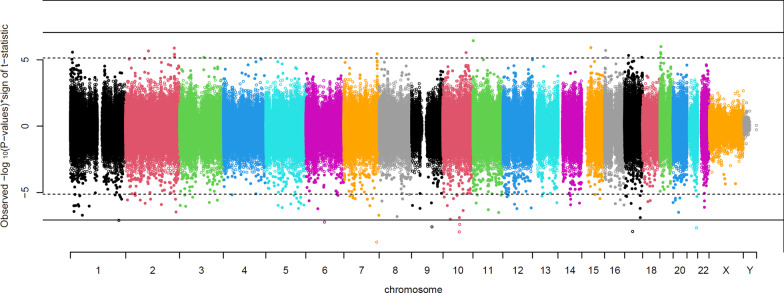
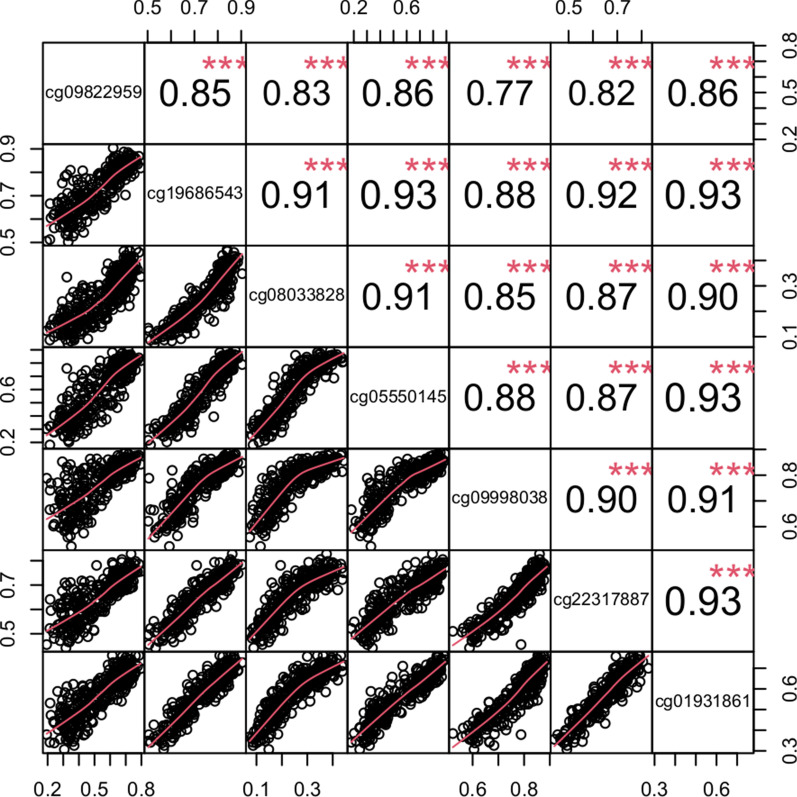
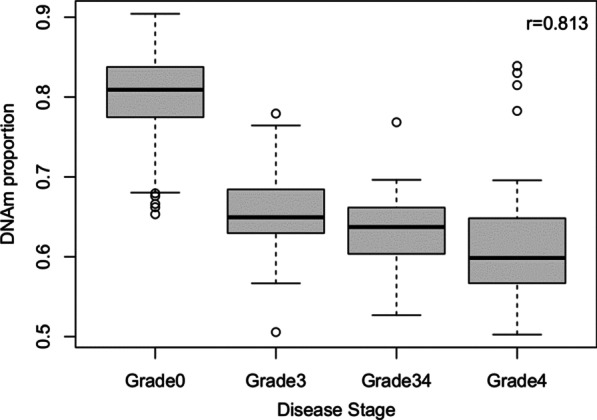
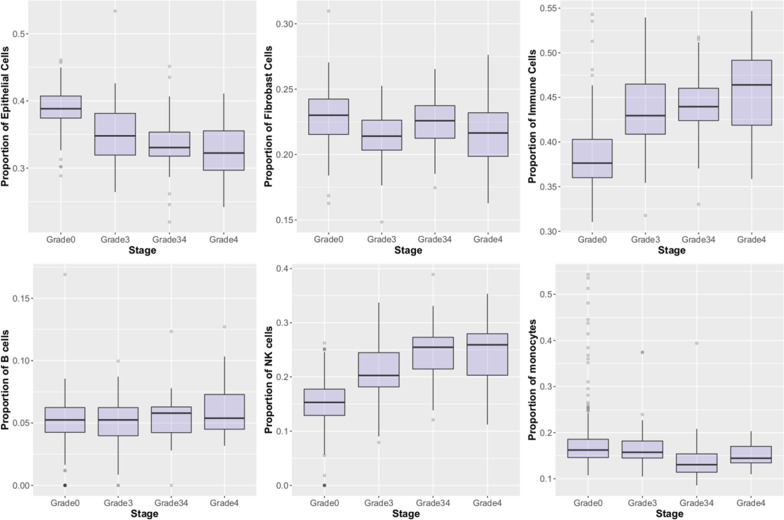
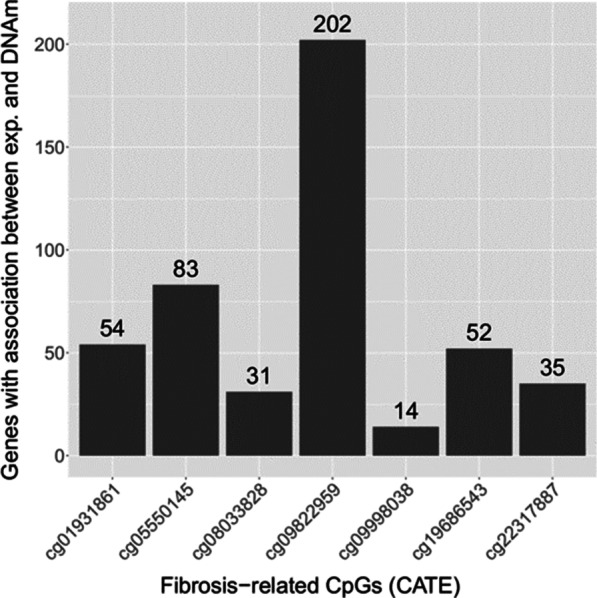
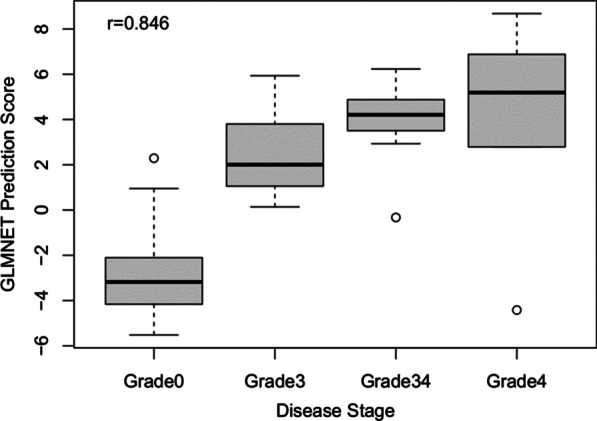
Background: Non-alcoholic fatty liver disease (NAFLD) is characterized by changes in cell composition that occur throughout disease pathogenesis, which includes the development of fibrosis in a subset of patients. DNA methylation (DNAm) is a plausible mechanism underlying these shifts, considering that DNAm profiles differ across tissues and cell types, and DNAm may play a role in cell-type differentiation. Previous work investigating the relationship between DNAm and fibrosis in NAFLD has been limited by sample size and the number of CpG sites interrogated. Results: Here, we performed an epigenome-wide analysis using Infinium MethylationEPIC array data from 325 individuals with NAFLD, including 119 with severe fibrosis and 206 with no histological evidence of fibrosis. After adjustment for latent confounders, we identified 7 CpG sites whose DNAm associated with fibrosis (p < 5.96 × 10⁻⁸). Analysis of RNA-seq data collected from a subset of individuals (N = 56) revealed that gene expression at 288 genes associated with DNAm at one or more of the 7 fibrosis-related CpGs. DNAm-based estimates of cell-type proportions showed that estimated proportions of natural killer cells increased, while epithelial cell proportions decreased with disease stage. Finally, we used an elastic net regression model to assess DNAm as a biomarker of fibrotic stage and found that our model predicted fibrosis with a sensitivity of 0.93 and provided information beyond a model based solely on cell-type proportions. Conclusion: These findings are consistent with DNAm as a mechanism underpinning or marking fibrosis-related shifts in cell composition and demonstrate the potential of DNAm as a possible biomarker of NAFLD fibrosis.
Overview
The claims and statistics of this paper haven’t been checked yet.
Free: it reads the open-access text and checks the first 5 claims that cite a source we can check. Create a free account to check every claim.
Integrity signals
Registry
Cites
Statistics
Figures
Verification
Claims the paper makes
The claims and statistics of this paper haven’t been checked yet.
Free: it reads the open-access text and checks the first 5 claims that cite a source we can check. Create a free account to check every claim.
Claims other papers make about this one
Each is checked against this paper’s own text: does it say what the citing paper says it does?
The source backs part of the claim, not all of it — or backs it for a different population, condition or comparison.
In the citing paper
“Moreover, certain patterns of DNA methylation at fibrosis-related genes, such as those encoding TGFβ1, COL1A1, PDGFα, peroxisome proliferator-activated receptor alpha (PPARα), and peroxisome proliferator-activated receptor delta (PPARδ), can not only distinguish between patients with mild versus advanced MASLD, but also predict future fibrosis progression (169-172).”
From Found in translation—Fibrosis in metabolic dysfunction–associated steatohepatitis (MASH) (2023) · cites this paper as [172]
Experimental — accuracy not yet measured
Self-check
Percentages, sums and reported differences re-computed from the paper’s own numbers.
The self-check needs the paper’s full text.
Citations
Cites
Moderated estimation of fold change and dispersion for RNA-seq data with DESeq2
Love, M. I., Huber, W., & Anders, S. (2014) · Genome Biology · doi:10.1186/s13059-014-0550-8 · Cited by 95,106
Building Predictive Models in R Using the caret Package
Kuhn, M. (2008) · Journal of Statistical Software · doi:10.18637/jss.v028.i05 · Cited by 8,863
DNA methylation age of human tissues and cell types
Horvath, S. (2013) · Genome Biology · doi:10.1186/gb-2013-14-10-r115 · Cited by 7,075
Software for Computing and Annotating Genomic Ranges
Lawrence, M., Huber, W., Pagès, H., Aboyoun, P., Carlson, M., Gentleman, R., Morgan, M. T., & Carey, V. J. (2013) · PLoS Computational Biology · doi:10.1371/journal.pcbi.1003118 · Cited by 4,398
Aryee, M. J., Jaffe, A. E., Corrada-Bravo, H., Ladd-Acosta, C., Feinberg, A. P., Hansen, K. D., & Irizarry, R. A. (2014) · Bioinformatics · doi:10.1093/bioinformatics/btu049 · Cited by 4,397
Using GOstats to test gene lists for GO term association
Falcon, S., & Gentleman, R. (2007) · Bioinformatics · doi:10.1093/bioinformatics/btl567 · Cited by 2,015
Resolving the fibrotic niche of human liver cirrhosis at single-cell level
Ramachandran, P., Dobie, R., Wilson-Kanamori, J. R., Dora, E. F., Henderson, B. E. P., Luu, N. T., Portman, J. R., Matchett, K. P., Brice, M., Marwick, J. A., et al. (2019) · Nature · doi:10.1038/s41586-019-1631-3 · Cited by 1,784
Integrative single-cell analysis
Stuart, T., & Satija, R. (2019) · Nature Reviews Genetics · doi:10.1038/s41576-019-0093-7 · Cited by 1,460
GeneHancer: genome-wide integration of enhancers and target genes in GeneCards
Fishilevich, S., Nudel, R., Rappaport, N., Hadar, R., Plaschkes, I., Iny Stein, T., Rosen, N., Kohn, A., Twik, M., Safran, M., et al. (2017) · Database · doi:10.1093/database/bax028 · Cited by 1,271
Low-level processing of Illumina Infinium DNA Methylation BeadArrays
Triche, T. J., Weisenberger, D. J., Van Den Berg, D., Laird, P. W., & Siegmund, K. D. (2013) · Nucleic Acids Research · doi:10.1093/nar/gkt090 · Cited by 905
Cited by
Epigenetic regulation in metabolic diseases: mechanisms and advances in clinical study
Wu, Y.-L., Lin, Z.-J., Li, C.-C., Lin, X., Shan, S.-K., Guo, B., Zheng, M.-H., Li, F., Yuan, L.-Q., & Li, Z.-H. (2023) · Signal Transduction and Targeted Therapy · doi:10.1038/s41392-023-01333-7 · Cited by 476
“Johnson et al.(367) identified seven CpG sites, including cg09822959 and cg19686543, which are related to liver fibrosis and could act as promising biomarkers for liver fibrosis.”
BackgroundFound in translation—Fibrosis in metabolic dysfunction–associated steatohepatitis (MASH)
Wang, S., & Friedman, S. L. (2023) · Science Translational Medicine · doi:10.1126/scitranslmed.adi0759 · Cited by 158
“…as those encoding TGFβ1, COL1A1, PDGFα, peroxisome pro-liferator – activated receptor alpha (PPARα), and peroxisome proliferator – activated receptor delta (PPARδ), can not only distinguish between patients with mild versus advanced MASLD but also predict future fibrosis progression ( 168 – 171 ).”
BackgroundMartinou, E., Pericleous, M., Stefanova, I., Kaur, V., & Angelidi, A. M. (2022) · Diagnostics · doi:10.3390/diagnostics12020407 · Cited by 107
Role of ammonia in NAFLD: An unusual suspect
Thomsen, K. L., Eriksen, P. L., Kerbert, A. J. C., Chiara, F. D., Jalan, R., & Vilstrup, H. (2023) · JHEP Reports · doi:10.1016/j.jhepr.2023.100780 · Cited by 73
The Potential Role of Cellular Senescence in Non-Alcoholic Fatty Liver Disease
Engelmann, C., & Tacke, F. (2022) · International Journal of Molecular Sciences · doi:10.3390/ijms23020652 · Cited by 61
“Another study identified DNA methylation patterns related to genes involved in fibrogenesis, especially in those patients with rapidly progressing disease and high grades of fibrosis [46].”
BackgroundDetangling the interrelations between MAFLD, insulin resistance, and key hormones
Pal, S. C., Eslam, M., & Méndez‐Sánchez, N. (2022) · HORMONES · doi:10.1007/s42000-022-00391-w · Cited by 49
Cell-type specific epigenetic clocks to quantify biological age at cell-type resolution
Tong, H., Guo, X., Jacques, M., Luo, Q., Eynon, N., & Teschendorff, A. E. (2024) · Aging · doi:10.18632/aging.206184 · Cited by 48
Epigenetic Changes Affecting the Development of Hepatocellular Carcinoma
Wolińska, E., & Skrzypczak, M. (2021) · Cancers · doi:10.3390/cancers13164237 · Cited by 40
“methylation was associated with fibrosis [88].”
Deciphering the role of aberrant DNA methylation in NAFLD and NASH
Vachher, M., Bansal, S., Kumar, B., Yadav, S., & Burman, A. (2022) · Heliyon · doi:10.1016/j.heliyon.2022.e11119 · Cited by 34
Modulation of Oxidative Stress-Induced Senescence during Non-Alcoholic Fatty Liver Disease
Pedroza-Díaz, J., Arroyave-Ospina, J. C., Salas, S. S., & Moshage, H. J. (2022) · Antioxidants · doi:10.3390/antiox11050975 · Cited by 31
“A recent study showed that differential DNA methylation patterns appeared to be associated with NAFLD progression and fibrosis stage [168].”
BackgroundAn improved epigenetic counter to track mitotic age in normal and precancerous tissues
Zhu, T., Tong, H., Du, Z., Beck, S., & Teschendorff, A. E. (2024) · Nature Communications · doi:10.1038/s41467-024-48649-8 · Cited by 27
“As another example, we focused on an EPIC DNAm dataset of liver-tissue samples from 325 obese individuals diagnosed with non-alcoholic fatty liver disease (NAFLD) 78 , of which 210 displayed no fi brosis (grade-0), with the rest displaying severe fi brosis (grade 3 – 4) ( “ Methods ” section).”
InfluentialAn improved epigenetic counter to track mitotic age in normal and precancerous tissues
Zhu, T., Tong, H., Du, Z., Beck, S., & Teschendorff, A. E. (2023) · doi:10.1101/2023.07.27.549809 · Cited by 27
Advances in Noninvasive Biomarkers for Nonalcoholic Fatty Liver Disease
Gîlcă-Blanariu, G.-E., Budur, D. S., Mitrică, D., Gologan, E., Timofte, O., Bălan, G. G., OLTEANU, V.-A., & Ștefănescu, G. (2023) · Metabolites · doi:10.3390/metabo13111115 · Cited by 25
“The inclusion of the DNA methylation to contribute to staging fibrosis was also confirmed by Johnson et al. [188] in a study that showed a sensitivity of 0.93 for predicting fibrosis.”
BackgroundInfluentialNew advances of DNA/RNA methylation modification in liver fibrosis
Yang, L., Liu, Y., Sun, Y.-Y., Huang, C., Li, J., & Wang, Y. (2021) · Cellular Signalling · doi:10.1016/j.cellsig.2021.110224 · Cited by 26
Magdy, A., Kim, H., Go, H., Lee, J. M., Sohn, H. A., Haam, K., Jung, H.-J., Park, J., Yoo, T., Kwon, E., et al. (2024) · Clinical and Molecular Hepatology · doi:10.3350/cmh.2024.0229 · Cited by 24
Mitochondrial DNA methylation in metabolic associated fatty liver disease
Mposhi, A., Cortés-Mancera, F., Heegsma, J., de Meijer, V. E., van de Sluis, B., Sydor, S., Bechmann, L. P., Theys, C., Rijk, P. D., Pooter, T. D., et al. (2023) · Frontiers in Nutrition · doi:10.3389/fnut.2023.964337 · Cited by 23
“It is known that the development of MAFLD depends on a myriad of other factors that include obesity, insulin resistance, and genetic predisposition (38), as well as epigenetic factors (39, 40).”
BackgroundThe Story of Ammonia in Liver Disease: An Unraveling Continuum
Anand, A. C., & Acharya, S. K. (2024) · Journal of Clinical and Experimental Hepatology · doi:10.1016/j.jceh.2024.101361 · Cited by 22
Factors That Predict the Progression of Non-alcoholic Fatty Liver Disease (NAFLD)
Parameswaran, M., Hasan, H. A., Sadeque, J., Jhaveri, S., Avanthika, C., Arisoyin, A. E., Dhanani, M., & Rath, S. M. (2021) · Cureus · doi:10.7759/cureus.20776 · Cited by 22
“A recent study has demonstrated a change in expression of 288 genes in samples with fibrosis along with a change in cell composition driven by DNA methylation [106].”
BackgroundAssociation between advanced fibrosis and epigenetic age acceleration among individuals with MASLD
Wang, H., Liu, Z., Fan, H. X., Guo, C., Zhang, X., Li, Y., Zhao, S., Dai, L., Zhao, M., & Zhang, T. (2024) · Journal of Gastroenterology · doi:10.1007/s00535-024-02181-0 · Cited by 18
“We used a publicly available DNAm dataset generated by Johnson et al. [15], comprising 325 MASLD individuals with different stages of fibrosis, sourced from the Gene Expression Omnibus (https:// www. ncbi. nlm. nih. gov/ geo; accession number GSE180474).”
Moylan, C. A., Mavis, A., Jima, D. D., Maguire, R. L., Bashir, M. R., Hyun, J., Cabezas, M., Parish, A., Niedzwiecki, D., Diehl, A. M., et al. (2022) · Epigenetics · doi:10.1080/15592294.2022.2039850 · Cited by 16
“[31] A recent study using untargeted approaches revealed that peripheral blood DNA methylation patterns reflect celltype changes in the liver and thus could provide a biomarker for NAFLD fibrosis[32].”
BackgroundChaudhry, A., Noor, J., Batool, S. A., Fatima, G., & Noor, R. (2023) · Cureus · doi:10.7759/cureus.44924 · Cited by 16
“The FIB-4 index is helpful in identifying patients with advanced fibrosis who may require further evaluation or intervention [26].”
BackgroundA crosstalk between epigenetic modulations and non-alcoholic fatty liver disease progression
Ramezani, M., Zobeiry, M., Abdolahi, S., Hatami, B., Zali, M. R., & Baghaei, K. (2023) · Pathology - Research and Practice · doi:10.1016/j.prp.2023.154809 · Cited by 16
Tattoli, I., Mathew, A. R., Verrienti, A., Pallotta, L., Severi, C., Andreola, F., Cavallucci, V., Giorgi, M., Massimi, M., Bencini, L., et al. (2024) · Cells · doi:10.3390/cells13191631 · Cited by 15
“…of selected cell-type-specific genes rewinds transcriptional programs, activating dysfunctional pathways, and bringing cellular shifts to hematopoietic tissues and the liver throughout NAFLD pathogenesis and hepatocarcinogenesis by further altering the expression of tumor-related genes [169,170].”
BackgroundSokolowska, K. E., Maciejewska, D., Bińkowski, J., Palma, J., Taryma‐Leśniak, O., Kozłowska‐Petriczko, K., Borowski, K., Baśkiewicz-Hałasa, M., Hawryłkowicz, V., Załęcka, P., et al. (2022) · Clinical Epigenetics · doi:10.1186/s13148-022-01377-6 · Cited by 15
“In recently published paper, the association of the methylation changes in liver with the fibrosis progression was investigated [32].”
BackgroundMethodA bibliometric analysis and visualization of nonalcoholic fatty liver disease from 2012 to 2021
Li, Z., Cao, S., Zhao, S., & Kang, N. (2023) · Clinical and Experimental Medicine · doi:10.1007/s10238-023-01023-2 · Cited by 15
“In addition, DNA methylation (DNAm) appears to be associated with fibrosis in NAFLD and Johnson ND demonstrates that DNAm is expected to be a marker of NAFLD fibrosis [42].”
BackgroundBarchetta, I., Zampieri, M., Cimini, F. A., Dule, S., Sentinelli, F., Passarella, G., Oldani, A., Karpach, K., Bacalini, M. G., Baroni, M. G., et al. (2025) · International Journal of Molecular Sciences · doi:10.3390/ijms26031271 · Cited by 14
“Notably, there is an overlap between methylation changes associated with MASLD observed in the liver and those identified in the blood, both reflecting increased inflammation [25].”
Using epigenomics to understand cellular responses to environmental influences in diseases
Wattacheril, J. J., Raj, S. M., Knowles, D. A., & Greally, J. M. (2023) · PLoS Genetics · doi:10.1371/journal.pgen.1010567 · Cited by 14
“NAFLD: severe fibrosis 119 Liver DNA methylation [61]”
BackgroundUnraveling Liver Cirrhosis: Bridging Pathophysiology to Innovative Therapeutics
Hegazy, R. A. (2025) · Journal of Gastroenterology and Hepatology · doi:10.1111/jgh.70037 · Cited by 13
Dijck, E. V., Laere, S. V., Logie, E., Timmermans, S., Fransén, E., Ibrahim, J., Kendall, T. J., Fallowfield, J. A., Mateiu, L. M., Libert, C., et al. (2025) · Clinical Epigenetics · doi:10.1186/s13148-025-01945-6 · Cited by 13
“Changes in cell-type fractions upon MASLD progression show consistency with previous findings, with a decrease in hepatocyte fraction and an increase in inflammatory cells [50, 81].”
Stols‐Gonçalves, D., Meijnikman, A. S., Tristão, L. S., dos Santos, C. L., Denswil, N. P., Verheij, J., Bernardo, W. M., & Nieuwdorp, M. (2024) · Cells · doi:10.3390/cells13221893 · Cited by 12
Sun, L., Yue, Z., & Wang, L. (2024) · Life Medicine · doi:10.1093/lifemedi/lnae030 · Cited by 11
Zaiou, M., & Joubert, O. (2025) · Biomolecules · doi:10.3390/biom15050669 · Cited by 9
“Additionally, Johnson et al. [145] discovered seven CpG sites, including cg09822959 and cg19686543, that correlate with liver fibrosis and may represent valuable biomarkers for this condition.”
Non-coding 886 ( nc886 / vtRNA2-1 ), the epigenetic odd duck – implications for future studies
Raitoharju, E., Rajić, S., & Marttila, S. (2024) · Epigenetics · doi:10.1080/15592294.2024.2332819 · Cited by 9
Lei, P., Hu, N., Wu, Y., Tang, M., Chong, L., Kong, L., Zhang, L., Luo, P., & Chan, L. (2023) · iRadiology · doi:10.1002/ird3.24 · Cited by 6
Li, J., Liu, X., Tran, T. T., Lee, M., & Tsai, R. Y. L. (2025) · Liver International · doi:10.1111/liv.70040 · Cited by 6
“To date, only one study has used the expanded Infinium MethylationEPIC BeadChip (850K) to profile DNA methylation in human MASLD tissues [20].”
The relationship between folic acid and nonalcoholic fatty liver disease
Xu, B., Yang, X., Zhu, X., Liu, Q., Zhang, Y., Zhang, M., Fan, C., Ban, X., Aikebaier, G., & Bian, H. (2024) · Clinical and Translational Discovery · doi:10.1002/ctd2.274 · Cited by 5
Non-alcoholic fatty liver disease - opportunities for personalized treatment and drug development
Kemas, A. M., Youhanna, S. C., & Lauschke, V. M. (2022) · Expert Review of Precision Medicine and Drug Development · doi:10.1080/23808993.2022.2053285 · Cited by 5
Reversible and causal epigenetic information loss in liver aging and disease
Shtark, R. B., Sagy, N., Korenfeld, N., Gal, M., Goldstein, I., & Bar, D. Z. (2026) · PNAS Nexus · doi:10.1093/pnasnexus/pgag109 · Cited by 4
“…between tissue-specific methylation patterns and liver disease severity, we analyzed methylation profiles from a cohort of nonalcoholic fatty liver disease (NAFLD) patients ( N =341) in relation to clinical features including body mass index (BMI), age, type 2 diabetes, and fibrosis grade (35).”
Ahn, J., Kim, S., Jeong, J. Y., Heo, S., Pyo, K., Shin, E., Kim, W., Lee, J.-H., Lee, H. A., Lee, H. A., et al. (2025) · PLoS ONE · doi:10.1371/journal.pone.0328207 · Cited by 4
“Unlike traditional studies that focus on selecting a few precise CpG sites [47], we aimed to observe as many trends as possible, selecting significant sites through group comparisons (Fig 2).”
[Application of omics in the diagnosis of metabolic dysfunction-associated fatty liver disease].
Wu, X., Geng, N., Chen, Q. Q., & Li, J. (2023) · PubMed Central · doi:10.3760/cma.j.cn501113-20230906-00094 · Cited by 4
Self-citationDNA methylation landscapes of HIV controllers: an epigenome-wide association study
Gupta, M. K., dos Santos, J. C., Vázquez, V., Ruijten, S. D. E., Navas, A., Jiang, X., Liu, Z., Zhang, Z., Botey-Bataller, J., Singh, O., et al. (2025) · EBioMedicine · doi:10.1016/j.ebiom.2025.105999 · Cited by 4
Hyperammonemia and metabolic-associated fatty liver disease: a complex relationship
Deeva, Т. A., Okovityi, S. V., & Shulpekova, Y. O. (2025) · Voprosy Pitaniya · doi:10.33029/0042-8833-2025-94-5-34-41 · Cited by 3
Zhelezniakova, N., & Aleksandrova, T. M. (2026) · Journal of Gastrointestinal and Liver Diseases · doi:10.15403/jgld-6581 · Cited by 3
“…an epigenomic analysis, which used data from the Infinium Methylation EPIC array from 325 individuals with MASLD, it was demonstrated that DNA methylation is a mechanism underlying changes in the cellular composition of hepatocytes in the pathogenesis of MASLD, including the development of LF [31].”
DiStefano, J. K., & Gerhard, G. S. (2024) · Clinical and Molecular Hepatology · doi:10.3350/cmh.2024.0704 · Cited by 3
“For example, reductions in epithelial cell estimates, alongside elevated immune cell estimates, correlate with advancing fibrosis in individuals with MASLD, suggesting that these cellular changes may partly explain the variations in DNA methylation observed across different stages of fibrosis [14].”
BackgroundSelf-citationMapping the genomic landscape of MASLD: A framework for molecular subtyping and precision hepatology
Pirola, C. J., & Sookoian, S. C. (2026) · Med · doi:10.1016/j.medj.2026.101131 · Cited by 2
Hui, Z., & Xiao, M. (2024) · Gastroenterology and Hepatology Research · doi:10.53388/ghr2024013 · Cited by 1
Njei, B. M., & Al‐Ajlouni, Y. A. (2026) · Frontiers in Physiology · doi:10.3389/fphys.2026.1791638 · Cited by 1
Sun, Y., Cheng, L., & Miao, X. (2025) · Journal of Anatomical Society of India · doi:10.4103/jasi.jasi_18_25
Bertran Ramos, L. (2023) · Rovira & Virgili repository
The Role of Epigenetics in Corneal Fibrosis
Coelho, J. T., Dewald, E. J., Ali, S. R., Geary, M. L., Santra, M., & Yam, G. H. (2026) · Epigenomes · doi:10.3390/epigenomes10020040
“In fibrosis research, these technologies have revealed aberrant methylation patterns associated with myoF differentiation, ECM remodeling, inflammatory signaling, and impaired healing processes [149,159].”
DiFrank, A. J., Corliss, B. A., Park, J. J. H., Rogers, M. C., Skaar, D. A., Jima, D. D., Cowley, M., Murphy, S. K., Liu, A., Moylan, C. A., et al. (2026) · Journal of Hepatocellular Carcinoma · doi:10.2147/jhc.s605131
Ng, R. R., Gao, Y., Xu, Y., & Lau, A. T. Y. (2026) · Advances in predictive, preventive and personalised medicine · doi:10.1007/978-3-032-32838-0_4
Teschendorff, A. E., Tong, H., & Guo, X. (2026) · bioRxiv (Cold Spring Harbor Laboratory) · doi:10.64898/2026.10.10.758162
Mposhi, A., Cortés-Mancera, F., Heegsma, J., de Meijer, V. E., van de Sluis, B., Sydor, S., Bechmann, L. P., Theys, C., de Rijk, P., Pooter, T. D., et al. (2023) · doi:10.3389/fnut.2023.964337.s001
Khalid, S. S., Pirola, C. J., & Alswat, K. (2026) · Epigenomics · doi:10.1080/17501911.2026.2765188
Metadata
- Authors
- Johnson, N. D., Wu, X., Still, C. D., Chu, X., Petrick, A. T., Gerhard, G. S., Conneely, K. N., & DiStefano, J. K.
- Affiliations
- Emory University (US)
- Translational Genomics Research Institute (US)
- Temple University (US)
- Corresponding author
- DiStefano, Johanna K.
- ORCID
- Venue
- Clinical Epigenetics
- Published
- 2021-08-05
- Volume
- 13
- Issue
- 1
- Pages
- 152-152
- ISSN
- 1868-7075 (ISSN-L)
- 1868-7083
- PMC
- PMC8340447
- OpenAlex
- W3190108721
- Semantic Scholar
- 9855908b28ba740828aed4c57e58d803f0af4938
- Cited by
- 43
- References
- 56
- Citations by year
- 2026: 3 · 2025: 8 · 2024: 11 · 2023: 10 · 2022: 8 · 2021: 3
- FWCI
- 2.51
- Type
- journal article
- Language
- en
- Open access
- gold
- doi.org
- Licence
- cc-by
- creativecommons.org/licenses/by/4.0 (tdm)
- creativecommons.org/licenses/by/4.0 (vor)
- Locations
- Clinical Epigenetics (publishedVersion, cc-by)
- PubMed Central (publishedVersion, cc-by)
- PubMed (publishedVersion)
- Funders
- National Institute of Diabetes and Digestive and Kidney Diseases (DK107735)
- Topics
- Life Sciences › Biochemistry, Genetics and Molecular Biology › Molecular Biology › Epigenetics and DNA Methylation
- Health Sciences › Medicine › Hepatology › Liver Disease Diagnosis and Treatment
- Health Sciences › Medicine › Hepatology › Liver physiology and pathology
- Keywords
- non-alcoholic fatty liver disease, liver fibrosis, DNA methylation, cell type proportions, natural killer cells, liver epithelial cells, epigenome-wide association study, gene expression, disease progression
- MeSH terms
- Long Term Adverse Effects, Child, Child, Preschool, Female, Humans, Male, Neoplasm Staging, Intensive Care Units, Pediatric, DNA Methylation, Non-alcoholic Fatty Liver Disease
About these checks
Registry, retraction, Cites and statistics results are computed, not judged, with one exception: a printed reference that no index lists is read once by a model before it counts as a citation error. Claims are extracted by a model and kept only when their quote appears verbatim in the text; each cited source is then checked, with a model’s help, for whether it says what the claim relies on. Those verdicts can be wrong — read the claim’s quote and the cited source before relying on one.
Statistics and arithmetic are recomputed, not judged.
Confidence bands are shown only for fields calibrated on our annotated test set. None is calibrated yet, so no band is shown.
What counts as a claim ›How we measure confidence ›How we check this ›
Are you an author, or do you see a problem with this page? Request a review
Data sources
Bibliographic data: Semantic Scholar, OpenAlex, Crossref.
Contains information from the Semantic Scholar Academic Graph Datasets, made available under the ODC Attribution License (ODC-BY 1.0).
Semantic Scholar’s data is described in: Kinney, R., et al. (2023). The Semantic Scholar Open Data Platform. arXiv:2301.10140.
