

Serotonin 5-HT6 receptors affect cognition in a mouse model of Alzheimer’s disease by regulating cilia function
Open accessThe DOI matches its Crossref record; 37 of the 37 references it cites were found in a registry or an index.
Abstract
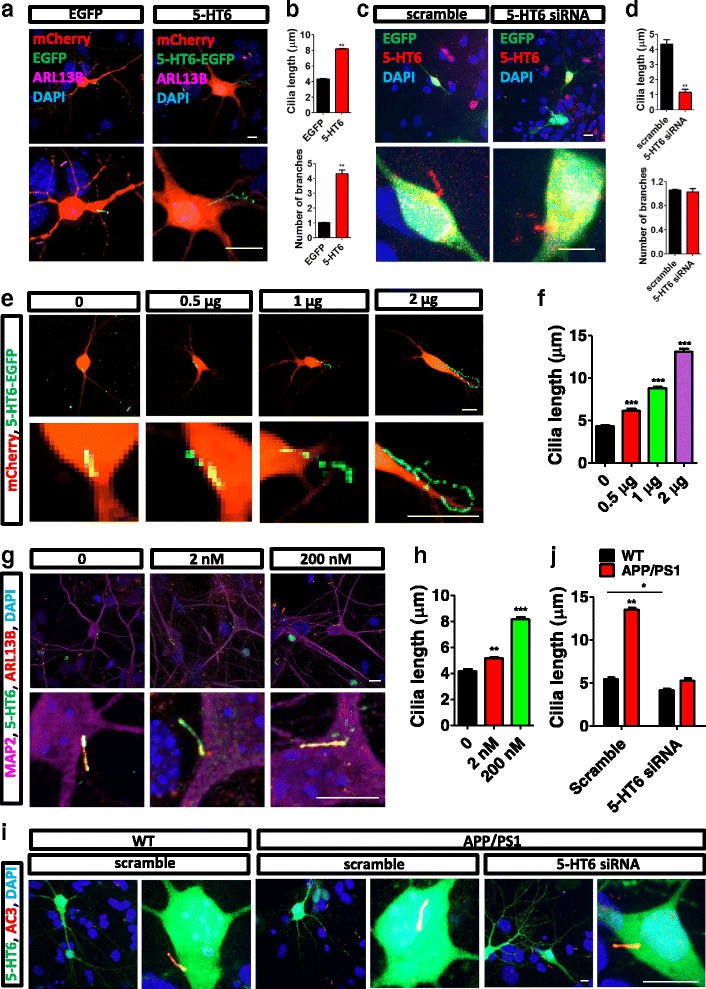
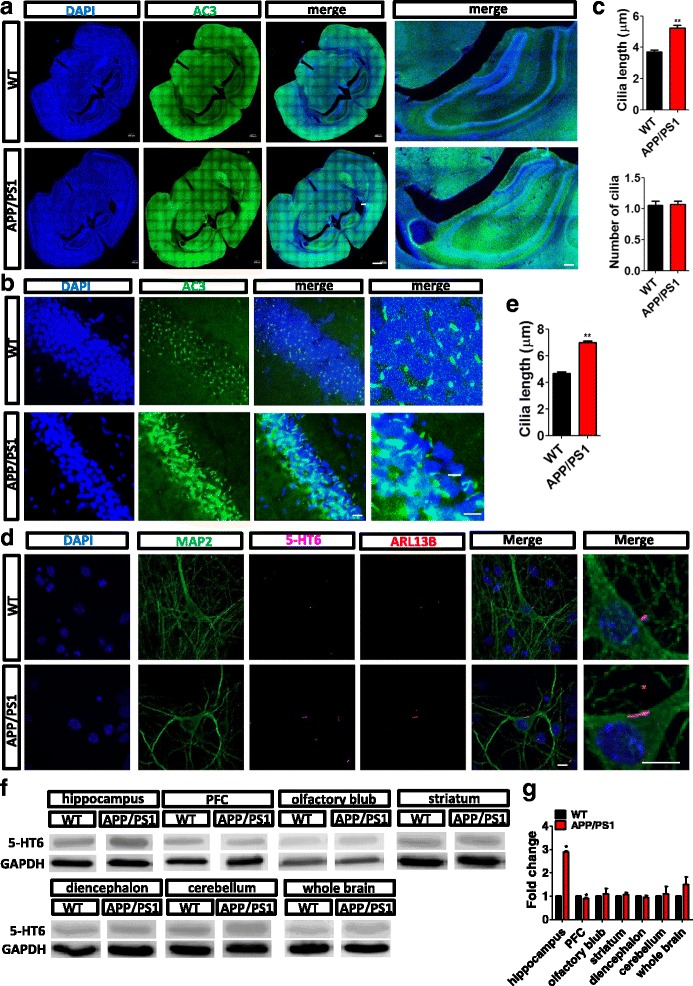
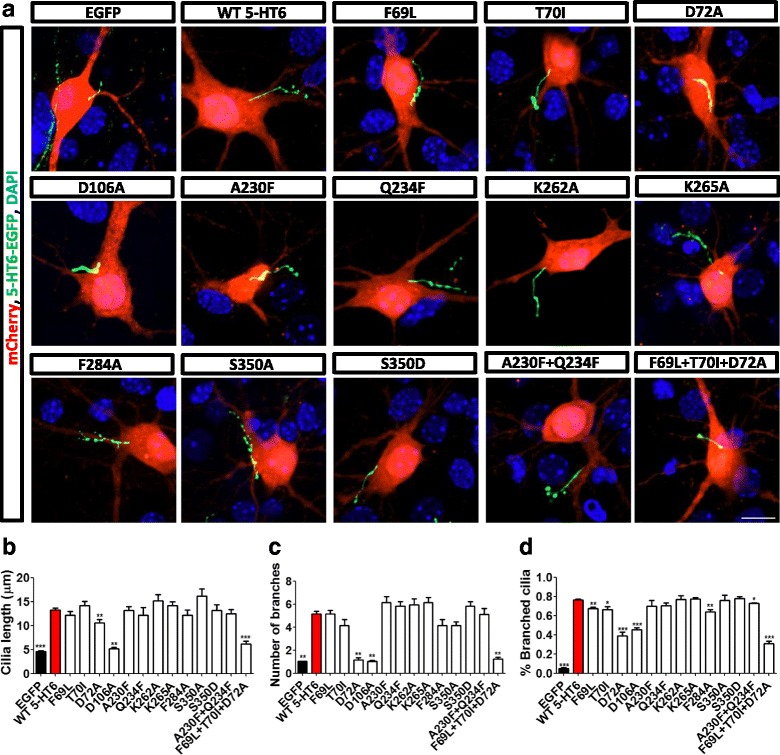
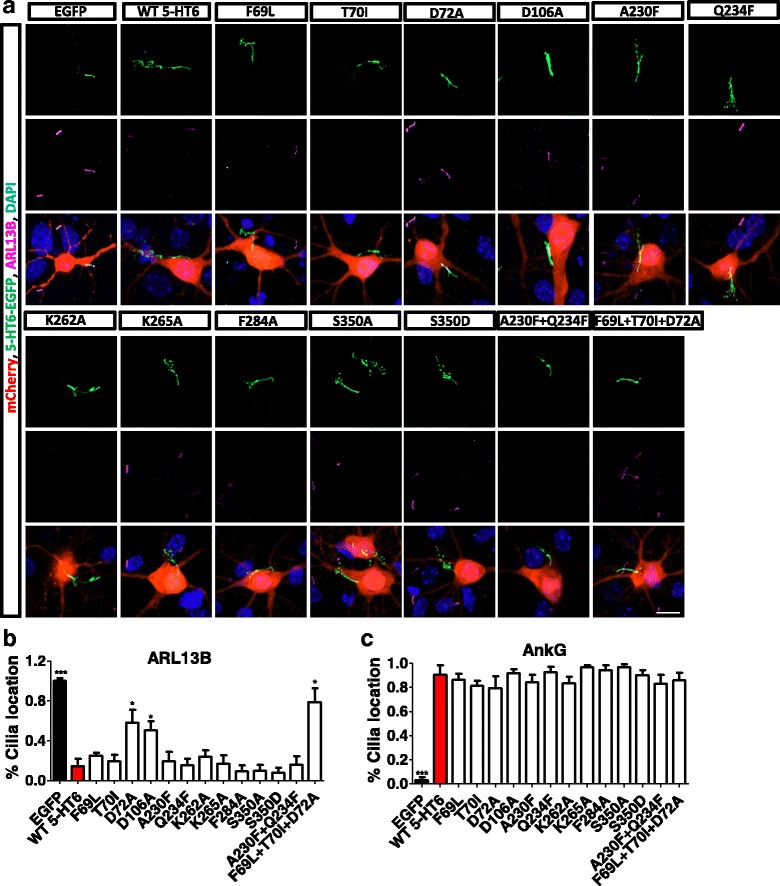
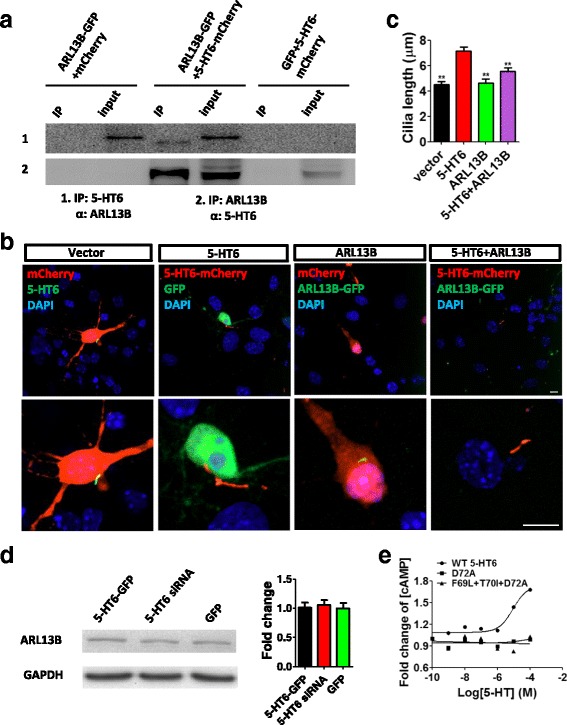
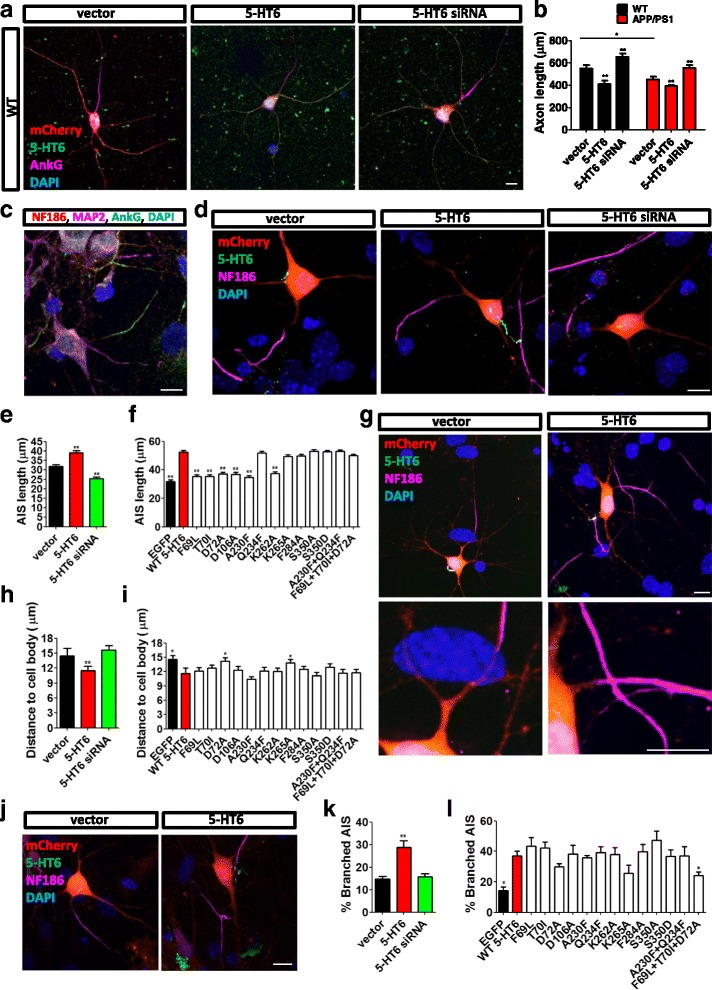
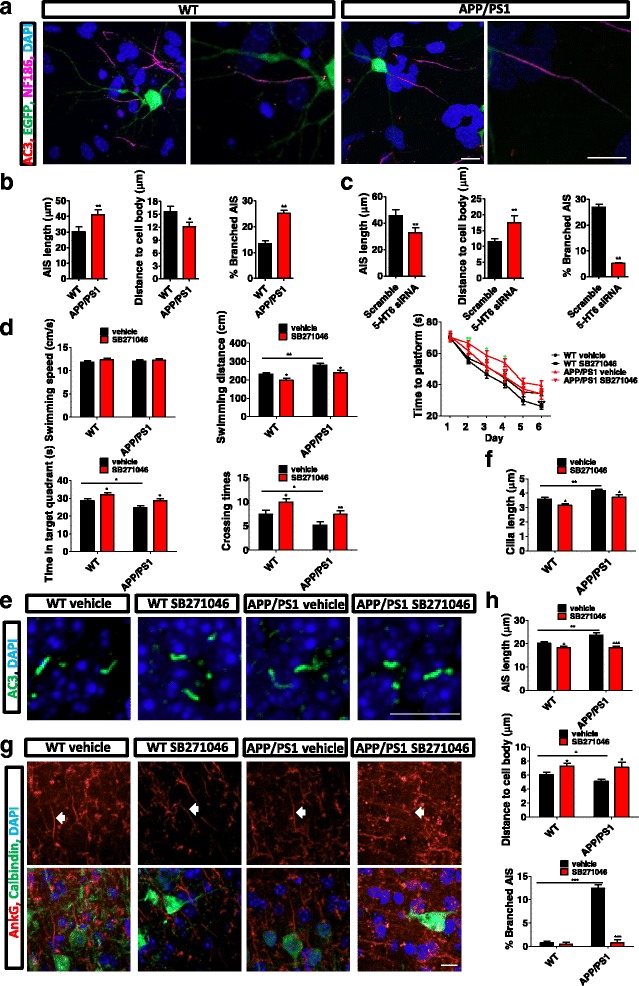
BACKGROUND: Serotonin receptor 5-HT6 is involved in cognition and Alzheimer's disease (AD) development. However, the mechanism of 5-HT6 in AD pathology is not clear. METHODS: Since 5-HT6 is almost exclusively expressed in the primary cilia, using immunostaining we examined the number of cilia in the hippocampus of AD animal model APP/PS1 mice. By overexpressing and knocking down 5-HT6 in the primary cultured hippocampal neurons, we investigated the roles of 5-HT6 in alternating ciliary morphology. Furthermore, 5-HT6 antagonist was applied to confirm its roles in cognition using the Morris water maze test, Y maze, and fear conditioning. RESULTS: In the present study, we found that the primary cilia were elongated in the hippocampus of APP/PS1 mice compared with WT mice. 5-HT6 regulated cilia length, influenced cilia and axon initial segment (AIS) morphology, and affected localization of ARL13B and AnkG. We also found that, by changing cilia morphology, the AIS was elongated, branched, and more proximal to the cell body in both WT and APP/PS1 mouse neurons. Alterations of cilia also decreased the axonal length in WT and APP/PS1 neurons. Furthermore, in the water maze test, Y maze, and fear conditioning test, 5-HT6 antagonist SB271046 recovered the cognitive impairment of APP/PS1 mice. CONCLUSION: We suggest that 5-HT6 plays a critical role in AD development through regulating the morphology and function of neuronal primary cilia, which is possibly related to the AIS and axon alterations in AD development.
Overview
The claims and statistics of this paper haven’t been checked yet.
Free: it reads the open-access text and checks the first 5 claims that cite a source we can check. Create a free account to check every claim.
Integrity signals
Registry
Cites
Statistics
Figures
Verification
Claims the paper makes
The claims and statistics of this paper haven’t been checked yet.
Free: it reads the open-access text and checks the first 5 claims that cite a source we can check. Create a free account to check every claim.
Claims other papers make about this one
Each is checked against this paper’s own text: does it say what the citing paper says it does?
The cited source says what the claim attributes to it.
In the citing paper
“Finally, cilia morphology in the hippocampus of APP/PS1 mice was altered [28].”
From Abnormal accumulation of extracellular vesicles in hippocampal dystrophic axons and regulation by the primary cilia in Alzheimer's disease (2023) · cites this paper as [28]
Self-check
Percentages, sums and reported differences re-computed from the paper’s own numbers.
The self-check needs the paper’s full text.
Citations
Cites
Vertebrate Smoothened functions at the primary cilium
Corbit, K. C., Aanstad, P., Singla, V., Norman, A. R., Stainier, D. Y. R., & Reiter, J. F. (2005) · Nature · doi:10.1038/nature04117 · Cited by 1,481 · cited 1×
“In the presence of shh, Patched receptors move away from the cilia, allowing Smoothened receptors to accumulate in the cilia [19, 20].”
New criteria for improved diagnosis of Bardet-Biedl syndrome: results of a population survey
Beales, P. L., Elcioglu, N., Woolf, A. S., Parker, D., & Flinter, F. A. (1999) · Journal of Medical Genetics · doi:10.1136/jmg.36.6.437 · Cited by 969 · cited 1×
“Interfering with the normal function of BBS complex delays development and leads to mental retardation and learning impairment [31].”
Activity-dependent relocation of the axon initial segment fine-tunes neuronal excitability
Grubb, M. S., & Burrone, J. (2010) · Nature · doi:10.1038/nature09160 · Cited by 655 · cited 1×
“The AIS length was calculated from the 1/3 brightest point near the soma to the 1/3 brightest point far from the soma [25].”
Monsma, F. J., Shen, Y., Ward, R. P., Hamblin, M. W., & Sibley, D. R. (1993) · Molecular Pharmacology · doi:10.1016/s0026-895x(25)13616-x · Cited by 597 · cited 3×
“5-HT6: Serotonin 6 receptor; AC3: Adenylyl cyclase 3; AD: Alzheimer’s disease; AIS: Axon initial segment; AnkG: Ankyrin-3; APP/PS1: Amyloid precursor protein/presenilin 1; ARL13B: ADP-ribosylation factor-like protein 13B; Aβ: Amyloid beta; CamkII: Ca2+/calmodulin-dependent protein kinase II; CNS: Central nervous syste…”
AnkyrinG is required for maintenance of the axon initial segment and neuronal polarity
Hedstrom, K. L., Ogawa, Y., & Rasband, M. N. (2008) · The Journal of Cell Biology · doi:10.1083/jcb.200806112 · Cited by 371 · cited 1×
“Interestingly, ankyrin G (AnkG), a typical marker for the AIS [24], was translocated to the primary cilia of hippocampal neurons with overexpression of 5-HT6 (Fig.”
Chen, M.-H., Wilson, C. W., Li, Y.-J., Law, K. K. L., Lu, C.-S., Gacayan, R., Zhang, X., Hui, C.-C., & Chuang, P.-T. (2009) · Genes & Development · doi:10.1101/gad.1794109 · Cited by 353
Immuno-localization of serotonin 5-HT6 receptor-like material in the rat central nervous system
Gérard, C., Martres, M.-P., Lefèvre, K., Miquel, M.-C., Vergé, D., Lanfumey, L., Doucet, E., Hamon, M., & El Mestikawy, S. (1997) · Brain Research · doi:10.1016/s0006-8993(96)01224-3 · Cited by 326 · cited 1×
“In neurons, 5-HT6 is especially localized at the primary cilia [16, 17].”
5-HT6 Receptor Antagonists as Novel Cognitive Enhancing Agents for Alzheimer's Disease
Upton, N., Chuang, T. T., Hunter, A. J., & Virley, D. J. (2008) · Neurotherapeutics · doi:10.1016/j.nurt.2008.05.008 · Cited by 255 · cited 1×
“Several studies have reported that 5-HT6 has great impact in cognition, especially in AD models [4].”
Cilia in the CNS: The Quiet Organelle Claims Center Stage
Louvi, A., & Grove, E. A. (2011) · Neuron · doi:10.1016/j.neuron.2011.03.002 · Cited by 253 · cited 1×
“Primary cilia are protrusions of the cell membrane that are approximately 1–5 μm in length and anchored to the ciliary basal body (a modified mother centriole) [18].”
Higginbotham, H., Eom, T.-Y., Mariani, L. E., Bachleda, A., Hirt, J., Gukassyan, V., Cusack, C. L., Lai, C., Caspary, T., & Anton, E. S. (2012) · Developmental Cell · doi:10.1016/j.devcel.2012.09.019 · Cited by 253 · cited 1×
“ADP-ribosylation factorlike protein 13B (ARL13B) was used to indicate the primary cilia [23].”
Localization of 5-HT6 receptors at the plasma membrane of neuronal cilia in the rat brain
Brailov, I., Bancila, M., Brisorgueil, M.-J., Miquel, M.-C., Hamon, M., & Vergé, D. (2000) · Brain Research · doi:10.1016/s0006-8993(00)02519-1 · Cited by 245 · cited 2×
“5-HT6 is mainly located at the primary cilia, where it plays an important role [22].”
Hirst, W. D., Stean, T. O., Rogers, D. C., Sunter, D., Pugh, P., Moss, S. F., Bromidge, S. M., Riley, G., Smith, D. R., Bartlett, S., et al. (2006) · European Journal of Pharmacology · doi:10.1016/j.ejphar.2006.09.049 · Cited by 234 · cited 1×
“It also reversed the age-dependent deficit of rats in the water maze test [33].”
5-HT6 receptors: a novel target for cognitive enhancement
Mitchell, E. S., & Neumaier, J. F. (2005) · Pharmacology & Therapeutics · doi:10.1016/j.pharmthera.2005.05.001 · Cited by 233 · cited 1×
“In neurons, 5-HT6 is especially localized at the primary cilia [16, 17].”
Ward, R. P., Hamblin, M. W., Lachowicz, J. E., Hoffman, B. J., Sibley, D. R., & Dorsa, D. M. (1995) · Neuroscience · doi:10.1016/0306-4522(94)00439-c · Cited by 198 · cited 1×
“High levels of 5-HT6 expression have also been reported in the striatum, olfactory tubercle, nucleus accumbens, cortex, and hippocampus [14, 15].”
Joubert Syndrome: Insights Into Brain Development, Cilium Biology, and Complex Disease
Doherty, D. (2009) · Seminars in Pediatric Neurology · doi:10.1016/j.spen.2009.06.002 · Cited by 176 · cited 1×
“Joubert syndrome (JS) in patients with intellectual disability is also related to primary cilia [30].”
Bayer, T. A., Wirths, O., Majtényi, K., Hartmann, T., Multhaup, G., Beyreuther, K., & Czech, C. (2001) · Brain Pathology · doi:10.1111/j.1750-3639.2001.tb00376.x · Cited by 173 · cited 1×
“which are related to dystrophic neurites and amyloid plaque formation [10].”
Wilkinson, D., Windfeld, K., & Colding-Jørgensen, E. (2014) · The Lancet Neurology · doi:10.1016/s1474-4422(14)70198-x · Cited by 164
Guadiana, S. M., Semple-Rowland, S., Daroszewski, D., Madorsky, I., Breunig, J. J., Mykytyn, K., & Sarkisian, M. R. (2013) · The Journal of Neuroscience · doi:10.1523/jneurosci.2906-12.2013 · Cited by 144 · cited 1×
“Previous studies have shown that 5-HT6 can influence dendritic growth and neuronal migration [8, 9], suggest-”
Characterization of SB‐271046: A potent, selective and orally active 5‐HT6 receptor antagonist
Routledge, C. A., Bromidge, S. M., Moss, S. F., Price, G. W., Hirst, W. D., Newman, H., Riley, G. J., Gager, T., Stean, T. O., Upton, N., et al. (2000) · British Journal of Pharmacology · doi:10.1038/sj.bjp.0703457 · Cited by 139 · cited 1×
“Several studies have shown that 5-HT6 antagonists can improve learning and memory ability [27].”
Axonopathy in an APP/PS1 transgenic mouse model of Alzheimer’s disease
Wirths, O., Weis, J., Szczygielski, J., Multhaup, G., & Bayer, T. A. (2006) · Acta Neuropathologica · doi:10.1007/s00401-006-0041-4 · Cited by 130 · cited 1×
“spinal cord of APPSwe/London/PS1M146V mice, an established familial AD (FAD) transgenic mouse model [11].”
Somatostatin Signaling in Neuronal Cilia Is Criticalfor Object Recognition Memory
Einstein, E. B., Patterson, C. A., Hon, B. J., Regan, K. A., Reddi, J., Melnikoff, D. E., Mateer, M. J., Schulz, S., Johnson, B. N., & Tallent, M. K. (2010) · The Journal of Neuroscience · doi:10.1523/jneurosci.5295-09.2010 · Cited by 129 · cited 1×
“Mutation of SSTR3, which is located at the primary cilia, impairs hippocampal LTP in mice [35, 36].”
Amador-Arjona, A., Elliott, J., Miller, A., Ginbey, A., Pazour, G. J., Enikolopov, G., Roberts, A. J., & Terskikh, A. V. (2011) · Journal of Neuroscience · doi:10.1523/jneurosci.1062-11.2011 · Cited by 117 · cited 1×
“In mice, interfering with genes required for proper cilia function delays spatial learning and recognition [34].”
Tadenev, A. L. D., Kulaga, H. M., May-Simera, H. L., Kelley, M. W., Katsanis, N., & Reed, R. R. (2011) · Proceedings of the National Academy of Sciences · doi:10.1073/pnas.1016531108 · Cited by 110 · cited 1×
“Furthermore, a previous study indicated that BBS8, a component of the primary cilia, influences axon targeting [12].”
Amyloid beta amyloidosis in Alzheimerʼs disease
Price, D. L., Sisodia, S. S., & Gandy, S. E. (1995) · Current Opinion in Neurology · doi:10.1097/00019052-199508000-00004 · Cited by 105 · cited 2×
“The pathology of AD in the brain includes extracellular senile plaques composed of amyloid beta (Aβ), intracellular tau aggregates known as neurofibrillary tangles (NFT), and neuronal and synaptic loss [1].”
5-HT6 receptors and Alzheimer's disease
Ramírez, M. J. (2013) · Alzheimer's Research & Therapy · doi:10.1186/alzrt169 · Cited by 102
Wang, Z., Phan, T., & Storm, D. R. (2011) · The Journal of Neuroscience · doi:10.1523/jneurosci.6561-10.2011 · Cited by 100
The primary cilium: Guardian of organ development and homeostasis
Fry, A. M., Leaper, M. J., & Bayliss, R. (2014) · Organogenesis · doi:10.4161/org.28910 · Cited by 95
Jacobshagen, M., Niquille, M., Chaumont-Dubel, S., Marin, P., & Dayer, A. (2014) · Development · doi:10.1242/dev.108043 · Cited by 80 · cited 1×
“Previous studies have shown that 5-HT6 can influence dendritic growth and neuronal migration [8, 9], suggest-”
Developmental changes in frequency of the ciliary somatostatin receptor 3 protein
Stanić, D., Malmgren, H., He, H., Scott, L., Aperia, A. C., & Hökfelt, T. G. M. (2008) · Brain Research · doi:10.1016/j.brainres.2008.10.024 · Cited by 59 · cited 1×
“Mutation of SSTR3, which is located at the primary cilia, impairs hippocampal LTP in mice [35, 36].”
Dendrosomatic Sonic Hedgehog Signaling in Hippocampal Neurons Regulates Axon Elongation
Yao, P. J., Petralia, R. S., Ott, C. M., Wang, Y., Lippincott‐Schwartz, J., & Mattson, M. P. (2015) · Journal of Neuroscience · doi:10.1523/jneurosci.1360-15.2015 · Cited by 58 · cited 1×
“The hedgehog signaling pathway, which is active in primary cilia, regulates axonal length in hippocampal neurons [13].”
Association analysis of the 5-HT6 receptor polymorphism C267T in Alzheimer's disease
Tsai, S., Liu, H.-C., Liu, T., Wang, Y.-C., & Hong, C. (1999) · Neuroscience Letters · doi:10.1016/s0304-3940(99)00802-2 · Cited by 57 · cited 1×
“Many studies have shown that individuals with the 267C allele of 5-HT6 have increased risk of AD [2, 3].”
5-HT(6) receptor blockade regulates primary cilia morphology in striatal neurons
Brodsky, M., Lesiak, A. J., Croicu, A., Cohenca, N., Sullivan, J. M., & Neumaier, J. F. (2017) · Brain Research · doi:10.1016/j.brainres.2017.01.010 · Cited by 54 · cited 1×
“SB399885, another antagonist of 5-HT6, could shorten primary cilia of striatal neurons after 24 hours in culture [32].”
Chakravarthy, B., Gaudet, C., Ménard, M., Brown, L., Atkinson, T., LaFerla, F. M., Ito, S., Armato, U., Dal Prà, I., & Whitfield, J. (2012) · Biochemical and Biophysical Research Communications · doi:10.1016/j.bbrc.2012.09.056 · Cited by 52 · cited 1×
“Interestingly, our finding that ciliary length was increased in APP/PS1 mice differs from that of a previous study on 3xAD transgenic mice, in which cilia length was reduced in hippocampal dentate granule cells [26].”
Psychological, cognitive and maternal stress assessment in children with primary ciliary dyskinesia
Carotenuto, M., Esposito, M., Pasquale, F. D., Stefano, S. D., & Santamaria, F. (2013) · World Journal of Pediatrics · doi:10.1007/s12519-013-0441-1 · Cited by 48 · cited 1×
“Children with primary ciliary dyskinesia, a typical ciliopathy due to structure and functional abnormalities of respiratory cilia, showed significant behavioral and social competence problems [28].”
Investigational drugs targeting 5-HT6 receptors for the treatment of Alzheimer’s disease
Wicke, K. M., Haupt, A., & Bespalov, A. (2015) · Expert Opinion on Investigational Drugs · doi:10.1517/13543784.2015.1102884 · Cited by 46 · cited 4×
“5-HT6: Serotonin 6 receptor; AC3: Adenylyl cyclase 3; AD: Alzheimer’s disease; AIS: Axon initial segment; AnkG: Ankyrin-3; APP/PS1: Amyloid precursor protein/presenilin 1; ARL13B: ADP-ribosylation factor-like protein 13B; Aβ: Amyloid beta; CamkII: Ca2+/calmodulin-dependent protein kinase II; CNS: Central nervous syste…”
InfluentialBennouna-Greene, V, Kremer, S., Stoetzel, C., Christmann, D., Schuster, C., Durand, M., Verloes, A., Sigaudy, S., Holder-Espinasse, M., Godet, J., et al. (2011) · Clinical Genetics · doi:10.1111/j.1399-0004.2011.01688.x · Cited by 45 · cited 1×
“The cognitive functioning and memory performances of patients with Bardet-Biedl Syndrome (BBS), which is also a kind of ciliopathy, was due to hippocampal dysgenesis [29].”
Liu, H.-C., Hong, C., Liu, C., Lin, K., Tsai, S., Liu, T., Chi, C., & Wang, P. (2001) · Psychiatry and Clinical Neurosciences · doi:10.1046/j.1440-1819.2001.00886.x · Cited by 23
Cited by
Primary cilia and ciliary signaling pathways in aging and age-related brain disorders
Ma, R., Kutchy, N. A., Chen, L., Meigs, D. D., & Hu, G. (2022) · Neurobiology of Disease · doi:10.1016/j.nbd.2021.105607 · Cited by 114
Neuroprotective Polyphenols: A Modulatory Action on Neurotransmitter Pathways
Rębas, E., Rzajew, J., Radzik, T., & Żylińska, L. (2020) · Current Neuropharmacology · doi:10.2174/1570159x18666200106155127 · Cited by 121
“However, there are also evidence that the serotonin receptor can be involved in cognitive impairment and development of AD [78].”
BackgroundJiang, J. Y., Falcone, J. L., Curci, S., & Hofer, A. M. (2019) · Proceedings of the National Academy of Sciences · doi:10.1073/pnas.1819730116 · Cited by 85
Regulation of the length of neuronal primary cilia and its potential effects on signalling
Macarelli, V., Leventea, E., & Merkle, F. T. (2023) · Trends in Cell Biology · doi:10.1016/j.tcb.2023.05.005 · Cited by 89
“Finally, although changes in PCL are also associated with aging [10] and pathological conditions such as Alzheimer’s disease [11] and Parkinson’s disease [12], the long timeframe of these conditions complicates the discovery of causal relationships, so we focus here on the changes in PCL that occur…”
BackgroundInfluentialWachten, D., & Mick, D. U. (2021) · Pharmacology & Therapeutics · doi:10.1016/j.pharmthera.2021.107836 · Cited by 85
Metadata
- Authors
- Hu, L., Wang, B., & Zhang, Y.
- Affiliations
- Peking University (CN)
- Corresponding author
- Zhang, Yan
- Venue
- Alzheimer's Research & Therapy
- Published
- 2017-09-20
- Volume
- 9
- Issue
- 1
- Pages
- 76-76
- ISSN
- 1758-9193 (ISSN-L)
- PMC
- PMC5607612
- OpenAlex
- W2756156581
- Cited by
- 98
- References
- 37
- Citations by year
- 2026: 5 · 2025: 14 · 2024: 10 · 2023: 11 · 2022: 17 · 2021: 14 · 2020: 11 · 2019: 12 · 2018: 4
- FWCI
- 5.47
- Type
- journal article
- Language
- en
- Open access
- gold
- doi.org
- Licence
- cc-by
- Locations
- Alzheimer s Research & Therapy (publishedVersion, cc-by)
- PubMed Central (publishedVersion, cc-by)
- PubMed (publishedVersion)
- DOAJ (DOAJ: Directory of Open Access Journals) (submittedVersion, cc-by-sa)
- Funders
- NSFC Fund for Distinguished Young Scholars (81425009)
- NSFC major research grant (31630028, 91632305)
- Topics
- Life Sciences › Neuroscience › Cellular and Molecular Neuroscience › Alzheimer's disease research and treatments
- Life Sciences › Biochemistry, Genetics and Molecular Biology › Genetics › Genetic and Kidney Cyst Diseases
- Health Sciences › Medicine › Psychiatry and Mental health › Dementia and Cognitive Impairment Research
- Keywords
- serotonin 5-HT6 receptor, Alzheimer's disease, primary cilia, axon initial segment, hippocampal neurons, APP/PS1 mice, cognitive impairment, ARL13B, axon length, cilia length
- MeSH terms
- Alzheimer Disease, Animals, Animals, Newborn, Cells, Cultured, Cilia, Cognition Disorders, Disease Models, Animal, Gene Expression Regulation, Hippocampus, Humans, Male, Mice, Inbred C57BL, Mice, Transgenic, Neurons, Receptors, Serotonin, Serotonin, Amyloid beta-Protein Precursor, Maze Learning, ADP-Ribosylation Factors, RNA, Small Interfering, Mice, Presenilin-1, HEK293 Cells
About these checks
Registry, retraction, Cites and statistics results are computed, not judged, with one exception: a printed reference that no index lists is read once by a model before it counts as a citation error. Claims are extracted by a model and kept only when their quote appears verbatim in the text; each cited source is then checked, with a model’s help, for whether it says what the claim relies on. Those verdicts can be wrong — read the claim’s quote and the cited source before relying on one.
Statistics and arithmetic are recomputed, not judged.
Confidence bands are shown only for fields calibrated on our annotated test set. None is calibrated yet, so no band is shown.
What counts as a claim ›How we measure confidence ›How we check this ›
Are you an author, or do you see a problem with this page? Request a review
Data sources
Bibliographic data: Semantic Scholar, OpenAlex, Crossref.
Contains information from the Semantic Scholar Academic Graph Datasets, made available under the ODC Attribution License (ODC-BY 1.0).
Semantic Scholar’s data is described in: Kinney, R., et al. (2023). The Semantic Scholar Open Data Platform. arXiv:2301.10140.
