

Serotonin 5-HT6 receptors affect cognition in a mouse model of Alzheimer’s disease by regulating cilia function
Open accessThe DOI matches its Crossref record; 37 of the 37 references it cites were found in a registry or an index.
Abstract
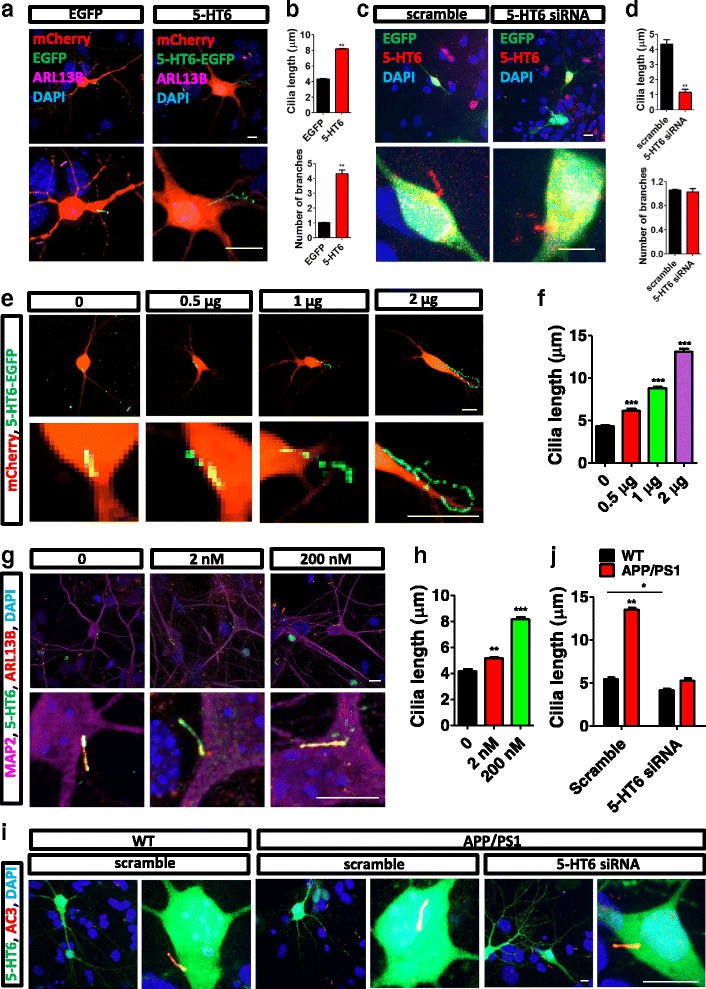
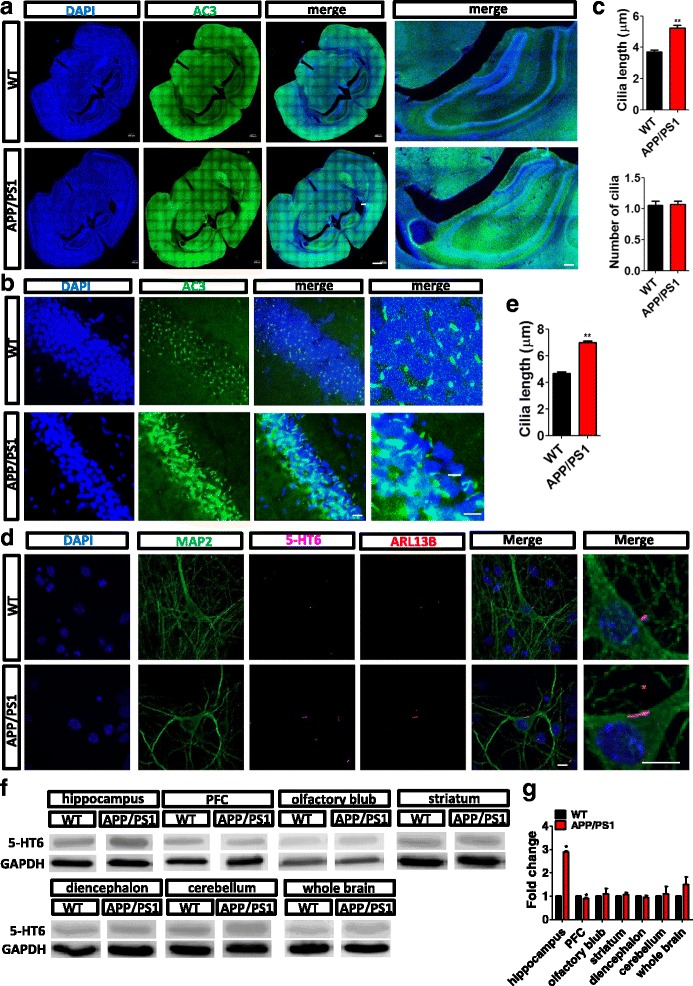
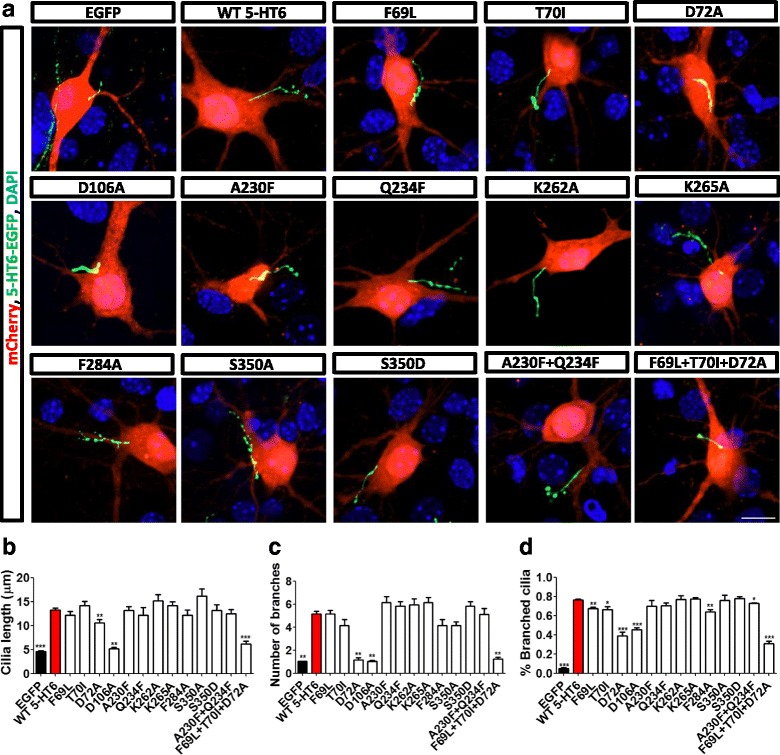
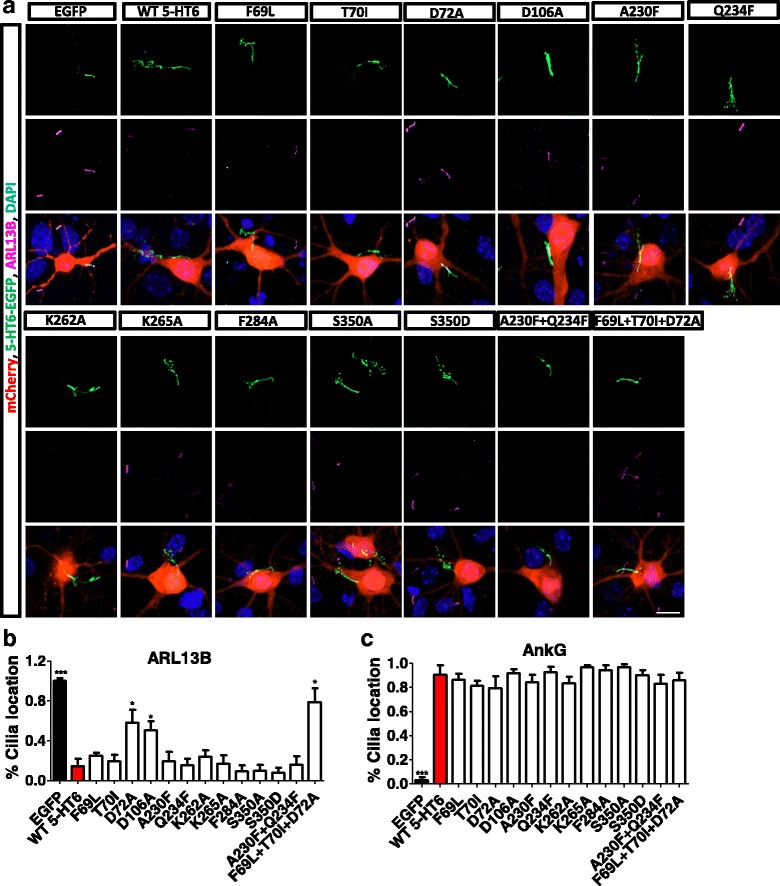
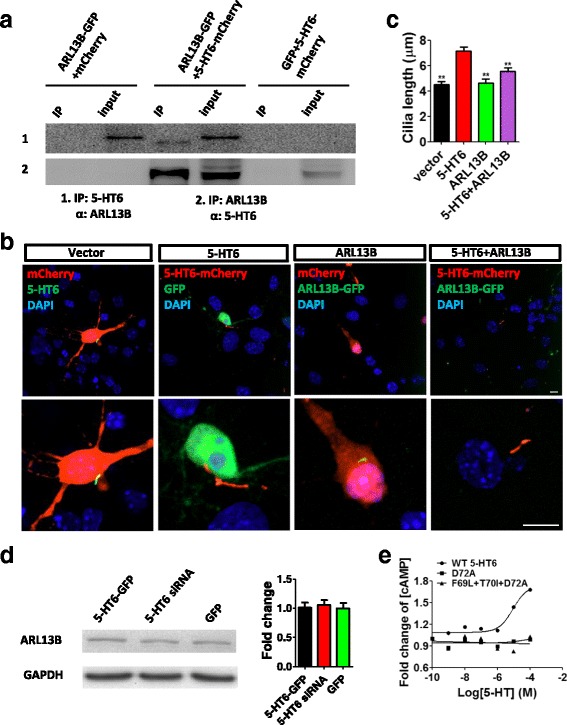
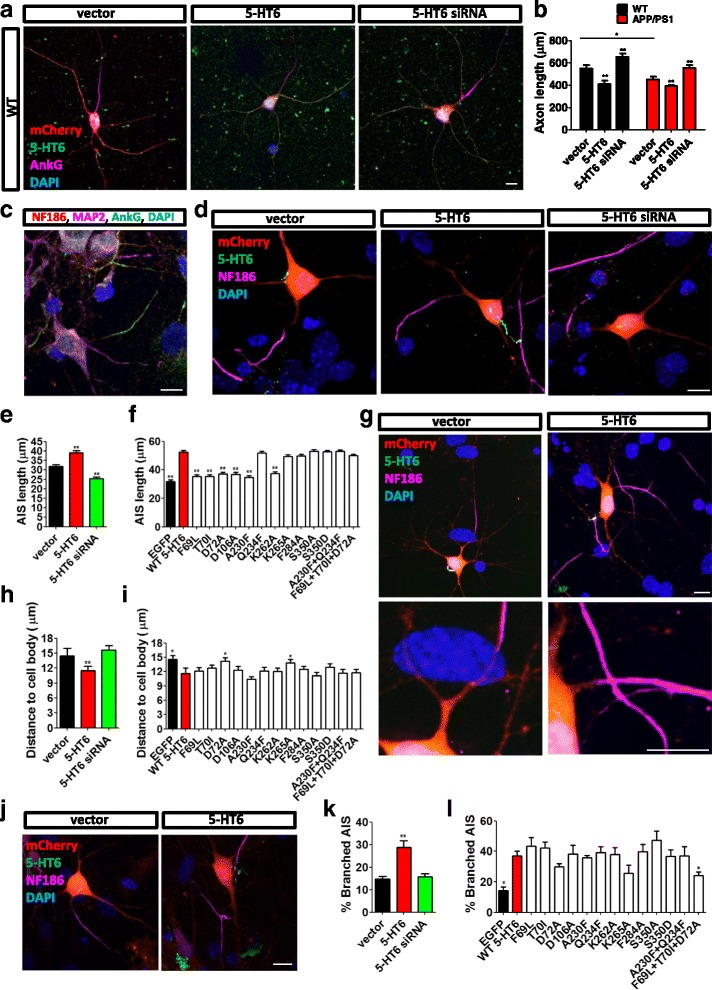
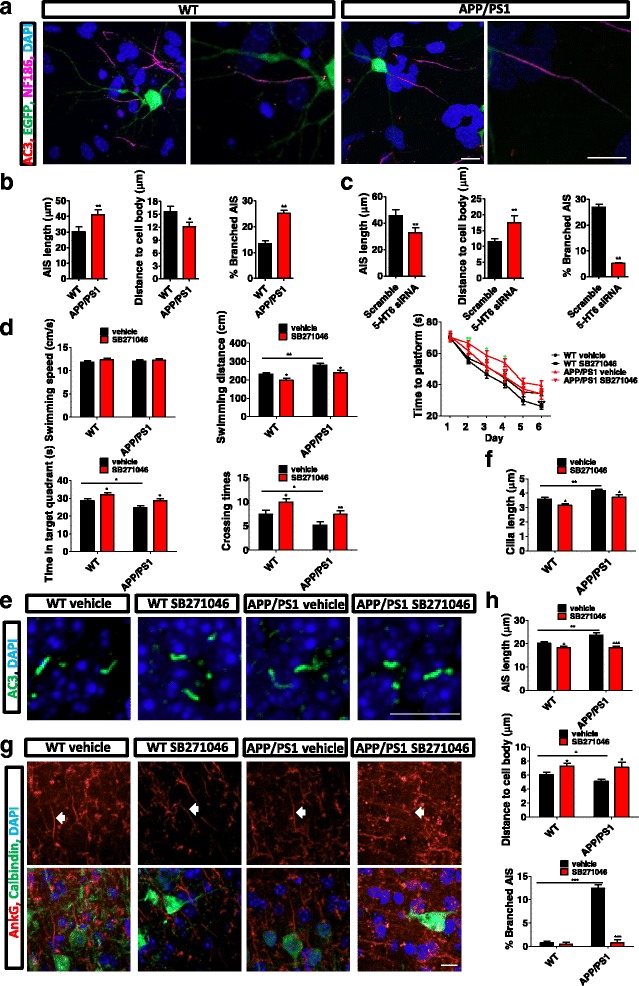
BACKGROUND: Serotonin receptor 5-HT6 is involved in cognition and Alzheimer's disease (AD) development. However, the mechanism of 5-HT6 in AD pathology is not clear. METHODS: Since 5-HT6 is almost exclusively expressed in the primary cilia, using immunostaining we examined the number of cilia in the hippocampus of AD animal model APP/PS1 mice. By overexpressing and knocking down 5-HT6 in the primary cultured hippocampal neurons, we investigated the roles of 5-HT6 in alternating ciliary morphology. Furthermore, 5-HT6 antagonist was applied to confirm its roles in cognition using the Morris water maze test, Y maze, and fear conditioning. RESULTS: In the present study, we found that the primary cilia were elongated in the hippocampus of APP/PS1 mice compared with WT mice. 5-HT6 regulated cilia length, influenced cilia and axon initial segment (AIS) morphology, and affected localization of ARL13B and AnkG. We also found that, by changing cilia morphology, the AIS was elongated, branched, and more proximal to the cell body in both WT and APP/PS1 mouse neurons. Alterations of cilia also decreased the axonal length in WT and APP/PS1 neurons. Furthermore, in the water maze test, Y maze, and fear conditioning test, 5-HT6 antagonist SB271046 recovered the cognitive impairment of APP/PS1 mice. CONCLUSION: We suggest that 5-HT6 plays a critical role in AD development through regulating the morphology and function of neuronal primary cilia, which is possibly related to the AIS and axon alterations in AD development.
Overview
The claims and statistics of this paper haven’t been checked yet.
Free: it reads the open-access text and checks the first 5 claims that cite a source we can check. Create a free account to check every claim.
Integrity signals
Registry
Cites
Statistics
Figures
Verification
Claims the paper makes
The claims and statistics of this paper haven’t been checked yet.
Free: it reads the open-access text and checks the first 5 claims that cite a source we can check. Create a free account to check every claim.
Claims other papers make about this one
Each is checked against this paper’s own text: does it say what the citing paper says it does?
The cited source says what the claim attributes to it.
In the citing paper
“Finally, cilia morphology in the hippocampus of APP/PS1 mice was altered [28].”
From Abnormal accumulation of extracellular vesicles in hippocampal dystrophic axons and regulation by the primary cilia in Alzheimer's disease (2023) · cites this paper as [28]
Self-check
Percentages, sums and reported differences re-computed from the paper’s own numbers.
The self-check needs the paper’s full text.
Citations
Cites
Vertebrate Smoothened functions at the primary cilium
Corbit, K. C., Aanstad, P., Singla, V., Norman, A. R., Stainier, D. Y. R., & Reiter, J. F. (2005) · Nature · doi:10.1038/nature04117 · Cited by 1,481 · cited 1×
“In the presence of shh, Patched receptors move away from the cilia, allowing Smoothened receptors to accumulate in the cilia [19, 20].”
New criteria for improved diagnosis of Bardet-Biedl syndrome: results of a population survey
Beales, P. L., Elcioglu, N., Woolf, A. S., Parker, D., & Flinter, F. A. (1999) · Journal of Medical Genetics · doi:10.1136/jmg.36.6.437 · Cited by 969 · cited 1×
“Interfering with the normal function of BBS complex delays development and leads to mental retardation and learning impairment [31].”
Activity-dependent relocation of the axon initial segment fine-tunes neuronal excitability
Grubb, M. S., & Burrone, J. (2010) · Nature · doi:10.1038/nature09160 · Cited by 655 · cited 1×
“The AIS length was calculated from the 1/3 brightest point near the soma to the 1/3 brightest point far from the soma [25].”
Monsma, F. J., Shen, Y., Ward, R. P., Hamblin, M. W., & Sibley, D. R. (1993) · Molecular Pharmacology · doi:10.1016/s0026-895x(25)13616-x · Cited by 597 · cited 3×
“5-HT6: Serotonin 6 receptor; AC3: Adenylyl cyclase 3; AD: Alzheimer’s disease; AIS: Axon initial segment; AnkG: Ankyrin-3; APP/PS1: Amyloid precursor protein/presenilin 1; ARL13B: ADP-ribosylation factor-like protein 13B; Aβ: Amyloid beta; CamkII: Ca2+/calmodulin-dependent protein kinase II; CNS: Central nervous syste…”
AnkyrinG is required for maintenance of the axon initial segment and neuronal polarity
Hedstrom, K. L., Ogawa, Y., & Rasband, M. N. (2008) · The Journal of Cell Biology · doi:10.1083/jcb.200806112 · Cited by 371 · cited 1×
“Interestingly, ankyrin G (AnkG), a typical marker for the AIS [24], was translocated to the primary cilia of hippocampal neurons with overexpression of 5-HT6 (Fig.”
Chen, M.-H., Wilson, C. W., Li, Y.-J., Law, K. K. L., Lu, C.-S., Gacayan, R., Zhang, X., Hui, C.-C., & Chuang, P.-T. (2009) · Genes & Development · doi:10.1101/gad.1794109 · Cited by 353
Immuno-localization of serotonin 5-HT6 receptor-like material in the rat central nervous system
Gérard, C., Martres, M.-P., Lefèvre, K., Miquel, M.-C., Vergé, D., Lanfumey, L., Doucet, E., Hamon, M., & El Mestikawy, S. (1997) · Brain Research · doi:10.1016/s0006-8993(96)01224-3 · Cited by 326 · cited 1×
“In neurons, 5-HT6 is especially localized at the primary cilia [16, 17].”
5-HT6 Receptor Antagonists as Novel Cognitive Enhancing Agents for Alzheimer's Disease
Upton, N., Chuang, T. T., Hunter, A. J., & Virley, D. J. (2008) · Neurotherapeutics · doi:10.1016/j.nurt.2008.05.008 · Cited by 255 · cited 1×
“Several studies have reported that 5-HT6 has great impact in cognition, especially in AD models [4].”
Cilia in the CNS: The Quiet Organelle Claims Center Stage
Louvi, A., & Grove, E. A. (2011) · Neuron · doi:10.1016/j.neuron.2011.03.002 · Cited by 253 · cited 1×
“Primary cilia are protrusions of the cell membrane that are approximately 1–5 μm in length and anchored to the ciliary basal body (a modified mother centriole) [18].”
Higginbotham, H., Eom, T.-Y., Mariani, L. E., Bachleda, A., Hirt, J., Gukassyan, V., Cusack, C. L., Lai, C., Caspary, T., & Anton, E. S. (2012) · Developmental Cell · doi:10.1016/j.devcel.2012.09.019 · Cited by 253 · cited 1×
“ADP-ribosylation factorlike protein 13B (ARL13B) was used to indicate the primary cilia [23].”
Cited by
Primary cilia and ciliary signaling pathways in aging and age-related brain disorders
Ma, R., Kutchy, N. A., Chen, L., Meigs, D. D., & Hu, G. (2022) · Neurobiology of Disease · doi:10.1016/j.nbd.2021.105607 · Cited by 114
Neuroprotective Polyphenols: A Modulatory Action on Neurotransmitter Pathways
Rębas, E., Rzajew, J., Radzik, T., & Żylińska, L. (2020) · Current Neuropharmacology · doi:10.2174/1570159x18666200106155127 · Cited by 121
“However, there are also evidence that the serotonin receptor can be involved in cognitive impairment and development of AD [78].”
BackgroundJiang, J. Y., Falcone, J. L., Curci, S., & Hofer, A. M. (2019) · Proceedings of the National Academy of Sciences · doi:10.1073/pnas.1819730116 · Cited by 85
Regulation of the length of neuronal primary cilia and its potential effects on signalling
Macarelli, V., Leventea, E., & Merkle, F. T. (2023) · Trends in Cell Biology · doi:10.1016/j.tcb.2023.05.005 · Cited by 89
“Finally, although changes in PCL are also associated with aging [10] and pathological conditions such as Alzheimer’s disease [11] and Parkinson’s disease [12], the long timeframe of these conditions complicates the discovery of causal relationships, so we focus here on the changes in PCL that occur…”
BackgroundInfluentialWachten, D., & Mick, D. U. (2021) · Pharmacology & Therapeutics · doi:10.1016/j.pharmthera.2021.107836 · Cited by 85
Pathophysiology of Alzheimer’s Disease
Yarns, B. C., Holiday, K. A., Carlson, D. M., Cosgrove, C. K., & Melrose, R. J. (2022) · Psychiatric Clinics of North America · doi:10.1016/j.psc.2022.07.003 · Cited by 68
Chaumont‐Dubel, S., Dupuy, V., Bockaert, J., Bécamel, C., & Marin, P. (2019) · Neuropharmacology · doi:10.1016/j.neuropharm.2019.107839 · Cited by 66
“A recent work suggests that the regulation of cilia function by the receptor could impact cognition (Hu et al., 2017).”
BackgroundInfluentialTan, X., Liang, Z., Li, Y., Zhi, Y., Yi, L., Bai, S., Forest, K. H., Nichols, R. A., Dong, Y., & Li, Q. X. (2020) · Behavioural Brain Research · doi:10.1016/j.bbr.2020.112968 · Cited by 54
Primary cilia: biosensors of the male reproductive tract
Girardet, L., Augière, C., Asselin, M., & Belleannée, C. (2019) · Andrology · doi:10.1111/andr.12650 · Cited by 50
“In addition, it has been previously shown that the serotonin receptor 5-HT6 is located in the primary cilia of the hippocampus and that its knock-down leads to morphological and composition changes in neuronal primary cilia and cognitive defects in a APP/PS1 Alzheimer mouse model, which exhibits remarkable elevation o…”
BackgroundLiu, H., Ma, L.-L., Li, C., Cao, B., Jiang, Y., Han, L., Xu, R., Lin, J., & Zhang, D. (2021) · Translational Oncology · doi:10.1016/j.tranon.2021.101281 · Cited by 49
“5-HT6 receptor antagonists are closely related to the CNS and are also involved in the regulation of neurotransmitters, such as ACH, DA, and GABA, playing an important role in alleviating anxiety and depression [61].”
BackgroundHTR6 and SSTR3 ciliary targeting relies on both IC3 loops and C-terminal tails
Barbeito, P., Tachibana, Y., Martin-Morales, R., Moreno, P., Mykytyn, K., Kobayashi, T., & Garcia-Gonzalo, F. R. (2021) · Life Science Alliance · doi:10.26508/lsa.202000746 · Cited by 45
“HTR6 localizes to neuronal cilia and regulates their length, morphology and composition, effects through which it affects cognition in a mouse Alzheimer ’ s disease model (13, 19, 20, 21).”
Álvarez-Satta, M., Moreno-Cugnon, L., & Matheu, A. (2019) · Ageing Research Reviews · doi:10.1016/j.arr.2019.04.004 · Cited by 42
Alhassen, W., Kobayashi, Y., Su, J., Robbins, B., Nguyen, H. N., Myint, T., Yu, M., Nauli, S. M., Saito, Y., & Alachkar, A. (2021) · Molecular Neurobiology · doi:10.1007/s12035-021-02511-w · Cited by 43
“The role of MCH in regulating a wide variety of physiological functions such as feeding, obesity, reward, and sleep has been established using pharmacological and genetic manipulations [19, 20, 30, 41, 73].”
BackgroundStubbs, T., Koemeter-Cox, A., Bingman, J. I., Zhao, F., Kalyanasundaram, A., Rowland, L. A., Periasamy, M., Carter, C. S., Sheffield, V. C., Askwith, C. C., et al. (2022) · Journal of Neuroscience · doi:10.1523/jneurosci.0497-22.2022 · Cited by 42
“This has also been observed with 5-HT6 expression, which can reduce or prevent ciliary localization of AC3 and the ciliary GTPase Arl13b (Guadiana et al., 2013; Hu et al., 2017).”
BackgroundPrimary Cilia in Glial Cells: An Oasis in the Journey to Overcoming Neurodegenerative Diseases
Ki, S. M., Jeong, H. S., & Lee, J. E. (2021) · Frontiers in Neuroscience · doi:10.3389/fnins.2021.736888 · Cited by 40
Swenson, K. S., Wulschner, L. E. G., Hoelscher, V. M., Folts, L. M., Korth, K. M., Oh, W. C., & Bates, E. A. (2023) · Molecular Psychiatry · doi:10.1038/s41380-023-02130-y · Cited by 44
Millan, M. J., Dekeyne, A., Gobert, A., Brocco, M., la Cour, C. M., Ortuno, J., Watson, D. J., & Fone, K. C. F. (2020) · Neuropharmacology · doi:10.1016/j.neuropharm.2020.108099 · Cited by 40
Zachariou, M., Minadakis, G., Oulas, A., Afxenti, S., & Spyrou, G. M. (2018) · Journal of Proteomics · doi:10.1016/j.jprot.2018.03.009 · Cited by 41
“Recent studies have focused on this neurotransmitter system utilizing mice models to identify new treatments for AD [48].”
Lesiak, A. J., Brodsky, M., Cohenca, N., Croicu, A. G., & Neumaier, J. F. (2018) · Molecular Pharmacology · doi:10.1124/mol.117.111583 · Cited by 37
“Recently, in Alzheimer mouse models, 5-HT6 was shown to have a potential role in regulating cilia and axon initial segment morphology (Hu et al., 2017).”
BackgroundResultInfluential5-HT6R null mutatrion induces synaptic and cognitive defects
Sun, Z., Wang, B., Chen, C., Li, C., & Zhang, Y. (2021) · Aging Cell · doi:10.1111/acel.13369 · Cited by 35
“Recent studies have indicated that serotonin 6 receptor (5- HT6R) may be a potential target for cognitive improvement in Alzheimer's disease (AD) (Hu et al., 2017; Khoury et al., 2018; Ramirez, 2013), schizophrenia, and other cognitive or memory deficits.”
BackgroundMethodResultSelf-citationZong, B., Yu, F., Zhang, X., Zhao, W., Sun, P., Li, S., & Li, L. (2022) · Frontiers in Aging Neuroscience · doi:10.3389/fnagi.2022.869507 · Cited by 39
Kobayashi, Y., Okada, T., Miki, D., Sekino, Y., Koganezawa, N., Shirao, T., Diniz, G. B., & Saito, Y. (2020) · Neurochemistry International · doi:10.1016/j.neuint.2020.104902 · Cited by 34
CXCL12 targets the primary cilium cAMP/cGMP ratio to regulate cell polarity during migration
Atkins, M., Wurmser, M., Darmon, M. C., Roche, F., Nicol, X., & Métin, C. (2023) · Nature Communications · doi:10.1038/s41467-023-43645-w · Cited by 34
“In the case of the CXCR4 antagonist AMD3100 (Ref A5602-5MG, Sigma), AMD3100 was diluted in the culture medium and applied on co-cultures30 minbeforetheonsetofimaging,ata fi nalconcentration of 50 µ M. AMD3100 was replaced by a combination of AMD3100 and CXCL12dilutedintheculturemediumata fi…”
Cao, W., Lin, J., Xiang, W., Liu, J., Wang, B., Liao, W., & Jiang, T. (2022) · Frontiers in Aging Neuroscience · doi:10.3389/fnagi.2022.866336 · Cited by 29
“Additionally, large numbers of convincing studies have shown that there are strong correlations between primary cilia and cognition (Hu et al., 2017; Alhassen et al., 2021).”
BackgroundSelf-citationAmodeo, D. A., Oliver, B. L., Pahua, A. E., Hitchcock, K., Bykowski, A., Tice, D. L., Musleh, A., & Ryan, B. C. (2020) · Pharmacology Biochemistry and Behavior · doi:10.1016/j.pbb.2020.173076 · Cited by 30
Pujol, C., Dupuy, V., Sevéno, M., Runtz, L., Bockaert, J., Marin, P., & Chaumont‐Dubel, S. (2020) · Science Signaling · doi:10.1126/scisignal.aax9520 · Cited by 28
Primary Cilia–An Underexplored Topic in Major Mental Illness
Pruski, M., & Lang, B. (2019) · Frontiers in Psychiatry · doi:10.3389/fpsyt.2019.00104 · Cited by 26
“More research should be done to elucidate the role of PC in such key signalling processes for MMI as the dopamine and serotonin pathways (176) [5-HT6 receptors are predominantly expressed on PC (177, 178)], or to look at PC facilitation of pathways involved in the neurodevelopmental defects exhibited by those affected…”
BackgroundNRF2-dependent gene expression promotes ciliogenesis and Hedgehog signaling
Martín-Hurtado, A., Martin-Morales, R., Robledinos-Antón, N., Blanco, R., Palacios-Blanco, I., Lastres‐Becker, I., Cuadrado, A., & García-Gonzalo, F. R. (2019) · Scientific Reports · doi:10.1038/s41598-019-50356-0 · Cited by 25
Ciliary GPCR‐based transcriptome as a key regulator of cilia length control
Kobayashi, Y., Tomoshige, S., Imakado, K., Sekino, Y., Koganezawa, N., Shirao, T., Diniz, G. B., Miyamoto, T., & Saito, Y. (2021) · FASEB BioAdvances · doi:10.1096/fba.2021-00029 · Cited by 22
Jang, J., Yeo, S., Baek, S., Jung, H. J., Lee, M. S., Choi, S. H., & Choe, Y. (2023) · Acta Neuropathologica Communications · doi:10.1186/s40478-023-01637-3 · Cited by 20
“Finally, cilia morphology in the hippocampus of APP/PS1 mice was altered [28].”
BackgroundHTR6 and SSTR3 targeting to primary cilia
Barbeito, P., & Garcia-Gonzalo, F. R. (2021) · Biochemical Society Transactions · doi:10.1042/bst20191005 · Cited by 20
Non-invasive Low-Intensity Pulsed Ultrasound Modulates Primary Cilia of Rat Hippocampal Neurons
Huang, X., Lin, Z., Meng, L., Wang, K., Liu, X., Zhou, W., Zheng, H., & Niu, L. (2019) · Ultrasound in Medicine & Biology · doi:10.1016/j.ultrasmedbio.2018.12.012 · Cited by 20
Spatiotemporal dynamics of 5-HT6 receptor ciliary localization during mouse brain development
Dupuy, V., Prieur, M., Pizzoccaro, A., Margarido, C., Valjent, E., Bockaert, J., Bouschet, T., Marin, P., & Chaumont-Dubel, S. (2023) · Neurobiology of Disease · doi:10.1016/j.nbd.2022.105949 · Cited by 19
Distribution of 5-HT receptors in the central nervous system: an update
Vilaró, M. T., Cortés, R., Mengod, G., & Hoyer, D. (2020) · Handbook of behavioral neuroscience · doi:10.1016/b978-0-444-64125-0.00006-2 · Cited by 25
Mustafa, R., Kreiner, G., Kamińska, K., Wood, A.-E. J., Kirsch, J., Tucker, K. L., & Parlato, R. (2019) · Frontiers in Cellular Neuroscience · doi:10.3389/fncel.2019.00565 · Cited by 18
Impairment of ciliary dynamics in an APP knock-in mouse model of Alzheimer’s disease
Kobayashi, Y., Kohbuchi, S., Koganezawa, N., Sekino, Y., Shirao, T., Saido, T. C., Saito, T., & Saito, Y. (2022) · Biochemical and Biophysical Research Communications · doi:10.1016/j.bbrc.2022.04.050 · Cited by 18
Cilia and Extracellular Vesicles in Brain Development and Disease
Ma, R., Chen, L., Hu, N., Caplan, S., & Hu, G. (2023) · Biological Psychiatry · doi:10.1016/j.biopsych.2023.11.004 · Cited by 18
Cilia function is associated with axon initial segment morphology
Wang, B., Hu, L., Sun, Z., & Zhang, Y. (2019) · Biochemical and Biophysical Research Communications · doi:10.1016/j.bbrc.2019.05.172 · Cited by 17
Self-citationDing, X., Cao, S., Wang, Q., Du, B., Lu, K., Qi, S., Cheng, Y., Tuo, Q., Liang, W., & Lei, P. (2024) · Advanced Science · doi:10.1002/advs.202306399 · Cited by 21
Liu, C., Wen, Y., Huang, H., Lin, W., Huang, M., Lin, R., & Ma, Y. (2019) · Journal of Molecular Neuroscience · doi:10.1007/s12031-018-1238-4 · Cited by 17
Characterization of Functional Primary Cilia in Human Induced Pluripotent Stem Cell-Derived Neurons
Miki, D., Kobayashi, Y., Okada, T., Miyamoto, T., Takei, N., Sekino, Y., Koganezawa, N., Shirao, T., & Saito, Y. (2019) · Neurochemical Research · doi:10.1007/s11064-019-02806-4 · Cited by 18
Primary Cilia Structure Is Prolonged in Enteric Neurons of 5xFAD Alzheimer’s Disease Model Mice
Nguyen, V. T. T., Brücker, L., Volz, A.-K., Baumgärtner, J. C., dos Santos Guilherme, M., Valeri, F., May-Simera, H., & Endres, K. (2021) · International Journal of Molecular Sciences · doi:10.3390/ijms222413564 · Cited by 16
“In another study, conducted on 3-month-old APP/PS1 mice [9], the primary cilia of hippocampal neurons were elongated as visualized by immunostaining.”
BackgroundResultChagraoui, A., Thibaut, F., & Deurwaerdère, P. D. (2025) · Dialogues in Clinical Neuroscience · doi:10.1080/19585969.2025.2502028 · Cited by 16
Hooshmand, K., Halliday, G. M., Pineda, S. S., Sutherland, G. T., & Guennewig, B. (2022) · International Journal of Molecular Sciences · doi:10.3390/ijms23095200 · Cited by 15
“This led to defective cilia-mediated TLR4/NF-κB activation, reduced axonal length, and altered signal transmission [40,41].”
BackgroundBrüge, A., Ponimaskin, E. G., & Labus, J. (2025) · Pharmacological Reviews · doi:10.1016/j.pharmr.2025.100071 · Cited by 14
“343 While blocking the 5-HT6R seems to be bene fi cial by rescuing both cholinergic and glutamatergic de fi cits, there is evidence that activation of the 5-HT6R affects the GABAergic system.”
Israel, L. L., Braubach, O., Shatalova, E. S., Chepurna, O. M., Sharma, S., Klymyshyn, D., Galstyan, A., Chiechi, A., Cox, A., Herman, D. A., et al. (2023) · Neurobiology of Disease · doi:10.1016/j.nbd.2023.106307 · Cited by 14
The primary cilia are associated with the axon initial segment in neurons
Wang, H., Li, Y., Li, X., Sun, Z., Yu, F., Pashang, A., Kulasiri, D., Li, H. W., Chen, H., Hou, H., et al. (2025) · Advanced Science · doi:10.1002/advs.202407405 · Cited by 13
Self-citationPrimary cilia in neural development and disease
Zhang, R., Pan, S., Zhao, J., Wang, J., Yang, X., & Qi, Z. (2025) · Neurobiology of Disease · doi:10.1016/j.nbd.2025.107184 · Cited by 15
Melanocortin 1 receptor mediates melanin production by interacting with the BBSome in primary cilia
Tian, X., Wang, H., Liu, S., Liu, W., Zhang, K., Gao, X., Li, Q., Zhao, H., Zhang, L., Liu, P., et al. (2024) · PLoS Biology · doi:10.1371/journal.pbio.3002940 · Cited by 14
Saternos, H. C., Forero, K. V., Meqdad, M. A., Buqaileh, R., Sunderman, C. L., Gallagher, G., Messer, W. S., Mohieldin, A. M., Mucci, C. A., Kumariya, S., et al. (2025) · Scientific Reports · doi:10.1038/s41598-025-87212-3 · Cited by 12
Li, M., Ma, C., Li, Y., Wang, H., Xiu, X., Zhao, X., Liu, P., Yang, H., & Cheng, M. (2024) · European Journal of Medicinal Chemistry · doi:10.1016/j.ejmech.2024.117198 · Cited by 12
Fadaka, A. O., Taiwo, O. A., Dosumu, O. A., Owolabi, O. P., Ojo, A. B., Sibuyi, N. R. S., Ullah, S., Klein, A., Madiehe, A. M., Meyer, M., et al. (2022) · Journal of Molecular Liquids · doi:10.1016/j.molliq.2022.119393 · Cited by 14
Impact of 5-HT6 Receptor Subcellular Localization on Its Signaling and Its Pathophysiological Roles
Chaumont‐Dubel, S., Galant, S., Prieur, M., Bouschet, T., Bockaert, J., & Marin, P. (2023) · Cells · doi:10.3390/cells12030426 · Cited by 13
“studied the effect of the overexpression or knock-down of the 5-HT6R in neurons prepared from WT or APP/PS1 mice, a mouse model of Alzheimer’s disease [19].”
Mohieldin, A. M., Alachkar, A., Yates, J., & Nauli, S. M. (2021) · Communicative & Integrative Biology · doi:10.1080/19420889.2021.2017099 · Cited by 11
Serotonin - Neurotransmitter and Hormone of Brain, Bowels and Blood
Fatima-Shad, K. (2023) · IntechOpen eBooks · doi:10.5772/intechopen.1000435 · Cited by 11
NRF2 and Primary Cilia: An Emerging Partnership
Martín-Hurtado, A., Lastres‐Becker, I., Cuadrado, A., & García-Gonzalo, F. R. (2020) · Antioxidants · doi:10.3390/antiox9060475 · Cited by 12
Primary cilia-associated protein IFT172 in ciliopathies
Zheng, N., Miao, Y.-T., Zhang, X., Huang, M.-Z., Jahangir, M., Luo, S., & Lang, B. (2023) · Frontiers in Cell and Developmental Biology · doi:10.3389/fcell.2023.1074880 · Cited by 10
“Serotonin 5-HT6 receptors are expressed on the surface of the primary cilia of neurons and serve as a potential therapeutic target for Alzheimer’s disease (Hu et al., 2017).”
BackgroundTemporal ablation of the ciliary protein IFT88 alters normal brainwave patterns
Strobel, M. R., Zhou, Y., Qiu, L., Hofer, A. M., & Chen, X. (2025) · Scientific Reports · doi:10.1038/s41598-024-83432-1 · Cited by 9
Xia, P., Chen, J., Bai, X., Li, M., Wang, L., & Lu, Z. (2022) · BMC Neurology · doi:10.1186/s12883-022-02724-z · Cited by 9
“It has been reported that Serotonin 5-HT6 receptors affect cognition in a mouse model of AD by regulating cilia function [17].”
BackgroundUnlocking the Mysteries: Serotonin Receptor Networks Explored
Tanveer, J., Baig, A., Rubeen, R., Qureshi, S. R., Bashir, N., Khan, K. M., & Fatima-Shad, K. (2024) · IntechOpen eBooks · doi:10.5772/intechopen.1004061 · Cited by 10
Santillán-Morales, V., Rodríguez-Espinosa, N., Muñoz‐Estrada, J., Alarcón-Elizalde, S., Acebes, Á., & Benítez‐King, G. (2024) · Brain Sciences · doi:10.3390/brainsci14010046 · Cited by 12
“…Calmodulin ↓ brain tissue postmortem [26] Primary cilia ↓ in dentate gyrus cells of 3xTg-AD mice [27] ↑ in length in hippocampus of APP/PS1 mice [28] Acetylcholine ↓ [29] This Table summarizes the findings regarding the most accepted and widely described biomarkers, such as amyloid-β and tau…”
BackgroundAnalysis of ciliary status via G-protein-coupled receptors localized on primary cilia
Kobayashi, Y., Hamamoto, A., & Saito, Y. (2020) · Microscopy · doi:10.1093/jmicro/dfaa035 · Cited by 10
Nong, Y., Kim, J. S., Jia, L., Arancio, O., & Wang, Q. (2025) · Journal of Alzheimer s Disease · doi:10.1177/13872877251342273 · Cited by 9
“129 There is also evidence that 5-HT6R agonists can decrease amyloid pathology and prevent memory loss.”
Kim, J. H., He, M. T., Kim, M. J., Park, C. H., Lee, J. Y., Shin, Y. S., & Cho, E. J. (2020) · Korean Journal of Medicinal Crop Science · doi:10.7783/kjmcs.2020.28.2.85 · Cited by 10
Changes of the Primary Cilia in Alzheimer's Disease Pathogenesis
Guo, A., Wang, H., Zhang, Y., & Huang, H. (2025) · European Journal of Neuroscience · doi:10.1111/ejn.70125 · Cited by 7
“The primary cilia of neurons can undergo dramatic shortening or elongation during physiological or pathological processes, with significant changes in length occurring within a few hours (Hu, Wang, and Zhang 2017; Sun et al. 2021; Alhassen et al. 2022).”
Self-citationTian, Z., Zhang, Y., Xu, J., Yang, Q., Hu, D., Feng, J. H., & Gai, C. (2024) · Frontiers in Aging Neuroscience · doi:10.3389/fnagi.2024.1451655 · Cited by 10
Self-citationPrimary cilia in the mature brain: emerging roles in Alzheimer's disease pathogenesis
Huang, A. S., Li, A. S. M., & Hor, C. H. H. (2025) · Frontiers in Cell and Developmental Biology · doi:10.3389/fcell.2025.1650884 · Cited by 6
Wang, Y., Chen, J., Wang, C., Chen, T., & He, L. (2024) · Fundamental and Clinical Pharmacology · doi:10.1111/fcp.13002 · Cited by 6
“MWM was used to evaluate spatial learning and memory recall paradigm [33, 34].”
Jiang, L., Yang, S., Deng, L., Luo, J., Zhang, X., Chen, S., & Dong, Z. (2024) · Biochemical Pharmacology · doi:10.1016/j.bcp.2024.116446 · Cited by 6
Liu, Y., Aquili, L., Wong, K.-H., Lu, Z.-L., & Lim, L. W. (2025) · Ageing Research Reviews · doi:10.1016/j.arr.2025.102755 · Cited by 6
Live-cell fluorescence imaging of ciliary dynamics
Lü, Q., Zhang, C., & Westlake, C. J. (2021) · Biophysics Reports · doi:10.52601/bpr.2021.210005 · Cited by 6
“These proteins include somatostatin receptor 3 (SSTR3), 5- hydroxytryptamine receptor 6 (5HT6), melaninconcentrating hormone receptor 1 (MCHR1), and smoothened (Smo) (Fu et al. 2016; Hu et al. 2017; Iwanaga et al. 2011; Phua et al. 2017).”
A transgenic zebrafish for in vivo visualization of cilia
Zhang, H., Huang, Z., Liuliu, L. V., Xin, Y., Wang, Q., Li, F., Dong, L., Wu, C., Ingham, P. W., & Zhao, Z. (2022) · Open Biology · doi:10.1098/rsob.220104 · Cited by 6
Gurikar, S., Ahmed, S. S., & Raghunatahanaidu, B. D. (2025) · Journal of Molecular Neuroscience · doi:10.1007/s12031-025-02433-5 · Cited by 5
The role of primary cilia in physiological and pathological states of the central nervous system
Zhai, D., Zhou, X., Xu, Z., Chen, X., Li, Y., Li, J., Zhou, T., & Xie, S. (2025) · Journal of genetics and genomics/Journal of Genetics and Genomics · doi:10.1016/j.jgg.2025.11.011 · Cited by 7
Serotonin 6 receptor modulation reduces locomotor activity in C57BL/6J mice
Oliver, B. L., Pahua, A. E., Hitchcock, K., & Amodeo, D. A. (2021) · Brain Research · doi:10.1016/j.brainres.2021.147313 · Cited by 5
Organelle abnormalities in Alzheimer's disease
Gao, J., Vicuna, L., & Wang, X. (2025) · Organelle · doi:10.61747/0ifp.202503005 · Cited by 4
Emerging roles of the ciliary-mitochondrial axis in cellular homeostasis and neuroprotection
Miller, E., Bambakidis, P., Templin, P., Paul, B. D., & Pieper, A. A. (2025) · Molecular Neurodegeneration Advances · doi:10.1186/s44477-025-00005-w · Cited by 4
“The APP/ PS1 model also implicates the serotonin receptor 5-HT6 in cilia length regulation during disease progression [123], while genetic ablation of cilia in 5xFAD mice correlates with increased amyloid plaque burden [124].”
Label-Free Visualization of Ciliary Rootlets in Mouse Brain
Murakami, Y., Nuriya, M., Hu, Z., Tomioka, M., Oketani, R., Hiramatsu, K., Leproux, P., Inoko, A., Honjoh, S., & Kano, H. (2025) · Analytical Chemistry · doi:10.1021/acs.analchem.4c05851 · Cited by 4
Identifying the In Vivo Cellular Correlates of Antipsychotic Drugs
Joshi, R., & Panicker, M. M. (2018) · eNeuro · doi:10.1523/eneuro.0220-18.2018 · Cited by 6
“candidates and interestingly enough, 5-HT6 receptor and dopamine receptors (D1, D2, and D5) are reported to localize to primary cilia (Marley and von Zastrow, 2010; Hu et al., 2017).”
BackgroundZaręba, P., Drabczyk, A. K., Wnorowski, A., Maj, M., Malarz, K., Rurka, P., Latacz, G., Duszyńska, B., Ciura, K., Greber, K. E., et al. (2024) · International Journal of Molecular Sciences · doi:10.3390/ijms251910287 · Cited by 3
“…potential, as inflammation is a significant factor in glioma progression additional effect on neuroinflammatory processes may also play a role in their therapeutic potential, as inflammation is a significant factor in glioma progression and patient outcomes [19]. and patient outcomes [19].”
BackgroundEvaluation of ciliary-GPCR dynamics using a validated organotypic brain slice culture method
Kobayashi, Y., & Saito, Y. (2023) · Methods in cell biology · doi:10.1016/bs.mcb.2022.09.007 · Cited by 4
Axon Initial Segment: Structure, Biological Functions, Diseases, and Therapeutic Targets
Song, D., Yuan, L., Yang, W., Li, W., & Li, J. (2026) · MedComm · doi:10.1002/mco2.70689 · Cited by 2
Cognitive enhancement of different cereals fermented by Lactobacillus rhamnosus in mice
Hu, Y., Li, M., Jiao, P. E. N. G., Li, L., Zhao, W., Dai, Z., & Li, L. (2026) · Food Nutrition · doi:10.1016/j.fnutr.2026.100065 · Cited by 2
Liu, J., Yang, X., Gao, F., Yang, J., Yang, Z., Liao, Q., Shen, M., Yu, D., Zhang, Y., & Yan, C. (2025) · iScience · doi:10.1016/j.isci.2025.113208 · Cited by 3
“41–43 Our in vitro experiments demonstrated that ATR is involved, as its knockdown led to shortened or absent cilia.”
Self-citationAmyloid beta oligomers modulate neuronal autophagy through the primary ciliumPreprint
Pampliega, O., Soria, F. N., Pineda-Ramírez, N., & Bézard, E. (2021) · bioRxiv (Cold Spring Harbor Laboratory) · doi:10.1101/2021.06.02.446758 · Cited by 2
The centrosome-cilium-centriolar satellite axis in neurodegenerative diseases
Şahin, U., & Firat‐Karalar, E. N. (2026) · EMBO Reports · doi:10.1038/s44319-026-00877-3 · Cited by 1
“For example, expression of ciliary GPCRs such as SSTR3 is increased in several AD models, and pharmacological modulation of the 5-HT6 receptor, another ciliary GPCR, has been shown to improve cognition in APP/PS1 mice (Guo et al, 2025; Hu et al, 2017).”
G protein-coupled receptors in neurodegenerative diseases
Guimarães, T. R., & Thathiah, A. (2019) · Elsevier eBooks · doi:10.1016/b978-0-12-816228-6.00017-9 · Cited by 3
Oligodendroglial primary cilium heterogeneity during development and demyelination/remyelination
Delfino, G., Bénardais, K., Graff, J., Samama, B., Antal, M. C., Ghandour, M. S., & Boehm, N. (2022) · Frontiers in Cellular Neuroscience · doi:10.3389/fncel.2022.1049468 · Cited by 1
“Recent studies now point at PC implication in other pathologies such as neurological and psychiatric diseases (Hu et al., 2017; MuñozEstrada et al., 2018; Bae et al., 2019; Mustafa et al., 2019).”
BackgroundMethods to study primary cilia and autophagy in the brain
Heras-García, L. D. L., Zabalegui, I., & Pampliega, O. (2023) · Methods in cell biology · doi:10.1016/bs.mcb.2023.01.010 · Cited by 2
Astrocyte Autophagy Response Upon Neuronal Cilia Loss in the Aging BrainPreprint
Heras-García, L. D. L., & Pampliega, O. (2022) · bioRxiv (Cold Spring Harbor Laboratory) · doi:10.1101/2022.06.14.496086 · Cited by 1
“Although the precise role of primary cilia in the adult brain remains unknown, increasing evidence point to a key role of this organelle in brain diseases, including NDD, mood disorders or aging [10; 11; 12].”
BackgroundLin, M.-G., Huang, M., Lin, R., Li, Z., & Lin, W. (2023) · Indian Journal of Pharmaceutical Sciences · doi:10.36468/pharmaceutical-sciences.1242
Xia, P., Chen, J. W., Bai, X., Li, M., Wang, L., & Lu, Z. (2022) · Figshare · doi:10.6084/m9.figshare.19933005
Xia, P., Chen, J. W., Bai, X., Li, M., Wang, L., & Lu, Z. (2022) · Figshare · doi:10.6084/m9.figshare.19932978
Xia, P., Chen, J. W., Bai, X., Li, M., Wang, L., & Lu, Z. (2022) · Figshare · doi:10.6084/m9.figshare.19933002
Xia, P., Chen, J. W., Bai, X., Li, M., Wang, L., & Lu, Z. (2022) · Figshare · doi:10.6084/m9.figshare.19932999
Xia, P., Chen, J. W., Bai, X., Li, M., Wang, L., & Lu, Z. (2022) · Figshare · doi:10.6084/m9.figshare.19932993
Xia, P., Chen, J. W., Bai, X., Li, M., Wang, L., & Lu, Z. (2022) · Figshare · doi:10.6084/m9.figshare.19932996
Intepirdine Derivatives Possessing Dual 5HT6 Antagonism / HDAC6 Inhibitory Activity
Gkanas, A., Koutiva, M., Κάτσιλα, Θ., Bafiti, V., Matsoukas, M., Panagiotopoulos, V., Bojarski, A. J., Gkouvitsas, T., Moukas, G., & Rassias, G. A. (2025) · Chemistry - A European Journal · doi:10.1002/chem.202500025
Metadata
- Authors
- Hu, L., Wang, B., & Zhang, Y.
- Affiliations
- Peking University (CN)
- Corresponding author
- Zhang, Yan
- Venue
- Alzheimer's Research & Therapy
- Published
- 2017-09-20
- Volume
- 9
- Issue
- 1
- Pages
- 76-76
- ISSN
- 1758-9193 (ISSN-L)
- PMC
- PMC5607612
- OpenAlex
- W2756156581
- Cited by
- 98
- References
- 37
- Citations by year
- 2026: 5 · 2025: 14 · 2024: 10 · 2023: 11 · 2022: 17 · 2021: 14 · 2020: 11 · 2019: 12 · 2018: 4
- FWCI
- 5.47
- Type
- journal article
- Language
- en
- Open access
- gold
- doi.org
- Licence
- cc-by
- Locations
- Alzheimer s Research & Therapy (publishedVersion, cc-by)
- PubMed Central (publishedVersion, cc-by)
- PubMed (publishedVersion)
- DOAJ (DOAJ: Directory of Open Access Journals) (submittedVersion, cc-by-sa)
- Funders
- NSFC Fund for Distinguished Young Scholars (81425009)
- NSFC major research grant (31630028, 91632305)
- Topics
- Life Sciences › Neuroscience › Cellular and Molecular Neuroscience › Alzheimer's disease research and treatments
- Life Sciences › Biochemistry, Genetics and Molecular Biology › Genetics › Genetic and Kidney Cyst Diseases
- Health Sciences › Medicine › Psychiatry and Mental health › Dementia and Cognitive Impairment Research
- Keywords
- serotonin 5-HT6 receptor, Alzheimer's disease, primary cilia, axon initial segment, hippocampal neurons, APP/PS1 mice, cognitive impairment, ARL13B, axon length, cilia length
- MeSH terms
- Alzheimer Disease, Animals, Animals, Newborn, Cells, Cultured, Cilia, Cognition Disorders, Disease Models, Animal, Gene Expression Regulation, Hippocampus, Humans, Male, Mice, Inbred C57BL, Mice, Transgenic, Neurons, Receptors, Serotonin, Serotonin, Amyloid beta-Protein Precursor, Maze Learning, ADP-Ribosylation Factors, RNA, Small Interfering, Mice, Presenilin-1, HEK293 Cells
About these checks
Registry, retraction, Cites and statistics results are computed, not judged, with one exception: a printed reference that no index lists is read once by a model before it counts as a citation error. Claims are extracted by a model and kept only when their quote appears verbatim in the text; each cited source is then checked, with a model’s help, for whether it says what the claim relies on. Those verdicts can be wrong — read the claim’s quote and the cited source before relying on one.
Statistics and arithmetic are recomputed, not judged.
Confidence bands are shown only for fields calibrated on our annotated test set. None is calibrated yet, so no band is shown.
What counts as a claim ›How we measure confidence ›How we check this ›
Are you an author, or do you see a problem with this page? Request a review
Data sources
Bibliographic data: Semantic Scholar, OpenAlex, Crossref.
Contains information from the Semantic Scholar Academic Graph Datasets, made available under the ODC Attribution License (ODC-BY 1.0).
Semantic Scholar’s data is described in: Kinney, R., et al. (2023). The Semantic Scholar Open Data Platform. arXiv:2301.10140.
