

Repurposed agents in the Alzheimer’s disease drug development pipeline
Open accessThe DOI matches its Crossref record; 55 of the 55 references it cites were found in a registry or an index.
Abstract
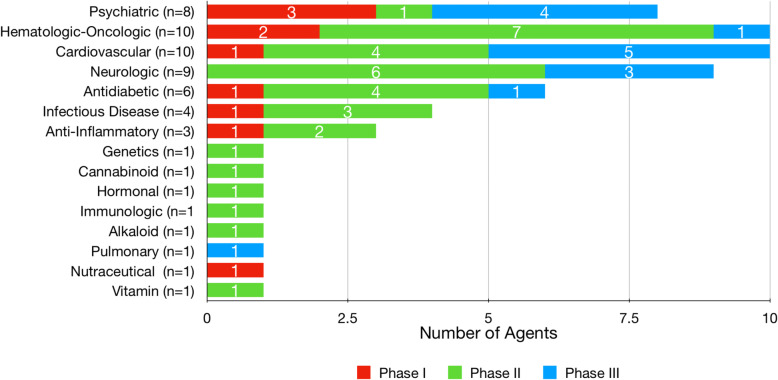
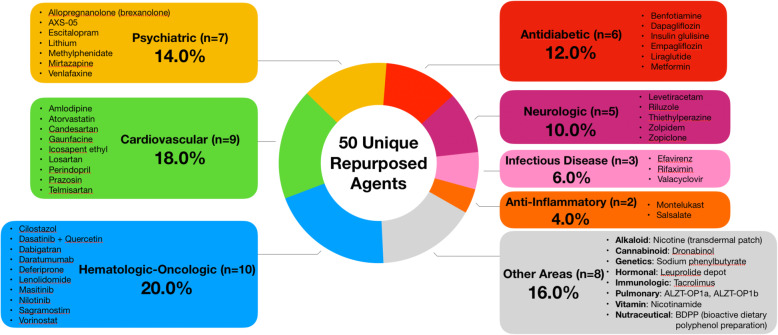
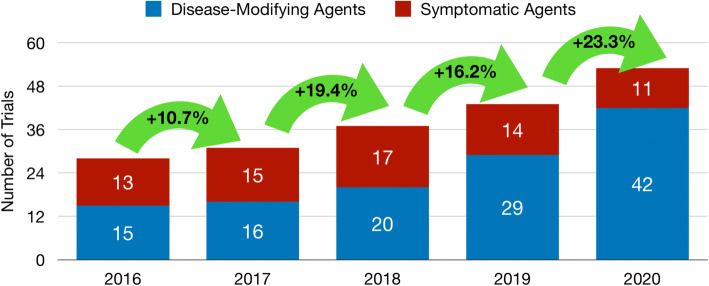
Background: Treatments are needed to address the growing prevalence of Alzheimer’s disease (AD). Clinical trials have failed to produce any AD drugs for Food and Drug Administration (FDA) approval since 2003, and the pharmaceutical development process is both time-consuming and costly. Drug repurposing provides an opportunity to accelerate this process by investigating the AD-related effects of agents approved for other indications. These drugs have known safety profiles, pharmacokinetic characterization, formulations, doses, and manufacturing processes. Methods: We assessed repurposed AD therapies represented in Phase I, Phase II, and Phase III of the current AD pipeline as registered on ClinicalTrials.gov as of February 27, 2020. Results: We identified 53 clinical trials involving 58 FDA-approved agents. Seventy-eight percent of the agents in trials had putative disease-modifying mechanisms of action. Of the repurposed drugs in the pipeline 20% are hematologic-oncologic agents, 18% are drugs derived from cardiovascular indications, 14% are agents with psychiatric uses, 12% are drug used to treat diabetes, 10% are neurologic agents, and the remaining 26% of drugs fall under other conditions. Intellectual property strategies utilized in these programs included using the same drug but altering doses, routes of administration, or formulations. Most repurposing trials were supported by Academic Medical Centers and were not funded through the biopharmaceutical industry. We compared our results to a European trial registry and found results similar to those derived from ClinicalTrials.gov. Conclusions: Drug repurposing is a common approach to AD drug development and represents 39% of trials in the current AD pipeline. Therapies from many disease areas provide agents potentially useful in AD. Most of the repurposed agents are generic and a variety of intellectual property strategies have been adopted to enhance their economic value.
Overview
The claims and statistics of this paper haven’t been checked yet.
Free: it reads the open-access text and checks the first 5 claims that cite a source we can check. Create a free account to check every claim.
Integrity signals
Registry
Cites
Statistics
Figures

Verification
Claims the paper makes
The claims and statistics of this paper haven’t been checked yet.
Free: it reads the open-access text and checks the first 5 claims that cite a source we can check. Create a free account to check every claim.
Claims other papers make about this one
Each is checked against this paper’s own text: does it say what the citing paper says it does?
The cited source says what the claim attributes to it.
In the citing paper
“These drugs are noted for their extensive safety and tolerance profiles, as well as their potential for multiple uses.428,430”
From Recent advances in Alzheimer's disease: Mechanisms, clinical trials and new drug development strategies. (2024) · cites this paper as [428]
The cited source says what the claim attributes to it.
In the citing paper
“The long, high-cost, and resource-heavy process of developing AD medications, coupled with their high rate of failure, has led to growing interest in repurposing medications originally designed for other conditions, including cancer, cardiovascular diseases, psychiatric disorders, diabetes, and other neurological diseases.428,429”
From Recent advances in Alzheimer's disease: Mechanisms, clinical trials and new drug development strategies. (2024) · cites this paper as [428]
In the citing paper
“A recent study assessing the repurposed AD therapies represented in Phase I, II, and III since February 2020 identified 53 clinical trials investigating 58 total repurposed drugs with the various initial clinical application (20% hematologic-oncologic, 18% cardiovascular, 14% psychiatric, 12% diabetes, 10% are neurologic, 26% other conditions) [41].”
From Multi-Target Mechanisms of Phytochemicals in Alzheimer’s Disease: Effects on Oxidative Stress, Neuroinflammation and Protein Aggregation (2022) · cites this paper as [41]
In the citing paper
“comparisons show that only a few agents registered in the European Union Clinical Trial Register, for example, are not found on ClinicalTrials.gov.”
From Alzheimer’s disease drug development pipeline: 2021 (2021) · cites this paper as [18]
Self-check
Percentages, sums and reported differences re-computed from the paper’s own numbers.
The self-check needs the paper’s full text.
Citations
Cites
Forecasting the global burden of Alzheimer's disease
Brookmeyer, R., Johnson, E., Ziegler‐Graham, K., & Arrighi, H. M. (2007) · Alzheimer's & Dementia · doi:10.1016/j.jalz.2007.04.381 · Cited by 3,370
Masters, C. L., Bateman, R., Blennow, K., Rowe, C. C., Sperling, R. A., & Cummings, J. L. (2015) · Nature Reviews Disease Primers · doi:10.1038/nrdp.2015.56 · Cited by 1,853
Self-citationNeuroinflammation in Alzheimer's disease: current evidence and future directions
Calsolaro, V., & Edison, P. (2016) · Alzheimer's & Dementia · doi:10.1016/j.jalz.2016.02.010 · Cited by 1,726
Cummings, J., Isaacson, S., Mills, R., Williams, H., Chi-Burris, K., Corbett, A., Dhall, R., & Ballard, C. (2014) · The Lancet · doi:10.1016/s0140-6736(13)62106-6 · Cited by 954
Self-citationAlzheimer's disease drug development pipeline: 2019
Cummings, J., Lee, G., Ritter, A., Sabbagh, M., & Zhong, K. (2019) · Alzheimer's & Dementia: Translational Research & Clinical Interventions · doi:10.1016/j.trci.2019.05.008 · Cited by 762
Self-citationAlzheimer's disease drug development pipeline: 2018
Cummings, J., Lee, G., Ritter, A., & Zhong, K. (2018) · Alzheimer's & Dementia: Translational Research & Clinical Interventions · doi:10.1016/j.trci.2018.03.009 · Cited by 697
Self-citationAlzheimer’s disease drug development pipeline: 2020
Cummings, J., Lee, G., Ritter, A., Sabbagh, M., & Zhong, K. (2020) · Alzheimer's & Dementia: Translational Research & Clinical Interventions · doi:10.1002/trc2.12050 · Cited by 557
Self-citationAlzheimer's disease drug development pipeline: 2017
Cummings, J., Lee, G., Mortsdorf, T., Ritter, A., & Zhong, K. (2017) · Alzheimer's & Dementia: Translational Research & Clinical Interventions · doi:10.1016/j.trci.2017.05.002 · Cited by 549
Self-citationCompliance with Results Reporting at ClinicalTrials.gov
Anderson, M. L., Chiswell, K., Peterson, E. D., Tasneem, A., Topping, J., & Califf, R. M. (2015) · New England Journal of Medicine · doi:10.1056/nejmsa1409364 · Cited by 380 · cited 1×
“By US law, all clinical trials conducted within the US must be registered within 21 days of the enrollment of the first participant [15, 16].”
Cummings, J., Mintzer, J., Brodaty, H., Sano, M., Banerjee, S., Devanand, D. P., Gauthier, S., Howard, R., Lanctôt, K., Lyketsos, C. G., et al. (2015) · International Psychogeriatrics · doi:10.1017/s1041610214001963 · Cited by 355
Self-citation
Cited by
Zhang, J., Zhang, Y., Wang, J., Xia, Y., Zhang, J., & Chen, L. (2024) · Signal Transduction and Targeted Therapy · doi:10.1038/s41392-024-01911-3 · Cited by 1,138
Alzheimer’s disease drug development pipeline: 2021
Cummings, J., Lee, G., Zhong, K., Fonseca, J., & Taghva, K. (2021) · Alzheimer's & Dementia: Translational Research & Clinical Interventions · doi:10.1002/trc2.12179 · Cited by 539
Self-citationChallenges and hopes for Alzheimer’s disease
Tatulian, S. A. (2022) · Drug Discovery Today · doi:10.1016/j.drudis.2022.01.016 · Cited by 291
Recent advances on drug development and emerging therapeutic agents for Alzheimer’s disease
Athar, T., Al Balushi, K., & Khan, S. A. (2021) · Molecular Biology Reports · doi:10.1007/s11033-021-06512-9 · Cited by 247
Alzheimer’s Disease: Exploring the Landscape of Cognitive Decline
Tenchov, R., Sasso, J. M., & Zhou, Q. A. (2024) · ACS Chemical Neuroscience · doi:10.1021/acschemneuro.4c00339 · Cited by 170
Mild Behavioral Impairment and Subjective Cognitive Decline Predict Cognitive and Functional Decline
Ismail, Z., McGirr, A., Gill, S., Hu, S., Forkert, N. D., & Smith, E. E. (2021) · Journal of Alzheimer's Disease · doi:10.3233/jad-201184 · Cited by 169
Brain Metabolic Alterations in Alzheimer’s Disease
Ardanaz, C. G., Ramírez, M. J., & Solas, M. (2022) · International Journal of Molecular Sciences · doi:10.3390/ijms23073785 · Cited by 125
“obtained by these drugs have shed a bit of light and hope for the development of future AD therapies, current results should be interpreted with caution, as there have been no new drug approvals for the treatment of dementia so far [273,274].”
ResultSharifi-Rad, J., Rapposelli, S., Sestito, S., Herrera-Bravo, J., Arancibia-Diaz, A., Salazar, L. A., Yeskaliyeva, B., Beyatli, A., Leyva-Gómez, G., González-Contreras, C., et al. (2022) · Journal of Personalized Medicine · doi:10.3390/jpm12091515 · Cited by 125
“A recent study assessing the repurposed AD therapies represented in Phase I, II, and III since February 2020 identified 53 clinical trials investigating 58 total repurposed drugs with the various initial clinical application (20% hematologiconcologic, 18% cardiovascular, 14% psychiatric, 12% diabetes, 10% are neurolog…”
BackgroundHossain, M. S., & Hussain, M. H. (2025) · Pharmacology Research & Perspectives · doi:10.1002/prp2.70131 · Cited by 121
“Additionally, the lengthy and costly clinical trial processes coupled with the challenge of identifying reliable biomarkers for early diagnosis and treatment monitoring further complicate progress [49, 135].”
High-throughput target trial emulation for Alzheimer’s disease drug repurposing with real-world data
Zang, C., Zhang, H., Xu, J., Zhang, H., Fouladvand, S., Havaldar, S., Cheng, F., Chen, K., Chen, Y., Glicksberg, B. S., et al. (2023) · Nature Communications · doi:10.1038/s41467-023-43929-1 · Cited by 69
Brain health: Key to health, productivity, and well‐being
Avan, A., Hachinski, V., & the Brain Health Learn and Act Group (2021) · Alzheimer s & Dementia · doi:10.1002/alz.12478 · Cited by 73
Recent Advances in Therapeutics for the Treatment of Alzheimer’s Disease
Thawabteh, A. M., Ghanem, A. W., AbuMadi, S., Thaher, D., Jaghama, W., Karaman, D., & Karaman, R. (2024) · Molecules · doi:10.3390/molecules29215131 · Cited by 56
“Amyloid-beta buildup in the brain is believed to be crucial for the onset and progression of AD, and certain DMTs target this accumulation [70–72].”
BackgroundDrug repurposing for Alzheimer’s disease from 2012–2022—a 10-year literature review
Grabowska, M. E., Huang, A., Wen, Z., Li, B., & Wei, W.-Q. (2023) · Frontiers in Pharmacology · doi:10.3389/fphar.2023.1257700 · Cited by 55
“…fl uvastatin) and ezetimibe were suggested as viable AD repurposing candidates by other studies, suggesting that reported negative outcomes may not entirely discredit the candidacy of certain drugs (Cheung et al., 2014; Croset et al., 2014; Kondo et al., 2017; Bauzon et al., 2020; Wu et al., 2021).”
BackgroundAlzheimer’s Disease: The Past, Present, and Future of a Globally Progressive Disease
Vejandla, B., Savani, S., Appalaneni, R., Veeravalli, R. S., & Gude, S. S. (2024) · Cureus · doi:10.7759/cureus.51705 · Cited by 66
“Currently, 39% of ongoing Alzheimer's research focuses on repurposed drugs, spanning categories like hematologic-oncologic, cardiovascular, psychiatric, and anti-diabetic agents [29].”
Metabolic determinants of Alzheimer’s disease: A focus on thermoregulation
Tournissac, M., Leclerc, M., Valentin‐Escalera, J., Vandal, M., Bosoi, C. R., Planel, E., & Calon, F. (2021) · Ageing Research Reviews · doi:10.1016/j.arr.2021.101462 · Cited by 46
Arnold, S. E., Hyman, B. T., Betensky, R. A., & Dodge, H. H. (2024) · Alzheimer s & Dementia · doi:10.1002/alz.14063 · Cited by 41
“18”
Anticancer drugs repurposed for Alzheimer’s disease: a systematic review
Ancidoni, A., Bacigalupo, I., Remoli, G., Lacorte, E., Piscopo, P., Sarti, G., Corbo, M., Vanacore, N., & Canevelli, M. (2021) · Alzheimer s Research & Therapy · doi:10.1186/s13195-021-00831-6 · Cited by 44
“Moreover, it may significantly reduce the times and costs of drug development given that the repurposed drugs have already been tested in terms of safety/tolerability, thus rendering the conduction of further preclinical studies unnecessary [16].”
BackgroundInfluentialTherapeutic Potential of Human Stem Cell Implantation in Alzheimer’s Disease
Chan, H. J., Yanshree, Roy, J., Tipoe, G. L., Fung, M., & Lim, L. W. (2021) · International Journal of Molecular Sciences · doi:10.3390/ijms221810151 · Cited by 35
“Moreover, other drugs can be repurposed, including diabetes agents and vitamins, as well as drugs for a wide range of diseases from cardiovascular to psychiatric disorders [79].”
BackgroundQuinoline Quest: Kynurenic Acid Strategies for Next-Generation Therapeutics via Rational Drug Design
Tanaka, M., Szatmári, I., & Vécsei, L. (2025) · Pharmaceuticals · doi:10.3390/ph18050607 · Cited by 29
“Repurposing these compounds also accelerates clinical testing by leveraging existing safety and pharmacokinetic data [32].”
Quinoline Quest: Kynurenic Acid Strategies for Next-Generation Therapeutics via Rational Drug Design
Tanaka, M., Szatmári, I., & Vécsei, L. (2025) · doi:10.20944/preprints202503.2399.v1 · Cited by 30
Li, Q., Rubin, L., Silva, M., Li, S., Yang, C., Lazarovici, P., & Zheng, W. (2022) · Oxidative Medicine and Cellular Longevity · doi:10.1155/2022/3777021 · Cited by 33
“However, the assessment of the therapeutic potential of Artemisinin and its analogs towards age-associated neurodegenerative diseases is still in an early stage [66].”
Poblano, J., Castillo‐Tobías, I., Berlanga, L., Tamayo‐Ordoñez, M. C., Rodríguez‐Salazar, M. D. C., Silva‐Belmares, S. Y., Aguayo‐Morales, H., & Cobos-Puc, L. E. (2024) · Basic & Clinical Pharmacology & Toxicology · doi:10.1111/bcpt.14055 · Cited by 33
“9,10 This review includes a variety of pharmacological approaches to ApoE4 modulation, including ApoE mimetic peptides, small molecule ApoE4 correctors, anti-ApoE antibodies, loop diuretics, antide-pressants and peroxisome proliferator-activated receptor (PPAR) ligands.”
Pharmacological Strategies to Improve Dendritic Spines in Alzheimer’s Disease
Ettcheto, M., Busquets, O., Cano, A. C., Sánchez‐López, E., Manzine, P. R., Espinosa-Jiménez, T., Verdaguer, E., Sureda, F. X., Olloquequi, J., Castro-Torres, R. D., et al. (2020) · Journal of Alzheimer s Disease · doi:10.3233/jad-201106 · Cited by 28
“These treatments may be effective to prevent the development of pathologyandthus,itcouldbecomeacomplementary elementforfuturetherapeutic[147–149].”
Grossmann, K. (2022) · Biomedicines · doi:10.3390/biomedicines10081890 · Cited by 26
“Therefore, drug development costs and time for progression in the pipeline could be substantially reduced [8].”
BackgroundSéguy, L., Groo, A., & Malzert‐Fréon, A. (2022) · Drug Discovery Today · doi:10.1016/j.drudis.2022.02.022 · Cited by 24
Novel Pharmaceutical Approaches in Dementia
Tanaka, M., Török, N., & Vécsei, L. (2021) · Springer eBooks · doi:10.1007/978-3-319-56015-1_444-1 · Cited by 23
Chalkias, E., Topouzis, F., Tegos, T. J., & Tsolaki, M. (2021) · Journal of Alzheimer s Disease · doi:10.3233/jad-201516 · Cited by 21
Tracing the Path between Mushrooms and Alzheimer’s Disease—A Literature Review
Silva, A. M., Preto, M., Grosso, C., Vieira, M., Delerue-Matos, C. M., Vasconcelos, V. M., Reis, M. A., Barros, L., & Martins, R. F. (2023) · Molecules · doi:10.3390/molecules28145614 · Cited by 26
“Nevertheless, some hypotheses have been proposed to explain the origin of AD, namely, the amyloid cascade hypothesis, the cholinergic hypothesis, the tau hypothesis, and the glutaminergic hypothesis [8].”
BackgroundOgura, J., & Yamaguchi, H. (2022) · International Journal of Molecular Sciences · doi:10.3390/ijms23126542 · Cited by 23
“Therefore, drug repositioning and repurposing antidiabetic drugs for dementia are expected to provide affordable and effective treatments for dementia [17].”
BackgroundCuddy, L. K., Alia, A. O., Salvo, M. A., Chandra, S., Grammatopoulos, T. N., Justman, C. J., Lansbury, P. T., Mazzulli, J. R., & Vassar, R. J. (2022) · Molecular Neurodegeneration · doi:10.1186/s13024-022-00561-9 · Cited by 19
“As the search continues for an effective AD treatment, the number of repurposed drugs in clinical trials for AD has grown substantially as clinically evaluated drugs have known safety and efficacy profiles, thus accelerating the drug development process [7, 19].”
BackgroundBirajdar, S. V., Mazahir, F., & Yadav, A. K. (2023) · Drug Development and Industrial Pharmacy · doi:10.1080/03639045.2023.2282990 · Cited by 17
“The drugs approved for the treatment of other disorders are known for their manufacturing process, safety profiles, doses, and pharmacokinetic characterizations, and can be used as repurposing agents for the treatment of disease [47].”
BackgroundZhang, B., Gao, Y., Zhang, X., Jiang, J., Ren, J., Wang, S., Hu, H., Zhao, Y., Chen, L., Zhao, K., et al. (2022) · International Journal of Biological Macromolecules · doi:10.1016/j.ijbiomac.2022.01.154 · Cited by 17
Das, S., Ramachandran, A. K., Halder, D., Akbar, S., Ahmed, B., & Joseph, A. (2022) · CNS & Neurological Disorders - Drug Targets · doi:10.2174/1871527321666220629162229 · Cited by 16
An Integrated Molecular Atlas of Alzheimer’s Disease
Wörheide, M. A., Krumsiek, J., Nataf, S., Nho, K., Greenwood, A. K., Wu, T., Huynh, K., Weinisch, P., Römisch-Margl, W., Lehner, N., et al. (2021) · medRxiv · doi:10.1101/2021.09.14.21263565 · Cited by 13
“With Levetiracetam being investigated in multiple phase II trials (NCT02002819, NCT03489044, NCT03875638) and a low-dose formulation (AGB101) currently being tested in phase II (NCT03461861) and phase III trials (NCT03486938), Levetiracetam is one of the most represented agents among ongoing clinical trials (as of Feb…”
BackgroundGomaa, A., Farghaly, H. S. M., Ahmed, A. M., El-Mokhtar, M., & Hemida, F. K. (2022) · European Journal of Pharmacology · doi:10.1016/j.ejphar.2022.174873 · Cited by 12
Wang, B., Shi, J.-Z., Guo, N., Shao, L., Zhai, W., Jiang, L., Zhao, F., Wang, J., Wang, J., Du, L.-D., et al. (2023) · Analytica Chimica Acta · doi:10.1016/j.aca.2023.341900 · Cited by 13
Recent Updates on the Development of Therapeutics for the Targeted Treatment of Alzheimer’s Disease
Rajput, S., Malviya, R., Bahadur, S., & Puri, D. (2023) · Current Pharmaceutical Design · doi:10.2174/0113816128274618231105173031 · Cited by 13
Chakraborty, S., Vishwas, S., Harish, V., Gupta, G., Paudel, K. R., Dhanasekaran, M., Goh, B. H., Zacconi, F. C. M., Pinto, T. D. J. A., Kumbhar, P., et al. (2024) · Expert Opinion on Drug Delivery · doi:10.1080/17425247.2024.2414768 · Cited by 12
“DR offers comparatively faster and cost-effective alternatives by leveraging existing drugs with known safety profiles, bypassing the hassling steps of de novo drug development, reporting a success rate of 25–30% followed by quick market approval [30].”
Who funds Alzheimer's disease drug development?
Cummings, J. L., Bauzon, J. S., & Lee, G. (2021) · Alzheimer s & Dementia Translational Research & Clinical Interventions · doi:10.1002/trc2.12185 · Cited by 11
Self-citationPhysical-chemical repurposing of drugs. History of its formation in Russia
Ураков, А. Л., & Shabanov, P. D. (2023) · Reviews on Clinical Pharmacology and Drug Therapy · doi:10.17816/rcf567782 · Cited by 12
Novel Pharmaceutical Approaches in Dementia
Tanaka, M., Török, N., & Vécsei, L. (2022) · Springer eBooks · doi:10.1007/978-3-030-62059-2_444 · Cited by 13
Benchmarking table recognition performance on biomedical literature on neurological disorders
Adams, T., Namysł, M., Kodamullil, A. T., Behnke, S., & Jacobs, M. D. (2021) · Bioinformatics · doi:10.1093/bioinformatics/btab843 · Cited by 8
Yuen, S. C., Lee, S. M., & Leung, S.-W. (2021) · Journal of Alzheimer s Disease · doi:10.3233/jad-215349 · Cited by 7
“Among the repurposed agents, seven are hematologic-oncologic agents [201]; five are in phase II trials and two are in phase I trials.”
Alkaloids as Photosensitisers for the Inactivation of Bacteria
López‐Molina, S., Galiana‐Roselló, C., Galiana, C., Gil‐Martínez, A., Bandeira, S., & González‐García, J. (2021) · Antibiotics · doi:10.3390/antibiotics10121505 · Cited by 8
Foresee Novel Targets for Alzheimer’s Disease by Investigating Repurposed Drugs
Agarwal, K., Katare, D. P., & Jakhmola-Mani, R. (2022) · CNS & Neurological Disorders - Drug Targets · doi:10.2174/1871527321666220622162622 · Cited by 9
Hu, E., Li, T. S., Wineinger, N. E., & Su, A. I. (2023) · Alzheimer s Research & Therapy · doi:10.1186/s13195-023-01255-0 · Cited by 10
“Over 50 repurposed drugs are already being tested in clinical trials [2], and constantly more potential candidates are emerging from ongoing research.”
BackgroundMethodInfluentialDrug Repositioning: A Monetary Stratagem to Discover a New Application of Drugs
Rohilla, A., & Rohilla, S. (2023) · Current Drug Discovery Technologies · doi:10.2174/0115701638253929230922115127 · Cited by 7
Rubavathy, S. M. E., & Prakash, M. (2025) · Physical Chemistry Chemical Physics · doi:10.1039/d4cp03291h · Cited by 6
Dorababu, A. (2025) · Journal of Pharmacology and Experimental Therapeutics · doi:10.1016/j.jpet.2025.103606 · Cited by 5
Strategies for Redesigning Withdrawn Drugs to Enhance Therapeutic Efficacy and Safety: A Review
Patel, C., Shakeel, A., Mall, R., Alawi, K. M., Ozerov, I. V., Zhavoronkov, A. A., & Castiglione, F. (2025) · Wiley Interdisciplinary Reviews Computational Molecular Science · doi:10.1002/wcms.70004 · Cited by 8
Potential role of Drug Repositioning Strategy (DRS) for management of tauopathy
Zaki, M. O., Elsherbiny, D. A., Salama, M., & Azab, S. S. (2021) · Life Sciences · doi:10.1016/j.lfs.2021.120267 · Cited by 7
Ogura, J., Sugiura, H., Tanaka, A., Ono, S., Sato, T., Sato, T., Maekawa, M., Yamaguchi, H., & Mano, N. (2021) · Biochimica et Biophysica Acta (BBA) - General Subjects · doi:10.1016/j.bbagen.2021.129998 · Cited by 6
Eynde, J. J. V. (2023) · Drugs and Drug Candidates · doi:10.3390/ddc2040043 · Cited by 4
Biswal, B., Satapathy, B. S., Mishra, A., Maharana, L., & Pattnaik, S. (2025) · Current Drug Discovery Technologies · doi:10.2174/0115701638329824241220055621 · Cited by 4
Chen, Y., Deng, Q., Wang, C., Liang, C., Shi, Y. L., Liu, X., Deng, C., Li, J., Zhang, H., & Hua, Q. (2025) · Life Sciences · doi:10.1016/j.lfs.2025.123810 · Cited by 7
Coumarin compounds against Alzheimer's disease: An in-silico approach
Avelar, M., Delgado-Acosta, P. F., Guzmán‐Ávila, R., & Flores‐Morales, V. (2025) · Results in Chemistry · doi:10.1016/j.rechem.2025.102481 · Cited by 4
Rani, N., Kaushik, A., Kardam, S., Kag, S., Raj, V. S., Ambasta, R. K., & Kumar, P. (2024) · Progress in molecular biology and translational science · doi:10.1016/bs.pmbts.2024.03.029 · Cited by 5
Medication-Wide Association Study Plus (MWAS+): A Proof of Concept Study on Drug Repurposing
Cheng, Y., ZAMRINI, E. Y., Ahmed, A., Wu, W., Shao, Y., & Zeng‐Treitler, Q. (2022) · Medical Sciences · doi:10.3390/medsci10030048 · Cited by 5
“A number of prior studies have been carried out to repurpose existing drugs for ADRD [12,13].”
BackgroundCurrent and emerging therapeutic approaches in Alzheimer’s disease
Chauhan, A., Devi, R., Singh, S., Thakur, R., Bhutani, K., Sharma, R., Kumari, A., Kumar, H., Pal, S., & Saini, A. K. (2026) · Discover Neuroscience · doi:10.1186/s13064-026-00290-5 · Cited by 4
Shah, F. A., Qadir, H., Khan, J., & Faheem, M. (2025) · Neuroscience · doi:10.1016/j.neuroscience.2025.03.064 · Cited by 4
Ethical Issues Which Have Prevented the U.S. from Maximizing Quality of Life Years
Arbor, S. (2021) · IntechOpen eBooks · doi:10.5772/intechopen.97561 · Cited by 3
Polypharmacology in Old Drug Rediscovery: Drug Repurposing
Wang, Z., & Yang, B. (2022) · Springer eBooks · doi:10.1007/978-3-031-04998-9_13 · Cited by 7
Correction: Repurposed agents in the Alzheimer’s disease drug development pipeline
Bauzon, J. S., Lee, G., & Cummings, J. L. (2023) · Alzheimer s Research & Therapy · doi:10.1186/s13195-023-01284-9 · Cited by 2
Self-citationTreatment options for Alzheimer’s Disease: An overview of the amyloid, tau, and alternate hypotheses
Eroltu, K. (2023) · Journal of High School Science · doi:10.64336/001c.89250 · Cited by 1
Smart Drug-Delivery Approaches for Enhanced Management of Comorbid Conditions in Alzheimer’s Disease
Stanciu, G. D., Costăchescu, I., Dascalu, C., & Tamba, B.-I. (2026) · Life · doi:10.3390/life16030510 · Cited by 2
Dahal, D., Verma, M., Dendup, S., Drukpa, K., & Tshering, L. C. P. (2021) · Journal of Emerging Technologies and Innovative Research
(2021) · International Journal of Biology Pharmacy and Allied Sciences · doi:10.31032/ijbpas/2021/10.12.1038
Role of Animal Models in Alzheimer’s Disease Drug Development
Kinney, J. W., Osse, A. M. L., Lamb, B. T., Oblack, A., Palkowitz, A. D., & Belas, F. J. (2022) · Cambridge University Press eBooks · doi:10.1017/9781108975759.008
INVESTIGATING TOLFENAMIC ACID AND ITS ANALOGS AS POTENTIAL ALZHEIMER’S DISEASE THERAPEUTICS
Hill, J. (2021) · Digital Commons - URI (University of Rhode Island) · doi:10.23860/diss-hill-jaunetta-2021 · Cited by 1
Exploring avenues for Alzheimer’s drugs: current status and future outlook
Rathi, K. M., Wavhale, R. D., V., V. U., Bhole, R. P., & Dherange, S. D. (2024) · Russian neurological Journal · doi:10.30629/2658-7947-2023-28-6-19-33
Repurposing Old Drugs for Alzheimer’s Treatment
Gibbs, D. (2024) · Cambridge University Press eBooks · doi:10.1017/9781009430067.034
Transforming Alzheimer's Treatment: Unveiling New Potential with Drug Repurposing Strategies
Mishra, A. S., Vasanthan, M. V. M., Ghosh, B., & Sivakumar, P. M. (2025) · Current Medicinal Chemistry · doi:10.2174/0109298673341391241231054936 · Cited by 2
Tariq, M. J., Kanwal, M., Ata, A., Nadeem, H., & Siddiqui, M. (2026) · ACS Chemical Neuroscience · doi:10.1021/acschemneuro.5c00449
Manandhar, S., Govindula, A., Atchou, K., Nassar, A., Kabekkodu, S. P., & Pai, K. S. R. (2026) · European Journal of Pharmacology · doi:10.1016/j.ejphar.2026.178971
SAIMSARA (2026) · SAIMSARA Journal · doi:10.62487/saimsarae25de34b
Ganesh, A., Smith, E. E., Mostert, J. P., Strijbis, E. M. M., Schoonheim, M. M., Xia, C., Nadeau, Y., Leavitt, V. M., Kalia, L. V., Engelborghs, S., et al. (2026) · Neurology · doi:10.1212/wnl.0000000000218227
Nikam, S., Khot, S. V., & Kokare, C. (2026) · Journal of Drug Delivery Science and Technology · doi:10.1016/j.jddst.2026.108854
Poonam, Rana, R., Thakur, M., Sharma, A., Pannu, S., Sharma, S., Naman, S., Rani, S., Devi, D., Kumar, V., et al. (2026) · Frontiers in Oncology · doi:10.3389/fonc.2026.1908830
Metadata
- Authors
- Bauzon, J., Lee, G., & Cummings, J.
- Affiliations
- University of Nevada, Las Vegas (US)
- Cleveland Clinic (US)
- Corresponding author
- Cummings, Jeffrey
- Venue
- Alzheimer's Research & Therapy
- Published
- 2020-08-17
- Volume
- 12
- Issue
- 1
- Pages
- 98-98
- ISSN
- 1758-9193 (ISSN-L)
- PMC
- PMC7433208
- OpenAlex
- W3049299998
- Cited by
- 77
- References
- 55
- Citations by year
- 2026: 8 · 2025: 9 · 2024: 11 · 2023: 12 · 2022: 16 · 2021: 20 · 2020: 1
- FWCI
- 7.37
- Type
- journal article
- Language
- en
- Update notices
- correction (2023-08-21)
- Open access
- gold
- doi.org
- Licence
- cc-by
- creativecommons.org/licenses/by/4.0 (tdm)
- creativecommons.org/licenses/by/4.0 (vor)
- Locations
- Alzheimer s Research & Therapy (publishedVersion, cc-by)
- PubMed Central (publishedVersion, cc-by)
- PubMed (publishedVersion)
- Digital Scholarship - UNLV (University of Nevada Reno) (submittedVersion, cc-by)
- DOAJ (DOAJ: Directory of Open Access Journals) (submittedVersion, cc-by-sa)
- Funders
- National Institute of General Medical Sciences (P20GM109025)
- National Institute of Neurological Disorders and Stroke (U01NS093334)
- National Institute on Aging (R01AG053798)
- Topics
- Life Sciences › Neuroscience › Cellular and Molecular Neuroscience › Alzheimer's disease research and treatments
- Health Sciences › Medicine › Psychiatry and Mental health › Dementia and Cognitive Impairment Research
- Health Sciences › Medicine › Pharmacology (medical) › Cholinesterase and Neurodegenerative Diseases
- Keywords
- Alzheimer's disease, drug repurposing, clinical trials, drug development pipeline, FDA-approved drugs, disease-modifying therapy, intellectual property strategy, clinical trial funding, ClinicalTrials.gov
- MeSH terms
- Alzheimer Disease, Humans, United States, United States Food and Drug Administration, Drug Repositioning
About these checks
Registry, retraction, Cites and statistics results are computed, not judged, with one exception: a printed reference that no index lists is read once by a model before it counts as a citation error. Claims are extracted by a model and kept only when their quote appears verbatim in the text; each cited source is then checked, with a model’s help, for whether it says what the claim relies on. Those verdicts can be wrong — read the claim’s quote and the cited source before relying on one.
Statistics and arithmetic are recomputed, not judged.
Confidence bands are shown only for fields calibrated on our annotated test set. None is calibrated yet, so no band is shown.
What counts as a claim ›How we measure confidence ›How we check this ›
Are you an author, or do you see a problem with this page? Request a review
Data sources
Bibliographic data: Semantic Scholar, OpenAlex, Crossref.
Contains information from the Semantic Scholar Academic Graph Datasets, made available under the ODC Attribution License (ODC-BY 1.0).
Semantic Scholar’s data is described in: Kinney, R., et al. (2023). The Semantic Scholar Open Data Platform. arXiv:2301.10140.
