

Perspectives and challenges in patient stratification in Alzheimer’s disease
Open accessThe DOI matches its Crossref record; 70 of the 70 references it cites were found in a registry or an index.
Abstract
Background: Patient stratification is the division of a patient population into distinct subgroups based on the presence or absence of particular disease characteristics. As patient stratification can be used to account for the underlying pathology of a disease, it can help physicians to tailor therapeutic interventions to individuals and optimize their care management and treatment regime. Alzheimer’s disease, the most common form of dementia, is a heterogeneous disease and its management benefits from patient stratification in clinical trials, and the development of personalized care and treatment strategies for people living with the disease. Main body: In this review, we discuss the importance of the stratification of people living with Alzheimer’s disease, the challenges associated with early diagnosis and patient stratification, and the evolution of patient stratification once disease-modifying therapies become widely available. Conclusion: Patient stratification plays an important role in drug development in clinical trials and may play an even larger role in clinical practice. A timely diagnosis and stratification of people living with Alzheimer’s disease is paramount in determining people who are at risk of progressing from mild cognitive impairment to Alzheimer’s dementia. There are key issues associated with stratifying patients which include the heterogeneity and complex neurobiology behind Alzheimer’s disease, our inadequately prepared healthcare systems, and the cultural perceptions of Alzheimer’s disease. Stratifying people living with Alzheimer’s disease may be the key in establishing precision and personalized medicine in the field, optimizing disease prevention and pharmaceutical treatment to slow or stop cognitive decline, while minimizing adverse effects.
Overview
The claims and statistics of this paper haven’t been checked yet.
Free: it reads the open-access text and checks the first 5 claims that cite a source we can check. Create a free account to check every claim.
Integrity signals
Registry
Cites
Statistics
Figures
Verification
Claims the paper makes
The claims and statistics of this paper haven’t been checked yet.
Free: it reads the open-access text and checks the first 5 claims that cite a source we can check. Create a free account to check every claim.
Claims other papers make about this one
Each is checked against this paper’s own text: does it say what the citing paper says it does?
The source backs part of the claim, not all of it — or backs it for a different population, condition or comparison.
In the citing paper
“Patients with AD exhibit a substantial accumulation of amyloid-β (Aβ) plaques and neurofibrillary tangles (NFTs) within their brains, accompanied by a cascade of pathological processes such as neuroinflammation, synaptic dysfunction, mitochondrial and bioenergetic disturbances, as well as vascular abnormalities.”
From Recent advances in Alzheimer's disease: Mechanisms, clinical trials and new drug development strategies. (2024) · cites this paper as [5]
Experimental — accuracy not yet measured
Self-check
Percentages, sums and reported differences re-computed from the paper’s own numbers.
The self-check needs the paper’s full text.
Citations
Cites
1 retracted
Dementia prevention, intervention, and care: 2020 report of the Lancet Commission
Livingston, G., Huntley, J., Sommerlad, A., Ames, D., Ballard, C., Banerjee, S., Brayne, C., Burns, A., Cohen-Mansfield, J., Cooper, C., et al. (2020) · The Lancet · doi:10.1016/s0140-6736(20)30367-6 · Cited by 10,430 · cited 5×
“As previously discussed, there are a variety of demographic, genetic, and environmental risk factors that are associated with modulation of cognitive decline which are key components for stratifying for risk of AD and AD progression [2, 16, 22, 29].”
BackgroundInfluentialRetractedNIA‐AA Research Framework: Toward a biological definition of Alzheimer's disease
Jack, C. R., Bennett, D. A., Blennow, K., Carrillo, M. C., Dunn, B., Haeberlein, S. B., Holtzman, D. M., Jagust, W., Jessen, F., Karlawish, J., et al. (2018) · Alzheimer's & Dementia · doi:10.1016/j.jalz.2018.02.018 · Cited by 10,537
2021 Alzheimer's disease facts and figures
(2021) · Alzheimer's & Dementia · doi:10.1002/alz.12328 · Cited by 2,201
The clinical use of structural MRI in Alzheimer disease
Frisoni, G. B., Fox, N. C., Jack, C. R., Scheltens, P., & Thompson, P. M. (2010) · Nature Reviews Neurology · doi:10.1038/nrneurol.2009.215 · Cited by 2,113
Donanemab in Early Alzheimer’s Disease
Mintun, M. A., Lo, A. C., Duggan Evans, C., Wessels, A. M., Ardayfio, P. A., Andersen, S. W., Shcherbinin, S., Sparks, J., Sims, J. R., Brys, M., et al. (2021) · New England Journal of Medicine · doi:10.1056/nejmoa2100708 · Cited by 1,728 · cited 1×
“This resulted in a decrease in the variable trajectories of clinical decline [44].”
BackgroundPalmqvist, S., Janelidze, S., Quiroz, Y. T., Zetterberg, H., Lopera, F., Stomrud, E., Su, Y., Chen, Y., Serrano, G. E., Leuzy, A., et al. (2020) · JAMA · doi:10.1001/jama.2020.12134 · Cited by 1,603 · cited 3×
“In a cross-sectional study of 1402 participants from three selected AD cohorts, plasma pTau217 discriminated AD from other neurodegenerative diseases with performance that was deemed significantly better than established AD plasma- and MRI-based biomarkers, but not significantly different from key CSF- or PET-based bi…”
BackgroundResultInfluentialMitchell, A. J., Beaumont, H., Ferguson, D., Yadegarfar, M., & Stubbs, B. (2014) · Acta Psychiatrica Scandinavica · doi:10.1111/acps.12336 · Cited by 1,162 · cited 1×
“As expected, one of the first indicators of AD risk is personal memory complaints; those with subjective cognitive decline are at twice the risk of developing dementia compared with people without subjective memory complaints [23].”
BackgroundClinical diagnosis of Alzheimer’s disease: Recommendations of the International Working Group
Dubois, B., Villain, N., Frisoni, G. B., Rabinovici, G. D., Sabbagh, M., Cappa, S., Bejanin, A., Bombois, S., Epelbaum, S., Teichmann, M., et al. (2021) · The Lancet Neurology · doi:10.1016/s1474-4422(21)00066-1 · Cited by 1,051 · cited 10×
“Additionally, those with biomarker evidence of AD pathology but normal cognition may not progress to AD dementia [16] and may not be candidates for a DMT.”
BackgroundMethodInfluentialThe National Collaborating Centre for Mental Health
Kendall, T., & Pilling, S. (2004) · UCL Discovery (University College London) · Cited by 840
Bridel, C., van Wieringen, W. N., Zetterberg, H., Tijms, B. M., Teunissen, C. E., and the NFL Group, Alvarez-Cermeño, J. C., Andreasson, U., Axelsson, M., Bäckström, D. C., et al. (2019) · JAMA Neurology · doi:10.1001/jamaneurol.2019.1534 · Cited by 764
Blood-based biomarkers for Alzheimer disease: mapping the road to the clinic
Hampel, H., O’Bryant, S. E., Molinuevo, J. L., Zetterberg, H., Masters, C. L., Lista, S., Kiddle, S. J., Batrla, R., & Blennow, K. (2018) · Nature Reviews Neurology · doi:10.1038/s41582-018-0079-7 · Cited by 716 · cited 3×
“Blood-based biomarkers for AD pathology are also being investigated, in the hope of validating them as a more economical and less invasive option [66].”
BackgroundTau PET imaging in neurodegenerative tauopathies—still a challenge
Leuzy, A., Chiotis, K., Lemoine, L., Gillberg, P.-G., Almkvist, O., Rodriguez-Vieitez, E., & Nordberg, A. (2019) · Molecular Psychiatry · doi:10.1038/s41380-018-0342-8 · Cited by 628 · cited 2×
“Three amyloid PET imaging agents ([18F]-florbetapir, [18F]-florbetaben, and [18F]-flutemetamol) and one tau PET ligand ([18F]-flortaucipir) are approved by the FDA for medical use and commonly applied in clinical trials of AD [56, 57].”
BackgroundMethodSalloway, S., Chalkias, S., Barkhof, F., Burkett, P., Barakos, J., Purcell, D., Suhy, J., Forrestal, F., Tian, Y., Umans, K., et al. (2022) · JAMA Neurology · doi:10.1001/jamaneurol.2021.4161 · Cited by 619
Lanoiselée, H.-M., Nicolas, G., Wallon, D., Rovelet-Lecrux, A., Lacour, M., Rousseau, S., Richard, A.-C., Pasquier, F., Rollin-Sillaire, A., Martinaud, O., et al. (2017) · PLOS Medicine · doi:10.1371/journal.pmed.1002270 · Cited by 616
Young, A. L., Marinescu, R. V., Oxtoby, N. P., Bocchetta, M., Yong, K., Firth, N. C., Cash, D. M., Thomas, D. L., Dick, K. M., Cardoso, J., et al. (2018) · Nature Communications · doi:10.1038/s41467-018-05892-0 · Cited by 596
Vermunt, L., Sikkes, S. A. M., van den Hout, A., Handels, R., Bos, I., van der Flier, W. M., Kern, S., Ousset, P., Maruff, P., Skoog, I., et al. (2019) · Alzheimer's & Dementia · doi:10.1016/j.jalz.2019.04.001 · Cited by 570
Timely Diagnosis for Alzheimer’s Disease: A Literature Review on Benefits and Challenges
Dubois, B., Padovani, A., Scheltens, P., Rossi, A., & Dell’Agnello, G. (2016) · Journal of Alzheimer’s Disease · doi:10.3233/jad-150692 · Cited by 562 · cited 10×
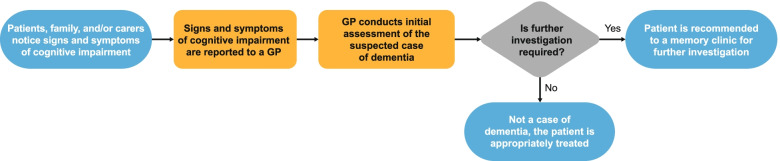
“Patients and GPs often prioritize physical over mental health, which may cause them to be dismissive to symptoms of dementia [6].”
BackgroundInfluentialAlzheimer’s disease drug development pipeline: 2020
Cummings, J., Lee, G., Ritter, A., Sabbagh, M., & Zhong, K. (2020) · Alzheimer's & Dementia: Translational Research & Clinical Interventions · doi:10.1002/trc2.12050 · Cited by 557
Palmqvist, S., Tideman, P., Cullen, N., Zetterberg, H., Blennow, K., Initiative, T. A. D. N., Dage, J. L., Stomrud, E., Janelidze, S., Mattsson-Carlgren, N., et al. (2021) · Nature Medicine · doi:10.1038/s41591-021-01348-z · Cited by 524 · cited 3×
“In particular, further validation of results is required in large, unselected, and ethnically diverse primary care populations with a lower pre-test probability of underlying AD [75].”
BackgroundInfluentialVeitch, D. P., Weiner, M. W., Aisen, P. S., Beckett, L. A., Cairns, N. J., Green, R. C., Harvey, D., Jack, C. R., Jagust, W., Morris, J. C., et al. (2019) · Alzheimer's & Dementia · doi:10.1016/j.jalz.2018.08.005 · Cited by 454 · cited 1×
“Historically, there have been highly variable trajectories of cognitive decline in the placebo group of randomized clinical trials in AD, highlighting the importance of careful selection of clinical trial inclusion and exclusion criteria [41].”
BackgroundThe use of PET in Alzheimer disease
Nordberg, A., Rinne, J. O., Kadir, A., & Långström, B. (2010) · Nature Reviews Neurology · doi:10.1038/nrneurol.2009.217 · Cited by 449 · cited 1×
“Although flortaucipir PET scans have demonstrated their capability as an enrichment tool, PET scans are considered both invasive and expensive and therefore are not utilized in routine diagnosis [35, 45].”
MethodAnxiety as a Predictor for Cognitive Decline and Dementia: A Systematic Review and Meta-Analysis
Gulpers, B., Ramakers, I., Hamel, R., Köhler, S., Oude Voshaar, R., & Verhey, F. (2016) · The American Journal of Geriatric Psychiatry · doi:10.1016/j.jagp.2016.05.015 · Cited by 409 · cited 1×
“Anxiety is also associated with an increased risk of progression from normal cognition to MCI or dementia [24].”
BackgroundLi, J.-Q., Tan, L., Wang, H.-F., Tan, M.-S., Tan, L., Xu, W., Zhao, Q.-F., Wang, J., Jiang, T., & Yu, J.-T. (2016) · Journal of Neurology, Neurosurgery & Psychiatry · doi:10.1136/jnnp-2014-310095 · Cited by 359
Aducanumab: Appropriate Use Recommendations
Cummings, J., Aisen, P., Apostolova, L. G., Atri, A., Salloway, S., & Weiner, M. (2021) · The Journal of Prevention of Alzheimer's Disease · doi:10.14283/jpad.2021.41 · Cited by 316
Optimizing the preclinical Alzheimer's cognitive composite with semantic processing: The PACC5
Papp, K. V., Rentz, D. M., Orlovsky, I., Sperling, R. A., & Mormino, E. C. (2017) · Alzheimer's & Dementia: Translational Research & Clinical Interventions · doi:10.1016/j.trci.2017.10.004 · Cited by 303 · cited 3×
“PACC is currently used in secondary prevention trials as it can capture decline in amyloid-positive, clinically normal, older adults [51].”
BackgroundMethodInfluentialA Review of Fluid Biomarkers for Alzheimer’s Disease: Moving from CSF to Blood
Blennow, K. (2017) · Neurology and Therapy · doi:10.1007/s40120-017-0073-9 · Cited by 295 · cited 2×
“PET imaging may be cost-prohibitive, and CSF testing may be perceived to be invasive; owing to these challenges, these methods are not utilized in routine diagnosis [45].”
MethodBreast Cancer Molecular Stratification
Russnes, H. G., Lingjærde, O. C., Børresen-Dale, A.-L., & Caldas, C. (2017) · The American Journal of Pathology · doi:10.1016/j.ajpath.2017.04.022 · Cited by 280
Cullen, N. C., Leuzy, A., Janelidze, S., Palmqvist, S., Svenningsson, A. L., Stomrud, E., Dage, J. L., Mattsson-Carlgren, N., & Hansson, O. (2021) · Nature Communications · doi:10.1038/s41467-021-23746-0 · Cited by 269 · cited 2×
“Plasma measurements of pTau217 and NfL, combined with basic demographics, significantly predicted both change in cognition and subsequent AD dementia in 435 cognitively unimpaired elderly individuals [74].”
BackgroundIncreased CSF neurogranin concentration is specific to Alzheimer disease
Wellington, H., Paterson, R. W., Portelius, E., Törnqvist, U., Magdalinou, N., Fox, N. C., Blennow, K., Schott, J. M., & Zetterberg, H. (2016) · Neurology · doi:10.1212/wnl.0000000000002423 · Cited by 232 · cited 1×
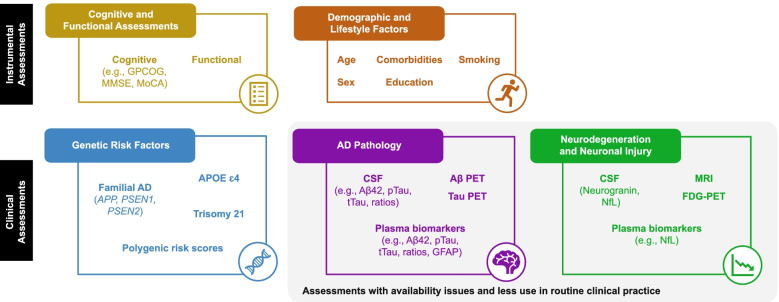
“Some CSF biomarkers are indicative of neurodegeneration or other neural damage, including NfL, which is elevated in many neurological conditions, and neurogranin, which may be differentially elevated in those with AD [69, 70].”
BackgroundDe Roeck, E. E., De Deyn, P. P., Dierckx, E., & Engelborghs, S. (2019) · Alzheimer's Research & Therapy · doi:10.1186/s13195-019-0474-3 · Cited by 209
Aducanumab: Appropriate Use Recommendations Update
Cummings, J., Rabinovici, G. D., Atri, A., Aisen, P., Apostolova, L. G., Hendrix, S., Sabbagh, M., Selkoe, D., Weiner, M., & Salloway, S. (2022) · The Journal of Prevention of Alzheimer's Disease · doi:10.14283/jpad.2022.34 · Cited by 196
Blennow, K., Shaw, L. M., Stomrud, E., Mattsson, N., Toledo, J. B., Buck, K., Wahl, S., Eichenlaub, U., Lifke, V., Simon, M., et al. (2019) · Scientific Reports · doi:10.1038/s41598-019-54204-z · Cited by 192 · cited 1×
“Elecsys® pTau/Aβ(1–42) and tTau/Aβ(1–42) are robust biomarkers for predicting the risk of clinical decline and conversion to dementia in non-demented patients [61].”
BackgroundEspinosa, A., Alegret, M., Valero, S., Vinyes-Junqué, G., Hernández, I., Mauleón, A., Rosende-Roca, M., Ruiz, A., López, O., Tárraga, L., et al. (2013) · Journal of Alzheimer's Disease · doi:10.3233/jad-122002 · Cited by 183
Collaborative Transdisciplinary Team Approach for Dementia Care
Galvin, J. E., Valois, L., & Zweig, Y. (2014) · Neurodegenerative Disease Management · doi:10.2217/nmt.14.47 · Cited by 149 · cited 1×
“These models require the implementation of a robust dementia care strategy, training of a healthcare workforce from different disciplines, partnerships with healthcare delivery systems, and agreements with third-party payers to recognize the cost savings to support these changes in specialty practice [72].”
BackgroundFerretti, M. T., Martinkova, J., Biskup, E., Benke, T., Gialdini, G., Nedelska, Z., Rauen, K., Mantua, V., Religa, D., Hort, J., et al. (2020) · European Journal of Neurology · doi:10.1111/ene.14174 · Cited by 147
Neuroimaging Biomarkers of Neurodegenerative Diseases and Dementia
Risacher, S., & Saykin, A. (2013) · Seminars in Neurology · doi:10.1055/s-0033-1359312 · Cited by 144 · cited 3×
“FDG PET often shows reduced cerebral glucose metabolism in people with AD compared with healthy individuals [27].”
BackgroundHlavka, J., Mattke, S., & Liu, J. (2018) · RAND Corporation eBooks · doi:10.7249/rr2503 · Cited by 133 · cited 5×
“It was estimated that over 80 million patients in 2019, across France, Germany, Italy, Spain, Sweden, and the UK, would undergo cognitive screening for MCI due to AD and that over 10 million would screen positive [31].”
BackgroundInfluentialKirmess, K. M., Meyer, M. R., Holubasch, M. S., Knapik, S. S., Hu, Y., Jackson, E. N., Harpstrite, S. E., Verghese, P. B., West, T., Fogelman, I., et al. (2021) · Clinica Chimica Acta · doi:10.1016/j.cca.2021.05.011 · Cited by 128
Glaab, E., Rauschenberger, A., Banzi, R., Gerardi, C., Garcia, P., & Demotes‐Mainard, J. (2021) · BMJ Open · doi:10.1136/bmjopen-2021-053674 · Cited by 117 · cited 1×
“Across the field of healthcare, there is a growing need to provide more effective and safer care that is tailored to the individual person with a disease [7].”
BackgroundAlzheimer’s disease CSF biomarkers: clinical indications and rational use
Niemantsverdriet, E., Valckx, S., Bjerke, M., & Engelborghs, S. (2017) · Acta Neurologica Belgica · doi:10.1007/s13760-017-0816-5 · Cited by 114
Suppiah, S., Didier, M.-A., & Vinjamuri, S. (2019) · Diagnostics · doi:10.3390/diagnostics9020065 · Cited by 111
Toward precision medicine in Alzheimer’s disease
Reitz, C. (2016) · Annals of Translational Medicine · doi:10.21037/atm.2016.03.05 · Cited by 100 · cited 6×
“Stratifying patients by those who may likely benefit from a DMT, according to current clinical thinking, will be crucial for understanding the prognosis for defined patient subgroups [21].”
BackgroundMethodInfluentialLiu, J., Hlavka, J., Hillestad, R., & Mattke, S. (2017) · doi:10.7249/rr2272 · Cited by 98
Effects of Alzheimer Disease on Patients and Their Family
Grabher, B. J. (2018) · Journal of Nuclear Medicine Technology · doi:10.2967/jnmt.118.218057 · Cited by 90 · cited 3×
“The potential for personalized AD treatment and care Stratification may play a critical role in decreasing the impact of an AD diagnosis on families [77].”
BackgroundInfluentialDiFrancesco, J. C., Longoni, M., & Piazza, F. (2015) · Frontiers in Neurology · doi:10.3389/fneur.2015.00207 · Cited by 78 · cited 20×
“As it is difficult to predict the occurrence of ARIA, current FDA guidelines for enrolling participants in clinical trials assessing DMTs recommend MRI evaluations to exclude participants with ≥5 microhemorrhages and with any evidence of superficial siderosis or prior parenchymal hemorrhage [47].”
BackgroundMethodInfluentialMattke, S., Cho, S. K., Bittner, T., Hlávka, J., & Hanson, M. (2020) · Alzheimer's & Dementia: Diagnosis, Assessment & Disease Monitoring · doi:10.1002/dad2.12081 · Cited by 70 · cited 4×
“Biomarkers and healthcare system readiness The potential requirement of widespread diagnostic testing for the rollout of DMTs will be a resource-intensive and an economically demanding burden on healthcare systems [20, 31, 68].”
BackgroundMethodInfluentialHampel, H., Vergallo, A., Giorgi, F. S., Kim, S. H., Depypere, H., Graziani, M., Saidi, A., Nisticò, R., & Lista, S. (2018) · Frontiers in Neuroendocrinology · doi:10.1016/j.yfrne.2018.06.001 · Cited by 68 · cited 1×
“Modifiable and non-modifiable risk factors of AD modulate many aspects of the disease course, including onset, clinical manifestations, and prognosis [30].”
BackgroundJudge, D., Roberts, J. S., Khandker, R. K., Ambegaonkar, B. M., & Black, C. M. (2019) · International Journal of Alzheimer s Disease · doi:10.1155/2019/3637954 · Cited by 59 · cited 17×
“Some GPs have also reported that they struggle to differentiate cognitive impairment from normal aging [71].”
BackgroundInfluentialBlazhenets, G., Ma, Y., Sörensen, A., Schiller, F., Rücker, G., Eidelberg, D., Frings, L., & Meyer, P. T. (2020) · Journal of Nuclear Medicine · doi:10.2967/jnumed.119.230797 · Cited by 58
Biomarkers of Alzheimer Disease
Budelier, M. M., & Bateman, R. J. (2020) · The Journal of Applied Laboratory Medicine · doi:10.1373/jalm.2019.030080 · Cited by 56 · cited 1×
“Key CSF biomarkers for AD, including decreased Aβ(1–42), increased tTau, and increased pTau, are measured with commercially available enzyme-linked immunosorbent assay and electrochemiluminescence immunoassay kits [59, 60].”
MethodFilippi, L., Chiaravalloti, A., Bagni, O., & Schillaci, O. (2018) · Europe PMC (PubMed Central) · Cited by 52
Screening for Dementia in Primary Care: A Comparison of the GPCOG and the MMSE
Brodaty, H., Connors, M. H., Loy, C., Teixeira-Pinto, A., Stocks, N., Gunn, J., Mate, K. E., & Pond, C. D. (2016) · Dementia and Geriatric Cognitive Disorders · doi:10.1159/000450992 · Cited by 48 · cited 6×
“However, the MMSE may have limited discrimination between the cognitively unimpaired and those with MCI, as well as between AD and other dementias [49].”
MethodInfluentialChallenges in the diagnosis of dementia: insights from the United Kingdom-Brazil Dementia Workshop
Calil, V., Elliott, E., Borelli, W. V., Barbosa, B. J. A. P., Bram, J. M. D. F., Silva, F. D. O., Cardoso, L. G. M., Mariano, L. I., Dias, N. S., Hornberger, M., et al. (2020) · Dementia & Neuropsychologia · doi:10.1590/1980-57642020dn14-030001 · Cited by 48
Bullain, S., & Doody, R. (2020) · Journal of Neurochemistry · doi:10.1111/jnc.15023 · Cited by 38 · cited 5×
“Patient stratification to enrich clinical trial populations A challenge for clinical trials is identifying people with AD who are likely to progress rapidly, as they are more likely to indicate whether a new drug is efficacious over the duration of a late phase clinical trial [40].”
BackgroundMethodInfluentialAlves, L., Simões, M. R., Martins, C., Freitas, S., & Santana, I. J. (2013) · Journal of Geriatric Psychiatry and Neurology · doi:10.1177/0891988713484194 · Cited by 32 · cited 1×
“Despite the proven utility of these screening tools, studies have demonstrated that sociodemographic variables, such as age and education level, and health variables, such as medical history, have implications for the performance of cognitive screening tests [52].”
BackgroundStratified medicine in rheumatoid arthritis—the MATURA programme
Barton, A. C., & Pitzalis, C. (2016) · Lara D. Veeken · doi:10.1093/rheumatology/kew369 · Cited by 28 · cited 1×
“This makes it difficult to determine the appropriate clinical course of action, as people may exhibit multiple phenotypes on distinct disease trajectories [8, 9].”
BackgroundStratifying for Value: An Updated Population Health Risk Stratification Approach
Coran, J. J., Schario, M. E., & Pronovost, P. J. (2021) · Population Health Management · doi:10.1089/pop.2021.0096 · Cited by 26 · cited 1×
“It can also ensure individual needs are met in a timely and efficient manner [12].”
BackgroundCummings, J. L., Atri, A., Ballard, C. G., Boneva, N., Frölich, L., Molinuevo, J. L., Rakêt, L. L., & Tariot, P. N. (2018) · Alzheimer s Research & Therapy · doi:10.1186/s13195-018-0443-2 · Cited by 22 · cited 1×
“An important aspect of stratifying participants for global clinical trials is the considerable regional heterogeneity in terms of patient characteristics and outcomes, and therefore of symptom manifestation and progression [46].”
BackgroundKühnel, L., Bouteloup, V., Lespinasse, J., Chêne, G., Dufouil, C., Molinuevo, J. L., Rakêt, L. L., & for the MEMENTO study group and the Alzheimer's Disease Neuroimaging Initiative (2021) · Alzheimer s & Dementia · doi:10.1002/alz.12363 · Cited by 20 · cited 3×
“The authors concluded that biomarkers that are being routinely collected in some clinical settings seem to have an unused potential to improve patient prognosis of future cognitive decline in clinical practice and may also be useful for optimizing clinical trial design [73].”
BackgroundMethodInfluentialEspinosa, A., for the AB255 Study Group, Initiative, A. D. N., Alegret, M., Pesini, P., Valero, S., Lafuente, A., Buendía, M., José, I. S., Ibarria, M., et al. (2017) · Journal of Alzheimer s Disease · doi:10.3233/jad-161223 · Cited by 17 · cited 1×
“Once MCI due to AD is detected, the risk of progression to AD dementia is increased at older ages, in women, in those with low-level education, in people with at least one copy of the apolipoprotein E ε4 (APOE ε4) allele, in those with impaired cognition, and/or in those with comorbidities such as depression, diabetes…”
BackgroundArighi, A., Carandini, T., Mercurio, M., Carpani, G., Pietroboni, A. M., Fumagalli, G., Ghezzi, L., Basilico, P., Calvi, A., Scarioni, M., et al. (2017) · Journal of Alzheimer s Disease · doi:10.3233/jad-170712 · Cited by 17 · cited 1×
“The Free and Cued Selective Reminding Test (FCSRT) is a neuropsychological test used to evaluate episodic memory and can be used to enrich a clinical trial population [40, 42].”
MethodPark, J., Jung, K. S., Kim, J., Jang, J. S., Kwon, S., Byun, M. S., Yi, D., Byeon, G., Jung, G., Kim, Y. K., et al. (2021) · Alzheimer s Research & Therapy · doi:10.1186/s13195-020-00751-x · Cited by 14
Validation of a novel and accurate ApoE4 assay for automated chemistry analyzers
Veiga, S., Rodríguez-Martín, A., Garcia-Ribas, G., Arribas, I., Menacho-Román, M., & Calero, M. (2020) · Scientific Reports · doi:10.1038/s41598-020-58841-7 · Cited by 13
Michaud, T. L., Initiative, A. D. N., Kane, R. L., McCarten, J. R., Gaugler, J. E., Nyman, J. A., & Kuntz, K. M. (2015) · Journal of Alzheimer s Disease · doi:10.3233/jad-150066 · Cited by 11 · cited 2×
“Key CSF biomarkers for AD, including decreased Aβ(1–42), increased tTau, and increased pTau, are measured with commercially available enzyme-linked immunosorbent assay and electrochemiluminescence immunoassay kits [59, 60].”
BackgroundMethodAPOE genotype and Alzheimer’s immunotherapy
Pankiewicz, J. E., & Sadowski, M. J. (2017) · Oncotarget · doi:10.18632/oncotarget.17990 · Cited by 11 · cited 3×
“Additionally, in clinical trials of amyloid-targeted antibodies as DMTs for AD, APOE ε4 has been linked to an increased risk for ARIA [54].”
BackgroundCancer patient stratification based on the tumor microenvironment
Ying, L., Yan, F., & Xu, D. (2020) · Journal of Thoracic Disease · doi:10.21037/jtd.2020.03.77 · Cited by 11 · cited 1×
“Since interactions between tumor and immune cells in the tumor microenvironment influence the effectiveness of immunotherapy, more detailed understanding of the tumor microenvironment should enable better patient stratification to improve clinical outcomes [15].”
BackgroundSeidl, J. N. T., & Massman, P. J. (2015) · American Journal of Alzheimer s Disease & Other Dementias® · doi:10.1177/1533317515617720 · Cited by 9
Cousins, C. C. (2020) · Alzheimer’s & Neurodegenerative Diseases · doi:10.24966/and-9608/100033 · Cited by 3 · cited 6×
“Proposed patient stratification schemes in AD have focused on those that can account for differing contributions from all relevant risk factors, such as genetic predisposition, molecular indicators, and pathologic stage disease [10].”
BackgroundInfluentialBoada, M., Ristic, S., Pross, N., Abi‐Saab, D., Bullain, S., Andjelković, M., Peters, O., Delmar, P., Hofmann, C., Searle, A., et al. (2019) · Clinical Neurophysiology · doi:10.1016/j.clinph.2019.04.690 · Cited by 2
Rabe, C., Thorne, N., Voyle, N., Mertes, M., Mellino, G., Quan, M., & Bittner, T. (2021) · Alzheimer s & Dementia · doi:10.1002/alz.052033 · Cited by 2 · cited 1×
“Investigation is ongoing to evaluate these biomarkers as a tool for selecting patient populations and as pharmacodynamic biomarkers [62].”
Method
Cited by
Zhang, J., Zhang, Y., Wang, J., Xia, Y., Zhang, J., & Chen, L. (2024) · Signal Transduction and Targeted Therapy · doi:10.1038/s41392-024-01911-3 · Cited by 1,138
XGBoost-SHAP-based interpretable diagnostic framework for alzheimer’s disease
Yi, F., Yang, H., Chen, D., Qin, Y., Han, H., Cui, J., Bai, W., Ma, Y., Zhang, R., & Yu, H. (2023) · BMC Medical Informatics and Decision Making · doi:10.1186/s12911-023-02238-9 · Cited by 183
“However, manual diagnostic approaches have been shown to be unsatisfactory [11].”
Molecular Mechanisms of Neuroinflammation in Aging and Alzheimer’s Disease Progression
Andronie-Cioara, F. L., Ardelean, A. I., Nistor-Cseppento, C. D., Jurcau, A., Jurcau, M. C., Pascalau, N., & Marcu, F. (2023) · International Journal of Molecular Sciences · doi:10.3390/ijms24031869 · Cited by 164
Neuropathogenesis-on-chips for neurodegenerative diseases
Amartumur, S., Nguyen, H. M., Huynh, T., Kim, T. S., Woo, R., Oh, E., Kim, K. K., Lee, L. P., & Heo, C. (2024) · Nature Communications · doi:10.1038/s41467-024-46554-8 · Cited by 144
Fu, J., Li, J., Sun, Y., Liu, S., Song, F., & Liu, Z. (2023) · International Journal of Biological Macromolecules · doi:10.1016/j.ijbiomac.2023.123488 · Cited by 111
Metadata
- Authors
- Abdelnour, C., Agosta, F., Bozzali, M., Fougère, B., Iwata, A., Nilforooshan, R., Takada, L. T., Viñuela, F., & Traber, M.
- Affiliations
- Vita-Salute San Raffaele University (IT)
- University of Turin (IT)
- Centre Hospitalier Universitaire de Tours (FR)
- Tokyo Metropolitan Geriatric Hospital (JP)
- University of Surrey (GB)
- Universidade de São Paulo (BR)
- Hospital Universitario Virgen Macarena (ES)
- F. Hoffmann-La Roche AG (CH)
- ORCID
- Venue
- Alzheimer's Research & Therapy
- Published
- 2022-08-13
- Volume
- 14
- Issue
- 1
- Pages
- 112-112
- ISSN
- 1758-9193 (ISSN-L)
- PMC
- PMC9375274
- OpenAlex
- W4291116585
- Cited by
- 108
- References
- 70
- Citations by year
- 2026: 31 · 2025: 38 · 2024: 19 · 2023: 19 · 2022: 1
- FWCI
- 3.35
- Type
- journal article
- Language
- en
- Open access
- gold
- doi.org
- Licence
- cc-by
- creativecommons.org/licenses/by/4.0 (tdm)
- creativecommons.org/licenses/by/4.0 (vor)
- Locations
- Alzheimer s Research & Therapy (publishedVersion, cc-by)
- PubMed Central (publishedVersion, cc-by)
- PubMed (publishedVersion)
- RISalud Institutional Health Repository of Andalucía (submittedVersion, cc-by)
- Dipòsit Digital de Documents de la UAB (Universitat Autònoma de Barcelona) (submittedVersion, cc-by)
- DOAJ (DOAJ: Directory of Open Access Journals) (submittedVersion, cc-by-sa)
- Archivio Istituzionale della Ricerca - Università Vita-Salute San Raffaele (submittedVersion)
- Funders
- F. Hoffmann-La Roche
- Topics
- Health Sciences › Medicine › Psychiatry and Mental health › Dementia and Cognitive Impairment Research
- Life Sciences › Neuroscience › Cellular and Molecular Neuroscience › Alzheimer's disease research and treatments
- Health Sciences › Medicine › Oncology › Cancer-related cognitive impairment studies
- Keywords
- Alzheimer's disease, patient stratification, disease heterogeneity, early diagnosis, mild cognitive impairment, disease-modifying therapy, clinical trials, personalized medicine, precision medicine, cognitive decline, dementia, health care system
- MeSH terms
- Alzheimer Disease, Humans, Cognitive Dysfunction
About these checks
Registry, retraction, Cites and statistics results are computed, not judged, with one exception: a printed reference that no index lists is read once by a model before it counts as a citation error. Claims are extracted by a model and kept only when their quote appears verbatim in the text; each cited source is then checked, with a model’s help, for whether it says what the claim relies on. Those verdicts can be wrong — read the claim’s quote and the cited source before relying on one.
Statistics and arithmetic are recomputed, not judged.
Confidence bands are shown only for fields calibrated on our annotated test set. None is calibrated yet, so no band is shown.
What counts as a claim ›How we measure confidence ›How we check this ›
Are you an author, or do you see a problem with this page? Request a review
Data sources
Bibliographic data: Semantic Scholar, OpenAlex, Crossref.
Contains information from the Semantic Scholar Academic Graph Datasets, made available under the ODC Attribution License (ODC-BY 1.0).
Semantic Scholar’s data is described in: Kinney, R., et al. (2023). The Semantic Scholar Open Data Platform. arXiv:2301.10140.
