

Identification of novel diagnostic panel for mild cognitive impairment and Alzheimer’s disease: findings based on urine proteomics and machine learning
Open accessThe DOI matches its Crossref record; 63 of the 64 references it cites were found in a registry or an index; 19 of the 30 sources its claims cite were checked for support.
Abstract
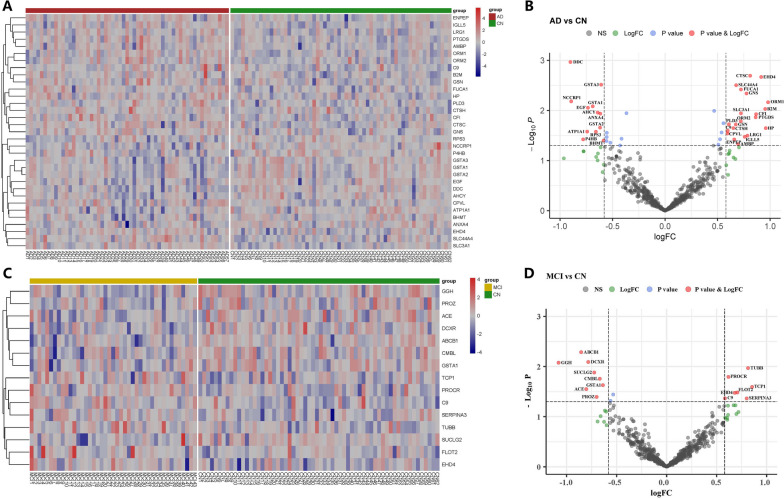
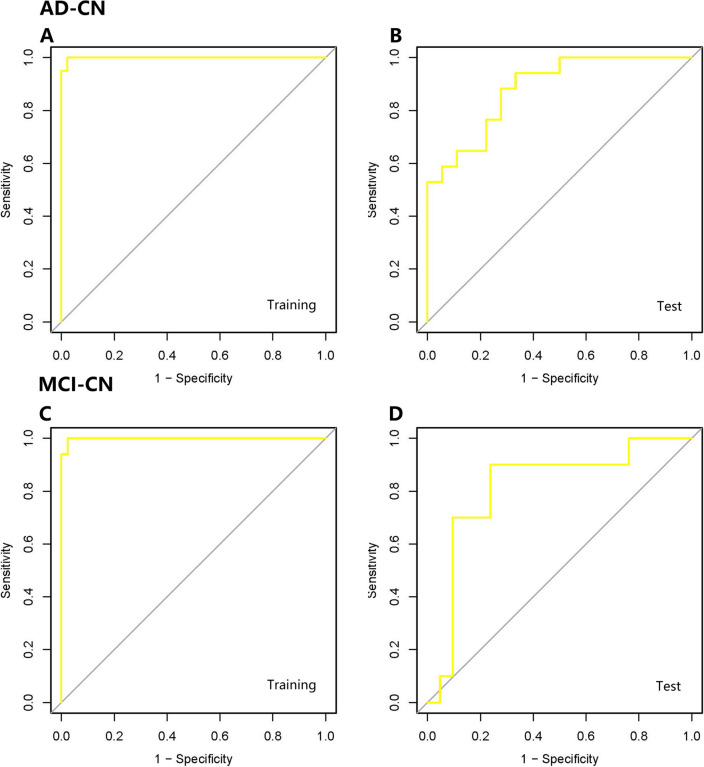
Background: Alzheimer’s disease is a prevalent disease with a heavy global burden. Proteomics is the systematic study of proteins and peptides to provide comprehensive descriptions. Aiming to obtain a more accurate and convenient clinical diagnosis, researchers are working for better biomarkers. Urine is more convenient which could reflect the change of disease at an earlier stage. Thus, we conducted a cross-sectional study to investigate novel diagnostic panels. Methods: We firstly enrolled participants from China-Japan Friendship Hospital from April 2022 to November 2022, collected urine samples, and conducted an LC–MS/MS analysis. In parallel, clinical data were collected, and clinical examinations were performed. After statistical and bioinformatics analyses, significant risk factors and differential urinary proteins were determined. We attempt to investigate diagnostic panels based on machine learning including LASSO and SVM. Results: Fifty-seven AD patients, 43 MCI patients, and 62 CN subjects were enrolled. A total of 3366 proteins were identified, and 608 urine proteins were finally included in the analysis. There were 33 significantly differential proteins between the AD and CN groups and 15 significantly differential proteins between the MCI and CN groups. AD diagnostic panel included DDC, CTSC, EHD4, GSTA3, SLC44A4, GNS, GSTA1, ANXA4, PLD3, CTSH, HP, RPS3, CPVL, age, and APOE ε4 with an AUC of 0.9989 in the training test and 0.8824 in the test set while MCI diagnostic panel included TUBB, SUCLG2, PROCR, TCP1, ACE, FLOT2, EHD4, PROZ, C9, SERPINA3, age, and APOE ε4 with an AUC of 0.9985 in the training test and 0.8143 in the test set. Besides, diagnostic proteins were weakly correlated with cognitive functions. Conclusions: In conclusion, the procedure is convenient, non-invasive, and useful for diagnosis, which could assist physicians in differentiating AD and MCI from CN.
Overview
CoChat Summary
TL;DR
This cross-sectional urine proteomics and machine-learning study identified candidate diagnostic panels that distinguished AD and MCI from cognitively normal controls, with test-set AUCs of 0.8824 for AD and 0.8143 for MCI. The panels combined urinary proteins with age and APOE ε4 status, though diagnostic proteins correlated only weakly with cognitive tests.
Key findings
- In 57 AD, 43 MCI, and 62 CN participants, LC-MS/MS identified 3,366 urine proteins; 608 detected in >50% of samples were analyzed. There were 33 differential proteins between AD and CN (21 upregulated, 12 downregulated) and 15 between MCI and CN (7 upregulated, 8 downregulated).
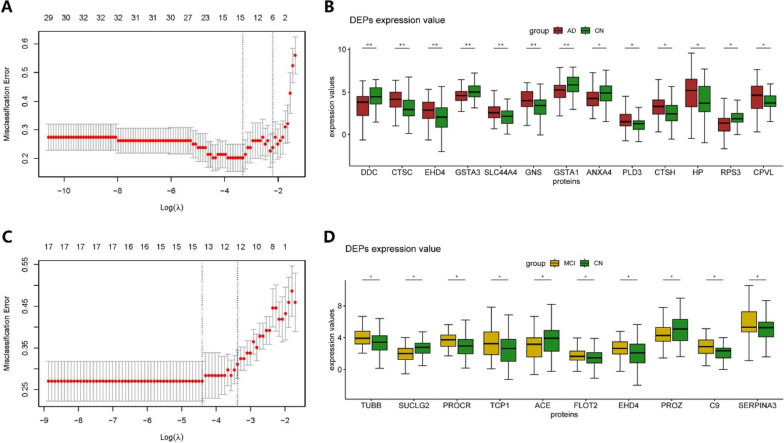
- The AD diagnostic panel included DDC, CTSC, EHD4, GSTA3, SLC44A4, GNS, GSTA1, ANXA4, PLD3, CTSH, HP, RPS3, CPVL, age, and APOE ε4; it achieved an AUC of 0.8824 in the test set.
- The MCI diagnostic panel included TUBB, SUCLG2, PROCR, TCP1, ACE, FLOT2, EHD4, PROZ, C9, SERPINA3, age, and APOE ε4; it achieved an AUC of 0.8143 in the test set.
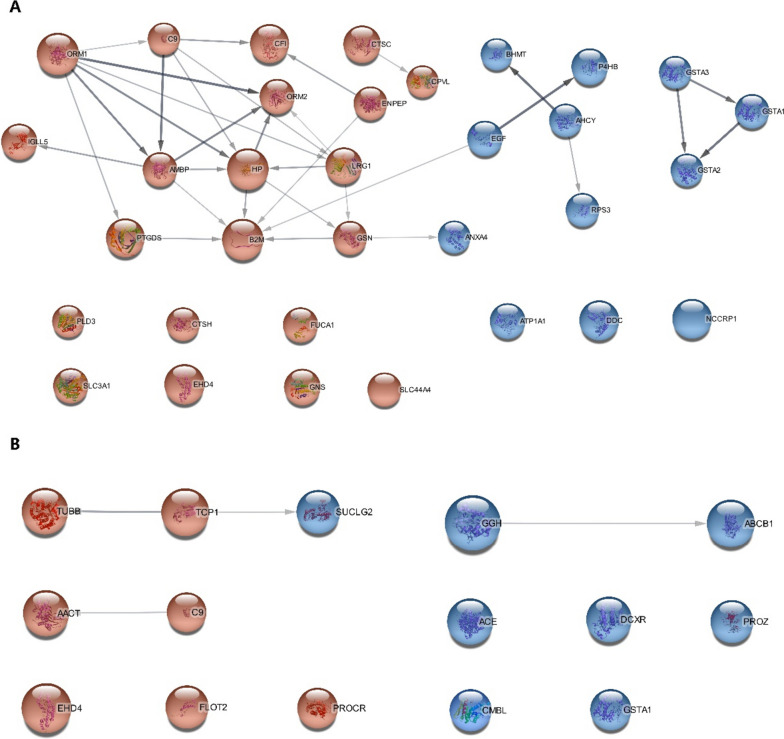
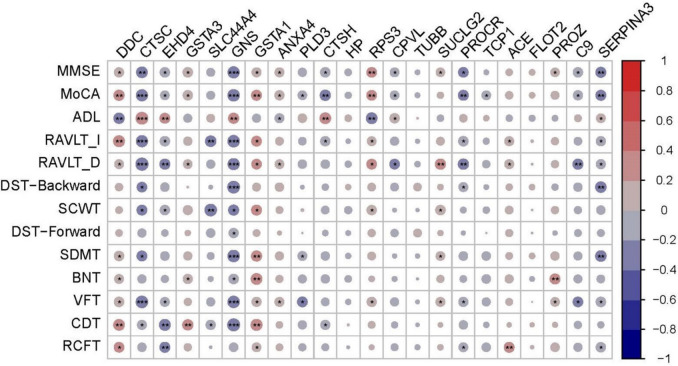
- EHD4 was selected for both panels; GSTA1 was downregulated in both AD and MCI, while EHD4 and C9 were upregulated in both. Diagnostic proteins were mostly weakly correlated with cognitive tests; HP, TUBB, and FLOT2 showed no significant correlations.
Methods
- Cross-sectional study at China-Japan Friendship Hospital (April–November 2022) enrolling 162 participants >50 years: 57 AD, 43 MCI, 62 CN. Clinical history, neuropsychological battery, APOE genotype, and qEEG/MRI in most were collected; midstream urine was analyzed by LC-MS/MS in DDA mode.
- Label-free quantification used iBAQ/FOT; proteins detected in >50% of samples were retained (608), with missing values imputed by KNN. Differential proteins used limma with p < 0.05 and |log2FC| > 0.58; PPI, GO, and GSEA analyses were performed.
- LASSO selected proteins plus age and APOE ε4; SVM classifiers with tenfold cross-validation compared linear, polynomial, radial, and sigmoid kernels; data were split 0.7 training/0.3 test, with accuracy and AUC evaluated.
Limitations
- Paper-stated: single-site sample with no multi-hospital/community real-world validation; relatively few proteins detected in >50% of samples; no in vivo or in vitro experiments on mechanisms; machine-learning feature selection used differential proteins derived from the whole dataset, so test-set performance may be optimistic and some results may be coincidental.
- Evident from the text: the cross-sectional design cannot establish temporal or causal relationships; the sample size is modest and groups differ in age and APOE ε4 distribution, which may affect comparisons.
Model-written summary. Check it against the paper before relying on it.
Integrity signals
Registry
Cites
Statistics
Figures
Verification
Claims the paper makes
18 Valid · 0 Not valid · 8 Not checked · 45 Own results and interpretations
The cited sources support only part of this claim — read each source’s verdict below.
In the paper
“Early detection of MCI could suggest an elevated risk for AD, and early comprehensive interventions could stop or postpone the progression of MCI to dementia [4].”
§ Identification of novel diagnostic panel for mild cognitive impairment and Alzheimer's disease: findings based on urine proteomics and machine learning > Background
What the sources say
- Partly supportedcites [4] Langa KM, Levine DA. The diagnosis and management of mild cognitive impairment: a clinical review. JAMA. 2014;312(23):2551-61. sourceExperimental — accuracy not yet measured
The Prognosis section says MCI can indicate a risk of progression to Alzheimer’s dementia, but individual risk cannot be predicted confidently. The Future Directions section describes currently available interventions as having limited efficacy in preventing or delaying progression; it does not support the claim that early comprehensive interventions could stop it. (LLM, conf=0.88)
hedgedstates a possible cause- Asserted: passes — The authors put it forward as true.
- Checkable: passes — It can be checked against evidence.
- Load-bearing: passes — The paper’s conclusions depend on it.
- Based: passes — The paper gives a reason why it holds.
- Partly supported
Every source the paper cites for this claim was checked and supports it.
In the paper
“while the difference between MCI patients and healthy controls or AD did not reach statistical significance [64].”
§ Identification of novel diagnostic panel for mild cognitive impairment and Alzheimer's disease: findings based on urine proteomics and machine learning > Discussion
What the sources say
- Supportedcites [64] Zhu Y, Chen Z, Chen X, Hu S. Serum sEPCR levels are elevated in patients with Alzheimer's disease. Am J Alzheimers Dis Other Demen. 2015;30(5):517-21. source
The Results (p. 2) report no statistically significant difference in serum sEPCR levels between MCI patients and healthy controls (P = .055), or between MCI and AD patients (P = .054). (LLM, conf=0.95)
plain- Asserted: passes — The authors put it forward as true.
- Checkable: passes — It can be checked against evidence.
- Load-bearing: unclear — It is unclear whether the paper’s conclusions depend on it.
- Based: passes — The paper gives a reason why it holds.
- Supported
The cited sources support only part of this claim — read each source’s verdict below.
In the paper
“The most accurate way to quantify pathological accumulation in a live brain is using PET imaging, but its expense and complexity prevent it from becoming widely used [11].”
§ Identification of novel diagnostic panel for mild cognitive impairment and Alzheimer's disease: findings based on urine proteomics and machine learning > Background
What the sources say
- Partly supportedcites [11] Snyder HM, Carrillo MC, Grodstein F, Henriksen K, Jeromin A, Lovestone S, et al. Developing novel blood-based biomarkers for Alzheimer's disease. Alzheimers Dement. 2014;10(1):109-14. sourceExperimental — accuracy not yet measured
The Introduction describes PET among expensive and/or invasive biomarker approaches and calls for less costly, more widely available blood-based biomarkers. It does not say that PET's complexity prevents widespread use, or establish the citing sentence's claim that PET is the most accurate way to quantify pathological accumulation in a living brain. (LLM, conf=0.83)
plainstates a cause- Asserted: passes — The authors put it forward as true.
- Checkable: passes — It can be checked against evidence.
- Load-bearing: passes — The paper’s conclusions depend on it.
- Based: passes — The paper gives a reason why it holds.
- Partly supported
A result the paper reports from its own data — it cites no other source for it, so there is none to check. The quote shows it is in the paper.
In the paper
“There were 33 significantly differential proteins between the AD and CN groups and 15 significantly differential proteins between the MCI and CN groups.”
§ Identification of novel diagnostic panel for mild cognitive impairment and Alzheimer's disease: findings based on urine proteomics and machine learning > Abstract
plainstates an association- Asserted: passes — The authors put it forward as true.
- Checkable: passes — It can be checked against evidence.
- Load-bearing: passes — The paper’s conclusions depend on it.
- Based: passes — The paper gives a reason why it holds.
A result the paper reports from its own data — it cites no other source for it, so there is none to check. The quote shows it is in the paper.
In the paper
“There were 33 significantly differential proteins between the AD and CN groups and 15 significantly differential proteins between the MCI and CN groups.”
§ Identification of novel diagnostic panel for mild cognitive impairment and Alzheimer's disease: findings based on urine proteomics and machine learning > Abstract
plainstates an associationn = 43- Asserted: passes — The authors put it forward as true.
- Checkable: passes — It can be checked against evidence.
- Load-bearing: passes — The paper’s conclusions depend on it.
- Based: passes — The paper gives a reason why it holds.
20 more claims
Create a free account to see all 71 claims and every source verdict.
- Probably not a substantial claim. 40
- It may state two separate claims as one. 15
Claims other papers make about this one
Each is checked against this paper’s own text: does it say what the citing paper says it does?
The cited source says what the claim attributes to it.
In the citing paper
“In early diagnosis, various biomarkers of CSF, blood, urine,610 saliva,611 and retina,612 may contribute to comprehensively reflecting the AD pathological process, serving as potential auxiliary tools that are more convenient, cost-effective, or less invasive.”
From Recent advances in Alzheimer's disease: Mechanisms, clinical trials and new drug development strategies. (2024) · cites this paper as [610]
Self-check
Percentages, sums and reported differences re-computed from the paper’s own numbers.
Each contradiction between two passages listed here was confirmed by an independent check.
Rated major: it would touch a result — a value a result rests on, reported and recomputed p-values on opposite sides of the significance level, two passages that conflict with no sign which is right, or a cited work retracted before this paper was published.
In the paper
§ Identification of novel diagnostic panel for mild cognitive impairment and Alzheimer's disease: findings based on urine proteomics and machine learning > Abstract
“AD diagnostic panel included DDC, CTSC, EHD4, GSTA3, SLC44A4, GNS, GSTA1, ANXA4, PLD3, CTSH, HP, RPS3, CPVL, age, and APOE ε4 with an AUC of 0.9989 in the training test and 0.8824 in the test set”
§ Identification of novel diagnostic panel for mild cognitive impairment and Alzheimer's disease: findings based on urine proteomics and machine learning > Evaluation of diagnostic value based on the SVM model
“Radial achieved the highest predictive value with an accuracy of 0.9881, an F1 measure of 0.9876, and an AUC of 0.9739 in the AD-CN group”
Rated minor: it would not touch a result — a value no result rests on, a p-value that stays on the same side of the significance level, or a conflict that is clerical, resolved elsewhere in the paper, or outside its own findings.
In the paper
§ Identification of novel diagnostic panel for mild cognitive impairment and Alzheimer's disease: findings based on urine proteomics and machine learning > Conclusions
“D Volcano plot shows the distribution of all proteins between AD and CN.”
§ Identification of novel diagnostic panel for mild cognitive impairment and Alzheimer's disease: findings based on urine proteomics and machine learning > Conclusions
“C Heatmap of a total of 15 differential proteins between MCI and CN.”
Citations
Cites
limma powers differential expression analyses for RNA-sequencing and microarray studies
Ritchie, M. E., Phipson, B., Wu, D., Hu, Y., Law, C. W., Shi, W., & Smyth, G. K. (2015) · Nucleic Acids Research · doi:10.1093/nar/gkv007 · Cited by 40,458 · cited 1×
“Differential urinary proteins were filtered utilizing limma package [30] with a threshold of p < 0.05 and the absolute value of log2 fold change (log2FC) > 0.58 after log 2 transformation and normalization.”
MethodInfluentialclusterProfiler: an R Package for Comparing Biological Themes Among Gene Clusters
Yu, G., Wang, L.-G., Han, Y., & He, Q.-Y. (2012) · OMICS: A Journal of Integrative Biology · doi:10.1089/omi.2011.0118 · Cited by 36,259 · cited 1×
“…to investigate various GO terms and Kyoto Encyclopedia of Genes and Genomes (KEGG) pathways that might be related with AD or MCI when compared to CN in all proteins. clusterProfiler package [34, 35] was utilized for enrichment analysis while enrichplot package [36] was utilized for visualization.”
MethodMcKhann, G. M., Knopman, D. S., Chertkow, H., Hyman, B. T., Jack, C. R., Kawas, C. H., Klunk, W. E., Koroshetz, W. J., Manly, J. J., Mayeux, R., et al. (2011) · Alzheimer's & Dementia · doi:10.1016/j.jalz.2011.03.005 · Cited by 18,657 · cited 2×
“Based on core clinical criteria for AD dementia, the patients are classified into probable AD dementia and possible AD dementia in clinical practice [5].”
MethodclusterProfiler 4.0: A universal enrichment tool for interpreting omics data
(2021) · doi:10.1016/j.xinn.2021.100141 · Cited by 12,455 · cited 1×
“…to investigate various GO terms and Kyoto Encyclopedia of Genes and Genomes (KEGG) pathways that might be related with AD or MCI when compared to CN in all proteins. clusterProfiler package [34, 35] was utilized for enrichment analysis while enrichplot package [36] was utilized for visualization.”
MethodNIA‐AA Research Framework: Toward a biological definition of Alzheimer's disease
Jack, C. R., Bennett, D. A., Blennow, K., Carrillo, M. C., Dunn, B., Haeberlein, S. B., Holtzman, D. M., Jagust, W., Jessen, F., Karlawish, J., et al. (2018) · Alzheimer's & Dementia · doi:10.1016/j.jalz.2018.02.018 · Cited by 10,537
Albert, M. S., DeKosky, S. T., Dickson, D., Dubois, B., Feldman, H. H., Fox, N. C., Gamst, A., Holtzman, D. M., Jagust, W. J., Petersen, R. C., et al. (2011) · Alzheimer's & Dementia · doi:10.1016/j.jalz.2011.03.008 · Cited by 10,152 · cited 1×
“MCI is defined with the 2011 NIA-AA diagnostic criteria [22], as the following shows: (1) concern about a cognition decline compared with the previous status, reported by the patient himself, the informant, or a skilled physician; (2) decline in at least one cognitive domain after age and education…”
MethodGlobal quantification of mammalian gene expression control
Schwanhäusser, B., Busse, D., Li, N., Dittmar, G., Schuchhardt, J., Wolf, J., Chen, W., & Selbach, M. (2011) · Nature · doi:10.1038/nature10098 · Cited by 6,566 · cited 1×
“Protein quantification was carried out using the intensity-based absolute quantification (iBAQ) algorithm [28].”
MethodNichols, E., Steinmetz, J. D., Vollset, S. E., Fukutaki, K., Chalek, J., Abd-Allah, F., Abdoli, A., Abualhasan, A., Abu-Gharbieh, E., Akram, T. T., et al. (2022) · The Lancet Public Health · doi:10.1016/s2468-2667(21)00249-8 · Cited by 5,575
Self-citationScheltens, P., De Strooper, B., Kivipelto, M., Holstege, H., Chételat, G., Teunissen, C. E., Cummings, J., & van der Flier, W. M. (2021) · The Lancet · doi:10.1016/s0140-6736(20)32205-4 · Cited by 5,465
Advancing research diagnostic criteria for Alzheimer's disease: the IWG-2 criteria
Dubois, B., Feldman, H. H., Jacova, C., Hampel, H., Molinuevo, J. L., Blennow, K., DeKosky, S. T., Gauthier, S., Selkoe, D., Bateman, R., et al. (2014) · The Lancet Neurology · doi:10.1016/s1474-4422(14)70090-0 · Cited by 3,321
2020 Alzheimer's disease facts and figures
(2020) · Alzheimer's & Dementia · doi:10.1002/alz.12068 · Cited by 2,353 · cited 1×
“Alzheimer’s disease (AD) is the most common type of dementia, making up an estimated 60 to 80% of cases [2].”
BackgroundiProX: an integrated proteome resource
Ma, J., Chen, T., Wu, S., Yang, C., Bai, M., Shu, K., Li, K., Zhang, G., Jin, Z., He, F., et al. (2019) · Nucleic Acids Research · doi:10.1093/nar/gky869 · Cited by 1,978 · cited 1×
“The mass spectrometry proteomics data have been deposited to the ProteomeXchange Consortium (http:// prote omece ntral. prote omexc hange. org) via the iProX partner repository [25, 26] with the dataset identifier PXD044672.”
MethodJia, L., Du, Y., Chu, L., Zhang, Z., Li, F., Lyu, D., Li, Y., Li, Y., Zhu, M., Jiao, H., et al. (2020) · The Lancet Public Health · doi:10.1016/s2468-2667(20)30185-7 · Cited by 1,829 · cited 2×
“As for basic information collection, different from previous research [3], only the distribution of age and APOE ε4 status varied among the three groups.”
BackgroundInfluentialSelf-citationIntegrated Systems Approach Identifies Genetic Nodes and Networks in Late-Onset Alzheimer’s Disease
Zhang, B., Gaiteri, C., Bodea, L.-G., Wang, Z., McElwee, J., Podtelezhnikov, A. A., Zhang, C., Xie, T., Tran, L., Dobrin, R., et al. (2013) · Cell · doi:10.1016/j.cell.2013.03.030 · Cited by 1,657 · cited 1×
“CTSC was defined as a risk factor for AD by GWAS which was significantly upregulated in the App NL − G − F/NL − G − F cortex [42, 43].”
BackgroundSelf-citationAlzheimer’s Disease Risk Genes and Mechanisms of Disease Pathogenesis
Karch, C. M., & Goate, A. M. (2015) · Biological Psychiatry · doi:10.1016/j.biopsych.2014.05.006 · Cited by 1,357 · cited 1×
“Besides, PLD3 was suggested to be the gene that increases AD risk [45–47] and was downregulated in AD brains which might participate in AD pathogenesis through amyloid precursor protein (APP) processing [48, 49].”
BackgroundThe Diagnosis and Management of Mild Cognitive Impairment: A Clinical Review
Langa, K. M., & Levine, D. A. (2014) · JAMA · doi:10.1001/jama.2014.13806 · Cited by 1,337
iProX in 2021: connecting proteomics data sharing with big data
Chen, T., Ma, J., Liu, Y., Chen, Z., Xiao, N., Lu, Y., Fu, Y., Yang, C., Li, M., Wu, S., et al. (2022) · Nucleic Acids Research · doi:10.1093/nar/gkab1081 · Cited by 1,134 · cited 1×
“The mass spectrometry proteomics data have been deposited to the ProteomeXchange Consortium (http:// prote omece ntral. prote omexc hange. org) via the iProX partner repository [25, 26] with the dataset identifier PXD044672.”
MethodProteomics: the first decade and beyond
Patterson, S. D., & Aebersold, R. H. (2003) · Nature Genetics · doi:10.1038/ng1106 · Cited by 745 · cited 1×
“Proteomics is the comprehensive study of the varied properties of proteins and peptides to fully describe the structure, function, and regulation of biological systems in both health and disease status [12].”
BackgroundChinese Mini Mental Status in Elderly Chinese: A Population-Based Normative Study
Li, H., Jia, J., & Yang, Z. (2016) · Journal of Alzheimer’s Disease · doi:10.3233/jad-160119 · Cited by 561 · cited 1×
“Briefly, MMSE cutoff points for dementia/non-dementia were 16/17 for illiterate, 19/20 for individuals with 1–6 years of education, and 23/24 for individuals with 7 or more years of education [23].”
BackgroundGenetics meets proteomics: perspectives for large population-based studies
Suhre, K., McCarthy, M. I., & Schwenk, J. M. (2021) · Nature Reviews Genetics · doi:10.1038/s41576-020-0268-2 · Cited by 478 · cited 1×
“The study and validation of biomarkers as well as the discovery and development of new medications might both benefit from proteomics [14].”
BackgroundJohnson, K. A., Sperling, R. A., Gidicsin, C. M., Carmasin, J. S., Maye, J. E., Coleman, R. E., Reiman, E. M., Sabbagh, M. N., Sadowsky, C. H., Fleisher, A. S., et al. (2013) · Alzheimer's & Dementia · doi:10.1016/j.jalz.2012.10.007 · Cited by 270 · cited 1×
“A biomarker, aggregated Aβ or related pathologic state, could be evaluated by amyloid positron emission tomography (PET) or CSF Aβ 42 or Aβ 42 /Aβ 40 ratio [9].”
BackgroundProteomic landscape of Alzheimer’s Disease: novel insights into pathogenesis and biomarker discovery
Bai, B., Vanderwall, D., Li, Y., Wang, X., Poudel, S., Wang, H., Dey, K. K., Chen, P.-C., Yang, K., & Peng, J. (2021) · Molecular Neurodegeneration · doi:10.1186/s13024-021-00474-z · Cited by 257 · cited 1×
“As for applications in AD, unprecedented proteome coverage of bio-fluids, including cerebrospinal fluid and serum [15], yields new potential biomarkers for AD.”
BackgroundWang, H., Dey, K. K., Chen, P.-C., Li, Y., Niu, M., Cho, J.-H., Wang, X., Bai, B., Jiao, Y., Chepyala, S. R., et al. (2020) · Molecular Neurodegeneration · doi:10.1186/s13024-020-00384-6 · Cited by 243
Self-citationDeveloping novel blood‐based biomarkers for Alzheimer's disease
Snyder, H. M., Carrillo, M. C., Grodstein, F., Henriksen, K., Jeromin, A., Lovestone, S., Mielke, M. M., O'Bryant, S., Sarasa, M., Sj⊘gren, M., et al. (2014) · Alzheimer's & Dementia · doi:10.1016/j.jalz.2013.10.007 · Cited by 177 · cited 1×
“The most accurate way to quantify pathological accumulation in a live brain is using PET imaging, but its expense and complexity prevent it from becoming widely used [11].”
BackgroundRecent progress in mass spectrometry proteomics for biomedical research
Li, X., Wang, W., & Chen, J. (2017) · Science China Life Sciences · doi:10.1007/s11427-017-9175-2 · Cited by 167 · cited 1×
“Establishing human disease proteomics could contribute to clinical diagnosis and therapy [13].”
BackgroundFirmiana: towards a one-stop proteomic cloud platform for data processing and analysis
Feng, J., Ding, C., Qiu, N., Ni, X., Zhan, D., Liu, W., Xia, X., Li, P., Lu, B., Zhao, Q., et al. (2017) · Nature Biotechnology · doi:10.1038/nbt.3825 · Cited by 162 · cited 1×
“The Firmiana platform was used to process the mass spectrometry data [27].”
MethodCastillo, E., Leon, J., Mazzei, G., Abolhassani, N., Haruyama, N., Saito, T., Saido, T., Hokama, M., Iwaki, T., Ohara, T., et al. (2017) · Scientific Reports · doi:10.1038/s41598-017-17999-3 · Cited by 158 · cited 1×
“CTSC was defined as a risk factor for AD by GWAS which was significantly upregulated in the App NL − G − F/NL − G − F cortex [42, 43].”
BackgroundPLD3 affects axonal spheroids and network defects in Alzheimer’s disease
Yuan, P., Zhang, M., Tong, L., Morse, T. M., McDougal, R. A., Ding, H., Chan, D., Cai, Y., & Grutzendler, J. (2022) · Nature · doi:10.1038/s41586-022-05491-6 · Cited by 155 · cited 1×
“PLD3 affected axonal spheroids and network defects in AD [50].”
BackgroundUrinary Biomarkers of Brain Diseases
An, M., & Gao, Y. (2015) · Genomics, Proteomics & Bioinformatics · doi:10.1016/j.gpb.2015.08.005 · Cited by 142 · cited 1×
“Urine is less intrusive, more accessible, and is not subject to homeostatic systems which accommodates several variations that might represent the body’s condition [16].”
BackgroundRahman, M. R., Islam, T., Zaman, T., Shahjaman, M., Karim, M. R., Huq, F., Quinn, J. M. W., Holsinger, R. M. D., Gov, E., & Moni, M. A. (2020) · Genomics · doi:10.1016/j.ygeno.2019.07.018 · Cited by 136
Biomarker-based prognosis for people with mild cognitive impairment (ABIDE): a modelling study
van Maurik, I. S., Vos, S. J., Bos, I., Bouwman, F. H., Teunissen, C. E., Scheltens, P., Barkhof, F., Frolich, L., Kornhuber, J., Wiltfang, J., et al. (2019) · The Lancet Neurology · doi:10.1016/s1474-4422(19)30283-2 · Cited by 126 · cited 1×
“In the MCI stage, CSF-based biomarkers could also predict prognosis [10].”
BackgroundRozzini, L., Chilovi, B. V., Bertoletti, E., Conti, M., Rio, I. D., Trabucchi, M., & Padovani, A. (2006) · International Journal of Geriatric Psychiatry · doi:10.1002/gps.1523 · Cited by 93 · cited 1×
“ACE D-allele may be a genetic risk factor for cognition which increased serum ACE levels [57, 58], and ACE inhibitor is a protective factor against cognitive decline [59].”
BackgroundShi, L., Westwood, S., Baird, A. L., Winchester, L., Dobricic, V., Kilpert, F., Hong, S., Franke, A., Hye, A., Ashton, N. J., et al. (2019) · Alzheimer's & Dementia · doi:10.1016/j.jalz.2019.06.4951 · Cited by 74 · cited 1×
“The classifier consisted of feature selection and classifiers [38].”
MethodLin, W., Zhang, J., Liu, Y., Wu, R., Yang, H., Hu, X., & Ling, X. (2017) · European Journal of Pharmaceutical Sciences · doi:10.1016/j.ejps.2017.05.003 · Cited by 72 · cited 1×
“GSTA3 was significantly elevated in AD rats’ hippocampus by using label-free nano-LC–MS/MS which further speculated the role of diagnosis mechanism and drug discovery [44].”
MethodBamberger, C., Pankow, S., Martínez-Bartolomé, S., Ma, M., Diedrich, J., Rissman, R. A., & Yates, J. R. (2021) · Journal of Proteome Research · doi:10.1021/acs.jproteome.0c00912 · Cited by 70 · cited 1×
“TUBB was identified as a hub gene in AD [60] while according to covalent protein painting, the accessibility of lysine residues for covalent modification in TUBB was altered in human postmortem brain samples of AD patients [61].”
BackgroundUrinary Biomarkers for Neurodegenerative Diseases
Seol, W., Kim, H., & Son, I. (2020) · Experimental Neurobiology · doi:10.5607/en20042 · Cited by 61 · cited 1×
“Besides, it has been suggested that urine was applied in neurodegenerative diseases [17].”
BackgroundRamirez, A., van der Flier, W. M., Herold, C., Ramonet, D., Heilmann, S., Lewczuk, P., Popp, J., Lacour, A., Drichel, D., Louwersheimer, E., et al. (2014) · Human Molecular Genetics · doi:10.1093/hmg/ddu372 · Cited by 60
Association between Serum Haptoglobin and the Pathogenesis of Alzheimer's Disease
Song, I., Kim, Y., Chung, S., & Cho, H.-J. (2015) · Internal Medicine · doi:10.2169/internalmedicine.54.2876 · Cited by 53 · cited 1×
“In human samples, higher serum levels of HP were observed in AD [52, 53] and MCI [52] patients than controls.”
BackgroundMa, L., Chen, J., Wang, R., Han, Y., Zhang, J., Dong, W., Zhang, X., Wu, Y., & Zhao, Z. (2015) · Journal of Clinical Neuroscience · doi:10.1016/j.jocn.2014.10.011 · Cited by 53 · cited 1×
“Moreover, Alz-heimer-associated neuronal thread protein (AD7c-NTP) [19, 20] was often detected in urine in the early stage of AD and MCI which was also suggested to be a biomarker, as well as apolipoprotein C3 (ApoC3) [21] which was validated by enzyme-linked immunosorbent assay (ELISA).”
Yao, F., Hong, X., Li, S., Zhang, Y., Zhao, Q., Du, W., Wang, Y., & Ni, J. (2018) · Journal of Alzheimer’s Disease · doi:10.3233/jad-180261 · Cited by 52 · cited 1×
“In AD, secreted phosphoprotein 1 (SPP1), gelsolin (GSN), and insulin-like growth factor-binding protein 7 (IGFBP7) were suggested to differ in expression in the urine of AD patients and behave as potential biomarkers [18].”
BackgroundSelf-citationZhang, D., Fan, Y., Wang, D., Bi, R., Zhang, C., Fang, Y., & Yao, Y. (2015) · Molecular Neurobiology · doi:10.1007/s12035-015-9353-5 · Cited by 50
Haptoglobin Interacts with Apolipoprotein E and Beta-Amyloid and Influences Their Crosstalk
Spagnuolo, M. S., Maresca, B., La Marca, V., Carrizzo, A., Veronesi, C., Cupidi, C., Piccoli, T., Maletta, R. G., Bruni, A. C., Abrescia, P., et al. (2014) · ACS Chemical Neuroscience · doi:10.1021/cn500099f · Cited by 47 · cited 1×
“…a pervasive underlying mechanism in which micro-vasculopathy promoted erythrocyte leakage, elevating tissue-free hemoglobin and causing the observed increases in HP in the brains of sporadic AD while Cigliano et al. found that HP interacted with APOE and Aβ and influenced their crosstalk [55].”
BackgroundUrine Neural Thread Protein Measurements in Alzheimer Disease
Youn, Y. C., Park, K.-W., Han, S.-H., & Kim, S. (2011) · Journal of the American Medical Directors Association · doi:10.1016/j.jamda.2010.03.004 · Cited by 45 · cited 1×
“Moreover, Alz-heimer-associated neuronal thread protein (AD7c-NTP) [19, 20] was often detected in urine in the early stage of AD and MCI which was also suggested to be a biomarker, as well as apolipoprotein C3 (ApoC3) [21] which was validated by enzyme-linked immunosorbent assay (ELISA).”
Leng, W., Ni, X., Sun, C., Lu, T., Malovannaya, A., Jung, S. Y., Huang, Y., Qiu, Y., Sun, G., Holt, M. V., et al. (2017) · EBioMedicine · doi:10.1016/j.ebiom.2017.03.028 · Cited by 44 · cited 1×
“We converted the iBAQ to the fraction of total (FOT) to normalize the differences in sample amounts [29], which was calculated by the iBAQ value of each protein divided by the total iBAQ of the sample, multiplied by 10 5 .”
MethodSelf-citationWang, J., Yu, J., & Tan, L. (2014) · Molecular Neurobiology · doi:10.1007/s12035-014-8779-5 · Cited by 41
PLD3 epigenetic changes in the hippocampus of Alzheimer’s disease
Blanco‐Luquin, I., Altuna, M., de Gordoa, J. S., Urdánoz‐Casado, A., Roldán, M., Cámara, M. S., Zelaya, M. V., Erro, M. E., Echávarri, C., & Mendióroz, M. (2018) · Clinical Epigenetics · doi:10.1186/s13148-018-0547-3 · Cited by 38 · cited 1×
“Besides, PLD3 was suggested to be the gene that increases AD risk [45–47] and was downregulated in AD brains which might participate in AD pathogenesis through amyloid precursor protein (APP) processing [48, 49].”
BackgroundUrinary Apolipoprotein C3 Is a Potential Biomarker for Alzheimer’s Disease
Watanabe, Y., Hirao, Y., Kasuga, K., Tokutake, T., Kitamura, K., Niida, S., Ikeuchi, T., Nakamura, K., & Yamamoto, T. (2020) · Dementia and Geriatric Cognitive Disorders Extra · doi:10.1159/000509561 · Cited by 38 · cited 1×
“Moreover, Alz-heimer-associated neuronal thread protein (AD7c-NTP) [19, 20] was often detected in urine in the early stage of AD and MCI which was also suggested to be a biomarker, as well as apolipoprotein C3 (ApoC3) [21] which was validated by enzyme-linked immunosorbent assay (ELISA).”
Zhu, C.-J., Jiang, G., Chen, J., Zhou, Z., & Cheng, Q. H. (2018) · Brain Research Bulletin · doi:10.1016/j.brainresbull.2018.01.005 · Cited by 37 · cited 1×
“In human samples, higher serum levels of HP were observed in AD [52, 53] and MCI [52] patients than controls.”
BackgroundSelf-citationMolecular Network Analysis of the Urinary Proteome of Alzheimer’s Disease Patients
Watanabe, Y., Hirao, Y., Kasuga, K., Tokutake, T., Semizu, Y., Kitamura, K., Ikeuchi, T., Nakamura, K., & Yamamoto, T. (2019) · Dementia and Geriatric Cognitive Disorders Extra · doi:10.1159/000496100 · Cited by 32 · cited 1×
“Watanabe et al. [39] identified a total of 1705 unique proteins in 18 AD and 18 controls while only 578 proteins were identified in at least half samples of either group.”
BackgroundRare Variants in PLD3 Increase Risk for Alzheimer’s Disease in Han Chinese
Tan, M., Zhu, J., Cao, X., Yu, J., & Tan, L. (2018) · Journal of Alzheimer s Disease · doi:10.3233/jad-180205 · Cited by 25 · cited 1×
“Besides, PLD3 was suggested to be the gene that increases AD risk [45–47] and was downregulated in AD brains which might participate in AD pathogenesis through amyloid precursor protein (APP) processing [48, 49].”
BackgroundPhilbert, S. A., Xu, J., Unwin, R. D., Dowsey, A. W., & Cooper, G. J. S. (2021) · Biochemical and Biophysical Research Communications · doi:10.1016/j.bbrc.2021.02.107 · Cited by 24 · cited 1×
“Findings from Philbert et al. [54] indicated a pervasive underlying mechanism in which micro-vasculopathy promoted erythrocyte leakage, elevating tissue-free hemoglobin and causing the observed increases in HP in the brains of sporadic AD while Cigliano et al. found that HP interacted with APOE and…”
BackgroundMotta, C., Assogna, M., Bonomi, C. G., Lorenzo, F. D., Nuccetelli, M., Mercuri, N. B., Koch, G., & Martorana, A. (2023) · European Journal of Neurology · doi:10.1111/ene.15691 · Cited by 24 · cited 1×
“As for AD diagnosis, DDC was reported to elevate in the CSF of Aβ-and p-tau-positive patients compared to controls [41].”
BackgroundHaptoglobin Modulates Beta-Amyloid Uptake by U-87 MG Astrocyte Cell Line
Maresca, B., Spagnuolo, M. S., & Cigliano, L. (2015) · Journal of Molecular Neuroscience · doi:10.1007/s12031-014-0465-6 · Cited by 20 · cited 1×
“In rat hippocampus, HP increased with age while further in the U-87 MG cell line, HP was proved to influence Aβ peptide aggregation or clearance [56].”
BackgroundZhang, Z., Deng, L., Yu, H., Shi, Y., Bai, F., Xie, C., Yuan, Y., Jia, J., & Zhang, Z. (2012) · Neuroscience Letters · doi:10.1016/j.neulet.2012.02.074 · Cited by 19 · cited 1×
“ACE D-allele may be a genetic risk factor for cognition which increased serum ACE levels [57, 58], and ACE inhibitor is a protective factor against cognitive decline [59].”
BackgroundLi, Y., Zhang, Z., Deng, L., Bai, F., Shi, Y., Yu, H., Xie, C., Yuan, Y., & Zhang, Z. (2017) · Journal of the Neurological Sciences · doi:10.1016/j.jns.2017.06.026 · Cited by 15 · cited 1×
“ACE D-allele may be a genetic risk factor for cognition which increased serum ACE levels [57, 58], and ACE inhibitor is a protective factor against cognitive decline [59].”
BackgroundAndújar-Vera, F., García‐Fontana, C., la Torre, R. S.-D., González-Salvatierra, S., Martínez-Heredia, L., Iglesias-Baena, I., Muñoz‐Torres, M., & García-Fontana, B. (2022) · Biomedicines · doi:10.3390/biomedicines10020389 · Cited by 15 · cited 1×
“Moreover, in another bio-informatics research, HP was also identified as playing a significant role [51].”
BackgroundIdentification and Experimental Validation of Marker Genes between Diabetes and Alzheimer’s Disease
Huang, C., Wen, X., Xie, H., Hu, D., & Li, K. (2022) · Oxidative Medicine and Cellular Longevity · doi:10.1155/2022/8122532 · Cited by 15 · cited 1×
“Moreover, SERPINA3 was identified as a marker gene in AD [65].”
BackgroundBai, B., Vanderwall, D., Li, Y., Wang, X., Poudel, S., Wang, H., Dey, K. K., Chen, P., Yang, K., & Peng, J. (2021) · Molecular Neurodegeneration · doi:10.1186/s13024-021-00493-w · Cited by 12
Serum sEPCR Levels Are Elevated in Patients With Alzheimer’s Disease
Zhu, Y., Chen, Z., Chen, X., & Hu, S. (2015) · American Journal of Alzheimer's Disease & Other Dementias® · doi:10.1177/1533317514567124 · Cited by 9 · cited 1×
“Serum-soluble PROCR levels were higher in AD patients compared with controls while the difference between MCI patients and healthy controls or AD did not reach statistical significance [64].”
ResultQiao, Y., Sun, Y., Guo, J., Chen, Y., Hou, W., Zhang, J., & Peng, D. (2022) · Journal of Alzheimer's Disease · doi:10.3233/jad-215251 · Cited by 8 · cited 1×
“The above scales have been applied in clinical practice and published in previous articles from our team [24].”
MethodSelf-citationChen, R., Yi, Y., Xiao, W., Zhong, B., Zhang, L., & Zeng, Y. (2023) · Frontiers in Aging Neuroscience · doi:10.3389/fnagi.2023.1070854 · Cited by 6 · cited 1×
“Besides, Chen et al. [40] identified 4157 proteins in 9 AD patients and 3977 proteins in 21 normal controls (NC).”
BackgroundCovalent Protein Painting Reveals Structural Changes in the Proteome in Alzheimer Disease
Bamberger, C., Pankow, S., Martínez-Bartolomé, S., et al. (2020) · doi:10.1101/2020.01.31.929117
Leng, W., Ni, X., Sun, C., et al. (2017) · Cancer Research · doi:10.1158/1538-7445.am2017-229
Cited by
Zhang, J., Zhang, Y., Wang, J., Xia, Y., Zhang, J., & Chen, L. (2024) · Signal Transduction and Targeted Therapy · doi:10.1038/s41392-024-01911-3 · Cited by 1,138
Fluid-based biomarkers for neurodegenerative diseases
Cao, Y., Xu, Y., Cao, M., Chen, N., Zeng, Q., Lai, M. K. P., Fan, D., Sethi, G., & Cao, Y. (2025) · Ageing Research Reviews · doi:10.1016/j.arr.2025.102739 · Cited by 69
Yarbro, J. M., Shrestha, H. K., Wang, Z., Zhang, X., Zaman, M., Chu, M., Wang, X., Yu, G., & Peng, J. (2025) · Molecular Neurodegeneration · doi:10.1186/s13024-025-00874-5 · Cited by 46
“Urine proteomics also showed potential for AD biomarker discovery [178]: a recent study identified 13-protein diagnostic panel with high diagnostic accuracy [179].”
Self-citationAfrin, M. R., Upadhyaya, P. G., Hashim, A., Bhattacharya, K., Chanu, N. R., Das, D., Khanal, P., & Deka, S. (2025) · Ageing Research Reviews · doi:10.1016/j.arr.2025.102736 · Cited by 28
Wang, H., Li, J., Tu, W., Wang, Z., Zhang, Y., Chang, L., Wu, Y., & Zhang, X. (2024) · Journal of Alzheimer s Disease · doi:10.3233/jad-240301 · Cited by 15
Self-citation
Metadata
- Authors
- Wang, Y., Sun, Y., Wang, Y., Jia, S., Qiao, Y., Zhou, Z., Shao, W., Zhang, X., Guo, J., Zhang, B., Niu, X., Wang, Y., & Peng, D.
- Affiliations
- Chinese Academy of Medical Sciences & Peking Union Medical College (CN)
- China-Japan Friendship Hospital (CN)
- Peking University (CN)
- Corresponding author
- Wang, Yu
- Wang, Yi
- Peng, Dantao
- Venue
- Alzheimer's Research & Therapy
- Published
- 2023-11-04
- Volume
- 15
- Issue
- 1
- Pages
- 191-191
- ISSN
- 1758-9193 (ISSN-L)
- PMC
- PMC10625308
- OpenAlex
- W4388341887
- Semantic Scholar
- 297a82329d84f1112c0b9f3c6e8f782e982dc75e
- Cited by
- 34
- References
- 64
- Citations by year
- 2026: 7 · 2025: 19 · 2024: 8
- FWCI
- 6.89
- Type
- journal article
- Language
- en
- Open access
- gold
- doi.org
- Licence
- cc-by
- creativecommons.org/licenses/by/4.0 (tdm)
- creativecommons.org/licenses/by/4.0 (vor)
- Locations
- Alzheimer s Research & Therapy (publishedVersion, cc-by)
- PubMed Central (publishedVersion, cc-by)
- PubMed (publishedVersion)
- DOAJ (DOAJ: Directory of Open Access Journals) (submittedVersion, cc-by-sa)
- Funders
- National Key Research and Development Program of China (2018YFA0507503, 2022YFC2010103)
- Topics
- Health Sciences › Medicine › Psychiatry and Mental health › Dementia and Cognitive Impairment Research
- Life Sciences › Neuroscience › Cellular and Molecular Neuroscience › Alzheimer's disease research and treatments
- Physical Sciences › Chemistry › Spectroscopy › Advanced Proteomics Techniques and Applications
- Keywords
- Alzheimer's disease, mild cognitive impairment, urine proteomics, diagnostic biomarkers, diagnostic panel, APOE ε4, non-invasive diagnosis, machine learning classification, LASSO, support vector machine
- MeSH terms
- Machine Learning, Alzheimer Disease, Chromatography, Liquid, Cross-Sectional Studies, Humans, Biomarkers, Proteomics, Apolipoprotein E4, Tandem Mass Spectrometry, Cognitive Dysfunction
About these checks
Registry, retraction, Cites and statistics results are computed, not judged, with one exception: a printed reference that no index lists is read once by a model before it counts as a citation error. Claims are extracted by a model and kept only when their quote appears verbatim in the text; each cited source is then checked, with a model’s help, for whether it says what the claim relies on. Those verdicts can be wrong — read the claim’s quote and the cited source before relying on one.
The claim verdicts this report counts are experimental: their accuracy is not yet measured.
A language model drew the claims from the paper on 2026-10-16, under version 3 of the claim definition (model deepseek-v4.1-flash, prompt extract-v3).
A second model labelled each claim on 2026-10-16 (model jev-1.13-20260917, definition revision gold-guideline-v0.2).
Cited sources are checked with a language model’s help (gpt-6-sol).
Statistics and arithmetic are recomputed, not judged.
Confidence bands are shown only for fields calibrated on our annotated test set. None is calibrated yet, so no band is shown.
What counts as a claim ›How we measure confidence ›How we check this ›
Are you an author, or do you see a problem with this page? Request a review
Data sources
Bibliographic data: Semantic Scholar, OpenAlex, Crossref.
Contains information from the Semantic Scholar Academic Graph Datasets, made available under the ODC Attribution License (ODC-BY 1.0).
Semantic Scholar’s data is described in: Kinney, R., et al. (2023). The Semantic Scholar Open Data Platform. arXiv:2301.10140.
