

Autism prevalence in China is comparable to Western prevalence
Open accessThe DOI matches its Crossref record; 30 of the 31 references it cites were found in a registry or an index.
Abstract
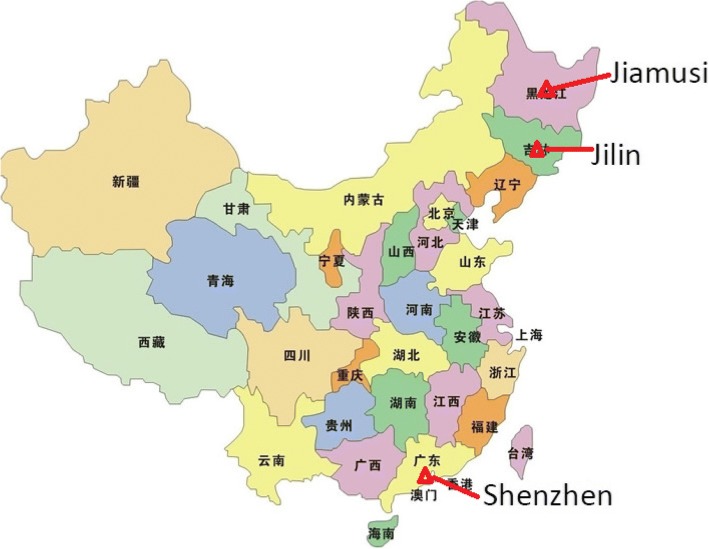
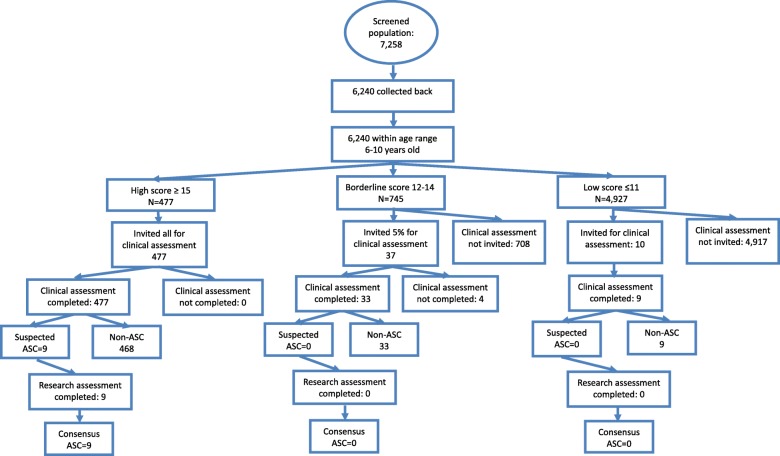
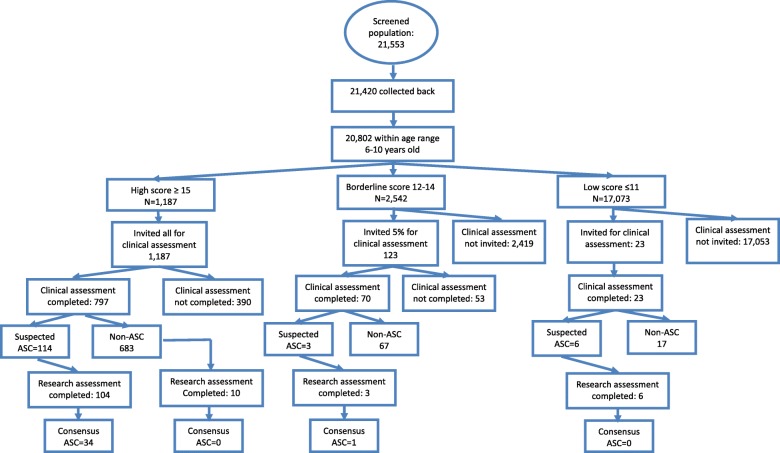
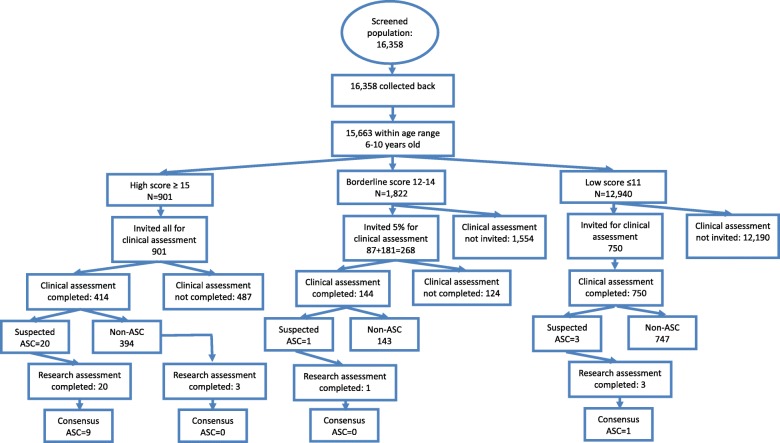
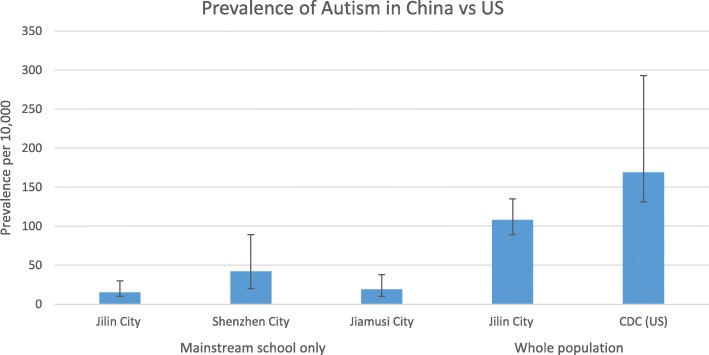
Background: Autism prevalence in the West is approximately 1% of school age children. Autism prevalence in China has been reported to be lower than in the West. This is likely due to at least two reasons: (1) most studies in China only included the special school population, overlooking the mainstream school population; and (2) most studies in China have not used contemporary screening and diagnostic methods. To address this, we tested total autism prevalence (mainstream and special schools) in Jilin City, and mainstream school autism prevalence in Jiamusi and Shenzhen cities. Methods: The study included a three-step process: (1) screening; (2) clinical assessment of 'screen positives' plus controls; and (3) research diagnostic assessment of those meeting clinical threshold for concerns at step 2. Prevalence estimates per 10,000 children aged 6-10 years old were weighted for study design using diagnostic criteria applied at the research assessment stage. Results: In Jilin City, 77 cases of autism were identified from a total population of 7258, equating to a prevalence of 108 per 10,000 (95% confidence interval (CI) 89, 130). In Shenzhen City: 21,420 children were screened and 35 cases of autism were identified, resulting in a mainstream prevalence of 42 per 10,000 (95% CI 20-89). In Jiamusi City, 16,358 children were screened, with 10 autism cases being identified, with a mainstream prevalence of 19 per 10,000 (95% CI 10-38). Conclusions: Results from Jilin City, where both mainstream and special school data were available, revealed a similar prevalence of autism in China to the West, at around 1%. Results from Shenzhen and Jiamusi cities, where only mainstream data were available, prevalence is also in line with Western estimates. In all three cities, new cases of autism were identified by the study in mainstream schools, reflecting current under-diagnosis. Non-significant variation across different cities is seen indicating the need to explore potential variation of autism across diverse Chinese regions with large sample sizes to achieve a fully robust national picture.
Overview
The claims and statistics of this paper haven’t been checked yet.
Free: it reads the open-access text and checks the first 5 claims that cite a source we can check. Create a free account to check every claim.
Integrity signals
Registry
Cites
Statistics
Figures
Verification
Claims the paper makes
The claims and statistics of this paper haven’t been checked yet.
Free: it reads the open-access text and checks the first 5 claims that cite a source we can check. Create a free account to check every claim.
Claims other papers make about this one
Each is checked against this paper’s own text: does it say what the citing paper says it does?
The source backs part of the claim, not all of it — or backs it for a different population, condition or comparison.
In the citing paper
“While a recent global burden study reported that 95% of all young children with developmental disabilities live in low and middle income countries (Olusanya et al. 2018), the majority remain undiagnosed (Sun et al. 2019).”
From The Diagnosis of Autism: From Kanner to DSM-III to DSM-5 and Beyond (2021) · cites this paper as Sun et al. 2019
Experimental — accuracy not yet measured
Self-check
Percentages, sums and reported differences re-computed from the paper’s own numbers.
The self-check needs the paper’s full text.
Citations
Cites
Baio, J., Wiggins, L., Christensen, D. L., Maenner, M. J., Daniels, J., Warren, Z., Kurzius-Spencer, M., Zahorodny, W., Robinson, C., Rosenberg, et al. (2018) · MMWR. Surveillance Summaries · doi:10.15585/mmwr.ss6706a1 · Cited by 6,078
Baird, G., Simonoff, E., Pickles, A., Chandler, S., Loucas, T., Meldrum, D., & Charman, T. (2006) · The Lancet · doi:10.1016/s0140-6736(06)69041-7 · Cited by 2,104
Epidemiology of Pervasive Developmental Disorders
Fombonne, E. (2009) · Pediatric Research · doi:10.1203/pdr.0b013e31819e7203 · Cited by 1,971 · cited 2×
“Second, in Shenzhen and Jiamusi cities, where only mainstream data were available, prevalence is also in line with Western estimates [9, 26].”
MethodResultAutism Diagnostic Observation Schedule
Lord, C., Rutter, M., Goode, S., Heemsbergen, J., Jordan, H., Mawhood, L., & Schopler, E. (2016) · PsycTESTS Dataset · doi:10.1037/t54175-000 · Cited by 1,678
The Raven's Progressive Matrices: Change and Stability over Culture and Time
Raven, J. (2000) · Cognitive Psychology · doi:10.1006/cogp.1999.0735 · Cited by 1,560
Prevalence of Autism Spectrum Disorders in a Total Population Sample
Kim, Y. S., Leventhal, B. L., Koh, Y.-J., Fombonne, E., Laska, E., Lim, E.-C., Cheon, K.-A., Kim, S.-J., Kim, Y.-K., Lee, H., et al. (2011) · American Journal of Psychiatry · doi:10.1176/appi.ajp.2011.10101532 · Cited by 1,524
Naarden Braun, K. V., Lopez, M., White, T., et al. (2023) · Carolina Digital Repository (University of North Carolina at Chapel Hill) · doi:10.17615/y3kk-5x30 · Cited by 1,381
Research works printed but not linked: 3
- 1. American Psychiatric Association. DSM-5. Autism Spectrum Disorder. Arlington: American Psychiatric Association; 2013.
- 13. Rutter M, LeCouteur A, Lord C. Autism Diagnostic Interview-Revised Manual. Western Psychological Services: Los Angeles; 2003.
- 22. Raven J, Raven JC, Court JH. Raven manual: standard progressive matrices. Oxford: Oxford Psychologists Press; 1998.
Cited by
Items 201–289 of 289
[Abnormal brain structure in preschool and school-aged children with autism spectrum disorder].
Zhang, A.-Y., Jin, X., & Ma, J. (2019) · PubMed Central · doi:10.7499/j.issn.1008-8830.2019.08.003 · Cited by 3
Zhou, L., Hu, X., Zhai, Y., Zhang, G., & Wang, X. (2023) · Behavioral Interventions · doi:10.1002/bin.1945 · Cited by 2
So, W., Song, X., Lam, H., Chan, S. I., & Lau, K. (2025) · Family Relations · doi:10.1111/fare.13155 · Cited by 2
Zhang, X., Wang, K., Jia, H., He, Q., Zhang, X., & Wang, E. (2025) · Personality and Individual Differences · doi:10.1016/j.paid.2025.113170 · Cited by 2
Gabunia, M., Zirakashvili, M., Nadareishvili, V., Kim, Y. S., LEVENTHAL, B. L., & Stevanović, D. (2025) · Advances in Autism · doi:10.1108/aia-01-2025-0003 · Cited by 3
[Research advances in the role of mTOR signaling pathway in autism spectrum disorder].
Sheng, G., & Jiang, K. (2019) · PubMed Central · doi:10.7499/j.issn.1008-8830.2019.07.019 · Cited by 2
The female side of ADHD and ASD
Kok, F. M. (2021) · University of Groningen research database (University of Groningen / Centre for Information Technology) · doi:10.33612/diss.179073089 · Cited by 2
Research on robots interacting effectively with autistic children
Xu, C. (2023) · Applied and Computational Engineering · doi:10.54254/2755-2721/20/20231069 · Cited by 1
Epidemiological Surveys of ASD: Current Findings and New Directions
Fombonne, E. J. (2023) · Springer eBooks · doi:10.1007/978-3-031-42383-3_13 · Cited by 2
Cross-Cultural Generalizability of the First Year Inventory for Early ASD Screening in China
Zhang, Z., Zhu, Q., Gao, T., Gan, K., Wang, F., Guan, L., & Ke, X. (2024) · Journal of Autism and Developmental Disorders · doi:10.1007/s10803-024-06358-7 · Cited by 1
Heterogeneity in the Resilience Intervention Receptiveness in Chinese Parents of Autistic Children
Lam, H., Song, X., Lau, K.-H., Chan, S. I., & So, W. (2025) · Journal of Autism and Developmental Disorders · doi:10.1007/s10803-025-07026-0 · Cited by 1
Bai, E. W., Lee, E. A. L., Afsharnejad, B., Chih, H., Parsons, R. W., Zou, X., Deng, H., Zhu, H., Bölte, S., & Girdler, S. J. (2026) · Molecular Autism · doi:10.1186/s13229-026-00702-7 · Cited by 1
Sun, M., Xu, X., Song, K., Sun, X., & Fan, C. (2026) · Applied Research in Quality of Life · doi:10.1007/s11482-026-10570-1 · Cited by 1
“However, in collectivistic and individualistic contexts, the psychosocial factors associated with parents’ quality of life may differ (Magaña et al., 2013; Sun et al., 2019 ).”
Self-citationOf love and loss: Negotiating masculinity and care in families of autistic children in China
Xue, K., & Gu, X. (2026) · Current Sociology · doi:10.1177/00113921261426573 · Cited by 1
Li, Y., Gao, C., & Song, S. (2026) · Frontiers in Pediatrics · doi:10.3389/fped.2026.1693801 · Cited by 3
“Research has confirmed that the prevalence of ASD is approximately 1% among school-aged children, with reporting rates continuing to rise (2, 3).”
Cheng, Y., Wang, J., Liu, M., Guo, D., Yan, J., Bai, L., Guo, K., Wei, J., Zhang, Y., Yang, K., et al. (2026) · International Journal of General Medicine · doi:10.2147/ijgm.s572336 · Cited by 1
“A mother has to be strong!”: Narrating “strong motherhood” in China's online autism community
Gu, X. (2026) · Chinese Journal of Sociology · doi:10.1177/2057150x261496980 · Cited by 2
Autism as a Global Challenge: Examining the Increased Childhood Prevalence of Autism
Hinbest, C., & Chmiliar, L. (2021) · Journal of Student Research · doi:10.47611/jsr.v10i1.1157 · Cited by 1
Raza, Y., Ali, S., Mushtaque, S., Mushtaque, U., Surani, H., & Nomani, S. (2022) · Pakistan Journal of Medical and Health Sciences · doi:10.53350/pjmhs22161948 · Cited by 1
“The study included total 150parentsautistic children both boys and girls belonging to age group (2-16) years.”
BackgroundEarly Signs of Autism and It’s Relation with Gestational Factors: An Urban Based Study in Bangladesh
Sharmin, S., Halim, K. S., Sultan, Z., & Haque, K. M. (2022) · Bangladesh Medical Journal · doi:10.3329/bmj.v50i2.61172 · Cited by 1
Elsabbagh, M. (2023) · Springer eBooks · doi:10.1007/978-3-031-20792-1_13 · Cited by 1
Mao, J., Zhang, C., Feng, J., & Han, T. (2023) · IEEE International Conference on Artificial Intelligence and Computer Applications (ICAICA) · doi:10.1109/icaica58456.2023.10405618 · Cited by 1
“This disorder has garnered global attention, with prevalence rates of 2.3% in the United States [2] and 1% in China [3].”
BackgroundInfluentialDeng, L., Ratavjia, S., & Rattadilok, P. (2024) · Urban sustainability · doi:10.1007/978-981-99-9595-0_3 · Cited by 1
Alwetaid, M. Y., Almanaa, T. N., Bakheet, S. A., Ansari, M. A., Nadeem, A., Attia, S. M., Hussein, M. H., Attia, M. S. M., & Ahmad, S. F. (2024) · Reproductive Toxicology · doi:10.1016/j.reprotox.2024.108599 · Cited by 1
Li, M., & Anglin‐Jaffe, H. (2025) · British Journal of Special Education · doi:10.1111/1467-8578.70055 · Cited by 1
Chen, D., Yu, J., Wang, J., Bai, Y., Zhang, Y., Lu, X., Che, B., Chen, S., Huang, Y., & Yang, X. (2020) · Children · doi:10.3390/children7110226 · Cited by 1
“After screening children with ASD in Jilin Province, Shenzhen City and Jiamusi City, a study found that the prevalence of ASD in Chinese children was close to that in western countries, at around 1% [9].”
BackgroundVirtual Reality App for ASD Child Early Training
Fan, L., Cao, W., Du, Y., Chen, J., Zhou, J., & Zhai, G. (2021) · Communications in computer and information science · doi:10.1007/978-981-33-6549-0_9
Progress in Neuroimaging Pathology of Autism Spectrum Disorder during Childhood
李, 锦. (2021) · International Journal of Psychiatry and Neurology · doi:10.12677/ijpn.2021.102008 · Cited by 1
The Alternations of Endocannabinoid System and its Therapeutic Potential in Autism Spectrum DisorderPreprint
Zou, M., Liu, Y., Xie, S. H., Wang, L., Li, D., Li, L., Xia, W., Sun, C., & Wu, L. (2020) · Research Square · doi:10.21203/rs.3.rs-35222/v1
“Seventy unrelated healthy children without a history of developmental delay or other neurological disorders were randomly selected from normal kindergartens and junior schools in Harbin, China as the control group.”
BackgroundInfluentialIntestinal Flora Composition and Exploration of New Therapeutic Methods in Children with Autism
Zhang, Y., Li, R., & Chang, X. (2022) · Journal of Medicine and Surgery Research · doi:10.55375/jmsr.2022.2.1
Research Progress of Intervention for Early Attachment of Autistic Children
张, 莹. (2022) · Advances in Psychology · doi:10.12677/ap.2022.1210435
The effect of living environment on developmental disorders in cold regions
Liu, Y., & Wang, Y. (2023) · Frigid Zone Medicine · doi:10.2478/fzm-2023-0004
ФАКТОРИ РИЗИКУ РОЗВИТКУ РОЗЛАДІВ АУТИСТИЧНОГО СПЕКТРУ
Денефіль, О. В., & Балк, В. (2024) · Перспективи та інновації науки · doi:10.52058/2786-4952-2024-2(36)-1052-1066
Wang, H., Liu, S., Xie, L., & Wang, J. (2023) · Figshare · doi:10.6084/m9.figshare.24172198
Wang, H., Liu, S., Xie, L., & Wang, J. (2023) · Figshare · doi:10.6084/m9.figshare.24172189
Wang, H., Liu, S., Xie, L., & Wang, J. (2023) · Figshare · doi:10.6084/m9.figshare.24172186
Wang, H., Liu, S., Xie, L., & Wang, J. (2023) · Figshare · doi:10.6084/m9.figshare.24172204
Wang, H., Liu, S., Xie, L., & Wang, J. (2023) · Figshare · doi:10.6084/m9.figshare.24172192
Wang, H., Liu, S., Xie, L., & Wang, J. (2023) · Figshare · doi:10.6084/m9.figshare.24172201
Wang, H., Liu, S., Xie, L., & Wang, J. (2023) · Figshare · doi:10.6084/m9.figshare.24172195
Biological and Genetic Perspectives
Ione, A. (2024) · Neurocultural health and wellbeing · doi:10.1007/978-3-031-62336-3_3
McCabe, H., Jiang, T., Klein, S. M., Qian, X., & Tsao, L. (2024) · Journal of International Special Needs Education · doi:10.9782/jisne-d-23-00010
Liu, T., & Xiao, Y. (2024) · International Journal of Education and Humanities · doi:10.54097/94wpdf33
Ramírez, D. A. C., Aldaba, M. D. L., Acosta, M. E. H., Figueroa, R. I. A., & Siordia, L. E. M. (2025) · Archivos en Medicina Familiar · doi:10.62514/amf.v27i1.116
Mercury Exposure and Autistic Neurological Disability
Alom, S., Lyngkhoi, E., & Lartang, B. (2024) · Springer eBooks · doi:10.1007/978-3-031-40858-8_329-1
Wang, X., Cui, Y., Wang, M., & Fan, X. (2025) · International Journal of Disability Development and Education · doi:10.1080/1034912x.2025.2500325
“A meta-analysis by Sun et al. (2019) estimated the pooled prevalence of ASD in China to be 39.23 per 10,000, or approximately 0.39%.”
InfluentialZhong, Y., Ahadullah, Cheng, T., Rosa, J. M., Yang, Y., Zhao, D., Du, S., Lee, P. K. H., Akhlaq, H., Yu, J., et al. (2025) · SSRN Electronic Journal · doi:10.21203/rs.3.rs-6813049/v1
Engendering the Development of the Autism Kangfu Industry in Urban China
An, M. (2025) · China Perspectives · doi:10.4000/149ie
Autism virtual reality education media integration in applied behavior analysis training
Nie, Y., Vate-U-Lan, P., & Sivapirunthep, P. (2025) · International Journal of Evaluation and Research in Education (IJERE) · doi:10.11591/ijere.v14i6.34093
“According to a research, the prevalence of ASD in China is similar to the West, at around 1% [3].”
Wang, H., Liu, S., Xie, L., & Wang, J. (2023) · Figshare · doi:10.6084/m9.figshare.24172183
Wang, H., Liu, S., Xie, L., & Wang, J. (2023) · Figshare · doi:10.6084/m9.figshare.24172180
Saito, M., Hirota, T., Sakamoto, Y., Adachi, M., Takahashi, M., Osato‐Kaneda, A., Kim, Y. S., Leventhal, B., Shui, A., Kato, S., et al. (2020) · Figshare · doi:10.6084/m9.figshare.12308333
Autism and Internationalised Schools
Hay, J. (2024) · Lancaster EPrints (Lancaster University) · doi:10.17635/lancaster/thesis/2587
Wang, L., Li, D., Pan, S., Zhai, J., Xia, W., Sun, C., & Zou, M. (2021) · Figshare · doi:10.6084/m9.figshare.14121434
Wang, H., Liu, S., Xie, L., & Wang, J. (2023) · Figshare · doi:10.6084/m9.figshare.24172207
Abaft, S. A. (2024) · White Rose eTheses Online (University of Leeds, The University of Sheffield, University of York)
Kucharová, P. (2021) · Jyväskylä University Digital Archive (University of Jyväskylä)
Hayrapetyan, A., Khachikyan, N. Z., Aslanyan, A., Mkrtchyan, A., Qotanyan, A., Mkhitaryan, M., Sakanyan, G., Avetisyan, T., Mkrtchyan, S., Avetisyan, L., et al. (2025) · Children · doi:10.3390/children13010035 · Cited by 1
“The prevalence of ASD was recorded as 10.8 per 1000 in China [37], 7.52 per 1000 in Vietnam [38], and 6.55 per 1000 in Israel [39].”
InfluentialEisenhut, M., & Jeevan, A. (2026) · Children · doi:10.3390/children13020244
WenXu, Y. A. N. G., Zhang, Y., Yang, P., Zhao, C., DU, C., He, J., Cao, Y., Shang, J., Li, L., Liu, Y., et al. (2026) · Frontiers in Public Health · doi:10.3389/fpubh.2026.1758181
“In China, the national prevalence of ASD for children 6 to 12 years old was 0.7% (from July 2014 to December 2016) (3), while reported ASD prevalence for children 6 to 10 year old was 1% (from 2013 ~ 2014) (4).”
InfluentialSong, X., Zhang, X., Meng, Y., Zheng, S., & So, W. (2026) · Child & Family Social Work · doi:10.1111/cfs.70178
Wen, J. (2026) · Psychology Research and Behavior Management · doi:10.2147/prbm.s598402
“35 The global perspective offered by Lord et al supports the notion that increased identification drives these trends.”
Panther, N., Bowden, N., Chu, J., D’Souza, S., Saha, S., Thabrew, H., & McLay, L. (2026) · Journal of Neurodevelopmental Disorders · doi:10.1186/s11689-026-09695-z
“For instance, prevalence estimates of autism in the Shanghai and Jilin regions of China ranged from 0.076 to 1.08%, respectively [20, 51].”
InfluentialHou, D., Zhan, M., Wang, Y., Li, C., Yan, J., & Bao, L. (2026) · American Journal of Biomedical and Life Sciences · doi:10.11648/j.ajbls.20261402.12
Wang, Y., Bei, R., Cao, J., Tian, Y., Yao, Y., & Tong, X. (2025) · International Conference on Human-Engaged Computing (ICHEC) · doi:10.1145/3786995.3787014 · Cited by 1
“Because decisions about disclosure shape help-seeking behavior, access to interventions, and the family’s social identity [60, 69], understanding how Chinese parents navigate privacy is both socially and theoretically important.”
Hai, Y., Yang, Y., Zou, M., Ye, P., Wang, J., Feng, L., Gong, X., Zhang, T., Tian, M., Sun, C., et al. (2026) · BMJ Paediatrics Open · doi:10.1136/bmjpo-2025-004048
“12 Moreover, China’s relatively late initiation of ASD epidemiological research, combined with insufficient support in manpower, technology and funding, limits the depth and scale of ASD studies.”
Liu, D., Liu, S., & Luo, L. (2026) · PsyCh Journal · doi:10.1002/pchj.70107
Yau, S., Zhong, Y. Y., Akhlaq, H., Tong, C., Ahadullah, Rosa, J., Zhao, D. D., Du, S., Lee, P. K. H., Yu, J., et al. (2026) · Research Square · doi:10.21203/rs.3.rs-8854068/v1
Adell, A. (2026) · Scholarship @ Claremont (The Claremont Colleges)
Wang, H. T., Yang, L., Hu, J., Jiang, Y., Zhang, Y., Ren, J., Wu, L., & Zou, M. (2026) · Communications Biology · doi:10.1038/s42003-026-10510-7
“InChina,theprevalenceofASDin childrenaged6 – 10yearsisapproximately1%,consistentwithdatafromthe World Health Organization 3 .”
Meng, R., Kong, L., WHO CST Team, & Wang, C. (2026) · Behavioral Sciences · doi:10.3390/bs16071159
“In China, caregiver and public awareness of autism remains limited, and shortages in diagnostic resources and early-intervention services constrain timely identification and support for children with autism (Liao et al., 2022; Sun et al., 2019).”
Epidemiology of Autism Spectrum Disorders in French Children Aged 8
Delobel‐Ayoub, M., Abid, A., Klapouszczak, D., Berger, É., Stocker, A., Ehlinger, V., Perret, C., Arnaud, C., & Revet, A. (2026) · Journal of Autism and Developmental Disorders · doi:10.1007/s10803-026-07433-x
Zhong, Q., Chen, L., Ji, Y., Zhu, F.-L., & Zou, X. (2026) · medRxiv · doi:10.64898/2026.07.14.26358066
Rapid glycomic analysis of serum EVs reveals altered N-glycosylation patterns in ASD
Liu, X., Xq, L., Lei, S., Shang, J., Wang, W., Liu, Y., Liu, N., Xiang, Y., & Liu, X. (2026) · Analytical and Bioanalytical Chemistry · doi:10.1007/s00216-026-06680-2
“Globally, the prevalence of ASD in children is estimated at 1% to 2%, and epidemiological studies in China have shown that the prevalence of ASD is comparable to that in Western countries [9, 10], making ASD a major public health challenge.”
Yankouskaya, A., Kuhail, M. A., Yang, H., Wang, X., Chen, J., Ma, Y. T., Alshakhsi, S. A. A., Xu, G., & Ali, R. (2026) · International Journal of Human-Computer Interaction · doi:10.1080/10447318.2026.2707709
Liu, H., Zhang, G., Li, Z., Zhang, T., Zhang, L., & Li, Y. (2026) · Frontiers in Psychiatry · doi:10.3389/fpsyt.2026.1922791
Chelihi, R., & Laouali, A. (2022) · Al-Jamie Journal in Psychological Studies and Educational Sciences
Osorio, N. C., Quiñonez, T. I. S., Morales, N. I. R., & Verduzco, G. R. F. (2026) · ISEO Journal · doi:10.63344/pghrss26
Kim, E., Zhang, J., & Kang, J. (2026) · International Journal of Disability Development and Education · doi:10.1080/1034912x.2026.2724557
Self-citationZhang, X., Gong, H., Yaopeng, Z., Zhang, K., Wu, Y., Song, Y., Chen, J., Hua, D., Zhang, X., Chen, S., et al. (2026) · Journal of Hazardous Materials · doi:10.1016/j.jhazmat.2026.143499
Self-citationI CONGRESSO BRASILEIRO MULTIDISCIPLINAR SOBRE DEFICIÊNCIAS E AUTISMO
Editorial, E. (2021) · REVISTA SAÚDE & CIÊNCIA · doi:10.35572/rsc.v9i2.453
Zhang, H., & Arya, D. (2024) · The review of disability studies/Review of disability studies
Zhang, Z., Ang, M. F. A. F., & Ghani, M. S. A. (2026) · International Journal of Advanced Research in Islamic Studies and Education
Charting brain growth in Chinese children with Autism
Li, L., Bai, M., Cai, K., Cao, D., Cao, X., Chen, J., Fan, X.-R., Gao, P., Gao, W., 何东之, et al. (2026) · 中国科学通报:英文版 · doi:10.1016/j.scib.2026.10.011
Lu, M., Chen, Y., Zhou, H., & Lin, Y. (2026) · Frontiers in Immunology · doi:10.3389/fimmu.2026.1950055
“The prevalence of ASD among Chinese children is about 1.0%, which is close to the global level (10).”
InfluentialChen, L., & Ji, Y. (2026) · Journal of Autism and Developmental Disorders · doi:10.1007/s10803-026-07567-y
Metadata
- Authors
- Sun, X., Allison, C., Wei, L., Matthews, F. E., Auyeung, B., Wu, Y. Y., Griffiths, S., Zhang, J., Baron-Cohen, S., & Brayne, C.
- Affiliations
- Chinese University of Hong Kong (HK)
- University of Cambridge (GB)
- Peking University (CN)
- Newcastle University (GB)
- Corresponding author
- Sun, Xiang
- Venue
- Molecular Autism
- Published
- 2019-02-28
- Volume
- 10
- Issue
- 1
- Pages
- 7-7
- ISSN
- 2040-2392 (ISSN-L)
- PMC
- PMC6394100
- OpenAlex
- W2902251604
- Semantic Scholar
- ad7747f172aa188daebd254c2f86456c4411808f
- Cited by
- 266
- References
- 31
- Citations by year
- 2026: 28 · 2025: 29 · 2024: 36 · 2023: 36 · 2022: 46 · 2021: 42 · 2020: 42 · 2019: 7
- FWCI
- 19.91
- Type
- journal article
- Language
- en
- Open access
- gold
- doi.org
- Licence
- cc-by
- creativecommons.org/licenses/by/4.0/ (tdm)
- Locations
- Molecular Autism (publishedVersion, cc-by)
- Europe PMC (PubMed Central) (publishedVersion, cc-by)
- PubMed Central (publishedVersion, cc-by)
- PubMed (publishedVersion)
- Edinburgh Research Explorer (University of Edinburgh) (submittedVersion, cc-by)
- Apollo (University of Cambridge) (submittedVersion)
- DOAJ (DOAJ: Directory of Open Access Journals) (submittedVersion, cc-by-sa)
- Repository@Hull (Worktribe) (University of Hull) (submittedVersion, cc-by)
- Apollo
- Funders
- The Chinese University of Hong Kong
- Autism Research Trust
- Medical Research Council
- National Institute for Health Research
- Cambridgeshire and Peterborough NHS Foundation Trust
- Topics
- Life Sciences › Neuroscience › Cognitive Neuroscience › Autism Spectrum Disorder Research
- Social Sciences › Psychology › Clinical Psychology › Family and Disability Support Research
- Health Sciences › Medicine › Psychiatry and Mental health › Child Nutrition and Feeding Issues
- Keywords
- autism prevalence, autism spectrum disorder, China, mainstream schools, special schools, autism screening, underdiagnosis, diagnostic assessment, elementary school students, Jilin City, Shenzhen, Jiamusi
- MeSH terms
- Autistic Disorder, Child, China, Female, Humans, Male, Prevalence
About these checks
Registry, retraction, Cites and statistics results are computed, not judged, with one exception: a printed reference that no index lists is read once by a model before it counts as a citation error. Claims are extracted by a model and kept only when their quote appears verbatim in the text; each cited source is then checked, with a model’s help, for whether it says what the claim relies on. Those verdicts can be wrong — read the claim’s quote and the cited source before relying on one.
Statistics and arithmetic are recomputed, not judged.
Confidence bands are shown only for fields calibrated on our annotated test set. None is calibrated yet, so no band is shown.
What counts as a claim ›How we measure confidence ›How we check this ›
Are you an author, or do you see a problem with this page? Request a review
Data sources
Bibliographic data: Semantic Scholar, OpenAlex, Crossref.
Contains information from the Semantic Scholar Academic Graph Datasets, made available under the ODC Attribution License (ODC-BY 1.0).
Semantic Scholar’s data is described in: Kinney, R., et al. (2023). The Semantic Scholar Open Data Platform. arXiv:2301.10140.
