

Autism prevalence in China is comparable to Western prevalence
Open accessThe DOI matches its Crossref record; 30 of the 31 references it cites were found in a registry or an index.
Abstract
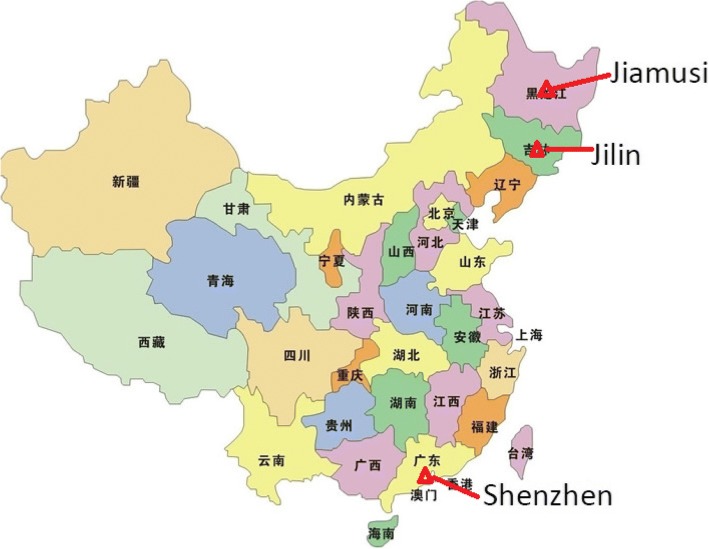
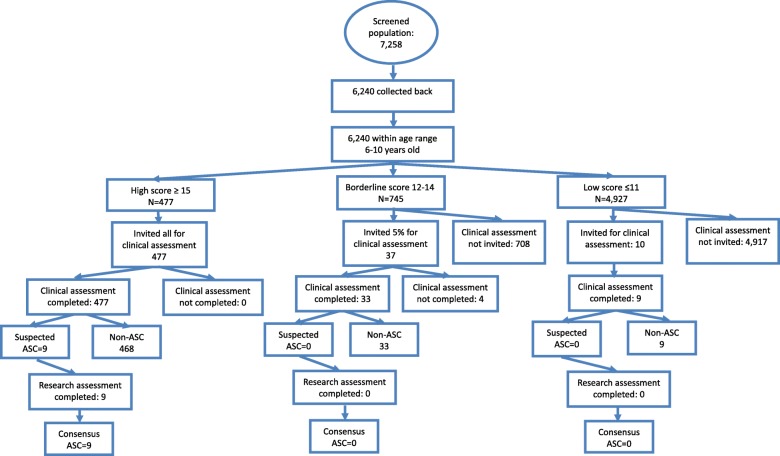
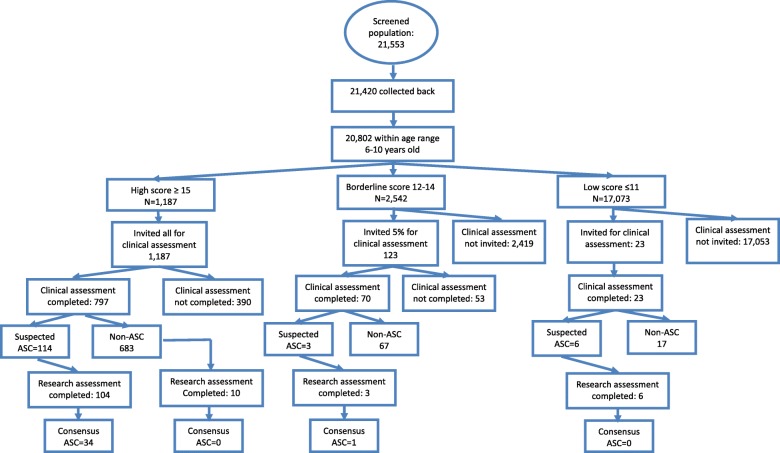
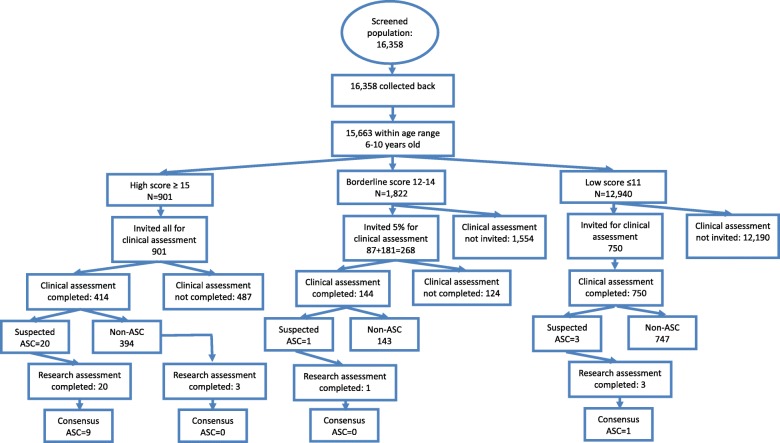
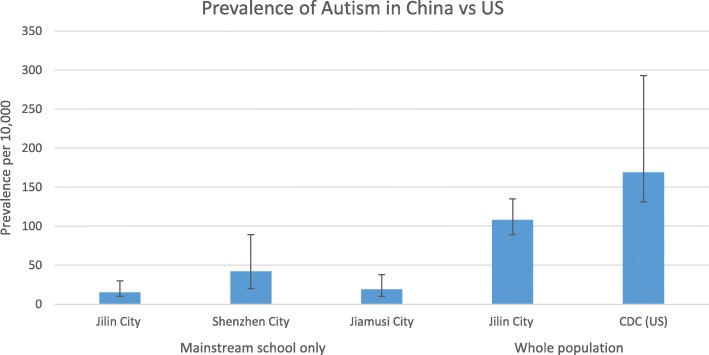
Background: Autism prevalence in the West is approximately 1% of school age children. Autism prevalence in China has been reported to be lower than in the West. This is likely due to at least two reasons: (1) most studies in China only included the special school population, overlooking the mainstream school population; and (2) most studies in China have not used contemporary screening and diagnostic methods. To address this, we tested total autism prevalence (mainstream and special schools) in Jilin City, and mainstream school autism prevalence in Jiamusi and Shenzhen cities. Methods: The study included a three-step process: (1) screening; (2) clinical assessment of 'screen positives' plus controls; and (3) research diagnostic assessment of those meeting clinical threshold for concerns at step 2. Prevalence estimates per 10,000 children aged 6-10 years old were weighted for study design using diagnostic criteria applied at the research assessment stage. Results: In Jilin City, 77 cases of autism were identified from a total population of 7258, equating to a prevalence of 108 per 10,000 (95% confidence interval (CI) 89, 130). In Shenzhen City: 21,420 children were screened and 35 cases of autism were identified, resulting in a mainstream prevalence of 42 per 10,000 (95% CI 20-89). In Jiamusi City, 16,358 children were screened, with 10 autism cases being identified, with a mainstream prevalence of 19 per 10,000 (95% CI 10-38). Conclusions: Results from Jilin City, where both mainstream and special school data were available, revealed a similar prevalence of autism in China to the West, at around 1%. Results from Shenzhen and Jiamusi cities, where only mainstream data were available, prevalence is also in line with Western estimates. In all three cities, new cases of autism were identified by the study in mainstream schools, reflecting current under-diagnosis. Non-significant variation across different cities is seen indicating the need to explore potential variation of autism across diverse Chinese regions with large sample sizes to achieve a fully robust national picture.
Overview
The claims and statistics of this paper haven’t been checked yet.
Free: it reads the open-access text and checks the first 5 claims that cite a source we can check. Create a free account to check every claim.
Integrity signals
Registry
Cites
Statistics
Figures
Verification
Claims the paper makes
The claims and statistics of this paper haven’t been checked yet.
Free: it reads the open-access text and checks the first 5 claims that cite a source we can check. Create a free account to check every claim.
Claims other papers make about this one
Each is checked against this paper’s own text: does it say what the citing paper says it does?
The source backs part of the claim, not all of it — or backs it for a different population, condition or comparison.
In the citing paper
“While a recent global burden study reported that 95% of all young children with developmental disabilities live in low and middle income countries (Olusanya et al. 2018), the majority remain undiagnosed (Sun et al. 2019).”
From The Diagnosis of Autism: From Kanner to DSM-III to DSM-5 and Beyond (2021) · cites this paper as Sun et al. 2019
Experimental — accuracy not yet measured
Self-check
Percentages, sums and reported differences re-computed from the paper’s own numbers.
The self-check needs the paper’s full text.
Citations
Cites
Baio, J., Wiggins, L., Christensen, D. L., Maenner, M. J., Daniels, J., Warren, Z., Kurzius-Spencer, M., Zahorodny, W., Robinson, C., Rosenberg, et al. (2018) · MMWR. Surveillance Summaries · doi:10.15585/mmwr.ss6706a1 · Cited by 6,078
Baird, G., Simonoff, E., Pickles, A., Chandler, S., Loucas, T., Meldrum, D., & Charman, T. (2006) · The Lancet · doi:10.1016/s0140-6736(06)69041-7 · Cited by 2,104
Epidemiology of Pervasive Developmental Disorders
Fombonne, E. (2009) · Pediatric Research · doi:10.1203/pdr.0b013e31819e7203 · Cited by 1,971 · cited 2×
“Second, in Shenzhen and Jiamusi cities, where only mainstream data were available, prevalence is also in line with Western estimates [9, 26].”
MethodResultAutism Diagnostic Observation Schedule
Lord, C., Rutter, M., Goode, S., Heemsbergen, J., Jordan, H., Mawhood, L., & Schopler, E. (2016) · PsycTESTS Dataset · doi:10.1037/t54175-000 · Cited by 1,678
The Raven's Progressive Matrices: Change and Stability over Culture and Time
Raven, J. (2000) · Cognitive Psychology · doi:10.1006/cogp.1999.0735 · Cited by 1,560
Prevalence of Autism Spectrum Disorders in a Total Population Sample
Kim, Y. S., Leventhal, B. L., Koh, Y.-J., Fombonne, E., Laska, E., Lim, E.-C., Cheon, K.-A., Kim, S.-J., Kim, Y.-K., Lee, H., et al. (2011) · American Journal of Psychiatry · doi:10.1176/appi.ajp.2011.10101532 · Cited by 1,524
Naarden Braun, K. V., Lopez, M., White, T., et al. (2023) · Carolina Digital Repository (University of North Carolina at Chapel Hill) · doi:10.17615/y3kk-5x30 · Cited by 1,381
Prevalence of autism-spectrum conditions: UK school-based population study
Baron-Cohen, S., Scott, F. J., Allison, C., Williams, J., Bolton, P., Matthews, F. E., & Brayne, C. (2009) · British Journal of Psychiatry · doi:10.1192/bjp.bp.108.059345 · Cited by 918
Self-citationScott, F. J., Baron-Cohen, S., Bolton, P., & Brayne, C. (2002) · Autism · doi:10.1177/1362361302006001003 · Cited by 393
Self-citationEarly identification of autism by the CHecklist for Autism in Toddlers (CHAT)
Baron-Cohen, S., Wheelwright, S., Cox, A., Baird, G., Charman, T., Swettenham, J., Drew, A., & Doehring, P. (2000) · Journal of the Royal Society of Medicine · doi:10.1177/014107680009301007 · Cited by 276
Self-citationThe CAST (Childhood Asperger Syndrome Test): Test accuracy
Williams, J., Scott, F., Stott, C., Allison, C., Bolton, P., Baron-Cohen, S., & Brayne, C. (2005) · Autism · doi:10.1177/1362361305049029 · Cited by 208
Self-citationPrevalence of autism in mainland China, Hong Kong and Taiwan: a systematic review and meta-analysis
Sun, X., Allison, C., Matthews, F. E., Sharp, S. J., Auyeung, B., Baron-Cohen, S., & Brayne, C. (2013) · Molecular Autism · doi:10.1186/2040-2392-4-7 · Cited by 200
Self-citationA review of the prevalence of Autism Spectrum Disorder in Asia
Sun, X., & Allison, C. L. (2009) · Research in Autism · doi:10.1016/j.rasd.2009.10.003 · Cited by 183
Self-citationLundberg, I., Damström Thakker, K., Hällström, T., & Forsell, Y. (2005) · Social Psychiatry and Psychiatric Epidemiology · doi:10.1007/s00127-005-0911-4 · Cited by 159
The prevalence of autism spectrum disorders in China: a comprehensive meta-analysis
Wang, F., Lu, L., Wang, S.-B., Zhang, L., Ng, C. H., Ungvari, G. S., Cao, X.-L., Lu, J.-P., Hou, C.-L., Jia, F.-J., et al. (2018) · International Journal of Biological Sciences · doi:10.7150/ijbs.24063 · Cited by 132
Haapea, M., Miettunen, J., Veijola, J. M., Lauronen, E., Tanskanen, P., & Isohanni, M. K. (2007) · Social Psychiatry and Psychiatric Epidemiology · doi:10.1007/s00127-007-0178-z · Cited by 83
Ronald, A., Happé, F., & Plomin, R. (2008) · European Child & Adolescent Psychiatry · doi:10.1007/s00787-008-0689-5 · Cited by 69
Service provision for autism in mainland China: Preliminary mapping of service pathways
Sun, X., Allison, C. L., Bonnie Auyeung, B., Matthews, F. E., Baron‐Cohen, S., & Brayne, C. (2013) · Social Science & Medicine · doi:10.1016/j.socscimed.2013.08.016 · Cited by 67
Self-citationThe Childhood Asperger Syndrome Test (CAST): Test–retest reliability
Williams, J., Allison, C., Scott, F., Stott, C., Bolton, P., Baron-Cohen, S., & Brayne, C. (2006) · Autism · doi:10.1177/1362361306066612 · Cited by 67
Self-citationSun, X., Allison, C. L., Auyeung, B., Baron‐Cohen, S., & Brayne, C. (2012) · Research in Developmental Disabilities · doi:10.1016/j.ridd.2012.08.013 · Cited by 64
Self-citationExploring the Underdiagnosis and Prevalence of Autism Spectrum Conditions in Beijing
Sun, X., Allison, C., Matthews, F. E., Zhang, Z., Auyeung, B., Baron‐Cohen, S., & Brayne, C. (2015) · Autism Research · doi:10.1002/aur.1441 · Cited by 53
Self-citationThe Childhood Asperger Syndrome Test (CAST): Test–retest reliability in a high scoring sample
Allison, C., Williams, J., Scott, F., Stott, C., Bolton, P., Baron-Cohen, S., & Brayne, C. (2007) · Autism · doi:10.1177/1362361307075710 · Cited by 53
Self-citationService provision for autism in mainland China: A service providers’ perspective
Sun, X., Allison, C. L., Auyeung, B., Matthews, F. E., Murray, S., Baron‐Cohen, S., & Brayne, C. (2012) · Research in Developmental Disabilities · doi:10.1016/j.ridd.2012.08.010 · Cited by 39
Self-citationWhat is available for case identification in autism research in mainland China?
Sun, X., Allison, C. L., Auyeung, B., Matthews, F. E., Baron‐Cohen, S., & Brayne, C. (2013) · Research in Autism · doi:10.1016/j.rasd.2012.11.003 · Cited by 33
Self-citationSun, X., Allison, C. L., Auyeung, B., Matthews, F. E., Norton, S., Baron‐Cohen, S., & Brayne, C. (2014) · Journal of Autism and Developmental Disorders · doi:10.1007/s10803-013-2024-3 · Cited by 25
Self-citationFombonne, E. J. (2008) · The British Journal of Psychiatry · doi:10.1192/bjp.193.1.59 · Cited by 18
The Mandarin Chinese version of the childhood autism spectrum test (CAST): Test–retest reliability
Sun, X., Allison, C. L., Auyeung, B., Matthews, F. E., Baron‐Cohen, S., & Brayne, C. (2013) · Research in Developmental Disabilities · doi:10.1016/j.ridd.2013.05.042 · Cited by 12
Self-citation
Research works printed but not linked: 3
- 1. American Psychiatric Association. DSM-5. Autism Spectrum Disorder. Arlington: American Psychiatric Association; 2013.
- 13. Rutter M, LeCouteur A, Lord C. Autism Diagnostic Interview-Revised Manual. Western Psychological Services: Los Angeles; 2003.
- 22. Raven J, Raven JC, Court JH. Raven manual: standard progressive matrices. Oxford: Oxford Psychologists Press; 1998.
Cited by
Global prevalence of autism: A systematic review update
Zeidan, J., Fombonne, E., Scorah, J., Ibrahim, A., Durkin, M. S., Saxena, S., Yusuf, A., Shih, A., & Elsabbagh, M. (2022) · Autism Research · doi:10.1002/aur.2696 · Cited by 3,117
“, 2019), ADI-R (Morales-Hidalgo et al., 2018; Sun et al., 2019) and/or other assessments used to characterize the heterogenous profiles within the spectrum.”
BackgroundMethodInfluentialEpidemiology of autism spectrum disorders: a review of worldwide prevalence estimates since 2014
Chiarotti, F., & Venerosi, A. (2020) · Brain Sciences · doi:10.3390/brainsci10050274 · Cited by 580
“[30] estimated ASD prevalence in three cities (Jilin, Shenzhen, and Jiamusi) at December 2013, using data from mainstream school only in all the cities and from the whole population in Jilin.”
MethodSalari, N., Rasoulpoor, S., Rasoulpoor, S., Shohaimi, S., Jafarpour, S., Abdoli, N., Khaledi-Paveh, B., & Mohammadi, M. (2022) · Italian Journal of Pediatrics · doi:10.1186/s13052-022-01310-w · Cited by 571
Zhou, H., Xu, X., Yan, W., Zou, X., Wu, L., Luo, X., Li, T., Huang, Y., Guan, H., Chen, X., et al. (2020) · Neuroscience Bulletin · doi:10.1007/s12264-020-00530-6 · Cited by 464
“A few small-scale studies have reported the prevalence of ASD in mainland China since 2003 using various methods of case ascertainment [20, 21].”
The global prevalence of autism spectrum disorder: A three-level meta-analysis
Talantseva, O. I., Romanova, R. S., Shurdova, E. M., Dolgorukova, T. A., Sologub, P. S., Titova, O. S., Kleeva, D. F., & Grigorenko, E. L. (2023) · Frontiers in Psychiatry · doi:10.3389/fpsyt.2023.1071181 · Cited by 318
Metadata
- Authors
- Sun, X., Allison, C., Wei, L., Matthews, F. E., Auyeung, B., Wu, Y. Y., Griffiths, S., Zhang, J., Baron-Cohen, S., & Brayne, C.
- Affiliations
- Chinese University of Hong Kong (HK)
- University of Cambridge (GB)
- Peking University (CN)
- Newcastle University (GB)
- Corresponding author
- Sun, Xiang
- Venue
- Molecular Autism
- Published
- 2019-02-28
- Volume
- 10
- Issue
- 1
- Pages
- 7-7
- ISSN
- 2040-2392 (ISSN-L)
- PMC
- PMC6394100
- OpenAlex
- W2902251604
- Semantic Scholar
- ad7747f172aa188daebd254c2f86456c4411808f
- Cited by
- 266
- References
- 31
- Citations by year
- 2026: 28 · 2025: 29 · 2024: 36 · 2023: 36 · 2022: 46 · 2021: 42 · 2020: 42 · 2019: 7
- FWCI
- 19.91
- Type
- journal article
- Language
- en
- Open access
- gold
- doi.org
- Licence
- cc-by
- creativecommons.org/licenses/by/4.0/ (tdm)
- Locations
- Molecular Autism (publishedVersion, cc-by)
- Europe PMC (PubMed Central) (publishedVersion, cc-by)
- PubMed Central (publishedVersion, cc-by)
- PubMed (publishedVersion)
- Edinburgh Research Explorer (University of Edinburgh) (submittedVersion, cc-by)
- Apollo (University of Cambridge) (submittedVersion)
- DOAJ (DOAJ: Directory of Open Access Journals) (submittedVersion, cc-by-sa)
- Repository@Hull (Worktribe) (University of Hull) (submittedVersion, cc-by)
- Apollo
- Funders
- The Chinese University of Hong Kong
- Autism Research Trust
- Medical Research Council
- National Institute for Health Research
- Cambridgeshire and Peterborough NHS Foundation Trust
- Topics
- Life Sciences › Neuroscience › Cognitive Neuroscience › Autism Spectrum Disorder Research
- Social Sciences › Psychology › Clinical Psychology › Family and Disability Support Research
- Health Sciences › Medicine › Psychiatry and Mental health › Child Nutrition and Feeding Issues
- Keywords
- autism prevalence, autism spectrum disorder, China, mainstream schools, special schools, autism screening, underdiagnosis, diagnostic assessment, elementary school students, Jilin City, Shenzhen, Jiamusi
- MeSH terms
- Autistic Disorder, Child, China, Female, Humans, Male, Prevalence
About these checks
Registry, retraction, Cites and statistics results are computed, not judged, with one exception: a printed reference that no index lists is read once by a model before it counts as a citation error. Claims are extracted by a model and kept only when their quote appears verbatim in the text; each cited source is then checked, with a model’s help, for whether it says what the claim relies on. Those verdicts can be wrong — read the claim’s quote and the cited source before relying on one.
Statistics and arithmetic are recomputed, not judged.
Confidence bands are shown only for fields calibrated on our annotated test set. None is calibrated yet, so no band is shown.
What counts as a claim ›How we measure confidence ›How we check this ›
Are you an author, or do you see a problem with this page? Request a review
Data sources
Bibliographic data: Semantic Scholar, OpenAlex, Crossref.
Contains information from the Semantic Scholar Academic Graph Datasets, made available under the ODC Attribution License (ODC-BY 1.0).
Semantic Scholar’s data is described in: Kinney, R., et al. (2023). The Semantic Scholar Open Data Platform. arXiv:2301.10140.
