

Common and unique multimodal covarying patterns in autism spectrum disorder subtypes
Open accessThe DOI matches its Crossref record; 60 of the 60 references it cites were found in a registry or an index.
Abstract
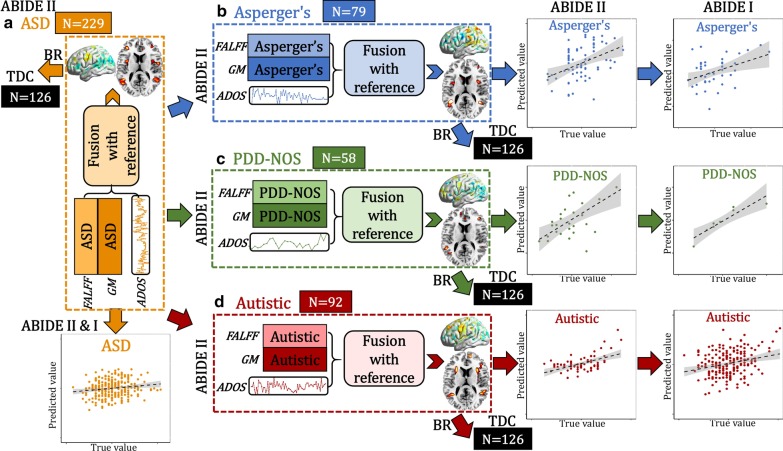
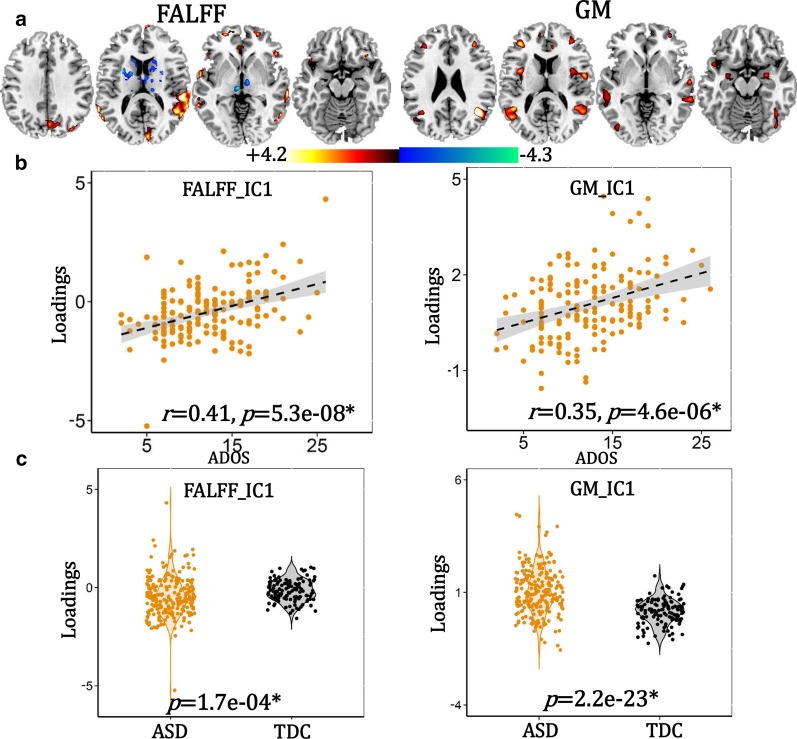
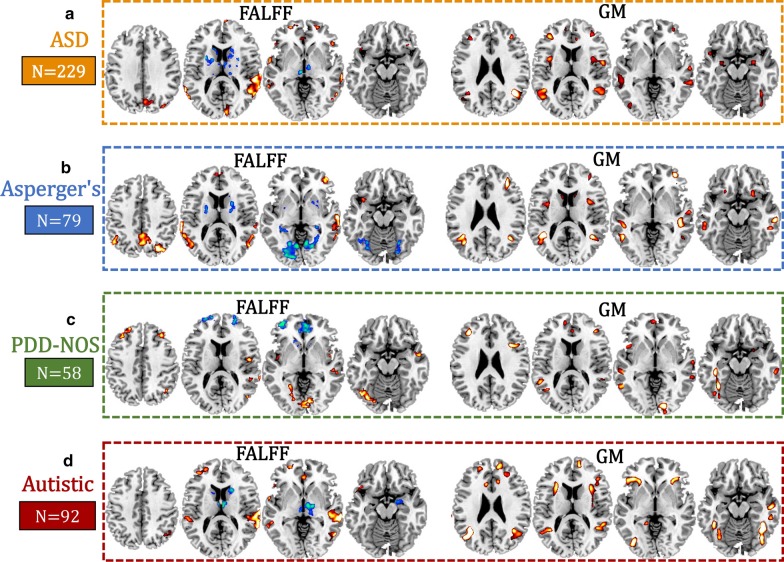
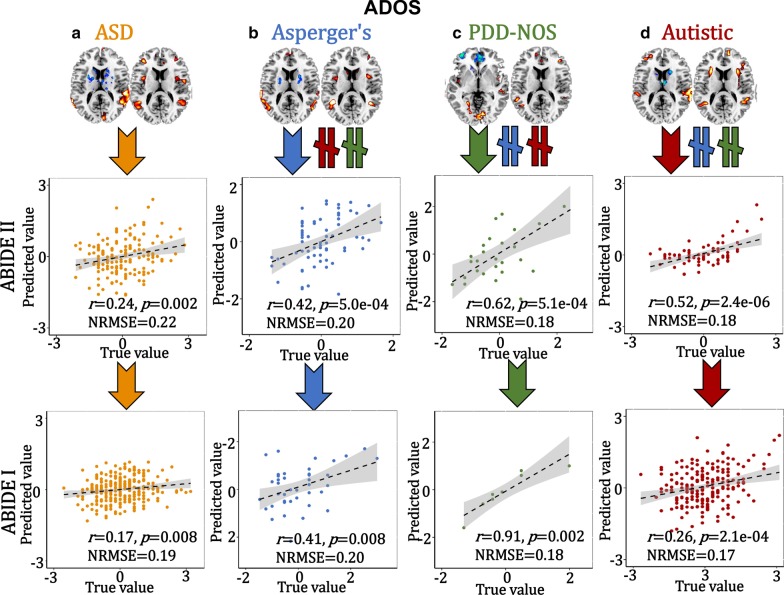
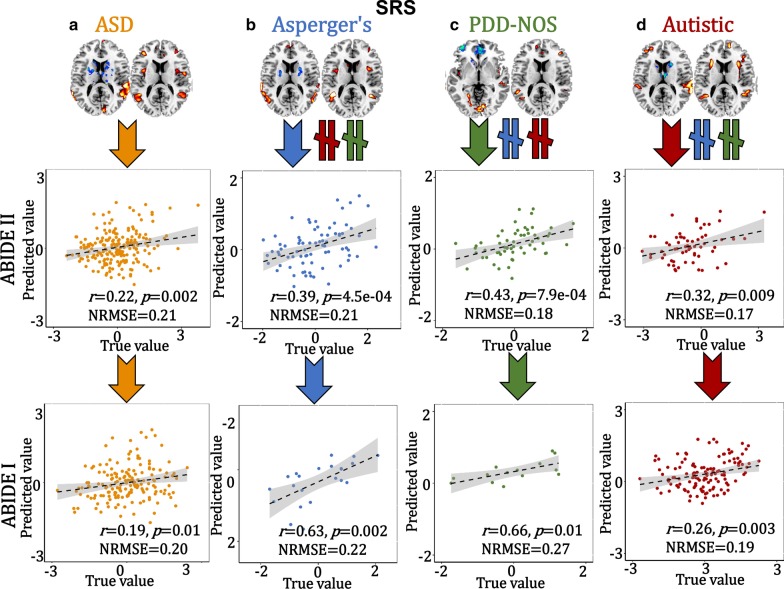
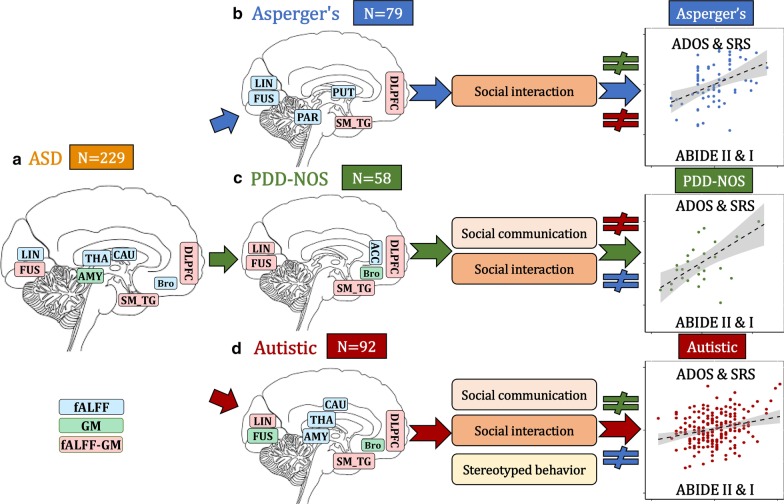
Background: The heterogeneity inherent in autism spectrum disorder (ASD) presents a substantial challenge to diagnosis and precision treatment. Heterogeneity across biological etiologies, genetics, neural systems, neurocognitive attributes and clinical subtypes or phenotypes has been observed across individuals with ASD. Methods: In this study, we aim to investigate the heterogeneity in ASD from a multimodal brain imaging perspective. The Autism Diagnostic Observation Schedule (ADOS) was used as a reference to guide functional and structural MRI fusion. DSM-IV-TR diagnosed Asperger’s disorder (n = 79), pervasive developmental disorder-not otherwise specified [PDD-NOS] (n = 58) and Autistic disorder (n = 92) from ABIDE II were used as discovery cohort, and ABIDE I (n = 400) was used for replication. Results: Dorsolateral prefrontal cortex and superior/middle temporal cortex are the primary common functional–structural covarying cortical brain areas shared among Asperger’s, PDD-NOS and Autistic subgroups. Key differences among the three subtypes are negative functional features within subcortical brain areas, including negative putamen–parahippocampus fractional amplitude of low-frequency fluctuations (fALFF) unique to the Asperger’s subtype; negative fALFF in anterior cingulate cortex unique to PDD-NOS subtype; and negative thalamus–amygdala–caudate fALFF unique to the Autistic subtype. Furthermore, each subtype-specific brain pattern is correlated with different ADOS subdomains, with social interaction as the common subdomain. The identified subtype-specific patterns are only predictive for ASD symptoms manifested in the corresponding subtypes, but not the other subtypes. Conclusions: Although ASD has a common neural basis with core deficits linked to social interaction, each ASD subtype is strongly linked to unique brain systems and subdomain symptoms, which may help to better understand the underlying mechanisms of ASD heterogeneity from a multimodal neuroimaging perspective. Limitations: This study is male based, which cannot be generalized to the female or the general ASD population.
Overview
The claims and statistics of this paper haven’t been checked yet.
Free: it reads the open-access text and checks the first 5 claims that cite a source we can check. Create a free account to check every claim.
Integrity signals
Registry
Cites
Statistics
Figures
Verification
Claims the paper makes
The claims and statistics of this paper haven’t been checked yet.
Free: it reads the open-access text and checks the first 5 claims that cite a source we can check. Create a free account to check every claim.
Claims other papers make about this one
Each is checked against this paper’s own text: does it say what the citing paper says it does?
The source backs part of the claim, not all of it — or backs it for a different population, condition or comparison.
In the citing paper
“Moreover, typical symptoms presented in neurodevelopmental disorders might be driven by alterations of both brain structure and function [48, 49].”
From Confound Controlled Multimodal Neuroimaging Data Fusion and Its Application to Developmental Disorders (2025) · cites this paper as [48]
Experimental — accuracy not yet measured
Self-check
Percentages, sums and reported differences re-computed from the paper’s own numbers.
The self-check needs the paper’s full text.
Citations
Cites
Lord, C., Risi, S., Lambrecht, L., Cook, E. H., Leventhal, B. L., DiLavore, P. C., Pickles, A., & Rutter, M. (2000) · Journal of Autism and Developmental Disorders · doi:10.1023/a:1005592401947 · Cited by 7,520
Ashburner, J., & Friston, K. J. (2005) · NeuroImage · doi:10.1016/j.neuroimage.2005.02.018 · Cited by 7,507
A New Initiative on Precision Medicine
Collins, F. S., & Varmus, H. (2015) · New England Journal of Medicine · doi:10.1056/nejmp1500523 · Cited by 5,202
Lord, C., Elsabbagh, M., Baird, G., & Veenstra-Vanderweele, J. (2018) · The Lancet · doi:10.1016/s0140-6736(18)31129-2 · Cited by 2,819
What Is the Male-to-Female Ratio in Autism Spectrum Disorder? A Systematic Review and Meta-Analysis
Loomes, R., Hull, L., & Mandy, W. P. L. (2017) · Journal of the American Academy of Child & Adolescent Psychiatry · doi:10.1016/j.jaac.2017.03.013 · Cited by 2,804
Di Martino, A., Yan, C.-G., Li, Q., Denio, E., Castellanos, F. X., Alaerts, K., Anderson, J. S., Assaf, M., Bookheimer, S. Y., Dapretto, M., et al. (2014) · Molecular Psychiatry · doi:10.1038/mp.2013.78 · Cited by 2,780
Lai, M.-C., Lombardo, M. V., & Baron-Cohen, S. (2014) · The Lancet · doi:10.1016/s0140-6736(13)61539-1 · Cited by 2,371
Zou, Q.-H., Zhu, C.-Z., Yang, Y., Zuo, X.-N., Long, X.-Y., Cao, Q.-J., Wang, Y.-F., & Zang, Y.-F. (2008) · Journal of Neuroscience Methods · doi:10.1016/j.jneumeth.2008.04.012 · Cited by 2,161
Gaze fixation and the neural circuitry of face processing in autism
Dalton, K. M., Nacewicz, B. M., Johnstone, T., Schaefer, H. S., Gernsbacher, M. A., Goldsmith, H. H., Alexander, A. L., & Davidson, R. J. (2005) · Nature Neuroscience · doi:10.1038/nn1421 · Cited by 1,543
Amaral, D. G., Schumann, C. M., & Nordahl, C. W. (2008) · Trends in Neurosciences · doi:10.1016/j.tins.2007.12.005 · Cited by 1,492
Cited by
Lakhan, A. R., Mohammed, M. A., Abdulkareem, K. H., Hamouda, H. N., & Alyahya, S. (2023) · Computers in Biology and Medicine · doi:10.1016/j.compbiomed.2023.107539 · Cited by 114
Brain imaging-based machine learning in autism spectrum disorder: methods and applications
Xu, M., Calhoun, V. D., Jiang, R., Yan, W., & Sui, J. (2021) · Journal of Neuroscience Methods · doi:10.1016/j.jneumeth.2021.109271 · Cited by 81
“Furthermore, combining multimodal brain imaging data could give comprehensive views of brain organizations, and facilitate to reveal complex, cross-modal alterations associated with the intrinsic pathology of disorders (Jiang et al., 2020a, 2020c; Qi et al., 2020a).”
BackgroundMethodSelf-citationData-driven multimodal fusion: approaches and applications in psychiatric research
Sui, J., Zhi, D., & Calhoun, V. D. (2023) · Psychoradiology · doi:10.1093/psyrad/kkad026 · Cited by 64
“…in ASD by mC-C AR + jIC A with the Autism Diagnostic Observation Schedule as a r efer ence to guide m ultimodal fusion on Asper ger’s, perv a-siv e de v elopmental disorder-not otherwise specified (PDD-NOS), and autistic subtype from the ABIDE I/II datasets (Qi, Morris, et al. , 2020 ).”
MethodSelf-citationQi, S., Sui, J., Pearlson, G. D., Bustillo, J., Perrone‐Bizzozero, N. I., Kochunov, P., Turner, J. A., Fu, Z., Shao, W., Jiang, R., et al. (2022) · Nature Communications · doi:10.1038/s41467-022-32513-8 · Cited by 60
Self-citationGuo, X., Zhai, G., Liu, J., Cao, Y., Zhang, X., Cui, D., & Gao, L. (2022) · Molecular Autism · doi:10.1186/s13229-022-00535-0 · Cited by 56
“A previous study classified ASD into three subtypes: Asperger’s, Pervasive Developmental Disorder-Not otherwise Specified, and Autism, and each subtype-specific brain pattern is correlated with different ADOS subdomains [51].”
Yang, B., Wang, M., Zhou, W., Wang, X., Chen, S., Potenza, M. N., Yuan, L., & Dong, G. (2022) · Journal of Affective Disorders · doi:10.1016/j.jad.2022.11.083 · Cited by 40
Jiang, R., Woo, C., Qi, S., Wu, J., & Sui, J. (2022) · IEEE Signal Processing Magazine · doi:10.1109/msp.2022.3155951 · Cited by 38
Self-citationThe promise of precision functional mapping for neuroimaging in psychiatry
Demeter, D. V., & Greene, D. J. (2024) · Neuropsychopharmacology · doi:10.1038/s41386-024-01941-z · Cited by 37
Stratifying ASD and characterizing the functional connectivity of subtypes in resting-state fMRI
Ren, P., Bi, Q., Pang, W., Wang, M., Zhou, Q., Ye, X., Li, L., & Xiao, L. (2023) · Behavioural Brain Research · doi:10.1016/j.bbr.2023.114458 · Cited by 37
“Another study reported that ASD subtypes classified by DSM-4 diagnostic categorization had varying fractional amplitude of low-frequency fluctuation (fALFF) and grey matter volumes [43].”
Multi-modal intermediate integrative methods in neuropsychiatric disorders: A review
Wang, Y., Tang, S., Ma, R., Zamit, I., Wei, Y., & Pan, Y. (2022) · Computational and Structural Biotechnology Journal · doi:10.1016/j.csbj.2022.11.008 · Cited by 33
“[56] SZ association Cognitive test, sMRI, dMRI and fMRI”
MethodUnderstanding heterogeneity within autism spectrum disorder: a scoping review
Puerto, M. S. C., & Vázquez, M. S. (2024) · Advances in Autism · doi:10.1108/aia-12-2023-0072 · Cited by 31
Yang, T., Zhu, J., Li, Q., Chen, L., Wu, L., Jia, F., Hao, Y., Ke, X., Yi, M., Jin, C., et al. (2021) · Frontiers in Psychiatry · doi:10.3389/fpsyt.2020.613519 · Cited by 27
“Therefore, it is crucial to identify clinical subgroups and find meaningful biomarkers (7).”
BackgroundQi, S., Silva, R. F., Zhang, D., Plis, S., Miller, R. L., Vergara, V. M., Jiang, R., Zhi, D., Sui, J., & Calhoun, V. D. (2021) · Human Brain Mapping · doi:10.1002/hbm.25720 · Cited by 26
“, 2018) method adds a correlation constraint on the mixing matrix that can identify underlying covarying patterns that correlate with the reference (Qi, Yang, et al., 2018; Qi et al., 2020; Qi, Schumann, et al., 2021).”
BackgroundSelf-citationLiu, Q., Lai, H., Le, J., Lan, C., Zhang, X., Huang, L., Xu, D., Jiang, X., Li, F. R., Kendrick, K. M., et al. (2025) · Molecular Psychiatry · doi:10.1038/s41380-025-03086-x · Cited by 22
“Furthermore, an increasing body of studies has employed neuroimaging technologies focused on functional connectivity [18 – 20], structural brain variations [21, 22] or multimodal patterns [23] to determine the different neurobiological mechanism of ASD subtypes.”
Lyons-Warren, A. M., Wangler, M. F., & Wan, Y. (2022) · International Journal of Molecular Sciences · doi:10.3390/ijms232113030 · Cited by 20
Liang, C., Pearlson, G., Bustillo, J., Kochunov, P., Turner, J. A., Wen, X., Jiang, R., Fu, Z., Zhang, X., Li, K., et al. (2023) · Schizophrenia Bulletin · doi:10.1093/schbul/sbac158 · Cited by 19
Self-citationKlöbl, M., Prillinger, K., Diehm, R., Doganay, K., Lanzenberger, R. R., Poustka, L., Plener, P. L., & Konicar, L. (2023) · Child and Adolescent Psychiatry and Mental Health · doi:10.1186/s13034-022-00549-9 · Cited by 18
Uscătescu, L. C., Kronbichler, M., Said‐Yürekli, S., Kronbichler, L., Calhoun, V. D., Corbera, S., Bell, M. D., Pelphrey, K. A., Pearlson, G. D., & Assaf, M. (2023) · Schizophrenia · doi:10.1038/s41537-023-00344-1 · Cited by 18
Self-citationFeng, Y., Zhi, D., Zhu, Y., Guo, X., Luo, X., Dang, C., Liu, L., Sui, J., & Sun, L. (2023) · European Child & Adolescent Psychiatry · doi:10.1007/s00787-023-02303-8 · Cited by 16
Self-citationFeng, A., Luo, N., Zhao, W., Calhoun, V. D., Jiang, R., Zhi, D., Shi, W., Jiang, T., Yu, S. P., Xu, Y., et al. (2022) · Human Brain Mapping · doi:10.1002/hbm.25862 · Cited by 15
“On the other hand, data-driven multimodal fusion has been regarded as a promising tool to discover the co-varying patterns of multiple imaging modalities impaired in brain diseases, such as schizophrenia (Luo et al., 2018), depressive disorders(Qi et al., 2018), and Autism(Qi et al., 2020).”
BackgroundSelf-citationComparison of autism spectrum disorder subtypes based on functional and structural factors
Wang, S., Sun, Z., Martínez-Tejada, L. A., & Yoshimura, N. (2024) · Frontiers in Neuroscience · doi:10.3389/fnins.2024.1440222 · Cited by 14
“In Qi’s study, the main differences between Asperger’s, PDD-NOS, and autism were the functional subcortical brain areas (Qi et al., 2020).”
BackgroundMulti-modal data analysis for autism spectrum disorder in children: State of the art and trends
Pang, L., Zhao, X., Zhao, L., Li, J., Kuo, F., Wang, H., & Liu, C. (2025) · EngMedicine · doi:10.1016/j.engmed.2025.100117 · Cited by 14
Sun, W., Ma, L., Feng, X., Fan, Y., Cai, Y., & Li, X. (2025) · Psychology Health & Medicine · doi:10.1080/13548506.2025.2565181 · Cited by 11
Gao, L., Qiao, S., Zhang, Y., Zhang, T., Lu, H., & Guo, X. (2025) · Brain Imaging and Behavior · doi:10.1007/s11682-025-00978-y · Cited by 10
“This variability highlights the crucial and different roles of structural and functional features in investigating clinical manifestations of ASD (Qi et al., 2020).”
InfluentialEdelson, S. M. (2022) · Genes · doi:10.3390/genes13020274 · Cited by 9
Grumbach, P., Kasper, J., Hipp, J. F., Forsyth, A., Valk, S. L., Muthukumaraswamy, S. D., Eickhoff, S. B., Schilbach, L., & Dukart, J. (2025) · Nature Communications · doi:10.1038/s41467-025-63857-6 · Cited by 8
“The central role of the DMN in the pathophysiology of autism has been further emphasized by recent efforts to identify neurobiologicalsubtypes of autism, which have observed converging abnormalities in both the DMN and fron-toparietal networks across subtypes 40,41 .”
Ji, Y., Pearlson, G. D., Bustillo, J., Kochunov, P., Turner, J. A., Jiang, R., Shao, W., Zhang, X., Fu, Z., Li, K., et al. (2023) · Schizophrenia Research · doi:10.1016/j.schres.2023.12.013 · Cited by 8
Self-citationKeating, C. T., Sowden, S., O'Donoghue, H., & Cook, J. L. (2026) · Autism Research · doi:10.1002/aur.70157 · Cited by 7
“…social communication, focused interests, and repetitive behaviors (Georgiades et al. 2013; Geurts et al. 2021; Cruz Puerto and Sandín Vázquez 2024; Qi et al. 2020), and is often accompanied by a range of co-occurring conditions that further contribute to unique phenotypes (Hobson and Petty 2021).”
Meade, C. S., Li, X., Towe, S. L., Bell, R. P., Calhoun, V. D., & Sui, J. (2021) · BMC Neuroscience · doi:10.1186/s12868-021-00654-z · Cited by 7
Self-citationWei, L., Xu, X., Su, Y., Lan, M., Wang, S., & Zhong, S. (2024) · Human Brain Mapping · doi:10.1002/hbm.70017 · Cited by 5
“To minimize the impact of other factors, age, FIQ, mean FD, and site were regressed out for each modality (Qi et al., 2020).”
BackgroundMethodNode Centrality Measures Identify Relevant Structural MRI Features of Subjects with Autism
Zanghieri, M., Menichetti, G., Retico, A., Calderoni, S., Castellani, G., & Remondini, D. (2021) · Brain Sciences · doi:10.3390/brainsci11040498 · Cited by 5
Delineating a Pathway for the Discovery of Functional Connectome Biomarkers of Autism
Park, S., Thomson, P., Kiar, G., Castellanos, F. X., Milham, M. P., Bernhardt, B. C., & Martino, A. D. (2024) · Advances in neurobiology · doi:10.1007/978-3-031-69491-2_18 · Cited by 5
Li, J., Zheng, W., Fu, X., Zhang, Y., Yang, S., Wang, Y., Zhang, Z., Hu, B., & Xu, G. (2024) · Brain Sciences · doi:10.3390/brainsci14080738 · Cited by 5
Chen, B., Olson, L., Ríos, A., Salmina, M., Linke, A. C., & Fishman, I. (2024) · Cerebral Cortex · doi:10.1093/cercor/bhae005 · Cited by 4
Liang, C., Silva, R. F., Adali, T., Jiang, R., Zhang, D., Qi, S., & Calhoun, V. D. (2025) · IEEE Transactions on Image Processing · doi:10.1109/tip.2025.3597045 · Cited by 3
“Moreover, typical symptoms presented in neurodevelopmental disorders might be driven by alterations of both brain structure and function [48], [49].”
Self-citationMultivariate Approaches for Multimodal Fusion of Structural and Functional Brain Imaging Data
Sui, J., & Calhoun, V. D. (2025) · Neuromethods · doi:10.1007/978-1-0716-4438-6_29 · Cited by 3
Self-citationClarke, N., Urchs, S. G. W., Nguyen, H. D., Moreau, C. A., Dansereau, C. L., Tam, A., Evans, A. C., & Bellec, P. (2025) · GigaScience · doi:10.1093/gigascience/giaf091 · Cited by 3
“…supported by data-sharing initiatives such as the Autism Brain Imaging Data Exchange (ABIDE) [ 30 ], have been able to decompose this source of heterogeneity to reveal subtypes that map better to a continuous spectrum of discrete categories [ 31–33 ], suggesting promise for reliable FC biomarkers.”
Zhang, T., Cao, Z., Li, W., & Lv, Z. (2026) · Pediatric Investigation · doi:10.1002/ped4.70038 · Cited by 3
“Qi et al. 51 examined covariate patterns in ASD by combining structural MRI, which depicts brain anatomy, fMRI, which illustrates brain activity, and other imaging techniques, uncovering both shared and unique neural network features within ASD subgroups.”
Miao, Y., Luo, R., Lin, F., Tong, B., Yan, J., Yang, T., Sun, Z., Li, T., Xiao, L., & Chen, J. (2025) · Neuroscience Letters · doi:10.1016/j.neulet.2025.138298 · Cited by 3
Kim, H., Ghosh, S. K., & Hector, E. C. (2025) · arXiv (Cornell University) · doi:10.48550/arxiv.2502.21235 · Cited by 3
“We chose candidate covariates based on previous studies (Qi et al., 2020; Heinsfeld et al., 2018), focusing on phenotypic information relevant to ASD.”
Wilson, A., & Anitha, J. (2025) · Biomedical Materials & Devices · doi:10.1007/s44174-025-00446-7 · Cited by 2
“Numerous clinicians and researchers endure several multidimensional nodes, subdivisions, or subgroups with possible etiological and beneficial suggestions [4].”
Zhao, C., Sui, J., Jiang, R., Zhang, D., Calhoun, V. D., & Qi, S. (2026) · IEEE International Conference on Acoustics Speech and Signal Processing · doi:10.1109/icassp55912.2026.11461812 · Cited by 2
Self-citationLu, H., Wang, S., Gao, L., Xue, Z., Liu, J., Niu, X., Zhou, R., & Guo, X. (2024) · Brain Imaging and Behavior · doi:10.1007/s11682-024-00957-9 · Cited by 2
“…in the ASD subgroup by using the ADOS as a reference to guide functional and structural data fusion, and that the subtype-related multimodal brain network of ASD was associated with all three ADOS subdomains (social communication, social interaction, and stereotyped behavior) (Qi et al., 2020).”
THIDS: Triplet High-Order Individual Differential Structural Brain Network
Wen, D., Zhao, C., Adalı, T., Zhang, D., Calhoun, V. D., & Qi, S. (2025) · IEEE International Symposium on Biomedical Imaging (ISBI) · doi:10.1109/isbi60581.2025.10980896 · Cited by 2
“However, these methods often ignore the unique characteristics of individual brain structure and function, which are critical for understanding highly heterogeneous diseases such as schizophrenia (SZ) [9], Alzheimer's disease [10], major depression [11] and other neuropsychiatric disorders [12].”
Self-citationQi, S., Plis, S., Miller, R. L., Silva, R. F., Vergara, V. M., Jiang, R., Zhi, D., Sui, J., & Calhoun, V. D. (2021) · IEEE International Symposium on Biomedical Imaging (ISBI) · doi:10.1109/isbi48211.2021.9433935 · Cited by 2
“The reference based mCCAR+jICA [10-14] method adds a correlation constraint on the mixing matrix that can identify co-varying patterns significantly correlated with the reference.”
MethodSelf-citationEarly Detection and Intervention in Autism: Emerging Behavioral and Biological Markers
Ortega, J. V., Nguyen, V. T., Jahn, A., Kirk, I. J., Jacobsen, J. C., George, B., & Jasperse, S. C. M. (2024) · Springer eBooks · doi:10.1007/978-3-031-32035-4_100-1 · Cited by 1
Guo, X., Xing, Y., Cui, D., Zhou, R., & Gao, L. (2025) · Brain Connectivity · doi:10.1089/brain.2024.0033 · Cited by 1
“The DSM-5 clearly de fi nes the characteristics and diagnosis of ASD (Grzadzinski et al., 2013), but several studies have found different potential relationships among different brain functional networks and ASD clinical symptoms (Guo et al., 2022; Qi et al., 2020; Taluja et al., 2024).”
Supporting success: teaching driving to learners with neurodevelopmental disorders
Hertzberg, L., Thorslund, B., & Selander, H. (2026) · Traffic Safety Research · doi:10.55329/gbbw9914 · Cited by 1
“…is our broad NDD framing, which unlike earlier diagnosis-specific studies (Myers et al., 2021; Vindin et al., 2021; Chee et al., 2015) accounts for the high comorbidity and heterogeneity inherent in these conditions (APA, 2013; Bonti et al., 2024; Qi et al., 2020; Castellanos et al., 2006).”
Su, C., Liu, Z., Zhang, S., Yi, A., & Xiao, Y. (2026) · NeuroImage Clinical · doi:10.1016/j.nicl.2026.104042 · Cited by 1
“These inconsistencies may result from the substantial clinical heterogeneity within the autism spectrum, where different ASD subtypes may reflect unique brain systems and behavioral phenotypes (Qi et al., 2020).”
Machine Learning Approach in Brain Imaging
Kistenev, Y. V., & Vrazhnov, D. A. (2022) · Springer eBooks · doi:10.1007/978-981-19-1352-5_12 · Cited by 1
Consistent Brain Age Difference in Childhood Autism Spectrum Disorder and its Subtypes
Sun, F., Liang, C., Shao, W., Fu, Z., Zhang, D., Jiang, R., Qi, S., & Calhoun, V. D. (2025) · Communications in computer and information science · doi:10.1007/978-981-96-4001-0_20
Self-citationEarly Detection and Intervention in Autism: Emerging Behavioral and Biological Markers
Ortega, J. V., Nguyen, V. T., Jahn, A., Kirk, I. J., Jacobsen, J. C., George, B., & Jasperse, S. C. M. (2025) · Springer eBooks · doi:10.1007/978-3-031-73368-0_100
Multimodal Detection of Autism Spectrum Disorder Using SBJSO-Trained Deep Neural Networks
Wilson, A., & Anitha, J. (2025) · International Conference on New Frontiers in Communication, Automation, Management and Security (ICCAMS) · doi:10.1109/iccams65118.2025.11234150
Guo, X., Zhai, G., Liu, J., Cao, Y., Zhang, X., Cui, D., & Gao, L. (2024) · Figshare · doi:10.6084/m9.figshare.26557583
Wei, G., Liang, C., Adalı, T., Sui, J., Rongtao, J., Calhoun, V. D., & Qi, S. (2025) · IEEE International Conference on Bioinformatics and Biomedicine (BIBM) · doi:10.1109/bibm66473.2025.11356082
“Moreover, 520 autism spectrum disorder (ASD) and 571 HCs from Autism Brain Imaging Data Exchange (ABIDE) [3]; 341 attention deficit hyperactivity disorder (ADHD) and 426 HCs from ADHD-200 [4]; 178 schizophrenia (SZ) and 219 HCs from the bipolar and schizophrenia network of intermediate phenotypes…”
Self-citationHendershott, B. (2026) · PDXScholar (Portland State University)
Bai, W., Yamashita, O., Sakai, Y., & Yoshimoto, J. (2026) · npj Systems Biology and Applications · doi:10.1038/s41540-026-00699-y
“Furthermore, the pivotal position of SCZ, situated between ASD and MDD in the rsFC-informed space, is consistent with multimodal fusion studiesidentifyingSCZassharingdistinctsubnetworkswitheachcondition: caudate-thalamuscircuitssharedwithMDDandtemporal-lingualcircuits sharedwithASD 50 .”
Das, S., & Patra, S. (2026) · Wiley eBooks · doi:10.1002/9781394271177.ch13
Berley, N., Becker, S. P., & Stallings, M. C. (2026) · Research Square · doi:10.21203/rs.3.rs-10818692/v1
Cai, Y., Maliske, L., & Kanske, P. (2026) · Frontiers in Psychiatry · doi:10.3389/fpsyt.2026.1919681
“Our framework aligns with the evidence that diverse etiological mechanisms can lead to generalized ASD traits (32, 33).”
Validity and Reliability of the Turkish Version of the Adult Autism Subthreshold Spectrum Scale
Alıcı, Y. H., Özbaran, N. B., Köse, S., Görmez, A., Kandeğer, A., Algedik, P., Erbaş, S., Yenice, H., Çalışır, Ö. M., Hasanlı, J., et al. (2026) · Intellectual and developmental disabilities · doi:10.1080/19349491.2026.2734441
Shan, X., Xu, M., Zhi, D., Qi, S., Jiang, R., Fu, Z., Stevens, M., Pearlson, G., & Sui, J. (2026) · Nature Mental Health · doi:10.1038/s44220-026-00720-7
Self-citation
Metadata
- Authors
- Qi, S., Morris, R., Turner, J. A., Fu, Z., Jiang, R., Deramus, T. P., Zhi, D., Calhoun, V. D., & Sui, J.
- Affiliations
- Georgia Institute of Technology (US)
- Georgia State University (US)
- Chinese Academy of Sciences (CN)
- Corresponding author
- Calhoun, Vince D.
- ORCID
- Venue
- Molecular Autism
- Published
- 2020-11-18
- Volume
- 11
- Issue
- 1
- Pages
- 90-90
- ISSN
- 2040-2392 (ISSN-L)
- PMC
- PMC7673101
- OpenAlex
- W3100119277
- Semantic Scholar
- 153350e6b4c5013c083f6c850b54a9893a0701d2
- Cited by
- 58
- References
- 60
- Citations by year
- 2026: 8 · 2025: 16 · 2024: 10 · 2023: 7 · 2022: 11 · 2021: 6
- FWCI
- 3.22
- Type
- journal article
- Language
- en
- Open access
- gold
- doi.org
- Licence
- cc-by
- creativecommons.org/licenses/by/4.0/ (tdm)
- creativecommons.org/licenses/by/4.0/ (vor)
- Locations
- Molecular Autism (publishedVersion, cc-by)
- PubMed Central (publishedVersion, cc-by)
- PubMed (publishedVersion)
- DOAJ (DOAJ: Directory of Open Access Journals) (submittedVersion, cc-by-sa)
- Funders
- National Institute of Health (1R01MH117107, R01EB020407, 1R01EB005846, 1R01MH094524, P20GM103472, P30GM122734)
- National Science Foundation (1539067)
- Strategic Priority Research Program of the Chinese Academy of Sciences (XDBS32040100)
- China Natural Science Foundation (61773380)
- Beijing Municipal Science and Technology Commission (Z181100001518005)
- Topics
- Life Sciences › Neuroscience › Cognitive Neuroscience › Autism Spectrum Disorder Research
- Life Sciences › Neuroscience › Cognitive Neuroscience › Functional Brain Connectivity Studies
- Life Sciences › Biochemistry, Genetics and Molecular Biology › Genetics › Genetics and Neurodevelopmental Disorders
- Keywords
- autism spectrum disorder, ASD subtypes, Asperger syndrome, pervasive developmental disorder not otherwise specified, autistic disorder, fractional amplitude of low-frequency fluctuations, dorsolateral prefrontal cortex, anterior cingulate cortex, social interaction, brain heterogeneity
- MeSH terms
- Autism Spectrum Disorder, Adolescent, Brain Mapping, Child, Female, Humans, Magnetic Resonance Imaging, Male, Models, Biological, Reproducibility of Results, Cohort Studies, Case-Control Studies
About these checks
Registry, retraction, Cites and statistics results are computed, not judged, with one exception: a printed reference that no index lists is read once by a model before it counts as a citation error. Claims are extracted by a model and kept only when their quote appears verbatim in the text; each cited source is then checked, with a model’s help, for whether it says what the claim relies on. Those verdicts can be wrong — read the claim’s quote and the cited source before relying on one.
Statistics and arithmetic are recomputed, not judged.
Confidence bands are shown only for fields calibrated on our annotated test set. None is calibrated yet, so no band is shown.
What counts as a claim ›How we measure confidence ›How we check this ›
Are you an author, or do you see a problem with this page? Request a review
Data sources
Bibliographic data: Semantic Scholar, OpenAlex, Crossref.
Contains information from the Semantic Scholar Academic Graph Datasets, made available under the ODC Attribution License (ODC-BY 1.0).
Semantic Scholar’s data is described in: Kinney, R., et al. (2023). The Semantic Scholar Open Data Platform. arXiv:2301.10140.
