

The DOI matches its Crossref record; 43 of the 43 references it cites were found in a registry or an index.
Cannabinoid treatment for autism: a proof-of-concept randomized trial
Open accessAbstract
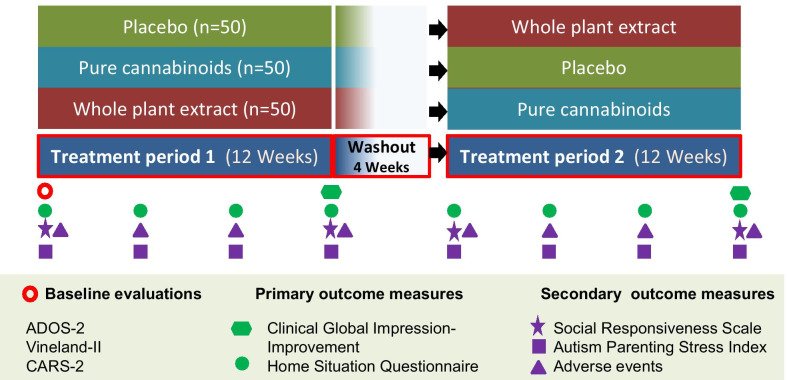
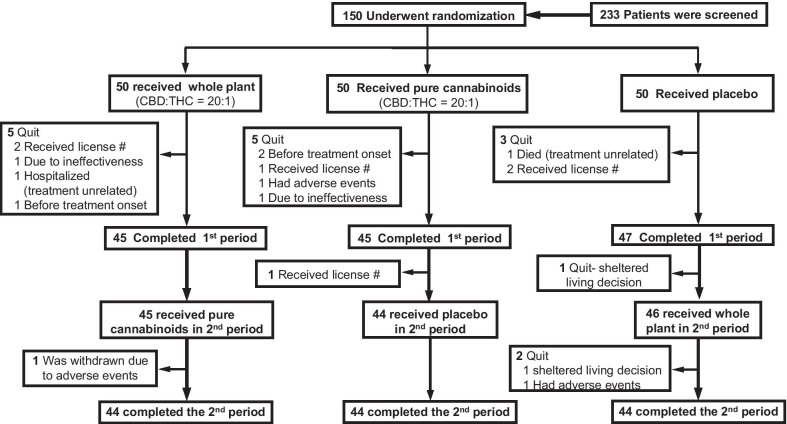
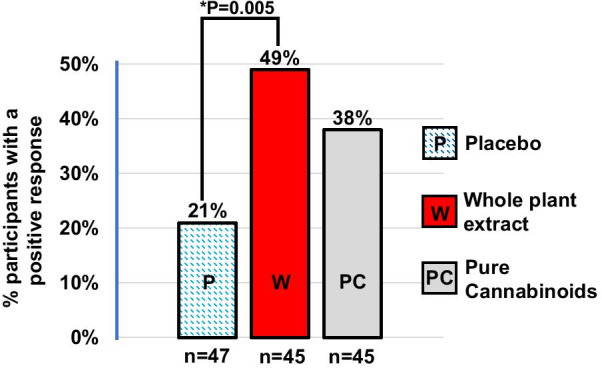
BACKGROUND: Endocannabinoid dysfunction in animal models of autism spectrum disorder (ASD) and accumulating, albeit anecdotal, evidence for efficacy in humans motivated this placebo-controlled double-blind comparison of two oral cannabinoid solutions in 150 participants (age 5-21 years) with ASD. METHODS: We tested (1) BOL-DP-O-01-W, a whole-plant cannabis extract containing cannabidiol and Δ9-tetrahydrocannabinol at a 20:1 ratio and (2) BOL-DP-O-01, purified cannabidiol and Δ9-tetrahydrocannabinol at the same ratio. Participants (N = 150) received either placebo or cannabinoids for 12-weeks (testing efficacy) followed by a 4-week washout and predetermined cross-over for another 12 weeks to further assess tolerability. Registered primary efficacy outcome measures were improvement in behavioral problems (differences between whole-plant extract and placebo) on the Home Situation Questionnaire-ASD (HSQ-ASD) and the Clinical Global Impression-Improvement scale with disruptive behavior anchor points (CGI-I). Secondary measures were Social Responsiveness Scale (SRS-2) and Autism Parenting Stress Index (APSI). RESULTS: Changes in Total Scores of HSQ-ASD (primary-outcome) and APSI (secondary-outcome) did not differ among groups. Disruptive behavior on the CGI-I (co-primary outcome) was either much or very much improved in 49% on whole-plant extract (n = 45) versus 21% on placebo (n = 47; p = 0.005). Median SRS Total Score (secondary-outcome) improved by 14.9 on whole-plant extract (n = 34) versus 3.6 points after placebo (n = 36); p = 0.009). There were no treatment-related serious adverse events. Common adverse events included somnolence and decreased appetite, reported for 28% and 25% on whole-plant extract, respectively (n = 95); 23% and 21% on pure-cannabinoids (n = 93), and 8% and 15% on placebo (n = 94). Limitations Lack of pharmacokinetic data and a wide range of ages and functional levels among participants warrant caution when interpreting the results. CONCLUSIONS: This interventional study provides evidence that BOL-DP-O-01-W and BOL-DP-O-01, administrated for 3 months, are well tolerated. Evidence for efficacy of these interventions are mixed and insufficient. Further testing of cannabinoids in ASD is recommended. Trial registration ClinicalTrials.gov: NCT02956226. Registered 06 November 2016, https://clinicaltrials.gov/ct2/show/NCT02956226.
Overview
The claims and statistics of this paper haven’t been checked yet.
Run the check — free, no account needed. It reads the open-access text and checks the sources it cites.
Integrity signals
Registry
Cites
Statistics
Figures
Verification
Claims the paper makes
The claims and statistics of this paper haven’t been checked yet.
Run the check — free, no account needed. It reads the open-access text and checks the sources it cites.
Claims other papers make about this one
Each is checked against this paper’s own text: does it say what the citing paper says it does?
In the citing paper
“Another recent randomized controlled trial (RCT) looking at an oral preparation of CBD in children and young adults with ASD demonstrated positive improvements in behavior and social communication with CBD [125].”
From An Update on Psychopharmacological Treatment of Autism Spectrum Disorder (2022) · cites this paper as [125]
Self-check
Percentages, sums and reported differences re-computed from the paper’s own numbers.
The self-check needs the paper’s full text.
Citations
Cites
Lord, C., Risi, S., Lambrecht, L., Cook, E. H., Leventhal, B. L., DiLavore, P. C., Pickles, A., & Rutter, M. (2000) · Journal of Autism and Developmental Disorders · doi:10.1023/a:1005592401947 · Cited by 7,520
Lord, C., Elsabbagh, M., Baird, G., & Veenstra-Vanderweele, J. (2018) · The Lancet · doi:10.1016/s0140-6736(18)31129-2 · Cited by 2,819
Toward objective classification of childhood autism: Childhood Autism Rating Scale (CARS)
Schopler, E., Reichler, R. J., DeVellis, R. F., & Daly, K. (1980) · Journal of Autism and Developmental Disorders · doi:10.1007/bf02408436 · Cited by 2,432 · cited 2×
“Baseline assessments included: ADOS-2 [30], a standardized assessment of communication, social interaction, play, and imaginary use of materials; Vineland Adaptive Behavior Scales (VABS) [31], a caregiver interview assessing Communication, Socialization, and Daily Living Skills; and Childhood Autism Rating Scale-Secon…”
MethodTrial of Cannabidiol for Drug-Resistant Seizures in the Dravet Syndrome
Devinsky, O., Cross, J. H., Laux, L., Marsh, E., Miller, I., Nabbout, R., Scheffer, I. E., Thiele, E. A., & Wright, S. (2017) · New England Journal of Medicine · doi:10.1056/nejmoa1611618 · Cited by 1,711
Risperidone in Children with Autism and Serious Behavioral Problems
McCracken, J. T., McGough, J., Shah, B., Cronin, P., Hong, D., Aman, M. G., Arnold, L. E., Lindsay, R., Nash, P., Hollway, J., et al. (2002) · New England Journal of Medicine · doi:10.1056/nejmoa013171 · Cited by 1,574
Effect of Cannabidiol on Drop Seizures in the Lennox–Gastaut Syndrome
Devinsky, O., Patel, A. D., Cross, J. H., Villanueva, V., Wirrell, E. C., Privitera, M., Greenwood, S. M., Roberts, C., Checketts, D., VanLandingham, K. E., et al. (2018) · New England Journal of Medicine · doi:10.1056/nejmoa1714631 · Cited by 1,015
Devinsky, O., Cilio, M. R., Cross, H., Fernandez‐Ruiz, J., French, J., Hill, C., Katz, R., Di Marzo, V., Jutras‐Aswad, D., Notcutt, W. G., et al. (2014) · Epilepsia · doi:10.1111/epi.12631 · Cited by 1,000
McGuire, P., Robson, P., Cubala, W. J., Vasile, D., Morrison, P. D., Barron, R., Taylor, A., & Wright, S. (2018) · American Journal of Psychiatry · doi:10.1176/appi.ajp.2017.17030325 · Cited by 617
Bearss, K., Johnson, C., Smith, T., Lecavalier, L., Swiezy, N., Aman, M., McAdam, D. B., Butter, E., Stillitano, C., Minshawi, N., et al. (2015) · JAMA · doi:10.1001/jama.2015.3150 · Cited by 454
Iannotti, F. A., Hill, C. L., Leo, A., Alhusaini, A. M., Soubrane, C., Mazzarella, E., Russo, E., Whalley, B. J., Marzo, V. D., & Stephens, G. J. (2014) · ACS Chemical Neuroscience · doi:10.1021/cn5000524 · Cited by 414
Research works printed but not linked: 2
- Sparrow SS, Balla DA, Cicchetti DV. Vineland adaptive behavior scales: survey form manual. Circle Pines: American Guidance Service; 1984.
- Constantino JN, Gruber CP. The social responsiveness scale (SRS) (Manual). Los Angeles: Western Psychological Services; 2005.
Cited by
Sorted by citations
Items 101–200 of 223
Dubņika, A., Jurgelāne, I., Grava, A., Tornacı, S., Porfiryeva, N. N., Solovyov, D., Saha, N., Saha, N., Kelle, E., Loča, D., et al. (2025) · Acta Pharmaceutica Sinica B · doi:10.1016/j.apsb.2025.10.001 · Cited by 5
A Review of Therapeutic Approaches for Autism Spectrum Disorder
Hai, Y., Bai, S., Qiao, H., Li, D., Wang, D., & Xia, M. (2025) · Brain Sciences · doi:10.3390/brainsci15121280 · Cited by 5
Potential approaches and recent advances in biomarker discovery in autism spectrum disorders
Salloum‐Asfar, S., Elsayed, A. K., & Abdulla, S. A. (2023) · Elsevier eBooks · doi:10.1016/b978-0-12-824421-0.00014-x · Cited by 3
Pina, G. C., Figueiredo, A. V. S. M. V., Santos, A. F. D., Coppolla, M. B., Silva, I. M., dos Passos, P. V. F., Filho, M. C. J., Carneiro, T. P., Souza, M. A. E., Venâncio, T. N. V., et al. (2023) · Brazilian Journal of Health Review · doi:10.34119/bjhrv6n5-565 · Cited by 3
Ibsen, E. W. D., & Thomsen, P. H. (2024) · Nordic Journal of Psychiatry · doi:10.1080/08039488.2024.2381541 · Cited by 3
Medicinal Cannabinoids in Children: A Scoping Review
Samuelraj, S., Lee‐Archer, P. F., Bowers, A. P., & Herbert, A. (2025) · Integrative Medicine Reports · doi:10.1089/imr.2024.0002 · Cited by 3
O’Brien, K., & Blair, P. (2021) · Springer eBooks · doi:10.1007/978-3-030-78559-8_10 · Cited by 4
Greydanus, D. E., Patel, D. R., & Rowland, D. C. (2021) · Elsevier eBooks · doi:10.1016/b978-0-12-820472-6.00085-2 · Cited by 3
Liu, T. R., Deardorff, M. A., & Jeste, S. (2024) · Elsevier eBooks · doi:10.1016/b978-0-443-10944-7.00076-7 · Cited by 3
Shi, D., Guan, J., Wang, G., Wu, S., Zhuang, C., Mao, Y., Jia, Y., Zhao, N., Yan, G., & Wu, R. (2025) · CNS Neuroscience & Therapeutics · doi:10.1111/cns.70666 · Cited by 2
Caregivers' views on cannabis use for their children with autism
Sivori, T. T., Capron, M., Graves, D. E., Harris, J., & Schaaf, R. C. (2023) · Research in Autism · doi:10.1016/j.rasd.2023.102130 · Cited by 2
Bortoletto, R., Piscitelli, F., Basaldella, M., Scipioni, C., Comacchio, C., Fiorino, R., Fornasaro, S., Barbieri, P., Pagliaro, D., Sepulcri, O., et al. (2024) · Frontiers in Psychiatry · doi:10.3389/fpsyt.2024.1463849 · Cited by 2
Efficacy and Safety of Cannabinoids for Autism Spectrum Disorder: An Updated Systematic Review
Pereira, D. A., Cheidde, L., MEGIOLARO, M. D. R., Camargo, A. E. F., Weba, E. T. P., Soares, V. G., da Silva, A. M. P., Cheidde, L., Júnior, P. P. L., Amaral, D. C., et al. (2025) · Cureus · doi:10.7759/cureus.80725 · Cited by 2
Ali, F., Shehzad, A., Shahzad, R., Khan, S., Rashan, L. J., & Taha, M. (2025) · Developmental Neurobiology · doi:10.1002/dneu.22969 · Cited by 2
Unveiling autism spectrum disorder for the pediatrician
Vasconcelos, M. M., Vasconcelos, L. G. A., & Brito, A. R. (2025) · Jornal de Pediatria · doi:10.1016/j.jped.2025.101458 · Cited by 2
Uso de cannabidiol en el tratamiento del autismo, revisión de la literatura y perspectivas futuras
Colacite, J., Calixto, N. M., Rech, L., Campos, L. H. S., Ferreira, I. P. L., Filho, J. O. C., Lezan, L., Florentin, A. A., Castanho, P. B., & Oliveros, C. A. (2024) · Research Society and Development · doi:10.33448/rsd-v13i3.41741 · Cited by 2
Fatty acid amide hydrolase, anandamide, and neurological diseases
Fezza, F., Criscuolo, E., Sciscio, M. L. D., & Maccarrone, M. (2023) · Elsevier eBooks · doi:10.1016/b978-0-323-90877-1.00040-1 · Cited by 1
Cannabis Compounds: Potential Therapy for Neurological Disease
Babayeva, M., & Loewy, Z. G. (2024) · IntechOpen eBooks · doi:10.5772/intechopen.1005770 · Cited by 1
Controversial Treatments for Autism Spectrum Disorders
Fodstad, J. C., Raches, C. M., & Hines, E. N. (2024) · Autism and child psychopathology series · doi:10.1007/978-3-031-64499-3_23 · Cited by 1
Endocannabinoid System Contributions to Psychiatric Risk
Lunge, A. R., Tansey, R. C., Elliott, G., Ferger, M. D., & Mayo, L. M. (2025) · Springer eBooks · doi:10.1007/978-3-031-87990-6_15 · Cited by 1
Fehr, F. C., Stevens, N., Hailey, J. R. T., Lo, L. A., Pistawka, C. A., & MacCallum, C. A. (2025) · Journal of Child Health Care · doi:10.1177/13674935251350177 · Cited by 1
Emerging Epigenetic Therapeutics and Diagnostics for Autism Spectrum Disorder
Kao, C., Lim, K. K., & Chen, E. S. (2025) · Current Issues in Molecular Biology · doi:10.3390/cimb47070491 · Cited by 1
Oromucosal as an Alternative Method for Administration of Cannabis Products in Rodents
Rodrigues, D. D. C., Aguiar, A. F. L., Paes-Colli, Y., Campos, R. M. P., Reis, R. A. D. M., & Sampaio, L. D. S. (2025) · Journal of Visualized Experiments · doi:10.3791/68104 · Cited by 1
Case Report: Substance fixation in autism spectrum disorder with resultant anorexia nervosa
Arney, L. A., Uymatiao, R. P., & White, J. (2025) · Frontiers in Psychiatry · doi:10.3389/fpsyt.2025.1630528 · Cited by 1
Cannabinoid Therapies in Less-Common Disorders: Clinical Evidence and Formulation Strategies
Afonso, S., Gonçalves, J., Brinca, A. T., Rosendo, L. M., Rosado, T., Duarte, A. P., & Gallardo, E. (2026) · Diseases · doi:10.3390/diseases14020083 · Cited by 2
Vasconcelos, Q. D. J. S., de Freitas, R. F., Freitas, M. C., de Andrade, I. P., Brandão, C. B., do Nascimento, C. E. M., Neves, K. R. T., Magalhães, P. S., Filho, V. B., Oliveira, G. L., et al. (2026) · Progress in Neuro-Psychopharmacology and Biological Psychiatry · doi:10.1016/j.pnpbp.2026.111697 · Cited by 2
Autism Spectrum Disorder: Integrating Genetic and Environmental Risk
Kamijo, S., Miwa, H., & Ikeda, K. (2026) · Cells · doi:10.3390/cells15110985 · Cited by 2
Efficacy, effectiveness and safety of medical cannabis in PTSD: a scoping review
Aviram, J., Belobrov, R., Grinapol, S., & Fruchter, E. (2026) · Journal of Cannabis Research · doi:10.1186/s42238-026-00451-7 · Cited by 1
Ferreira, T. O., Pucci, F. V. C., Moreira, E. A., Guimarães, L. R. M., & Kokubu, G. Y. (2022) · RECIMA21 - Revista Científica Multidisciplinar · doi:10.47820/recima21.v3i11.2207 · Cited by 1
Aguiar, A. S. (2024) · REVISTA INTERNACIONAL DE VITIMOLOGIA E JUSTIÇA RESTAURATIVA · doi:10.58725/rivjr.v2i1.66 · Cited by 1
Disturbi dello spettro autistico: fenotipi, genotipi, marcatori e prospettive terapeutiche
Marini, M. (2024) · Medico e Bambino - Pagine Elettroniche · doi:10.53126/mebxxviigu104 · Cited by 1
Herbal Medicine Approach and their Effectiveness in the Management of Autism Spectrum Disorders
Alharbi, S. A. (2024) · Research Journal of Pharmacy and Technology · doi:10.52711/0974-360x.2024.00541 · Cited by 1
de Aquino, P. E. A., Xavier, J. M. C., Fonteles, M. M. D. F., Leal, L. K. A. M., & Viana, G. S. D. B. (2025) · Revista Brasileira de Plantas Medicinais · doi:10.70151/np6wdt13 · Cited by 8
The endocannabinoid system in autism spectrum disorder
Costello, J. A., & Roche, M. (2025) · Handbook of behavioral neuroscience · doi:10.1016/b978-0-443-13908-6.00018-9 · Cited by 1
Medical use of cannabidiol in fragile X syndrome
Johnson, D., & Hagerman, R. J. (2023) · Elsevier eBooks · doi:10.1016/b978-0-323-90036-2.00029-6 · Cited by 1
Dronabinol Is Not a Game Changer in Pediatric Palliative Care: Results from a Retrospective Study
Hauch, H., Lisakowski, A., Wager, J., & Zernikow, B. (2024) · Children · doi:10.3390/children11091054 · Cited by 1
Doucette, M. L., Hemraj, D., Casarett, D., Macfarlan, D. L., & Fisher, E. (2024) · Medical Cannabis and Cannabinoids · doi:10.1159/000542550 · Cited by 1
Ross-Munro, E., Isikgel, E., & Fleiss, B. (2024) · bioRxiv (Cold Spring Harbor Laboratory) · doi:10.1101/2024.01.10.575133 · Cited by 1
Evidências em ciências da saúde práticas, desafios e perspectivas (Volume 4)
Vieira, D. V. F., de Lima, I. C. V., & Santos, V. D. F. (2022) · TikiBooks · doi:10.22491/evid_cien_saude_vol4
Cannabis Polarization TheoryPreprint
Batat, E. (2022) · doi:10.52921/009
Supplementary And Natural Remedy involved in ASD Therapy
Soliman, M., Ali, E. H. A., Tawfik, M. M., & Khalaf, A. (2022) · Alfarama Journal of Basic & Applied Sciences · doi:10.21608/ajbas.2022.122847.1091
Contribution of lipid Peroxidation to Social Behaviors in individuals with autism spectrum disordersPreprint
Yui, K., Imataka, G., Hayashi, T., Koshiba, M., Shiko, Y., Kawasaki, Y., & Sasai, H. (2022) · Research Square · doi:10.21203/rs.3.rs-1718454/v1
Lima, A. S., Garcia, A. B. B., da Silva, A. C., Souza, A. L. D. A., Rezende, B. C., Murari, C. P. C., Sartori, C. F., Barbosa, K. J., Noventa, M. A., Sampaio, V. R. E., et al. (2022) · Uni-FACEF - Centro Universitário Municipal de Franca eBooks · doi:10.29327/5152821
O USO DE CANNABIS MEDICINAL NO TRANSTORNO DO ESPECTRO AUTISTA: UMA NOVA TERAPÊUTICA VIÁVEL?
Sales, L. C. V., CRUZ, G. A. F. D., & Bachur, T. P. R. (2023) · Revista Intertox de Toxicologia Risco Ambiental e Sociedade · doi:10.22280/revintervol16ed1.535
Costa, K. C. M. (2023) · Digital Library of Theses and Dissertations (Universidade de São Paulo) · doi:10.11606/t.17.2023.tde-05062023-141905
Cannabidiol in the Pediatric Population
de Almeida, M. F., & Crippa, A. C. D. S. (2023) · Psychiatric Annals · doi:10.3928/00485713-20230516-01
AUTISM SPECTRUM DISORDER IN CHILDHOOD AND ITS PROGNOSTIC FACTORS
Cardoso, L. G. F., Nascimento, C. R., Resende, M. S. D. O., Álvares, L. G., de Assis, M. F., de Andrade, L. S., Varjão, G. L., Ferreira, L. S., Garcia, A. A. A., Silva, T. C. A. E., et al. (2023) · International Journal of Health Science · doi:10.22533/at.ed.15935123070710
Ford, T. C., Hill, A. T., Parrella, N.-F., Kirkovski, M., Donaldson, P. H., & Enticott, P. G. (2023) · bioRxiv (Cold Spring Harbor Laboratory) · doi:10.1101/2023.09.19.558536
Tetrahydrocannabinol in Pediatrics: Room for Improvement?
de Gier, C., Scharinger, C., Stark, R., Steurer, P., & Klier, C. M. (2023) · Medical Cannabis and Cannabinoids · doi:10.1159/000533607
Canabinoides: aspectos histórico-culturais, químicos e farmacológicos
da Costa, F. B., Citó, A. M. D. G. L., & Silva, D. D. C. (2023) · doi:10.22533/at.ed.429231912
Luz, L., da Silva, A. C. A. M., & Aquino, L. L. (2024) · RECIMA21 - Revista Científica Multidisciplinar · doi:10.47820/recima21.v5i1.4761
Aiko, A. R. L. N., Alves, R. J. R., & de Mattos, M. (2024) · Contribuciones a las Ciencias Sociales · doi:10.55905/revconv.17n.1-049
CANNABINOIDS AS A TREATMENT APPROACH FOR ASD: A LITERATURE REVIEW
Nogueira, G. N., de Mendonça, L. L. P., Brasil, R. R., & Gonçalves, R. F. (2024) · Revista CPAQV - Centro de Pesquisas Avançadas em Qualidade de Vida · doi:10.36692/v16n1-4r
Update in Autism Spectrum Disorder
Smith, R. G., Samdup, D. Z., & Akberzai, S. (2023) · Springer eBooks · doi:10.1007/978-3-031-41542-5_7
Policarpo, B. B., Silva, F. D. F., de Albuquerque, M. E. O., Aguiar, H., Távora, R. C. D. O., Neto, A. V. D. L., & Dantas, B. A. D. S. (2024) · Journal Archives of Health · doi:10.46919/archv5n1-017
Pathophysiology of the endocannabinoid system in Autism Spectrum Disorder: A Narrative Review
de Miranda, A. A. S., Silva, C. C. V. E., Barbosa, M. V. D. A., & Losapio, M. F. (2024) · International Journal of Health Science · doi:10.22533/at.ed.1594192409027
Les données probantes et les recommandations sur le cannabis à des fins médicales chez les enfants
Kelly, L. E., Rieder, M. J., & Finkelstein, Y. (2024) · Paediatrics & Child Health · doi:10.1093/pch/pxad077
Siafis, S., Çıray, O., Wu, H., Schneider‐Thoma, J., Bighelli, I., Krause, M., Rodolico, A., Ceraso, A., Deste, G., Huhn, M., et al. (2022) · Figshare · doi:10.6084/m9.figshare.19311361
Siafis, S., Çıray, O., Wu, H., Schneider‐Thoma, J., Bighelli, I., Krause, M., Rodolico, A., Ceraso, A., Deste, G., Huhn, M., et al. (2022) · Figshare · doi:10.6084/m9.figshare.19311373
Amini, J., Roushan, Z. S., Mohammadalizadeh, O., & Bibak, B. (2023) · SRPH Journal of Medical Sciences and Healthcare Management · doi:10.47176/sjmshm.5.3.1
Sampaio, L. D. S., Campos, R. M. P., Karhson, D. S., & Iannotti, F. A. (2024) · Frontiers in Neuroscience · doi:10.3389/fnins.2024.1432892
Chapter 66. Treatment of Autism Spectrum Disorder
Hegarty, J. P., & Hardan, A. Y. (2024) · American Psychiatric Association Publishing eBooks · doi:10.1176/appi.books.9781615375523.as66
OS BENEFÍCIOS DO CANABIDIOL NO TRATAMENTO EM CRIANÇAS COM TRANSTORNOS NEURODIVERGENTES
Albuquerque, S. C. B., & de Mendonça, L. A. (2024) · Revista Contemporânea · doi:10.56083/rcv4n10-222
Myers, S. M., & Challman, T. D. (2024) · Elsevier eBooks · doi:10.1016/b978-0-12-824060-1.00038-9
APLICAÇÃO DO CANABIDIOL COMO INTERVENÇÃO TERAPÊUTICA NO TRANSTORNO DO ESPECTRO AUTISTA
Soares, L. L., de Araújo, D. I. A. F., Marques, A. E. F., & Pereira, L. R. D. A. B. (2024) · Revista interdisciplinar em saúde · doi:10.35621/23587490.v11.n1.p776-789
Teixeira, T. P., Lombardi, L. A., Dias, I. L., Okamura, L. A. R., Guimarães, J. C., Vasconcellos, Y. C., Teixeira, G. G., de Sousa, Y. C. J. A., Raizel, J. B. E., Silva, A., et al. (2024) · Revista Sociedade Científica · doi:10.61411/rsc202489617
Indicações do Uso do Canabidiol em Neurologia
Rossi, G. B., Ferreira, J. R., Zwang, I. C., Dantas, V. A., Ferreira, S. H., GONÇALVES, G. B., Terra, V. M., & Walter, I. B. S. (2024) · Brazilian Journal of Implantology and Health Sciences · doi:10.36557/2674-8169.2024v6n12p2222-2234
Dunn, D. W., & Fisher, L. J. (2024) · Springer eBooks · doi:10.1007/978-3-031-76269-7_10
Applications of Evidence-Based Practice in Pediatric Settings
Bennett, A., Kruger, H., Hamdan, S. Z., & Glatts, C. (2025) · Springer eBooks · doi:10.1007/978-3-031-78143-8_17
Cannabidiol-Induced Recovery of Social Behaviour in Mouse Models of Syndromic AutismPreprint
Parkhill, M., Lewis, V., Baglot, S. L., Rodrigue, B., Hill, M. N., & Aguilar‐Valles, A. (2025) · Research Square · doi:10.21203/rs.3.rs-6683632/v1
Treves, N., Dagan, A., Kohn, E., Hazan, A., Berkovitch, M., Abu-kishk, I., Agajani, N., Barchel, D., Heyman, E., Lazinger, M., et al. (2025) · Journal of Psychopharmacology · doi:10.1177/02698811251332841
Multimodal Therapies in ASD: Evaluating Pharmacological, Dietary, and Parent-Based Interventions
Sali, S. R., Ampeti, S., Srivastava, M., Sheikh, R. B., Sonam Shashikala, B., V, & Kirankumar, P. N. (2025) · medtigo Journal of Medicine · doi:10.63096/medtigo3084231
Fusar‐Poli, L., Guiot, C., Marisca, D., Levi, U. Y., Politi, P., & Brondino, N. (2025) · Oxford University Press eBooks · doi:10.1093/oso/9780197635841.003.0033
The efficacy of the use of cannabidiol in the treatment of children with Autism Spectrum Disorder
Ferreira, B. B., & Salguero, P. S. (2025) · Neurodivergences · doi:10.56294/neuro2025210
David, A., Gal, E., Ben‐Sasson, A., Kohn, E., Berkovitch, M., & Stolar, O. E. (2025) · Children · doi:10.3390/children12101373
Weed Out the Risk: Pharmacovigilance in Medical Cannabis UsersPreprint
Doucette, M. L., Chin, J., & Fisher, E. (2025) · medRxiv · doi:10.1101/2025.07.18.25331800
Endocannabinoids regulation of the mesolimbic system
Melis, M., & Brandalise, F. (2025) · Handbook of behavioral neuroscience · doi:10.1016/b978-0-443-13908-6.00011-6
Karhson, D. S., LaFrance, E. M., & Cuttler, C. (2025) · Scientific Reports · doi:10.1038/s41598-025-23472-3
Medical cannabis utilization in children – a study based on a nationwide cohort
Treves, N., Yakirevich-Amir, N., Allegaert, K., van den Anker, J. N., Kohn, E., Berlin, M., Hazan, A., Davidson, E. M., Berkovitch, M., Bonne, O. B., et al. (2025) · Frontiers in Pharmacology · doi:10.3389/fphar.2025.1646560
Sadeh, H., Razi, T., Arbel, R., Netzer, D., & Meiri, G. (2025) · Journal of Child and Adolescent Psychopharmacology · doi:10.1177/10445463251404404
Porcino, J. M. A., da Silva, F. P., Brito, H. D. S., Saraiva, N. M. P., & Pinheiro, C. M. (2025) · Revista Multidisciplinar do Nordeste Mineiro · doi:10.61164/1fyq3350
Morphometric Latent Factors in Autism and Their Association with Receptor Profiles and BehaviorPreprint
Al-Naji, A., Abdolalizadeh, A., & Kristanto, D. (2025) · bioRxiv (Cold Spring Harbor Laboratory) · doi:10.64898/2025.12.08.692851
Cannabidiol-Induced Recovery of Social Behaviour in Mouse Models of Syndromic AutismPreprint
Parkhill, M., Baglot, S. L., Lewis, V., Rodrigue, B., Gantois, I., Siddiqui, N., D’Agostino, D., Gobbi, G., Woefel, K., Sonenberg, N., et al. (2025) · Research Square · doi:10.21203/rs.3.rs-6683632/v2
Siafis, S., Çıray, O., Wu, H., Schneider‐Thoma, J., Bighelli, I., Krause, M., Rodolico, A., Ceraso, A., Deste, G., Huhn, M., et al. (2022) · Figshare · doi:10.6084/m9.figshare.19311349
Siafis, S., Çıray, O., Wu, H., Schneider‐Thoma, J., Bighelli, I., Krause, M., Rodolico, A., Ceraso, A., Deste, G., Huhn, M., et al. (2022) · Figshare · doi:10.6084/m9.figshare.19311367
Siafis, S., Çıray, O., Wu, H., Schneider‐Thoma, J., Bighelli, I., Krause, M., Rodolico, A., Ceraso, A., Deste, G., Huhn, M., et al. (2022) · Figshare · doi:10.6084/m9.figshare.19311370
Siafis, S., Çıray, O., Wu, H., Schneider‐Thoma, J., Bighelli, I., Krause, M., Rodolico, A., Ceraso, A., Deste, G., Huhn, M., et al. (2022) · Figshare · doi:10.6084/m9.figshare.19311355
Siafis, S., Çıray, O., Wu, H., Schneider‐Thoma, J., Bighelli, I., Krause, M., Rodolico, A., Ceraso, A., Deste, G., Huhn, M., et al. (2022) · Figshare · doi:10.6084/m9.figshare.19311358
Chapter 3: Overview of Phytocannabinoids
(2025) · The American Pharmacists Association eBooks · doi:10.21019/9780914768081.ch3
(2025) · The American Pharmacists Association eBooks · doi:10.21019/9780914768081.fm4
Chapter 8: Cannabis in Special Populations
(2025) · The American Pharmacists Association eBooks · doi:10.21019/9780914768081.ch8
Chapter 9: Patient Education and Counseling
(2025) · The American Pharmacists Association eBooks · doi:10.21019/9780914768081.ch9
Chapter 6: Harms Associated with Cannabis Use
(2025) · The American Pharmacists Association eBooks · doi:10.21019/9780914768081.ch6
Chapter 2: The Endocannabinoid System
(2025) · The American Pharmacists Association eBooks · doi:10.21019/9780914768081.ch2
(2025) · The American Pharmacists Association eBooks · doi:10.21019/9780914768081.fm2
Cannabis and Cannabinoids: A Primer
Herndon, C. M., & Schwander, K. L. (2025) · The American Pharmacists Association eBooks · doi:10.21019/9780914768081
Chapter 11: Health Care Team Roles in Cannabis Education
(2025) · The American Pharmacists Association eBooks · doi:10.21019/9780914768081.ch11
(2025) · The American Pharmacists Association eBooks · doi:10.21019/9780914768081.ch12
(2025) · The American Pharmacists Association eBooks · doi:10.21019/9780914768081.fm3
Chapter 7: Drug Interactions and Pharmacogenetic Considerations
(2025) · The American Pharmacists Association eBooks · doi:10.21019/9780914768081.ch7
Metadata
- Authors
- Aran, A., Harel, M., Cassuto, H., Polyansky, L., Schnapp, A., Wattad, N., Shmueli, D., Golan, D., & Castellanos, F. X.
- Affiliations
- Shaare Zedek Medical Center (IL)
- Clalit Health Services (IL)
- Maccabi Healthcare Services (IL)
- New York University (US)
- Corresponding author
- Aran, Adi
- Venue
- Molecular Autism
- Published
- 2021-02-03
- Volume
- 12
- Issue
- 1
- Pages
- 6-6
- ISSN
- 2040-2392 (ISSN-L)
- PMC
- PMC7860205
- OpenAlex
- W3126959679
- Cited by
- 223
- References
- 43
- Citations by year
- 2026: 21 · 2025: 63 · 2024: 53 · 2023: 30 · 2022: 42 · 2021: 14
- FWCI
- 20.29
- Type
- journal article
- Language
- en
- Open access
- gold
- doi.org
- Locations
- Molecular Autism (publishedVersion, cc-by)
- Europe PMC (PubMed Central) (publishedVersion, other-oa)
- PubMed Central (publishedVersion, cc-by)
- PubMed (publishedVersion)
- DOAJ (DOAJ: Directory of Open Access Journals) (submittedVersion, cc-by-sa)
- Funders
- BOL Pharma, Revadim, Israel
- National Institute for Psychobiology in Israel, Hebrew University of Jerusalem (203-17-18)
- Topics
- Health Sciences › Medicine › Pharmacology (medical) › Cannabis and Cannabinoid Research
- Life Sciences › Neuroscience › Cognitive Neuroscience › Autism Spectrum Disorder Research
- Health Sciences › Medicine › Psychiatry and Mental health › Child Nutrition and Feeding Issues
- Keywords
- autism spectrum disorder, cannabinoids, cannabidiol, tetrahydrocannabinol, disruptive behavior, social responsiveness, parental stress, treatment tolerability, adverse events, sleepiness, appetite suppression, crossover design, Social Responsiveness Scale
- MeSH terms
- Autism Spectrum Disorder, Adolescent, Adult, Autistic Disorder, Cannabinoids, Child, Child, Preschool, Female, Humans, Male, Social Behavior, Treatment Outcome, Young Adult
About these checks
Registry, retraction, Cites and statistics results are computed, not judged, with one exception: a printed reference that no index lists is read once by a model before it counts as a citation error. Claims are extracted by a model and kept only when their quote appears verbatim in the text; each cited source is then checked, with a model’s help, for whether it says what the claim relies on. Those verdicts can be wrong — read the claim’s quote and the cited source before relying on one.
Statistics and arithmetic are recomputed, not judged.
Confidence bands are shown only for fields calibrated on our annotated test set. None is calibrated yet, so no band is shown.
What counts as a claim ›How we measure confidence ›How we check this ›
Are you an author, or do you see a problem with this page? Request a review
