

The DOI matches its Crossref record; 43 of the 43 references it cites were found in a registry or an index.
Cannabinoid treatment for autism: a proof-of-concept randomized trial
Open accessAbstract
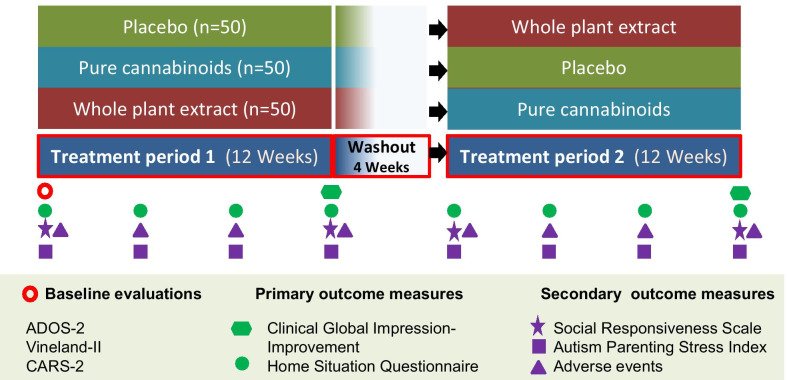
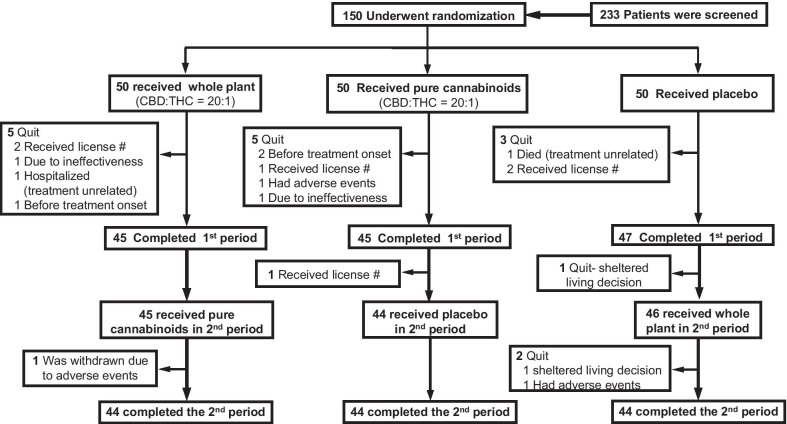
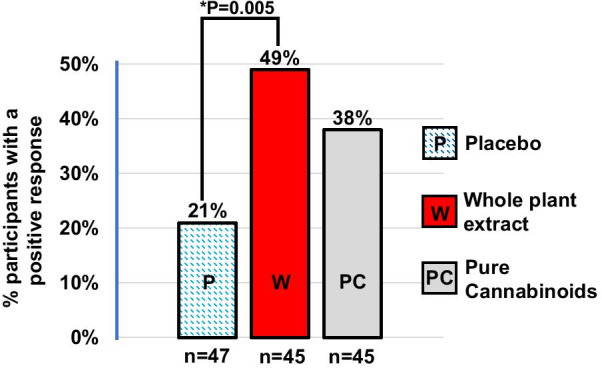
BACKGROUND: Endocannabinoid dysfunction in animal models of autism spectrum disorder (ASD) and accumulating, albeit anecdotal, evidence for efficacy in humans motivated this placebo-controlled double-blind comparison of two oral cannabinoid solutions in 150 participants (age 5-21 years) with ASD. METHODS: We tested (1) BOL-DP-O-01-W, a whole-plant cannabis extract containing cannabidiol and Δ9-tetrahydrocannabinol at a 20:1 ratio and (2) BOL-DP-O-01, purified cannabidiol and Δ9-tetrahydrocannabinol at the same ratio. Participants (N = 150) received either placebo or cannabinoids for 12-weeks (testing efficacy) followed by a 4-week washout and predetermined cross-over for another 12 weeks to further assess tolerability. Registered primary efficacy outcome measures were improvement in behavioral problems (differences between whole-plant extract and placebo) on the Home Situation Questionnaire-ASD (HSQ-ASD) and the Clinical Global Impression-Improvement scale with disruptive behavior anchor points (CGI-I). Secondary measures were Social Responsiveness Scale (SRS-2) and Autism Parenting Stress Index (APSI). RESULTS: Changes in Total Scores of HSQ-ASD (primary-outcome) and APSI (secondary-outcome) did not differ among groups. Disruptive behavior on the CGI-I (co-primary outcome) was either much or very much improved in 49% on whole-plant extract (n = 45) versus 21% on placebo (n = 47; p = 0.005). Median SRS Total Score (secondary-outcome) improved by 14.9 on whole-plant extract (n = 34) versus 3.6 points after placebo (n = 36); p = 0.009). There were no treatment-related serious adverse events. Common adverse events included somnolence and decreased appetite, reported for 28% and 25% on whole-plant extract, respectively (n = 95); 23% and 21% on pure-cannabinoids (n = 93), and 8% and 15% on placebo (n = 94). Limitations Lack of pharmacokinetic data and a wide range of ages and functional levels among participants warrant caution when interpreting the results. CONCLUSIONS: This interventional study provides evidence that BOL-DP-O-01-W and BOL-DP-O-01, administrated for 3 months, are well tolerated. Evidence for efficacy of these interventions are mixed and insufficient. Further testing of cannabinoids in ASD is recommended. Trial registration ClinicalTrials.gov: NCT02956226. Registered 06 November 2016, https://clinicaltrials.gov/ct2/show/NCT02956226.
Overview
The claims and statistics of this paper haven’t been checked yet.
Run the check — free, no account needed. It reads the open-access text and checks the sources it cites.
Integrity signals
Registry
Cites
Statistics
Figures
Verification
Claims the paper makes
The claims and statistics of this paper haven’t been checked yet.
Run the check — free, no account needed. It reads the open-access text and checks the sources it cites.
Claims other papers make about this one
Each is checked against this paper’s own text: does it say what the citing paper says it does?
In the citing paper
“Another recent randomized controlled trial (RCT) looking at an oral preparation of CBD in children and young adults with ASD demonstrated positive improvements in behavior and social communication with CBD [125].”
From An Update on Psychopharmacological Treatment of Autism Spectrum Disorder (2022) · cites this paper as [125]
Self-check
Percentages, sums and reported differences re-computed from the paper’s own numbers.
The self-check needs the paper’s full text.
Citations
Cites
Lord, C., Risi, S., Lambrecht, L., Cook, E. H., Leventhal, B. L., DiLavore, P. C., Pickles, A., & Rutter, M. (2000) · Journal of Autism and Developmental Disorders · doi:10.1023/a:1005592401947 · Cited by 7,520
Lord, C., Elsabbagh, M., Baird, G., & Veenstra-Vanderweele, J. (2018) · The Lancet · doi:10.1016/s0140-6736(18)31129-2 · Cited by 2,819
Toward objective classification of childhood autism: Childhood Autism Rating Scale (CARS)
Schopler, E., Reichler, R. J., DeVellis, R. F., & Daly, K. (1980) · Journal of Autism and Developmental Disorders · doi:10.1007/bf02408436 · Cited by 2,432 · cited 2×
“Baseline assessments included: ADOS-2 [30], a standardized assessment of communication, social interaction, play, and imaginary use of materials; Vineland Adaptive Behavior Scales (VABS) [31], a caregiver interview assessing Communication, Socialization, and Daily Living Skills; and Childhood Autism Rating Scale-Secon…”
MethodTrial of Cannabidiol for Drug-Resistant Seizures in the Dravet Syndrome
Devinsky, O., Cross, J. H., Laux, L., Marsh, E., Miller, I., Nabbout, R., Scheffer, I. E., Thiele, E. A., & Wright, S. (2017) · New England Journal of Medicine · doi:10.1056/nejmoa1611618 · Cited by 1,711
Risperidone in Children with Autism and Serious Behavioral Problems
McCracken, J. T., McGough, J., Shah, B., Cronin, P., Hong, D., Aman, M. G., Arnold, L. E., Lindsay, R., Nash, P., Hollway, J., et al. (2002) · New England Journal of Medicine · doi:10.1056/nejmoa013171 · Cited by 1,574
Effect of Cannabidiol on Drop Seizures in the Lennox–Gastaut Syndrome
Devinsky, O., Patel, A. D., Cross, J. H., Villanueva, V., Wirrell, E. C., Privitera, M., Greenwood, S. M., Roberts, C., Checketts, D., VanLandingham, K. E., et al. (2018) · New England Journal of Medicine · doi:10.1056/nejmoa1714631 · Cited by 1,015
Devinsky, O., Cilio, M. R., Cross, H., Fernandez‐Ruiz, J., French, J., Hill, C., Katz, R., Di Marzo, V., Jutras‐Aswad, D., Notcutt, W. G., et al. (2014) · Epilepsia · doi:10.1111/epi.12631 · Cited by 1,000
McGuire, P., Robson, P., Cubala, W. J., Vasile, D., Morrison, P. D., Barron, R., Taylor, A., & Wright, S. (2018) · American Journal of Psychiatry · doi:10.1176/appi.ajp.2017.17030325 · Cited by 617
Bearss, K., Johnson, C., Smith, T., Lecavalier, L., Swiezy, N., Aman, M., McAdam, D. B., Butter, E., Stillitano, C., Minshawi, N., et al. (2015) · JAMA · doi:10.1001/jama.2015.3150 · Cited by 454
Iannotti, F. A., Hill, C. L., Leo, A., Alhusaini, A. M., Soubrane, C., Mazzarella, E., Russo, E., Whalley, B. J., Marzo, V. D., & Stephens, G. J. (2014) · ACS Chemical Neuroscience · doi:10.1021/cn5000524 · Cited by 414
Russo, E. B. (2019) · Frontiers in Plant Science · doi:10.3389/fpls.2018.01969 · Cited by 345
Gunduz-Cinar, O., MacPherson, K. P., Cinar, R., Gamble-George, J., Sugden, K., Williams, B., Godlewski, G., Ramikie, T. S., Gorka, A. X., Alapafuja, S. O., et al. (2013) · Molecular Psychiatry · doi:10.1038/mp.2012.72 · Cited by 307
Boggs, D. L., Nguyen, J. D., Morgenson, D., Taffe, M. A., & Ranganathan, M. (2017) · Neuropsychopharmacology · doi:10.1038/npp.2017.209 · Cited by 250
Ferber, S. G., Namdar, D., Hen-Shoval, D., Eger, G., Koltai, H., Shoval, G., Shbiro, L., & Weller, A. (2019) · Current Neuropharmacology · doi:10.2174/1570159x17666190903103923 · Cited by 239
Autism Parenting Stress Index: Initial Psychometric Evidence
Silva, L. M. T., & Schalock, M. D. (2011) · Journal of Autism and Developmental Disorders · doi:10.1007/s10803-011-1274-1 · Cited by 228
Aran, A., Cassuto, H., Lubotzky, A., Wattad, N., & Hazan, E. (2019) · Journal of Autism and Developmental Disorders · doi:10.1007/s10803-018-3808-2 · Cited by 225
An update on pharmacotherapy for autism spectrum disorder in children and adolescents
Ji, N. Y., & Findling, R. L. (2015) · Current Opinion in Psychiatry · doi:10.1097/yco.0000000000000132 · Cited by 217
Barchel, D., Stolar, O. E., De-Haan, T., Ziv‐Baran, T., Saban, N., Fuchs, D. O., Koren, G., & Berkovitch, M. (2019) · Frontiers in Pharmacology · doi:10.3389/fphar.2018.01521 · Cited by 207
An update on pharmacotherapy of autism spectrum disorder in children and adolescents
Goel, R., Hong, J. S., Findling, R. L., & Ji, N. Y. (2018) · International Review of Psychiatry · doi:10.1080/09540261.2018.1458706 · Cited by 194
Seeman, P. M. (2016) · Translational Psychiatry · doi:10.1038/tp.2016.195 · Cited by 189
Real life Experience of Medical Cannabis Treatment in Autism: Analysis of Safety and Efficacy
Bar-Lev Schleider, L., Mechoulam, R., Saban, N., Meiri, G., & Novack, V. (2019) · Scientific Reports · doi:10.1038/s41598-018-37570-y · Cited by 186
Campos, A. C., Fogaça, M. V., Scarante, F. F., Joca, S. R. L., Sales, A. J., Gomes, F. V., Sonego, A. B., Rodrigues, N. S., Galve-Roperh, I., & Guimarães, F. S. (2017) · Frontiers in Pharmacology · doi:10.3389/fphar.2017.00269 · Cited by 175
Lower circulating endocannabinoid levels in children with autism spectrum disorder
Aran, A. A., Eylon, M., Harel, M., Polianski, L., Nemirovski, A., Tepper, S., Schnapp, A., Cassuto, H., Wattad, N., & Tam, J. (2019) · Molecular Autism · doi:10.1186/s13229-019-0256-6 · Cited by 164
Pretzsch, C. M., Freyberg, J., Voinescu, B., Lythgoe, D. J., Horder, J., Méndez, M. A., Wichers, R., Ajram, L. A., Ivin, G., Heasman, M., et al. (2019) · Neuropsychopharmacology · doi:10.1038/s41386-019-0333-8 · Cited by 161
Plasma anandamide concentrations are lower in children with autism spectrum disorder
Karhson, D. S., Krasinska, K. M., Dallaire, J. A., Libove, R. A., Phillips, J. M., Chien, A., Garner, J. P., Hardan, A. Y., & Parker, K. J. (2018) · Molecular Autism · doi:10.1186/s13229-018-0203-y · Cited by 159
Melancia, F., Schiavi, S., Servadio, M., Cartocci, V., Campolongo, P., Palmery, M., Pallottini, V., & Trezza, V. (2018) · British Journal of Pharmacology · doi:10.1111/bph.14435 · Cited by 145
Fleury-Teixeira, P., Caixeta, F. V., da Silva, L. C. R., Brasil-Neto, J. P., & Malcher‐Lopes, R. (2019) · Frontiers in Neurology · doi:10.3389/fneur.2019.01145 · Cited by 140
The Endocannabinoid System and Autism Spectrum Disorders: Insights from Animal Models
Zamberletti, E., Gabaglio, M., & Parolaro, D. (2017) · International Journal of Molecular Sciences · doi:10.3390/ijms18091916 · Cited by 129
Autism, epilepsy, and synaptopathies: a not rare association
Keller, R., Basta, R., Salerno, L., & Elia, M. (2017) · Neurological Sciences · doi:10.1007/s10072-017-2974-x · Cited by 124
Endocannabinoid Signaling in the Control of Social Behavior
Don, W., Allsop, S. A., Tye, K. M., & Piomelli, D. (2017) · Trends in Neurosciences · doi:10.1016/j.tins.2017.04.005 · Cited by 120
The Liverpool Adverse Events Profile: Relation to AED Use and Mood
Panelli, R. J., Kilpatrick, C. J., Moore, S. M., Matkovic, Z., D'Souza, W. J., & O'Brien, T. J. (2007) · Epilepsia · doi:10.1111/j.1528-1167.2006.00956.x · Cited by 115
Alba, R. G., Barragán‐Iglesias, P., González‐Hernández, A., Valdez-Moráles, E. E., Granados‐Soto, V., Condés‐Lara, M., Rodríguez, M. G., & Marichal‐Cancino, B. A. (2019) · Frontiers in Pharmacology · doi:10.3389/fphar.2018.01496 · Cited by 95
Scahill, L. D., Jeon, S., Boorin, S. J., McDougle, C. J., Aman, M. G., Dziura, J., McCracken, J. T., Caprio, S., Arnold, L. E., Nicol, G. E., et al. (2016) · Journal of the American Academy of Child & Adolescent Psychiatry · doi:10.1016/j.jaac.2016.02.016 · Cited by 87
Cannabinoids for People with ASD: A Systematic Review of Published and Ongoing Studies
Fusar‐Poli, L., Cavone, V., Tinacci, S., Concas, I., Petralia, A., Signorelli, M. S., Díaz‐Caneja, C. M., & Aguglia, E. (2020) · Brain Sciences · doi:10.3390/brainsci10090572 · Cited by 87
Szkudlarek, H. J., Desai, S. J., Renard, J., Pereira, B. J. G., Norris, C., Jobson, C. E. L., Rajakumar, N., Allman, B. L., & Laviolette, S. R. (2018) · Neuropsychopharmacology · doi:10.1038/s41386-018-0282-7 · Cited by 66
Chowdhury, M., Aman, M. G., Lecavalier, L., Smith, T. H., Johnson, C. R., Swiezy, N. B., McCracken, J. T., King, B. H., McDougle, C. J., Bearss, K. E., et al. (2015) · Autism · doi:10.1177/1362361315593941 · Cited by 63
Cifelli, P., Ruffolo, G., Felice, E. D., Alfano, V., van Vliet, E. A., Aronica, E., & Palma, E. (2020) · International Journal of Molecular Sciences · doi:10.3390/ijms21030723 · Cited by 61
Hosie, S., Malone, D. T., Liu, S., Glass, M., Adlard, P. A., Hannan, A. J., & Hill‐Yardin, E. L. (2018) · Frontiers in Cellular Neuroscience · doi:10.3389/fncel.2018.00234 · Cited by 60
Kamal, B., Kamal, F., & Lantela, D. (2018) · Frontiers in Neuroscience · doi:10.3389/fnins.2018.00730 · Cited by 59
Marijuana and hostility in a small-group setting
(1976) · American Journal of Psychiatry · doi:10.1176/ajp.133.9.1029 · Cited by 48
Treating a novel plasticity defect rescues episodic memory in Fragile X model mice
Wang, W., Cox, B. M., Jia, Y., Le, A. A., Cox, C. D., Jung, K., Hou, B., Piomelli, D., Gall, C. M., & LYNCH, G. S. (2017) · Molecular Psychiatry · doi:10.1038/mp.2017.221 · Cited by 45
The Effect of Marijuana on Small Group Process
Salzman, C., Kochansky, G. E., van der Kolk, B. A., & Shader, R. I. (1977) · The American Journal of Drug and Alcohol Abuse · doi:10.3109/00952997709002763 · Cited by 14
Home Situations Questionnaire--Autism Spectrum Disorder
Chowdhury, M., Aman, M. G., Lecavalier, L., Smith, T. H., Johnson, C. R., Swiezy, N. B., McCracken, J. T., King, B. H., McDougle, C. J., Bearss, K. E., et al. (2016) · PsycTESTS Dataset · doi:10.1037/t52805-000 · Cited by 3
Research works printed but not linked: 2
- Sparrow SS, Balla DA, Cicchetti DV. Vineland adaptive behavior scales: survey form manual. Circle Pines: American Guidance Service; 1984.
- Constantino JN, Gruber CP. The social responsiveness scale (SRS) (Manual). Los Angeles: Western Psychological Services; 2005.
Cited by
Sorted by citations
Autism Spectrum Disorder: A Review
Hirota, T., & King, B. H. (2023) · JAMA · doi:10.1001/jama.2022.23661 · Cited by 957
An Update on Psychopharmacological Treatment of Autism Spectrum Disorder
Aishworiya, R., Valica, T., Hagerman, R., & Restrepo, B. (2022) · Neurotherapeutics · doi:10.1007/s13311-022-01183-1 · Cited by 233
Cannabinoid Formulations and Delivery Systems: Current and Future Options to Treat Pain
Stella, B., Baratta, F., Pepa, C. D., Arpicco, S., Gastaldi, D., & Dosio, F. (2021) · Drugs · doi:10.1007/s40265-021-01579-x · Cited by 181
The Polypharmacological Effects of Cannabidiol
Castillo-Arellano, J. I., Canseco-Alba, A., Cutler, S. J., & León, F. (2023) · Molecules · doi:10.3390/molecules28073271 · Cited by 172
Siafis, S., Çıray, O., Wu, H., Schneider‐Thoma, J., Bighelli, I., Krause, M., Rodolico, A., Ceraso, A., Deste, G., Huhn, M., et al. (2022) · Molecular Autism · doi:10.1186/s13229-022-00488-4 · Cited by 148
Metadata
- Authors
- Aran, A., Harel, M., Cassuto, H., Polyansky, L., Schnapp, A., Wattad, N., Shmueli, D., Golan, D., & Castellanos, F. X.
- Affiliations
- Shaare Zedek Medical Center (IL)
- Clalit Health Services (IL)
- Maccabi Healthcare Services (IL)
- New York University (US)
- Corresponding author
- Aran, Adi
- Venue
- Molecular Autism
- Published
- 2021-02-03
- Volume
- 12
- Issue
- 1
- Pages
- 6-6
- ISSN
- 2040-2392 (ISSN-L)
- PMC
- PMC7860205
- OpenAlex
- W3126959679
- Cited by
- 223
- References
- 43
- Citations by year
- 2026: 21 · 2025: 63 · 2024: 53 · 2023: 30 · 2022: 42 · 2021: 14
- FWCI
- 20.29
- Type
- journal article
- Language
- en
- Open access
- gold
- doi.org
- Locations
- Molecular Autism (publishedVersion, cc-by)
- Europe PMC (PubMed Central) (publishedVersion, other-oa)
- PubMed Central (publishedVersion, cc-by)
- PubMed (publishedVersion)
- DOAJ (DOAJ: Directory of Open Access Journals) (submittedVersion, cc-by-sa)
- Funders
- BOL Pharma, Revadim, Israel
- National Institute for Psychobiology in Israel, Hebrew University of Jerusalem (203-17-18)
- Topics
- Health Sciences › Medicine › Pharmacology (medical) › Cannabis and Cannabinoid Research
- Life Sciences › Neuroscience › Cognitive Neuroscience › Autism Spectrum Disorder Research
- Health Sciences › Medicine › Psychiatry and Mental health › Child Nutrition and Feeding Issues
- Keywords
- autism spectrum disorder, cannabinoids, cannabidiol, tetrahydrocannabinol, disruptive behavior, social responsiveness, parental stress, treatment tolerability, adverse events, sleepiness, appetite suppression, crossover design, Social Responsiveness Scale
- MeSH terms
- Autism Spectrum Disorder, Adolescent, Adult, Autistic Disorder, Cannabinoids, Child, Child, Preschool, Female, Humans, Male, Social Behavior, Treatment Outcome, Young Adult
About these checks
Registry, retraction, Cites and statistics results are computed, not judged, with one exception: a printed reference that no index lists is read once by a model before it counts as a citation error. Claims are extracted by a model and kept only when their quote appears verbatim in the text; each cited source is then checked, with a model’s help, for whether it says what the claim relies on. Those verdicts can be wrong — read the claim’s quote and the cited source before relying on one.
Statistics and arithmetic are recomputed, not judged.
Confidence bands are shown only for fields calibrated on our annotated test set. None is calibrated yet, so no band is shown.
What counts as a claim ›How we measure confidence ›How we check this ›
Are you an author, or do you see a problem with this page? Request a review
