

Mesenchymal stem cells in preclinical cancer cytotherapy: a systematic review
Open accessThe DOI matches its Crossref record; 296 of the 299 references it cites were found in a registry or an index.
Abstract
Mesenchymal stem cells (MSC) comprise a heterogeneous population of rapidly proliferating cells that can be isolated from adult (e.g., bone marrow, adipose tissue) as well as fetal (e.g., umbilical cord) tissues (termed bone marrow (BM)-, adipose tissue (AT)-, and umbilical cord (UC)-MSC, respectively) and are capable of differentiation into a wide range of non-hematopoietic cell types. An additional, unique attribute of MSC is their ability to home to tumor sites and to interact with the local supportive microenvironment which rapidly conceptualized into MSC-based experimental cancer cytotherapy at the turn of the century. Towards this purpose, both naïve (unmodified) and genetically modified MSC (GM-MSC; used as delivery vehicles for the controlled expression and release of antitumorigenic molecules) have been employed using well-established in vitro and in vivo cancer models, albeit with variable success. The first approach is hampered by contradictory findings regarding the effects of naïve MSC of different origins on tumor growth and metastasis, largely attributed to inherent biological heterogeneity of MSC as well as experimental discrepancies. In the second case, although the anti-cancer effect of GM-MSC is markedly improved over that of naïve cells, it is yet apparent that some protocols are more efficient against some types of cancer than others. Regardless, in order to maximize therapeutic consistency and efficacy, a deeper understanding of the complex interaction between MSC and the tumor microenvironment is required, as well as examination of the role of key experimental parameters in shaping the final cytotherapy outcome. This systematic review represents, to the best of our knowledge, the first thorough evaluation of the impact of experimental anti-cancer therapies based on MSC of human origin (with special focus on human BM-/AT-/UC-MSC). Importantly, we dissect the commonalities and differences as well as address the shortcomings of work accumulated over the last two decades and discuss how this information can serve as a guide map for optimal experimental design implementation ultimately aiding the effective transition into clinical trials.
Overview
The claims and statistics of this paper haven’t been checked yet.
Free: it reads the open-access text and checks the first 5 claims that cite a source we can check. Create a free account to check every claim.
Integrity signals
Registry
Cites
Statistics
Figures
Verification
Claims the paper makes
The claims and statistics of this paper haven’t been checked yet.
Free: it reads the open-access text and checks the first 5 claims that cite a source we can check. Create a free account to check every claim.
Claims other papers make about this one
Each is checked against this paper’s own text: does it say what the citing paper says it does?
The source backs part of the claim, not all of it — or backs it for a different population, condition or comparison.
In the citing paper
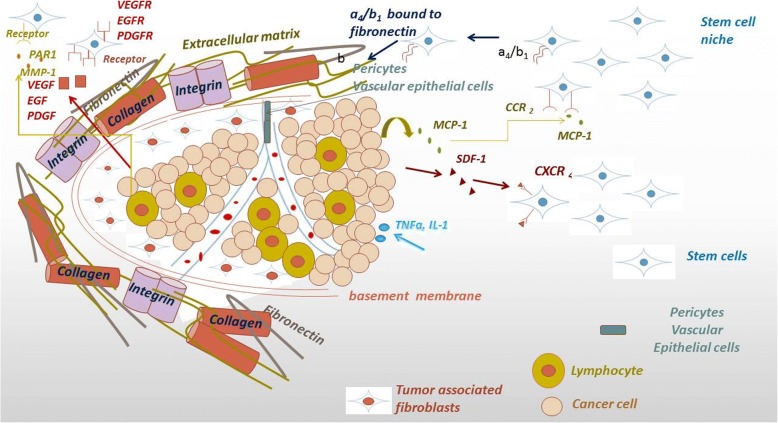
“In vivo and in vitro studies have confirmed that numerous factors such as monocyte chemotactic protein-1 (MCP-1 or CCL2) in breast cancer or stromal cell-derived factor-1 (SDF-1) in prostate, colorectal and breast cancer that are produced by tumour and inflammatory cells promote the homing and migration of MSCs into the tumour microenvironment [23].”
From Mesenchymal stromal cells for bone sarcoma treatment: Roadmap to clinical practice (2019) · cites this paper as [23]
Experimental — accuracy not yet measuredThe source backs part of the claim, not all of it — or backs it for a different population, condition or comparison.
In the citing paper
“The pro-metastatic effect of MSCs has been proven in breast cancer (CCL5 and IL-17B), hepatocellular carcinoma (MMP2) and osteosarcoma (CXCR4/VEGF axis) [23].”
From Mesenchymal stromal cells for bone sarcoma treatment: Roadmap to clinical practice (2019) · cites this paper as [23]
Experimental — accuracy not yet measuredThe source backs part of the claim, not all of it — or backs it for a different population, condition or comparison.
In the citing paper
“MSCs and cancer cells are thought to use similar signaling pathways regulating self-renewal and differentiation, namely the Wnt/β-catenin, Notch, Shh and BMP pathways [23], [54].”
From Mesenchymal stromal cells for bone sarcoma treatment: Roadmap to clinical practice (2019) · cites this paper as [23]
Experimental — accuracy not yet measuredThe source backs part of the claim, not all of it — or backs it for a different population, condition or comparison.
In the citing paper
“Other possible mechanisms that contribute to the anti-tumour potential of MSCs include apoptosis caused by upregulation of TRAIL, G1 arrest, and expression of tumour suppressor genes [23] (Fig. 2).”
From Mesenchymal stromal cells for bone sarcoma treatment: Roadmap to clinical practice (2019) · cites this paper as [23]
Experimental — accuracy not yet measuredThe cited source says what the claim attributes to it.
In the citing paper
“Once MSCs are recruited by cancer cells, they enhance the production of factors like TGF-β, VEGF, SDF-1, and CCL5 or microparticles like exosomes that can either induce or inhibit tumour growth; owing to this bimodal interaction, MSCs have been described as a ”double-edged sword” [23].”
From Mesenchymal stromal cells for bone sarcoma treatment: Roadmap to clinical practice (2019) · cites this paper as [23]
1 more claim about this paper
Create a free account to see every claim other papers make about this one.
Self-check
Percentages, sums and reported differences re-computed from the paper’s own numbers.
The self-check needs the paper’s full text.
Citations
Cites
2 retracted
Li, H., Hu, J., Zhao, J., Liu, J., Ouyang, W., Yang, C., Gong, N., Du, L., Khanal, A., & Chen, L. (2013) · BioMed Research International · doi:10.1155/2013/438243 · Cited by 72
RetractedHan, I., Yun, M., Kim, E.-O., Kim, B., Jung, M.-H., & Kim, S.-H. (2014) · Stem Cell Research & Therapy · doi:10.1186/scrt443 · Cited by 56
RetractedMultilineage potential of adult human mesenchymal stem cells
Pittenger, M. F., Mackay, A. M., Beck, S. C., Jaiswal, R. K., Douglas, R., Mosca, J. D., Moorman, M. A., Simonetti, D. W., Craig, S., & Marshak, D. R. (1999) · Science · doi:10.1126/science.284.5411.143 · Cited by 21,052 · cited 1×
“Mesenchymal stem cells (MSC) are multipotent stem cells that upon stimulation give rise to most body cell types including those of muscle, bone, fat, and cartilage lineages [25].”
BackgroundDominici, M., Le Blanc, K., Mueller, I., Slaper-Cortenbach, I., Marini, F. C., Krause, D. S., Deans, R. J., Keating, A., Prockop, D. J., & Horwitz, E. M. (2006) · Cytotherapy · doi:10.1080/14653240600855905 · Cited by 17,766 · cited 2×
“Regardless of their origin, these MSC share similar defining characteristics including plastic adherence, cell surface marker expression (negative for hematopoietic markers CD34, CD35/ positive for core markers CD29, CD44, CD73, CD90, CD105), and at least a tri-lineage differentiation potential (towards fat, bone, car…”
BackgroundMethodMolecular portraits of human breast tumours
Perou, C. M., Sørlie, T., Eisen, M. B., van de Rijn, M., Jeffrey, S. S., Rees, C. A., Pollack, J. R., Ross, D. T., Johnsen, H., Akslen, L. A., et al. (2000) · Nature · doi:10.1038/35021093 · Cited by 16,261
Nishimura, R., Osako, T., Nishiyama, Y., Tashima, R., Nakano, M., Fujisue, M., Toyozumi, Y., & Arima, N. (2013) · Oncology · doi:10.1159/000353099 · Cited by 13,166
Multilineage Cells from Human Adipose Tissue: Implications for Cell-Based Therapies
Zuk, P. A., Zhu, M., Mizuno, H., Huang, J., Futrell, J. W., Katz, A. J., Benhaim, P., Lorenz, H. P., & Hedrick, M. H. (2001) · Tissue Engineering · doi:10.1089/107632701300062859 · Cited by 7,956 · cited 2×
“On the contrary, adult MSC show a limited potential for prolonged propagation, being able to maintain only up to 15–25 PD (9–12 passages) in culture [153, 165, 168].”
BackgroundThe immune contexture in human tumours: impact on clinical outcome
Fridman, W. H., Pagès, F., Sautès-Fridman, C., & Galon, J. (2012) · Nature reviews. Cancer · doi:10.1038/nrc3245 · Cited by 4,981
Stöckl, S., Göttl, C., Grifka, J., & Grässel, S. (2013) · Cellular Physiology and Biochemistry · doi:10.1159/000350089 · Cited by 4,656
Accessories to the Crime: Functions of Cells Recruited to the Tumor Microenvironment
Hanahan, D., & Coussens, L. M. (2012) · Cancer Cell · doi:10.1016/j.ccr.2012.02.022 · Cited by 4,632
Cited by
Items 101–122 of 122
Recent Advancement in Stem Cell Therapies for Cancer Treatment
Saleem, A., Shafique, U., & Din, F. U. (2024) · Elsevier eBooks · doi:10.1016/b978-0-443-15717-2.00060-3 · Cited by 1
New Approaches to Dermatological Conditions Employing Mesenchymal Stem Cell Therapies
Hermida‐Prieto, M. (2018) · Clinical Dermatology Open Access Journal · doi:10.23880/cdoaj-16000167 · Cited by 1
“…later they have been obtained from nearly all tissues of the body, including adipose tissue [12,13], umbilical cord blood [14], umbilical cord Wharton’s jelly [15,16], allanto-amniotic membranes [17], synovia [18], periost [13], skeletal muscle [13], teeth [19], placenta [20] or endometrium [21].”
Consistent Inclusion of Mesenchymal Stem Cells into In Vitro Tumor Models
Ferreira, L. P., Gaspar, V. M., & Mano, J. F. (2021) · Methods in molecular biology · doi:10.1007/978-1-0716-1225-5_1 · Cited by 1
Study of the Role of Heparin in Regulation of the Morphofunctional Properties of MSC in Vitro
Norkin, I. K., Yurova, K. A., Геннадьевна, Х. О., Мелащенко, Е. С., Malashchenko, V. V., Shunkin, E. O., Байков, А. Н., Хлусов, И. А., & Litvinova, L. S. (2022) · Drug development & registration · doi:10.33380/2305-2066-2022-11-2-174-179
Advancements in stem cell-based therapeutics in phospholipase A2-dependent colorectal cancer
Das, D., Cynthia, C., Pathak, S., & Banerjee, A. (2023) · Elsevier eBooks · doi:10.1016/b978-0-443-15177-4.00013-3
Stem Cell Therapy of Solid Organ Cancers
Ogunwobi, O. O., Boylu, B., & Ochu, C. (2023) · Elsevier eBooks · doi:10.1016/b978-0-443-15717-2.00001-9
He, H., Wu, W., He, J., Su, X., & Gui, Q. (2023) · Materials Express · doi:10.1166/mex.2023.2552
Aramini, B., Masciale, V., Banchelli, F., Grisendi, G., D’Amico, R., Stella, F., Dominici, M., & Haider, K. H. (2023) · Springer eBooks · doi:10.1007/978-981-99-0846-2_36-1
Qin, X., Chen, J., Du, L., Ma, Y., Li, Y., Lu, Y., Wang, Y., Wu, L.-F., Yu, Z., Hu, M., et al. (2024) · Research Square · doi:10.21203/rs.3.rs-3736389/v1
Unlocking the Potential of Induced Pluripotent Stem Cells in Revolutionizing Cancer Therapy
Mondal, A., Talukdar, A., & Haque, R. (2024) · Current Stem Cell Research & Therapy · doi:10.2174/011574888x294791240408055222
Pro- and Anti-Cancer Behaviors of Mesenchymal Stem Cells
Abu-Shahba, N., Kiwan, H. S., & ElHefnawi, M. (2024) · Elsevier eBooks · doi:10.1016/b978-0-443-15717-2.00128-1
Aramini, B., Masciale, V., Banchelli, F., Grisendi, G., D’Amico, R., Stella, F., Dominici, M., & Haider, K. H. (2024) · Springer eBooks · doi:10.1007/978-981-99-7119-0_36
Feng, W., Feng, C., Wang, B., Lv, M., Xicong, L. I., Jing, A., Qiu, Y., Gao, H., & Liang, G. (2024) · Current Stem Cell Research & Therapy · doi:10.2174/011574888x333277240919113345
Stem Cell Therapies Approach for Treating Cancers: Opportunity Progress and Challenges
Lobo, V., Ahmed, A. B. A., Sivasankar, S., Abdul Hakeem, K., Pasha, M., & Kumar, R. A. (2024) · Biomedical & Pharmacology Journal · doi:10.13005/bpj/3054
Cantero, M. J., Bueloni, B., Gonzalez Llamazares, L., Fiore, E. J., Mauriz, L. L., Atorrasagasti, C., Mazzolini, G. D., Malvicini, M., Bayo, J., & García, M. G. (2024) · Figshare · doi:10.6084/m9.figshare.26264916
Zhang, J., Zhong, M., Zhong, W., Lan, Y., Yuan, Z., Duan, Y., & Wei, Y. (2022) · Figshare · doi:10.6084/m9.figshare.21117410
Kaçaroğlu, D., Ulaşlı, A. M., & Yaylacı, S. (2025) · İstanbul Gelişim Üniversitesi Sağlık Bilimleri Dergisi · doi:10.38079/igusabder.1534054
Cao, M., Tong, M., Pu, Y., Lv, X., Sun, Y., Zhang, H., Sheng, R., Wang, H., Gao, Y., Dai, G.-C., et al. (2026) · Stem Cell Reviews and Reports · doi:10.1007/s12015-025-11054-9
“For example, some scientists find that translating MSC-based experimen - tal cancer therapies into successful clinical trials faces challenges including inherent biological complexity of cellular products and variability in manufacturing processes during scale-up [124].”
Innovative therapeutic approaches
Sharma, V., Saini, S., Minocha, N., & Pandey, P. (2026) · Elsevier eBooks · doi:10.1016/b978-0-443-44041-0.00022-2
Galitsyna, E. V., Ulyakina, N. A., Vladimirov, G. K., & Gusev, A. B. (2026) · Genes and Cells · doi:10.17816/gc683471
Mazumder, S., Dey, A., Bhattacharya, D., Ray, R. R., Nag, M., Maity, S., Kumar, N., Pandit, S., Raja, V., Sharma, S. K., et al. (2026) · Cell Biochemistry and Function · doi:10.1002/cbf.70281
“Its ability as a healing agent is being explored in both preclinical and clinical settings, with a focus on enhancing the efficacy of conventional cancer treatments [130].”
Regulatory pathways for stem cell and tissue engineering in cancer therapy
Gaur, G., & Kumar, D. (2026) · Elsevier eBooks · doi:10.1016/b978-0-443-33455-9.00028-6
Metadata
- Authors
- Christodoulou, I., Goulielmaki, M., Devetzi, M., Panagiotidis, M., Koliakos, G., & Zoumpourlis, V.
- Affiliations
- National Hellenic Research Foundation (GR)
- Corresponding author
- Zoumpourlis, Vassilis
- Venue
- Stem Cell Research & Therapy
- Published
- 2018-12
- Volume
- 9
- Issue
- 1
- Pages
- 336-336
- ISSN
- 1757-6512 (ISSN-L)
- PMC
- PMC6286545
- OpenAlex
- W2904058752
- Semantic Scholar
- 85ef15b2ed209d3e46a267836b9611a0c876f814
- Cited by
- 122
- References
- 299
- Citations by year
- 2026: 8 · 2025: 11 · 2024: 19 · 2023: 21 · 2022: 18 · 2021: 16 · 2020: 18 · 2019: 10 · 2018: 1
- FWCI
- 1.63
- Type
- journal article
- Language
- en
- Open access
- gold
- doi.org
- Licence
- cc-by
- creativecommons.org/licenses/by/4.0/ (tdm)
- Locations
- Stem Cell Research & Therapy (publishedVersion, cc-by)
- Europe PMC (PubMed Central) (publishedVersion, cc-by)
- PubMed Central (publishedVersion, cc-by)
- PubMed (publishedVersion)
- Northumbria Research Link (Northumbria University) (acceptedVersion)
- DOAJ (DOAJ: Directory of Open Access Journals) (submittedVersion, cc-by-sa)
- National Hellenic Research Foundation Helios Repository (National Hellenic Research Foundation) (submittedVersion)
- Funders
- General Secretariat for Research and Technology (2400)
- State Scholarships Foundation
- Topics
- Life Sciences › Biochemistry, Genetics and Molecular Biology › Cell Biology › Mesenchymal stem cell research
- Life Sciences › Biochemistry, Genetics and Molecular Biology › Biotechnology › Bacterial Cancer Therapy
- Health Sciences › Medicine › Oncology › Cancer Cells and Metastasis
- Keywords
- mesenchymal stem cells, bone marrow-derived mesenchymal stem cells, adipose-derived stem cells, human umbilical cord mesenchymal stem cells, tumor microenvironment, tumor growth, metastasis, preclinical cancer models, experimental design
- MeSH terms
- Animals, Humans, Neoplasms, Phenotype, Mesenchymal Stem Cell Transplantation, Tumor Microenvironment, Mesenchymal Stem Cells
About these checks
Registry, retraction, Cites and statistics results are computed, not judged, with one exception: a printed reference that no index lists is read once by a model before it counts as a citation error. Claims are extracted by a model and kept only when their quote appears verbatim in the text; each cited source is then checked, with a model’s help, for whether it says what the claim relies on. Those verdicts can be wrong — read the claim’s quote and the cited source before relying on one.
Statistics and arithmetic are recomputed, not judged.
Confidence bands are shown only for fields calibrated on our annotated test set. None is calibrated yet, so no band is shown.
What counts as a claim ›How we measure confidence ›How we check this ›
Are you an author, or do you see a problem with this page? Request a review
Data sources
Bibliographic data: Semantic Scholar, OpenAlex, Crossref.
Contains information from the Semantic Scholar Academic Graph Datasets, made available under the ODC Attribution License (ODC-BY 1.0).
Semantic Scholar’s data is described in: Kinney, R., et al. (2023). The Semantic Scholar Open Data Platform. arXiv:2301.10140.
