

Three-dimensional culture of MSCs produces exosomes with improved yield and enhanced therapeutic efficacy for cisplatin-induced acute kidney injury
Open accessThe DOI matches its Crossref record; 51 of the 51 references it cites were found in a registry or an index.
Abstract
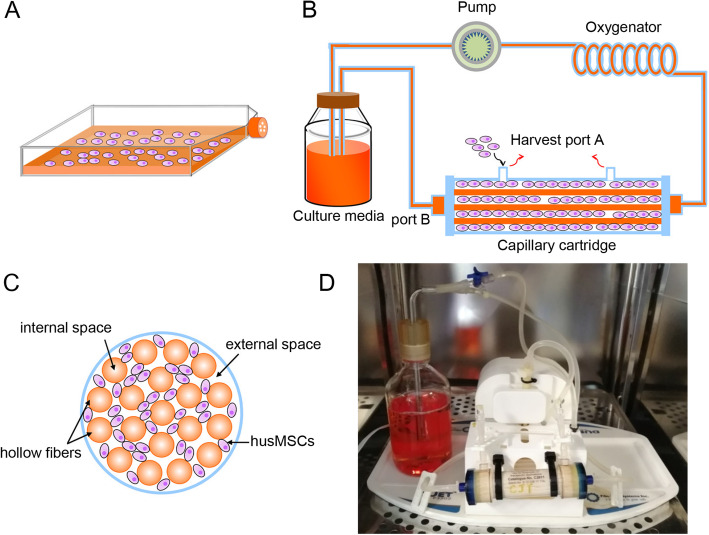
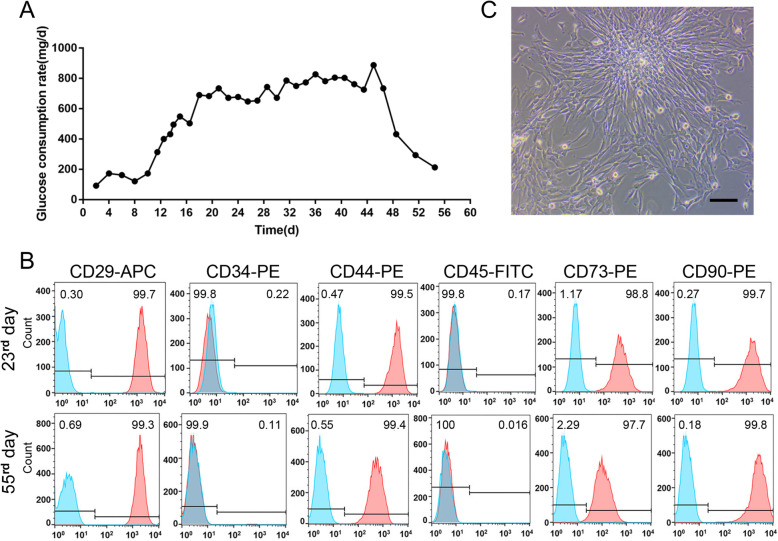
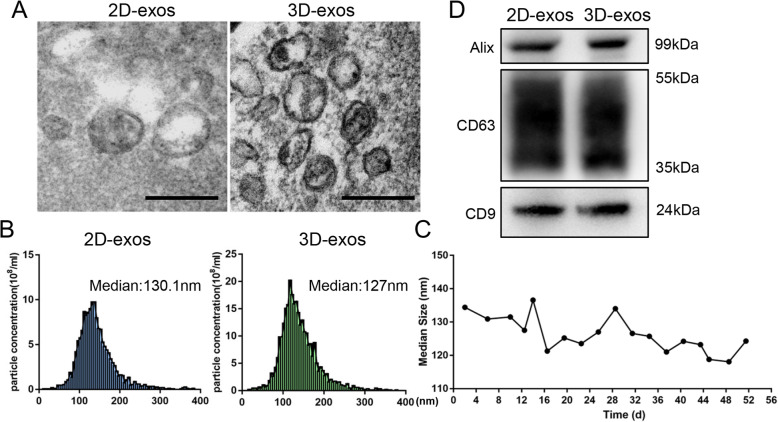
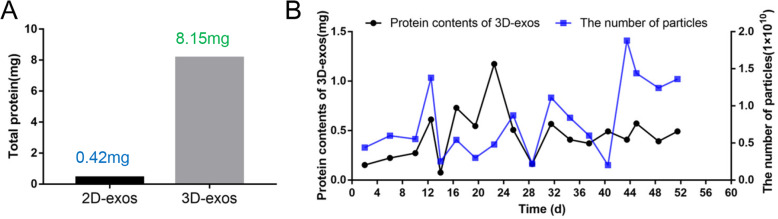
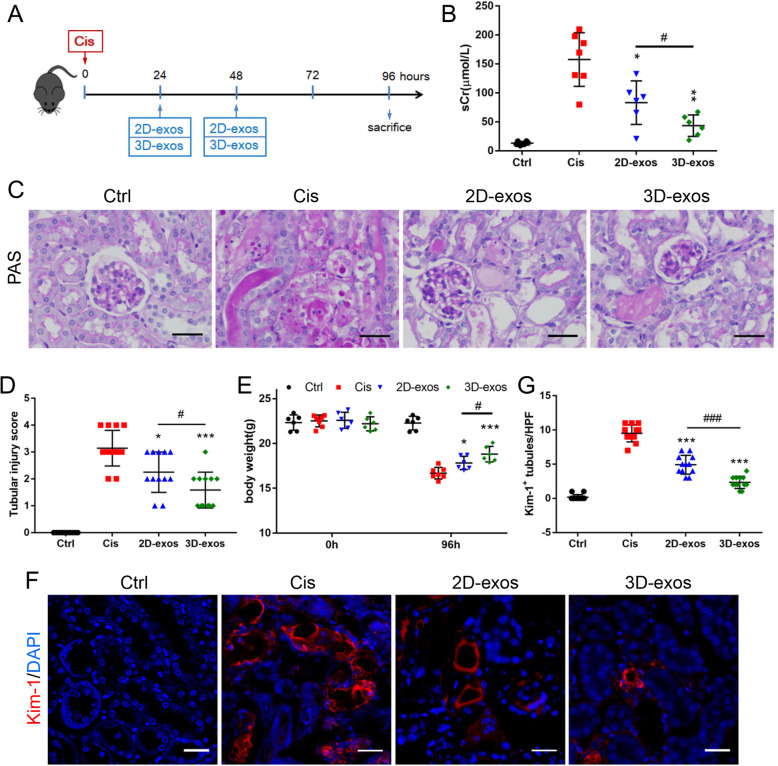
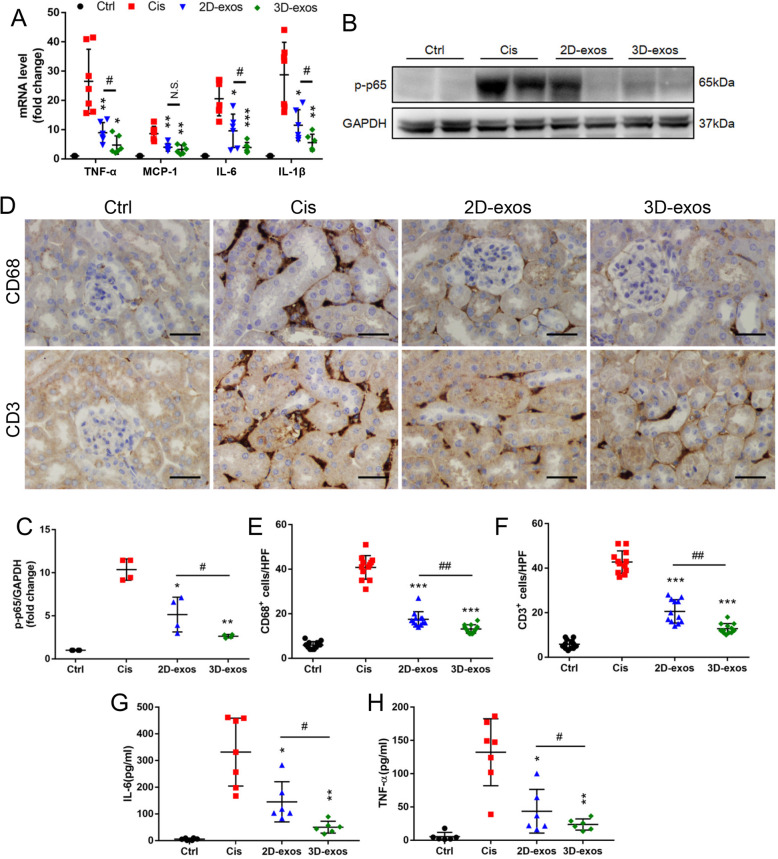
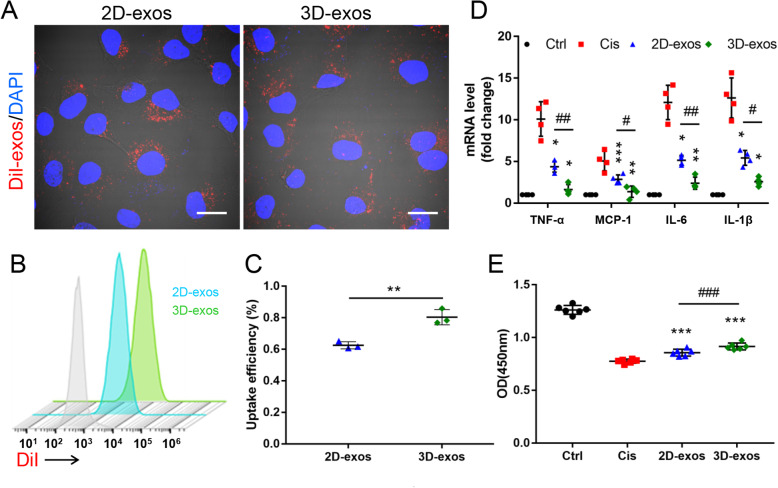
Background: Exosomes derived from mesenchymal stem cells (MSC-exos) have been demonstrated with great potential in the treatment of multiple human diseases including acute kidney injury (AKI) by virtue of their intrinsic cargoes. However, there are major challenges of low yield and the lack of an established biomanufacturing platform to efficiently produce MSC-exos, thereby limiting their therapeutic application. Here, we aimed to establish a novel strategy to produce MSC-exos with a hollow fiber bioreactor-based three-dimensional (3D) culture system and evaluate the therapeutic efficacy of 3D-exosomes (3D-exos) on AKI. Methods: Mesenchymal stem cells (MSCs) were isolated from fresh human umbilical cord and cultured in two-dimensional (2D) flasks. 2 × 10 8 MSCs were inoculated into the hollow fiber bioreactor for 3D culture. The culture supernatants were collected every 1 or 2 days for isolating exosomes. Exosomes from 2D (2D-exos) and 3D cultures were characterized by transmission electron microscopy, nanoparticle tracking analysis, and western blotting analysis of exosome markers. The yield of exosomes from 2 × 10 8 MSCs seeded in 2D and 3D culture system was compared, based on protein quantification. The therapeutic efficacy of 2D-exos and 3D-exos was investigated in a murine model of cisplatin-induced AKI in vivo and in vitro. Results: 3D culture did not significantly change the surface markers of MSCs, as well as the morphology, size, and exosomal markers of 3D-exos when compared to those of 2D-exos. Compared with conventional 2D culture, the 3D culture system increased total exosome production up to 19.4-fold. 3D-exos were more concentrated in the harvested supernatants (15.5-fold) than 2D-exos, which led to a higher exosome collection efficiency of 3D culture system. In vivo,both 2D-exos and 3D-exos significantly alleviated cisplatin-induced murine AKI evidenced by improved renal function, attenuated pathological changes of renal tubules, reduced inflammatory factors, and repressed T cell and macrophage infiltration. Impressively, 3D-exos were more effective than 2D-exos. Moreover, 3D-exos were taken up by tubular epithelial cells (TECs) with improved efficiency, thereby exhibiting superior anti-inflammatory effect and improved viability of TECs in vitro. Conclusions: In summary, our findings demonstrate that the hollow fiber 3D culture system provides an efficient strategy for the continuous production of MSC-exos which has enhanced therapeutic potential for cisplatin-induced AKI.
Overview
The claims and statistics of this paper haven’t been checked yet.
Free: it reads the open-access text and checks the first 5 claims that cite a source we can check. Create a free account to check every claim.
Integrity signals
Registry
Cites
Statistics
Figures
Verification
Claims the paper makes
The claims and statistics of this paper haven’t been checked yet.
Free: it reads the open-access text and checks the first 5 claims that cite a source we can check. Create a free account to check every claim.
Claims other papers make about this one
Each is checked against this paper’s own text: does it say what the citing paper says it does?
The source backs part of the claim, not all of it — or backs it for a different population, condition or comparison.
In the citing paper
“As a result, strategies such as 3D culture systems, bioreactors, or chemical stimulation are being explored to enhance exosome yield and scalability for therapeutic applications [232,233,234].”
From The Impact of Neurotoxin Proteins Trafficked by Primary Cilia and Extracellular Vesicles in Neurodegenerative Diseases (2025) · cites this paper as [232]
Experimental — accuracy not yet measured
Self-check
Percentages, sums and reported differences re-computed from the paper’s own numbers.
The self-check needs the paper’s full text.
Citations
Cites
Dominici, M., Le Blanc, K., Mueller, I., Slaper-Cortenbach, I., Marini, F. C., Krause, D. S., Deans, R. J., Keating, A., Prockop, D. J., & Horwitz, E. M. (2006) · Cytotherapy · doi:10.1080/14653240600855905 · Cited by 17,766 · cited 1×
“All of these results were consistent with the criteria for defining multipotent MSCs [36].”
Shedding light on the cell biology of extracellular vesicles
van Niel, G., D'Angelo, G., & Raposo, G. (2018) · Nature Reviews Molecular Cell Biology · doi:10.1038/nrm.2017.125 · Cited by 8,369
Exosomes facilitate therapeutic targeting of oncogenic KRAS in pancreatic cancer
Kamerkar, S., LeBleu, V. S., Sugimoto, H., Yang, S., Ruivo, C. F., Melo, S. A., Lee, J. J., & Kalluri, R. (2017) · Nature · doi:10.1038/nature22341 · Cited by 2,639
Bellomo, R., Kellum, J. A., & Ronco, C. (2012) · The Lancet · doi:10.1016/s0140-6736(11)61454-2 · Cited by 2,598
Ronco, C., Bellomo, R., & Kellum, J. A. (2019) · The Lancet · doi:10.1016/s0140-6736(19)32563-2 · Cited by 1,910
Exosome Theranostics: Biology and Translational Medicine
He, C., Zheng, S., Luo, Y., & Wang, B. (2018) · Theranostics · doi:10.7150/thno.21945 · Cited by 1,249
Self-citationImmunoregulatory mechanisms of mesenchymal stem and stromal cells in inflammatory diseases
Shi, Y., Wang, Y., Li, Q., Liu, K., Hou, J., Shao, C., & Wang, Y. (2018) · Nature Reviews Nephrology · doi:10.1038/s41581-018-0023-5 · Cited by 1,223
MSC-derived exosomes: a novel tool to treat therapy-refractory graft-versus-host disease
Kordelas, L., Rebmann, V, Ludwig, A.-K., Radtke, S., Ruesing, J., Doeppner, T. R., Epple, M., Horn, P. A., Beelen, D. W., & Giebel, B. (2014) · Leukemia · doi:10.1038/leu.2014.41 · Cited by 1,084 · cited 1×
“To date, administration of MSC-exos effectively improves clinical outcomes in patients suffering from graft-versus-host disease and chronic kidney diseases [24, 25].”
Advances in therapeutic applications of extracellular vesicles
Wiklander, O. P. B., Brennan, M. Á., Lötvall, J., Breakefield, X. O., & EL Andaloussi, S. (2019) · Science Translational Medicine · doi:10.1126/scitranslmed.aav8521 · Cited by 1,039
Renal tubule injury: a driving force toward chronic kidney disease
Liu, B.-C., Tang, T.-T., Lv, L.-L., & Lan, H.-Y. (2018) · Kidney International · doi:10.1016/j.kint.2017.09.033 · Cited by 913
Self-citation
Cited by
Items 101–200 of 263
Primorac, D., Brlek, P., Bulić, L., Hrvatin, N., Škaro, V., Projić, P., Glavan, M., Oleru, I., Rocheteau, P., Tremolada, C., et al. (2026) · International Journal of Molecular Sciences · doi:10.3390/ijms27041676 · Cited by 31
“Of the available 3D culture options, hollow fiber reactors with an automated 3D closed system for EVs collection show the most efficiency by maximizing scale and efficacy and minimizing time and cost required [197–199].”
Exosomal MicroRNAs as Novel Cell-Free Therapeutics in Tissue Engineering and Regenerative Medicine
Zeng, E. Z., Chen, I., Chen, X., & Yuan, X. (2022) · Biomedicines · doi:10.3390/biomedicines10102485 · Cited by 27
“A similar bioprocessing approach has been tested in a hollow fiber bioreactor [171].”
MethodExtracellular Vesicles as Drug Vectors for Precise Cancer Treatment
Cao, X., Liang, M., Wu, Y., Yang, K., Tang, J., & Zhang, W. (2021) · Nanomedicine · doi:10.2217/nnm-2021-0123 · Cited by 24
Luo, Y., Li, Z., Wang, X., Wang, J., Duan, X., Li, R., Peng, Y., Ye, Q., & He, Y. (2022) · Frontiers in Bioengineering and Biotechnology · doi:10.3389/fbioe.2022.1016833 · Cited by 26
Self-citationAlmeria, C., Weiss, R., Keck, M. K., Weber, V., Kasper, C., & Egger, D. (2024) · Biotechnology Letters · doi:10.1007/s10529-024-03465-4 · Cited by 26
“In this regard, the use of 3D culture systems during MSC-EVs production resulted in increased EV secretion (Haraszti et al. 2018) and pronounced therapeutic properties, such as immunomodulation (Kim et al. 2020; Cao et al. 2020) or enhanced osteogenesis in comparison to 2D MSC-EVs (Yu et al. 2022).”
BackgroundGenetically Engineered Stromal Cell Exosomes from High-Throughput Herringbone Microfluidics
Huang, J., Chen, H., Luo, Z., Nie, M., Wang, J., Lü, L., & Zhao, Y. (2025) · ACS Nano · doi:10.1021/acsnano.5c01773 · Cited by 23
Yu, S., Kong, D., Lu, B., Pan, Y., Zeng, Z., Fu, Y., Zhao, Z., He, K., Tang, R., & Xia, Q. (2025) · Stem Cell Research & Therapy · doi:10.1186/s13287-025-04747-y · Cited by 24
“Emerging biomanufacturing innovations (e.g., hydrodynamic fractionation, 3D cultivation, immortalized MSC lineages) demonstrate significant enhancements while maintaining vesicular integrity [211, 212].”
Self-citationBiomaterial-enabled 3D cell culture technologies for extracellular vesicle manufacturing
Johnston, J., Stone, T., & Wang, Y. (2023) · Biomaterials Science · doi:10.1039/d3bm00469d · Cited by 25
Exosomes in urological diseases - Biological functions and clinical applications
Song, Q., Yu, H., Han, J., Lv, J., Lv, Q., & Yang, H. (2022) · Cancer Letters · doi:10.1016/j.canlet.2022.215809 · Cited by 22
Chang, C., Cai, R., Su, Y.-M., Wu, Q., & Su, Q. (2023) · Journal of Cardiovascular Translational Research · doi:10.1007/s12265-023-10401-w · Cited by 22
“Scholars are testing different methods to optimize the ability of MSC-EXOs to regulate inflammatory and immune responses to improve the efficacy and safety of MSC-EXOs [111, 112].”
MethodApplication of exosome engineering modification in targeted delivery of therapeutic drugs
Wang, Y., Jiang, M., Zheng, X., He, Y., Ma, X., Li, J., & Pu, K. (2023) · Biochemical Pharmacology · doi:10.1016/j.bcp.2023.115691 · Cited by 26
Zhang, A., Li, Q., & Chen, Z. (2024) · International Journal of Molecular Sciences · doi:10.3390/ijms26010225 · Cited by 26
“…studies performed by Yan et al., Sun et al. and Cao et al. achieved 7.5-fold, 8.2-fold, and 19.4-fold increases in EV production, respectively, and demonstrated that 3D-cultured HUCMSC-derived EVs had more potent therapeutic potential for cartilaginous, cardiac, and renal injuries [228–230].”
InfluentialSchank, M., Zhao, J., Wang, L., Moorman, J. P., & Yao, Z. Q. (2026) · Biomedicines · doi:10.3390/biomedicines14030495 · Cited by 27
Fuzeta, M. D. A., Gonçalves, P. P., Fernandes‐Platzgummer, A., Cabral, J. M. S., Bernardes, N., & da Silva, C. L. (2022) · Bioengineering · doi:10.3390/bioengineering9110675 · Cited by 22
Wang, Z., Yu, Y., Jin, L., Tan, X., Liu, B., Zhang, Z., Wang, Z., Long, C., Shen, L., Wei, G., et al. (2023) · European Journal of Pharmacology · doi:10.1016/j.ejphar.2023.175523 · Cited by 20
Self-citationExosomes Highlight Future Directions in the Treatment of Acute Kidney Injury
Zhang, X., Wang, J., Zhang, J., Tan, Y., Li, Y., & Peng, Z. (2023) · International Journal of Molecular Sciences · doi:10.3390/ijms242115568 · Cited by 23
Direct and cell-mediated EV-ECM interplay
Smirnova, O., Efremov, Y. M., Klyucherev, T. O., Peshkova, M., Senkovenko, A. M., Svistunov, A. А., & Timashev, P. S. (2024) · Acta Biomaterialia · doi:10.1016/j.actbio.2024.07.029 · Cited by 20
Zhang, J., He, W., Zheng, D., He, Q., Tan, M., & Jin, J. (2021) · Molecular Medicine Reports · doi:10.3892/mmr.2021.12435 · Cited by 20
“For example, Alzahrani (35) found that exosomes derived from MSCs could promote the progression of AKI; Cao et al (14) indicated that exosomal miR‑125b‑5p derived from MSCs could promote tubular repair by suppression of p53 in ischemic AKI.”
BackgroundInfluentialZhang, Y., Song, J., Wang, B., Wen, Y., Jiang, W., Zhang, Y.-L., Li, Z., Hong, Y., Qin, S.-F., Lv, L.-L., et al. (2025) · ACS Nano · doi:10.1021/acsnano.5c02532 · Cited by 22
Self-citationMicroenvironmental Modulation for Therapeutic Efficacy of Extracellular Vesicles
Xiang, B., Zhang, S., Zhao, I. S., Gan, X., & Zhang, Y. (2025) · Advanced Science · doi:10.1002/advs.202503027 · Cited by 25
Holkar, K., Kale, V. P., & Ingavle, G. C. (2022) · Biomaterials Science · doi:10.1039/d2bm00750a · Cited by 19
Biological mechanisms and applied prospects of mesenchymal stem cells in premature ovarian failure
Shi, L., Zhang, Z., Deng, M., Zheng, F., Liu, W., & Ye, S. (2022) · Medicine · doi:10.1097/md.0000000000030013 · Cited by 22
Kronstadt, S. M., Heyningen, L. H. V., Aranda, A., & Jay, S. M. (2022) · Cytotherapy · doi:10.1016/j.jcyt.2022.12.002 · Cited by 20
Ceccotti, E., Saccu, G., Sanchez, M. B. H., & Bruno, S. (2023) · Pharmaceutics · doi:10.3390/pharmaceutics15061715 · Cited by 19
Exosome-mediated renal protection: Halting the progression of fibrosis
Liu, C., Li, Q., Ma, J., Lu, B., Criswell, T. L., & Zhang, Y. (2023) · Genes & Diseases · doi:10.1016/j.gendis.2023.101117 · Cited by 23
Dai, W., Hong, Y., Xu, B., He, T., Liu, L., Zhang, Z., Ding, L., Pei, X., & Fu, X. (2024) · Reproduction · doi:10.1530/rep-23-0496 · Cited by 21
“Cao et al. (2020) confirmed that 3D-cultured MSCs generate more exosomes than monolayer-cultured MSCs. Similar to ours, these results also confirmed that MSC spheroids might have more beneficial effects in treating diseases.”
ResultComparison of technologies for manufacturing extracellular vesicles for therapeutic applications
Uman, S., Worthington, K., Dominic, J., Atluri, P., & Burdick, J. A. (2025) · Trends in biotechnology · doi:10.1016/j.tibtech.2025.11.005 · Cited by 21
Jin, S., Lv, Z., Kang, L., Wang, J., Tan, C., Shen, L., Wang, L., & Liu, J. (2022) · Asian Journal of Pharmaceutical Sciences · doi:10.1016/j.ajps.2022.10.002 · Cited by 23
“4-fold [90] , while tangential flow filtration (TFF) combined with 3D cultured MSCs can further improve the yield of MSC-EVs up to 100-fold”
BackgroundBasak, M., Chaudhary, D. K., Takahashi, R., Yamamoto, Y., Tiwari, S., Tahara, H., & Mittal, A. (2022) · ACS Biomaterials Science & Engineering · doi:10.1021/acsbiomaterials.2c00893 · Cited by 20
Liao, Z., Zeng, J., Lin, A., Zou, Y., & Zhou, Z. (2025) · European Journal of Pharmacology · doi:10.1016/j.ejphar.2025.177349 · Cited by 24
High-yield BMSC-derived exosomes by the 3D culture system to enhance the skin wound repair
Wu, J., Li, S., Wang, H., Qi, Y., Tao, S., Tang, P., & Liu, D. (2025) · Regenerative Biomaterials · doi:10.1093/rb/rbaf022 · Cited by 18
“In recent times, a significant amount of studies have shown that 3D culture can boost the release of exosomes and modify their cargo makeup, consequently improving their effectiveness [21, 37–42].”
Cui, L., Song, Y., Hou, Z., Yang, L., Guo, S., & Wang, C. (2025) · Journal of Nanobiotechnology · doi:10.1186/s12951-025-03461-4 · Cited by 19
“3D culture systems have been developed to expedite the generation of mesenchymal stem cells [96, 103] and their exosomes [100, 104], achieving greater yields within shorter time spans or utilizing lesser volumes.”
Thongboonkerd, V., & Kanlaya, R. (2022) · The International Journal of Biochemistry & Cell Biology · doi:10.1016/j.biocel.2022.106262 · Cited by 19
Amadeo, F., Hanson, V., Liptrott, N. J., Wilm, B., Murray, P. A., & Taylor, A. (2023) · Biomedicine & Pharmacotherapy · doi:10.1016/j.biopha.2022.114191 · Cited by 20
Phelps, J., Hart, D. A., Mitha, A. P., Duncan, N. A., & Sen, A. (2024) · International Journal of Molecular Sciences · doi:10.3390/ijms25105219 · Cited by 19
Jin, C., Wu, P., Wu, W., Chen, W., Liu, W., Zhu, Y. X., Wu, Q., Chen, B., Ji, C., & Qian, H. (2025) · Cell Biology and Toxicology · doi:10.1007/s10565-025-09998-2 · Cited by 18
“It has been reported that sEV derived from three-dimensional cultured hucMSCs inhibit macrophage filtration (Cao et al. 2020).”
Chen, A., Tang, S., He, J., Li, X., Peng, G., Zhang, H., Chen, J., Chen, L., & Chen, X. (2021) · Stem Cell Research & Therapy · doi:10.1186/s13287-021-02319-4 · Cited by 18
Scheiber, A. L., Clark, C. A., Kaito, T., Iwamoto, M., Horwitz, E. M., Kawasawa, Y. I., & Otsuru, S. (2022) · International Journal of Molecular Sciences · doi:10.3390/ijms23031017 · Cited by 21
“Of interest, it has been demonstrated that BMSCs expanded in these 3D culture systems produce a significantly larger amount of EVs [35,36,47], although the effects of bioprocess forces such as shear stress generated during 3D culture on the EV quality have not been fully elucidated [30,37].”
BackgroundExosomes derived from mesenchymal stromal cells: a promising treatment for pelvic floor dysfunction
Xu, L., Sima, Y., Xiao, C., & Chen, Y. (2023) · Human Cell · doi:10.1007/s13577-023-00887-6 · Cited by 20
Production of extracellular vesicles from equine embryo-derived mesenchymal stromal cells
Tasma, Z., Hou, W., Damani, T. T., Seddon, K., Kang, M., Ge, Y., Hanlon, D., Hollinshead, F., Hisey, C. L., & Chamley, L. (2022) · Reproduction · doi:10.1530/rep-22-0215 · Cited by 16
Modern Strategies of Drug Therapy: Multi-Target Drug Delivery, Bioimaging, Diagnostics
Fedorova, O. V., Ovchinnikova, I. G., Rusinov, G. L., Avdeeva, V. V., Zhdanov, А. P., Zhizhin, K. Y., Kuznetsov, N. T., Zakharova, L. Y., Kuznetsova, D. A., Razuvayeva, Y. S., et al. (2025) · Russian Journal of General Chemistry · doi:10.1134/s1070363225606726 · Cited by 18
Breakthrough in large-scale production of iPSCs-derived exosomes to promote clinical applications
Chen, X., Li, K., Chen, J., & Tan, S. (2023) · Frontiers in Bioengineering and Biotechnology · doi:10.3389/fbioe.2023.1257186 · Cited by 15
Traditional Chinese Medicine and renal regeneration: experimental evidence and future perspectives
Zhang, D., Jiang, H., Yang, X., Zheng, S., Li, Y., Liu, S., & Xu, X.-D. (2024) · Chinese Medicine · doi:10.1186/s13020-024-00935-9 · Cited by 18
“Recent studies have also demonstrated that MSC can aid in the treatment of AKI through exosome secretion [40, 41] (Fig.”
BackgroundYang, Z., Li, X., Lin, Q., Zhou, F., Liang, K., Li, J. J., Niu, Y., Meng, Q., Zhao, T., Li, H., et al. (2025) · Journal of Extracellular Vesicles · doi:10.1002/jev2.70109 · Cited by 14
“…the activation of secretory pathways that are both dependent and independent of the Endosomal Sorting Complex Required for Transport (ESCRT) machinery, as well as the upregulation of sEV biogenesis markers and glycolysis genes (Yuan et al. 2022; Yan and Wu 2020; Cao et al. 2020; Jeske et al. 2023).”
Self-citationZhou, Z., Shi, L., Chen, B., & Qian, H. (2023) · Cytokine & Growth Factor Reviews · doi:10.1016/j.cytogfr.2023.12.006 · Cited by 14
Zhang, Y., Li, D., Han, Y., Wu, M., Zhang, S., Dong, N., Ma, H., Liu, L., & Ju, X. (2024) · Reproductive Biology and Endocrinology · doi:10.1186/s12958-024-01299-3 · Cited by 15
“The yield of EVs increased after 3D culture, which was consistent with previous studies [25, 26].”
Xu, B., Yu, D., Dai, W., Shang, Y., Ding, L., Zhang, Z., Yang, H. Y., He, T., Pei, X., & Fu, X. (2025) · Free Radical Biology and Medicine · doi:10.1016/j.freeradbiomed.2025.05.396 · Cited by 16
Chen, W., Zhang, F., Hou, X., Xu, H., & Tang, D. (2022) · Cell Communication and Signaling · doi:10.1186/s12964-022-00835-1 · Cited by 13
“Through the delivery of Evs, MSCs also showed significant therapeutic efficiency for cisplatin-induced acute kidney injury [33].”
BackgroundTutanov, O. S., Massick, C., Ramirez, M. A., Higginbotham, J. N., Jimenez, L., Castleberry, M., Cao, Z., John, E., Hamilton, M., Zhang, Q., et al. (2025) · Cell Reports · doi:10.1016/j.celrep.2025.116287 · Cited by 13
Recent Insights into Organoid-Derived Extracellular Vesicles and Their Biomedical Applications
Dayem, A. A., Kwak, Y., Jeun, H., & Cho, S. (2025) · Journal of Personalized Medicine · doi:10.3390/jpm15100492 · Cited by 13
Chen, Y., & Hou, S. (2024) · Nanoscale Advances · doi:10.1039/d4na00334a · Cited by 12
Luo, Y., Ou, X., De, L., Shi, H., Liao, J., Yu, R., Song, L., & Zhu, J. (2024) · Life Sciences · doi:10.1016/j.lfs.2024.123163 · Cited by 12
Innovating intervertebral disc degeneration therapy: Harnessing the power of extracellular vesicles
Chen, S., Dou, Y., Zhang, Y., Sun, X., Liu, X., & Yang, Q. (2025) · Journal of Orthopaedic Translation · doi:10.1016/j.jot.2024.09.014 · Cited by 17
Xiang, K., Hao, M., Zhang, Z., Zhang, K., Sun, H., & Zhang, L. (2025) · Materials Today Bio · doi:10.1016/j.mtbio.2025.101881 · Cited by 23
“3D-Exo have higher yields and better therapeutic effects compared with 2D-Exo [37, 120].”
Esmaeili, A., Esmaeili, V., Shahverdi, A., & Eslaminejad, M. B. (2025) · Reproductive Biology and Endocrinology · doi:10.1186/s12958-025-01407-x · Cited by 13
“For example, culturing MSCs in 3D has been found to yield EVs with enhanced production and greater therapeutic efficacy [192].”
Klyucherev, T. O., Peshkova, M., Yurkanova, M. D., Kosheleva, N. V., Svistunov, A. А., Liang, X., & Timashev, P. S. (2025) · International Journal of Molecular Sciences · doi:10.3390/ijms26125766 · Cited by 14
Duan, L., Li, X., Xu, X. G., Xu, L., Wang, D., Ouyang, K., & Liang, Y. (2022) · Journal of Visualized Experiments · doi:10.3791/62221 · Cited by 12
The potential therapeutic value and application prospect of engineered exosomes in human diseases
Liu, G., Wu, J., Chen, G., & Shang, A. (2022) · Frontiers in Cell and Developmental Biology · doi:10.3389/fcell.2022.1051380 · Cited by 14
“Researchers found that MSC-Exos were more efficiently taken up by tubular epithelial cells in a mouse model of acute kidney injury and showed efficient antiinflammatory capacity, showing great potential in the treatment of acute kidney injury caused by chemotherapeutic agents using a three-dimensional culture system w…”
BackgroundWang, S., Jin, M., Guo, Z.-K., Shen, D., Jin, L., Cheng, F., Zhao, Y., Liu, T., Li, Y., Wang, N., et al. (2025) · Military Medical Research · doi:10.1186/s40779-025-00658-4 · Cited by 21
Emerging Frontiers in acute kidney injury: The role of extracellular vesicles
Li, S., Zhou, L., Huang, Y., & Tang, S. (2025) · Bioactive Materials · doi:10.1016/j.bioactmat.2025.02.018 · Cited by 17
Pamulang, Y. V., Oontawee, S., Rodprasert, W., Padeta, I., Sa‐Ard‐Iam, N., Mahanonda, R., Osathanon, T., Somparn, P., Pisitkun, T., Torsahakul, C., et al. (2025) · Scientific Reports · doi:10.1038/s41598-025-93219-7 · Cited by 15
“In comparison to conventional 2D culture, microcarrier-based 3D culture allows the increasing ratio of surface area to volume of medium 33 , thus decreasing the demand for collecting medium for efficient exosome production 10,34 .”
Prospects of engineered exosomes in clinical applications: a review
Li, Y., Meng, D., Cheng, Y., Sun, Y., Dong, Y., Shi, J., Wan, G., & Deng, C. (2025) · Drug Development and Industrial Pharmacy · doi:10.1080/03639045.2025.2541789 · Cited by 12
“Research indicates that exosomes cultivated in 3D cultures are more readily absorbed by tumor epithelial cells (tecs) [52]. other studies have shown that apoptotic bodies derived from 3D-cultured fatty liver cells can improve the survival rate of transplanted skin flaps, promoting angiogenesis,…”
Extracellular Vesicles as Emerging Therapeutic Strategies in Spinal Cord Injury: Ready to Go
Jiang, J., Wang, Z., Bao, Q., Chen, S., Xu, W., & Jiang, J. (2025) · Biomedicines · doi:10.3390/biomedicines13051262 · Cited by 12
“Although 2D cell culture has a simple operation process, the yield of EVs is low and the labor and economic costs are high [45].”
Zhang, R., Xu, Z., Xu, S., Li, R., & Qian, H. (2025) · International Journal of Nanomedicine · doi:10.2147/ijn.s550390 · Cited by 12
The Intersection of Acute Kidney Injury and Non-Coding RNAs: Inflammation
Li, B., Lin, F., Xia, Y., Ye, Z., Yan, X., Song, B., Yuan, T., Li, L., Zhou, X., Yu, W., et al. (2022) · Frontiers in Physiology · doi:10.3389/fphys.2022.923239 · Cited by 12
Thongsit, A., Oontawee, S., Siriarchavatana, P., Rodprasert, W., Somparn, P., Nan, D. N., Osathanon, T., Egusa, H., & Sawangmake, C. (2025) · BMC Veterinary Research · doi:10.1186/s12917-025-04517-1 · Cited by 12
Deng, H., Jiang, Y., Deng, J., Chang, F., Chen, J., Sun, X., Cheng, D., Wang, Z., Li, R., Liu, J., et al. (2024) · Biomaterials Science · doi:10.1039/d3bm02035e · Cited by 9
Spheroid-Exosome-Based Bioprinting Technology in Regenerative Medicine
Lee, H.-Y., & Lee, J. W. (2024) · Journal of Functional Biomaterials · doi:10.3390/jfb15110345 · Cited by 10
Li, J., Wang, Z., Wei, Y., Li, W., He, M., Kang, J., Xu, J., & Liu, D. (2025) · Chemical & Biomedical Imaging · doi:10.1021/cbmi.4c00085 · Cited by 11
Therapeutic Potential of Extracellular Vesicles in Oral Inflammation
Farm, Y. R., Chuah, B. H., Law, J. X., Leong, X.-F., Razali, M., & Ng, S. L. (2025) · International Journal of Molecular Sciences · doi:10.3390/ijms26073031 · Cited by 10
“…the protein concentration of small EVs, defined as vesicles with diameters typically less than 200 nm (often corresponding to MVs) [14], by employing a hollow-fibre bioreactor system for umbilical cord-derived mesenchymal stem cells (UC-MSCs) compared to conventional two-dimensional cultures [104].”
Huo, C., Zhao, Y., Song, M., Guo, Y., Li, S., Tan, W., & Zhou, Y. (2025) · Biochemical Engineering Journal · doi:10.1016/j.bej.2025.109750 · Cited by 10
Tan, J., Yunxia, H., Zheng, L., Zheng, Z., Fu, M., Peng, H., & Ma, S. (2025) · Journal of Extracellular Vesicles · doi:10.1002/jev2.70053 · Cited by 11
Extracellular Vesicles for the Treatment of Alzheimer's Disease: A Systematic Review
Phelps, J., Orr, A., Elvira, K. S., & Willerth, S. M. (2025) · Journal of Extracellular Biology · doi:10.1002/jex2.70077 · Cited by 11
“…wheel (De Almeida Fuzeta et al. 2020; Jeske et al. 2023), perfusion (Kronstadt et al. 2023), flat plate (Kang et al. 2022), and hollow fibre (Cao et al. 2020; Yan and Wu 2020; Gobin et al. 2021) bioreactors, all of which have reportedly higher EV production rates per cell when compared to…”
Extracellular vesicles as reconfigurable therapeutics for eye diseases: Promises and hurdles
Shekari, F., Abyadeh, M., Meyfour, A., Mirzaei, M., Chitranshi, N., Gupta, V., Graham, S. L., & Salekdeh, G. H. (2023) · Progress in Neurobiology · doi:10.1016/j.pneurobio.2023.102437 · Cited by 11
Zhu, H., Li, H., Gao, K., Huang, Y., Liao, Y. R., Hu, W., Chen, F., Jiang, H., Liang, X., Song, H., et al. (2023) · Nano Today · doi:10.1016/j.nantod.2023.101986 · Cited by 9
Lin, G., Pan, W., He, Y., Xiao, Y., Zhou, P., & Lu, J. (2024) · Tissue Engineering Part B Reviews · doi:10.1089/ten.teb.2023.0253 · Cited by 11
Gaesser, A. M., Usimaki, A., Barot, D., Linardi, R. L., Molugu, S. K., Musante, L., & Ortved, K. F. (2024) · Journal of the American Veterinary Medical Association · doi:10.2460/javma.24.01.0001 · Cited by 9
Yang, S., Wang, X., Jia, Y.-H., Wang, R., Cao, K. X., Zhang, X., Zhong, J., Tan, D., & Tan, Y. (2021) · Europe PMC (PubMed Central) · Cited by 9
dos Santos, N. C. D., Vieira, P. B., Noronha, N. D. C., Mizukami, A., Orellana, M. D., Bentley, M. V. L. B., Covas, D. T., Swiech, K., & Malmegrim, K. C. R. (2024) · Biotechnology Progress · doi:10.1002/btpr.3419 · Cited by 9
“34,35 37 For large-scale production, three-dimensional (3D) cultivation systems based on bioreactors have been tested.”
MethodGuo, J., Yang, Y., Xiang, Y., Guo, X., & Zhang, S. (2024) · Nanomedicine Nanotechnology Biology and Medicine · doi:10.1016/j.nano.2024.102748 · Cited by 9
Johnston, J., Jeon, H., Choi, Y. Y., Kim, G., Shi, T. H., Khong, C., Chang, H., Myung, N. V., & Wang, Y. (2024) · Biomaterials Science · doi:10.1039/d4bm00504j · Cited by 8
Li, C., Wen, Y., Wang, J.-S., Li, L., He, Y., Cheng, Y., Chen, J., Huang, J., Ouyang, C., Liu, Y., et al. (2025) · International Journal of Nanomedicine · doi:10.2147/ijn.s511713 · Cited by 10
“19,20 47 Thus, Exos derived from MSCs have been reported to possess lower immunogenicity and offer a much safer option.”
Yang, Z., Zhang, S., Faqeer, A., Anjum, S., Deng, Y., Cao, J., Yu, T., & Zhang, Y. (2025) · ACS Nano · doi:10.1021/acsnano.5c11211 · Cited by 9
Self-citationInhibition of STAT3 signaling as critical molecular event in HUC-MSCs suppressed Glioblastoma Cells
Wang, M., Zhang, Y., Liu, M., Jia, Y., He, J., Xu, X., Shi, H., Zhang, Y., Zhang, J., & Liu, Y. (2023) · Journal of Cancer · doi:10.7150/jca.77905 · Cited by 9
“HUC-MSCs supernatants, which contain extracellular vesicles and released bioactive molecules, are a viable cell-free therapy alternative [44].”
BackgroundCrucial Factors Influencing the Involvement of Odontogenic Exosomes in Dental Pulp Regeneration
Chen, S., Wang, Z., Lu, H., Yang, R., & Wu, J. (2023) · Stem Cell Reviews and Reports · doi:10.1007/s12015-023-10597-z · Cited by 8
“Evidently, compared with the traditional 2D adherent monolayer cell culture system, the 3D suspension stereospecific culture system increases the yield of MSCs significantly, producing approximately 19 times more exosomes [111].”
BackgroundWu, J., Wang, H., Sun, T., Shi, Q., Xie, C., Qi, Y., Tao, S., Zhao, J., & Liu, D. (2025) · Bio-Design and Manufacturing · doi:10.1631/bdm.2400231 · Cited by 8
“Furthermore, 3D cul‐ ture alone has been shown to enhance the secretion of exo‐ somes, and when combined with mechanical stimulation, there is a synergistic effect that further promotes exosome secretion [40, 41].”
Li, X., Li, X., Hu, J., Zhu, Y., Pang, Z., Chen, M., Liu, C., Zhao, C., Luo, L., Gao, Y., et al. (2025) · Small · doi:10.1002/smll.202507073 · Cited by 10
Miceli, V. (2026) · Extracellular Vesicles and Circulating Nucleic Acids · doi:10.20517/evcna.2025.84 · Cited by 11
Li, E., Xu, J., Liu, N., Xiong, Q., Zhang, W., Gong, Y., Zhang, L., He, Y., Ge, H., & Xiao, X. (2023) · Stem Cells · doi:10.1093/stmcls/sxad089 · Cited by 7
Fadilah, N. I. M., Fauzi, M. B., & Maarof, M. (2024) · Pharmaceutics · doi:10.3390/pharmaceutics16060767 · Cited by 7
“…(MSCs) also have the potential to secrete various ECM components (e.g., collagen, fibronectin, lumican, periostin), growth factors (e.g., basic fibroblast growth factor (bFGF), transforming growth factor beta 1 (TGF-β 1), pigment epithelium-derived factor (PEDF), cytokines, and chemokines [13–15].”
BackgroundExploring the potential of in vitro extracellular vesicle generation in reproductive biology
Franko, R., & Ferraz, M. D. A. M. M. (2024) · Journal of Extracellular Biology · doi:10.1002/jex2.70007 · Cited by 9
“…of bioreactors include microcarrier-based (Kang et al., 2022), stirred tank (Fernandes-Platzgummer et al., 2023; Phelps et al., 2022), hollow fibre (Cao et al., 2020), vertical-wheel (Muok et al., 2024), seesaw-motion bioreactor (Wu et al., 2022) as well as 3D-printed bioreactors (Kronstadt et…”
BackgroundMethodInfluentialScalability of spheroid-derived small extracellular vesicles production in stirred systems
Dauphin, T., de Beaurepaire, L., Salama, A., Pruvost, Q., Claire, C., Haurogné, K., Sourice, S., Dupont, A., Bach, J., Hervé, J., et al. (2025) · Frontiers in Bioengineering and Biotechnology · doi:10.3389/fbioe.2025.1516482 · Cited by 12
Ma, S., Ene, J., McGarraugh, C., Ma, S., Esmonde, C., Liu, Y., & Li, Y. (2025) · Bioengineering · doi:10.3390/bioengineering12090933 · Cited by 9
Liao, H., Shu, K.-H., Yu, W.-C., & Chiu, Y. (2025) · Tissue Engineering and Regenerative Medicine · doi:10.1007/s13770-025-00772-3 · Cited by 8
Cheng, S., Ma, Y., Huang, F., Luo, R., Han, L., He, L., & Yuan, Z. (2025) · International Journal of Nanomedicine · doi:10.2147/ijn.s555771 · Cited by 8
“215,216 The development of scalable, cost-efficient, and GMP-compliant 3D bioreactor platforms constitutes a pivotal future direction to surmount the scalability barrier in MSC-Exos production.”
Zhang, X., Zhang, X., Chen, L., Zhao, J., Raj, A., Wang, Y., Li, S., Zhang, C., Yang, J. H., & Sun, D. (2022) · Current Stem Cell Research & Therapy · doi:10.2174/011574888x265623230921045240 · Cited by 6
Keysberg, C., Hertel, O., Hoffrogge, R., Reich, S., Hornung, N., Holzmann, K., & Otte, K. (2023) · Biotechnology and Bioengineering · doi:10.1002/bit.28612 · Cited by 8
“The two main approaches are using hollow ‐ fiber bioreactors (Cao et al., 2020; Gobin et al., 2021) or attachment beads to grow the MSCs in bioreactors or similar suspension settings (de Almeida Fuzeta et al., 2020; Duan et al., 2022).”
BackgroundEngineered Nanoparticles for Theranostic Applications in Kidney Repair
Jin, C., Xue, L., Zhang, L., Yu, L., Wu, P., & Qian, H. (2024) · Advanced Healthcare Materials · doi:10.1002/adhm.202402480 · Cited by 8
Hun, M., Wen, H., Han, P., Vun, T., Zhao, M., & He, Q. (2023) · Frontiers in Cell and Developmental Biology · doi:10.3389/fcell.2022.1070516 · Cited by 7
Kwon, E., Hwang, S.-H., Seo, S., Park, J., Park, S., & Kim, S. (2023) · International Journal of Molecular Sciences · doi:10.3390/ijms242115726 · Cited by 6
Metadata
- Authors
- Cao, J., Wang, B., Tang, T., Lv, L., Ding, Z., Li, Z., Hu, R., Wei, Q., Shen, A., Fu, Y., & Liu, B.
- Affiliations
- Zhongda Hospital Southeast University (CN)
- Venue
- Stem Cell Research & Therapy
- Published
- 2020-05-27
- Volume
- 11
- Issue
- 1
- Pages
- 206-206
- ISSN
- 1757-6512 (ISSN-L)
- PMC
- PMC7251891
- OpenAlex
- W3032250687
- Cited by
- 264
- References
- 51
- Citations by year
- 2026: 26 · 2025: 64 · 2024: 48 · 2023: 51 · 2022: 45 · 2021: 26 · 2020: 4
- FWCI
- 10.17
- Type
- journal article
- Language
- en
- Open access
- gold
- doi.org
- Licence
- cc-by
- creativecommons.org/licenses/by/4.0 (tdm)
- creativecommons.org/licenses/by/4.0 (vor)
- Locations
- Stem Cell Research & Therapy (publishedVersion, cc-by)
- PubMed Central (publishedVersion, cc-by)
- PubMed (publishedVersion)
- DOAJ (DOAJ: Directory of Open Access Journals) (submittedVersion, cc-by-sa)
- Funders
- National Natural Science Foundation of China (81720108007, 81670696)
- National Key Research and Development Program (2018YFC1314000)
- Topics
- Life Sciences › Biochemistry, Genetics and Molecular Biology › Molecular Biology › Extracellular vesicles in disease
- Life Sciences › Biochemistry, Genetics and Molecular Biology › Cell Biology › Mesenchymal stem cell research
- Life Sciences › Pharmacology, Toxicology and Pharmaceutics › Toxicology › Chemotherapy-induced organ toxicity mitigation
- Keywords
- mesenchymal stem cells, exosomes, 3D cell culture, hollow fiber bioreactor, exosome yield, cisplatin-induced acute kidney injury, renal tubular epithelial cells, exosome uptake, renal inflammation, T cell infiltration, macrophage infiltration, exosome therapy, umbilical cord-derived stem cells, tubular regeneration, renal fibrosis
- MeSH terms
- Animals, Cisplatin, Humans, Umbilical Cord, Mice, Exosomes, Acute Kidney Injury, Mesenchymal Stem Cells
About these checks
Registry, retraction, Cites and statistics results are computed, not judged, with one exception: a printed reference that no index lists is read once by a model before it counts as a citation error. Claims are extracted by a model and kept only when their quote appears verbatim in the text; each cited source is then checked, with a model’s help, for whether it says what the claim relies on. Those verdicts can be wrong — read the claim’s quote and the cited source before relying on one.
Statistics and arithmetic are recomputed, not judged.
Confidence bands are shown only for fields calibrated on our annotated test set. None is calibrated yet, so no band is shown.
What counts as a claim ›How we measure confidence ›How we check this ›
Are you an author, or do you see a problem with this page? Request a review
Data sources
Bibliographic data: Semantic Scholar, OpenAlex, Crossref.
Contains information from the Semantic Scholar Academic Graph Datasets, made available under the ODC Attribution License (ODC-BY 1.0).
Semantic Scholar’s data is described in: Kinney, R., et al. (2023). The Semantic Scholar Open Data Platform. arXiv:2301.10140.
