

Three-dimensional culture of MSCs produces exosomes with improved yield and enhanced therapeutic efficacy for cisplatin-induced acute kidney injury
Open accessThe DOI matches its Crossref record; 51 of the 51 references it cites were found in a registry or an index.
Abstract
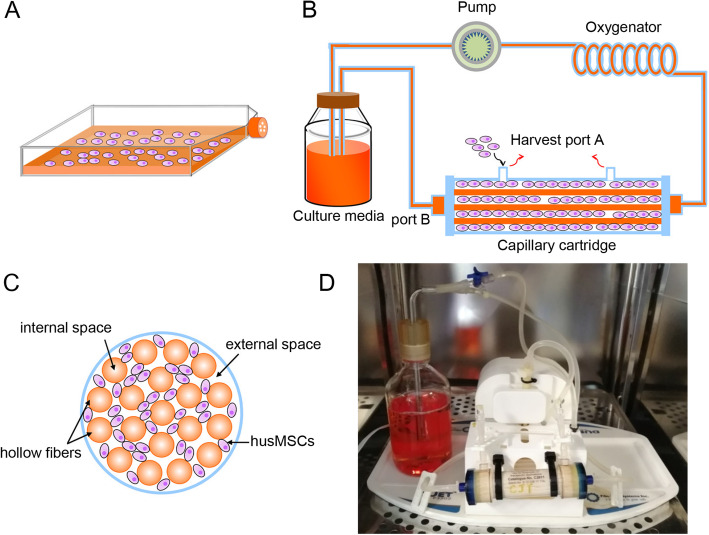
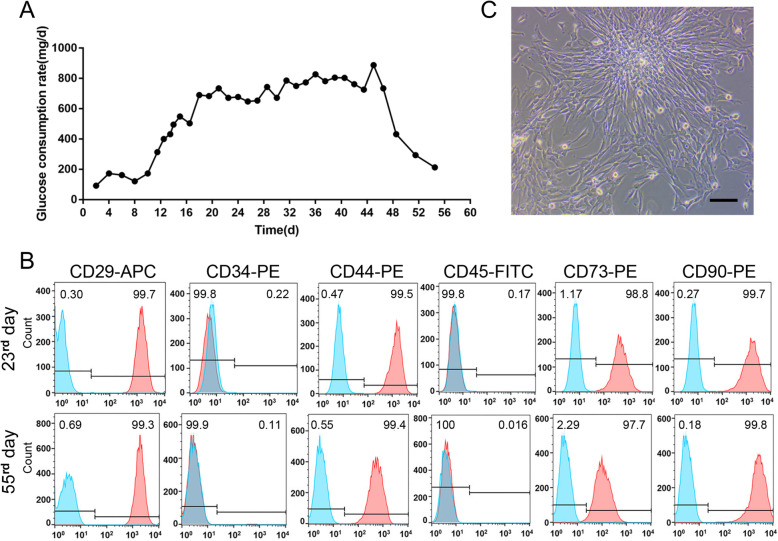
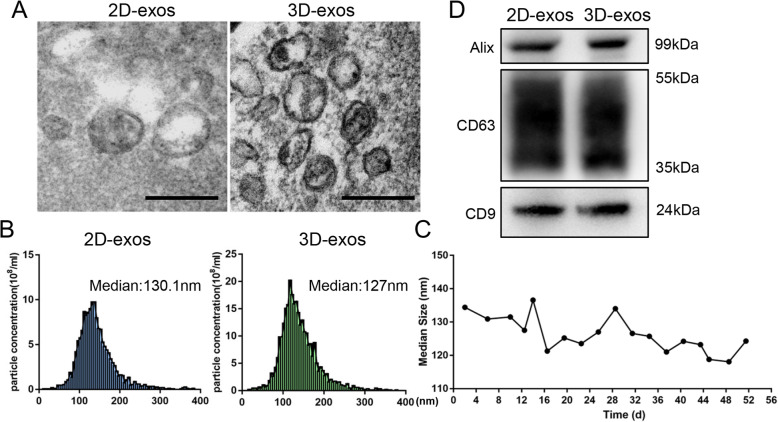
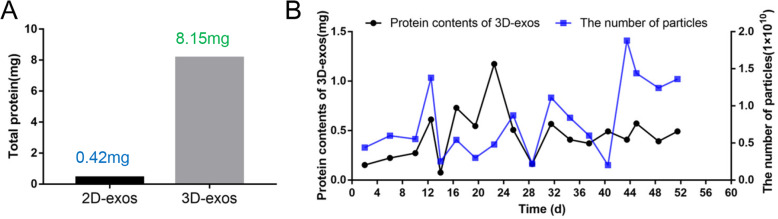
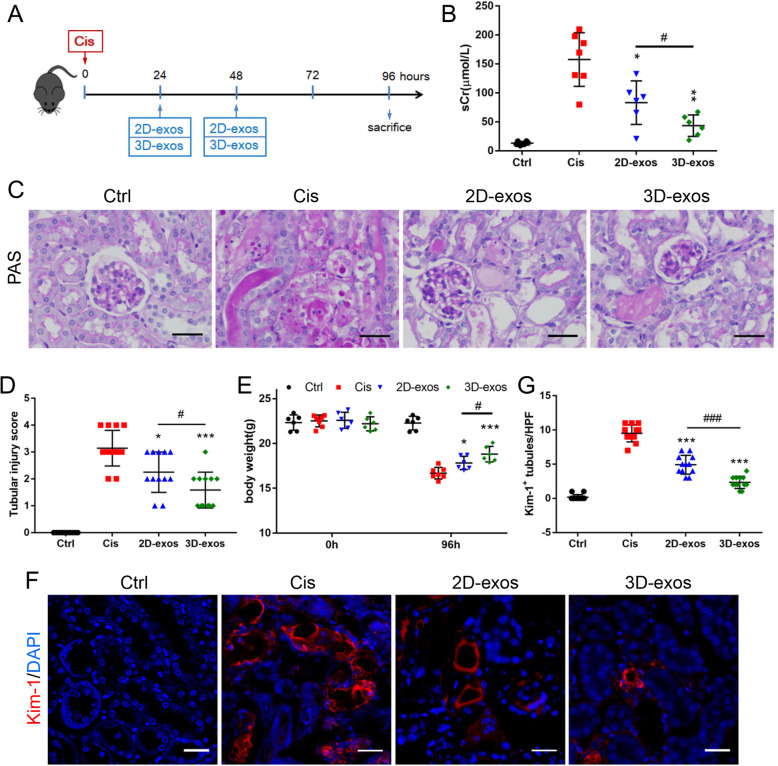
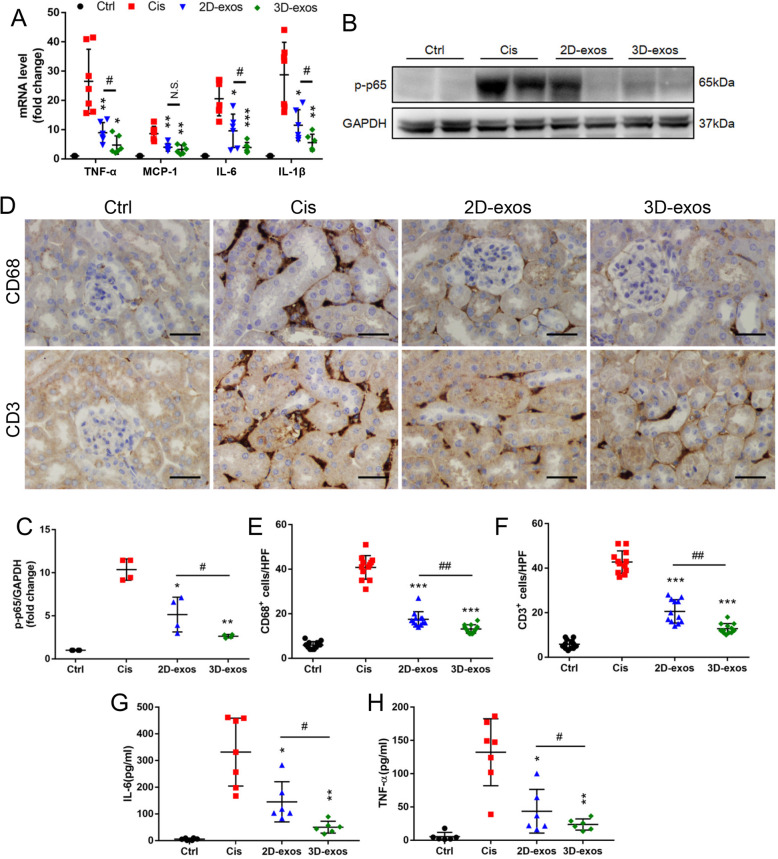
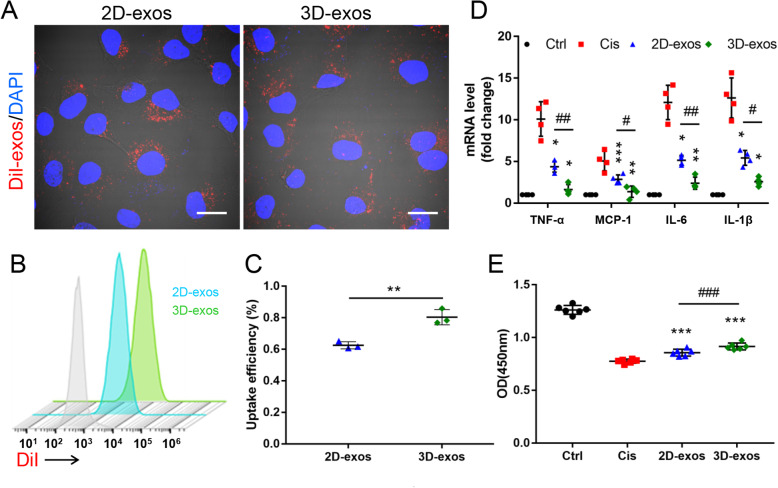
Background: Exosomes derived from mesenchymal stem cells (MSC-exos) have been demonstrated with great potential in the treatment of multiple human diseases including acute kidney injury (AKI) by virtue of their intrinsic cargoes. However, there are major challenges of low yield and the lack of an established biomanufacturing platform to efficiently produce MSC-exos, thereby limiting their therapeutic application. Here, we aimed to establish a novel strategy to produce MSC-exos with a hollow fiber bioreactor-based three-dimensional (3D) culture system and evaluate the therapeutic efficacy of 3D-exosomes (3D-exos) on AKI. Methods: Mesenchymal stem cells (MSCs) were isolated from fresh human umbilical cord and cultured in two-dimensional (2D) flasks. 2 × 10 8 MSCs were inoculated into the hollow fiber bioreactor for 3D culture. The culture supernatants were collected every 1 or 2 days for isolating exosomes. Exosomes from 2D (2D-exos) and 3D cultures were characterized by transmission electron microscopy, nanoparticle tracking analysis, and western blotting analysis of exosome markers. The yield of exosomes from 2 × 10 8 MSCs seeded in 2D and 3D culture system was compared, based on protein quantification. The therapeutic efficacy of 2D-exos and 3D-exos was investigated in a murine model of cisplatin-induced AKI in vivo and in vitro. Results: 3D culture did not significantly change the surface markers of MSCs, as well as the morphology, size, and exosomal markers of 3D-exos when compared to those of 2D-exos. Compared with conventional 2D culture, the 3D culture system increased total exosome production up to 19.4-fold. 3D-exos were more concentrated in the harvested supernatants (15.5-fold) than 2D-exos, which led to a higher exosome collection efficiency of 3D culture system. In vivo,both 2D-exos and 3D-exos significantly alleviated cisplatin-induced murine AKI evidenced by improved renal function, attenuated pathological changes of renal tubules, reduced inflammatory factors, and repressed T cell and macrophage infiltration. Impressively, 3D-exos were more effective than 2D-exos. Moreover, 3D-exos were taken up by tubular epithelial cells (TECs) with improved efficiency, thereby exhibiting superior anti-inflammatory effect and improved viability of TECs in vitro. Conclusions: In summary, our findings demonstrate that the hollow fiber 3D culture system provides an efficient strategy for the continuous production of MSC-exos which has enhanced therapeutic potential for cisplatin-induced AKI.
Overview
The claims and statistics of this paper haven’t been checked yet.
Free: it reads the open-access text and checks the first 5 claims that cite a source we can check. Create a free account to check every claim.
Integrity signals
Registry
Cites
Statistics
Figures
Verification
Claims the paper makes
The claims and statistics of this paper haven’t been checked yet.
Free: it reads the open-access text and checks the first 5 claims that cite a source we can check. Create a free account to check every claim.
Claims other papers make about this one
Each is checked against this paper’s own text: does it say what the citing paper says it does?
The source backs part of the claim, not all of it — or backs it for a different population, condition or comparison.
In the citing paper
“As a result, strategies such as 3D culture systems, bioreactors, or chemical stimulation are being explored to enhance exosome yield and scalability for therapeutic applications [232,233,234].”
From The Impact of Neurotoxin Proteins Trafficked by Primary Cilia and Extracellular Vesicles in Neurodegenerative Diseases (2025) · cites this paper as [232]
Experimental — accuracy not yet measured
Self-check
Percentages, sums and reported differences re-computed from the paper’s own numbers.
The self-check needs the paper’s full text.
Citations
Cites
Dominici, M., Le Blanc, K., Mueller, I., Slaper-Cortenbach, I., Marini, F. C., Krause, D. S., Deans, R. J., Keating, A., Prockop, D. J., & Horwitz, E. M. (2006) · Cytotherapy · doi:10.1080/14653240600855905 · Cited by 17,766 · cited 1×
“All of these results were consistent with the criteria for defining multipotent MSCs [36].”
Shedding light on the cell biology of extracellular vesicles
van Niel, G., D'Angelo, G., & Raposo, G. (2018) · Nature Reviews Molecular Cell Biology · doi:10.1038/nrm.2017.125 · Cited by 8,369
Exosomes facilitate therapeutic targeting of oncogenic KRAS in pancreatic cancer
Kamerkar, S., LeBleu, V. S., Sugimoto, H., Yang, S., Ruivo, C. F., Melo, S. A., Lee, J. J., & Kalluri, R. (2017) · Nature · doi:10.1038/nature22341 · Cited by 2,639
Bellomo, R., Kellum, J. A., & Ronco, C. (2012) · The Lancet · doi:10.1016/s0140-6736(11)61454-2 · Cited by 2,598
Ronco, C., Bellomo, R., & Kellum, J. A. (2019) · The Lancet · doi:10.1016/s0140-6736(19)32563-2 · Cited by 1,910
Exosome Theranostics: Biology and Translational Medicine
He, C., Zheng, S., Luo, Y., & Wang, B. (2018) · Theranostics · doi:10.7150/thno.21945 · Cited by 1,249
Self-citationImmunoregulatory mechanisms of mesenchymal stem and stromal cells in inflammatory diseases
Shi, Y., Wang, Y., Li, Q., Liu, K., Hou, J., Shao, C., & Wang, Y. (2018) · Nature Reviews Nephrology · doi:10.1038/s41581-018-0023-5 · Cited by 1,223
MSC-derived exosomes: a novel tool to treat therapy-refractory graft-versus-host disease
Kordelas, L., Rebmann, V, Ludwig, A.-K., Radtke, S., Ruesing, J., Doeppner, T. R., Epple, M., Horn, P. A., Beelen, D. W., & Giebel, B. (2014) · Leukemia · doi:10.1038/leu.2014.41 · Cited by 1,084 · cited 1×
“To date, administration of MSC-exos effectively improves clinical outcomes in patients suffering from graft-versus-host disease and chronic kidney diseases [24, 25].”
Advances in therapeutic applications of extracellular vesicles
Wiklander, O. P. B., Brennan, M. Á., Lötvall, J., Breakefield, X. O., & EL Andaloussi, S. (2019) · Science Translational Medicine · doi:10.1126/scitranslmed.aav8521 · Cited by 1,039
Renal tubule injury: a driving force toward chronic kidney disease
Liu, B.-C., Tang, T.-T., Lv, L.-L., & Lan, H.-Y. (2018) · Kidney International · doi:10.1016/j.kint.2017.09.033 · Cited by 913
Self-citationEthical and Safety Issues of Stem Cell-Based Therapy
Volarevic, V., Markovic, B. S., Gazdic, M., Volarevic, A., Jovicic, N., Arsenijevic, N., Armstrong, L., Djonov, V., Lako, M., & Stojkovic, M. (2018) · International Journal of Medical Sciences · doi:10.7150/ijms.21666 · Cited by 876
Zhou, Y., Xu, H., Xu, W., Wang, B., Wu, H., Tao, Y., Zhang, B., Wang, M., Mao, F., Yan, Y., et al. (2013) · Stem Cell Research & Therapy · doi:10.1186/scrt194 · Cited by 644
Self-citationMesenchymal stem cell-derived exosomes as a new therapeutic strategy for liver diseases
Lou, G., Chen, Z., Zheng, M., & Liu, Y. (2017) · Experimental & Molecular Medicine · doi:10.1038/emm.2017.63 · Cited by 601
Wu, J., Kuang, L., Chen, C., Yang, J., Zeng, W.-N., Li, T., Chen, H., Huang, S., Fu, Z., Li, J., et al. (2019) · Biomaterials · doi:10.1016/j.biomaterials.2019.03.022 · Cited by 570
Haraszti, R. A., Miller, R., Stoppato, M., Sere, Y. Y., Coles, A., Didiot, M.-C., Wollacott, R., Sapp, E., Dubuke, M. L., Li, X., et al. (2018) · Molecular Therapy · doi:10.1016/j.ymthe.2018.09.015 · Cited by 567
Zhu, L.-P., Tian, T., Wang, J.-Y., He, J.-N., Chen, T., Pan, M., Xu, L., Zhang, H.-X., Qiu, X.-T., Li, C.-C., et al. (2018) · Theranostics · doi:10.7150/thno.28021 · Cited by 545
Nassar, W., El-Ansary, M., Sabry, D., Mostafa, M. A., Fayad, T., Kotb, E., Temraz, M., Saad, A.-N., Essa, W., & Adel, H. (2016) · Biomaterials Research · doi:10.1186/s40824-016-0068-0 · Cited by 502
Harrell, C., Fellabaum, C., Jovicic, N., Djonov, V., Arsenijevic, N., & Volarevic, V. (2019) · Cells · doi:10.3390/cells8050467 · Cited by 501
Vasandan, A. B., Jahnavi, S., Shashank, C., Prasad, P., Kumar, A., & Prasanna, S. J. (2016) · Scientific Reports · doi:10.1038/srep38308 · Cited by 406
Zhang, Y., Chopp, M., Zhang, Z. G., Katakowski, M., Xin, H., Qu, C., Ali, M., Mahmood, A., & Xiong, Y. (2017) · Neurochemistry International · doi:10.1016/j.neuint.2016.08.003 · Cited by 392
Efficient production and enhanced tumor delivery of engineered extracellular vesicles
Watson, D. C., Bayik, D., Srivatsan, A., Bergamaschi, C., Valentin, A., Niu, G., Bear, J., Monninger, M., Sun, M., Morales-Kastresana, A., et al. (2016) · Biomaterials · doi:10.1016/j.biomaterials.2016.07.003 · Cited by 385
Jiang, M., Liu, K., Luo, J., & Dong, Z. (2010) · The American Journal of Pathology · doi:10.2353/ajpath.2010.090594 · Cited by 381
Chen, C.-Y., Rao, S.-S., Ren, L., Hu, X.-K., Tan, Y.-J., Hu, Y., Luo, J., Liu, Y.-W., Yin, H., Huang, J., et al. (2018) · Theranostics · doi:10.7150/thno.22958 · Cited by 380
Self-citationDrug Delivery with Extracellular Vesicles: From Imagination to Innovation
de Jong, O. G., Kooijmans, S. A. A., Murphy, D. E., Jiang, L., Evers, M. J. W., Sluijter, J. P. G., Vader, P., & Schiffelers, R. M. (2019) · Accounts of Chemical Research · doi:10.1021/acs.accounts.9b00109 · Cited by 361
Sample Preparation and Imaging of Exosomes by Transmission Electron Microscopy
Jung, M. K., & Mun, J. Y. (2018) · Journal of Visualized Experiments · doi:10.3791/56482 · Cited by 285 · cited 1×
“Every section was double-stained with uranyl acetate and lead citrate [32].”
Cellular and molecular pathways of renal repair after acute kidney injury
Kumar, S. (2018) · Kidney International · doi:10.1016/j.kint.2017.07.030 · Cited by 271
Lv, L.-L., Feng, Y., Wen, Y., Wu, W.-J., Ni, H.-F., Li, Z.-L., Zhou, L.-T., Wang, B., Zhang, J.-D., Crowley, S. D., et al. (2018) · Journal of the American Society of Nephrology · doi:10.1681/asn.2017050523 · Cited by 270
Self-citationAKI Recovery Induced by Mesenchymal Stromal Cell-Derived Extracellular Vesicles Carrying MicroRNAs
Collino, F., Bruno, S., Incarnato, D., Dettori, D., Neri, F., Provero, P., Pomatto, M., Oliviero, S., Tetta, C., Quesenberry, P. J., et al. (2015) · Journal of the American Society of Nephrology · doi:10.1681/asn.2014070710 · Cited by 249
Mesenchymal Stem Cells: A Friend or Foe in Immune-Mediated Diseases
Gazdic, M., Volarevic, V., Arsenijevic, N., & Stojkovic, M. (2015) · Stem Cell Reviews and Reports · doi:10.1007/s12015-014-9583-3 · Cited by 248
Mesenchymal stem cell exosomes as a cell-free therapy for nerve injury–induced pain in rats
Shiue, S.-J., Rau, R.-H., Shiue, H.-S., Hung, Y.-W., Li, Z.-X., Yang, K. D., & Cheng, J.-K. (2019) · Pain · doi:10.1097/j.pain.0000000000001395 · Cited by 233
Self-citationShen, B., Liu, J., Zhang, F., Wang, Y., Qin, Y., Zhou, Z., Qiu, J., & Fan, Y. (2016) · Stem Cells International · doi:10.1155/2016/1240301 · Cited by 231
Viñas, J. L., Burger, D., Zimpelmann, J., Haneef, R., Knoll, W., Campbell, P., Gutsol, A., Carter, A., Allan, D. S., & Burns, K. D. (2016) · Kidney International · doi:10.1016/j.kint.2016.07.015 · Cited by 222
Li, Z.-L., Lv, L.-L., Tang, T.-T., Wang, B., Feng, Y., Zhou, L.-T., Cao, J.-Y., Tang, R.-N., Wu, M., Liu, H., et al. (2019) · Kidney International · doi:10.1016/j.kint.2018.09.013 · Cited by 222 · cited 3×
“Then, membranes were washed three times and incubated with secondary antibodies for 2 h at room temperature, and the signals were detected using an ECL advanced system (GE Healthcare).”
Self-citationMesenchymal stem cell exosomes promote immunosuppression of regulatory T cells in asthma
Du, Y.-M., Zhuansun, Y.-X., Chen, R., Lin, L., Lin, Y., & Li, J.-G. (2018) · Experimental Cell Research · doi:10.1016/j.yexcr.2017.12.021 · Cited by 215
Cui, L.-L., Kerkelä, E., Bakreen, A., Nitzsche, F., Andrzejewska, A., Nowakowski, A., Janowski, M., Walczak, P., Boltze, J., Lukomska, B., et al. (2015) · Stem Cell Research & Therapy · doi:10.1186/scrt544 · Cited by 213
Aghajani Nargesi, A., Lerman, L. O., & Eirin, A. (2017) · Stem Cell Research & Therapy · doi:10.1186/s13287-017-0727-7 · Cited by 212
Lu, Y., Zhou, Y., Zhang, R., Wen, L., Wu, K., Li, Y., Yao, Y., Duan, R., & Jia, Y. (2019) · Frontiers in Neuroscience · doi:10.3389/fnins.2019.00209 · Cited by 176
Yuan, X., Qin, X., Wang, D., Zhang, Z., Tang, X., Gao, X., Chen, W., & Sun, L. (2019) · Nature Communications · doi:10.1038/s41467-019-10491-8 · Cited by 164
Tang, T.-T., Lv, L.-L., Wang, B., Cao, J.-Y., Feng, Y., Li, Z.-L., Wu, M., Wang, F.-M., Wen, Y., Zhou, L.-T., et al. (2019) · Theranostics · doi:10.7150/thno.33520 · Cited by 163
Self-citationThree-Dimensional Spheroid Culture Increases Exosome Secretion from Mesenchymal Stem Cells
Kim, M., Yun, H.-W., Park, D. Y., Choi, B. H., & Min, B.-H. (2018) · Tissue Engineering and Regenerative Medicine · doi:10.1007/s13770-018-0139-5 · Cited by 160
Yang, L., Zhai, Y., Hao, Y., Zhu, Z., & Cheng, G. (2020) · Small · doi:10.1002/smll.201906273 · Cited by 158
Liao, L., Shi, B., Chang, H., Su, X., Zhang, L., Bi, C., Shuai, Y., Du, X., Deng, Z., & Jin, Y. (2017) · Theranostics · doi:10.7150/thno.16911 · Cited by 156
Cell-derived vesicles for drug therapy and diagnostics: Opportunities and challenges
Fuhrmann, G., Herrmann, I. K., & Stevens, M. M. (2015) · Nano Today · doi:10.1016/j.nantod.2015.04.004 · Cited by 154
Zhu, F., Chong Lee Shin, O. L. S., Pei, G., Hu, Z., Yang, J., Zhu, H., Wang, M., Mou, J., Sun, J., Wang, Y., et al. (2017) · Oncotarget · doi:10.18632/oncotarget.19979 · Cited by 117
Lindsay, J. O., Allez, M., Clark, M., Labopin, M., Ricart, E., Rogler, G., Rovira, M., Satsangi, J., Farge, D., Hawkey, C. J., et al. (2017) · The Lancet. Gastroenterology & hepatology · doi:10.1016/s2468-1253(17)30056-0 · Cited by 103
Therapeutic application of extracellular vesicles in kidney disease: promises and challenges
Lv, L., Wu, W., Ye, F., Li, Z., Tang, T., & Liu, B. (2017) · Journal of Cellular and Molecular Medicine · doi:10.1111/jcmm.13407 · Cited by 86 · cited 1×
“They provide a short- to long-distance form of intercellular communication by shuttling bioactive molecules, including DNA fragments, mRNAs, non-coding RNAs, proteins, and lipids [10, 11].”
Self-citationExtracellular Vesicles: Opportunities and Challenges for the Treatment of Renal Diseases
Tang, T.-T., Lv, L.-L., Lan, H.-Y., & Liu, B.-C. (2019) · Frontiers in Physiology · doi:10.3389/fphys.2019.00226 · Cited by 70 · cited 2×
“They provide a short- to long-distance form of intercellular communication by shuttling bioactive molecules, including DNA fragments, mRNAs, non-coding RNAs, proteins, and lipids [10, 11].”
Self-citationYao, M., Gao, F., Xu, R., Zhang, J., Chen, Y., & Guan, F. (2019) · Biomaterials Science · doi:10.1039/c9bm00749k · Cited by 70
Application potential of stem/progenitor cell-derived extracellular vesicles in renal diseases
Sun, X., Meng, H., Wan, W., Xie, M., & Wen, C. (2019) · Stem Cell Research & Therapy · doi:10.1186/s13287-018-1097-5 · Cited by 53 · cited 5×
“Additionally, MSC-exos possess the characteristic of lower immunogenicity because they lack the antigens on the surface membrane [1, 15].”
InfluentialFujii, N., Matsuo, Y., Matsunaga, T., Endo, S., 酒井, 秀., Yamaguchi, M., Yamazaki, Y., Sugatani, J., & Ikari, A. (2016) · Journal of Biological Chemistry · doi:10.1074/jbc.m116.728196 · Cited by 43 · cited 1×
“Interestingly, one study demonstrated that clathrin could mediate the endocytosis of TECs [49].”
Development of a microdevice-based human mesenchymal stem cell-mediated drug delivery system
Xia, J., Tsai, A., Cheng, W., Yuan, X., Ma, T., & Guan, J. (2019) · Biomaterials Science · doi:10.1039/c8bm01634h · Cited by 24
Cited by
Bian, D., Wu, Y., Song, G., Azizi, R., & Zamani, A. (2022) · Stem Cell Research & Therapy · doi:10.1186/s13287-021-02697-9 · Cited by 370
The power of imaging to understand extracellular vesicle biology in vivo
Verweij, F. J., Balaj, L., Boulanger, C. M., Carter, D. R. F., Compeer, E. B., D’Angelo, G., El Andaloussi, S., Goetz, J. G., Gross, J. C., Hyenne, V., et al. (2021) · Nature Methods · doi:10.1038/s41592-021-01206-3 · Cited by 329
Cao, J.-Y., Wang, B., Tang, T.-T., Wen, Y., Li, Z.-L., Feng, S.-T., Wu, M., Liu, D., Yin, D., Ma, K.-L., et al. (2021) · Theranostics · doi:10.7150/thno.54550 · Cited by 303
“MSC-exos were isolated by gradient centrifugation and filtration [16].”
BackgroundMethodSelf-citationHan, M., Yang, H., Lu, X., Li, Y., Liu, Z., Li, F., Shang, Z., Wang, X., Li, X., Li, J., et al. (2022) · Nano Letters · doi:10.1021/acs.nanolett.2c02259 · Cited by 228
Lin, F., Chen, W., Zhou, J., Zhu, J., Yao, Q., Feng, B., Feng, X., Shi, X., Pan, Q., Yu, J., et al. (2022) · Cell Death & Disease · doi:10.1038/s41419-022-04708-w · Cited by 206
Metadata
- Authors
- Cao, J., Wang, B., Tang, T., Lv, L., Ding, Z., Li, Z., Hu, R., Wei, Q., Shen, A., Fu, Y., & Liu, B.
- Affiliations
- Zhongda Hospital Southeast University (CN)
- Venue
- Stem Cell Research & Therapy
- Published
- 2020-05-27
- Volume
- 11
- Issue
- 1
- Pages
- 206-206
- ISSN
- 1757-6512 (ISSN-L)
- PMC
- PMC7251891
- OpenAlex
- W3032250687
- Cited by
- 264
- References
- 51
- Citations by year
- 2026: 26 · 2025: 64 · 2024: 48 · 2023: 51 · 2022: 45 · 2021: 26 · 2020: 4
- FWCI
- 10.17
- Type
- journal article
- Language
- en
- Open access
- gold
- doi.org
- Licence
- cc-by
- creativecommons.org/licenses/by/4.0 (tdm)
- creativecommons.org/licenses/by/4.0 (vor)
- Locations
- Stem Cell Research & Therapy (publishedVersion, cc-by)
- PubMed Central (publishedVersion, cc-by)
- PubMed (publishedVersion)
- DOAJ (DOAJ: Directory of Open Access Journals) (submittedVersion, cc-by-sa)
- Funders
- National Natural Science Foundation of China (81720108007, 81670696)
- National Key Research and Development Program (2018YFC1314000)
- Topics
- Life Sciences › Biochemistry, Genetics and Molecular Biology › Molecular Biology › Extracellular vesicles in disease
- Life Sciences › Biochemistry, Genetics and Molecular Biology › Cell Biology › Mesenchymal stem cell research
- Life Sciences › Pharmacology, Toxicology and Pharmaceutics › Toxicology › Chemotherapy-induced organ toxicity mitigation
- Keywords
- mesenchymal stem cells, exosomes, 3D cell culture, hollow fiber bioreactor, exosome yield, cisplatin-induced acute kidney injury, renal tubular epithelial cells, exosome uptake, renal inflammation, T cell infiltration, macrophage infiltration, exosome therapy, umbilical cord-derived stem cells, tubular regeneration, renal fibrosis
- MeSH terms
- Animals, Cisplatin, Humans, Umbilical Cord, Mice, Exosomes, Acute Kidney Injury, Mesenchymal Stem Cells
About these checks
Registry, retraction, Cites and statistics results are computed, not judged, with one exception: a printed reference that no index lists is read once by a model before it counts as a citation error. Claims are extracted by a model and kept only when their quote appears verbatim in the text; each cited source is then checked, with a model’s help, for whether it says what the claim relies on. Those verdicts can be wrong — read the claim’s quote and the cited source before relying on one.
Statistics and arithmetic are recomputed, not judged.
Confidence bands are shown only for fields calibrated on our annotated test set. None is calibrated yet, so no band is shown.
What counts as a claim ›How we measure confidence ›How we check this ›
Are you an author, or do you see a problem with this page? Request a review
Data sources
Bibliographic data: Semantic Scholar, OpenAlex, Crossref.
Contains information from the Semantic Scholar Academic Graph Datasets, made available under the ODC Attribution License (ODC-BY 1.0).
Semantic Scholar’s data is described in: Kinney, R., et al. (2023). The Semantic Scholar Open Data Platform. arXiv:2301.10140.
