

Mesenchymal stem cells: amazing remedies for bone and cartilage defects
Open accessThe DOI matches its Crossref record; 326 of the 327 references it cites were found in a registry or an index.
Abstract
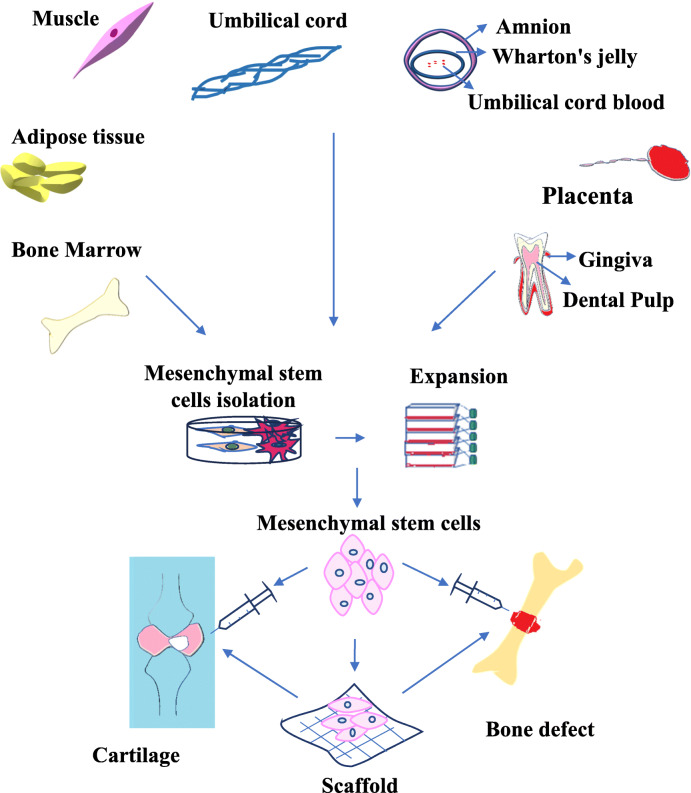
Skeletal disorders are among the leading debilitating factors affecting millions of people worldwide. The use of stem cells for tissue repair has raised many promises in various medical fields, including skeletal disorders. Mesenchymal stem cells (MSCs) are multipotent stromal cells with mesodermal and neural crest origin. These cells are one of the most attractive candidates in regenerative medicine, and their use could be helpful in repairing and regeneration of skeletal disorders through several mechanisms including homing, angiogenesis, differentiation, and response to inflammatory condition. The most widely studied sources of MSCs are bone marrow (BM), adipose tissue, muscle, umbilical cord (UC), umbilical cord blood (UCB), placenta (PL), Wharton’s jelly (WJ), and amniotic fluid. These cells are capable of differentiating into osteoblasts, chondrocytes, adipocytes, and myocytes in vitro. MSCs obtained from various sources have diverse capabilities of secreting many different cytokines, growth factors, and chemokines. It is believed that the salutary effects of MSCs from different sources are not alike in terms of repairing or reformation of injured skeletal tissues. Accordingly, differential identification of MSCs’ secretome enables us to make optimal choices in skeletal disorders considering various sources. This review discusses and compares the therapeutic abilities of MSCs from different sources for bone and cartilage diseases.
Overview
The claims and statistics of this paper haven’t been checked yet.
Free: it reads the open-access text and checks the first 5 claims that cite a source we can check. Create a free account to check every claim.
Integrity signals
Registry
Cites
Statistics
Figures
Verification
Claims the paper makes
The claims and statistics of this paper haven’t been checked yet.
Free: it reads the open-access text and checks the first 5 claims that cite a source we can check. Create a free account to check every claim.
Claims other papers make about this one
Each is checked against this paper’s own text: does it say what the citing paper says it does?
The source backs part of the claim, not all of it — or backs it for a different population, condition or comparison.
In the citing paper
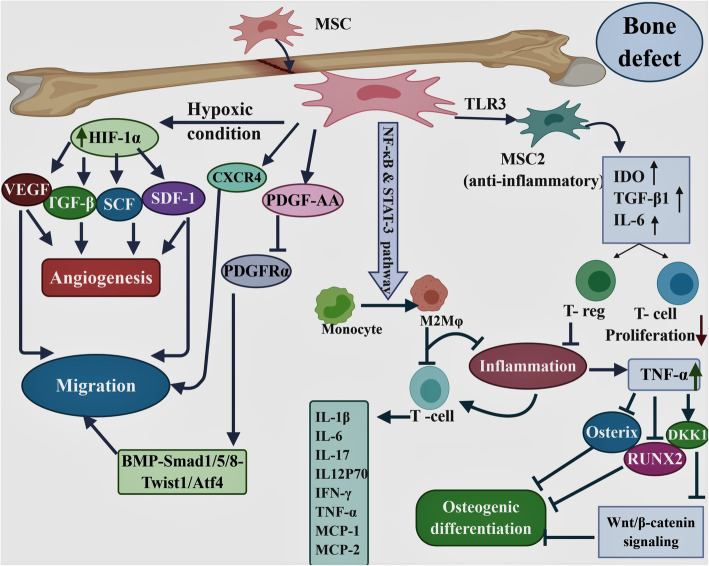
“This process is triggered by the response of MSCs to inflammatory factors released from the bone fracture site, such as PDGFs and BMPs, which activate BMP-Smad1/5/8 signaling, promoting MSC migration [40,77,78].”
From Mesenchymal Stem/Stromal Cells: Immunomodulatory and Bone Regeneration Potential after Tumor Excision in Osteosarcoma Patients (2023) · cites this paper as [40]
Experimental — accuracy not yet measuredThe cited source says what the claim attributes to it.
In the citing paper
“Specifically, in vitro and in vivo studies have demonstrated the pivotal role of MSCs in the bone healing process through their potential to enhance osteoinduction and osteogenesis.”
From Mesenchymal Stem/Stromal Cells: Immunomodulatory and Bone Regeneration Potential after Tumor Excision in Osteosarcoma Patients (2023) · cites this paper as [40]
The cited source says what the claim attributes to it.
In the citing paper
“MSC-EVs promote osteoblast proliferation, differentiation, and bone formation, contributing to bone repair and fracture healing [40,49].”
From Mesenchymal Stem/Stromal Cells: Immunomodulatory and Bone Regeneration Potential after Tumor Excision in Osteosarcoma Patients (2023) · cites this paper as [40]
The cited source says what the claim attributes to it.
In the citing paper
“Moreover, EVs produced by MSCs have emerged as a novel therapeutic method for bone diseases [40].”
From Mesenchymal Stem/Stromal Cells: Immunomodulatory and Bone Regeneration Potential after Tumor Excision in Osteosarcoma Patients (2023) · cites this paper as [40]
The cited source says what the claim attributes to it.
In the citing paper
“MSCs can contribute to bone repair and regeneration through several mechanisms, including facilitating cell migration, homing, angiogenesis, response to inflammation, and differentiation [40].”
From Mesenchymal Stem/Stromal Cells: Immunomodulatory and Bone Regeneration Potential after Tumor Excision in Osteosarcoma Patients (2023) · cites this paper as [40]
4 more claims about this paper
Create a free account to see every claim other papers make about this one.
Self-check
Percentages, sums and reported differences re-computed from the paper’s own numbers.
The self-check needs the paper’s full text.
Citations
Cites
1 retracted
Wang, N., Zhou, Z., Wu, T., Liu, W. X., Yin, P., Pan, C., & Yu, X. (2016) · Open Biology · doi:10.1098/rsob.150258 · Cited by 89 · cited 1×
“Another important effect of TNF-α in inflammatory conditions is inhibition of two essential osteogenic differentiation factors including RUNX2 and osterix, leading to the suppression of MSC differentiation [275, 276].”
BackgroundRetractedDominici, M., Le Blanc, K., Mueller, I., Slaper-Cortenbach, I., Marini, F. C., Krause, D. S., Deans, R. J., Keating, A., Prockop, D. J., & Horwitz, E. M. (2006) · Cytotherapy · doi:10.1080/14653240600855905 · Cited by 17,766 · cited 4×
“Several in vitro and in vivo studies on the degeneration of the IVD both in animal models and in clinical trials indicated that NP, AF, and CEPs contain cells with surface markers, morphology, proliferation rate, and multilineage differentiation capability similar to Table 3 Characterization of MSC from various tissue…”
BackgroundInfluentialLanger, R., & Vacanti, J. P. (1993) · Science · doi:10.1126/science.8493529 · Cited by 9,893
Kern, S., Eichler, H., Stoeve, J., Klüter, H., & Bieback, K. (2006) · STEM CELLS · doi:10.1634/stemcells.2005-0342 · Cited by 3,370
Di Nicola, M., Carlo-Stella, C., Magni, M., Milanesi, M., Longoni, P. D., Matteucci, P., Grisanti, S., & Gianni, A. M. (2002) · Blood · doi:10.1182/blood.v99.10.3838 · Cited by 3,226
Glyn-Jones, S., Palmer, A. J. R., Agricola, R., Price, A. J., Vincent, T. L., Weinans, H., & Carr, A. J. (2015) · The Lancet · doi:10.1016/s0140-6736(14)60802-3 · Cited by 3,151
Osteoarthritis: A disease of the joint as an organ
Loeser, R. F., Goldring, S. R., Scanzello, C. R., & Goldring, M. B. (2012) · Arthritis & Rheumatism · doi:10.1002/art.34453 · Cited by 3,076
Zhang, W., Moskowitz, R. W., Nuki, G., Abramson, S., Altman, R. D., Arden, N., Bierma-Zeinstra, S., Brandt, K. D., Croft, P., Doherty, M., et al. (2008) · Osteoarthritis and Cartilage · doi:10.1016/j.joca.2007.12.013 · Cited by 2,796 · cited 1×
“to manage the pain, stiffness, and swelling but are not effective to prevent the OA progression [196, 197].”
BackgroundThe Basic Science of Articular Cartilage: Structure, Composition, and Function
Sophia Fox, A. J., Bedi, A., & Rodeo, S. A. (2009) · Sports Health: A Multidisciplinary Approach · doi:10.1177/1941738109350438 · Cited by 2,774 · cited 1×
“II is the main structural protein in cartilage and forms a meshwork for entrapping proteoglycans such as aggrecan, decorin, and sendycan [187, 188].”
BackgroundBiology of Bone Tissue: Structure, Function, and Factors That Influence Bone Cells
Florencio-Silva, R., Sasso, G. R. D. S., Sasso-Cerri, E., Simões, M. J., & Cerri, P. S. (2015) · BioMed Research International · doi:10.1155/2015/421746 · Cited by 2,044 · cited 1×
“Collagen fibers are the main makeup in the organic phase while inorganic phase is mainly composed of hydroxyapatite [76, 78, 79].”
Background
Research works printed but not linked: 2
- Hasan M Shuckett R Clinical features and pathogenetic mechanisms of osteoarthritis of the hip and knee BC Med J 2010 52 8 393 398
- Ghaderi H, Razmkhah M, Kiany F, Chenari N, Haghshenas MR, Ghaderi A. Comparison of osteogenic and chondrogenic differentiation ability of buccal fat pad derived mesenchymal stem cells and gingival derived cells. J Dent. 2018;19(2):124–31. PMC5960732 29854886
Cited by
Items 101–200 of 299
New horizons in cartilage repair: update on treatment trends and outcomes
García, J. R., Acuña, A. J., Villarreal‐Espinosa, J. B., Berreta, R. S., Ayala, S. G., Baño-Barragán, L. D., Allende, F., & Chahla, J. A. (2024) · Journal of Cartilage & Joint Preservation · doi:10.1016/j.jcjp.2024.100179 · Cited by 15
Dong, Q., Fei, X., Zhang, H., Zhu, X., & Ruan, J. (2024) · International Journal of Molecular Sciences · doi:10.3390/ijms25073879 · Cited by 11
Angiogenesis unveiled: Insights into its role and mechanisms in cartilage injury
Wang, C., Gong, S., Liu, H., Cui, L., Ye, Y., Liu, D., Liu, T., Xie, S., & Li, S. (2024) · Experimental Gerontology · doi:10.1016/j.exger.2024.112537 · Cited by 11
“Utilizing stem cells such as MSCs to promote angiogenesis, combined with cartilage repair, has demonstrated promising results in preclinical studies (Kangari et al., 2020).”
BackgroundGao, J., Zhou, Y., Xu, G., Wei, Z., Ding, L., Zhang, W., & Huang, Y. (2024) · Materials Today Bio · doi:10.1016/j.mtbio.2024.101411 · Cited by 11
“Cyto-kines, a class of small peptides or glycoproteins secreted by numerous cells, mediate interactions between cells and have been implicated in diverse biological and pathological processes, including cell growth, migration, differentiation, maturation and functional maintenance [61].”
Advances in extracellular vesicle-based nanomedicine for regenerative orthopaedics
Izquierdo, S. G., Pilar, A. F., Rios, J. L., Lim, K. S., Toh, W. S., Liu, C., Gimona, M., Gawlitta, D., & Man, K. (2025) · Journal of Nanobiotechnology · doi:10.1186/s12951-025-03906-w · Cited by 13
“MSCs are central orchestrators of fracture repair through a multifaceted interplay of immunomodulation, trophic factor secretion, and EV-mediated signalling [52, 53].”
Feng, Z., Su, X., Wang, T., & Guo, S. (2022) · Pharmaceuticals · doi:10.3390/ph15091094 · Cited by 10
“However, recent stem cell-based therapy (SCBT) has shown significant potential for the treatment of bone defects, including severe damage [1,2].”
BackgroundChae, D., Han, S.-H., Lee, M.-K., & Kim, S. (2023) · International Journal of Molecular Sciences · doi:10.3390/ijms24098223 · Cited by 10
“Mesenchymal stem cells (MSCs) derived from various tissues, including adipose, dental pulp, bone marrow, umbilical cord, and placenta, are promising alternatives to chondrocytes due to their differentiation potential [6].”
BackgroundВалерьевич, Е. А., Сергеевна, П. А., Ruchko, Y., & Bogomazova, A. N. (2023) · International Journal of Molecular Sciences · doi:10.3390/ijms241914408 · Cited by 14
“Nevertheless, studies on the phenomenon of epigenetic memory still appear and stimulate discussion [81,82].”
He, J.-Y., Cheng, M., Ye, J.-L., Peng, C.-H., Chen, J., Luo, B., Zhang, X., & Fu, Q. (2022) · Regenerative Therapy · doi:10.1016/j.reth.2022.02.002 · Cited by 10
“MSC-based therapy has been demonstrated to reduce cartilage degeneration, encourage pain reduction and inhibit OA progression [8,9].”
BackgroundTan, B., Deng, Y., Mao, J., Peng, Y., Yang, R., Shen, J., He, Y., Zhang, L., Li, Y., & Yang, B. (2025) · ACS Omega · doi:10.1021/acsomega.5c00284 · Cited by 9
Bayarsaihan, D., Enkhmandakh, B., Vijaykumar, A., Robson, P., & Mina, M. (2021) · Gene Expression Patterns · doi:10.1016/j.gep.2021.119228 · Cited by 12
Thamm, K., Möbus, K., Towers, R., Baertschi, S., Wetzel, R., Wobus, M., & Segeletz, S. (2022) · Cytotherapy · doi:10.1016/j.jcyt.2022.06.003 · Cited by 9
Liu, Z., Bian, Y., Wu, G., & Fu, C. (2022) · Frontiers in Bioengineering and Biotechnology · doi:10.3389/fbioe.2022.1077028 · Cited by 11
“Having said this, stem cells have also achieved promising application prospects in promoting cartilage regeneration (Yang et al., 2018; Kangari et al., 2020).”
BackgroundMechanisms of analgesic effect of mesenchymal stem cells in osteoarthritis pain
Almahasneh, F. A., Abu‐El‐Rub, E., & Khasawneh, R. R. (2023) · World Journal of Stem Cells · doi:10.4252/wjsc.v15.i4.196 · Cited by 9
Zhao, S., Liu, Y., Wang, J., Wen, Y., Wu, B., Yang, D., Wang, G., Xiu, G., Ling, B., Du, D., et al. (2023) · International Immunopharmacology · doi:10.1016/j.intimp.2023.110390 · Cited by 9
Zhang, W., Xue, W., Jia, Z., Yang, R., Wang, P., Hu, Y., Tan, X., Chen, Q., & Chi, B. (2024) · Chemical Engineering Journal · doi:10.1016/j.cej.2024.149689 · Cited by 12
Liu, X., Potes, M. D. A., Serdiuk, V., Dashtdar, B., Schreiber, A. C., Rezaei, A., Miller, A. L., Hamouda, A. M., Shafi, M., Elder, B. D., et al. (2024) · Journal of Biomedical Materials Research Part A · doi:10.1002/jbm.a.37725 · Cited by 10
Wang, L., Roger, S., Yang, X., & Jiang, L. (2021) · Frontiers in Bioscience-Landmark · doi:10.52586/5065 · Cited by 9
Rahman, F. A., & Azwa, F. N. (2025) · Tissue and Cell · doi:10.1016/j.tice.2025.102776 · Cited by 11
Managing Bone Infections Beyond Systemic Antibiotics: A Scoping Review
Polyzou, E., Gavatha, M., Efthymiou, D., Papageorgiou, D., Ntalaki, E., Stavropoulos, N. A., & Akinosoglou, K. (2026) · Pathogens · doi:10.3390/pathogens15020201 · Cited by 13
“MSCs can be isolated from multiple tissues, including bone marrow, adipose tissue, skeletal muscle, umbilical cord, umbilical cord blood, placenta, Wharton’s jelly, and amniotic fluid [164].”
Meng, N., Mao, L., Jiang, Q., Yuan, J., Liu, L., & Wang, L. (2023) · Journal of Orthopaedic Surgery and Research · doi:10.1186/s13018-023-04207-4 · Cited by 8
“Meanwhile, the complicated pathogenesis of OA remains an obstacle in cartilage degeneration in spite of the promise raised by stem cells in cartilage repair [6].”
BackgroundMerlo, B., & Iacono, E. (2023) · Animals · doi:10.3390/ani13223571 · Cited by 14
“Even so, the multilineage differentiating ability of MSCs expands the possibilities of regenerative medicine [7], in which MSC applications appear as potentially valuable remedies for bone and cartilage defects [8,9].”
BackgroundWang, J., Zhao, Z., Yang, K. G., & Bai, Y. (2024) · Frontiers in Bioengineering and Biotechnology · doi:10.3389/fbioe.2024.1340728 · Cited by 11
Unlocking the regenerative key: Targeting stem cell factors for bone renewal
Karima, G., & Kim, H. D. (2024) · Journal of Tissue Engineering · doi:10.1177/20417314241287491 · Cited by 9
“123,124,166,167”
Gao, X., Yang, J., Liu, L., Hu, Z., Lin, R., Tang, L., Yu, M., Chen, Z., Gao, C., Zhang, M., et al. (2024) · Bioactive Materials · doi:10.1016/j.bioactmat.2024.12.007 · Cited by 14
“…the osteogenic activity of APS@P scaffold with SAB-BTL loaded, the APP and APS@P (2:1, 9:1, 19:1) scaffold extract solutions were used to treat MSCs. MSCs play a crucial role in the recruitment, proliferation, and differentiation of bone repair cells in the fracture healing process [50,51].”
Regulation of mesenchymal stem cell differentiation by key cell signaling pathways
Dhinekaran, A., Lakshmi, M. B. S., Graceline, H., Dey, A. K., Adhikari, S., Ramalingam, S., Ramachandran, I., Bişgin, A., Boğa, İ., Pathak, S., et al. (2023) · Elsevier eBooks · doi:10.1016/b978-0-443-18800-8.00007-1 · Cited by 8
Fu, Q., Han, M., Dai, X., Lu, R., Deng, E., Shen, X., Ou, F., Pu, Y., Xie, X., Liu, K., et al. (2024) · Stem Cell Research & Therapy · doi:10.1186/s13287-024-03905-y · Cited by 10
“MSCs promoted cartilage repair through the production of growth factors, cytokines, chemokines and exosomes, as well as the inhibition of the production of pro-inflammatory factors, rather than direct differentiation and cell replacement [58].”
Background3D-printed nano-Si3N4 composite scaffolds loaded with BMSCs microgels promote bone regeneration
Mao, K., Tong, S., He, Z., Li, B., Wang, C., Luo, X., Li, Z., Cao, Z. H., Wang, X., Wang, X., et al. (2025) · Journal of Material Science and Technology · doi:10.1016/j.jmst.2025.06.002 · Cited by 9
Brandacher, G., Messner, F., Al-Salmay, Y., & Kaufman, C. L. (2025) · Transplantation · doi:10.1097/tp.0000000000005450 · Cited by 8
Hosono, Y., Kuwasawa, A., Toyoda, E., Nihei, K., Sato, S., Watanabe, M., & Sato, M. (2023) · Regenerative Therapy · doi:10.1016/j.reth.2023.06.007 · Cited by 7
Liu, D., Song, C., Lv, C., & Zhang, A. (2024) · Shock · doi:10.1097/shk.0000000000002348 · Cited by 9
“Bone marrow mesenchymal stromal cells (BMSCs) are multipotent cells that can differentiate into various cell types, such as osteoblasts, chondroblasts, and adipocytes (12).”
BackgroundXu, F., Tan, F., Zheng, Z., & Zhou, X. (2022) · Journal of Biomaterials Applications · doi:10.1177/08853282221112999 · Cited by 7
“Bone marrow mesenchymal stem cells (BMSCs) are one of the most commonly used seeding cells,(3) having advantages such as multi-directional differentiation, selfrenewal and avoiding immune rejection.(4) Hydrogel is a kind of polymeric semisolid material, which are marked with the remarkable properties including biocomp…”
BackgroundAn overview of nasal cartilage bioprinting: from bench to bedside
Rostamani, H., Fakhraei, O., Zamirinadaf, N., & Mahjour, M. (2024) · Journal of Biomaterials Science Polymer Edition · doi:10.1080/09205063.2024.2321636 · Cited by 7
“Additionally, MSCs can release various growth factors and cytokines that support cell proliferation, ECM production, and tissue regeneration [52,180,181].”
BackgroundGuo, Z., Zhu, X., Xu, L., Zhu, J., Zhang, X., Yang, Y., & Song, N. (2024) · Advanced Functional Materials · doi:10.1002/adfm.202414567 · Cited by 7
Moghaddam, M. M., Imani, R., Jooybar, E., & Ehrbar, M. (2025) · Materialia · doi:10.1016/j.mtla.2025.102591 · Cited by 10
Chromium Picolinate Regulates Bone Metabolism and Prevents Bone Loss in Diabetic Rats
Zheng, H., Yan, W., Shao, M., & Qi, S. (2024) · Molecules · doi:10.3390/molecules29050924 · Cited by 7
“…Enterprise Management (China) Co., Ltd., Shanghai, China) were used to detect oxidative stress (SOD, MDA, CAT, and GSH), bone turnover markers (OPG, CTX-1, TRACP 5b, ALP, RANKL, osteocalcin, and RUNX 2) and inflammatory cytokines (IL-8, TNF-α , IL-6, IL-1 β , MCP-1 and CRP) levels in serum of rats.”
MethodKüppers, O., Ahmad, M., Haffner‐Luntzer, M., Scharffetter‐Kochanek, K., Ignatius, A. A., & Fischer, V. (2024) · The FASEB Journal · doi:10.1096/fj.202401344r · Cited by 6
Warrier, S. R., Sundaram, S. M., Varier, L., & Balasubramanian, A. (2021) · Placenta · doi:10.1016/j.placenta.2021.12.005 · Cited by 7
Nam, S. H., Lee, Y., Kim, C.-H., Kim, D., Yang, H., & Park, S. B. (2022) · Biomaterials Research · doi:10.1186/s40824-022-00336-9 · Cited by 6
Regenerative Medicine and Rehabilitation Therapy in the Canine
Carr, B. J. (2023) · Veterinary Clinics of North America Small Animal Practice · doi:10.1016/j.cvsm.2023.02.011 · Cited by 6
Klabukov, I., & Baranovskii, D. (2024) · Cell Transplantation · doi:10.1177/09636897231221846 · Cited by 7
“These cells secrete various growth factors, cytokines, and chemokines that promote angiogenesis, recruit endogenous stem cells, and stimulate osteoblast differentiation and bone formation 6 .”
BackgroundDing, X., Wu, R., Yang, T., Jin, B., Zhu, C., Zhang, Y., & Yang, X. (2023) · Journal of obstetrics and gynaecology research · doi:10.1111/jog.15748 · Cited by 5
“18,19 It has been suggested 20 that the expression of IFN-γ secreted by Th1 decreased significantly, while the expression of IL-4, IL-13, and other factors secreted by Th2 increased after the co-culture of WJ-MSCs and immune cells.”
BackgroundZiani, K., Plou, J., del Burgo, L. S., García, I., Ciriza, J., & Pedraz, J. L. (2025) · Journal of Drug Delivery Science and Technology · doi:10.1016/j.jddst.2025.106749 · Cited by 7
Sources and Therapeutic Strategies of Mesenchymal Stem Cells in Regenerative Medicine
Kamal, M. M., Kassem, D. H., & Haider, K. H. (2022) · Springer eBooks · doi:10.1007/978-981-19-2655-6_2 · Cited by 4
Cell and cell-derivative-based therapy for liver diseases: current approaches and future promises
Zahmatkesh, E., Rad, N. K., Hossein‐Khannazer, N., Mohamadnejad, M., Gramignoli, R., Najimi, M., Malekzadeh, R., Hassan, M., & Vosough, M. (2023) · Expert Review of Gastroenterology & Hepatology · doi:10.1080/17474124.2023.2172398 · Cited by 9
Khan, M. U. D., Afzaal, A., Shahnaz, Gilani, M. A., Perveen, S., Sharif, F., Asif, A., Faisal, A., Nazir, M. S., Huck, O., et al. (2024) · Smart Materials and Structures · doi:10.1088/1361-665x/ad57a4 · Cited by 6
Chugh, R. M., Bhanja, P., Olea, X. D., Fang, T., Schroeder, K., Zitter, R., Arora, T., Pathak, H. B., Kimler, B. F., Godwin, A. K., et al. (2022) · International Journal of Molecular Sciences · doi:10.3390/ijms23105498 · Cited by 5
Romanek, J., Trzcińska, M., & Samiec, M. (2023) · Annals of Animal Science · doi:10.2478/aoas-2023-0055 · Cited by 4
Li, X., Deng, Z., & Lü, W. (2024) · Animal Models and Experimental Medicine · doi:10.1002/ame2.12515 · Cited by 4
“25,35 However, a sin - gular formulation of chondrogenic differentiation medium incorporating recombinant growth factors fails to encompass all the essential components necessary for achieving optimal chondrogenic differentiation.”
3D printed metal structures with inherent micro pores to enhance biodegradability and absorbability
Xie, D., Zhou, Q., He, Y., Lei, W., Liu, A., Sohan, H. M. S., OuYang, S., Zheng, Y., Jin, L., & Wen, P. (2025) · Additive manufacturing · doi:10.1016/j.addma.2025.104837 · Cited by 5
Bastos, A. R., da Silva, L. P., Reis, R. L., & Correlo, V. M. (2025) · ACS Biomaterials Science & Engineering · doi:10.1021/acsbiomaterials.5c00326 · Cited by 4
Mesenchymal stem cell therapy in veterinary orthopaedics: Evidence from canine clinical medicine
Banu, S. A., Mamachan, M., El‐Husseiny, H. M., Golchin, A., & Sharun, K. (2025) · Veterinary Research Communications · doi:10.1007/s11259-025-10843-4 · Cited by 5
“Reproduced from Kangari et al. 2020 ).”
Yao, D., Xia, Z., Zhou, J., Hua, N., Wang, L., & MingEn, X. U. (2026) · International Journal of Biological Macromolecules · doi:10.1016/j.ijbiomac.2026.150447 · Cited by 5
Sawvell, E., Wright, N. P., Ode, G. E., & Mercuri, J. J. (2022) · Cartilage · doi:10.1177/19476035221137725 · Cited by 6
Luo, B., Luo, Y., He, L., Cao, Y., & Jiang, Q. (2023) · Stem Cell Research & Therapy · doi:10.1186/s13287-023-03283-x · Cited by 4
“MSCs from different sources have the ability to secrete different chemokines and are regulated by chemokines [47].”
BackgroundYao, M., Zhang, Y., Liu, W., Wang, H., Ren, C., Zhang, Y., Shi, T.-L., & Chen, W. (2024) · Frontiers in Pharmacology · doi:10.3389/fphar.2023.1276849 · Cited by 6
NIR-stimulated rGO-HAMC hydrogel enhances fracture healing through regulating B-cell signaling
Yang, H., Zhan, Y., Liu, Y., Guo, M., Fan, Y., Luo, G., Zhao, Y., Huang, S., Sun, T., Li, S., et al. (2024) · Biomaterials Advances · doi:10.1016/j.bioadv.2024.214080 · Cited by 4
Liao, Z. (2025) · Medicine · doi:10.1097/md.0000000000041402 · Cited by 8
Huang, M., Wu, X., Xiao, N.-K., Huang, X.-L., & Lin, P.-F. (2025) · BMC Musculoskeletal Disorders · doi:10.1186/s12891-025-08507-0 · Cited by 3
“Different sources of stem cells have different differentiation potentials and it has not yet been determined which stem cells have a unique advantage in targeting a particular disease, which may be a worthwhile direction for future research [42].”
Current and novel theranostic modalities for knee osteoarthritis
Sadri, B., Nouraein, S., Hossein‐Khannazer, N., Mohammadi, J., & Vosough, M. (2021) · Sechenov Medical Journal · doi:10.47093/2218-7332.2021.293.03 · Cited by 4
Kido, H., Gabbai‐Armelin, P. R., Magri, A. M. P., Fernandes, K., Cruz, M., Santana, A. F., Caliari, H. M., Parisi, J. R., Avanzi, I. R., Daguano, J. K. M. B., et al. (2023) · Journal of Biomaterials Applications · doi:10.1177/08853282231163752 · Cited by 5
He, L., Li, M., Liu, Z., & Padhiar, A. A. (2023) · Aging Pathobiology and Therapeutics · doi:10.31491/apt.2023.03.107 · Cited by 4
Thaitalay, P., Thongsri, O., Dangwiriyakul, R., Srisuwan, S., Carney, L., Gough, J. E., & Rattanachan, S. T. (2023) · Journal of Biomedical Materials Research Part A · doi:10.1002/jbm.a.37542 · Cited by 4
Mecchi, L., Caron, M. M. J., Welting, T. J. M., & Stoddart, M. J. (2025) · Acta Biomaterialia · doi:10.1016/j.actbio.2025.12.029 · Cited by 4
Aloraibi, S., Taurin, S., & Alshammary, S. (2024) · Stem Cells and Cloning Advances and Applications · doi:10.2147/sccaa.s481072 · Cited by 9
“…and differentiation has been observed in mice models, suggesting their potential to prevent the progression of rheumatoid arthritis (RA), 123,128 Similarly, in clinical studies (ChiCTR-ONC-16008770) (NCT01547091) (NCT02221258), UC-MSC treat-ment for RA has led to improved serological…”
Oh, S.-M., & Kwon, H.-N. (2021) · Arthroscopy Techniques · doi:10.1016/j.eats.2021.08.022 · Cited by 3
“Mesenchymal stem cell (MSC) implantation is a promising and evolving treatment for large cartilage defects and osteoarthritis of the knee joint.(3-6) Umbilical cord blood is one of the sources of MSCs that has been proven to be safe and effective.”
BackgroundWang, X., Han, X., Qiu, Y., & Sun, J. (2022) · Frontiers in Bioengineering and Biotechnology · doi:10.3389/fbioe.2022.831256 · Cited by 3
“Mesenchymal stem cells (MSCs) are among the stem cell populations displaying low immunogenicity, and some kind of MSCs in circumstance can be amplified to numbers (Kangari et al., 2020).”
BackgroundAwale, G. M., Barajaa, M. A., Kan, H.-M., Lo, K. W. ‐., & Laurencin, C. T. (2022) · Regenerative Engineering and Translational Medicine · doi:10.1007/s40883-022-00262-1 · Cited by 5
“MSCs are multipotent stromal cells capable of differentiating into specific cell types such as osteoblasts, chondrocytes and adipocytes [7].”
BackgroundHiew, V. V., Akhir, H. M., & Teoh, P. L. (2022) · Current Issues in Molecular Biology · doi:10.3390/cimb44090291 · Cited by 3
“Mesenchymal stromal cells (MSCs) are an ideal source for cell replacement to treat bone diseases due to their distinct properties such as self-renewal and their ability to differentiate into multiple types of cells including bone, cartilage, and adipocyte [2,3].”
BackgroundResveratrol inhibits osteoporosis in mice model
Shi, Y., Kong, C., & Li, Y. (2022) · Materials Express · doi:10.1166/mex.2022.2231 · Cited by 3
Wang, X., Tian, H., Yang, X., Zhao, H., Liang, X., & Li, Y. (2023) · Advanced Therapeutics · doi:10.1002/adtp.202300193 · Cited by 5
Abhale, K., Addepalli, V., Desai, S. M., Sanap, A. P., & Bhonde, R. R. (2024) · Current Drug Discovery Technologies · doi:10.2174/0115701638276524240305054259 · Cited by 3
Zhang, T., Shan, W., Dot, M. L., & Xiao, P. (2024) · Macromolecular Rapid Communications · doi:10.1002/marc.202400293 · Cited by 3
Altuntaş, C., Duruksu, G., Hunç, F., & Yazır, Y. (2025) · Balıkesir Üniversitesi Fen Bilimleri Enstitüsü Dergisi · doi:10.25092/baunfbed.1600400 · Cited by 4
Course correction of adjuvant arthritis with cryopreserved multipotent mesenchymal stromal cells
Vvedenskyi, D., Volkova, N. O., Yukhta, M. S., Ashukina, N., & Goltsev, А. (2021) · Regulatory Mechanisms in Biosystems · doi:10.15421/022175 · Cited by 3
“These data are consistent with the results obtained on the use of native MMSCs (Kangari et al., 2020; Li et al., 2020), which led the researchers to recommend the creation of cryobanks of cells of stromal origin.”
ResultShen, J., Ye, D., Jin, H., Wu, Y., Peng, L., & Liang, Y. (2024) · Journal of Materials Chemistry B · doi:10.1039/d3tb03077f · Cited by 2
Yang, Y., Zhou, H., Wang, Y., Ming, Y., Gong, F., Wu, S., Luo, Z., Bi, Z., Xu, J., Chen, Y., et al. (2025) · Phytotherapy Research · doi:10.1002/ptr.8519 · Cited by 2
Zhang, Y., Zhang, L., Yang, X., Liu, X., Liu, R., Huang, W., Wang, Y. H., Ma, Y., Xiao, Y., Sima, J., et al. (2025) · Free Radical Biology and Medicine · doi:10.1016/j.freeradbiomed.2025.08.057 · Cited by 2
Razavi, Z. S., & Afkhami, H. (2025) · Stem Cell Reviews and Reports · doi:10.1007/s12015-025-10996-4 · Cited by 3
Mukhtar, A., Giannoudis, A., Jørgensen, B., Wu, D., Liu, X., Mustafa, K. B. E., Gudveig, G. C., Adegbite, O. S., Mieszkowska, A., Yu, L., et al. (2025) · BMC Biotechnology · doi:10.1186/s12896-025-01030-z · Cited by 2
“The osteogenic differentiation potential of MSCs is essential for their role in bone regeneration, as they can form new bone tissue and contribute to the repair of bone defects [13, 14].”
Yamamoto, K., Kishida, T., Yamamoto, T., Sowa, Y., Seki, M., & Mazda, O. (2025) · Stem Cell Research & Therapy · doi:10.1186/s13287-025-04605-x · Cited by 2
“…as promising cells for regenerative medicine and several previous reports have confirmed significant efficacies of MSC transplantation for several disease models such as bone injury [9], lung injury [10], rheumatoid arthritis [11], multiple sclerosis [12] and graft-versus-host disease (GVHD) [13].”
Moschovaki-Zeiger, O., Zini, C., Marcia, S., Filippiadis, D. K., Gangi, A., & Cazzato, R. L. (2025) · European Radiology · doi:10.1007/s00330-025-12119-6 · Cited by 2
Xie, Y., Liu, Q., Tan, J., Lu, Y., Li, Y., Ye, H., Xu, Z., Wang, M., Wang, C., Li, X., et al. (2025) · Bioactive Materials · doi:10.1016/j.bioactmat.2025.10.027 · Cited by 13
“Combining BMSCs with scaffolds yields enhanced cartilage repair in osteochondral defects [9].”
Vemuri, S. K., Kumar, P. P., Adusumalli, R., Neeredu, U. K., Manohar, K. M., Subbaiah, G. P. V., Reddy, A. G., Pradhan, L., Banala, R. R., Devi, M. I., et al. (2026) · Colloids and Surfaces B Biointerfaces · doi:10.1016/j.colsurfb.2026.115482 · Cited by 2
Kawai, H., Oo, M. W., Takabatake, K., Tosa, I., Soe, Y., Eain, H. S., Sanou, S., Fushimi, S., Sukegawa, S., Nakano, K., et al. (2023) · JBMR Plus · doi:10.1002/jbm4.10722 · Cited by 2
Global Stem Cell Research in Orthopaedics: A Bibliometric Study from 1995 to 2020
Vaishya, R., Kappi, M. M., Gupta, B. M., Mamdapur, G. M. N., & Vaish, A. (2024) · Indian Journal of Orthopaedics · doi:10.1007/s43465-024-01160-0 · Cited by 3
“Refining methods for isolating, expanding, and delivering stem cells to improve treatment outcomes are being explored [14, 24].”
Sarvestani, M., Rajabzadeh, A., Salimian, M., Mazoochi, T., & Ghavipanjeh, G. (2025) · Reproductive Sciences · doi:10.1007/s43032-025-01791-0 · Cited by 2
Jo, Y. K., Min, K., Baek, M. J., Kim, D., & Chi, H. J. (2025) · Chemical Engineering Journal · doi:10.1016/j.cej.2025.163511 · Cited by 2
Alveolar Bone Mesenchymal Stem Cells Exhibit Osteogenic Potential with Fewer Macrophages
Wang, Z., Joun, J., Song, J. H., & Koh, J. (2025) · Journal of Bone Metabolism · doi:10.11005/jbm.25.847 · Cited by 4
“[1] Owing to their regenerative capacity, MSCs have been extensively utilized in tissue engineering and regenerative medicine, particularly for bone re-generation .”
Wang, M., Izquierdo, S. G., Kara, A., Rios, J. L., de Ruijter, M., Gawlitta, D., Malda, J., & Man, K. (2026) · Regenerative Biomaterials · doi:10.1093/rb/rbag074 · Cited by 4
“Cell-based strategies utilizing mesenchymal stem/stromal cells (MSCs) have shown promise due to their immunomodulatory capabilities [15, 16].”
Rahyussalim, A. J., Nasser, M. K., As'ady, F. M. A., & Kurniawati, T. (2022) · International Journal of Surgery Case Reports · doi:10.1016/j.ijscr.2022.107602 · Cited by 3
“MSCs implantation is safe and has been used clinically to treat bone problems, such as osteoarthritis, intervertebral disc degeneration, osteoporosis, and congenital deformity [6].”
BackgroundResultInfluentialRole of Mesenchymal Stem Cell Therapy in Echinococcus granulosus Treatment: A Prospective Review
Abbasi, A. M., & Abad, M. R. E. H. (2023) · Journal of Lab Animal Research · doi:10.58803/jlar.v2i2.15 · Cited by 2
Suali, L., Chia, Y., Rustin, C., Lem, F. F., Ching, X. J., Mansur, M. A. B., Henry, Z. A., Chan, M. K. S., Wong, M. B. F., & Pan, S. Y. (2026) · Biotechnic & Histochemistry · doi:10.1080/10520295.2026.2714776 · Cited by 2
“…(Andersson-Rolf et al. 2017; Miyashita et al. 2017; Zhang et al. 2018), hematopoietic (Bourgine et al. 2018; Lee and Hong 2020), musculoskeletal (Kangari et al. 2020), and hepatic systems (So et al. 2020; Li et al. 2021), as well as for immunomodulatory applications (Chen et al. 2011; Liu et…”
Gosal, S., Besri, N. N., & Dilogo, I. H. (2024) · Journal of Clinical Orthopaedics and Trauma · doi:10.1016/j.jcot.2024.102492 · Cited by 1
The Intersection of Biomaterials and Stem Cells in Tissue Repair
Goni, M., Keshav Shenoy, S., Baindoor, P., Fernandes, S., & Jeevannavar, S. S. (2025) · Springer eBooks · doi:10.1007/978-981-96-3017-2_21 · Cited by 1
Ma, J., Hsiung, C.-C., Yang, T., Sun, H.-Y., & Kuo, M. (2025) · Stem Cells International · doi:10.1155/sci/5545892 · Cited by 1
Itting, P. T., Kruppke, B., Hanke, T., Vijayan, V., Heiß, C., & Lips, K. S. (2025) · Frontiers in Bioengineering and Biotechnology · doi:10.3389/fbioe.2025.1596846 · Cited by 2
Targeted therapy for knee osteoarthritis: From basic to clinics
Chen, L., Huang, F., Tang, Q., Zhao, Z.-K., Ye, Z.-Y., & Liang, J.-H. (2025) · Medicine · doi:10.1097/md.0000000000043686 · Cited by 5
Rotator Cuff Repair: Lessons from Immune Strategies, 3D Biofabrication and In Vivo Testing
Sbirkov, Y., Valev, A., Redzheb, M., Bülbül, F., Korkusuz, F., Docheva, D., & Sarafian, V. S. (2025) · Cellular and Molecular Bioengineering · doi:10.1007/s12195-025-00879-6 · Cited by 2
Zhu, H., Cheng, K., Tian, M., Peng, Y., Zhang, Y., Yan, H., Fan, S., Shang, B., Wu, J., Ding, H., et al. (2025) · iScience · doi:10.1016/j.isci.2025.113565 · Cited by 4
“11,12 It has been reported that BMSCs exert their therapeutic effects through multiple mechanisms, including promoting neovascularization, inhibiting cell apoptosis, and mitigating inflammatory responses.”
Metadata
- Authors
- Kangari, P., Talaei-Khozani, T., Razeghian-Jahromi, I., & Razmkhah, M.
- Affiliations
- Shiraz University of Medical Sciences (IR)
- Corresponding author
- Razmkhah, Mahboobeh
- Venue
- Stem Cell Research & Therapy
- Published
- 2020-11-23
- Volume
- 11
- Issue
- 1
- Pages
- 492-492
- ISSN
- 1757-6512 (ISSN-L)
- PMC
- PMC7681994
- OpenAlex
- W3108324966
- Cited by
- 286
- References
- 327
- Citations by year
- 2026: 21 · 2025: 53 · 2024: 69 · 2023: 73 · 2022: 47 · 2021: 23
- FWCI
- 5.73
- Type
- journal article
- Language
- en
- Open access
- gold
- doi.org
- Licence
- cc-by
- creativecommons.org/licenses/by/4.0/ (tdm)
- creativecommons.org/licenses/by/4.0/ (vor)
- Locations
- Stem Cell Research & Therapy (publishedVersion, cc-by)
- PubMed Central (publishedVersion, cc-by)
- PubMed (publishedVersion)
- Funders
- Shiraz University of Medical Sciences (ICR100-504)
- Shiraz University
- Shiraz Institute for Cancer Research, Shiraz University of Medical Sciences (ICR-100-504)
- Topics
- Life Sciences › Biochemistry, Genetics and Molecular Biology › Cell Biology › Mesenchymal stem cell research
- Physical Sciences › Engineering › Biomedical Engineering › Bone Tissue Engineering Materials
- Health Sciences › Dentistry › Periodontics › Periodontal Regeneration and Treatments
- Keywords
- mesenchymal stem cells, bone defects, cartilage defects, bone disease, regenerative medicine, stem cell sources, bone marrow, adipose tissue, umbilical cord, placenta, Wharton's jelly, amniotic fluid, osteogenic differentiation, chondrogenic differentiation, secretome, angiogenesis, cell homing, inflammation
- MeSH terms
- Cartilage, Cartilage Diseases, Cell Differentiation, Female, Humans, Pregnancy, Umbilical Cord, Mesenchymal Stem Cells, Wharton Jelly
About these checks
Registry, retraction, Cites and statistics results are computed, not judged, with one exception: a printed reference that no index lists is read once by a model before it counts as a citation error. Claims are extracted by a model and kept only when their quote appears verbatim in the text; each cited source is then checked, with a model’s help, for whether it says what the claim relies on. Those verdicts can be wrong — read the claim’s quote and the cited source before relying on one.
Statistics and arithmetic are recomputed, not judged.
Confidence bands are shown only for fields calibrated on our annotated test set. None is calibrated yet, so no band is shown.
What counts as a claim ›How we measure confidence ›How we check this ›
Are you an author, or do you see a problem with this page? Request a review
Data sources
Bibliographic data: Semantic Scholar, OpenAlex, Crossref.
Contains information from the Semantic Scholar Academic Graph Datasets, made available under the ODC Attribution License (ODC-BY 1.0).
Semantic Scholar’s data is described in: Kinney, R., et al. (2023). The Semantic Scholar Open Data Platform. arXiv:2301.10140.
