

Mesenchymal stem cells: amazing remedies for bone and cartilage defects
Open accessThe DOI matches its Crossref record; 326 of the 327 references it cites were found in a registry or an index.
Abstract
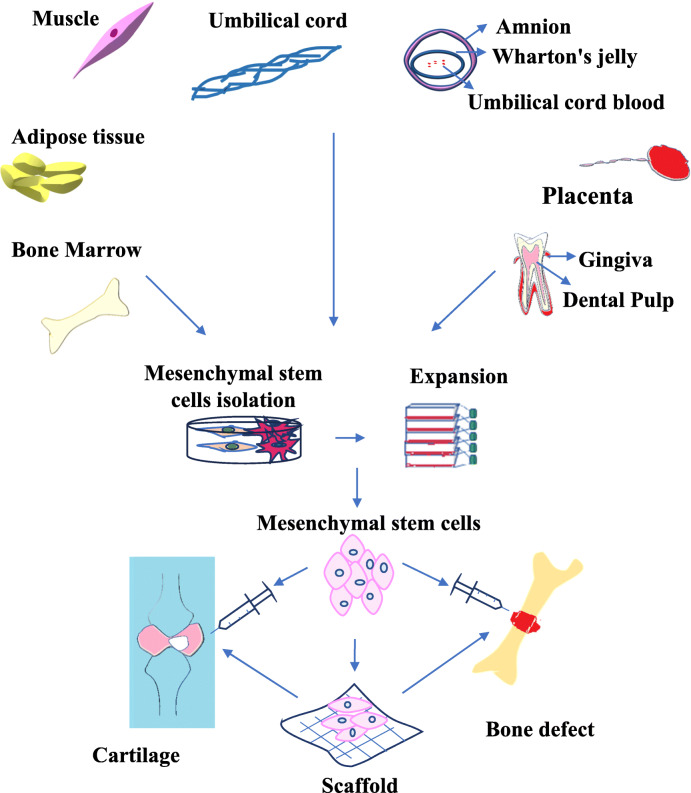
Skeletal disorders are among the leading debilitating factors affecting millions of people worldwide. The use of stem cells for tissue repair has raised many promises in various medical fields, including skeletal disorders. Mesenchymal stem cells (MSCs) are multipotent stromal cells with mesodermal and neural crest origin. These cells are one of the most attractive candidates in regenerative medicine, and their use could be helpful in repairing and regeneration of skeletal disorders through several mechanisms including homing, angiogenesis, differentiation, and response to inflammatory condition. The most widely studied sources of MSCs are bone marrow (BM), adipose tissue, muscle, umbilical cord (UC), umbilical cord blood (UCB), placenta (PL), Wharton’s jelly (WJ), and amniotic fluid. These cells are capable of differentiating into osteoblasts, chondrocytes, adipocytes, and myocytes in vitro. MSCs obtained from various sources have diverse capabilities of secreting many different cytokines, growth factors, and chemokines. It is believed that the salutary effects of MSCs from different sources are not alike in terms of repairing or reformation of injured skeletal tissues. Accordingly, differential identification of MSCs’ secretome enables us to make optimal choices in skeletal disorders considering various sources. This review discusses and compares the therapeutic abilities of MSCs from different sources for bone and cartilage diseases.
Overview
The claims and statistics of this paper haven’t been checked yet.
Free: it reads the open-access text and checks the first 5 claims that cite a source we can check. Create a free account to check every claim.
Integrity signals
Registry
Cites
Statistics
Figures
Verification
Claims the paper makes
The claims and statistics of this paper haven’t been checked yet.
Free: it reads the open-access text and checks the first 5 claims that cite a source we can check. Create a free account to check every claim.
Claims other papers make about this one
Each is checked against this paper’s own text: does it say what the citing paper says it does?
The source backs part of the claim, not all of it — or backs it for a different population, condition or comparison.
In the citing paper
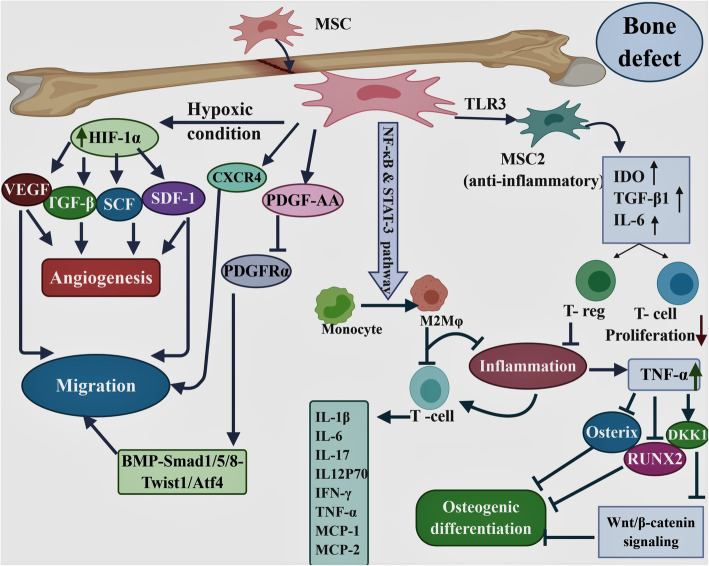
“This process is triggered by the response of MSCs to inflammatory factors released from the bone fracture site, such as PDGFs and BMPs, which activate BMP-Smad1/5/8 signaling, promoting MSC migration [40,77,78].”
From Mesenchymal Stem/Stromal Cells: Immunomodulatory and Bone Regeneration Potential after Tumor Excision in Osteosarcoma Patients (2023) · cites this paper as [40]
Experimental — accuracy not yet measuredThe cited source says what the claim attributes to it.
In the citing paper
“Specifically, in vitro and in vivo studies have demonstrated the pivotal role of MSCs in the bone healing process through their potential to enhance osteoinduction and osteogenesis.”
From Mesenchymal Stem/Stromal Cells: Immunomodulatory and Bone Regeneration Potential after Tumor Excision in Osteosarcoma Patients (2023) · cites this paper as [40]
The cited source says what the claim attributes to it.
In the citing paper
“MSC-EVs promote osteoblast proliferation, differentiation, and bone formation, contributing to bone repair and fracture healing [40,49].”
From Mesenchymal Stem/Stromal Cells: Immunomodulatory and Bone Regeneration Potential after Tumor Excision in Osteosarcoma Patients (2023) · cites this paper as [40]
The cited source says what the claim attributes to it.
In the citing paper
“Moreover, EVs produced by MSCs have emerged as a novel therapeutic method for bone diseases [40].”
From Mesenchymal Stem/Stromal Cells: Immunomodulatory and Bone Regeneration Potential after Tumor Excision in Osteosarcoma Patients (2023) · cites this paper as [40]
The cited source says what the claim attributes to it.
In the citing paper
“MSCs can contribute to bone repair and regeneration through several mechanisms, including facilitating cell migration, homing, angiogenesis, response to inflammation, and differentiation [40].”
From Mesenchymal Stem/Stromal Cells: Immunomodulatory and Bone Regeneration Potential after Tumor Excision in Osteosarcoma Patients (2023) · cites this paper as [40]
4 more claims about this paper
Create a free account to see every claim other papers make about this one.
Self-check
Percentages, sums and reported differences re-computed from the paper’s own numbers.
The self-check needs the paper’s full text.
Citations
Cites
1 retracted
Wang, N., Zhou, Z., Wu, T., Liu, W. X., Yin, P., Pan, C., & Yu, X. (2016) · Open Biology · doi:10.1098/rsob.150258 · Cited by 89 · cited 1×
“Another important effect of TNF-α in inflammatory conditions is inhibition of two essential osteogenic differentiation factors including RUNX2 and osterix, leading to the suppression of MSC differentiation [275, 276].”
BackgroundRetractedDominici, M., Le Blanc, K., Mueller, I., Slaper-Cortenbach, I., Marini, F. C., Krause, D. S., Deans, R. J., Keating, A., Prockop, D. J., & Horwitz, E. M. (2006) · Cytotherapy · doi:10.1080/14653240600855905 · Cited by 17,766 · cited 4×
“Several in vitro and in vivo studies on the degeneration of the IVD both in animal models and in clinical trials indicated that NP, AF, and CEPs contain cells with surface markers, morphology, proliferation rate, and multilineage differentiation capability similar to Table 3 Characterization of MSC from various tissue…”
BackgroundInfluentialLanger, R., & Vacanti, J. P. (1993) · Science · doi:10.1126/science.8493529 · Cited by 9,893
Kern, S., Eichler, H., Stoeve, J., Klüter, H., & Bieback, K. (2006) · STEM CELLS · doi:10.1634/stemcells.2005-0342 · Cited by 3,370
Di Nicola, M., Carlo-Stella, C., Magni, M., Milanesi, M., Longoni, P. D., Matteucci, P., Grisanti, S., & Gianni, A. M. (2002) · Blood · doi:10.1182/blood.v99.10.3838 · Cited by 3,226
Glyn-Jones, S., Palmer, A. J. R., Agricola, R., Price, A. J., Vincent, T. L., Weinans, H., & Carr, A. J. (2015) · The Lancet · doi:10.1016/s0140-6736(14)60802-3 · Cited by 3,151
Osteoarthritis: A disease of the joint as an organ
Loeser, R. F., Goldring, S. R., Scanzello, C. R., & Goldring, M. B. (2012) · Arthritis & Rheumatism · doi:10.1002/art.34453 · Cited by 3,076
Zhang, W., Moskowitz, R. W., Nuki, G., Abramson, S., Altman, R. D., Arden, N., Bierma-Zeinstra, S., Brandt, K. D., Croft, P., Doherty, M., et al. (2008) · Osteoarthritis and Cartilage · doi:10.1016/j.joca.2007.12.013 · Cited by 2,796 · cited 1×
“to manage the pain, stiffness, and swelling but are not effective to prevent the OA progression [196, 197].”
BackgroundThe Basic Science of Articular Cartilage: Structure, Composition, and Function
Sophia Fox, A. J., Bedi, A., & Rodeo, S. A. (2009) · Sports Health: A Multidisciplinary Approach · doi:10.1177/1941738109350438 · Cited by 2,774 · cited 1×
“II is the main structural protein in cartilage and forms a meshwork for entrapping proteoglycans such as aggrecan, decorin, and sendycan [187, 188].”
BackgroundBiology of Bone Tissue: Structure, Function, and Factors That Influence Bone Cells
Florencio-Silva, R., Sasso, G. R. D. S., Sasso-Cerri, E., Simões, M. J., & Cerri, P. S. (2015) · BioMed Research International · doi:10.1155/2015/421746 · Cited by 2,044 · cited 1×
“Collagen fibers are the main makeup in the organic phase while inorganic phase is mainly composed of hydroxyapatite [76, 78, 79].”
Background
Research works printed but not linked: 2
- Hasan M Shuckett R Clinical features and pathogenetic mechanisms of osteoarthritis of the hip and knee BC Med J 2010 52 8 393 398
- Ghaderi H, Razmkhah M, Kiany F, Chenari N, Haghshenas MR, Ghaderi A. Comparison of osteogenic and chondrogenic differentiation ability of buccal fat pad derived mesenchymal stem cells and gingival derived cells. J Dent. 2018;19(2):124–31. PMC5960732 29854886
Cited by
Stem cell-based therapy for human diseases
Hoang, D. M., Pham, P. T., Bach, T. Q., Ngo, A. T. L., Nguyen, Q. T., Phan, T. T. K., Nguyen, G. H., Le, P. T. T., Hoang, V. T., Forsyth, N. R., et al. (2022) · Signal Transduction and Targeted Therapy · doi:10.1038/s41392-022-01134-4 · Cited by 1,074
Inflammatory Processes Affecting Bone Health and Repair
de Oliveira, H. T., Arnold, K. M., Oviedo, M., Westendorf, J. J., & Weaver, S. R. (2023) · Current Osteoporosis Reports · doi:10.1007/s11914-023-00824-4 · Cited by 150
“Application of MPCs from various sources, including adipose tissue, bone marrow, or dental pulp, aids in fracture repair in part by inhibiting chronic inflammation [162].”
Engineering exosomes and biomaterial-assisted exosomes as therapeutic carriers for bone regeneration
Lu, Y., Mai, Z., Cui, L., & Zhao, X. (2023) · Stem Cell Research & Therapy · doi:10.1186/s13287-023-03275-x · Cited by 115
“MSCs hold great promise for wide-ranging clinical applications and regenerative medicine, as they retain the potential to differentiate into multilineages under defined conditions and the ability to self-renew [8, 9].”
BackgroundMalekpour, K., Hazrati, A., Zahar, M., Markov, A. A., Zekiy, A. O., Navashenaq, J. G., Roshangar, L., & Ahmadi, M. (2021) · Stem Cell Reviews and Reports · doi:10.1007/s12015-021-10185-z · Cited by 127
The role and applications of extracellular vesicles in osteoporosis
Fang, F., Yang, J., Wang, J., Li, T., Wang, E., Zhang, D., Liu, X., & Zhou, C. (2024) · Bone Research · doi:10.1038/s41413-023-00313-5 · Cited by 116
“103 Currently, the application paradigm of MSCs has shifted from a differentiation-and replacement-based approach to one centered around the use of secreted and paracrine effectors.”
BackgroundLi, S., Liu, J., Liu, S., Jiao, W., & Wang, X. (2021) · Journal of Nanobiotechnology · doi:10.1186/s12951-021-00940-2 · Cited by 101
Harnessing knee joint resident mesenchymal stem cells in cartilage tissue engineering
Xu, X., Xu, L., Xia, J., Wen, C., Liang, Y., & Zhang, Y. (2023) · Acta Biomaterialia · doi:10.1016/j.actbio.2023.07.024 · Cited by 86
Bačenková, D., Trebuňová, M., Demeterová, J., & Živčák, J. (2023) · International Journal of Molecular Sciences · doi:10.3390/ijms242317096 · Cited by 82
Park, S., Rahaman, K. A., Kim, Y.-C., Jeon, H., & Han, H. (2024) · Bioactive Materials · doi:10.1016/j.bioactmat.2024.06.022 · Cited by 112
“Stem cells treat various diseases and damaged tissues by exploiting their unique properties with or without incorporating external genes [56].”
BackgroundRecent advances in bioprinting technologies for engineering different cartilage-based tissues
Agarwal, T., Chiesa, I., Presutti, D., Irawan, V., Vajanthri, K. Y., Costantini, M., Nakagawa, Y., Tan, S.-A. S. W., Makvandi, P., Zare, E. N., et al. (2021) · Materials Science and Engineering C · doi:10.1016/j.msec.2021.112005 · Cited by 67
Hyaluronic Acid-Based Dynamic Hydrogels for Cartilage Repair and Regeneration
Zhang, M., Ye, Q., Zhu, Z., Shi, S., Xu, C., Xie, R., & Li, Y. (2024) · Gels · doi:10.3390/gels10110703 · Cited by 72
“At present, mesenchymal stem cells (MSCs) are the ideal choice to replace chondrocytes in cartilage tissue engineering due to their strong chondrogenic ability, abundant cell source, low immunogenicity and few ethical problems [98].”
Gao, W. L., Chen, K., He, W., Zhao, S., Cui, D., Tao, C., Xu, Y., Xiao, X., Feng, Q., & Xia, H. (2023) · Composites Part B Engineering · doi:10.1016/j.compositesb.2023.110857 · Cited by 61
Hu, X., Wu, H., Yong, X., Wang, Y., Yang, S., Fan, D., Xiao, Y., Che, L., Shi, K., Li, K., et al. (2023) · MedComm · doi:10.1002/mco2.425 · Cited by 80
Mesenchymal stem cells derived exosomes: a new era in cardiac regeneration
Pisheh, H. R., & Sani, M. (2025) · Stem Cell Research & Therapy · doi:10.1186/s13287-024-04123-2 · Cited by 60
Mesenchymal stem/stromal cells in breast cancer development and management
Tu, Z., & Karnoub, A. E. (2022) · Seminars in Cancer Biology · doi:10.1016/j.semcancer.2022.09.002 · Cited by 55
CRLF1 and CLCF1 in Development, Health and Disease
Crisponi, L., Buers, I., & Rutsch, F. (2022) · International Journal of Molecular Sciences · doi:10.3390/ijms23020992 · Cited by 49
“Osteoblasts, osteocytes, and chondrocytes arise from multipotent mesenchymal stem cells (MSCs) [90,91].”
BackgroundWang, Y., Yung, P. S., Lü, G., Liu, Y., Ding, C., Mao, C., Li, Z. A., & Tuan, R. S. (2024) · Advanced Materials · doi:10.1002/adma.202401334 · Cited by 61
Advancement in the Treatment of Osteoporosis and the Effects on Bone Healing
Kushchayeva, Y. S., Pestun, I., Kushchayev, S. V., Radzikhovska, N., & Lewiecki, E. M. (2022) · Journal of Clinical Medicine · doi:10.3390/jcm11247477 · Cited by 54
“Osteoporotic bones are characterized by a low bone mineral density (BMD) and the degradation of the bone structure due to an imbalance in bone remodeling, with osteoclastic bone resorption exceeding osteoblastic bone formation [12].”
BackgroundHuang, J., Li, Q., Yuan, X., Liu, Q., Zhang, W., & Li, P. (2022) · Stem Cell Research & Therapy · doi:10.1186/s13287-022-02756-9 · Cited by 47
Gemayel, J., Chaker, D., Hachem, G. E., Mhanna, M., Salemeh, R., Hanna, C., Harb, F., Ibrahim, A., Chebly, A., & Khalil, C. (2023) · Clinical & Translational Oncology · doi:10.1007/s12094-023-03115-7 · Cited by 53
Luan, Z., Liu, J., Li, M., Wang, Y., & Wang, Y. (2024) · Journal of Orthopaedic Surgery and Research · doi:10.1186/s13018-024-04651-w · Cited by 54
“The differentiation potential of UC-MSCs into diverse cell types, such as bone, cartilage, and myocardium, has been evidenced by research under in vitro and in vivo induction conditions [13, 14].”
BackgroundChen, Y., Yang, H., Wang, Z., Zhu, R., Cheng, L., & Cheng, Q. (2023) · Stem Cell Research & Therapy · doi:10.1186/s13287-023-03296-6 · Cited by 41
Revolutionizing osteoarthritis treatment: How mesenchymal stem cells hold the key
Tian, R., Su, S., Yu, Y., Liang, S., Ma, C., Jiao, Y., Xing, W., Tian, Z., Jiang, T., & Wang, J. (2024) · Biomedicine & Pharmacotherapy · doi:10.1016/j.biopha.2024.116458 · Cited by 45
Targeting proteostasis network in osteoporosis: Pathological mechanisms and therapeutic implications
Ma, C., Yu, R., Li, J., Chao, J., & Liu, P. (2023) · Ageing Research Reviews · doi:10.1016/j.arr.2023.102024 · Cited by 40
“HSP90 regulates bone formation The ability of BMSCs to migrate and differentiate into osteoblasts plays a crucial role in bone formation (Kangari et al., 2020).”
Sources and Therapeutic Strategies of Mesenchymal Stem Cells in Regenerative Medicine
Kamal, M. M., Kassem, D. H., & Haider, K. H. (2022) · Springer eBooks · doi:10.1007/978-981-16-6016-0_2-1 · Cited by 41
Zhao, Y., Dong, H., Xia, Q., Wang, Y., Zhu, L., Hu, Z., Xia, J., Mao, Q., Weng, Z., Yi, J., et al. (2024) · Biomedicine & Pharmacotherapy · doi:10.1016/j.biopha.2024.116238 · Cited by 37
Liang, W., Zhou, C., Liu, X., Xie, Q., Xia, L., Liu, L., Bao, W., Lin, H., Xiong, X., Zhang, H., et al. (2025) · Journal of Orthopaedic Translation · doi:10.1016/j.jot.2024.12.006 · Cited by 49
“…by MSCs. MSCs support bone regeneration by several processes, such as migration, angiogenesis, responding to inflammatory conditions, and differentiation via the synthesis of diverse mediators [144]. microenvironment is hostile, certain parameters need to be upheld to enhance its functionality.”
Use of Amniotic Membrane and Its Derived Products for Bone Regeneration: A Systematic Review
Etchebarne, M., Fricain, J., Kerdjoudj, H., Pietro, R. D., Wolbank, S., Gindraux, F., & Fénelon, M. (2021) · Frontiers in Bioengineering and Biotechnology · doi:10.3389/fbioe.2021.661332 · Cited by 37
Lu, C.-H., Chen, Y., Ke, C., & Liu, R.-S. (2021) · International Journal of Molecular Sciences · doi:10.3390/ijms222312750 · Cited by 41
Cell Therapy Approaches for Articular Cartilage Regeneration
Makarczyk, M. J. (2023) · Organogenesis · doi:10.1080/15476278.2023.2278235 · Cited by 35
“…(BMSCs) ● Adipose tissue 62 (ADSCs) ● Umbilical Cord 63 ● Unlimited cell source 16 ● No immunogenicity 53 ● Immunomodulation for anti-inflammation 63 ● Variability of cell expansion due to aging 64 ● Phenotypic alterations during differentiation 55, 64 ● Intraarticular injection concern of…”
BackgroundKostadinova, M., Raykovska, M., Simeonov, R., Lolov, S. R., & Mourdjeva, M. (2025) · Current Issues in Molecular Biology · doi:10.3390/cimb47040287 · Cited by 42
“Transplanted MSCs can contribute to bone regeneration through angiogenesis stimulation by the expression of angiogenic factors such as VEGF, TGF-β , SDF-1, and stem cell factor (SCF) [8,123,124].”
Sources, Characteristics, and Therapeutic Applications of Mesenchymal Cells in Tissue Engineering
Gonzalez-Vilchis, R. A., Piedra-Ramirez, A., Patiño-Morales, C. C., Sánchez‐Gómez, C., & Beltran-Vargas, N. E. (2022) · Tissue Engineering and Regenerative Medicine · doi:10.1007/s13770-021-00417-1 · Cited by 43
“, derived from components of the extracellular matrix) or synthetic biomaterials [13], along with the creation of an appropriate environment that mimics in vivo conditions to enhance tissue development through chemical and electrical mechanisms [14, 15].”
BackgroundChen, B., Zhao, X., Xu, M., Luo, J., Bai, L., Han, Q., Gao, Y., Guo, B., & Yin, Z. (2024) · Advanced Healthcare Materials · doi:10.1002/adhm.202404091 · Cited by 40
Zawrzykraj, M., Deptuła, M., Kondej, K., Tymińska, A., & Pikuła, M. (2023) · Biomedicine & Pharmacotherapy · doi:10.1016/j.biopha.2023.115781 · Cited by 39
iPSCs chondrogenic differentiation for personalized regenerative medicine: a literature review
Ali, E., Smaida, R., Meyer, M., Ou, W., Li, Z., Han, Z., Benkirane-Jessel, N., Gottenberg, J., & Hua, G. (2024) · Stem Cell Research & Therapy · doi:10.1186/s13287-024-03794-1 · Cited by 37
“Among the different sources of MSCs, bone marrow-derived MSCs (BM-MSCs) are the most commonly used MSCs in regenerative medicine, particularly for cartilage and bone regeneration [10].”
A Comparative Study of Canine Mesenchymal Stem Cells Isolated from Different Sources
Humeník, F., Maloveská, M., Hudáková, N., Petroušková, P., Horňáková, Ľ., Domaniža, M., Mudroňová, D., Bodnárová, S., & Cizkova, D. (2022) · Animals · doi:10.3390/ani12121502 · Cited by 35
“Due to the fact of their multilineage differentiating ability, mesenchymal stem cells expand the possibilities of regenerative medicine [9], where their application helps to replace bone tissue and cartilage [5,10].”
BackgroundSaadh, M. J., Ramírez-Coronel, A. A., Saini, R. S., Arias-Gonzáles, J. L., Amin, A. H., Gavilán, J. C. O., & Sârbu, I. (2023) · Human Cell · doi:10.1007/s13577-023-00904-8 · Cited by 30
“MSCs can be obtained from various human tissues and body fluids, including the bone marrow, blood, adipose tissue, dental pulp, umbilical cord, amniotic fluid, endometrial polyps, and placenta [15, 16].”
BackgroundJeyaraman, M., Muthu, S., Jeyaraman, N., Ranjan, R., Jha, S. K., & Mishra, P. C. (2021) · Indian Journal of Orthopaedics · doi:10.1007/s43465-021-00439-w · Cited by 34
Injectable silk fibroin peptide nanofiber hydrogel composite scaffolds for cartilage regeneration
Wu, D., Li, J., Wang, C., Su, Z., Su, H., Chen, Y., & Yu, B. (2024) · Materials Today Bio · doi:10.1016/j.mtbio.2024.100962 · Cited by 39
Hamdalla, H. M., Ahmed, R. R., Galaly, S. R., Ahmed, O. M., Naguib, I. A., Alghamdi, B. S. A., & Abdul‐Hamid, M. (2022) · Stem Cells International · doi:10.1155/2022/1900403 · Cited by 31
“In contrast, the MIA+BM-MSC-treated group showed a reduction (P 0:05) in the levels of TGF-β compared with the MIA-treated group and an increase relative to the normal rats.”
BackgroundInfluentialGerami, M. H., Khorram, R., Rasoolzadegan, S., Mardpour, S., Nakhaei, P., Hashemi, S., Al-Naqeeb, B. Z. T., Aminian, A., & Samimi, S. (2023) · European Journal of Medical Research · doi:10.1186/s40001-023-01034-5 · Cited by 27
RetractedFeng, K., Wang, F., Chen, H., Zhang, R., Liu, J., Li, X., Xie, X., & Kang, Q. (2024) · Journal of Nanobiotechnology · doi:10.1186/s12951-024-02632-z · Cited by 36
“However, direct transplantation of stem cells has several disadvantages including the risk of immune rejection and potential tumorigenesis [55, 56].”
BackgroundBasic and Preclinical Research for Personalized Medicine
Lattanzi, W., Ripoli, C., Greco, V., Barba, M., Iavarone, F., Minucci, A., Urbani, A., Grassi, C., & Parolini, O. (2021) · Journal of Personalized Medicine · doi:10.3390/jpm11050354 · Cited by 32
Sampath, S. J. P., Rath, S. N., Kotikalapudi, N., & Venkatesan, V. (2021) · Inflammopharmacology · doi:10.1007/s10787-021-00874-z · Cited by 30
“The MSCs are isolated from a variety of tissues such as bone marrow, adipose tissue, fetal liver, umbilical cord, muscle, endometrial polyps, dental tissue, synovial fluid, skin, foreskin, Wharton’s jelly, placenta, dental pulp, breast milk, gingiva, amnion and menstrual blood, and characterized as plastic adherent ce…”
BackgroundHope for bone regeneration: The versatility of iron oxide nanoparticles
Wang, N., Xie, Y., Xi, Z., Mi, Z., Deng, R., Liu, X., Kang, R., & Liu, X. (2022) · Frontiers in Bioengineering and Biotechnology · doi:10.3389/fbioe.2022.937803 · Cited by 36
Umbilical Cord Mesenchymal Stromal Cells for Cartilage Regeneration Applications
Russo, E., Čaprnda, M., Kružliak, P., Conaldi, P. G., Borlongan, C. V., & Rocca, G. L. (2022) · Stem Cells International · doi:10.1155/2022/2454168 · Cited by 32
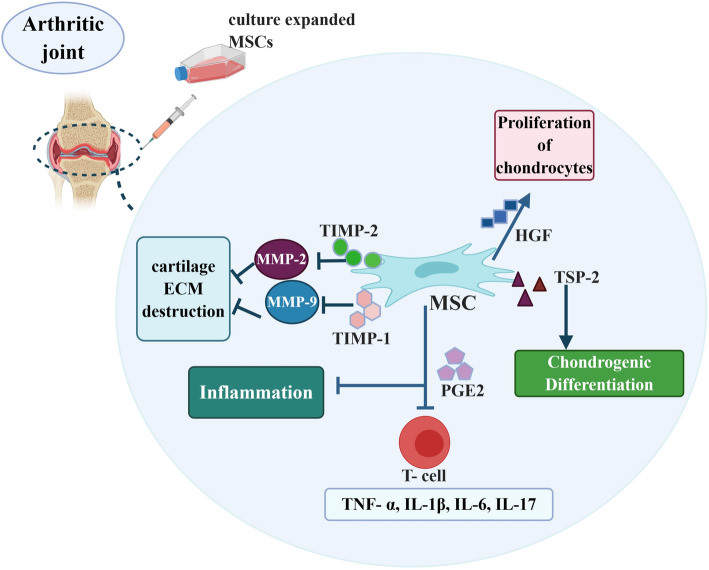
“In particular, HGF has been involved in inhibition of the fibrosis and apoptosis of chondrocytes and increase ECM synthesis [65].”
BackgroundDias, I. X., Cordeiro, A., Guimaräes, J. A. M., & Silva, K. R. (2023) · Biomolecules · doi:10.3390/biom13091342 · Cited by 26
“These trophic, immunomodulatory, and regenerative mechanisms are beneficial for the treatment of MSK disorders associated with osteochondral defects, cartilage lesions, and osteoarthritis [8,9].”
BackgroundKangari, P., Roshangar, L., Iraji, A., Talaei‐Khozani, T., & Razmkhah, M. (2022) · Journal of Orthopaedic Surgery and Research · doi:10.1186/s13018-022-03305-z · Cited by 34
“In this regard, extensive investigations have been performed on MSC therapy in bone repair alone or in combination with other remedies [3, 4].”
Self-citationLiu, L., Yu, F., Chen, L., Xia, L., Wu, C., & Fang, B. (2023) · Advanced Healthcare Materials · doi:10.1002/adhm.202202390 · Cited by 26
Liu, P., An, Y., Zhu, T., Tang, S., Huang, X., Li, S., Fu, F., Ji, C., & Xuan, K. (2023) · Frontiers in Cellular and Infection Microbiology · doi:10.3389/fcimb.2023.1131218 · Cited by 26
“, 2021), cartilage (Kangari et al., 2020), functional tooth roots and dental pulp (Xuan et al.”
BackgroundFeng, K., Yu, Y., Chen, Z., Wang, F., Zhang, K., Chen, H., Xu, J. L., & Kang, Q. (2023) · Materials Today Bio · doi:10.1016/j.mtbio.2023.100637 · Cited by 24
Mesenchymal stem cells in the treatment of osteogenesis imperfecta
Lang, E., & Semon, J. A. (2023) · Cell Regeneration · doi:10.1186/s13619-022-00146-3 · Cited by 27
Manochantr, S., Meesuk, L., Chadee, N., Suwanprateeb, J., Tantrawatpan, C., & Kheolamai, P. (2024) · Stem Cell Research & Therapy · doi:10.1186/s13287-024-04014-6 · Cited by 23
“The properties make PL-MSCs a promising candidate for clinical applications in the treatment of various bone diseases, fractures, and osteoporosis, which has been highlighted in previous studies [12, 13].”
Huang, Z., Xiao, X., Jiang, X., Yang, S., Niu, C., Yang, Y.-C., Yang, L., Li, C., & Feng, L. (2023) · Polymer Testing · doi:10.1016/j.polymertesting.2023.107936 · Cited by 26
Micro RNA based MSC EV engineering: Targeting the BMP2 cascade for bone repair
Huang, C.-C., Kang, M., Leung, K. S., Lu, Y., Shirazi, S., Gajendrareddy, P. K., & Ravindran, S. (2023) · Frontiers in Cell and Developmental Biology · doi:10.3389/fcell.2023.1127594 · Cited by 24
“Their immunomodulatory and regenerative potential is well documented across multiple tissues (Kangari et al., 2020), organ systems (Abdi et al.”
BackgroundSadiq, I. Z., Abubakar, F. S., Katsayal, B. S., Ibrahim, B., Adamu, A., Usman, M. A., Aliyu, M., Suleiman, M. A., & Muhammad, A. (2025) · Biomedical Engineering Advances · doi:10.1016/j.bea.2025.100172 · Cited by 35
Smart biomaterials for skeletal aging repair and regeneration
Liang, D., Wang, H., Jiang, Y., Zhang, Z., Zhou, T., Ge, S., Tan, S., Qin, K., Wang, Y., Lin, X., et al. (2026) · Bone Research · doi:10.1038/s41413-026-00505-9 · Cited by 28
“28 Compared with controls, the distal femurs of ovariectomized (OVX) rabbits treated by MSCs demonstrated an increase in trabecular thickness, bone apposition, and bone stiffness.”
Nerves within bone and their application in tissue engineering of bone regeneration
Liu, S., Liu, S., Li, S., Liang, B., Han, X. D., Liang, Y., & Wei, X. (2023) · Frontiers in Neurology · doi:10.3389/fneur.2022.1085560 · Cited by 21
“The application of MSCs in bone regeneration is described in detail in the reviews of Kangari (68) and Shang (69).”
BackgroundLuo, Z., Ma, J., Wang, Y., Du, Y., Liu, Y., Zhang, W., Lai, Y., & Ma, X. (2024) · International Journal of Biological Macromolecules · doi:10.1016/j.ijbiomac.2024.135721 · Cited by 27
Immunomodulatory Actions of Mesenchymal Stromal Cells (MSCs) in Osteoarthritis of the Knee
Babu, G. S., Badrish, Y., Oswal, V. M., Jeyaraman, N., Prajwal, G. S., Jeyaraman, M., Muthu, S., & Khanna, M. (2021) · Osteology · doi:10.3390/osteology1040020 · Cited by 21
Non-viral gene delivery to human mesenchymal stem cells: a practical guide towards cell engineering
Carballo-Pedrares, N., Ponti, F., López-Seijas, J., Miranda-Balbuena, D., Bono, N., Candiani, G., & Rey‐Rico, A. (2023) · Journal of Biological Engineering · doi:10.1186/s13036-023-00363-7 · Cited by 24
New Perspectives of Therapies in Osteogenesis Imperfecta—A Literature Review
Dinulescu, A., Păsărică, A.-S., Carp, M., Dușcă, A., Dijmărescu, I., Pavelescu, M. L., Păcurar, D., & Ulici, A. (2024) · Journal of Clinical Medicine · doi:10.3390/jcm13041065 · Cited by 23
Enhanced osteogenesis of mesenchymal stem cells encapsulated in injectable microporous hydrogel
Edwards, S., Ganash, M., Guan, Z., Lee, J., Kim, Y. J., & Jeong, K. J. (2024) · Scientific Reports · doi:10.1038/s41598-024-65731-9 · Cited by 25
Baron, M., Drohat, P., Crawford, B., Hornicek, F. J., Best, T. M., & Kouroupis, D. (2023) · Bioengineering · doi:10.3390/bioengineering10101187 · Cited by 19
“This process is triggered by the response of MSCs to inflammatory factors released from the bone fracture site, such as PDGFs and BMPs, which activate BMP-Smad1/5/8 signaling, promoting MSC migration [40,77,78].”
BackgroundMethodInfluentialMechanotransduction through adhesion molecules: Emerging roles in regulating the stem cell niche
Lim, R., Banerjee, A., Biswas, R., Chari, A. N., & Raghavan, S. (2022) · Frontiers in Cell and Developmental Biology · doi:10.3389/fcell.2022.966662 · Cited by 22
Management of chondral and osteochondral lesions of the hip
Itha, R., Vaishya, R., Vaish, A., & Migliorini, F. (2023) · Die Orthopädie · doi:10.1007/s00132-023-04444-9 · Cited by 18
Estévez, M., Cicuéndez, M., Colilla, M., Vallet‐Regí, M., González, B., & Izquierdo‐Barba, I. (2024) · Journal of Colloid and Interface Science · doi:10.1016/j.jcis.2024.03.043 · Cited by 22
Cardoso, L. M., de Carvalho, A. B. G., Anselmi, C., Mahmoud, A. H., Dal‐Fabbro, R., Basso, F. G., & Bottino, M. C. (2024) · Dental Materials · doi:10.1016/j.dental.2024.06.019 · Cited by 19
Łabędź‐Masłowska, A., Szkaradek, A., Mierzwinski, T., Madeja, Z., & Zuba‐Surma, E. K. (2021) · Cells · doi:10.3390/cells10081908 · Cited by 21
“gov on 18 June 2021; studies found for “mesenchymal stem cells”) for human diseases, including bone diseases [22], diabetes [23], multiple sclerosis [24], and cardiovascular disorders [25].”
BackgroundSha, Z., Liu, W., Jiang, T., Zhang, K., & Yu, Z. (2023) · Biotechnology and Genetic Engineering Reviews · doi:10.1080/02648725.2023.2194087 · Cited by 17
“MSCs may play a therapeutic role by inhibiting inflammation, cell apoptosis and promoting angiogenesis (Kangari et al., 2020; L. L. Zhang et al., 2021).”
Luo, P. F., Zhang, Y., Huang, M., Luo, G., Ma, Y., & Wang, X. (2024) · International Journal of Nanomedicine · doi:10.2147/ijn.s443413 · Cited by 18
“…are highly appreciated for their paracrine effects, which a variety of cytokines were secreted by MSCs, including vascular endothelial growth factor (VEGF), transforming growth factor beta (TGF-β), etc. 64 These secreted factors play critical roles in would healing and bone regeneration process.”
BackgroundKolliopoulos, V., Tiffany, A., Polanek, M., & Harley, B. A. C. (2023) · doi:10.1101/2023.11.12.566781 · Cited by 17
Muthu, S., Mir, A. A., Kumar, R., Yadav, V., Jeyaraman, M., & Khanna, M. (2021) · Journal of Clinical Orthopaedics and Trauma · doi:10.1016/j.jcot.2021.101744 · Cited by 17
Reconstructive Paradigms: A Problem-Solving Approach in Complex Tissue Defects
Grosu-Bularda, A., Hodea, F.-V., Cretu, A., Lita, F.-F., Bordeanu-Diaconescu, E.-M., Vancea, C.-V., Lascăr, I., & Popescu, Ș. A. (2024) · Journal of Clinical Medicine · doi:10.3390/jcm13061728 · Cited by 19
“In reconstructive surgery, bone marrow-derived MSCs are utilized for their regenerative potential for wound healing, the repair of bone and cartilage defects, and the restoration of skin and soft tissue defects [48–50].”
BackgroundHe, Q., Shi, J., Liu, W., Zhao, W. H., Wang, Z., Liu, K., Zhao, D., Wang, S., Guo, Y., Cheng, L., et al. (2022) · Cell Death Discovery · doi:10.1038/s41420-022-01132-z · Cited by 16
Meng, H., Liu, X., Liu, R., Zheng, Y., Hou, A., Liu, S., He, W. D., Wang, Y., Wang, A., Guo, Q., et al. (2024) · Journal of Orthopaedic Translation · doi:10.1016/j.jot.2024.04.005 · Cited by 20
Li, H., Zhang, P., Lin, M., Li, K., Zhang, C., He, X., & Gao, K. (2025) · Stem Cell Research & Therapy · doi:10.1186/s13287-025-04167-y · Cited by 18
Khatkar, H., & See, A. (2021) · Cureus · doi:10.7759/cureus.13869 · Cited by 15
“Mesenchymal stem cells are introduced into the clinical site either by direct injection into the clinical site, or along bioengineered scaffolds which seek to promote proliferation, MSC survival and are considered more osteoconductive surfaces in comparison to the host surface [25].”
BackgroundNaumenko, E., Guryanov, I., Zakirova, E. Y., & Fakhrullin, R. F. (2021) · Polymers · doi:10.3390/polym13223949 · Cited by 17
“) and the methodology used for MSCs isolation [12,13].”
MethodFunctionalized Hydrogels for Cartilage Repair: The Value of Secretome-Instructive Signaling
Barisón, M. J., Nogoceke, R., Josino, R., Horinouchi, C. D. D. S., Marcon, B. H., Correa, A., Stimamiglio, M. A., & Robert, A. W. (2022) · International Journal of Molecular Sciences · doi:10.3390/ijms23116010 · Cited by 16
Controlled delivery of mesenchymal stem cells via biodegradable scaffolds for fracture healing
Han, D. H., Wang, W., Gong, J., Ma, Y., & Li, Y. (2024) · Nanomedicine · doi:10.1080/17435889.2024.2439242 · Cited by 15
Multiscale metal-based nanocomposites for bone and joint disease therapies
Wang, Y., Jan, H., Zheng, Z., Zhou, L., Teng, K., Chen, Y., Xu, J., Xie, D., Chen, D., Xu, J., et al. (2025) · Materials Today Bio · doi:10.1016/j.mtbio.2025.101773 · Cited by 24
“…ROS = reactive oxygen species; RONS = reactive nitrogen species; MnO In cases of bone and joint disorders, the body ’ s intrinsic capacity to repair damaged tissues is often insufficient, leading to discomfort and restricting the patient ’ s mobility, locomotion, and daily activities [40].”
YBX1 Promotes MSC Osteogenic Differentiation by Activating the PI3K/AKT Pathway
Chen, J., Liu, Z., Zhang, H., Yong-qian, Y., Zeng, H.-X., Zhong, R., Lai, S., & Liao, H. (2022) · Current Stem Cell Research & Therapy · doi:10.2174/1574888x17666220805143833 · Cited by 14
Her, Y. F., Kubrova, E., Alvarez, G. A. M., & D'Souza, R. S. (2022) · Journal of Pain Research · doi:10.2147/jpr.s373345 · Cited by 18
“MSCs are a population of multipotent cells that can differentiate along the chondrogenic, osteogenic, and adipogenic lineages in vitro.(15) Historically, MSCs have been harvested and isolated from bone marrow, known as bone marrow derived MSCs (BM-MSC), commonly by accessing and aspirating from the iliac crest.”
BackgroundMesenchymal-Stromal-Cell-Conditioned Media and Their Implication for Osteochondral Regeneration
Ivanisova, D., Boháč, M., Culenova, M., Smolinská, V., & Danišovič, Ľ. (2023) · International Journal of Molecular Sciences · doi:10.3390/ijms24109054 · Cited by 18
“Due to their differential healing capacity, mesenchymal stromal cells (MSCs) have been intensively studied concerning osteochondral regeneration [10].”
BackgroundDonor Sex and Passage Conditions Influence MSC Osteogenic Response in Mineralized Collagen Scaffolds
Kolliopoulos, V., Tiffany, A. S., Polanek, M., & Harley, B. A. C. (2024) · Advanced Healthcare Materials · doi:10.1002/adhm.202400039 · Cited by 38
Yang, Y. P., Ying, T., Ma, J., Li, J., & Song, Z. (2024) · Biochemical Pharmacology · doi:10.1016/j.bcp.2024.116725 · Cited by 17
Arab, F., Aghaee‐Bakhtiari, S. H., Pasdar, A., & Saburi, E. (2022) · Molecular Biology Reports · doi:10.1007/s11033-022-08084-8 · Cited by 14
“The use of stem cells in skeletal disorders to repair bone defects has created bright prospects [6].”
BackgroundWang, X., Zhao, Y., Li, S., Wang, Y., Jia, C., Yang, X., Li, S., Zhang, B., Wei, W., & Chang, Y. (2022) · Human Cell · doi:10.1007/s13577-022-00811-4 · Cited by 15
Circular RNA circ-3626 promotes bone formation by modulating the miR-338-3p/Runx2 axis
Chen, G., Wang, S., Wei, R., Liu, Y., Xu, T., Liu, Z., Tan, Z., Xie, Y., Yang, D., Liang, Z., et al. (2023) · Joint Bone Spine · doi:10.1016/j.jbspin.2023.105669 · Cited by 13
Biofabrication of an in-vitro bone model for Gaucher disease
Banerjee, D., Ivanova, M. M., Celik, N., Kim, M.-H., Derman, İ. D., Limgala, R. P., Ozbolat, I. T., & Göker-Alpan, Ö. (2023) · Biofabrication · doi:10.1088/1758-5090/acf95a · Cited by 12
“…in-vitro bone models concentrate on hMSCs or osteoblasts derived from hMSCs with marginal or often no consideration of the presence of osteoclasts in bone [29, 30]; however, osteo-clasts are the cells which initiate bone modeling and are known to regulate osteoblast precursors to form bone [31].”
N6-Methyladenosine in Cell-Fate Determination of BMSCs: From Mechanism to Applications
Zhang, Q., Li, J., Wang, C., Li, Z., Luo, P., Gao, F., & Sun, W. (2024) · Research · doi:10.34133/research.0340 · Cited by 12
The impact of exosomes on bone health: A focus on osteoporosis
Mehrvar, A., Akbari, M., Khosroshahi, E. M., Nekavand, M., Mokhtari, K., Baniasadi, M., Aghababaian, M., Karimi, M., Amiri, S., Moazen, A., et al. (2024) · Pathology - Research and Practice · doi:10.1016/j.prp.2024.155618 · Cited by 15
Tomita, S., Ishihara, S., & Kurita, R. (2022) · Journal of Materials Chemistry B · doi:10.1039/d2tb00606e · Cited by 13
Liu, W. X., Huang, Y., Liu, D., Zeng, T., Wang, J., Li, A., Wang, D., & Wang, X. (2022) · Tissue Engineering and Regenerative Medicine · doi:10.1007/s13770-022-00471-3 · Cited by 16
“In recent years, several in vitro and in vivo studies have proposed the application of MSCs in bone defect repair [7].”
BackgroundSurgical treatment of cartilage lesions in the knee: A narrative review
Matsushita, T., Tokura, T., Okimura, K., Sano, S., Nishida, K. K., Nagai, K., & Hoshino, Y. Y. (2023) · Journal of Joint Surgery and Research · doi:10.1016/j.jjoisr.2023.02.001 · Cited by 12
Bone tissue regeneration by 58S bioactive glass scaffolds containing exosome: an in vivo study
Ranjbar, F. E., Ranjbar, A. E., Malekshahi, Z. V., Taghdiri-Nooshabadi, Z., Faradonbeh, D. R., Youseflee, P., Ghasemi, S., Vatanparast, M., Azim, F., & Nooshabadi, V. T. (2023) · Cell and Tissue Banking · doi:10.1007/s10561-023-10120-1 · Cited by 14
“…with differentiation capability into variety types of cells and regulating immunological responses (Han et al. 2019; Hasanzadeh et al. 2020, 2021; Kangari et al. 2020).furthermore MSC pro-liferated easily and quickly invitro and the super-natants, growth factors, and cytokines produced by MSCs…”
Zhang, J., Xu, D.-L., Liu, X., You, S., An, T., Yang, H., Sun, X., & Wang, T. L. (2025) · ACS Biomaterials Science & Engineering · doi:10.1021/acsbiomaterials.5c00559 · Cited by 11
Wu, Z., Gao, Y., Chen, Q., & Li, Y. (2025) · Journal of Cellular and Molecular Medicine · doi:10.1111/jcmm.70896 · Cited by 13
“Both muscle cells and adipocytes originate from mesodermal precursors [46], indicating a potential for specific interactions between skeletal muscle and adipose tissue [47].”
Di, J., Han, J., Cai, J., Huan, Z., Wang, Y., & Ge, X. (2023) · Biochimica et Biophysica Acta (BBA) - Molecular Cell Research · doi:10.1016/j.bbamcr.2023.119571 · Cited by 11
Metadata
- Authors
- Kangari, P., Talaei-Khozani, T., Razeghian-Jahromi, I., & Razmkhah, M.
- Affiliations
- Shiraz University of Medical Sciences (IR)
- Corresponding author
- Razmkhah, Mahboobeh
- Venue
- Stem Cell Research & Therapy
- Published
- 2020-11-23
- Volume
- 11
- Issue
- 1
- Pages
- 492-492
- ISSN
- 1757-6512 (ISSN-L)
- PMC
- PMC7681994
- OpenAlex
- W3108324966
- Cited by
- 286
- References
- 327
- Citations by year
- 2026: 21 · 2025: 53 · 2024: 69 · 2023: 73 · 2022: 47 · 2021: 23
- FWCI
- 5.73
- Type
- journal article
- Language
- en
- Open access
- gold
- doi.org
- Licence
- cc-by
- creativecommons.org/licenses/by/4.0/ (tdm)
- creativecommons.org/licenses/by/4.0/ (vor)
- Locations
- Stem Cell Research & Therapy (publishedVersion, cc-by)
- PubMed Central (publishedVersion, cc-by)
- PubMed (publishedVersion)
- Funders
- Shiraz University of Medical Sciences (ICR100-504)
- Shiraz University
- Shiraz Institute for Cancer Research, Shiraz University of Medical Sciences (ICR-100-504)
- Topics
- Life Sciences › Biochemistry, Genetics and Molecular Biology › Cell Biology › Mesenchymal stem cell research
- Physical Sciences › Engineering › Biomedical Engineering › Bone Tissue Engineering Materials
- Health Sciences › Dentistry › Periodontics › Periodontal Regeneration and Treatments
- Keywords
- mesenchymal stem cells, bone defects, cartilage defects, bone disease, regenerative medicine, stem cell sources, bone marrow, adipose tissue, umbilical cord, placenta, Wharton's jelly, amniotic fluid, osteogenic differentiation, chondrogenic differentiation, secretome, angiogenesis, cell homing, inflammation
- MeSH terms
- Cartilage, Cartilage Diseases, Cell Differentiation, Female, Humans, Pregnancy, Umbilical Cord, Mesenchymal Stem Cells, Wharton Jelly
About these checks
Registry, retraction, Cites and statistics results are computed, not judged, with one exception: a printed reference that no index lists is read once by a model before it counts as a citation error. Claims are extracted by a model and kept only when their quote appears verbatim in the text; each cited source is then checked, with a model’s help, for whether it says what the claim relies on. Those verdicts can be wrong — read the claim’s quote and the cited source before relying on one.
Statistics and arithmetic are recomputed, not judged.
Confidence bands are shown only for fields calibrated on our annotated test set. None is calibrated yet, so no band is shown.
What counts as a claim ›How we measure confidence ›How we check this ›
Are you an author, or do you see a problem with this page? Request a review
Data sources
Bibliographic data: Semantic Scholar, OpenAlex, Crossref.
Contains information from the Semantic Scholar Academic Graph Datasets, made available under the ODC Attribution License (ODC-BY 1.0).
Semantic Scholar’s data is described in: Kinney, R., et al. (2023). The Semantic Scholar Open Data Platform. arXiv:2301.10140.
