

Evaluation of the Spanish population coverage of a prospective HLA haplobank of induced pluripotent stem cells
Open accessPublished version of a preprint
The DOI matches its Crossref record; 32 of the 32 references it cites were found in a registry or an index.
Abstract
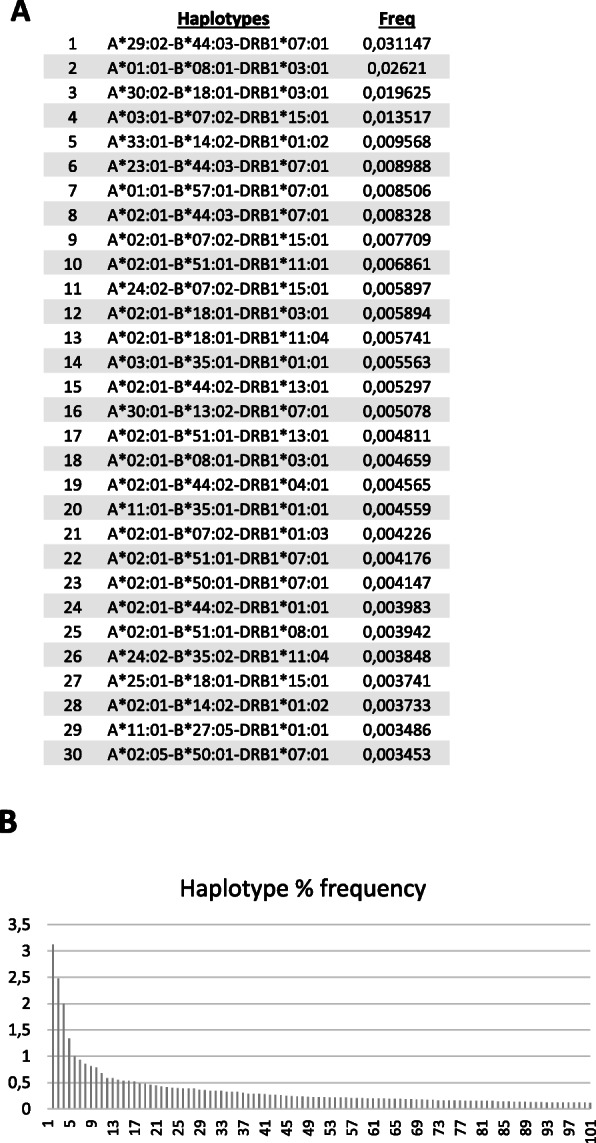
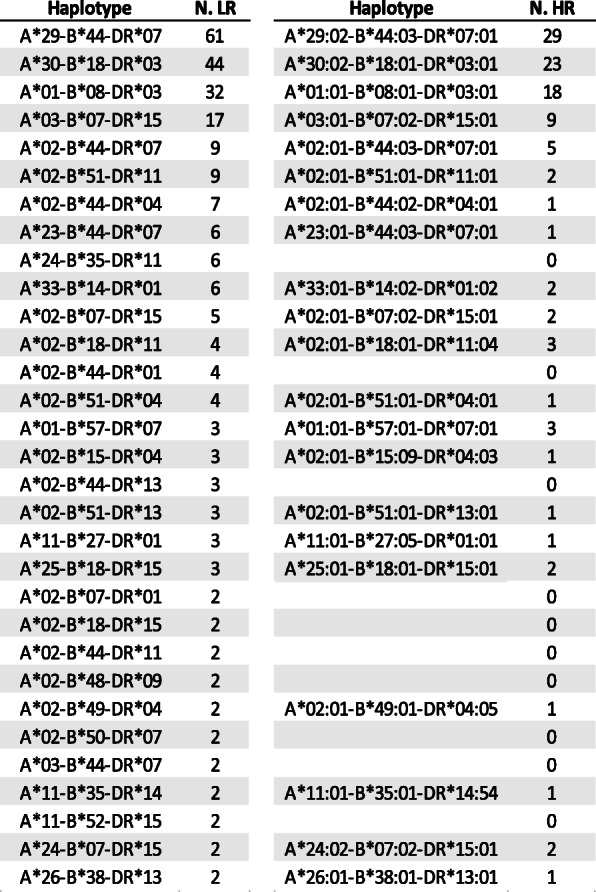
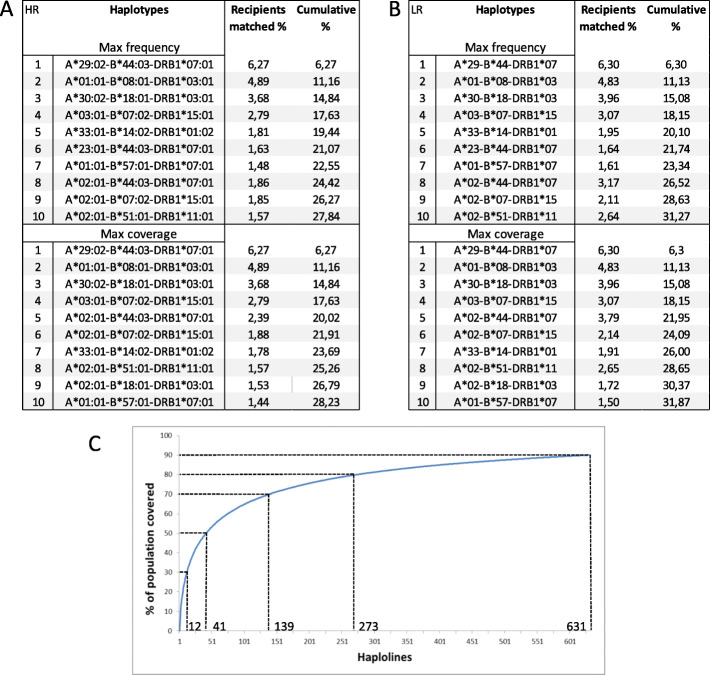
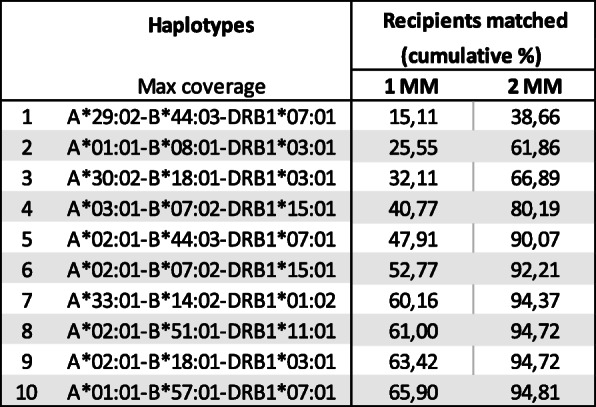
BACKGROUND: iPSC (induced pluripotent stem cells) banks of iPSC lines with homozygous HLA (human leukocyte antigen) haplotypes (haplobanks) are proposed as an affordable and off-the-shelf approach to allogeneic transplantation of iPSC derived cell therapies. Cord blood banks offer an extensive source of HLA-typed cells suitable for reprogramming to iPSC. Several initiatives worldwide have been undertaken to create national and international iPSC haplobanks that match a significant part of a population. METHODS: To create an iPSC haplobank that serves the Spanish population (IPS-PANIA), we have searched the Spanish Bone Marrow Donor Registry (REDMO) to identify the most frequently estimated haplotypes. From the top ten donors identified, we estimated the population coverage using the criteria of zero mismatches in HLA-A, HLA-B, and HLA-DRB1 with different stringencies: high resolution, low resolution, and beneficial mismatch. RESULTS: We have calculated that ten cord blood units from homozygous donors stored at the Spanish cord blood banks can provide HLA-A, HLA-B, and HLA-DRB1 matching for 28.23% of the population. CONCLUSION: We confirm the feasibility of using banked cord blood units to create an iPSC haplobank that will cover a significant percentage of the Spanish and international population for future advanced therapy replacement strategies.
Overview
The claims and statistics of this paper haven’t been checked yet.
Free: it reads the open-access text and checks the first 5 claims that cite a source we can check. Create a free account to check every claim.
Integrity signals
Registry
Cites
Statistics
Figures
Verification
Claims the paper makes
The claims and statistics of this paper haven’t been checked yet.
Free: it reads the open-access text and checks the first 5 claims that cite a source we can check. Create a free account to check every claim.
Claims other papers make about this one
Each is checked against this paper’s own text: does it say what the citing paper says it does?
The cited source says what the claim attributes to it.
In the citing paper
“For instance, 631 HLA homozygous iPSCs would be required to cover 90% of the Spanish population, while less than 200 iPSCs are required to reach the same coverage in Korea [111].”
From Utility of iPSC-Derived Cells for Disease Modeling, Drug Development, and Cell Therapy (2022) · cites this paper as [111]
Self-check
Percentages, sums and reported differences re-computed from the paper’s own numbers.
The self-check needs the paper’s full text.
Citations
Cites
Arlequin (version 3.0): An integrated software package for population genetics data analysis
Excoffier, L., Laval, G., & Schneider, S. (2005) · Evolutionary Bioinformatics · doi:10.1177/117693430500100003 · Cited by 14,280
Autologous Induced Stem-Cell–Derived Retinal Cells for Macular Degeneration
Mandai, M., Watanabe, A., Kurimoto, Y., Hirami, Y., Morinaga, C., Daimon, T., Fujihara, M., Akimaru, H., Sakai, N., Shibata, Y., et al. (2017) · New England Journal of Medicine · doi:10.1056/nejmoa1608368 · Cited by 1,509
The promise of induced pluripotent stem cells in research and therapy
Robinton, D. A., & Daley, G. Q. (2012) · Nature · doi:10.1038/nature10761 · Cited by 1,111
An Integrated Software Package for Population Genetics Data Analysis
Excoffier, L., & Lischer, H. E. L. (2015) · Cited by 798
Taylor, C. J., Bolton, E. M., Pocock, S., Sharples, L. D., Pedersen, R. A., & Bradley, J. A. (2005) · The Lancet · doi:10.1016/s0140-6736(05)67813-0 · Cited by 493
Taylor, C. J., Peacock, S., Chaudhry, A. N., Bradley, J. A., & Bolton, E. M. (2012) · Cell stem cell · doi:10.1016/j.stem.2012.07.014 · Cited by 428
HLA-haplotype banking and iPS cells
Nakatsuji, N., Nakajima, F., & Tokunaga, K. (2008) · Nature Biotechnology · doi:10.1038/nbt0708-739 · Cited by 336
Quality Control Guidelines for Clinical-Grade Human Induced Pluripotent Stem Cell Lines
Sullivan, S., Stacey, G. N., Akazawa, C., Aoyama, N., Baptista, R., Bedford, P., Bennaceur Griscelli, A., Chandra, A., Elwood, N., Girard, M., et al. (2018) · Regenerative Medicine · doi:10.2217/rme-2018-0095 · Cited by 265
Fürst, D., Müller, C., Vucinic, V., Bunjes, D., Herr, W., Gramatzki, M., Schwerdtfeger, R., Arnold, R., Einsele, H., Wulf, G., et al. (2013) · Blood · doi:10.1182/blood-2013-02-482547 · Cited by 207
Williams, R. C., Opelz, G., McGarvey, C. J., Weil, E. J., & Chakkera, H. A. (2016) · Transplantation · doi:10.1097/tp.0000000000001115 · Cited by 190
Cited by
Induced pluripotent stem cells (iPSCs): molecular mechanisms of induction and applications
Cerneckis, J., Cai, H., & Shi, Y. (2024) · Signal Transduction and Targeted Therapy · doi:10.1038/s41392-024-01809-0 · Cited by 452
Yoshida, S., Kato, T. M., Sato, Y., Umekage, M., Ichisaka, T., Tsukahara, M., Takasu, N., & Yamanaka, S. (2023) · Med · doi:10.1016/j.medj.2022.10.003 · Cited by 134
Utility of iPSC-Derived Cells for Disease Modeling, Drug Development, and Cell Therapy
Nicholson, M. W., Ting, C.-Y., Chan, D. Z. H., Cheng, Y.-C., Lee, Y.-C., Hsu, C.-C., Huang, C.-Y., & Hsieh, P. C. H. (2022) · Cells · doi:10.3390/cells11111853 · Cited by 65
Kuebler, B., Álvarez-Palomo, B., Arán, B., Castaño, J., Rodriguez, L., Raya, Á., Querol, S., & Veiga, A. (2023) · Stem Cell Research & Therapy · doi:10.1186/s13287-023-03576-1 · Cited by 37
“CB donors homozygous for the most frequent HLA-A, HLA-B and HLA-DRB1 haplotypes were chosen following an immunogenetic study to obtain the widest coverage of the Spanish population [19].”
BackgroundMethodSelf-citationCurrent Landscape of iPSC Haplobanks
Escribá, R., Beksaç, M., Griscelli, A. B., Glover, J. C., Koskela, S., Latsoudis, H., Querol, S., & Álvarez-Palomo, B. (2024) · Stem Cell Reviews and Reports · doi:10.1007/s12015-024-10783-7 · Cited by 31
“…Japan 50 haplolines would cover 90.7% of the potential recipients [54], other populations with a more diverse HLA pool would need even higher numbers: more than 600 lines would be necessary to cover 90% of the Spanish population [20] and more than 500 to cover 90% of the Brazilian population [22].”
BackgroundInfluentialSelf-citationShi, P. A., Luchsinger, L. L., Greally, J. M., & Delaney, C. S. (2022) · Current Opinion in Hematology · doi:10.1097/moh.0000000000000732 · Cited by 29
iPS cell therapy 2.0: Preparing for next‐generation regenerative medicine
Hui, K. K., & Yamanaka, S. (2024) · BioEssays · doi:10.1002/bies.202400072 · Cited by 24
“…with lower HLA heterogeneity in their populations, [8–10] this is unlikely to be a viable solution for countries with greater population diversity [11] and necessitates the use of genome-edited hypoimmunogenic iPSCs as a universal cell source (as discussed briefly below and in detail previously…”
Álvarez-Palomo, B., Veiga, A., Raya, Á., Codinach, M., Torrents, S., Verdugo, L. P., Rodriguez-Aierbe, C., Cuellar, L., Alenda, R., Arbona, C., et al. (2022) · Stem Cell Research & Therapy · doi:10.1186/s13287-022-02961-6 · Cited by 20
“From the 9419 which are genotyped in high resolution, we identified 109 homozygous units corresponding to 43 different haplotypes and we ranked the haplotypes priority according to the cumulative coverage capacity for HLA matching, as previously described [12].”
BackgroundMethodSelf-citationHLA-based banking of induced pluripotent stem cells in Saudi Arabia
Alowaysi, M., Lehmann, R., Al-Shehri, M., Baadhaim, M., Alzahrani, H., Aboalola, D. A., Zia, A., Malibari, D., Daghestani, M., Alghamdi, K., et al. (2023) · Stem Cell Research & Therapy · doi:10.1186/s13287-023-03612-0 · Cited by 20
“Therefore, there has been an increased interest in HLA-based iPS banking in numerous countries [5, 14, 15, 30, 32, 46, 47].”
BackgroundInfluentialSomatic Reprogramming—Above and Beyond Pluripotency
Meir, Y. J., & Li, G. (2021) · Cells · doi:10.3390/cells10112888 · Cited by 20
Miyamae, J., Okano, M., Katakura, F., Kulski, J. K., Moritomo, T., & Shiina, T. (2023) · Cells · doi:10.3390/cells12050809 · Cited by 16
Liedtke, S., Többen, S., Gressmann, H., Meyer, A., Verde, P. E., Gluckman, É., & Kögler, G. (2023) · Stem Cells Translational Medicine · doi:10.1093/stcltm/szad071 · Cited by 14
Harnessing Global HLA Data for Enhanced Patient Matching in iPSC Haplobanks
Maiers, M. J., Sullivan, S. K., McClain, C., Leonhard‐Melief, C., Turner, M. L., & Turner, D. M. (2024) · Cytotherapy · doi:10.1016/j.jcyt.2024.11.001 · Cited by 13
Muñoz-Domínguez, N., Carreras‐Sánchez, I., López‐Fernández, A., & Vives, J. (2022) · Cryobiology · doi:10.1016/j.cryobiol.2022.08.002 · Cited by 13
Induced pluripotent stem cells in companion animals: how can we move the field forward?
Barrachina, L., Arshaghi, T. E., O’Brien, A., Ivanovska, A., & Barry, F. (2023) · Frontiers in Veterinary Science · doi:10.3389/fvets.2023.1176772 · Cited by 11
“Furthermore, the iPSCs stored in haplobanks can be differentiated into various cell types, which can then be used for transplantation or in vitro disease modeling (175).”
BackgroundClancy, J., Hyvärinen, K., Ritari, J., Wahlfors, T., Partanen, J., & Koskela, S. (2022) · Stem Cell Research & Therapy · doi:10.1186/s13287-022-03182-7 · Cited by 11
“In Spain, the population coverage estimations of HLA-A, -B and -DRB1 homozygous donors for 41 haplolines have been shown to be 50% of the Spanish population, and 190 homozygous haplolines for HLA-A, -B, -C, -DRB1 and -DQB1 was estimated to cover 70% of the Spanish population [13].”
BackgroundRoslan, F. F., Yu, Y., Ooi, G., Then, K., Then, K. Y., Cheong, S., Guo, Z., Patar, M. N. A. A., & Tan, J. J. (2024) · International Journal of Molecular Medicine · doi:10.3892/ijmm.2024.5438 · Cited by 9
Gómez‐Massa, E., Enrich, E., Nunes, J. M., Mata, M. J. H., & Rudilla, F. (2025) · HLA · doi:10.1111/tan.70441 · Cited by 7
“HLA-homozygous induced pluripotent stem cells (iPSC) (haplo-banks) have been established worldwide to provide affordable, clinical-grade starting material and off- the-shelf for cell therapies covering the most frequent HLA haplotypes [32–35].”
Self-citationHe, J., He, Y., Zhan, Q., Wu, Z., Sheng, Q., Zhang, W., & Zhu, F. (2025) · Stem Cell Research & Therapy · doi:10.1186/s13287-025-04159-y · Cited by 3
“However, HLA is highly polymorphic in the most ethnically diverse populations, and more iPSC lines would be needed to achieve a coverage level greater than 80% for patients in other populations [12–13].”
BackgroundPateraki, P., Latsoudis, H., Παπαδοπούλου, Α., Gontika, I., Fragiadaki, I., Mavroudi, I., Bizymi, N., Batsali, A. K., Klontzas, M. E., Xagorari, A., et al. (2024) · Journal of Clinical Medicine · doi:10.3390/jcm13041152 · Cited by 3
Manchanayake, G. S., García‐López, J., & Vives, J. (2023) · Global Journal of Transfusion Medicine · doi:10.4103/gjtm.gjtm_48_22 · Cited by 2
Cord blood in a rapidly evolving biotherapies landscape
Sun, J. M., & Kurtzberg, J. (2026) · Transfusion · doi:10.1111/trf.70112 · Cited by 1
Arán, B., Morrow, D. J., & Rodrigue, E. M. (2024) · Cell and Gene Therapy Insights · doi:10.18609/cgti.2024.012
Introduction to stem cell biology and its role in treating neurologic disorders
Parmar, M., & Perrier, A. L. (2024) · Handbook of clinical neurology · doi:10.1016/b978-0-323-90120-8.00005-8
Additional file 4 of HLA-based banking of induced pluripotent stem cells in Saudi Arabia
Alowaysi, M., Lehmann, R., Al-Shehri, M., Baadhaim, M., Alzahrani, H., Aboalola, D. A., Zia, A., Malibari, D., Daghestani, M., Alghamdi, K., et al. (2024) · Figshare · doi:10.6084/m9.figshare.26655931
Additional file 5 of HLA-based banking of induced pluripotent stem cells in Saudi Arabia
Alowaysi, M., Lehmann, R., Al-Shehri, M., Baadhaim, M., Alzahrani, H., Aboalola, D. A., Zia, A., Malibari, D., Daghestani, M., Alghamdi, K., et al. (2024) · Figshare · doi:10.6084/m9.figshare.26655934
Additional file 7 of HLA-based banking of induced pluripotent stem cells in Saudi Arabia
Alowaysi, M., Lehmann, R., Al-Shehri, M., Baadhaim, M., Alzahrani, H., Aboalola, D. A., Zia, A., Malibari, D., Daghestani, M., Alghamdi, K., et al. (2024) · Figshare · doi:10.6084/m9.figshare.26655940
Additional file 3 of HLA-based banking of induced pluripotent stem cells in Saudi Arabia
Alowaysi, M., Lehmann, R., Al-Shehri, M., Baadhaim, M., Alzahrani, H., Aboalola, D. A., Zia, A., Malibari, D., Daghestani, M., Alghamdi, K., et al. (2024) · Figshare · doi:10.6084/m9.figshare.26655928
Kuebler, B., Álvarez-Palomo, B., Arán, B., Castaño, J., Rodriguez, L., Raya, A., Querol, S., & Veiga, A. (2024) · Figshare · doi:10.6084/m9.figshare.26653576
Self-citationClancy, J., Hyvärinen, K., Ritari, J., Wahlfors, T., Partanen, J., & Koskela, S. (2022) · Figshare · doi:10.6084/m9.figshare.21303634
Álvarez-Palomo, B., Veiga, A., Raya, A., Codinach, M., Torrents, S., Verdugo, L. P., Rodriguez-Aierbe, C., Cuellar, L., Alenda, R., Arbona, C., et al. (2022) · Figshare · doi:10.6084/m9.figshare.20484711
Self-citationClancy, J., Hyvärinen, K., Ritari, J., Wahlfors, T., Partanen, J., & Koskela, S. (2022) · Figshare · doi:10.6084/m9.figshare.21303640
Additional file 8 of HLA-based banking of induced pluripotent stem cells in Saudi Arabia
Alowaysi, M., Lehmann, R., Al-Shehri, M., Baadhaim, M., Alzahrani, H., Aboalola, D. A., Zia, A., Malibari, D., Daghestani, M., Alghamdi, K., et al. (2024) · Figshare · doi:10.6084/m9.figshare.26655943
Additional file 6 of HLA-based banking of induced pluripotent stem cells in Saudi Arabia
Alowaysi, M., Lehmann, R., Al-Shehri, M., Baadhaim, M., Alzahrani, H., Aboalola, D. A., Zia, A., Malibari, D., Daghestani, M., Alghamdi, K., et al. (2024) · Figshare · doi:10.6084/m9.figshare.26655937
Additional file 2 of HLA-based banking of induced pluripotent stem cells in Saudi Arabia
Alowaysi, M., Lehmann, R., Al-Shehri, M., Baadhaim, M., Alzahrani, H., Aboalola, D. A., Zia, A., Malibari, D., Daghestani, M., Alghamdi, K., et al. (2023) · Figshare · doi:10.6084/m9.figshare.26655925
Pluripotent stem cell bank for frequent haplotypes of the spanish population
Valor Marcelino, L. (2022) · RIUVic
Induced Pluripotent Stem Cells: A Unique Model for Studying the Human Brain in Health and Disease
Novosadova, E. V., & Grivennikov, I. A. (2025) · Neurochemical Journal · doi:10.1134/s1819712425700692
Hosawi, M., Baadhaim, M., Al-Shehri, M., Herrera‐López, G., Ramirez, G., Fadaili, Y., Zakri, S., Haneef, A., Hakami, F., Alamoudi, D., et al. (2026) · Research Square · doi:10.21203/rs.3.rs-8666694/v1
Novosadova, E. V., & Grivennikov, I. A. (2025) · Нейрохимия · doi:10.7868/s3034556125030094
Galitsyna, E. V., Ulyakina, N. A., Vladimirov, G. K., & Gusev, A. B. (2026) · Genes and Cells · doi:10.17816/gc683471
Muro-Pérez, M., Moya‐Quiles, M. R., Botella, C., Galián, J. A., Fernández-González, M., González-López, R., Alegría, M. J., Hita, A., Martínez‐Banaclocha, H., Muro, J., et al. (2026) · International Journal of Molecular Sciences · doi:10.3390/ijms27188218
Metadata
- Authors
- Álvarez-Palomo, B., García-Martinez, I., Gayoso, J., Raya, A., Veiga, A., Abad, M. L., Eiras, A., Guzmán-Fulgencio, M., Luis-Hidalgo, M., Eguizabal, C., Santos, S., Balas, A., Alenda, R., Sanchez-Gordo, F., Verdugo, L. P., Villa, J., Carreras, E., Vidal, F., Madrigal, A., Herrero, M. J., Rudilla, F., & Querol, S.
- Affiliations
- Vall d'Hebron Institut de Recerca (ES)
- Organización Nacional de Trasplantes (ES)
- Institut d'Investigació Biomédica de Bellvitge (ES)
- BioCruces Health research Institute (ES)
- Comunidad de Madrid (ES)
- Josep Carreras Leukaemia Research Institute (ES)
- Universitat Autònoma de Barcelona (ES)
- Banc de Sang i Teixits (ES)
- Corresponding author
- Álvarez-Palomo, Belén
- ORCID
- Venue
- Stem Cell Research & Therapy
- Published
- 2021-04-13
- Volume
- 12
- Issue
- 1
- Pages
- 233-233
- ISSN
- 1757-6512 (ISSN-L)
- PMC
- PMC8042859
- OpenAlex
- W3153744415
- Cited by
- 37
- References
- 32
- Citations by year
- 2026: 2 · 2025: 3 · 2024: 12 · 2023: 8 · 2022: 11 · 2021: 1
- FWCI
- 2.74
- Type
- journal article
- Language
- en
- Open access
- gold
- doi.org
- Licence
- cc-by
- creativecommons.org/licenses/by/4.0/ (tdm)
- creativecommons.org/licenses/by/4.0/ (vor)
- Locations
- Stem Cell Research & Therapy (publishedVersion, cc-by)
- Research Square (acceptedVersion, cc-by)
- PubMed Central (publishedVersion, cc-by)
- PubMed (publishedVersion)
- RISalud Institutional Health Repository of Andalucía (submittedVersion, cc-by)
- Dipòsit Digital de Documents de la UAB (Universitat Autònoma de Barcelona) (submittedVersion, cc-by)
- Dipòsit Digital de la Universitat de Barcelona (Universitat de Barcelona) (submittedVersion, cc-by)
- DOAJ (DOAJ: Directory of Open Access Journals) (submittedVersion, cc-by-sa)
- Funders
- Ministerio de Ciencia, Innovación y Universidades (RTC-2017-6000-1)
- Topics
- Life Sciences › Biochemistry, Genetics and Molecular Biology › Molecular Biology › Pluripotent Stem Cells Research
- Health Sciences › Medicine › Hematology › Hematopoietic Stem Cell Transplantation
- Health Sciences › Nursing › Issues, ethics and legal aspects › Biomedical Ethics and Regulation
- Keywords
- induced pluripotent stem cells, HLA matching, umbilical cord blood, allogeneic cell therapy, Spanish population, HLA mismatch, bone marrow donor registry, population coverage
- MeSH terms
- Blood Banks, Haplotypes, HLA Antigens, Humans, Prospective Studies, Tissue Donors, Induced Pluripotent Stem Cells
About these checks
Registry, retraction, Cites and statistics results are computed, not judged, with one exception: a printed reference that no index lists is read once by a model before it counts as a citation error. Claims are extracted by a model and kept only when their quote appears verbatim in the text; each cited source is then checked, with a model’s help, for whether it says what the claim relies on. Those verdicts can be wrong — read the claim’s quote and the cited source before relying on one.
Statistics and arithmetic are recomputed, not judged.
Confidence bands are shown only for fields calibrated on our annotated test set. None is calibrated yet, so no band is shown.
What counts as a claim ›How we measure confidence ›How we check this ›
Are you an author, or do you see a problem with this page? Request a review
Data sources
Bibliographic data: Semantic Scholar, OpenAlex, Crossref.
Contains information from the Semantic Scholar Academic Graph Datasets, made available under the ODC Attribution License (ODC-BY 1.0).
Semantic Scholar’s data is described in: Kinney, R., et al. (2023). The Semantic Scholar Open Data Platform. arXiv:2301.10140.
