

The role and therapeutic potential of stem cells in skeletal muscle in sarcopenia
Open accessThe DOI matches its Crossref record; 122 of the 122 references it cites were found in a registry or an index.
Abstract
Sarcopenia is a common age-related skeletal muscle disorder featuring the loss of muscle mass and function. In regard to tissue repair in the human body, scientists always consider the use of stem cells. In skeletal muscle, satellite cells (SCs) are adult stem cells that maintain tissue homeostasis and repair damaged regions after injury to preserve skeletal muscle integrity. Muscle-derived stem cells (MDSCs) and SCs are the two most commonly studied stem cell populations from skeletal muscle. To date, considerable progress has been achieved in understanding the complex associations between stem cells in muscle and the occurrence and treatment of sarcopenia. In this review, we first give brief introductions to sarcopenia, SCs and MDSCs. Then, we attempt to untangle the differences and connections between these two types of stem cells and further elaborate on the interactions between sarcopenia and stem cells. Finally, our perspectives on the possible application of stem cells for the treatment of sarcopenia in future are presented. Several studies emerging in recent years have shown that changes in the number and function of stem cells can trigger sarcopenia, which in turn leads to adverse influences on stem cells because of the altered internal environment in muscle. A better understanding of the role of stem cells in muscle, especially SCs and MDSCs, in sarcopenia will facilitate the realization of novel therapy approaches based on stem cells to combat sarcopenia.
Overview
The claims and statistics of this paper haven’t been checked yet.
Free: it reads the open-access text and checks the first 5 claims that cite a source we can check. Create a free account to check every claim.
Integrity signals
Registry
Cites
Statistics
Figures
Verification
Claims the paper makes
The claims and statistics of this paper haven’t been checked yet.
Free: it reads the open-access text and checks the first 5 claims that cite a source we can check. Create a free account to check every claim.
Claims other papers make about this one
Each is checked against this paper’s own text: does it say what the citing paper says it does?
In the citing paper
“Mesenchymal stem cells represent an attractive future potential therapy for sarcopenic obesity because of their immunomodulatory qualities and multipotent nature; however, current data supporting their benefits remain limited, and future clinical studies are required to properly understand their mechanism of action in the specific context of sarcopenic obesity (97).”
From Sarcopenic obesity: epidemiology, pathophysiology, cardiovascular disease, mortality, and management (2023) · cites this paper as [97]
Self-check
Percentages, sums and reported differences re-computed from the paper’s own numbers.
The self-check needs the paper’s full text.
Citations
Cites
Sarcopenia: revised European consensus on definition and diagnosis
Cruz-Jentoft, A. J., Bahat, G., Bauer, J., Boirie, Y., Bruyère, O., Cederholm, T., Cooper, C., Landi, F., Rolland, Y., Sayer, A. A., et al. (2019) · Age and Ageing · doi:10.1093/ageing/afy169 · Cited by 13,818 · cited 1×
“At present, the most popular definition and diagnostic criteria were proposed by the European Working Group on Sarcopenia in Older People (EWGSOP2) in 2019 [3], with the aim of increasing awareness of sarcopenia and its risk among clinical practitioners.”
BackgroundOxidative stress, aging, and diseases
Liguori, I., Russo, G., Curcio, F., Bulli, G., Aran, L., Della-Morte, D., Gargiulo, G., Testa, G., Cacciatore, F., Bonaduce, D., et al. (2018) · Clinical Interventions in Aging · doi:10.2147/cia.s158513 · Cited by 3,979 · cited 2×
“Reactive oxygen and nitrogen species (RONS) usually appear after various processes in the human body, and their negative effects are neutralized by antioxidants in normal cases [44].”
BackgroundCruz-Jentoft, A. J., & Sayer, A. A. (2019) · The Lancet · doi:10.1016/s0140-6736(19)31138-9 · Cited by 3,905
Sarcopenia: revised European consensus on definition and diagnosis
Cruz-Jentoft, A. J., Bahat, G., Bauer, J., Boirie, Y., Bruyère, O., Cederholm, T., Cooper, C., Landi, F., Rolland, Y., Sayer, A. A., et al. (2019) · Age and Ageing · doi:10.1093/ageing/afz046 · Cited by 3,803
SATELLITE CELL OF SKELETAL MUSCLE FIBERS
Mauro, A. (1961) · The Journal of Cell Biology · doi:10.1083/jcb.9.2.493 · Cited by 3,683 · cited 1×
“SCs In 1961, Mauro first discovered SCs in the muscle of frogs and many other vertebrates by electron microscopy [13].”
BackgroundExercise as medicine - evidence for prescribing exercise as therapy in 26 different chronic diseases
Pedersen, B. K., & Saltin, B. (2015) · Scandinavian Journal of Medicine & Science in Sports · doi:10.1111/sms.12581 · Cited by 3,514
Skeletal muscle mass and distribution in 468 men and women aged 18–88 yr
Janssen, I., Heymsfield, S. B., Wang, Z., & Ross, R. (2000) · Journal of Applied Physiology · doi:10.1152/jappl.2000.89.1.81 · Cited by 3,087
An Overview of Autophagy: Morphology, Mechanism, and Regulation
Parzych, K. R., & Klionsky, D. J. (2014) · Antioxidants & Redox Signaling · doi:10.1089/ars.2013.5371 · Cited by 2,521 · cited 2×
“The maintenance of this balance requires the normal functioning of the autophagic system [56].”
BackgroundSarcopenia: origins and clinical relevance
Rosenberg, I. H. (1997) · The Journal of Nutrition · doi:10.1093/jn/127.5.990s · Cited by 2,399
Pax7 Is Required for the Specification of Myogenic Satellite Cells
Seale, P., Sabourin, L. A., Girgis-Gabardo, A., Mansouri, A., Gruss, P., & Rudnicki, M. A. (2000) · Cell · doi:10.1016/s0092-8674(00)00066-0 · Cited by 2,339 · cited 1×
“Significant weight loss occurred in PAX7 mutant mice in comparison with wild-type mice, but the proportion of MDSCs was unaffected by PAX7 deletion [31].”
Result
Cited by
Sarcopenic obesity: epidemiology, pathophysiology, cardiovascular disease, mortality, and management
Wei, S., Nguyen, T. T., Zhang, Y., Ryu, D., & Gariani, K. (2023) · Frontiers in Endocrinology · doi:10.3389/fendo.2023.1185221 · Cited by 291
“Frontiers in Endocrinology 08 their benefits remain limited, and future clinical studies are required to properly understand their mechanism of action in the specific context of sarcopenic obesity (97).”
BackgroundPotential Therapeutic Strategies for Skeletal Muscle Atrophy
Huang, L. T., Li, M., Deng, C., Qiu, J., Wang, K., Chang, M., Zhou, S., Gu, Y., Shen, Y., Wang, W., et al. (2022) · Antioxidants · doi:10.3390/antiox12010044 · Cited by 136
“MDSCs can be expanded in vitro up to 30 passages while maintaining myogenic potential, with great promise in the treatment of various diseases, such as sarcopenia and diabetes mellitus [140,141].”
BackgroundAhmad, K., Shaikh, S., Chun, H. J., Ali, S. M., Lim, J. H., Ahmad, S. S., Lee, E. J., & Choi, I. (2023) · Inflammation and Regeneration · doi:10.1186/s41232-023-00308-z · Cited by 96
“…r i o u s c o n d i t i o n s M S C - b a s e d t i ss u e e n g i n ee r i n g , t r a n s p l a n t a t i o n o f e x o g e n o u s M S C s [ 57 , 58 ] they are capable of differentiating into myoblasts in myogenic medium, or when co-cultured with myoblasts [71, 77], and after local…”
BackgroundNajm, A., Niculescu, A.-G., Grumezescu, A. M., & Beuran, M. (2024) · International Journal of Molecular Sciences · doi:10.3390/ijms25084300 · Cited by 97
Cell‐Based Therapies for Degenerative Musculoskeletal Diseases
Yin, P., Jiang, Y., Fang, X., Wang, D., Li, Y., Chen, M., Deng, H., Tang, P., & Zhang, L. (2023) · Advanced Science · doi:10.1002/advs.202207050 · Cited by 63
Self-citationMuSCs and IPCs: roles in skeletal muscle homeostasis, aging and injury
Jiang, H., Liu, B., Lin, J., Xue, T., Han, Y., Lu, C., Zhou, S., Gu, Y., Xu, F., Shen, Y., et al. (2024) · Cellular and Molecular Life Sciences · doi:10.1007/s00018-023-05096-w · Cited by 60
“In the aging process, the number of MuSCs in muscles gradually decreases, resulting in a loss of their ability to self-renew and regenerate [63, 64].”
BackgroundPyruvate dehydrogenase B regulates myogenic differentiation via the FoxP1–Arih2 axis
Jiang, X. J., Ji, S., Yuan, F., Li, T., Cui, S., Wang, W., Ye, X., Wang, R., Chen, Y. Q., & Zhu, S. (2022) · Journal of Cachexia Sarcopenia and Muscle · doi:10.1002/jcsm.13166 · Cited by 44
Multimodal prerehabilitation for elderly patients with sarcopenia in colorectal surgery
Wu, J., Chi, H., Kok, S., Chua, J. M. W., Huang, X.-X., Zhang, S., Mah, S., Foo, L.-X., Peh, H.-Y., Lee, H.-B., et al. (2023) · Annals of Coloproctology · doi:10.3393/ac.2022.01207.0172 · Cited by 54
“The use of regenerative medicine and stem cell therapy, which have mitochondrial restoration effects and immune modulatory abilities, offers potential for new promising therapies that may enable sar-copenia treatment on a molecular level [69].”
BackgroundKim, J., Lee, J.-Y., & Kim, C. Y. (2023) · Nutrients · doi:10.3390/nu15112625 · Cited by 48
“Here, we focused various natural dietary ingredients, defined as their sources are found in nature that provides a potential health benefit [89,90].”
BackgroundThe Current Landscape of Pharmacotherapies for Sarcopenia
Bahat, G., & Özkök, S. (2024) · Drugs & Aging · doi:10.1007/s40266-023-01093-7 · Cited by 48
“Furthermore, these transplanted satellite cells vigorously self-renew and expand in number and repopulate the host muscle, showing the efficacy and feasibility of stem cell transplantation [299, 300].”
FOXO-regulated DEAF1 controls muscle regeneration through autophagy
Goh, K. Y., Lee, W. X., Choy, S. M., Priyadarshini, G. K., Chua, K., Tan, Q. H., Low, S. Y., Chin, H. S., Wong, C. S., Huang, S., et al. (2024) · Autophagy · doi:10.1080/15548627.2024.2374693 · Cited by 36
“Declination of muscle regenerative functions has been linked to various muscle diseases such as sarcopenia, which is a common age-related skeletal muscle disorder featuring the loss of muscle mass accompanied by reduced levels of MuSCs [6].”
Bibliometric Analysis of the Knowledge Base and Future Trends on Sarcopenia from 1999–2021
Xiao, Y., Deng, Z., Tan, H.-J., Jiang, T., & Chen, Z. (2022) · International Journal of Environmental Research and Public Health · doi:10.3390/ijerph19148866 · Cited by 26
Macroporous Aligned Hydrogel Microstrands for 3D Cell Guidance
Rizzo, R., Bonato, A., Chansoria, P., & Zenobi‐Wong, M. (2022) · ACS Biomaterials Science & Engineering · doi:10.1021/acsbiomaterials.2c00370 · Cited by 22
Shintani‐Ishida, K., Tsurumi, R., & Ikegaya, H. (2023) · PLoS ONE · doi:10.1371/journal.pone.0280527 · Cited by 19
“Although the pathogenesis of sarcopenia remains unclear, sarcopenia is likely to be closely related to MuSC dysfunction [32].”
BackgroundZeng, Y., He, X., Peng, X., Zhao, L., Yin, C., & Mao, S. (2024) · International Journal of General Medicine · doi:10.2147/ijgm.s462594 · Cited by 14
Huang, J., Wen, T., Wei, H., Kang, J., Lu, J., Zhou, T., Wen, Y., & Huang, H. (2025) · Frontiers in Physiology · doi:10.3389/fphys.2025.1674892 · Cited by 18
Advancements in Drug Delivery Systems for the Treatment of Sarcopenia: An Updated Overview
Najm, A., Moldoveanu, E.-T., Niculescu, A.-G., Grumezescu, A. M., Beuran, M., & Gașpar, B. S. (2024) · International Journal of Molecular Sciences · doi:10.3390/ijms251910766 · Cited by 13
“This technique could also be used in the formation of complex formulations for therapies, which featured multiple therapeutic agents that sustained long-term therapy [164,165].”
BackgroundChoi, S., Lee, M. J., Kim, M., Bae, Y., Park, J., & Cho, S. (2024) · Advanced Healthcare Materials · doi:10.1002/adhm.202401826 · Cited by 13
Huang, T., Zhou, J., Wang, B., Wang, X., Xiao, W., Yang, M., Liu, Y., Wang, Q., Xiang, Y., & Lan, X. (2023) · International Journal of Molecular Sciences · doi:10.3390/ijms25010095 · Cited by 11
“…(module 45) or decreasing (module 6) when differentiation started; (3) increasing (module 30) or decreasing (module 25) from 4 days post differentiation; and (4) having the highest or lowest expression level during the differentiation process (module 46, 34, 43, 29, 5, 19, 33, 48) (Figure 2B).”
BackgroundSelf-citationNassar, J. E., Singh, M., McCrae, B., Xu, A. Y., Knebel, A., Farias, M. J., Cohen, E. M., Diebo, B. G., & Daniels, A. H. (2025) · Journal of Bone and Joint Surgery · doi:10.2106/jbjs.24.01118 · Cited by 8
Mechanisms of Exercise in Improving Sarcopenia
Su, M., Shao, Y., Fang, Q., Li, Y., Qiu, F., Che, T., & Zhang, S. (2025) · Comprehensive physiology · doi:10.1002/cph4.70030 · Cited by 10
Self-citationCol, V. D., Ribas, F. F., & Araldi, R. P. (2025) · Cosmetics · doi:10.3390/cosmetics12050191 · Cited by 10
Budzyńska, K., Siemionow, M., Stawarz, K., Chambily, L., & Siemionow, K. B. (2024) · Biomolecules · doi:10.3390/biom14050575 · Cited by 8
“Satellite cells (SCs) and muscle-derived stem cells were tested for their potential in muscle regeneration, but their application is limited by the difficulty of SCs’ isolation and purification [165].”
BackgroundXiang, X., Huang, L., Luo, W., Qin, L., Bian, M., Chen, W., Han, G., Wang, N., Mo, G., Zhang, C., et al. (2025) · Journal of Orthopaedic Translation · doi:10.1016/j.jot.2025.03.021 · Cited by 15
Sarcopenia: an Aging Perspective and Management Options
Teixeira, A. M., Nosrani, S. E., Parvani, M., Viola, J., & Mohammadi, S. (2025) · International Journal of Sports Medicine · doi:10.1055/a-2577-2577 · Cited by 10
Mechanism of exercise-derived circulating exosomes as a target for sarcopenia management
Wang, X., Huang, H., Chen, J., Zhang, Q., Yuan, Z., Yin, M., Peng, C., & liu, S. (2026) · Frontiers in Physiology · doi:10.3389/fphys.2025.1680485 · Cited by 9
Self-citationLiu, W., Wang, T., Wang, W., Lin, X., & Xie, K. (2023) · Biochemical and Biophysical Research Communications · doi:10.1016/j.bbrc.2023.149235 · Cited by 7
Therapeutic targeting of GDF11 in muscle atrophy: Insights and strategies
Wang, C., Liu, X., Hu, X., Wu, T., & Duan, R. (2024) · International Journal of Biological Macromolecules · doi:10.1016/j.ijbiomac.2024.135321 · Cited by 7
Callegari, S., Mirzaei, F., Agbaria, L., Shariff, S., Kantawala, B., Moronge, D., & Ogendi, B. M. O. (2023) · International Journal of Molecular Sciences · doi:10.3390/ijms242317018 · Cited by 7
“The total count of SCs during aging remains uncertain due to conflicting findings [55].”
BackgroundMethodQaisar, R., Srinivas, M., Gul, M. T., Khan, A. A., Ranade, A. V., Jose, J., Ramachandran, G., Ebby, S., Ahmad, F., & Karim, A. (2024) · Acta Astronautica · doi:10.1016/j.actaastro.2024.10.060 · Cited by 5
Khan, M. H., Fatima, M., Adnan, A. B., Jawaid, A., Hassan, S. M., Talal, M., Rahim, S., Mughal, Z. U. N., Patel, A. O., & Singh, A. K. (2025) · Annals of Medicine and Surgery · doi:10.1097/ms9.0000000000003584 · Cited by 11
“Critical scaffold materials and technologies include natural polymers, such as fibrin, alginate, chitosan, and collagen, which are biocompatible and biodegradable with adjustable features that support muscle tissue formation by integrating growth factors and cell adhesion motifs [ 175 , 176 ] .”
Unravelling the Complexity of Sarcopenia Through a Systems Biology Approach
Ceyhan, A. B., Altay, Ö., Zhang, C., Temel, Ş. G., Türkez, H., & Mardinoğlu, A. (2025) · International Journal of Molecular Sciences · doi:10.3390/ijms26178527 · Cited by 9
“Also, there is a notable dysregulation of satellite cell homeostasis in sarcopenia, which impairs their ability to effectively repair and regenerate muscle tissue [28,29].”
Sex-Based Differences in Muscle Stem Cell Regulation Following Exercise
Beaudry, K. M., & Lisio, M. D. (2024) · Exercise and Sport Sciences Reviews · doi:10.1249/jes.0000000000000337 · Cited by 5
“MuSCs maintain skeletal muscle health across the lifespan by repairing damaged myofibers after injury to preserve skeletal muscle (10).”
BackgroundCD9, a novel potential biomarker of sarcopenia
Yin, L., Li, N., Bai, P., Wu, S., Wang, X., & Lü, B. (2025) · Scientific Reports · doi:10.1038/s41598-025-04331-7 · Cited by 6
Self-citationDai, J., Wang, H., Jiang, L., Zhang, F.-Y., Jin, L., Wang, L., Yang, J., & Wang, X. (2023) · Biomedical Chromatography · doi:10.1002/bmc.5722 · Cited by 4
Self-citationLien, W., Yu, Y., Liang, Y., Wang, C., Lin, Y., Chang, H., Lin, F., & Wang, H. (2025) · Small Science · doi:10.1002/smsc.202500208 · Cited by 3
Ashraf, M. J., Tipparaju, S. M., Kim, J. W., & Xuan, W. (2023) · Cells · doi:10.3390/cells12141837 · Cited by 5
“No effective cure is yet available for muscle loss during aging [2].”
BackgroundFang, X., Xu, H., Fan, Z., Yang, H., Huang, Y., Xu, L., Rong, Y., Ma, W., Pei, L., & Liang, H. (2025) · Biology · doi:10.3390/biology14010102 · Cited by 4
Li, E., Wang, R., Li, Y., Zan, X., Wu, S., Yin, Y., Yang, X., Yin, L., Zhang, Y., Li, J., et al. (2025) · Journal of Cachexia Sarcopenia and Muscle · doi:10.1002/jcsm.13797 · Cited by 4
Self-citationCell Surface Thiol Engineering Mechanoregulates Myogenic Differentiation via the FAK–PI3K–AKT Axis
Kim, J., Hur, S. S., Park, J. H., Ban, M. J., Kim, J., Kim, J. H., Choo, J. H., Kim, H., Lee, J. H., Lee, M. R., et al. (2025) · Advanced Healthcare Materials · doi:10.1002/adhm.202500914 · Cited by 7
Lu, Y., Xu, K., Kong, J., & Liu, C. (2025) · Molecular & cellular biomechanics · doi:10.62617/mcb1298 · Cited by 1
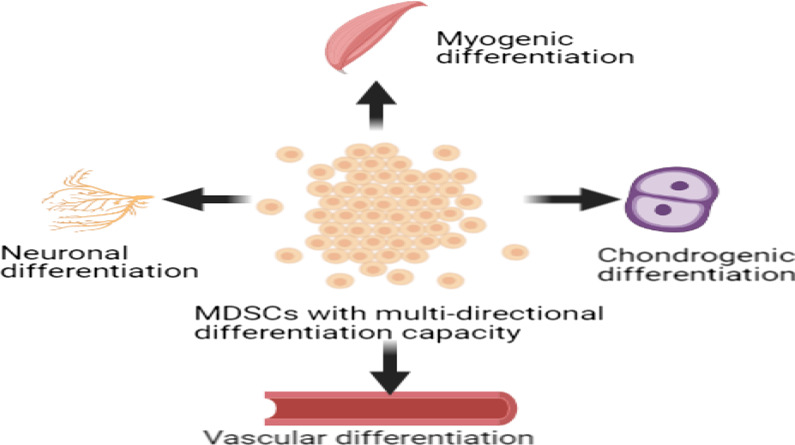
“…that MuSCs, alongside multipotent myogenic stem cells (MDCSs), exhibit diverse differentiation capacities, capable of differentiating not only into muscle cells but also into chondrocytes, cardiomyocytes, and hematopoietic lineage cells, highlighting their core role in muscle injury repair [24].”
Araldi, R. P., Kerkis, I., Pinto, J. R. D., & Wenceslau, C. V. (2025) · Biochemistry · doi:10.5772/intechopen.1012979 · Cited by 1
Franchi-Mendes, T., Silva, M., Cartaxo, A. L., Fernandes‐Platzgummer, A., Cabral, J. M. S., & da Silva, C. L. (2023) · Bioengineering · doi:10.3390/bioengineering10091067 · Cited by 1
“Adapted from [155–157].”
Türkez, H., Faysal, A. A., Yıldız, E., Saraçoğlu, M., Baycelebi, S., Ceylan, O., Özmen, S., Işık, F., Şahin, E., & Alper, F. (2026) · Research Square · doi:10.21203/rs.3.rs-11131024/v1 · Cited by 1
Biologic Strategies for Muscle Injuries
Maier, L. P. N., Wuerfel, T., & Marshall, R. P. (2024) · Springer eBooks · doi:10.1007/978-3-030-65430-6_220-1
Sarkopene Adipositas im Alter: Ursachen, Folgen und Behandlungsansätze
Rippl, M., Drey, M., & Schluessel, S. (2025) · Adipositas - Ursachen Folgeerkrankungen Therapie · doi:10.1055/a-2492-9415
“Da auch die sarkopene Adipositas häufig von einem Typ 2 Diabetes begleitet wird, ist auch dies ein weiterer künftiger Therapieansatz [60].”
Principles of diet therapy for sarcopenic obesity: A review
Pavlovskaya, E. V., Кislyak, O. A., & Starodubova, A. V. (2025) · Terapevticheskii arkhiv · doi:10.26442/00403660.2025.07.203270 · Cited by 4
Sarcopenia and Its Impact on Surgical Outcomes
Wu, J., & Koh, F. H.-X. (2025) · Springer eBooks · doi:10.1007/978-981-95-0665-1_4 · Cited by 1
Research Progress of Triglyceride Glucose Index, Insulin Resistance and Sarcopenia
阎, 玮. (2025) · Journal of Clinical Personalized Medicine · doi:10.12677/jcpm.2026.51034
Skeletal muscle repair and regeneration
Meng, Q., & Zhang, Y. (2026) · Elsevier eBooks · doi:10.1016/b978-0-443-40423-8.00013-0
Beyond muscle weakness: pathogenesis of sepsis-induced myopathy and its management
Liu, Y., Zhao, X., Xu, Z., Liu, Q., & Wang, Y.-C. (2026) · Open Medicine · doi:10.1515/med-2025-1342
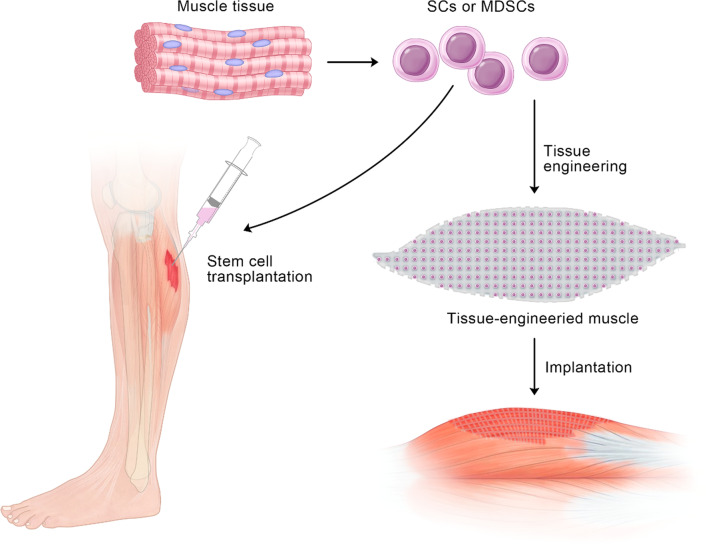
“The functions of satellite cells (SCs) and mesenchymal-derived stem cells (MDSCs) in sarcopenia may facilitate the advancement of novel stem cell-based therapies for SIM [180].”
Metabolomic biomarker differences of sarcopenia in older patients with sepsis
Liu, Y., He, T., Chen, S., Li, Z., Mei, X., He, X., & Shang, N. (2026) · Frontiers in Medicine · doi:10.3389/fmed.2026.1797866
“…as a key precursor for androgen synthesis, its deficiency will limit testosterone production, thereby inhibiting protein synthesis mediated by the Akt/mTOR signaling pathway (13) and weakening the inhibitory effect on the ubiquitin-proteasome system (22), leading to myofiber atrophy.”
Nutrition significance in the population sarcopenia prevention
Makarova, O. B., Usoltseva, A. I., & Суплотова, Л. А. (2026) · Russian Journal of Preventive Medicine · doi:10.17116/profmed202629051113
Jin, Y., Zhou, K., Hao, S., Hu, Y., Wang, H., Liu, Z., Zhou, Y., Xie, Y., Liu, X., Chen, H., et al. (2026) · Cell Death and Disease · doi:10.1038/s41419-026-08944-2
“Since most muscle degenerative disorders are accompanied by impaired muscle regeneration [5, 6], understanding how muscle regenerates after injury will facilitate identifying effective treatments for these disorders.”
Self-citationLim, Y., Ma, M.-J., Son, W., Kang, S., Choi, J.-H., Shim, B.-J., Seo, M., & Park, W.-T. (2026) · Journal of Yeungnam Medical Science · doi:10.12701/jyms.2026.43.39
“Therefore, the observed expression of mesenchymal markers likely reflects the inherent plasticity and heterogeneity of MuSC populations rather than a distinct mesenchymal lineage [40-42].”
Lee, J., Chun, S.-W., Choi, S., Kang, J. S., Park, S. J., Yang, Y. R., Lee, H., & Lee, K.-H. (2026) · Journal of sport and health science/Journal of Sport and Health Science · doi:10.1016/j.jshs.2026.101159
Self-citationDiqq al-Shaykhūkha and Sarcopenia: A Historical and Conceptual Review of Muscle Wasting in Old Age
Shaikh, M., Rehman, M. I. A., Zaidi, S. M. A., & Meraj, M. (2026) · Journal of Drug Delivery and Therapeutics · doi:10.22270/jddt.v16i10.8027
Metadata
- Authors
- Cai, Z., Liu, D., Yang, Y., Xie, W., He, M., Yu, D., Wu, Y., Wang, X., Xiao, W., & Li, Y.
- Affiliations
- Central South University (CN)
- Jianghan University (CN)
- Corresponding author
- Xiao, Wenfeng
- Li, Yusheng
- ORCID
- Venue
- Stem Cell Research & Therapy
- Published
- 2022-01-24
- Volume
- 13
- Issue
- 1
- Pages
- 28-28
- ISSN
- 1757-6512 (ISSN-L)
- PMC
- PMC8785537
- OpenAlex
- W4206995851
- Cited by
- 58
- References
- 121
- Citations by year
- 2026: 10 · 2025: 19 · 2024: 13 · 2023: 12 · 2022: 4
- FWCI
- 1.25
- Type
- journal article
- Language
- en
- Open access
- gold
- doi.org
- Licence
- cc-by
- creativecommons.org/licenses/by/4.0 (tdm)
- creativecommons.org/licenses/by/4.0 (vor)
- Locations
- Stem Cell Research & Therapy (publishedVersion, cc-by)
- PubMed Central (publishedVersion, cc-by)
- PubMed (publishedVersion)
- DOAJ (DOAJ: Directory of Open Access Journals) (submittedVersion, cc-by-sa)
- Funders
- National Children's Research Centre
- National Natural Science Foundation of China (81874030, 82072506, 2020CX045, 81874030, 2020JJ3060, 2019YFA0111900, 82072506, 320.6750.2020-03-14)
- Central South University (2020CX045)
- Wu Jieping Medical Foundation (320.6750.2020-03-14, 81874030, 2019YFA0111900, 320.6750, 2020JJ3060, 2020CX045)
- Xiangya Hospital, Central South University (2021KFJJ02)
- Innovation-Driven Project of Central South University (81874030, 320.6750.2020-03-14, 2020JJ3060, 2020CX045, 2019YFA0111900)
- Topics
- Life Sciences › Biochemistry, Genetics and Molecular Biology › Molecular Biology › Muscle Physiology and Disorders
- Health Sciences › Medicine › Physiology (medical) › Nutrition and Health in Aging
- Health Sciences › Medicine › Physiology (medical) › Adipose Tissue and Metabolism
- Keywords
- sarcopenia, skeletal muscle, satellite cells, muscle-derived stem cells, stem cell therapy, muscle regeneration, age-related muscle loss, tissue homeostasis, stem cell niche
- MeSH terms
- Aging, Humans, Stem Cells, Muscle, Skeletal, Satellite Cells, Skeletal Muscle, Sarcopenia
About these checks
Registry, retraction, Cites and statistics results are computed, not judged, with one exception: a printed reference that no index lists is read once by a model before it counts as a citation error. Claims are extracted by a model and kept only when their quote appears verbatim in the text; each cited source is then checked, with a model’s help, for whether it says what the claim relies on. Those verdicts can be wrong — read the claim’s quote and the cited source before relying on one.
Statistics and arithmetic are recomputed, not judged.
Confidence bands are shown only for fields calibrated on our annotated test set. None is calibrated yet, so no band is shown.
What counts as a claim ›How we measure confidence ›How we check this ›
Are you an author, or do you see a problem with this page? Request a review
Data sources
Bibliographic data: Semantic Scholar, OpenAlex, Crossref.
Contains information from the Semantic Scholar Academic Graph Datasets, made available under the ODC Attribution License (ODC-BY 1.0).
Semantic Scholar’s data is described in: Kinney, R., et al. (2023). The Semantic Scholar Open Data Platform. arXiv:2301.10140.
