

Sex dependency of inhibitory control functions
Open accessThe DOI matches its Crossref record; 82 of the 83 references it cites were found in a registry or an index.
Abstract
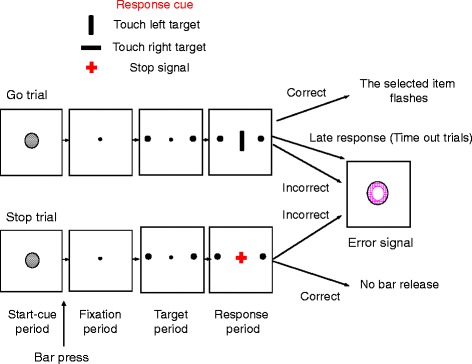
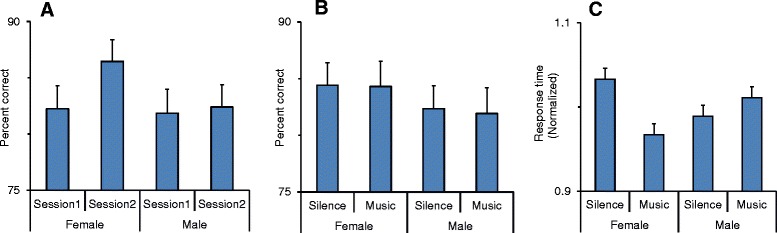
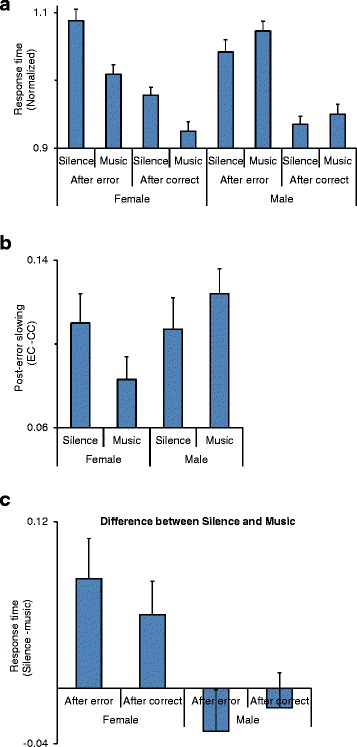
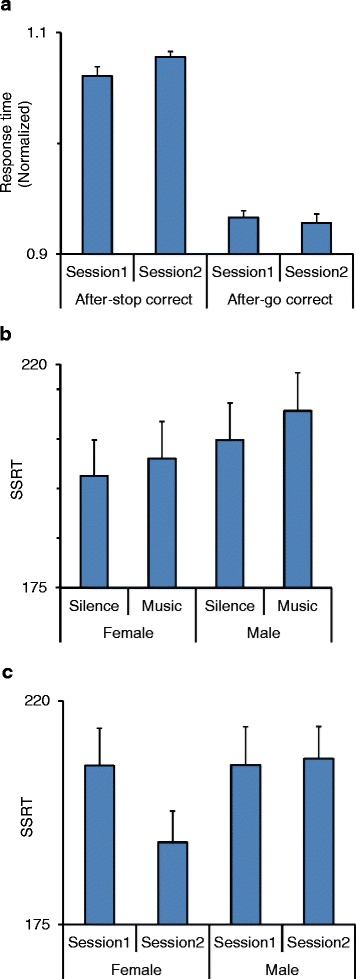
BACKGROUND: Inhibition of irrelevant responses is an important aspect of cognitive control of a goal-directed behavior. Females and males show different levels of susceptibility to neuropsychological disorders such as impulsive behavior and addiction, which might be related to differences in inhibitory brain functions. METHODS: We examined the effects of 'practice to inhibit', as a model of rehabilitation approach, and 'music', as a salient contextual factor in influencing cognition, on the ability of females and males to perform a stop-signal task that required inhibition of initiated or planned responses. In go trials, the participants had to rapidly respond to a directional go cue within a limited time window. In stop trials, which were presented less frequently, a stop signal appeared immediately after the go-direction cue and the participants had to stop their responses. RESULTS: We found a significant difference between females and males in benefiting from practice in the stop-signal task: the percentage of correct responses in the go trials increased, and the ability to inhibit responses significantly improved, after practice in females. While listening to music, females became faster but males became slower in responding to the go trials. Both females and males became slower in performing the go trials following an error in the stop trials; however, music significantly affected this post-error slowing depending on the sex. Listening to music decreased post-error slowing in females but had an opposite effect in males. CONCLUSIONC: Here, we show a significant difference in executive control functions and their modulation by contextual factors between females and males that might have implications for the differences in their propensity for particular neuropsychological disorders and related rehabilitation approaches.
Overview
The claims and statistics of this paper haven’t been checked yet.
Free: it reads the open-access text and checks the first 5 claims that cite a source we can check. Create a free account to check every claim.
Integrity signals
Registry
Cites
Statistics
Figures
Verification
Claims the paper makes
The claims and statistics of this paper haven’t been checked yet.
Free: it reads the open-access text and checks the first 5 claims that cite a source we can check. Create a free account to check every claim.
Claims other papers make about this one
Each is checked against this paper’s own text: does it say what the citing paper says it does?
The check wasn’t confident either way, so it gives no verdict — never disputed.
In the citing paper
“Among females, performance differences on various indices of RI have been shown depending on hormonal status (Amin et al., 2006; Bannbers et al., 2012, 2013; Mansouri et al., 2016).”
From Response Inhibition in Youth Undergoing Intensive Treatment for Obsessive Compulsive Disorder (2023) · cites this paper as Mansouri et al., 2016
Experimental — accuracy not yet measured
Self-check
Percentages, sums and reported differences re-computed from the paper’s own numbers.
The self-check needs the paper’s full text.
Citations
Cites
An Integrative Theory of Prefrontal Cortex Function
Miller, E. K., & Cohen, J. D. (2001) · Annual Review of Neuroscience · doi:10.1146/annurev.neuro.24.1.167 · Cited by 12,803 · cited 1×
“Executive control [1] is critical within everyday life as it is essential for optimizing the flexible use of limited cognitive resources to currently prioritized tasks and achieving goals [2–4].”
BackgroundOn the ability to inhibit thought and action: a theory of an act of control
Logan, G. D., & Cowan, W. B. (1984) · Psychological Review · doi:10.1037/0033-295x.91.3.295 · Cited by 2,590 · cited 11×
“Previous studies [8, 11, 20] have shown that error in inhibition of response in the stop trials is followed by a slowing of the response in the subsequent go trial (postMansouri et al.”
BackgroundMethodResultInfluentialResponse inhibition in the stop-signal paradigm
Verbruggen, F., & Logan, G. D. (2008) · Trends in Cognitive Sciences · doi:10.1016/j.tics.2008.07.005 · Cited by 1,373 · cited 4×
“SSRT reflects the efficiency of the inhibitory function in stopping the planned movement and therefore is an index of executive control function [10, 70].”
BackgroundInfluentialSex differences in human brain asymmetry: a critical survey
McGlone, J. (1980) · Behavioral and Brain Sciences · doi:10.1017/s0140525x00004398 · Cited by 1,336 · cited 1×
“Previous studies suggest that there are differences in language processing between females and males [58, 59] which might explain males’ higher susceptibility to language-related deficits such as aphasia following the left hemisphere brain damage [59].”
BackgroundThe rewards of music listening: Response and physiological connectivity of the mesolimbic system
Menon, V., & Levitin, D. J. (2005) · NeuroImage · doi:10.1016/j.neuroimage.2005.05.053 · Cited by 1,067 · cited 1×
“The sex dependency of the music effect on post-error slowing might be related to sex differences in functional organization of neural networks that involve the prefrontal cortex [28, 67, 77, 78].”
BackgroundErrors and error correction in choice-response tasks.
Rabbitt, P. M. (1966) · Journal of Experimental Psychology · doi:10.1037/h0022853 · Cited by 1,021
Explicit and implicit emotion regulation: a dual-process framework.
Gyurak, A., Gross, J. J., & Etkin, A. (2011) · Cognition and Emotion · doi:10.1080/02699931.2010.544160 · Cited by 1,015
Musical syntax is processed in Broca's area: an MEG study
Maess, B., Koelsch, S., Gunter, T. C., & Friederici, A. D. (2001) · Nature Neuroscience · doi:10.1038/87502 · Cited by 968 · cited 1×
“The significant overlap between the brain areas related to language and music processing [60–62] suggests that sex-dependent processing of auditory information might also affect music processing.”
BackgroundOn the ability to inhibit thought and action: General and special theories of an act of control.
Logan, G. D., Van Zandt, T., Verbruggen, F., & Wagenmakers, E.-J. (2014) · Psychological Review · doi:10.1037/a0035230 · Cited by 875
Towards a neural basis of music-evoked emotions
Koelsch, S. (2010) · Trends in Cognitive Sciences · doi:10.1016/j.tics.2010.01.002 · Cited by 651
Research works printed but not linked: 2
- Tatarinceva A Blumenau N Gender differences: society, culture, language 2007 London Cice Publications 571 580
- Knisel E Opitz S Wossmann M Keteihuf K Sport motivation and physical activity of students in three European schools Int J Phys Educ. 2009 46 40 53
Cited by
Emergence of abstract rules in the primate brain
Mansouri, F. A., Freedman, D. J., & Buckley, M. J. (2020) · Nature reviews. Neuroscience · doi:10.1038/s41583-020-0364-5 · Cited by 123
Self-citationAfek, A., Ben-Avraham, R., Davidov, A., Cohen, N., Yehuda, A. B., Gilboa, Y., & Nahum, M. (2021) · Frontiers in Psychiatry · doi:10.3389/fpsyt.2020.608588 · Cited by 126
“While gender differences in inhibitory control and in coping with stress have been repeatedly documented in previous studies (78, 79), here we showed specific gender differences in emotional IC and their links to psychological distress.”
ResultCalderón‐Garcidueñas, L., Jewells, V. L., Galaz-Montoya, C. I., van Zundert, B., Pérez-Calatayud, Á. A., Ascencio-Ferrel, E., Valencia‐Salazar, G., Sandoval-Cano, M., Carlos, E., Solorio, E., et al. (2016) · Environmental Research · doi:10.1016/j.envres.2016.06.026 · Cited by 86
Calderón-Garcidueñas, L., & de la Monte, S. M. (2017) · Journal of Alzheimer's Disease · doi:10.3233/jad-161299 · Cited by 45
Interactive effects of music and prefrontal cortex stimulation in modulating response inhibition
Mansouri, F. A., Acevedo, N., Illipparampil, R., Fehring, D. J., Fitzgerald, P. B., & Jaberzadeh, S. (2017) · Scientific Reports · doi:10.1038/s41598-017-18119-x · Cited by 60
Self-citationCabello, R., Gutiérrez‐Cobo, M. J., & Fernández‐Berrocal, P. (2017) · Frontiers in Psychology · doi:10.3389/fpsyg.2017.01181 · Cited by 56
“Moreover, when compared with males, females appear to benefit more from inhibitory control training (Mansouri et al., 2016).”
BackgroundCheah, Y., Wong, H. K., Spitzer, M., & Coutinho, E. (2022) · Music & Science · doi:10.1177/20592043221134392 · Cited by 78
The Role of Primate Prefrontal Cortex in Bias and Shift Between Visual Dimensions
Mansouri, F. A., Buckley, M. J., Fehring, D. J., & Tanaka, K. (2019) · Cerebral Cortex · doi:10.1093/cercor/bhz072 · Cited by 45
Self-citationStructural and functional brain abnormalities in misophonia
Eijsker, N., Schröder, A., Smit, D. J. A., van Wingen, G. A., & Denys, D. A. J. P. (2021) · European Neuropsychopharmacology · doi:10.1016/j.euroneuro.2021.05.013 · Cited by 42
Direct current stimulation of prefrontal cortex modulates error‐induced behavioral adjustments
Mansouri, F. A., Fehring, D. J., Feizpour, A., Gaillard, A., Rosa, M. G. P., Rajan, R., & Jaberzadeh, S. (2016) · European Journal of Neuroscience · doi:10.1111/ejn.13281 · Cited by 41
“An adaptive procedure was used to keep the percentage of correct responses in Stop trials around 50% (Mansouri et al., 2016).”
MethodSelf-citationFehring, D. J., Illipparampil, R., Acevedo, N., Jaberzadeh, S., Fitzgerald, P. B., & Mansouri, F. A. (2019) · Neuropsychologia · doi:10.1016/j.neuropsychologia.2019.05.011 · Cited by 36
Self-citationIntegrative Bayesian analysis of brain functional networks incorporating anatomical knowledge
Higgins, I. A., Kundu, S., & Guo, Y. (2018) · NeuroImage · doi:10.1016/j.neuroimage.2018.07.015 · Cited by 31
“3, we discover statistically significant differences in the number of DWEs occurring in the executive control (EC) module in preteens and young adults, which is supported by previous results on gender related differences in the EC (Hyde, 1981; Mansouri et al., 2016).”
ResultThe marmoset as a model for investigating the neural basis of social cognition in health and disease
Samandra, R., Haque, Z. Z., Rosa, M. G. P., & Mansouri, F. A. (2022) · Neuroscience & Biobehavioral Reviews · doi:10.1016/j.neubiorev.2022.104692 · Cited by 24
Self-citationEscolano-Pérez, E., Nivela, M. L. H., Blanco-Villaseñor, Á., & Anguera, M. T. (2017) · Frontiers in Psychology · doi:10.3389/fpsyg.2017.02031 · Cited by 43
Adolescent sex differences in cortico-subcortical functional connectivity during response inhibition
Chung, Y. S., Calhoun, V. D., & Stevens, M. C. G. (2019) · Cognitive Affective & Behavioral Neuroscience · doi:10.3758/s13415-019-00718-y · Cited by 28
Fehring, D. J., Samandra, R., Haque, Z. Z., Jaberzadeh, S., Rosa, M. G. P., & Mansouri, F. A. (2021) · Biology of Sex Differences · doi:10.1186/s13293-021-00390-3 · Cited by 27
“In our previous study, we observed that background music, introduced as a contextual factor, had a sex-dependent influence on participants’ response time, whereby females’ response time was attenuated by music and males response time increased [45].”
BackgroundMethodInfluentialSelf-citationRivero, O., Alhama-Riba, J., Ku, H.-P., Fischer, M., Ortega, G., Álmos, P. Z., Diouf, D., van den Hove, D., & Lesch, K. (2021) · Frontiers in Genetics · doi:10.3389/fgene.2021.688488 · Cited by 26
Cognitive profiles in older males and females
Jockwitz, C., Wiersch, L., Stumme, J., & Caspers, S. (2021) · Scientific Reports · doi:10.1038/s41598-021-84134-8 · Cited by 28
Gaillard, A., Rossell, S. L., Carruthers, S. P., Sumner, P. J., Michie, P. T., Woods, W., Neill, E., Phillipou, A., Toh, W. L., & Hughes, M. E. (2020) · Behavioural Brain Research · doi:10.1016/j.bbr.2020.112586 · Cited by 27
Self-citationSex and age-related differences in inhibitory control in typically developing children
Sadeghi, S., Shalani, B., & Nejati, V. (2020) · Early Child Development and Care · doi:10.1080/03004430.2020.1755668 · Cited by 23
“In contrast, Mansouri et al. (2016) reported a significant difference between males and females in benefiting from practice in the stop-signal test.”
BackgroundResultInfluentialIde, J. S., Zhornitsky, S., Chao, H. H., Zhang, S., Hu, S., Wang, W., Krystal, J. H., & Li, C. R. (2018) · Biological Psychiatry Cognitive Neuroscience and Neuroimaging · doi:10.1016/j.bpsc.2018.04.008 · Cited by 22
“On the other hand, men and women did not appear to differ in the extent of post-error behavioral control (32, 33).”
BackgroundSex differences in response inhibition in young children
Ribeiro, F., Cavaglia, R., & Rato, J. R. (2021) · Cognitive Development · doi:10.1016/j.cogdev.2021.101047 · Cited by 23
The effect of sex, age and boldness on inhibitory control
Vinogradov, I. M., Jennions, M. D., van Veen, E., Fichtel, C., Kappeler, P. M., & Fox, R. J. (2022) · Animal Behaviour · doi:10.1016/j.anbehav.2022.09.011 · Cited by 20
Nahum, M., Sinvani, R.-T., Afek, A., Ben-Avraham, R., Jordan, J. T., Ben‐Shachar, M. S., Yehuda, A. B., Cohen, N., Davidov, A., & Gilboa, Y. (2023) · Scientific Reports · doi:10.1038/s41598-023-40242-1 · Cited by 19
Interaction of music and emotional stimuli in modulating working memory in macaque monkeys
Zarei, S. A., Sheibani, V., & Mansouri, F. A. (2019) · American Journal of Primatology · doi:10.1002/ajp.22999 · Cited by 18
“In our previous studies, we have shown that background music, without any relation to the cognitive task performance, influences executive functions in humans (Mansouri et al., 2016; Mansouri et al., 2017c).”
BackgroundSelf-citationFehring, D. J., Yokoo, S., Abe, H., Buckley, M. J., Miyamoto, K., Jaberzadeh, S., Yamamori, T., Tanaka, K., Rosa, M. G. P., & Mansouri, F. A. (2024) · Brain · doi:10.1093/brain/awae273 · Cited by 15
Self-citationDimensional bias and adaptive adjustments in inhibitory control of monkeys
Ghasemian, S., Vardanjani, M. M., Sheibani, V., & Mansouri, F. A. (2021) · Animal Cognition · doi:10.1007/s10071-021-01483-7 · Cited by 13
Self-citationColor‐hierarchies in executive control of monkeys' behavior
Ghasemian, S., Vardanjani, M. M., Sheibani, V., & Mansouri, F. A. (2021) · American Journal of Primatology · doi:10.1002/ajp.23231 · Cited by 13
Self-citationFat mass predicts food-specific inhibitory control in children
da Costa, K. G., Price, M. J., Bortolotti, H., Rêgo, M. L. D. M., Cabral, D. A. R., Langer, R. D., Fernandes, G. A., Elsangedy, H. M., & Fontes, E. B. (2019) · Physiology & Behavior · doi:10.1016/j.physbeh.2019.02.031 · Cited by 14
Cognitive sex differences in effects of music in Wisconsin Card Sorting Test
Feizpour, A., Parkington, H. C., & Mansouri, F. A. (2018) · Psychology of Music · doi:10.1177/0305735618795030 · Cited by 13
Self-citationVardanjani, M. M., Ghasemian, S., Sheibani, V., & Mansouri, F. A. (2021) · Behavioural Brain Research · doi:10.1016/j.bbr.2021.113409 · Cited by 10
Self-citationMallorquí‐Bagué, N., Lozano‐Madrid, M., Granero, R., Mestre‐Bach, G., Vintró‐Alcaraz, C., Sánchez, I., Jiménez‐Múrcia, S., & Fernández‐Aranda, F. (2022) · European Eating Disorders Review · doi:10.1002/erv.2961 · Cited by 11
Feizpour, A., Buckley, M. J., Mundiñano, I.-C., Rosa, M. G. P., & Mansouri, F. A. (2024) · Progress in Neurobiology · doi:10.1016/j.pneurobio.2024.102671 · Cited by 7
Self-citationTabullo, Á., Chiófalo, M. F., & Wainselboim, A. J. (2023) · Reading Psychology · doi:10.1080/02702711.2023.2246972 · Cited by 14
The impact of construal level on behavioral inhibition: Evidences from behavioral and ERP studies
Xu, M., Xu, Y., Wen, J., Sun, Y., Lu, D., & Li, Z. (2024) · Personality and Individual Differences · doi:10.1016/j.paid.2024.112783 · Cited by 7
Dimension of visual information interacts with working memory in monkeys and humans
Fehring, D. J., Pascoe, A. J., Haque, Z. Z., Samandra, R., Yokoo, S., Abe, H., Rosa, M. G. P., Tanaka, K., Yamamori, T., & Mansouri, F. A. (2022) · Scientific Reports · doi:10.1038/s41598-022-09367-7 · Cited by 11
Self-citationNegative Emotional Stimuli Enhance Conflict Resolution Without Altering Arousal
Fehring, D. J., Samandra, R., Rosa, M. G. P., & Mansouri, F. A. (2019) · Frontiers in Human Neuroscience · doi:10.3389/fnhum.2019.00282 · Cited by 13
Self-citationSingh, M., Skippen, P., He, J. L., Thomson, P., Fuelscher, I. T., Caeyenberghs, K., Anderson, V. A., Hyde, C. E., & Silk, T. J. (2024) · Human Brain Mapping · doi:10.1002/hbm.70010 · Cited by 6
“Prior studies have shown response inhibition to be differentially associated with sex (Mansouri et al., 2016; Ribeiro et al., 2021), socioeconomic status (SES; Last et al., 2018; Lawson et al., 2018) and use of stimulants (e.g., methylphenidate; Bedard et al., 2003; Brackenridge et al., 2011;…”
BackgroundJaberzadeh, S., & Mansouri, F. A. (2021) · AJP Advances in Physiology Education · doi:10.1152/advan.00012.2021 · Cited by 8
“moted additional studies to reveal the effects of music on cognitive functions (12).”
BackgroundSelf-citationGender differences in brain processes during inhibition of manual movements programs
Korzhyk, O., Morenko, O., Morenko, A., & Коцан, И. (2019) · Annals of Neurosciences · doi:10.5214/ans.0972.7531.260103 · Cited by 7
Response Inhibition in Youth Undergoing Intensive Treatment for Obsessive Compulsive Disorder
Conelea, C. A., Morris, S., McLaughlin, N., Mamaril, E., Benito, K., Case, B., & Garcia, A. (2023) · Journal of Obsessive-Compulsive and Related Disorders · doi:10.1016/j.jocrd.2022.100764 · Cited by 4
Can Stimulus Valence Modulate Task-Switching Ability? A Pilot Study on Primary School Children
D’Aurizio, G., Tempesta, D., Saporito, G., Pistoia, F., Socci, V., Mandolesi, L., & Curcio, G. (2022) · International Journal of Environmental Research and Public Health · doi:10.3390/ijerph19116409 · Cited by 5
Xu, M., Xu, Y., Wu, S., & Li, Z. (2025) · International Journal of Psychophysiology · doi:10.1016/j.ijpsycho.2025.112516 · Cited by 4
Tavares, V. D. D. O., Schuch, F. B., Vancampfort, D., Jenkins, M., Rêgo, M. L. D. M., Coelho, N. L. G., & Cabral, D. A. R. (2021) · Physiology & Behavior · doi:10.1016/j.physbeh.2021.113587 · Cited by 4
Dissociable effects of music and white noise on conflict-induced behavioral adjustments
Pascoe, A. J., Haque, Z. Z., Samandra, R., Fehring, D. J., & Mansouri, F. A. (2022) · Frontiers in Neuroscience · doi:10.3389/fnins.2022.858576 · Cited by 5
“Including Practice and Sex factors into the repeatedmeasures ANOVAs was necessary considering they have both been found to influence performance in several cognitive tasks (Mansouri et al., 2016b; Feizpour et al., 2018; Fehring et al., 2019a, 2021, 2022), and may also interact differentially with background acoustic c…”
MethodSelf-citationXu, M., Wen, J., Li, Z., Wang, Z., & Zhang, J. (2023) · Psychological Research · doi:10.1007/s00426-023-01905-w · Cited by 4
“First, previous research has demonstrated gender differences in reactive inhibition (Mansouri et al., 2016; Yuan et al., 2008), and thus, future investigations should recruit both male and female participants to confirm the results’ generalizability as this study only included females.”
Caballero, H. S., McFall, G. P., Zheng, Y., & Dixon, R. A. (2021) · Neuropsychology · doi:10.1037/neu0000775 · Cited by 3
Muñoz‐Torres, Z., Armony, J. L., Trejo‐Martínez, D., Conde, R., & Corsi‐Cabrera, M. (2016) · Experimental Brain Research · doi:10.1007/s00221-016-4746-x · Cited by 5
Numerosity Perception and Perceptual Load: Exploring Sex Differences Through Eye-Tracking
Bend, J., & Öörni, A. (2025) · Journal of Eye Movement Research · doi:10.3390/jemr18020009 · Cited by 3
“The difference in inhibitory control is not limited to selective attention: Men are significantly more prone than women to impulse control disorders [15], for example, impulsive behavior and addictions [16].”
Qiu, C., Jiang, Y., Tang, Y., Wang, L., Zou, P., Li, Y., Su, X., Ma, R., Yan, B., Liu, Y., et al. (2025) · Cerebral Cortex · doi:10.1093/cercor/bhaf111 · Cited by 1
Developmental and sex modulated neurological alterations in autism spectrum disorder
Azeez, A. (2019) · Cited by 1
Event-related potentials during contralateral switching over motor programs in humans
Korzhyk, O., Dmytrotsa, О., Поручинський, А. І., & Morenko, A. (2020) · Regulatory Mechanisms in Biosystems · doi:10.15421/022016 · Cited by 1
“…account the above-mentioned data, we can assume that in the process of launching of the motor program of the participants’ righthanded movement the left hemisphere was first activated in the central lead, responsible for the memory and launching motor activity (Ioffe, 2003; Mansouri et al., 2016).”
BackgroundThe Influence Factors of Cognitive Control
高, 莹. (2018) · Advances in Psychology · doi:10.12677/ap.2018.81002
Nahum, M., Sinvani, R.-T., Afek, A., Ben-Avraham, R., Jordan, J., Yehuda, A. B., Cohen, N. B., Davidov, A., & Gilboa, Y. (2022) · doi:10.2196/preprints.36728
Julian, R., Fröhlich, S. M., Müller, K., Dammhahn, M., & Voelcker‐Rehage, C. (2023) · Research Square · doi:10.21203/rs.3.rs-3210292/v1
Trinczer, I. L., Dankner, Y., frances-israeli, S., Okamoto, Y. A., Clark, D., & Shalev, L. (2024) · Children · doi:10.3390/children11101245 · Cited by 4
How Do Common Marmosets Maintain the Balance Between Response Execution and Action Inhibition?
Samandra, R., Rosa, M. G. P., & Mansouri, F. A. (2025) · American Journal of Primatology · doi:10.1002/ajp.23717
Self-citationde Viteri, S. S., Pandey, A. K., Kamarajan, C., Pandey, G., Kuang, W., Kinreich, S., Chan, G., Plawecki, M. H., Schuckit, M. A., Porjesz, B., et al. (2025) · Brain and Behavior · doi:10.1002/brb3.70729
“These findings are consistent with the literature that suggests women have greater inhibitory control than men (Mansouri et al. 2016; Sjoberg and Cole 2018).”
Lin, L.-T., Lin, H.-A., Bai, C., & Lin, S. (2025) · Behavioural Brain Research · doi:10.1016/j.bbr.2025.115791 · Cited by 1
Sex dependency of subconscious visual perception
Haque, Z. Z., Fehring, D. J., Samandra, R., Lamoureux, O., Pascoe, A. J., & Mansouri, F. A. (2025) · Biology of Sex Differences · doi:10.1186/s13293-025-00754-z
“…from practice in Stop-signal task (where all visual stimuli, such as Go-cue and Stop-cue, were supraliminally presented): the accuracy in response execution increased, and the ability to inhibit inappropriate actions significantly improved after practice in females, but not in males [15].”
Self-citationOxytocin prevents ketamine-induced executive control deficits in macaque monkeys
Rohani, E., Borzadaran, F. M., Vardanjani, M. M., Ghasemian, S., Sheibani, V., & Mansouri, F. A. (2026) · Journal of Psychopharmacology · doi:10.1177/02698811261443678
“The Stop-signal task provides a well-validated paradigm to quantify response inhibition (Mansouri et al., 2016a; Verbruggen and Logan, 2008).”
InfluentialSelf-citationAsian elephants (Elephas maximus) demonstrate inhibitory control in a detour task
Hope, S. F., Jacobson, S. L., Dittakul, S., Schmitt, G., PLA-ARD, M., Yindee, M., Angkawanish, T., & Plotnik, J. M. (2026) · PLoS ONE · doi:10.1371/journal.pone.0356549
“…in inhibitory control is consistent with some studies [e.g., robins, [19], dogs, [22], mouse lemurs, 89]; however, more studies have found that females have greater inhibitory control compared to males [e.g., humans, [56,57], baboons, [60], rhesus macaques, [55], dogs, [59], mosquitofish, 58].”
Metadata
- Authors
- Mansouri, F. A., Fehring, D. J., Gaillard, A., Jaberzadeh, S., & Parkington, H.
- Affiliations
- ARC Centre of Excellence for Integrative Brain Function (AU)
- Monash University (AU)
- Corresponding author
- Mansouri, Farshad A.
- Venue
- Biology of Sex Differences
- Published
- 2016-02-09
- Volume
- 7
- Issue
- 1
- Pages
- 11-11
- ISSN
- 2042-6410 (ISSN-L)
- PMC
- PMC4746892
- OpenAlex
- W2258452120
- Cited by
- 62
- References
- 83
- Citations by year
- 2026: 2 · 2025: 7 · 2024: 5 · 2023: 4 · 2022: 9 · 2021: 12 · 2020: 4 · 2019: 8 · 2018: 4 · 2017: 4 · 2016: 3
- FWCI
- 4.03
- Type
- journal article
- Language
- en
- Open access
- gold
- doi.org
- Licence
- cc-by
- Locations
- Biology of Sex Differences (publishedVersion, cc-by)
- PubMed Central (publishedVersion, cc-by)
- PubMed (publishedVersion)
- Monash University Research Portal (Monash University) (submittedVersion, other-oa)
- Funders
- Monash University
- Centre of Excellence for Integrative Brain Function, Australian Research Council
- Topics
- Life Sciences › Neuroscience › Cognitive Neuroscience › Neural and Behavioral Psychology Studies
- Life Sciences › Neuroscience › Cellular and Molecular Neuroscience › Neurotransmitter Receptor Influence on Behavior
- Social Sciences › Psychology › Clinical Psychology › Historical and Modern Theater Studies
- Keywords
- sex differences, inhibitory control, stop-signal task, practice effects, post-error slowing, executive function, cognitive control, response inhibition, impulsivity, addiction
About these checks
Registry, retraction, Cites and statistics results are computed, not judged, with one exception: a printed reference that no index lists is read once by a model before it counts as a citation error. Claims are extracted by a model and kept only when their quote appears verbatim in the text; each cited source is then checked, with a model’s help, for whether it says what the claim relies on. Those verdicts can be wrong — read the claim’s quote and the cited source before relying on one.
Statistics and arithmetic are recomputed, not judged.
Confidence bands are shown only for fields calibrated on our annotated test set. None is calibrated yet, so no band is shown.
What counts as a claim ›How we measure confidence ›How we check this ›
Are you an author, or do you see a problem with this page? Request a review
Data sources
Bibliographic data: Semantic Scholar, OpenAlex, Crossref.
Contains information from the Semantic Scholar Academic Graph Datasets, made available under the ODC Attribution License (ODC-BY 1.0).
Semantic Scholar’s data is described in: Kinney, R., et al. (2023). The Semantic Scholar Open Data Platform. arXiv:2301.10140.
