

Sex dependency of inhibitory control functions
Open accessThe DOI matches its Crossref record; 82 of the 83 references it cites were found in a registry or an index.
Abstract
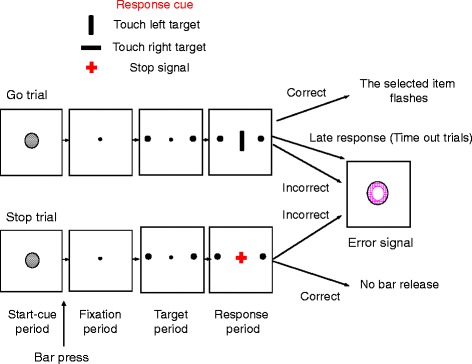
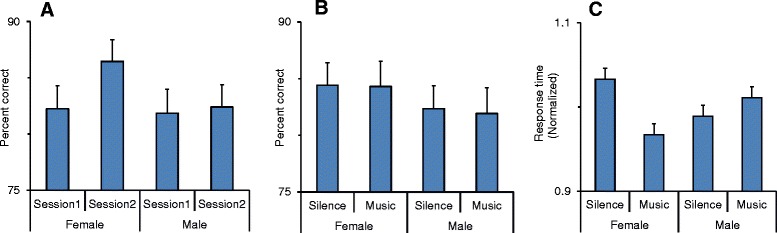
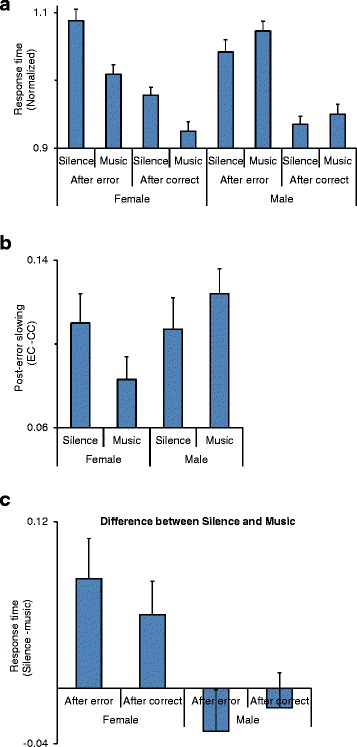
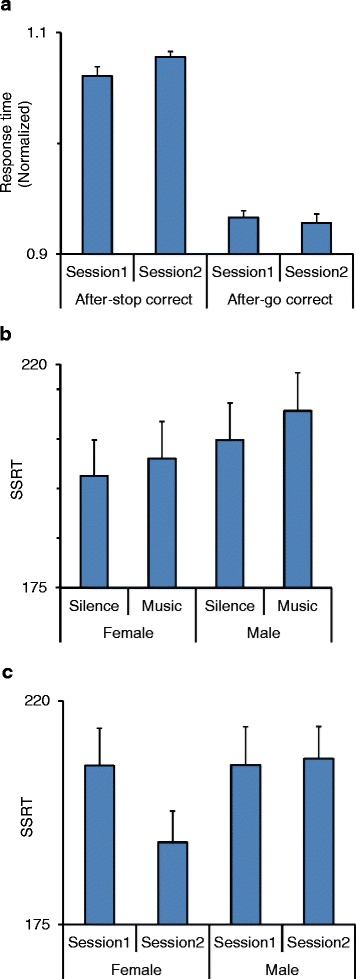
BACKGROUND: Inhibition of irrelevant responses is an important aspect of cognitive control of a goal-directed behavior. Females and males show different levels of susceptibility to neuropsychological disorders such as impulsive behavior and addiction, which might be related to differences in inhibitory brain functions. METHODS: We examined the effects of 'practice to inhibit', as a model of rehabilitation approach, and 'music', as a salient contextual factor in influencing cognition, on the ability of females and males to perform a stop-signal task that required inhibition of initiated or planned responses. In go trials, the participants had to rapidly respond to a directional go cue within a limited time window. In stop trials, which were presented less frequently, a stop signal appeared immediately after the go-direction cue and the participants had to stop their responses. RESULTS: We found a significant difference between females and males in benefiting from practice in the stop-signal task: the percentage of correct responses in the go trials increased, and the ability to inhibit responses significantly improved, after practice in females. While listening to music, females became faster but males became slower in responding to the go trials. Both females and males became slower in performing the go trials following an error in the stop trials; however, music significantly affected this post-error slowing depending on the sex. Listening to music decreased post-error slowing in females but had an opposite effect in males. CONCLUSIONC: Here, we show a significant difference in executive control functions and their modulation by contextual factors between females and males that might have implications for the differences in their propensity for particular neuropsychological disorders and related rehabilitation approaches.
Overview
The claims and statistics of this paper haven’t been checked yet.
Free: it reads the open-access text and checks the first 5 claims that cite a source we can check. Create a free account to check every claim.
Integrity signals
Registry
Cites
Statistics
Figures
Verification
Claims the paper makes
The claims and statistics of this paper haven’t been checked yet.
Free: it reads the open-access text and checks the first 5 claims that cite a source we can check. Create a free account to check every claim.
Claims other papers make about this one
Each is checked against this paper’s own text: does it say what the citing paper says it does?
The check wasn’t confident either way, so it gives no verdict — never disputed.
In the citing paper
“Among females, performance differences on various indices of RI have been shown depending on hormonal status (Amin et al., 2006; Bannbers et al., 2012, 2013; Mansouri et al., 2016).”
From Response Inhibition in Youth Undergoing Intensive Treatment for Obsessive Compulsive Disorder (2023) · cites this paper as Mansouri et al., 2016
Experimental — accuracy not yet measured
Self-check
Percentages, sums and reported differences re-computed from the paper’s own numbers.
The self-check needs the paper’s full text.
Citations
Cites
An Integrative Theory of Prefrontal Cortex Function
Miller, E. K., & Cohen, J. D. (2001) · Annual Review of Neuroscience · doi:10.1146/annurev.neuro.24.1.167 · Cited by 12,803 · cited 1×
“Executive control [1] is critical within everyday life as it is essential for optimizing the flexible use of limited cognitive resources to currently prioritized tasks and achieving goals [2–4].”
BackgroundOn the ability to inhibit thought and action: a theory of an act of control
Logan, G. D., & Cowan, W. B. (1984) · Psychological Review · doi:10.1037/0033-295x.91.3.295 · Cited by 2,590 · cited 11×
“Previous studies [8, 11, 20] have shown that error in inhibition of response in the stop trials is followed by a slowing of the response in the subsequent go trial (postMansouri et al.”
BackgroundMethodResultInfluentialResponse inhibition in the stop-signal paradigm
Verbruggen, F., & Logan, G. D. (2008) · Trends in Cognitive Sciences · doi:10.1016/j.tics.2008.07.005 · Cited by 1,373 · cited 4×
“SSRT reflects the efficiency of the inhibitory function in stopping the planned movement and therefore is an index of executive control function [10, 70].”
BackgroundInfluentialSex differences in human brain asymmetry: a critical survey
McGlone, J. (1980) · Behavioral and Brain Sciences · doi:10.1017/s0140525x00004398 · Cited by 1,336 · cited 1×
“Previous studies suggest that there are differences in language processing between females and males [58, 59] which might explain males’ higher susceptibility to language-related deficits such as aphasia following the left hemisphere brain damage [59].”
BackgroundThe rewards of music listening: Response and physiological connectivity of the mesolimbic system
Menon, V., & Levitin, D. J. (2005) · NeuroImage · doi:10.1016/j.neuroimage.2005.05.053 · Cited by 1,067 · cited 1×
“The sex dependency of the music effect on post-error slowing might be related to sex differences in functional organization of neural networks that involve the prefrontal cortex [28, 67, 77, 78].”
BackgroundErrors and error correction in choice-response tasks.
Rabbitt, P. M. (1966) · Journal of Experimental Psychology · doi:10.1037/h0022853 · Cited by 1,021
Explicit and implicit emotion regulation: a dual-process framework.
Gyurak, A., Gross, J. J., & Etkin, A. (2011) · Cognition and Emotion · doi:10.1080/02699931.2010.544160 · Cited by 1,015
Musical syntax is processed in Broca's area: an MEG study
Maess, B., Koelsch, S., Gunter, T. C., & Friederici, A. D. (2001) · Nature Neuroscience · doi:10.1038/87502 · Cited by 968 · cited 1×
“The significant overlap between the brain areas related to language and music processing [60–62] suggests that sex-dependent processing of auditory information might also affect music processing.”
BackgroundOn the ability to inhibit thought and action: General and special theories of an act of control.
Logan, G. D., Van Zandt, T., Verbruggen, F., & Wagenmakers, E.-J. (2014) · Psychological Review · doi:10.1037/a0035230 · Cited by 875
Towards a neural basis of music-evoked emotions
Koelsch, S. (2010) · Trends in Cognitive Sciences · doi:10.1016/j.tics.2010.01.002 · Cited by 651
Neurophysiology of performance monitoring and adaptive behavior
Ullsperger, M., Danielmeier, C., & Jocham, G. (2014) · Physiological Reviews · doi:10.1152/physrev.00041.2012 · Cited by 634 · cited 1×
“These mechanisms, referred to as error-induced adjustments, aim to resolve the error, optimize future behavior to reduce error likelihood, and adjust to motivation [16].”
BackgroundRevisiting gender differences: what we know and what lies ahead.
Meyers‐Levy, J., & Loken, B. (2015) · Journal of Consumer Psychology · doi:10.1016/j.jcps.2014.06.003 · Cited by 614 · cited 1×
“Cognitive sex differences might emerge from differences in brain network organization resulting from evolutionary trends, differences in exposure to hormones, or other developmental factors [29, 30].”
BackgroundBach Speaks: A Cortical “Language-Network” Serves the Processing of Music
Koelsch, S., Gunter, T. C., v. Cramon, D. Y., Zysset, S., Lohmann, G., & Friederici, A. D. (2002) · NeuroImage · doi:10.1006/nimg.2002.1154 · Cited by 574 · cited 1×
“Previous studies suggest that there are differences in language processing between females and males [58, 59] which might explain males’ higher susceptibility to language-related deficits such as aphasia following the left hemisphere brain damage [59].”
BackgroundConflict-induced behavioural adjustment: a clue to the executive functions of the prefrontal cortex
Mansouri, F. A., Tanaka, K., & Buckley, M. J. (2009) · Nature Reviews Neuroscience · doi:10.1038/nrn2538 · Cited by 559
Self-citationMainardi, M., Di Garbo, A., Caleo, M., Berardi, N., Sale, A., & Maffei, L. (2014) · Frontiers in Aging Neuroscience · doi:10.3389/fnagi.2014.00001 · Cited by 545
How large are cognitive gender differences? A meta-analysis using !w² and d..
Hyde, J. S. (1981) · American Psychologist · doi:10.1037/0003-066x.36.8.892 · Cited by 529
Response Inhibition and Response Selection: Two Sides of the Same Coin
Mostofsky, S. H., & Simmonds, D. J. (2008) · Journal of Cognitive Neuroscience · doi:10.1162/jocn.2008.20500 · Cited by 514 · cited 1×
“Response inhibition is an important aspect of executive control that deals with suppression of behaviors that are no longer appropriate or relevant [9, 10].”
BackgroundDanielmeier, C., & Ullsperger, M. (2011) · Frontiers in Psychology · doi:10.3389/fpsyg.2011.00233 · Cited by 482
Effects of Background Music on Phonological Short-Term Memory
Salamé, P., & Baddeley, A. (1989) · The Quarterly Journal of Experimental Psychology Section A · doi:10.1080/14640748908402355 · Cited by 467
Frontal lobe and frontal-striatal substrates for different forms of human cognitive flexibility
Eslinger, P. J., & Grattan, L. M. (1993) · Neuropsychologia · doi:10.1016/0028-3932(93)90077-d · Cited by 453
Functions of the Medial Frontal Cortex in the Processing of Conflict and Errors
Gehring, W. J., & Fencsik, D. E. (2001) · The Journal of Neuroscience · doi:10.1523/jneurosci.21-23-09430.2001 · Cited by 443 · cited 1×
“Error-induced behavioral adjustments are seen across numerous cognitive tests, such as the flanker [17], Stroop [18], and stop-signal task [10, 19].”
BackgroundAlderson, R. M., Rapport, M. D., & Kofler, M. J. (2007) · Journal of Abnormal Child Psychology · doi:10.1007/s10802-007-9131-6 · Cited by 426
Executive control of thought and action
Logan, G. D. (1985) · Acta Psychologica · doi:10.1016/0001-6918(85)90055-1 · Cited by 375 · cited 1×
“This control might be achieved by detection of the goal-relevant information and/or suppression of irrelevant information to facilitate selection of the most appropriate behavior for achieving goals in a changing environment [1, 2, 5–8].”
BackgroundOkon-Singer, H., Hendler, T., Pessoa, L., & Shackman, A. J. (2015) · Frontiers in Human Neuroscience · doi:10.3389/fnhum.2015.00058 · Cited by 371 · cited 1×
“Recent studies suggest that, in addition to sex, various contextual factors such as stress and uncertainty might influence cognitive functions by modulating the emotional state and mental set [39–41].”
BackgroundBrown, S., Martinez, M. J., & Parsons, L. M. (2006) · European Journal of Neuroscience · doi:10.1111/j.1460-9568.2006.04785.x · Cited by 371 · cited 2×
“Previous studies have shown that music might either improve [46, 47] or reduce [48, 49] performance in perceptual, motor, or cognitive tasks.”
BackgroundLevitin, D. (2003) · NeuroImage · doi:10.1016/j.neuroimage.2003.08.016 · Cited by 348 · cited 1×
“The significant overlap between the brain areas related to language and music processing [60–62] suggests that sex-dependent processing of auditory information might also affect music processing.”
BackgroundMusic therapy for people with schizophrenia and schizophrenia-like disorders
Geretsegger, M., Mössler, K. A., Bieleninik, Ł., Chen, X.-J., Heldal, T. O., & Gold, C. (2017) · Cochrane Database of Systematic Reviews · doi:10.1002/14651858.cd004025.pub4 · Cited by 348 · cited 1×
“Recent studies suggest that music might have beneficial effects on performance in executive control function tests [53–55].”
BackgroundMusic and the brain: disorders of musical listening
Stewart, L., von Kriegstein, K., Warren, J. D., & Griffiths, T. D. (2006) · Brain · doi:10.1093/brain/awl171 · Cited by 340 · cited 1×
“Indeed, recent studies suggest that the neural correlate of music processing differs between females and males [63].”
BackgroundFurnham, A., & Strbac, L. (2002) · Ergonomics · doi:10.1080/00140130210121932 · Cited by 333 · cited 1×
“Previous studies have shown that music might either improve [46, 47] or reduce [48, 49] performance in perceptual, motor, or cognitive tasks.”
BackgroundParental investment theory and gender differences in the evolution of inhibition mechanisms.
Bjorklund, D. F., & Kipp, K. (1996) · Psychological Bulletin · doi:10.1037//0033-2909.120.2.163 · Cited by 327 · cited 1×
“It has been suggested that evolutionary pressures arising from different responsibilities and constraints within groups might have led to a higher degree of self-regulation and inhibition ability in females [34, 35].”
BackgroundSex Differences in Spatial Cognition, Computational Fluency, and Arithmetical Reasoning
Geary, D. C., Saults, S. J., Liu, F., & Hoard, M. K. (2000) · Journal of Experimental Child Psychology · doi:10.1006/jecp.2000.2594 · Cited by 312 · cited 1×
“There has been significant debate regarding sex differences in executive control function, with some studies showing distinct differences [23, 24] and others showing none [25, 26].”
ResultSex Differences in Lateralization Revealed in the Posterior Language Areas
Kansaku, K. (2000) · Cerebral Cortex · doi:10.1093/cercor/10.9.866 · Cited by 310 · cited 1×
“impairments and inhibitory deficits in performing stopsignal tasks and tests of executive functions and music might have the potential to alleviate such cognitive deficits [10, 14, 56, 57].”
BackgroundMales and females differ in brain activation during cognitive tasks
Bell, E. C., Willson, M. C., Wilman, A. H., Dave, S., & Silverstone, P. H. (2006) · NeuroImage · doi:10.1016/j.neuroimage.2005.09.049 · Cited by 296 · cited 1×
“Imaging studies have also indicated differences in regional brain activations between females and males in the context of various cognitive tasks [27, 28].”
BackgroundCotto, J. H., Davis, E., Dowling, G. J., Elcano, J. C., Staton, A. B., & Weiss, S. R. B. (2010) · Gender Medicine · doi:10.1016/j.genm.2010.09.004 · Cited by 247 · cited 2×
“Sex is a biological characteristic that can influence behavior [21].”
BackgroundMoore, K. S. (2013) · Journal of Music Therapy · doi:10.1093/jmt/50.3.198 · Cited by 240 · cited 5×
“Music is a frequently encountered salient cognitive factor [43, 44] that can potentially influence cognitive functions through its effects on mental and emotional state [45].”
BackgroundInfluentialMnemonic Function of the Dorsolateral Prefrontal Cortex in Conflict-Induced Behavioral Adjustment
Mansouri, F. A., Buckley, M. J., & Tanaka, K. (2007) · Science · doi:10.1126/science.1146384 · Cited by 215 · cited 1×
“This control might be achieved by detection of the goal-relevant information and/or suppression of irrelevant information to facilitate selection of the most appropriate behavior for achieving goals in a changing environment [1, 2, 5–8].”
BackgroundSelf-citationAlcohol and the ability to inhibit behavior in men and women.
Mulvihill, L. E., Skilling, T. A., & Vogel-Sprott, M. (1997) · Journal of Studies on Alcohol · doi:10.15288/jsa.1997.58.600 · Cited by 200 · cited 1×
“There has been significant debate regarding sex differences in executive control function, with some studies showing distinct differences [23, 24] and others showing none [25, 26].”
ResultGender differences in the neural correlates of response inhibition during a stop signal task
Li, C.-S. R., Huang, C., Constable, R. T., & Sinha, R. (2006) · NeuroImage · doi:10.1016/j.neuroimage.2006.05.017 · Cited by 198
Music therapy for people with schizophrenia and schizophrenia-like disorders
Mössler, K., Chen, X., Heldal, T. O., & Gold, C. (2011) · Cochrane Database of Systematic Reviews · doi:10.1002/14651858.cd004025.pub3 · Cited by 182
A cerebellar thalamic cortical circuit for error-related cognitive control
Ide, J. S., & Li, C.-S. R. (2011) · NeuroImage · doi:10.1016/j.neuroimage.2010.07.042 · Cited by 181 · cited 1×
“A recent study in non-human primates also showed that the fronto-polar cortex might be involved in the context-dependent executive control adjustments [76].”
BackgroundZandbelt, B. B., Bloemendaal, M., Neggers, S. F. W., Kahn, R. S., & Vink, M. (2013) · Human Brain Mapping · doi:10.1002/hbm.22047 · Cited by 179 · cited 1×
“abuse behavior [73].”
Bottiroli, S., Rosi, A., Russo, R., Vecchi, T., & Cavallini, E. (2014) · Frontiers in Aging Neuroscience · doi:10.3389/fnagi.2014.00284 · Cited by 175 · cited 1×
“Previous studies have shown that music might either improve [46, 47] or reduce [48, 49] performance in perceptual, motor, or cognitive tasks.”
BackgroundHughes, M. E., Fulham, W. R., Johnston, P., & Michie, P. T. (2011) · Biological Psychology · doi:10.1016/j.biopsycho.2011.10.013 · Cited by 166
Phonics training for English-speaking poor readers
McArthur, G., Eve, P. M., Jones, K., Banales, E., Kohnen, S., Anandakumar, T., Larsen, L., Marinus, E., Wang, H.-C., & Castles, A. (2012) · Cochrane Database of Systematic Reviews · doi:10.1002/14651858.cd009115.pub2 · Cited by 155
Li, C.-S. R., Huang, C., Yan, P., Paliwal, P., Constable, R. T., & Sinha, R. (2008) · Journal of Cognitive Neuroscience · doi:10.1162/jocn.2008.20071 · Cited by 155 · cited 1×
“Our task paradigm and motor response requirement were designed to minimize the possible effects of differences in using particular hand or fingers that might have been developed by differences in typing, gaming, or sport [66].”
MethodGender differences in cognitive function of patients with chronic schizophrenia
Han, M., Huang, X., Chen, D. C., Xiu, M. H., Hui, L., Liu, H., Kosten, T. R., & Zhang, X. Y. (2012) · Progress in Neuro-Psychopharmacology and Biological Psychiatry · doi:10.1016/j.pnpbp.2012.07.010 · Cited by 154 · cited 1×
“Schizophrenic patients show deficits in executive control tests such as stop-signal tasks, and cognitive impairments are much more exaggerated in male patients [38].”
BackgroundMusic therapy for in-patients with schizophrenia: Exploratory randomised controlled trial
Talwar, N., Crawford, M. J., Maratos, A., Nur, U., McDermott, O., & Procter, S. (2006) · British Journal of Psychiatry · doi:10.1192/bjp.bp.105.015073 · Cited by 153 · cited 2×
“Music might also influence emotion regulation [45], which could influence performance in cognitive tasks by altering the cognitive resources or interaction of emotional and executive control processes [51, 52].”
BackgroundAlcohol impairment of behavior in men and women
Fillmore, M. T., & Weafer, J. (2004) · Addiction · doi:10.1111/j.1360-0443.2004.00805.x · Cited by 150
Iordan, A. D., Dolcos, S., & Dolcos, F. (2013) · Frontiers in Human Neuroscience · doi:10.3389/fnhum.2013.00200 · Cited by 148 · cited 1×
“Recent studies suggest that, in addition to sex, various contextual factors such as stress and uncertainty might influence cognitive functions by modulating the emotional state and mental set [39–41].”
BackgroundElectric brain responses reveal gender differences in music processing
Koelsch, S., Maeß, B., Großmann, T., & Friederici, A. D. (2003) · Neuroreport · doi:10.1097/00001756-200304150-00010 · Cited by 145
Response inhibition and impulsivity in schizophrenia
Enticott, P. G., Ogloff, J. R. P., & Bradshaw, J. L. (2008) · Psychiatry Research · doi:10.1016/j.psychres.2007.04.007 · Cited by 144 · cited 1×
“Recent studies suggest that music might have beneficial effects on performance in executive control function tests [53–55].”
BackgroundErrors, Conflicts, and the Brain
Falkenstein, M. (2004) · Journal of Psychophysiology · doi:10.1027/0269-8803.18.4.153 · Cited by 144
Balancing cognitive demands: Control adjustments in the stop-signal paradigm.
Bissett, P. G., & Logan, G. D. (2011) · Journal of Experimental Psychology: Learning, Memory, and Cognition · doi:10.1037/a0021800 · Cited by 137 · cited 6×
“Previous studies [8, 11, 20] have shown that error in inhibition of response in the stop trials is followed by a slowing of the response in the subsequent go trial (postMansouri et al.”
BackgroundMethodResultInfluentialPetry, N. M., Kirby, K. N., & Kranzler, H. R. (2002) · Journal of Studies on Alcohol · doi:10.15288/jsa.2002.63.83 · Cited by 126
Rudorf, S., & Hare, T. A. (2014) · The Journal of Neuroscience · doi:10.1523/jneurosci.3192-14.2014 · Cited by 126
Comparison of Cognitive Functions Between Male and Female Medical Students: A Pilot Study
Upadhayay, N., & Guragain, S. (2014) · JOURNAL OF CLINICAL AND DIAGNOSTIC RESEARCH · doi:10.7860/jcdr/2014/7490.4449 · Cited by 113 · cited 1×
“Previous studies suggest that females and males show dissociable abilities in various cognitive tasks [22].”
BackgroundGender Differences in Cognitive Control: an Extended Investigation of the Stop Signal Task
Li, C.-S. R., Zhang, S., Duann, J.-R., Yan, P., Sinha, R., & Mazure, C. M. (2009) · Brain Imaging and Behavior · doi:10.1007/s11682-009-9068-1 · Cited by 113
Behavioral consequences of selective damage to frontal pole and posterior cingulate cortices
Mansouri, F. A., Buckley, M. J., Mahboubi, M., & Tanaka, K. (2015) · Proceedings of the National Academy of Sciences · doi:10.1073/pnas.1422629112 · Cited by 105 · cited 1×
“This occurs within the stop-signal task, as participants anticipate stop signals; therefore, after an error, they are more hesitant with their responses [74, 75].”
BackgroundSelf-citationSärkämö, T., Tervaniemi, M. H., Soinila, S. O., Autti, T. H., Silvennoinen, H. M., Laine, M., & Hietanen, M. (2009) · Neuropsychologia · doi:10.1016/j.neuropsychologia.2009.05.015 · Cited by 99 · cited 1×
“Damage to brain areas such as the superior temporal, temporoparietal, insular, and frontal cortices specifically in the right hemisphere leads to deficits in music processing and other cognitive functions [64, 65].”
BackgroundContribution of sex hormones to gender differences in schizophrenia: A review
da Silva, T. L., & Ravindran, A. V. (2015) · Asian Journal of Psychiatry · doi:10.1016/j.ajp.2015.07.016 · Cited by 96
Sex differences in self-regulation: an evolutionary perspective
Hosseini-Kamkar, N., & Morton, J. B. (2014) · Frontiers in Neuroscience · doi:10.3389/fnins.2014.00233 · Cited by 96 · cited 2×
“It has been suggested that evolutionary pressures arising from different responsibilities and constraints within groups might have led to a higher degree of self-regulation and inhibition ability in females [34, 35].”
BackgroundResultCognitive Test Performance and Background Music
Cockerton, T., Moore, S., & Norman, D. (1997) · Perceptual and Motor Skills · doi:10.2466/pms.1997.85.3f.1435 · Cited by 94 · cited 4×
“Music is a frequently encountered salient cognitive factor [43, 44] that can potentially influence cognitive functions through its effects on mental and emotional state [45].”
BackgroundResultInfluentialde Leon, G., & Jainchill, N. (1981) · The American Journal of Drug and Alcohol Abuse · doi:10.3109/00952998109016931 · Cited by 93
Sex differences in the development of learning abilities in primates
Bachevalier, J., & Hagger, C. (1991) · Psychoneuroendocrinology · doi:10.1016/0306-4530(91)90077-7 · Cited by 90 · cited 1×
“Sex-related differences in learning abilities have been reported in humans and non-human primates [32, 33].”
BackgroundSex differences in learning abilities and disabilities
Nass, R. D. (1993) · Annals of Dyslexia · doi:10.1007/bf02928174 · Cited by 84 · cited 1×
“Sex-related differences in learning abilities have been reported in humans and non-human primates [32, 33].”
BackgroundMal-adaptation of event-related EEG responses preceding performance errors
Eichele (2010) · Frontiers in Human Neuroscience · doi:10.3389/fnhum.2010.00065 · Cited by 83
Schmidt, S. L., Oliveira, R. M., Krahe, T. E., & Filgueiras, C. C. (2000) · Neuropsychologia · doi:10.1016/s0028-3932(99)00120-7 · Cited by 82
Conflict anticipation in alcohol dependence — A model-based fMRI study of stop signal task
Hu, S., Ide, J. S., Zhang, S., Sinha, R., & Li, C.-S. R. (2015) · NeuroImage: Clinical · doi:10.1016/j.nicl.2015.03.008 · Cited by 71 · cited 1×
“SSRT reflects the efficiency of the inhibitory function in stopping the planned movement and therefore is an index of executive control function [10, 70].”
BackgroundAnticipating conflict: Neural correlates of a Bayesian belief and its motor consequence
Hu, S., Ide, J. S., Zhang, S., & Li, C. R. (2015) · NeuroImage · doi:10.1016/j.neuroimage.2015.06.032 · Cited by 63 · cited 3×
“This occurs within the stop-signal task, as participants anticipate stop signals; therefore, after an error, they are more hesitant with their responses [74, 75].”
BackgroundSiegert, S., Ruiz, M. H., Brücke, C., Huebl, J., Schneider, G., Ullsperger, M., & Kühn, A. A. (2014) · Cortex · doi:10.1016/j.cortex.2013.12.008 · Cited by 63 · cited 1×
“Following an error, a cascade of autonomic, emotional, and cognitive compensatory mechanisms are initiated [15].”
BackgroundHendrick, O. M., Ide, J. S., Luo, X., & Li, C.-S. R. (2010) · PLoS ONE · doi:10.1371/journal.pone.0013155 · Cited by 58 · cited 1×
“It was revealed that in the stop trials, which required response inhibition, the anterior cingulate cortex (ACC) had significantly higher activation in comparison with that detected within the go trials [12].”
ResultSustained brain activation supporting stop‐signal task performance
Hughes, M. E., Budd, T. W., Fulham, W. R., Lancaster, S., Woods, W., Rossell, S. L., & Michie, P. T. (2014) · European Journal of Neuroscience · doi:10.1111/ejn.12497 · Cited by 57 · cited 3×
“In previous studies involving stop-signal tasks, the participants had to use different fingers for responding, where the identity of the instruction cue dictated using a particular finger [11] or hand [13] for each response.”
BackgroundInhibitory control in young adolescents: The role of sex, intelligence, and temperament.
Yücel, M., Fornito, A., Youssef, G. J., Dwyer, D., Whittle, S., Wood, S. J., Lubman, D. I., Simmons, J. G., Pantelis, C., & Allen, N. B. (2012) · Neuropsychology · doi:10.1037/a0027693 · Cited by 50 · cited 1×
“Such differences might be related to fundamental differences in executive control adjustments between females and males that lead to their known differences in susceptibility to compulsive behavior and drug addiction [36, 37, 71].”
BackgroundEvent-Related Potentials for Post-Error and Post-Conflict Slowing
Chang, A., Chen, C.-C., Li, H.-H., & Li, C.-S. R. (2014) · PLoS ONE · doi:10.1371/journal.pone.0099909 · Cited by 44 · cited 1×
“The sex dependency of the music effect on post-error slowing might be related to sex differences in functional organization of neural networks that involve the prefrontal cortex [28, 67, 77, 78].”
BackgroundExecutive control of perceptual features and abstract relations by baboons (Papio papio)
Bonté, E., Flemming, T. M., & Fagot, J. (2011) · Behavioural Brain Research · doi:10.1016/j.bbr.2011.03.034 · Cited by 44 · cited 1×
“Executive control [1] is critical within everyday life as it is essential for optimizing the flexible use of limited cognitive resources to currently prioritized tasks and achieving goals [2–4].”
BackgroundWorking Memory in the Service of Executive Control Functions
Mansouri, F. A., Rosa, M. G. P., & Atapour, N. (2015) · Frontiers in Systems Neuroscience · doi:10.3389/fnsys.2015.00166 · Cited by 44 · cited 1×
“Executive control [1] is critical within everyday life as it is essential for optimizing the flexible use of limited cognitive resources to currently prioritized tasks and achieving goals [2–4].”
BackgroundSelf-citationResponse inhibition and response monitoring in a saccadic double-step task in schizophrenia
Thakkar, K. N., Schall, J. D., Logan, G. D., & Park, S. (2015) · Brain and Cognition · doi:10.1016/j.bandc.2015.01.007 · Cited by 36 · cited 1×
“impairments and inhibitory deficits in performing stopsignal tasks and tests of executive functions and music might have the potential to alleviate such cognitive deficits [10, 14, 56, 57].”
BackgroundThe gender difference in distraction of background music and noise on the cognitive task performance
Yang, J., Shi, J., Huajian, C., Chuangang, S., & Yan, L. (2012) · International Conference on Natural Computation (ICNC) · doi:10.1109/icnc.2012.6234719 · Cited by 32 · cited 2×
“These effects might be mediated through alterations in executive control function [43, 44].”
BackgroundThe influence of risky and conservative mental sets on cerebral activations of cognitive control
Winkler, A. D., Hu, S., & Li, C. R. (2012) · International Journal of Psychophysiology · doi:10.1016/j.ijpsycho.2012.08.010 · Cited by 27 · cited 1×
“Recent studies suggest that, in addition to sex, various contextual factors such as stress and uncertainty might influence cognitive functions by modulating the emotional state and mental set [39–41].”
BackgroundSensorimotor adaptation is influenced by background music
Bock, O. L. (2010) · Experimental Brain Research · doi:10.1007/s00221-010-2289-0 · Cited by 16 · cited 1×
“Imaging studies have shown that there is a large overlap between brain areas that are involved in organizing cognitive and executive functions and those that are activated by changes in emotional state [42].”
BackgroundMusic therapy improves symptoms in adults hospitalised with schizophrenia
Gold, C. (2007) · Evidence-Based Mental Health · doi:10.1136/ebmh.10.3.77 · Cited by 15
Mansouri, F. A., Tanaka, K., & Buckley, M. J. (2009) · Nature reviews. Neuroscience · doi:10.1038/nrn2596 · Cited by 1
Self-citation
Research works printed but not linked: 2
- Tatarinceva A Blumenau N Gender differences: society, culture, language 2007 London Cice Publications 571 580
- Knisel E Opitz S Wossmann M Keteihuf K Sport motivation and physical activity of students in three European schools Int J Phys Educ. 2009 46 40 53
Cited by
Emergence of abstract rules in the primate brain
Mansouri, F. A., Freedman, D. J., & Buckley, M. J. (2020) · Nature reviews. Neuroscience · doi:10.1038/s41583-020-0364-5 · Cited by 123
Self-citationAfek, A., Ben-Avraham, R., Davidov, A., Cohen, N., Yehuda, A. B., Gilboa, Y., & Nahum, M. (2021) · Frontiers in Psychiatry · doi:10.3389/fpsyt.2020.608588 · Cited by 126
“While gender differences in inhibitory control and in coping with stress have been repeatedly documented in previous studies (78, 79), here we showed specific gender differences in emotional IC and their links to psychological distress.”
ResultCalderón‐Garcidueñas, L., Jewells, V. L., Galaz-Montoya, C. I., van Zundert, B., Pérez-Calatayud, Á. A., Ascencio-Ferrel, E., Valencia‐Salazar, G., Sandoval-Cano, M., Carlos, E., Solorio, E., et al. (2016) · Environmental Research · doi:10.1016/j.envres.2016.06.026 · Cited by 86
Calderón-Garcidueñas, L., & de la Monte, S. M. (2017) · Journal of Alzheimer's Disease · doi:10.3233/jad-161299 · Cited by 45
Interactive effects of music and prefrontal cortex stimulation in modulating response inhibition
Mansouri, F. A., Acevedo, N., Illipparampil, R., Fehring, D. J., Fitzgerald, P. B., & Jaberzadeh, S. (2017) · Scientific Reports · doi:10.1038/s41598-017-18119-x · Cited by 60
Self-citation
Metadata
- Authors
- Mansouri, F. A., Fehring, D. J., Gaillard, A., Jaberzadeh, S., & Parkington, H.
- Affiliations
- ARC Centre of Excellence for Integrative Brain Function (AU)
- Monash University (AU)
- Corresponding author
- Mansouri, Farshad A.
- Venue
- Biology of Sex Differences
- Published
- 2016-02-09
- Volume
- 7
- Issue
- 1
- Pages
- 11-11
- ISSN
- 2042-6410 (ISSN-L)
- PMC
- PMC4746892
- OpenAlex
- W2258452120
- Cited by
- 62
- References
- 83
- Citations by year
- 2026: 2 · 2025: 7 · 2024: 5 · 2023: 4 · 2022: 9 · 2021: 12 · 2020: 4 · 2019: 8 · 2018: 4 · 2017: 4 · 2016: 3
- FWCI
- 4.03
- Type
- journal article
- Language
- en
- Open access
- gold
- doi.org
- Licence
- cc-by
- Locations
- Biology of Sex Differences (publishedVersion, cc-by)
- PubMed Central (publishedVersion, cc-by)
- PubMed (publishedVersion)
- Monash University Research Portal (Monash University) (submittedVersion, other-oa)
- Funders
- Monash University
- Centre of Excellence for Integrative Brain Function, Australian Research Council
- Topics
- Life Sciences › Neuroscience › Cognitive Neuroscience › Neural and Behavioral Psychology Studies
- Life Sciences › Neuroscience › Cellular and Molecular Neuroscience › Neurotransmitter Receptor Influence on Behavior
- Social Sciences › Psychology › Clinical Psychology › Historical and Modern Theater Studies
- Keywords
- sex differences, inhibitory control, stop-signal task, practice effects, post-error slowing, executive function, cognitive control, response inhibition, impulsivity, addiction
About these checks
Registry, retraction, Cites and statistics results are computed, not judged, with one exception: a printed reference that no index lists is read once by a model before it counts as a citation error. Claims are extracted by a model and kept only when their quote appears verbatim in the text; each cited source is then checked, with a model’s help, for whether it says what the claim relies on. Those verdicts can be wrong — read the claim’s quote and the cited source before relying on one.
Statistics and arithmetic are recomputed, not judged.
Confidence bands are shown only for fields calibrated on our annotated test set. None is calibrated yet, so no band is shown.
What counts as a claim ›How we measure confidence ›How we check this ›
Are you an author, or do you see a problem with this page? Request a review
Data sources
Bibliographic data: Semantic Scholar, OpenAlex, Crossref.
Contains information from the Semantic Scholar Academic Graph Datasets, made available under the ODC Attribution License (ODC-BY 1.0).
Semantic Scholar’s data is described in: Kinney, R., et al. (2023). The Semantic Scholar Open Data Platform. arXiv:2301.10140.
