

Mapping and classifying molecules from a high-throughput structural database
Open accessThe DOI matches its Crossref record; 86 of the 86 references it cites were found in a registry or an index.
Abstract
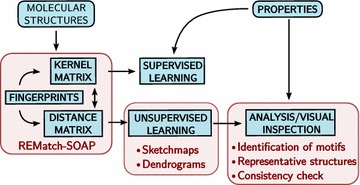
High-throughput computational materials design promises to greatly accelerate the process of discovering new materials and compounds, and of optimizing their properties. The large databases of structures and properties that result from computational searches, as well as the agglomeration of data of heterogeneous provenance leads to considerable challenges when it comes to navigating the database, representing its structure at a glance, understanding structure-property relations, eliminating duplicates and identifying inconsistencies. Here we present a case study, based on a data set of conformers of amino acids and dipeptides, of how machine-learning techniques can help addressing these issues. We will exploit a recently-developed strategy to define a metric between structures, and use it as the basis of both clustering and dimensionality reduction techniques-showing how these can help reveal structure-property relations, identify outliers and inconsistent structures, and rationalise how perturbations (e.g. binding of ions to the molecule) affect the stability of different conformers.
Overview
The claims and statistics of this paper haven’t been checked yet.
Free: it reads the open-access text and checks the first 5 claims that cite a source we can check. Create a free account to check every claim.
Integrity signals
Registry
Cites
Statistics
Figures
Verification
Claims the paper makes
The claims and statistics of this paper haven’t been checked yet.
Free: it reads the open-access text and checks the first 5 claims that cite a source we can check. Create a free account to check every claim.
Claims other papers make about this one
Each is checked against this paper’s own text: does it say what the citing paper says it does?
The cited source says what the claim attributes to it.
In the citing paper
“A low-dimensional representation of a dataset can help when it comes to identifying problematic regions, and understanding how a given representation 'sees' a set of structures 58,104,111 .”
From Unsupervised machine learning in atomistic simulations, between predictions and understanding (2019) · cites this paper as [58]
Self-check
Percentages, sums and reported differences re-computed from the paper’s own numbers.
The self-check needs the paper’s full text.
Citations
Cites
Generalized Gradient Approximation Made Simple
Perdew, J. P., Burke, K., & Ernzerhof, M. (1996) · Physical Review Letters · doi:10.1103/physrevlett.77.3865 · Cited by 215,824
(1996) · Cited by 20,179
A Global Geometric Framework for Nonlinear Dimensionality Reduction
Tenenbaum, J. B., Silva, V. D., & Langford, J. C. (2000) · Science · doi:10.1126/science.290.5500.2319 · Cited by 13,585 · cited 2×
“Several methods have been proposed over the years to solve this dimensionality reduction problem, starting from principal component analysis 42 and the equivalent linear multi-dimensional scaling 43 , and proceeding to non-linear generalizations of the idea, such as ISOMAP 44 , diffusion maps 45 , kernel PCA 46 .”
MethodJain, A. K., Murty, M. N., & Flynn, P. J. (1999) · ACM Computing Surveys · doi:10.1145/331499.331504 · Cited by 13,199 · cited 1×
“A considerable number of clustering algorithms have been developed over the last few decades [17, 47, 48], including connectivity models [49] (i.”
BackgroundCommentary: The Materials Project: A materials genome approach to accelerating materials innovation
Jain, A., Ong, S. P., Hautier, G., Chen, W., Richards, W. D., Dacek, S., Cholia, S., Gunter, D., Skinner, D., Ceder, G., et al. (2013) · APL Materials · doi:10.1063/1.4812323 · Cited by 13,094
Advances in Neural Information Processing Systems 25
Zhang, Y., Sutton, C. A., Storkey, A., & Zoubin Ghahramani, A. (2012) · Cited by 12,653
Wold, S., Esbensen, K., & Geladi, P. (1987) · Chemometrics and Intelligent Laboratory Systems · doi:10.1016/0169-7439(87)80084-9 · Cited by 11,606
Nonlinear Component Analysis as a Kernel Eigenvalue Problem
Schölkopf, B., Smola, A., & Müller, K.-R. (1998) · Neural Computation · doi:10.1162/089976698300017467 · Cited by 8,084 · cited 2×
“Several methods have been proposed over the years to solve this dimensionality reduction problem, starting from principal component analysis 42 and the equivalent linear multi-dimensional scaling 43 , and proceeding to non-linear generalizations of the idea, such as ISOMAP 44 , diffusion maps 45 , kernel PCA 46 .”
MethodTkatchenko, A., & Scheffler, M. (2009) · Physical Review Letters · doi:10.1103/physrevlett.102.073005 · Cited by 6,286 · cited 1×
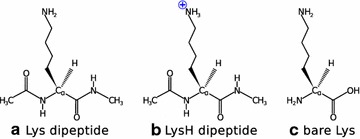
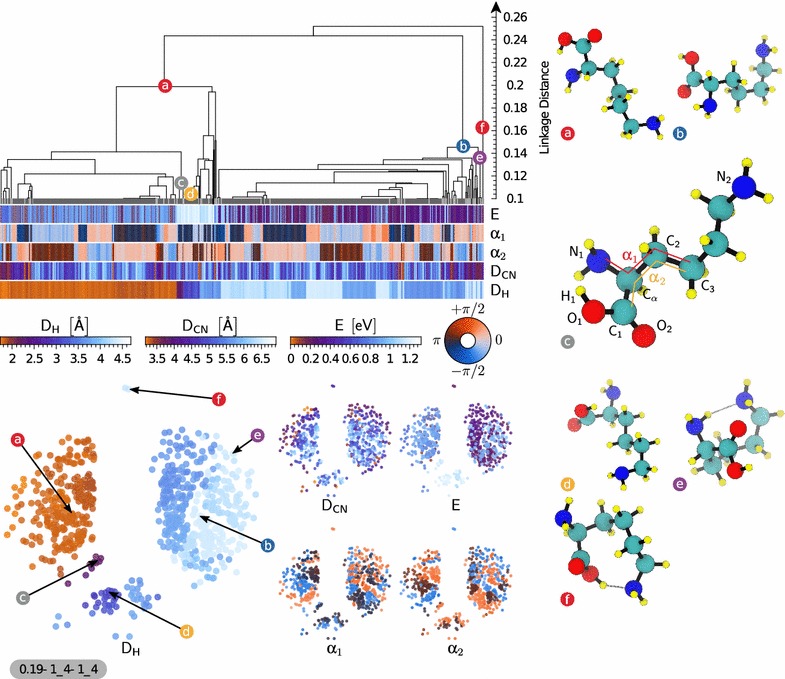
“…were calculated by applying density-functional theory (DFT) in the generalized gradient approximation corrected for long-range van der Waals interactions 61–63 ( PBE+vdW In this study we focus on the amino acid lysine (in short Lys) and investigate basic structural motifs of three forms, see Fig.”
MethodSurvey of Clustering Algorithms
Xu, R., & WunschII, D. (2005) · IEEE Transactions on Neural Networks · doi:10.1109/tnn.2005.845141 · Cited by 6,197 · cited 1×
“Aconsiderable number of clustering algorithms have been developed over the last few decades 17,47,48 , including connectivity models 49 (i.e. hierarchical clustering), centroid models 50–52 (i.e. k-means algorithm) and density based models 16,53,54 .”
Background
Research works printed but not linked: 1
- Angiulli F, Pizzuti C (2002) In: Elomaa T, Mannila H, Toivonen H (eds) Fast outlier detection in high dimensional spaces, vol 2431. Springer, Berlin, pp 15–27
Cited by
Physics-Inspired Structural Representations for Molecules and Materials
Musil, F., Grisafi, A., Bartók, A. P., Ortner, C., Csányi, G., & Ceriotti, M. (2021) · Chemical Reviews · doi:10.1021/acs.chemrev.1c00021 · Cited by 523
Self-citationPhysics-Inspired Structural Representations for Molecules and Materials
Musil, F., Grisafi, A., Bartók, A., Ortner, C., Cśanyi, G., Ceriotti, M., et al. (2021) · Cambridge University Engineering Department Publications Database · Cited by 440
Self-citationImbalzano, G., Anelli, A., Giofré, D., Klees, S., Behler, J., & Ceriotti, M. (2018) · The Journal of Chemical Physics · doi:10.1063/1.5024611 · Cited by 330
Self-citationSymmetry-Adapted Machine Learning for Tensorial Properties of Atomistic Systems
Grisafi, A., Wilkins, D. M., Csányi, G., & Ceriotti, M. (2018) · Physical Review Letters · doi:10.1103/physrevlett.120.036002 · Cited by 309
Self-citationMachine learning for the structure–energy–property landscapes of molecular crystals
Musil, F., De, S., Yang, J., Campbell, J. E., Day, G. M., & Ceriotti, M. (2018) · Chemical Science · doi:10.1039/c7sc04665k · Cited by 216
Self-citationUnsupervised machine learning in atomistic simulations, between predictions and understanding
Ceriotti, M. (2019) · The Journal of Chemical Physics · doi:10.1063/1.5091842 · Cited by 173
Self-citationNguyen, T. T., Székely, E., Imbalzano, G., Behler, J., Csányi, G., Ceriotti, M., Götz, A. W., & Paesani, F. (2018) · The Journal of Chemical Physics · doi:10.1063/1.5024577 · Cited by 171
Self-citationNguyen, T. T. M., Székely, E., Imbalzano, G., Behler, J., Cśanyi, G., Ceriotti, M., Götz, A. W., & Paesani, F. (2018) · Apollo (University of Cambridge) · doi:10.17863/cam.22160 · Cited by 167
Self-citationWillatt, M. J., Musil, F., & Ceriotti, M. (2018) · Physical Chemistry Chemical Physics · doi:10.1039/c8cp05921g · Cited by 141
Self-citationAdvances in data‐assisted high‐throughput computations for material design
Xu, D., Zhang, Q., Huo, X., Wang, Y., & Yang, M. (2023) · Materials Genome Engineering Advances · doi:10.1002/mgea.11 · Cited by 112
Chemical diversity in molecular orbital energy predictions with kernel ridge regression
Stuke, A., Todorović, M., Rupp, M., Künkel, C., Ghosh, K., Himanen, L., & Rinke, P. (2019) · The Journal of Chemical Physics · doi:10.1063/1.5086105 · Cited by 111
Machine Learning-Guided Approach for Studying Solvation Environments
Basdogan, Y., Groenenboom, M. C., Henderson, E., De, S., Rempe, S. B., & Keith, J. A. (2019) · Journal of Chemical Theory and Computation · doi:10.1021/acs.jctc.9b00605 · Cited by 74
Self-citationSaeki, A., & Kranthiraja, K. (2019) · Japanese Journal of Applied Physics · doi:10.7567/1347-4065/ab4f39 · Cited by 83
Chemical diversity in molecular orbital energy predictions with kernel ridge regression
Stuke, A., Todorović, M., Rupp, M., Kunkel, C., & Ghosh, K. (2019) · MPG.PuRe (Max Planck Society) · Cited by 75
Hofstetter, A., Balodis, M., Paruzzo, F. M., Widdifield, C. M., Stevanato, G., Pinon, A. C., Bygrave, P. J., Day, G. M., & Emsley, L. (2019) · Journal of the American Chemical Society · doi:10.1021/jacs.9b03908 · Cited by 67
Equation of State of Fluid Methane from First Principles with Machine Learning Potentials
Veit, M., Jain, S. K., Bonakala, S., Rudra, I., Hohl, D., & Cśanyi, G. (2019) · Journal of Chemical Theory and Computation · doi:10.1021/acs.jctc.8b01242 · Cited by 74
Recognizing Local and Global Structural Motifs at the Atomic Scale
Gasparotto, P., Meißner, R. H., & Ceriotti, M. (2018) · Journal of Chemical Theory and Computation · doi:10.1021/acs.jctc.7b00993 · Cited by 53
“on the adjacency matrix, it is easy to develop non-Gaussian ngerprints, by simply summing over all GMM ngerprints associated with each macro-cluster M P^ M(x) = X k2M p kG(xj k ; k)= + P^(x) : (18) A demonstration of this non-Gaussian ngerprint is also depicted in Fig. 2d. 17 3 Probabilistic Motif Identiers The main u…”
MethodSelf-citationData Science Based Mg Corrosion Engineering
Würger, T., Feiler, C., Musil, F., Vonbun‐Feldbauer, G. B., Höche, D., Lamaka, S. V., Zheludkevich, M. L., & Meißner, R. H. (2019) · Frontiers in Materials · doi:10.3389/fmats.2019.00053 · Cited by 45
Self-citationStructure-property maps with Kernel principal covariates regression
Helfrecht, B. A., Cersonsky, R. K., Fraux, G., & Ceriotti, M. (2020) · Machine Learning Science and Technology · doi:10.1088/2632-2153/aba9ef · Cited by 51
Self-citationChemiscope: interactive structure-property explorer for materials and molecules
Fraux, G., Cersonsky, R. K., & Ceriotti, M. (2020) · The Journal of Open Source Software · doi:10.21105/joss.02117 · Cited by 54
“This previous software was used in multiple research publication, related to the exploration of large-scale databases, and the mapping of structure-property relationships (De, Bartók, Csányi, & Ceriotti, 2016; De et al., 2017; Musil et al., 2018).”
MethodSelf-citationFukutani, T., Miyazawa, K., Iwata, S., & Satoh, H. (2020) · Bulletin of the Chemical Society of Japan · doi:10.1246/bcsj.20200258 · Cited by 39
Li, X., Curtis, F. S., Rose, T., Schober, C., Vázquez‐Mayagoitia, Á., Reuter, K., Oberhofer, H., & Marom, N. (2018) · The Journal of Chemical Physics · doi:10.1063/1.5014038 · Cited by 37
Quantitative estimation of properties from core-loss spectrum via neural network
Kiyohara, S., Tsubaki, M., Liao, K., & Mizoguchi, T. (2019) · Journal of Physics Materials · doi:10.1088/2515-7639/ab0b68 · Cited by 28
Building Nonparametric n-Body Force Fields Using Gaussian Process Regression
Glielmo, A., Zeni, C., Fekete, Á., & Vita, A. D. (2020) · Lecture notes in physics · doi:10.1007/978-3-030-40245-7_5 · Cited by 19
The conformational space of a flexible amino acid at metallic surfaces
Maksimov, D., Baldauf, C., & Rossi, M. (2020) · International Journal of Quantum Chemistry · doi:10.1002/qua.26369 · Cited by 18
Self-citationThe conformational space of a flexible amino acid at metallic surfaces
Maksimov, D., Baldauf, C., & Rossi, M. (2021) · MPG.PuRe (Max Planck Society) · Cited by 11
Self-citationBetter force fields start with better data: A data set of cation dipeptide interactions
Hu, X., Lenz-Himmer, M.-O., & Baldauf, C. (2022) · Scientific Data · doi:10.1038/s41597-022-01297-3 · Cited by 7
Self-citationAnalyzing Fluxional Molecules Using DORI
Vannay, L., Meyer, B., Petraglia, R., Sforazzini, G., Ceriotti, M., & Corminbœuf, C. (2018) · Journal of Chemical Theory and Computation · doi:10.1021/acs.jctc.7b01176 · Cited by 8
“124,125 In this work, in order to avoid any bias in the construction of the low-dimensional representation, we do not select specific high-dimensional descriptors, but use a general measure of structural similarity 124 that only relies on a combination of comparisons of local atomic environments.”
Self-citationMachine Learning at the Atomic Scale
Musil, F., & Ceriotti, M. (2019) · CHIMIA International Journal for Chemistry · doi:10.2533/chimia.2019.972 · Cited by 8
Self-citationNabika, T., Iwata, S., & Satoh, H. (2024) · Bulletin of the Chemical Society of Japan · doi:10.1093/bulcsj/uoae037 · Cited by 5
Kinetically Trapped Liquid-State Conformers of a Sodiated Model Peptide Observed in the Gas Phase
Schneider, M., Masellis, C., Rizzo, T. R., & Baldauf, C. (2017) · The Journal of Physical Chemistry A · doi:10.1021/acs.jpca.7b06431 · Cited by 5
Self-citationA bin and hash method for analyzing reference data and descriptors in machine learning potentials
Paleico, M. L., & Behler, J. (2021) · Machine Learning Science and Technology · doi:10.1088/2632-2153/abe663 · Cited by 6
Weber, S., Fako, E., Goncalves, T. J., De, S., Boscagli, C., Müller, M., Han, S., Jevtovikj, I., Baumgarten, R., Geske, M., et al. (2025) · ACS Catalysis · doi:10.1021/acscatal.5c03876 · Cited by 4
Self-citationActive learning of molecular data for task-specific objectives
Ghosh, K., Todorović, M., Vehtari, A., & Rinke, P. (2025) · The Journal of Chemical Physics · doi:10.1063/5.0229834 · Cited by 6
Ahlawat, P., Clementi, C., Musil, F., Filip, M.-A., & Dar, M. I. (2025) · Chemistry of Materials · doi:10.1021/acs.chemmater.4c03034 · Cited by 5
Self-citationCersonsky, R. K., & De, S. (2022) · Elsevier eBooks · doi:10.1016/b978-0-323-90049-2.00025-1 · Cited by 5
Self-citationNeyyathala, A., Fako, E., De, S., Gashnikova, D., Maurer, F., Grunwaldt, J., Schunk, S. A., & Hanf, S. (2024) · Small Structures · doi:10.1002/sstr.202400260 · Cited by 5
Self-citationYamamoto, Y. (2025) · Journal of Chemical Information and Modeling · doi:10.1021/acs.jcim.4c02217 · Cited by 2
Neyyathala, A., Fako, E., De, S., Gashnikova, D., Maurer, F., Grunwaldt, J., Schunk, S. A., & Hanf, S. (2024) · ChemRxiv · doi:10.26434/chemrxiv-2024-8cxlz
Self-citationNeyyathala, A., Fako, E., De, S., Gashnikova, D., Maurer, F., Grunwaldt, J., Schunk, S. A., & Hanf, S. (2024) · ChemRxiv · doi:10.26434/chemrxiv-2024-8cxlz-v2 · Cited by 1
Self-citationNeural Network Potential Simulations of Copper Supported on Zinc Oxide Surfaces
Paleico, M. L. (2021) · eDiss (Georg-August-Universität Göttingen) · doi:10.53846/goediss-8842
Investigating Protein Structure Populations from Simulation Data using Unsupervised Learning
Gogovi, G. K., Asamoah, J. K. K., & Fosu, G. O. (2022) · International Conference on Computational Science and Computational Intelligence (CSCI) · doi:10.1109/csci58124.2022.00112
“For these reasons, both supervised and unsupervised ML algorithms have been widely used to analyze existing databases in this context [18].”
Method
Metadata
- Authors
- De, S., Musil, F., Ingram, T., Baldauf, C., & Ceriotti, M.
- Affiliations
- École Polytechnique Fédérale de Lausanne (CH)
- Fritz Haber Institute of the Max Planck Society (DE)
- Corresponding author
- De, Sandip
- Venue
- Journal of Cheminformatics
- Published
- 2017-02-02
- Volume
- 9
- Issue
- 1
- Pages
- 6-6
- ISSN
- 1758-2946 (ISSN-L)
- PMC
- PMC5289135
- OpenAlex
- W2555557834
- Cited by
- 42
- References
- 86
- Citations by year
- 2025: 4 · 2024: 4 · 2023: 1 · 2022: 3 · 2021: 5 · 2020: 5 · 2019: 10 · 2018: 8 · 2017: 2
- FWCI
- 2.89
- Type
- journal article
- Language
- en
- Open access
- gold
- doi.org
- Licence
- cc-by
- creativecommons.org/licenses/by/4.0/ (tdm)
- Locations
- Journal of Cheminformatics (publishedVersion, cc-by)
- Europe PMC (PubMed Central) (publishedVersion, cc-by)
- PubMed Central (publishedVersion, cc-by)
- PubMed (publishedVersion)
- Infoscience (Ecole Polytechnique Fédérale de Lausanne) (submittedVersion)
- Infoscience (Ecole Polytechnique Fédérale de Lausanne) (submittedVersion, cc-by-nc-nd)
- MPG.PuRe (Max Planck Society) (submittedVersion, other-oa)
- Funders
- snsf nccr marvel
- MPG-EPFL center for molecularnanoscience
- Topics
- Physical Sciences › Materials Science › Materials Chemistry › Machine Learning in Materials Science
- Life Sciences › Pharmacology, Toxicology and Pharmaceutics › Drug Discovery › Computational Drug Discovery Methods
- Physical Sciences › Physics and Astronomy › Atomic and Molecular Physics, and Optics › Advanced Chemical Physics Studies
- Keywords
- high-throughput materials design, structural database, conformational isomers, amino acids, dipeptides, structure-property relationships, clustering, dimensionality reduction, outlier detection, duplicate removal, ion binding, conformer stability, machine learning
About these checks
Registry, retraction, Cites and statistics results are computed, not judged, with one exception: a printed reference that no index lists is read once by a model before it counts as a citation error. Claims are extracted by a model and kept only when their quote appears verbatim in the text; each cited source is then checked, with a model’s help, for whether it says what the claim relies on. Those verdicts can be wrong — read the claim’s quote and the cited source before relying on one.
Statistics and arithmetic are recomputed, not judged.
Confidence bands are shown only for fields calibrated on our annotated test set. None is calibrated yet, so no band is shown.
What counts as a claim ›How we measure confidence ›How we check this ›
Are you an author, or do you see a problem with this page? Request a review
Data sources
Bibliographic data: Semantic Scholar, OpenAlex, Crossref.
Contains information from the Semantic Scholar Academic Graph Datasets, made available under the ODC Attribution License (ODC-BY 1.0).
Semantic Scholar’s data is described in: Kinney, R., et al. (2023). The Semantic Scholar Open Data Platform. arXiv:2301.10140.
