

Mapping and classifying molecules from a high-throughput structural database
Open accessThe DOI matches its Crossref record; 86 of the 86 references it cites were found in a registry or an index.
Abstract
High-throughput computational materials design promises to greatly accelerate the process of discovering new materials and compounds, and of optimizing their properties. The large databases of structures and properties that result from computational searches, as well as the agglomeration of data of heterogeneous provenance leads to considerable challenges when it comes to navigating the database, representing its structure at a glance, understanding structure-property relations, eliminating duplicates and identifying inconsistencies. Here we present a case study, based on a data set of conformers of amino acids and dipeptides, of how machine-learning techniques can help addressing these issues. We will exploit a recently-developed strategy to define a metric between structures, and use it as the basis of both clustering and dimensionality reduction techniques-showing how these can help reveal structure-property relations, identify outliers and inconsistent structures, and rationalise how perturbations (e.g. binding of ions to the molecule) affect the stability of different conformers.
Overview
The claims and statistics of this paper haven’t been checked yet.
Free: it reads the open-access text and checks the first 5 claims that cite a source we can check. Create a free account to check every claim.
Integrity signals
Registry
Cites
Statistics
Figures
Verification
Claims the paper makes
The claims and statistics of this paper haven’t been checked yet.
Free: it reads the open-access text and checks the first 5 claims that cite a source we can check. Create a free account to check every claim.
Claims other papers make about this one
Each is checked against this paper’s own text: does it say what the citing paper says it does?
The cited source says what the claim attributes to it.
In the citing paper
“A low-dimensional representation of a dataset can help when it comes to identifying problematic regions, and understanding how a given representation 'sees' a set of structures 58,104,111 .”
From Unsupervised machine learning in atomistic simulations, between predictions and understanding (2019) · cites this paper as [58]
Self-check
Percentages, sums and reported differences re-computed from the paper’s own numbers.
The self-check needs the paper’s full text.
Citations
Cites
Generalized Gradient Approximation Made Simple
Perdew, J. P., Burke, K., & Ernzerhof, M. (1996) · Physical Review Letters · doi:10.1103/physrevlett.77.3865 · Cited by 215,824
(1996) · Cited by 20,179
A Global Geometric Framework for Nonlinear Dimensionality Reduction
Tenenbaum, J. B., Silva, V. D., & Langford, J. C. (2000) · Science · doi:10.1126/science.290.5500.2319 · Cited by 13,585 · cited 2×
“Several methods have been proposed over the years to solve this dimensionality reduction problem, starting from principal component analysis 42 and the equivalent linear multi-dimensional scaling 43 , and proceeding to non-linear generalizations of the idea, such as ISOMAP 44 , diffusion maps 45 , kernel PCA 46 .”
MethodJain, A. K., Murty, M. N., & Flynn, P. J. (1999) · ACM Computing Surveys · doi:10.1145/331499.331504 · Cited by 13,199 · cited 1×
“A considerable number of clustering algorithms have been developed over the last few decades [17, 47, 48], including connectivity models [49] (i.”
BackgroundCommentary: The Materials Project: A materials genome approach to accelerating materials innovation
Jain, A., Ong, S. P., Hautier, G., Chen, W., Richards, W. D., Dacek, S., Cholia, S., Gunter, D., Skinner, D., Ceder, G., et al. (2013) · APL Materials · doi:10.1063/1.4812323 · Cited by 13,094
Advances in Neural Information Processing Systems 25
Zhang, Y., Sutton, C. A., Storkey, A., & Zoubin Ghahramani, A. (2012) · Cited by 12,653
Wold, S., Esbensen, K., & Geladi, P. (1987) · Chemometrics and Intelligent Laboratory Systems · doi:10.1016/0169-7439(87)80084-9 · Cited by 11,606
Nonlinear Component Analysis as a Kernel Eigenvalue Problem
Schölkopf, B., Smola, A., & Müller, K.-R. (1998) · Neural Computation · doi:10.1162/089976698300017467 · Cited by 8,084 · cited 2×
“Several methods have been proposed over the years to solve this dimensionality reduction problem, starting from principal component analysis 42 and the equivalent linear multi-dimensional scaling 43 , and proceeding to non-linear generalizations of the idea, such as ISOMAP 44 , diffusion maps 45 , kernel PCA 46 .”
MethodTkatchenko, A., & Scheffler, M. (2009) · Physical Review Letters · doi:10.1103/physrevlett.102.073005 · Cited by 6,286 · cited 1×
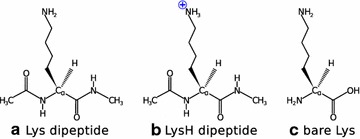
“…were calculated by applying density-functional theory (DFT) in the generalized gradient approximation corrected for long-range van der Waals interactions 61–63 ( PBE+vdW In this study we focus on the amino acid lysine (in short Lys) and investigate basic structural motifs of three forms, see Fig.”
MethodSurvey of Clustering Algorithms
Xu, R., & WunschII, D. (2005) · IEEE Transactions on Neural Networks · doi:10.1109/tnn.2005.845141 · Cited by 6,197 · cited 1×
“Aconsiderable number of clustering algorithms have been developed over the last few decades 17,47,48 , including connectivity models 49 (i.e. hierarchical clustering), centroid models 50–52 (i.e. k-means algorithm) and density based models 16,53,54 .”
BackgroundLOF: identifying density-based local outliers
Breunig, M. M., Kriegel, H.-P., Ng, R. T., & Sander, J. (2000) · ACM SIGMOD Record · doi:10.1145/335191.335388 · Cited by 5,207
Clustering by fast search and find of density peaks
Rodriguez, A., & Laio, A. (2014) · Science · doi:10.1126/science.1242072 · Cited by 4,942 · cited 1×
“Aconsiderable number of clustering algorithms have been developed over the last few decades 17,47,48 , including connectivity models 49 (i.e. hierarchical clustering), centroid models 50–52 (i.e. k-means algorithm) and density based models 16,53,54 .”
BackgroundNonmetric Multidimensional Scaling: A Numerical Method
Kruskal, J. B. (1964) · Psychometrika · doi:10.1007/bf02289694 · Cited by 4,846 · cited 1×
“…have been proposed over the years to solve this dimensionality reduction problem, starting from principal component analysis 42 and the equivalent linear multi-dimensional scaling 43 , and proceeding to non-linear generalizations of the idea, such as ISOMAP 44 , diffusion maps 45 , kernel PCA 46 .”
MethodAnkerst, M. (1999) · doi:10.1145/304181.304187 · Cited by 3,982
Stereochemistry of polypeptide chain configurations
Ramachandran, G. N., Ramakrishnan, C., & Sasisekharan, V. (1963) · Journal of Molecular Biology · doi:10.1016/s0022-2836(63)80023-6 · Cited by 3,554 · cited 1×
“…are most often considered as the key coordinates to navigate the conformational landscape are the Ramachandran dihedral angles φ and ψ , that determine the structure of the backbone around the side chain bearing C α atom 71 under the assumption of peptide bonds being solely in trans conformation.”
BackgroundAb initio molecular simulations with numeric atom-centered orbitals
Blum, V., Gehrke, R., Hanke, F., Havu, P., Havu, V., Ren, X., Reuter, K., & Scheffler, M. (2009) · Computer Physics Communications · doi:10.1016/j.cpc.2009.06.022 · Cited by 2,919 · cited 1×
“…were calculated by applying density-functional theory (DFT) in the generalized gradient approximation corrected for long-range van der Waals interactions 61–63 ( PBE+vdW In this study we focus on the amino acid lysine (in short Lys) and investigate basic structural motifs of three forms, see Fig.”
MethodSaal, J. E., Kirklin, S., Aykol, M., Meredig, B., & Wolverton, C. (2013) · JOM · doi:10.1007/s11837-013-0755-4 · Cited by 2,584
Extensions to the k-Means Algorithm for Clustering Large Data Sets with Categorical Values
Huang, Z. (1998) · Data Mining and Knowledge Discovery · doi:10.1023/a:1009769707641 · Cited by 2,505
Sinkhorn Distances: Lightspeed Computation of Optimal TransportPreprint
Cuturi, M. (2013) · Cited by 2,385
Fast and Accurate Modeling of Molecular Atomization Energies with Machine Learning
Rupp, M., Tkatchenko, A., Müller, K.-R., & von Lilienfeld, O. A. (2012) · Physical Review Letters · doi:10.1103/physrevlett.108.058301 · Cited by 2,312
Quantum chemistry structures and properties of 134 kilo molecules
Ramakrishnan, R., Dral, P. O., Rupp, M., & von Lilienfeld, O. A. (2014) · Scientific Data · doi:10.1038/sdata.2014.22 · Cited by 1,966
Algorithms for hierarchical clustering: an overview
Murtagh, F., & Contreras, P. (2012) · WIREs Data Mining and Knowledge Discovery · doi:10.1002/widm.53 · Cited by 1,874 · cited 2×
“Clustering models based on connectivity information such as hierarchical (or agglomerative) clustering 49 are particularly suited for this purpose and we will focus only on this type of clustering in this paper.”
BackgroundCoifman, R. R., Lafon, S., Lee, A. B., Maggioni, M., Nadler, B., Warner, F., & Zucker, S. W. (2005) · Proceedings of the National Academy of Sciences · doi:10.1073/pnas.0500334102 · Cited by 1,675 · cited 1×
“…have been proposed over the years to solve this dimensionality reduction problem, starting from principal component analysis 42 and the equivalent linear multi-dimensional scaling 43 , and proceeding to non-linear generalizations of the idea, such as ISOMAP 44 , diffusion maps 45 , kernel PCA 46 .”
MethodCis−Trans Isomerization of Organic Molecules and Biomolecules: Implications and Applications
Dugave, C., & Demange, L. (2003) · Chemical Reviews · doi:10.1021/cr0104375 · Cited by 1,032 · cited 1×
“Peptide bonds in naturally-occurring proteins are believed to almost exclusively exist in trans conformation with the exception of prolyl peptide bonds where a smaller energy difference to trans increases the chance for cis onformers 72,73 .”
BackgroundOutlier detection for high dimensional data
Aggarwal, C. C., & Yu, P. S. (2001) · Proceedings of the 2001 ACM SIGMOD international conference on Management of data · doi:10.1145/375663.375668 · Cited by 1,029
Big Data of Materials Science: Critical Role of the Descriptor
Ghiringhelli, L. M., Vybiral, J., Levchenko, S. V., Draxl, C., & Scheffler, M. (2015) · Physical Review Letters · doi:10.1103/physrevlett.114.105503 · Cited by 920
Accelerating materials property predictions using machine learning
Pilania, G., Wang, C., Jiang, X., Rajasekaran, S., & Ramprasad, R. (2013) · Scientific Reports · doi:10.1038/srep02810 · Cited by 853
Hansen, K., Biegler, F., Ramakrishnan, R., Pronobis, W., von Lilienfeld, O. A., Müller, K.-R., & Tkatchenko, A. (2015) · The Journal of Physical Chemistry Letters · doi:10.1021/acs.jpclett.5b00831 · Cited by 815
Comparing molecules and solids across structural and alchemical space
De, S., Bartók, A. P., Csányi, G., & Ceriotti, M. (2016) · Physical Chemistry Chemical Physics · doi:10.1039/c6cp00415f · Cited by 778 · cited 1×
“26 , the choice of a SOAP kernel as the definition of an environment similarity provides at the same time great generality – it can be seamlessly applied to both molecules and solids – and elbowroom for fine-tuning – ranging from setting an appropriate cutoff distance to circumscribe an environment…”
BackgroundSelf-citationData Clustering: Algorithms and Applications
(2018) · Chapman & Hall/CRC eBooks · doi:10.1201/9781315373515 · Cited by 756
Hachmann, J., Olivares-Amaya, R., Atahan-Evrenk, S., Amador-Bedolla, C., Sánchez-Carrera, R. S., Gold-Parker, A., Vogt, L., Brockway, A. M., & Aspuru-Guzik, A. (2011) · The Journal of Physical Chemistry Letters · doi:10.1021/jz200866s · Cited by 653
Finding Density Functionals with Machine Learning
Snyder, J. C., Rupp, M., Hansen, K., Müller, K.-R., & Burke, K. (2012) · Physical Review Letters · doi:10.1103/physrevlett.108.253002 · Cited by 644
An Entropy Weighting k-Means Algorithm for Subspace Clustering of High-Dimensional Sparse Data
Jing, L., Ng, M. K., & Huang, J. Z. (2007) · IEEE Transactions on Knowledge and Data Engineering · doi:10.1109/tkde.2007.1048 · Cited by 625
DATA CLUSTERING: Algorithms and Applications
Aggarwal, C. C. (2013) · Chapman & Hall/CRC eBooks · doi:10.1201/b15410 · Cited by 624
Machine learning of molecular electronic properties in chemical compound space
Montavon, G., Rupp, M., Gobre, V., Vazquez-Mayagoitia, A., Hansen, K., Tkatchenko, A., Müller, K.-R., & Anatole von Lilienfeld, O. (2013) · New Journal of Physics · doi:10.1088/1367-2630/15/9/095003 · Cited by 623
AiiDA: automated interactive infrastructure and database for computational science
Pizzi, G., Cepellotti, A., Sabatini, R., Marzari, N., & Kozinsky, B. (2016) · Computational Materials Science · doi:10.1016/j.commatsci.2015.09.013 · Cited by 602
On-Line Unsupervised Outlier Detection Using Finite Mixtures with Discounting Learning Algorithms
Yamanishi, K., Takeuchi, J.-I., Williams, G., & Milne, P. (2004) · Data Mining and Knowledge Discovery · doi:10.1023/b:dami.0000023676.72185.7c · Cited by 476
Data cleaning: detecting, diagnosing, and editing data abnormalities
Van den Broeck, J., Argeseanu Cunningham, S., Eeckels, R., & Herbst, K. (2005) · PLoS Medicine · doi:10.1371/journal.pmed.0020267 · Cited by 446
A modified version of the K-means algorithm with a distance based on cluster symmetry
Su, M.-C., & Chou, C.-H. (2001) · IEEE Transactions on Pattern Analysis and Machine Intelligence · doi:10.1109/34.927466 · Cited by 389 · cited 1×
“Aconsiderable number of clustering algorithms have been developed over the last few decades 17,47,48 , including connectivity models 49 (i.e. hierarchical clustering), centroid models 50–52 (i.e. k-means algorithm) and density based models 16,53,54 .”
BackgroundMachine learning of molecular electronic properties in chemical compound space
Montavon, G., Rupp, M., Gobre, V. V., Vázquez‐Mayagoitia, Á., Hansen, K., Tkatchenko, A., Müller, K., & von Lilienfeld, O. A. (2013) · MPG.PuRe (Max Planck Society) · doi:10.3929/ethz-b-000071765 · Cited by 366
Simplifying the representation of complex free-energy landscapes using sketch-map
Ceriotti, M., Tribello, G. A., & Parrinello, M. (2011) · Proceedings of the National Academy of Sciences · doi:10.1073/pnas.1108486108 · Cited by 340 · cited 2×
“This is done using sketchmap out-of-sample embedding, and we refer our reader to see the relevant literature 22–24 for more details about the method.”
MethodSelf-citationAccuracy and transferability of Gaussian approximation potential models for tungsten
Szlachta, W. J., Bartók, A. P., & Csányi, G. (2014) · Physical Review B · doi:10.1103/physrevb.90.104108 · Cited by 327 · cited 1×
“In our framework, the similarity between two local environments X Ai and X Bj is computed using the SOAP kernel 29 C ij ( A , B ) = k ( X Ai , X Bj ) .”
MethodChemical aspects of peptide bond isomerisation
Fischer, G. (2000) · Chemical Society Reviews · doi:10.1039/a803742f · Cited by 324 · cited 1×
“Peptide bonds in naturally-occurring proteins are believed to almost exclusively exist in trans conformation with the exception of prolyl peptide bonds where a smaller energy difference to trans increases the chance for cis onformers 72,73 .”
BackgroundIsayev, O., Fourches, D., Muratov, E. N., Oses, C., Rasch, K., Tropsha, A., & Curtarolo, S. (2015) · Chemistry of Materials · doi:10.1021/cm503507h · Cited by 300
Ghasemi, S. A., Hofstetter, A., Saha, S., & Goedecker, S. (2015) · Physical Review B · doi:10.1103/physrevb.92.045131 · Cited by 293
Kusne, A. G., Gao, T., Mehta, A., Ke, L., Nguyen, M. C., Ho, K.-M., Antropov, V., Wang, C.-Z., Kramer, M. J., Long, C., et al. (2014) · Scientific Reports · doi:10.1038/srep06367 · Cited by 273
Rohrdanz, M. A., Zheng, W., & Clementi, C. (2013) · Annual Review of Physical Chemistry · doi:10.1146/annurev-physchem-040412-110006 · Cited by 242
Bartók, A. P., Gillan, M. J., Manby, F. R., & Csányi, G. (2013) · Physical Review B · doi:10.1103/physrevb.88.054104 · Cited by 207
Using sketch-map coordinates to analyze and bias molecular dynamics simulations
Tribello, G. A., Ceriotti, M., & Parrinello, M. (2012) · Proceedings of the National Academy of Sciences · doi:10.1073/pnas.1201152109 · Cited by 202
Self-citationLearning scheme to predict atomic forces and accelerate materials simulations
Botu, V., & Ramprasad, R. (2015) · Physical Review B · doi:10.1103/physrevb.92.094306 · Cited by 202
Weiss, M. S., Jabs, A., & Hilgenfeld, R. (1998) · Nature Structural & Molecular Biology · doi:10.1038/1368 · Cited by 192 · cited 1×
“This view is supported by the analysis of protein structures deposited in the protein databases where cis conformations are found for about 5% of the prolyl peptide bonds, but less than 0.1% for the others 74 .”
MethodInfluentialEnergy Landscape of Fullerene Materials: A Comparison of Boron to Boron Nitride and Carbon
De, S., Willand, A., Amsler, M., Pochet, P., Genovese, L., & Goedecker, S. (2011) · Physical Review Letters · doi:10.1103/physrevlett.106.225502 · Cited by 181 · cited 1×
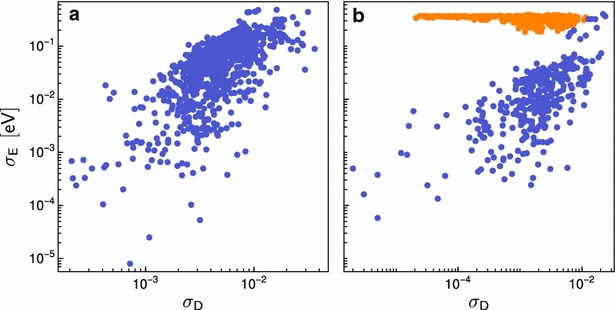
“Looking, for example, at a glassy energy landscape 84 , one can observe configurations that are very different from a structural point of view, but have similar energy, giving rise to clusters with large σ D and small σ E .”
BackgroundSelf-citationAccelerated materials property predictions and design using motif-based fingerprints
Huan, T. D., Mannodi-Kanakkithodi, A., & Ramprasad, R. (2015) · Physical Review B · doi:10.1103/physrevb.92.014106 · Cited by 168
Systematic determination of order parameters for chain dynamics using diffusion maps
Ferguson, A. L., Panagiotopoulos, A. Z., Debenedetti, P. G., & Kevrekidis, I. G. (2010) · Proceedings of the National Academy of Sciences · doi:10.1073/pnas.1003293107 · Cited by 165
Pietrucci, F., & Andreoni, W. (2011) · Physical Review Letters · doi:10.1103/physrevlett.107.085504 · Cited by 155 · cited 1×
“In order to deal with symmetry operations or condensed phase structures, several “fingerprint” frameworks have been developed 8,28–40 , that assign a unique vector of order parameters to each molecular or crystalline configuration: a metric can then be easily built by taking some norm of the…”
BackgroundMachine learning for many-body physics: The case of the Anderson impurity model
Arsenault, L.-F., Lopez-Bezanilla, A., von Lilienfeld, O. A., & Millis, A. J. (2014) · Physical Review B · doi:10.1103/physrevb.90.155136 · Cited by 145
Ortiz, C., Eriksson, O., & Klintenberg, M. (2009) · Computational Materials Science · doi:10.1016/j.commatsci.2008.07.016 · Cited by 137
The Pauling File, Binaries Edition
Villars, P., Berndt, M., Brandenburg, K., CENZUAL, K., Daams, J. L. C., Hulliger, F., Massalski, T. B., Okamoto, H., Osaki, K., Prince, A., et al. (2003) · Journal of Alloys and Compounds · doi:10.1016/j.jallcom.2003.08.058 · Cited by 133
von Lilienfeld, O. A. (2013) · International Journal of Quantum Chemistry · doi:10.1002/qua.24375 · Cited by 133
Demonstrating the Transferability and the Descriptive Power of Sketch-Map
Ceriotti, M., Tribello, G. A., & Parrinello, M. (2013) · Journal of Chemical Theory and Computation · doi:10.1021/ct3010563 · Cited by 126 · cited 5×
“This is done using sketchmap out-of-sample embedding, and we refer our reader to see the relevant literature 22–24 for more details about the method.”
BackgroundMethodInfluentialSelf-citationA fingerprint based metric for measuring similarities of crystalline structures
Zhu, L., Amsler, M., Fuhrer, T., Schaefer, B., Faraji, S., Rostami, S., Ghasemi, S. A., Sadeghi, A., Grauzinyte, M., Wolverton, C., et al. (2016) · The Journal of Chemical Physics · doi:10.1063/1.4940026 · Cited by 122
Unraveling the Stability of Polypeptide Helices: Critical Role of van der Waals Interactions
Tkatchenko, A., Rossi, M., Blum, V., Ireta, J., & Scheffler, M. (2011) · Physical Review Letters · doi:10.1103/physrevlett.106.118102 · Cited by 119
The Materials Genome Initiative: One year on
White, A. A. (2012) · MRS Bulletin · doi:10.1557/mrs.2012.194 · Cited by 117
Outlier Detection Algorithms in Data Mining Systems
Petrovskiy, M. (2003) · Programming and Computer Software · doi:10.1023/a:1024974810270 · Cited by 91
Detection of stoichiometric inconsistencies in biomolecular models
Gevorgyan, A., Poolman, M. G., & Fell, D. A. (2008) · Bioinformatics · doi:10.1093/bioinformatics/btn425 · Cited by 87
Distributed, Concurrent, and Independent Access to Encrypted Cloud Databases
Ferretti, L., Colajanni, M., & Marchetti, M. (2013) · IEEE Transactions on Parallel and Distributed Systems · doi:10.1109/tpds.2013.154 · Cited by 83 · cited 1×
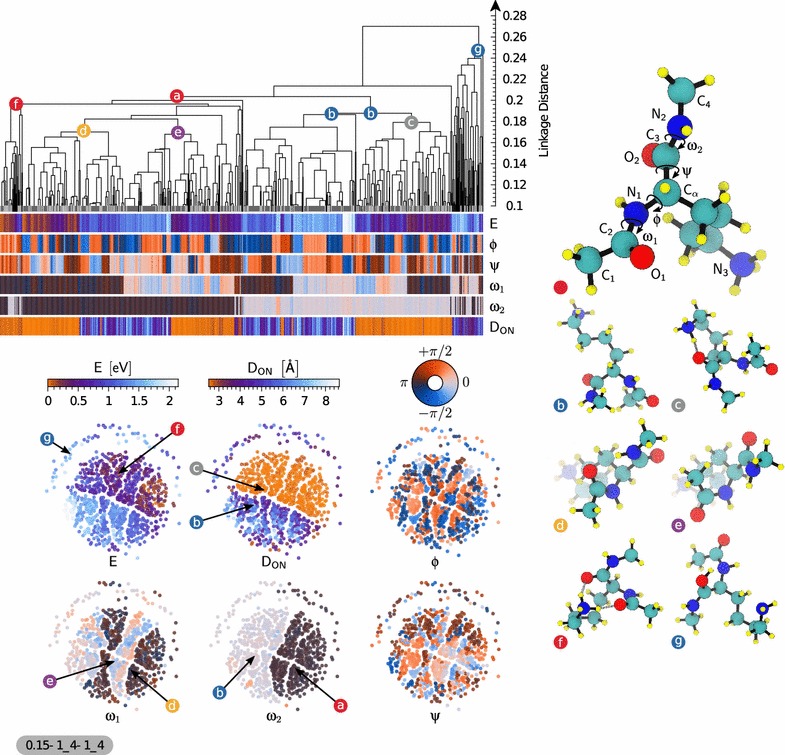
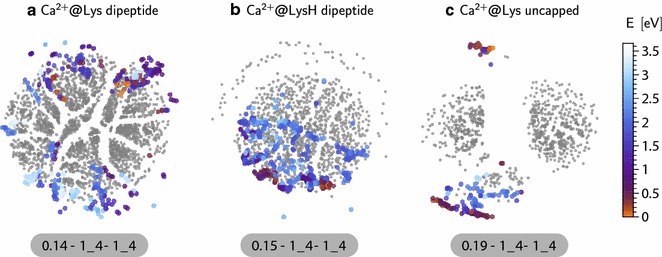
“The outliers of uncapped lysine (b) were manually highlighted in orange. entists 80–83 , and several tools are available to monitor and correct inconsistencies from the technical point of view, in terms of reliability of storing and retrieving data 55–60 .”
MethodMaterials Prediction via Classification Learning
Balachandran, P. V., Theiler, J., Rondinelli, J. M., & Lookman, T. (2015) · Scientific Reports · doi:10.1038/srep13285 · Cited by 80
Modeling electronic quantum transport with machine learning
Lopez-Bezanilla, A., & von Lilienfeld, O. A. (2014) · Physical Review B · doi:10.1103/physrevb.89.235411 · Cited by 72
Growth and Structural Properties of MgN (N = 10–56) Clusters: Density Functional Theory Study
Heidari, I., De, S., Ghazi, S. M., Goedecker, S., & Kanhere, D. G. (2011) · The Journal of Physical Chemistry A · doi:10.1021/jp204442e · Cited by 72
Self-citationKernel Approach to Molecular Similarity Based on Iterative Graph Similarity
Rupp, M., Proschak, E., & Schneider, G. (2007) · Journal of Chemical Information and Modeling · doi:10.1021/ci700274r · Cited by 68
Schubert, F., Rossi, M., Baldauf, C., Pagel, K., Warnke, S., von Helden, G., Filsinger, F., Kupser, P., Meijer, G., Salwiczek, M., et al. (2015) · Physical Chemistry Chemical Physics · doi:10.1039/c4cp05541a · Cited by 65
Self-citationRopo, M., Schneider, M., Baldauf, C., & Blum, V. (2016) · Scientific Data · doi:10.1038/sdata.2016.9 · Cited by 64 · cited 2×
“The potential-energy surfaces (PES) of 280 systems were explored in a wide relative energy range of up to 4 eV (390 kJ/mol), summing up to an overall of 45,892 stationary points on the respective potential-energy surfaces 15 .”
BackgroundSelf-citationGoing clean: structure and dynamics of peptides in the gas phase and paths to solvation
Baldauf, C., & Rossi, M. (2015) · Journal of Physics Condensed Matter · doi:10.1088/0953-8984/27/49/493002 · Cited by 56
Self-citationA Critical Success Factor Framework for Information Quality Management
Baškarada, S., & Koronios, A. (2014) · Information Systems Management · doi:10.1080/10580530.2014.958023 · Cited by 46
Validation Challenge of Density-Functional Theory for Peptides—Example of Ac-Phe-Ala5-LysH+
Rossi, M., Chutia, S., Scheffler, M., & Blum, V. (2014) · The Journal of Physical Chemistry A · doi:10.1021/jp412055r · Cited by 45
How Cations Change Peptide Structure
Baldauf, C., Pagel, K., Warnke, S., von Helden, G., Koksch, B., Blüm, V., & Scheffler, M. (2013) · Chemistry - A European Journal · doi:10.1002/chem.201204554 · Cited by 41
Self-citationLow-energy boron fullerenes: Role of disorder and potential synthesis pathways
Pochet, P., Genovese, L., De, S., Goedecker, S., Caliste, D., Ghasemi, S. A., Bao, K., & Deutsch, T. (2011) · Physical Review B · doi:10.1103/physrevb.83.081403 · Cited by 40 · cited 1×
“…of a set of molecular conformers, one could also wonder how changes in the thermodynamic conditions, or another external perturbation such as solvation, the addition or sub-traction of an electron 75 or that of an atom 76–78 , modify the conformations of the molecule and their stability.”
BackgroundSelf-citationA simple and effective outlier detection algorithm for categorical data
Zhao, X., Liang, J., & Cao, F. (2013) · International Journal of Machine Learning and Cybernetics · doi:10.1007/s13042-013-0202-4 · Cited by 39 · cited 2×
“Another important aspect of database analysis is ‘outlier de-tection’ 55–60 .”
BackgroundMethodQuantum Energy Regression using Scattering TransformsPreprint
Hirn, M., Poilvert, N., & Mallat, S. (2015) · arXiv (Cornell University) · doi:10.48550/arxiv.1502.02077 · Cited by 36
De, S., Ghasemi, S. A., Willand, A., Genovese, L., Kanhere, D. G., & Goedecker, S. (2011) · The Journal of Chemical Physics · doi:10.1063/1.3569564 · Cited by 34 · cited 1×
“…of a set of molecular conformers, one could also wonder how changes in the thermodynamic conditions, or another external perturbation such as solvation, the addition or sub-traction of an electron 75 or that of an atom 76–78 , modify the conformations of the molecule and their stability.”
BackgroundSelf-citationHow Cations Change Peptide Structure
Baldauf, C., Pagel, K., Warnke, S., von Helden, G., Koksch, B., Blum, V., & Scheffler, M. (2013) · Cited by 34
Self-citationRopo, M., Blüm, V., & Baldauf, C. (2016) · Scientific Reports · doi:10.1038/srep35772 · Cited by 28 · cited 1×
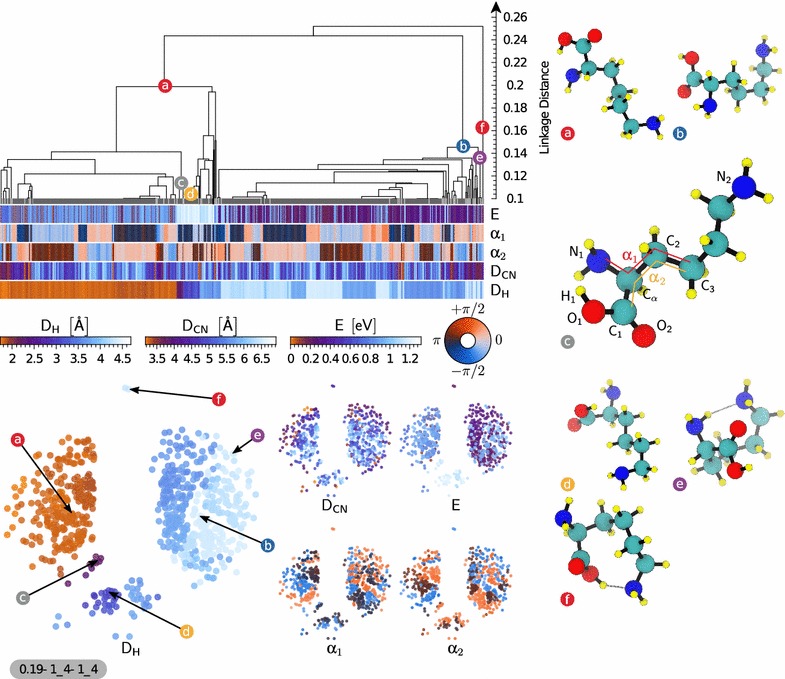
“…distance ( D H ) between the H atom in the OH group of the carboxy function and the N atom in the backbone (N 1 ) discriminates well between structures based on H-bonding patterns 70 of type I between N 1 H → O 2 (e.g. conformer (b)) and of type II with a H-bond O 1 H → N 1 (e.g. conformer (a)).”
BackgroundSelf-citationProbing the Unfolded Configurations of a β-Hairpin Using Sketch-Map
Ardèvol, A., Tribello, G. A., Ceriotti, M., & Parrinello, M. (2015) · Journal of Chemical Theory and Computation · doi:10.1021/ct500950z · Cited by 23 · cited 1×
“In analogy with what observed for Lennard-Jones clusters 24 and solvated polypeptide segments 79 , sketchmaps proved to be a powerful tool to analyze the response of the system to external perturbations and changes in the boundary conditions, and – in this specific example – do draw connections…”
MethodSelf-citationNative like helices in a specially designed β peptide in the gas phase
Schubert, F., Pagel, K., Rossi, M., Warnke, S., Salwiczek, M., Koksch, B., von Helden, G., Blüm, V., Baldauf, C., & Scheffler, M. (2015) · Physical Chemistry Chemical Physics · doi:10.1039/c4cp05216a · Cited by 16
Self-citationData Mining Techniques for Materials Informatics: Datasets Preparing and Applications
Yu, G., Chen, J., & Zhu, L. (2009) · International Symposium on Knowledge Acquisition and Modeling (KAM) · doi:10.1109/kam.2009.98 · Cited by 13
Ghazi, S. M., De, S., Kanhere, D. G., & Goedecker, S. (2011) · Journal of Physics Condensed Matter · doi:10.1088/0953-8984/23/40/405303 · Cited by 6
Self-citation
Research works printed but not linked: 1
- Angiulli F, Pizzuti C (2002) In: Elomaa T, Mannila H, Toivonen H (eds) Fast outlier detection in high dimensional spaces, vol 2431. Springer, Berlin, pp 15–27
Cited by
Physics-Inspired Structural Representations for Molecules and Materials
Musil, F., Grisafi, A., Bartók, A. P., Ortner, C., Csányi, G., & Ceriotti, M. (2021) · Chemical Reviews · doi:10.1021/acs.chemrev.1c00021 · Cited by 523
Self-citationPhysics-Inspired Structural Representations for Molecules and Materials
Musil, F., Grisafi, A., Bartók, A., Ortner, C., Cśanyi, G., Ceriotti, M., et al. (2021) · Cambridge University Engineering Department Publications Database · Cited by 440
Self-citationImbalzano, G., Anelli, A., Giofré, D., Klees, S., Behler, J., & Ceriotti, M. (2018) · The Journal of Chemical Physics · doi:10.1063/1.5024611 · Cited by 330
Self-citationSymmetry-Adapted Machine Learning for Tensorial Properties of Atomistic Systems
Grisafi, A., Wilkins, D. M., Csányi, G., & Ceriotti, M. (2018) · Physical Review Letters · doi:10.1103/physrevlett.120.036002 · Cited by 309
Self-citationMachine learning for the structure–energy–property landscapes of molecular crystals
Musil, F., De, S., Yang, J., Campbell, J. E., Day, G. M., & Ceriotti, M. (2018) · Chemical Science · doi:10.1039/c7sc04665k · Cited by 216
Self-citation
Metadata
- Authors
- De, S., Musil, F., Ingram, T., Baldauf, C., & Ceriotti, M.
- Affiliations
- École Polytechnique Fédérale de Lausanne (CH)
- Fritz Haber Institute of the Max Planck Society (DE)
- Corresponding author
- De, Sandip
- Venue
- Journal of Cheminformatics
- Published
- 2017-02-02
- Volume
- 9
- Issue
- 1
- Pages
- 6-6
- ISSN
- 1758-2946 (ISSN-L)
- PMC
- PMC5289135
- OpenAlex
- W2555557834
- Cited by
- 42
- References
- 86
- Citations by year
- 2025: 4 · 2024: 4 · 2023: 1 · 2022: 3 · 2021: 5 · 2020: 5 · 2019: 10 · 2018: 8 · 2017: 2
- FWCI
- 2.89
- Type
- journal article
- Language
- en
- Open access
- gold
- doi.org
- Licence
- cc-by
- creativecommons.org/licenses/by/4.0/ (tdm)
- Locations
- Journal of Cheminformatics (publishedVersion, cc-by)
- Europe PMC (PubMed Central) (publishedVersion, cc-by)
- PubMed Central (publishedVersion, cc-by)
- PubMed (publishedVersion)
- Infoscience (Ecole Polytechnique Fédérale de Lausanne) (submittedVersion)
- Infoscience (Ecole Polytechnique Fédérale de Lausanne) (submittedVersion, cc-by-nc-nd)
- MPG.PuRe (Max Planck Society) (submittedVersion, other-oa)
- Funders
- snsf nccr marvel
- MPG-EPFL center for molecularnanoscience
- Topics
- Physical Sciences › Materials Science › Materials Chemistry › Machine Learning in Materials Science
- Life Sciences › Pharmacology, Toxicology and Pharmaceutics › Drug Discovery › Computational Drug Discovery Methods
- Physical Sciences › Physics and Astronomy › Atomic and Molecular Physics, and Optics › Advanced Chemical Physics Studies
- Keywords
- high-throughput materials design, structural database, conformational isomers, amino acids, dipeptides, structure-property relationships, clustering, dimensionality reduction, outlier detection, duplicate removal, ion binding, conformer stability, machine learning
About these checks
Registry, retraction, Cites and statistics results are computed, not judged, with one exception: a printed reference that no index lists is read once by a model before it counts as a citation error. Claims are extracted by a model and kept only when their quote appears verbatim in the text; each cited source is then checked, with a model’s help, for whether it says what the claim relies on. Those verdicts can be wrong — read the claim’s quote and the cited source before relying on one.
Statistics and arithmetic are recomputed, not judged.
Confidence bands are shown only for fields calibrated on our annotated test set. None is calibrated yet, so no band is shown.
What counts as a claim ›How we measure confidence ›How we check this ›
Are you an author, or do you see a problem with this page? Request a review
Data sources
Bibliographic data: Semantic Scholar, OpenAlex, Crossref.
Contains information from the Semantic Scholar Academic Graph Datasets, made available under the ODC Attribution License (ODC-BY 1.0).
Semantic Scholar’s data is described in: Kinney, R., et al. (2023). The Semantic Scholar Open Data Platform. arXiv:2301.10140.
