

The DOI matches its Crossref record; 19 of the 23 references it cites were found in a registry or an index.
Molecular generative model based on conditional variational autoencoder for de novo molecular design
Open accessAbstract
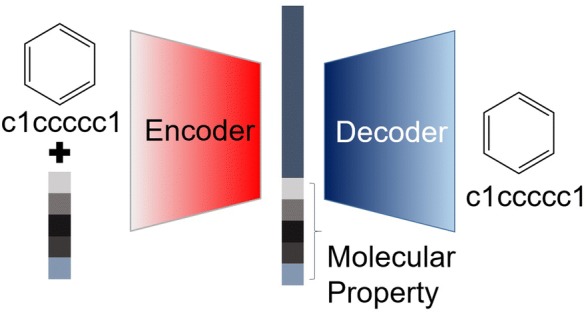
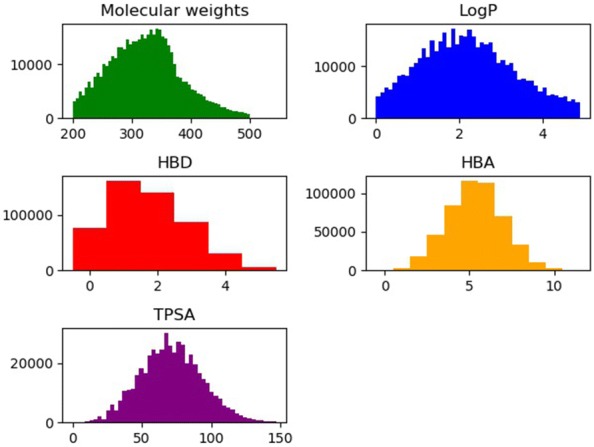
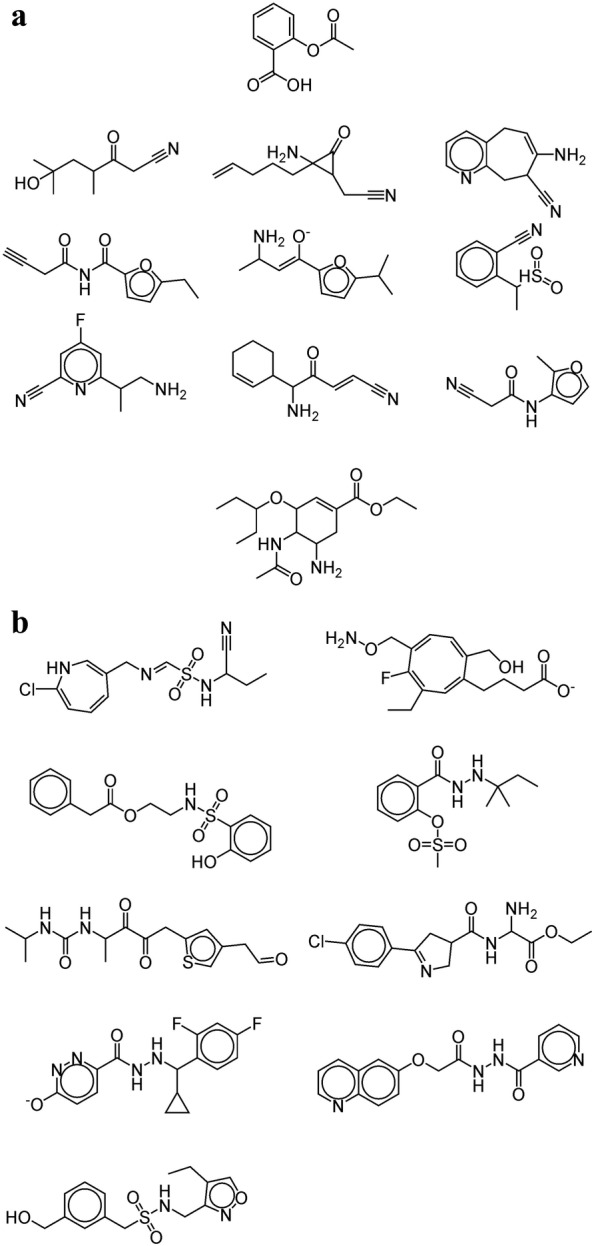
We propose a molecular generative model based on the conditional variational autoencoder for de novo molecular design. It is specialized to control multiple molecular properties simultaneously by imposing them on a latent space. As a proof of concept, we demonstrate that it can be used to generate drug-like molecules with five target properties. We were also able to adjust a single property without changing the others and to manipulate it beyond the range of the dataset.
Overview
The claims and statistics of this paper haven’t been checked yet.
Run the check — free, no account needed. It reads the open-access text and checks the sources it cites.
Integrity signals
Registry
Cites
Statistics
Figures
Verification
Claims the paper makes
The claims and statistics of this paper haven’t been checked yet.
Run the check — free, no account needed. It reads the open-access text and checks the sources it cites.
Claims other papers make about this one
Each is checked against this paper’s own text: does it say what the citing paper says it does?
The cited source says what the claim attributes to it.
In the citing paper
“While the conditional VAE has been previously documented in the literature34, its applicability in drug design is constrained by inherent drawbacks such as sub-optimal performance on standard SMILES representations, the posterior collapse problem, and inefficient exploration of latent space.”
From PCF-VAE: posterior collapse free variational autoencoder for de novo drug design (2025) · cites this paper as [34]
Self-check
Percentages, sums and reported differences re-computed from the paper’s own numbers.
The self-check needs the paper’s full text.
Citations
Cites
Hochreiter, S., & Schmidhuber, J. (1997) · Neural Computation · doi:10.1162/neco.1997.9.8.1735 · Cited by 102,318
Auto-Encoding Variational Bayes
Kingma, D. P., & Welling, M. (2013) · arXiv · doi:10.48550/arxiv.1312.6114 · Cited by 20,067
PubChem Substance and Compound databases
Kim, S., Thiessen, P. A., Bolton, E. E., Chen, J., Fu, G., Gindulyte, A., Han, L., He, J., He, S., Shoemaker, B. A., et al. (2016) · Nucleic Acids Research · doi:10.1093/nar/gkv951 · Cited by 5,436
Automatic Chemical Design Using a Data-Driven Continuous Representation of Molecules
Gómez-Bombarelli, R., Wei, J. N., Duvenaud, D., Hernández-Lobato, J. M., Sánchez-Lengeling, B., Sheberla, D., Aguilera-Iparraguirre, J., Hirzel, T. D., Adams, R. P., & Aspuru-Guzik, A. (2018) · ACS Central Science · doi:10.1021/acscentsci.7b00572 · Cited by 3,106
ZINC: A Free Tool to Discover Chemistry for Biology
Irwin, J. J., Sterling, T., Mysinger, M. M., Bolstad, E. S. D., & Coleman, R. G. (2012) · Journal of Chemical Information and Modeling · doi:10.1021/ci3001277 · Cited by 2,611
Generating Focused Molecule Libraries for Drug Discovery with Recurrent Neural Networks
Segler, M. H. S., Kogej, T., Tyrchan, C., & Waller, M. P. (2018) · ACS Central Science · doi:10.1021/acscentsci.7b00512 · Cited by 1,537
Molecular de-novo design through deep reinforcement learning
Olivecrona, M., Blaschke, T., Engkvist, O., & Chen, H. (2017) · Journal of Cheminformatics · doi:10.1186/s13321-017-0235-x · Cited by 1,443
Virtual screening of chemical libraries
Shoichet, B. K. (2004) · Nature · doi:10.1038/nature03197 · Cited by 1,425
Estimation of the size of drug-like chemical space based on GDB-17 data
Polishchuk, P. G., Madzhidov, T. I., & Varnek, A. (2013) · Journal of Computer-Aided Molecular Design · doi:10.1007/s10822-013-9672-4 · Cited by 619
Structure-Based Virtual Screening for Drug Discovery: a Problem-Centric Review
Cheng, T., Li, Q., Zhou, Z., Wang, Y., & Bryant, S. H. (2012) · The AAPS Journal · doi:10.1208/s12248-012-9322-0 · Cited by 587
Research works printed but not linked: 10
- Makhzani A, Shlens J, Jaitly N, Goodfellow I, Frey B (2015) Adversarial autoencoders. arXiv:1511.05644 · arXiv
- Blaschke T, Olivecrona M, Engkvist O, Bajorath J, Chen H (2017) Application of generative autoencoder in de novo molecular design. arXiv:1711.07839 · arXiv
- Bjerrum EJ, Threlfall R (2017) Molecular generation with recurrent neural networks (RNNs). arXiv:1705.04612 · arXiv
- Guimaraes GL, Sanchez-Lengeling B, Outeiral C, Farias PLC, Aspuru-Guzik A (2017) Objective-reinforced generative adversarial networks (ORGAN) for sequence generation models. arXiv:1705.10843 · arXiv
- Jaques N, Gu S, Bahdanau D, Hernández-Lobato JM, Turner RE, Eck D (2016) Sequence tutor: conservative fine-tuning of sequence generation models with KL-control. arXiv:1611.02796 · arXiv
- D.P Kingma, D.J Rezende, S Mohamed, M Welling, (2014) Semi-supervised learning with deep generative models, pp 1–9. arXiv:1406.5298 · arXiv
- Kusner MJ, Paige B, Hernández-Lobato JM (2017) Grammar variational autoencoder. arXiv:1703.01925 · arXiv
- Wang H, Wang J, Wang J, Zhao M, Zhang W, Zhang F, Xie X, Guo M (2017) GraphGAN: graph representation learning with generative adversarial nets. arXiv:1711.08267 · arXiv
- You J, Ying R, Ren X, Hamilton WL, Leskovec J (2018) GraphRNN: a deep generative model for graphs. arXiv:1802.08773 · arXiv
- W Jin, R Barzilay, T Jaakkola (2018) Junction tree variational autoencoder for molecular graph generation. arXiv:1802.04364 · arXiv
Cited by
Sorted by citations
Items 201–300 of 420
Bhadwal, A. S., Kumar, K., & Kumar, N. (2023) · Expert Systems with Applications · doi:10.1016/j.eswa.2023.122396 · Cited by 14
cheML.io: an online database of ML-generated molecules
Zhumagambetov, R., Kazbek, D., Shakipov, M., Maksut, D., Peshkov, V. A., & Fazli, S. (2020) · RSC Advances · doi:10.1039/d0ra07820d · Cited by 10
Study of Deep Generative Models for Inorganic Chemical CompositionsPreprint
Sawada, Y., Morikawa, K., & Fujii, M. (2019) · arXiv (Cornell University) · doi:10.48550/arxiv.1910.11499 · Cited by 11
Transform Drug Discovery and Development With Generative Artificial Intelligence
Lavecchia, A. (2025) · Wiley eBooks · doi:10.1002/9781394280735.ch25 · Cited by 14
Reaction-conditioned generative model for catalyst design and optimization with CatDRX
Kengkanna, A., Kikuchi, Y., Niwa, T., & Ohue, M. (2025) · Communications Chemistry · doi:10.1038/s42004-025-01732-7 · Cited by 10
Molecular Conditional Generation and Property Analysis of Non-Fullerene Acceptors with Deep Learning
Peng, S.-P., Yang, X., & Zhao, Y. (2021) · International Journal of Molecular Sciences · doi:10.3390/ijms22169099 · Cited by 10
Qian, Y., Shi, M., & Zhang, Q. (2024) · Molecules · doi:10.3390/molecules29020495 · Cited by 10
DrugPose: benchmarking 3D generative methods for early stage drug discovery
Jocys, Z., Grundy, J., & Farrahi, K. (2024) · Digital Discovery · doi:10.1039/d4dd00076e · Cited by 12
Xu, P., Wu, Y., Zarei, A., Ahmed, S., Pilla, S., Li, G., & Luo, F. (2025) · Composites Part B Engineering · doi:10.1016/j.compositesb.2025.112515 · Cited by 10
Su, A., Luo, Y., Zhang, C., & Duan, H. (2025) · Scientific Reports · doi:10.1038/s41598-025-05555-3 · Cited by 12
KGG : Knowledge-Guided Graph Self-Supervised Learning to Enhance Molecular Property Predictions
To, V.-T., Nguyen, P.-C. V., Truong, G.-B., Phan, T.-M., Phan, T.-L., Fagerberg, R., Stadler, P. F., & Truong, T. N. (2025) · Journal of Chemical Information and Modeling · doi:10.1021/acs.jcim.5c01068 · Cited by 10
Artificial Intelligence in De novo Drug Design: Are We Still There?
Kumar, R., Sharma, A., Alexiou, A. T., & Ashraf, G. M. (2022) · Current Topics in Medicinal Chemistry · doi:10.2174/1568026623666221017143244 · Cited by 11
Molecular Generation with Reduced Labeling through Constraint Architecture
Wang, J., Zeng, Y., Sun, H., Wang, J., Wang, X., Jin, R., Wang, M., Zhang, X., Cao, D., Chen, X., et al. (2023) · Journal of Chemical Information and Modeling · doi:10.1021/acs.jcim.3c00579 · Cited by 10
Target-Aware Molecular Graph Generation
Tan, C., Gao, Z., & Li, S. Z. (2023) · Lecture notes in computer science · doi:10.1007/978-3-031-43427-3_25 · Cited by 10
Rovenchak, A. A., & Druchok, M. (2024) · Journal of Computational Chemistry · doi:10.1002/jcc.27292 · Cited by 9
Li, W., Wang, D., Yang, Z.-R., Zhang, H., Hu, L., & Chen, G. (2021) · Journal of Chemical Information and Modeling · doi:10.1021/acs.jcim.1c01305 · Cited by 11
Conditional 𝛽-VAE for De Novo Molecular GenerationPreprint
Richards, R. J., & Groener, A. M. (2022) · ChemRxiv · doi:10.26434/chemrxiv-2022-g3gvz · Cited by 22
Augmenting Molecular Deep Generative Models with Topological Data Analysis Representations
Schiff, Y., Chenthamarakshan, V., Hoffman, S. C., Ramamurthy, K. N., & Das, P. (2022) · IEEE International Conference on Acoustics Speech and Signal Processing · doi:10.1109/icassp43922.2022.9747088 · Cited by 9
Kernel-elastic autoencoder for molecular design
Li, H., Shee, Y., Allen, B., Maschietto, F., Morgunov, A., & Batista, V. S. (2024) · PNAS Nexus · doi:10.1093/pnasnexus/pgae168 · Cited by 9
Generative Design and Experimental Validation of Non-Fullerene Acceptors for Photovoltaics
Tan, J. D., Ramalingam, B., Chellappan, V., Gupta, N. K., Dillard, L., Khan, S. A., Galvin, C. J., & Hippalgaonkar, K. (2024) · ACS Energy Letters · doi:10.1021/acsenergylett.4c02086 · Cited by 9
Variational AutoEncoder for synthetic insurance data
Jamotton, C., & Hainaut, D. (2024) · Intelligent Systems with Applications · doi:10.1016/j.iswa.2024.200455 · Cited by 9
Deciphering Design of Aggregation‐Induced Emission Materials by Data Interpretation
Gong, J., Deng, Z., Xie, H., Qiu, Z., Zhao, Z., & Tang, B. Z. (2024) · Advanced Science · doi:10.1002/advs.202411345 · Cited by 9
Luo, Y., Song, D., Zhang, C., & Su, A. (2025) · Applied Sciences · doi:10.3390/app15105616 · Cited by 10
Adversarial Learned Molecular Graph Inference and Generation
Pölsterl, S., & Wachinger, C. (2021) · Lecture notes in computer science · doi:10.1007/978-3-030-67661-2_11 · Cited by 17
Transfer Learning as Tool to Enhance Predictions of Molecular Properties Based on 2D Projections
Lentelink, N. J., & Palkovits, S. (2020) · Advanced Theory and Simulations · doi:10.1002/adts.202000148 · Cited by 9
Transformation rule-based molecular evolution for automatic gasoline molecule design
Cai, G., Liu, Z., & Zhang, L. (2022) · Chemical Engineering Science · doi:10.1016/j.ces.2022.118119 · Cited by 8
Data-Driven Score-Based Models for Generating Stable Structures with Adaptive Crystal Cells
Sultanov, A., Crivello, J., Rebafka, T., & Sokolovska, N. (2023) · Journal of Chemical Information and Modeling · doi:10.1021/acs.jcim.3c00969 · Cited by 8
Rautela, M., Williams, A., & Scheinker, A. (2024) · Scientific Reports · doi:10.1038/s41598-024-68944-0 · Cited by 8
Yoon, D., Lee, J., & Lee, S.-Y. (2025) · Applied Sciences · doi:10.3390/app15073640 · Cited by 8
Vinken, M., Grimm, D. G., Baatout, S., Baselet, B., Beheshti, A., Braun, M., Carstens, A. C., Casaletto, J. A., Cools, B., Costes, S. V., et al. (2025) · Biotechnology Advances · doi:10.1016/j.biotechadv.2025.108574 · Cited by 8
ICVAE: Interpretable Conditional Variational Autoencoder for De Novo Molecular Design
Fan, X., Fang, S., Li, Z., Ji, H., Yue, M., Li, J., & Ren, X. (2025) · International Journal of Molecular Sciences · doi:10.3390/ijms26093980 · Cited by 10
Couvillion, S., Agrawal, N., Colby, S., Brandvold, K. R., & Metz, T. (2020) · Frontiers in Cellular and Infection Microbiology · doi:10.3389/fcimb.2020.00388 · Cited by 9
GeneDisco: A Benchmark for Experimental Design in Drug DiscoveryPreprint
Mehrjou, A., Soleymani, A., Jesson, A., Notin, P., Gal, Y., Bauer, S., & Schwab, P. (2021) · arXiv (Cornell University) · doi:10.48550/arxiv.2110.11875 · Cited by 18
PCF-VAE: posterior collapse free variational autoencoder for de novo drug design
Bhadwal, A. S., Kumari, M., & Kumar, A. (2025) · Scientific Reports · doi:10.1038/s41598-025-14285-5 · Cited by 7
“While the conditional VAE has been previously documented in the literature 34 , its applicability in drug design is constrained by inherent drawbacks such as sub-optimal performance on standard SMILES representations, the posterior collapse problem, and inefficient exploration of latent space.”
Low-Data Drug Design with Few-Shot Generative Domain Adaptation
Liu, P., Han, Y., Gong, Z., & Xu, H. (2023) · Bioengineering · doi:10.3390/bioengineering10091104 · Cited by 8
Generative design of singlet fission materials leveraging a fragment-oriented database
Worakul, T., Laplaza, R., Blaskovits, J. T., & Corminbœuf, C. (2025) · Chemical Science · doi:10.1039/d5sc03184b · Cited by 9
LASPAI: AI-powered platform for the future atomic simulation
Luo, H.-Z., Liang, Q.-M., Guo, Z.-X., Xie, X. H., Tang, J.-P., Guan, T., Li, Y., Ma, S., Xu, Y., Wang, Z.-X., et al. (2025) · Acta Physico-Chimica Sinica · doi:10.1016/j.actphy.2025.100235 · Cited by 9
Das, A., Nandi, A., Kumari, V., & Alvala, M. (2023) · BENTHAM SCIENCE PUBLISHERS eBooks · doi:10.2174/9789815179934123010008 · Cited by 7
Aphikulvanich, R., Pornputtapong, N., & Wichadakul, D. (2023) · RSC Advances · doi:10.1039/d3ra03954d · Cited by 7
Azad, R., Lenßen, P., Jia, Y., Strauch, M., Bener, B. A., Merhof, D., & Wöll, D. (2024) · Nano Letters · doi:10.1021/acs.nanolett.4c00267 · Cited by 7
Jin, L., Ji, Y., Wang, H., Ding, L., & Li, Y. (2021) · Physical Chemistry Chemical Physics · doi:10.1039/d1cp02963k · Cited by 7
MO-MEMES: A method for accelerating virtual screening using multi-objective Bayesian optimization
Mehta, S., Goel, M., & Priyakumar, U. D. (2022) · Frontiers in Medicine · doi:10.3389/fmed.2022.916481 · Cited by 7
Kim, H., Ko, S., Kim, B. J., Ryu, S. J., & Ahn, J. (2022) · Journal of Cheminformatics · doi:10.1186/s13321-022-00666-9 · Cited by 8
Self-citationUsing Machine Learning To Inform Decisions in Drug Discovery: An Industry Perspective
Green, D. V. S. (2019) · ACS symposium series · doi:10.1021/bk-2019-1326.ch005 · Cited by 7
Kotsias, P.-C., Arús‐Pous, J., Chen, H., Engkvist, O., Tyrchan, C., & Bjerrum, E. J. (2019) · ChemRxiv · doi:10.26434/chemrxiv.9860906.v1 · Cited by 8
He, Q., Shi, R., Chen, L.-L., & Huo, L. (2024) · International Journal of Machine Learning and Cybernetics · doi:10.1007/s13042-024-02368-0 · Cited by 6
Enhancing reinforcement learning for de novo molecular design applying self-attention mechanisms
Pereira, T., Abbasi, M., & Arrais, J. P. (2023) · Briefings in Bioinformatics · doi:10.1093/bib/bbad368 · Cited by 6
Fan, W., He, Y., & Zhu, F. (2024) · Artificial Intelligence in Medicine · doi:10.1016/j.artmed.2024.102827 · Cited by 7
Maciejewski, E., Horvath, S., & Ernst, J. (2025) · Genome biology · doi:10.1186/s13059-025-03561-2 · Cited by 5
iDesigner: making intelligent fashion designs
Gu, X., Yao, Q., Gong, X., & Kuang, Z. (2023) · Multimedia Tools and Applications · doi:10.1007/s11042-023-16780-1 · Cited by 6
Graph Neural Networks in Cheminformatics
Tran, H. N. T., Thomas, J. J., Malim, N. H. A. H., Ali, A. M., & Son, B. H. (2021) · Advances in intelligent systems and computing · doi:10.1007/978-3-030-68154-8_71 · Cited by 6
Fungistatic effect of Moringa oleifera Lam. on the metabolism changes of Candida albicans
Gani, B. A., Soraya, C., Sugiaman, V. K., Batubara, F. Y., Syafriza, D., Naliani, S., Rezeki, S., Jakfar, S., Nazar, M., & Hayati, K. (2023) · Journal of Pharmacy & Pharmacognosy Research · doi:10.56499/jppres22.1533_11.1.179 · Cited by 7
DockStream: A Docking Wrapper to Enhance De Novo Molecular DesignPreprint
Guo, J., Janet, J. P., Bauer, M. R., Nittinger, E., Giblin, K. A., Papadopoulos, K., Voronov, A., Patronov, A., Engkvist, O., & Margreitter, C. (2021) · doi:10.33774/chemrxiv-2021-qvhml · Cited by 6
Free Energy Perturbation and Free-Energy Calculations Applied to Drug Design
Antunes, D., Santos, L. H., Guimarães, A. C. R., & Caffarena, E. R. (2024) · Computer-aided drug discovery and design · doi:10.1007/978-3-031-76718-0_10 · Cited by 6
Pan, Y., Yang, F., Zhang, H., Yan, Y., Yang, A., Liang, J., & Yu, M. (2022) · Energies · doi:10.3390/en15218160 · Cited by 5
Expediting structure–property analyses using variational autoencoders with regression
Templeton, W. F., Miner, J. P., Ngo, A., Fitzwater, L., Reddy, T., Abranovic, B., Prichard, P., Lewandowski, J. J., & Narra, S. P. (2024) · Computational Materials Science · doi:10.1016/j.commatsci.2024.113056 · Cited by 5
Learning from small data sets: Patch‐based regularizers in inverse problems for image reconstruction
Piening, M., Altekrüger, F., Hertrich, J., Hagemann, P., Walther, A., & Steidl, G. (2024) · GAMM-Mitteilungen · doi:10.1002/gamm.202470002 · Cited by 5
Westmeier, T., Botache, D., Bieshaar, M., & Sick, B. (2022) · IEEE International Conference on Data Science and Advanced Analytics (DSAA) · doi:10.1109/dsaa54385.2022.10032385 · Cited by 5
Chespa : Streamlining Expansive Chemical Space Evaluation of Molecular Sets
Nuñez, J., McGrady, M., Yesiltepe, Y., Renslow, R. S., & Metz, T. (2020) · Journal of Chemical Information and Modeling · doi:10.1021/acs.jcim.0c00899 · Cited by 5
Xu, C., Dong, M., Li, L., Liang, R., & Yan, W. (2022) · International Conference on Smart Power & Internet Energy Systems (SPIES) · doi:10.1109/spies55999.2022.10082077 · Cited by 5
ChemoVerse: Manifold traversal of latent spaces for novel molecule discoveryPreprint
Singh, H., McCarthy, N., Ain, Q. U., & Hayes, J. (2020) · arXiv (Cornell University) · doi:10.48550/arxiv.2009.13946 · Cited by 5
MolRL: Self-supervised molecular image representation learning via graph structure bootstrapping
Shan, D., Luo, Y., Yuan, H., Mao, J., & Wang, L. (2025) · Pattern Recognition · doi:10.1016/j.patcog.2025.112773 · Cited by 4
An, S., Thuy, T. T., Jeon, E., Jung, Y. C., Nam, G., Park, H., Chae, M. Y., Kwon, J. H., & Jung, Y. (2025) · Journal of the American Chemical Society · doi:10.1021/jacs.5c16369 · Cited by 4
Evolution of Molecular Generation Models in Drug Discovery
Xu, H.-X., Peng, J., Yu, J., Hong, X., Xiao, Y., Ye, B.-G., & Li, G.-B. (2026) · Journal of Medicinal Chemistry · doi:10.1021/acs.jmedchem.5c03310 · Cited by 4
All SMILES Variational Autoencoder for Molecular Property Prediction and Optimization
Alperstein, Z., Cherkasov, A. R., & Rolfe, J. T. (2023) · Challenges and advances in computational chemistry and physics · doi:10.1007/978-3-031-28401-4_4 · Cited by 4
MGDM: Molecular generation using a multinomial diffusion model
Yuan, S., Zhao, C., Liu, L., & Zhou, G. (2025) · Methods · doi:10.1016/j.ymeth.2025.03.001 · Cited by 4
Wu, Z., Wu, Y., Zhu, C., Wu, X., Zhai, S., Wang, X., Su, Z., & Duan, H. (2023) · Journal of Chemical Information and Modeling · doi:10.1021/acs.jcim.3c01385 · Cited by 5
Comprehensive Framework for the Design of High-Performing and Sustainable Polyamides
Muthoka, R. M., Park, J., Yoo, H., Suh, M.-H., & Lee, Y. (2024) · ACS Sustainable Chemistry & Engineering · doi:10.1021/acssuschemeng.4c00111 · Cited by 4
IEV2Mol: Molecular Generative Model Considering Protein–Ligand Interaction Energy Vectors
Ozawa, M., Nakamura, S., Yasuo, N., & Sekijima, M. (2024) · Journal of Chemical Information and Modeling · doi:10.1021/acs.jcim.4c00842 · Cited by 4
Towards a Generalized System for Generative Engineering
Nagaraj, D., & Werth, D. (2020) · Applications Intelligent Systems · doi:10.1145/3378184.3378227 · Cited by 4
Protein Binding Pose Prediction via Conditional Variational Autoencoding for Plasmodium Falciparum
Tran, T., & Ekenna, C. (2020) · IEEE International Conference on Bioinformatics and Biomedicine (BIBM) · doi:10.1109/bibm49941.2020.9313491 · Cited by 4
Structural and elastic properties of binary semiconductors from energy gaps
Pattanaik, A., Tripathy, S. K., Naik, P., & Meher, D. K. (2021) · Applied Physics A · doi:10.1007/s00339-020-04159-0 · Cited by 4
Likelihood-Free Inference and Generation of Molecular GraphsPreprint
Pölsterl, S., & Wachinger, C. (2019) · arXiv (Cornell University) · Cited by 4
Deep Denerative Models for Drug Design and ResponsePreprint
Zadorozhny, K., & Nuzhna, L. (2021) · arXiv (Cornell University) · doi:10.48550/arxiv.2109.06469 · Cited by 4
MSIDiff:Multi-stage interaction-aware diffusion model for protein-specific 3D molecule generation
Zhang, Y., Ma, J., Zhang, Z., Dong, Z., & Wang, S. (2025) · Expert Systems with Applications · doi:10.1016/j.eswa.2025.129820 · Cited by 3
Few-shot molecular property optimization via a domain-specialized large language model
Guo, Y., Luo, M., Zhang, W., Liu, P., Liu, J., Huang, S., Lv, J., Ke, B., & Liu, X. (2026) · Chemical Science · doi:10.1039/d5sc08859c · Cited by 7
Artificial intelligence in the discovery and design of molecular semiconductors: a systematic review
Zollner, M., Moshfeghi, Y., & Nematiaram, T. (2026) · Digital Discovery · doi:10.1039/d5dd00552c · Cited by 3
Tool wear recognition and signal labeling with small cross-labeled samples in impeller machining
Ou, J., Li, H., Wang, Z., Yang, C., & Peng, D. (2022) · The International Journal of Advanced Manufacturing Technology · doi:10.1007/s00170-022-10514-7 · Cited by 3
Golyak, I. S., Anfimov, D. R., Demkin, P. P., Berezhanskiy, P. V., Nebritova, O. A., Morozov, A. N., & Fufurin, I. L. (2024) · Journal of Biophotonics · doi:10.1002/jbio.202400151 · Cited by 3
Pienkowski, V. M., Skoczylas, P., Zaremba, A., Kłęk, S., Balawejder, M., Biernat, P., Czarnocka, W., Gniewek, O., Grochowalski, Ł., Kamuda, M., et al. (2024) · Frontiers in Oncology · doi:10.3389/fonc.2024.1407465 · Cited by 3
Yoo, M., Gopalan, G., Hoffman, M. J., Coulson, S., Han, H. K., Wikle, C. K., & Hillebrand, T. R. (2025) · Journal of Geophysical Research Machine Learning and Computation · doi:10.1029/2024jh000349 · Cited by 4
Lu, Z., & Zhang, A. (2026) · PeerJ · doi:10.7717/peerj.20541 · Cited by 4
Ligand- and Structure-Based Analysis of Deep Learning-Generated Potential α2a Adrenoceptor Agonists
Schultz, K., Colby, S., Lin, V., Wright, A., & Renslow, R. S. (2021) · Journal of Chemical Information and Modeling · doi:10.1021/acs.jcim.0c01019 · Cited by 3
Vaškevičius, M., Kapočiūtė-Dzikienė, J., & Šlepikas, L. (2022) · Electronics · doi:10.3390/electronics11091360 · Cited by 3
Direct De Novo Molecule Generation Using Probabilistic Diverse Variational Autoencoder
Bhadwal, A. S., & Kumar, K. (2023) · Lecture notes in networks and systems · doi:10.1007/978-981-19-7867-8_2 · Cited by 3
Evaluating the Impact of AI and ML on Modern Drug Discovery
Lingolu, N. V. V. S. V., Deena Kumari, M., & Pavan Kumar, V. L. S. S. (2024) · Journal of Pharma Insights and Research. · doi:10.69613/8tckqp18 · Cited by 4
Improvement of the Structure Generator DAECS with Respect to Structural Diversity
INOUE, T., Tanaka, K., Kotera, M., & Funatsu, K. (2020) · Molecular Informatics · doi:10.1002/minf.202000225 · Cited by 4
De Novo Molecular Generation with Stacked Adversarial Model
Liu, Y., & Bailey, J. (2022) · Lecture notes in computer science · doi:10.1007/978-3-030-97546-3_12 · Cited by 4
Double-Layer Stacked Denoising Autoencoders for Regression
Fernández-García, M.-E., Ros-Ros, A., Hontoria, E., Figueiras-Vidal, A. R., & Sancho‐Gómez, J. (2022) · Lecture notes in computer science · doi:10.1007/978-3-031-06527-9_33 · Cited by 3
Application of artificial intelligence and big data technology in synthesis planning
Ding, S., Jiang, X., Meng, C., Sun, L., Wang, Z., Yang, H., Shen, G., & Xia, N. (2022) · Scientia Sinica Chimica · doi:10.1360/ssc-2022-0110 · Cited by 5
Deep learning approaches for de novo drug design: an overview
Wang, M., Li, D., Hou, T., & Kang, Y. (2022) · Scientia Sinica Chimica · doi:10.1360/ssc-2022-0135 · Cited by 3
Multiple-objective Reinforcement Learning for Inverse Design and IdentificationPreprint
Wei, H., Olarte, M. V., & Goh, G. B. (2019) · arXiv (Cornell University) · doi:10.48550/arxiv.1910.03741 · Cited by 3
An In-depth Summary of Recent Artificial Intelligence Applications in Drug DesignPreprint
Zhang, Y. (2021) · arXiv (Cornell University) · doi:10.48550/arxiv.2110.05478 · Cited by 9
Zhang, Y., Huang, J., Li, X., Sun, W., Zhang, N., Zhang, J., Chen, T., & Wang, L. (2025) · Briefings in Bioinformatics · doi:10.1093/bib/bbaf185 · Cited by 3
Peng, C., Wang, P., & Pei, Y. (2025) · Nanoscale · doi:10.1039/d5nr02222c · Cited by 2
Coto, A. G., Precker, C. E., ́Uez, L. H. R., & Muíños-Landín, S. (2025) · International Conference on Computing and Artificial Intelligence (ICCAI) · doi:10.1109/iccai66501.2025.00116 · Cited by 2
Feature-Guided Inverse Design of Organic A-Site Cations for Perovskites Dimensional Engineering
Wu, W., Wang, Y., Chen, X., Li, Q., Cai, Y., Yuan, S., & Liu, S. (2025) · The Journal of Physical Chemistry Letters · doi:10.1021/acs.jpclett.5c02433 · Cited by 2
Deep learning for small-molecule drug discovery: From molecular design to clinical translation
Oliveira, R. I., Pereira, T., Abbasi, M., Salvador, J. A. R., & Arrais, J. P. (2025) · Journal of Pharmaceutical Analysis · doi:10.1016/j.jpha.2025.101533 · Cited by 4
Integrating Medicinal Chemist Expertise with Deep Learning for Automated Molecular Optimization
Liang, L., Yang, X., Wan, B., Gu, L., Yang, Y., Xie, W., Dai, X., Xu, Y., Wei, X., Liu, H., et al. (2026) · Journal of Medicinal Chemistry · doi:10.1021/acs.jmedchem.5c03746 · Cited by 2
Wakamiya, T., & Ishikawa, A. (2026) · npj Computational Materials · doi:10.1038/s41524-026-02075-0 · Cited by 2
Metadata
- Authors
- Lim, J., Ryu, S., Kim, J. W., & Kim, W. Y.
- Affiliations
- Korea Advanced Institute of Science and Technology (KR)
- Corresponding author
- Kim, Jin Woo
- Kim, Woo Youn
- Venue
- Journal of Cheminformatics
- Published
- 2018-07-11
- Volume
- 10
- Issue
- 1
- Pages
- 31-31
- ISSN
- 1758-2946 (ISSN-L)
- PMC
- PMC6041224
- OpenAlex
- W2808177712
- Cited by
- 421
- References
- 23
- Citations by year
- 2026: 45 · 2025: 62 · 2024: 67 · 2023: 60 · 2022: 55 · 2021: 62 · 2020: 41 · 2019: 26 · 2018: 1
- FWCI
- 24.31
- Type
- journal article
- Language
- en
- Open access
- gold
- doi.org
- Licence
- Locations
- Journal of Cheminformatics (publishedVersion, cc-by)
- Europe PMC (PubMed Central) (publishedVersion, cc-by)
- PubMed Central (publishedVersion, cc-by)
- PubMed (publishedVersion)
- arXiv (Cornell University) (submittedVersion)
- DOAJ (DOAJ: Directory of Open Access Journals) (submittedVersion)
- arXiv (Cornell University)
- Figshare (cc-by)
- Funders
- National Research Foundation of Korea (NRF-2017R1E1A1A01078109)
- Topics
- Life Sciences › Pharmacology, Toxicology and Pharmaceutics › Drug Discovery › Computational Drug Discovery Methods
- Physical Sciences › Materials Science › Materials Chemistry › Machine Learning in Materials Science
- Physical Sciences › Computer Science › Computer Vision and Pattern Recognition › Generative Adversarial Networks and Image Synthesis
- Keywords
- conditional variational autoencoder, de novo molecular design, generative models, latent space control, drug-like molecules, generative adversarial networks
About these checks
Registry, retraction, Cites and statistics results are computed, not judged, with one exception: a printed reference that no index lists is read once by a model before it counts as a citation error. Claims are extracted by a model and kept only when their quote appears verbatim in the text; each cited source is then checked, with a model’s help, for whether it says what the claim relies on. Those verdicts can be wrong — read the claim’s quote and the cited source before relying on one.
Statistics and arithmetic are recomputed, not judged.
Confidence bands are shown only for fields calibrated on our annotated test set. None is calibrated yet, so no band is shown.
What counts as a claim ›How we measure confidence ›How we check this ›
Are you an author, or do you see a problem with this page? Request a review
