

The DOI matches its Crossref record; 19 of the 23 references it cites were found in a registry or an index.
Molecular generative model based on conditional variational autoencoder for de novo molecular design
Open accessAbstract
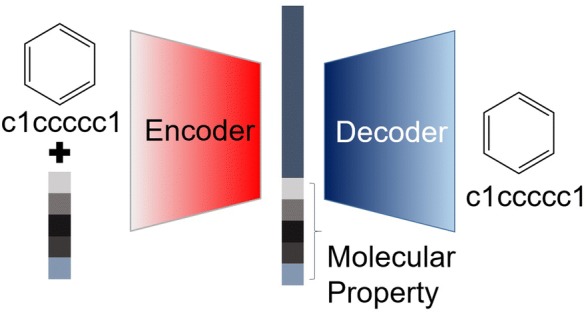
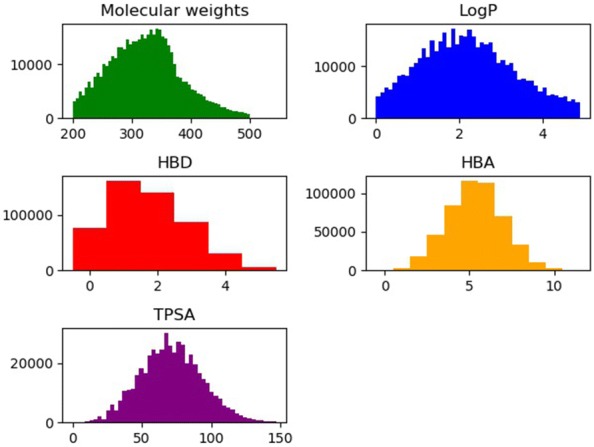
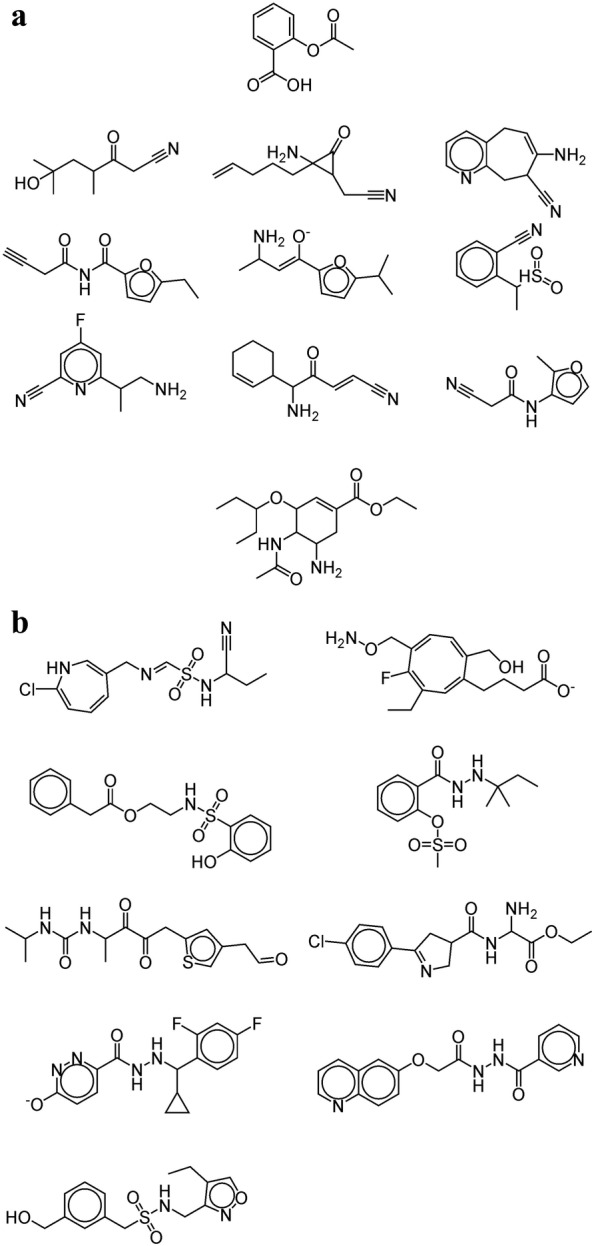
We propose a molecular generative model based on the conditional variational autoencoder for de novo molecular design. It is specialized to control multiple molecular properties simultaneously by imposing them on a latent space. As a proof of concept, we demonstrate that it can be used to generate drug-like molecules with five target properties. We were also able to adjust a single property without changing the others and to manipulate it beyond the range of the dataset.
Overview
The claims and statistics of this paper haven’t been checked yet.
Run the check — free, no account needed. It reads the open-access text and checks the sources it cites.
Integrity signals
Registry
Cites
Statistics
Figures
Verification
Claims the paper makes
The claims and statistics of this paper haven’t been checked yet.
Run the check — free, no account needed. It reads the open-access text and checks the sources it cites.
Claims other papers make about this one
Each is checked against this paper’s own text: does it say what the citing paper says it does?
The cited source says what the claim attributes to it.
In the citing paper
“While the conditional VAE has been previously documented in the literature34, its applicability in drug design is constrained by inherent drawbacks such as sub-optimal performance on standard SMILES representations, the posterior collapse problem, and inefficient exploration of latent space.”
From PCF-VAE: posterior collapse free variational autoencoder for de novo drug design (2025) · cites this paper as [34]
Self-check
Percentages, sums and reported differences re-computed from the paper’s own numbers.
The self-check needs the paper’s full text.
Citations
Cites
Hochreiter, S., & Schmidhuber, J. (1997) · Neural Computation · doi:10.1162/neco.1997.9.8.1735 · Cited by 102,318
Auto-Encoding Variational Bayes
Kingma, D. P., & Welling, M. (2013) · arXiv · doi:10.48550/arxiv.1312.6114 · Cited by 20,067
PubChem Substance and Compound databases
Kim, S., Thiessen, P. A., Bolton, E. E., Chen, J., Fu, G., Gindulyte, A., Han, L., He, J., He, S., Shoemaker, B. A., et al. (2016) · Nucleic Acids Research · doi:10.1093/nar/gkv951 · Cited by 5,436
Automatic Chemical Design Using a Data-Driven Continuous Representation of Molecules
Gómez-Bombarelli, R., Wei, J. N., Duvenaud, D., Hernández-Lobato, J. M., Sánchez-Lengeling, B., Sheberla, D., Aguilera-Iparraguirre, J., Hirzel, T. D., Adams, R. P., & Aspuru-Guzik, A. (2018) · ACS Central Science · doi:10.1021/acscentsci.7b00572 · Cited by 3,106
ZINC: A Free Tool to Discover Chemistry for Biology
Irwin, J. J., Sterling, T., Mysinger, M. M., Bolstad, E. S. D., & Coleman, R. G. (2012) · Journal of Chemical Information and Modeling · doi:10.1021/ci3001277 · Cited by 2,611
Generating Focused Molecule Libraries for Drug Discovery with Recurrent Neural Networks
Segler, M. H. S., Kogej, T., Tyrchan, C., & Waller, M. P. (2018) · ACS Central Science · doi:10.1021/acscentsci.7b00512 · Cited by 1,537
Molecular de-novo design through deep reinforcement learning
Olivecrona, M., Blaschke, T., Engkvist, O., & Chen, H. (2017) · Journal of Cheminformatics · doi:10.1186/s13321-017-0235-x · Cited by 1,443
Virtual screening of chemical libraries
Shoichet, B. K. (2004) · Nature · doi:10.1038/nature03197 · Cited by 1,425
Estimation of the size of drug-like chemical space based on GDB-17 data
Polishchuk, P. G., Madzhidov, T. I., & Varnek, A. (2013) · Journal of Computer-Aided Molecular Design · doi:10.1007/s10822-013-9672-4 · Cited by 619
Structure-Based Virtual Screening for Drug Discovery: a Problem-Centric Review
Cheng, T., Li, Q., Zhou, Z., Wang, Y., & Bryant, S. H. (2012) · The AAPS Journal · doi:10.1208/s12248-012-9322-0 · Cited by 587
Research works printed but not linked: 10
- Makhzani A, Shlens J, Jaitly N, Goodfellow I, Frey B (2015) Adversarial autoencoders. arXiv:1511.05644 · arXiv
- Blaschke T, Olivecrona M, Engkvist O, Bajorath J, Chen H (2017) Application of generative autoencoder in de novo molecular design. arXiv:1711.07839 · arXiv
- Bjerrum EJ, Threlfall R (2017) Molecular generation with recurrent neural networks (RNNs). arXiv:1705.04612 · arXiv
- Guimaraes GL, Sanchez-Lengeling B, Outeiral C, Farias PLC, Aspuru-Guzik A (2017) Objective-reinforced generative adversarial networks (ORGAN) for sequence generation models. arXiv:1705.10843 · arXiv
- Jaques N, Gu S, Bahdanau D, Hernández-Lobato JM, Turner RE, Eck D (2016) Sequence tutor: conservative fine-tuning of sequence generation models with KL-control. arXiv:1611.02796 · arXiv
- D.P Kingma, D.J Rezende, S Mohamed, M Welling, (2014) Semi-supervised learning with deep generative models, pp 1–9. arXiv:1406.5298 · arXiv
- Kusner MJ, Paige B, Hernández-Lobato JM (2017) Grammar variational autoencoder. arXiv:1703.01925 · arXiv
- Wang H, Wang J, Wang J, Zhao M, Zhang W, Zhang F, Xie X, Guo M (2017) GraphGAN: graph representation learning with generative adversarial nets. arXiv:1711.08267 · arXiv
- You J, Ying R, Ren X, Hamilton WL, Leskovec J (2018) GraphRNN: a deep generative model for graphs. arXiv:1802.08773 · arXiv
- W Jin, R Barzilay, T Jaakkola (2018) Junction tree variational autoencoder for molecular graph generation. arXiv:1802.04364 · arXiv
Cited by
Sorted by citations
Items 101–200 of 420
iQSPR in XenonPy: A Bayesian Molecular Design Algorithm
Wu, S., Lambard, G., Liu, C., Yamada, H., & Yoshida, R. (2019) · Molecular Informatics · doi:10.1002/minf.201900107 · Cited by 44
Self-Supervised Adversarial Distribution Regularization for Medication Recommendation
Wang, Y., Chen, W., Pi, D., Yue, L., Wang, S., & Xu, M. (2021) · International Joint Conference on Artificial Intelligence · doi:10.24963/ijcai.2021/431 · Cited by 44
Kwak, H. S., An, Y., Giesen, D. J., Hughes, T. F., Brown, C. T., Leswing, K., Abroshan, H., & Halls, M. D. (2022) · Frontiers in Chemistry · doi:10.3389/fchem.2021.800370 · Cited by 43
A Deep Generative Model for the Inverse Design of Transition Metal Ligands and Complexes
Strandgaard, M., Linjordet, T., Kneiding, H., Burnage, A. L., Nova, A., Jensen, J. H., & Balcells, D. (2025) · JACS Au · doi:10.1021/jacsau.5c00242 · Cited by 45
An overview of neural networks for drug discovery and the inputs used
Xu, Y., Yao, H., & Lin, K. (2018) · Expert Opinion on Drug Discovery · doi:10.1080/17460441.2018.1547278 · Cited by 42
Generative models for inverse design of inorganic solid materials
Chen, L., Zhang, W., Nie, Z., Li, S., & Pan, F. M. (2021) · Journal of Materials Informatics · doi:10.20517/jmi.2021.07 · Cited by 40
Koutroumpa, N.-M., Papavasileiou, K. D., Papadiamantis, A. G., Melagraki, G., & Afantitis, A. (2023) · International Journal of Molecular Sciences · doi:10.3390/ijms24076573 · Cited by 40
Molecular design with automated quantum computing-based deep learning and optimization
Ajagekar, A., & You, F. (2023) · npj Computational Materials · doi:10.1038/s41524-023-01099-0 · Cited by 44
A Turing Test for Molecular Generators
Bush, J. T., Pogány, P., Pickett, S. D., Barker, M., Baxter, A., Campos, S., Cooper, A. W. J., Hirst, D. J., Inglis, G. G. A., Nadin, A. J., et al. (2020) · Journal of Medicinal Chemistry · doi:10.1021/acs.jmedchem.0c01148 · Cited by 37
Machine learning to empower electrohydrodynamic processing
Wang, F., Elbadawi, M., Tsilova, S. L., Gaisford, S., Basit, A. W., & Parhizkar, M. (2021) · Materials Science and Engineering C · doi:10.1016/j.msec.2021.112553 · Cited by 38
Graph machine learning for design of high‐octane fuels
Rittig, J. G., Ritzert, M., Schweidtmann, A. M., Winkler, S., Weber, J. M., Morsch, P., Heufer, K. A., Grohe, M., Mitsos, A., & Dahmen, M. (2022) · AIChE Journal · doi:10.1002/aic.17971 · Cited by 37
Kim, H., Park, J. Y., & Choi, S. (2019) · Scientific Data · doi:10.1038/s41597-019-0121-7 · Cited by 35
Reconstruction of lossless molecular representations from fingerprints
Ucak, U. V., Ashyrmamatov, I., & Lee, J. (2023) · Journal of Cheminformatics · doi:10.1186/s13321-023-00693-0 · Cited by 39
Assessing Deep Generative Models in Chemical Composition Space
Türk, H., Landini, E., Künkel, C., Margraf, J. T., & Reuter, K. (2022) · Chemistry of Materials · doi:10.1021/acs.chemmater.2c01860 · Cited by 36
Polygrammar: Grammar for Digital Polymer Representation and Generation
Guo, M., Shou, W., Makatura, L., Erps, T., Foshey, M., & Matusik, W. (2022) · Advanced Science · doi:10.1002/advs.202101864 · Cited by 42
Molecular Generative Model via Retrosynthetically Prepared Chemical Building Block Assembly
Seo, S., Lim, J., & Kim, W. Y. (2023) · Advanced Science · doi:10.1002/advs.202206674 · Cited by 39
Self-citationTrends in Deep Learning for Property-driven Drug Design
Born, J., & Manica, M. (2021) · Current Medicinal Chemistry · doi:10.2174/0929867328666210729115728 · Cited by 36
All SMILES Variational AutoencoderPreprint
Alperstein, Z., Cherkasov, A. R., & Rolfe, J. T. (2019) · arXiv (Cornell University) · doi:10.48550/arxiv.1905.13343 · Cited by 54
Prompt engineering of GPT-4 for chemical research: what can/cannot be done?
Hatakeyama‐Sato, K., Yamane, N., Igarashi, Y., Nabae, Y., & Hayakawa, T. (2023) · Science and Technology of Advanced Materials Methods · doi:10.1080/27660400.2023.2260300 · Cited by 54
Kosugi, T., & Ohue, M. (2021) · International Journal of Molecular Sciences · doi:10.3390/ijms222010925 · Cited by 37
Wang, J., Wang, X., Sun, H., Wang, M., Zeng, Y., Jiang, D., Wu, Z., Liu, Z., Liao, B., Yao, X., et al. (2022) · Journal of Medicinal Chemistry · doi:10.1021/acs.jmedchem.2c01179 · Cited by 33
Molecular substructure tree generative model for de novo drug design
Wang, S., Song, T., Zhang, S., Jiang, M., Wei, Z., & Li, Z. (2021) · Briefings in Bioinformatics · doi:10.1093/bib/bbab592 · Cited by 30
PanGu Drug Model: learn a molecule like a human
Lin, X., Xu, C., Xiong, Z., Zhang, X., Ni, N., Ni, B., Chang, J., Pan, R., Wang, Z., Yu, F., et al. (2022) · Science China Life Sciences · doi:10.1007/s11427-022-2239-y · Cited by 31
Pakornchote, T., Choomphon-anomakhun, N., Arrerut, S., Atthapak, C., Khamkaeo, S., Chotibut, T., & Bovornratanaraks, T. (2024) · Scientific Reports · doi:10.1038/s41598-024-51400-4 · Cited by 30
Generative diffusion model for surface structure discovery
Rønne, N., Aspuru‐Guzik, A., & Hammer, B. (2024) · Physical review. B./Physical review. B · doi:10.1103/physrevb.110.235427 · Cited by 30
Wespiser, C., & Mathieu, D. (2022) · Propellants Explosives Pyrotechnics · doi:10.1002/prep.202200264 · Cited by 31
Kjær, E. T. S., Anker, A. S., Weng, M. N., Billinge, S. J. L., Selvan, R., & Jensen, K. M. Ø. (2022) · Digital Discovery · doi:10.1039/d2dd00086e · Cited by 29
Chiu, Y.-H., Liao, Y.-H., & Juang, J. (2023) · Polymers · doi:10.3390/polym15020281 · Cited by 30
Yoshimori, A., Kawasaki, E., Kanai, C., & Tasaka, T. (2020) · Chemical and Pharmaceutical Bulletin · doi:10.1248/cpb.c19-00625 · Cited by 29
Graph Polish: A Novel Graph Generation Paradigm for Molecular Optimization
Ji, C., Zheng, Y., Wang, R., Cai, Y., & Wu, H. (2021) · IEEE Transactions on Neural Networks and Learning Systems · doi:10.1109/tnnls.2021.3106392 · Cited by 27
Machine Learning-Based Design of Ionic Liquids at the Atomic Scale for Highly Efficient CO2 Capture
Liu, X., Chu, J., Huang, S., Li, A., Wang, S., & He, M. (2023) · ACS Sustainable Chemistry & Engineering · doi:10.1021/acssuschemeng.3c01191 · Cited by 27
Manu, D., Yao, J., Liu, W., & Sun, X. (2024) · IEEE Transactions on Computational Biology and Bioinformatics · doi:10.1109/tcbb.2024.3349990 · Cited by 30
Deep Learning Applied to Ligand-Based De Novo Drug Design
Palazzesi, F., & Pozzan, A. (2021) · Methods in molecular biology · doi:10.1007/978-1-0716-1787-8_12 · Cited by 30
Oliveira, A. F., Silva, J. L. F. D., & Quiles, M. G. (2022) · Journal of Chemical Information and Modeling · doi:10.1021/acs.jcim.1c01573 · Cited by 32
Machine Learning for Organic Fluorescent Materials
Zhong, J., Zhu, W., Shen, S., Zhou, N., Xi, M., Du, K., Wang, D., & Tang, B. Z. (2025) · Aggregate · doi:10.1002/agt2.70089 · Cited by 26
Goel, M., Aggarwal, R., Sridharan, B., Pal, P. K., & Priyakumar, U. D. (2022) · Wiley Interdisciplinary Reviews Computational Molecular Science · doi:10.1002/wcms.1637 · Cited by 27
Demeke, W., Jung, J., Song, H., Ryu, B., Jeon, W., & Ryu, S. (2023) · Extreme Mechanics Letters · doi:10.1016/j.eml.2023.102098 · Cited by 25
Self-citationCardioGenAI: a machine learning-based framework for re-engineering drugs for reduced hERG liability
Kyro, G. W., Martin, M. T., Watt, E. D., & Batista, V. S. (2025) · Journal of Cheminformatics · doi:10.1186/s13321-025-00976-8 · Cited by 24
Generative AI for the Design of Molecules: Advances and Challenges
Sun, Y., Chen, L., Jing, Z., Li, Y. Y., Kim, D., Gao, J.-Y., Noroozi, R., Yi, G. Y., Feugmo, C. G. T., Klinkova, A., et al. (2025) · Journal of Chemical Information and Modeling · doi:10.1021/acs.jcim.5c02234 · Cited by 29
Retro Drug Design: From Target Properties to Molecular Structures
Wang, Y., Michael, S., Yang, S.-M., Huang, R., Cruz-Gutierrez, K., Zhang, Y., Zhao, J., Xia, M., Shinn, P., & Sun, H. (2022) · Journal of Chemical Information and Modeling · doi:10.1021/acs.jcim.2c00123 · Cited by 24
Ren, Z., Oviedo, F., Xue, H., Thway, M., Zhang, K., Li, N., Perea, J. D., Layurova, M., Wang, Y., Tian, S. I. P., et al. (2019) · Conference record of the IEEE Photovoltaic Specialists Conference · doi:10.1109/pvsc40753.2019.8980715 · Cited by 23
Masuda, T., Ragoza, M., & Koes, D. R. (2020) · arXiv (Cornell University) · doi:10.48550/arxiv.2010.14442 · Cited by 56
Sun, M., Xing, J., Han, M., Wang, H., Chen, B., & Zhou, J. (2022) · ACM SIGKDD Conference on Knowledge Discovery and Data Mining (KDD) · doi:10.1145/3534678.3542676 · Cited by 33
A flexible data-free framework for structure-based de novo drug design with reinforcement learning
Du, H., Jiang, D., Zhang, O., Wu, Z., Gao, J., Zhang, X., Wang, X., Deng, Y., Kang, Y., Li, D., et al. (2023) · Chemical Science · doi:10.1039/d3sc04091g · Cited by 24
Kim, H., Choi, H., Kang, D., Lee, W. B., & Na, J. (2024) · Chemical Science · doi:10.1039/d3sc05281h · Cited by 23
Evaluation of reinforcement learning in transformer-based molecular design
He, J., Tibo, A., Janet, J. P., Nittinger, E., Tyrchan, C., Czechtizky, W., & Engkvist, O. (2024) · Journal of Cheminformatics · doi:10.1186/s13321-024-00887-0 · Cited by 22
Forward-backstepping design of phononic crystals with anticipated band gap by data-driven method
Li, Y., Yin, G., Yan, G., & Yao, S. (2024) · Mechanical Systems and Signal Processing · doi:10.1016/j.ymssp.2024.111975 · Cited by 22
A pocket-based 3D molecule generative model fueled by experimental electron density
Wang, L., Bai, R., Shi, X., Zhang, W., Cui, Y., Wang, X., Wang, C., Chang, H., Zhang, Y., Zhou, J., et al. (2022) · Scientific Reports · doi:10.1038/s41598-022-19363-6 · Cited by 22
Designing molecules with autoencoder networks
Ilnicka, A., & Schneider, G. (2023) · Nature Computational Science · doi:10.1038/s43588-023-00548-6 · Cited by 25
Schultz, K. J., Colby, S. M., Yesiltepe, Y., Nuñez, J., McGrady, M. Y., & Renslow, R. S. (2020) · Physical Chemistry Chemical Physics · doi:10.1039/d0cp03620j · Cited by 24
Yang, M., Sun, H., Liu, X., Xue, X., Deng, Y., & Wang, X. (2023) · Briefings in Bioinformatics · doi:10.1093/bib/bbad185 · Cited by 22
A comprehensive review of artificial intelligence for pharmacology research
Li, B., Tan, K., Lao, A. R., Wang, H., Zheng, H., & Zhang, L. (2024) · Frontiers in Genetics · doi:10.3389/fgene.2024.1450529 · Cited by 26
Combined usage of ligand- and structure-based virtual screening in the artificial intelligence era
Dai, J., Zhou, Z., Zhao, Y., Kong, F., Zhai, Z., Zhu, Z., Cai, J., Huang, S., Xu, Y., & Sun, T. (2024) · European Journal of Medicinal Chemistry · doi:10.1016/j.ejmech.2024.117162 · Cited by 21
Lin, W., Jin, L., Jiang, Z., Cai, M., Lai, Z., Yurchenko, D., Yan, B., Zhou, S., Novoselov, K. S., Liao, W., et al. (2026) · Advanced Functional Materials · doi:10.1002/adfm.75070 · Cited by 24
Joung, J. F., Han, M., Jeong, M., & Park, S. (2022) · Journal of Chemical Information and Modeling · doi:10.1021/acs.jcim.2c00173 · Cited by 20
He, D., Liu, Q., Mi, Y., Meng, Q., Xu, L., Hou, C., Wang, J., Li, N., Liu, Y., Chai, H., et al. (2024) · Advanced Science · doi:10.1002/advs.202307245 · Cited by 20
Wang, Y., Guo, M., Chen, X., & Ai, D. (2025) · Scientific Reports · doi:10.1038/s41598-025-86840-z · Cited by 20
How generative Artificial Intelligence can transform drug discovery?
Jusoh, A. S., Remli, M. A., Mohamad, M. S., Cazenave, T., & Fong, C. (2025) · European Journal of Medicinal Chemistry · doi:10.1016/j.ejmech.2025.117825 · Cited by 22
Wang, H., Chen, J., Liu, W., Wang, D., Song, Y., Hong, H., Wang, T., Anastas, P. T., & Zimmerman, J. B. (2026) · Chemical Reviews · doi:10.1021/acs.chemrev.5c00828 · Cited by 19
A systematic review of molecular representation learning foundation models
Song, B., Zhang, J., Liu, Y., Liu, Y., Jiang, J., Yuan, S., Zhen, X., & Li, J. (2025) · Briefings in Bioinformatics · doi:10.1093/bib/bbaf703 · Cited by 25
Pravalphruekul, N., Piriyajitakonkij, M., Phunchongharn, P., & Piyayotai, S. (2023) · Journal of Chemical Information and Modeling · doi:10.1021/acs.jcim.3c00355 · Cited by 21
Data‐Driven Virtual Material Analysis and Synthesis for Solid Electrolyte Interphases
Rajagopal, D., Koeppe, A., Esmaeilpour, M., Selzer, M. A., Wenzel, W., Stein, H. S., & Nestler, B. (2023) · Advanced Energy Materials · doi:10.1002/aenm.202301985 · Cited by 19
Llamol: a dynamic multi-conditional generative transformer for de novo molecular design
Dobberstein, N., Maaß, A., & Hamaekers, J. (2024) · Journal of Cheminformatics · doi:10.1186/s13321-024-00863-8 · Cited by 22
Language Models in Molecular Discovery
Janakarajan, N., Erdmann, T., Swaminathan, S., Laino, T., & Born, J. (2024) · Springer eBooks · doi:10.1007/978-981-97-4828-0_7 · Cited by 27
Rethinking Nature’s Pharmacy: AI Era and Natural Product Drug Discovery
Paerhati, Y., Aikebaier, A., Dilimulati, D., Baishan, A., Yusufujiang, N., Qiu, X., Wusiman, Y., & Zhou, W. (2026) · Pharmaceuticals · doi:10.3390/ph19020301 · Cited by 33
Prediction of Chromatography Conditions for Purification in Organic Synthesis Using Deep Learning
Vaškevičius, M., Kapočiūtė-Dzikienė, J., & Šlepikas, L. (2021) · Molecules · doi:10.3390/molecules26092474 · Cited by 18
Liu, X., Chu, J., Zhang, Z., & He, M. (2022) · Materials & Design · doi:10.1016/j.matdes.2022.110888 · Cited by 18
Application of SMILES-based molecular generative model in new drug design
Kong, W., Hu, Y., Zhang, J., & Tan, Q. (2022) · Frontiers in Pharmacology · doi:10.3389/fphar.2022.1046524 · Cited by 20
Zhang, X., & Jiang, L. (2023) · Journal of Computational and Applied Mathematics · doi:10.1016/j.cam.2023.115532 · Cited by 18
Tang, Y., Kim, J. Y., IP, C. K., Bahmani, A., Chen, Q., Rosenberger, M. G., Esser-Kahn, A. P., & Ferguson, A. L. (2023) · Chemical Science · doi:10.1039/d3sc03613h · Cited by 20
Self-citationKutsal, M., Uçar, F., & Katı, N. (2023) · CPT Pharmacometrics & Systems Pharmacology · doi:10.1002/psp4.13085 · Cited by 19
Nakamura, S., Yasuo, N., & Sekijima, M. (2025) · Communications Chemistry · doi:10.1038/s42004-025-01437-x · Cited by 21
Actively Searching: Inverse Design of Novel Molecules with Simultaneously Optimized Properties
Iovanac, N. C., MacKnight, R., & Savoie, B. M. (2022) · The Journal of Physical Chemistry A · doi:10.1021/acs.jpca.1c08191 · Cited by 18
GenSMILES: An enhanced validity conscious representation for inverse design of molecules
Bhadwal, A. S., Kumar, K., & Kumar, N. (2023) · Knowledge-Based Systems · doi:10.1016/j.knosys.2023.110429 · Cited by 17
A Deep-Learning Proteomic-Scale Approach for Drug Design
Overhoff, B., Falls, Z., Mangione, W., & Samudrala, R. (2021) · Pharmaceuticals · doi:10.3390/ph14121277 · Cited by 16
Kim, Y.-H., Doo, H., Shin, D., Lee, S. Y., Roh, Y., Park, S., Song, H., Jung, Y., Yoo, H. J., Han, S. S., et al. (2025) · Computers & Chemical Engineering · doi:10.1016/j.compchemeng.2025.109266 · Cited by 23
Self-citationLi, J.-N., Yang, G. C., Zhao, P., Wei, X.-X., & Shi, J. (2023) · Bioinformatics · doi:10.1093/bioinformatics/btad222 · Cited by 17
Molecular Generation and Optimization of Molecular Properties Using a Transformer Model
Xu, Z., Lei, X., Ma, M., & Pan, Y. F. (2023) · Big Data Mining and Analytics · doi:10.26599/bdma.2023.9020009 · Cited by 17
Deep learning for predictions of hydrolysis rates and conditional molecular design of esters
Chiu, P.-H., Yang, Y.-L., Tsao, H., & Sheng, Y. (2021) · Journal of the Taiwan Institute of Chemical Engineers · doi:10.1016/j.jtice.2021.06.045 · Cited by 16
C5T5: Controllable Generation of Organic Molecules with TransformersPreprint
Rothchild, D., Tamkin, A., Yu, J., Misra, U., & Gonzalez, J. E. (2021) · arXiv (Cornell University) · doi:10.48550/arxiv.2108.10307 · Cited by 42
Wang, X., Wu, H., Wang, T., Chen, Y., Jia, B., Fang, H., Yin, X., Zhao, Y., & Yu, R. (2025) · Analytical Chemistry · doi:10.1021/acs.analchem.4c01953 · Cited by 15
Transmol: repurposing a language model for molecular generation
Zhumagambetov, R., Molnár, F., Peshkov, V. A., & Fazli, S. (2021) · RSC Advances · doi:10.1039/d1ra03086h · Cited by 16
Kyro, G. W., Morgunov, A., Brent, R. I., & Batista, V. S. (2024) · Journal of Chemical Information and Modeling · doi:10.1021/acs.jcim.3c01456 · Cited by 18
Deep-learning- and pharmacophore-based prediction of RAGE inhibitors
Huang, D. Z., Kouznetsova, V. L., & Tsigelny, I. F. (2020) · Physical Biology · doi:10.1088/1478-3975/ab6819 · Cited by 15
Deep learning for molecular generation and optimization - a review of the state of the artPreprint
Elton, D. C., Boukouvalas, Z., Fuge, M., & Chung, P. W. (2019) · arXiv (Cornell University) · Cited by 15
Enhancing De Novo Drug Design across Multiple Therapeutic Targets with CVAE Generative Models
Romanelli, V., Annunziata, D., Cerchia, C., Cerciello, D., Piccialli, F., & Lavecchia, A. (2024) · ACS Omega · doi:10.1021/acsomega.4c08027 · Cited by 14
Advances in the prediction of mouse liver microsomal studies: From machine learning to deep learning
Renn, A., Su, B., Hsin, L., Sun, J., & Tseng, Y. J. (2020) · Wiley Interdisciplinary Reviews Computational Molecular Science · doi:10.1002/wcms.1479 · Cited by 14
Artificial Intelligence in Compound Design
Grebner, C., Matter, H., & Heßler, G. (2021) · Methods in molecular biology · doi:10.1007/978-1-0716-1787-8_15 · Cited by 17
Oestreich, M., Ewert, I., & Becker, M. (2024) · Journal of Cheminformatics · doi:10.1186/s13321-024-00817-0 · Cited by 13
Functional monomer design for synthetically accessible polymers
Kim, S., Schroeder, C. M., & Jackson, N. E. (2025) · Chemical Science · doi:10.1039/d4sc08617a · Cited by 14
Thawani, A. R., Griffiths, R., Jamasb, A. R., Bourached, A., Jones, P., McCorkindale, W., Aldrick, A. A., & Lee, A. A. (2020) · ChemRxiv · doi:10.26434/chemrxiv.12609899 · Cited by 14
LigGPT: Molecular Generation using a Transformer-Decoder ModelPreprint
Bagal, V., Aggarwal, R., Vinod, P. K., & Priyakumar, U. D. (2021) · ChemRxiv · doi:10.26434/chemrxiv.14561901 · Cited by 14
Desirable molecule discovery via generative latent space exploration
Zheng, W., Li, J., & Zhang, Y. (2023) · Visual Informatics · doi:10.1016/j.visinf.2023.10.002 · Cited by 12
Fare, C., Turcani, L., & Pyzer‐Knapp, E. O. (2020) · Physical Chemistry Chemical Physics · doi:10.1039/d0cp02319a · Cited by 12
Deep Demixing: Reconstructing the Evolution of Epidemics using Graph Neural Networks
Čutura, G., Li, B., Swami, A., & Segarra, S. (2021) · European Signal Processing Conference (EUSIPCO) · doi:10.23919/eusipco54536.2021.9616110 · Cited by 12
Molecular Property Prediction of Modified Gedunin Using Machine Learning
Aly, M., & Alotaibi, A. S. (2023) · Molecules · doi:10.3390/molecules28031125 · Cited by 13
SimSon: simple contrastive learning of SMILES for molecular property prediction
Lee, C. E., Kim, J. S., Min, J. H., & Han, S. W. (2025) · Bioinformatics · doi:10.1093/bioinformatics/btaf275 · Cited by 12
Self-citationDeep Generation Model Guided by the Docking Score for Active Molecular Design
Yang, Y., Hsieh, C., Kang, Y., Hou, T., Liu, H., & Yao, X. (2023) · Journal of Chemical Information and Modeling · doi:10.1021/acs.jcim.3c00572 · Cited by 13
Extracting higher-conductivity designs for solid polymer electrolytes by quantum-inspired annealing
Hatakeyama‐Sato, K., Uchima, Y., Kashikawa, T., Kimura, K., & Oyaizu, K. (2023) · RSC Advances · doi:10.1039/d3ra01982a · Cited by 11
Exploration of Chemical Space Guided by PixelCNN for Fragment-Based De Novo Drug Discovery
Noguchi, S. F., & Inoue, J. (2022) · Journal of Chemical Information and Modeling · doi:10.1021/acs.jcim.2c01345 · Cited by 11
Metadata
- Authors
- Lim, J., Ryu, S., Kim, J. W., & Kim, W. Y.
- Affiliations
- Korea Advanced Institute of Science and Technology (KR)
- Corresponding author
- Kim, Jin Woo
- Kim, Woo Youn
- Venue
- Journal of Cheminformatics
- Published
- 2018-07-11
- Volume
- 10
- Issue
- 1
- Pages
- 31-31
- ISSN
- 1758-2946 (ISSN-L)
- PMC
- PMC6041224
- OpenAlex
- W2808177712
- Cited by
- 421
- References
- 23
- Citations by year
- 2026: 45 · 2025: 62 · 2024: 67 · 2023: 60 · 2022: 55 · 2021: 62 · 2020: 41 · 2019: 26 · 2018: 1
- FWCI
- 24.31
- Type
- journal article
- Language
- en
- Open access
- gold
- doi.org
- Licence
- Locations
- Journal of Cheminformatics (publishedVersion, cc-by)
- Europe PMC (PubMed Central) (publishedVersion, cc-by)
- PubMed Central (publishedVersion, cc-by)
- PubMed (publishedVersion)
- arXiv (Cornell University) (submittedVersion)
- DOAJ (DOAJ: Directory of Open Access Journals) (submittedVersion)
- arXiv (Cornell University)
- Figshare (cc-by)
- Funders
- National Research Foundation of Korea (NRF-2017R1E1A1A01078109)
- Topics
- Life Sciences › Pharmacology, Toxicology and Pharmaceutics › Drug Discovery › Computational Drug Discovery Methods
- Physical Sciences › Materials Science › Materials Chemistry › Machine Learning in Materials Science
- Physical Sciences › Computer Science › Computer Vision and Pattern Recognition › Generative Adversarial Networks and Image Synthesis
- Keywords
- conditional variational autoencoder, de novo molecular design, generative models, latent space control, drug-like molecules, generative adversarial networks
About these checks
Registry, retraction, Cites and statistics results are computed, not judged, with one exception: a printed reference that no index lists is read once by a model before it counts as a citation error. Claims are extracted by a model and kept only when their quote appears verbatim in the text; each cited source is then checked, with a model’s help, for whether it says what the claim relies on. Those verdicts can be wrong — read the claim’s quote and the cited source before relying on one.
Statistics and arithmetic are recomputed, not judged.
Confidence bands are shown only for fields calibrated on our annotated test set. None is calibrated yet, so no band is shown.
What counts as a claim ›How we measure confidence ›How we check this ›
Are you an author, or do you see a problem with this page? Request a review
