

The DOI matches its Crossref record; 19 of the 23 references it cites were found in a registry or an index.
Molecular generative model based on conditional variational autoencoder for de novo molecular design
Open accessAbstract
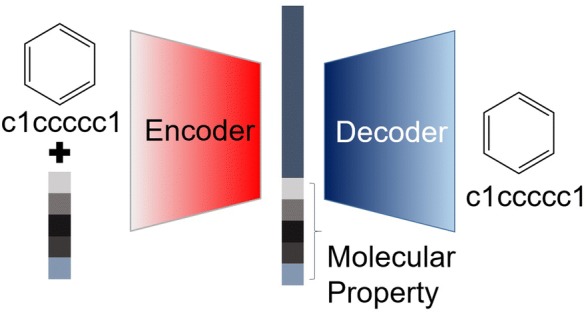
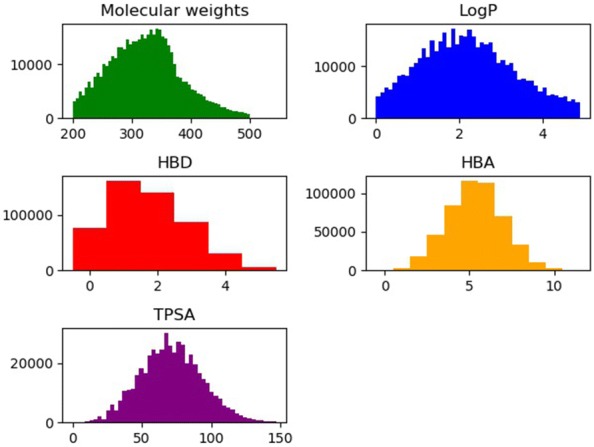
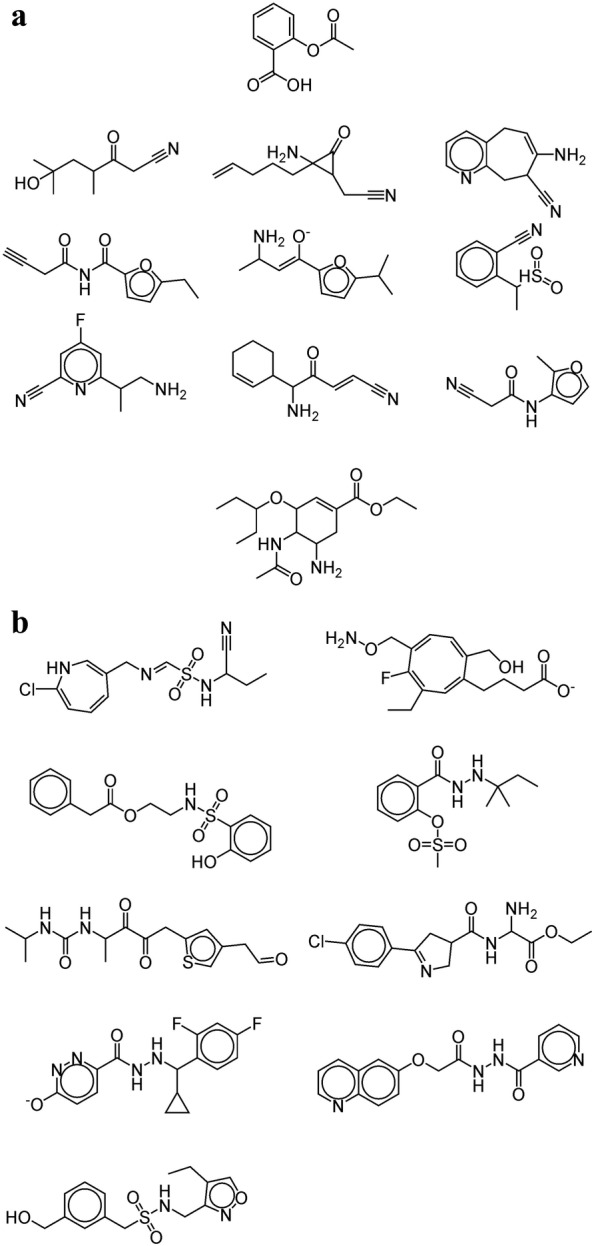
We propose a molecular generative model based on the conditional variational autoencoder for de novo molecular design. It is specialized to control multiple molecular properties simultaneously by imposing them on a latent space. As a proof of concept, we demonstrate that it can be used to generate drug-like molecules with five target properties. We were also able to adjust a single property without changing the others and to manipulate it beyond the range of the dataset.
Overview
The claims and statistics of this paper haven’t been checked yet.
Run the check — free, no account needed. It reads the open-access text and checks the sources it cites.
Integrity signals
Registry
Cites
Statistics
Figures
Verification
Claims the paper makes
The claims and statistics of this paper haven’t been checked yet.
Run the check — free, no account needed. It reads the open-access text and checks the sources it cites.
Claims other papers make about this one
Each is checked against this paper’s own text: does it say what the citing paper says it does?
The cited source says what the claim attributes to it.
In the citing paper
“While the conditional VAE has been previously documented in the literature34, its applicability in drug design is constrained by inherent drawbacks such as sub-optimal performance on standard SMILES representations, the posterior collapse problem, and inefficient exploration of latent space.”
From PCF-VAE: posterior collapse free variational autoencoder for de novo drug design (2025) · cites this paper as [34]
Self-check
Percentages, sums and reported differences re-computed from the paper’s own numbers.
The self-check needs the paper’s full text.
Citations
Cites
Hochreiter, S., & Schmidhuber, J. (1997) · Neural Computation · doi:10.1162/neco.1997.9.8.1735 · Cited by 102,318
Auto-Encoding Variational Bayes
Kingma, D. P., & Welling, M. (2013) · arXiv · doi:10.48550/arxiv.1312.6114 · Cited by 20,067
PubChem Substance and Compound databases
Kim, S., Thiessen, P. A., Bolton, E. E., Chen, J., Fu, G., Gindulyte, A., Han, L., He, J., He, S., Shoemaker, B. A., et al. (2016) · Nucleic Acids Research · doi:10.1093/nar/gkv951 · Cited by 5,436
Automatic Chemical Design Using a Data-Driven Continuous Representation of Molecules
Gómez-Bombarelli, R., Wei, J. N., Duvenaud, D., Hernández-Lobato, J. M., Sánchez-Lengeling, B., Sheberla, D., Aguilera-Iparraguirre, J., Hirzel, T. D., Adams, R. P., & Aspuru-Guzik, A. (2018) · ACS Central Science · doi:10.1021/acscentsci.7b00572 · Cited by 3,106
ZINC: A Free Tool to Discover Chemistry for Biology
Irwin, J. J., Sterling, T., Mysinger, M. M., Bolstad, E. S. D., & Coleman, R. G. (2012) · Journal of Chemical Information and Modeling · doi:10.1021/ci3001277 · Cited by 2,611
Generating Focused Molecule Libraries for Drug Discovery with Recurrent Neural Networks
Segler, M. H. S., Kogej, T., Tyrchan, C., & Waller, M. P. (2018) · ACS Central Science · doi:10.1021/acscentsci.7b00512 · Cited by 1,537
Molecular de-novo design through deep reinforcement learning
Olivecrona, M., Blaschke, T., Engkvist, O., & Chen, H. (2017) · Journal of Cheminformatics · doi:10.1186/s13321-017-0235-x · Cited by 1,443
Virtual screening of chemical libraries
Shoichet, B. K. (2004) · Nature · doi:10.1038/nature03197 · Cited by 1,425
Estimation of the size of drug-like chemical space based on GDB-17 data
Polishchuk, P. G., Madzhidov, T. I., & Varnek, A. (2013) · Journal of Computer-Aided Molecular Design · doi:10.1007/s10822-013-9672-4 · Cited by 619
Structure-Based Virtual Screening for Drug Discovery: a Problem-Centric Review
Cheng, T., Li, Q., Zhou, Z., Wang, Y., & Bryant, S. H. (2012) · The AAPS Journal · doi:10.1208/s12248-012-9322-0 · Cited by 587
Research works printed but not linked: 10
- Makhzani A, Shlens J, Jaitly N, Goodfellow I, Frey B (2015) Adversarial autoencoders. arXiv:1511.05644 · arXiv
- Blaschke T, Olivecrona M, Engkvist O, Bajorath J, Chen H (2017) Application of generative autoencoder in de novo molecular design. arXiv:1711.07839 · arXiv
- Bjerrum EJ, Threlfall R (2017) Molecular generation with recurrent neural networks (RNNs). arXiv:1705.04612 · arXiv
- Guimaraes GL, Sanchez-Lengeling B, Outeiral C, Farias PLC, Aspuru-Guzik A (2017) Objective-reinforced generative adversarial networks (ORGAN) for sequence generation models. arXiv:1705.10843 · arXiv
- Jaques N, Gu S, Bahdanau D, Hernández-Lobato JM, Turner RE, Eck D (2016) Sequence tutor: conservative fine-tuning of sequence generation models with KL-control. arXiv:1611.02796 · arXiv
- D.P Kingma, D.J Rezende, S Mohamed, M Welling, (2014) Semi-supervised learning with deep generative models, pp 1–9. arXiv:1406.5298 · arXiv
- Kusner MJ, Paige B, Hernández-Lobato JM (2017) Grammar variational autoencoder. arXiv:1703.01925 · arXiv
- Wang H, Wang J, Wang J, Zhao M, Zhang W, Zhang F, Xie X, Guo M (2017) GraphGAN: graph representation learning with generative adversarial nets. arXiv:1711.08267 · arXiv
- You J, Ying R, Ren X, Hamilton WL, Leskovec J (2018) GraphRNN: a deep generative model for graphs. arXiv:1802.08773 · arXiv
- W Jin, R Barzilay, T Jaakkola (2018) Junction tree variational autoencoder for molecular graph generation. arXiv:1802.04364 · arXiv
Cited by
Sorted by citations
Recent advances and applications of deep learning methods in materials science
Choudhary, K., DeCost, B., Chen, C., Jain, A., Tavazza, F., Cohn, R., Park, C. W., Choudhary, A., Agrawal, A., Billinge, S. J. L., et al. (2022) · npj Computational Materials · doi:10.1038/s41524-022-00734-6 · Cited by 1,172
“com/jaechanglim/CVAE [143] DeepChem https://github.”
Concepts of Artificial Intelligence for Computer-Assisted Drug Discovery
Yang, X. Y., Wang, Y., Byrne, R., Schneider, G., & Yang, S. (2019) · Chemical Reviews · doi:10.1021/acs.chemrev.8b00728 · Cited by 1,079
GuacaMol: Benchmarking Models for de Novo Molecular Design
Brown, N., Fiscato, M., Segler, M. H. S., & Vaucher, A. C. (2019) · Journal of Chemical Information and Modeling · doi:10.1021/acs.jcim.8b00839 · Cited by 895
Combining Machine Learning and Computational Chemistry for Predictive Insights Into Chemical Systems
Keith, J. A., Vassilev-Galindo, V., Cheng, B., Chmiela, S., Gastegger, M., Müller, K.-R., & Tkatchenko, A. (2021) · Chemical Reviews · doi:10.1021/acs.chemrev.1c00107 · Cited by 849
Deep learning for molecular design—a review of the state of the art
Elton, D. C., Boukouvalas, Z., Fuge, M. D., & Chung, P. W. (2019) · Molecular Systems Design & Engineering · doi:10.1039/c9me00039a · Cited by 683
Optimization of Molecules via Deep Reinforcement Learning
Zhou, Z., Kearnes, S. M., Li, L., Zare, R. N., & Riley, P. F. (2019) · Scientific Reports · doi:10.1038/s41598-019-47148-x · Cited by 648
Mater, A. C., & Coote, M. L. (2019) · Journal of Chemical Information and Modeling · doi:10.1021/acs.jcim.9b00266 · Cited by 565
MolGPT: Molecular Generation Using a Transformer-Decoder Model
Bagal, V., Aggarwal, R., Vinod, P. K. U., & Priyakumar, U. D. (2021) · Journal of Chemical Information and Modeling · doi:10.1021/acs.jcim.1c00600 · Cited by 605
Wu, S., Kondo, Y., Kakimoto, M., Yang, B., Yamada, H., Kuwajima, I., Lambard, G., Hongo, K., Xu, Y., Shiomi, J., et al. (2019) · npj Computational Materials · doi:10.1038/s41524-019-0203-2 · Cited by 493
Vatansever, S., Schlessinger, A., Wacker, D., Kaniskan, H. Ü., Jin, J., Zhou, M., & Zhang, B. (2021) · Medicinal Research Reviews · doi:10.1002/med.21764 · Cited by 429
A de novo molecular generation method using latent vector based generative adversarial network
Prykhodko, O., Johansson, S., Kotsias, P.-C., Arús‐Pous, J., Bjerrum, E. J., Engkvist, O., & Chen, H. (2019) · Journal of Cheminformatics · doi:10.1186/s13321-019-0397-9 · Cited by 415
Advances in De Novo Drug Design: From Conventional to Machine Learning Methods
Mouchlis, V. D., Afantitis, A., Serra, A., Fratello, M., Papadiamantis, A. G., Aidinis, V., Lynch, I., Greco, D., & Melagraki, G. (2021) · International Journal of Molecular Sciences · doi:10.3390/ijms22041676 · Cited by 381
Constrained Bayesian optimization for automatic chemical design using variational autoencoders
Griffiths, R., & Hernández-Lobato, J. M. (2019) · Chemical Science · doi:10.1039/c9sc04026a · Cited by 422
Generative Models as an Emerging Paradigm in the Chemical Sciences
Anstine, D. M., & Isayev, O. (2023) · Journal of the American Chemical Society · doi:10.1021/jacs.2c13467 · Cited by 332
Machine learning in materials science: From explainable predictions to autonomous design
Pilania, G. (2021) · Computational Materials Science · doi:10.1016/j.commatsci.2021.110360 · Cited by 298
Generative Models for De Novo Drug Design
Tong, X., Liu, X., Tan, X., Li, X., Jiang, J., Xiong, Z., Xu, T., Jiang, H., Qiao, N., & Zheng, M. (2021) · Journal of Medicinal Chemistry · doi:10.1021/acs.jmedchem.1c00927 · Cited by 249
Kotsias, P.-C., Arús‐Pous, J., Chen, H., Engkvist, O., Tyrchan, C., & Bjerrum, E. J. (2020) · Nature Machine Intelligence · doi:10.1038/s42256-020-0174-5 · Cited by 245
Artificial intelligence in drug discovery: applications and techniques
Deng, J., Yang, Z., Ojima, I., Samaras, D., & Wang, F. (2021) · Briefings in Bioinformatics · doi:10.1093/bib/bbab430 · Cited by 244
Grechishnikova, D. (2021) · Scientific Reports · doi:10.1038/s41598-020-79682-4 · Cited by 233
Górriz, J. M., Álvarez, I., Álvarez-Marquina, A., Arco, J. E., Atzmueller, M., Ballarini, F., Barakova, E. I., Bologna, G., Bonomini, P., Castellanos-Dominguez, G., et al. (2023) · Information Fusion · doi:10.1016/j.inffus.2023.101945 · Cited by 251
Unleashing the power of generative AI in drug discovery
Gangwal, A., & Lavecchia, A. (2024) · Drug Discovery Today · doi:10.1016/j.drudis.2024.103992 · Cited by 195
Wang, J., Hsieh, C., Wang, M., Wang, X., Wu, Z., Jiang, D., Liao, B., Zhang, X., Yang, B., He, Q., et al. (2021) · Nature Machine Intelligence · doi:10.1038/s42256-021-00403-1 · Cited by 200
Generative Deep Learning for Targeted Compound Design
de Sousa, T. F., Correia, J. V. M., Pereira, V., & Rocha, M. (2021) · Journal of Chemical Information and Modeling · doi:10.1021/acs.jcim.0c01496 · Cited by 202
Chen, G., Shen, Z., Iyer, A., Ghumman, U. F., Tang, S., Bi, J., Chen, W., & Li, Y. (2020) · Polymers · doi:10.3390/polym12010163 · Cited by 196
Data‐Driven Materials Innovation and Applications
Wang, Z., Sun, Z., Yin, H., Liu, X., Wang, J., Zhao, H., Pang, C. H., Wu, T., Li, S., Yin, Z., et al. (2022) · Advanced Materials · doi:10.1002/adma.202104113 · Cited by 204
Kim, Y., Kim, Y., Yang, C., Park, K., Gu, G. X., & Ryu, S. (2021) · npj Computational Materials · doi:10.1038/s41524-021-00609-2 · Cited by 177
Self-citationGenerative machine learning for de novo drug discovery: A systematic review
Martinelli, D. D. (2022) · Computers in Biology and Medicine · doi:10.1016/j.compbiomed.2022.105403 · Cited by 177
Joung, J. F., Han, M., Hwang, J., Jeong, M., Choi, D. H., & Park, S. (2021) · JACS Au · doi:10.1021/jacsau.1c00035 · Cited by 177
Scaffold-based molecular design with a graph generative model
Lim, J., Hwang, S.-Y., Moon, S., Kim, S., & Kim, W. Y. (2019) · Chemical Science · doi:10.1039/c9sc04503a · Cited by 180
Self-citationExploring chemical space using natural language processing methodologies for drug discovery
Öztürk, H., Özgür, A., Schwaller, P., Laino, T., & Özkırımlı, E. (2020) · Drug Discovery Today · doi:10.1016/j.drudis.2020.01.020 · Cited by 167
Deep learning approaches for de novo drug design: An overview
Wang, M., Wang, Z., Sun, H., Wang, J., Shen, C., Weng, G., Chai, X., Li, H., Cao, D., & Hou, T. (2021) · Current Opinion in Structural Biology · doi:10.1016/j.sbi.2021.10.001 · Cited by 159
Deep generative models for peptide design
Wan, F., Kontogiorgos-Heintz, D., & de la Fuente‐Núñez, C. (2022) · Digital Discovery · doi:10.1039/d1dd00024a · Cited by 154
The Advent of Generative Chemistry
Vanhaelen, Q., Lin, Y.-C., & Zhavoronkov, A. (2020) · ACS Medicinal Chemistry Letters · doi:10.1021/acsmedchemlett.0c00088 · Cited by 151
Comprehensive Survey of Recent Drug Discovery Using Deep Learning
Kim, J., Park, S., Min, D., & Kim, W. (2021) · International Journal of Molecular Sciences · doi:10.3390/ijms22189983 · Cited by 147
Self-citationArtificial intelligence in early drug discovery enabling precision medicine
Boniolo, F., Dorigatti, E., Ohnmacht, A. J., Saur, D., Schubert, B., & Menden, M. P. (2021) · Expert Opinion on Drug Discovery · doi:10.1080/17460441.2021.1918096 · Cited by 147
Advances in Artificial Intelligence (AI)-assisted approaches in drug screening
Singh, S., Gupta, H., Sharma, P., & Sahi, S. (2023) · Artificial Intelligence Chemistry · doi:10.1016/j.aichem.2023.100039 · Cited by 153
Kim, H., Kim, E., Lee, I., Bae, B., Park, M., & Nam, H. (2020) · Biotechnology and Bioprocess Engineering · doi:10.1007/s12257-020-0049-y · Cited by 146
Computer-aided multi-objective optimization in small molecule discovery
Fromer, J. C., & Coley, C. W. (2023) · Patterns · doi:10.1016/j.patter.2023.100678 · Cited by 140
3‑D Inorganic Crystal Structure Generation and Property Prediction via Representation Learning
Court, C. J., Yildirim, B., Jain, A., & Cole, J. M. (2020) · Journal of Chemical Information and Modeling · doi:10.1021/acs.jcim.0c00464 · Cited by 138
A Generative Approach to Materials Discovery, Design, and Optimization
Menon, D., & Ranganathan, R. (2022) · ACS Omega · doi:10.1021/acsomega.2c03264 · Cited by 135
Toward autonomous laboratories: Convergence of artificial intelligence and experimental automation
Xie, Y., Sattari, K., Zhang, C., & Lin, J. (2022) · Progress in Materials Science · doi:10.1016/j.pmatsci.2022.101043 · Cited by 129
Alshehri, A. S., Gani, R., & You, F. (2020) · Computers & Chemical Engineering · doi:10.1016/j.compchemeng.2020.107005 · Cited by 122
Molecular optimization by capturing chemist’s intuition using deep neural networks
He, J., You, H., Sandström, E., Nittinger, E., Bjerrum, E. J., Tyrchan, C., Czechtizky, W., & Engkvist, O. (2021) · Journal of Cheminformatics · doi:10.1186/s13321-021-00497-0 · Cited by 120
Akbar, R., Bashour, H., Rawat, P., Robert, P. A., Smorodina, E., Cotet, T., Karlsen, K. F., Frank, R., Mehta, B. B., Vu, M. H., et al. (2022) · mAbs · doi:10.1080/19420862.2021.2008790 · Cited by 121
Deep learning in electron microscopy
Ede, J. M. (2020) · Machine Learning Science and Technology · doi:10.1088/2632-2153/abd614 · Cited by 118
RELATION: A Deep Generative Model for Structure-Based De Novo Drug Design
Wang, M., Hsieh, C.-Y., Wang, J., Wang, D., Weng, G., Shen, C., Yao, X., Bing, Z., Li, H., Cao, D., et al. (2022) · Journal of Medicinal Chemistry · doi:10.1021/acs.jmedchem.2c00732 · Cited by 99
Colby, S., Nuñez, J., Hodas, N. O., Corley, C. D., & Renslow, R. S. (2019) · Analytical Chemistry · doi:10.1021/acs.analchem.9b02348 · Cited by 104
Deep Learning for Size‐Agnostic Inverse Design of Random‐Network 3D Printed Mechanical Metamaterials
Pahlavani, H., Tsifoutis‐Kazolis, K., Saldívar, M. C., Mody, P., Zhou, J., Mirzaali, M. J., & ZADPOOR, A. A. (2023) · Advanced Materials · doi:10.1002/adma.202303481 · Cited by 98
Generative Models for Automatic Chemical Design
Schwalbe‐Koda, D., & Gómez‐Bombarelli, R. (2020) · Lecture notes in physics · doi:10.1007/978-3-030-40245-7_21 · Cited by 109
Graph Neural Networks for Molecules
Wang, Y., Li, Z., & Farimani, A. B. (2023) · Challenges and advances in computational chemistry and physics · doi:10.1007/978-3-031-37196-7_2 · Cited by 118
Attention-based generative models for de novo molecular design
Dollar, O., Joshi, N., Beck, D. A. C., & Pfaendtner, J. (2021) · Chemical Science · doi:10.1039/d1sc01050f · Cited by 98
Quantum Chemistry Calculations for Metabolomics
Borges, R. M., Colby, S., Das, S., Edison, A. S., Fiehn, O., Kind, T., Lee, J., Merrill, A. T., Merz, K. M., Metz, T., et al. (2021) · Chemical Reviews · doi:10.1021/acs.chemrev.0c00901 · Cited by 93
Generative adversarial networks and diffusion models in material discovery
Alverson, M., Baird, S. G., Murdock, R., Ho, S.-H. E., Johnson, J. A., & Sparks, T. D. (2023) · Digital Discovery · doi:10.1039/d3dd00137g · Cited by 97
Molecular Generative Model Based on an Adversarially Regularized Autoencoder
Hong, S. H., Ryu, S., Lim, J., & Kim, W. Y. (2019) · Journal of Chemical Information and Modeling · doi:10.1021/acs.jcim.9b00694 · Cited by 92
Self-citationAlberga, D., Gambacorta, N., Trisciuzzi, D., Ciriaco, F., Amoroso, N., & Nicolotti, O. (2020) · Journal of Chemical Information and Modeling · doi:10.1021/acs.jcim.0c00517 · Cited by 94
Wang, Y., Zhao, H., Sciabola, S., & Wang, W. (2023) · Molecules · doi:10.3390/molecules28114430 · Cited by 95
Artificial intelligence for drug discovery and development in Alzheimer's disease
Qiu, Y., & Cheng, F. (2024) · Current Opinion in Structural Biology · doi:10.1016/j.sbi.2024.102776 · Cited by 83
Transformer-based molecular optimization beyond matched molecular pairs
He, J., Nittinger, E., Tyrchan, C., Czechtizky, W., Patronov, A., Bjerrum, E. J., & Engkvist, O. (2022) · Journal of Cheminformatics · doi:10.1186/s13321-022-00599-3 · Cited by 85
Learning the stress-strain fields in digital composites using Fourier neural operator
Rashid, M. M., Pittie, T., Chakraborty, S., & Krishnan, N. M. A. (2022) · iScience · doi:10.1016/j.isci.2022.105452 · Cited by 85
Kwon, Y., Yoo, J., Choi, Y.-S., Son, W., Lee, D., & Kang, S. (2019) · Journal of Cheminformatics · doi:10.1186/s13321-019-0396-x · Cited by 81
MGCVAE: Multi-Objective Inverse Design via Molecular Graph Conditional Variational Autoencoder
Lee, M., & Min, K. (2022) · Journal of Chemical Information and Modeling · doi:10.1021/acs.jcim.2c00487 · Cited by 86
The power of deep learning to ligand-based novel drug discovery
Baskin, I. I. (2020) · Expert Opinion on Drug Discovery · doi:10.1080/17460441.2020.1745183 · Cited by 76
DockStream: a docking wrapper to enhance de novo molecular design
Guo, J., Janet, J. P., Bauer, M. R., Nittinger, E., Giblin, K. A., Papadopoulos, K., Voronov, A., Patronov, A., Engkvist, O., & Margreitter, C. (2021) · Journal of Cheminformatics · doi:10.1186/s13321-021-00563-7 · Cited by 84
Choudhuri, S., Yendluri, M., Poddar, S., Li, A., Mallick, K., Mallik, S., & Ghosh, B. (2023) · Kinases and Phosphatases · doi:10.3390/kinasesphosphatases1020008 · Cited by 83
CogMol: Target-Specific and Selective Drug Design for COVID-19 Using Deep Generative ModelsPreprint
Chenthamarakshan, V., Das, P., Hoffman, S. C., Strobelt, H., Padhi, I., Lim, K. W., Hoover, B., Manica, M., Born, J., Laino, T., et al. (2020) · arXiv (Cornell University) · doi:10.48550/arxiv.2004.01215 · Cited by 96
Open Macromolecular Genome: Generative Design of Synthetically Accessible Polymers
Kim, S., Schroeder, C. M., & Jackson, N. E. (2023) · ACS Polymers Au · doi:10.1021/acspolymersau.3c00003 · Cited by 79
From intuition to AI: evolution of small molecule representations in drug discovery
McGibbon, M., Shave, S., Dong, J. N., Gao, Y., Houston, D. R., Xie, J., Yang, Y., Schwaller, P., & Blay, V. (2023) · Briefings in Bioinformatics · doi:10.1093/bib/bbad422 · Cited by 77
Symmetry-adapted generation of 3d point sets for the targeted discovery of moleculesPreprint
Gebauer, N. W. A., Gastegger, M., & Schütt, K. T. (2019) · arXiv (Cornell University) · doi:10.48550/arxiv.1906.00957 · Cited by 104
Thirunavukarasu, R., Doss, C. G. P., Ramanathan, G., Gopikrishnan, M., & Palanisamy, V. (2022) · Computers in Biology and Medicine · doi:10.1016/j.compbiomed.2022.106020 · Cited by 75
Antibiotic discovery in the artificial intelligence era
Lluka, T., & Stokes, J. M. (2022) · Annals of the New York Academy of Sciences · doi:10.1111/nyas.14930 · Cited by 71
Bidirectional generation of structure and properties through a single molecular foundation model
Chang, J., & Ye, J. C. (2024) · Nature Communications · doi:10.1038/s41467-024-46440-3 · Cited by 75
BRADSHAW: a system for automated molecular design
Green, D. V. S., Pickett, S. D., Luscombe, C. N., Senger, S., Marcus, D., Meslamani, J. E., Brett, D., Powell, A., & Masson, J. (2019) · Journal of Computer-Aided Molecular Design · doi:10.1007/s10822-019-00234-8 · Cited by 62
Kwon, Y., & Lee, J. (2021) · Journal of Cheminformatics · doi:10.1186/s13321-021-00501-7 · Cited by 64
Unlocking the Future of Drug Development: Generative AI, Digital Twins, and Beyond
Mariam, Z., Niazi, S. K., & Magoola, M. (2024) · BioMedInformatics · doi:10.3390/biomedinformatics4020079 · Cited by 61
Deep reinforcement learning for inverse inorganic materials design
Karpovich, C. J., Pan, E., & Olivetti, E. (2024) · npj Computational Materials · doi:10.1038/s41524-024-01474-5 · Cited by 80
Sample efficient reinforcement learning with active learning for molecular design
Dodds, M., Guo, J., Löhr, T., Tibo, A., Engkvist, O., & Janet, J. P. (2024) · Chemical Science · doi:10.1039/d3sc04653b · Cited by 58
Deep Lead Optimization: Leveraging Generative AI for Structural Modification
Zhang, O., Lin, H., Zhang, H., Zhao, H., Huang, Y., Hsieh, C., Pan, P., & Hou, T. (2024) · Journal of the American Chemical Society · doi:10.1021/jacs.4c11686 · Cited by 64
AI-Sketcher : A Deep Generative Model for Producing High-Quality Sketches
Cao, N., Yan, X., Shi, Y., & Chen, C. (2019) · Proceedings of the AAAI Conference on Artificial Intelligence · doi:10.1609/aaai.v33i01.33012564 · Cited by 58
pdCSM-cancer: Using Graph-Based Signatures to Identify Small Molecules with Anticancer Properties
Al‐Jarf, R., de Sá, A. G. C., Pires, D. E. V., & Ascher, D. B. (2021) · Journal of Chemical Information and Modeling · doi:10.1021/acs.jcim.1c00168 · Cited by 60
Myung, C. W., Hajibabaei, A., Cha, J., Ha, M., Kim, J., & Kim, K. S. (2022) · Advanced Energy Materials · doi:10.1002/aenm.202202279 · Cited by 54
Self-citationDeep learning enabled inorganic material generator
Pathak, Y., Juneja, K. S., Varma, G., Ehara, M., & Priyakumar, U. D. (2020) · Physical Chemistry Chemical Physics · doi:10.1039/d0cp03508d · Cited by 54
Generative deep learning as a tool for inverse design of high entropy refractory alloys
Debnath, A., Krajewski, A. M., Sun, H., Lin, S., Ahn, M., Li, W., Priya, S., Singh, J., Shang, S., Beese, A. M., et al. (2021) · Journal of Materials Informatics · doi:10.20517/jmi.2021.05 · Cited by 52
Computational Approaches for De Novo Drug Design: Past, Present, and Future
Liu, X., IJzerman, A. P., & van Westen, G. J. P. (2020) · Methods in molecular biology · doi:10.1007/978-1-0716-0826-5_6 · Cited by 57
MoleGuLAR: Molecule Generation Using Reinforcement Learning with Alternating Rewards
Goel, M., Raghunathan, S., Laghuvarapu, S., & Priyakumar, U. D. (2021) · Journal of Chemical Information and Modeling · doi:10.1021/acs.jcim.1c01341 · Cited by 52
Modern machine learning for tackling inverse problems in chemistry: molecular design to realization
Sridharan, B., Goel, M., & Priyakumar, U. D. (2022) · Chemical Communications · doi:10.1039/d1cc07035e · Cited by 54
Variational Autoencoders for Jet SimulationPreprint
Dohi, K. (2020) · arXiv (Cornell University) · doi:10.48550/arxiv.2009.04842 · Cited by 50
Deep learning for the design of phononic crystals and elastic metamaterials
Liu, C., & Yu, G. (2023) · Journal of Computational Design and Engineering · doi:10.1093/jcde/qwad013 · Cited by 51
Artificial Intelligence Models and Tools for the Assessment of Drug–Herb Interactions
Spanakis, M., Tzamali, E., Tzedakis, G., Koumpouzi, C., Pediaditis, M., Tsatsakis, A. M., & Sakkalis, V. (2025) · Pharmaceuticals · doi:10.3390/ph18030282 · Cited by 54
Joshi, R. P., Gebauer, N. W. A., Bontha, M., Khazaieli, M., James, R. M., Brown, J., & Kumar, N. (2021) · The Journal of Physical Chemistry B · doi:10.1021/acs.jpcb.1c06437 · Cited by 53
Machine learning accelerates quantum mechanics predictions of molecular crystals
Han, Y., Ali, I., Wang, Z., Cai, J., Wu, S., Tang, J., Zhang, L., Ren, J., Xiao, R., Lu, Q., et al. (2021) · Physics Reports · doi:10.1016/j.physrep.2021.08.002 · Cited by 49
Ambreen, S., Umar, M., Noor, A., Jain, H., & Ali, R. (2024) · European Journal of Medicinal Chemistry · doi:10.1016/j.ejmech.2024.117164 · Cited by 51
Inverse‐QSPR for de novo Design: A Review
Gantzer, P., Creton, B., & Nieto‐Draghi, C. (2019) · Molecular Informatics · doi:10.1002/minf.201900087 · Cited by 51
Nayarisseri, A., Khandelwal, R., Madhavi, M., Selvaraj, C., Panwar, U., Sharma, K., Hussain, T., & Singh, S. K. (2020) · Current Topics in Medicinal Chemistry · doi:10.2174/1568026620666200704135327 · Cited by 48
Constrained Bayesian Optimization for Automatic Chemical DesignPreprint
Griffiths, R., & Hernández-Lobato, J. M. (2017) · arXiv (Cornell University) · doi:10.48550/arxiv.1709.05501 · Cited by 47
Mokaya, M., Imrie, F., van Hoorn, W. P., Kalisz, A., Bradley, A. R., & Deane, C. M. (2023) · Nature Machine Intelligence · doi:10.1038/s42256-023-00636-2 · Cited by 53
Artificial intelligence for small molecule anticancer drug discovery
Duo, L., Liu, Y., Ren, J., Tang, B., & Hirst, J. D. (2024) · Expert Opinion on Drug Discovery · doi:10.1080/17460441.2024.2367014 · Cited by 51
Joo, S., Kim, M. S., Yang, J., & Park, J. (2020) · ACS Omega · doi:10.1021/acsomega.0c01149 · Cited by 51
Reinforcement Learning for Molecular Design Guided by Quantum MechanicsPreprint
Simm, G. N. C., Pinsler, R., & Hernández-Lobato, J. M. (2020) · arXiv (Cornell University) · doi:10.48550/arxiv.2002.07717 · Cited by 55
A review of machine learning-based methods for predicting drug–target interactions
Shi, W., Yang, H. T., Xie, L., Yin, X.-X., & Zhang, Y. (2024) · Health Information Science and Systems · doi:10.1007/s13755-024-00287-6 · Cited by 50
Current Status of Computational Approaches for Small Molecule Drug Discovery
Xu, W. (2024) · Journal of Medicinal Chemistry · doi:10.1021/acs.jmedchem.4c02462 · Cited by 49
Metadata
- Authors
- Lim, J., Ryu, S., Kim, J. W., & Kim, W. Y.
- Affiliations
- Korea Advanced Institute of Science and Technology (KR)
- Corresponding author
- Kim, Jin Woo
- Kim, Woo Youn
- Venue
- Journal of Cheminformatics
- Published
- 2018-07-11
- Volume
- 10
- Issue
- 1
- Pages
- 31-31
- ISSN
- 1758-2946 (ISSN-L)
- PMC
- PMC6041224
- OpenAlex
- W2808177712
- Cited by
- 421
- References
- 23
- Citations by year
- 2026: 45 · 2025: 62 · 2024: 67 · 2023: 60 · 2022: 55 · 2021: 62 · 2020: 41 · 2019: 26 · 2018: 1
- FWCI
- 24.31
- Type
- journal article
- Language
- en
- Open access
- gold
- doi.org
- Licence
- Locations
- Journal of Cheminformatics (publishedVersion, cc-by)
- Europe PMC (PubMed Central) (publishedVersion, cc-by)
- PubMed Central (publishedVersion, cc-by)
- PubMed (publishedVersion)
- arXiv (Cornell University) (submittedVersion)
- DOAJ (DOAJ: Directory of Open Access Journals) (submittedVersion)
- arXiv (Cornell University)
- Figshare (cc-by)
- Funders
- National Research Foundation of Korea (NRF-2017R1E1A1A01078109)
- Topics
- Life Sciences › Pharmacology, Toxicology and Pharmaceutics › Drug Discovery › Computational Drug Discovery Methods
- Physical Sciences › Materials Science › Materials Chemistry › Machine Learning in Materials Science
- Physical Sciences › Computer Science › Computer Vision and Pattern Recognition › Generative Adversarial Networks and Image Synthesis
- Keywords
- conditional variational autoencoder, de novo molecular design, generative models, latent space control, drug-like molecules, generative adversarial networks
About these checks
Registry, retraction, Cites and statistics results are computed, not judged, with one exception: a printed reference that no index lists is read once by a model before it counts as a citation error. Claims are extracted by a model and kept only when their quote appears verbatim in the text; each cited source is then checked, with a model’s help, for whether it says what the claim relies on. Those verdicts can be wrong — read the claim’s quote and the cited source before relying on one.
Statistics and arithmetic are recomputed, not judged.
Confidence bands are shown only for fields calibrated on our annotated test set. None is calibrated yet, so no band is shown.
What counts as a claim ›How we measure confidence ›How we check this ›
Are you an author, or do you see a problem with this page? Request a review
