

The DOI matches its Crossref record; 19 of the 23 references it cites were found in a registry or an index.
Molecular generative model based on conditional variational autoencoder for de novo molecular design
Open accessAbstract
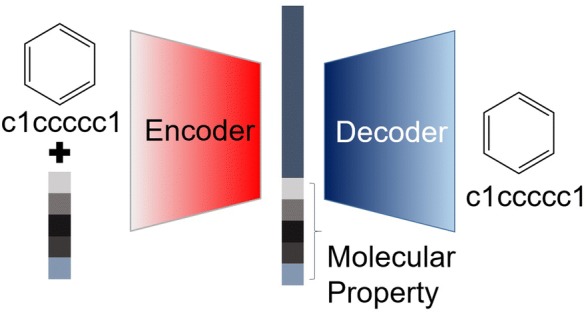
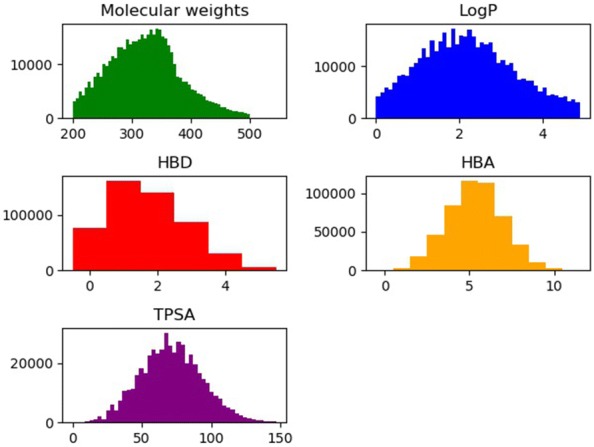
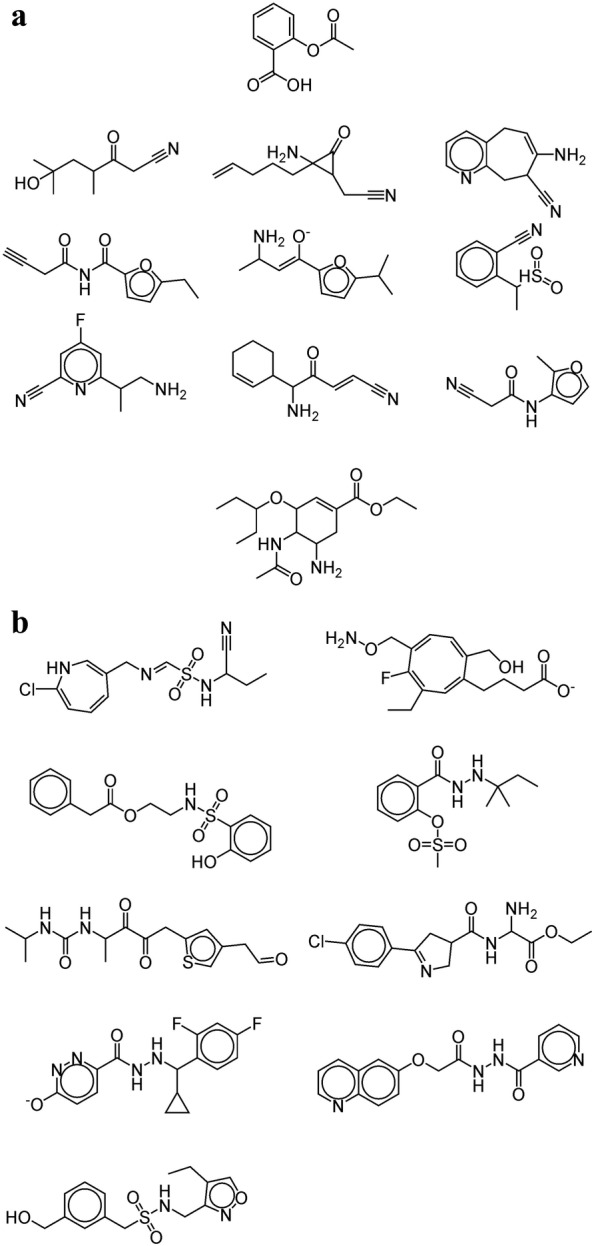
We propose a molecular generative model based on the conditional variational autoencoder for de novo molecular design. It is specialized to control multiple molecular properties simultaneously by imposing them on a latent space. As a proof of concept, we demonstrate that it can be used to generate drug-like molecules with five target properties. We were also able to adjust a single property without changing the others and to manipulate it beyond the range of the dataset.
Overview
The claims and statistics of this paper haven’t been checked yet.
Run the check — free, no account needed. It reads the open-access text and checks the sources it cites.
Integrity signals
Registry
Cites
Statistics
Figures
Verification
Claims the paper makes
The claims and statistics of this paper haven’t been checked yet.
Run the check — free, no account needed. It reads the open-access text and checks the sources it cites.
Claims other papers make about this one
Each is checked against this paper’s own text: does it say what the citing paper says it does?
The cited source says what the claim attributes to it.
In the citing paper
“While the conditional VAE has been previously documented in the literature34, its applicability in drug design is constrained by inherent drawbacks such as sub-optimal performance on standard SMILES representations, the posterior collapse problem, and inefficient exploration of latent space.”
From PCF-VAE: posterior collapse free variational autoencoder for de novo drug design (2025) · cites this paper as [34]
Self-check
Percentages, sums and reported differences re-computed from the paper’s own numbers.
The self-check needs the paper’s full text.
Citations
Cites
Hochreiter, S., & Schmidhuber, J. (1997) · Neural Computation · doi:10.1162/neco.1997.9.8.1735 · Cited by 102,318
Auto-Encoding Variational Bayes
Kingma, D. P., & Welling, M. (2013) · arXiv · doi:10.48550/arxiv.1312.6114 · Cited by 20,067
PubChem Substance and Compound databases
Kim, S., Thiessen, P. A., Bolton, E. E., Chen, J., Fu, G., Gindulyte, A., Han, L., He, J., He, S., Shoemaker, B. A., et al. (2016) · Nucleic Acids Research · doi:10.1093/nar/gkv951 · Cited by 5,436
Automatic Chemical Design Using a Data-Driven Continuous Representation of Molecules
Gómez-Bombarelli, R., Wei, J. N., Duvenaud, D., Hernández-Lobato, J. M., Sánchez-Lengeling, B., Sheberla, D., Aguilera-Iparraguirre, J., Hirzel, T. D., Adams, R. P., & Aspuru-Guzik, A. (2018) · ACS Central Science · doi:10.1021/acscentsci.7b00572 · Cited by 3,106
ZINC: A Free Tool to Discover Chemistry for Biology
Irwin, J. J., Sterling, T., Mysinger, M. M., Bolstad, E. S. D., & Coleman, R. G. (2012) · Journal of Chemical Information and Modeling · doi:10.1021/ci3001277 · Cited by 2,611
Generating Focused Molecule Libraries for Drug Discovery with Recurrent Neural Networks
Segler, M. H. S., Kogej, T., Tyrchan, C., & Waller, M. P. (2018) · ACS Central Science · doi:10.1021/acscentsci.7b00512 · Cited by 1,537
Molecular de-novo design through deep reinforcement learning
Olivecrona, M., Blaschke, T., Engkvist, O., & Chen, H. (2017) · Journal of Cheminformatics · doi:10.1186/s13321-017-0235-x · Cited by 1,443
Virtual screening of chemical libraries
Shoichet, B. K. (2004) · Nature · doi:10.1038/nature03197 · Cited by 1,425
Estimation of the size of drug-like chemical space based on GDB-17 data
Polishchuk, P. G., Madzhidov, T. I., & Varnek, A. (2013) · Journal of Computer-Aided Molecular Design · doi:10.1007/s10822-013-9672-4 · Cited by 619
Structure-Based Virtual Screening for Drug Discovery: a Problem-Centric Review
Cheng, T., Li, Q., Zhou, Z., Wang, Y., & Bryant, S. H. (2012) · The AAPS Journal · doi:10.1208/s12248-012-9322-0 · Cited by 587
Research works printed but not linked: 10
- Makhzani A, Shlens J, Jaitly N, Goodfellow I, Frey B (2015) Adversarial autoencoders. arXiv:1511.05644 · arXiv
- Blaschke T, Olivecrona M, Engkvist O, Bajorath J, Chen H (2017) Application of generative autoencoder in de novo molecular design. arXiv:1711.07839 · arXiv
- Bjerrum EJ, Threlfall R (2017) Molecular generation with recurrent neural networks (RNNs). arXiv:1705.04612 · arXiv
- Guimaraes GL, Sanchez-Lengeling B, Outeiral C, Farias PLC, Aspuru-Guzik A (2017) Objective-reinforced generative adversarial networks (ORGAN) for sequence generation models. arXiv:1705.10843 · arXiv
- Jaques N, Gu S, Bahdanau D, Hernández-Lobato JM, Turner RE, Eck D (2016) Sequence tutor: conservative fine-tuning of sequence generation models with KL-control. arXiv:1611.02796 · arXiv
- D.P Kingma, D.J Rezende, S Mohamed, M Welling, (2014) Semi-supervised learning with deep generative models, pp 1–9. arXiv:1406.5298 · arXiv
- Kusner MJ, Paige B, Hernández-Lobato JM (2017) Grammar variational autoencoder. arXiv:1703.01925 · arXiv
- Wang H, Wang J, Wang J, Zhao M, Zhang W, Zhang F, Xie X, Guo M (2017) GraphGAN: graph representation learning with generative adversarial nets. arXiv:1711.08267 · arXiv
- You J, Ying R, Ren X, Hamilton WL, Leskovec J (2018) GraphRNN: a deep generative model for graphs. arXiv:1802.08773 · arXiv
- W Jin, R Barzilay, T Jaakkola (2018) Junction tree variational autoencoder for molecular graph generation. arXiv:1802.04364 · arXiv
Cited by
Sorted by citations
Items 301–400 of 420
A comprehensive review of chemoinformatics: From molecular representation to data-driven design
Islam, M. S., Sarker, P., Islam, M. M., Shamim, S. U., Malitha, S. B., Nakib, K. I. A., Alam, M. Z., & Chowdhury, A. M. S. (2026) · Next research. · doi:10.1016/j.nexres.2026.102362 · Cited by 2
De Novo Drug Design via Multi-Label Learning and Adversarial Autoencoder
Ye, Q., Zhang, X., & Lin, X. (2021) · IEEE International Conference on Bioinformatics and Biomedicine (BIBM) · doi:10.1109/bibm52615.2021.9669568 · Cited by 2
Ma, M., Zhang, X., Zhou, L., Han, Z., Shi, Y., Li, J., Wu, L., Xu, Z., & Zhu, W. (2024) · Journal of Chemical Information and Modeling · doi:10.1021/acs.jcim.3c01657 · Cited by 2
Status and Prospects of Research on Deep Learning-based De Novo Generation of Drug Molecules
Shi, H., Wang, Z., Zhou, L., Xu, Z., Xie, L., Kong, R., & Chang, S. (2024) · Current Computer - Aided Drug Design · doi:10.2174/0115734099287389240126072433 · Cited by 2
Maji, P., Dhibar, K., & Mondal, H. K. (2024) · International Conference on Computing for Sustainable Global Development · doi:10.23919/indiacom61295.2024.10498844 · Cited by 2
Learning Hybrid Extraction and Distillation using Phenomena-based String Representation
Li, J. (2024) · Systems and Control Transactions · doi:10.69997/sct.171879 · Cited by 2
Molecular Feature-Based Prediction of Drug-Drug Interactions Using Graph Neural Networks
Gheorghita, F.-I., Pop, D. O., & Iantovics, L. B. (2025) · Lecture notes in networks and systems · doi:10.1007/978-3-031-81685-7_3 · Cited by 2
Rapid Assessment of Virtually Synthesizable Chemical Structures via Support Vector Machine Models
Iwasaki, Y., & Miyao, T. (2025) · Molecular Informatics · doi:10.1002/minf.70000 · Cited by 2
Lü, W., Peng, X., Huang, Y., Zheng, Z., Zhu, Z., Yin, X., Xu, W., Mei, S., Lu, X., Zhang, X., et al. (2025) · Journal of Chemical Information and Modeling · doi:10.1021/acs.jcim.5c01955 · Cited by 3
Rózsa, Z. B., Rágyanszki, A., Viskolcz, B., & Szöri, M. (2023) · Computational and Theoretical Chemistry · doi:10.1016/j.comptc.2023.114162 · Cited by 2
Kashyap, K., & Siddiqi, M. I. (2023) · Elsevier eBooks · doi:10.1016/b978-0-443-18638-7.00027-x · Cited by 2
Analytical Probability Distributions and Exact Expectation-Maximization for Deep Generative Networks
Balestriero, R., Paris, S., & Baraniuk, R. G. (2020) · neural information processing systems · Cited by 2
Retro Drug Design: From Target Properties to Molecular StructuresPreprint
Wang, Y., Michael, S., Huang, R., Zhao, J., Recabo, K., Bougie, D., Shu, Q., Shinn, P., & Sun, H. (2021) · PubMed · doi:10.48550/arxiv.2105.05220 · Cited by 2
CRNNTL: convolutional recurrent neural network and transfer learning for QSAR modellingPreprint
Li, Y., Xu, Y., & Yu, Y. (2021) · arXiv (Cornell University) · doi:10.48550/arxiv.2109.03309 · Cited by 2
Latent Diffusion for Conditional Generation of MoleculesPreprint
Kaufman, B., Williams, E., Pederson, R. D., Underkoffler, C., Panjwani, Z., Wang-Henderson, M., Mardirossian, N., Katcher, M. H., Strater, Z., Grandjean, J.-M., et al. (2024) · bioRxiv (Cold Spring Harbor Laboratory) · doi:10.1101/2024.08.22.609169 · Cited by 4
Physiology-Informed Conditional Variational Autoencoder for Generating Pediatric Virtual PatientsPreprint
Irie, K., & Mizuno, T. (2026) · medRxiv · doi:10.64898/2026.01.21.26344442 · Cited by 2
MolMiner: Toward Controllable, Three‐Dimensional‐Aware, Fragment‐Based Molecular Design
Ochoa, R. O., Vegge, T., & Frellsen, J. (2026) · Advanced Intelligent Discovery · doi:10.1002/aidi.70138 · Cited by 1
Satish, N., Bukapindi, M., Shreyas, K., Akhil, G., & Malagi, V. P. (2024) · Lecture notes in networks and systems · doi:10.1007/978-981-97-6992-6_20 · Cited by 1
The Human Intelligence Versus Artificial Intelligence: A Controversial Race in Problem-Solving
Mohamed, K., Mushtaq, A., Shaw, M., Ling, I., Joya, M., Makka, S. A., Makuku, R., Marquez, L. P., & Rezaei, N. (2024) · Integrated science · doi:10.1007/978-3-031-64292-0_1 · Cited by 1
Introduction to Machine Learning for Predictive Modeling II
Shiri, F., Ahmadi, S., Abdolmaleki, A., & Lotfi, S. (2025) · Challenges and advances in computational chemistry and physics · doi:10.1007/978-3-031-78724-9_1 · Cited by 2
Fabbrini, E., Nguyen, L. T. H., Fukumoto, Y., Kaneko, Y., & Cesana, P. (2025) · International Journal of Quantum Chemistry · doi:10.1002/qua.70052 · Cited by 1
Zhao, Y., Hao, K., Gu, C., Wei, B., & Guan, X. (2025) · IEEE Transactions on Cybernetics · doi:10.1109/tcyb.2025.3572153 · Cited by 1
The role of Artificial Intelligence in drug discovery
Rotake, S. B., Hatwar, P. R., Bakal, R. L., & Meshram, S. I. (2025) · Journal of Drug Delivery and Therapeutics · doi:10.22270/jddt.v15i7.7251 · Cited by 1
MOLGMP: A Markov approach for molecular graph generation with GNNs
Goupil, B., Joly, A., Pancino, N., Bongini, P., Scarselli, F., & Bianchini, M. (2025) · Neurocomputing · doi:10.1016/j.neucom.2025.131066 · Cited by 1
ADMETrix: ADMET-Driven De Novo Molecular Generation
Mourdoukoutas, N., Korfiati, A., & Pitsikalis, V. (2025) · Lecture notes in computer science · doi:10.1007/978-3-032-04552-2_3 · Cited by 1
Generative deep learning in bioinformatics: a microservices-driven paradigm for big data environment
El-Sayed, A. F., Darwish, S. M., Labib, N. M., & El-Hadidi, M. S. (2025) · Journal Of Big Data · doi:10.1186/s40537-025-01320-5 · Cited by 1
Symbolic Neural Generation with Applications to Lead Discovery in Drug Design
Srinivasan, A., Dash, T., Baskar, A., Bain, M., Dey, S. K., & Banerjee, M. (2026) · Machine Learning · doi:10.1007/s10994-026-07136-5 · Cited by 1
Artificial Intelligence in De Novo Drug Design
Cerchia, C., Delre, P., Falbo, E., & Lavecchia, A. (2026) · Springer eBooks · doi:10.1007/978-3-031-98022-0_6 · Cited by 1
Abe, R., & Miyao, T. (2026) · Artificial Intelligence in the Life Sciences · doi:10.1016/j.ailsci.2026.100159 · Cited by 1
Chen, J., Liu, Q., & Zhang, L. (2026) · ENGINEERING Chemical Engineering · doi:10.1007/s11705-026-2658-2 · Cited by 1
Wang, X., Xiong, D., Cui, S., Duan, B., Hung, Y., Jing, H. E., Ding, G., Tang, Y., & (15087726), Q. W. (2026) · Discover Oncology · doi:10.1007/s12672-026-04864-x · Cited by 3
Zhang, C., Elvitigala, K. C. M. L., & Sakai, S. (2026) · Virtual and Physical Prototyping · doi:10.1080/17452759.2026.2671497 · Cited by 1
When Trees Guide Molecules: Multiobjective Search in de Novo Drug Design
Druchok, M., & Rovenchak, A. A. (2026) · Journal of Chemical Information and Modeling · doi:10.1021/acs.jcim.6c00407 · Cited by 1
Guo, Z.-X., Tang, J.-P., Wang, Z.-X., Liang, Q.-M., Ma, S., Shang, C., Zhang, S.-Y., Chen, L., & Liu, Z. (2026) · Journal of the American Chemical Society · doi:10.1021/jacs.6c03190 · Cited by 2
Iterative Interaction Fingerprints-Guided Multiobjective Molecular Generation
Wang, Y.-G., Dong, C., Chen, Y.-T., Meng, F.-B., Peng, J., Yu, J.-L., Li, R., & Li, G.-B. (2026) · Journal of Chemical Information and Modeling · doi:10.1021/acs.jcim.6c00955 · Cited by 1
Reyes, K. G., Liu, J., & Vargas, C. J. D. (2022) · JOM · doi:10.1007/s11837-022-05368-z · Cited by 1
Suhendar, H., Windiyanti, A., & Asriani, A. (2023) · Journal of Physics Conference Series · doi:10.1088/1742-6596/2596/1/012020 · Cited by 1
Discovering Novel Pharmaceutical Molecules with Generative Adversarial Networks
Chandrashekar, L., Namratha, K., Mohan, P., J, R. B. P., & Kulkarni, A. (2023) · Proceeding of the Electrical Engineering Computer Science and Informatics · doi:10.1109/eecsi59885.2023.10295896 · Cited by 1
De Novo Drug Design by Multi-Objective Path Consistency Learning With Beam A* Search
Zhao, D., Zhou, J., Tu, S., & Xu, L. (2024) · IEEE Transactions on Computational Biology and Bioinformatics · doi:10.1109/tcbb.2024.3477592 · Cited by 1
Chou, W.-C., Li, M., Seal, S., & Lin, Z. (2025) · Elsevier eBooks · doi:10.1016/b978-0-443-30010-3.00012-x · Cited by 1
Morphology-Aware Peptide Discovery via Masked Conditional Generative Modeling
Costa, N., & Zavadlav, J. (2026) · ACS Nano · doi:10.1021/acsnano.6c02811 · Cited by 2
Analysis of floor stability in underground coal mines
Santos, C. A. (1988) · OSTI OAI (U.S. Department of Energy Office of Scientific and Technical Information) · Cited by 1
Generate Novel Molecules With Target Properties Using Conditional Generative ModelsPreprint
Sagar, A. (2020) · arXiv (Cornell University) · doi:10.48550/arxiv.2009.12368 · Cited by 1
MolFinder: An Efficient Global Molecular Property Optimization and Search Algorithm Using SMILESPreprint
Kwon, Y., & Lee, J. (2020) · ChemRxiv · doi:10.26434/chemrxiv.13106891.v1 · Cited by 1
Pikusa, M., René, O., Williams, S. S., Chen, Y., Martin, É., Godinez, W. J., Rao, S. P. S., Guiguemde, W. A., & Nigsch, F. (2021) · bioRxiv (Cold Spring Harbor Laboratory) · doi:10.1101/2021.12.10.472084 · Cited by 1
Transformer Neural Network-Based Molecular Optimization Using General TransformationsPreprint
He, J., Nittinger, E., Tyrchan, C., Czechtizky, W., Patronov, A., Bjerrum, E. J., & Engkvist, O. (2021) · Research Square · doi:10.21203/rs.3.rs-1097104/v1 · Cited by 1
Giving Attention to Generative VAE Models for De Novo Molecular DesignPreprint
Dollar, O., Joshi, N., Beck, D. A. C., & Pfaendtner, J. (2021) · ChemRxiv · doi:10.26434/chemrxiv.13724629 · Cited by 1
Mokaya, M., Imrie, F., van Hoorn, W. P., Kalisz, A., Bradley, A. R., & Deane, C. M. (2022) · bioRxiv (Cold Spring Harbor Laboratory) · doi:10.1101/2022.07.15.500218 · Cited by 1
Numerical Representations of Chemical Data for Structure‐Based Machine Learning
Na, G. S. (2023) · Wiley eBooks · doi:10.1002/9781119819783.ch7 · Cited by 1
Evaluation of Reinforcement Learning inTransformer-based Molecular DesignPreprint
He, J., Tibo, A., Janet, J. P., Nittinger, E., Tyrchan, C., Czechtizky, W., & Engkvist, O. (2024) · ChemRxiv · doi:10.26434/chemrxiv-2024-r9ljm · Cited by 1
Wang, L., Shao, J., Gong, Q., Yin, Z., Chen, Y., Hao, Y., Zhang, L., Jiang, L., Yao, M., Li, J., et al. (2025) · Research Square · doi:10.21203/rs.3.rs-6356959/v1 · Cited by 1
ADMETrix: ADMET-Driven De Novo Molecular GenerationPreprint
Mourdoukoutas, N., Korfiati, A., & Pitsikalis, V. (2025) · ChemRxiv · doi:10.26434/chemrxiv-2025-3x5nq
ADMETrix: ADMET-Driven De Novo Molecular GenerationPreprint
Mourdoukoutas, N., Korfiati, A., & Pitsikalis, V. (2025) · ChemRxiv · doi:10.26434/chemrxiv-2025-3x5nq-v2
Data-driven modeling of time-domain induced polarization
Bérubé, C. L., & Bérubé, P. (2022) · Geophysics · doi:10.1190/geo2021-0497.1 · Cited by 8
The Trends of De Novo Molecular Designs in the Twenty-First Century: A Mini-Review
Basak, S. (2020) · Social Science Humanities and Sustainability Research · doi:10.22158/sshsr.v1n1p27
Analytical Probability Distributions and EM-Learning for Deep Generative NetworksPreprint
Balestriero, R., Paris, S., & Baraniuk, R. G. (2020) · arXiv (Cornell University) · doi:10.48550/arxiv.2006.10023
A2Str: Molecular Graph Generation Based on Given Atoms
Wang, X. (2021) · Communications in computer and information science · doi:10.1007/978-981-16-5940-9_32
Applications of Autoencoders along with Deep Learning Techniques to generate valid molecules
Aparna, T. S. S., & Anuradha, T. (2021) · Journal of Physics Conference Series · doi:10.1088/1742-6596/2070/1/012125
MolFinder: An Efficient Global Molecular Property Optimization and Search Algorithm Using SMILESPreprint
Kwon, Y., & Lee, J. (2020) · ChemRxiv · doi:10.26434/chemrxiv.13106891 · Cited by 1
Transmol: Repurposing Language Model for Molecular GenerationPreprint
Zhumagambetov, R., Peshkov, V. A., & Fazli, S. (2021) · ChemRxiv · doi:10.26434/chemrxiv.14350610
Graph Machine Learning for Design of High-Octane FuelsPreprint
Rittig, J. G., Ritzert, M., Schweidtmann, A. M., Winkler, S., Weber, J. M., Morsch, P., Heufer, K. A., Grohe, M., Mitsos, A., & Dahmen, M. (2022) · RWTH Publications (RWTH Aachen) · doi:10.18154/rwth-2024-02829
Monte Carlo Simulation of Naroline Thermal Conductivity Using a Conditional Variational Autoencoder
Ding, M., & Chen, Y. (2022) · International Conference on Computer, Control and Robotics (ICCCR) · doi:10.1109/icccr54399.2022.9790151
Tool Wear Recognition and Signals Labeling with Small Cross Labeled Samples in Impeller MachiningPreprint
Ou, J., Li, H., Wang, Z., Yang, C., & Peng, D. (2022) · Research Square · doi:10.21203/rs.3.rs-1736300/v1
Holistic Graph-Based Deep Q-Network for End-to-End Drug Design and DiscoveryPreprint
Rassil, A., Chougrad, H., & Zouaki, H. (2023) · SSRN Electronic Journal · doi:10.2139/ssrn.4496383
Structural Bioinformatics and Artificial Intelligence Approaches in De Novo Drug Design
Sivakumar, D., & Wu, S. (2023) · BENTHAM SCIENCE PUBLISHERS eBooks · doi:10.2174/9789815136807123010008
Multi-objective molecule optimization with graph history and transfer refinementPreprint
Cao, E. L. (2023) · doi:10.31219/osf.io/bve3h
Molecular Generator for Multi-objective Optimization Based on the Pareto Algorithm
Feng, D. (2023) · MEDS Clinical Medicine · doi:10.23977/medsc.2023.040809
LLamol: A Dynamic Multi-Conditional Generative Transformer for De Novo Molecular DesignPreprint
Dobberstein, N., Maaß, A., & Hamaekers, J. (2024) · Research Square · doi:10.21203/rs.3.rs-3847727/v1
Noguchi, S. F., Wang, H., & Inoue, J. (2023) · Ouyou toukeigaku · doi:10.5023/jappstat.52.75
Almudévar, A., Mariotte, T., Ortega, A., & Tahon, M. (2024) · IEEE International Conference on Acoustics Speech and Signal Processing · doi:10.1109/icassp48485.2024.10446649
FaissMolLib: An efficient and easy deployable tool for ligand-based virtual screening
Liu, H., Chen, P., Hu, B., Wang, S., Wang, H., Luan, J., Wang, J., Lin, B., & Cheng, M. (2024) · Computational Biology and Chemistry · doi:10.1016/j.compbiolchem.2024.108057
Nogueira, V. H. R. (2024) · Digital Library of Theses and Dissertations (Universidade de São Paulo) · doi:10.11606/t.76.2024.tde-23042024-120251
Zhao, Y., Gu, C., Wu, K., & Fang, Y. (2023) · International Conference on Machine Vision, Image Processing and Imaging Technology (MVIPIT) · doi:10.1109/mvipit60427.2023.00017
De Novo Drug Design – Do We Really Want to Be “Original”?
Shevelev, M. D., Horvath, D., Marcou, G., & Varnek, A. A. (2024) · Lecture notes in computer science · doi:10.1007/978-3-031-72359-9_2
CGLDM: A Conditional Geometric Latent Diffusion Model for 3D Molecular Generation
Liu, X., Wang, C., You, X., Ji, C., & Nan, X. (2025) · Lecture notes in computer science · doi:10.1007/978-981-95-0027-7_38
Zhang, Z., Wu, S., He, L., Cao, G., Tang, J., Pan, Z., Huang, Z., Yang, Y., Li, A., Wang, Y., et al. (2025) · Briefings in Bioinformatics · doi:10.1093/bib/bbaf413
Zhou, Y., Sang, Z., Xu, C., Cao, Z., Xiao, K., Jia, Q., He, Y., Luo, H., & Huang, S. (2025) · Molecular Diversity · doi:10.1007/s11030-025-11342-z
Steering Vector Fields for Property-Controlled Molecular Generation with Chemical Language ModelsPreprint
Dimitrievikj, A., & Wells, J. (2025) · bioRxiv (Cold Spring Harbor Laboratory) · doi:10.1101/2025.09.24.678080
Toward Environment-Sensitive Molecular Inference via Mixed Integer Linear Programming
Zhu, J., Takekida, M., Azam, N. A., Haraguchi, K., Zhao, L., & Akutsu, T. (2025) · ACS Omega · doi:10.1021/acsomega.5c02319
Reinforcement Learning Strategies for De Novo Drug Design: an Overview
Xuelan, Y., Zain, J. M., & Hai, T. (2024) · International Conference on Computational Science & Information Management (ICoCSIM) · doi:10.1109/icocsim65098.2024.00018
Harnessing AI for nucleic acid drug discovery: Small molecule targeting DNA and RNA
Chen, Q., & Nakatani, K. (2025) · Annual reports in medicinal chemistry · doi:10.1016/bs.armc.2025.10.001
Li, L., Wang, T., Zhai, G., Yu, X.-L., Li, B., He, Y., Deng, F., & Dong, W. (2025) · IEEE Transactions on Instrumentation and Measurement · doi:10.1109/tim.2025.3626962
Text-guided multi-property molecular optimization with a diffusion language model
Xiong, Y., Li, K., Chen, J., Zhang, H., Lin, D., Che, Y., & Hu, W. (2025) · Information Fusion · doi:10.1016/j.inffus.2025.103907
Exploring deep learning approaches in anticancer drug design: a review of recent advances
M’rhar, K., Chadi, M.-A., & Mousannif, H. (2025) · Frontiers in Drug Discovery · doi:10.3389/fddsv.2025.1713308
Oestreich, M., Ewert, I., & Becker, M. (2024) · Figshare · doi:10.6084/m9.figshare.26689094
Additional file 1 of Transformer-based molecular optimization beyond matched molecular pairs
He, J., Nittinger, E., Tyrchan, C., Czechtizky, W., Patronov, A., Bjerrum, E. J., & Engkvist, O. (2022) · Figshare · doi:10.6084/m9.figshare.19445845
Kim, H., Ko, S., Kim, B. J., Ryu, S. J., & Ahn, J. (2024) · Figshare · doi:10.6084/m9.figshare.26552557
Self-citationOestreich, M., Ewert, I., & Becker, M. (2024) · Figshare · doi:10.6084/m9.figshare.26689097
Oestreich, M., Ewert, I., & Becker, M. (2024) · Figshare · doi:10.6084/m9.figshare.26689091
Oestreich, M., Ewert, I., & Becker, M. (2024) · Figshare · doi:10.6084/m9.figshare.26689103
Oestreich, M., Ewert, I., & Becker, M. (2024) · Figshare · doi:10.6084/m9.figshare.26689100
Additional file 1 of Reconstruction of lossless molecular representations from fingerprints
Ucak, U. V., Ashyrmamatov, I., & Lee, J. (2024) · Figshare · doi:10.6084/m9.figshare.26570965
Xu, Y., Fang, W., Wang, S., Luo, H.-B., Xu, Q., Chen, F.-E., Qu, J., & Sun, Y. (2025) · The Innovation Medicine · doi:10.59717/j.xinn-med.2025.100158
Unveiling the Influence of Polyphenols on Mitogen-activated Protein Kinases in Cancer
Tendulkar, M., & Tendulkar, R. (2026) · Cell Biochemistry and Biophysics · doi:10.1007/s12013-025-01983-0
Das, S., Laplaza, R., Worakul, T., & Corminbœuf, C. (2026) · Chemical Science · doi:10.1039/d5sc09530a
Generative artificial intelligence for de novo drug design
Ali, A. M., Qazi, S., Almuqdadi, H. T. A., Neeraj, Majeed, O. S., Majeed, A. A., Temur, A. A., Murshedi, G. H. M. A., & Waheed, M. S. (2026) · Elsevier eBooks · doi:10.1016/b978-0-443-44415-9.00018-1
Chemical-Aware Autoencoders for Eco-Selective Adsorption of Wastewater Contaminants
Meconcelli, D., Prete, A. L., Costanti, F., Bacconi, S., Giordano, E., Stefanuto, L., Gasperi, T., Scarselli, F., & Bianchini, M. (2025) · IEEE International Workshop on Metrology for Green Technologies, Renewable Energy and Ecological Sustainability (MetroGREENST) · doi:10.1109/metrogreenst67435.2025.11428885
TETGen: A Transcriptome-Guided Transformer for Targeted Molecule GenerationPreprint
Gao, J., Cao, Y., Zhou, R., Li, Y., Wang, J., Ding, W., Ma, M., Wu, D., Zhou, Y., Yuan, B., et al. (2026) · Research Square · doi:10.21203/rs.3.rs-9234106/v1
Metadata
- Authors
- Lim, J., Ryu, S., Kim, J. W., & Kim, W. Y.
- Affiliations
- Korea Advanced Institute of Science and Technology (KR)
- Corresponding author
- Kim, Jin Woo
- Kim, Woo Youn
- Venue
- Journal of Cheminformatics
- Published
- 2018-07-11
- Volume
- 10
- Issue
- 1
- Pages
- 31-31
- ISSN
- 1758-2946 (ISSN-L)
- PMC
- PMC6041224
- OpenAlex
- W2808177712
- Cited by
- 421
- References
- 23
- Citations by year
- 2026: 45 · 2025: 62 · 2024: 67 · 2023: 60 · 2022: 55 · 2021: 62 · 2020: 41 · 2019: 26 · 2018: 1
- FWCI
- 24.31
- Type
- journal article
- Language
- en
- Open access
- gold
- doi.org
- Licence
- Locations
- Journal of Cheminformatics (publishedVersion, cc-by)
- Europe PMC (PubMed Central) (publishedVersion, cc-by)
- PubMed Central (publishedVersion, cc-by)
- PubMed (publishedVersion)
- arXiv (Cornell University) (submittedVersion)
- DOAJ (DOAJ: Directory of Open Access Journals) (submittedVersion)
- arXiv (Cornell University)
- Figshare (cc-by)
- Funders
- National Research Foundation of Korea (NRF-2017R1E1A1A01078109)
- Topics
- Life Sciences › Pharmacology, Toxicology and Pharmaceutics › Drug Discovery › Computational Drug Discovery Methods
- Physical Sciences › Materials Science › Materials Chemistry › Machine Learning in Materials Science
- Physical Sciences › Computer Science › Computer Vision and Pattern Recognition › Generative Adversarial Networks and Image Synthesis
- Keywords
- conditional variational autoencoder, de novo molecular design, generative models, latent space control, drug-like molecules, generative adversarial networks
About these checks
Registry, retraction, Cites and statistics results are computed, not judged, with one exception: a printed reference that no index lists is read once by a model before it counts as a citation error. Claims are extracted by a model and kept only when their quote appears verbatim in the text; each cited source is then checked, with a model’s help, for whether it says what the claim relies on. Those verdicts can be wrong — read the claim’s quote and the cited source before relying on one.
Statistics and arithmetic are recomputed, not judged.
Confidence bands are shown only for fields calibrated on our annotated test set. None is calibrated yet, so no band is shown.
What counts as a claim ›How we measure confidence ›How we check this ›
Are you an author, or do you see a problem with this page? Request a review
