

Optimizing the acceleration of Cheddar cheese ripening using response surface methodology by microbial protease without altering its quality features
Open accessPublished version of a preprint
The DOI matches its Crossref record; 60 of the 61 references it cites were found in a registry or an index; 11 of the 47 sources its claims cite were checked for support.
Abstract
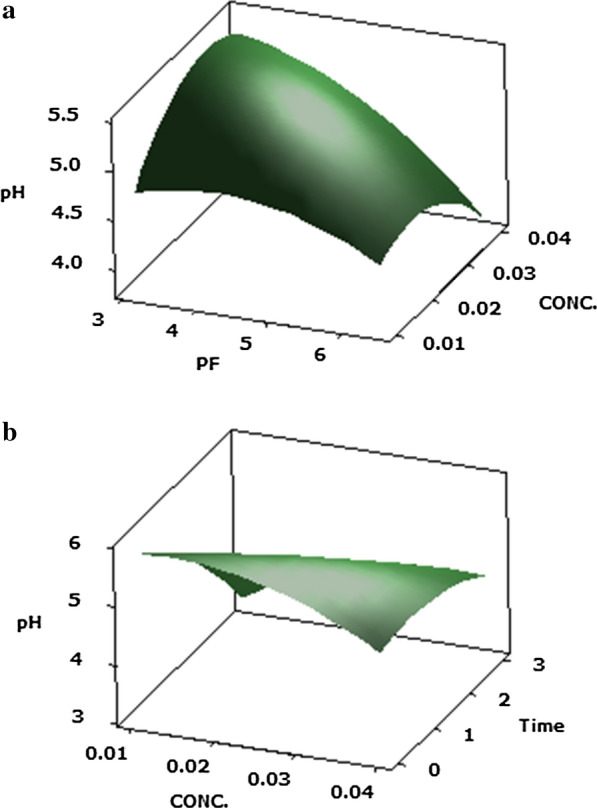
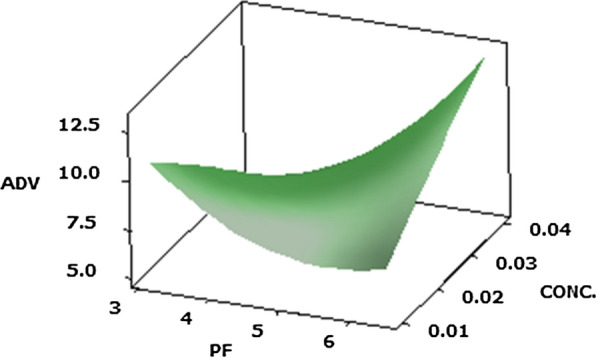
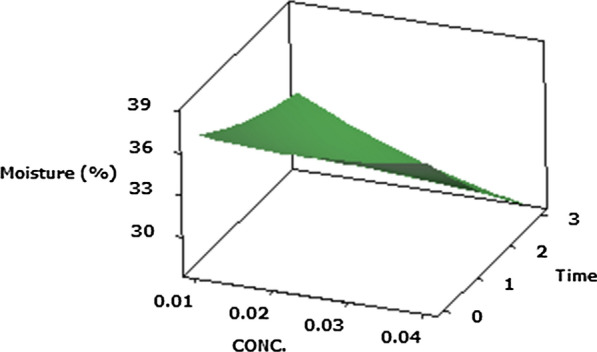
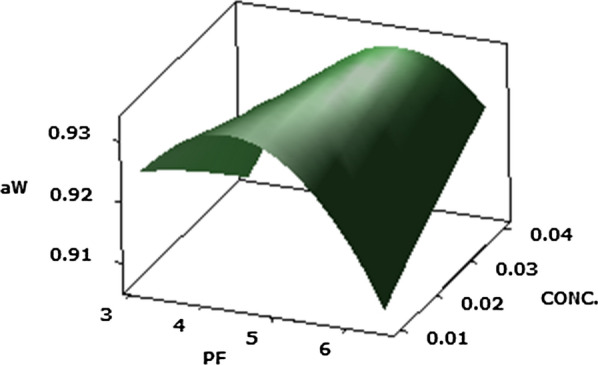
Abstract Cheddar cheese proteolysis were accelerated employing Penicillium candidum PCA1/TT031 protease into cheese curd. In the present study, several of the significant factors such as protease purification factor (PF), protease concentration and ripening time were optimized via the response surface methodology (RSM). The ideal accelerated Cheddar cheese environment consisted of 3.12 PF, 0.01% (v/v) protease concentration and 0.6/3 months ripening time at 10 °C. The RSM models was verified to be the most proper methodology for the maintain of chosen Cheddar cheese. Under this experimental environment, the pH, acid degree value (ADV), moisture, water activity (a w ), soluble nitrogen (SN)%, fat and overall acceptability were found to be 5.4, 6.6, 35%, 0.9348, 18.8%, 34% and 13.6, respectively of ideal Cheddar cheese. Furthermore, the predicted and experimental results were in significant agreement, which confirmed the validity and reliability of the suggested method. In spite of the difference between the ideal and commercial Cheddar cheese in the concentration of some of amino acids and free fatty acids, the sensory evaluation did not show any significant difference in aroma profile between them.
Verifying this paper
8 of 9 steps done · this page updates itself — you can leave and come back
- Registry recordVerified
- Full textRead the full text
- Reference list61 references found
- Reference checkChecking each cited work — 61 of 61
- StatisticsRecomputed
- Claims107 claims anchored to a quote
- Cited sourcesChecked
- Self-checkChecked
- VerificationFindings verified
Overview
CoChat Summary
## TL;DR
This study used response surface methodology to optimize acceleration of Cheddar cheese ripening with *Penicillium candidum* PCA1/TT031 protease, aiming to shorten maturation without harming quality. The optimized condition was 3.12 PF, 0.01% (v/v) protease, and 0.6/3 months at 10 °C, with predicted values closely matching experiments.
## Key findings
- The RSM models fit well, with reported R² values in the range 0.92–0.99, and predicted vs. experimental values were in significant agreement.
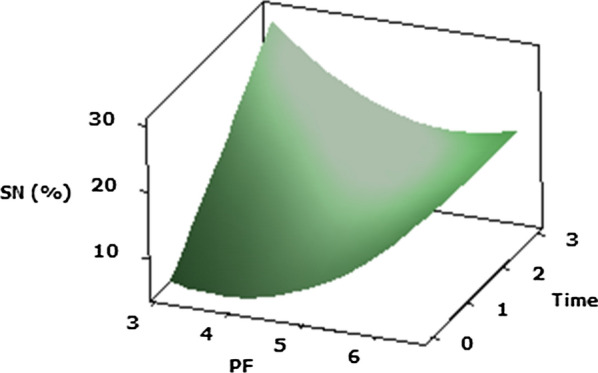
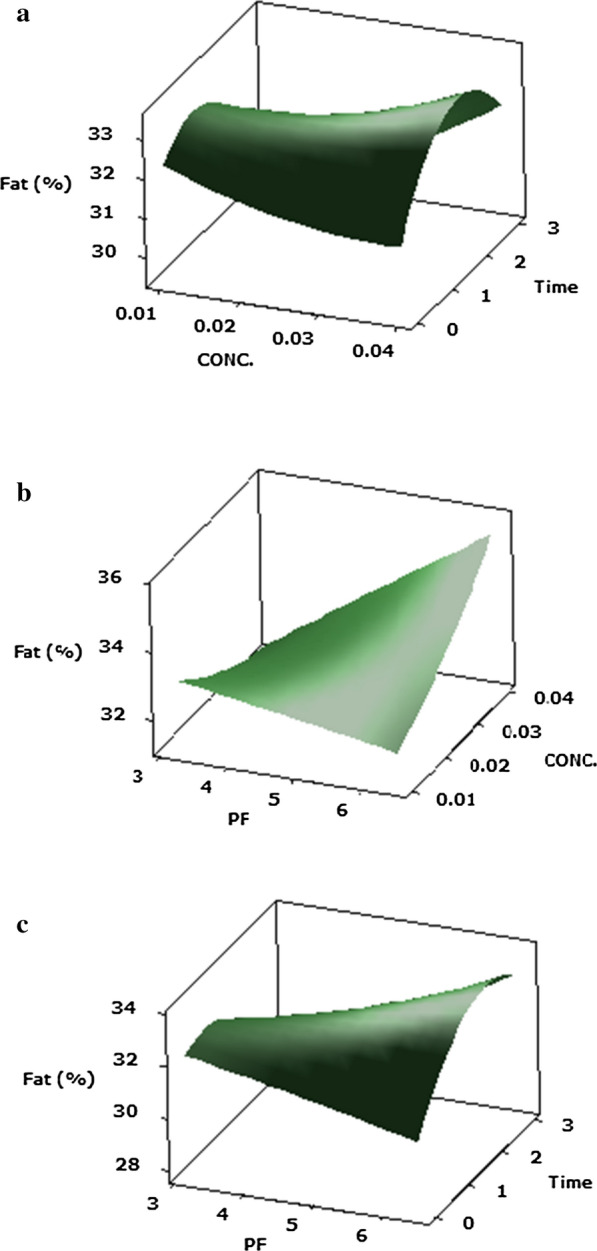
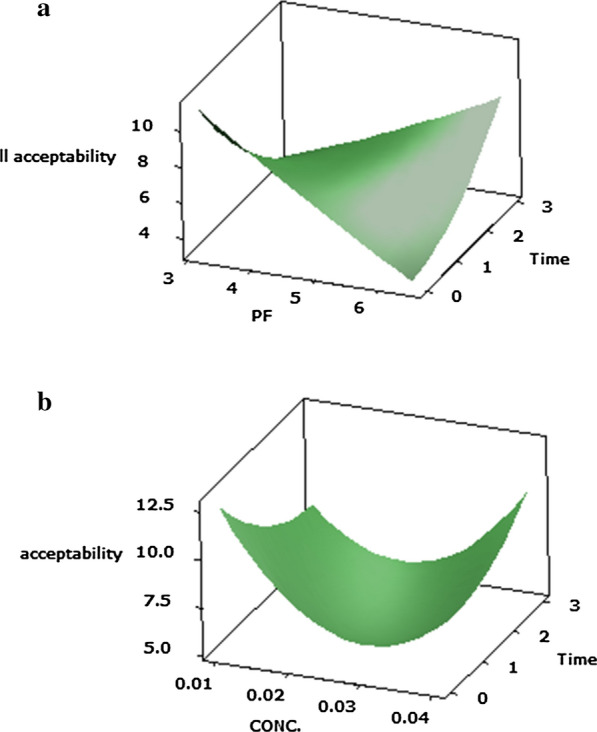
- Under the optimized condition (PF 3.12, 0.01% (v/v) protease, 0.6/3 months at 10 °C), the predicted ideal cheese values were pH 5.4, ADV 6.6, moisture 35%, aw 0.9348, SN 18.8%, fat 34%, and overall acceptability 13.6.
- Compared with commercial Cheddar, the ideal cheese had a higher total free amino acid concentration: 248.89 ± 0.83 mg/g vs 195.19 ± 2.59 mg/g.
- For free fatty acids, the ideal cheese showed higher mean recoveries for some compounds, including ethanol (23.59 ± 0.45), 1,3-butanediol (23.55 ± 0.52), and hexadecanoic acid (21.13 ± 0.68); the paper also states aroma profiles were mostly similar and sensory evaluation did not show a significant aroma difference between ideal and commercial cheese.
## Methods
- The study prepared purified *P. candidum* PCA1/TT031 protease using an aqueous two-phase system, then added the enzyme to Cheddar curd and ripened cheese at 10 °C.
- A Central Composite Design (CCD) within response surface methodology (RSM) was used to test 20 trials across three factors: protease purification factor, protease concentration, and ripening time.
- Responses included physicochemical measures (pH, fat, moisture, ADV, soluble nitrogen, aw), free amino acids, free fatty acids, aroma profiles by SPME–GC–MS and electronic nose, and sensory overall acceptability by 15 trained panellists.
## Limitations
- The paper states that there is limited information about hastening Cheddar cheese ripening using purified extracellular enzymes.
- Evident from the text: the study compares the optimized cheese mainly against a commercial Cheddar control and reports results from a relatively narrow experimental space (20 trials, specific enzyme and time ranges), so broader generalization is not directly established in the paper.
- Evident from the text: some results are described as predicted or from model fitting, and while validation is reported, the paper does not provide external replication beyond the experimental verification described.
Model-written summary. Check it against the paper before relying on it.
Integrity signals
Registry
Cites
Statistics
Figures
Verification
Claims the paper makes
7 Valid · 3 Not valid · 26 Not checked · 71 Own results and interpretations
At least one cited source doesn’t support this claim or points to a different paper, and none confirmed it — see the verdicts below.
In the paper
“Compounds having higher molecular weight contain fewer molecules than compounds with lower molecular weight, resulting in a greater aw-reducing effect (Grummer and Schoenfuss 2011; Hickey et al. 2013).”
§ Optimizing the acceleration of Cheddar cheese ripening using response surface methodology by microbial protease without altering its quality features > Discussion
What the sources say
- Disputedcites Grummer and Schoenfuss 2011 matched to “Determining salt concentrations for equivalent water activity in reduced-sodium cheese by use of a model system” (2011) sourceExperimental — accuracy not yet measured
The Introduction states that, at equivalent mass, lower-molecular-weight compounds contain more molecules and have a greater water-activity-lowering effect. The claim reverses which compounds have the greater effect. (LLM, conf=0.90)
Checked by a reasoning model — may be wrong.
- Not checked — no full text of the sourcecites Hickey et al. 2013 matched to “Effects of variation in cheese composition and maturation on water activity in Cheddar cheese during ripening” (2013) source
plainstates a cause- Asserted: passes — The authors put it forward as true.
- Checkable: passes — It can be checked against evidence.
- Load-bearing: unclear — It is unclear whether the paper’s conclusions depend on it.
- Based: passes — The paper gives a reason why it holds.
- Disputed
The cited sources that could be checked couldn’t confirm or dispute this claim.
In the paper
“Additionally, an increase in the protease concentration through the ripening time of Cheddar cheese caused a decrease in the Cheddar moisture content (Creamer and Olson 1982; McCarthy et al. 2016).”
§ Optimizing the acceleration of Cheddar cheese ripening using response surface methodology by microbial protease without altering its quality features > Discussion
What the sources say
- Not checked — no full text of the sourcecites Creamer and Olson 1982 matched to “Rheological Evaluation of Maturing Cheddar Cheese” (1982) source
- Could not verifycites McCarthy et al. 2016 matched to “Effect of salt and fat reduction on proteolysis, rheology and cooking properties of Cheddar cheese” (2016) sourceExperimental — accuracy not yet measured
The Introduction says that reducing salt is accompanied by increases in both moisture content and proteolysis. Section 3.3 discusses moisture loss during a desorption test, not during ripening. Searches for protease concentration and moisture changes over ripening found no passage saying that increasing protease concentration caused Cheddar moisture content to fall; page numbers were unavailable in our copy. (LLM, conf=0.73)
plainstates a cause- Asserted: passes — The authors put it forward as true.
- Checkable: passes — It can be checked against evidence.
- Load-bearing: unclear — It is unclear whether the paper’s conclusions depend on it.
- Based: passes — The paper gives a reason why it holds.
A result the paper reports from its own data — it cites no other source for it, so there is none to check. The quote shows it is in the paper.
In the paper
“Ethanol, 1,3-butanediol and Hexadecanoic acid exhibited the highest mean recovery (23.59 ± 0.45, 23.55 ± 0.52, 21.13 ± 0.68, respectively) in ideal cheese whereas in commercial cheese, Ethanol and 1,3-Butanediol were found to be of quantity 16.68 ± 0.34, 21.27 ± 1.42 and 15.76 ± 0.80, respectively.”
§ Optimizing the acceleration of Cheddar cheese ripening using response surface methodology by microbial protease without altering its quality features > Results > Comparison of commercial with ideal experimental Cheddar cheese
plain- Asserted: passes — The authors put it forward as true.
- Checkable: passes — It can be checked against evidence.
- Load-bearing: unclear — It is unclear whether the paper’s conclusions depend on it.
- Based: passes — The paper gives a reason why it holds.
A result the paper reports from its own data — it cites no other source for it, so there is none to check. The quote shows it is in the paper.
In the paper
“The ideal accelerated Cheddar cheese environment consisted of 3.12 PF, 0.01% (v/v) protease concentration and 0.6/3 months ripening time at 10 °C.”
- Also stated in: § Optimizing the Cheddar cheese using a response surface methodology · hedged
“The optimal acceleration Cheddar cheese ripening within the pH (Y1 = 5.4) could be obtained from the following parameters: protease PF 3.12, protease concentration of 0.01% (v/v), and a ripening time of 0.6/3 months.”
- Also stated in: § Optimizing the Cheddar cheese using a response surface methodology · plain
“The optimum accelerated Cheddar cheese moisture (Y3 = 35%) using the P. candidum PCA1/TT031 protease was achieved under the following conditions—PF of protease of 3.12; protease concentration of 0.01%; and ripening time of 0.6/3 months.”
§ Optimizing the acceleration of Cheddar cheese ripening using response surface methodology by microbial protease without altering its quality features > Abstract
plainstates a cause- Asserted: passes — The authors put it forward as true.
- Checkable: passes — It can be checked against evidence.
- Load-bearing: passes — The paper’s conclusions depend on it.
- Based: passes — The paper gives a reason why it holds.
- Also stated in: § Optimizing the Cheddar cheese using a response surface methodology · hedged
A result the paper reports from its own data — it cites no other source for it, so there is none to check. The quote shows it is in the paper.
In the paper
“As can be observed in Additional file 1: Figure S2a and b, every cheese kind had almost the same essential compounds.”
§ Optimizing the acceleration of Cheddar cheese ripening using response surface methodology by microbial protease without altering its quality features > Results > Comparison of commercial with ideal experimental Cheddar cheese
plain- Asserted: passes — The authors put it forward as true.
- Checkable: passes — It can be checked against evidence.
- Load-bearing: passes — The paper’s conclusions depend on it.
- Based: passes — The paper gives a reason why it holds.
56 more claims
Create a free account to see all 107 claims and to verify the 2 references still open.
- Probably not a substantial claim. 25
- It may state two separate claims as one. 29
Self-check
Percentages, sums and reported differences re-computed from the paper’s own numbers.
Each contradiction between two passages listed here was confirmed by an independent check.
Rated major: it would touch a result — a value a result rests on, reported and recomputed p-values on opposite sides of the significance level, two passages that conflict with no sign which is right, or a cited work retracted before this paper was published.
In the paper
§ Optimizing the acceleration of Cheddar cheese ripening using response surface methodology by microbial protease without altering its quality features > Materials and methods > Volatile flavor compounds release in cheese
“Overall acceptability was evaluated on the scale of 1 to 10 with 10 denoting ‘extremely like’ and 1 representing ‘extremely dislike’.”
§ Optimizing the acceleration of Cheddar cheese ripening using response surface methodology by microbial protease without altering its quality features > Results > Optimizing the Cheddar cheese using a response surface methodology
“The variables of pH, ADV, moisture, aw, SN%, fat and overall acceptability was predicted as 5.4, 6.6, 35, 0.9348, 18.8, 34, and 13.6, respectively, under the optimized conditions.”
Citations
Cites
Biochemical pathways for the production of flavour compounds in cheeses during ripening: A review
McSweeney, P. L. H., & Sousa, M. J. (2000) · Le Lait · doi:10.1051/lait:2000127 · Cited by 1,266
Zhao, C. J., Schieber, A., & Gänzle, M. G. (2016) · Food Research International · doi:10.1016/j.foodres.2016.08.042 · Cited by 790
(1982) · Milk science international/Milchwissenschaft · Cited by 702
Rheological Evaluation of Maturing Cheddar Cheese
CREAMER, L. K., & OLSON, N. F. (1982) · Journal of Food Science · doi:10.1111/j.1365-2621.1982.tb10138.x · Cited by 442
Marilley, L. (2004) · International Journal of Food Microbiology · doi:10.1016/s0168-1605(03)00304-0 · Cited by 420
Khattab, A. R., Guirguis, H. A., Tawfik, S. M., & Farag, M. A. (2019) · Trends in Food Science & Technology · doi:10.1016/j.tifs.2019.03.009 · Cited by 223
Formation of the aroma of a raw goat milk cheese during maturation analysed by SPME–GC–MS
Delgado, F. J., González-Crespo, J., Cava, R., & Ramírez, R. (2011) · Food Chemistry · doi:10.1016/j.foodchem.2011.05.096 · Cited by 155
Use of autolytic starter systems to accelerate the ripening of Cheddar cheese
Hannon, J. A., Wilkinson, M. G., Delahunty, C. M., Wallace, J. M., Morrissey, P. A., & Beresford, T. P. (2003) · International Dairy Journal · doi:10.1016/s0958-6946(02)00178-4 · Cited by 141
Bosset, J. O., & Gauch, R. (1993) · International Dairy Journal · doi:10.1016/0958-6946(93)90023-s · Cited by 132
Law, B. A., & Wigmore, A. S. (1983) · Journal of Dairy Research · doi:10.1017/s0022029900032751 · Cited by 121
Xu, Q., Shen, Y., Wang, H., Zhang, N., Xu, S. J., & Zhang, L. (2012) · Food Chemistry · doi:10.1016/j.foodchem.2012.11.099 · Cited by 110
Rozan, P., Kuo, Y., & Lambein, F. (2000) · Journal of Agricultural and Food Chemistry · doi:10.1021/jf990729v · Cited by 106
Hannon, J. A., Kilcawley, K. N., Wilkinson, M. G., Delahunty, C. M., & Beresford, T. P. (2006) · International Dairy Journal · doi:10.1016/j.idairyj.2006.03.001 · Cited by 102
Mirhosseini, H., Tan, C. P., Hamid, N., & Yusof, S. (2007) · Food Chemistry · doi:10.1016/j.foodchem.2007.09.043 · Cited by 88
FERNÁNDEZ-GARCÍA, E., CARBONELL, M., & NUÑEZ, M. (2002) · Journal of Dairy Research · doi:10.1017/s0022029902005794 · Cited by 85
Singh, P., Shera, S. S., Banik, J., & Banik, R. M. (2013) · Bioresource Technology · doi:10.1016/j.biortech.2013.03.086 · Cited by 73
Accelerated Cheddar Cheese Ripening by Added Microbial Enzymes
Sood, V. K., & Kosikowski, F. V. (1979) · Journal of Dairy Science · doi:10.3168/jds.s0022-0302(79)83516-x · Cited by 70
Effect of salt and fat reduction on proteolysis, rheology and cooking properties of Cheddar cheese
McCarthy, C. M., Wilkinson, M. G., Kelly, P. M., & Guinee, T. P. (2016) · International Dairy Journal · doi:10.1016/j.idairyj.2016.01.001 · Cited by 62
Hickey, D. K., Guinee, T. P., Hou, J., & Wilkinson, M. G. (2013) · International Dairy Journal · doi:10.1016/j.idairyj.2012.11.006 · Cited by 59
Dimitrellou, D., Kandylis, P., Sidira, M., Koutinas, A. A., & Kourkoutas, Y. (2014) · Journal of Dairy Science · doi:10.3168/jds.2013-7597 · Cited by 58
The Effect of Xanthan Gum and Flaxseed Mucilage as Edible Coatings in Cheddar Cheese during Ripening
Soleimani-Rambod, A., Zomorodi, S., Naghizadeh Raeisi, S., Khosrowshahi Asl, A., & Shahidi, S.-A. (2018) · Coatings · doi:10.3390/coatings8020080 · Cited by 57
Accelerated Ripening of Ewes’ Milk Manchego Cheese: The Effect of Neutral Proteinases
Núñez, M., Guillen, A. M., Rodríguez-Marín, M. A., Marcilla, A., Gaya, P., & Médina, M. (1991) · Journal of Dairy Science · doi:10.3168/jds.s0022-0302(91)78605-0 · Cited by 49
Margolies, B. J., & Barbano, D. M. (2017) · Journal of Dairy Science · doi:10.3168/jds.2017-13431 · Cited by 48
Hannon, J. A., Kilcawley, K. N., Wilkinson, M. G., Delahunty, C. M., & Beresford, T. P. (2006) · Journal of Dairy Science · doi:10.3168/jds.s0022-0302(06)72416-x · Cited by 48
Afzaal, M., Saeed, F., Ateeq, H., Ahmed, A., Ahmad, A., Tufail, T., Ismail, Z., & Anjum, F. M. (2020) · Food Science & Nutrition · doi:10.1002/fsn3.1562 · Cited by 47
Production of enzyme-modified cheese (EMC) with ripened white cheese flavour: II- effects of lipases
Kendirci, P., Salum, P., Bas, D., & Erbay, Z. (2020) · Food and Bioproducts Processing · doi:10.1016/j.fbp.2020.05.010 · Cited by 46
Hou, J., Hannon, J. A., McSweeney, P. L. H., Beresford, T. P., & Guinee, T. P. (2014) · International Dairy Journal · doi:10.1016/j.idairyj.2013.08.008 · Cited by 45
McCarthy, C. M., Kelly, P. M., Wilkinson, M. G., & Guinee, T. P. (2017) · Journal of Food Composition and Analysis · doi:10.1016/j.jfca.2017.01.007 · Cited by 44
Innovative Caciocavallo cheeses made from a mixture of cow milk with ewe or goat milk
Niro, S., Fratianni, A., Tremonte, P., Sorrentino, E., Tipaldi, L., Panfili, G., & Coppola, R. (2014) · Journal of Dairy Science · doi:10.3168/jds.2013-7550 · Cited by 43
Batool, M., Nadeem, M., Imran, M., Gulzar, N., Shahid, M. Q., Shahbaz, M., Ajmal, M., & Khan, I. T. (2018) · Lipids in Health and Disease · doi:10.1186/s12944-018-0735-3 · Cited by 43
Rani, S., & Jagtap, S. (2019) · Journal of Food Science and Technology · doi:10.1007/s13197-018-3482-6 · Cited by 43
Olfactometry Profiles and Quantitation of Volatile Sulfur Compounds of Swiss Tilsit Cheeses
Fuchsmann, P., Stern, M. T., Brügger, Y.-A., & Breme, K. (2015) · Journal of Agricultural and Food Chemistry · doi:10.1021/acs.jafc.5b02536 · Cited by 40
Bas, D., Kendirci, P., Salum, P., Govce, G., & Erbay, Z. (2019) · Food and Bioproducts Processing · doi:10.1016/j.fbp.2019.07.016 · Cited by 39
Karaca, O. B., & Güven, M. (2018) · Foods · doi:10.3390/foods7080125 · Cited by 39
Spelbrink, R. E. J., Lensing, H., Egmond, M. R., & Giuseppin, M. L. F. (2015) · Applied Biochemistry and Biotechnology · doi:10.1007/s12010-015-1569-3 · Cited by 39
Liposomal Encapsulation Enzymes: From Medical Applications to Kinetic Characteristics
Jahadi, M., & Khosravi-Darani, K. (2017) · Mini-Reviews in Medicinal Chemistry · doi:10.2174/1389557516666160801111507 · Cited by 38
Ruyssen, T., Janssens, M., Gasse, B. V., Laere, D. V., der Eecken, N. V., Meerleer, M. D., Vermeiren, L., Hoorde, K. V., Martins, J. C., Uyttendaele, M., et al. (2013) · International Dairy Journal · doi:10.1016/j.idairyj.2013.04.009 · Cited by 37
Proteolysis in Irish farmhouse Camembert cheese during ripening
Mane, A., & McSweeney, P. L. H. (2020) · Journal of Food Biochemistry · doi:10.1111/jfbc.13101 · Cited by 35
Cavanagh, D., Kilcawley, K. N., O'Sullivan, M. G., Fitzgerald, G. F., & McAuliffe, O. (2014) · Food Research International · doi:10.1016/j.foodres.2014.03.043 · Cited by 35
Grummer, J., & Schoenfuss, T. C. (2011) · Journal of Dairy Science · doi:10.3168/jds.2011-4359 · Cited by 34
Comparative study of flavor in cholesterol-removed Gouda cheese and Gouda cheese during ripening
Jung, H. J., Ganesan, P., Lee, S. J., & Kwak, H. S. (2013) · Journal of Dairy Science · doi:10.3168/jds.2012-5644 · Cited by 34
Zhao, Z., Cuellar Bermudez, S., Ilyas, A., Muylaert, K., & Vankelecom, I. F. J. (2020) · Separation and Purification Technology · doi:10.1016/j.seppur.2020.117385 · Cited by 33
Walsh, E. A., Diako, C., Smith, D. M., & Ross, C. F. (2020) · Journal of Food Science · doi:10.1111/1750-3841.14998 · Cited by 31
Bao, Z., Xiong, J., Lin, W., & Ye, J. (2016) · CyTA - Journal of Food · doi:10.1080/19476337.2015.1035673 · Cited by 29
Calasso, M., Mancini, L., Di Cagno, R., Cardinali, G., & Gobbetti, M. (2015) · Journal of Dairy Science · doi:10.3168/jds.2015-9362 · Cited by 29
Alhelli, A., Abdul Manap, M., Mohammed, A., Mirhosseini, H., Suliman, E., Shad, Z., Mohammed, N., & Meor Hussin, A. (2016) · International Journal of Molecular Sciences · doi:10.3390/ijms17111872 · Cited by 26
Self-citationApplication of UHPLC for the determination of free amino acids in different cheese varieties
Mayer, H. K., & Fiechter, G. (2013) · Analytical and Bioanalytical Chemistry · doi:10.1007/s00216-013-6974-2 · Cited by 26
Jung, H.-J., Ko, E.-J., & Kwak, H. (2013) · Asian-Australasian Journal of Animal Sciences · doi:10.5713/ajas.2013.13255 · Cited by 24
Verzera, A., Condurso, C., Ziino, M., Romeo, V., Todaro, M., Conte, F. L., & Dima, G. (2010) · CyTA - Journal of Food · doi:10.1080/19476330903450282 · Cited by 23
Özcan, T., & Vapur, U. E. (2012) · University of Zagreb University Computing Centre (SRCE) · Cited by 22
Characterisation of musk lime (Citrusmicrocarpa) seed oil
Manaf, Y. N. A., Osman, A., Lai, O. M., Long, K., & Ghazali, H. M. (2008) · Journal of the Science of Food and Agriculture · doi:10.1002/jsfa.3134 · Cited by 21
Water Activity in Cheese in Relation to Composition, Stability and Safety
Marcos, A. (1993) · Cheese: Chemistry, Physics and Microbiology · doi:10.1007/978-1-4615-2650-6_11 · Cited by 18
Multivariate Approaches to Electronic Nose and PTR–TOF–MS Technologies in Agro-Food Products
Costa, C., Taiti, C., Strano, M. C., Morone, G., Antonucci, F., Mancuso, S., Claps, S., Pallottino, F., Sepe, L., Bazihizina, N., et al. (2016) · Electronic Noses and Tongues in Food Science · doi:10.1016/b978-0-12-800243-8.00008-1 · Cited by 16
Del Toro‐Gipson, R. S., Rizzo, P. V., Hanson, D. J., & Drake, M. (2020) · Journal of Sensory Studies · doi:10.1111/joss.12564 · Cited by 15
Effects of different strains Penicillium nalgiovense in the Nalžovy cheese during ripening
Mrázek, J., Pachlová, V., Buňka, F., Černíková, M., Dráb, V., Bejblová, M., Staněk, K., & Buňková, L. (2016) · Journal of the Science of Food and Agriculture · doi:10.1002/jsfa.7375 · Cited by 14
Garbowska, M., Pluta, A., & Berthold-Pluta, A. (2016) · LWT - Food Science and Technology · doi:10.1016/j.lwt.2016.01.044 · Cited by 12
Khan, U. M., Ahmad, I., Inayat, S., Amin, H. M. A., & Selamoğlu, Z. (2019) · Turkish Journal of Agriculture - Food Science and Technology · doi:10.24925/turjaf.v7i6.856-860.2391 · Cited by 10
KAMINARIES, S., SCORDOBEKI, A., ZOIDOU, E., & MOATSOU, G. (2019) · Journal of the Hellenic Veterinary Medical Society · doi:10.12681/jhvms.21791 · Cited by 3
Research works printed but not linked: 3
- Deeth H Fitz Gerald CH Lipolysis in dairy products: a review Aust J Dairy Technol 1976 2 53 64
- Luo T Guo T Yu Z Chen C Cao Y Yang Z Physicochemical properties of exopolysaccharide from Tibet kefir and its application in Cheddar cheese Shipin Kexue/Food Sci 2019 40 18 121 129
- Nateghi L Study of physicochemical, sensory and microbiological properties of probiotic cheddar cheese during storage period J Inno Food Sci Technol 2017 9 2 e27 e39
Cited by
Li, Z., Liu, T., Fan, K., Geng, L., Wang, P., Ren, F., & Luo, J. (2024) · Journal of Dairy Science · doi:10.3168/jds.2023-23982 · Cited by 14
Chen, Z., Jiang, X., Lin, L., Liu, D., Zhao, F., Liu, Y., Wu, S., Lü, X., Wu, G., & Yi, Y. (2023) · Food Bioscience · doi:10.1016/j.fbio.2023.103516 · Cited by 13
Yilmaz, F., Daǧdemir, E., & Hayaloğlu, A. A. (2025) · Food Chemistry · doi:10.1016/j.foodchem.2025.144090 · Cited by 10
Microbial protease: an update on sources, production methods, and applications
Dubey, C. K., Mishra, J., Nagar, A., Gupta, M. K., Sharma, A., Kumar, S., Mishra, V., & Pandey, H. P. (2024) · Elsevier eBooks · doi:10.1016/b978-0-443-18568-7.00006-9 · Cited by 11
Metadata
- Authors
- Alhelli, A. M., Mohammed, N. K., Khalil, E. S., & Hussin, A. S. M.
- Affiliations
- Middle Technical University (IQ)
- University of Khartoum (SD)
- Universiti Putra Malaysia (MY)
- Corresponding author
- Alhelli, Amaal Mohammed
- Venue
- AMB Express
- Published
- 2021-03-22
- Volume
- 11
- Issue
- 1
- Pages
- 45-45
- ISSN
- 2191-0855 (ISSN-L)
- PMC
- PMC7984165
- OpenAlex
- W3113634883
- Cited by
- 23
- References
- 60
- Citations by year
- 2026: 7 · 2025: 6 · 2024: 5 · 2023: 4 · 2021: 1
- FWCI
- 1.49
- Type
- journal article
- Language
- en
- Open access
- gold
- doi.org
- Licence
- cc-by
- creativecommons.org/licenses/by/4.0 (tdm)
- creativecommons.org/licenses/by/4.0 (vor)
- Locations
- AMB Express (publishedVersion, cc-by)
- Research Square (acceptedVersion, cc-by)
- PubMed Central (publishedVersion, cc-by)
- PubMed (publishedVersion)
- DOAJ (DOAJ: Directory of Open Access Journals) (submittedVersion, cc-by-sa)
- Universiti Putra Malaysia Institutional Repository (Universiti Putra Malaysia) (submittedVersion, cc-by)
- Topics
- Life Sciences › Agricultural and Biological Sciences › Food Science › Advanced Scientific Research Methods
- Life Sciences › Biochemistry, Genetics and Molecular Biology › Biotechnology › Enzyme Production and Characterization
- Life Sciences › Agricultural and Biological Sciences › Food Science › Probiotics and Fermented Foods
- Keywords
- Cheddar cheese, cheese ripening, accelerated ripening, microbial proteases, Penicillium candidum, cheese proteolysis, cheese curd, cheese quality, water activity, soluble nitrogen, sensory acceptability, amino acids, free fatty acids
About these checks
Registry, retraction, Cites and statistics results are computed, not judged, with one exception: a printed reference that no index lists is read once by a model before it counts as a citation error. Claims are extracted by a model and kept only when their quote appears verbatim in the text; each cited source is then checked, with a model’s help, for whether it says what the claim relies on. Those verdicts can be wrong — read the claim’s quote and the cited source before relying on one.
The claim verdicts this report counts are experimental: their accuracy is not yet measured.
A language model drew the claims from the paper on 2026-10-11, under version 3 of the claim definition (model deepseek-v4.1-flash, prompt extract-v3).
A second model labelled each claim on 2026-10-11 (model jev-1.13-20260917, definition revision gold-guideline-v0.2).
Cited sources are checked with a language model’s help (gpt-6-sol).
Statistics and arithmetic are recomputed, not judged.
Confidence bands are shown only for fields calibrated on our annotated test set. None is calibrated yet, so no band is shown.
What counts as a claim ›How we measure confidence ›How we check this ›
Are you an author, or do you see a problem with this page? Request a review
Data sources
Bibliographic data: Semantic Scholar, OpenAlex, Crossref.
Contains information from the Semantic Scholar Academic Graph Datasets, made available under the ODC Attribution License (ODC-BY 1.0).
Semantic Scholar’s data is described in: Kinney, R., et al. (2023). The Semantic Scholar Open Data Platform. arXiv:2301.10140.
