

Congenital hypothyroidism: insights into pathogenesis and treatment
Open accessThe DOI matches its Crossref record; 63 of the 64 references it cites were found in a registry or an index.
Abstract
Congenital hypothyroidism occurs in approximately 1 in 2000 newborns and can have devastating neurodevelopmental consequences if not detected and treated promptly. While newborn screening has virtually eradicated intellectual disability due to severe congenital hypothyroidism in the developed world, more stringent screening strategies have resulted in increased detection of mild congenital hypothyroidism. Recent studies provide conflicting evidence about the potential neurodevelopmental risks posed by mild congenital hypothyroidism, highlighting the need for additional research to further define what risks these patients face and whether they are likely to benefit from treatment. Moreover, while the apparent incidence of congenital hypothyroidism has increased in recent decades, the underlying cause remains obscure in most cases. However, ongoing research into genetic causes of congenital hypothyroidism continues to shed new light on the development and physiology of the hypothalamic-pituitary-thyroid axis. The identification of IGSF1 as a cause of central congenital hypothyroidism has uncovered potential new regulatory pathways in both pituitary thyrotropes and gonadotropes, while mounting evidence suggests that a significant proportion of primary congenital hypothyroidism may be caused by combinations of rare genetic variants in multiple genes involved in thyroid development and function. Much remains to be learned about the origins of this common disorder and about the optimal management of less severely-affected infants.
Overview
The claims and statistics of this paper haven’t been checked yet.
Free: it reads the open-access text and checks the first 5 claims that cite a source we can check. Create a free account to check every claim.
Integrity signals
Registry
Cites
Statistics
Figures
Verification
Claims the paper makes
The claims and statistics of this paper haven’t been checked yet.
Free: it reads the open-access text and checks the first 5 claims that cite a source we can check. Create a free account to check every claim.
Claims other papers make about this one
Each is checked against this paper’s own text: does it say what the citing paper says it does?
The cited source says what the claim attributes to it.
In the citing paper
“In contrast, in a Belgian cohort of children, there was no relationship between mild neonatal TSH elevation and neurodevelopment at the preschool age (52–54).”
Self-check
Percentages, sums and reported differences re-computed from the paper’s own numbers.
The self-check needs the paper’s full text.
Citations
Cites
Léger, J., Olivieri, A., Donaldson, M., Torresani, T., Krude, H., van Vliet, G., Polak, M., Butler, G., & on behalf of ESPE-PES-SLEP-JSPE-APEG-APPES-ISPAE, A. T. C. H. C. C. G. (2014) · The Journal of Clinical Endocrinology & Metabolism · doi:10.1210/jc.2013-1891 · Cited by 569 · cited 8×
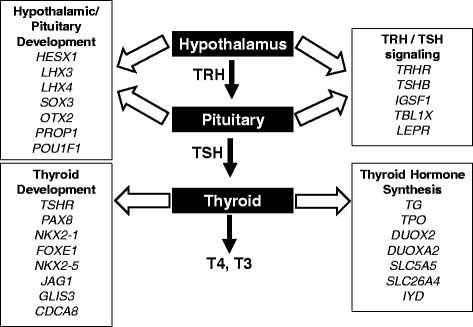
“Abbreviations FT4: Free thyroxine; HPT: Hypothalamic-pituitary-thyroid; TRH: Thyrotropin-releasing hormone; TRHR: Thyrotropin-releasing hormone receptor; TSH: Thyroid-stimulating hormone; TSHR: Thyroid-stimulating hormone receptor”
BackgroundInfluentialSenée, V., Chelala, C., Duchatelet, S., Feng, D., Blanc, H., Cossec, J.-C., Charon, C., Nicolino, M., Boileau, P., Cavener, D. R., et al. (2006) · Nature Genetics · doi:10.1038/ng1802 · Cited by 376 · cited 1×
“glaucoma, developmental delay, hepatic fibrosis, and polycystic kidneys [12, 13].”
BackgroundScreening for congenital hypothyroidism: Results of screening one million North American infants
Fisher, D. A., Dussault, J. H., Foley, T. P., Klein, A. H., LaFranchi, S., Larsen, P. R., Mitchell, M. L., Murphey, W. H., & Walfish, P. G. (1979) · The Journal of Pediatrics · doi:10.1016/s0022-3476(79)80133-x · Cited by 372 · cited 1×
“…bioactivity of TSH. Congenital hypothyroidism of central origin is rare: early estimates of its incidence were between 1:29,000 and 1:110,000 [30 – 32], although more recent data from the Netherlands suggest that it may occur in as many as 1:16,000 newborns and could represent up to 13% of…”
BackgroundCentral Hypothyroidism: Pathogenic, Diagnostic, and Therapeutic Challenges
Persani, L. (2012) · The Journal of Clinical Endocrinology & Metabolism · doi:10.1210/jc.2012-1616 · Cited by 295 · cited 1×
“…bioactivity of TSH. Congenital hypothyroidism of central origin is rare: early estimates of its incidence were between 1:29,000 and 1:110,000 [30 – 32], although more recent data from the Netherlands suggest that it may occur in as many as 1:16,000 newborns and could represent up to 13% of cases…”
BackgroundScreening for congenital hypothyroidism: A worldwide view of strategies
Ford, G., & LaFranchi, S. H. (2014) · Best Practice & Research Clinical Endocrinology & Metabolism · doi:10.1016/j.beem.2013.05.008 · Cited by 274 · cited 2×
“Although this incidence is similar to that of phenylketonuria (1:15,000) [35]—the condition for which newborn screening was originally introduced in the 1960’s—central congenital hypothyroidism cannot be detected by the TSH-based screening strategies used by the majority of the newborn screening programs worldwide [1].”
BackgroundResultPanel, N. I. O. H. C. D. (2001) · Pediatrics · doi:10.1542/peds.108.4.972 · Cited by 274
Corbetta, C., Weber, G., Cortinovis, F., Calebiro, D., Passoni, A., Vigone, M. C., Beck‐Peccoz, P., Chiumello, G., & Persani, L. (2009) · Clinical Endocrinology · doi:10.1111/j.1365-2265.2009.03568.x · Cited by 247
Deladoëy, J., Ruel, J., Giguère, Y., & Van Vliet, G. (2011) · The Journal of Clinical Endocrinology & Metabolism · doi:10.1210/jc.2011-1073 · Cited by 235 · cited 2×
“These changes have resulted in the diagnosis of many more patients with mild congenital hypothyroidism, most of whom have a eutopic thyroid gland [3, 4].”
BackgroundGrosse, S. D., & Van Vliet, G. (2011) · Archives of Disease in Childhood · doi:10.1136/adc.2010.190280 · Cited by 222 · cited 2×
“However, in contrast to the known neurodevelopmental risks of severe congenital hypothyroidism and the obvious benefits conferred by its timely and adequate treatment, much less is known about the risks posed by the milder forms of congenital hypothyroidism that are increasingly being diagnosed [7].”
BackgroundSun, Y., Bak, B., Schoenmakers, N., van Trotsenburg, A. S. P., Oostdijk, W., Voshol, P., Cambridge, E., White, J. K., le Tissier, P., Gharavy, S. N. M., et al. (2012) · Nature Genetics · doi:10.1038/ng.2453 · Cited by 217 · cited 1×
“However, in 2012 a study of 11 families with central congenital hypothyroidism identified a novel X-linked cause of central hypothyroidism, IGSF1 [46].”
BackgroundLéger, J., Olivieri, A., Donaldson, M., Torresani, T., Krude, H., van Vliet, G., Polak, M., Butler, G., & on behalf of ESPE-PES-SLEP-JSPE-APEG-APPES-ISPAE, A. T. C. H. C. C. G. (2014) · Hormone Research in Paediatrics · doi:10.1159/000358198 · Cited by 208
Collu, R., Tang, J., Castagné, J., Lagacé, G., Masson, N., Huot, C., Deal, C., Delvin, E., Faccenda, E., Eidne, K. A., et al. (1997) · The Journal of Clinical Endocrinology & Metabolism · doi:10.1210/jcem.82.5.3918 · Cited by 207
Dentice, M., Cordeddu, V., Rosica, A., Ferrara, A. M., Santarpia, L., Salvatore, D., Chiovato, L., Perri, A., Moschini, L., Fazzini, C., et al. (2006) · The Journal of Clinical Endocrinology & Metabolism · doi:10.1210/jc.2005-1350 · Cited by 178 · cited 1×
“Heterozygous variants in NKX2–5 are found in some individuals with thyroid dysgenesis [9, 10]; however, the pathogenicity of these variants is unclear since they do not consistently cosegregate with thyroid disease in families [9] and some may not impair protein function in vitro [11].”
BackgroundOerbeck, B., Sundet, K., Kase, B. F., & Heyerdahl, S. (2003) · Pediatrics · doi:10.1542/peds.112.4.923 · Cited by 176
Perry, R., Heinrichs, C., Bourdoux, P., Khoury, K., Szöts, F., Dussault, J. H., Vassart, G., & Van Vliet, G. (2002) · The Journal of Clinical Endocrinology & Metabolism · doi:10.1210/jc.2001-011995 · Cited by 167 · cited 1×
“On the other hand, while this hypothesis is intriguing, it remains at odds with the observed high rate of discordance for thyroid dysgenesis among monozygotic twins (who share nearly all variants in all genes) [27], which implies that it is unlikely for a significant proportion of congenital hypothyroidism to be expla…”
ResultA frequent oligogenic involvement in congenital hypothyroidism
de Filippis, T., Gelmini, G., Paraboschi, E., Vigone, M. C., Di Frenna, M., Marelli, F., Bonomi, M., Cassio, A., Larizza, D., Moro, M., et al. (2017) · Human Molecular Genetics · doi:10.1093/hmg/ddx145 · Cited by 145 · cited 3×
“, NKX2–1, FOXE1) were found in patients with dyshormonogenesis, and vice versa [23].”
BackgroundResultNeonatal Detection of Congenital Hypothyroidism of Central Origin
van Tijn, D. A., de Vijlder, J. J. M., Verbeeten, B., Verkerk, P. H., & Vulsma, T. (2005) · The Journal of Clinical Endocrinology & Metabolism · doi:10.1210/jc.2004-2444 · Cited by 139 · cited 2×
“In addition, 75% of infants with central congenital hypothyroidism have additional, potentially life-threatening pituitary hormone deficiencies such as adrenal insufficiency and growth hormone deficiency [34], and detection of these comorbidities represents another argument in favor of screening for central hypothyroi…”
BackgroundWoo, H. C., Lizarda, A., Tucker, R. J., Mitchell, M. L., Vohr, B. R., Oh, W., & Phornphutkul, C. (2011) · The Journal of Pediatrics · doi:10.1016/j.jpeds.2010.10.018 · Cited by 137 · cited 1×
“This issue may be particularly significant in preterm and low birth-weight infants with congenital hypothyroidism, in whom the TSH rise may be delayed [60].”
BackgroundOlivieri, A., Fazzini, C., Medda, E., & The Italian Study Group for Congenital Hypothyroidism (2015) · Hormone Research in Paediatrics · doi:10.1159/000369394 · Cited by 132 · cited 1×
“Whereas dyshormonogenesis accounted for only 15% of congenital hypothyroidism diagnosed in the early days of newborn screening, 30–40% of infants diagnosed by current newborn screening strategies have a eutopic thyroid gland consistent with a form of dyshormonogenesis [3, 5, 6].”
BackgroundBongers-Schokking, J. J., & de Muinck Keizer-Schrama, S. M. P. F. (2005) · The Journal of Pediatrics · doi:10.1016/j.jpeds.2005.09.031 · Cited by 131
Rabbiosi, S., Vigone, M. C., Cortinovis, F., Zamproni, I., Fugazzola, L., Persani, L., Corbetta, C., Chiumello, G., & Weber, G. (2013) · The Journal of Clinical Endocrinology & Metabolism · doi:10.1210/jc.2012-3174 · Cited by 131 · cited 1×
“Similarly, the prevalence of DUOX2 variants in Italy has been reported as 15% in unselected patients with congenital hypothyroidism, 23% in those with a eutopic thyroid gland [23], and to 30–37% in those with a eutopic gland and a documented partial iodine organification disorder [24, 25].”
BackgroundRecent advances in central congenital hypothyroidism
Schoenmakers, N., Alatzoglou, K. S., Chatterjee, V. K., & Dattani, M. T. (2015) · Journal of Endocrinology · doi:10.1530/joe-15-0341 · Cited by 125 · cited 1×
“mone deficiency without other syndromic features [43].”
A Family with Complete Resistance to Thyrotropin-Releasing Hormone
Bonomi, M., Busnelli, M., Beck-Peccoz, P., Costanzo, D., Antonica, F., Dolci, C., Pilotta, A., Buzi, F., & Persani, L. (2009) · New England Journal of Medicine · doi:10.1056/nejmc0808557 · Cited by 122 · cited 6×
“tions in the TRH receptor (TRHR) [44, 45] or the TSH”
BackgroundInfluentialKempers, M. J. E., van der Sluijs Veer, L., Nijhuis-van der Sanden, M. W. G., Kooistra, L., Wiedijk, B. M., Faber, I., Last, B. F., de Vijlder, J. J. M., Grootenhuis, M. A., & Vulsma, T. (2006) · The Journal of Clinical Endocrinology & Metabolism · doi:10.1210/jc.2005-1209 · Cited by 122 · cited 1×
“However, indirect evidence may be derived from studies of primary congenital hypothyroidism, in which the initial serum concentration of total or free thyroxine (FT4) is one of the most important and consistent predictors of neuro-developmental outcome [37 – 40].”
BackgroundCongenital hypothyroidism: recent advances
Wassner, A. J., & Brown, R. S. (2015) · Current Opinion in Endocrinology, Diabetes & Obesity · doi:10.1097/med.0000000000000181 · Cited by 120 · cited 1×
“Whereas dyshormonogenesis accounted for only 15% of congenital hypothyroidism diagnosed in the early days of newborn screening, 30–40% of infants diagnosed by current newborn screening strategies have a eutopic thyroid gland consistent with a form of dyshormonogenesis [3, 5, 6].”
BackgroundSelf-citationClinical Genetics of Congenital Hypothyroidism
Szinnai, G. (2014) · Endocrine Development · doi:10.1159/000363156 · Cited by 115 · cited 2×
“thyroid, and disruption of any of these genes can lead to failure of normal thyroid gland formation [8].”
BackgroundNicholas, A. K., Serra, E. G., Cangul, H., Alyaarubi, S., Ullah, I., Schoenmakers, E., Deeb, A., Habeb, A. M., Almaghamsi, M., Peters, C., et al. (2016) · The Journal of Clinical Endocrinology & Metabolism · doi:10.1210/jc.2016-1879 · Cited by 112 · cited 1×
“On the other hand, in a cohort of mostly European and Middle Eastern patients, variants in TG were much more common (55%) than DUOX2 variants, which were found in only 18% [21].”
BackgroundLain, S. J., Bentley, J. P., Wiley, V., Roberts, C. L., Jack, M., Wilcken, B., & Nassar, N. (2016) · The Lancet Diabetes & Endocrinology · doi:10.1016/s2213-8587(16)30122-x · Cited by 106 · cited 1×
“A different conclusion was reached by an Australian study that linked newborn screening results with standardized national assessments of childhood development and school performance [57].”
BackgroundHanna, C. E., Krainz, P. L., Skeels, M. R., Miyahira, R. S., Sesser, D. E., & LAFRANCHI, S. H. (1986) · The Journal of Pediatrics · doi:10.1016/s0022-3476(86)80276-1 · Cited by 104
The IGSF1 Deficiency Syndrome: Characteristics of Male and Female Patients
Joustra, S. D., Schoenmakers, N., Persani, L., Campi, I., Bonomi, M., Radetti, G., Beck-Peccoz, P., Zhu, H., Davis, T. M. E., Sun, Y., et al. (2013) · The Journal of Clinical Endocrinology & Metabolism · doi:10.1210/jc.2013-2743 · Cited by 103 · cited 1×
“Importantly, although the IGSF1 deficiency syndrome is X-linked, 18% of female mutation carriers have central hypothyroidism, about 20% have biochemical prolactin deficiency (although lactation is apparently normal), and up to one-third have late menarche [48, 49].”
BackgroundLanting, C. I., van Tijn, D. A., Loeber, J. G., Vulsma, T., de Vijlder, J. J. M., & Verkerk, P. H. (2005) · Pediatrics · doi:10.1542/peds.2004-2162 · Cited by 97 · cited 2×
“Moreover, some have suggested that a carefully designed T4-based screening strategy able to detect these infants may actually be more cost effective than TSH-based screening [33].”
BackgroundAre lower TSH cutoffs in neonatal screening for congenital hypothyroidism warranted?
Lain, S., Trumpff, C., Grosse, S. D., Olivieri, A., & Van Vliet, G. (2017) · European Journal of Endocrinology · doi:10.1530/eje-17-0107 · Cited by 96
Bongers-Schokking, J. J., Resing, W. C. M., de Rijke, Y. B., de Ridder, M. A. J., & de Muinck Keizer-Schrama, S. M. P. F. (2013) · The Journal of Clinical Endocrinology & Metabolism · doi:10.1210/jc.2013-2175 · Cited by 94
Mutations in TBL1X Are Associated With Central Hypothyroidism
Heinen, C. A., Losekoot, M., Sun, Y., Watson, P. J., Fairall, L., Joustra, S. D., Zwaveling-Soonawala, N., Oostdijk, W., van den Akker, E. L. T., Alders, M., et al. (2016) · The Journal of Clinical Endocrinology & Metabolism · doi:10.1210/jc.2016-2531 · Cited by 92 · cited 1×
“Recently, mutations in TBL1X have been found in several families with X-linked central hypothyroidism [52].”
BackgroundIGSF1 Deficiency: Lessons From an Extensive Case Series and Recommendations for Clinical Management
Joustra, S. D., Heinen, C. A., Schoenmakers, N., Bonomi, M., Ballieux, B. E. P. B., Turgeon, M.-O., Bernard, D. J., Fliers, E., van Trotsenburg, A. S. P., Losekoot, M., et al. (2016) · The Journal of Clinical Endocrinology & Metabolism · doi:10.1210/jc.2015-3880 · Cited by 91 · cited 1×
“Importantly, although the IGSF1 deficiency syndrome is X-linked, 18% of female mutation carriers have central hypothyroidism, about 20% have biochemical prolactin deficiency (although lactation is apparently normal), and up to one-third have late menarche [48, 49].”
BackgroundOlivieri, A., Corbetta, C., Weber, G., Vigone, M. C., Fazzini, C., Medda, E., & The Italian Study Group for Congenital Hypothyroidism (2013) · The Journal of Clinical Endocrinology & Metabolism · doi:10.1210/jc.2012-3273 · Cited by 87 · cited 2×
“These changes have resulted in the diagnosis of many more patients with mild congenital hypothyroidism, most of whom have a eutopic thyroid gland [3, 4].”
BackgroundMice Deficient in Dual Oxidase Maturation Factors Are Severely Hypothyroid
Grasberger, H., De Deken, X., Mayo, O. B., Raad, H., Weiss, M., Liao, X.-H., & Refetoff, S. (2012) · Molecular Endocrinology · doi:10.1210/me.2011-1320 · Cited by 85 · cited 9×
“With regard to ethnicity, for example, DUOX2 appears to be the most commonly implicated gene in East Asian populations, with DUOX2 variants reported in 16 – 32% of congenital hypothyroidism patients in Korea, Japan, and China [18 – 20].”
BackgroundInfluentialKempers, M. J. E., van der Sluijs Veer, L., Nijhuis-van der Sanden, R. W. G., Lanting, C. I., Kooistra, L., Wiedijk, B. M., Last, B. F., de Vijlder, J. J. M., Grootenhuis, M. A., & Vulsma, T. (2007) · The Journal of Clinical Endocrinology & Metabolism · doi:10.1210/jc.2006-1538 · Cited by 85 · cited 2×
“While few of these patients had the severely low FT4 levels often seen in primary congenital hypothyroidism, their FT4 levels were reduced to a range (5–10 pmol/L) that has been associated with modest deficits at age 10 years [37].”
BackgroundMuzza, M., Rabbiosi, S., Vigone, M. C., Zamproni, I., Cirello, V., Maffini, M. A., Maruca, K., Schoenmakers, N., Beccaria, L., Gallo, F., et al. (2014) · The Journal of Clinical Endocrinology & Metabolism · doi:10.1210/jc.2013-3618 · Cited by 83 · cited 1×
“Similarly, the prevalence of DUOX2 variants in Italy has been reported as 15% in unselected patients with congenital hypothyroidism, 23% in those with a eutopic thyroid gland [23], and to 30–37% in those with a eutopic gland and a documented partial iodine organification disorder [24, 25].”
BackgroundDUOX2 Mutations Are Frequently Associated With Congenital Hypothyroidism in the Korean Population
Park, K.-J., Park, H.-K., Kim, Y.-J., Lee, K.-R., Park, J.-H., Park, J.-H., Park, H.-D., Lee, S.-Y., & Kim, J.-W. (2016) · Annals of Laboratory Medicine · doi:10.3343/alm.2016.36.2.145 · Cited by 81 · cited 2×
“(most of whom had dyshormonogenesis) [18], while another study from the same country that included only pa-”
ResultExpanding the Clinical Spectrum Associated With GLIS3 Mutations
Dimitri, P., Habeb, A. M., Garbuz, F., Millward, A., Wallis, S., Moussa, K., Akcay, T., Taha, D., Hogue, J., Slavotinek, A., et al. (2015) · The Journal of Clinical Endocrinology & Metabolism · doi:10.1210/jc.2015-1827 · Cited by 80 · cited 3×
“doses of levothyroxine to normalize serum thyroid stimulating hormone (TSH) levels [13, 14], which could imply an additional effect of GLIS3 on central regulation of the hypothalamic-pituitary-thyroid (HPT) axis.”
BackgroundNewborn Screening Results in Children with Central Hypothyroidism
Nebesio, T. D., McKenna, M. P., Nabhan, Z. M., & Eugster, E. A. (2010) · The Journal of Pediatrics · doi:10.1016/j.jpeds.2009.12.011 · Cited by 70 · cited 2×
“Although developmental delays have been reported in small studies of infants who experienced delayed treatment of central congenital hypothyroidism [36, 37], there are no data to demonstrate clearly that early treatment improves Cherella and Wassner International Journal of Pediatric Endocrinology (2017) 2017:11 Page…”
Backgroundde Filippis, T., Marelli, F., Nebbia, G., Porazzi, P., Corbetta, S., Fugazzola, L., Gastaldi, R., Vigone, M. C., Biffanti, R., Frizziero, D., et al. (2016) · The Journal of Clinical Endocrinology & Metabolism · doi:10.1210/jc.2015-3403 · Cited by 70 · cited 1×
“to be caused by JAG1 mutations) and patients with congenital hypothyroidism without syndromic features [29].”
BackgroundJin, H. Y., Heo, S.-H., Kim, Y.-M., Kim, G.-H., Choi, J.-H., Lee, B.-H., & Yoo, H.-W. (2014) · Hormone Research in Paediatrics · doi:10.1159/000362235 · Cited by 60 · cited 1×
“Many patients (23%) harbored variants in more than one gene, similar to other reports [18, 20, 22, 26].”
ResultDigenic DUOX1 and DUOX2 Mutations in Cases With Congenital Hypothyroidism
Aycan, Z., Cangul, H., Muzza, M., Bas, V. N., Fugazzola, L., Chatterjee, V. K., Persani, L., & Schoenmakers, N. (2017) · The Journal of Clinical Endocrinology & Metabolism · doi:10.1210/jc.2017-00529 · Cited by 60 · cited 1×
“More recently, the first evidence of a physiologic role for DUOX1 in humans was provided by a report of two siblings with homozygous inactivating mutations in both DUOX1 and DUOX2 associated with congenital hypothyroidism more severe than is typically observed in DUOX2 deficiency alone [17].”
BackgroundMutations in BOREALIN cause thyroid dysgenesis
Carré, A., Stoupa, A., Kariyawasam, D., Gueriouz, M., Ramond, C., Monus, T., Léger, J., Gaujoux, S., Sebag, F., Glaser, N., et al. (2016) · Human Molecular Genetics · doi:10.1093/hmg/ddw419 · Cited by 58 · cited 1×
“Recently, genetic variants in CDCA8 (also called BOREALIN) were identified in a study of three consanguineous families with thyroid dysgenesis [15].”
BackgroundLangham, S., Hindmarsh, P., Krywawych, S., & Peters, C. (2013) · European Thyroid Journal · doi:10.1159/000350039 · Cited by 57 · cited 1×
“Conversely, among infants with mild initial TSH elevation, between 3% and 30% (depending on the specific cut-off used) prove to have permanent congenital hypothyroidism [58, 59].”
BackgroundPorazzi, P., Marelli, F., Benato, F., de Filippis, T., Calebiro, D., Argenton, F., Tiso, N., & Persani, L. (2012) · Endocrinology · doi:10.1210/en.2011-1888 · Cited by 57 · cited 1×
“roid gland formation in zebrafish [28].”
Next-generation sequencing analysis of twelve known causative genes in congenital hypothyroidism
Fan, X., Fu, C., Shen, Y., Li, C., Luo, S., Li, Q., Luo, J., Su, J., Zhang, S., Hu, X., et al. (2017) · Clinica Chimica Acta · doi:10.1016/j.cca.2017.02.009 · Cited by 53 · cited 1×
“Many patients (23%) harbored variants in more than one gene, similar to other reports [18, 20, 22, 26].”
ResultTrumpff, C., De Schepper, J., Vanderfaeillie, J., Vercruysse, N., Van Oyen, H., Moreno-Reyes, R., Tafforeau, J., Vanderpas, J., & Vandevijvere, S. (2015) · Nutrients · doi:10.3390/nu7115450 · Cited by 52 · cited 1×
“…children that assessed the relationship between newborn screening TSH concentrations and various neurodevelopmental outcomes found no relationship between mild TSH elevation (up to 15 mIU/L) and cognitive or psychomotor development or parent-reported behavior scores at 4 – 6 years of age [54 – 56].”
BackgroundThe Severity of Congenital Hypothyroidism of Central Origin Should Not Be Underestimated
Zwaveling-Soonawala, N., van Trotsenburg, A. S. P., & Verkerk, P. H. (2015) · The Journal of Clinical Endocrinology & Metabolism · doi:10.1210/jc.2014-2871 · Cited by 49 · cited 1×
“(< 10 pmol/L) to warrant treatment according to current consensus guidelines [41, 42].”
BackgroundGarcía, M., Barrio, R., García-Lavandeira, M., Garcia-Rendueles, A. R., Escudero, A., Díaz-Rodríguez, E., Gorbenko Del Blanco, D., Fernández, A., de Rijke, Y. B., Vallespín, E., et al. (2017) · Scientific Reports · doi:10.1038/srep42937 · Cited by 46
The multiple genetic causes of central hypothyroidism
Persani, L., & Bonomi, M. (2017) · Best Practice & Research Clinical Endocrinology & Metabolism · doi:10.1016/j.beem.2017.04.003 · Cited by 46 · cited 1×
“identifiable genetic cause of isolated central congenital hypothyroidism [47].”
BackgroundThe Ambiguous Role of NKX2-5 Mutations in Thyroid Dysgenesis
van Engelen, K., Mommersteeg, M. T. M., Baars, M. J. H., Lam, J., Ilgun, A., van Trotsenburg, A. S. P., Smets, A. M. J. B., Christoffels, V. M., Mulder, B. J. M., & Postma, A. V. (2012) · PLoS ONE · doi:10.1371/journal.pone.0052685 · Cited by 42 · cited 1×
“Heterozygous variants in NKX2–5 are found in some individuals with thyroid dysgenesis [9, 10]; however, the pathogenicity of these variants is unclear since they do not consistently cosegregate with thyroid disease in families [9] and some may not impair protein function in vitro [11].”
BackgroundNeonatal thyroid-stimulating hormone concentration and psychomotor development at preschool age
Trumpff, C., De Schepper, J., Vanderfaeillie, J., Vercruysse, N., Van Oyen, H., Moreno-Reyes, R., Tafforeau, J., & Vandevijvere, S. (2016) · Archives of Disease in Childhood · doi:10.1136/archdischild-2015-310006 · Cited by 42
TRH Action Is Impaired in Pituitaries of Male IGSF1-Deficient Mice
Turgeon, M.-O., Silander, T. L., Doycheva, D., Liao, X.-H., Rigden, M., Ongaro, L., Zhou, X., Joustra, S. D., Wit, J. M., Wade, M. G., et al. (2017) · Endocrinology · doi:10.1210/en.2016-1788 · Cited by 39 · cited 2×
“Further studies indicate that IGSF1 directly stimulates TRHR activity in cell culture [50], while Igsf1-deficient mice have reduced pituitary TRHR expression and increased hypothalamic TRH expression [51].”
BackgroundThe thyroid axis is regulated by NCoR1 via its actions in the pituitary
Costa-e-Sousa, R. H., Astapova, I., Ye, F., Wondisford, F. E., & Hollenberg, A. N. (2012) · Endocrinology · doi:10.1210/en.2012-1504 · Cited by 38 · cited 1×
“A pathogenic role for TBL1X defects is supported by a mouse model in which impaired NCoR function causes central hypothyroidism [53], and further investigation of the potential role of TBL1X in central hypothyroidism is now needed.”
BackgroundMolecular spectrum of TSHβ subunit gene defects in central hypothyroidism in the UK and Ireland
Nicholas, A. K., Jaleel, S., Lyons, G., Schoenmakers, E., Dattani, M. T., Crowne, E., Bernhard, B., Kirk, J., Roche, E. F., Chatterjee, V. K., et al. (2017) · Clinical Endocrinology · doi:10.1111/cen.13149 · Cited by 34
Matsuo, K., Tanahashi, Y., Mukai, T., Suzuki, S., Tajima, T., Azuma, H., & Fujieda, K. (2016) · Journal of Pediatric Endocrinology and Metabolism · doi:10.1515/jpem-2015-0400 · Cited by 33
Extended clinical features associated with novel Glis3 mutation: a case report
Alghamdi, K. A., Alsaedi, A., Al-Jasser, A. M., Altawil, A. S., & Kamal, N. M. (2017) · BMC Endocrine Disorders · doi:10.1186/s12902-017-0160-z · Cited by 27 · cited 1×
“doses of levothyroxine to normalize serum thyroid stimulating hormone (TSH) levels [13, 14], which could imply an additional effect of GLIS3 on central regulation of the hypothalamic-pituitary-thyroid (HPT) axis.”
BackgroundWang, F., Liu, C., Jia, X., Liu, X., Xu, Y., Yan, S., Jia, X., Huang, Z., Liu, S., & Gu, M. (2017) · Clinica Chimica Acta · doi:10.1016/j.cca.2017.04.020 · Cited by 25 · cited 1×
“Heterozygous variants in NKX2–5 are found in some individuals with thyroid dysgenesis [9, 10]; however, the pathogenicity of these variants is unclear since they do not consistently cosegregate with thyroid disease in families [9] and some may not impair protein function in vitro [11].”
BackgroundPermanent congenital hypothyroidism with blood spot thyroid stimulating hormone <10 mU/L
Jones, J. H., Smith, S. A., Dorrian, C. A., Mason, A., & Shaikh, M. G. (2016) · Archives of Disease in Childhood · doi:10.1136/archdischild-2015-309564 · Cited by 17
Trumpff, C., Schepper, J. D., Vanderfaeillie, J., Vercruysse, N., Tafforeau, J., Oyen, H. J. V., & Vandevijvere, S. (2016) · Frontiers in Endocrinology · doi:10.3389/fendo.2016.00161 · Cited by 13 · cited 1×
“…children that assessed the relationship between newborn screening TSH concentrations and various neurodevelopmental outcomes found no relationship between mild TSH elevation (up to 15 mIU/L) and cognitive or psychomotor development or parent-reported behavior scores at 4 – 6 years of age [54 – 56].”
Background
Cited by
van Trotsenburg, P., Stoupa, A., Léger, J., Rohrer, T., Peters, C., Fugazzola, L., Cassio, A., Heinrichs, C., Beauloye, V., Pohlenz, J., et al. (2021) · Thyroid® · doi:10.1089/thy.2020.0333 · Cited by 469
DIAGNOSIS OF ENDOCRINE DISEASE: Congenital hypothyroidism: update and perspectives
Peters, C., van Trotsenburg, A. S. P., & Schoenmakers, N. (2018) · European Journal of Endocrinology · doi:10.1530/eje-18-0383 · Cited by 162
Ara, L. B. I., Katugampola, H., & Dattani, M. (2021) · Frontiers in Pediatrics · doi:10.3389/fped.2020.600962 · Cited by 116
“Novel treatments such as continuous subcutaneous hydrocortisone infusion therapy, which may be difficult in neonates due to limited subcutaneous fat for insertion of the cannula, and sustained release hydrocortisone preparations aimed at mimicking physiological cortisol secretion remain to be established as potential…”
BackgroundCongenital Hypothyroidism: Screening and Management
Rose, S. R., Wassner, A. J., Wintergerst, K. A., Jones, N. Y., Hopkin, R. J., Chuang, J., Smith, J. R., Abell, K. B., LAFRANCHI, S. H., Wintergerst, K. A., et al. (2022) · PEDIATRICS · doi:10.1542/peds.2022-060420 · Cited by 129
Self-citationUpdate on congenital hypothyroidism
Cherella, C. E., & Wassner, A. J. (2020) · Current Opinion in Endocrinology, Diabetes & Obesity · doi:10.1097/med.0000000000000520 · Cited by 61
“The reported incidence of central congenital hypothyroidism is between 1 in 16 000 and 1 in 50 000 newborns [11], and most cases are associated with additional pituitary hormone deficits [12].”
BackgroundSelf-citation
Metadata
- Authors
- Cherella, C. E., & Wassner, A. J.
- Affiliations
- Boston Children's Hospital (US)
- Corresponding author
- Wassner, Ari J.
- Venue
- International Journal of Pediatric Endocrinology
- Published
- 2017-10-02
- Volume
- 2017
- Issue
- 1
- Pages
- 11-11
- ISSN
- 1687-9848 (ISSN-L)
- 1687-9856
- PMC
- PMC5625825
- OpenAlex
- W2761433823
- Cited by
- 106
- References
- 64
- Citations by year
- 2026: 7 · 2025: 12 · 2024: 13 · 2023: 11 · 2022: 16 · 2021: 21 · 2020: 9 · 2019: 8 · 2018: 8 · 2017: 1
- FWCI
- 1.04
- Type
- journal article
- Language
- en
- Open access
- gold
- doi.org
- Licence
- cc-by
- Locations
- International Journal of Pediatric Endocrinology (publishedVersion, cc-by)
- Europe PMC (PubMed Central) (publishedVersion, cc-by)
- PubMed Central (publishedVersion, cc-by)
- PubMed (publishedVersion)
- Digital Access to Scholarship at Harvard (DASH) (Harvard University) (submittedVersion, cc-by)
- Funders
- National Institute of Diabetes and Digestive and Kidney Diseases (T32DK007699)
- Topics
- Health Sciences › Medicine › Endocrinology, Diabetes and Metabolism › Thyroid Disorders and Treatments
- Life Sciences › Biochemistry, Genetics and Molecular Biology › Genetics › Genomics and Rare Diseases
- Health Sciences › Medicine › Endocrinology, Diabetes and Metabolism › Thyroid Cancer Diagnosis and Treatment
- Keywords
- congenital hypothyroidism, newborn screening, neurodevelopmental outcomes, intellectual disability, pathogenesis, genetic factors, IGSF1, primary congenital hypothyroidism, thyroid development, hypothalamic-pituitary-thyroid axis, gonadotrophs, treatment
About these checks
Registry, retraction, Cites and statistics results are computed, not judged, with one exception: a printed reference that no index lists is read once by a model before it counts as a citation error. Claims are extracted by a model and kept only when their quote appears verbatim in the text; each cited source is then checked, with a model’s help, for whether it says what the claim relies on. Those verdicts can be wrong — read the claim’s quote and the cited source before relying on one.
Statistics and arithmetic are recomputed, not judged.
Confidence bands are shown only for fields calibrated on our annotated test set. None is calibrated yet, so no band is shown.
What counts as a claim ›How we measure confidence ›How we check this ›
Are you an author, or do you see a problem with this page? Request a review
Data sources
Bibliographic data: Semantic Scholar, OpenAlex, Crossref.
Contains information from the Semantic Scholar Academic Graph Datasets, made available under the ODC Attribution License (ODC-BY 1.0).
Semantic Scholar’s data is described in: Kinney, R., et al. (2023). The Semantic Scholar Open Data Platform. arXiv:2301.10140.
