

Faster title and abstract screening? Evaluating Abstrackr, a semi-automated online screening program for systematic reviewers
Open accessThe DOI matches its Crossref record; 29 of the 31 references it cites were found in a registry or an index; 6 of the 13 sources its claims cite were checked for support.
Abstract
BACKGROUND: Citation screening is time consuming and inefficient. We sought to evaluate the performance of Abstrackr, a semi-automated online tool for predictive title and abstract screening. METHODS: Four systematic reviews (aHUS, dietary fibre, ECHO, rituximab) were used to evaluate Abstrackr... RESULTS: Of the unscreened citations, Abstrackr's prediction algorithm correctly identified all relevant citations for the rituximab and dietary fibre reviews...
Overview
CoChat Summary
## TL;DR
This study evaluated Abstrackr, a semi-automated online title-and-abstract screening tool, on four existing systematic reviews. It found substantial workload savings (9% to 80%) with very few missed relevant citations, but performance varied by review complexity and dataset balance.
## Key findings
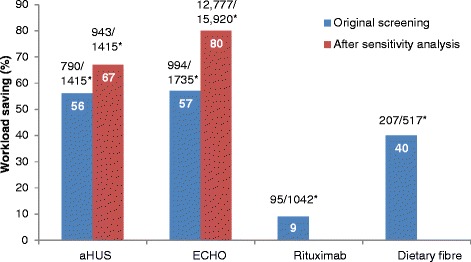
- Across four datasets, Abstrackr’s workload saving ranged from 9% in rituximab to 80% in the larger ECHO sensitivity analysis.
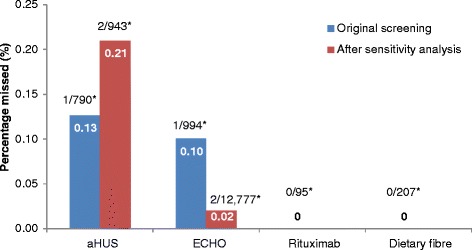
- In the main analyses, Abstrackr identified all relevant citations for the rituximab and dietary fibre reviews, while missing one relevant citation each in the aHUS and ECHO reviews.
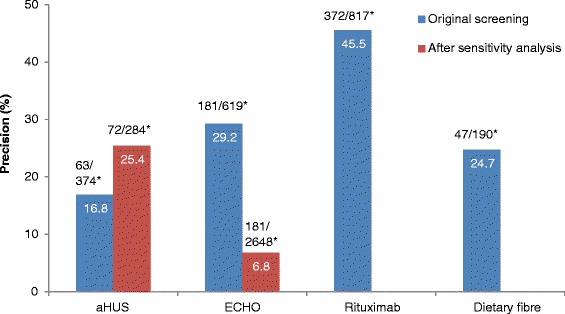
- Precision varied by dataset: 16.8% (aHUS), 24.7% (dietary fibre), 29.2% (ECHO), and 45.5% (rituximab).
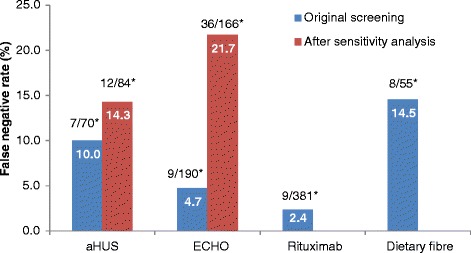
- The false negative rate ranged from 2.4% to 21.7%, while the actual proportion missed was 0% to 0.21%; average workload saving across the four datasets was 41%.
## Methods
- The authors evaluated Abstrackr using four existing systematic reviews drawn from biomedical database searches: aHUS (n = 1415), dietary fibre (n = 517), ECHO (n = 1735), and rituximab (n = 1042).
- Titles and abstracts were screened in Abstrackr until the algorithm generated predictions; the remaining unscreened citations were then classified as relevant/irrelevant and compared against the original review decisions.
- Performance was assessed using precision, false negative rate, proportion missed, and workload saving; post hoc sensitivity analyses were done for the aHUS dataset (including case reports) and a larger ECHO dataset (15,920 citations).
## Limitations
- The paper states that findings may be limited by the four datasets used, and that other clinical specialties could yield different precision, workload saving, and missed-study rates.
- The authors note that the datasets came from recently published reviews with trials mostly from 1995 onward, so the results may not generalize to older studies with less detailed titles/abstracts.
- Evident from the text: Abstrackr was tested on existing review datasets, not prospectively within live review workflows, so real-world performance may differ.
Model-written summary. Check it against the paper before relying on it.
Integrity signals
Registry
Cites
Statistics
Figures
Verification
Claims the paper makes
4 Valid · 0 Not valid · 6 Not checked · 36 Own results and interpretations
The sources with a verdict support this claim; the rest weren’t checked yet, have no full text we could read, or their verdicts aren’t rated yet.
In the paper
“This study and others that have evaluated semi-automated screening with support vector models [14, 15], semantic vector models [16], and complement naïve Bayes models [17] indicate that considerable workload savings can be achieved.”
§ Faster title and abstract screening? Evaluating Abstrackr, a semi-automated online screening program for systematic reviewers > Discussion > Strengths and weaknesses of the research Our findings may be limited by the four datasets used, and citations from other clinical specialities may yield different precision and workload saving and miss more relevant studies for inclusion, especially if the title and abstract descriptions are inadequate or the study designs are more complex. Our datasets were from recently published systematic reviews that included trials published mostly from 1995 onwards, and therefore, may contain better descriptions than older trials that were published before the CONSORT [24] reporting guidelines were introduced in 1996. Nevertheless, our results for identifying relevant trials are similar to the high recall results of Wallace (2010 and 2012) and indicate that similar accuracy could be achieved when using other datasets of medical citations. Previous text mining studies have mainly evaluated performance in terms of recall and specificity; however, our results also analysed the precision of the predictive model since this measures how precisely the algorithm selects studies for further full text inspection and mirrors the working steps of a systematic reviewer. Precision, however, is subjective and influenced by the reviewer’s expertise which can affect their screening judgements. The ECHO sensitivity analysis demonstrated that workload saving with semi-automated screening is more pronounced with large datasets, and therefore, greater savings could have resulted had we screened larger reviews. Nonetheless, the results provide a reasonable estimate of the algorithm’s typical performance during semi-automated screening. This study and others that have evaluated semi-automated screening with support vector models [14, 15], semantic vector models [16], and complement naïve Bayes models [17] indicate that considerable workload savings can be achieved. The ability to identify all relevant citations with Abstrackr was very high but imperfect. Such accuracy, however, is acceptable as a stand-alone tool for scoping searches and non-systematic reviews where not every published study needs to be included. It is noteworthy, however, that human citation screening is imperfect with relevant studies wrongly excluded [25]. Given that Abstrackr’s inaccuracy is similar to a human screener, it could be utilised as the second screener. Abstrackr’s classification prediction model uses a somewhat arbitrary cutoff point at which the proportion of citations screened triggers the algorithm prediction. However, this suggests that an adjustable stopping heuristic could be used, so accuracy could be further improved albeit with the trade-off that more citations are screened during the training phase. Future developments with semi-automated screening would benefit from retaining the original classification model developed during the original review, so future systematic review updates may be screened automatically without the re-input of a reviewer. Abstrackr is not currently a fully integrated tool, and only the unscreened citations (the predictions) are exportable with only the title bibliographic details made available, and further developments are needed to create a fully integrated tool that systematic reviewers and information specialists can use. Text mining algorithms that would enable systematic reviewers to exploit the labelling of keywords towards biasing the predictive classification model to further enhance performance have been proposed [26]. This approach could be further aided by citation enrichment. For example, keywords of high relevance such as the PICOS details should improve the recall accuracy of semi-automated screening algorithms (and trial searching). Enriching citations is already being used for the EMBASE project [27] by coding citations with the type of study design through crowd sourcing. Further research and innovations in this underexplored area is needed to advance current methods to eventually enable semi-automated screening to fully replace manual screening. Current text mining research [28] is focused on advancing screening retroactively and is restrained by the limitations of the data available. A more successful approach may require collaboration with biomedical database providers to ensure that citations are adequately labelled prospectively and retrospectively using strategies such as record linkage techniques, crowd sourcing, or access to a central repository, whereby PICOS details can be inputted and linked to all bibliographic databases.
What the sources say
- Not checked — no full text of the sourcecites [14] Wallace B, Small K, Brodley C, Lau J, Trikalinos T. Deploying an interactive machine learning system in an evidence-based practice center. Proc 2nd ACM SIGHIT Symp Int Heal informatics 2012. source
- Supportedcites [15] Wallace B Small K Brodley C Lau J Schmid C Bertram L Toward modernizing the systematic review pipeline in genetics: efficient updating via data mining Genet Med. 2012 14 663 9 10.1038/gim.2012.7 22481134 PMC3908550 source
The Materials and Methods section says the study used an ensemble of support vector machine (SVM) classifiers for semi-automated screening. The Discussion reports that the system reduced the number of citations requiring human screening by 70–90%, a substantial workload saving. Page numbers are not provided in our copy. (LLM, conf=0.94)
- Supportedcites [16] Jonnalagadda S Petitti D A new iterative method to reduce workload in the systematic review process Int J Comput Biol Drug Des. 2013 6 5 17 10.1504/IJCBDD.2013.052198 23428470 PMC3787693 source
The Methods section describes a semantic vector model that ranks abstracts for review, with expert relevance feedback described in the Discussion. The Results report estimated workload reductions of 6%–30% at 95% recall across 15 reviews, supporting the claim attributed to this paper. Page numbers were not provided in our copy. (LLM, conf=0.92)
- Supportedcites [17] Matwin S Kouznetsov A Inkpen D Frunza O O’Blenis P A new algorithm for reducing the workload of experts in performing systematic reviews J Am Med Informatics Assoc. 2010 17 446 53 10.1136/jamia.2010.004325 PMC2995653 20595313 source
Matwin et al. (2010) is the complement naïve Bayes study referenced here: the Abstract reports that a factorized CNB (FCNB) classifier with weight engineering reduced expert review workload by a minimum of 8.5%, maximum 62.2%, and an average of 33.5% across 15 systematic drug class reviews at ≥95% recall, and the 'Summary of the main results' (p. 6) states this is 15.0% greater than the previous average. The CONCLUSION adds that 'automated document classification has strong potential for aiding the labor-intensive literature review process for systematic reviews'. This supports the attributed point that semi-automated screening with a complement naïve Bayes model yields substantial workload savings; the SVM and semantic-vector parts of the sentence are carried by other citations. (LLM, conf=0.85)
hedgedstates a cause- Asserted: passes — The authors put it forward as true.
- Checkable: passes — It can be checked against evidence.
- Load-bearing: passes — The paper’s conclusions depend on it.
- Based: passes — The paper gives a reason why it holds.
Every source the paper cites for this claim was checked and supports it.
In the paper
“It is noteworthy, however, that human citation screening is imperfect with relevant studies wrongly excluded [25].”
§ Faster title and abstract screening? Evaluating Abstrackr, a semi-automated online screening program for systematic reviewers > Discussion > Strengths and weaknesses of the research Our findings may be limited by the four datasets used, and citations from other clinical specialities may yield different precision and workload saving and miss more relevant studies for inclusion, especially if the title and abstract descriptions are inadequate or the study designs are more complex. Our datasets were from recently published systematic reviews that included trials published mostly from 1995 onwards, and therefore, may contain better descriptions than older trials that were published before the CONSORT [24] reporting guidelines were introduced in 1996. Nevertheless, our results for identifying relevant trials are similar to the high recall results of Wallace (2010 and 2012) and indicate that similar accuracy could be achieved when using other datasets of medical citations. Previous text mining studies have mainly evaluated performance in terms of recall and specificity; however, our results also analysed the precision of the predictive model since this measures how precisely the algorithm selects studies for further full text inspection and mirrors the working steps of a systematic reviewer. Precision, however, is subjective and influenced by the reviewer’s expertise which can affect their screening judgements. The ECHO sensitivity analysis demonstrated that workload saving with semi-automated screening is more pronounced with large datasets, and therefore, greater savings could have resulted had we screened larger reviews. Nonetheless, the results provide a reasonable estimate of the algorithm’s typical performance during semi-automated screening. This study and others that have evaluated semi-automated screening with support vector models [14, 15], semantic vector models [16], and complement naïve Bayes models [17] indicate that considerable workload savings can be achieved. The ability to identify all relevant citations with Abstrackr was very high but imperfect. Such accuracy, however, is acceptable as a stand-alone tool for scoping searches and non-systematic reviews where not every published study needs to be included. It is noteworthy, however, that human citation screening is imperfect with relevant studies wrongly excluded [25]. Given that Abstrackr’s inaccuracy is similar to a human screener, it could be utilised as the second screener. Abstrackr’s classification prediction model uses a somewhat arbitrary cutoff point at which the proportion of citations screened triggers the algorithm prediction. However, this suggests that an adjustable stopping heuristic could be used, so accuracy could be further improved albeit with the trade-off that more citations are screened during the training phase. Future developments with semi-automated screening would benefit from retaining the original classification model developed during the original review, so future systematic review updates may be screened automatically without the re-input of a reviewer. Abstrackr is not currently a fully integrated tool, and only the unscreened citations (the predictions) are exportable with only the title bibliographic details made available, and further developments are needed to create a fully integrated tool that systematic reviewers and information specialists can use. Text mining algorithms that would enable systematic reviewers to exploit the labelling of keywords towards biasing the predictive classification model to further enhance performance have been proposed [26]. This approach could be further aided by citation enrichment. For example, keywords of high relevance such as the PICOS details should improve the recall accuracy of semi-automated screening algorithms (and trial searching). Enriching citations is already being used for the EMBASE project [27] by coding citations with the type of study design through crowd sourcing. Further research and innovations in this underexplored area is needed to advance current methods to eventually enable semi-automated screening to fully replace manual screening. Current text mining research [28] is focused on advancing screening retroactively and is restrained by the limitations of the data available. A more successful approach may require collaboration with biomedical database providers to ensure that citations are adequately labelled prospectively and retrospectively using strategies such as record linkage techniques, crowd sourcing, or access to a central repository, whereby PICOS details can be inputted and linked to all bibliographic databases.
What the sources say
- Supportedcites [25] Ng L Pitt V Huckvale K Clavisi O Turner T Gruen R Title and Abstract Screening and Evaluation in Systematic Reviews (TASER): a pilot randomised controlled trial of title and abstract screening by medical students Syst Rev. 2014 3 e1 8 10.1186/2046-4053-3-121 PMC4217707 25335439 source
The Results (Primary outcomes: final sensitivity and screening specificity; page unavailable) report that no student screener identified all 14 articles ultimately included in the review. This directly demonstrates that human citation screening can wrongly exclude relevant studies. (LLM, conf=0.94)
plain- Asserted: passes — The authors put it forward as true.
- Checkable: passes — It can be checked against evidence.
- Load-bearing: passes — The paper’s conclusions depend on it.
- Based: passes — The paper gives a reason why it holds.
- Supported
A result the paper reports from its own data — it cites no other source for it, so there is none to check. The quote shows it is in the paper.
In the paper
“However, one relevant citation in both the aHUS and ECHO reviews was incorrectly predicted as not relevant.”
§ Faster title and abstract screening? Evaluating Abstrackr, a semi-automated online screening program for systematic reviewers > Abstract > Results
plain- Asserted: passes — The authors put it forward as true.
- Checkable: passes — It can be checked against evidence.
- Load-bearing: unclear — It is unclear whether the paper’s conclusions depend on it.
- Based: passes — The paper gives a reason why it holds.
A result the paper reports from its own data — it cites no other source for it, so there is none to check. The quote shows it is in the paper.
In the paper
“Of the unscreened citations, Abstrackr’s prediction algorithm correctly identified all relevant citations for the rituximab and dietary fibre reviews.”
§ Faster title and abstract screening? Evaluating Abstrackr, a semi-automated online screening program for systematic reviewers > Abstract > Results
plain- Asserted: passes — The authors put it forward as true.
- Checkable: passes — It can be checked against evidence.
- Load-bearing: unclear — It is unclear whether the paper’s conclusions depend on it.
- Based: passes — The paper gives a reason why it holds.
A result the paper reports from its own data — it cites no other source for it, so there is none to check. The quote shows it is in the paper.
In the paper
“Sensitivity analysis performed on the aHUS dataset increased the precision from 16 to 25 % and increased the workload saving by 10 % but increased the number of relevant studies missed.”
§ Faster title and abstract screening? Evaluating Abstrackr, a semi-automated online screening program for systematic reviewers > Abstract > Results
plainstates a cause- Asserted: passes — The authors put it forward as true.
- Checkable: passes — It can be checked against evidence.
- Load-bearing: unclear — It is unclear whether the paper’s conclusions depend on it.
- Based: passes — The paper gives a reason why it holds.
22 more claims
Create a free account to see all 46 claims and to verify the 1 reference still open.
- Probably not a substantial claim. 6
- It may state two separate claims as one. 16
Claims other papers make about this one
Each is checked against this paper’s own text: does it say what the citing paper says it does?
The source backs part of the claim, not all of it — or backs it for a different population, condition or comparison.
In the citing paper
“Moreover, supervised machine learning is known to perform better on larger datasets [16].”
From Technology-assisted title and abstract screening for systematic reviews: a retrospective evaluation of the Abstrackr machine learning tool (2018) · cites this paper as [16]
Experimental — accuracy not yet measuredThe source backs part of the claim, not all of it — or backs it for a different population, condition or comparison.
In the citing paper
“With respect to its prediction algorithm, the few existing evaluations have reported screening workload reductions of at least 40% and the incorrect exclusion of few, if any relevant records [15, 16].”
From Technology-assisted title and abstract screening for systematic reviews: a retrospective evaluation of the Abstrackr machine learning tool (2018) · cites this paper as [16]
Experimental — accuracy not yet measuredThe source backs part of the claim, not all of it — or backs it for a different population, condition or comparison.
In the citing paper
“Many studies evaluating these tools have assessed automatic classification functionality, in which screening continued until the tool predicts whether studies should be included or not, and remaining citations are not screened [19, 21].”
From Machine learning for screening prioritization in systematic reviews: comparative performance of Abstrackr and EPPI-Reviewer (2020) · cites this paper as [21]
Experimental — accuracy not yet measuredThe cited source says what the claim attributes to it.
In the citing paper
“Conversely, for some reviews the workload savings have been minimal (< 10%) [16].”
From Technology-assisted title and abstract screening for systematic reviews: a retrospective evaluation of the Abstrackr machine learning tool (2018) · cites this paper as [16]
The cited source says what the claim attributes to it.
In the citing paper
“Our findings are consistent with other studies which have found Abstrackr to offer potential gains [7, 19, 21].”
From Machine learning for screening prioritization in systematic reviews: comparative performance of Abstrackr and EPPI-Reviewer (2020) · cites this paper as [21]
3 more claims about this paper
Create a free account to see every claim other papers make about this one.
Citations
Cites
Preferred Reporting Items for Systematic Reviews and Meta-Analyses: the PRISMA statement
Moher, D., Liberati, A., Tetzlaff, J., Altman, D. G., & for the PRISMA Group (2009) · BMJ · doi:10.1136/bmj.b2535 · Cited by 83,823
Preferred reporting items for systematic reviews and meta-analyses: the PRISMA Statement.
(2009) · PubMed Central · Cited by 44,859
The Cochrane Collaboration's tool for assessing risk of bias in randomised trials
Higgins, J. P. T., Altman, D. G., Gotzsche, P. C., Juni, P., Moher, D., Oxman, A. D., Savovic, J., Schulz, K. F., Weeks, L., Sterne, J. A. C., et al. (2011) · BMJ · doi:10.1136/bmj.d5928 · Cited by 33,817 · cited 1×
“Systematic reviews have also become more time consuming due to the growth in the volume and scatter of randomised trials [3], additional reporting steps [4–6], and the incorporation of more complex methodologies such as network meta-analysis and the acquisition of clinical study reports [7].”
PRISMA-P Group, Moher, D., Shamseer, L., Clarke, M., Ghersi, D., Liberati, A., Petticrew, M., Shekelle, P., & Stewart, L. A. (2015) · Systematic Reviews · doi:10.1186/2046-4053-4-1 · Cited by 26,223
Dermyshi, E., Wang, Y., Yan, C., Hong, W., Qiu, G., Gong, X., & Zhang, T. (2017) · Neonatology · doi:10.1159/000454668 · Cited by 24,451
Preferred Reporting Items for Systematic Reviews and Meta-Analyses: The PRISMA Statement
Moher, D., Liberati, A., Tetzlaff, J., & Altman, D. G. (2009) · Journal of Clinical Epidemiology · doi:10.1016/j.jclinepi.2009.06.005 · Cited by 19,575
How Quickly Do Systematic Reviews Go Out of Date? A Survival Analysis
Shojania, K. G., Sampson, M., Ansari, M. T., Ji, J., Doucette, S., & Moher, D. (2007) · Annals of Internal Medicine · doi:10.7326/0003-4819-147-4-200708210-00179 · Cited by 838 · cited 1×
“Consequently, many systematic reviews are out of date [8, 9].”
BackgroundO’Mara-Eves, A., Thomas, J., McNaught, J., Miwa, M., & Ananiadou, S. (2015) · Systematic Reviews · doi:10.1186/2046-4053-4-5 · Cited by 681
Hopewell, S., Clarke, M., Moher, D., Wager, E., Middleton, P., Altman, D. G., Schulz, K. F., & and the CONSORT Group (2008) · PLoS Medicine · doi:10.1371/journal.pmed.0050020 · Cited by 674
Neuraminidase inhibitors for preventing and treating influenza in healthy adults and children
Jefferson, T., Jones, M. A., Doshi, P., Del Mar, C. B., Heneghan, C. J., Hama, R., & Thompson, M. J. (2012) · Cochrane Database of Systematic Reviews · doi:10.1002/14651858.cd008965.pub3 · Cited by 594
Research works printed but not linked: 1
- Frequency of updating Cochrane Reviews [ http://www.cochrane.org/editorial-and-publishing-policy-resource/cochrane-review-updates]
Cited by
Items 101–177 of 177
Systematic review using a spiral approach with machine learning
Saeidmehr, A., Steel, P., & Samavati, F. F. (2024) · Systematic Reviews · doi:10.1186/s13643-023-02421-z · Cited by 19
“Not every systematic review is equally amenable to machine learning [10].”
BackgroundBaladía, E., Moñino, M., Pleguezuelos, E., Russolillo, G., & Garnacho‐Castaño, M. V. (2024) · Nutrients · doi:10.3390/nu16111583 · Cited by 19
“The resulting library was exported in RIS format and imported to Abstrackr software (available at: http://abstrackr.cebm.brown.edu/account/login; accessed on 12 December 2023) [49].”
MethodReviewing clinical guideline development tools: features and characteristics
Khodambashi, S., & Nytrø, Ø. (2017) · BMC Medical Informatics and Decision Making · doi:10.1186/s12911-017-0530-5 · Cited by 16
“3) Perform systematic review: Doctor Evidence platforms [25], RevMan 5 [26], Distiller [27], Rayyan [28], JBI-SUMARI [29], SRDR [30], EPPI-Reviewer 4 [31], CREBP SRA Systematic Review Creator [32] and Covidence [33] 4) Maintain systematic review repository: Epistemonikos [34], and SRDR [30] 5) Do semi-automated citati…”
MethodKazda, L., Bell, K., Thomas, R., McGeechan, K., & Barratt, A. L. (2019) · BMJ Open · doi:10.1136/bmjopen-2019-032327 · Cited by 17
Dietary Intake Influences Metabolites in Healthy Infants: A Scoping Review
Leimanis, M. L., Kraus-Friedberg, C., Kar, W., Sanfilippo, D. J., Rajasekaran, S., & Comstock, S. S. (2020) · Nutrients · doi:10.3390/nu12072073 · Cited by 11
“All abstracts were screened for inclusion/exclusion by two of the authors using Abstrackr® [31].”
MethodBannach‐Brown, A., Przybyła, P., Thomas, J., Rice, A. S. C., Ananiadou, S., Liao, J., & Macleod, M. R. (2018) · bioRxiv (Cold Spring Harbor Laboratory) · doi:10.1101/255760 · Cited by 24
Ghazanfari, A., Malzl, L., Pramreiter, M., Konnerth, J., & Kromoser, B. (2025) · Wood Material Science and Engineering · doi:10.1080/17480272.2025.2465562 · Cited by 14
“Moreover, its accuracy was evaluated through sensitivity analysis in the study of Rathbone et al. (2015), affirming its reliability.”
McCabe, M. J., & Snyder, C. M. (2021) · Managerial and Decision Economics · doi:10.1002/mde.3353 · Cited by 21
Rosa, S. F. P., & Martius, C. (2021) · Center for International Forestry Research (CIFOR) eBooks · doi:10.17528/cifor/007951 · Cited by 18
Survival after in-hospital cardiac arrest among cerebrovascular disease patients
Fehnel, C. R., Trepman, A. Z., Steele, D. W., Khan, M., Silver, B., & Mitchell, S. L. (2018) · Journal of Clinical Neuroscience · doi:10.1016/j.jocn.2018.04.033 · Cited by 10
“[14] Abstrackr is an open-source screening program, which uses an algorithm to predict which citations could be most relevant for a defined search strategy.[15]”
BackgroundNine quick tips for open meta-analyses
Moreau, D., & Wiebels, K. (2024) · PLoS Computational Biology · doi:10.1371/journal.pcbi.1012252 · Cited by 13
Guarneiri, L. L., Adams, C. G., Garcia-Jackson, B., Koecher, K. J., Wilcox, M. L., & Maki, K. C. (2024) · Advances in Nutrition · doi:10.1016/j.advnut.2024.100332 · Cited by 13
The Landscape of Research on Contextualized Science Learning: A Bibliometric Network Review
Giamellaro, M., Buxton, C., Taylor, J., Ayotte‐Beaudet, J., L’Heureux, K., & Beaudry, M. (2025) · Science Education · doi:10.1002/sce.21937 · Cited by 31
Uthman, O. A., Court, R. A., Enderby, J., Al-Khudairy, L., Nduka, C. U., Mistry, H., Meléndez‐Torres, G. J., Taylor‐Phillips, S., & Clarke, A. (2022) · Health Technology Assessment · doi:10.3310/udir6682 · Cited by 12
“(4) TABLE 1 The 2 × 2 table from which precision and recall were calculated”
The Past, Present, and Future of Psychotherapy Manuals: Protocol for a Scoping Review
Wislocki, K. E., Tran, M.-L. M., Petti, E., Hernandez-Ramos, R., Cenkner, D. P., Bridgwater, M. A., Naderi, G., Walker, L., & Zalta, A. K. (2023) · JMIR Research Protocols · doi:10.2196/47708 · Cited by 10
“Review platforms themselves have also increasingly leveraged machine learning components within their own software [20-22].”
Perinatal diet and offspring anxiety: A scoping review
Monteiro, S., Nejad, Y. S., & Aucoin, M. (2022) · Translational Neuroscience · doi:10.1515/tnsci-2022-0242 · Cited by 10
“[21] Rathbone J, Hoffmann T, Glasziou P.”
Rapid review: A review of methods and recommendations based on current evidence
Guo, Q., Jiang, G., Zhao, Q., Long, Y., Feng, K., Gu, X., Xu, Y., Li, Z., Huang, J., & Du, L. (2024) · Journal of Evidence-Based Medicine · doi:10.1111/jebm.12594 · Cited by 8
Carter, B. U. (2018) · Systematic Reviews · doi:10.1186/s13643-018-0782-x · Cited by 9
Gates, A., Guitard, S., Pillay, J., Elliott, S. A., Dyson, M. P., Newton, A. S., & Hartling, L. (2019) · doi:10.23970/ahrqepcmethmachineperformance · Cited by 8
Avendano, E. E., Raman, G., Chan, J., & McCann, E. (2020) · Antimicrobial Resistance and Infection Control · doi:10.1186/s13756-020-00858-8 · Cited by 10
Large-Scale Simulation Study of Active Learning Models for Systematic Reviews
Teijema, J. J., de Bruin, J., Bagheri, A., & van de Schoot, R. (2023) · doi:10.31234/osf.io/2w3rm · Cited by 8
Xu, S., Zhao, Z., Liu, X., & Meng, X.-L. (2025) · BMC Medical Informatics and Decision Making · doi:10.1186/s12911-025-03138-w · Cited by 8
Nkemjika, S., Tokede, O., Okosun, I. S., Jadotte, Y. T., & Pigott, T. (2023) · Cancer Epidemiology · doi:10.1016/j.canep.2023.102409 · Cited by 7
Systematic Review of Gaming and Neuropsychological Assessment of Social Cognition
Hurel, E., Grall‐Bronnec, M., Bouillard, O., Chirio-Espitalier, M., Barrangou-Poueys-Darlas, M., & Challet‐Bouju, G. (2023) · Neuropsychology Review · doi:10.1007/s11065-023-09599-y · Cited by 8
“This software can be used to save time by screening titles and abstracts based on machine learning that classifies titles as relevant or not (Rathbone et al., 2015).”
MethodYao, X., Saha, A., Saravanan, S., Low, A., & SUSSMAN, J. S. (2025) · Cancer Innovation · doi:10.1002/cai2.70021 · Cited by 8
Effective study selection using text mining or a single-screening approach: a study protocol
Waffenschmidt, S., Hausner, E., Sieben, W., Jaschinski, T., Knelangen, M., & Overesch, I. (2018) · Systematic Reviews · doi:10.1186/s13643-018-0839-x · Cited by 8
Matsui, K., Utsumi, T., Aoki, Y., Maruki, T., Takeshima, M., & Takaesu, Y. (2023) · SSRN Electronic Journal · doi:10.2139/ssrn.4520426 · Cited by 7
Taylor, S. N., Fenton, T. R., Groh‐Wargo, S. L., et al. (2022) · Frontiers in Pediatrics · doi:10.3389/fped.2021.793311 · Cited by 6
“Study Selection Each title/abstract was screened independently by at least two experienced practitioners from the Preterm Panel or EAC SR methodologists using Abstrakr software (16).”
MethodDigitale Anwendungen für die Studienauswahl im Rahmen von systematischen Evidenzsynthesen
Hirt, J., & Nordhausen, T. (2019) · Pflege · doi:10.1024/1012-5302/a000690 · Cited by 7
Wiwatthanasetthakarn, P., Ponthongmak, W., Looareesuwan, P., Tansawet, A., Numthavaj, P., McKay, G. J., Attia, J. R., & Thakkinstian, A. (2024) · Journal of Medical Internet Research · doi:10.2196/56863 · Cited by 8
“Another Abstrackr study [13] reported a 9%-57% workload reduction with associated 0% - 0.13% FNR. Abstrackr has also been compared with DistillerSR and RobotAnalyst [16], showing a 40%, 49%, and 35% median workload reduction, respectively.”
InfluentialNapoleão, B. M., Petrillo, F. D. S., & Hallé, S. (2021) · Euromicro Conference on Software Engineering and Advanced Applications (SEAA) · doi:10.1109/seaa53835.2021.00015 · Cited by 7
“During the conduction of our study, we identified eight different studies that directly reports the practical use and evaluation of well-established SLR selection (screening) tools: Abstrackr [69]–[71], RobotAnalyst [70], [72], DistillerSR [70], [73], RelRank [74], and SWIFT-Review [75].”
MethodAssets and depression in U.S. adults during the COVID-19 pandemic: a systematic review
Ettman, C. K., Subramanian, M., Fan, A. Y., Adam, G. P., Abdalla, S. M., Galea, S., & Stuart, E. A. (2023) · Social Psychiatry and Psychiatric Epidemiology · doi:10.1007/s00127-023-02565-2 · Cited by 7
“Abstrackr uses predictive modeling to allow authors to screen the most relevant abstracts first [41].”
No general effects of advancing male age on ejaculates: a meta-analysis across the animal kingdomPreprint
Sanghvi, K., Vega‐Trejo, R., Nakagawa, S., Gascoigne, S. J. L., Johnson, S. L., Salguero‐Gómez, R., Pizzari, T., & Sepil, I. (2023) · bioRxiv (Cold Spring Harbor Laboratory) · doi:10.1101/2023.04.14.536443 · Cited by 4
“Our search resulted in a total of 9412 unique abstracts from published sources, and 271 abstracts from unpublished sources, which we screened in Rayyan (Ouzzani et al, 2016) and abstrackr (Rathbone et al, 2015) using pre- defined inclusion and exclusion criteria (see below).”
BackgroundSystematic review automation methods
Norman, C. R. (2020) · theses.fr (ABES) · doi:10.70675/044ffa34z5c9bz433az99c8z64697dcd28a2 · Cited by 8
Peoples, J. E., Montemayor, B. N., Tuda, D., Szlyk, H. S., Baiden, P., & Butler‐Barnes, S. T. (2025) · Journal of Racial and Ethnic Health Disparities · doi:10.1007/s40615-025-02491-w · Cited by 4
“In the title/abstract screening stage, the first three authors independently coded records against inclusion criteria utilizing a screening tool, Abstrackr [38, 39].”
A Mixed‐Method Usability Study on User Experience with Systematic Review Software
Wang, M., Sharmin, S., Wang, M., & Yu, F. (2021) · Proceedings of the Association for Information Science and Technology · doi:10.1002/pra2.462 · Cited by 10
“Rathbone (2015) found Abstrackr had the potential to reduce SR screening workload, but it depended on the complexity and size of the review.”
BackgroundMethodInfluentialYao, X., Low, A., Sivajohanathan, D., Vella, E. T., Wang, P., Kaur, G., Saha, A., & SUSSMAN, J. S. (2025) · Intelligent Medicine · doi:10.1016/j.imed.2025.12.006 · Cited by 8
Machine learning based system for the automation of systematic literature reviews
Pytlak, R., Bukhvalova, B. A., Cichosz, P., Fajdek, B., Grahek‐Ogden, D., Jastrzębski, B., Khan, M., Postupolski, J., Yazidi, A., & Waszkowski, R. (2023) · IEEE International Conference on Bioinformatics and Biomedicine (BIBM) · doi:10.1109/bibm58861.2023.10385372 · Cited by 4
“Abstrackr performance was independently evaluated, in [10] it was reported that the workload savings varied between 9 and 57%, while in [11] between 9.5 and 88.4%.”
BackgroundInfluentialGartlehner, G., Wagner, G., Lux, L. J., Affengruber, L., Dobrescu, A. I., Kaminski-Hartenthaler, A., & Viswanathan, M. (2019) · doi:10.23970/ahrqepcmethmachinedistiller · Cited by 3
Akshaya, A., & Gopalakrishna, B. V. (2025) · Sustainable Futures · doi:10.1016/j.sftr.2025.100928 · Cited by 2
Fuller, H., Agasaro, O. P., Guevara, J. M., & Darst, B. F. (2026) · British Journal of Cancer · doi:10.1038/s41416-025-03312-x · Cited by 2
Sumsuzzman, D. M., Kim, Y., Baek, S., & Hong, Y. (2024) · Journal of Lifestyle Medicine · doi:10.15280/jlm.2024.14.2.57 · Cited by 4
Accelerating Systematic Reviews Via Natural Language Processing
Nasser, F., Trad, F. S., Chakhtoura, M., Fuleihan, G. E., & Chehab, A. (2024) · International Conference on Computer and Applications (ICCA) · doi:10.1109/icca62237.2024.10927953 · Cited by 2
“One review applied clustering to group papers into clusters based on their titles and abstracts [13], while other tools treat the problem as a classification task, applying the concept of active learning to detect relevant publications [14-19].”
Centering Race in Mixed and Multi-Method Research on Implicit Bias: A Systematic Review
Shannon‐Baker, P. (2021) · International Journal of Multiple Research Approaches · doi:10.29034/ijmra.v13n1a3 · Cited by 3
Machine learning approach to literature mining for the genetics of complex diseases
Schuster, J. S., Superdock, M., Agudelo, A., Stey, P., Padbury, J. F., Sarkar, I. N., & Uzun, A. (2019) · Database · doi:10.1093/database/baz124 · Cited by 2
“These tools and others have been shown to classify articles for inclusion in systematic review with recall that outperform our models (11, 22).”
BackgroundMethodUnderstanding in vivo modelling of depression
Bannach‐Brown, A. (2019) · ERA · Cited by 2
Study screening for meta-research: An overview of AI toolsPreprint
Quan, Y., & Hui, B. (2023) · doi:10.31219/osf.io/bd6fj · Cited by 2
Nordmann, K., Schaller, M., Sauter, S., et al. (2024) · Research Square · doi:10.21203/rs.3.rs-4687319/v1 · Cited by 2
Hall, J. A., & Miller, D. I. (2024) · Cambridge University Press eBooks · doi:10.1017/9781009170123.028 · Cited by 1
Jagemann, I., Thiele, C., von Brachel, R., & Hirschfeld, G. H. F. (2025) · Health Promotion International · doi:10.1093/heapro/daae203 · Cited by 2
Using Artificial Intelligence for Text Screening in a Systematic Review of Cardiotoxicity
Canfield, S. E., Aziz, M. K., Omar, M. I., N'Dow, J. M., Schijvenaars, B. J. A., Ghith, J., Ahmed, K. R., Molony, D. A., & Stenzl, A. (2025) · European Urology Open Science · doi:10.1016/j.euros.2025.09.005 · Cited by 2
“Several automated tools have been developed to facilitate different stages of the SR process, including Rayyan [14], Covidence [15], EPPI-Reviewer [16], Abstracker [17], Distiller SR [11], and Colandr [18].”
Simulation-based active learning for systematic reviews: A scoping review of literature
Teijema, J. J., Ribeiro, G., Seuren, S., Anadria, D., Bagheri, A., & van de Schoot, R. (2025) · Journal of Information Science · doi:10.1177/01655515251379058 · Cited by 1
Nordmann, K., Schaller, M., Sauter, S., & Fischer, F. (2026) · JAMIA Open · doi:10.1093/jamiaopen/ooaf098 · Cited by 4
“7,10,37,38 Furthermore, allowing researchers to set the AI tools’ decision threshold might reduce risk and increase trust in the tool.”
Evaluating the performance of a custom GPT in full text screening of a systematic review
Davis, R. C., List, S. S., Chappell, K. G., Madar, A., Henjum, S., & Heen, E. (2026) · Scandinavian Journal of Public Health · doi:10.1177/14034948261423410 · Cited by 3
Sauchelli, S., Bradley, J., Cox, J. S., England, C. Y., & Perry, R. E. (2020) · Systematic Reviews · doi:10.1186/s13643-020-01467-7 · Cited by 1
“Search results will additionally be uploaded to AbstrackR, a citation screening programme functioning on an algorithmic framework that predicts the likelihood citations are relevant for further inspection [29].”
MethodJones, E. (2023) · Springer eBooks · doi:10.1007/978-3-031-38534-6_10 · Cited by 1
Nkemjika, S., Tokede, O., Jadotte, Y. T., Olatunji, E., Bosah, J. N., Pigott, T., & Okosun, I. S. (2021) · JBI Evidence Synthesis · doi:10.11124/jbies-20-00277 · Cited by 1
Rossetti, A. (2019) · Arrow@dit (Dublin Institute of Technology) · Cited by 12
Systematic Review using a Spiral approach with Machine LearningPreprint
Saeidmehr, A., Steel, P., & Samavati, F. F. (2023) · Research Square · doi:10.21203/rs.3.rs-2497596/v1 · Cited by 3
EpistAid: Interactive Interface for Document Filtering in Evidence-based Health CarePreprint
Donoso-Guzmán, I., & Parra, D. (2016) · arXiv (Cornell University) · doi:10.48550/arxiv.1611.02119
“Among them we can find: Active Learning([14],[20], [26], [33], [35], [34]), Automatic Classification ([1], [15], [2], [21]), Document Ranking [6], Relevance Feedback [16], Document Priorization [5] , and Visualization [12], [13].”
BackgroundBerzins, K. M., Canvin, K., Kendal, S., Benson, I., Kellar, I., Wright, J. M., López, R. R., Duxbury, J. A., Stewart, D., & Baker, J. A. (2020) · Research Square · doi:10.21203/rs.3.rs-99034/v1
“’s recommendation,[38] references without abstracts were screened separately (n = 998), to avoid compromising Abstrakr predictions.”
BackgroundMcCabe, M. J., & Snyder, C. M. (2020) · National Bureau of Economic Research · doi:10.3386/w28128
RECODE-DCM: from research priorities to global action
Davies, B. M., & Kotter, M. (2023) · Elsevier eBooks · doi:10.1016/b978-0-323-95334-4.00002-4 · Cited by 1
Evaluating the Reliability of a Custom GPT in Full-Text Screening of a Systematic ReviewPreprint
Davis, R. C., List, S. S., Chappell, K. G., Madar, A., Henjum, S., & Heen, E. (2025) · medRxiv · doi:10.1101/2025.02.04.25321655
Zanela, M., Carvalho, D. R., & Mendes, R. (2025) · Saúde Coletiva (Barueri) · doi:10.36489/saudecoletiva.2025v15i93p14751-14770
Semi-automated Gamification Framework for Computer Science and Technology Online Courses
Nazarenko, V., Funderburk, M., & Zazymko, O. (2025) · Communications in computer and information science · doi:10.1007/978-3-031-81372-6_29
Zary, N. (2025) · Preprints.org · doi:10.20944/preprints202506.0749.v1
Abògúnr̀in, Ṣ., Slob, B. P. H., Lane, M., Emamipour, S., Twardowski, P., Boersma, C., & van der Schans, J. (2025) · BMJ Open · doi:10.1136/bmjopen-2025-099921 · Cited by 1
Beyond the List: A Framework for the Design of Next-Generation MEDLINE Search Tools
Zhurov, V., Sedig, K., & Milani, M. (2025) · Data · doi:10.3390/data10100167
“The need for better triage support is so significant that entire systems like Rayyan [87] and Abstrackr [89] exist solely to help users filter documents for reviews.”
Behavioral attention and academic achievement: a comprehensive meta-analysis
Gioia, A. R., Miciak, J., Peng, P., Gallagher, M. W., Williams, M., Farrell, A., Salentine, C. M., Boada, C. E., Dragoi, I., Harmouch, S., et al. (2026) · Child Neuropsychology · doi:10.1080/09297049.2026.2634751 · Cited by 2
“…“behav* atten*” OR “ADHD” OR “inatt*” OR “hyperact*” OR “impulsiv*” AND “academ* achiev*” OR “read*” OR “math*” OR “writ*.” The full search results ( k = 6819) obtained in June 2021 were uploaded into Brown University’s beta version of an abstract coding program, Abstrackr (Rathbone et al., 2015).”
Ahn, S., Kim, S., & Valdes, J. (2026) · Springer international handbooks of education · doi:10.1007/978-3-031-88898-4_24-1
Slade, A., Steele, K. R., Tang, S., Ravindra, S., & Newby, J. M. (2026) · doi:10.2196/preprints.104335
Shankar, R., Goh, Z., & Xu, Q. (2026) · Campbell Systematic Reviews · doi:10.1177/18911803261469813
“…applications of NLP, from conventional machine learning approaches like support vector machines and naive Bayes (Cohen, 2008; Przybyła et al., 2018; Rathbone et al., 2015; Wallace et al., 2012), to deep learning models like convolutional neural networks (Przybyła et al., 2018), and most recently,…”
Torres‐Oteros, D., Nicola‐Llorente, M., Pérez‐Martí, A., Cepeda, V., Mena‐Sánchez, G., Baudin, J., Uriz-Aguirre, L., Cubero, M. Á., García, S., Bouzas, C., et al. (2026) · Food Bioscience · doi:10.1016/j.fbio.2026.109578
Steijger, D. J. M., Thissen, S., Aarts, S., Verbeek, H., de Vugt, M. E., & Christie, H. L. (2026) · JMIR Formative Research · doi:10.2196/84989
“Previous studies evaluating AI-assisted screening tools in health research have shown that these tools can potentially reduce screening time while maintaining the ability to identify relevant titles and abstracts [9,13-17].”
InfluentialLooareesuwan, P., Ponthongmak, W., Tansawet, A., Ratanatharathorn, C., Owasi, H. U. R., McKay, G. J., Attia, J. R., Oami, T., & Thakkinstian, A. (2026) · PLOS Digital Health · doi:10.1371/journal.pdig.0001668
Adam, G. P., Davies, M. C., Caputo, E. L., Mai, H. J., Coppola, E. L., Holmer, H. K., Kuhn, E., Balk, E. M., Trikalinos, T. A., Ivlev, I., et al. (2026) · Research Synthesis Methods · doi:10.1017/rsm.2026.10118
Metadata
- Authors
- Rathbone, J., Hoffmann, T., & Glasziou, P.
- Affiliations
- Bond University (AU)
- Corresponding author
- Rathbone, John
- Venue
- Systematic Reviews
- Published
- 2015-06-15
- Volume
- 4
- Issue
- 1
- Pages
- 80-80
- ISSN
- 2046-4053 (ISSN-L)
- PMC
- PMC4472176
- OpenAlex
- W1760234209
- Semantic Scholar
- 0f055179558102d2c8945757b18c9e8386bfcd18
- Cited by
- 184
- References
- 30
- Citations by year
- 2026: 10 · 2025: 25 · 2024: 16 · 2023: 25 · 2022: 17 · 2021: 21 · 2020: 23 · 2019: 22 · 2018: 12 · 2017: 7 · 2016: 5 · 2015: 1
- FWCI
- 1.37
- Type
- journal article
- Language
- en
- Open access
- gold
- doi.org
- Locations
- Systematic Reviews (publishedVersion, cc-by)
- Europe PMC (PubMed Central) (publishedVersion, cc-by)
- PubMed Central (publishedVersion, cc-by)
- PubMed (publishedVersion)
- Bond University Research Portal (Bond University) (submittedVersion, cc-by)
- e-publications@bond (Bond University) (submittedVersion)
- Topics
- Social Sciences › Decision Sciences › Statistics, Probability and Uncertainty › Meta-analysis and systematic reviews
- Physical Sciences › Computer Science › Information Systems › Information Retrieval and Search Behavior
- Social Sciences › Library and Information Sciences › scientometrics and bibliometrics research
- Keywords
- title and abstract screening, semi-automated screening, citation screening, systematic reviews, predictive classification, false negative rate, research waste, aHUS, rituximab, dietary fiber, ECHO trial
- MeSH terms
- Abstracting and Indexing, Algorithms, Humans, Review Literature as Topic, Sensitivity and Specificity, Reproducibility of Results
About these checks
Registry, retraction, Cites and statistics results are computed, not judged, with one exception: a printed reference that no index lists is read once by a model before it counts as a citation error. Claims are extracted by a model and kept only when their quote appears verbatim in the text; each cited source is then checked, with a model’s help, for whether it says what the claim relies on. Those verdicts can be wrong — read the claim’s quote and the cited source before relying on one.
The claim verdicts this report counts are experimental: their accuracy is not yet measured.
A language model drew the claims from the paper on 2026-10-10, under version 3 of the claim definition (model deepseek-v4.1-flash, prompt extract-v3).
A second model labelled each claim on 2026-10-10 (model jev-1.13-20260917, definition revision gold-guideline-v0.2).
Cited sources are checked with a language model’s help (gpt-6-sol and qwen3.8-omni-flash).
Statistics and arithmetic are recomputed, not judged.
Confidence bands are shown only for fields calibrated on our annotated test set. None is calibrated yet, so no band is shown.
What counts as a claim ›How we measure confidence ›How we check this ›
Are you an author, or do you see a problem with this page? Request a review
Data sources
Bibliographic data: Semantic Scholar, OpenAlex, Crossref.
Contains information from the Semantic Scholar Academic Graph Datasets, made available under the ODC Attribution License (ODC-BY 1.0).
Semantic Scholar’s data is described in: Kinney, R., et al. (2023). The Semantic Scholar Open Data Platform. arXiv:2301.10140.
