

Faster title and abstract screening? Evaluating Abstrackr, a semi-automated online screening program for systematic reviewers
Open accessThe DOI matches its Crossref record; 30 of the 31 references it cites were found in a registry or an index; 6 of the 13 sources its claims cite were checked for support.
Abstract
BACKGROUND: Citation screening is time consuming and inefficient. We sought to evaluate the performance of Abstrackr, a semi-automated online tool for predictive title and abstract screening. METHODS: Four systematic reviews (aHUS, dietary fibre, ECHO, rituximab) were used to evaluate Abstrackr... RESULTS: Of the unscreened citations, Abstrackr's prediction algorithm correctly identified all relevant citations for the rituximab and dietary fibre reviews...
Overview
CoChat Summary
## TL;DR
This study evaluated Abstrackr, a semi-automated online title-and-abstract screening tool, on four existing systematic reviews. It found substantial workload savings (9% to 80%) with very few missed relevant citations, but performance varied by review complexity and dataset balance.
## Key findings
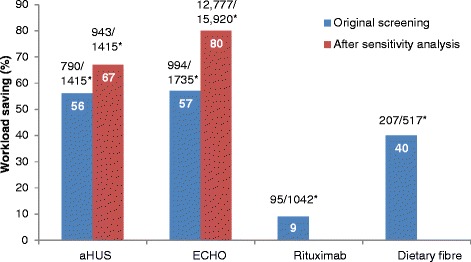
- Across four datasets, Abstrackr’s workload saving ranged from 9% in rituximab to 80% in the larger ECHO sensitivity analysis.
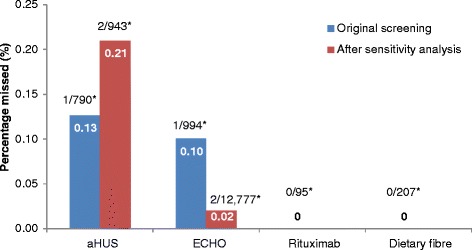
- In the main analyses, Abstrackr identified all relevant citations for the rituximab and dietary fibre reviews, while missing one relevant citation each in the aHUS and ECHO reviews.
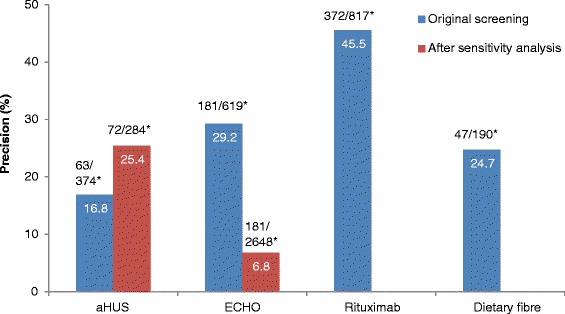
- Precision varied by dataset: 16.8% (aHUS), 24.7% (dietary fibre), 29.2% (ECHO), and 45.5% (rituximab).
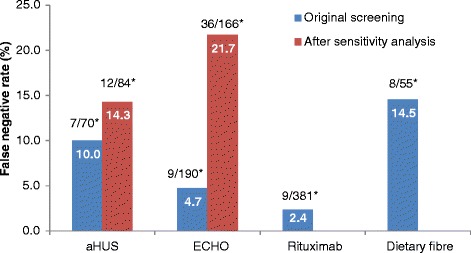
- The false negative rate ranged from 2.4% to 21.7%, while the actual proportion missed was 0% to 0.21%; average workload saving across the four datasets was 41%.
## Methods
- The authors evaluated Abstrackr using four existing systematic reviews drawn from biomedical database searches: aHUS (n = 1415), dietary fibre (n = 517), ECHO (n = 1735), and rituximab (n = 1042).
- Titles and abstracts were screened in Abstrackr until the algorithm generated predictions; the remaining unscreened citations were then classified as relevant/irrelevant and compared against the original review decisions.
- Performance was assessed using precision, false negative rate, proportion missed, and workload saving; post hoc sensitivity analyses were done for the aHUS dataset (including case reports) and a larger ECHO dataset (15,920 citations).
## Limitations
- The paper states that findings may be limited by the four datasets used, and that other clinical specialties could yield different precision, workload saving, and missed-study rates.
- The authors note that the datasets came from recently published reviews with trials mostly from 1995 onward, so the results may not generalize to older studies with less detailed titles/abstracts.
- Evident from the text: Abstrackr was tested on existing review datasets, not prospectively within live review workflows, so real-world performance may differ.
Model-written summary. Check it against the paper before relying on it.
Integrity signals
Registry
Cites
Statistics
Figures
Verification
Claims the paper makes
4 Valid · 0 Not valid · 6 Not checked · 36 Own results and interpretations
The sources with a verdict support this claim; the rest weren’t checked yet, have no full text we could read, or their verdicts aren’t rated yet.
In the paper
“This study and others that have evaluated semi-automated screening with support vector models [14, 15], semantic vector models [16], and complement naïve Bayes models [17] indicate that considerable workload savings can be achieved.”
§ Faster title and abstract screening? Evaluating Abstrackr, a semi-automated online screening program for systematic reviewers > Discussion > Strengths and weaknesses of the research Our findings may be limited by the four datasets used, and citations from other clinical specialities may yield different precision and workload saving and miss more relevant studies for inclusion, especially if the title and abstract descriptions are inadequate or the study designs are more complex. Our datasets were from recently published systematic reviews that included trials published mostly from 1995 onwards, and therefore, may contain better descriptions than older trials that were published before the CONSORT [24] reporting guidelines were introduced in 1996. Nevertheless, our results for identifying relevant trials are similar to the high recall results of Wallace (2010 and 2012) and indicate that similar accuracy could be achieved when using other datasets of medical citations. Previous text mining studies have mainly evaluated performance in terms of recall and specificity; however, our results also analysed the precision of the predictive model since this measures how precisely the algorithm selects studies for further full text inspection and mirrors the working steps of a systematic reviewer. Precision, however, is subjective and influenced by the reviewer’s expertise which can affect their screening judgements. The ECHO sensitivity analysis demonstrated that workload saving with semi-automated screening is more pronounced with large datasets, and therefore, greater savings could have resulted had we screened larger reviews. Nonetheless, the results provide a reasonable estimate of the algorithm’s typical performance during semi-automated screening. This study and others that have evaluated semi-automated screening with support vector models [14, 15], semantic vector models [16], and complement naïve Bayes models [17] indicate that considerable workload savings can be achieved. The ability to identify all relevant citations with Abstrackr was very high but imperfect. Such accuracy, however, is acceptable as a stand-alone tool for scoping searches and non-systematic reviews where not every published study needs to be included. It is noteworthy, however, that human citation screening is imperfect with relevant studies wrongly excluded [25]. Given that Abstrackr’s inaccuracy is similar to a human screener, it could be utilised as the second screener. Abstrackr’s classification prediction model uses a somewhat arbitrary cutoff point at which the proportion of citations screened triggers the algorithm prediction. However, this suggests that an adjustable stopping heuristic could be used, so accuracy could be further improved albeit with the trade-off that more citations are screened during the training phase. Future developments with semi-automated screening would benefit from retaining the original classification model developed during the original review, so future systematic review updates may be screened automatically without the re-input of a reviewer. Abstrackr is not currently a fully integrated tool, and only the unscreened citations (the predictions) are exportable with only the title bibliographic details made available, and further developments are needed to create a fully integrated tool that systematic reviewers and information specialists can use. Text mining algorithms that would enable systematic reviewers to exploit the labelling of keywords towards biasing the predictive classification model to further enhance performance have been proposed [26]. This approach could be further aided by citation enrichment. For example, keywords of high relevance such as the PICOS details should improve the recall accuracy of semi-automated screening algorithms (and trial searching). Enriching citations is already being used for the EMBASE project [27] by coding citations with the type of study design through crowd sourcing. Further research and innovations in this underexplored area is needed to advance current methods to eventually enable semi-automated screening to fully replace manual screening. Current text mining research [28] is focused on advancing screening retroactively and is restrained by the limitations of the data available. A more successful approach may require collaboration with biomedical database providers to ensure that citations are adequately labelled prospectively and retrospectively using strategies such as record linkage techniques, crowd sourcing, or access to a central repository, whereby PICOS details can be inputted and linked to all bibliographic databases.
What the sources say
- Not checked — no full text of the sourcecites [14] Wallace B, Small K, Brodley C, Lau J, Trikalinos T. Deploying an interactive machine learning system in an evidence-based practice center. Proc 2nd ACM SIGHIT Symp Int Heal informatics 2012. source
- Supportedcites [15] Wallace B Small K Brodley C Lau J Schmid C Bertram L Toward modernizing the systematic review pipeline in genetics: efficient updating via data mining Genet Med. 2012 14 663 9 10.1038/gim.2012.7 22481134 PMC3908550 source
The Materials and Methods section says the study used an ensemble of support vector machine (SVM) classifiers for semi-automated screening. The Discussion reports that the system reduced the number of citations requiring human screening by 70–90%, a substantial workload saving. Page numbers are not provided in our copy. (LLM, conf=0.94)
- Supportedcites [16] Jonnalagadda S Petitti D A new iterative method to reduce workload in the systematic review process Int J Comput Biol Drug Des. 2013 6 5 17 10.1504/IJCBDD.2013.052198 23428470 PMC3787693 source
The Methods section describes a semantic vector model that ranks abstracts for review, with expert relevance feedback described in the Discussion. The Results report estimated workload reductions of 6%–30% at 95% recall across 15 reviews, supporting the claim attributed to this paper. Page numbers were not provided in our copy. (LLM, conf=0.92)
- Supportedcites [17] Matwin S Kouznetsov A Inkpen D Frunza O O’Blenis P A new algorithm for reducing the workload of experts in performing systematic reviews J Am Med Informatics Assoc. 2010 17 446 53 10.1136/jamia.2010.004325 PMC2995653 20595313 source
Matwin et al. (2010) is the complement naïve Bayes study referenced here: the Abstract reports that a factorized CNB (FCNB) classifier with weight engineering reduced expert review workload by a minimum of 8.5%, maximum 62.2%, and an average of 33.5% across 15 systematic drug class reviews at ≥95% recall, and the 'Summary of the main results' (p. 6) states this is 15.0% greater than the previous average. The CONCLUSION adds that 'automated document classification has strong potential for aiding the labor-intensive literature review process for systematic reviews'. This supports the attributed point that semi-automated screening with a complement naïve Bayes model yields substantial workload savings; the SVM and semantic-vector parts of the sentence are carried by other citations. (LLM, conf=0.85)
hedgedstates a cause- Asserted: passes — The authors put it forward as true.
- Checkable: passes — It can be checked against evidence.
- Load-bearing: passes — The paper’s conclusions depend on it.
- Based: passes — The paper gives a reason why it holds.
Every source the paper cites for this claim was checked and supports it.
In the paper
“It is noteworthy, however, that human citation screening is imperfect with relevant studies wrongly excluded [25].”
§ Faster title and abstract screening? Evaluating Abstrackr, a semi-automated online screening program for systematic reviewers > Discussion > Strengths and weaknesses of the research Our findings may be limited by the four datasets used, and citations from other clinical specialities may yield different precision and workload saving and miss more relevant studies for inclusion, especially if the title and abstract descriptions are inadequate or the study designs are more complex. Our datasets were from recently published systematic reviews that included trials published mostly from 1995 onwards, and therefore, may contain better descriptions than older trials that were published before the CONSORT [24] reporting guidelines were introduced in 1996. Nevertheless, our results for identifying relevant trials are similar to the high recall results of Wallace (2010 and 2012) and indicate that similar accuracy could be achieved when using other datasets of medical citations. Previous text mining studies have mainly evaluated performance in terms of recall and specificity; however, our results also analysed the precision of the predictive model since this measures how precisely the algorithm selects studies for further full text inspection and mirrors the working steps of a systematic reviewer. Precision, however, is subjective and influenced by the reviewer’s expertise which can affect their screening judgements. The ECHO sensitivity analysis demonstrated that workload saving with semi-automated screening is more pronounced with large datasets, and therefore, greater savings could have resulted had we screened larger reviews. Nonetheless, the results provide a reasonable estimate of the algorithm’s typical performance during semi-automated screening. This study and others that have evaluated semi-automated screening with support vector models [14, 15], semantic vector models [16], and complement naïve Bayes models [17] indicate that considerable workload savings can be achieved. The ability to identify all relevant citations with Abstrackr was very high but imperfect. Such accuracy, however, is acceptable as a stand-alone tool for scoping searches and non-systematic reviews where not every published study needs to be included. It is noteworthy, however, that human citation screening is imperfect with relevant studies wrongly excluded [25]. Given that Abstrackr’s inaccuracy is similar to a human screener, it could be utilised as the second screener. Abstrackr’s classification prediction model uses a somewhat arbitrary cutoff point at which the proportion of citations screened triggers the algorithm prediction. However, this suggests that an adjustable stopping heuristic could be used, so accuracy could be further improved albeit with the trade-off that more citations are screened during the training phase. Future developments with semi-automated screening would benefit from retaining the original classification model developed during the original review, so future systematic review updates may be screened automatically without the re-input of a reviewer. Abstrackr is not currently a fully integrated tool, and only the unscreened citations (the predictions) are exportable with only the title bibliographic details made available, and further developments are needed to create a fully integrated tool that systematic reviewers and information specialists can use. Text mining algorithms that would enable systematic reviewers to exploit the labelling of keywords towards biasing the predictive classification model to further enhance performance have been proposed [26]. This approach could be further aided by citation enrichment. For example, keywords of high relevance such as the PICOS details should improve the recall accuracy of semi-automated screening algorithms (and trial searching). Enriching citations is already being used for the EMBASE project [27] by coding citations with the type of study design through crowd sourcing. Further research and innovations in this underexplored area is needed to advance current methods to eventually enable semi-automated screening to fully replace manual screening. Current text mining research [28] is focused on advancing screening retroactively and is restrained by the limitations of the data available. A more successful approach may require collaboration with biomedical database providers to ensure that citations are adequately labelled prospectively and retrospectively using strategies such as record linkage techniques, crowd sourcing, or access to a central repository, whereby PICOS details can be inputted and linked to all bibliographic databases.
What the sources say
- Supportedcites [25] Ng L Pitt V Huckvale K Clavisi O Turner T Gruen R Title and Abstract Screening and Evaluation in Systematic Reviews (TASER): a pilot randomised controlled trial of title and abstract screening by medical students Syst Rev. 2014 3 e1 8 10.1186/2046-4053-3-121 PMC4217707 25335439 source
The Results (Primary outcomes: final sensitivity and screening specificity; page unavailable) report that no student screener identified all 14 articles ultimately included in the review. This directly demonstrates that human citation screening can wrongly exclude relevant studies. (LLM, conf=0.94)
plain- Asserted: passes — The authors put it forward as true.
- Checkable: passes — It can be checked against evidence.
- Load-bearing: passes — The paper’s conclusions depend on it.
- Based: passes — The paper gives a reason why it holds.
- Supported
A result the paper reports from its own data — it cites no other source for it, so there is none to check. The quote shows it is in the paper.
In the paper
“However, one relevant citation in both the aHUS and ECHO reviews was incorrectly predicted as not relevant.”
§ Faster title and abstract screening? Evaluating Abstrackr, a semi-automated online screening program for systematic reviewers > Abstract > Results
plain- Asserted: passes — The authors put it forward as true.
- Checkable: passes — It can be checked against evidence.
- Load-bearing: unclear — It is unclear whether the paper’s conclusions depend on it.
- Based: passes — The paper gives a reason why it holds.
A result the paper reports from its own data — it cites no other source for it, so there is none to check. The quote shows it is in the paper.
In the paper
“Of the unscreened citations, Abstrackr’s prediction algorithm correctly identified all relevant citations for the rituximab and dietary fibre reviews.”
§ Faster title and abstract screening? Evaluating Abstrackr, a semi-automated online screening program for systematic reviewers > Abstract > Results
plain- Asserted: passes — The authors put it forward as true.
- Checkable: passes — It can be checked against evidence.
- Load-bearing: unclear — It is unclear whether the paper’s conclusions depend on it.
- Based: passes — The paper gives a reason why it holds.
A result the paper reports from its own data — it cites no other source for it, so there is none to check. The quote shows it is in the paper.
In the paper
“Sensitivity analysis performed on the aHUS dataset increased the precision from 16 to 25 % and increased the workload saving by 10 % but increased the number of relevant studies missed.”
§ Faster title and abstract screening? Evaluating Abstrackr, a semi-automated online screening program for systematic reviewers > Abstract > Results
plainstates a cause- Asserted: passes — The authors put it forward as true.
- Checkable: passes — It can be checked against evidence.
- Load-bearing: unclear — It is unclear whether the paper’s conclusions depend on it.
- Based: passes — The paper gives a reason why it holds.
22 more claims
Create a free account to see all 46 claims and to verify the 1 reference still open.
- Probably not a substantial claim. 6
- It may state two separate claims as one. 16
Claims other papers make about this one
Each is checked against this paper’s own text: does it say what the citing paper says it does?
The source backs part of the claim, not all of it — or backs it for a different population, condition or comparison.
In the citing paper
“Moreover, supervised machine learning is known to perform better on larger datasets [16].”
From Technology-assisted title and abstract screening for systematic reviews: a retrospective evaluation of the Abstrackr machine learning tool (2018) · cites this paper as [16]
Experimental — accuracy not yet measuredThe source backs part of the claim, not all of it — or backs it for a different population, condition or comparison.
In the citing paper
“With respect to its prediction algorithm, the few existing evaluations have reported screening workload reductions of at least 40% and the incorrect exclusion of few, if any relevant records [15, 16].”
From Technology-assisted title and abstract screening for systematic reviews: a retrospective evaluation of the Abstrackr machine learning tool (2018) · cites this paper as [16]
Experimental — accuracy not yet measuredThe source backs part of the claim, not all of it — or backs it for a different population, condition or comparison.
In the citing paper
“Many studies evaluating these tools have assessed automatic classification functionality, in which screening continued until the tool predicts whether studies should be included or not, and remaining citations are not screened [19, 21].”
From Machine learning for screening prioritization in systematic reviews: comparative performance of Abstrackr and EPPI-Reviewer (2020) · cites this paper as [21]
Experimental — accuracy not yet measuredThe cited source says what the claim attributes to it.
In the citing paper
“Conversely, for some reviews the workload savings have been minimal (< 10%) [16].”
From Technology-assisted title and abstract screening for systematic reviews: a retrospective evaluation of the Abstrackr machine learning tool (2018) · cites this paper as [16]
The cited source says what the claim attributes to it.
In the citing paper
“Our findings are consistent with other studies which have found Abstrackr to offer potential gains [7, 19, 21].”
From Machine learning for screening prioritization in systematic reviews: comparative performance of Abstrackr and EPPI-Reviewer (2020) · cites this paper as [21]
3 more claims about this paper
Create a free account to see every claim other papers make about this one.
Citations
Cites
Preferred Reporting Items for Systematic Reviews and Meta-Analyses: the PRISMA statement
Moher, D., Liberati, A., Tetzlaff, J., Altman, D. G., & for the PRISMA Group (2009) · BMJ · doi:10.1136/bmj.b2535 · Cited by 83,823
Preferred reporting items for systematic reviews and meta-analyses: the PRISMA Statement.
(2009) · PubMed Central · Cited by 44,859
The Cochrane Collaboration's tool for assessing risk of bias in randomised trials
Higgins, J. P. T., Altman, D. G., Gotzsche, P. C., Juni, P., Moher, D., Oxman, A. D., Savovic, J., Schulz, K. F., Weeks, L., Sterne, J. A. C., et al. (2011) · BMJ · doi:10.1136/bmj.d5928 · Cited by 33,817 · cited 1×
“Systematic reviews have also become more time consuming due to the growth in the volume and scatter of randomised trials [3], additional reporting steps [4–6], and the incorporation of more complex methodologies such as network meta-analysis and the acquisition of clinical study reports [7].”
PRISMA-P Group, Moher, D., Shamseer, L., Clarke, M., Ghersi, D., Liberati, A., Petticrew, M., Shekelle, P., & Stewart, L. A. (2015) · Systematic Reviews · doi:10.1186/2046-4053-4-1 · Cited by 26,223
Dermyshi, E., Wang, Y., Yan, C., Hong, W., Qiu, G., Gong, X., & Zhang, T. (2017) · Neonatology · doi:10.1159/000454668 · Cited by 24,451
Preferred Reporting Items for Systematic Reviews and Meta-Analyses: The PRISMA Statement
Moher, D., Liberati, A., Tetzlaff, J., & Altman, D. G. (2009) · Journal of Clinical Epidemiology · doi:10.1016/j.jclinepi.2009.06.005 · Cited by 19,575
How Quickly Do Systematic Reviews Go Out of Date? A Survival Analysis
Shojania, K. G., Sampson, M., Ansari, M. T., Ji, J., Doucette, S., & Moher, D. (2007) · Annals of Internal Medicine · doi:10.7326/0003-4819-147-4-200708210-00179 · Cited by 838 · cited 1×
“Consequently, many systematic reviews are out of date [8, 9].”
BackgroundO’Mara-Eves, A., Thomas, J., McNaught, J., Miwa, M., & Ananiadou, S. (2015) · Systematic Reviews · doi:10.1186/2046-4053-4-5 · Cited by 681
Hopewell, S., Clarke, M., Moher, D., Wager, E., Middleton, P., Altman, D. G., Schulz, K. F., & and the CONSORT Group (2008) · PLoS Medicine · doi:10.1371/journal.pmed.0050020 · Cited by 674
Neuraminidase inhibitors for preventing and treating influenza in healthy adults and children
Jefferson, T., Jones, M. A., Doshi, P., Del Mar, C. B., Heneghan, C. J., Hama, R., & Thompson, M. J. (2012) · Cochrane Database of Systematic Reviews · doi:10.1002/14651858.cd008965.pub3 · Cited by 594
Research works printed but not linked: 1
- Frequency of updating Cochrane Reviews [ http://www.cochrane.org/editorial-and-publishing-policy-resource/cochrane-review-updates]
Cited by
O'Dea, R. E., Lagisz, M., Jennions, M. D., Koricheva, J., Noble, D. W. A., Parker, T. H., Gurevitch, J., Page, M. J., Stewart, G., Moher, D., et al. (2021) · Biological Reviews · doi:10.1111/brv.12721 · Cited by 697
“…can be conducted using a single database, but it is preferable to use more than one database for the final search (Bramer et al., 2018) (requiring duplicated studies to be removed prior to study selection, for which software is available; Rathbone et al., 2015a; Westgate, 2019; Muka et al., 2020).”
MethodBest practice guidelines for abstract screening large‐evidence systematic reviews and meta‐analyses
Polanin, J. R., Pigott, T. D., Espelage, D. L., & Grotpeter, J. K. (2019) · Research Synthesis Methods · doi:10.1002/jrsm.1354 · Cited by 401
Grames, E. M., Stillman, A. N., Tingley, M. W., & Elphick, C. S. (2019) · Methods in Ecology and Evolution · doi:10.1111/2041-210x.13268 · Cited by 377
“…ad - vancements have enabled automation of key tasks such as re - moving duplicate articles, prioritizing articles for screening, and extracting data from tables and figures (Jonnalagadda, Goyal, & Huffman, 2015; Przybyla et al., 2018; Rathbone, Hoffmann, & Glasziou, 2015; Shemilt et al., 2014).”
Methodvon Philipsborn, P., Stratil, J. M., Burns, J., Busert, L. K., Pfadenhauer, L. M., Polus, S., Holzapfel, C., Hauner, H., & Rehfuess, E. (2019) · Cochrane Database of Systematic Reviews · doi:10.1002/14651858.cd012292.pub2 · Cited by 304
Optimal literature search for systematic reviews in surgery
Goossen, K., Tenckhoff, S., Probst, P., Grummich, K., Mihaljevic, A. L., Büchler, M. W., & Diener, M. K. (2018) · Langenbeck's Archives of Surgery · doi:10.1007/s00423-017-1646-x · Cited by 248
Using artificial intelligence methods for systematic review in health sciences: A systematic review
Blaizot, A., Veettil, S. K., Saidoung, P., Moreno‐Garcia, C. F., Wiratunga, N., Aceves‐Martins, M., Lai, N. M., & Chaiyakunapruk, N. (2022) · Research Synthesis Methods · doi:10.1002/jrsm.1553 · Cited by 223
“found Abstrackr to reliably reduce workloads with very little risk of omitting records.(5,6) The 12 identified studies have implemented AI methods in the review and evidence synthesis process to varying degrees of success.”
BackgroundKazda, L., Bell, K., Thomas, R., McGeechan, K., Sims, R., & Barratt, A. (2021) · JAMA Network Open · doi:10.1001/jamanetworkopen.2021.5335 · Cited by 219
Diet and Anxiety: A Scoping Review
Aucoin, M., LaChance, L., Naidoo, U., Remy, D., Shekdar, T., Sayar, N., Cardozo, V., Rawana, T., Chan, I., & Cooley, K. (2021) · Nutrients · doi:10.3390/nu13124418 · Cited by 212
Johnson, B. T., & Hennessy, E. A. (2019) · Social Science & Medicine · doi:10.1016/j.socscimed.2019.05.035 · Cited by 201
“—In recent years, computer scientists are have developed automated search engines and screening tools (Carter, 2018; Marshall et al., 2018; Przybyla et al., 2018; Rathbone et al., 2015).”
BackgroundChai, K. E. K., Lines, R. L. J., Gucciardi, D. F., & Ng, L. (2021) · Systematic Reviews · doi:10.1186/s13643-021-01635-3 · Cited by 190
“In two retrospective, independent evaluations of Abstrackr ’ s performance, the workload savings varied between 9 and 57% [36], and 9.5 and 88.4% [14].”
BackgroundInfluentialBannach-Brown, A., Przybyła, P., Thomas, J., Rice, A. S. C., Ananiadou, S., Liao, J., & Macleod, M. R. (2019) · Systematic Reviews · doi:10.1186/s13643-019-0942-7 · Cited by 185
“Machine learning approaches have been evaluated in context of systematic reviews of several medical problems including drug class efficacy assessment [7, 8, 12], genetic associations [9], public health [13, 16], cost-effectiveness analyses [9], toxicology [3], treatment effectiveness [17, 18], and nutrition [17].”
BackgroundValizadeh, A., Moassefi, M., Nakhostin-Ansari, A., Hosseini Asl, S. H., Saghab Torbati, M., Aghajani, R., Maleki Ghorbani, Z., & Faghani, S. (2022) · BMC Medical Research Methodology · doi:10.1186/s12874-022-01631-8 · Cited by 159
“Other studies on Rayyan and other similar tools did also evaluate other outcomes such as workload savings [18, 19], users’ satisfaction and recommendations [17], and diagnostic accuracy of the tool for large and small SRs seperately [20].”
BackgroundResultHoward, B. E., Phillips, J., Tandon, A., Maharana, A., Elmore, R., Mav, D., Sedykh, A., Thayer, K., Merrick, B. A., Walker, V., et al. (2020) · Environment International · doi:10.1016/j.envint.2020.105623 · Cited by 157
“Variants of this active learning approach for document screening have been tested previously in several research scenarios (Wallace et al., 2010a, 2010b; Wallace and Small, 2011; Wallace et al., 2012a; Miwa et al., 2014; Mo et al., 2015; Rathbone et al., 2015).”
MethodPrioritising references for systematic reviews with RobotAnalyst: A user study
Przybyła, P., Brockmeier, A. J., Kontonatsios, G., Le Pogam, M., McNaught, J., von Elm, E., Nolan, K., & Ananiadou, S. (2018) · Research Synthesis Methods · doi:10.1002/jrsm.1311 · Cited by 148
“An independent evaluation 62 was performed on four previous reviews (containing 517, 1042, 1415, and 1735 references).”
MethodGates, A., Johnson, C., & Hartling, L. (2018) · Systematic Reviews · doi:10.1186/s13643-018-0707-8 · Cited by 148
“…d. False negative rate: the proportion of records that were deemed relevant by the human reviewers that were predicted as irrelevant by Abstrackr [16]. e. Proportion missed: the number of records predicted as irrelevant by Abstrackr that were included in the final report, out of the total number…”
BackgroundMethodResultInfluentialHamel, C., Kelly, S. E., Thavorn, K., Rice, D. B., Wells, G. A., & Hutton, B. (2020) · BMC Medical Research Methodology · doi:10.1186/s12874-020-01129-1 · Cited by 140
Do Gross and Fine Motor Skills Differentially Contribute to Language Outcomes? A Systematic Review
Gonzalez, S. L., Alvarez, V., & Nelson, E. L. (2019) · Frontiers in Psychology · doi:10.3389/fpsyg.2019.02670 · Cited by 207
“Abstrackr presents potentially more relevant articles early on during the abstract review process, and allows for semiautomated abstract rejection through use of algorithm based machine learned patterns that utilize the patterns of prior manual abstract rejections by the human reviewers (Rathbone et al., 2015).”
BackgroundInfluentialGates, A., Guitard, S., Pillay, J., Elliott, S. A., Dyson, M. P., Newton, A. S., & Hartling, L. (2019) · Systematic Reviews · doi:10.1186/s13643-019-1222-2 · Cited by 133
Fleming, P., & Drucker, A. M. (2017) · Journal of the American Academy of Dermatology · doi:10.1016/j.jaad.2017.09.052 · Cited by 136
Créquit, P., Trinquart, L., Yavchitz, A., & Ravaud, P. (2016) · BMC Medicine · doi:10.1186/s12916-016-0555-0 · Cited by 125
Tsou, A. Y., Treadwell, J. R., Erinoff, E., & Schoelles, K. (2020) · Systematic Reviews · doi:10.1186/s13643-020-01324-7 · Cited by 122
Diet and Psychosis: A Scoping Review
Aucoin, M., LaChance, L., Cooley, K., & Kidd, S. A. (2018) · Neuropsychobiology · doi:10.1159/000493399 · Cited by 142
Effects of sediment exposure on corals: a systematic review of experimental studies
Tuttle, L. J., & Donahue, M. J. (2022) · Environmental Evidence · doi:10.1186/s13750-022-00256-0 · Cited by 156
“This can increase workload savings while maintaining relatively high sensitivity and specificity and relatively low false-negative rates, thus making it a useful addition to the screening process [37, 38].”
BackgroundHamel, C., Hersi, M., Kelly, S. E., Tricco, A. C., Straus, S., Wells, G., Pham, B., & Hutton, B. (2021) · BMC Medical Research Methodology · doi:10.1186/s12874-021-01451-2 · Cited by 104
“Several studies have been published since 2015 using and evaluating the use of AI and prioritized screening, many with encouraging results [10, 25–37].”
BackgroundWassenaar, T. M., Williamson, W., Johansen-Berg, H., Dawes, H., Roberts, N., Foster, C., & Sexton, C. E. (2020) · International Journal of Behavioral Nutrition and Physical Activity · doi:10.1186/s12966-020-00959-y · Cited by 97
“Following removal of duplicates, two reviewers (TW, WW) independently screened all titles and abstracts using Abstrackr [21].”
MethodEligibility screening in evidence synthesis of environmental management topics
Frampton, G. K., Livoreil, B., & Petrokofsky, G. (2017) · Environmental Evidence · doi:10.1186/s13750-017-0102-2 · Cited by 95
“In particular, automated approaches such as text mining and machine learning appear to offer considerable promise for making eligibility screening quicker and less onerous [20].”
MethodInfluentialAlhaj, O. A., Fekih‐Romdhane, F., Sweidan, D. H., Saif, Z., Khudhair, M. F., Ghazzawi, H., Nadar, M. S., Alhajeri, S. S., Levine, M. P., & Jahrami, H. (2022) · Eating and Weight Disorders - Studies on Anorexia Bulimia and Obesity · doi:10.1007/s40519-022-01452-0 · Cited by 134
“The Abstrackr semi-automated abstract screening tool for systematic reviews was used to increase the precision of abstract screening [41].”
MethodFerdinands, G., Schram, R., de Bruin, J., Bagheri, A., Oberski, D. L., Tummers, L., Teijema, J. J., & van de Schoot, R. (2023) · Systematic Reviews · doi:10.1186/s13643-023-02257-7 · Cited by 96
“A possible explanation for this is that this difficulty has to be attributed to factors more directly related to the systematic review at hand, such as the proportion of relevant publications or the complexity of inclusion criteria used to identify relevant publications [16, 53].”
BackgroundBouton, C., Journeaux, M., Jourdain, M., Angibaud, M., Huon, J., & Rat, C. (2023) · BMC Family Practice · doi:10.1186/s12875-023-02189-0 · Cited by 148
“First, the titles were reviewed, and then the abstracts and full texts of the selected articles were reviewed independently by two reviewers with the Abstrackr tool [17].”
MethodRobledo, S., Grisales Aguirre, A. M., Hughes, M., & Eggers, F. (2023) · Journal of Small Business Management · doi:10.1080/00472778.2021.1955125 · Cited by 80
“According to Rathbone et al. (2015), the complexity of inclusion records and the relationship between this and the screening work-load affects precision.”
BackgroundMethodInfluentialGates, A., Gates, M., Sebastianski, M., Guitard, S., Elliott, S. A., & Hartling, L. (2020) · BMC Medical Research Methodology · doi:10.1186/s12874-020-01031-w · Cited by 80
Assessing the accuracy of machine-assisted abstract screening with DistillerAI: a user study
Gartlehner, G., Wagner, G., Lux, L., Affengruber, L., Dobrescu, A., Kaminski-Hartenthaler, A., & Viswanathan, M. (2019) · Systematic Reviews · doi:10.1186/s13643-019-1221-3 · Cited by 73
Jahrami, H., Trabelsi, K., Boukhris, O. F., Hussain, J. H., Alenezi, A. F., Humood, A. M., Saif, Z., Pandi-Perumal, S. R., & Seeman, M. V. (2022) · Behavioral Sciences · doi:10.3390/bs13010035 · Cited by 123
Methodological insights into ChatGPT’s screening performance in systematic reviews
Issaiy, M., Ghanaati, H., Kolahi, S., Shakiba, M., Jalali, A. H., Zarei, D., Kazemian, S., Avanaki, M. A., & Firouznia, K. (2024) · BMC Medical Research Methodology · doi:10.1186/s12874-024-02203-8 · Cited by 69
“Some studies have attempted to evaluate the above tools’ performance but mostly relied on retrospective data from earlier systematic reviews [31, 32].”
BackgroundFinancial strain and depression in the U.S.: a scoping review
Ettman, C. K., Fan, A. Y., Philips, A. P., Adam, G. P., Ringlein, G., Clark, M. A., Wilson, I. B., Vivier, P. M., & Galea, S. (2023) · Translational Psychiatry · doi:10.1038/s41398-023-02460-z · Cited by 101
“Abstrackr uses machine learning to predict the likelihood of relevance for each citation [31, 32].”
MethodRathbone, J., Albarqouni, L., Bakhit, M., Beller, E., Byambasuren, O., Hoffmann, T., Scott, A. M., & Glasziou, P. (2017) · Systematic Reviews · doi:10.1186/s13643-017-0629-x · Cited by 64
Self-citationSantos, Á. O. D., da Silva, E. S., Couto, L. M., Reis, G. V. L., & Belo, V. S. (2023) · Journal of Biomedical Informatics · doi:10.1016/j.jbi.2023.104389 · Cited by 64
Improving reference prioritisation with PICO recognition.
Brockmeier, A. J., Ju, M., Przybyła, P., & Ananiadou, S. (2019) · BMC Medical Informatics and Decision Making · doi:10.1186/s12911-019-0992-8 · Cited by 62
“While previous studies [7, 16, 17] have shown the potential for time-savings, the underlying models treat each word equally and do not explicitly distinguish PICO elements within an abstract.”
Williams, Z. J., Suzman, E., Bordman, S. L., Markfeld, J. E., Kaiser, S., Dunham, K., Zoltowski, A. R., Failla, M. D., Cascio, C. J., & Woynaroski, T. G. (2022) · Journal of Autism and Developmental Disorders · doi:10.1007/s10803-022-05656-2 · Cited by 74
“Duplicates were removed in Microsoft Excel, double checked using visual inspection, and nonduplicate records were then transferred into the Abstrakr program (Rathbone et al., 2015).”
MethodLeisher, C., Temsah, G., Booker, F., Day, M., Agarwal, B., Matthews, E., Roe, D., Russell, D., Samberg, L., Sunderland, T., et al. (2015) · Environmental Evidence · doi:10.1186/s13750-015-0039-2 · Cited by 61
“We did not use Abstrackr’s semi-automated screening function, though it shows promise for substantially reducing the time needed to screen titles and abstracts [43].”
MethodIncidence of influenza virus infection among pregnant women: a systematic review
Katz, M. A., Gessner, B. D., Johnson, J., Skidmore, B., Knight, M., Bhat, N., Marshall, H. S., Horne, D. J. D. L., Ortiz, J. R., & Fell, D. B. (2017) · BMC Pregnancy and Childbirth · doi:10.1186/s12884-017-1333-5 · Cited by 53
“Following de-duplication, search records were uploaded into Abstrackr [12], an online systematic review tool, and screened by two independent reviewers (MK, JJ) to identify studies for full-text review.”
MethodActive learning for screening prioritization in systematic reviews - A simulation study
Ferdinands, G., Schram, R., de Bruin, J., Bagheri, A., Oberski, D. L., Tummers, L., & van de Schoot, R. (2020) · doi:10.31219/osf.io/w6qbg · Cited by 51
“A possible explanation for this is that this difficulty has to be attributed to factors more directly related to the systematic review at hand, such as the proportion of relevant publications or the complexity of inclusion criteria used to identify relevant publications [16, 54].”
Kebede, M. M., Le Cornet, C., & Fortner, R. T. (2023) · Research Synthesis Methods · doi:10.1002/jrsm.1589 · Cited by 50
“…point-and-click ML-based title/abstract screening tool Abstrckr (false negativity rate: from 2% to 21%, and from 0% to 0.21% of false negative studies passing the downward full-text screening step) 37 and another study reported 0% to 14% false negatives passing the full-text screening stage.”
BackgroundInfluentialdos Reis, A. H. S., de Oliveira, A. L. M., Fritsch, C. G., Zouch, J., Ferreira, P. H., & Polese, J. C. (2023) · Systematic Reviews · doi:10.1186/s13643-023-02231-3 · Cited by 61
Matsui, K., Utsumi, T., Aoki, Y., Maruki, T., Takeshima, M., & Takaesu, Y. (2024) · Journal of Medical Internet Research · doi:10.2196/52758 · Cited by 50
“…factors: complexity in research design, characteristics of the target demographic, types of interventions, complexity in selection criteria, a significant scarcity of relevant records within the data set (leading to data imbalance), and inconsistency in the terminology used for judgment [21,23,29].”
InfluentialBaker, J. A., Berzins, K. M., Canvin, K., Benson, I., Kellar, I., Wright, J. M., López, R. R., Duxbury, J. A., Kendall, T., & Stewart, D. (2021) · Health Services and Delivery Research · doi:10.3310/hsdr09050 · Cited by 63
How does sediment exposure affect corals? A systematic review protocol
Tuttle, L. J., Johnson, C. E., Kolinski, S., Minton, D., & Donahue, M. J. (2020) · Environmental Evidence · doi:10.1186/s13750-020-00200-0 · Cited by 51
“This can increase workload savings while maintaining relatively high sensitivity and specificity and relatively low false-negative rates, thus making it a useful addition to the screening process [26, 27].”
BackgroundWashington‐Nortey, M., Zhang, F., Xu, Y., Ruiz, A. B., Chen, C., & Spence, C. (2020) · Early Childhood Education Journal · doi:10.1007/s10643-020-01126-5 · Cited by 96
Lhachimi, S. K., Pega, F., Heise, T. L., Fenton, C., Gartlehner, G., Griebler, U., Sommer, I., Bombana, M., & Katikireddi, S. V. (2020) · Cochrane Database of Systematic Reviews · doi:10.1002/14651858.cd012415.pub2 · Cited by 47
“Rathbone 2015 Rathbone J, HoHmann T, Glasziou P. Faster title and abstract screening?”
BackgroundMethodMethodological Standards for Conducting High-Quality Systematic Reviews
CASSAI, A. D., Dost, B., Tulgar, S., & Boscolo, A. (2025) · Biology · doi:10.3390/biology14080973 · Cited by 96
“Popular examples include Abstrackr [20], Rayyan [21], Covidence [22], and EPPI-Reviewer [23], which facilitate collaborative screening, streamline decision tracking, and reduce reviewer workload without compromising methodological rigor.”
Automation tools to support undertaking scoping reviews
Khalil, H., Pollock, D., McInerney, P., Evans, C., Moraes, E. B., Godfrey, C. M., Alexander, L., Tricco, A., Peters, M. D. J., Pieper, D., et al. (2024) · Research Synthesis Methods · doi:10.1002/jrsm.1731 · Cited by 43
“21,30,50,51,53 These four tools had the highest reliability and validity amongst the others that were introduced as undertaking this step.”
Olorisade, B. K., de Quincey, E., Brereton, P., & Andras, P. (2016) · Proceedings of the 20th International Conference on Evaluation and Assessment in Software Engineering · doi:10.1145/2915970.2915982 · Cited by 42
“, that has been evaluated by another group in [66].”
BackgroundWealth and depression: A scoping review
Ettman, C. K., Adam, G. P., Clark, M. A., Wilson, I. B., Vivier, P. M., & Galea, S. (2022) · Brain and Behavior · doi:10.1002/brb3.2486 · Cited by 51
“Abstract screeningwas conducted using Abstrackr (Rathbone et al., 2015).”
Nicora, G., Pe, S., Santangelo, G., Billeci, L., Aprile, I. G., Germanotta, M., Bellazzi, R., Parimbelli, E., & Quaglini, S. (2025) · Journal of NeuroEngineering and Rehabilitation · doi:10.1186/s12984-025-01605-z · Cited by 77
“Titles and abstracts were screened by 5 reviewers with Abstrackr (http:// abstr ackr. cebm. brown. edu), a semi-automated tool that allows reviewers to independently screen abstracts retrieved [23, 24].”
Trad, F. S., Yammine, R., Charafeddine, J., Chakhtoura, M., Rahme, M., Fuleihan, G. E., & Chehab, A. (2025) · BMC Medical Research Methodology · doi:10.1186/s12874-025-02583-5 · Cited by 63
“To meet this increasing demand, many artificial intelligence-based tools have emerged in an attempt to expedite this process, such as Abstrackr, Rayyan AI, ASreviews, Colandr, and DistillerAI [3–7].”
Evaluation of text mining to reduce screening workload for injury-focused systematic reviews
Giummarra, M. J., Lau, G., & Gabbe, B. J. (2020) · Injury Prevention · doi:10.1136/injuryprev-2019-043247 · Cited by 39
“5 In contrast, Gates et al observed large workload savings, but at the expense of missing some relevant records for reviews of broader topics.”
BackgroundReddy, S. M., Patel, S., Weyrich, M., Fenton, J., & Viswanathan, M. (2020) · Systematic Reviews · doi:10.1186/s13643-020-01450-2 · Cited by 38
“Prior studies have suggested that ML algorithms may perform better with training sets that are more balanced and less well in collections with a smaller proportion of includes [15, 16].”
BackgroundResultInfluentialYao, X., Kumar, M. V., Su, E., Flores Miranda, A., Saha, A., & Sussman, J. (2024) · Cancer Epidemiology · doi:10.1016/j.canep.2023.102511 · Cited by 37
von Philipsborn, P., Stratil, J. M., Burns, J., Busert, L. K., Pfadenhauer, L. M., Polus, S., Holzapfel, C., Hauner, H., & Rehfuess, E. (2016) · Cochrane Database of Systematic Reviews · doi:10.1002/14651858.cd012292 · Cited by 35
Waffenschmidt, S., Sieben, W., Jakubeit, T., Knelangen, M., Overesch, I., Bühn, S., Pieper, D., Skoetz, N., & Hausner, E. (2023) · Systematic Reviews · doi:10.1186/s13643-023-02334-x · Cited by 43
“Several Internet-based screening tools such as Abstrackr [4], Rayyan [5], Covidence [6], and EPPI Reviewer [7] have been developed over the past years to make screening more efficient and are widely used.”
MethodDevelopment and validation of a MEDLINE search filter/hedge for degenerative cervical myelopathy
Davies, B. M., Goh, S., Yi, K., Kuhn, I. L., & Kotter, M. (2018) · BMC Medical Research Methodology · doi:10.1186/s12874-018-0529-3 · Cited by 36
Low-calorie sweeteners and health outcomes: A demonstration of rapid evidence mapping (rEM)
Lam, J., Howard, B. E., Thayer, K. A., & Shah, R. (2019) · Environment International · doi:10.1016/j.envint.2018.11.070 · Cited by 33
Sanchez‐Caro, J. M., de Ubago, I. D. L. M., Ruiz, E. D. C., Barguilla, A., Calvière, L., Raposo, N., Blancart, R. F. G., Fuentes, B., Díez‐Tejedor, E., & Rodríguez‐Pardo, J. (2021) · JAMA Neurology · doi:10.1001/jamaneurol.2021.3989 · Cited by 38
Scoping Review of Neuroimaging Studies Investigating Frailty and Frailty Components
López‐Sanz, D., Suárez‐Méndez, I., Bernabé, R., Pasquín, N., Rodríguez‐Mañas, L., Maestú, F., & Walter, S. (2018) · Frontiers in Medicine · doi:10.3389/fmed.2018.00284 · Cited by 35
“Nine Hundred and Seventy-Nine abstracts were reviewed independently by three researchers (SW, RB, and NP) with the help of abstrackr software without using the prediction algorithm (12).”
MethodPoliti, E., Lueders, A., Sankaran, S., Anderson, J., Assche, J. V., Spiritus-Beerden, E., Roblain, A., Phalet, K., Derluyn, I., Verelst, A., et al. (2021) · European Psychologist · doi:10.1027/1016-9040/a000460 · Cited by 46
Office concepts: A scoping review
Gjerland, A., Søiland, E., & Thuen, F. (2019) · Building and Environment · doi:10.1016/j.buildenv.2019.106294 · Cited by 38
Burgard, T., & Bittermann, A. (2023) · Zeitschrift für Psychologie · doi:10.1027/2151-2604/a000509 · Cited by 29
Bödding, R., Schriek, S. A., & Maier, G. W. (2025) · Virtual Reality · doi:10.1007/s10055-025-01118-z · Cited by 78
“The abstracts most likely to be relevant to the analysis were double screened (k double-screened = 2245 (34.60%); see recommendations in Rathbone et al. 2015 and Gates et al. 2020) and disagreements were resolved through regular discussion (see also: Clinton and Khan 2019; Stecher et al. 2023).”
InfluentialDeng, Z., Yin, K., Bao, Y., Armengol, V. D., Wang, C., Tiwari, A., Barzilay, R., Parmigiani, G., Braun, D., & Hughes, K. S. (2019) · JCO Clinical Cancer Informatics · doi:10.1200/cci.19.00043 · Cited by 32
“6%.(14,29-31) Lerner et al(32) reported an automated screening algorithm for updating network meta-analysis on the basis of machine learning and word embeddings.”
MethodFood insecurity, type 2 diabetes, and hyperglycaemia: A systematic review and meta‐analysis
Beltrán, S., Arenas, D. J., Pharel, M., Montgomery, C. T., López-Hinojosa, I. J., & DeLisser, H. M. (2021) · Endocrinology Diabetes & Metabolism · doi:10.1002/edm2.315 · Cited by 41
Jahrami, H., Saif, Z., Trabelsi, K., Bragazzi, N. L., & Vitiello, M. V. (2023) · Heliyon · doi:10.1016/j.heliyon.2023.e15464 · Cited by 40
Decoding semi-automated title-abstract screening: findings from a convenience sample of reviews
Gates, A., Gates, M., DaRosa, D., Elliott, S. A., Pillay, J., Rahman, S., Vandermeer, B., & Hartling, L. (2020) · Systematic Reviews · doi:10.1186/s13643-020-01528-x · Cited by 31
Créquit, P., Trinquart, L., & Ravaud, P. (2016) · BMJ Open · doi:10.1136/bmjopen-2016-011841 · Cited by 30
Icanervilia, A. V., van der Schans, J., Cao, Q., de Carvalho, A. C., Cordova-Pozo, K. L., Thobari, J. A., Postma, M. J., & van Asselt, A. D. I. (2022) · Journal of Global Health · doi:10.7189/jogh.12.04048 · Cited by 34
Giummarra, M. J., Lau, G., Grant, G. M., & Gabbe, B. J. (2019) · Accident Analysis & Prevention · doi:10.1016/j.aap.2019.105333 · Cited by 33
Choosing the Right Tool for the Job: Screening Tools for Systematic Reviews in Education
Zhang, Q., & Neitzel, A. (2024) · Journal of Research on Educational Effectiveness · doi:10.1080/19345747.2023.2209079 · Cited by 28
“The additional functions enabled by these semi-automated software tools hold promise to save a tremendous amount of time and labor in evidence-based synthesis (Ouzzani et al., 2016; Rathbone et al., 2015) if selected and used appropriately.”
Carey, N., Harte, M., & McCullagh, L. (2022) · Journal of Clinical Epidemiology · doi:10.1016/j.jclinepi.2022.05.017 · Cited by 28
The Promise and Challenges of Using LLMs to Accelerate the Screening Process of Systematic Reviews
Huotala, A., Kuutila, M., Ralph, P., & Mäntylä, M. (2024) · International Conference on Evaluation and Assessment in Software Engineering (EASE) · doi:10.1145/3661167.3661172 · Cited by 64
Antwi, E. K., Owusu-Banahene, W., Boakye-Danquah, J., Bernard, A., & Boateng, F. A. F. (2022) · MethodsX · doi:10.1016/j.mex.2022.101935 · Cited by 30
Meta-analysis shows no consistent evidence for senescence in ejaculate traits across animals
Sanghvi, K., Vega‐Trejo, R., Nakagawa, S., Gascoigne, S. J. L., Johnson, S. L., Salguero‐Gómez, R., Pizzari, T., & Sepil, I. (2024) · Nature Communications · doi:10.1038/s41467-024-44768-4 · Cited by 33
“We screened these abstracts in Rayyan 79 and abstrackr 80 using pre-de fi ned selection criteria (see below).”
Digital Tools to Support the Systematic Review Process: An Introduction
Schmidt, L., Cree, I. A., Campbell, F., & WCT EVI MAP group (2025) · Journal of Evaluation in Clinical Practice · doi:10.1111/jep.70100 · Cited by 30
Yamada, T., Yoneoka, D., Hiraike, Y., Hino, K., Toyoshiba, H., Shishido, A., Noma, H., Shojima, N., & Yamauchi, T. (2020) · Journal of Medical Internet Research · doi:10.2196/22422 · Cited by 22
“Rathbone et al [39] evaluated the performance of Abstrackr for 4 systematic reviews and summarized that reduction of workload varied from 10% to 80%, but that precision was also decreased.”
BackgroundGergianaki, I., & Tsiligianni, I. (2019) · Journal of Comorbidity · doi:10.1177/2235042x18820209 · Cited by 23
“Manual search was also used to increase accuracy.(19) Articles were only included if they were in English language.”
MethodFenton, T., Groh-Wargo, S., Gura, K., Martin, C. R., Taylor, S. N., Griffin, I., Rozga, M., & Moloney, L. (2020) · Journal of the Academy of Nutrition and Dietetics · doi:10.1016/j.jand.2020.11.002 · Cited by 17
Drucker, A. M., Ellis, A. G., Jabbar‐Lopez, Z. K., Yiu, Z. Z. N., Arents, B. W. M., Burton, T., Spuls, P. I., Küster, D., Schmitt, J. M., & Flohr, C. (2018) · BMJ Open · doi:10.1136/bmjopen-2018-023061 · Cited by 23
“edu/) for title and abstract screening.(19) Two independent researchers will screen titles and abstracts of papers, eliminating those deemed irrelevant.”
BackgroundChatbots for conducting systematic reviews in pediatric dentistry
Rokhshad, R., Mohammad, F. D., Nomani, M., Mohammad‐Rahimi, H., & Schwendicke, F. (2025) · Journal of Dentistry · doi:10.1016/j.jdent.2025.105733 · Cited by 23
Machine learning for accelerating screening in evidence reviews
Chappell, M., Edwards, M., Watkins, D., Marshall, C., & Graziadio, S. (2023) · Cochrane Evidence Synthesis and Methods · doi:10.1002/cesm.12021 · Cited by 20
“It is clear that the performance of tools can vary widely and authors have noted that accuracy is likely to be lower in reviews with more complex research questions [16] and tools may perform better in larger reviews, where they give bigger workload savings [27].”
InfluentialAdjutant: an R-based tool to support topic discovery for systematic and literature reviews
Crisan, A., Munzner, T., & Gardy, J. L. (2018) · Bioinformatics · doi:10.1093/bioinformatics/bty722 · Cited by 24
Systematic Mapping of Open Data Studies: Classification and Trends From a Technological Perspective
Enríquez-Reyes, R., Cadena-Vela, S., Fuster-Guilló, A., Mazón, J.-N., Ibanez, L. D., & Simperl, E. P. B. (2021) · IEEE Access · doi:10.1109/access.2021.3052025 · Cited by 25
Commentary on EPC methods: an exploration of the use of text-mining software in systematic reviews
Paynter, R., Bañez, L. L., Erinoff, E., Lege-Matsuura, J., & Potter, S. (2017) · Journal of Clinical Epidemiology · doi:10.1016/j.jclinepi.2016.11.019 · Cited by 17
Simulation-based Active Learning for Systematic Reviews: A Scoping Review of Literature
Teijema, J. J., Ribeiro, G., Seuren, S., Anadria, D., Bagheri, A., & van de Schoot, R. (2023) · doi:10.31234/osf.io/67zmt · Cited by 10
A Systematic Review and Meta-Analysis of Food Insecurity and Dyslipidemia
Arenas, D. J., Beltrán, S., Montgomery, C. T., Pharel, M., López-Hinojosa, I. J., Vilá-Arroyo, G., & DeLisser, H. M. (2022) · The Journal of the American Board of Family Medicine · doi:10.3122/jabfm.2022.04.210413 · Cited by 17
Ettman, C. K., Koya, S. F., Fan, A. Y., Robbins, G., Shain, J., Cozier, Y. C., Abdalla, S. M., & Galea, S. (2022) · SSM - Mental Health · doi:10.1016/j.ssmmh.2022.100161 · Cited by 19
Scotti, K. L., Young, S. M. N., Gainey, M. A., & Lan, H. (2025) · Cochrane Evidence Synthesis and Methods · doi:10.1002/cesm.70046 · Cited by 37
“Other tools that incorporate optional ML functionalities include Abstrackr [55, 154, 157, 158], Colandr [152, 159], Dis-tillerSR [56], EPPI ‐ Reviewer [160, 161], Rayyan [83], and Sysrev [73].”
Leaking in Intimate Partner Homicide: A Systematic Review
Rumpf, T., Horn, S., Vogt, C., Göbel, K., Görgen, T., Zibulski, K. M., Uttenweiler, V., & Bondü, R. (2024) · Trauma Violence & Abuse · doi:10.1177/15248380241237213 · Cited by 25
“Two authors independently screened all titles and abstracts with regard to the eligibility criteria by using an online tool (Rathbone et al., 2015).”
BackgroundSharma, B., Changoor, A. T., Monteiro, L., et al. (2020) · Systematic Reviews · doi:10.1186/s13643-020-1281-4 · Cited by 14
Artificial Intelligence Software to Accelerate Screening for Living Systematic Reviews
Fuller‐Tyszkiewicz, M., Jones, A., Vasa, R., Vasa, R., Grbin, L., Macdonald, J. A., Deane, C., Samuel, D., Evans-Whipp, T., & Olsson, C. A. (2025) · Clinical Child and Family Psychology Review · doi:10.1007/s10567-025-00519-5 · Cited by 22
“…estimates of up to 80% time saving (i.e. only having to screen 20% of total search results to retrieve 95% of relevant articles) in the screening phase from using an AI approach relative to manual screening of all articles (Rathbone et al., 2015; Tsou et al., 2020; van de Schoot et al., 2021).”
O’Hearn, K., MacDonald, C., Tsampalieros, A. K., Kadota, L., Sandarage, R. V., Jayawarden, S. K., Datko, M., Reynolds, J. M., Bui, T., Sultan, S. A., et al. (2021) · BMC Medical Research Methodology · doi:10.1186/s12874-021-01335-5 · Cited by 13
Learning-to-Rank and Relevance Feedback for Literature Appraisal in Empirical Medicine
Lagopoulos, A., Anagnostou, A., Minas, A., & Tsoumakas, G. (2018) · Lecture notes in computer science · doi:10.1007/978-3-319-98932-7_5 · Cited by 18
“Abstrackr [23] and Rayyan [21] use a semi-automatic active learning way to perform citation screening, while Cochrane Crowd(4) is an online collaborative platform that categorizes health care evidence.”
MethodKindinger, T. L., Toy, J. A., & Kroeker, K. J. (2022) · Proceedings of the National Academy of Sciences · doi:10.1073/pnas.2108878119 · Cited by 15
“This tool greatly reduces screening burden (57, 58); machine-learning algorithms order the presentation of abstracts for review based on the probability of meeting inclusion criteria.”
Background
Metadata
- Authors
- Rathbone, J., Hoffmann, T., & Glasziou, P.
- Affiliations
- Bond University (AU)
- Corresponding author
- Rathbone, John
- Venue
- Systematic Reviews
- Published
- 2015-06-15
- Volume
- 4
- Issue
- 1
- Pages
- 80-80
- ISSN
- 2046-4053 (ISSN-L)
- PMC
- PMC4472176
- OpenAlex
- W1760234209
- Semantic Scholar
- 0f055179558102d2c8945757b18c9e8386bfcd18
- Cited by
- 184
- References
- 30
- Citations by year
- 2026: 10 · 2025: 25 · 2024: 16 · 2023: 25 · 2022: 17 · 2021: 21 · 2020: 23 · 2019: 22 · 2018: 12 · 2017: 7 · 2016: 5 · 2015: 1
- FWCI
- 1.37
- Type
- journal article
- Language
- en
- Open access
- gold
- doi.org
- Locations
- Systematic Reviews (publishedVersion, cc-by)
- Europe PMC (PubMed Central) (publishedVersion, cc-by)
- PubMed Central (publishedVersion, cc-by)
- PubMed (publishedVersion)
- Bond University Research Portal (Bond University) (submittedVersion, cc-by)
- e-publications@bond (Bond University) (submittedVersion)
- Topics
- Social Sciences › Decision Sciences › Statistics, Probability and Uncertainty › Meta-analysis and systematic reviews
- Physical Sciences › Computer Science › Information Systems › Information Retrieval and Search Behavior
- Social Sciences › Library and Information Sciences › scientometrics and bibliometrics research
- Keywords
- title and abstract screening, semi-automated screening, citation screening, systematic reviews, predictive classification, false negative rate, research waste, aHUS, rituximab, dietary fiber, ECHO trial
- MeSH terms
- Abstracting and Indexing, Algorithms, Humans, Review Literature as Topic, Sensitivity and Specificity, Reproducibility of Results
About these checks
Registry, retraction, Cites and statistics results are computed, not judged, with one exception: a printed reference that no index lists is read once by a model before it counts as a citation error. Claims are extracted by a model and kept only when their quote appears verbatim in the text; each cited source is then checked, with a model’s help, for whether it says what the claim relies on. Those verdicts can be wrong — read the claim’s quote and the cited source before relying on one.
The claim verdicts this report counts are experimental: their accuracy is not yet measured.
A language model drew the claims from the paper on 2026-10-10, under version 3 of the claim definition (model deepseek-v4.1-flash, prompt extract-v3).
A second model labelled each claim on 2026-10-10 (model jev-1.13-20260917, definition revision gold-guideline-v0.2).
Cited sources are checked with a language model’s help (gpt-6-sol and qwen3.8-omni-flash).
Statistics and arithmetic are recomputed, not judged.
Confidence bands are shown only for fields calibrated on our annotated test set. None is calibrated yet, so no band is shown.
What counts as a claim ›How we measure confidence ›How we check this ›
Are you an author, or do you see a problem with this page? Request a review
Data sources
Bibliographic data: Semantic Scholar, OpenAlex, Crossref.
Contains information from the Semantic Scholar Academic Graph Datasets, made available under the ODC Attribution License (ODC-BY 1.0).
Semantic Scholar’s data is described in: Kinney, R., et al. (2023). The Semantic Scholar Open Data Platform. arXiv:2301.10140.
