

Technology-assisted title and abstract screening for systematic reviews: a retrospective evaluation of the Abstrackr machine learning tool
Open accessThe DOI matches its Crossref record; 30 of the 30 references it cites were found in a registry or an index; 11 of the 20 sources its claims cite were checked for support.
Abstract
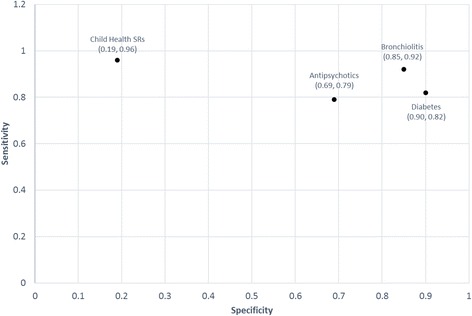
BACKGROUND: Machine learning tools can expedite systematic review (SR) processes by semi-automating citation screening. Abstrackr semi-automates citation screening by predicting relevant records. We evaluated its performance for four screening projects. METHODS: We used a convenience sample of screening projects completed at the Alberta Research Centre for Health Evidence, Edmonton, Canada... RESULTS: Abstrackr's sensitivity was > 0.75 for all projects and the mean specificity ranged from 0.69 to 0.90 with the exception of Child Health SRs, for which it was 0.19...
Overview
CoChat Summary
## TL;DR
This retrospective evaluation of Abstrackr across four heterogeneous screening projects found that it generally achieved high sensitivity but variable specificity, precision, and workload savings. The time saved came with some risk of missing relevant records, so the authors concluded that more testing is needed before routine use.
## Key findings
- Across the four projects, Abstrackr’s sensitivity was >0.75 for all projects; mean sensitivity was 0.96 for Child Health SRs, 0.92 for Bronchiolitis, 0.82 for Diabetes, and 0.79 for Antipsychotics.
- Mean specificity ranged from 0.69 to 0.90 for three projects, but was 0.19 for Child Health SRs; precision ranged from 14.8% to 64.7%.
- Median workload savings was 67.2% overall, with project-level workload savings of 88.4% for Diabetes, 70.0% for Bronchiolitis, 64.5% for Antipsychotics, and 9.5% for Child Health SRs.
- The proportion missed was 0.1% for all SRs and 6.4% for the descriptive analysis; this corresponded to 4.2% of the records in the final reports.
## Methods
- Retrospective evaluation of Abstrackr using a convenience sample of four screening projects completed or ongoing at the Alberta Research Centre for Health Evidence: three systematic reviews and one descriptive analysis.
- Projects varied in size and topic: Antipsychotics, Bronchiolitis, Child Health SRs, and Diabetes; search yields ranged from 5,243 to 47,385 records.
- Records were uploaded to Abstrackr and screened in single-screen mode until predictions were produced; across three trials per project, predictions were compared with human reviewer decisions and standard performance metrics were calculated.
## Limitations
- The paper states the sample was heterogeneous and convenience-based, so the findings “should not be generalized.”
- It notes possible variation in predictions between trials of the same screening task, and that the first record could not be controlled, affecting prioritization and predictions.
- Evident from the text: the study was retrospective and did not test Abstrackr prospectively as a second reviewer in a real screening workflow, which the authors themselves say should be studied further.
Model-written summary. Check it against the paper before relying on it.
Integrity signals
Registry
Cites
Statistics
Figures
Verification
Claims the paper makes
9 Valid · 1 Not valid · 6 Not checked · 40 Own results and interpretations
A result the paper reports from its own data — it cites no other source for it, so there is none to check. The quote shows it is in the paper.
In the paper
“the mean specificity ranged from 0.69 to 0.90 with the exception of Child Health SRs, for which it was 0.19”
§ Technology-assisted title and abstract screening for systematic reviews: a retrospective evaluation of the Abstrackr machine learning tool > Abstract > Results
plain- Asserted: passes — The authors put it forward as true.
- Checkable: passes — It can be checked against evidence.
- Load-bearing: unclear — It is unclear whether the paper’s conclusions depend on it.
- Based: passes — The paper gives a reason why it holds.
A result the paper reports from its own data — it cites no other source for it, so there is none to check. The quote shows it is in the paper.
In the paper
“Abstrackr’s sensitivity was > 0.75 for all projects”
§ Technology-assisted title and abstract screening for systematic reviews: a retrospective evaluation of the Abstrackr machine learning tool > Abstract > Results
plain- Asserted: passes — The authors put it forward as true.
- Checkable: passes — It can be checked against evidence.
- Load-bearing: passes — The paper’s conclusions depend on it.
- Based: passes — The paper gives a reason why it holds.
A result the paper reports from its own data — it cites no other source for it, so there is none to check. The quote shows it is in the paper.
In the paper
“Across the three trials, Abstrackr missed 16, 20, and 25 (7.8, 9.8, and 12.2%) of the studies included in the final SR for Diabetes”
§ Technology-assisted title and abstract screening for systematic reviews: a retrospective evaluation of the Abstrackr machine learning tool > Results > Records missed and time savings
plain- Asserted: passes — The authors put it forward as true.
- Checkable: passes — It can be checked against evidence.
- Load-bearing: passes — The paper’s conclusions depend on it.
- Based: passes — The paper gives a reason why it holds.
A result the paper reports from its own data — it cites no other source for it, so there is none to check. The quote shows it is in the paper.
In the paper
“For the SRs, Abstrackr reduced the number of records to screen by 65 to 88%”
§ Technology-assisted title and abstract screening for systematic reviews: a retrospective evaluation of the Abstrackr machine learning tool > Discussion
plainstates a cause- Asserted: passes — The authors put it forward as true.
- Checkable: passes — It can be checked against evidence.
- Load-bearing: passes — The paper’s conclusions depend on it.
- Based: passes — The paper gives a reason why it holds.
A result the paper reports from its own data — it cites no other source for it, so there is none to check. The quote shows it is in the paper.
In the paper
“24, 31, and 35 (1.5, 1.9, and 2.2%) of the studies for Child Health SRs”
§ Technology-assisted title and abstract screening for systematic reviews: a retrospective evaluation of the Abstrackr machine learning tool > Results > Records missed and time savings
plain- Asserted: passes — The authors put it forward as true.
- Checkable: passes — It can be checked against evidence.
- Load-bearing: passes — The paper’s conclusions depend on it.
- Based: passes — The paper gives a reason why it holds.
17 more claims
Create a free account to see all 56 claims and to verify the 1 reference still open.
- It may state two separate claims as one. 19
- Probably not a substantial claim. 17
Claims other papers make about this one
Each is checked against this paper’s own text: does it say what the citing paper says it does?
The source backs part of the claim, not all of it — or backs it for a different population, condition or comparison.
In the citing paper
“Each study is typically reviewed within 30 s (Gates et al., 2018)”
From Screening Smarter, Not Harder: A Comparative Analysis of Machine Learning Screening Algorithms and Heuristic Stopping Criteria for Systematic Reviews in Educational Research (2024) · cites this paper as Gates et al., 2018
Experimental — accuracy not yet measuredThe source backs part of the claim, not all of it — or backs it for a different population, condition or comparison.
In the citing paper
“The application of active learning models in systematic reviews has been extensively studied in simulation studies [11-21].”
From Performance of active learning models for screening prioritization in systematic reviews: a simulation study into the Average Time to Discover relevant records (2023) · cites this paper as [16]
Experimental — accuracy not yet measuredThe source backs part of the claim, not all of it — or backs it for a different population, condition or comparison.
In the citing paper
“However, developing automatic screening tools based on combined ML techniques seems feasible; plenty of research and developments have been done in this field in recent years [26, 39, 41, 46, 52].”
From Machine learning computational tools to assist the performance of systematic reviews: A mapping review. (2022) · cites this paper as [39]
Experimental — accuracy not yet measuredThe source backs part of the claim, not all of it — or backs it for a different population, condition or comparison.
In the citing paper
“In summary, ML-assisted systematic reviews can significantly reduce workload and have proven accurate across various fields and review topics.”
From Machine Learning-Assisted Systematic Review: A Case Study in Learning Analytics (2025) · cites this paper as Gates et al. (2018)
Experimental — accuracy not yet measuredThe cited source says what the claim attributes to it.
In the citing paper
“Many studies evaluating these tools have assessed automatic classification functionality, in which screening continued until the tool predicts whether studies should be included or not, and remaining citations are not screened [19, 21].”
From Machine learning for screening prioritization in systematic reviews: comparative performance of Abstrackr and EPPI-Reviewer (2020) · cites this paper as [19]
1 more claim about this paper
Create a free account to see every claim other papers make about this one.
Citations
Cites
Preferred Reporting Items for Systematic Reviews and Meta-Analyses: the PRISMA statement
Moher, D., Liberati, A., Tetzlaff, J., Altman, D. G., & for the PRISMA Group (2009) · BMJ · doi:10.1136/bmj.b2535 · Cited by 83,823
Preferred Reporting Items for Systematic Reviews and Meta-Analyses: The PRISMA Statement
Moher, D., Liberati, A., Tetzlaff, J., Altman, D. G., & The PRISMA Group (2009) · PLoS Medicine · doi:10.1371/journal.pmed.1000097 · Cited by 64,042 · cited 1×
“Specialized guidance documents [2, 3] aim to ensure that reviewers produce evidence syntheses that are methodologically rigorous and transparently reported.”
BackgroundPreferred reporting items for systematic reviews and meta-analyses: the PRISMA Statement.
(2009) · PubMed Central · Cited by 44,859
Cochrane Handbook for Systematic Reviews of Interventions: Cochrane Book Series
(2008) · doi:10.1002/9780470712184 · Cited by 25,048
Wang, G., Ma, R., Qiao, G., Wada, K., Aizawa, Y., & Satoh, T. (2015) · Integrative Medicine International · doi:10.1159/000368408 · Cited by 18,657
The Levels of Evidence and Their Role in Evidence-Based Medicine
Burns, P. B., Rohrich, R. J., & Chung, K. C. (2011) · Plastic and Reconstructive Surgery · doi:10.1097/prs.0b013e318219c171 · Cited by 2,155 · cited 1×
“Systematic reviews (SRs) provide the highest level of evidence to inform clinical and policy decisions [1].”
BackgroundStatistics Notes: Diagnostic tests 1: sensitivity and specificity
Altman, D. G., & Bland, J. M. (1994) · BMJ · doi:10.1136/bmj.308.6943.1552 · Cited by 2,061
Seventy-five trials and eleven systematic reviews a day: how will we ever keep up?
Bastian, H., Glasziou, P., & Chalmers, I. (2010) · PLoS Medicine · doi:10.1371/journal.pmed.1000326 · Cited by 1,188 · cited 1×
“The disconnect between the work required to complete a SR and the rate of publication of new evidence from trials [6] means that many SRs are out of date before they are published [7].”
BackgroundPage, M. J., Shamseer, L., Altman, D. G., Tetzlaff, J., Sampson, M., Tricco, A. C., Catalá-López, F., Li, L., Reid, E. K., Sarkis-Onofre, R., et al. (2016) · PLOS Medicine · doi:10.1371/journal.pmed.1002028 · Cited by 768 · cited 1×
“As the standards for the conduct and reporting of SRs have become more stringent [4], they have become more labor-intensive to produce.”
BackgroundBorah, R., Brown, A. W., Capers, P. L., & Kaiser, K. A. (2017) · BMJ Open · doi:10.1136/bmjopen-2016-012545 · Cited by 737 · cited 1×
“On average, after registering a protocol, it takes author teams more than 1 year of work before their SR is published [5].”
Method
Research works printed but not linked: 1
- JPT H Green S Cochrane handbook for systematic reviews of interventions 2011
Cited by
Items 101–131 of 131
Ramchandani, R., Guo, E., Rakab, E., Rathod, J., Strain, J., Klement, W., Shorr, R., Williams, E., Jones, D., & Gilbert, S. (2025) · PeerJ Computer Science · doi:10.7717/peerj-cs.2822 · Cited by 8
“While the LLM achieved accuracy rates of 85.58% and 79.03%, which indicate promising potential, these rates fall short of the 100% accuracy that might be ideal for independent decision-making in systematic reviews ( Hamel et al., 2021 ; Gates, Johnson & Hartling, 2018 ).”
InfluentialSilva, D. T. N. D., Moore, B. R., Strunk, T., Petrovski, M., Varis, V., Chai, K. E. K., Ng, L., & Batty, K. T. (2024) · Pharmacology Research & Perspectives · doi:10.1002/prp2.1170 · Cited by 4
Machine learning based system for the automation of systematic literature reviews
Pytlak, R., Bukhvalova, B. A., Cichosz, P., Fajdek, B., Grahek‐Ogden, D., Jastrzębski, B., Khan, M., Postupolski, J., Yazidi, A., & Waszkowski, R. (2023) · IEEE International Conference on Bioinformatics and Biomedicine (BIBM) · doi:10.1109/bibm58861.2023.10385372 · Cited by 4
“Abstrackr performance was independently evaluated, in [10] it was reported that the workload savings varied between 9 and 57%, while in [11] between 9.5 and 88.4%.”
BackgroundInfluentialHilkenmeier, F., Stoltenberg, M., & Stierle, C. M. G. (2026) · Systematic Reviews · doi:10.1186/s13643-026-03228-4 · Cited by 8
“…their primary utility is to facilitate the substantial manual work that remains necessary, not to replace the two-reviewer process, i.e., they assist rather than replace human reviewers and still necessitate significant human oversight to ensure that important studies are not overlooked [7, 25].”
The role of olive oil and its constituents in mental health: a scoping review
Eedy, V., & Aucoin, M. (2024) · British Journal Of Nutrition · doi:10.1017/s000711452400299x · Cited by 3
“The program Abstrackr (18) was used for organisation.”
Centering Race in Mixed and Multi-Method Research on Implicit Bias: A Systematic Review
Shannon‐Baker, P. (2021) · International Journal of Multiple Research Approaches · doi:10.29034/ijmra.v13n1a3 · Cited by 3
Machine learning approach to literature mining for the genetics of complex diseases
Schuster, J. S., Superdock, M., Agudelo, A., Stey, P., Padbury, J. F., Sarkar, I. N., & Uzun, A. (2019) · Database · doi:10.1093/database/baz124 · Cited by 2
From Centuries to Hours: The Journey of Research into Practice
Bragge, P. (2022) · Digital Government Research and Practice · doi:10.1145/3529166 · Cited by 2
Tóth, B., Berek, L., Gulàcsi, L., Péntek, M., & Zrubka, Z. (2023) · Research Square · doi:10.21203/rs.3.rs-3425312/v1 · Cited by 2
Nordmann, K., Schaller, M., Sauter, S., et al. (2024) · Research Square · doi:10.21203/rs.3.rs-4687319/v1 · Cited by 2
Nordmann, K., Schaller, M., Sauter, S., & Fischer, F. (2026) · JAMIA Open · doi:10.1093/jamiaopen/ooaf098 · Cited by 4
“7,10,37,38 Furthermore, allowing researchers to set the AI tools’ decision threshold might reduce risk and increase trust in the tool.”
InfluentialMachine learning-assisted abstract screening on learning analytics: a step-by-step tutorial
Xu, Z., Ma, S., Zhuang, X., Adeyemi, A. E., & Kogut, A. (2026) · Systematic Reviews · doi:10.1186/s13643-026-03111-2 · Cited by 1
“Despite the potential benefits, challenges remain regarding the application of ML-ARs, including the need for high-quality labeled datasets for training, model interpretability issues, and potential biases embedded within algorithms that can impact review outcomes [4, 14, 16].”
Evaluating the performance of a custom GPT in full text screening of a systematic review
Davis, R. C., List, S. S., Chappell, K. G., Madar, A., Henjum, S., & Heen, E. (2026) · Scandinavian Journal of Public Health · doi:10.1177/14034948261423410 · Cited by 3
Fütterer, T., König, L., Campos, D., Scherer, R., Zitzmann, S., & Hecht, M. (2026) · Advances in Methods and Practices in Psychological Science · doi:10.1177/25152459261442150 · Cited by 2
“For example, researchers have reported that screening a single title and abstract takes about 30 s on average (Gates et al., 2018), meaning that screening 14,923 abstracts may require as many as 89 days (Polanin et al., 2019).”
Mongeon, J. G., Ouadfel, S., Thullier, F., Gaboury, S., & Arsenault‐Lapierre, G. (2026) · International Journal of Social Research Methodology · doi:10.1080/13645579.2026.2668099 · Cited by 1
Classifying Positive Results in Clinical Psychology Using Natural Language Processing
Schiekiera, L., Diederichs, J., & Niemeyer, H. (2024) · Zeitschrift für Psychologie · doi:10.1027/2151-2604/a000563 · Cited by 3
Hasegawa, T., Kizaki, H., Ikegami, K., Imai, S., Yanagisawa, Y., Yada, S., Aramaki, E., & Hori, S. (2025) · JMIR Medical Informatics · doi:10.2196/65371 · Cited by 2
Collaborative large language models (LLMs) are all you need for screening in systematic reviewsPreprint
Parmar, M., Naqvi, S. A. A., Warraich, K., Saeidi, A., Rawal, S. C., Faisal, K. S., Kazmi, S. Z., Fatima, M., He, H., Safdar, M., et al. (2026) · medRxiv · doi:10.64898/2026.02.07.26345640 · Cited by 2
“For example, Rayyan (19) and Abstrackr (20) are two free web tools that offer a semi-automated approach to article filtering using natural language processing (NLP) algorithms to learn from a reviewer's decisions with subsequent replication of the process.”
Machine Learning-Assisted Systematic Review: A Case Study in Learning Analytics
Xu, Z., Zhuang, X., & Ma, S. (2025) · Education Sciences · doi:10.3390/educsci15111488 · Cited by 2
En respuesta a «Revisiones sistemáticas en cinco pasos»: herramientas de automatización disponibles
Tercero-Hidalgo, J. R., & Fernández-Luna, J. M. (2022) · Medicina de Familia SEMERGEN · doi:10.1016/j.semerg.2022.101828
Classifying Positive Results in Clinical Psychology Using Natural Language Processing. Preprint.Preprint
Schiekiera, L., Niemeyer, H., & Diederichs, J. (2024) · doi:10.31234/osf.io/uxyzh
Goldfarb, N., Tal, N., Cohen, I.-C., Elyashar, A., Ellen, M., Puzis, R., & Cohen, O. (2024) · doi:10.2196/preprints.59322
Diabetes Prediction Precision: Evaluating XGBoost and LightGBM Performance with IQR Preprocessing
Chowdary, K. P., & Latha, K. N. M. (2025) · Communications in computer and information science · doi:10.1007/978-3-031-80839-5_6
Evaluating the Reliability of a Custom GPT in Full-Text Screening of a Systematic ReviewPreprint
Davis, R. C., List, S. S., Chappell, K. G., Madar, A., Henjum, S., & Heen, E. (2025) · medRxiv · doi:10.1101/2025.02.04.25321655
Abdelkader, W., Xie, D., Lokker, C., Chu, L., Schandelmaier, S., Saha, A., Afzal, M., & Iorio, A. (2025) · medRxiv · doi:10.1101/2025.10.13.25337935
“Example model functions include classifying studies and recognizing high-quality evidence 12 , and easing the burden of systematic evidence synthesis by reducing screening workload 13–16 .”
Abògúnr̀in, Ṣ., Slob, B. P. H., Lane, M., Emamipour, S., Twardowski, P., Boersma, C., & van der Schans, J. (2025) · BMJ Open · doi:10.1136/bmjopen-2025-099921 · Cited by 1
Ahn, S., Kim, S., & Valdes, J. (2026) · Springer international handbooks of education · doi:10.1007/978-3-031-88898-4_24-1
Looareesuwan, P., Ponthongmak, W., Tansawet, A., Ratanatharathorn, C., Owasi, H. U. R., McKay, G. J., Attia, J. R., Oami, T., & Thakkinstian, A. (2026) · PLOS Digital Health · doi:10.1371/journal.pdig.0001668
Shatskiy, A. S., Deigheidy, E. M., Masyutina, S. E., & Mamalyga, M. L. (2026) · Complex Issues of Cardiovascular Diseases · doi:10.17802/2306-1278-2026-15-4-153-163
Selecting the optimal study design!
Albabtain, M. A., AlRasheed, M. M., Arafat, A. A., Breitinger, H., Breitinger, U., Elsisi, G. H., Gaber, A., Gumaa, M., Hozien, M., Abdelghany, R. M., et al. (2026) · Elsevier eBooks · doi:10.1016/b978-0-443-45595-7.00015-7
Metadata
- Authors
- Gates, A., Johnson, C., & Hartling, L.
- Affiliations
- University of Alberta (CA)
- Corresponding author
- Hartling, Lisa
- Venue
- Systematic Reviews
- Published
- 2018-03-12
- Volume
- 7
- Issue
- 1
- Pages
- 45-45
- ISSN
- 2046-4053 (ISSN-L)
- PMC
- PMC5848519
- OpenAlex
- W2807522649
- Cited by
- 148
- References
- 30
- Citations by year
- 2026: 13 · 2025: 22 · 2024: 23 · 2023: 17 · 2022: 15 · 2021: 22 · 2020: 24 · 2019: 8 · 2018: 4
- FWCI
- 2.89
- Type
- journal article
- Language
- en
- Open access
- gold
- doi.org
- Licence
- cc-by
- creativecommons.org/licenses/by/4.0/ (tdm)
- Locations
- Systematic Reviews (publishedVersion, cc-by)
- PubMed Central (publishedVersion, cc-by)
- PubMed (publishedVersion)
- DOAJ (DOAJ: Directory of Open Access Journals) (submittedVersion, cc-by-sa)
- Funders
- Canadian Institutes of Health Research
- Topics
- Social Sciences › Decision Sciences › Statistics, Probability and Uncertainty › Meta-analysis and systematic reviews
- Physical Sciences › Computer Science › Information Systems › Information Retrieval and Search Behavior
- Social Sciences › Library and Information Sciences › scientometrics and bibliometrics research
- Keywords
- machine learning, citation screening, title and abstract screening, relevance prediction, false negative rate, sensitivity and specificity, human-machine comparison, research automation, pediatric research, antipsychotic drugs, bronchiolitis, diabetes mellitus, reproducibility
- MeSH terms
- Machine Learning, Systematic Reviews as Topic, Canada, Humans, Mass Screening, Records, Retrospective Studies, Reproducibility of Results
About these checks
Registry, retraction, Cites and statistics results are computed, not judged, with one exception: a printed reference that no index lists is read once by a model before it counts as a citation error. Claims are extracted by a model and kept only when their quote appears verbatim in the text; each cited source is then checked, with a model’s help, for whether it says what the claim relies on. Those verdicts can be wrong — read the claim’s quote and the cited source before relying on one.
The claim verdicts this report counts are experimental: their accuracy is not yet measured.
A language model drew the claims from the paper on 2026-10-10, under version 3 of the claim definition (model deepseek-v4.1-flash, prompt extract-v3).
A second model labelled each claim on 2026-10-10 (model jev-1.13-20260917, definition revision gold-guideline-v0.2).
Statistics and arithmetic are recomputed, not judged.
Confidence bands are shown only for fields calibrated on our annotated test set. None is calibrated yet, so no band is shown.
What counts as a claim ›How we measure confidence ›How we check this ›
Are you an author, or do you see a problem with this page? Request a review
Data sources
Bibliographic data: Semantic Scholar, OpenAlex, Crossref.
Contains information from the Semantic Scholar Academic Graph Datasets, made available under the ODC Attribution License (ODC-BY 1.0).
Semantic Scholar’s data is described in: Kinney, R., et al. (2023). The Semantic Scholar Open Data Platform. arXiv:2301.10140.
