

The psychological subtype of intimate partner violence and its effect on mental health: a systematic review with meta-analyses
Open accessThe DOI matches its Crossref record; 99 of the 103 references it cites were found in a registry or an index; 37 of the 100 sources its claims cite were checked for support.
Abstract
Systematic review and meta-analyses examining psychological violence and PTSD, depression, and anxiety.
Overview
CoChat Summary
TL;DR
This systematic review and random-effects meta-analysis found that psychological intimate partner violence (IPV) is strongly associated with PTSD, depression, and anxiety, with the strongest association for PTSD. The evidence was rated low certainty overall, and the authors emphasize substantial heterogeneity, gender bias, and inconsistent definitions/measures as key reasons more high-quality research is needed.
Key findings
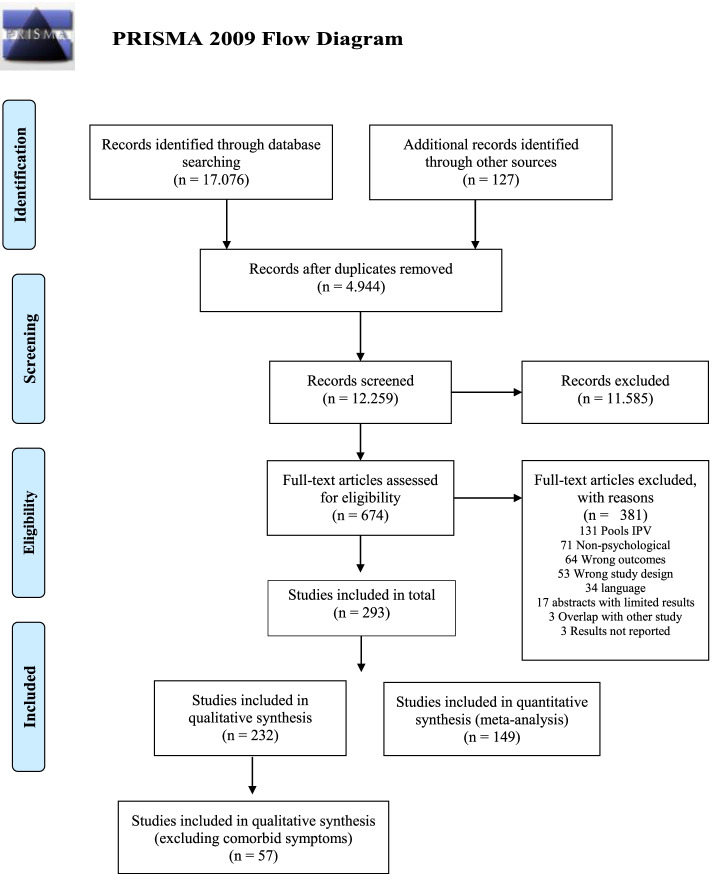
- Across 149 studies in the meta-analyses, psychological violence showed strong associations with all three outcomes; the strongest association was for PTSD in both female and male victims.
- For PTSD, Hedges g was .90 for female victims, .54 for male victims, and .78 for combined samples; for female victims, the odds ratio was 2.23 [1.37; 3.64].
- For depression, Hedges g was .70 for females, .43 for males, and .45 for combined samples; odds ratios were 2.07 [1.61; 2.66] for females and 2.38 [1.62; 3.50] for combined samples.
- For anxiety, Hedges g was .58 for females, .27 for males, and .22 for combined samples; odds ratios were 2.20 [1.75; 2.77] for females, 4.21 [1.84; 9.64] for males, and 1.66 [1.08; 2.57] for combined samples.
- By subtype, coercive control was particularly associated with PTSD for female victims, while emotional/verbal and dominance/isolation had the strongest associations with depression.
Methods
- Systematic review with random-effects meta-analyses of the association between psychological violence and PTSD, depression, and anxiety, following PRISMA and registered in PROSPERO (#CRD42018116026).
- Searched four databases: PsycINFO, PubMed, EMBASE, and Web of Science; included 194 studies total, with 149 eligible for meta-analysis.
- Effect sizes were synthesized as Hedges g for continuous outcomes and odds ratios for dichotomous outcomes; heterogeneity was assessed with I², and subgroup/moderation analyses examined scale, population, culture, subtype of violence, and study quality. GRADEpro was used to assess certainty of evidence.
Limitations
- The paper states that the evidence was rated low certainty overall, and very low for the PTSD odds-ratio outcome.
- The authors explicitly note that most included studies were cross-sectional, so the study does not establish causality; it estimates association only.
- The text makes evident several additional limitations: high heterogeneity, substantial gender bias toward female samples, mostly weak-quality studies (e.g., 51.0% weak overall in the meta-analytic sample), and inconsistent terminology/measurement of psychological violence, which the authors say complicates comparison and interpretation.
Model-written summary. Check it against the paper before relying on it.
Integrity signals
Registry
Cites
Statistics
Figures
Verification
Claims the paper makes
28 Valid · 2 Not valid · 15 Not checked · 86 Own results and interpretations
Every source the paper cites for this claim was checked and supports it.
In the paper
“emerging evidence suggests that psychologically threatening events can have a severe impact on mental health [17].”
§ The psychological subtype of intimate partner violence and its effect on mental health: a systematic review with meta-analyses > Introduction
What the sources say
- Supportedcites [17] Hyland P Karatzias T Shevlin M McElroy E Ben-Ezra M Cloitre M Does requiring trauma exposure affect rates of ICD-11 PTSD and complex PTSD? Implications for DSM–5 Psychol Trauma 2020 13 2 133 141 10.1037/tra0000908 32915045 source
The Clinical Impact Statement (p. 3) says psychologically threatening events including emotional abuse, neglect, bullying, and stalking were associated with meeting diagnostic requirements for PTSD and complex PTSD. The Discussion (p. 16) likewise reports increased diagnostic risk, supporting the hedged claim that such events can have a severe mental-health impact. (LLM, conf=0.90)
hedgedstates a possible cause- Asserted: passes — The authors put it forward as true.
- Checkable: passes — It can be checked against evidence.
- Load-bearing: passes — The paper’s conclusions depend on it.
- Based: passes — The paper gives a reason why it holds.
- Supported
The cited sources support only part of this claim — read each source’s verdict below.
In the paper
“nor has the methodological shortcomings characterizing most research on IPV and psychological violence [19] been accounted for.”
§ The psychological subtype of intimate partner violence and its effect on mental health: a systematic review with meta-analyses > Introduction
What the sources say
- Partly supportedcites [19] Dokkedahl S, Kok RN, Murphy S, Kristensen TR, Bech-Hansen D, Elklit A. The psychological subtype of intimate partner violence and its effect on mental health: protocol for a systematic review. Systematic Reviews. 2019;8(198). PMC6688298 31399073 sourceExperimental — accuracy not yet measured
The Background says methodological challenges involving sampling, design, scoring and gender bias characterize the field, and that most IPV and mental-health studies pool different types of violence. It does not establish that these shortcomings have not been accounted for in prior research; the paper instead proposes to assess them in its planned review. (LLM, conf=0.82)
plain- Asserted: passes — The authors put it forward as true.
- Checkable: passes — It can be checked against evidence.
- Load-bearing: passes — The paper’s conclusions depend on it.
- Based: passes — The paper gives a reason why it holds.
- Partly supported
The sources with a verdict support this claim; the rest weren’t checked yet, have no full text we could read, or their verdicts aren’t rated yet.
In the paper
“and findings support an association [9, 12–14].”
§ The psychological subtype of intimate partner violence and its effect on mental health: a systematic review with meta-analyses > Introduction
What the sources say
- Not checked — no full text of the sourcecites [9] Follingstad DR The impact of psychological aggression on women’s mental health and behavior - the status of the field Trauma, Violence, and Abuse. 2009 10 3 271 289 10.1177/1524838009334453 19460760 source
- Supportedcites [12] Lagdon S, Amour C, Stringer M. Adult experiences of mental health outcomes as a result of intimate partner violence victimization: a systematic review. Eur J Psychotraumatology. 2014;5(24794). PMC4163751 25279103 source
The Results sections on Depression and Anxiety report associations between psychological violence and each outcome. The review also notes that several studies found psychological violence alone affected depressive outcomes. (LLM, conf=0.94)
- Not checked — no full text of the sourcecites [13] Lawrence E Yoon J Langer A Ro E Is psychological aggression as detrimental as physical aggression? The independent effects of psychological aggression on depression and anxiety symptoms Violence Victims. 2009 24 1 20 35 10.1891/0886-6708.24.1.20 19297883 source
- Supportedcites [14] Baldry AC “Stick and stones hurt my bones but his glance and words hurt more”: the impact of physiological abuse and physical violence by current and former partners on battered women in Italy Int J Forensic Mental Health. 2003 2 1 47 57 10.1080/14999013.2003.10471178 source
The Multivariate Analyses section reports that psychological abuse significantly improved the model predicting anxiety/depression. The Discussion also says psychological abuse was more strongly associated with psychological symptoms than physical violence. Page numbers are not provided in our copy. (LLM, conf=0.93)
plainstates an association- Asserted: passes — The authors put it forward as true.
- Checkable: passes — It can be checked against evidence.
- Load-bearing: passes — The paper’s conclusions depend on it.
- Based: passes — The paper gives a reason why it holds.
Every source the paper cites for this claim was checked and supports it.
In the paper
“Findings revealed that non-Criterion A psychologically threatening events, e.g., stalking or neglect, were as strongly associated with PTSD and complex-PTSD (C-PTSD), as common Criterion A events.”
§ The psychological subtype of intimate partner violence and its effect on mental health: a systematic review with meta-analyses > Introduction
What the sources say
- Supportedcites [17] Hyland P Karatzias T Shevlin M McElroy E Ben-Ezra M Cloitre M Does requiring trauma exposure affect rates of ICD-11 PTSD and complex PTSD? Implications for DSM–5 Psychol Trauma 2020 13 2 133 141 10.1037/tra0000908 32915045 source
The Abstract (p. 2) states that the five psychologically threatening events were as strongly associated with ICD-11 PTSD and CPTSD as Criterion A events. The Clinical Impact Statement (p. 3) identifies stalking and neglect among those events. (LLM, conf=0.95)
plainstates an association- Asserted: passes — The authors put it forward as true.
- Checkable: passes — It can be checked against evidence.
- Load-bearing: passes — The paper’s conclusions depend on it.
- Based: passes — The paper gives a reason why it holds.
- Supported
Every source the paper cites for this claim was checked and supports it.
In the paper
“which makes results difficult to compare and stresses the need to evaluate how these differences influence results [19].”
§ The psychological subtype of intimate partner violence and its effect on mental health: a systematic review with meta-analyses > Introduction
What the sources say
- Supportedcites [19] Dokkedahl S, Kok RN, Murphy S, Kristensen TR, Bech-Hansen D, Elklit A. The psychological subtype of intimate partner violence and its effect on mental health: protocol for a systematic review. Systematic Reviews. 2019;8(198). PMC6688298 31399073 source
The Background states that differing definitions of psychological violence and varying uses of assessment subscales make study findings difficult to compare and warrant evaluating their influence on mental-health results. The Discussion likewise says that varying terminology, definitions, and psychometric tools will make results difficult to compare. (LLM, conf=0.95)
plainstates a cause- Asserted: passes — The authors put it forward as true.
- Checkable: passes — It can be checked against evidence.
- Load-bearing: passes — The paper’s conclusions depend on it.
- Based: passes — The paper gives a reason why it holds.
- Supported
74 more claims · 15 with their cited sources checked
Create a free account to see all 131 claims and to verify the 2 references still open.
- Probably not a substantial claim. 33
- It may state two separate claims as one. 26
- The quote only partly states this claim. 1
Claims other papers make about this one
Each is checked against this paper’s own text: does it say what the citing paper says it does?
The source backs part of the claim, not all of it — or backs it for a different population, condition or comparison.
In the citing paper
“Unlike physical violence, which tends to be more readily identi fi able through discrete incidents, psychological IPV is characterised by ongoing patterns of coercive and controlling behaviour that gradually undermine autonomy, sense of self and psychological well-being (Crossman & Hardesty, 2018; Dokkedahl et al., 2022; Lohmann et al., 2024; Parkinson et al., 2024).”
From ‘Reconnecting With All the Things That You Lost Because of Control’: What Helps Women in the Process of Leaving a Psychologically Abusive Intimate Partner? (2026) · cites this paper as Dokkedahl et al., 2022
Experimental — accuracy not yet measuredThe source backs part of the claim, not all of it — or backs it for a different population, condition or comparison.
In the citing paper
“In contrast, older adults, particularly women, may experience abuse through neglect, increased control, and financial exploitation, often compounded by declining health, caregiving reliance, and social isolation (Dokkedahl et al., 2022).”
From From use to abuse: psychological, neurobiological, and spiritual pathways in relational harm and recovery (2026) · cites this paper as Dokkedahl et al., 2022
Experimental — accuracy not yet measuredThe source backs part of the claim, not all of it — or backs it for a different population, condition or comparison.
In the citing paper
“Dokkedahl et al. (2022) found that psychological IPV involving coercive control showed the strongest association with posttraumatic stress disorder among all IPV forms.”
From Psychological Intimate Partner Violence Across Identities: Preliminary Psychometrics of the Multidimensional Measure of Emotional Abuse-Short Form Among Heterosexual, Lesbian, and Bisexual Samples in Türkiye (2026) · cites this paper as Dokkedahl et al., 2022
Experimental — accuracy not yet measured
Citations
Cites
Diagnostic and Statistical Manual of Mental Disorders
American Psychiatric Association (2013) · doi:10.1176/appi.books.9780890425596 · Cited by 116,369
The Epidemiology of Depression Across Cultures
Kessler, R. C., & Bromet, E. J. (2013) · Annual Review of Public Health · doi:10.1146/annurev-publhealth-031912-114409 · Cited by 2,657
Physical and mental health effects of intimate partner violence for men and women
Coker, A. L., Davis, K. E., Arias, I., Desai, S., Sanderson, M., Brandt, H. M., & Smith, P. H. (2002) · American Journal of Preventive Medicine · doi:10.1016/s0749-3797(02)00514-7 · Cited by 2,258
Tolin, D. F., & Foa, E. B. (2006) · Psychological Bulletin · doi:10.1037/0033-2909.132.6.959 · Cited by 2,197 · cited 1×
“This association was smaller than what was found for female victims; however, this is not surprising seeing that women are more likely to develop PTSD in general, compared to men [92, 96].”
ResultHow Big is a Big Odds Ratio? Interpreting the Magnitudes of Odds Ratios in Epidemiological Studies
Chen, H., Cohen, P., & Chen, S. (2010) · Communications in Statistics - Simulation and Computation · doi:10.1080/03610911003650383 · Cited by 1,952 · cited 1×
“dichotomous scoring, reported as OR [91].”
Intimate partner violence as a risk factor for mental disorders: A meta-analysis
Golding, J. M. (1999) · Journal of Family Violence · doi:10.1023/a:1022079418229 · Cited by 1,788
Global prevalence of anxiety disorders: a systematic review and meta-regression
Baxter, A. J., Scott, K. M., Vos, T., & Whiteford, H. A. (2013) · Psychological Medicine · doi:10.1017/s003329171200147x · Cited by 1,537
Posttraumatic stress disorder in the world mental health surveys
Koenen, K. C., Ratanatharathorn, A., Ng, L., McLaughlin, K. A., Bromet, E. J., Stein, D. J., Karam, E. G., Meron Ruscio, A., Benjet, C., Scott, K., et al. (2017) · Psychological Medicine · doi:10.1017/s0033291717000708 · Cited by 1,453
Devries, K. M., Mak, J. Y., Bacchus, L. J., Child, J. C., Falder, G., Petzold, M., Astbury, J., & Watts, C. H. (2013) · PLoS Medicine · doi:10.1371/journal.pmed.1001439 · Cited by 1,258
Pico-Alfonso, M. A., Garcia-Linares, M. I., Celda-Navarro, N., Blasco-Ros, C., Echeburúa, E., & Martinez, M. (2006) · Journal of Women's Health · doi:10.1089/jwh.2006.15.599 · Cited by 831
Research works printed but not linked: 3
- World Health Organization. International statistical classification of diseases and related health problems. 11th edition ed 2018.
- Cooper H Research synthesis and meta-analy. 5th Ed. ed 2017 Duke University: Sage Publications, Inc
- Ministry of Social Affairs and Integration National strategy against honour-related conflicts 2013 Denmark København K
Cited by
Items 101–166 of 166
Building an Informed Workforce to Prevent and Respond to Violence Against Women and Girls
Rees, E., & Bovill, H. (2025) · Palgrave Studies in Risk, Crime and Society · doi:10.1007/978-3-031-93634-0_6
Domestic Abuse: Global and Local
Al-Naama, K. J. (2025) · Gulf Studies · doi:10.1007/978-981-96-7392-6_2
Anwar, I., Sadia, R., Khan, S., & Aslam, I. (2025) · Journal of Interpersonal Violence · doi:10.1177/08862605251349820 · Cited by 2
“…injuries (Thomas et al., 2021), vaginal trauma (Gibson et al., 2019), sexual transmission of infections (Sullivan, 2019), posttraumatic stress (Dokkedahl et al., 2022), depression (Herbert et al., 2022), suicidal ideation and attempts (McManus et al., 2022), and substance abuse (Mehr et al.,…”
Landwehr, E., Garratt‐Reed, D., & Maxwell‐Smith, C. (2025) · Criminal Behaviour and Mental Health · doi:10.1002/cbm.70009
Living in fear: The psychological impact of the threat of sexual violence on women in India
Waseem, A., Firdous, N., & Alam, S. (2025) · Analyses of Social Issues and Public Policy · doi:10.1111/asap.70037
Kwak, J. E., & Stults, C. B. (2025) · Journal of Interpersonal Violence · doi:10.1177/08862605251375383
Marín‐Morales, A., Comes‐Fayos, J., Riveros, M. E., Lila, M., Romero‐Martínez, Á., & Moya‐Albiol, L. (2025) · Journal of Interpersonal Violence · doi:10.1177/08862605251387722
Experiences of women facing intimate partner violence during the revocation of protective orders
Rodrigues, P. S., Vernasque, J. R. D. S., de Souza, A. P., Sponchiado, V. B. Y., Gimenez, F. V. M., & Marín, M. J. S. (2025) · Revista da Escola de Enfermagem da USP · doi:10.1590/1980-220x-reeusp-2025-0010en · Cited by 1
“…the belief that facing the possible consequences of leaving the relationship could result in worsening the situation, as an adaptive behavior stemming from cognitive distortions (20,21) , configuring a cyclical journey experienced by these women and confirmed by professionals at the police station.”
Rodrigues, P. S., Vernasque, J. R. D. S., de Souza, A. P., Sponchiado, V. B. Y., Gimenez, F. V. M., & Marín, M. J. S. (2025) · Revista da Escola de Enfermagem da USP · doi:10.1590/1980-220x-reeusp-2025-0010pt · Cited by 2
Rodrigues, P. S., Vernasque, J. R. D. S., de Souza, A. P., Sponchiado, V. B. Y., Gimenez, F. V. M., & Marín, M. J. S. (2025) · Revista da Escola de Enfermagem da USP · doi:10.1590/1980-220x-reeusp-2025-0010es
Darke, L., Paterson, H. M., Dhillon, H. M., & van Golde, C. (2025) · Psychology Crime and Law · doi:10.1080/1068316x.2025.2591116
Las medidas de protección, como garantía y su eficacia para prevenir el delito de femicidio
Andrade, G. M. P. (2025) · Revista Científica Multidisciplinar G-nerando · doi:10.60100/rcmg.v6i2.872
Zamir, O. (2025) · Current Opinion in Psychology · doi:10.1016/j.copsyc.2025.102261
Wadji, D. L., Pirro, T., & Langevin, R. (2025) · Journal of Interpersonal Violence · doi:10.1177/08862605251399684 · Cited by 1
Solano-Durán, P., Morales, J.-P., Franco-O’Byrne, D., Rodríguez, O., Contreras-Huerta, S., Isaac, V., & Huepe, D. (2025) · Research Square · doi:10.21203/rs.3.rs-7577993/v1
Editorial: Environmental risk factors and psychosomatic disorders
Yu, P., Yu, B., Tang, W., et al. (2026) · Frontiers in Psychiatry · doi:10.3389/fpsyt.2025.1751096
Nalwadda, C. K., Nabukeera, S., Kasule, T., Kwabaho, J. M., & Makumbi, F. E. (2026) · Research Square · doi:10.21203/rs.3.rs-8584432/v1 · Cited by 1
Kusumaningrum, S. A. W., Soleh, O., & Azizah, N. (2026) · Jurnal Teknologi Terapan G-Tech · doi:10.70609/g-tech.v10i1.8977
Intimate partner violence and suicidality among Australian males: A longitudinal analysis
Krishnamoorthy, S., Haregu, T., Pilkington, V., Seidler, Z. E., & Armstrong, G. (2026) · Psychiatry Research · doi:10.1016/j.psychres.2026.117039
de Campos, S. F. F., Lima, S. O., & dos Anjos, H. A. (2026) · Revista Multidisciplinar do Nordeste Mineiro · doi:10.66104/6qc6jf48
Intimate Partner Violence: The Role of Nurses in Safety and Support Initiatives
Olorunfemi, O., & Ebiwanno, O. E. (2024) · Arab Board Medical Journal · doi:10.4103/abmj.abmj_9_24
Aktok, F., & Çimen, İ. D. (2026) · Clinical Child Psychology and Psychiatry · doi:10.1177/13591045261430779
“Experiencing violence has been demonstrated to contribute to various mental health problems, including post-traumatic stress disorder, substance use disorders, depression, anxiety, sleep disturbances, and suicidal behavior (Dokkedahl et al., 2022).”
Sen, R., Ao, M., & Paira, K. (2026) · Global Social Welfare · doi:10.1007/s40609-026-00451-8 · Cited by 1
Women’s self-employment, business acumen, and emotional IPV: a longitudinal study in Tanzania
Shukla, S., Mshana, G. H., Mosha, N. R., Steinert, J., Krajewska, J., Harvey, S. E., Lees, S. S., Kapiga, S., & Stöckl, H. (2026) · BMC Women s Health · doi:10.1186/s12905-026-04369-3
“Both systematic reviews and individual studies have shown that women who experience emotional IPV often report adverse health outcomes like depression, suicidal ideation, post-traumatic stress, anxiety, physical pain, and poor physical health [15–18].”
Pérez-González, M., Sánchez-Rodríguez, M. D., Daugherty, J. C., Hidalgo-Ruzzante, N. A., Pérez-García, M., Amaoui, S., & Verdejo-Román, J. (2026) · BMC Psychology · doi:10.1186/s40359-026-04063-x
“We further extended the scope to the sensorimotor network (SMN) associated with bodily awareness and pain processing [44], given the relevance of these domains to IPVAW-related symptomatology [45].”
Kalokhe, A. S., Begum, S., Bangar, S. D., Bhise, M. D., Freeman, M. C., Katendra, T. L., Rahane, G., Ravi, U. K., Patel, S. A., Prusty, R. K., et al. (2026) · BMC Public Health · doi:10.1186/s12889-026-26803-9
Hammett, W. H., & Macinko, J. A. (2026) · International Journal for Equity in Health · doi:10.1186/s12939-026-02818-x
“This is likely because the types of psychological violence included in the survey are by far the most commonly reported type of violence victimization, especially within the context of intimate partner violence [50].”
Debowska, A., Chłopecka, A., Krawczyk, O., Sienkiewicz, M., Haukås, A. K. A., Tekoniemi, J. K. H., & Boduszek, D. (2026) · Violence against Women · doi:10.1177/10778012261429102
Alston, M., Agllias, K., & Foote, W. L. (2026) · Violence Against Women · doi:10.1177/10778012261418693
Toplu‐Demirtaş, E., Sakin, S., & Bulgan, G. (2026) · Journal of Family Violence · doi:10.1007/s10896-026-01097-y
Mehta, V., Pardeshi, A., Rahman, R., et al. (2026) · Journal of Interpersonal Violence · doi:10.1177/08862605261431767
The overlooked trauma: psychological violence and its impact on PTSD symptoms
Gonçalves, R., Gama, C. M. F., de Souza, S., Xavier, M., Volchan, E., Oliveira, L., Erthal, F. S., Berger, W., Mocaiber, I., & Pereira, M. G. (2026) · European Journal of Psychotraumatology · doi:10.1080/20008066.2026.2649110 · Cited by 1
“We focused on humiliation and ridicule, a foundational and early-expressed form of psychological violence that directly targets the victim’s sense of self, social status, and belonging and often precedes more complex abusive dynamics such as dominance and coercive control (Dokkedahl et al., 2022).”
InfluentialGarcía-Senlle, M. L., Santirso, F. A., Lila, M., & Gracia, E. (2026) · Trauma Violence & Abuse · doi:10.1177/15248380261433015 · Cited by 3
Tartari, M., Conti, A., Candeloro, G., Basili, L. L., Uboldi, S., & Sacco, P. L. (2026) · Frontiers in Psychology · doi:10.3389/fpsyg.2026.1757506 · Cited by 1
“…to tolerate frustration, rejection, and relational loss: emotional vulnerabilities that, when unregulated, escalate into coercive control and ultimately lethal violence (Moro et al., 2025; Vignola-Lévesque and Léveillée, 2022; Dokkedahl et al., 2022; Cunha et al., 2024; Grigorian et al., 2020).”
Patel, P., & Longchar, S. (2026) · Global Health Action · doi:10.1080/16549716.2026.2664941
“Nevertheless, a growing body of evidence highlights the serious mental and physical health consequences of emotional abuse [51–53].”
Al-Modallal, H. M., Salameh, T. N., Hamaideh, S. H., Khait, A. F. A., & Mudallal, R. H. (2026) · Journal of Interpersonal Violence · doi:10.1177/08862605261441619
“Further, posttraumatic stress disorder (PTSD), depression, and anxiety are also associated with partner violence victimization (Dokkedahl et al., 2022).”
Song, X., Wang, R. L., Shen, C., Sun, X., Lu, L., & Shen, Q. (2026) · Journal of Affective Disorders · doi:10.1016/j.jad.2026.121963
Debowska, A., Boduszek, D., Bojnowska, U., Chłopecka, A., Krawczyk, O., & Sienkiewicz, M. (2026) · Journal of Interpersonal Violence · doi:10.1177/08862605261447037
“Young adults are disproportionately affected, being most susceptible to both becoming victims and engaging in EIPV (S. Dokkedahl et al., 2019; S. B. Dokkedahl et al., 2022).”
Sen, M., Rajvanshi, S., Khandelwal, S., & Ghosh, S. (2026) · Behavioral Sciences · doi:10.3390/bs16050814
“IPV is defined as physical, sexual, or psychological harm inflicted by a current or former intimate partner and has been associated with profound physical, psychological, and social consequences (Campbell, 2002; Bacchus et al., 2018; Dokkedahl et al., 2022; Meyer et al., 2023).”
Health Conditions and Service Use Among Intimate Partner Violence Shelter Residents
Wood, L., Cusano, J. L., Schrag, R. V., McGiffert, M., Temple, J. R., & Baumler, E. R. (2026) · Journal of Interpersonal Violence · doi:10.1177/08862605261451869
“All forms of IPV are associated with mental health concerns including depression, anxiety, chronic stress and post-traumatic stress disorder (PTSD; Dokkedahl et al.., 2022; Potter et al., 2021).”
Copas, C., Knight, J., Griffith, S., Astridge, A. D., Martins, B. D., McDonald, S. J., Chen, Z., O'Brien, T. J., Shultz, S. R., & Symons, G. F. (2026) · Trials · doi:10.1186/s13063-026-09796-z
“Existing research has focused on military populations [12, 13], which disproportion-ally focuses on male combat-related trauma and may not be generalisable to the PTSD experience in women who have experienced IPV [14, 15].”
Rodríguez, O., & Moreno-Tamayo, K. M. (2026) · Global Crime · doi:10.1080/17440572.2026.2680025
Jakki, R. R. L., & Chandrashekar, B. (2026) · ShodhKosh Journal of Visual and Performing Arts · doi:10.29121/shodhkosh.v7.i14s.2026.8528
Debowska, A., Bojnowska, U., Sienkiewicz, M., Krawczyk, O., Chłopecka, A., & Boduszek, D. (2026) · Violence Against Women · doi:10.1177/10778012261458793
Picchi, A., Chatton, A., Kuenzi, N., Meroni, G., Kaiser, S., Moy, G., & Bartolomei, J. (2026) · L Encéphale · doi:10.1016/j.encep.2026.03.012 · Cited by 1
Kok, R., van der Asdonk, S., Jongerling, J., & van der Horst, F. C. P. (2026) · The British Journal of Social Work · doi:10.1093/bjsw/bcag088
Rocha, I. D. S., Galvão, M. H. R., Jacob, M., Vieira, R. A. L., & Gomes, S. (2026) · Journal of public health · doi:10.1007/s10389-026-02821-0
Violence, social support and mental health: a dual factor model approach
Ferreira, C., Magalhães, E., & Antunes, C. (2026) · Journal of Mental Health · doi:10.1080/09638237.2026.2695020
“Psychological violence often involves persistent subtle ongoing manipulation, control, and humiliation, which can raise a permanent state of fear, anxiety, and inse-curity (Dokkedahl et al., 2022).”
Rodrigues, M., Wood, E. P., Green, N., Prout, L., Caldas, J. J., Rodriguez, J., Loureiro, S., Solomon, H., & Cook, S. (2026) · Journal of Family Violence · doi:10.1007/s10896-026-01144-8
Petsinger, V. I., Saravanan, S., Manne, R., et al. (2026) · MedEdPORTAL · doi:10.15766/mep_2374-8265.11618
Trojer, A., Waldhoer, T., Sommer, L., Weber, S., Renner, A., Aichberger, M. C., Geßner, S., Vyssoki, B., König, D., & Listabarth, S. (2026) · Journal of Interpersonal Violence · doi:10.1177/08862605261463256
“…social oppression and marginalization (Kennedy & Prock, 2018; Murvartian et al., 2023, 2024), societal isolation and silencing (Barnes et al., 2022; Dokkedahl et al., 2022), adverse physical health consequences (Barboza-Salerno et al., 2025; Hashemi et al., 2025; Stein et al., 2025), and by…”
InfluentialPaulino, M., Duarte, V., Machado, J. C., Lopes, F., Moniz, M., Moura, O., & Simões, M. R. (2026) · Journal of Interpersonal Violence · doi:10.1177/08862605261463253 · Cited by 1
Agustini (2026) · Sinergi International Journal of Psychology · doi:10.61194/psychology.v4i2.1061
“Recent literature further emphasizes that psychological intimate partner violence may have severe mental health consequences because repeated humiliation, control, threat, and emotional neglect can undermine women’s self -worth and psychological safety (Dokkedahl et al., 2022).”
Hahn, C. K., Tipsword, J. M., Tilstra-Ferrell, E. L., & Reingold, A. A. (2026) · Psychiatric Clinics of North America · doi:10.1016/j.psc.2026.06.001
Iyer, S., Limaye, O., Karia, S., Shah, N., & Sousa, A. D. (2026) · Journal of Psychosexual Health · doi:10.1177/26318318261475841
Howerton, I., Banks, D. E., Li, X., Szlyk, H. S., & Cavazos‐Rehg, P. A. (2026) · Substance Use & Addiction Journal · doi:10.1177/29767342261471778
Li, Y., Zeng, J., & Sabri, B. (2026) · Women & Health · doi:10.1080/03630242.2026.2718289
“For example, a meta-analysis by Dokkedahl et al. (2022) found that psychological IPV had a significant and strong association with depression, anxiety, and posttraumatic stress disorder (PTSD).”
Santiago, J., Cunha, O. S., & Machado, A. (2026) · Journal of Family Violence · doi:10.1007/s10896-026-01156-4
Lacey, K. K. (2026) · Sociological Focus · doi:10.1080/00380237.2026.2627647 · Cited by 1
“The mental health effect of IPV is manifested in different ways and extends to depressive symptomatology, post-traumatic stress disorders (PTSD), and substance and alcohol abuse (Dokkedahl et al. 2022; Dutton et al. 2006; Ogden, Dichter, and Bazzi 2022; Stubbs and Szoeke 2022).”
Cardenas, I. (2026) · Journal of Family Violence · doi:10.1007/s10896-026-01181-3
Coates, A., Dryer, R., Higgins, D. J., & Willis, M. L. (2026) · Trauma Violence & Abuse · doi:10.1177/15248380261476693
Redefining tolerance among Indian women: Silence, agency, and self-reclamation in abusive marriages
Chauhan, A., & Gopal, B. (2026) · Acta Psychologica · doi:10.1016/j.actpsy.2026.107749
Moghimi, E., Melvin, A., Knyahnytskyi, A., Zimmermann, K., Genereaux, S., Kinoshameg, S., Nolan, C., MacDonald, H., Sciarotta, D., Asadpour, K., et al. (2026) · Journal of Interpersonal Violence · doi:10.1177/08862605261480139 · Cited by 1
It Ends With Us… But Not for Intimate Partner Violence Victims
Lynch, K. C., Moore, B. C., Rafidi, N. F., & Clements, C. M. (2026) · Violence Against Women · doi:10.1177/10778012261495060
Metadata
- Authors
- Dokkedahl, S. B., Kirubakaran, R., Bech-Hansen, D., Kristensen, T. R., & Elklit, A.
- Affiliations
- University of Southern Denmark (DK)
- Christian Medical College, Vellore (IN)
- Frederiksberg Hospital (DK)
- Corresponding author
- Dokkedahl, S. B.
- Venue
- Systematic Reviews
- Published
- 2022-08-10
- Volume
- 11
- Issue
- 1
- Pages
- 163-163
- ISSN
- 2046-4053 (ISSN-L)
- PMC
- PMC9364557
- OpenAlex
- W4291021328
- Semantic Scholar
- 55f652904abca024f0d73cbf1acd086917437dd1
- Cited by
- 172
- References
- 103
- Citations by year
- 2026: 63 · 2025: 60 · 2024: 30 · 2023: 18 · 2022: 1
- FWCI
- 3.78
- Type
- journal article
- Language
- en
- Open access
- gold
- doi.org
- Licence
- cc-by
- creativecommons.org/licenses/by/4.0 (tdm)
- creativecommons.org/licenses/by/4.0 (vor)
- Locations
- Systematic Reviews (publishedVersion, cc-by)
- PubMed Central (publishedVersion, cc-by)
- PubMed (publishedVersion)
- University of Southern Denmark Research Portal (University of Southern Denmark) (submittedVersion, cc-by)
- DOAJ (DOAJ: Directory of Open Access Journals) (submittedVersion, cc-by-sa)
- Funders
- The Danish Victims Fund (18-610-00026)
- Topics
- Social Sciences › Health › Intimate Partner and Family Violence
- Social Sciences › Psychology › Clinical Psychology › Child Abuse and Trauma
- Social Sciences › Psychology › Clinical Psychology › Posttraumatic Stress Disorder Research
- Keywords
- psychological violence, intimate partner violence, post-traumatic stress disorder, depression, anxiety, coercive control, mental health, gender bias, trauma
- MeSH terms
- Intimate Partner Violence, Female, Humans, Male, Mental Health, Psychotherapy, Stress Disorders, Post-Traumatic, Sexism
About these checks
Registry, retraction, Cites and statistics results are computed, not judged, with one exception: a printed reference that no index lists is read once by a model before it counts as a citation error. Claims are extracted by a model and kept only when their quote appears verbatim in the text; each cited source is then checked, with a model’s help, for whether it says what the claim relies on. Those verdicts can be wrong — read the claim’s quote and the cited source before relying on one.
The claim verdicts this report counts are experimental: their accuracy is not yet measured.
A language model drew the claims from the paper on 2026-10-09, under version 3 of the claim definition (model deepseek-v4.1-flash, prompt extract-v3).
A second model labelled each claim on 2026-10-09 (model jev-1.13-20260917, definition revision gold-guideline-v0.2).
Cited sources are checked with a language model’s help (gpt-6-sol).
Statistics and arithmetic are recomputed, not judged.
Confidence bands are shown only for fields calibrated on our annotated test set. None is calibrated yet, so no band is shown.
What counts as a claim ›How we measure confidence ›How we check this ›
Are you an author, or do you see a problem with this page? Request a review
Data sources
Bibliographic data: Semantic Scholar, OpenAlex, Crossref.
Contains information from the Semantic Scholar Academic Graph Datasets, made available under the ODC Attribution License (ODC-BY 1.0).
Semantic Scholar’s data is described in: Kinney, R., et al. (2023). The Semantic Scholar Open Data Platform. arXiv:2301.10140.
