

The psychological subtype of intimate partner violence and its effect on mental health: a systematic review with meta-analyses
Open accessThe DOI matches its Crossref record; 100 of the 103 references it cites were found in a registry or an index; 37 of the 100 sources its claims cite were checked for support.
Abstract
Systematic review and meta-analyses examining psychological violence and PTSD, depression, and anxiety.
Overview
CoChat Summary
TL;DR
This systematic review and random-effects meta-analysis found that psychological intimate partner violence (IPV) is strongly associated with PTSD, depression, and anxiety, with the strongest association for PTSD. The evidence was rated low certainty overall, and the authors emphasize substantial heterogeneity, gender bias, and inconsistent definitions/measures as key reasons more high-quality research is needed.
Key findings
- Across 149 studies in the meta-analyses, psychological violence showed strong associations with all three outcomes; the strongest association was for PTSD in both female and male victims.
- For PTSD, Hedges g was .90 for female victims, .54 for male victims, and .78 for combined samples; for female victims, the odds ratio was 2.23 [1.37; 3.64].
- For depression, Hedges g was .70 for females, .43 for males, and .45 for combined samples; odds ratios were 2.07 [1.61; 2.66] for females and 2.38 [1.62; 3.50] for combined samples.
- For anxiety, Hedges g was .58 for females, .27 for males, and .22 for combined samples; odds ratios were 2.20 [1.75; 2.77] for females, 4.21 [1.84; 9.64] for males, and 1.66 [1.08; 2.57] for combined samples.
- By subtype, coercive control was particularly associated with PTSD for female victims, while emotional/verbal and dominance/isolation had the strongest associations with depression.
Methods
- Systematic review with random-effects meta-analyses of the association between psychological violence and PTSD, depression, and anxiety, following PRISMA and registered in PROSPERO (#CRD42018116026).
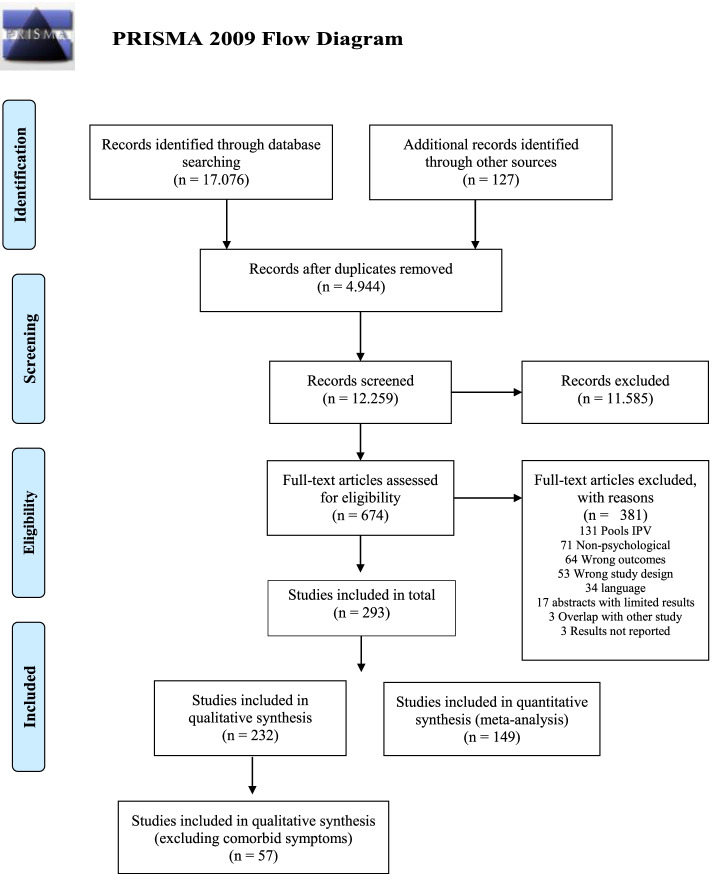
- Searched four databases: PsycINFO, PubMed, EMBASE, and Web of Science; included 194 studies total, with 149 eligible for meta-analysis.
- Effect sizes were synthesized as Hedges g for continuous outcomes and odds ratios for dichotomous outcomes; heterogeneity was assessed with I², and subgroup/moderation analyses examined scale, population, culture, subtype of violence, and study quality. GRADEpro was used to assess certainty of evidence.
Limitations
- The paper states that the evidence was rated low certainty overall, and very low for the PTSD odds-ratio outcome.
- The authors explicitly note that most included studies were cross-sectional, so the study does not establish causality; it estimates association only.
- The text makes evident several additional limitations: high heterogeneity, substantial gender bias toward female samples, mostly weak-quality studies (e.g., 51.0% weak overall in the meta-analytic sample), and inconsistent terminology/measurement of psychological violence, which the authors say complicates comparison and interpretation.
Model-written summary. Check it against the paper before relying on it.
Integrity signals
Registry
Cites
Statistics
Figures
Verification
Claims the paper makes
28 Valid · 2 Not valid · 15 Not checked · 86 Own results and interpretations
Every source the paper cites for this claim was checked and supports it.
In the paper
“emerging evidence suggests that psychologically threatening events can have a severe impact on mental health [17].”
§ The psychological subtype of intimate partner violence and its effect on mental health: a systematic review with meta-analyses > Introduction
What the sources say
- Supportedcites [17] Hyland P Karatzias T Shevlin M McElroy E Ben-Ezra M Cloitre M Does requiring trauma exposure affect rates of ICD-11 PTSD and complex PTSD? Implications for DSM–5 Psychol Trauma 2020 13 2 133 141 10.1037/tra0000908 32915045 source
The Clinical Impact Statement (p. 3) says psychologically threatening events including emotional abuse, neglect, bullying, and stalking were associated with meeting diagnostic requirements for PTSD and complex PTSD. The Discussion (p. 16) likewise reports increased diagnostic risk, supporting the hedged claim that such events can have a severe mental-health impact. (LLM, conf=0.90)
hedgedstates a possible cause- Asserted: passes — The authors put it forward as true.
- Checkable: passes — It can be checked against evidence.
- Load-bearing: passes — The paper’s conclusions depend on it.
- Based: passes — The paper gives a reason why it holds.
- Supported
The cited sources support only part of this claim — read each source’s verdict below.
In the paper
“nor has the methodological shortcomings characterizing most research on IPV and psychological violence [19] been accounted for.”
§ The psychological subtype of intimate partner violence and its effect on mental health: a systematic review with meta-analyses > Introduction
What the sources say
- Partly supportedcites [19] Dokkedahl S, Kok RN, Murphy S, Kristensen TR, Bech-Hansen D, Elklit A. The psychological subtype of intimate partner violence and its effect on mental health: protocol for a systematic review. Systematic Reviews. 2019;8(198). PMC6688298 31399073 sourceExperimental — accuracy not yet measured
The Background says methodological challenges involving sampling, design, scoring and gender bias characterize the field, and that most IPV and mental-health studies pool different types of violence. It does not establish that these shortcomings have not been accounted for in prior research; the paper instead proposes to assess them in its planned review. (LLM, conf=0.82)
plain- Asserted: passes — The authors put it forward as true.
- Checkable: passes — It can be checked against evidence.
- Load-bearing: passes — The paper’s conclusions depend on it.
- Based: passes — The paper gives a reason why it holds.
- Partly supported
The sources with a verdict support this claim; the rest weren’t checked yet, have no full text we could read, or their verdicts aren’t rated yet.
In the paper
“and findings support an association [9, 12–14].”
§ The psychological subtype of intimate partner violence and its effect on mental health: a systematic review with meta-analyses > Introduction
What the sources say
- Not checked — no full text of the sourcecites [9] Follingstad DR The impact of psychological aggression on women’s mental health and behavior - the status of the field Trauma, Violence, and Abuse. 2009 10 3 271 289 10.1177/1524838009334453 19460760 source
- Supportedcites [12] Lagdon S, Amour C, Stringer M. Adult experiences of mental health outcomes as a result of intimate partner violence victimization: a systematic review. Eur J Psychotraumatology. 2014;5(24794). PMC4163751 25279103 source
The Results sections on Depression and Anxiety report associations between psychological violence and each outcome. The review also notes that several studies found psychological violence alone affected depressive outcomes. (LLM, conf=0.94)
- Not checked — no full text of the sourcecites [13] Lawrence E Yoon J Langer A Ro E Is psychological aggression as detrimental as physical aggression? The independent effects of psychological aggression on depression and anxiety symptoms Violence Victims. 2009 24 1 20 35 10.1891/0886-6708.24.1.20 19297883 source
- Supportedcites [14] Baldry AC “Stick and stones hurt my bones but his glance and words hurt more”: the impact of physiological abuse and physical violence by current and former partners on battered women in Italy Int J Forensic Mental Health. 2003 2 1 47 57 10.1080/14999013.2003.10471178 source
The Multivariate Analyses section reports that psychological abuse significantly improved the model predicting anxiety/depression. The Discussion also says psychological abuse was more strongly associated with psychological symptoms than physical violence. Page numbers are not provided in our copy. (LLM, conf=0.93)
plainstates an association- Asserted: passes — The authors put it forward as true.
- Checkable: passes — It can be checked against evidence.
- Load-bearing: passes — The paper’s conclusions depend on it.
- Based: passes — The paper gives a reason why it holds.
Every source the paper cites for this claim was checked and supports it.
In the paper
“Findings revealed that non-Criterion A psychologically threatening events, e.g., stalking or neglect, were as strongly associated with PTSD and complex-PTSD (C-PTSD), as common Criterion A events.”
§ The psychological subtype of intimate partner violence and its effect on mental health: a systematic review with meta-analyses > Introduction
What the sources say
- Supportedcites [17] Hyland P Karatzias T Shevlin M McElroy E Ben-Ezra M Cloitre M Does requiring trauma exposure affect rates of ICD-11 PTSD and complex PTSD? Implications for DSM–5 Psychol Trauma 2020 13 2 133 141 10.1037/tra0000908 32915045 source
The Abstract (p. 2) states that the five psychologically threatening events were as strongly associated with ICD-11 PTSD and CPTSD as Criterion A events. The Clinical Impact Statement (p. 3) identifies stalking and neglect among those events. (LLM, conf=0.95)
plainstates an association- Asserted: passes — The authors put it forward as true.
- Checkable: passes — It can be checked against evidence.
- Load-bearing: passes — The paper’s conclusions depend on it.
- Based: passes — The paper gives a reason why it holds.
- Supported
Every source the paper cites for this claim was checked and supports it.
In the paper
“which makes results difficult to compare and stresses the need to evaluate how these differences influence results [19].”
§ The psychological subtype of intimate partner violence and its effect on mental health: a systematic review with meta-analyses > Introduction
What the sources say
- Supportedcites [19] Dokkedahl S, Kok RN, Murphy S, Kristensen TR, Bech-Hansen D, Elklit A. The psychological subtype of intimate partner violence and its effect on mental health: protocol for a systematic review. Systematic Reviews. 2019;8(198). PMC6688298 31399073 source
The Background states that differing definitions of psychological violence and varying uses of assessment subscales make study findings difficult to compare and warrant evaluating their influence on mental-health results. The Discussion likewise says that varying terminology, definitions, and psychometric tools will make results difficult to compare. (LLM, conf=0.95)
plainstates a cause- Asserted: passes — The authors put it forward as true.
- Checkable: passes — It can be checked against evidence.
- Load-bearing: passes — The paper’s conclusions depend on it.
- Based: passes — The paper gives a reason why it holds.
- Supported
74 more claims · 15 with their cited sources checked
Create a free account to see all 131 claims and to verify the 2 references still open.
- Probably not a substantial claim. 33
- It may state two separate claims as one. 26
- The quote only partly states this claim. 1
Claims other papers make about this one
Each is checked against this paper’s own text: does it say what the citing paper says it does?
The source backs part of the claim, not all of it — or backs it for a different population, condition or comparison.
In the citing paper
“Unlike physical violence, which tends to be more readily identi fi able through discrete incidents, psychological IPV is characterised by ongoing patterns of coercive and controlling behaviour that gradually undermine autonomy, sense of self and psychological well-being (Crossman & Hardesty, 2018; Dokkedahl et al., 2022; Lohmann et al., 2024; Parkinson et al., 2024).”
From ‘Reconnecting With All the Things That You Lost Because of Control’: What Helps Women in the Process of Leaving a Psychologically Abusive Intimate Partner? (2026) · cites this paper as Dokkedahl et al., 2022
Experimental — accuracy not yet measuredThe source backs part of the claim, not all of it — or backs it for a different population, condition or comparison.
In the citing paper
“In contrast, older adults, particularly women, may experience abuse through neglect, increased control, and financial exploitation, often compounded by declining health, caregiving reliance, and social isolation (Dokkedahl et al., 2022).”
From From use to abuse: psychological, neurobiological, and spiritual pathways in relational harm and recovery (2026) · cites this paper as Dokkedahl et al., 2022
Experimental — accuracy not yet measuredThe source backs part of the claim, not all of it — or backs it for a different population, condition or comparison.
In the citing paper
“Dokkedahl et al. (2022) found that psychological IPV involving coercive control showed the strongest association with posttraumatic stress disorder among all IPV forms.”
From Psychological Intimate Partner Violence Across Identities: Preliminary Psychometrics of the Multidimensional Measure of Emotional Abuse-Short Form Among Heterosexual, Lesbian, and Bisexual Samples in Türkiye (2026) · cites this paper as Dokkedahl et al., 2022
Experimental — accuracy not yet measured
Citations
Cites
Diagnostic and Statistical Manual of Mental Disorders
American Psychiatric Association (2013) · doi:10.1176/appi.books.9780890425596 · Cited by 116,369
The Epidemiology of Depression Across Cultures
Kessler, R. C., & Bromet, E. J. (2013) · Annual Review of Public Health · doi:10.1146/annurev-publhealth-031912-114409 · Cited by 2,657
Physical and mental health effects of intimate partner violence for men and women
Coker, A. L., Davis, K. E., Arias, I., Desai, S., Sanderson, M., Brandt, H. M., & Smith, P. H. (2002) · American Journal of Preventive Medicine · doi:10.1016/s0749-3797(02)00514-7 · Cited by 2,258
Tolin, D. F., & Foa, E. B. (2006) · Psychological Bulletin · doi:10.1037/0033-2909.132.6.959 · Cited by 2,197 · cited 1×
“This association was smaller than what was found for female victims; however, this is not surprising seeing that women are more likely to develop PTSD in general, compared to men [92, 96].”
ResultHow Big is a Big Odds Ratio? Interpreting the Magnitudes of Odds Ratios in Epidemiological Studies
Chen, H., Cohen, P., & Chen, S. (2010) · Communications in Statistics - Simulation and Computation · doi:10.1080/03610911003650383 · Cited by 1,952 · cited 1×
“dichotomous scoring, reported as OR [91].”
Intimate partner violence as a risk factor for mental disorders: A meta-analysis
Golding, J. M. (1999) · Journal of Family Violence · doi:10.1023/a:1022079418229 · Cited by 1,788
Global prevalence of anxiety disorders: a systematic review and meta-regression
Baxter, A. J., Scott, K. M., Vos, T., & Whiteford, H. A. (2013) · Psychological Medicine · doi:10.1017/s003329171200147x · Cited by 1,537
Posttraumatic stress disorder in the world mental health surveys
Koenen, K. C., Ratanatharathorn, A., Ng, L., McLaughlin, K. A., Bromet, E. J., Stein, D. J., Karam, E. G., Meron Ruscio, A., Benjet, C., Scott, K., et al. (2017) · Psychological Medicine · doi:10.1017/s0033291717000708 · Cited by 1,453
Devries, K. M., Mak, J. Y., Bacchus, L. J., Child, J. C., Falder, G., Petzold, M., Astbury, J., & Watts, C. H. (2013) · PLoS Medicine · doi:10.1371/journal.pmed.1001439 · Cited by 1,258
Pico-Alfonso, M. A., Garcia-Linares, M. I., Celda-Navarro, N., Blasco-Ros, C., Echeburúa, E., & Martinez, M. (2006) · Journal of Women's Health · doi:10.1089/jwh.2006.15.599 · Cited by 831
The Development of a Measure of Psychological Maltreatment of Women by Their Male Partners
Tolman, R. M. (1989) · Violence and Victims · doi:10.1891/0886-6708.4.3.159 · Cited by 689 · cited 1×
“These subtypes are commonly measured by different scales such as the Psychological Maltreatment of Women Inventory (PMWI) and the Coercion in Intimate Partner Relationships [30, 31].”
MethodIntimate Partner Violence and Women’s Physical, Mental, and Social Functioning
Bonomi, A. E., Thompson, R. S., Anderson, M., Reid, R. J., Carrell, D., Dimer, J. A., & Rivara, F. P. (2006) · American Journal of Preventive Medicine · doi:10.1016/j.amepre.2006.01.015 · Cited by 686
Social Support Protects against the Negative Effects of Partner Violence on Mental Health
Coker, A. L., Smith, P. H., Thompson, M. P., McKeown, R. E., Bethea, L., & Davis, K. E. (2002) · Journal of Women's Health & Gender-Based Medicine · doi:10.1089/15246090260137644 · Cited by 669
The role of emotional abuse in physically abusive relationships
Follingstad, D. R., Rutledge, L. L., Berg, B. J., Hause, E. S., & Polek, D. S. (1990) · Journal of Family Violence · doi:10.1007/bf00978514 · Cited by 625 · cited 2×
“Originally, researchers primarily considered psychological violence as a risk factor for later physical IPV [5–7], until qualitative interviews with female IPV victims, published in 1990, revealed that victims actually perceived psychological IPV to be worse than physical IPV [8, 9].”
BackgroundMethodLagdon, S., Armour, C., & Stringer, M. (2014) · European Journal of Psychotraumatology · doi:10.3402/ejpt.v5.24794 · Cited by 590
Breiding, M. J., Chen, J., & Walters, M. L. (2011) · Cited by 531
Coercion in Intimate Partner Violence: Toward a New Conceptualization
Dutton, M. A., & Goodman, L. A. (2005) · Sex Roles · doi:10.1007/s11199-005-4196-6 · Cited by 514 · cited 1×
“These subtypes are commonly measured by different scales such as the Psychological Maltreatment of Women Inventory (PMWI) and the Coercion in Intimate Partner Relationships [30, 31].”
MethodPsychological aggression predicts physical aggression in early marriage.
Murphy, C. M., & O'Leary, K. D. (1989) · Journal of Consulting and Clinical Psychology · doi:10.1037/0022-006x.57.5.579 · Cited by 474 · cited 1×
“The assessment is based on eight components: [1] selection bias, [2] study design, [3] confounders, [4] blinding, [5] data collection methods, and [6] withdrawals and dropouts, [7] intervention integrity, and [8] analysis [27] and has previously been used in research evaluating IPV psychometric tools [28].”
MethodCloitre, M., Hyland, P., Bisson, J. I., Brewin, C. R., Roberts, N. P., Karatzias, T., & Shevlin, M. (2019) · Journal of Traumatic Stress · doi:10.1002/jts.22454 · Cited by 340 · cited 3×
“It is important to recognize that psychologically threatening events can have negative mental health consequences for male victims too [17, 92, 93], including psychological IPV, and thus, preventive efforts and treatment interventions should also be available for male victims.”
BackgroundResultPsychological Abuse: Implications for Adjustment and Commitment to Leave Violent Partners
Arias, I., & Pape, K. T. (1999) · Violence and Victims · doi:10.1891/0886-6708.14.1.55 · Cited by 335
Physical aggression in early marriage: Prerelationship and relationship effects.
O'Leary, K. D., Malone, J., & Tyree, A. (1994) · Journal of Consulting and Clinical Psychology · doi:10.1037//0022-006x.62.3.594 · Cited by 335 · cited 1×
“The assessment is based on eight components: [1] selection bias, [2] study design, [3] confounders, [4] blinding, [5] data collection methods, and [6] withdrawals and dropouts, [7] intervention integrity, and [8] analysis [27] and has previously been used in research evaluating IPV psychometric tools [28].”
MethodKramer, A., Lorenzon, D., & Mueller, G. (2004) · Women's Health Issues · doi:10.1016/j.whi.2003.12.002 · Cited by 306 · cited 1×
“Three studies did not report test-statistics [46, 78, 79].”
Beeble, M. L., Bybee, D., Sullivan, C. M., & Adams, A. E. (2009) · Journal of Consulting and Clinical Psychology · doi:10.1037/a0016140 · Cited by 304
Muluneh, M. D., Stulz, V., Francis, L., & Agho, K. (2020) · International Journal of Environmental Research and Public Health · doi:10.3390/ijerph17030903 · Cited by 296 · cited 6×
“However, these estimates are limited to Europe and the USA, and although similar findings have been reported in other cultural settings, including China [105], Bangladesh [106], and subSaharan Africa [107], more research is needed on cultural differences in the prevalence and expression of psychological violence acros…”
ResultInfluentialViolence against women: an EU-wide survey Main results
Fra (2015) · Cited by 295
Pico-Alfonso, M. A. (2005) · Neuroscience & Biobehavioral Reviews · doi:10.1016/j.neubiorev.2004.08.010 · Cited by 283
Walters, M. L., Chen, J., & Breiding, M. J. (2013) · PsycEXTRA Dataset · doi:10.1037/e541272013-001 · Cited by 253
Polyvictimization by Dating Partners and Mental Health Among U.S. College Students
Sabina, C., & Straus, M. A. (2008) · Violence and Victims · doi:10.1891/0886-6708.23.6.667 · Cited by 252
Nixon, R. D. V., Resick, P. A., & Nishith, P. (2004) · Journal of Affective Disorders · doi:10.1016/j.jad.2004.01.008 · Cited by 224
Psychological effects of partner abuse against men: A neglected research area.
Hines, D. A., & Malley-Morrison, K. (2001) · Psychology of Men & Masculinity · doi:10.1037/1524-9220.2.2.75 · Cited by 206 · cited 1×
“Finally, the present study included male victims, which otherwise have been neglected in past IPV research [94].”
Lawrence, E., Yoon, J., Langer, A., & Ro, E. (2009) · Violence and Victims · doi:10.1891/0886-6708.24.1.20 · Cited by 197
Dutton, M. A., Goodman, L. A., & Bennett, L. (1999) · Violence and Victims · doi:10.1891/0886-6708.14.1.89 · Cited by 192
Prevalence of Anxiety, Depression and Associated Factors Among Pregnant Women of Hyderabad, Pakistan
Karmaliani, R., Asad, N., Bann, C. M., Moss, N., Mcclure, E. M., Pasha, O., Wright, L. L., & Goldenberg, R. L. (2009) · International Journal of Social Psychiatry · doi:10.1177/0020764008094645 · Cited by 187
Langhinrichsen-Rohling, J. (2005) · Journal of Interpersonal Violence · doi:10.1177/0886260504268602 · Cited by 174
Intimate partner violence and mental health symptoms in African American female ED patients
Houry, D., Kemball, R., Rhodes, K. V., & Kaslow, N. J. (2006) · The American Journal of Emergency Medicine · doi:10.1016/j.ajem.2005.12.026 · Cited by 170
Cross-cultural differences in intimate partner violence and depression: A systematic review
White, M. E., & Satyen, L. (2015) · Aggression and Violent Behavior · doi:10.1016/j.avb.2015.05.005 · Cited by 162 · cited 1×
“Just like culture might mediate the impact of IPV or influence how the violence is perceived and expressed [22, 23].”
BackgroundEffects of Men’s Subtle and Overt Psychological Abuse on Low-Income Women
Marshall, L. L. (1999) · Violence and Victims · doi:10.1891/0886-6708.14.1.69 · Cited by 156
Dating Violence: Mental Health Consequences Based on Type of Abuse
Eshelman, L., & Levendosky, A. A. (2012) · Violence and Victims · doi:10.1891/0886-6708.27.2.215 · Cited by 153
Bates, E. A. (2020) · Psychology of Men & Masculinities · doi:10.1037/men0000206 · Cited by 152 · cited 1×
“Moreover, researchers have previously argued that psychological violence targeting men might be different from psychological violence targeting women [97, 98], and McHugh and colleagues [24] have argued that most validated measured used to screen for psychological violence have been developed based on female experienc…”
BackgroundFrewen, P., Zhu, J., & Lanius, R. (2019) · European Journal of Psychotraumatology · doi:10.1080/20008198.2019.1606625 · Cited by 151 · cited 2×
“It is important to recognize that psychologically threatening events can have negative mental health consequences for male victims too [17, 92, 93], including psychological IPV, and thus, preventive efforts and treatment interventions should also be available for male victims.”
BackgroundResultFollingstad, D. R. (2009) · Trauma, Violence, & Abuse · doi:10.1177/1524838009334453 · Cited by 147 · cited 10×
“Most IPV measures have been developed based on research concerning female victims [9].”
BackgroundResultInfluentialDoes requiring trauma exposure affect rates of ICD-11 PTSD and complex PTSD? Implications for DSM–5.
Hyland, P., Karatzias, T., Shevlin, M., McElroy, E., Ben-Ezra, M., Cloitre, M., & Brewin, C. R. (2021) · Psychological Trauma: Theory, Research, Practice, and Policy · doi:10.1037/tra0000908 · Cited by 144 · cited 13×
“More so, a multivariate analysis, controlling for sex and all other traumatic events, revealed that only the psychologically threatening non-Criterion A events were associated with PTSD and C-PTSD [17].”
BackgroundInfluentialIntimate Partner Violence Among Men
Reid, R. J., Bonomi, A. E., Rivara, F. P., Anderson, M. L., Fishman, P. A., Carrell, D. S., & Thompson, R. S. (2008) · American Journal of Preventive Medicine · doi:10.1016/j.amepre.2008.01.029 · Cited by 141
Goldberg, N. G., & Meyer, I. H. (2013) · Journal of Interpersonal Violence · doi:10.1177/0886260512459384 · Cited by 136 · cited 1×
“Another important example is violence against LGBT+ individuals, who might be slightly more exposed to IPV than their heterosexual peers [101, 102].”
BackgroundMiller, E. P., & Silverman, J. G. (2010) · Expert Review of Obstetrics & Gynecology · doi:10.1586/eog.10.44 · Cited by 135 · cited 1×
“This specific type of coercion has also been associated with mental health problems [99, 100].”
BackgroundDiffering Effects of Partner and Nonpartner Sexual Assault on Women's Mental Health
Temple, J. R., Weston, R., Rodriguez, B. F., & Marshall, L. L. (2007) · Violence Against Women · doi:10.1177/1077801206297437 · Cited by 134
Blasco-Ros, C., Sánchez-Lorente, S., & Martinez, M. (2010) · BMC Psychiatry · doi:10.1186/1471-244x-10-98 · Cited by 133
Dokkedahl, S., Kok, R. N., Murphy, S., Kristensen, T. R., Bech-Hansen, D., & Elklit, A. (2019) · Systematic Reviews · doi:10.1186/s13643-019-1118-1 · Cited by 121 · cited 10×
“A protocol elaborating on the theoretical background and planned methodology was published before the search was conducted [19].”
BackgroundMethodInfluentialSelf-citationShorey, R. C., Sherman, A. E., Kivisto, A. J., Elkins, S. R., Rhatigan, D. L., & Moore, T. M. (2011) · Journal of Interpersonal Violence · doi:10.1177/0886260510372949 · Cited by 106
Measures for screening for intimate partner violence: a systematic review
Arkins, B., Begley, C., & Higgins, A. (2016) · Journal of Psychiatric and Mental Health Nursing · doi:10.1111/jpm.12289 · Cited by 92 · cited 1×
“The assessment is based on eight components: [1] selection bias, [2] study design, [3] confounders, [4] blinding, [5] data collection methods, and [6] withdrawals and dropouts, [7] intervention integrity, and [8] analysis [27] and has previously been used in research evaluating IPV psychometric tools [28].”
MethodLysova, A., Dim, E. E., & Dutton, D. (2019) · Partner Abuse · doi:10.1891/1946-6560.10.2.199 · Cited by 91 · cited 1×
“As stated in the introduction, population-based surveys have demonstrated that a high prevalence of both men and women are exposed to psychological violence [2, 95].”
BackgroundIntimate partner violence and mental health in Bolivia
Meekers, D., Pallin, S. C., & Hutchinson, P. (2013) · BMC Women's Health · doi:10.1186/1472-6874-13-28 · Cited by 90
Sabri, B., Bolyard, R., McFadgion, A. L., Stockman, J. K., Lucea, M. B., Callwood, G. B., Coverston, C. R., & Campbell, J. C. (2013) · Social Work in Health Care · doi:10.1080/00981389.2012.745461 · Cited by 89 · cited 1×
“Three studies did not report test-statistics [46, 78, 79].”
Investigating Partner Abuse Among HIV-Positive Men Who have Sex with Men
Pantalone, D. W., Schneider, K. L., Valentine, S. E., & Simoni, J. M. (2012) · AIDS and Behavior · doi:10.1007/s10461-011-0011-2 · Cited by 86 · cited 1×
“Qualitative synthesis of additional outcomes on anxiety Finally, thirteen studies found a significant association between psychological violence and anxiety [13, 38, 40, 49, 59, 63, 65, 68, 78, 80–83], while three studies found an insignificant association [61, 76, 84].”
BackgroundEsie, P., Osypuk, T. L., Schuler, S. R., & Bates, L. M. (2019) · SSM - Population Health · doi:10.1016/j.ssmph.2019.100368 · Cited by 82 · cited 2×
“However, these estimates are limited to Europe and the USA, and although similar findings have been reported in other cultural settings, including China [105], Bangladesh [106], and subSaharan Africa [107], more research is needed on cultural differences in the prevalence and expression of psychological violence acros…”
ResultDesmarais, S. L., Pritchard, A., Lowder, E. M., & Janssen, P. A. (2014) · BMC Pregnancy and Childbirth · doi:10.1186/1471-2393-14-132 · Cited by 80
Pigeon, W. R., Cerulli, C., Richards, H., He, H., Perlis, M., & Caine, E. (2011) · Journal of Women's Health · doi:10.1089/jwh.2011.2781 · Cited by 70
Men’s Experience of Psychological Abuse: Conceptualization and Measurement Issues
McHugh, M. C., Rakowski, S., & Swiderski, C. (2013) · Sex Roles · doi:10.1007/s11199-013-0274-3 · Cited by 69 · cited 2×
“Hence, they may not be appropriate for studying male victimization [24].”
BackgroundMason, T. B., Lewis, R. J., Milletich, R. J., Kelley, M. L., Minifie, J. B., & Derlega, V. J. (2014) · Aggression and Violent Behavior · doi:10.1016/j.avb.2014.04.001 · Cited by 68
Abuses Against Older Women: Prevalence and Health Effects
Fisher, B. S., Zink, T., & Regan, S. L. (2011) · Journal of Interpersonal Violence · doi:10.1177/0886260510362877 · Cited by 68
Gibbs, A., Corboz, J., & Jewkes, R. (2018) · BMC Public Health · doi:10.1186/s12889-018-5507-5 · Cited by 67
Intimate Partner Violence and Psychological Functioning in Latina Women
Hazen, A. L., Connelly, C. D., Soriano, F. I., & Landsverk, J. A. (2008) · Health Care for Women International · doi:10.1080/07399330701738358 · Cited by 66 · cited 2×
“Qualitative synthesis of additional outcomes on anxiety Finally, thirteen studies found a significant association between psychological violence and anxiety [13, 38, 40, 49, 59, 63, 65, 68, 78, 80–83], while three studies found an insignificant association [61, 76, 84].”
BackgroundJohnson, D. M., Zlotnick, C., & Perez, S. (2008) · Behavior Therapy · doi:10.1016/j.beth.2007.08.003 · Cited by 65 · cited 2×
“Nevertheless, research has focused less on the independent effect of psychological violence on mental health, compared to physical and sexual IPV [3, 4].”
BackgroundMethodCalvete, E., Estévez, A., & Corral, S. (2007) · Behaviour Research and Therapy · doi:10.1016/j.brat.2006.07.006 · Cited by 63
Psychological partner violence and women's vulnerability to depression, stress, and anxiety
Al‐Modallal, H. (2012) · International Journal of Mental Health Nursing · doi:10.1111/j.1447-0349.2012.00826.x · Cited by 57
Scheer, J. R., Harney, P., Esposito, J., & Woulfe, J. M. (2020) · Psychology of Violence · doi:10.1037/vio0000241 · Cited by 56
Lilly, M. M., & Graham-Bermann, S. A. (2009) · Journal of Interpersonal Violence · doi:10.1177/0886260508314335 · Cited by 55
Oliveira, A. G. E. S. D., Reichenheim, M. E., Moraes, C. L., Howard, L. M., & Lobato, G. (2017) · Archives of Women's Mental Health · doi:10.1007/s00737-016-0705-6 · Cited by 55
Miller, B., & Irvin, J. (2017) · Journal of Homosexuality · doi:10.1080/00918369.2016.1242334 · Cited by 53
Empowerment, PTSD and revictimization among women who have experienced intimate partner violence
Dardis, C. M., Dichter, M. E., & Iverson, K. M. (2018) · Psychiatry Research · doi:10.1016/j.psychres.2018.05.034 · Cited by 53
Experiences of Reproductive Coercion in Queensland Women
Price, E. C., Sharman, L. S., Douglas, H., Sheeran, N., & Dingle, G. A. (2019) · Journal of Interpersonal Violence · doi:10.1177/0886260519846851 · Cited by 49 · cited 1×
“This specific type of coercion has also been associated with mental health problems [99, 100].”
BackgroundPhysical Aggression and Depressive Symptoms: Gender Asymmetry in Effects?
Beach, S. R. H., Kim, S., Cercone-Keeney, J., Gupta, M., Arias, I., & Brody, G. H. (2004) · Journal of Social and Personal Relationships · doi:10.1177/0265407504042836 · Cited by 48
Women’s Exposure to Psychological Abuse: Does That Experience Predict Mental Health Outcomes?
Rogers, M. J., & Follingstad, D. R. (2014) · Journal of Family Violence · doi:10.1007/s10896-014-9621-6 · Cited by 47
Baldry, A. (2003) · International Journal of Forensic Mental Health · doi:10.1080/14999013.2003.10471178 · Cited by 45
Woulfe, J. M., & Goodman, L. (2020) · Psychology of Violence · doi:10.1037/vio0000251 · Cited by 45 · cited 1×
“, threatening to “out” a person’s sexuality to their family or workplace before they themselves choose, which require us to be aware of unique patterns that may be specific for certain groups [25, 103].”
BackgroundIverson, K. M., Vogt, D., Maskin, R. M., & Smith, B. N. (2017) · Medical Care · doi:10.1097/mlr.0000000000000741 · Cited by 44
Gender and cultural effects on perception of psychological violence in the partner
Álvarez, C. D., Aranda, B. E., & Huerta, J. A. L. (2015) · Psicothema · doi:10.7334/psicothema2015.54 · Cited by 43
Beeble, M. L., Bybee, D., & Sullivan, C. M. (2010) · Journal of Community Psychology · doi:10.1002/jcop.20407 · Cited by 41
Fahmy, H. H., & Abd-Elrahman, S. I. (2008) · PubMed · Cited by 37
Brar, S. K., Beattie, T., Abas, M., Vansia, D., Phanga, T., Maseko, B., Bekker, L., Pettifor, A. E., & Rosenberg, N. E. (2020) · Global Public Health · doi:10.1080/17441692.2020.1718732 · Cited by 37
Tiwari, A., Fong, D., Chan, C. H., & Ho, P. (2012) · Journal of Interpersonal Violence · doi:10.1177/0886260512459380 · Cited by 36
Psychological Abuse and Posttraumatic Stress Symptoms in College Students
Avant, E. M., Swopes, R. M., Davis, J. L., & Elhai, J. D. (2011) · Journal of Interpersonal Violence · doi:10.1177/0886260510390954 · Cited by 36
Gou, L. H., Duerksen, K. N., & Woodin, E. M. (2018) · Aggressive Behavior · doi:10.1002/ab.21803 · Cited by 36
Violence Affects Physical and Mental Health Differently: The General Population Based Tromsø Study
Friborg, O., Emaus, N., Rosenvinge, J. H., Bilden, U., Olsen, J. A., & Pettersen, G. (2015) · PLOS ONE · doi:10.1371/journal.pone.0136588 · Cited by 35
Hedin, L. W., & Janson, P. O. (1999) · Journal of Psychosomatic Obstetrics & Gynecology · doi:10.3109/01674829909075587 · Cited by 35
Posttraumatic stress disorder among low-income women exposed to perinatal intimate partner violence
Kastello, J. C., Jacobsen, K. H., Gaffney, K. F., Kodadek, M. P., Bullock, L. C., & Sharps, P. W. (2015) · Archives of Women s Mental Health · doi:10.1007/s00737-015-0594-0 · Cited by 35
Posttraumatic stress symptoms and victimization among Japanese American women.
Yoshihama, M., & Horrocks, J. (2002) · Journal of Consulting and Clinical Psychology · doi:10.1037/0022-006x.70.1.205 · Cited by 34
Tuthill, E. L., Neilands, T. B., Johnson, M. O., Sauceda, J. A., Mkandawire, J., & Conroy, A. A. (2019) · AIDS and Behavior · doi:10.1007/s10461-019-02583-9 · Cited by 33
Emotional Abuse as a Precipitating Factor for Depression in Women
Ali, A., Oatley, K., & Toner, B. B. (1999) · Journal of Emotional Abuse · doi:10.1300/j135v01n04_01 · Cited by 32
Sabri, B., Stockman, J. K., Bertrand, D. R., Campbell, D. W., Callwood, G. B., & Campbell, J. C. (2013) · Journal of Interpersonal Violence · doi:10.1177/0886260513496902 · Cited by 32
Patterns of Violence Against Engaged Arab Women from Israel and Some Psychological Implications
Haj‐Yahia, M. M. (2000) · Psychology of Women Quarterly · doi:10.1111/j.1471-6402.2000.tb00202.x · Cited by 31
Henriques, T., Moraes, C. L. D., Reichenheim, M. E., Azevedo, G. L. D., Coutinho, E. S. F., & Figueira, I. L. D. V. (2015) · Cadernos de Saúde Pública · doi:10.1590/0102-311x00030215 · Cited by 31
Terrazas-Carrillo, E. C., McWhirter, P. T., & Martel, K. M. (2016) · Journal of Family Violence · doi:10.1007/s10896-016-9827-x · Cited by 27
Sexual Coercion and Mental Health Symptoms Among Heterosexual Men: The Pressure to Say “Yes”
Próspero, M., & Fawson, P. (2010) · American Journal of Men's Health · doi:10.1177/1557988308330106 · Cited by 26 · cited 1×
“Qualitative synthesis of additional outcomes on anxiety Finally, thirteen studies found a significant association between psychological violence and anxiety [13, 38, 40, 49, 59, 63, 65, 68, 78, 80–83], while three studies found an insignificant association [61, 76, 84].”
BackgroundSalwen‐Deremer, J. K., Solano, I., & O’Leary, K. D. (2015) · Partner Abuse · doi:10.1891/1946-6560.6.4.367 · Cited by 23
Dim, E. E. (2021) · International Journal of Offender Therapy and Comparative Criminology · doi:10.1177/0306624x20911898 · Cited by 20
Hellemans, S., Buysse, A., De Smet, O., & Wietzker, A. (2014) · Psychologica Belgica · doi:10.5334/pb.af · Cited by 19
Therapeutic Progression in Abused Women Following a Drug-Addiction Treatment Program
Fernández-Montalvo, J., López-Goñi, J. J., Arteaga, A., Cacho, R., & Azanza, P. (2017) · Journal of Interpersonal Violence · doi:10.1177/0886260515591980 · Cited by 15 · cited 1×
“Three studies did not report test-statistics [46, 78, 79].”
Partner abuse and its association with emotional distress: A study exploring LGBTI relationships
Ireland, J. L., Birch, P., Kolstee, J., & Ritchie, A. (2017) · International Journal of Law and Psychiatry · doi:10.1016/j.ijlp.2017.06.005 · Cited by 13
“Whose Fault Is It?” How Rural Chinese Women Explain Intimate Partner Violence: A Qualitative Study
Hou, F., Cerulli, C., Wittink, M., Caine, E., & Qiu, P.-Y. (2021) · Frontiers in Psychiatry · doi:10.3389/fpsyt.2021.711819 · Cited by 11 · cited 1×
“However, these estimates are limited to Europe and the USA, and although similar findings have been reported in other cultural settings, including China [105], Bangladesh [106], and subSaharan Africa [107], more research is needed on cultural differences in the prevalence and expression of psychological violence acros…”
ResultLifetime Abuse and Mental Health Among Older Persons: A European Study
Eslami, B., Macassa, G., Melchiorre, M. G., Barros, H., Viitasara, E., Lindert, J., Stankunas, M., Torres-Gonzalez, F., Ioannidi-Kapolou, E., & Soares, J. J. F. (2017) · Journal of Aggression, Maltreatment & Trauma · doi:10.1080/10926771.2017.1330295 · Cited by 10
Research works printed but not linked: 3
- World Health Organization. International statistical classification of diseases and related health problems. 11th edition ed 2018.
- Cooper H Research synthesis and meta-analy. 5th Ed. ed 2017 Duke University: Sage Publications, Inc
- Ministry of Social Affairs and Integration National strategy against honour-related conflicts 2013 Denmark København K
Cited by
Evidence of Gender Asymmetry in Intimate Partner Violence Experience at the Population-Level
Fanslow, J., Mellar, B. M., Gulliver, P. J., & McIntosh, T. K. D. (2023) · Journal of Interpersonal Violence · doi:10.1177/08862605231163646 · Cited by 96
“Use of different scoring methods such as dichotomous or frequency measures can affect the magnitude of effect sizes for IPV consequences (Dokkedahl et al., 2022).”
BackgroundMethodMellar, B. M., Hashemi, L., Selak, V., Gulliver, P. J., McIntosh, T. K. D., & Fanslow, J. L. (2023) · JAMA Network Open · doi:10.1001/jamanetworkopen.2023.1311 · Cited by 42
Brighi, A., Amadori, A., Summerer, K., & Menin, D. (2023) · International Journal of Clinical and Health Psychology · doi:10.1016/j.ijchp.2023.100414 · Cited by 27
Mellar, B. M., Gulliver, P. J., Selak, V., Hashemi, L., McIntosh, T. K. D., & Fanslow, J. (2023) · JAMA Network Open · doi:10.1001/jamanetworkopen.2022.52578 · Cited by 30
Screening for Intimate Partner Violence Experience and Use in the Veterans Health Administration
Portnoy, G. A., Relyea, M., Presseau, C., Orazietti, S. A., Bruce, L. E., Brandt, C., & Martino, S. (2023) · JAMA Network Open · doi:10.1001/jamanetworkopen.2023.37685 · Cited by 27
Metadata
- Authors
- Dokkedahl, S. B., Kirubakaran, R., Bech-Hansen, D., Kristensen, T. R., & Elklit, A.
- Affiliations
- University of Southern Denmark (DK)
- Christian Medical College, Vellore (IN)
- Frederiksberg Hospital (DK)
- Corresponding author
- Dokkedahl, S. B.
- Venue
- Systematic Reviews
- Published
- 2022-08-10
- Volume
- 11
- Issue
- 1
- Pages
- 163-163
- ISSN
- 2046-4053 (ISSN-L)
- PMC
- PMC9364557
- OpenAlex
- W4291021328
- Cited by
- 172
- References
- 103
- Citations by year
- 2026: 63 · 2025: 60 · 2024: 30 · 2023: 18 · 2022: 1
- FWCI
- 3.78
- Type
- journal article
- Language
- en
- Open access
- gold
- doi.org
- Licence
- cc-by
- creativecommons.org/licenses/by/4.0 (tdm)
- creativecommons.org/licenses/by/4.0 (vor)
- Locations
- Systematic Reviews (publishedVersion, cc-by)
- PubMed Central (publishedVersion, cc-by)
- PubMed (publishedVersion)
- University of Southern Denmark Research Portal (University of Southern Denmark) (submittedVersion, cc-by)
- DOAJ (DOAJ: Directory of Open Access Journals) (submittedVersion, cc-by-sa)
- Funders
- The Danish Victims Fund (18-610-00026)
- Topics
- Social Sciences › Health › Intimate Partner and Family Violence
- Social Sciences › Psychology › Clinical Psychology › Child Abuse and Trauma
- Social Sciences › Psychology › Clinical Psychology › Posttraumatic Stress Disorder Research
- Keywords
- psychological violence, intimate partner violence, post-traumatic stress disorder, depression, anxiety, coercive control, mental health, gender bias, trauma
- MeSH terms
- Intimate Partner Violence, Female, Humans, Male, Mental Health, Psychotherapy, Stress Disorders, Post-Traumatic, Sexism
About these checks
Registry, retraction, Cites and statistics results are computed, not judged, with one exception: a printed reference that no index lists is read once by a model before it counts as a citation error. Claims are extracted by a model and kept only when their quote appears verbatim in the text; each cited source is then checked, with a model’s help, for whether it says what the claim relies on. Those verdicts can be wrong — read the claim’s quote and the cited source before relying on one.
The claim verdicts this report counts are experimental: their accuracy is not yet measured.
A language model drew the claims from the paper on 2026-10-09, under version 3 of the claim definition (model deepseek-v4.1-flash, prompt extract-v3).
A second model labelled each claim on 2026-10-09 (model jev-1.13-20260917, definition revision gold-guideline-v0.2).
Cited sources are checked with a language model’s help (gpt-6-sol).
Statistics and arithmetic are recomputed, not judged.
Confidence bands are shown only for fields calibrated on our annotated test set. None is calibrated yet, so no band is shown.
What counts as a claim ›How we measure confidence ›How we check this ›
Are you an author, or do you see a problem with this page? Request a review
Data sources
Bibliographic data: Semantic Scholar, OpenAlex, Crossref.
Contains information from the Semantic Scholar Academic Graph Datasets, made available under the ODC Attribution License (ODC-BY 1.0).
Semantic Scholar’s data is described in: Kinney, R., et al. (2023). The Semantic Scholar Open Data Platform. arXiv:2301.10140.
