

The psychological subtype of intimate partner violence and its effect on mental health: a systematic review with meta-analyses
Open accessThe DOI matches its Crossref record; 100 of the 103 references it cites were found in a registry or an index; 37 of the 100 sources its claims cite were checked for support.
Abstract
Systematic review and meta-analyses examining psychological violence and PTSD, depression, and anxiety.
Overview
CoChat Summary
TL;DR
This systematic review and random-effects meta-analysis found that psychological intimate partner violence (IPV) is strongly associated with PTSD, depression, and anxiety, with the strongest association for PTSD. The evidence was rated low certainty overall, and the authors emphasize substantial heterogeneity, gender bias, and inconsistent definitions/measures as key reasons more high-quality research is needed.
Key findings
- Across 149 studies in the meta-analyses, psychological violence showed strong associations with all three outcomes; the strongest association was for PTSD in both female and male victims.
- For PTSD, Hedges g was .90 for female victims, .54 for male victims, and .78 for combined samples; for female victims, the odds ratio was 2.23 [1.37; 3.64].
- For depression, Hedges g was .70 for females, .43 for males, and .45 for combined samples; odds ratios were 2.07 [1.61; 2.66] for females and 2.38 [1.62; 3.50] for combined samples.
- For anxiety, Hedges g was .58 for females, .27 for males, and .22 for combined samples; odds ratios were 2.20 [1.75; 2.77] for females, 4.21 [1.84; 9.64] for males, and 1.66 [1.08; 2.57] for combined samples.
- By subtype, coercive control was particularly associated with PTSD for female victims, while emotional/verbal and dominance/isolation had the strongest associations with depression.
Methods
- Systematic review with random-effects meta-analyses of the association between psychological violence and PTSD, depression, and anxiety, following PRISMA and registered in PROSPERO (#CRD42018116026).
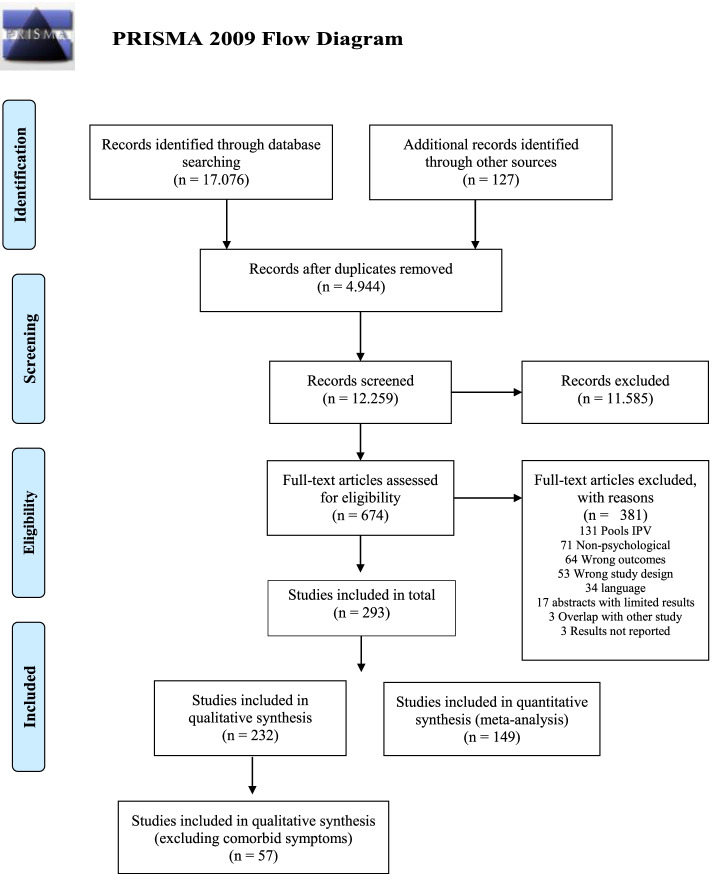
- Searched four databases: PsycINFO, PubMed, EMBASE, and Web of Science; included 194 studies total, with 149 eligible for meta-analysis.
- Effect sizes were synthesized as Hedges g for continuous outcomes and odds ratios for dichotomous outcomes; heterogeneity was assessed with I², and subgroup/moderation analyses examined scale, population, culture, subtype of violence, and study quality. GRADEpro was used to assess certainty of evidence.
Limitations
- The paper states that the evidence was rated low certainty overall, and very low for the PTSD odds-ratio outcome.
- The authors explicitly note that most included studies were cross-sectional, so the study does not establish causality; it estimates association only.
- The text makes evident several additional limitations: high heterogeneity, substantial gender bias toward female samples, mostly weak-quality studies (e.g., 51.0% weak overall in the meta-analytic sample), and inconsistent terminology/measurement of psychological violence, which the authors say complicates comparison and interpretation.
Model-written summary. Check it against the paper before relying on it.
Integrity signals
Registry
Cites
Statistics
Figures
Verification
Claims the paper makes
28 Valid · 2 Not valid · 15 Not checked · 86 Own results and interpretations
Every source the paper cites for this claim was checked and supports it.
In the paper
“emerging evidence suggests that psychologically threatening events can have a severe impact on mental health [17].”
§ The psychological subtype of intimate partner violence and its effect on mental health: a systematic review with meta-analyses > Introduction
What the sources say
- Supportedcites [17] Hyland P Karatzias T Shevlin M McElroy E Ben-Ezra M Cloitre M Does requiring trauma exposure affect rates of ICD-11 PTSD and complex PTSD? Implications for DSM–5 Psychol Trauma 2020 13 2 133 141 10.1037/tra0000908 32915045 source
The Clinical Impact Statement (p. 3) says psychologically threatening events including emotional abuse, neglect, bullying, and stalking were associated with meeting diagnostic requirements for PTSD and complex PTSD. The Discussion (p. 16) likewise reports increased diagnostic risk, supporting the hedged claim that such events can have a severe mental-health impact. (LLM, conf=0.90)
hedgedstates a possible cause- Asserted: passes — The authors put it forward as true.
- Checkable: passes — It can be checked against evidence.
- Load-bearing: passes — The paper’s conclusions depend on it.
- Based: passes — The paper gives a reason why it holds.
- Supported
The cited sources support only part of this claim — read each source’s verdict below.
In the paper
“nor has the methodological shortcomings characterizing most research on IPV and psychological violence [19] been accounted for.”
§ The psychological subtype of intimate partner violence and its effect on mental health: a systematic review with meta-analyses > Introduction
What the sources say
- Partly supportedcites [19] Dokkedahl S, Kok RN, Murphy S, Kristensen TR, Bech-Hansen D, Elklit A. The psychological subtype of intimate partner violence and its effect on mental health: protocol for a systematic review. Systematic Reviews. 2019;8(198). PMC6688298 31399073 sourceExperimental — accuracy not yet measured
The Background says methodological challenges involving sampling, design, scoring and gender bias characterize the field, and that most IPV and mental-health studies pool different types of violence. It does not establish that these shortcomings have not been accounted for in prior research; the paper instead proposes to assess them in its planned review. (LLM, conf=0.82)
plain- Asserted: passes — The authors put it forward as true.
- Checkable: passes — It can be checked against evidence.
- Load-bearing: passes — The paper’s conclusions depend on it.
- Based: passes — The paper gives a reason why it holds.
- Partly supported
The sources with a verdict support this claim; the rest weren’t checked yet, have no full text we could read, or their verdicts aren’t rated yet.
In the paper
“and findings support an association [9, 12–14].”
§ The psychological subtype of intimate partner violence and its effect on mental health: a systematic review with meta-analyses > Introduction
What the sources say
- Not checked — no full text of the sourcecites [9] Follingstad DR The impact of psychological aggression on women’s mental health and behavior - the status of the field Trauma, Violence, and Abuse. 2009 10 3 271 289 10.1177/1524838009334453 19460760 source
- Supportedcites [12] Lagdon S, Amour C, Stringer M. Adult experiences of mental health outcomes as a result of intimate partner violence victimization: a systematic review. Eur J Psychotraumatology. 2014;5(24794). PMC4163751 25279103 source
The Results sections on Depression and Anxiety report associations between psychological violence and each outcome. The review also notes that several studies found psychological violence alone affected depressive outcomes. (LLM, conf=0.94)
- Not checked — no full text of the sourcecites [13] Lawrence E Yoon J Langer A Ro E Is psychological aggression as detrimental as physical aggression? The independent effects of psychological aggression on depression and anxiety symptoms Violence Victims. 2009 24 1 20 35 10.1891/0886-6708.24.1.20 19297883 source
- Supportedcites [14] Baldry AC “Stick and stones hurt my bones but his glance and words hurt more”: the impact of physiological abuse and physical violence by current and former partners on battered women in Italy Int J Forensic Mental Health. 2003 2 1 47 57 10.1080/14999013.2003.10471178 source
The Multivariate Analyses section reports that psychological abuse significantly improved the model predicting anxiety/depression. The Discussion also says psychological abuse was more strongly associated with psychological symptoms than physical violence. Page numbers are not provided in our copy. (LLM, conf=0.93)
plainstates an association- Asserted: passes — The authors put it forward as true.
- Checkable: passes — It can be checked against evidence.
- Load-bearing: passes — The paper’s conclusions depend on it.
- Based: passes — The paper gives a reason why it holds.
Every source the paper cites for this claim was checked and supports it.
In the paper
“Findings revealed that non-Criterion A psychologically threatening events, e.g., stalking or neglect, were as strongly associated with PTSD and complex-PTSD (C-PTSD), as common Criterion A events.”
§ The psychological subtype of intimate partner violence and its effect on mental health: a systematic review with meta-analyses > Introduction
What the sources say
- Supportedcites [17] Hyland P Karatzias T Shevlin M McElroy E Ben-Ezra M Cloitre M Does requiring trauma exposure affect rates of ICD-11 PTSD and complex PTSD? Implications for DSM–5 Psychol Trauma 2020 13 2 133 141 10.1037/tra0000908 32915045 source
The Abstract (p. 2) states that the five psychologically threatening events were as strongly associated with ICD-11 PTSD and CPTSD as Criterion A events. The Clinical Impact Statement (p. 3) identifies stalking and neglect among those events. (LLM, conf=0.95)
plainstates an association- Asserted: passes — The authors put it forward as true.
- Checkable: passes — It can be checked against evidence.
- Load-bearing: passes — The paper’s conclusions depend on it.
- Based: passes — The paper gives a reason why it holds.
- Supported
Every source the paper cites for this claim was checked and supports it.
In the paper
“which makes results difficult to compare and stresses the need to evaluate how these differences influence results [19].”
§ The psychological subtype of intimate partner violence and its effect on mental health: a systematic review with meta-analyses > Introduction
What the sources say
- Supportedcites [19] Dokkedahl S, Kok RN, Murphy S, Kristensen TR, Bech-Hansen D, Elklit A. The psychological subtype of intimate partner violence and its effect on mental health: protocol for a systematic review. Systematic Reviews. 2019;8(198). PMC6688298 31399073 source
The Background states that differing definitions of psychological violence and varying uses of assessment subscales make study findings difficult to compare and warrant evaluating their influence on mental-health results. The Discussion likewise says that varying terminology, definitions, and psychometric tools will make results difficult to compare. (LLM, conf=0.95)
plainstates a cause- Asserted: passes — The authors put it forward as true.
- Checkable: passes — It can be checked against evidence.
- Load-bearing: passes — The paper’s conclusions depend on it.
- Based: passes — The paper gives a reason why it holds.
- Supported
74 more claims · 15 with their cited sources checked
Create a free account to see all 131 claims and to verify the 2 references still open.
- Probably not a substantial claim. 33
- It may state two separate claims as one. 26
- The quote only partly states this claim. 1
Claims other papers make about this one
Each is checked against this paper’s own text: does it say what the citing paper says it does?
The source backs part of the claim, not all of it — or backs it for a different population, condition or comparison.
In the citing paper
“Unlike physical violence, which tends to be more readily identi fi able through discrete incidents, psychological IPV is characterised by ongoing patterns of coercive and controlling behaviour that gradually undermine autonomy, sense of self and psychological well-being (Crossman & Hardesty, 2018; Dokkedahl et al., 2022; Lohmann et al., 2024; Parkinson et al., 2024).”
From ‘Reconnecting With All the Things That You Lost Because of Control’: What Helps Women in the Process of Leaving a Psychologically Abusive Intimate Partner? (2026) · cites this paper as Dokkedahl et al., 2022
Experimental — accuracy not yet measuredThe source backs part of the claim, not all of it — or backs it for a different population, condition or comparison.
In the citing paper
“In contrast, older adults, particularly women, may experience abuse through neglect, increased control, and financial exploitation, often compounded by declining health, caregiving reliance, and social isolation (Dokkedahl et al., 2022).”
From From use to abuse: psychological, neurobiological, and spiritual pathways in relational harm and recovery (2026) · cites this paper as Dokkedahl et al., 2022
Experimental — accuracy not yet measuredThe source backs part of the claim, not all of it — or backs it for a different population, condition or comparison.
In the citing paper
“Dokkedahl et al. (2022) found that psychological IPV involving coercive control showed the strongest association with posttraumatic stress disorder among all IPV forms.”
From Psychological Intimate Partner Violence Across Identities: Preliminary Psychometrics of the Multidimensional Measure of Emotional Abuse-Short Form Among Heterosexual, Lesbian, and Bisexual Samples in Türkiye (2026) · cites this paper as Dokkedahl et al., 2022
Experimental — accuracy not yet measured
Citations
Cites
Diagnostic and Statistical Manual of Mental Disorders
American Psychiatric Association (2013) · doi:10.1176/appi.books.9780890425596 · Cited by 116,369
The Epidemiology of Depression Across Cultures
Kessler, R. C., & Bromet, E. J. (2013) · Annual Review of Public Health · doi:10.1146/annurev-publhealth-031912-114409 · Cited by 2,657
Physical and mental health effects of intimate partner violence for men and women
Coker, A. L., Davis, K. E., Arias, I., Desai, S., Sanderson, M., Brandt, H. M., & Smith, P. H. (2002) · American Journal of Preventive Medicine · doi:10.1016/s0749-3797(02)00514-7 · Cited by 2,258
Tolin, D. F., & Foa, E. B. (2006) · Psychological Bulletin · doi:10.1037/0033-2909.132.6.959 · Cited by 2,197 · cited 1×
“This association was smaller than what was found for female victims; however, this is not surprising seeing that women are more likely to develop PTSD in general, compared to men [92, 96].”
ResultHow Big is a Big Odds Ratio? Interpreting the Magnitudes of Odds Ratios in Epidemiological Studies
Chen, H., Cohen, P., & Chen, S. (2010) · Communications in Statistics - Simulation and Computation · doi:10.1080/03610911003650383 · Cited by 1,952 · cited 1×
“dichotomous scoring, reported as OR [91].”
Intimate partner violence as a risk factor for mental disorders: A meta-analysis
Golding, J. M. (1999) · Journal of Family Violence · doi:10.1023/a:1022079418229 · Cited by 1,788
Global prevalence of anxiety disorders: a systematic review and meta-regression
Baxter, A. J., Scott, K. M., Vos, T., & Whiteford, H. A. (2013) · Psychological Medicine · doi:10.1017/s003329171200147x · Cited by 1,537
Posttraumatic stress disorder in the world mental health surveys
Koenen, K. C., Ratanatharathorn, A., Ng, L., McLaughlin, K. A., Bromet, E. J., Stein, D. J., Karam, E. G., Meron Ruscio, A., Benjet, C., Scott, K., et al. (2017) · Psychological Medicine · doi:10.1017/s0033291717000708 · Cited by 1,453
Devries, K. M., Mak, J. Y., Bacchus, L. J., Child, J. C., Falder, G., Petzold, M., Astbury, J., & Watts, C. H. (2013) · PLoS Medicine · doi:10.1371/journal.pmed.1001439 · Cited by 1,258
Pico-Alfonso, M. A., Garcia-Linares, M. I., Celda-Navarro, N., Blasco-Ros, C., Echeburúa, E., & Martinez, M. (2006) · Journal of Women's Health · doi:10.1089/jwh.2006.15.599 · Cited by 831
Research works printed but not linked: 3
- World Health Organization. International statistical classification of diseases and related health problems. 11th edition ed 2018.
- Cooper H Research synthesis and meta-analy. 5th Ed. ed 2017 Duke University: Sage Publications, Inc
- Ministry of Social Affairs and Integration National strategy against honour-related conflicts 2013 Denmark København K
Cited by
Evidence of Gender Asymmetry in Intimate Partner Violence Experience at the Population-Level
Fanslow, J., Mellar, B. M., Gulliver, P. J., & McIntosh, T. K. D. (2023) · Journal of Interpersonal Violence · doi:10.1177/08862605231163646 · Cited by 96
“Use of different scoring methods such as dichotomous or frequency measures can affect the magnitude of effect sizes for IPV consequences (Dokkedahl et al., 2022).”
BackgroundMethodMellar, B. M., Hashemi, L., Selak, V., Gulliver, P. J., McIntosh, T. K. D., & Fanslow, J. L. (2023) · JAMA Network Open · doi:10.1001/jamanetworkopen.2023.1311 · Cited by 42
Brighi, A., Amadori, A., Summerer, K., & Menin, D. (2023) · International Journal of Clinical and Health Psychology · doi:10.1016/j.ijchp.2023.100414 · Cited by 27
Mellar, B. M., Gulliver, P. J., Selak, V., Hashemi, L., McIntosh, T. K. D., & Fanslow, J. (2023) · JAMA Network Open · doi:10.1001/jamanetworkopen.2022.52578 · Cited by 30
Screening for Intimate Partner Violence Experience and Use in the Veterans Health Administration
Portnoy, G. A., Relyea, M., Presseau, C., Orazietti, S. A., Bruce, L. E., Brandt, C., & Martino, S. (2023) · JAMA Network Open · doi:10.1001/jamanetworkopen.2023.37685 · Cited by 27
Watson, C. B., & Bitsika, V. (2025) · Brain and Behavior · doi:10.1002/brb3.70236 · Cited by 37
“Furthermore, while a number of studies focused on the effects of physical violence, psychological violence is far more common (Dokkedahl et al. 2022).”
Signorelli, M. C., de Souza, F. G., Pinheiro, R. V. B., Valente, J. Y., Andreoni, S., Rezende, L. F. M., & Sanchez, Z. M. (2023) · Journal of Interpersonal Violence · doi:10.1177/08862605231155141 · Cited by 25
“Nonetheless, psychological violence is widely recognized as a source of stress, with severe mental health consequences (Dokkedahl et al, 2022).”
BackgroundSaraiya, T. C., Bauer, A. G., Banks, D. E., Brown, D. G., Jarnecke, A. M., Ebrahimi, C. T., & Bernard, D. L. (2025) · Social Science & Medicine · doi:10.1016/j.socscimed.2025.118090 · Cited by 25
“Another meta-analysis also examined the effects of psychological IPV on mental health outcomes and found that psychological violence had a large effect size on PTSD for women (Hedges g = .90) and a medium effect size for men (Hedges g = .54) (Dokkedahl et al., 2022).”
Subtle or Covert Abuse Within Intimate Partner Relationships: A Scoping Review
Parkinson, R., Jong, S. T., & Hanson, S. (2024) · Trauma, Violence, & Abuse · doi:10.1177/15248380241268643 · Cited by 14
“…physical health complaints, such as headache, backache, sexually transmitted diseases, other gynecological problems, and digestive problems (Campbell et al., 2002; Coker et al., 2002), as well as depression, posttraumatic stress disorder, and anxiety (Dokkedahl et al., 2022; Lagdon et al., 2014).”
BackgroundSpecht, L., Freiberg, A., Mojahed, A., Garthus‐Niegel, S., & Schellong, J. (2024) · Neuroscience & Biobehavioral Reviews · doi:10.1016/j.neubiorev.2024.105866 · Cited by 16
“In addition to being associated with adverse outcomes in its own right, psychological IPV has been identified as a risk factor for later physical IPV (Dokkedahl et al., 2022), further high-lighting its importance in research.”
BackgroundGélinas, J., Claing, A., Dugal, C., Savard, C., Daspe, M., Péloquin, K., Godbout, N., & Brassard, A. (2025) · Child Abuse & Neglect · doi:10.1016/j.chiabu.2025.107258 · Cited by 16
Dokkedahl, S. B., Kristensen, T. R., & Elklit, A. (2022) · Journal of Interpersonal Violence · doi:10.1177/08862605211066568 · Cited by 13
“For detailed background information and a thorough review of the exposure to violence using validated measures and associated mental health consequences, see Dokkedahl et al. (2021).”
BackgroundSelf-citationFogarty, A., Brown, S., Gartland, D., Mensah, F. K., FitzPatrick, K. M., & Giallo, R. (2023) · Psychiatry Research · doi:10.1016/j.psychres.2023.115261 · Cited by 9
Ragucci, F., Dragan, M., Cuomo, A., Fagiolini, A. M., & Pozza, A. (2024) · Journal of Affective Disorders Reports · doi:10.1016/j.jadr.2024.100802 · Cited by 22
Bentley, A., & Riutort‐Mayol, G. (2023) · Frontiers in Public Health · doi:10.3389/fpubh.2023.1307841 · Cited by 19
Violence Against Men and Its Effects Within the Workplace: A Literature Review
Garro, M., Bonfanti, R. C., Argento, A., & Ruggieri, S. A. (2024) · Social Sciences · doi:10.3390/socsci13120636 · Cited by 12
Unmasking the dark triad: exploring its relationship with attitudes toward intimate partner violence
Waite, C., & Mooney, R. (2024) · Journal of Criminal Psychology · doi:10.1108/jcp-02-2024-0016 · Cited by 10
Lowe, H., Utumapu, M. F., Tevaga, P., Hosea, P. E. I., & Mannell, J. (2024) · Disability and health journal · doi:10.1016/j.dhjo.2024.101735 · Cited by 6
Lu, L., Ye, L., Zhang, T., Li, R., Chen, C., Cao, Z., Ma, B.-C., Dang, Z.-C., Yu, B., Andreassen, O. A., et al. (2025) · International Journal of Public Health · doi:10.3389/ijph.2025.1607953 · Cited by 10
“Being a IPV victim was positively associated with anxiety and depressive symptoms, suicide ideation and suicide attempt, which coincide with the broader fi ndings not only in the general population but also in the maternity population [6, 7, 35 – 38].”
Smith, J. G., Oram, S., & Mantovani, N. (2025) · Journal of Family Violence · doi:10.1007/s10896-025-00953-7 · Cited by 12
Intimate partner violence and mental disorders among women: an umbrella review
Anbesu, E. W., Moloro, A. H., Kase, B. F., Shibeshi, A. H., Asebe, H. A., Hussen, N. M., Mehari, M. G., Seid, A. A., Arge, K. G., Hasen, A. A., et al. (2025) · BMC Psychiatry · doi:10.1186/s12888-025-07654-x · Cited by 10
Hashemi, L., Fadeeva, A., Khan, N., & McManus, S. (2025) · Women s Health · doi:10.1177/17455057251326419 · Cited by 9
“9,49,50 Similarly, a study using APMS data found evidence of association between psychological abuse in the form of receiving threatening/obscene messages and experience of common mental disorder, self-harm, and suicidal thoughts.”
Garrido, L. E., Peñaló-Sánchez, D., Abreu-Mariot, C., Lara-Caba, E. Z., Frías-Hiciano, M., Pérez-Estévez, L., & Martínez‐Molina, A. (2023) · Journal of Family Violence · doi:10.1007/s10896-023-00585-9 · Cited by 12
“Additionally, this instrument is applicable for male victims, which have often been overlooked in the IPV literature (Dokkedahl et al., 2022; Scott-Storey et al., 2022).”
InfluentialMojahed, A., Mack, J. T., Staudt, A., Weise, V., Shiva, L., Chandra, P. S., & Garthus‐Niegel, S. (2024) · PLoS ONE · doi:10.1371/journal.pone.0306103 · Cited by 9
Ceylan, M., & Kışlak, Ş. T. (2024) · Psikiyatride Guncel Yaklasimlar - Current Approaches in Psychiatry · doi:10.18863/pgy.1379675 · Cited by 7
Tanriverdi, A. E., Iverson, G. L., & Valera, E. M. (2026) · Journal of Family Violence · doi:10.1007/s10896-025-01032-7 · Cited by 6
“Psychological impacts include distress, suicidality, posttraumatic stress disorder (PTSD), depression, and anxiety (Dokkedahl et al., 2022; Ellsberg et al., 2008; Nathanson et al., 2012; Valera & Berenbaum, 2003; Valera et al., 2022).”
Dalal, K., Biswas, A., Chakraborty, S., & Davis, C. (2025) · Shiraz E-Medical Journal · doi:10.5812/semj-148693 · Cited by 4
García-Pérez, S., Pastor‐Moreno, G., Ruíz-Pérez, I., & Montiel, J. H. (2023) · International Journal of Environmental Research and Public Health · doi:10.3390/ijerph20043365 · Cited by 7
Kanichy, M., Schmidt, L., Anderson, R. E., Njau, G., Stiffarm, A., Schmidt, M., Stepanov, A., & Williams, A. (2023) · International Journal of Environmental Research and Public Health · doi:10.3390/ijerph20085445 · Cited by 4
Post-separation abuse: an ignored public health crisis and preventable injustice
Ruger, J. P., & Gostin, L. O. (2025) · The Lancet · doi:10.1016/s0140-6736(25)02205-6 · Cited by 5
Grigaitė, U., Santos-Dias, M., Pedrosa, B., Aluh, D. O., Silva, M., Cardoso, G., & Caldas‐de‐Almeida, J. M. (2025) · Journal of Mental Health · doi:10.1080/09638237.2025.2478375 · Cited by 4
“…face a heightened risk of adverse physical and mental health outcomes (Bacchus et al., 2018; Black et al., 2011; Clemente-Teixeira et al., 2022; Dokkedahl et al., 2022; Gibbs et al., 2018; Johnson et al., 2022; Lohmann et al., 2023; Reingle Gonzalez et al., 2018; Spencer et al., 2024; White et…”
Development and Validation of the Psychological Abuse in Relationships Scale
McLindon, E. V.-M., Brown, C., McKenzie, M., Tarzia, L., & Hegarty, K. L. (2025) · Journal of Interpersonal Violence · doi:10.1177/08862605251325912 · Cited by 10
“…psychological abuse are post-traumatic stress disorder, depression, and anxiety, with coercive and controlling behaviors most strongly associated with posttraumatic stress and emotional, verbal, dominating, and isolating behaviors most strongly associated with depression (Dokkedahl et al., 2022).”
InfluentialKatague, M., Kershaw, T., Sharpless, L., Alexander, K. A., & Willie, T. C. (2025) · Women s Health Issues · doi:10.1016/j.whi.2025.09.001 · Cited by 3
Space for Action and Mental Health of Women Survivors of Psychological Intimate Partner Violence
Álvarez, N. F., Fontanil, M. Y., Juarros‐Basterretxea, J., & Alcedo, M. Á. (2024) · Anuario de Psicología Jurídica · doi:10.5093/apj2024a5 · Cited by 13
“…violence due to the social normalization of other forms of maltreatment, such as psychological, emotional, or control violence, which also undermine women’s rights (Blasco-Ros et al., 2010; Dokkedahl et al., 2022; Fontanil et al. 2020; Mechanic et al., 2008; Moulding et al., 2020; Stark, 2007).”
BackgroundGrigaitė, U., Klidziūtė, G., Aluh, D. O., Pedrosa, B., Santos-Dias, M., Silva, M., Cardoso, G., & Caldas‐de‐Almeida, J. M. (2024) · Women & Health · doi:10.1080/03630242.2024.2382419 · Cited by 3
“…sexual IPV are at a higher risk of poor physical and mental health outcomes (Bacchus et al. 2018; Black et al. 2011; Clemente-Teixeira et al. 2022; Dokkedahl et al. 2022; Gibbs et al. 2018; Johnson et al. 2022; Lohmann et al. 2023; Reingle Gonzalez et al. 2018; Spencer, Keilholtz, and Palmer…”
Sánchez‐Ferrer, S., Antón, A. A., Miguel-Álvaro, A., & Crespo, M. (2024) · Counselling and Psychotherapy Research · doi:10.1002/capr.12843 · Cited by 3
Intimate Partner Violence and Sexual Risk-Taking: Attachment Avoidance as a Linking Mechanism
Woerner, J. I., Köpetz, C., & Arriaga, X. B. (2025) · Behavioral Sciences · doi:10.3390/bs15020239 · Cited by 4
Ghahfarokhi, M. S. (2024) · BMC Public Health · doi:10.1186/s12889-024-18944-6 · Cited by 4
Fredericksen, R. J., Mixson, L. S., Drumright, L. N., Nance, R. M., Delaney, J. A., Ruderman, S. A., Whitney, B. M., Hahn, A., Ma, J., Mayer, K. H., et al. (2024) · AIDS and Behavior · doi:10.1007/s10461-024-04402-2 · Cited by 5
“Psychological IPV is well-known to be associated with depression and post-traumatic stress disorder [40].”
Ricks, J. M., Liebhard, B. M., Dush, C. M. K., Manning, W. D., & LoVette, A. (2024) · Partner Abuse · doi:10.1891/pa-2023-0040 · Cited by 3
Iverson, K. M., Brady, J. E., Adjognon, O. L., Stolzmann, K. L., Dichter, M. E., Bruce, L. E., Portnoy, G. A., Iqbal, S., Gerber, M. R., Haskell, S. G., et al. (2024) · Women s Health Issues · doi:10.1016/j.whi.2024.07.001 · Cited by 2
Cherrier, C., Courtois, R., Rüsch, E., & Potard, C. (2024) · Journal of Interpersonal Violence · doi:10.1177/08862605241299439 · Cited by 5
“While partner conflict is often reciprocal, the consequences for women are often more severe (e.g., Dokkedahl et al., 2022).”
Hauch, D., Elklit, A., & Vang, M. L. (2025) · European Journal of Trauma & Dissociation · doi:10.1016/j.ejtd.2025.100522 · Cited by 4
Self-citationCuccì, G., Grumi, S., & Milani, L. (2025) · Journal of Interpersonal Violence · doi:10.1177/08862605251336362 · Cited by 2
“The relationship between IPV and negative psychological outcomes for vic-tims’ mental health has been well demonstrated (e.g., Dokkedahl et al., 2022; Lagdon et al., 2014), these mainly included post-traumatic stress disorder, anxiety, and depression.”
Relationship Between Different Types of Violence and Mental Health in Adults from Northern Mexico
Villar, Ó. A. E. D., Chávez-Valdez, S. M., Jurado-Monzón, E. R., Quintana, N. L., & Ornelas-Ferreyra, P. A. (2025) · Journal of Interpersonal Violence · doi:10.1177/08862605251336351 · Cited by 3
“Furthermore, adults experience different forms of social violence, including economic instability, workplace aggression, and IPV, which can compound the psychological effects of previous trauma (Dokkedahl et al., 2022; Kira et al., 2019).”
Almowafy, A. A., Elkafrawy, M. A., Ahmed, D. S., Ismail, S. S., Alboghdady, M. A., & Keshta, N. H. A. (2025) · Scientific Reports · doi:10.1038/s41598-025-16884-8 · Cited by 2
“Psychological consequences, including anxiety, post-traumatic stress disorder (PTSD), and suicidal ideation, have also been widely documented 13 .”
RetractedFree, B. L., & Beck, J. G. (2023) · Violence Against Women · doi:10.1177/10778012231203614 · Cited by 4
“Despite similar overarching de fi nitions, an overall lack of consensus regarding the conceptualization of psychological IPV has been documented (Dokkedahl et al., 2022; Follingstad, 2007).”
BackgroundResultLi, Z., Qiao, X., Ya, Z., & Shi, X. (2023) · Current Psychology · doi:10.1007/s12144-023-05325-2 · Cited by 3
“Consistently, previous studies have suggested that even after adjusting for other IPV types emotional abuse remained a significant risk factor for suicidal ideation (Wolford-Clevenger et al., 2016, 2017).”
InfluentialGeographic pattern of the prevalence of intimate partner violence against women in Zanjan (Iran)
Karamitanha, F., Ahmadi, F., & Abadi, V. F. (2024) · Frontiers in Psychology · doi:10.3389/fpsyg.2024.1347077 · Cited by 2
The Contribution of Forensic Psychology to Improve the Protection of Rape Victims in Trials
Patisina, P., Kian, A. M. L., & See, B. R. (2024) · Formosa Journal of Multidisciplinary Research · doi:10.55927/fjmr.v3i4.8983 · Cited by 2
“Psychologically likely to develop depression, shame, guilt, insecurity, phobias, and nightmares, victims can also harbor suspicion of others for quite a long time, even suicidal thoughts (Dokkedahl et al., 2022).”
BackgroundNaseem, H., Park, S., Rowther, A. A., Atif, N., Rahman, A., Perin, J., Zaidi, A., Malik, A., & Surkan, P. J. (2024) · Journal of Interpersonal Violence · doi:10.1177/08862605241271364 · Cited by 5
“…IPV should be viewed as a severe form of IPV like physical and sexual IPV, because of its strong negative impacts on mental health outcomes, such as increased risk for post-traumatic stress disorder, depression, and anxiety (Dokkedahl et al., 2022; A.Gibbs et al., 2018; Lagdon et al., 2014).”
Park, S., Woo, H., & Kerman, K. T. (2024) · Journal of Interpersonal Violence · doi:10.1177/08862605241287805 · Cited by 2
Bailhache, M., El-Khoury, F., Leproux, O., Chazelas, E., Gomajee, R., van der Waerden, J. E. B., Galéra, C., Charles, M.-A. A., & Melchior, M. (2024) · Child Abuse & Neglect · doi:10.1016/j.chiabu.2024.107185 · Cited by 3
Serafim, A. D. P., Ferreira, T. C., Saffi, F., & Durães, R. S. S. (2024) · Psychological Reports · doi:10.1177/00332941241308776 · Cited by 2
“…protocol employed in this study not only corroborated existing literature but also provided novel insights that different from previous fi ndings (Dokkedahl et al., 2022; Flaks et al., 2014; Mart´ ı nez et al., 2016; Mazza et al., 2021; Pico-Alfonso, 2005; Polak et al., 2012; Shin et al.,…”
Shields, M. E., Tonmyr, L., Pollock, N. J., González, A., McKinnon, B., Joshi, D., Crompton, L., & MacMillan, H. L. (2025) · Preventive Medicine Reports · doi:10.1016/j.pmedr.2025.103011 · Cited by 4
“…range of adverse outcomes, including suicidal ideation, post-* traumatic stress symptoms, anxiety and depressive symptoms, border-line personality disorder, psychological distress, anger, poor physical health, and somatic symptoms (Dokkedahl et al., 2022; Spencer et al., 2024; White et al., 2024).”
InfluentialHou, L., Luo, Z., Sun, W., Ying, J., Wu, J., Shan, S., Liu, W., & Song, P. (2025) · JMIR Public Health and Surveillance · doi:10.2196/72064 · Cited by 2
“The increased risk of adverse mental health outcomes for women exposed to lifetime IPV and NPV is well established and extended by our findings [20,51,52].”
Fanslow, J., Gulliver, P. J., Mellar, B. M., Selak, V., & Mcintosh, T. K. D. (2025) · Scandinavian Journal of Public Health · doi:10.1177/14034948251355754 · Cited by 3
Leonard, A. F., Estrada, Y., Jakubowski, K., & Medrano, A. S. (2025) · Journal of Interpersonal Violence · doi:10.1177/08862605251375422 · Cited by 2
Bhardwaj, S., Ali, A., & Paul, F. A. (2026) · Frontiers in Behavioral Neuroscience · doi:10.3389/fnbeh.2026.1805594 · Cited by 1
“In contrast, older adults, particularly women, may experience abuse through neglect, increased control, and financial exploitation, often compounded by declining health, caregiving reliance, and social isolation (Dokkedahl et al., 2022).”
Laperle, C., Gélinas, J., Dodier-Lemay, M., Leblanc, M., Lefebvre, A., Dugal, C., Savard, C., Daspe, M., Péloquin, K., Godbout, N., et al. (2025) · Journal of Family Violence · doi:10.1007/s10896-025-00884-3 · Cited by 3
Pérez-Díaz, L., Alonso, M. B., & Manso, J. M. M. (2025) · Behavioral Psychology/Psicología Conductual · doi:10.31083/bp42769 · Cited by 1
McLindon, E. V.-M., Kyei-Nimakoh, M., Giles, F. C., FitzPatrick, K. M., Tarzia, L., & Hegarty, K. L. (2025) · Women s Health · doi:10.1177/17455057251329640 · Cited by 4
“6,7,32 Research with survivors has highlighted the loss of agency, autonomy, self-trust, and self-belief that psychological tactics engender, leading to mental entrapment.”
Raudales, A. M., Wallace, G. T., Kiefer, R., Brick, L. A. D., Schatten, H. T., & Weiss, N. H. (2025) · Journal of Affective Disorders · doi:10.1016/j.jad.2025.119928 · Cited by 4
Intimate partner violence against women and the adoption of unhealthy weight control practices
de Almeida, M. R., de Moraes, C. L., Hasselmann, M. H., Reichenheim, M. E., & Marques, E. S. (2025) · Revista Brasileira de Epidemiologia · doi:10.1590/1980-549720250048 · Cited by 1
Alnaeem, M. M., & Sabra, M. A. A. (2025) · Nursing Forum · doi:10.1155/nuf/6622700 · Cited by 1
Altun, Ö. Ş., Özer, D., & Akyüz, M. (2025) · BMC Public Health · doi:10.1186/s12889-025-24291-x · Cited by 1
Hwang, Y. J. (2025) · Psychology and Sexuality · doi:10.1080/19419899.2025.2577396 · Cited by 1
“…for understanding interpersonal violence often centre on how power is central in one’s individual and sociocultural context (Randle & Graham, 2011), and stress how these dynamics could affect the victims’ self-perceptions and negative psychological outcomes over time (Dokkedahl et al., 2022).”
Breaking the Silence: Psychological Abuse Among Patients with Breast Cancer
Alqurashi, T. S., & Aljohani, A. (2025) · Healthcare · doi:10.3390/healthcare13222823 · Cited by 1
Pierce, J. M., Zhu, G., McKheen, A., McBride, M., & Schneiderhan, J. R. (2025) · Journal of Pain · doi:10.1016/j.jpain.2025.105628 · Cited by 1
Gagnon‐Tremblay, J., Saint-Jacques, M., Péloquin, K., Dugal, C., Godbout, N., Lafontaine, M., Savard, C., & Brassard, A. (2025) · Journal of Family Violence · doi:10.1007/s10896-025-01023-8 · Cited by 1
Breast cancer patients in Saudi Arabia experienced intimate partner violence
Alqurashi, T. S. (2026) · Global Public Health · doi:10.1080/17441692.2026.2615563 · Cited by 2
Heidler, P., Dam, L., King, I., Hamza, N. A. E., Abdeljawad, M. M., Alaraby, D., Fahlevi, M., Anjum, T., Marzo, R. R., Wagner, M., et al. (2026) · Archives of Women s Mental Health · doi:10.1007/s00737-025-01667-x · Cited by 1
“A meta-analysis by Dokkedahl et al. (2022) demonstrated that women with psychological violence are at increased risk of posttraumatic stress disorder, depression, and anxiety (Dokkedahl et al. 2022).”
Unseen intimate partner violence: regional differences in controlling behaviours
Osmanoğlu, E. Ö., & Alkan, Ö. (2026) · Frontiers in Psychiatry · doi:10.3389/fpsyt.2026.1837243 · Cited by 1
“…is signi fi cantly affected by potential changes in societal norms and policies, psychological/emotional violence, or controlling behaviours perpetrated against women by their partners, can be considered more resistant to such changes because they are more dif fi cult to measure and address (19, 20).”
Grimes, K. E. L., Ebasone, P. V., Dzudié, A., Nash, D., Pence, B. W., Wainberg, M. L., Yotebieng, M., Ajeh, R. A., & Parcesepe, A. M. (2024) · PLoS ONE · doi:10.1371/journal.pone.0304114 · Cited by 3
Davidson, C. A., Shillington, K. J., Irwin, J., & Mantler, T. (2024) · Journal of Community & Applied Social Psychology · doi:10.1002/casp.70030 · Cited by 1
Dodier-Lemay, M., Arseneault, L., Glowacz, F., Dugal, C., Godbout, N., Savard, C., & Brassard, A. (2025) · Criminal Justice and Behavior · doi:10.1177/00938548251333800 · Cited by 4
“In addition to its high prevalence, literature reviews have linked physical and psychological IPV to numerous repercussions for victims, such as chronic pain, depression, posttraumatic stress disorder, substance abuse, and suicidal ideation (e.g., Dokkedahl et al., 2022; Lawrence et al., 2012).”
Emotional violence against children as documented in Finnish child welfare records
Toivonen, V.-M., & Kääriäinen, A. (2025) · Child Protection and Practice · doi:10.1016/j.chipro.2025.100165 · Cited by 6
Garrido, L. E., Peñaló-Sánchez, D., Abreu-Mariot, C., et al. (2022) · doi:10.31234/osf.io/b8tmg · Cited by 1
Exploring Differences in Fertility Based on Experience of Intimate Partner Violence in AfghanistanPreprint
Ghahfarokhi, M. S. (2023) · Research Square · doi:10.21203/rs.3.rs-3205902/v1 · Cited by 1
Starks, D. L., Thach, H., DeGuia, A., Dillahunt, T. R., & Haimson, O. L. (2026) · CHI Conference on Human Factors in Computing Systems · doi:10.1145/3772318.3791838
Demirtaş, E. T., & Zurnacı, B. (2026) · Archives of Sexual Behavior · doi:10.1007/s10508-026-03422-4
“Indeed, Dokkedahl et al. (2022) found that psychological IPV involving coercive control showed the strongest association with posttraumatic stress disorder among all IPV forms.”
Restivo, F. S., Corson Keogh, A. J., Lawrie, F. A., Treharne, G. J., & Clifford, A. E. (2026) · Feminism & Psychology · doi:10.1177/09593535261459645
Spikol, E., McGlinchey, E., & Armour, C. (2026) · Behavioral Sciences · doi:10.3390/bs16061007 · Cited by 1
“Psychological abuse caused considerable distress to participants, aligning with previous findings in both men and women (Dokkedahl et al., 2022; Dumont et al., 2022).”
Caranfil, N. G. (2023) · Anuarul Universitatii Petre Andrei din Iasi Fascicula Asistenta sociala sociologie psihologie · doi:10.18662/upasw/29/68 · Cited by 1
Traumatologie und Unfallchirurgie
Kapfhammer, H. (2023) · Springer eBooks · doi:10.1007/978-3-662-68309-5_3
Dankyi, L. A., & Appiah-Sakyi, G. (2024) · Sprin Journal of Arts Humanities and Social Sciences · doi:10.55559/sjahss.v3i3.240
“Again, Dokkedahl et al. (2022) found that psychological violence had strong correlations with mental health issues like PTSD, depression, and anxiety.”
BackgroundLebimoyo, A. A., & Sanni, M. O. (2024) · Journal of Psychiatry and Mental Health · doi:10.16966/2474-7769.154
Tonmyr, L., Pollock, N. J., González, A., McKinnon, B., Joshi, D., Crompton, L., MacMillan, H. L., & Shields, M. E. (2024) · SSRN Electronic Journal · doi:10.2139/ssrn.4988839
Abboud, S., Hashim, F., Sharif, E., Shalabi, I., Taha, N., Velonis, A., & Patil, C. L. (2025) · Journal of Family Violence · doi:10.1007/s10896-025-00812-5 · Cited by 1
Αποστολίδου, Ά., Triantafyllidou, S., Rodriguez, C., Siamitrou, P., Protopapas, K., Papadopetrakis, G., Paspalakis, A., Ntinopoulou, E., Matis, S., Manolopoulou, A., et al. (2024) · Psychology the Journal of the Hellenic Psychological Society · doi:10.12681/psy_hps.39617
“In addition, exposure to IPV is a traumatic condition (Bacchus et al., 2018), and individuals exposed to it are likely to experience mental health issues, such as anxiety, depression, and PTSD (Dokkedahl et al., 2022), as well as consequent sleep problems, problematic substance use and suicidality (Lagdon et al., 2014…”
Pavón‐Benítez, L., & Ruíz-Repullo, C. (2025) · Journal of Interpersonal Violence · doi:10.1177/08862605251322813
Gil, S. M., Mateos, L. M. F., Cabaco, A. S., Moral-Martínez, J. D., & Castillo-Riedel, E. (2025) · Behavioral Sciences · doi:10.3390/bs15030343
“It is important to highlight that psychological abuse can have consequences of similar or greater severity compared to those associated with physical abuse (Dokkedahl et al., 2022).”
Vall, B., Grané-Morcillo, J., Regös, N., Pauncz, A., & Hester, M. (2025) · Women s Health · doi:10.1177/17455057251324321 · Cited by 2
“Furthermore, most studies have focused on the emotional impacts measured through clinical mental disorders 18,43 without considering other emotional impacts outside the clinical scope (e.g., loss of confidence and loss of trust).”
Intimate Partner Violence and its Complications: A Review of Medical and Mental Health Management
Buzanis, S., Jakubowski, K., Laifer, L. M., Spada, M. L., Ejinaka, C., Pale, M., & Gopalan, P. R. (2025) · Current Treatment Options in Psychiatry · doi:10.1007/s40501-025-00352-1 · Cited by 1
Kratzer, L., Fetzer, V., Uder, S., Kowalski, J., Biedermann, S. V., & Schröder, J. (2025) · Zeitschrift für Sexualforschung · doi:10.1055/a-2535-9573
Understanding the Experiences and Impact in Intimate Partners of Psychopathic Individuals
Lapsley, S. (2025) · Carleton University's Institutional Repository (MacOdrum Library, Carleton University) · doi:10.22215/etd/2025-16389
The Impact of Childhood Abuse on Young Danish Adults from Families with Alcohol Problems
Elklit, A., Mackrill, T., & Petersen, A. S. (2025) · Open Journal of Epidemiology · doi:10.4236/ojepi.2025.152028
Self-citationForensic Psychology to Speed Up Recovery of Rape Victims
Patisina, P., & Lubis, S. (2025) · Journal of Legal and Cultural Analytics · doi:10.55927/jlca.v4i2.14076
“Research shows that victims frequently endure a variety of psychological symptoms, including posttraumatic stress disorder (PTSD), anxiety, and depression, which require customized interventions (Beidel et al., 2017, 2019; Dokkedahl et al., 2022).”
Sapernong, F. (2025) · Journal of Legal and Cultural Analytics · doi:10.55927/jlca.v4i2.14238
Ponce-Santillán, M. A., Chapa, A. C., Ortiz-Rios, A. M., Corral-Trujillo, M. E., la Garza, J. A. C., Skinner‐Taylor, C. M., Galarza-Delgado, D. Á., & Perez-Barbosa, L. (2025) · Reumatismo · doi:10.4081/reumatismo.2025.1850 · Cited by 1
Metadata
- Authors
- Dokkedahl, S. B., Kirubakaran, R., Bech-Hansen, D., Kristensen, T. R., & Elklit, A.
- Affiliations
- University of Southern Denmark (DK)
- Christian Medical College, Vellore (IN)
- Frederiksberg Hospital (DK)
- Corresponding author
- Dokkedahl, S. B.
- Venue
- Systematic Reviews
- Published
- 2022-08-10
- Volume
- 11
- Issue
- 1
- Pages
- 163-163
- ISSN
- 2046-4053 (ISSN-L)
- PMC
- PMC9364557
- OpenAlex
- W4291021328
- Cited by
- 172
- References
- 103
- Citations by year
- 2026: 63 · 2025: 60 · 2024: 30 · 2023: 18 · 2022: 1
- FWCI
- 3.78
- Type
- journal article
- Language
- en
- Open access
- gold
- doi.org
- Licence
- cc-by
- creativecommons.org/licenses/by/4.0 (tdm)
- creativecommons.org/licenses/by/4.0 (vor)
- Locations
- Systematic Reviews (publishedVersion, cc-by)
- PubMed Central (publishedVersion, cc-by)
- PubMed (publishedVersion)
- University of Southern Denmark Research Portal (University of Southern Denmark) (submittedVersion, cc-by)
- DOAJ (DOAJ: Directory of Open Access Journals) (submittedVersion, cc-by-sa)
- Funders
- The Danish Victims Fund (18-610-00026)
- Topics
- Social Sciences › Health › Intimate Partner and Family Violence
- Social Sciences › Psychology › Clinical Psychology › Child Abuse and Trauma
- Social Sciences › Psychology › Clinical Psychology › Posttraumatic Stress Disorder Research
- Keywords
- psychological violence, intimate partner violence, post-traumatic stress disorder, depression, anxiety, coercive control, mental health, gender bias, trauma
- MeSH terms
- Intimate Partner Violence, Female, Humans, Male, Mental Health, Psychotherapy, Stress Disorders, Post-Traumatic, Sexism
About these checks
Registry, retraction, Cites and statistics results are computed, not judged, with one exception: a printed reference that no index lists is read once by a model before it counts as a citation error. Claims are extracted by a model and kept only when their quote appears verbatim in the text; each cited source is then checked, with a model’s help, for whether it says what the claim relies on. Those verdicts can be wrong — read the claim’s quote and the cited source before relying on one.
The claim verdicts this report counts are experimental: their accuracy is not yet measured.
A language model drew the claims from the paper on 2026-10-09, under version 3 of the claim definition (model deepseek-v4.1-flash, prompt extract-v3).
A second model labelled each claim on 2026-10-09 (model jev-1.13-20260917, definition revision gold-guideline-v0.2).
Cited sources are checked with a language model’s help (gpt-6-sol).
Statistics and arithmetic are recomputed, not judged.
Confidence bands are shown only for fields calibrated on our annotated test set. None is calibrated yet, so no band is shown.
What counts as a claim ›How we measure confidence ›How we check this ›
Are you an author, or do you see a problem with this page? Request a review
Data sources
Bibliographic data: Semantic Scholar, OpenAlex, Crossref.
Contains information from the Semantic Scholar Academic Graph Datasets, made available under the ODC Attribution License (ODC-BY 1.0).
Semantic Scholar’s data is described in: Kinney, R., et al. (2023). The Semantic Scholar Open Data Platform. arXiv:2301.10140.
