

The relationship between hospital ownership, in-hospital mortality, and medical expenses: an analysis of three common conditions in China
Open accessThe DOI matches its Crossref record; 46 of the 46 references it cites were found in a registry or an index.
Abstract
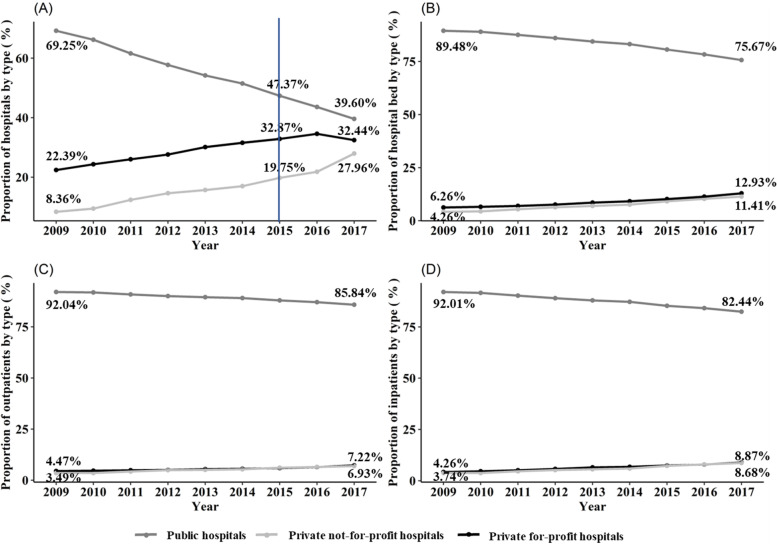
Background: Private hospitals expanded rapidly in China since 2009 following its national health reform encouraging private investment in the hospital sector. Despite long-standing debates over the performance of different types of hospitals, empirical evidence under the context of developing countries remains scant. We investigated the disparities in health care quality and medical expenses among public, private not-for-profit, and private for-profit hospitals. Methods: A total of 64,171 inpatients (51,933 for pneumonia (PNA), 9,022 for heart failure (HF) and 3,216 for acute myocardial infarction (AMI)) who were admitted to 528 secondary hospitals in Sichuan province, China, during the fourth quarters of 2016, 2017, and 2018 were selected for this study. Multilevel logistic regressions and multilevel linear regressions were utilized to assess the relationship between hospital ownership types and in-hospital mortality, as well as medical expenses for PNA, HF, and AMI, after adjusting for relevant hospital and patient characteristics, respectively. Results: The private not-for-profit (adjusted OR, 1.69; 95% CI, 1.08, 2.64) and for-profit (adjusted OR, 1.67; 95% CI, 1.06, 2.62) hospitals showed higher in-hospital mortality than the public ones for PNA, but not for AMI and HF. No significant differences were found in medical expenses across hospital ownership types for AMI, but the private not-for-profit was associated with 9% higher medical expenses for treating HF, while private not-for-profit and for-profit hospitals were associated with 10% and 11% higher medical expenses for treating PNA than the public hospitals. No differences were found between the private not-for-profit and private for-profit hospitals both in in-hospital mortality and medical expenses across the three conditions. Conclusion: The public hospitals had at least equal or even higher healthcare quality and lower medical expenses than the private ones in China, while private not-for-profit and for-profit hospitals had similar performances in these aspects. Our results added evidences on hospitals’ performances among different ownership types under China’s context, which has great potential to inform the optimization of healthcare systems implemented among developing countries confronted with similar challenges.
Overview
The claims and statistics of this paper haven’t been checked yet.
Free: it reads the open-access text and checks the first 5 claims that cite a source we can check. Create a free account to check every claim.
Integrity signals
Registry
Cites
Statistics
Figures
Verification
Claims the paper makes
The claims and statistics of this paper haven’t been checked yet.
Free: it reads the open-access text and checks the first 5 claims that cite a source we can check. Create a free account to check every claim.
Self-check
Percentages, sums and reported differences re-computed from the paper’s own numbers.
The self-check needs the paper’s full text.
Citations
Cites
Charlson, M. E., Pompei, P., Ales, K. L., & MacKenzie, C. R. (1987) · Journal of Chronic Diseases · doi:10.1016/0021-9681(87)90171-8 · Cited by 49,742 · cited 3×
“Abbreviations AMI Acute Myocardial Infarction CCI Charlson Comorbidity Index CI Confident Interval COEF Coefficient HF Heart Failure LOS Length of Stay OR Odds Ratio PFP Private For-Profit PH Public Hospital PNA Pneumonia PNF Private Not-For-Profit UEBMI Urban Employee Basic Medical Insurance URBMI Urban Resident Basi…”
MethodInfluentialCem: Coarsened Exact Matching in Stata
Blackwell, M., Iacus, S., King, G., & Porro, G. (2009) · The Stata Journal: Promoting communications on statistics and Stata · doi:10.1177/1536867x0900900402 · Cited by 1,689 · cited 1×
“In a sensitivity analysis, to further reduce heterogeneity in the characteristics of patients visiting public and private hospitals, we applied coarsened exact matching (CEM) methods [42], to arrive at an analysis sample where private patients (4) log (”
Method10 years of health-care reform in China: progress and gaps in Universal Health Coverage
Yip, W., Fu, H., Chen, A. T., Zhai, T., Jian, W., Xu, R., Pan, J., Hu, M., Zhou, Z., Chen, Q., et al. (2019) · The Lancet · doi:10.1016/s0140-6736(19)32136-1 · Cited by 1,246 · cited 1×
“One of the key policies proposed in the reform was the lift of restrictions on private investments made in the healthcare sector [7].”
BackgroundSelf-citationBasu, S., Andrews, J., Kishore, S., Panjabi, R., & Stuckler, D. (2012) · PLoS Medicine · doi:10.1371/journal.pmed.1001244 · Cited by 845 · cited 2×
“Background Many countries around the world have implemented a healthcare system composed of both public and private hospitals [1, 2], in which public hospitals, private notfor-profit hospitals, and private for-profit hospitals are expected to behave differently [3, 4].”
BackgroundUNCERTAINTY AND THE WELFARE ECONOMICS OF MEDICAL CARE
ARROW, K. J. (1978) · Uncertainty in Economics · doi:10.1016/b978-0-12-214850-7.50028-0 · Cited by 834 · cited 1×
“Given that the healthcare market has its unique characteristics [14], such as information asymmetry between providers and patients, criticism has been raised towards private for-profit hospitals for their stronger incentives to maximize their profits by inducing patients to use unnecessary services [15].”
BackgroundMackintosh, M., Channon, A., Karan, A., Selvaraj, S., Cavagnero, E., & Zhao, H. (2016) · The Lancet · doi:10.1016/s0140-6736(16)00342-1 · Cited by 278 · cited 1×
“Background Many countries around the world have implemented a healthcare system composed of both public and private hospitals [1, 2], in which public hospitals, private notfor-profit hospitals, and private for-profit hospitals are expected to behave differently [3, 4].”
BackgroundDevereaux, P. J., Choi, P. T. L., Lacchetti, C., Weaver, B., Schünemann, H. J., Haines, T., Lavis, J. N., Grant, B. J. B., Haslam, D. R. S., Bhandari, M., et al. (2002) · Europe PMC (PubMed Central) · Cited by 263
Health Care Exceptionalism? Performance and Allocation in the US Health Care Sector
Chandra, A., Finkelstein, A., Sacarny, A., & Syverson, C. (2016) · American Economic Review · doi:10.1257/aer.20151080 · Cited by 257 · cited 1×
“To assess the associations between hospital ownership types and in-hospital mortality and medical expenses, we selected three conditions which are the subject of many studies on quality of care [34, 35], namely acute myocardial infarction (AMI), heart failure (HF), and pneumonia (PNA).”
MethodHospital ownership and quality of care: what explains the different results in the literature?
Eggleston, K., Shen, Y., Lau, J., Schmid, C. H., & Chan, J. (2008) · Health Economics · doi:10.1002/hec.1333 · Cited by 188
Comparing public and private providers: a scoping review of hospital services in Europe
Tynkkynen, L., & Vrangbæk, K. (2018) · BMC Health Services Research · doi:10.1186/s12913-018-2953-9 · Cited by 160 · cited 2×
“Meanwhile, the evidences [17, 18] from European countries reported that the disparities in the quality of care among different hospital ownership types failed to produce a clear conclusion.”
Background
Research works printed but not linked: 2
- Qingling JJ Pay: Trends on hospital market structure in Sichuan Provinces J Health Policy 2019 12 8 8
- China Society of Cardiology of Chinese Medical Association, Cardiology EBoCJo Guideline for diagnosis and treatment of chronic heart failure Zhonghua Xin Xue Guan Bing Za Zhi 2007 35 3 1076
Cited by
Abbas, Q., Jeong, W., & Lee, S. W. (2025) · Healthcare · doi:10.3390/healthcare13172154 · Cited by 236
“For example, in diagnostic imaging, XAI can highlight specific regions of interest on radiographs or MRIs that contribute to a diagnosis, allowing radiologists to verify and validate the model’s conclusions [22,23].”
Innovative healthcare solutions: robust hand gesture recognition of daily life routines using 1D CNN
Mudawi, N. A., Ansar, H., Alazeb, A., Aljuaid, H., AlQahtani, Y., Algarni, A. M., Jalal, A., & Liu, H. (2024) · Frontiers in Bioengineering and Biotechnology · doi:10.3389/fbioe.2024.1401803 · Cited by 62
Artificial intelligence in stroke rehabilitation: From acute care to long-term recovery
Kopalli, S. R., Shukla, M., Jayaprakash, B., Kundlas, M., Srivastava, A., Jagtap, J., Gulati, M., Chigurupati, S., Ibrahim, E., Khandige, P. S., et al. (2025) · Neuroscience · doi:10.1016/j.neuroscience.2025.03.017 · Cited by 63
Rehman, A. U., Lu, S., Heyat, M. B. B., Iqbal, M. S., Parveen, S., Hayat, M. A. B., Akhtar, F., Ashraf, M. A., Khan, O., Pomary, D., et al. (2025) · International Journal of Intelligent Systems · doi:10.1155/int/8546245 · Cited by 72
Senapati, T., Sarkar, A., & Chen, G. (2024) · Engineering Applications of Artificial Intelligence · doi:10.1016/j.engappai.2024.108794 · Cited by 53
Faizan, M., Han, C., & Lee, S. W. (2025) · Healthcare · doi:10.3390/healthcare13182319 · Cited by 56
“The carbon footprint of healthcare largely driven by hospital operations, patient and staff travel, energy consumption, and the production and disposal of medical supplies, is a growing concern [23,24].”
Mir, B. A., Abbas, S. R., & Lee, S. W. (2026) · Healthcare · doi:10.3390/healthcare14030306 · Cited by 53
“Strict privacy regulations, like GDPR in the European Union and HIPAA in the United States [6,7], institutional data sharing restrictions, and growing concerns about patient privacy [8–10] are key barriers to this approach.”
Cao, P., & Pan, J. (2024) · INQUIRY The Journal of Health Care Organization Provision and Financing · doi:10.1177/00469580231224823 · Cited by 39
“36 The substantial regional disparities in Sichuan lead to disparities in the allocation of hospital care resources 37,38 and geographical access to health-care.”
BackgroundSelf-citationZhang, X., Zimmerman, A., Zhang, Y., Ogbuoji, O., & Tang, S. (2023) · The Lancet Regional Health - Western Pacific · doi:10.1016/j.lanwpc.2023.100991 · Cited by 33
“43 In addition, a discrete choice experiment carried out in Fujian province involving 507 respondents found that urban residents show a high disposition for public healthcare providers, whereas rural residents were found to be indifferent in their preference for public vs. private healthcare…”
BackgroundTang, Z., Tang, Z., Liu, Y., Tang, Z. J., & Liao, Y. (2024) · Ain Shams Engineering Journal · doi:10.1016/j.asej.2024.102941 · Cited by 34
Leveraging AI-Enabled Information Systems for Healthcare Management
Amiri, Z. (2024) · Journal of Computer Information Systems · doi:10.1080/08874417.2024.2414216 · Cited by 40
Ethical Dilemmas and Legal Responsibilities in Patient Care: An Analysis of Hospital Safety
Nacu, A.-G., Constantin, D.-A., & Rogozea, L. M. (2025) · Healthcare · doi:10.3390/healthcare13212800 · Cited by 22
“…teaching outperforms traditional approaches among nursing/junior-college students [22]; and (iii) ownership models correlate with outcomes and costs—a multi-hospital study in China found higher in-hospital pneumonia mortality and higher expenses in private hospitals than in public facilities [23].”
Bagheri, M., Bagheritabar, M., Alizadeh, S., Parizi, M. S., Matoufinia, P., & Luo, Y. (2024) · Applied Sciences · doi:10.3390/app15010296 · Cited by 21
Khan, A. A., Ghodhbani, R., Alsufyani, A., Alsufyani, N., & Mohamed, M. A. (2025) · The Journal of Supercomputing · doi:10.1007/s11227-025-07844-0 · Cited by 22
Dai, X., Wu, J., Fan, S., & Zhou, Y. (2025) · Frontiers in Environmental Science · doi:10.3389/fenvs.2024.1509564 · Cited by 20
RetractedWu, Y., Chen, B., Cai, H., Wang, D., & Yuan, Q. (2024) · Annals of Operations Research · doi:10.1007/s10479-024-06353-2 · Cited by 15
“A bi-objective game-theoretic model based on the Nash bargaining reward distribution model has been presented in Xue et al. (2023).”
Vincent, A. C. S. R., & Sengan, S. (2024) · Scientific Reports · doi:10.1038/s41598-024-71726-3 · Cited by 14
Xu, G., & Xu, M. (2024) · Journal of Grid Computing · doi:10.1007/s10723-024-09768-0 · Cited by 13
“Factors influencing in-hospital mortality rates can include the severity of patients’ conditions, the quality and timeliness of medical treatment, and hospital facilities and resources, often used to assess the quality of care provided [35, 36].”
Nagpurkar, K., Ghive, P., Kale, M. B., Nistane, N. T., Taksande, B. G., Umekar, M. J., & Trivedi, R. (2025) · Neuroscience · doi:10.1016/j.neuroscience.2025.05.022 · Cited by 12
Priyadarshi, R., Ranjan, R., Sahana, B. C., Bhandari, A. K., & Srinivas, K. (2026) · Connection Science · doi:10.1080/09540091.2025.2612458 · Cited by 15
Chen, K., Tao, Q., Wang, Y., Ding, Z., & Fu, R. (2025) · Frontiers in Public Health · doi:10.3389/fpubh.2025.1517353 · Cited by 9
“Therefore, this paper adopts the test method used by Fiss, setting the case frequency threshold to 1 and the original consistency threshold to 0.80 (67); at the same time, combining with relevant research, the consistency threshold of PRI is set at 0.7 to achieve the purpose of reducing…”
InfluentialBibi, M., Ahmad, R., Rizwan, A., Khan, A. N., Khan, Q. W., & Kim, D.-H. (2026) · IEEE Access · doi:10.1109/access.2025.3650610 · Cited by 12
“Like Xu et al. [32], [33] proposed a FL approach for explainable and personalized medical diagnosis by fusing multimodal data.”
Xiong, Y., Lin, K., Yao, Y., Zhong, Z., & Li, X. (2024) · BMC Health Services Research · doi:10.1186/s12913-024-10941-0 · Cited by 9
“Previous studies have shown the generally higher medical quality and service efficiency of public hospitals compared to private hospitals [43, 44].”
ResultEnhancing vaccination strategies for epidemic control through effective lockdown measures
Chakraborty, A., & Kabir, K. M. A. (2024) · Heliyon · doi:10.1016/j.heliyon.2024.e32308 · Cited by 10
“In response, governments often implement early lockdown measures to mitigate the spread of the disease, although it is not a foolproof solution [18].”
BackgroundAlMohimeed, A. (2025) · PeerJ Computer Science · doi:10.7717/peerj-cs.2899 · Cited by 8
Exploring ncRNAs in epilepsy: From oxidative stress regulation to therapy
Pant, K., Sharma, A., Menon, S. V., Ali, H., Almalki, W. H., Kaur, M., Deorari, M., Kazmi, I. A., Mahajan, S., Kalra, H., et al. (2024) · Brain Research · doi:10.1016/j.brainres.2024.149089 · Cited by 6
The role of multimodality in clinical disease diagnosis: advances, challenges, and opportunities
Nawaz, A., Edinat, A., Rana, M. R. R., Ali, T., Mustafa, G., Tahir, S., & Lee, S. W. (2026) · Frontiers in public health · doi:10.3389/fpubh.2026.1788454 · Cited by 3
Wang, D., Hussain, T., & Wang, W. (2025) · Healthcare · doi:10.3390/healthcare13030290 · Cited by 6
“This methodological framework introduces rigor and depth to the study, rectifying deficiencies in prior research that employed less advanced analytical methods [8,9].”
Liang, J., Jie, Q., Xu, W. B., Li, J., Fu, M., Liu, P., Chen, Y., Wang, X., Li, X., Li, Z., et al. (2025) · BMC Public Health · doi:10.1186/s12889-025-22893-z · Cited by 3
“At present, the proportion of private hospitals in terms of the number of beds, the proportion of health technicians, the proportion of medical visits, the proportion of hospital visits and other health resource indicators are relatively low [32].”
Ageli, M. M. (2026) · Frontiers in Public Health · doi:10.3389/fpubh.2026.1785053 · Cited by 3
“Regarding healthcare quality and medical expenses, Xue et al. (50) analyzed the performance of public, private, and nonprofit hospitals in Sichuan County, China.”
Zhang, M., Tian, Y., & Khan, M. K. (2024) · Natural Resources Forum · doi:10.1111/1477-8947.12473 · Cited by 4
Liu, Y., Innab, N., Savita, K. S., Deebani, W., & Shutaywi, M. (2024) · Annals of Operations Research · doi:10.1007/s10479-024-06120-3 · Cited by 3
“2 TT predictive structure + 1, sensors surrounding the newly projected site are activated following the completion of the prediction (Xue et al., 2023).”
RETRACTED ARTICLE: Harnessing the hybrid machine learning methods for stroke risk classification
Yu, D., & Wang, M.-J. (2025) · Computer Methods in Biomechanics & Biomedical Engineering · doi:10.1080/10255842.2025.2501636 · Cited by 2
“A Their applications are wide-ranging in engineering, medical diagnosis (Xue et al. 2023), economics, and finance (Safavian and Landgrebe 1991; Aguilera-Venegas et al. 2023).”
RetractedHuang, X., & Ma, K. (2026) · Frontiers in Public Health · doi:10.3389/fpubh.2026.1907690 · Cited by 2
Optimizing healthcare workforce for effective patient care: a cooperative game theory approach
Liu, D., Wu, J., Innab, N., Deebani, W., Shutaywi, M., Ciano, T., & Феррара, М. (2024) · Annals of Operations Research · doi:10.1007/s10479-024-06076-4 · Cited by 1
“Therepercussions oftheseimbalancesarestarklyevident:patientsfrequentlyendureprolongedwaittimes,and theoveralleffectivenessofthehealthcaresystembecomescompromised(Haoetal.,2023b; Lietal.,2023;Xueetal.,2023).”
Xian, X., Wu, S., Fu, Y., Fan, X., Cheng, Y., Zeng, L., Hou, Z., & Chen, Y. (2025) · Frontiers in Public Health · doi:10.3389/fpubh.2025.1644729 · Cited by 1
A modified sine Weibull distribution with applications to finance and radiation sectors
Tung, Y. L., Abdalla, G. S. S., El-Raouf, M. M. A., & El-Qurashi, M. A. (2025) · Journal of Radiation Research and Applied Sciences · doi:10.1016/j.jrras.2025.102088 · Cited by 1
Liu, K., Cai, B., Xie, Y., Kim, H. J., Mohd, M. H., Liu, Y., & Paik, J. K. (2026) · Safety Science · doi:10.1016/j.ssci.2026.107175 · Cited by 1
Zhu, X., Fang, C., Li, H., Feng, Y., & Zhang, W. (2026) · Frontiers in Public Health · doi:10.3389/fpubh.2026.1753221 · Cited by 1
“Finally, Table 4 and Figure 6A suggests modest improvements in major amputation rates over time, yet stable mortality and persistent readmissions imply that outpatient surveillance and early referral remain insufficient (27).”
Predicting Urinary Lithiasis Cases Using Regional Bed Numbers
Xiu, L., Zhan, L. N., Li, B., Du, J.-H., Pan, X. B., Tian, B., & Lee, S. P. (2025) · Journal of the Pakistan Medical Association · doi:10.47391/jpma.srph-06 · Cited by 1
Elsaleiby, A. (2024) · International Journal for Quality in Health Care · doi:10.1093/intqhc/mzae104
A Patient Network-Based Ensemble Machine Learning Framework for Chronic Diseases Prediction
Shen, X., & Wang, J. (2025) · Journal of Circuits Systems and Computers · doi:10.1142/s0218126625501890
Leveraging Internet and Medical Care Platforms for Enhanced Home Care
Wang, X., Pu, Y., & Wan, X. (2025) · Journal of the Pakistan Medical Association · doi:10.47391/jpma.srph-29
Crecimiento económico, inversión productiva y empleo en el Perú (2000-2019)
Ortega Sanchez, N. A. (2023) · renati
Lu, X., & Mao, Y. K. (2025) · African Journal of Reproductive Health · doi:10.29063/ajrh2025/v29i12.14
Huang, S., Chen, Z., Zhang, L., Ding, X., & Miu, K. (2026) · BMC Medical Genomics · doi:10.1186/s12920-026-02311-y
“Recent evidence from China suggests that hospital ownership, quality metrics, and expenditure patterns significantly influence diagnostic efficiency and clinical outcomes, especially for conditions requiring advanced imaging and genetic testing [17].”
DBH-Chain: a decentralized blockchain-enabled healthcare framework for end-to-end delay optimization
Ali, M., Kumar, R., Tunio, M. Z., & Lakhan, A. R. (2026) · Scientific Reports · doi:10.1038/s41598-026-39363-0 · Cited by 1
Hao, Y., & Yu, D. (2026) · Frontiers in Public Health · doi:10.3389/fpubh.2026.1701162
“The accessibility (12) and quality (13) of medical resources directly determine the efficiency of case detection and treatment, thereby affecting the dynamics of disease transmission.”
Tasca, B. F. D. C., Machado, N. G., Neto, N. L., dos Santos, L. O. F., & Bíudes, M. S. (2026) · Air Quality Atmosphere & Health · doi:10.1007/s11869-026-01950-5 · Cited by 1
dai, T., Guo, C., Gao, L., Huang, J., Chen, Y., Zhang, Y., Gao, J., & Feng, X. (2026) · Journal of Medical Internet Research · doi:10.2196/88374
“…and physical performance in older adults [12], the face-to-face implementation of this intervention is constrained by practical factors such as inadequate health system resources [13], heavy burden of travel for medical care [14], and age-related physical decline in older adults themselves [15].”
Wankhede, N. L., Alshahrani, S., Mohammed, A., Taksande, B. G., Upaganlawar, A. B., Umekar, M. J., Kopalli, S. R., Koppula, S., & Kale, M. B. (2026) · Neurological Sciences · doi:10.1007/s10072-026-08996-4
Guo, X., Dou, Z., Han, X., & Wang, Y. (2026) · Frontiers in Public Health · doi:10.3389/fpubh.2026.1712520
“Meanwhile, differences in hospital quality and the challenges of travel for treatment demonstrate how health system capacity and service accessibility influence community responses to stroke events (2, 3).”
Mathur, S. (2025) · International Journal of Advances in Signal and Image Sciences · doi:10.29284/zdfexk19
Chang, A., Yang, T.-C., Chang, A., Hong, C., & Tai, Y. (2026) · Sage Open Chronic Disease · doi:10.1177/27558428261449950
Zheng, Y., Yang, S., & Liu, P. L. (2026) · Health Communication · doi:10.1080/10410236.2026.2689185
Teshome, A., Tadesse, M. S., Tarekegn, Y. A., Wubneh, S. B., Abebe, S. A., Adane, K. C., Shumet, S., Alemaw, H. B., & Abate, B. J. (2026) · BMC Pediatrics · doi:10.1186/s12887-026-07506-x
Zhou, M. (2026) · Risk Management and Healthcare Policy · doi:10.2147/rmhp.s615118
“On the one hand, the administration has formulated a series of policies to promote the development of private hospitals 27 and has provided policy support in terms of further expanding investment and financing channels, promoting the flow and sharing of resources, and optimizing the development…”
Brobbey, A. A., Bhosale¹, N., & Ackom, J. (2026) · Frontiers in Artificial Intelligence · doi:10.3389/frai.2026.1864565
Enhancing clinical insight through business intelligence over OpenEHR-structured data
Cunha, J., Duarte, R. J. D. S., Henriques, P., Guimarães, T. A. S., & Santos, M. F. (2026) · Journal of Enterprise Information Management · doi:10.1108/jeim-09-2025-0807
Ulfah, M. (2026) · Jurnal Bisnis Mahasiswa · doi:10.60036/jbm.1272
Metadata
- Authors
- Xue, Q., Xu, D. R., Cheng, T. C., Pan, J., & Yip, W.
- Affiliations
- Chengdu Medical College (CN)
- Southern Medical University (CN)
- Harvard University (US)
- Sichuan University (CN)
- Corresponding author
- Pan, Jay
- Venue
- Archives of Public Health
- Published
- 2023-02-10
- Volume
- 81
- Issue
- 1
- Pages
- 19-19
- ISSN
- 0778-7367 (ISSN-L)
- 2049-3258
- PMC
- PMC9911958
- OpenAlex
- W4319984229
- Semantic Scholar
- f052cd71a115e6d706dcbd6b3c0414a381245675
- Cited by
- 50
- References
- 46
- Citations by year
- 2026: 18 · 2025: 15 · 2024: 16 · 2023: 1
- FWCI
- 10.51
- Type
- journal article
- Language
- en
- Open access
- gold
- doi.org
- Licence
- cc-by
- creativecommons.org/licenses/by/4.0 (tdm)
- creativecommons.org/licenses/by/4.0 (vor)
- Locations
- Archives of Public Health (publishedVersion, cc-by)
- PubMed Central (publishedVersion, cc-by)
- PubMed (publishedVersion)
- DOAJ (DOAJ: Directory of Open Access Journals) (submittedVersion, cc-by-sa)
- Funders
- National Natural Science Foundation of China (72204031, 72074163)
- Chengdu Federation of Social Science Association (ZZ05)
- Sichuan University (2018hhf-27)
- National Social Science Fund of China (21ZDA104)
- Sichuan Science and Technology Program (2022YFS0052)
- Topics
- Health Sciences › Medicine › Public Health, Environmental and Occupational Health › Healthcare Systems and Reforms
- Social Sciences › Economics, Econometrics and Finance › Economics and Econometrics › Healthcare Policy and Management
- Health Sciences › Medicine › Public Health, Environmental and Occupational Health › Healthcare Quality and Management
- Keywords
- hospital ownership, in-hospital mortality, health care costs, private hospitals, public hospitals, nonprofit hospitals, for-profit hospitals, pneumonia, heart failure, acute myocardial infarction, quality of care, China health reform, Sichuan
About these checks
Registry, retraction, Cites and statistics results are computed, not judged, with one exception: a printed reference that no index lists is read once by a model before it counts as a citation error. Claims are extracted by a model and kept only when their quote appears verbatim in the text; each cited source is then checked, with a model’s help, for whether it says what the claim relies on. Those verdicts can be wrong — read the claim’s quote and the cited source before relying on one.
Statistics and arithmetic are recomputed, not judged.
Confidence bands are shown only for fields calibrated on our annotated test set. None is calibrated yet, so no band is shown.
What counts as a claim ›How we measure confidence ›How we check this ›
Are you an author, or do you see a problem with this page? Request a review
Data sources
Bibliographic data: Semantic Scholar, OpenAlex, Crossref.
Contains information from the Semantic Scholar Academic Graph Datasets, made available under the ODC Attribution License (ODC-BY 1.0).
Semantic Scholar’s data is described in: Kinney, R., et al. (2023). The Semantic Scholar Open Data Platform. arXiv:2301.10140.
