

Validation of the AUDIT-C in adults seeking help with their drinking online
Open accessThe DOI matches its Crossref record; 55 of the 57 references it cites were found in a registry or an index.
Abstract
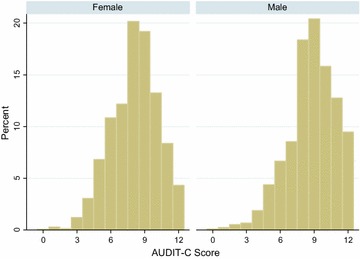
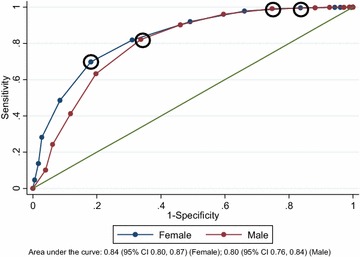
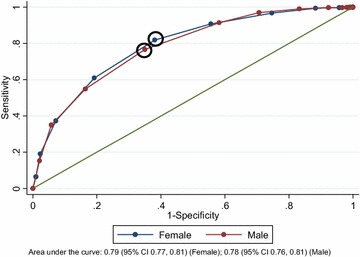
BACKGROUND: The abbreviated Alcohol Use Disorder Identification Test for Consumption (AUDIT-C) is rapidly becoming the alcohol screening tool of choice for busy practitioners in clinical settings and by researchers keen to limit assessment burden and reactivity. Cut-off scores for detecting drinking above recommended limits vary by population, setting, country and potentially format. This validation study aimed to determine AUDIT-C thresholds that indicated risky drinking among a population of people seeking help over the Internet. METHOD: The data in this study were collected in the pilot phase of the Down Your Drink trial, which recruited people seeking help over the Internet and randomised them to a web-based intervention or an information-only website. Sensitivity, specificity, and positive and negative likelihood ratios were calculated for AUDIT-C scores, relative to weekly consumption that indicated drinking above limits and higher risk drinking. Receiver-operating characteristic (ROC) curves were created to assess the performance of different cut-off scores on the AUDIT-C for men and women. Past week alcohol consumption was used as the reference-standard and was collected via the TOT-AL, a validated online measure of past week drinking. RESULTS: AUDIT-C scores were obtained from 3720 adults (2053 female and 1667 male) searching the internet for help with drinking, mostly from the UK. The area under the ROC curve for risky drinking was 0.84 (95% CI 0.80, 0.87) (female) and 0.80 (95% CI 0.76, 0.84) (male). AUDIT-C cut-off scores for detecting risky drinking that maximise the sum of sensitivity and specificity were ≥8 for women and ≥8 for men; whereas those identifying the highest proportion of correctly classified individuals were ≥4 for women and ≥5 for men. AUDIT-C cut-off scores for detecting higher risk drinking were also calculated. CONCLUSIONS: AUDIT-C cut-off scores for identifying alcohol consumption above weekly limits in this largely UK based study population were substantially higher than those reported in other validation studies. Researchers and practitioners should select AUDIT-C cut-off scores according to the purpose of identifying risky drinkers and hence the relative importance of sensitivity and/or specificity.
Overview
The claims and statistics of this paper haven’t been checked yet.
Free: it reads the open-access text and checks the first 5 claims that cite a source we can check. Create a free account to check every claim.
Integrity signals
Registry
Cites
Statistics
Figures
Verification
Claims the paper makes
The claims and statistics of this paper haven’t been checked yet.
Free: it reads the open-access text and checks the first 5 claims that cite a source we can check. Create a free account to check every claim.
Claims other papers make about this one
Each is checked against this paper’s own text: does it say what the citing paper says it does?
The source backs part of the claim, not all of it — or backs it for a different population, condition or comparison.
In the citing paper
“Both the English and French versions of AUDIT have favorable psychometric properties, including high sensitivity and specificity (approximately 90%), and this also concerns the AUDIT-C [75-77].”
From A Virtual Reality-Assisted Cognitive Behavioral Therapy for and With Inuit in Québec: Protocol for a Proof-of-Concept Randomized Controlled Trial (2023) · cites this paper as [75]
Experimental — accuracy not yet measured
Self-check
Percentages, sums and reported differences re-computed from the paper’s own numbers.
The self-check needs the paper’s full text.
Citations
Cites
Bush, K. (1998) · Archives of Internal Medicine · doi:10.1001/archinte.158.16.1789 · Cited by 6,196
(2001) · Cited by 5,455
Effectiveness of brief alcohol interventions in primary care populations
Kaner, E. F., Beyer, F. R., Muirhead, C., Campbell, F., Pienaar, E. D., Bertholet, N., Daeppen, J. B., Saunders, J. B., & Burnand, B. (2018) · Cochrane Database of Systematic Reviews · doi:10.1002/14651858.cd004148.pub4 · Cited by 1,665
The alcohol use disorders identification test: an update of research findings
Reinert, D. F., & Allen, J. P. (2007) · Alcoholism: Clinical and Experimental Research · doi:10.1111/j.1530-0277.2006.00295.x · Cited by 1,397 · cited 4×
“Studies in the US, Germany and Scandinavia identified in the small number of reviews in this field [13, 14] have validated the AUDIT-C for detecting risky drinking in the general population, all of which administered measures in-person.”
BackgroundMethodInfluentialTourangeau, R., & Smith, T. W. (1996) · Public Opinion Quarterly · doi:10.1086/297751 · Cited by 1,295 · cited 1×
“There is also some evidence that being self-administered, online screening is likely to generate more honest reporting of risky alcohol use, in comparison with a face-to-face interview [27, 28].”
BackgroundGlobal strategy to reduce the harmful use of alcohol
Ray, R., & Anish, P. K. (2012) · The Indian Journal of Medical Research · Cited by 888
Mesa Grande: a methodological analysis of clinical trials of treatments for alcohol use disorders
Miller, W. R., & Wilbourne, P. L. (2002) · Addiction · doi:10.1046/j.1360-0443.2002.00019.x · Cited by 805 · cited 1×
“Background Early identification of people drinking at risky levels followed by brief intervention is the key individual-level intervention approach for reducing alcohol intake to safer levels [1, 2], with efficacy demonstrated in a range of settings including primary care, emergency departments, higher education and t…”
BackgroundEffectiveness of brief alcohol interventions in primary care populations
Kaner, E. F. S., Dickinson, H. O., Beyer, F. R., Campbell, F., Schlesinger, C., Heather, N., Saunders, J. B., Burnand, B., & Pienaar, E. D. (2007) · Cochrane Database of Systematic Reviews · doi:10.1002/14651858.cd004148.pub3 · Cited by 746
Dawson, D. A., Grant, B. F., Stinson, F. S., & Zhou, Y. (2005) · Alcoholism: Clinical & Experimental Research · doi:10.1097/01.alc.0000164374.32229.a2 · Cited by 702 · cited 2×
“Two studies included in this review found ‘optimal’ AUDIT-C scores (defined as those that maximise the sum of sensitivity and specificity) for detecting drinking above recommended limits in the general population of ≥5 in Germany [15] and ≥5 (men) and ≥3 (women) in the US [16].”
BackgroundMethodIndividual-level interventions to reduce college student drinking: A meta-analytic review
Carey, K. B., Scott-Sheldon, L. A. J., Carey, M. P., & DeMartini, K. S. (2007) · Addictive Behaviors · doi:10.1016/j.addbeh.2007.05.004 · Cited by 699
Research works printed but not linked: 3
- NICE Public Health Guidance 24 Alcohol-use disorders: preventing the development of hazardous and harmful drinking 2010 London National Institute for Health and Clinical Excellence
- Department of Health The health of the nation: a strategy for health in England 1992 London HMSO
- Department of Health UK Chief Medical Officers’ alcohol guidelines review 2016 Summary of the proposed new guidelines London Department of Health
Cited by
Alpers, S. E., Skogen, J. C., Mæland, S., Pallesen, S., Rabben, Å. K., Lunde, L.-H., & Fadnes, L. T. (2021) · International Journal of Environmental Research and Public Health · doi:10.3390/ijerph18031220 · Cited by 104
“AUDIT-C cut-off scores for identifying alcohol consumption above recommended limits vary by population, setting, and culture [18].”
BackgroundNew onset alcohol use disorder following bariatric surgery
Ibrahim, N. I., Alameddine, M. B., Brennan, J. R., Sessine, M. S., Holliday, C. L., & Ghaferi, A. A. (2018) · Surgical Endoscopy · doi:10.1007/s00464-018-6545-x · Cited by 93
Morris, J. K., Albery, I. P., Heather, N., & Moss, A. C. (2020) · Addictive Behaviors · doi:10.1016/j.addbeh.2020.106292 · Cited by 68
The “alcoholic other”: Harmful drinkers resist problem recognition to manage identity threat
Morris, J. K., Moss, A. C., Albery, I. P., & Heather, N. (2021) · Addictive Behaviors · doi:10.1016/j.addbeh.2021.107093 · Cited by 56
Khan, M. R., Young, K. E., Caniglia, E. C., Fiellin, D. A., Maisto, S. A., Marshall, B. D. L., Edelman, E. J., Gaither, J. R., Chichetto, N. E., Tate, J., et al. (2020) · JAMA Network Open · doi:10.1001/jamanetworkopen.2020.0895 · Cited by 44
Resilience-based intervention for UK military recruits: a randomised controlled trial
Jones, N., Whelan, C., Harden, L., Macfarlane, A., Burdett, H. J., & Greenberg, N. L. (2018) · Occupational and Environmental Medicine · doi:10.1136/oemed-2018-105503 · Cited by 40
Roux, P., Jauffret‐Roustide, M., Donadille, C., Madrid, L. B., Denis, C., Célérier, I., Chauvin, C., Hamelin, N., Maradan, G., Carrieri, P., et al. (2022) · International Journal of Epidemiology · doi:10.1093/ije/dyac120 · Cited by 40
Profiles of Depressive Symptoms and Anger in Men: Associations With Postpartum Family Functioning
Macdonald, J. A., Greenwood, C. J., Francis, L. M., Harrison, T. R., Graeme, L. G., Youssef, G. J., Manno, L. D., Skouteris, H., Fletcher, R. J., Knight, T., et al. (2020) · Frontiers in Psychiatry · doi:10.3389/fpsyt.2020.578114 · Cited by 37
“In our study, the AUDIT-C mean score indicated risky levels of alcohol use but was below the most accurate cutoff (≥5) for identifying drinking above recommended weekly limits (111) or for detecting diagnosis of alcohol use disorder (112).”
MethodState of Ireland's mental health: findings from a nationally representative survey
Hyland, P., Vallières, F., Shevlin, M. E., Bentall, R. P., Butter, S., Hartman, T. K., Karatzias, T., Martínez, A. P., McBride, O., Murphy, J., et al. (2022) · Epidemiology and Psychiatric Sciences · doi:10.1017/s2045796022000312 · Cited by 38
“Scores ⩾8 have been found to maximise the specificity and sensitivity of detecting AUD in men and women (Khadjesari et al., 2017), and was therefore used in this study to classify participants as having AUD.”
MethodBuckman, J. E. J., Naismith, I., Saunders, R., Morrison, T., Linke, S., Leibowitz, J., & Pilling, S. (2018) · Behavioural and Cognitive Psychotherapy · doi:10.1017/s1352465817000819 · Cited by 31
Landa–Blanco, M., Vásquez, G., Portillo, G., Sproviero, F., & Echenique, Y. (2024) · Frontiers in Psychiatry · doi:10.3389/fpsyt.2024.1352824 · Cited by 33
Poleshuck, E. L., Wittink, M. N., Crean, H. F., Juskiewicz, I., Bell, E., Harrington, A. R., & Cerulli, C. (2019) · Journal of Women s Health · doi:10.1089/jwh.2018.7640 · Cited by 29
Duffy, F. F., Sudom, K., Jones, M., Fear, N. T., Greenberg, N. L., Adler, A. B., Hoge, C. W., Wilk, J. E., & Riviere, L. A. (2023) · BMJ Open · doi:10.1136/bmjopen-2022-068619 · Cited by 31
Bertholet, N., Schmutz, E., Studer, J., Adam, A., Gmel, G. E., Cunningham, J. A., McNeely, J., & Daeppen, J. (2023) · BMJ · doi:10.1136/bmj-2022-073713 · Cited by 35
Look away now! Defensive processing and unrealistic optimism by level of alcohol consumption
Morris, J. K., Tattan‐Birch, H., Albery, I. P., Heather, N., & Moss, A. C. (2024) · Psychology and Health · doi:10.1080/08870446.2024.2316681 · Cited by 24
“Harmful drinking has been found to be suitably captured by the UK-adapted version of the AUDIT-C amongst a largely UK-based population (Khadjesari et al., 2017).”
Sharpe, S., Kool, B., Whittaker, R., Lee, A. C.-L., Reid, P., Civil, I. D., Walker, M. J. P., Thornton, V., & Ameratunga, S. N. (2018) · npj Digital Medicine · doi:10.1038/s41746-018-0019-3 · Cited by 24
“The AUDIT-C tool is known to have sound psychometric properties(42,43) and has been validated for identification of hazardous alcohol use in a range of settings including with admitted trauma patients(44) and online with adults seeking help for their drinking.(45) The tool has favourable test-retest reliability, inclu…”
MethodPoppe, M., Duffy, L., Marchant, N. L., Barber, J., Hunter, R. M., Bass, N. J., Minihane, A. M., Walters, K. R., HIGGS, P. F. D., Rapaport, P., et al. (2022) · Trials · doi:10.1186/s13063-022-06557-6 · Cited by 25
Davies, E., Cooke, R. W. I., de Visser, R. O., & Conroy, D. (2022) · British Journal of Health Psychology · doi:10.1111/bjhp.12627 · Cited by 23
“Using an AUDIT-C cut-off of 5+, for men and 4+ for women (Khadjesari et al., 2017), 18 participants were classified as risky drinkers (see Table 1).”
MethodMeasuring Population Mental Health
OECD (2023) · OECD eBooks · doi:10.1787/5171eef8-en · Cited by 53
Opioid and Alcohol Misuse in Veterans with Chronic Pain: A Risk Screening Study
Vowles, K. E., Schmidt, Z., & Ford, C. G. (2022) · Journal of Pain · doi:10.1016/j.jpain.2022.06.003 · Cited by 22
Alcohol Use Among Mental Health Professionals in China: A Nationwide Cross-sectional Survey
Tao, R., Jiang, F., Min, K., Liu, T., Liu, Y., Xia, L., Wang, J., Liu, H., & Tang, Y. (2020) · Alcohol and Alcoholism · doi:10.1093/alcalc/agaa065 · Cited by 21
Kastaun, S., Garnett, C. V., Wilm, S., & Kotz, D. (2022) · BMJ Open · doi:10.1136/bmjopen-2022-064268 · Cited by 17
“However, in the subgroup of people reporting harmful or potentially dependent drinking 38 (AUDIT‐C score 10‐12,[31]) around half had ever received brief GP advice on, or support with, reducing 39 alcohol consumption.”
BackgroundAge at onset of alcohol consumption and its association with alcohol misuse in adulthood
Kim, S.-Y., Jeong, S. H., & Park, E. (2022) · Neuropsychopharmacology Reports · doi:10.1002/npr2.12302 · Cited by 20
Alcohol consumption and internalising disorders in young adults of ALSPAC: a population-based study
Fernandes, G., Lewis, G., Hammerton, G., Abeysekera, K. W. M., Mahedy, L., Edwards, A. C., Lewis, G., Hickman, M., & Heron, J. E. (2020) · Journal of Epidemiology & Community Health · doi:10.1136/jech-2020-213922 · Cited by 18
“15 For this study, we used a binary variable indicating the presence of depression (merged mild, moderate and severe depression) or not over the past 1-week period.”
Wallace, P., Struzzo, P., Vedova, R. D., Scafuri, F., Tersar, C., Lygidakis, C., McGregor, R., Scafato, E., Hunter, R. M., & Freemantle, N. (2017) · BMJ Open · doi:10.1136/bmjopen-2016-014576 · Cited by 22
“26 In addition, the statistical analyses assumed a similar clustering effect for both treatment conditions at the practice level, through fitting practice level random effects.”
MethodSelf-citationRichards, J. A., Shortreed, S. M., Simon, G. E., Penfold, R. B., Glass, J. E., Ziebell, R. A., & Williams, E. C. (2019) · General Hospital Psychiatry · doi:10.1016/j.genhosppsych.2019.12.002 · Cited by 17
Seon, Q., Mady, N., Yang, M., Karia, M., Lashley, M., Sescu, C., Lalonde, M., Puskas, S., Outerbridge, J., Parent-Racine, E., et al. (2023) · JMIR Research Protocols · doi:10.2196/40236 · Cited by 12
Chandra, A., Kumar, R., Kant, S., & Krishnan, A. (2021) · Transactions of the Royal Society of Tropical Medicine and Hygiene · doi:10.1093/trstmh/trab060 · Cited by 15
Tae, H., Huh, H. J., Hwang, J., & Chae, J. (2018) · Psychiatry Research · doi:10.1016/j.psychres.2018.04.058 · Cited by 13
“The AUDIT-C is rapidly becoming the preferred alcohol screening test for busy practitioners (Khadjesari et al., 2017); it is a 3-item alcohol screening test to identify persons who are hazardous drinkers or have an active alcohol use disorder.”
Mahler, L., Sebo, P., Favrod-Coune, T., Moussa, M. A. A., Cohidon, C., & Broers, B. (2022) · Preventive Medicine Reports · doi:10.1016/j.pmedr.2022.101740 · Cited by 15
“These cut-offs have shown to be the most effective for identifying individuals in each category (Sebo et al., 2007; Khadjesari et al., 2017; Bush, 1998).”
BackgroundQueer binge: harmful alcohol use among sexual minority young people in Australia
Demant, D., & Saliba, B. (2019) · Public Health · doi:10.1016/j.puhe.2019.09.022 · Cited by 11
An Automated Mobile Game-based Screening Tool for Patients with Alcohol Dependence
Intarasirisawat, J., Ang, C. S., Efstratiou, C., Dickens, L., Sriburapar, N., Sharma, D., & Asawathaweeboon, B. (2020) · Proceedings of the ACM on Interactive Mobile Wearable and Ubiquitous Technologies · doi:10.1145/3411837 · Cited by 13
“Cut-off scores of 5 or 6 are generally recommended for a positive screen with a high risk of alcohol problems [27].”
BackgroundGoncharenko, S., Weiss, N. H., Contractor, A. A., Dixon–Gordon, K. L., & Forkus, S. R. (2019) · Addictive Behaviors · doi:10.1016/j.addbeh.2019.106086 · Cited by 10
“, 2011), they were lower than what has been reported in clinical samples (Keane, et al., 2010; Khadjesari et al., 2017; Wortmann, et al., 2016).”
ResultDemnitz‐King, H., Adeleke, M., Barber, J., Poppe, M., Budgett, J., Alberts, S., Duffy, L., Minihane, A. M., Gillings, R., Chapman, H., et al. (2025) · The Lancet Healthy Longevity · doi:10.1016/j.lanhl.2025.100777 · Cited by 15
Electronic Health Record-Based Screening for Substance Abuse
Alemi, F., Avramovic, S., & Schwartz, M. D. (2018) · Big Data · doi:10.1089/big.2018.0002 · Cited by 10
“80 for males.(58) Physicians asking their patients about substance use had AROC of 0.”
BackgroundExploratory Validation Study of the Individual AUDIT-C Items among Older People
Stewart, D., Hewitt, C. E., & McCambridge, J. (2020) · Alcohol and Alcoholism · doi:10.1093/alcalc/agaa080 · Cited by 13
Self-citationAmos, N., Bourne, A. H., Hill, A. O., Power, J., McNair, R., Mooney‐Somers, J., Pennay, A. E., Carman, M., & Lyons, A. (2021) · International Journal of Drug Policy · doi:10.1016/j.drugpo.2021.103516 · Cited by 10
Impact of Personal Alcohol Consumption on Aspects of Medical Student Alcohol-Related Competencies
Sinclair, J., Vaccari, E., Tiwari, A., Saville, F., Ainsworth, B., & Woods‐Townsend, K. (2019) · Alcohol and Alcoholism · doi:10.1093/alcalc/agz033 · Cited by 13
Rycyk, A., Kasztelan‐Szczerbińska, B., Cichoż‐Lach, H., Surdacka, A., & Roliński, J. (2024) · Journal of Clinical Medicine · doi:10.3390/jcm13051237 · Cited by 8
“According to the AUDIT-C, 100% of patients in the study group received at least 3 points, which was a positive test result [22–24].”
MethodKim, H. K., Park, Y., Kim, Y. J., Yi, S., Park, Y., So, S., Lee, H., & Bae, Y. S. (2025) · IEEE Access · doi:10.1109/access.2025.3538803 · Cited by 11
“Furthermore, effectively administering these assessments in clinical settings demands extensive staff training [17] and rigorous validation of these measures [12], [18], [19].”
English police officers’ alcohol consumption and links with organisational job stressors
Houdmont, J., & Jachens, L. (2021) · The Police Journal Theory Practice and Principles · doi:10.1177/0032258x211024689 · Cited by 10
“AUDIT-C validation studies have demonstrated the need for population-specific cut-off scores to maximise its diagnostic efficiency (e.g., Crawford et al., 2013; Foxcroft et al., 2013; Khadjesari et al., 2017), yet there is an absence of evidence for UK police officers.”
BackgroundMethodBertholet, N., Schmutz, E., Grazioli, V. S., Faouzi, M., McNeely, J., Gmel, G. E., Daeppen, J., & Cunningham, J. A. (2020) · Trials · doi:10.1186/s13063-020-4145-2 · Cited by 10
Supporting Future Cannabis Policy – Developing a Standard Joint Unit: A Brief Back-Casting Exercise
López‐Pelayo, H., Matrai, S., Balcells‐Oliveró, M., Campeny, E., Braddick, F., Bossong, M. G., Cruz, O. S., Deluca, P., Dom, G., Feingold, D., et al. (2021) · Frontiers in Psychiatry · doi:10.3389/fpsyt.2021.675033 · Cited by 10
“Other relevant instruments for assessing alcohol use were based on the SD [AUDIT (11), ISCA (12), AUDIT-C (13), HRAR (14)] and are widely implemented globally.”
MethodFoster, J., Martin, C. R., & Davis, J. P. (2021) · International Journal of Environmental Research and Public Health · doi:10.3390/ijerph182413042 · Cited by 8
“Finally, a cut off 8 for both genders was tested, which has been established for adults seeking online help because of their alcohol consumption [19].”
BackgroundInfluentialKiefer, P., Lebherz, L., Freitag, J., Schulz, H., Bleich, C., Bokemeyer, C., & Bokemeyer, F. (2025) · Scientific Reports · doi:10.1038/s41598-025-04849-w · Cited by 8
“Previous research has discussed different cut-off points for risky consumption, varying from 3 to 5 for both men and women 32,65,66 .”
Personality traits as predictors of recovery among patients with substance use disorder
Fodstad, E. C., Erga, A. H., Pallesen, S., Ushakova, A., & Erevik, E. K. (2024) · Journal of Substance Use and Addiction Treatment · doi:10.1016/j.josat.2024.209360 · Cited by 12
Cardoso, D. P., Oliveira, D. S., Antunes, B., Saraiva, R., Angus, K., Gallardo, E., & Rosário, F. (2022) · Acta Médica Portuguesa · doi:10.20344/amp.15765 · Cited by 12
Prevalence of hazardous alcohol use among Spanish primary care providers
Collaborative Group Alco-AP, Rodríguez, E. M. R., de Torres, L. Á. P., Rejano, J. M. P., Leiva‐Cepas, F., Guillem, F. C., Márquez, R. F., & García, J. (2019) · BMC Family Practice · doi:10.1186/s12875-019-0999-3 · Cited by 8
Mujcic, A., Linke, S., Hamilton, F. L., Phillips, A., & Khadjesari, Z. (2020) · Journal of Medical Internet Research · doi:10.2196/17285 · Cited by 8
“A total of 2652 adults with scores of 5 or higher on the AUDIT-C were included [16].”
BackgroundSelf-citationKersbergen, I., Oldham, M., Brown, J., Perman‐Howe, P. R., & Holmes, J. (2025) · International Journal of Drug Policy · doi:10.1016/j.drugpo.2025.105030 · Cited by 8
“We used the validated Alcohol Use Disorders Identification Test – consumption (AUDIT-C; Khadjesari et al., 2017) as a measure of hazardous drinking.”
Alcohol Use and Misuse Among Chinese Psychiatrists During the Early COVID-19 Pandemic
Mo, D., Min, K., Gluck, R. L., Jiang, F., Tao, R., Geng, F., Xia, L., Liu, T., Liu, Y., Liu, H., et al. (2022) · Frontiers in Psychiatry · doi:10.3389/fpsyt.2022.933814 · Cited by 8
Subhani, M., Nath, D. R., Talat, U., Imtiaz, A., Khanna, A., Ali, A., Aithal, G. P., Ryder, S. D., & Morling, J. R. (2024) · Journal of Clinical Medicine · doi:10.3390/jcm13247617 · Cited by 6
Caballería, E., López‐Pelayo, H., Segura, L., Wallace, P., Oliveras, C., Díaz, E., Manthey, J., Baena, B., Colom, J., Gual, A., et al. (2021) · Internet Interventions · doi:10.1016/j.invent.2021.100446 · Cited by 7
Self-citationAgbaje, A. O. (2024) · npj gut and liver. · doi:10.1038/s44355-024-00002-y · Cited by 7
“Harmful drinking was de fi ned in the ALSPAC cohort with Alcohol Use Disorder Identi fi cation Test for Consumption (AUDIT-C) of ≥ 5 cut-point to assess drinking in the past 1 year 55 .”
Cunningham, J. A., Godinho, A., Kushnir, V., & Bertholet, N. (2017) · BMC Medical Research Methodology · doi:10.1186/s12874-017-0435-0 · Cited by 6
“The AUDIT-C has been validated for online use [14].”
MethodPyne, J. M., Kelly, P. A., Fischer, E. P., Miller, C. J., Connolly, S. L., Wright, P. B., Zamora, K. A., Koenig, C. J., Seal, K. H., & Fortney, J. C. (2020) · Psychological Services · doi:10.1037/ser0000504 · Cited by 7
Assessment and Management of the High-Risk Dental Patient with Active Substance Use Disorder
VISWANATH, A., Barreveld, A. M., & Fortino, M. (2020) · Dental Clinics of North America · doi:10.1016/j.cden.2020.02.004 · Cited by 5
Olusanya, O. A., & Barry, A. E. (2020) · Journal of Midwifery & Women s Health · doi:10.1111/jmwh.13146 · Cited by 5
Lewańczyk, A. M., Langham‐Walsh, E., Edwards, L., Branney, P., Walters, E. R., Mitchell, P. L. R., & Vaportzis, E. (2022) · Evaluation and Program Planning · doi:10.1016/j.evalprogplan.2022.102204 · Cited by 7
The association between workload, alcohol use, and alcohol misuse among psychiatrists in China
Li, W., Chen, L., Hsu, M., Mo, D., Xia, L., Min, K., Jiang, F., Liu, T., Liu, Y., Liu, H., et al. (2023) · Frontiers in Psychiatry · doi:10.3389/fpsyt.2023.1171316 · Cited by 6
Neutrophil PAD4 Expression and Its Pivotal Role in Assessment of Alcohol-Related Liver Disease
Rycyk, A., Kasztelan‐Szczerbińska, B., Cichoż‐Lach, H., Surdacka, A., & Roliński, J. (2024) · International Journal of Molecular Sciences · doi:10.3390/ijms25147597 · Cited by 5
Predicting Alcohol Use in Undergraduates: Interactions Between Social Anxiety and Impulsivity
Hardee, J. E., & Duval, E. R. (2024) · Substance Use & Misuse · doi:10.1080/10826084.2024.2427180 · Cited by 7
“In adults, cutoff scores of 3/4 for women and 4/5 for men has been recommended to identify risky adult drinkers (Bradley et al., 2007; Dawson et al., 2012; Johnson et al., 2013; Khadjesari et al., 2017; Reinert & Allen, 2007).”
Gilmore, W., Symons, M., Liang, W., Graham, K., Kypri, K., Miller, P. G., & Chikritzhs, T. N. (2021) · International Journal of Environmental Research and Public Health · doi:10.3390/ijerph182413040 · Cited by 5
“We categorized AUDIT-C scores into three groups using the same raw score cut-offs for males and females: 1–4, low risk drinker; 5–7, hazardous drinker; 8–12, drinker with active AUD [28].”
MethodBerndt, S., Rosenkranz, M., Martens, M., & Verthein, U. (2021) · European Addiction Research · doi:10.1159/000519541 · Cited by 4
Bertholet, N., Schmutz, E., Cunningham, J. A., McNeely, J., Gmel, G. E., Daeppen, J., & Grazioli, V. S. (2023) · JMIR Human Factors · doi:10.2196/41088 · Cited by 7
“…the final version of the app is available for both iOS and Android, the development was carried out on an iOS platform), score 4 or more (for men) or 3 or more (for women) in the AUDIT-C (Alcohol Use Disorder Identification Test – Consumption) [37,38], and provide informed consent to participate.”
Studer, J., Cunningham, J. A., Schmutz, E., Gaume, J., Adam, A., Daeppen, J., & Bertholet, N. (2025) · Journal of Medical Internet Research · doi:10.2196/55541 · Cited by 5
“…their eligibility to participate, that is, being a student at the moment of recruitment, being ≥ 18 years old, owning a smartphone, and screening positive for unhealthy alcohol use (defined as an Alcohol Use Disorders Identification Test–Consumption score ≥ 4 for males and ≥ 3 for females [48-50]).”
Alcohol use and mental health distress correlates among artisanal gold miners in Ghana
Nyaaba, E., Epis, V. F., Sefa, E. A. O., Kwarteng, P., & Hambali, M. G. (2025) · International Journal of Drug Policy · doi:10.1016/j.drugpo.2025.104978 · Cited by 3
Hawker, C. O., Dowling, N. A., Thornley, B. J., Campbell, S. L., Quigley, K. L., Thomas, A. C., Dias, S., & Merkouris, S. (2025) · International Journal of Mental Health and Addiction · doi:10.1007/s11469-025-01557-4 · Cited by 6
“…Test–Consumption (AUDIT-C: Bush et al., 1998), whereby total scores of 5 or more for men, and 4 or more for women, indicate risky use (Khadjesari et al., 2017); (2) depressive symptoms via the two-item Patient Health Questionnaire (PHQ2: Kroenke et al., 2003), with an adapted scoring…”
Kiene, S. M., Miller, A. P., Ediau, M., Tuhebwe, D., Sileo, K. M., Naigino, R., Hahn, J. A., Reed, E., Anecho, A., Mukasa, B., et al. (2025) · Addiction · doi:10.1111/add.70169 · Cited by 4
Sundström, C., Edmonds, M., Soucy, J. N., Titov, N., Dear, B. F., & Hadjistavropoulos, H. D. (2021) · Internet Interventions · doi:10.1016/j.invent.2021.100490 · Cited by 4
Yingchankul, N., Jiraporncharoen, W., Pateekhum, C., Jiraniramai, S., Thaikla, K., Angkurawaranon, C., & Phinyo, P. (2021) · International Journal of Environmental Research and Public Health · doi:10.3390/ijerph18041536 · Cited by 2
“As the original version of the AUDIT contains a total of ten items, which is quite lengthy and time-consuming to evaluate when apply to a large body of population, a shortened version of AUDIT focusing on only consumption, the AUDIT-C was subsequently developed and had been increasingly popular [24,25].”
BackgroundSex differences in distributed error-related neural activation in binge drinking young adultsPreprint
Hardee, J. E., Weigard, A. S., Heitzeg, M. M., Martz, M. E., & Cope, L. M. (2021) · PsyArXiv (OSF Preprints) · doi:10.1016/j.drugalcdep.2024.112421 · Cited by 4
Chen, A. S., Xiao, X., & Yang, D. A. (2024) · Preventive Veterinary Medicine · doi:10.1016/j.prevetmed.2024.106144 · Cited by 2
Rovira, A., Lambe, S., Beckwith, H., Ahmed, M., Hudson, F., Haynes, P., Yu, C.-J., Williams, K., Saidel, S., Iredale, E., et al. (2024) · Scientific Reports · doi:10.1038/s41598-024-70113-2 · Cited by 1
“Multiple studies have validated this questionnaire 37 .”
BackgroundPredictors and consequences of unplanned drinking among young adults
Suffoletto, B. P., & Chung, T. A. (2025) · Addictive Behaviors · doi:10.1016/j.addbeh.2025.108286 · Cited by 4
Chemhaka, G. B., Simelane, M. S., Moyo, S., & Shongwe, M. C. (2021) · African Journal of AIDS Research · doi:10.2989/16085906.2021.1895236 · Cited by 2
“, 1993) and the standardised questions have proved useful in several studies identifying individuals prone to alcohol misuse or hazardous drinking (Bush et al., 1998; Bradley et al., 2007; Dawson et al., 2012; Khadjesari et al., 2017; Kuitunen-Paul & Roerecke, 2018).”
BackgroundGilmore, W., Symons, M., Liang, W., Graham, K., Kypri, K., Miller, P. G., & Chikritzhs, T. N. (2022) · International Journal of Environmental Research and Public Health · doi:10.3390/ijerph19127026 · Cited by 2
“We categorised AUDIT-C scores into three groups using the same raw score cut-offs for males and females: 1–4, lower risk drinker; 5–7, hazardous drinker; 8–12, drinker with active AUD [32].”
MethodBottomley, J. S., Williams, J. L., Pavlacic, J. M., Gex, K. S., & Rheingold, A. A. (2024) · Alcoholism Clinical and Experimental Research · doi:10.1111/acer.15496 · Cited by 3
Brummer, J., Frederiksen, K. S., Karriker‐Jaffe, K. J., Kim, K. N., & Chartier, K. G. (2025) · Social Psychiatry and Psychiatric Epidemiology · doi:10.1007/s00127-025-02904-5 · Cited by 1
“This screening tool has been tested in diverse adult populations [ 51 –53] and has been found to be a valid screening instrument among adolescents and emerging adults drawn from psychiatric clinics, primary care, and stu - dent populations aged 12–19 years [54], 14–18 years [ 55 ], and college-aged…”
Fodstad, E. C., Erevik, E. K., Sagoe, D., & Pallesen, S. (2025) · Journal of Behavioral Addictions · doi:10.1556/2006.2025.00083 · Cited by 1
Kouémou, N. E., Yega, V.-L. A., Savo, F. M., & Tamaji, N. L. (2025) · Global Epidemiology · doi:10.1016/j.gloepi.2025.100236 · Cited by 1
“(iii) Binary Logistic regression examined the predictors of hazardous drinking, defined as AUDIT-C-≥ 4 for men and ≥ 3 for women [18,19].”
Thurfjell, Å., Hagströmer, M., Ivarsson, C., Norrman, A., Adami, J., Lundh, L., & Hasselström, J. (2025) · Family Practice · doi:10.1093/fampra/cmaf097 · Cited by 1
“AUDIT is a validated tool to identify hazardous and harmful alcohol use and possible dependence [13] but AUDIT-C includes only questions related to consumption [15].”
InfluentialMäkelä, P., Reinikainen, J., Callinan, S., Jääskeläinen, M., Kuurne, K., Lintonen, T., Niemelä, S., & Levola, J. M. (2026) · Addiction · doi:10.1111/add.70473 · Cited by 1
“AUDIT-C is increasingly applied beyond its original purpose of face-to-face health care screening, for example, as a consumption measure in online screening and intervention applications [10], epidemiological studies [11] and monitoring surveys [12].”
Hardee, J. E., Paige, K. J., Ekves, Z. D., Kardan, O., McCurry, K. L., Martz, M. E., & Cope, L. M. (2026) · Substance Use & Misuse · doi:10.1080/10826084.2026.2682302 · Cited by 1
“…≥5; these cutoff scores were selected as they are optimal for classifying the highest proportion of individuals as having hazardous-drinking habits (Khadjesari et al., 2017) and because of research illustrating that women have higher blood alcohol levels after drinking the same amount of alcohol…”
Delmas, N., Pasquereau, A., Richard, J., Nguyen-Thanh, V., & El-Khoury, F. (2026) · Preventive Medicine Reports · doi:10.1016/j.pmedr.2026.103547 · Cited by 1
“An Audit-C score greater than 4 was used as cutoff for heavy drinking in men, and 3 for women (Khadjesari et al., 2017).”
Williams, A. D. N., Jacob, N., Grozeva, D., Lloyd, B., Moriarty, Y., Deidda, M., Achiaw, S. O., Thomas, I., Lewis, K., Cannings-John, R. L., et al. (2025) · BMJ Open · doi:10.1136/bmjopen-2024-097753 · Cited by 1
Applications of the Alcohol Use Disorders Identification Test (AUDIT) in Distinct Health Areas
Tomás, M. T. C., & Giménez-Costa, J.-A. (2019) · Elsevier eBooks · doi:10.1016/b978-0-12-813125-1.00061-1
クリストファ-・マ-ロウと書籍商--『タンバレイン』の出版を中心に
井出, 新. (1996) · 英文学研究 · doi:10.20759/elsjp.73.1_1
Forbidden emission lines of NE IV in the optical and ultraviolet spectra of gaseous nebulae
Espey, B. R. (1998) · Arrow@dit (Dublin Institute of Technology)
Kersbergen, I., Breton, M. O., Field, M., & Meier, P. (2022) · Psychology of Addictive Behaviors · doi:10.1037/adb0000860
Poppe, M., Duffy, L., Marchant, N. L., Barber, J., Hunter, R. M., Bass, N. J., Minihane, A. M., Walters, K. R., HIGGS, P. F. D., Rapaport, P., et al. (2022) · Research Square · doi:10.21203/rs.3.rs-1185637/v1
A causal model of functional status among persons with liver cirrhosis
Maninet, S. (2020) · Chula Digiverse · doi:10.58837/chula.the.2020.337
Pietrăreanu, C., Gheorghe, L. S., Iacob, S. M., Jorza, C., Ester, C. C., & Ghioca, M. C. (2023) · Surgery Gastroenterology and Oncology · doi:10.21614/sgo-590
Sommer, L., Weber, S., Díaz, L. A., Trojer, A., Listabarth, S., Groemer, M., Arab, J. P., & König, D. (2024) · psychopraxis neuropraxis · doi:10.1007/s00739-024-01001-7
DEPRESSION IN FAMILY MEMBERS OF ALCOHOL DEPENDENCE PATIENTS: AN OBSERVATIONAL STUDY
Mahajan, P., & Dahuja, M. (2024) · Asian Journal of Pharmaceutical and Clinical Research · doi:10.22159/ajpcr.2024.v17i5.50987
“The severity of alcohol dependence was assessed by AUDs Identification Test-C (AUDIT-C) score [9].”
MethodAlcohol Use Disorder and HIV Risk in a National Survey of Men Who Have Sex with Men in Ukraine
Gabriel, W., Sazonova, Y., Kulchynska, R., LaMonaca, K., Салюк, Т., Smyrnov, P., & Altice, F. L. (2024) · International Journal of Behavioral Medicine · doi:10.1007/s12529-024-10272-8
Prevalence of work hour alcohol use and associated factors among psychiatrists in China
Jiang, L., McCord, E., Liu, H., Liu, Y., Jiang, F., & Tang, Y. (2024) · Alcohol and Alcoholism · doi:10.1093/alcalc/agae058
Cardoso, D. P., Oliveira, D. S., Antunes, B., Saraiva, R., Angus, K., Gallardo, E., & Rosário, F. (2025) · Drug and Alcohol Review · doi:10.1111/dar.14081
Poppe, M., Duffy, L., Marchant, N. L., Barber, J., Hunter, R. M., Bass, N. J., Minihane, A. M., Walters, K. R., HIGGS, P. F. D., Rapaport, P., et al. (2022) · Figshare · doi:10.6084/m9.figshare.20381991
Dowson, M., Thavorn, K., Palumbo, A., Willows, M., Suschinsky, K. D., Garner, G., Peters, B., Epp, T., Hutton, B., Wolfe, D. M., et al. (2026) · The Canadian Journal of Psychiatry · doi:10.1177/07067437251412555
Metadata
- Authors
- Khadjesari, Z., White, I. R., McCambridge, J., Marston, L., Wallace, P., Godfrey, C., & Murray, E.
- Affiliations
- King's College London (GB)
- MRC Biostatistics Unit (GB)
- University of York (GB)
- The Royal Free Hospital (GB)
- Corresponding author
- Marston, Louise
- ORCID
- Venue
- Addiction Science & Clinical Practice
- Published
- 2017-01-04
- Volume
- 12
- Issue
- 1
- Pages
- 2-2
- ISSN
- 1940-0632 (ISSN-L)
- 1940-0640
- PMC
- PMC5209877
- OpenAlex
- W2561239935
- Semantic Scholar
- 6e7cc59ab0cd33e5b879e609c306883cdd7699ae
- Cited by
- 106
- References
- 57
- Citations by year
- 2026: 8 · 2025: 16 · 2024: 15 · 2023: 7 · 2022: 15 · 2021: 15 · 2020: 13 · 2019: 7 · 2018: 6 · 2017: 2
- FWCI
- 6.00
- Type
- journal article
- Language
- en
- Open access
- gold
- doi.org
- Licence
- cc-by
- Locations
- Addiction Science & Clinical Practice (publishedVersion, cc-by)
- PubMed Central (publishedVersion, cc-by)
- PubMed (publishedVersion)
- Research Portal (King's College London) (acceptedVersion, cc-by)
- UEA Digital Repository (University of East Anglia) (acceptedVersion)
- White Rose Research Online (University of Leeds, The University of Sheffield, University of York) (acceptedVersion)
- UCL Discovery (University College London) (submittedVersion)
- Apollo (University of Cambridge) (submittedVersion, cc-by)
- Apollo
- Funders
- NIHR School for Primary Care Research Fellowship
- Topics
- Health Sciences › Medicine › Epidemiology › Substance Abuse Treatment and Outcomes
- Health Sciences › Medicine › Pathology and Forensic Medicine › Alcohol Consumption and Health Effects
- Health Sciences › Medicine › Public Health, Environmental and Occupational Health › Smoking Behavior and Cessation
- Keywords
- AUDIT-C, alcohol screening, cut-off values, hazardous drinking, online help-seeking, online intervention, alcohol consumption limits, diagnostic accuracy, sensitivity and specificity, gender differences
- MeSH terms
- Help-Seeking Behavior, Adult, Alcoholism, Female, United Kingdom, Humans, Male, Middle Aged, Psychometrics, Surveys and Questionnaires, Self Disclosure, Reproducibility of Results, Internet
About these checks
Registry, retraction, Cites and statistics results are computed, not judged, with one exception: a printed reference that no index lists is read once by a model before it counts as a citation error. Claims are extracted by a model and kept only when their quote appears verbatim in the text; each cited source is then checked, with a model’s help, for whether it says what the claim relies on. Those verdicts can be wrong — read the claim’s quote and the cited source before relying on one.
Statistics and arithmetic are recomputed, not judged.
Confidence bands are shown only for fields calibrated on our annotated test set. None is calibrated yet, so no band is shown.
What counts as a claim ›How we measure confidence ›How we check this ›
Are you an author, or do you see a problem with this page? Request a review
Data sources
Bibliographic data: Semantic Scholar, OpenAlex, Crossref.
Contains information from the Semantic Scholar Academic Graph Datasets, made available under the ODC Attribution License (ODC-BY 1.0).
Semantic Scholar’s data is described in: Kinney, R., et al. (2023). The Semantic Scholar Open Data Platform. arXiv:2301.10140.
