

The DOI matches its Crossref record; 87 of the 87 references it cites were found in a registry or an index.
Early-life gut microbiome modulation reduces the abundance of antibiotic-resistant bacteria
Open accessAbstract
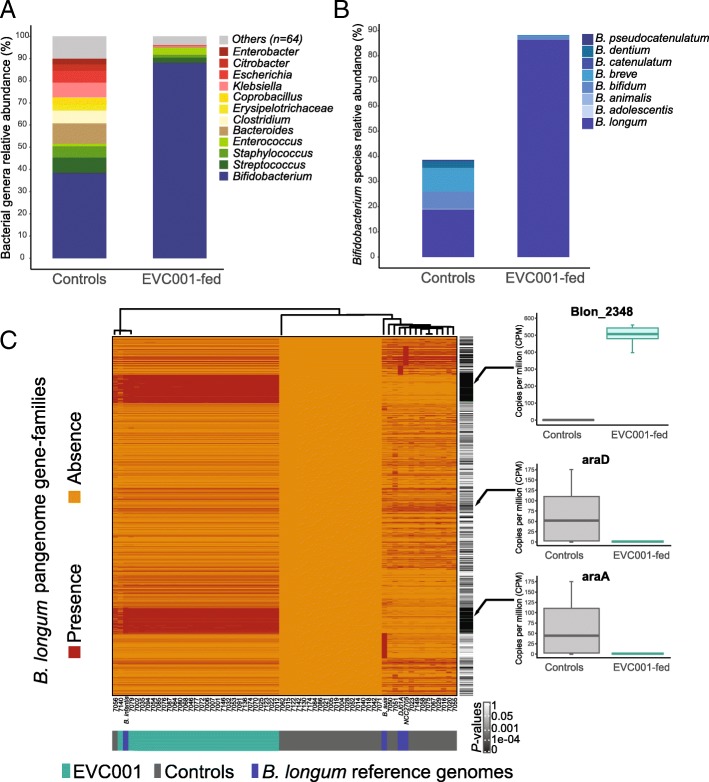
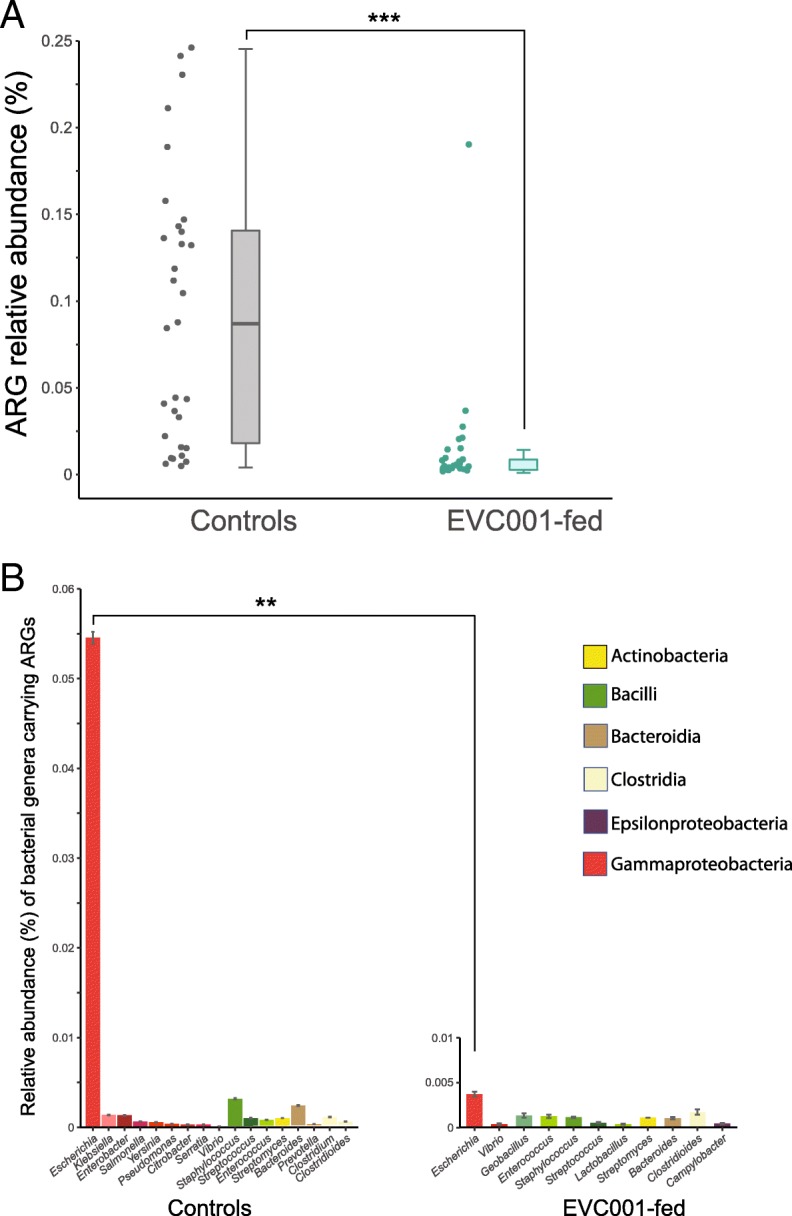
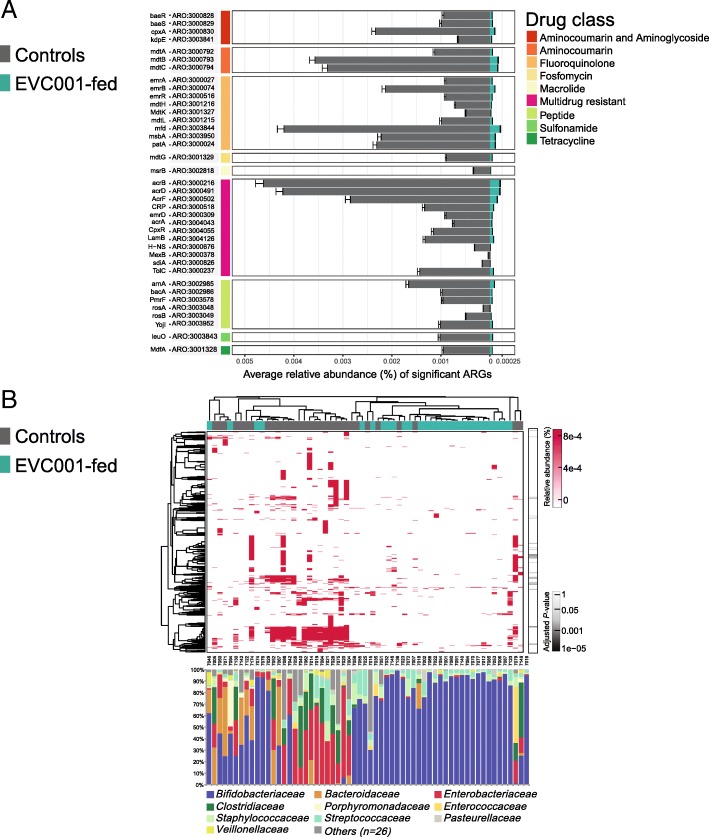
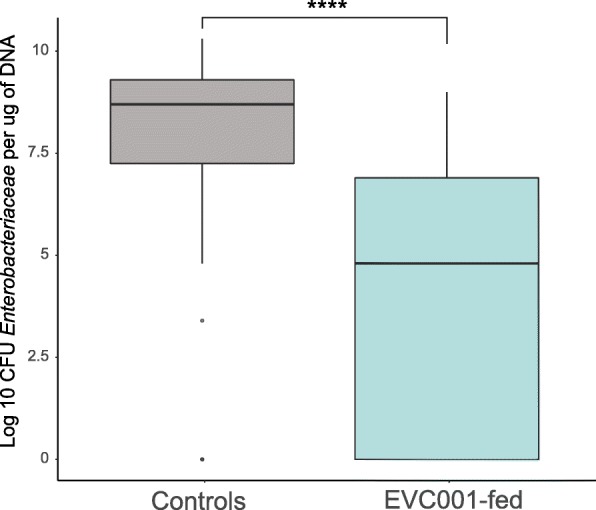
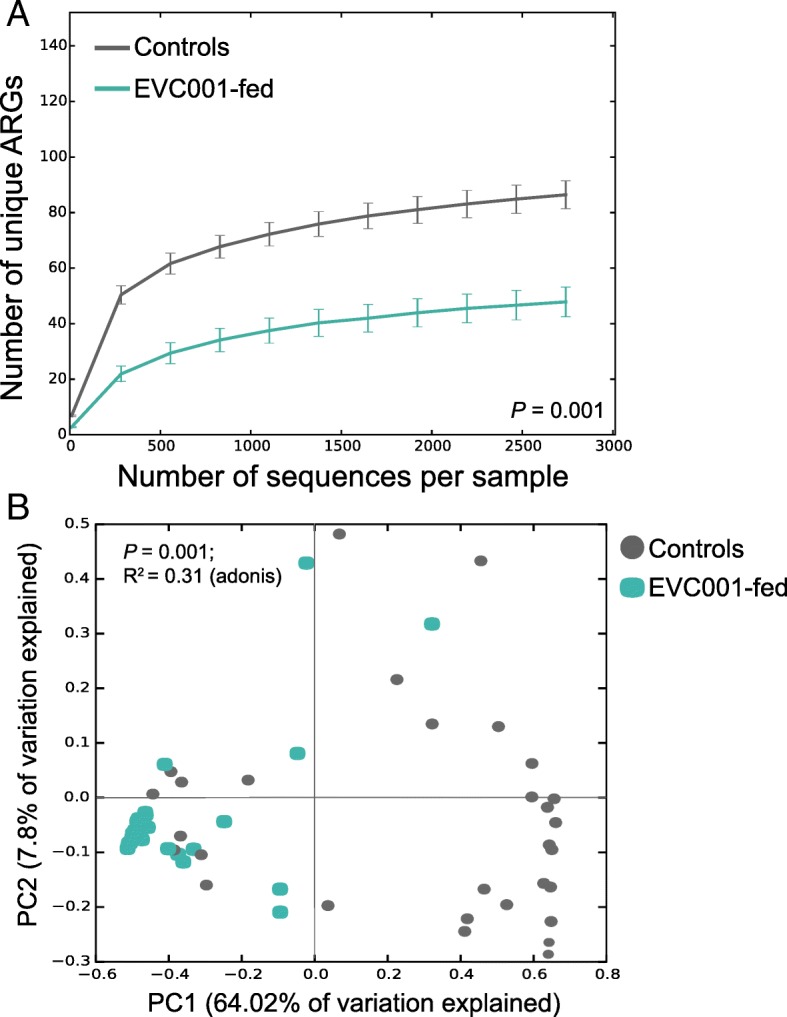
Antibiotic-resistant (AR) bacteria are a global threat. AR bacteria can be acquired in early life and have long-term sequelae. Limiting the spread of antibiotic resistance without triggering the development of additional resistance mechanisms is of immense clinical value. Here, we show how the infant gut microbiome can be modified, resulting in a significant reduction of AR genes (ARGs) and the potentially pathogenic bacteria that harbor them. The gut microbiome was characterized using shotgun metagenomics of fecal samples from two groups of healthy, term breastfed infants. One group was fed B. infantis EVC001 in addition to receiving lactation support (n = 29, EVC001-fed), while the other received lactation support alone (n = 31, controls). Coliforms were isolated from fecal samples and genome sequenced, as well as tested for minimal inhibitory concentrations against clinically relevant antibiotics. Infants fed B. infantis EVC001 exhibited a change to the gut microbiome, resulting in a 90% lower level of ARGs compared to controls. ARGs that differed significantly between groups were predicted to confer resistance to beta lactams, fluoroquinolones, or multiple drug classes, the majority of which belonged to Escherichia, Clostridium, and Staphylococcus. Minimal inhibitory concentration assays confirmed the resistance phenotypes among isolates with these genes. Notably, we found extended-spectrum beta lactamases among healthy, vaginally delivered breastfed infants who had never been exposed to antibiotics. Colonization of the gut of breastfed infants by a single strain of B. longum subsp. infantis had a profound impact on the fecal metagenome, including a reduction in ARGs. This highlights the importance of developing novel approaches to limit the spread of these genes among clinically relevant bacteria. Future studies are needed to determine whether colonization with B. infantis EVC001 decreases the incidence of AR infections in breastfed infants. This clinical trial was registered at ClinicalTrials.gov , NCT02457338.
Overview
The claims and statistics of this paper haven’t been checked yet.
Run the check — free, no account needed. It reads the open-access text and checks the sources it cites.
Integrity signals
Registry
Cites
Statistics
Figures
Verification
Claims the paper makes
The claims and statistics of this paper haven’t been checked yet.
Run the check — free, no account needed. It reads the open-access text and checks the sources it cites.
Claims other papers make about this one
Each is checked against this paper’s own text: does it say what the citing paper says it does?
The source backs part of the claim, not all of it — or backs it for a different population, condition or comparison.
In the citing paper
“Bifidobacterium, and Bifidobacterium supplementation has been associated with lower ARG abundance in the infant gut microbiome, likely due to the competitive exclusion of ARG-rich pathobionts56–59.”
From Impact of early life antibiotic and probiotic treatment on gut microbiome and resistome of very-low-birth-weight preterm infants. (2025) · cites this paper as [56]
Experimental — accuracy not yet measured
Self-check
Percentages, sums and reported differences re-computed from the paper’s own numbers.
The self-check needs the paper’s full text.
Citations
Cites
Trimmomatic: a flexible trimmer for Illumina sequence data
Bolger, A. M., Lohse, M., & Usadel, B. (2014) · Bioinformatics · doi:10.1093/bioinformatics/btu170 · Cited by 65,548
SPAdes: A New Genome Assembly Algorithm and Its Applications to Single-Cell Sequencing
Bankevich, A., Nurk, S., Antipov, D., Gurevich, A. A., Dvorkin, M. V., Kulikov, A. S., Lesin, V. M., Nikolenko, S., Pham, S., Prjibelski, A. D., et al. (2012) · Journal of Computational Biology · doi:10.1089/cmb.2012.0021 · Cited by 26,312
Fast and sensitive protein alignment using DIAMOND
Buchfink, B., Xie, C., & Huson, D. H. (2015) · Nature Methods · doi:10.1038/nmeth.3176 · Cited by 14,201
Structure, function and diversity of the healthy human microbiome
The Human Microbiome Project Consortium (2012) · Nature · doi:10.1038/nature11234 · Cited by 11,726
Canu: scalable and accurate long-read assembly via adaptive k -mer weighting and repeat separationPreprint
Koren, S., Walenz, B. P., Berlin, K., Miller, J. R., Bergman, N. H., & Phillippy, A. M. (2017) · Genome Research · doi:10.1101/gr.215087.116 · Cited by 7,260
MEGAN analysis of metagenomic dataPreprint
Huson, D. H., Auch, A. F., Qi, J., & Schuster, S. C. (2007) · Genome Research · doi:10.1101/gr.5969107 · Cited by 3,294
Estimating Health Care-Associated Infections and Deaths in U.S. Hospitals, 2002
Klevens, R. M., Edwards, J. R., Richards, C. L., Horan, T. C., Gaynes, R. P., Pollock, D. A., & Cardo, D. M. (2007) · Public Health Reports · doi:10.1177/003335490712200205 · Cited by 2,963
Bacterial Persistence as a Phenotypic Switch
Balaban, N. Q., Merrin, J., Chait, R., Kowalik, L., & Leibler, S. (2004) · Science · doi:10.1126/science.1099390 · Cited by 2,952
Development of the Human Infant Intestinal Microbiota
Palmer, C., Bik, E. M., DiGiulio, D. B., Relman, D. A., & Brown, P. O. (2007) · PLoS Biology · doi:10.1371/journal.pbio.0050177 · Cited by 2,877
Wikler, M. A., & Clinical (2006) · Clinical and Laboratory Standards Institute eBooks · Cited by 2,842
Research works printed but not linked: 2
- Andremont A. Commensal flora may play key role in spreading antibiotic resistance. ASM news. 2003;69(12):601–7.
- CLSI. Performance Standards for Antimicrobial Susceptibility Testing: CLSI supplement. M100S. 26th ed. Wayne, PA: Clinical and Laboratory Standards Institute; 2016.
Cited by
Sorted by citations
Bifidobacteria-mediated immune system imprinting early in life
Henrick, B. M., Rodriguez, L., Lakshmikanth, T., Pou, C., Henckel, E., Arzoomand, A., Olin, A., Wang, J., Mikeš, J., Tan, Z., et al. (2021) · Cell · doi:10.1016/j.cell.2021.05.030 · Cited by 836
Self-citationImpact of antibiotics on the human microbiome and consequences for host health
Patangia, D. V., Ryan, C. A., Dempsey, E. M., Ross, R. P., & Stanton, C. (2022) · MicrobiologyOpen · doi:10.1002/mbo3.1260 · Cited by 861
Clinical implications of preterm infant gut microbiome development
Healy, D., Ryan, C. A., Ross, R. P., Stanton, C., & Dempsey, E. M. (2021) · Nature Microbiology · doi:10.1038/s41564-021-01025-4 · Cited by 142
Early‐Life Gut Microbiome—The Importance of Maternal and Infant Factors in Its Establishment
Kapourchali, F. R., & Cresci, G. (2020) · Nutrition in Clinical Practice · doi:10.1002/ncp.10490 · Cited by 137
Islam, T., Haque, M. A., Barai, H. R., Istiaq, A., & Kim, J.-J. (2024) · Plants · doi:10.3390/plants13081135 · Cited by 84
Metadata
- Authors
- Casaburi, G., Duar, R. M., Vance, D. P., Mitchell, R., Contreras, L., Frese, S. A., Smilowitz, J. T., & Underwood, M. A.
- Affiliations
- Infinant Health Inc. (United States) (US)
- University of Nebraska–Lincoln (US)
- University of California, Davis (US)
- University of California Davis Medical Center (US)
- Corresponding author
- Smilowitz, Jennifer T.
- Underwood, Mark A.
- ORCID
- Venue
- Antimicrobial Resistance & Infection Control
- Published
- 2019-08-14
- Volume
- 8
- Issue
- 1
- Pages
- 131-131
- ISSN
- 2047-2994 (ISSN-L)
- PMC
- PMC6693174
- OpenAlex
- W2967608930
- Cited by
- 101
- References
- 86
- Citations by year
- 2026: 12 · 2025: 6 · 2024: 14 · 2023: 16 · 2022: 20 · 2021: 21 · 2020: 12
- FWCI
- 4.39
- Type
- journal article
- Language
- en
- Open access
- gold
- doi.org
- Locations
- Antimicrobial Resistance and Infection Control (publishedVersion, cc-by)
- Europe PMC (PubMed Central) (publishedVersion, cc-by)
- PubMed Central (publishedVersion, cc-by)
- PubMed (publishedVersion)
- DOAJ (DOAJ: Directory of Open Access Journals) (submittedVersion, cc-by-sa)
- eScholarship (California Digital Library) (submittedVersion, cc-by)
- Funders
- Evolve Biosystems (n/a)
- Topics
- Life Sciences › Biochemistry, Genetics and Molecular Biology › Molecular Biology › Gut microbiota and health
- Health Sciences › Medicine › Microbiology (medical) › Antibiotic Resistance in Bacteria
- Health Sciences › Nursing › Nutrition and Dietetics › Infant Nutrition and Health
- Keywords
- antibiotic resistance genes, infant gut microbiota, probiotic supplementation, breastfeeding, coliform bacteria, extended-spectrum beta-lactamase, minimum inhibitory concentration, Escherichia, Clostridium, Staphylococcus, vaginal delivery, antibiotic resistance spread
- MeSH terms
- Gastrointestinal Microbiome, Bifidobacterium longum subspecies infantis, Whole Genome Sequencing, Anti-Bacterial Agents, Bacteria, beta-Lactamases, Breast Feeding, Drug Resistance, Microbial, Feces, Humans, Infant, Newborn, Microbial Sensitivity Tests, Case-Control Studies, Probiotics, Metagenomics, High-Throughput Nucleotide Sequencing
About these checks
Registry, retraction, Cites and statistics results are computed, not judged, with one exception: a printed reference that no index lists is read once by a model before it counts as a citation error. Claims are extracted by a model and kept only when their quote appears verbatim in the text; each cited source is then checked, with a model’s help, for whether it says what the claim relies on. Those verdicts can be wrong — read the claim’s quote and the cited source before relying on one.
Statistics and arithmetic are recomputed, not judged.
Confidence bands are shown only for fields calibrated on our annotated test set. None is calibrated yet, so no band is shown.
What counts as a claim ›How we measure confidence ›How we check this ›
Are you an author, or do you see a problem with this page? Request a review
