

Long-term hyperglycemia aggravates α-synuclein aggregation and dopaminergic neuronal loss in a Parkinson’s disease mouse model
Open accessThe DOI matches its Crossref record; 70 of the 70 references it cites were found in a registry or an index.
Abstract
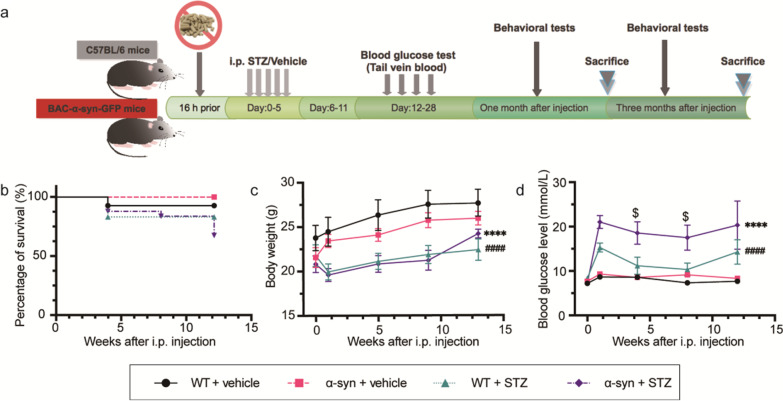
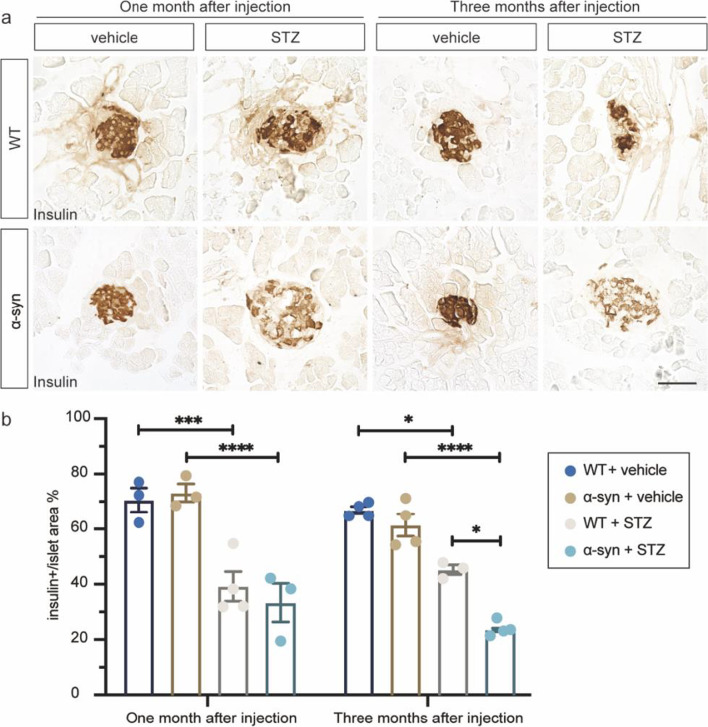
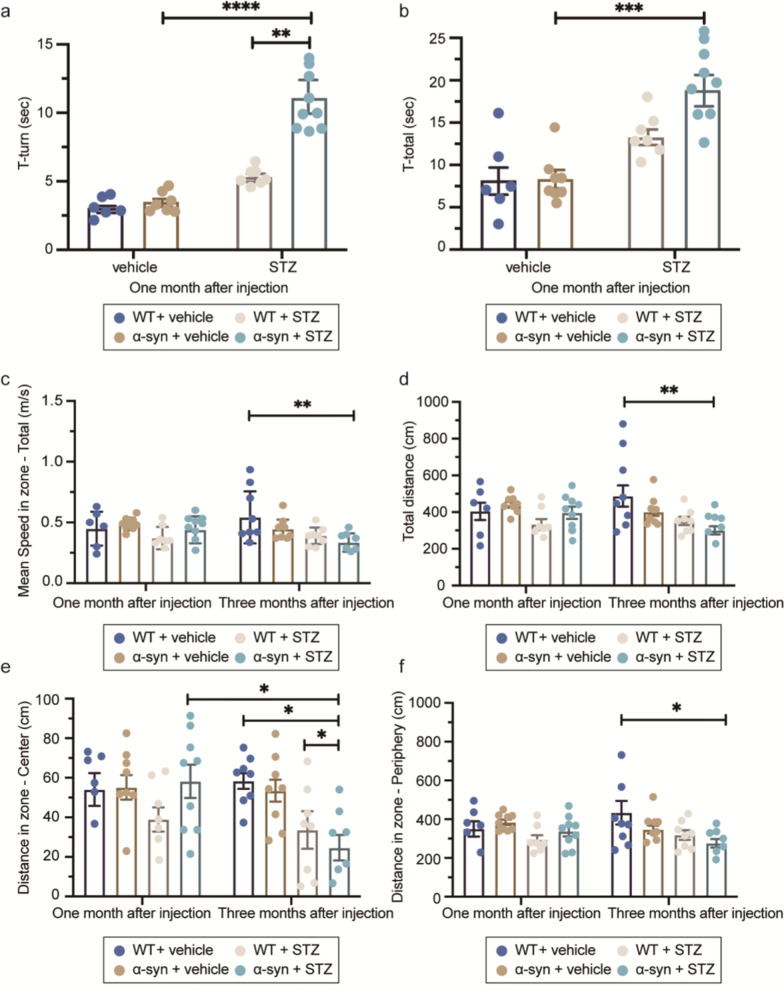
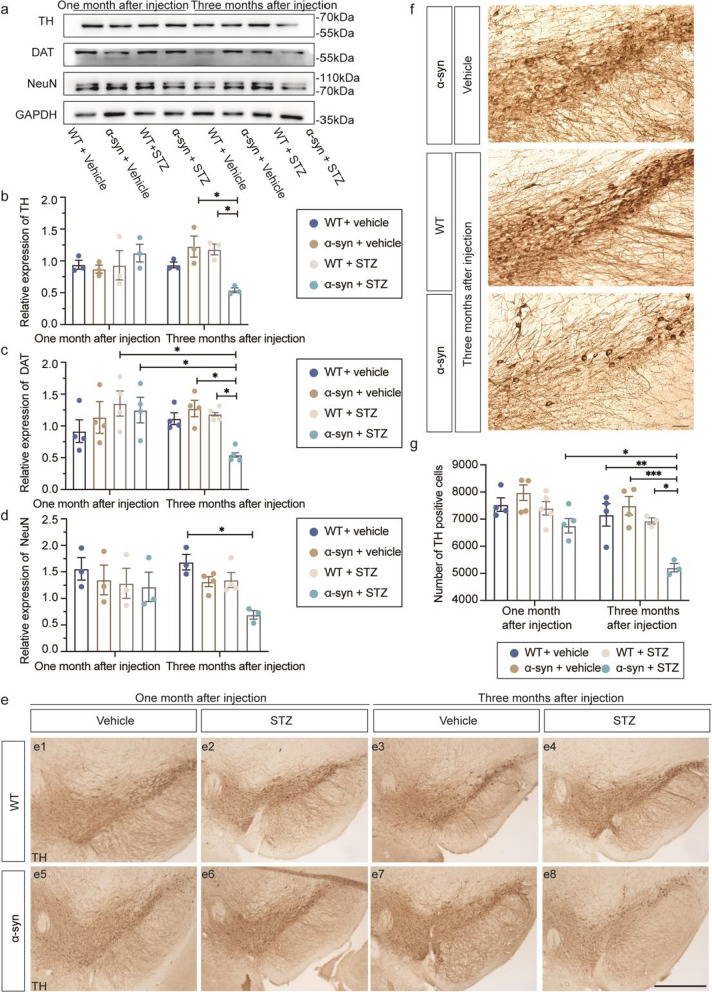
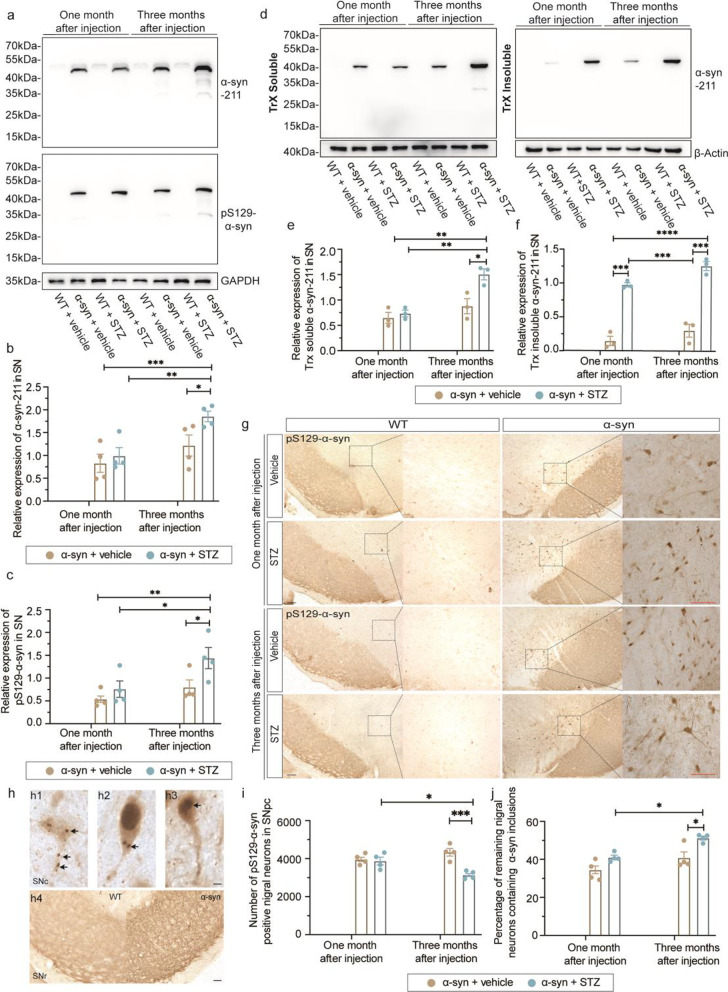
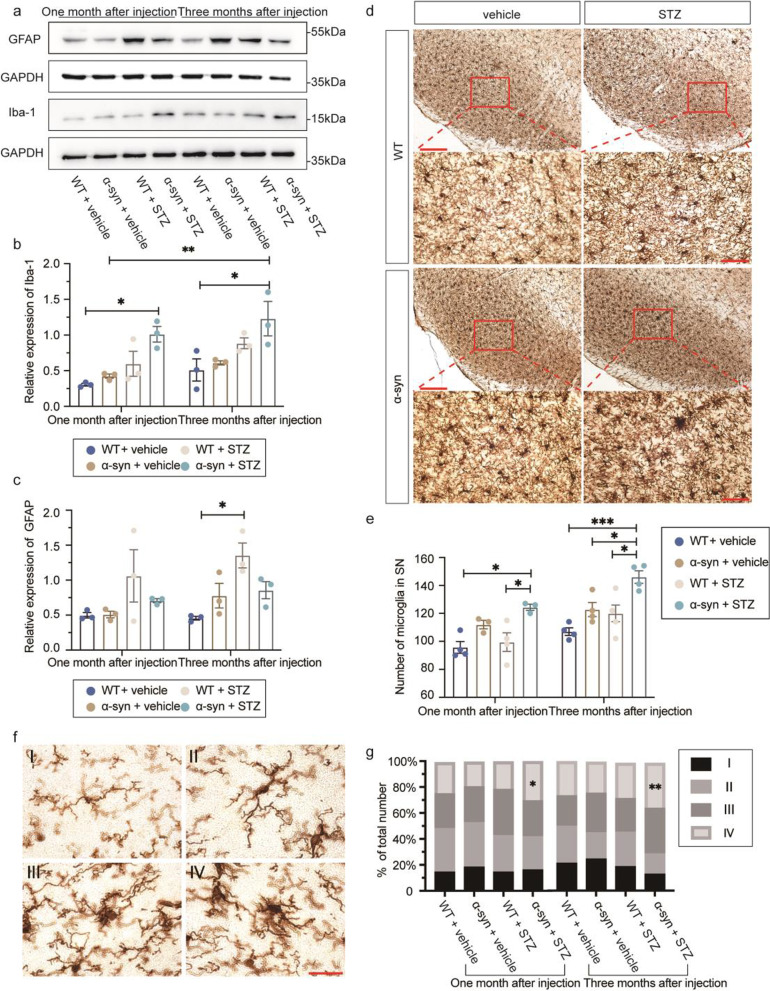
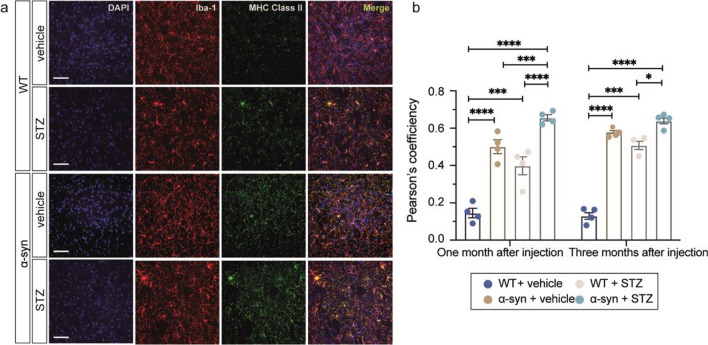
Background: Growing evidence suggests an association between Parkinson’s disease (PD) and diabetes mellitus (DM). At the cellular level, long-term elevated levels of glucose have been shown to lead to nigrostriatal degeneration in PD models. However, the underlying mechanism is still unclear. Previously, we have elucidated the potential of type 2 diabetes mellitus (T2DM) in facilitating PD progression, involving aggregation of both alpha-synuclein (α-syn) and islet amyloid polypeptide in the pancreatic and brain tissues. However, due to the complicated effect of insulin resistance on PD onset, the actual mechanism of hyperglycemia-induced dopaminergic degeneration remains unknown. Methods: We employed the type 1 diabetes mellitus (T1DM) model induced by streptozotocin (STZ) injection in a transgenic mouse line (BAC-α-syn-GFP) overexpressing human α-syn, to investigate the direct effect of elevated blood glucose on nigrostriatal degeneration. Results: STZ treatment induced more severe pathological alterations in the pancreatic islets and T1DM symptoms in α-syn-overexpressing mice than in wild-type mice, at one month and three months after STZ injections. Behavioral tests evaluating motor performance confirmed the nigrostriatal degeneration. Furthermore, there was a marked decrease in dopaminergic profiles and an increase of α-syn accumulation and Serine 129 (S129) phosphorylation in STZ-treated α-syn mice compared with the vehicle-treated mice. In addition, more severe neuroinflammation was observed in the brains of the STZ-treated α-syn mice. Conclusion: Our results solidify the potential link between DM and PD, providing insights into how hyperglycemia induces nigrostriatal degeneration and contributes to pathogenic mechanisms in PD.
Overview
The claims and statistics of this paper haven’t been checked yet.
Free: it reads the open-access text and checks the first 5 claims that cite a source we can check. Create a free account to check every claim.
Integrity signals
Registry
Cites
Statistics
Figures
Verification
Claims the paper makes
The claims and statistics of this paper haven’t been checked yet.
Free: it reads the open-access text and checks the first 5 claims that cite a source we can check. Create a free account to check every claim.
Claims other papers make about this one
Each is checked against this paper’s own text: does it say what the citing paper says it does?
In the citing paper
“Moreover, hyperglycaemia aggravates the phosphorylation and aggregation of α-syn, neuroinflammation and dopaminergic neuronal loss in PD mice.358”
From Antiageing strategy for neurodegenerative diseases: from mechanisms to clinical advances (2025) · cites this paper as [358]
Self-check
Percentages, sums and reported differences re-computed from the paper’s own numbers.
The self-check needs the paper’s full text.
Citations
Cites
Spillantini, M. G., Schmidt, M. L., Lee, V. M.-Y., Trojanowski, J. Q., Jakes, R., & Goedert, M. (1997) · Nature · doi:10.1038/42166 · Cited by 8,382
Poewe, W., Seppi, K., Tanner, C. M., Halliday, G. M., Brundin, P., Volkmann, J., Schrag, A.-E., & Lang, A. E. (2017) · Nature Reviews Disease Primers · doi:10.1038/nrdp.2017.13 · Cited by 5,415
Microglia in neurodegeneration
Hickman, S., Izzy, S., Sen, P., Morsett, L., & El Khoury, J. (2018) · Nature Neuroscience · doi:10.1038/s41593-018-0242-x · Cited by 1,710
Establishment and Dysfunction of the Blood-Brain Barrier
Zhao, Z., Nelson, A. R., Betsholtz, C., & Zlokovic, B. V. (2015) · Cell · doi:10.1016/j.cell.2015.10.067 · Cited by 1,670
Katsarou, A., Gudbjörnsdottir, S., Rawshani, A., Dabelea, D., Bonifacio, E., Anderson, B. J., Jacobsen, L. M., Schatz, D. A., & Lernmark, Å. (2017) · Nature Reviews Disease Primers · doi:10.1038/nrdp.2017.16 · Cited by 1,475
Epidemiology of type 1 diabetes
Maahs, D. M., West, N. A., Lawrence, J. M., & Mayer-Davis, E. J. (2010) · Endocrinology and Metabolism Clinics of North America · doi:10.1016/j.ecl.2010.05.011 · Cited by 1,092 · cited 2×
“Some diabetic patients also exhibit pathologies related to striatal dopaminergic dysfunction [10, 21].”
BackgroundGlycemic Control and Excess Mortality in Type 1 Diabetes
Lind, M., Svensson, A.-M., Kosiborod, M., Gudbjörnsdottir, S., Pivodic, A., Wedel, H., Dahlqvist, S., Clements, M., & Rosengren, A. (2014) · New England Journal of Medicine · doi:10.1056/nejmoa1408214 · Cited by 964
Relationship between Oxidative Stress and Inflammatory Cytokines in Diabetic Nephropathy
Elmarakby, A. A., & Sullivan, J. C. (2012) · Cardiovascular Therapeutics · doi:10.1111/j.1755-5922.2010.00218.x · Cited by 641 · cited 4×
“When a high glucose level is maintained for a long time, enhanced ROS and inflammatory cytokines may interrupt the integrity of the blood–brain barrier (BBB) [30].”
BackgroundInfluentialPathophysiology of type 1 and type 2 diabetes mellitus: a 90-year perspective
Zaccardi, F., Webb, D. R., Yates, T., & Davies, M. J. (2016) · Postgraduate Medical Journal · doi:10.1136/postgradmedj-2015-133281 · Cited by 561
Impact of diabetes on cognitive function and brain structure
Moheet, A., Mangia, S., & Seaquist, E. R. (2015) · Annals of the New York Academy of Sciences · doi:10.1111/nyas.12807 · Cited by 510 · cited 1×
“In a prospective study, patients with T1DM showed a substantial reduction in limb flexibility and spontaneous movements, associated with brain dysfunction [56].”
Background
Cited by
Antiageing strategy for neurodegenerative diseases: from mechanisms to clinical advances
Jiang, Q., Liu, J., Huang, S., Wang, X.-Y., Chen, X., Liu, G.-H., Ye, K., Song, W., Masters, C. L., Wang, J., et al. (2025) · Signal Transduction and Targeted Therapy · doi:10.1038/s41392-025-02145-7 · Cited by 165
Glucose Metabolism Impairment in Parkinson's Disease.
Dai, C., Tan, C.-H., Zhao, L., Liang, Y., Liu, G., Liu, H., Zhong, Y.-K., Liu, Z., Mo, L.-J., Liu, X., et al. (2023) · Brain Research Bulletin · doi:10.1016/j.brainresbull.2023.110672 · Cited by 82
Alrouji, M., Al-Kuraishy, H. M., Al-Gareeb, A. I., Alexiou, A. T., Papadakis, M., Jabir, M. S., Saad, H. M., & Batiha, G. E. (2023) · Journal of Cellular and Molecular Medicine · doi:10.1111/jcmm.17784 · Cited by 90
Role of glucagon-like peptide-1 receptor agonists in Alzheimer’s disease and Parkinson’s disease
Hong, C.-T., Chen, J.-H., & Hu, C.-J. (2024) · Journal of Biomedical Science · doi:10.1186/s12929-024-01090-x · Cited by 78
Ruiz-Pozo, V. A., Tamayo-Trujillo, R., Cadena-Ullauri, S., Frias-Toral, E., Guevara-Ramírez, P., Paz-Cruz, E., Chapela, S., Montalván, M., Morales-López, T., Simancas-Racines, D., et al. (2023) · Nutrients · doi:10.3390/nu15163585 · Cited by 63
“Hence, individuals with T2DM may have a higher risk of developing PD or worsening its symptoms [29,42].”
BackgroundInfluentialMultifunctional role of natural products for the treatment of Parkinson’s disease: At a glance
Rahman, M. M., Wang, X., Islam, M. R., Akash, S., Supti, F. A., Mitu, M. I., Harun-Or-Rashid, M., Aktar, M. N., Kali, M. S. K., Jahan, F. I., et al. (2022) · Frontiers in Pharmacology · doi:10.3389/fphar.2022.976385 · Cited by 64
Yu, H., Sun, T., He, X., Wang, Z., Zhao, K., An, J., Wen, L., Li, J., Li, W., & Feng, J. (2022) · Aging and Disease · doi:10.14336/ad.2022.0325 · Cited by 57
Self-citationMissiego-Beltrán, J., & Beltrán-Velasco, A. I. (2024) · International Journal of Molecular Sciences · doi:10.3390/ijms251810041 · Cited by 60
“This suggests that these bacterial neurotoxic metabolites could play a role in modulating neuroinflammation, thereby exacerbating the immune response and contributing to the neuronal damage characteristic of MS [141].”
BackgroundLee, K.-S., Yoon, S.-H., Hwang, I., Ma, J.-H., Yang, E., Kim, R. H., Kim, E., & Yu, J. (2024) · Journal of Neuroinflammation · doi:10.1186/s12974-024-03136-1 · Cited by 41
Aquaporin-4 and Parkinson’s Disease
Lapshina, K. V., & Ekimova, I. V. (2024) · International Journal of Molecular Sciences · doi:10.3390/ijms25031672 · Cited by 36
Rojas-Pirela, M., Andrade-Alviárez, D., Rojas, V., Marcos, M., Salete-Granado, D., Chacón-Arnaude, M., Pérez-Nieto, M. Á., Kemmerling, U., Concepción, J. L., Michels, P. A. M., et al. (2025) · Open Biology · doi:10.1098/rsob.240239 · Cited by 32
Update to the Treatment of Parkinson’s Disease Based on the Gut-Brain Axis Mechanism
Sun, X., Li, X., Wang, Z., & Xie, A. (2022) · Frontiers in Neuroscience · doi:10.3389/fnins.2022.878239 · Cited by 31
“At the same time, we have learned that other diseases related to the GBA mechanism of PD include SIBO, IBD, appendicitis, and even systemic diseases such as tuberculosis and diabetes (Chen et al., 2021; Dãnãu et al., 2021; Li et al., 2021; Lv et al., 2022).”
BackgroundTargeting Glucose Metabolism: A Novel Therapeutic Approach for Parkinson’s Disease
Tanvir, A., Jo, J., & Park, S. M. (2024) · Cells · doi:10.3390/cells13221876 · Cited by 69
“Chronic hyperglycemia exacerbates α -syn aggregation and DA neuronal loss in a PD model [73], suggesting that elevated glucose levels enhance oxidative stress and inflammatory responses, promoting α -syn aggregation and accelerating neuronal damage. α -Syn aggregates impair mitochondrial function…”
Li, S., Liu, Y., Lu, S., Xu, J., Liu, X., Yang, D., Yang, Y., Hou, L., & Li, N. (2024) · Molecular and Cellular Biochemistry · doi:10.1007/s11010-024-04985-3 · Cited by 27
Stockmann, O., Ye, L., Greten, S., Chemodanow, D., Wegner, F., & Klietz, M. (2025) · Journal of Neural Transmission · doi:10.1007/s00702-025-02882-7 · Cited by 23
“It was assumed that elevated blood sugar levels can lead to the formation of advanced glycation end-products (AGEs), which could promote the aggregation of proteins like α-synuclein and tau (Sirangelo and Iannuzzi 2021; Lv et al. 2022; Aguirre-Vidal et al. 2024).”
Studzińska-Sroka, E., Bulicz, M., Henkel, M., Rosiak, N., Paczkowska‐Walendowska, M., Szwajgier, D., Baranowska‐Wójcik, E., Korybalska, K., & Cielecka‐Piontek, J. (2023) · Molecules · doi:10.3390/molecules29010233 · Cited by 22
“Based on 3D models generated by Prank-Web (Table 8), it is confirmed that evernic acid and atranorin are in the active site of a given enzyme and interact with the active site’s residues.”
BackgroundMethodDing, H., Zhang, Q., Yang, R., Fu, L., Jiang, H., Zhu, Q., & Tai, S. (2024) · iScience · doi:10.1016/j.isci.2024.111594 · Cited by 20
Metabolic Dysfunction in Parkinson’s Disease: Unraveling the Glucose–Lipid Connection
Sian‐Hülsmann, J., Riederer, P. F., & Michel, T. M. (2024) · Biomedicines · doi:10.3390/biomedicines12122841 · Cited by 20
“As summarised in detail by De Iuliis et al. [50] the presence of dopamine in secretory granules of pancreatic ß-cells leads to the assumption that hyperglycaemic effects might be driven by dopamine through insulin storage or the releasing mechanisms [50,51].”
The pathogenesis of Parkinson’s disease and crosstalk with other diseases
Liu, T., GUO, D., & Wei, J. (2024) · Biocell · doi:10.32604/biocell.2024.051518 · Cited by 19
Lapmanee, S., Bhubhanil, S., Wongchitrat, P., Charoenphon, N., Inchan, A., Ngernsutivorakul, T., Dechbumroong, P., Khongkow, M., & Namdee, K. (2024) · Pharmaceutics · doi:10.3390/pharmaceutics16040514 · Cited by 17
“The biochemical changes post-induction, including elevated fasting blood glucose levels, reduced insulin levels, and decreased striatal dopamine levels contributing to the development of α -synuclein aggregation, collectively confirm the successful establishment of DP rats [4,20,21,54,55].”
BackgroundCao, H., Zhao, Y., Chen, Z., Zou, X., Du, X., Li, Y., Ai, Y., Zuo, H., Cheng, O., Initiative, P. P. M., et al. (2025) · npj Parkinson s Disease · doi:10.1038/s41531-025-01100-1 · Cited by 18
Parkinson's disease: pathogenesis and therapeutic strategies
Zhang, S., Wang, T., Peng, Y., Wang, Q., Zhang, Z., Shifeng, C. H. U., Huang, H., & Chen, N. (2026) · Molecular Biomedicine · doi:10.1186/s43556-026-00445-0 · Cited by 22
The Contribution of Type 2 Diabetes to Parkinson’s Disease Aetiology
Ribarič, S. (2024) · International Journal of Molecular Sciences · doi:10.3390/ijms25084358 · Cited by 18
“Hyperglycemia induces and sustains severe neuroinflammation by activating the microglia [304].”
BackgroundGeng, C., Meng, K., Zhao, B., Liu, X., & Tang, Y. (2024) · European journal of medical research · doi:10.1186/s40001-023-01628-z · Cited by 13
Understanding Insulin Actions Beyond Glycemic Control: A Narrative Review
Riachi, R., Khalife, E., Kędzia, A. W., & Niechciał, E. (2025) · Journal of Clinical Medicine · doi:10.3390/jcm14145039 · Cited by 20
“This neuro-inflammation is a known cause of cerebral neurodegeneration [62–64].”
Chung, J., Jernigan, J. E., Menees, K. B., & Lee, J. (2024) · Frontiers in Cellular Neuroscience · doi:10.3389/fncel.2024.1374298 · Cited by 12
Wang, T., Li, M., Pei, Z., Chen, Q., Qiu-sheng, C., & Li, Z. (2025) · Tissue and Cell · doi:10.1016/j.tice.2025.102751 · Cited by 12
Mai, A. S., Tan, B. J., Sun, Q.-Y., & Tan, E. (2024) · Journal of Clinical Medicine · doi:10.3390/jcm13020561 · Cited by 9
“…studies and meta-analyses have linked T2DM and even prediabetes to an increased risk of PD. Animal models have also revealed that various factors arising from T2DM—such as neuroinflammation and long-standing hyperglycemia—can cause neuronal death, α - synuclein aggregation, and eventually PD [7,8].”
BackgroundHyperglycemia-Driven Insulin Signaling Defects Promote Parkinson’s Disease-like Pathology in Mice
Soni, R., Mathur, K., Rathod, H., Khairnar, A., & Shah, J. (2024) · ACS Pharmacology & Translational Science · doi:10.1021/acsptsci.4c00586 · Cited by 9
Moya-Gudiño, V., Altamirano-Bustamante, N. F., Revilla, M., & Altamirano, M. M. (2025) · International Journal of Molecular Sciences · doi:10.3390/ijms26020767 · Cited by 10
“Additionally, enhanced α -synuclein deposition was detected in the pancreatic islets of these mice [15].”
Cheon, S. Y., & Song, J. (2025) · Molecular Neurobiology · doi:10.1007/s12035-025-04797-6 · Cited by 12
Liu, Y., Ma, X., Xu, J., Wang, X., Liu, L., Ren, X., Zhang, C., Zhou, S., Wang, Y., Guo, X., et al. (2025) · Journal of Advanced Research · doi:10.1016/j.jare.2025.06.044 · Cited by 12
“Wakabayashi’s research showed that HFD reduced A b clearance in A7 transgenic mice (overexpressing the human APP695 gene), while the levels of sAPP, sAPP a , sAPP b were not changed [29].”
Self-citationHornung, S., Vogl, D. P., Naltsas, D., Volta, B. D., Ballmann, M., Marcon, B., Syed, M. M. K., Wu, Y., Spanopoulou, A., Feederle, R., et al. (2025) · Angewandte Chemie International Edition · doi:10.1002/anie.202422834 · Cited by 10
Salah, N. Y., Taha, S., Hassan, S. H. Z., Abdeen, M. S., Hashim, M. A., & Mahmoud, R. A. A. (2022) · International Journal of Obesity · doi:10.1038/s41366-022-01222-z · Cited by 8
“Upon penetration by proinflammatory factors, microglia are activated, and neuroinflammation occur [49].”
BackgroundKaushik, M., Potdar, M. B., Guptha, P. M., Vanangamudi, M., Abubakar, M., Mishra, M. K., & Nand, S. (2026) · Current Neuropharmacology · doi:10.2174/011570159x415585260303184042 · Cited by 9
Metabolism and metabolomics in senescence, aging, and age-related diseases: a multiscale perspective
Wang, Z., Zhu, H., & Xiong, W. (2025) · Frontiers of Medicine · doi:10.1007/s11684-024-1116-0 · Cited by 7
Malar, D. S., Prasanth, M. I., Brimson, J. M., Verma, K., Prasansuklab, A., & Tencomnao, T. (2023) · Nutrition and Healthy Aging · doi:10.3233/nha-220177 · Cited by 7
Ali, M., Timsina, J., Xu, Y., Chen, Y., Gong, K., Western, D., Heo, G., Liu, M., Budde, J., Pottier, C. P., et al. (2026) · Neuron · doi:10.1016/j.neuron.2026.02.035 · Cited by 13
Factors responsible for alpha-Synuclein aggregation
Singh, K. S., Verma, R., Singh, N., Singh, L. R., & Gupta, A. (2025) · Progress in molecular biology and translational science · doi:10.1016/bs.pmbts.2024.11.004 · Cited by 10
Wang, Y., Gao, P.-P., Wu, Z., Jiang, B., Wang, Y., He, Z., Zhao, B., Tian, X., Gao, H., Cai, L., et al. (2024) · Journal of Ethnopharmacology · doi:10.1016/j.jep.2024.119095 · Cited by 9
Self-citationEvaluation of type 1 diabetes mellitus as a risk factor of Parkinson's disease in a Drosophila model
Sanz, F., Martínez‐Carrión, G., Solana‐Manrique, C., & Paricio, N. (2023) · Journal of Experimental Zoology Part A Ecological and Integrative Physiology · doi:10.1002/jez.2726 · Cited by 8
Relationship between Parkinson's disease and diabetes mellitus: Evidence from the bench to bedside
Peng, Y., Lin, L.-Y., Wu, S.-L., Kang, X.-H., Jiang, D., Yao, S., & Du, M. (2025) · Parkinsonism & Related Disorders · doi:10.1016/j.parkreldis.2025.108109 · Cited by 5
Zhang, R.-Y., Li, J.-Y., Liu, Y.-N., Zhang, Z.-X., Zhao, J., & Li, F.-J. (2024) · Frontiers in Endocrinology · doi:10.3389/fendo.2024.1408053 · Cited by 3
Self-citationGlycated Alpha-Synuclein Assemblies Cause Distinct Parkinson’s Disease Pathogenesis in Mice
Rajan, A., Varghese, A., Hashardeen, S. P., Babu, A. T., Vijayan, V., & Thakur, P. S. (2025) · ACS Chemical Neuroscience · doi:10.1021/acschemneuro.5c00428 · Cited by 5
Prediabetes and the incidence of Parkinson’s disease: A meta-analysis
Jin, X., Lu, Y., Gong, Z., Huang, W., & Wang, Z. (2024) · Biomolecules and Biomedicine · doi:10.17305/bb.2023.10035 · Cited by 6
Chatterjee, S., Verma, A., Thakkar, H., Shah, R. P., & Khairnar, A. (2025) · ACS Chemical Biology · doi:10.1021/acschembio.4c00777 · Cited by 4
Waheed, I., Sikandri, T., Zaheen, S., Khakwani, M. M. A. K., An, Z., Liu, T., Zhu, C., & Wei, J. (2025) · ACS Chemical Neuroscience · doi:10.1021/acschemneuro.4c00819 · Cited by 3
Ali, R., Sen, S., Hameed, R., Waseem, A., Gautam, S. R., Onkar, A., Ganesh, S., Raza, S. S., Nazir, A., & Verma, S. K. (2025) · ACS Chemical Neuroscience · doi:10.1021/acschemneuro.5c00390 · Cited by 4
Unraveling the molecular crossroads: T2DM and Parkinson’s disease interactions
Liu, T., KONG, X., & Wei, J. (2024) · Biocell · doi:10.32604/biocell.2024.056272 · Cited by 3
Akhlaghi, M., Foshati, S., Moghaddam, F. H., Sasani, M. R., & Kazemi, A. (2025) · Nutrition Reviews · doi:10.1093/nutrit/nuaf224 · Cited by 4
Glucose, glycolysis, and neurodegenerative disorders
Coelho, P., & Rego, A. C. (2023) · Elsevier eBooks · doi:10.1016/b978-0-323-91704-9.00012-4 · Cited by 5
Singh, M. P., Balasundaram, M. K., & Singh, A. (2025) · Journal of Neurosciences in Rural Practice · doi:10.25259/jnrp_393_2024 · Cited by 3
Troshneva, A. Y., & As, A. (2022) · S S Korsakov Journal of Neurology and Psychiatry · doi:10.17116/jnevro202212211212 · Cited by 3
Hornung, S., Vogl, D. P., Naltsas, D., Volta, B. D., Ballmann, M., Marcon, B., Syed, M. M. K., Wu, Y., Spanopoulou, A., Feederle, R., et al. (2025) · Angewandte Chemie · doi:10.1002/ange.202422834 · Cited by 1
Yelleswarapu, N. K., & Sidiropoulos, C. (2026) · International Journal of Molecular Sciences · doi:10.3390/ijms27062560 · Cited by 1
“Connecting T2DM to PD, chronic hyperglycemia is shown to increase α Syn deposition in pancreatic β -cells and trigger degeneration of dopaminergic neurons in PD [34].”
Alpha-synuclein seed amplification assays differentiate synucleinopathies
Dai, W., Lin, H., Mao, H., Kuang, Y., Xu, P., & Li, H. (2026) · Expert Review of Molecular Diagnostics · doi:10.1080/14737159.2026.2663033 · Cited by 2
“Individual physiological heterogeneity (e.g. blood glucose [78], lipid profile [97], and concomitant endocrine hormones [79]) may also further modulate the analytical signal of the sampled matrix.”
Troshneva, A. Y., & As, A. (2023) · Neuroscience and Behavioral Physiology · doi:10.1007/s11055-023-01488-4 · Cited by 1
Type 2 Diabetes Mellitus and Parkinson's Disease: An Emerging Link
Teli, S., Shalavadi, M. H., Mangannavar, C. V., & Anawal, L. (2024) · Current Signal Transduction Therapy · doi:10.2174/0115743624334102241115162404 · Cited by 1
Alarcón‐Romero, L. D. C., Zubillaga‐Guerrero, M. I., William, C. I. M., Illades‐Aguiar, B., García, A. M. E., Rivera, M. J. M., Barrera, J. A. P., Gómez‐Gómez, Y., & Hernández, M. V. (2024) · doi:10.22533/at.ed.8022401044
A CONEXÃO CURIOSA ENTRE DIABETES MELLITUS E A DOENÇA DE PARKINSON
Maciel, L. M., dos Santos, A. V. F., da Silva, C. V. B. G., dos Santos, G. L. G., Galdino, E. D. S., de Moraes, J. G. F., Miranda, M. A., Silva, M. A. P. D. C. C., Barbosa, J. O. L., & de Lira, A. C. L. (2024) · doi:10.22533/at.ed.8022401047
FATORES QUE INFLUENCIAM NA PREMATURIDADE
Carneiro, C. R. D. N., Reis, C. C. C., Dias, R. A., Sales, E. Q., Ferreira, T. P. A., Silva, P. S. L. E., Costa, P. N., Soares, J. B., Reis, M. C. P., Fernandes, L., et al. (2024) · doi:10.22533/at.ed.8022401043
de Freitas, S. S., Alves, J. D. L., da Silva, W. L. S., Paulino, B. D. S., Prado, N. S., de Arruda, M. A., Amancio, S. R. F., de Barros, C. F. E., Bezerra, A. M. F. D. A., de Souza, F. R., et al. (2024) · doi:10.22533/at.ed.8022401046
IMUNOLÓGICOS ENVOLVIDOS NA PATOGÊNESE DA DOENÇA PERIODONTAL
Freire, J. M. D. O., Sousa, L. M. V. L., Rodrigues, Í. A., de Sousa, B. S., de Menezes, R. L. R., Nascimento, A. L. S., de Oliveira, M. M., & da Costa, I. B. (2024) · doi:10.22533/at.ed.8022401042
CUIDADOS PALIATIVOS NEONATAIS PARA A FAMÍLIA
Silva, F. A., Chady, C. S., & Dias, R. A. (2024) · doi:10.22533/at.ed.8022401045
USO DE PSICOTRÓPICOS EN CULTURAS ANCESTRALES: UN VIAJE A TRAVÉS DEL TIEMPO Y LAS TRADICIONES
de Aparicio, C. X. P., Guerrero, D. A. H., & Pazmiño, P. V. L. (2024) · doi:10.22533/at.ed.8022401041
Dai, Y., Wang, Z., Wang, Y., Zhu, L., Yi, Y., Li, M., Peng, Q., Li, J., Guan, Y., Zhao, G., et al. (2024) · SSRN Electronic Journal · doi:10.21203/rs.3.rs-4108753/v1
Self-citationGeng, C., Meng, K., Zhao, B., Liu, X., & Tang, Y. (2024) · Figshare · doi:10.6084/m9.figshare.25010416
Overview of Some Biochemical Parameters in Parkinson’s Disease
Tahiroğlu, V., & Gülçın, İ. (2024) · doi:10.69860/nobel.9786053359357.6
Stancu, P., Janela, D., Gurary, S. T., Sveikata, L., & Assal, F. (2025) · Clinical and Translational Neuroscience · doi:10.3390/ctn9010008
“Additionally, recent findings suggest that T2DM accelerates PD progression by exacerbating pre-existing α -syn pathology [22].”
Diabetes impact on nigrostriatal vulnerability in Parkinson’s DiseasePreprint
Galli, A., Zatti, C., Lupini, A., Caminiti, S. P., Rizzardi, A., Lucchini, S., Bertagna, F., Paghera, B., Outeiro, T. F., Perani, D., et al. (2025) · medRxiv · doi:10.1101/2025.02.19.25322518
“Indeed, experimental models have demonstrated that prolonged hyperglycemia can be a risk factor for PD pathogenesis and progression, potentially leading to nigrostriatal synaptic dysfunction, increased alpha-synuclein aggregation, and consequent neuroinflammation 10 11 .”
Pan, L., Yang, L., Ding, W., Hu, Y., Yang, W., Wang, J., Zhang, Z., Fan, K., Sun, Z., Liang, Y., et al. (2025) · Progress in Neuro-Psychopharmacology and Biological Psychiatry · doi:10.1016/j.pnpbp.2025.111317
“…to symptoms such as hyperglycemia, which may lead to decreased dopamine reserves and increased pyru valdehyde concentration, further damage brain cells and accelerate the progression of Parkinson ’ s disease through oxidative stress reaction and other pathways under hyperglycemia (Lv et al., 2022).”
Huang, D., Zhang, Y., Shi, S., Liang, T.-J., Chen, J.-J., Li, G., & Chen, Z.-D. (2025) · Journal of Multidisciplinary Healthcare · doi:10.2147/jmdh.s533723 · Cited by 1
Lee, K.-S., Yoon, S.-H., Hwang, I., Ma, J.-H., Yang, E., Kim, R. H., Kim, E., & Yu, J.-W. (2024) · Figshare · doi:10.6084/m9.figshare.25910003
Alpha-Synuclein Dynamics in Cerebral Ischemia
Bordbar, S., Molavizade, S., Dehghani, F., Davoody, S., Bahadori, A. R., & Tafakhori, A. (2026) · ASN NEURO · doi:10.1080/17590914.2026.2615453
“Chronic hyper-glycemia has been seen to cause a -Syn aggregation, ultimately resulting in degeneration of dopaminergic neurons and increased neuroinflammation, and accelerates the progression of PD (Lv et al., 2021; 2022).”
Zeng, D., Luo, M., Zhang, B., Zhang, Y., Pang, A., & Yang, X. (2026) · Frontiers in Aging Neuroscience · doi:10.3389/fnagi.2026.1801518
“Animal studies using PD models have confirmed that long-term hyperglycemia (mimicking prediabetic states) exacerbates pathological accumulation of α -synuclein, leading to more extensive loss of dopaminergic neurons and worsening motor deficits (Sato et al., 2011; Lv et al., 2022).”
魏, 裴. (2026) · Advances in Clinical Medicine · doi:10.12677/acm.2026.1651903
Arrar, A., Mallem, S. E., Ravier, M. A., & Costes, S. (2026) · médecine/sciences · doi:10.1051/medsci/2026065
Glycated haemoglobin (HbA1c) levels and motor symptoms in Parkinson’s disease
Choudhary, N., Seervi, N., Bhargava, A., & Khichar, S. (2026) · The Indian Journal of Medical Research · doi:10.25259/ijmr_2218_2025
Galli, A., Zatti, C., Lupini, A., Caminiti, S. P., Rizzardi, A., Lucchini, S., Bertagna, F., Paghera, B., Outeiro, T. F., Perani, D., et al. (2026) · European Journal of Nuclear Medicine and Molecular Imaging · doi:10.1007/s00259-026-08011-0
Hexokinase-2–glycolytic overload axis in brain disorders exacerbated by diabetes
Alhujaily, M. M., Rabbani, N., & Thornalley, P. J. (2026) · Trends in Endocrinology and Metabolism · doi:10.1016/j.tem.2026.09.006
Sánchez-Jiménez, F. J., Cantón-Habas, V., Reyes-Medina, M. J., & Carrera-González, M. P. (2026) · Frontiers in Aging Neuroscience · doi:10.3389/fnagi.2026.1909175
Metadata
- Authors
- Lv, Y.-Q., Yuan, L., Sun, Y., Dou, H.-W., Su, J.-H., Hou, Z.-P., Li, J.-Y., & Li, W.
- Affiliations
- China Medical University (CN)
- Lund University (SE)
- Corresponding author
- Li, Wen
- Venue
- Translational Neurodegeneration
- Published
- 2022-03-07
- Volume
- 11
- Issue
- 1
- Pages
- 14-14
- ISSN
- 2047-9158 (ISSN-L)
- PMC
- PMC8900445
- OpenAlex
- W4220880286
- Cited by
- 82
- References
- 70
- Citations by year
- 2026: 14 · 2025: 24 · 2024: 31 · 2023: 8 · 2022: 5
- FWCI
- 9.08
- Type
- journal article
- Language
- en
- Open access
- gold
- doi.org
- Licence
- cc-by
- creativecommons.org/licenses/by/4.0 (tdm)
- creativecommons.org/licenses/by/4.0 (vor)
- Locations
- Translational Neurodegeneration (publishedVersion, cc-by)
- PubMed Central (publishedVersion, cc-by)
- PubMed (publishedVersion)
- DOAJ (DOAJ: Directory of Open Access Journals) (submittedVersion, cc-by-sa)
- Lund University Publications (Lund University) (submittedVersion)
- Funders
- National Natural Science Foundation of China (81430025, 31800898, U1801681)
- Key Field Research Development Program of Guangdong Province (2018B030337001)
- The Swedish Research Council (2019-01551)
- EU-JPND research (αSynProtec, REfrAME)
- EU-Horizon2020 (MSCA-ITN-2016)
- ParkinsonFonden, the Strategic Research Area Multipark (Multidisciplinary research in Parkinson’s disease at Lund University)
- Svenska Sällskapet för Medicinsk Forskning (SSMF, P18-0194)
- Hjärnfodens (PS2018-0062)
- Topics
- Health Sciences › Medicine › Clinical Neurology › Parkinson's Disease Mechanisms and Treatments
- Life Sciences › Biochemistry, Genetics and Molecular Biology › Molecular Biology › Nuclear Receptors and Signaling
- Life Sciences › Neuroscience › Neurology › Neuroinflammation and Neurodegeneration Mechanisms
- Keywords
- Parkinson's disease, hyperglycemia, type 1 diabetes, streptozotocin-induced diabetes, alpha-synuclein aggregation, dopaminergic neuron loss, nigrostriatal degeneration, neuroinflammation
- MeSH terms
- Animals, Diabetes Mellitus, Type 1, Diabetes Mellitus, Type 2, Disease Models, Animal, Dopamine, Hyperglycemia, Mice, Transgenic, Parkinson Disease, Mice, alpha-Synuclein
About these checks
Registry, retraction, Cites and statistics results are computed, not judged, with one exception: a printed reference that no index lists is read once by a model before it counts as a citation error. Claims are extracted by a model and kept only when their quote appears verbatim in the text; each cited source is then checked, with a model’s help, for whether it says what the claim relies on. Those verdicts can be wrong — read the claim’s quote and the cited source before relying on one.
Statistics and arithmetic are recomputed, not judged.
Confidence bands are shown only for fields calibrated on our annotated test set. None is calibrated yet, so no band is shown.
What counts as a claim ›How we measure confidence ›How we check this ›
Are you an author, or do you see a problem with this page? Request a review
Data sources
Bibliographic data: Semantic Scholar, OpenAlex, Crossref.
Contains information from the Semantic Scholar Academic Graph Datasets, made available under the ODC Attribution License (ODC-BY 1.0).
Semantic Scholar’s data is described in: Kinney, R., et al. (2023). The Semantic Scholar Open Data Platform. arXiv:2301.10140.
