

Long-term hyperglycemia aggravates α-synuclein aggregation and dopaminergic neuronal loss in a Parkinson’s disease mouse model
Open accessThe DOI matches its Crossref record; 70 of the 70 references it cites were found in a registry or an index.
Abstract
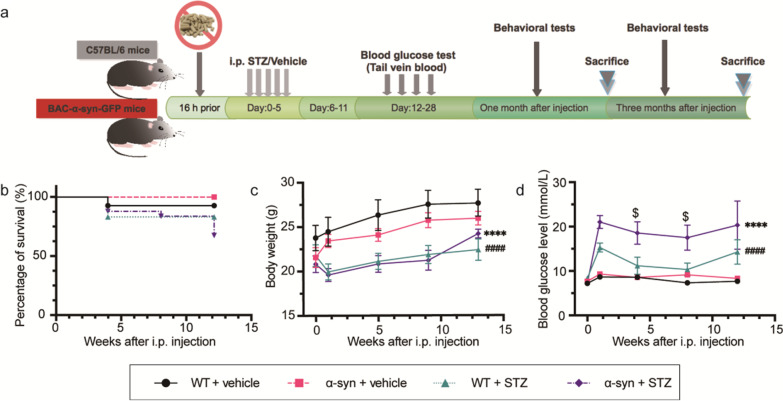
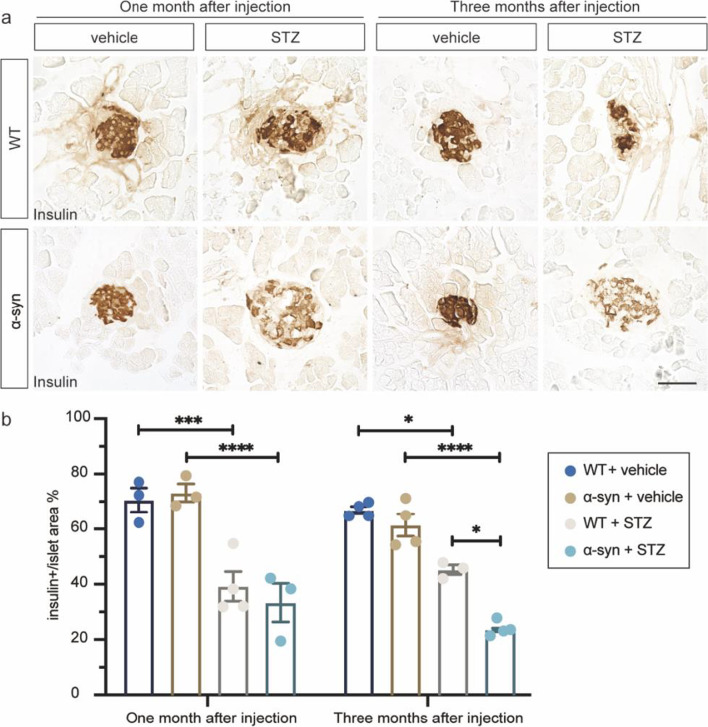
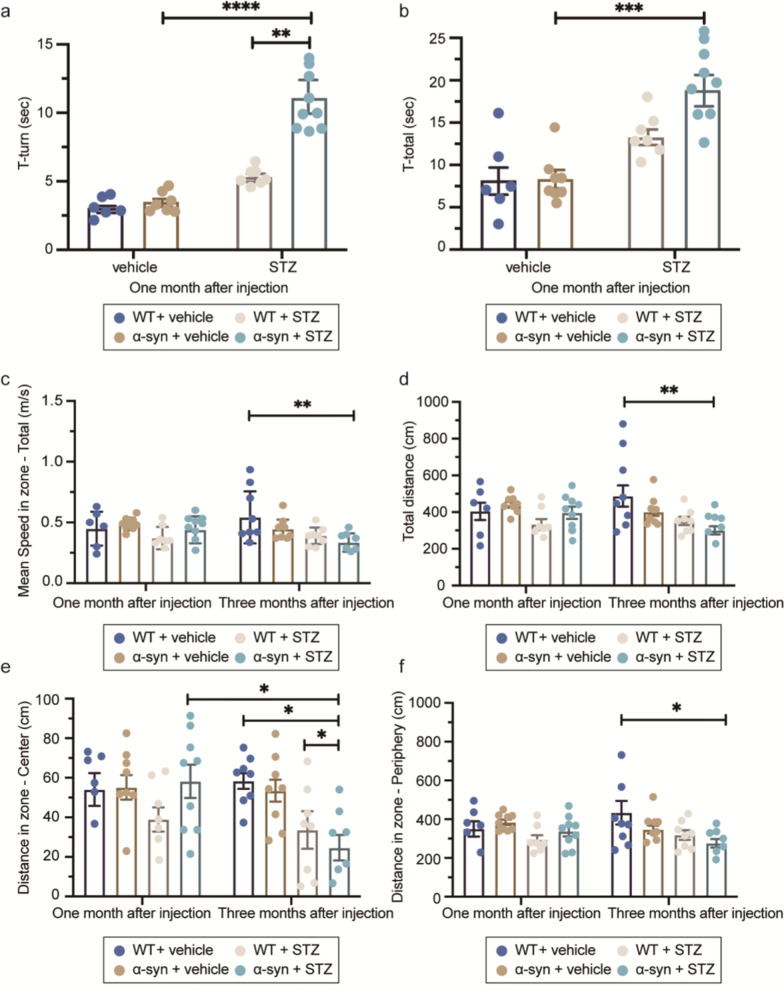
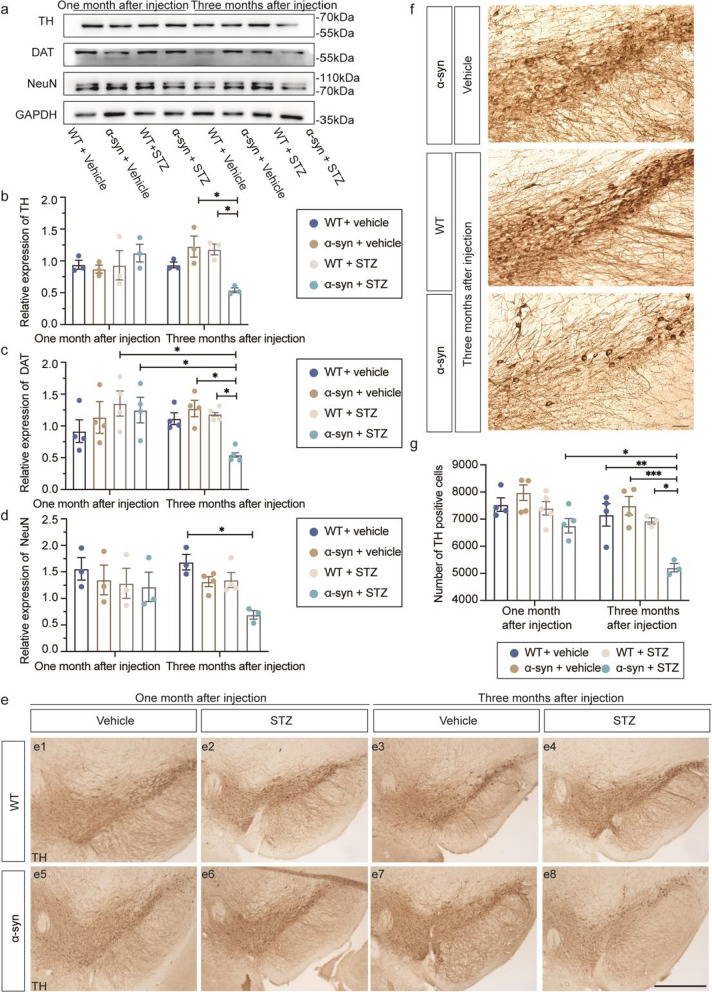
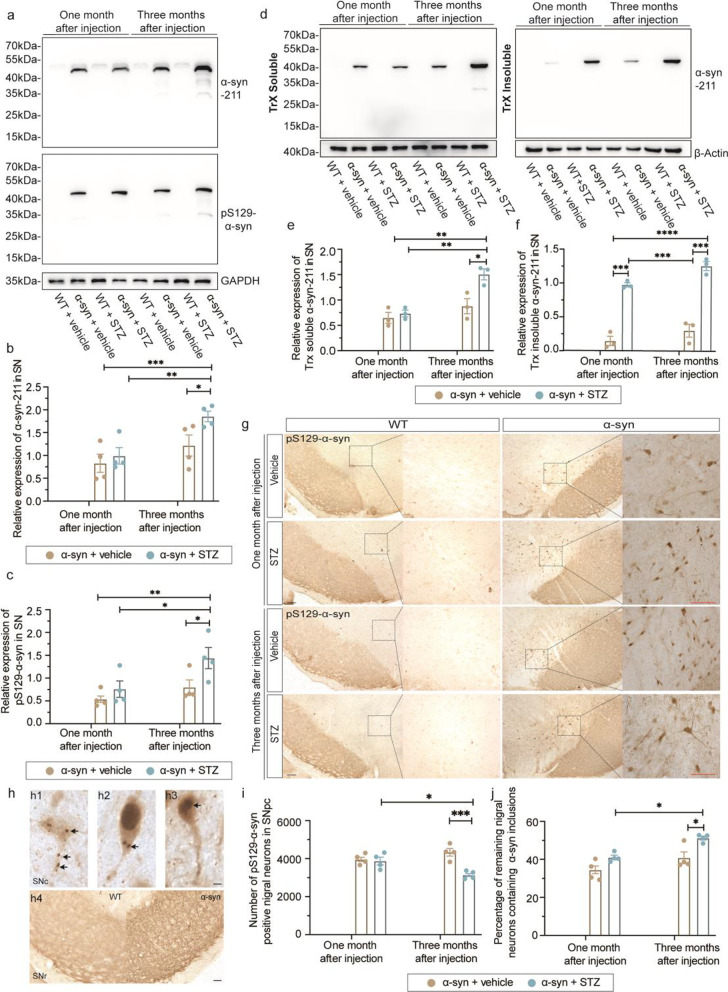
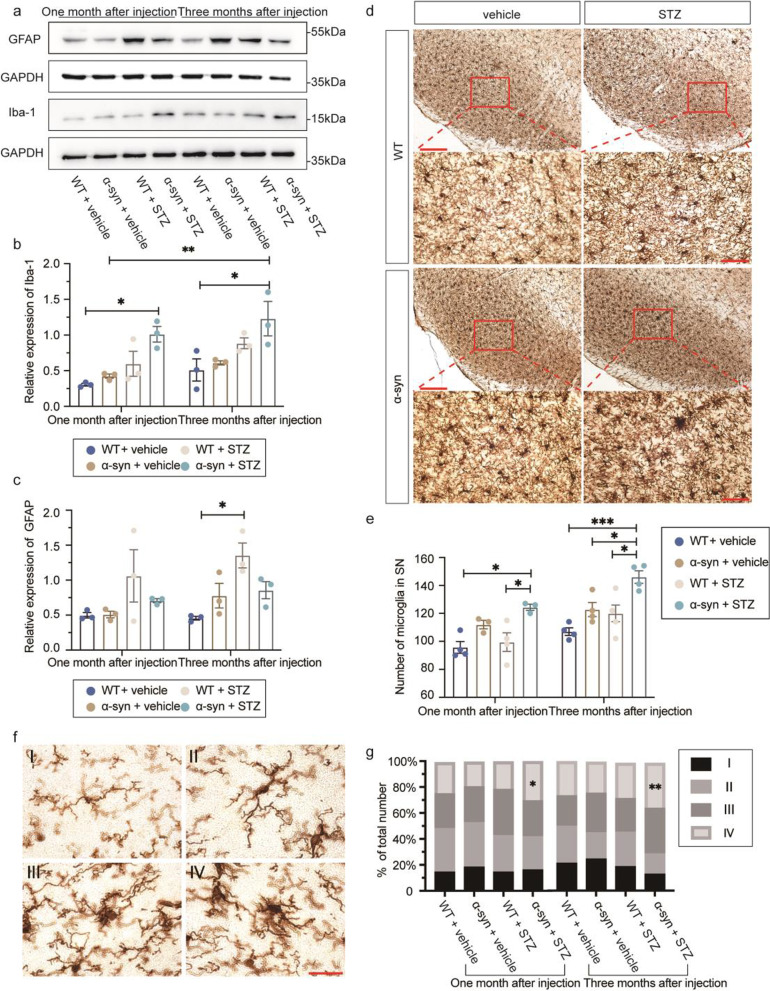
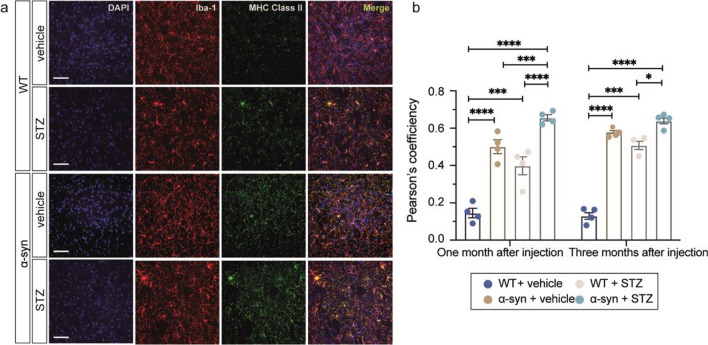
Background: Growing evidence suggests an association between Parkinson’s disease (PD) and diabetes mellitus (DM). At the cellular level, long-term elevated levels of glucose have been shown to lead to nigrostriatal degeneration in PD models. However, the underlying mechanism is still unclear. Previously, we have elucidated the potential of type 2 diabetes mellitus (T2DM) in facilitating PD progression, involving aggregation of both alpha-synuclein (α-syn) and islet amyloid polypeptide in the pancreatic and brain tissues. However, due to the complicated effect of insulin resistance on PD onset, the actual mechanism of hyperglycemia-induced dopaminergic degeneration remains unknown. Methods: We employed the type 1 diabetes mellitus (T1DM) model induced by streptozotocin (STZ) injection in a transgenic mouse line (BAC-α-syn-GFP) overexpressing human α-syn, to investigate the direct effect of elevated blood glucose on nigrostriatal degeneration. Results: STZ treatment induced more severe pathological alterations in the pancreatic islets and T1DM symptoms in α-syn-overexpressing mice than in wild-type mice, at one month and three months after STZ injections. Behavioral tests evaluating motor performance confirmed the nigrostriatal degeneration. Furthermore, there was a marked decrease in dopaminergic profiles and an increase of α-syn accumulation and Serine 129 (S129) phosphorylation in STZ-treated α-syn mice compared with the vehicle-treated mice. In addition, more severe neuroinflammation was observed in the brains of the STZ-treated α-syn mice. Conclusion: Our results solidify the potential link between DM and PD, providing insights into how hyperglycemia induces nigrostriatal degeneration and contributes to pathogenic mechanisms in PD.
Overview
The claims and statistics of this paper haven’t been checked yet.
Free: it reads the open-access text and checks the first 5 claims that cite a source we can check. Create a free account to check every claim.
Integrity signals
Registry
Cites
Statistics
Figures
Verification
Claims the paper makes
The claims and statistics of this paper haven’t been checked yet.
Free: it reads the open-access text and checks the first 5 claims that cite a source we can check. Create a free account to check every claim.
Claims other papers make about this one
Each is checked against this paper’s own text: does it say what the citing paper says it does?
In the citing paper
“Moreover, hyperglycaemia aggravates the phosphorylation and aggregation of α-syn, neuroinflammation and dopaminergic neuronal loss in PD mice.358”
From Antiageing strategy for neurodegenerative diseases: from mechanisms to clinical advances (2025) · cites this paper as [358]
Self-check
Percentages, sums and reported differences re-computed from the paper’s own numbers.
The self-check needs the paper’s full text.
Citations
Cites
Spillantini, M. G., Schmidt, M. L., Lee, V. M.-Y., Trojanowski, J. Q., Jakes, R., & Goedert, M. (1997) · Nature · doi:10.1038/42166 · Cited by 8,382
Poewe, W., Seppi, K., Tanner, C. M., Halliday, G. M., Brundin, P., Volkmann, J., Schrag, A.-E., & Lang, A. E. (2017) · Nature Reviews Disease Primers · doi:10.1038/nrdp.2017.13 · Cited by 5,415
Microglia in neurodegeneration
Hickman, S., Izzy, S., Sen, P., Morsett, L., & El Khoury, J. (2018) · Nature Neuroscience · doi:10.1038/s41593-018-0242-x · Cited by 1,710
Establishment and Dysfunction of the Blood-Brain Barrier
Zhao, Z., Nelson, A. R., Betsholtz, C., & Zlokovic, B. V. (2015) · Cell · doi:10.1016/j.cell.2015.10.067 · Cited by 1,670
Katsarou, A., Gudbjörnsdottir, S., Rawshani, A., Dabelea, D., Bonifacio, E., Anderson, B. J., Jacobsen, L. M., Schatz, D. A., & Lernmark, Å. (2017) · Nature Reviews Disease Primers · doi:10.1038/nrdp.2017.16 · Cited by 1,475
Epidemiology of type 1 diabetes
Maahs, D. M., West, N. A., Lawrence, J. M., & Mayer-Davis, E. J. (2010) · Endocrinology and Metabolism Clinics of North America · doi:10.1016/j.ecl.2010.05.011 · Cited by 1,092 · cited 2×
“Some diabetic patients also exhibit pathologies related to striatal dopaminergic dysfunction [10, 21].”
BackgroundGlycemic Control and Excess Mortality in Type 1 Diabetes
Lind, M., Svensson, A.-M., Kosiborod, M., Gudbjörnsdottir, S., Pivodic, A., Wedel, H., Dahlqvist, S., Clements, M., & Rosengren, A. (2014) · New England Journal of Medicine · doi:10.1056/nejmoa1408214 · Cited by 964
Relationship between Oxidative Stress and Inflammatory Cytokines in Diabetic Nephropathy
Elmarakby, A. A., & Sullivan, J. C. (2012) · Cardiovascular Therapeutics · doi:10.1111/j.1755-5922.2010.00218.x · Cited by 641 · cited 4×
“When a high glucose level is maintained for a long time, enhanced ROS and inflammatory cytokines may interrupt the integrity of the blood–brain barrier (BBB) [30].”
BackgroundInfluentialPathophysiology of type 1 and type 2 diabetes mellitus: a 90-year perspective
Zaccardi, F., Webb, D. R., Yates, T., & Davies, M. J. (2016) · Postgraduate Medical Journal · doi:10.1136/postgradmedj-2015-133281 · Cited by 561
Impact of diabetes on cognitive function and brain structure
Moheet, A., Mangia, S., & Seaquist, E. R. (2015) · Annals of the New York Academy of Sciences · doi:10.1111/nyas.12807 · Cited by 510 · cited 1×
“In a prospective study, patients with T1DM showed a substantial reduction in limb flexibility and spontaneous movements, associated with brain dysfunction [56].”
BackgroundChen, C., Cohrs, C. M., Stertmann, J., Bozsak, R., & Speier, S. (2017) · Molecular Metabolism · doi:10.1016/j.molmet.2017.06.019 · Cited by 489
Glia: Initiators and progressors of pathology in Parkinson's disease
Halliday, G. M., & Stevens, C. H. (2011) · Movement Disorders · doi:10.1002/mds.23455 · Cited by 424 · cited 1×
“Minimized astrogliosis in the SN of PD patients has been repored [60, 61], and researchers have raised the possibility of repressing effects of α-syn aggregates on astroglia [62, 63].”
BackgroundFactors Influencing the Gut Microbiota, Inflammation, and Type 2 Diabetes
Wen, L., & Duffy, A. (2017) · The Journal of Nutrition · doi:10.3945/jn.116.240754 · Cited by 412
Self-citationType 1 diabetes: pathogenesis and prevention
Gillespie, K. M. (2006) · Canadian Medical Association Journal · doi:10.1503/cmaj.060244 · Cited by 387 · cited 1×
“The direct damage of insulin-producing β-cells makes hyperglycemia a main metabolic pathology of T1DM [57].”
BackgroundAthyros, V. G., Doumas, M., Imprialos, K. P., Stavropoulos, K., Georgianou, E., Katsimardou, A., & Karagiannis, A. (2018) · Hormones · doi:10.1007/s42000-018-0014-8 · Cited by 367 · cited 1×
“Diabetic dyslipidemia is often present among patients with T2DM (72%–85%), while patients with T1DM usually do not have such dyslipidemia (< 10%) [51, 52].”
BackgroundAn Overview of Murine High Fat Diet as a Model for Type 2 Diabetes Mellitus
Heydemann, A. (2016) · Journal of Diabetes Research · doi:10.1155/2016/2902351 · Cited by 366 · cited 1×
“Moreover, such aberrations of lipid metabolism can also be observed in T2DM animal models [26, 53].”
BackgroundImpact of Metabolic Syndrome on Neuroinflammation and the Blood–Brain Barrier
Van Dyken, P., & Lacoste, B. (2018) · Frontiers in Neuroscience · doi:10.3389/fnins.2018.00930 · Cited by 359
Attenuating astrocyte activation accelerates plaque pathogenesis in APP/PS1 mice
Kraft, A. W., Hu, X., Yoon, H., Yan, P., Xiao, Q., Wang, Y., Gil, S. C., Brown, J., Wilhelmsson, U., Restivo, J. L., et al. (2013) · The FASEB Journal · doi:10.1096/fj.12-208660 · Cited by 355 · cited 1×
“In the process of neuroinflammation, theoretically the loss of astroglia and the disrupted integrity of astrogliosis could be harmful, as the neuroprotective roles of the cells are no longer present [64].”
BackgroundInsulin resistance and Parkinson’s disease: A new target for disease modification?
Athauda, D., & Foltynie, T. (2016) · Progress in Neurobiology · doi:10.1016/j.pneurobio.2016.10.001 · Cited by 328 · cited 1×
“The elevated risk of developing cognitive abnormalities in individuals with impaired glucose metabolism has been well documented [13, 14].”
BackgroundInsulin, IGF-1 and GLP-1 signaling in neurodegenerative disorders: Targets for disease modification?
Bassil, F., Fernagut, P.-O., Bezard, E., & Meissner, W. G. (2014) · Progress in Neurobiology · doi:10.1016/j.pneurobio.2014.02.005 · Cited by 309
Parkinson's disease, insulin resistance and novel agents of neuroprotection
Aviles-Olmos, I., Limousin, P., Lees, A., & Foltynie, T. (2013) · Brain · doi:10.1093/brain/aws009 · Cited by 283 · cited 1×
“Indeed, T2DM has a much higher incidence than T1DM and it has similarities with PD in aspects of chronic disease progression and dominant ratio in the elderly [10, 48].”
BackgroundSanchez-Guajardo, V., Febbraro, F., Kirik, D., & Romero-Ramos, M. (2010) · PLoS ONE · doi:10.1371/journal.pone.0008784 · Cited by 256 · cited 2×
“The activation of microglia was classified into four stages, including (I) microglia that present small round cell bodies with long thin processes, (II) microglia that have a dense soma and processes remaining thin but longer, (III) microglia that appear in an enlarged and irregular shape, with processes becoming thic…”
BackgroundMethodAssociation between diabetes and subsequent Parkinson disease: A record-linkage cohort study
De Pablo-Fernandez, E., Goldacre, R., Pakpoor, J., Noyce, A. J., & Warner, T. T. (2018) · Neurology · doi:10.1212/wnl.0000000000005771 · Cited by 242
Song, Y. J. C., Halliday, G. M., Holton, J. L., Lashley, T., O'Sullivan, S. S., McCann, H., Lees, A. J., Ozawa, T., Williams, D. R., Lockhart, P. J., et al. (2009) · Journal of Neuropathology & Experimental Neurology · doi:10.1097/nen.0b013e3181b66f1b · Cited by 241 · cited 1×
“Minimized astrogliosis in the SN of PD patients has been repored [60, 61], and researchers have raised the possibility of repressing effects of α-syn aggregates on astroglia [62, 63].”
BackgroundGlia and alpha-synuclein in neurodegeneration: A complex interaction
Brück, D., Wenning, G. K., Stefanova, N., & Fellner, L. (2016) · Neurobiology of Disease · doi:10.1016/j.nbd.2015.03.003 · Cited by 202 · cited 1×
“Minimized astrogliosis in the SN of PD patients has been repored [60, 61], and researchers have raised the possibility of repressing effects of α-syn aggregates on astroglia [62, 63].”
BackgroundShared links between type 2 diabetes mellitus and Alzheimer's disease: A review
Mittal, K., & Katare, D. P. (2016) · Diabetes & Metabolic Syndrome Clinical Research & Reviews · doi:10.1016/j.dsx.2016.01.021 · Cited by 181 · cited 1×
“The elevated risk of developing cognitive abnormalities in individuals with impaired glucose metabolism has been well documented [13, 14].”
BackgroundUpdate on Diabetes Classification
Thomas, C. C., & Philipson, L. H. (2015) · Medical Clinics of North America · doi:10.1016/j.mcna.2014.08.015 · Cited by 180 · cited 1×
“DM, characterized by impaired glucose metabolism and subsequent hyperglycemia [6], can be divided into type 1 diabetes mellitus (T1DM) with insufficient insulin secretion due to progressive destruction of pancreatic β cells and type 2 diabetes mellitus (T2DM) with the lack of appropriate insulin response [7–11].”
BackgroundWang, J., Li, G., Wang, Z., Zhang, X., Yao, L., Wang, F., Liu, S., Yin, J., Ling, E., Wang, L., et al. (2011) · Neuroscience · doi:10.1016/j.neuroscience.2011.11.062 · Cited by 166 · cited 1×
“In T1DM, how does hyperglycemia cause neuroinflammation? High blood glucose levels can saturate mitochondrial respiration in endothelial cells, astrocytes and pericytes, which in turn promotes reactive oxygen species (ROS) production and oxidative stress [65, 66].”
BackgroundObesity, diabetes, and risk of Parkinson's disease
Palacios, N., Gao, X., McCullough, M. L., Jacobs, E. J., Patel, A. V., Mayo, T., Schwarzschild, M. A., & Ascherio, A. (2011) · Movement Disorders · doi:10.1002/mds.23855 · Cited by 164
Dementia is associated with Insulin Resistance in patients with Parkinson's Disease
Bosco, D., Plastino, M., Cristiano, D., Colica, C., Ermio, C., De Bartolo, M., Mungari, P., Fonte, G., Consoli, D., Consoli, A., et al. (2012) · Journal of the Neurological Sciences · doi:10.1016/j.jns.2011.12.008 · Cited by 161 · cited 1×
“Some diabetic patients also exhibit pathologies related to striatal dopaminergic dysfunction [10, 21].”
BackgroundMiyake, Y., Tanaka, K., Fukushima, W., Sasaki, S., Kiyohara, C., Tsuboi, Y., Yamada, T., Oeda, T., Miki, T., Kawamura, N., et al. (2010) · Journal of the Neurological Sciences · doi:10.1016/j.jns.2010.03.002 · Cited by 158
Increased risk of Parkinson disease with diabetes mellitus in a population-based study
Yang, Y.-W., Hsieh, T.-F., Li, C.-I., Liu, C.-S., Lin, W.-Y., Chiang, J.-H., Li, T.-C., & Lin, C.-C. (2017) · Medicine · doi:10.1097/md.0000000000005921 · Cited by 155
Baquet, Z. C., Williams, D., Brody, J., & Smeyne, R. J. (2009) · Neuroscience · doi:10.1016/j.neuroscience.2009.04.031 · Cited by 149 · cited 2×
“The virtual outlines of the right and left SN were drawn in a manner consistent with the description in a previous article [39].”
MethodCognitive Dysfunction in Type 1 Diabetes Mellitus
Shalimova, A., Graff, B., Gąsecki, D., Wolf, J., Sabisz, A., Szurowska, E., Jodzio, K., & Narkiewicz, K. (2019) · The Journal of Clinical Endocrinology & Metabolism · doi:10.1210/jc.2018-01315 · Cited by 148
Increase in the Incidence of Diabetes and Its Implications
Ingelfinger, J. R., & Jarcho, J. A. (2017) · New England Journal of Medicine · doi:10.1056/nejme1616575 · Cited by 143 · cited 1×
“First, epidemiologically, DM is present as a risk factor for PD [5, 12].”
BackgroundDe Lella Ezcurra, A. L., Chertoff, M., Ferrari, C., Graciarena, M., & Pitossi, F. (2010) · Neurobiology of Disease · doi:10.1016/j.nbd.2009.11.018 · Cited by 140 · cited 1×
“Neuroinflammation has been commonly recognized as a crucial feature of PD pathogenesis [68].”
BackgroundAnimal Models for Parkinson’s Disease Research: Trends in the 2000s
Kin, K., Yasuhara, T., Kameda, M., & Date, I. (2019) · International Journal of Molecular Sciences · doi:10.3390/ijms20215402 · Cited by 137 · cited 1×
“The etiology of PD is not yet clear, with most of the cases being sporadic, associated with multiple environmental risk factors [4].”
BackgroundDiabetes is associated with postural instability and gait difficulty in Parkinson disease
Kotagal, V., Albin, R. L., Müller, M. L. T. M., Koeppe, R. A., Frey, K. A., & Bohnen, N. I. (2013) · Parkinsonism & Related Disorders · doi:10.1016/j.parkreldis.2013.01.016 · Cited by 128 · cited 1×
“of hyperglycemia on the progression of PD Despite a few discrepancies, a number of published papers have suggested the association between DM and PD [16, 19, 47], and a majority of these studies focus on the relationship between T2DM and PD.”
BackgroundBonnevie-Nielsen, V., Steffes, M. W., & Lernmark, Å. (1981) · Diabetes · doi:10.2337/diab.30.5.424 · Cited by 126 · cited 1×
“The pathological alterations in the pancreases suggest that the STZtreated mice exhibited features reminiscent of T1DM [42], and more importantly, α-syn exacerbated the loss of islet β-cells.”
BackgroundWang, X., Zhai, Y., Xu, L., Qiao, C., Sun, X., Ding, J., Lu, M., & Hu, G. (2013) · Experimental Neurology · doi:10.1016/j.expneurol.2013.11.001 · Cited by 123 · cited 1×
“Previous studies have shown that T2DM triggers α-syn accumulation, aggregation and phosphorylation in pancreatic β cells and the brain [22, 24, 26].”
BackgroundWakabayashi, T., Yamaguchi, K., Matsui, K., Sano, T., Kubota, T., Hashimoto, T., Mano, A., Yamada, K., Matsuo, Y., Kubota, N., et al. (2019) · Molecular Neurodegeneration · doi:10.1186/s13024-019-0315-7 · Cited by 114 · cited 1×
“However, considering the influence of insulin resistance in amyloid protein aggregation [27], the mechanisms of hyperglycemia-induced neurodegeneration remain obscure.”
BackgroundLow levels of astroglial markers in Parkinson’s disease: relationship to α-synuclein accumulation
Tong, J., Ang, L.-C., Williams, B., Furukawa, Y., Fitzmaurice, P., Guttman, M., Boileau, I., Hornykiewicz, O., & Kish, S. J. (2015) · Neurobiology of Disease · doi:10.1016/j.nbd.2015.06.010 · Cited by 108 · cited 1×
“In fact, the activation of astroglia and its effect have long been debated in α-syn-related diseases [59].”
BackgroundInsulin resistance and exendin-4 treatment for multiple system atrophy
Bassil, F., Canron, M.-H., Vital, A., Bezard, E., Li, Y., Greig, N. H., Gulyani, S., Kapogiannis, D., Fernagut, P.-O., & Meissner, W. G. (2017) · Brain · doi:10.1093/brain/awx044 · Cited by 107
α-Synuclein binds the KATP channel at insulin-secretory granules and inhibits insulin secretion
Geng, X., Lou, H., Wang, J., Li, L., Swanson, A., Sun, M., Beers-Stolz, D., Watkins, S. C., Perez, R. G., & Drain, P. F. (2010) · American Journal of Physiology-Endocrinology and Metabolism · doi:10.1152/ajpendo.00262.2010 · Cited by 105 · cited 1×
“The expression of α-syn in the pancreatic tissue can be localized on insulin-secreting granules, where overexpression of α-syn inhibits insulin secretion [45].”
BackgroundGao, S., Duan, C., Gao, G., Wang, X., & Yang, H. (2015) · The International Journal of Biochemistry & Cell Biology · doi:10.1016/j.biocel.2015.03.006 · Cited by 105 · cited 1×
“Impaired insulin signaling in T2DM causes neuronal insulin resistance in patients, which promotes α-syn accumulation [20, 69].”
BackgroundDiabetes Causes Dysfunctional Dopamine Neurotransmission Favoring Nigrostriatal Degeneration in Mice
Pérez‐Taboada, I., Alberquilla, S., Martín, E. D., Anand, R., Vietti‐Michelina, S., Tebeka, N. N., Cantley, J., Cragg, S. J., Moratalla, R., & Vallejo, M. (2020) · Movement Disorders · doi:10.1002/mds.28124 · Cited by 99 · cited 3×
“In animal models, both mice treated with high-fat diets and leptin receptor homozygous deficient (db/db) mice exhibit increased vulnerability to nigrostriatal neurodegeneration [47], again indicating the relationship between T2DM and PD.”
BackgroundBrain glucose sensing: a subtle mechanism
Pénicaud, L., Leloup, C., Fioramonti, X., Lorsignol, A., & Bénani, A. (2006) · Current Opinion in Clinical Nutrition & Metabolic Care · doi:10.1097/01.mco.0000232908.84483.e0 · Cited by 96 · cited 1×
“The hyperglycemia-induced brain function deficits are an immediate result from the increased glucose levels [58].”
BackgroundThundyil, J., & Lim, K. (2014) · Ageing Research Reviews · doi:10.1016/j.arr.2014.11.003 · Cited by 93 · cited 1×
“Elevated glucose levels can mediate oxidative stress and peripheral inflammation [29–31], which may subsequently induce diffusion of cytokines into the brain [32, 33], and therefore activate microglia and contribute to the onset of PD [20, 34].”
BackgroundPeripheral inflammation exacerbates α‐synuclein toxicity and neuropathology in Parkinson's models
La Vitola, P., Balducci, C., Baroni, M., Artioli, L., Santamaria, G., Castiglioni, M., Cerovic, M., Colombo, L., Caldinelli, L., Pollegioni, L., et al. (2021) · Neuropathology and Applied Neurobiology · doi:10.1111/nan.12644 · Cited by 88 · cited 1×
“Minimized astrogliosis in the SN of PD patients has been repored [60, 61], and researchers have raised the possibility of repressing effects of α-syn aggregates on astroglia [62, 63].”
BackgroundInteraction of amyloidogenic proteins in pancreatic β cells from subjects with synucleinopathies
Martínez-Valbuena, I., Amat, I., Valenti‐Azcarate, R., Carmona‐Abellán, M., Marcilla, I., Tuñon, M.-T., & Luquín, M. R. (2018) · Acta Neuropathologica · doi:10.1007/s00401-018-1832-0 · Cited by 86 · cited 3×
“Previous studies have shown that T2DM triggers α-syn accumulation, aggregation and phosphorylation in pancreatic β cells and the brain [22, 24, 26].”
BackgroundDiabetes preceding Parkinson's disease onset. A case–control study
D’Amelio, M., Ragonese, P., Callari, G., Benedetto, N. D., Palmeri, B., Terruso, V., Salemi, G., Famoso, G., Aridon, P., & Savettieri, G. (2009) · Parkinsonism & Related Disorders · doi:10.1016/j.parkreldis.2009.02.013 · Cited by 76 · cited 1×
“of hyperglycemia on the progression of PD Despite a few discrepancies, a number of published papers have suggested the association between DM and PD [16, 19, 47], and a majority of these studies focus on the relationship between T2DM and PD.”
BackgroundBulut, T., Demirel, F., & Metìn, A. (2016) · Journal of Pediatric Endocrinology and Metabolism · doi:10.1515/jpem-2016-0111 · Cited by 76 · cited 1×
“Diabetic dyslipidemia is often present among patients with T2DM (72%–85%), while patients with T1DM usually do not have such dyslipidemia (< 10%) [51, 52].”
BackgroundDiabetes Mellitus as a Risk Factor for Parkinson’s Disease: a Molecular Point of View
Biosa, A., Outeiro, T. F., Bubacco, L., & Bisaglia, M. (2018) · Molecular Neurobiology · doi:10.1007/s12035-018-1025-9 · Cited by 76 · cited 2×
“Recent studies have revealed a potential relationship between PD and metabolic diseases, such as diabetes mellitus (DM) [5].”
BackgroundRole of Mitochondrial Stress Protein HSP60 in Diabetes-Induced Neuroinflammation
Liyanagamage, D. S. N. K., & Martinus, R. D. (2020) · Mediators of Inflammation · doi:10.1155/2020/8073516 · Cited by 72 · cited 1×
“In T1DM, how does hyperglycemia cause neuroinflammation? High blood glucose levels can saturate mitochondrial respiration in endothelial cells, astrocytes and pericytes, which in turn promotes reactive oxygen species (ROS) production and oxidative stress [65, 66].”
BackgroundHansen, C., Björklund, T., Petit, G. H., Lundblad, M., Murmu, R. P., Brundin, P., & Li, J.-Y. (2013) · Neurobiology of Disease · doi:10.1016/j.nbd.2013.04.017 · Cited by 70
Self-citationRenaud, J., Bassareo, V., Beaulieu, J., Pinna, A., Schlich, M., Lavoie, C., Murtas, D., Simola, N., & Martinoli, M. (2018) · Neurobiology of Aging · doi:10.1016/j.neurobiolaging.2018.05.010 · Cited by 61 · cited 1×
“Although studies focusing on the effect of hyperglycemia caused by T1DM on neurodegenerative diseases are very limited [47, 54], cognitive impairments and structural alterations in the brain are common in adults with T1DM [55], suggesting a close relationship between T1DM and neurodegeneration.”
BackgroundInflammation: major denominator of obesity, Type 2 diabetes and Alzheimer’s disease-like pathology?
Kacířová, M., Zmeškalová, A., Kořínková, L., Železná, B., Kuneš, J., & Maletínská, L. (2020) · Clinical Science · doi:10.1042/cs20191313 · Cited by 53
Neuroprotective Effect of Echinacoside in Subacute Mouse Model of Parkinson’s Disease
Liang, Y., Chen, C., Xia, B., Wu, W., Tang, J., Chen, Q., Tang, L., Yang, H., Zhang, Z., Lu, Y., et al. (2019) · BioMed Research International · doi:10.1155/2019/4379639 · Cited by 50 · cited 1×
“Behavioral tests Pole test was used to assess the motor coordination and balance of mice, and open field test (OFT) was used to assess the spontaneous activity of mice, as previously described [37, 38].”
MethodPrevention of High- and Low-Dose STZ-Induced Diabetes With D-Glucose and 5-Thio-D-Glucose
Wang, Z., Dohle, C., Friemann, J., Green, B. S., & Gleichmann, H. (1993) · Diabetes · doi:10.2337/diab.42.3.420 · Cited by 46 · cited 1×
“) injected daily for 5 consecutive days [36].”
BackgroundChen, Q.-Q., Haikal, C., Li, W., Li, M.-T., Wang, Z.-Y., & Li, J.-Y. (2018) · Translational Neurodegeneration · doi:10.1186/s40035-018-0118-8 · Cited by 42 · cited 1×
“Co-localization between the major histocompatibility complex Class II (MHC class II) and ionized calcium binding adapter molecule 1 (Iba-1) in the striatum was quantified using the Pearson’s Correction with the Fiji plugin Coloc 2 [41].”
MethodSelf-citationGou, D.-H., Huang, T., Li, W., Gao, X.-D., Haikal, C., Wang, X.-H., Song, D., Liang, X., Zhu, L., Tang, Y. C., et al. (2020) · Redox Biology · doi:10.1016/j.redox.2020.101795 · Cited by 41 · cited 1×
“Behavioral tests Pole test was used to assess the motor coordination and balance of mice, and open field test (OFT) was used to assess the spontaneous activity of mice, as previously described [37, 38].”
MethodSelf-citationSong, I., Roels, S., Martens, G. A., & Bouwens, L. (2017) · PLoS ONE · doi:10.1371/journal.pone.0186480 · Cited by 39 · cited 1×
“There is evidence that the effects of an eight-day treatment with STZ in rodents can be corrected with drug treatments to a non-diabetic status [43, 44].”
BackgroundZhao, Y., & Yang, G. (2021) · Neurochemistry International · doi:10.1016/j.neuint.2021.104974 · Cited by 39 · cited 1×
“major neuropathological hallmarks of PD [2, 3].”
Daems, C., Welsch, S., Boughaleb, H., Vanderroost, J., Robert, A. R., Sokal, E. M., & Lysy, P. A. (2019) · Journal of Diabetes Research · doi:10.1155/2019/2813489 · Cited by 38
Parkinson-like phenotype in insulin-resistant PED/PEA-15 transgenic mice
Perruolo, G., Viggiano, D., Fiory, F., Cassese, A., Nigro, C., Liotti, A., Miele, C., Bèguinot, F., & Formisano, P. (2016) · Scientific Reports · doi:10.1038/srep29967 · Cited by 34
Sun, Y., Guo, C., Yuan, L., Li, W., Wang, Z., Yue, F., & Li, J. (2020) · Frontiers in Neuroscience · doi:10.3389/fnins.2020.00063 · Cited by 30 · cited 4×
“Moreover, such aberrations of lipid metabolism can also be observed in T2DM animal models [26, 53].”
BackgroundSelf-citationα-Synuclein Regulates Peripheral Insulin Secretion and Glucose Transport
Wijesekara, N., Ahrens, R., Wu, L., Langman, T., Tandon, A., & Fraser, P. E. (2021) · Frontiers in Aging Neuroscience · doi:10.3389/fnagi.2021.665348 · Cited by 24 · cited 1×
“Mice with α-syn pathology in the pancreas develop reduced glucose-stimulated insulin secretion and insulin resistance at the same time [46].”
BackgroundNayak, S. B., Soon, S. Q., Kunjal, R., Ramadoo, R., Baptiste, O., Persad, J., Temull, V., Diptee, L., & Balgobin, S. (2009) · Archives of Physiology and Biochemistry · doi:10.1080/13813450902758785 · Cited by 18 · cited 1×
“Elevated glucose levels can mediate oxidative stress and peripheral inflammation [29–31], which may subsequently induce diffusion of cytokines into the brain [32, 33], and therefore activate microglia and contribute to the onset of PD [20, 34].”
BackgroundPoucheret, P., Gross, R., Cadène, A., Mantéguetti, M., Serrano, J., Ribes, G., & Cros, G. H. (1995) · Springer eBooks · doi:10.1007/978-1-4613-1251-2_26 · Cited by 12
Poucheret, P., Gross, R., Cad�ne, A., Mant�guetti, M., Serrano, J., Ribes, G., & Cros, G. (1995) · Molecular and Cellular Biochemistry · doi:10.1007/bf01075938 · Cited by 10 · cited 1×
“There is evidence that the effects of an eight-day treatment with STZ in rodents can be corrected with drug treatments to a non-diabetic status [43, 44].”
Background
Cited by
Antiageing strategy for neurodegenerative diseases: from mechanisms to clinical advances
Jiang, Q., Liu, J., Huang, S., Wang, X.-Y., Chen, X., Liu, G.-H., Ye, K., Song, W., Masters, C. L., Wang, J., et al. (2025) · Signal Transduction and Targeted Therapy · doi:10.1038/s41392-025-02145-7 · Cited by 165
Glucose Metabolism Impairment in Parkinson's Disease.
Dai, C., Tan, C.-H., Zhao, L., Liang, Y., Liu, G., Liu, H., Zhong, Y.-K., Liu, Z., Mo, L.-J., Liu, X., et al. (2023) · Brain Research Bulletin · doi:10.1016/j.brainresbull.2023.110672 · Cited by 82
Alrouji, M., Al-Kuraishy, H. M., Al-Gareeb, A. I., Alexiou, A. T., Papadakis, M., Jabir, M. S., Saad, H. M., & Batiha, G. E. (2023) · Journal of Cellular and Molecular Medicine · doi:10.1111/jcmm.17784 · Cited by 90
Role of glucagon-like peptide-1 receptor agonists in Alzheimer’s disease and Parkinson’s disease
Hong, C.-T., Chen, J.-H., & Hu, C.-J. (2024) · Journal of Biomedical Science · doi:10.1186/s12929-024-01090-x · Cited by 78
Ruiz-Pozo, V. A., Tamayo-Trujillo, R., Cadena-Ullauri, S., Frias-Toral, E., Guevara-Ramírez, P., Paz-Cruz, E., Chapela, S., Montalván, M., Morales-López, T., Simancas-Racines, D., et al. (2023) · Nutrients · doi:10.3390/nu15163585 · Cited by 63
“Hence, individuals with T2DM may have a higher risk of developing PD or worsening its symptoms [29,42].”
BackgroundInfluential
Metadata
- Authors
- Lv, Y.-Q., Yuan, L., Sun, Y., Dou, H.-W., Su, J.-H., Hou, Z.-P., Li, J.-Y., & Li, W.
- Affiliations
- China Medical University (CN)
- Lund University (SE)
- Corresponding author
- Li, Wen
- Venue
- Translational Neurodegeneration
- Published
- 2022-03-07
- Volume
- 11
- Issue
- 1
- Pages
- 14-14
- ISSN
- 2047-9158 (ISSN-L)
- PMC
- PMC8900445
- OpenAlex
- W4220880286
- Cited by
- 82
- References
- 70
- Citations by year
- 2026: 14 · 2025: 24 · 2024: 31 · 2023: 8 · 2022: 5
- FWCI
- 9.08
- Type
- journal article
- Language
- en
- Open access
- gold
- doi.org
- Licence
- cc-by
- creativecommons.org/licenses/by/4.0 (tdm)
- creativecommons.org/licenses/by/4.0 (vor)
- Locations
- Translational Neurodegeneration (publishedVersion, cc-by)
- PubMed Central (publishedVersion, cc-by)
- PubMed (publishedVersion)
- DOAJ (DOAJ: Directory of Open Access Journals) (submittedVersion, cc-by-sa)
- Lund University Publications (Lund University) (submittedVersion)
- Funders
- National Natural Science Foundation of China (81430025, 31800898, U1801681)
- Key Field Research Development Program of Guangdong Province (2018B030337001)
- The Swedish Research Council (2019-01551)
- EU-JPND research (αSynProtec, REfrAME)
- EU-Horizon2020 (MSCA-ITN-2016)
- ParkinsonFonden, the Strategic Research Area Multipark (Multidisciplinary research in Parkinson’s disease at Lund University)
- Svenska Sällskapet för Medicinsk Forskning (SSMF, P18-0194)
- Hjärnfodens (PS2018-0062)
- Topics
- Health Sciences › Medicine › Clinical Neurology › Parkinson's Disease Mechanisms and Treatments
- Life Sciences › Biochemistry, Genetics and Molecular Biology › Molecular Biology › Nuclear Receptors and Signaling
- Life Sciences › Neuroscience › Neurology › Neuroinflammation and Neurodegeneration Mechanisms
- Keywords
- Parkinson's disease, hyperglycemia, type 1 diabetes, streptozotocin-induced diabetes, alpha-synuclein aggregation, dopaminergic neuron loss, nigrostriatal degeneration, neuroinflammation
- MeSH terms
- Animals, Diabetes Mellitus, Type 1, Diabetes Mellitus, Type 2, Disease Models, Animal, Dopamine, Hyperglycemia, Mice, Transgenic, Parkinson Disease, Mice, alpha-Synuclein
About these checks
Registry, retraction, Cites and statistics results are computed, not judged, with one exception: a printed reference that no index lists is read once by a model before it counts as a citation error. Claims are extracted by a model and kept only when their quote appears verbatim in the text; each cited source is then checked, with a model’s help, for whether it says what the claim relies on. Those verdicts can be wrong — read the claim’s quote and the cited source before relying on one.
Statistics and arithmetic are recomputed, not judged.
Confidence bands are shown only for fields calibrated on our annotated test set. None is calibrated yet, so no band is shown.
What counts as a claim ›How we measure confidence ›How we check this ›
Are you an author, or do you see a problem with this page? Request a review
Data sources
Bibliographic data: Semantic Scholar, OpenAlex, Crossref.
Contains information from the Semantic Scholar Academic Graph Datasets, made available under the ODC Attribution License (ODC-BY 1.0).
Semantic Scholar’s data is described in: Kinney, R., et al. (2023). The Semantic Scholar Open Data Platform. arXiv:2301.10140.
