

Advances in the development of new biomarkers for Alzheimer’s disease
Open accessThe DOI matches its Crossref record; 238 of the 238 references it cites were found in a registry or an index.
Abstract
Alzheimer's disease (AD) is a complex, heterogeneous, progressive disease and is the most common type of neurodegenerative dementia. The prevalence of AD is expected to increase as the population ages, placing an additional burden on national healthcare systems. There is a large need for new diagnostic tests that can detect AD at an early stage with high specificity at relatively low cost. The development of modern analytical diagnostic tools has made it possible to determine several biomarkers of AD with high specificity, including pathogenic proteins, markers of synaptic dysfunction, and markers of inflammation in the blood. There is a considerable potential in using microRNA (miRNA) as markers of AD, and diagnostic studies based on miRNA panels suggest that AD could potentially be determined with high accuracy for individual patients. Studies of the retina with improved methods of visualization of the fundus are also showing promising results for the potential diagnosis of the disease. This review focuses on the recent developments of blood, plasma, and ocular biomarkers for the diagnosis of AD.
Overview
The claims and statistics of this paper haven’t been checked yet.
Free: it reads the open-access text and checks the first 5 claims that cite a source we can check. Create a free account to check every claim.
Integrity signals
Registry
Cites
Statistics
Figures
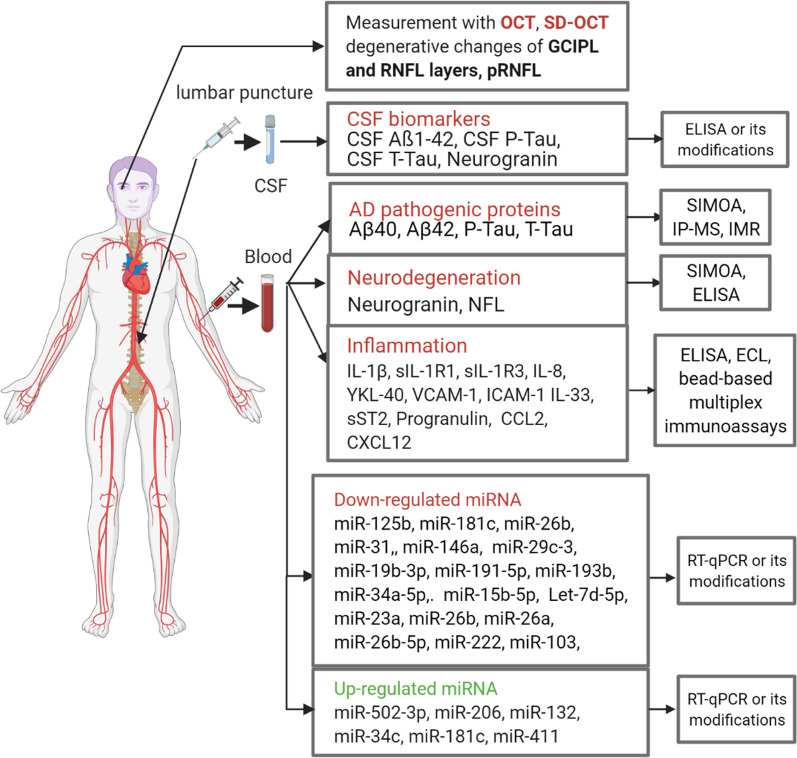
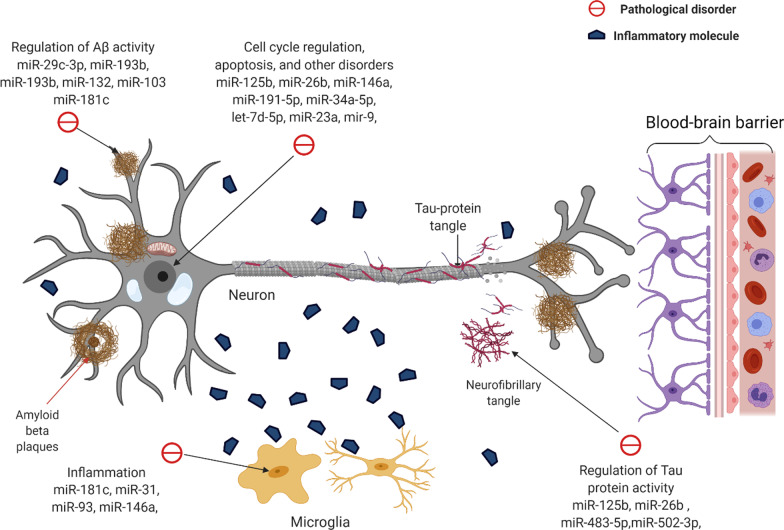
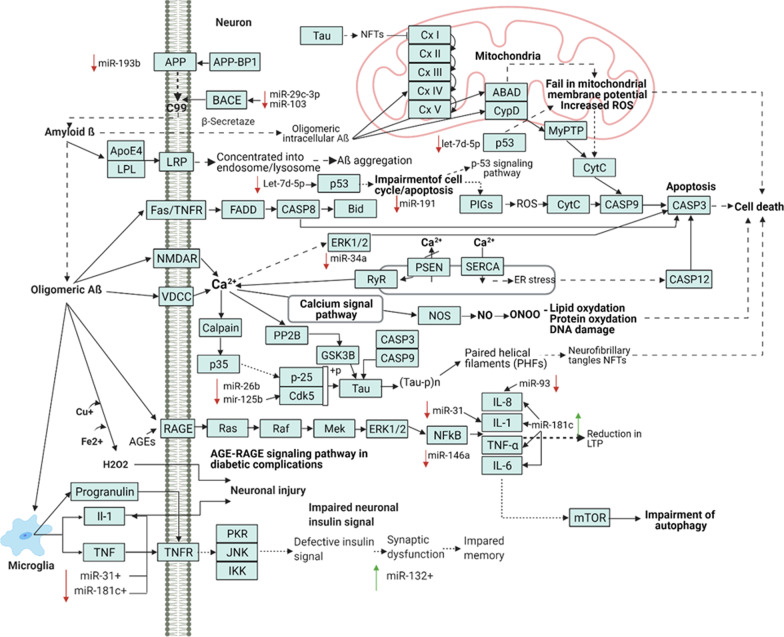
Verification
Claims the paper makes
The claims and statistics of this paper haven’t been checked yet.
Free: it reads the open-access text and checks the first 5 claims that cite a source we can check. Create a free account to check every claim.
Claims other papers make about this one
Each is checked against this paper’s own text: does it say what the citing paper says it does?
The source backs part of the claim, not all of it — or backs it for a different population, condition or comparison.
In the citing paper
“Many CSF biomarkers (like Aβ, P-tau, NfL, GFAP) also show promising applications in blood, with advancements in highly sensitive analytical platforms and detection techniques enhancing diagnostic precision and reliability.368,388,389”
From Recent advances in Alzheimer's disease: Mechanisms, clinical trials and new drug development strategies. (2024) · cites this paper as [368]
Experimental — accuracy not yet measuredThe cited source says what the claim attributes to it.
In the citing paper
“Studies have reported that amyloid PET exhibits 90% sensitivity and specificity in diagnosing AD, and tau PET can specifically identify AD dementia from other neurodegenerative diseases, showing higher diagnostic accuracy than MRI markers.368”
From Recent advances in Alzheimer's disease: Mechanisms, clinical trials and new drug development strategies. (2024) · cites this paper as [368]
The cited source says what the claim attributes to it.
In the citing paper
“Peripheral biomarkers are increasingly recognized as valuable for detecting early brain changes in MCI and AD, supporting diagnostic and therapeutic strategies at preclinical stages. 13”
From Plasma extracellular vesicles from APOE3 Christchurch carriers display a protective phenotype in early stages of autosomal dominant Alzheimer's disease (2026) · cites this paper as [13]
Self-check
Percentages, sums and reported differences re-computed from the paper’s own numbers.
The self-check needs the paper’s full text.
Citations
Cites
Items 201–238 of 238
Regulation of Neuronal Cell Cycle and Apoptosis by MicroRNA 34a
Modi, P. K., Jaiswal, S., & Sharma, P. (2016) · Molecular and Cellular Biology · doi:10.1128/mcb.00589-15 · Cited by 69
Uchida, A., Pillai, J. A., Bermel, R. A., Bonner‐Jackson, A., Rae-Grant, A. D., Fernandez, H. H., Bena, J., Jones, S. E., Leverenz, J. B., Srivastava, S. K., et al. (2018) · Investigative Ophthalmology & Visual Science · doi:10.1167/iovs.17-23240 · Cited by 69
Sánchez, D., Castilla-Marti, M., Rodríguez‐Gómez, O., Valero, S., Piferrer, A., Martínez, G., Martínez, J., Serra, J., Moreno–Grau, S., Hernández‐Olasagarre, B., et al. (2018) · Scientific Reports · doi:10.1038/s41598-018-34577-3 · Cited by 69
Jaeger, A., Zollinger, L. P., Saely, C. H., Muendlein, A., Evangelakos, I., Nasias, D., Charizopoulou, N., Schofield, J. D., Othman, A., Soran, H., et al. (2018) · Scientific Reports · doi:10.1038/s41598-018-32274-9 · Cited by 66
Ageing, A. T. A. I. B. A. L. F. S. O., Wu, H. Z. Y., Thalamuthu, A., Cheng, L., Fowler, C., Masters, C. L., Sachdev, P., & Mather, K. A. (2020) · Alzheimer's Research & Therapy · doi:10.1186/s13195-020-00627-0 · Cited by 65
Retinal layer thickness in preclinical Alzheimer's disease
van de Kreeke, J. A., Nguyen, H., den Haan, J., Konijnenberg, E., Tomassen, J., den Braber, A., ten Kate, M., Collij, L. E., Yaqub, M. M., van Berckel, B. N. M., et al. (2019) · Acta Ophthalmologica · doi:10.1111/aos.14121 · Cited by 63
Wang, J., Chen, C., & Zhang, Y. (2020) · Journal of Clinical Laboratory Analysis · doi:10.1002/jcla.23006 · Cited by 62
Towards clinical application of tau PET tracers for diagnosing dementia due to Alzheimer's disease
Ossenkoppele, R., & Hansson, O. (2021) · Alzheimer's & Dementia · doi:10.1002/alz.12356 · Cited by 62 · cited 1×
“Tau PET has also demonstrated a high selectivity to distinguish AD dementia from other neurodegenerative disorders and is superior in diagnostic accuracy compared to MRI markers [33].”
ResultLaske, C., Stellos, K., Eschweiler, G. W., Leyhe, T., & Gawaz, M. (2008) · Journal of Alzheimer's Disease · doi:10.3233/jad-2008-15107 · Cited by 61 · cited 1×
“A similar pattern has been observed for interferon gamma-induced protein 10, IL-8 [103], and stromal cell-derived factor-1 [104].”
MethodRetinal nerve fiber layer thickness predicts CSF amyloid/tau before cognitive decline
Asanad, S., Fantini, M., Sultan, W., Nassisi, M., Felix, C. M., Wu, J., Karanjia, R., Ross‐Cisneros, F. N., Sagare, A. P., Zloković, B. V., et al. (2020) · PLoS ONE · doi:10.1371/journal.pone.0232785 · Cited by 60
Management of patients with Alzheimer’s disease: pharmacological treatment and quality of life
Mossello, E., & Ballini, E. (2012) · Therapeutic Advances in Chronic Disease · doi:10.1177/2040622312452387 · Cited by 57 · cited 1×
“One possible reason for the lack of effectiveness in trials is the advanced stage of the disease at the time of pharmacological intervention [11].”
BackgroundPlasma EGF and cognitive decline in Parkinson's disease and Alzheimer's disease
Lim, N. S., Swanson, C. R., Cherng, H., Unger, T. L., Xie, S. X., Weintraub, D., Marek, K., Stern, M. B., Siderowf, A., PARS Investigators, et al. (2016) · Annals of Clinical and Translational Neurology · doi:10.1002/acn3.299 · Cited by 57 · cited 1×
“In a multiplex immunoassay of the ADNI cohort using a Luminex xMAP platform and a study of presymptomatic to late-stage AD patients using arrayed sandwich ELISA, patients with AD were shown to have a decreased EGF level compared to the NC group [122, 123].”
MethodInterleukin-4 affects microglial autophagic flux
Liu, H.-Y., Tang, R.-H., & Qi, R.-Q. (2019) · Neural Regeneration Research · doi:10.4103/1673-5374.255975 · Cited by 57
Kayano, M., Higaki, S., Satoh, J.-I., Matsumoto, K., Matsubara, E., Takikawa, O., & Niida, S. (2016) · Biomarker Research · doi:10.1186/s40364-016-0076-1 · Cited by 54
mRNA changes in nucleus accumbens related to methamphetamine addiction in mice
Zhu, L., Li, J., Dong, N., Guan, F., Liu, Y., Ma, D., Goh, E. L. K., & Chen, T. (2016) · Scientific Reports · doi:10.1038/srep36993 · Cited by 51
Rentzos, M., Michalopoulou, M., Nikolaou, C., Cambouri, C., Rombos, A., Dimitrakopoulos, A., Kapaki, E., & Vassilopoulos, D. (2004) · Journal of Geriatric Psychiatry and Neurology · doi:10.1177/0891988704269822 · Cited by 50 · cited 1×
“In patients with AD, an increase in the level of serum-soluble ICAM-1 was observed compared with non-inflammatory neurological diseases (NINDs) and non-diseased controls [116].”
ResultCONTROL OF CEREBRAL AND OCULAR BLOOD FLOW AUTOREGULATION IN NEONATES
Hardy, P., Varma, D. R., & Chemtob, S. (1997) · Pediatric Clinics of North America · doi:10.1016/s0031-3955(05)70467-3 · Cited by 48
Vergallo, A., Lista, S., Lemercier, P., Chiesa, P. A., Zetterberg, H., Blennow, K., Potier, M.-C., Habert, M.-O., Baldacci, F., Cavedo, E., et al. (2020) · Neurobiology of Aging · doi:10.1016/j.neurobiolaging.2020.07.009 · Cited by 48 · cited 2×
“In a longitudinal study on cognitively healthy people at risk of developing AD, the plasma concentration of YKL-40 was negatively correlated with the deposition of Aβ in the brain and positively correlated with the results of sensitive Free and Cued Selective Reminding Test (FCSRT) [112].”
ResultBulut, M., Yaman, A., Erol, M. K., Kurtuluş, F., Toslak, D., Doğan, B., Çoban, D. T., & Kaya, E. (2016) · Journal of Ophthalmology · doi:10.1155/2016/2898704 · Cited by 46
The role of interleukin-33 in patients with mild cognitive impairment and Alzheimer’s disease
Liang, C.-S., Su, K.-P., Tsai, C.-L., Lee, J.-T., Chu, C.-S., Yeh, T.-C., Su, M.-W., Lin, G.-Y., Lin, Y.-K., Chu, H.-T., et al. (2020) · Alzheimer's Research & Therapy · doi:10.1186/s13195-020-00652-z · Cited by 46 · cited 9×
“IL-33 and the soluble form of its receptor ST2 (sST2) could be other biomarkers of inflammation in AD.”
ResultInfluentialMicro RNA‐146a represses LRP 2 translation and leads to cell apoptosis in Alzheimer's disease
Zhang, B., Wang, L., Ren, R., Dammer, E. B., Zhang, Y., Huang, Y., Chen, S., & Wang, G. (2016) · FEBS Letters · doi:10.1002/1873-3468.12229 · Cited by 44
Guadaño‐Ferraz, A., Viñuela, A., Oeding, G., Bernal, J., & Rausell, E. (2005) · Journal of Comparative Neurology · doi:10.1002/cne.20774 · Cited by 42 · cited 1×
“Neurogranin Neurogranin is a calmodulin-binding protein expressed in brain areas most affected by AD, such as the cortex and hippocampus, which can be used to reflect synaptic loss [81].”
BackgroundLe Bastard, N., Aerts, L., Sleegers, K., Martin, J.-J., Van Broeckhoven, C., De Deyn, P. P., & Engelborghs, S. (2013) · Journal of Alzheimer's Disease · doi:10.3233/jad-2012-110029 · Cited by 42 · cited 1×
“T-Tau P-Tau AD n = 28, NC n = 23 CSF T-tau↑ in AD [132]”
BackgroundProgranulin: Functions and neurologic correlations
Townley, R. A., Boeve, B. F., & Benarroch, E. E. (2018) · Neurology · doi:10.1212/wnl.0000000000004840 · Cited by 40
Gauthier, S., Zhang, H., Ng, K. P., Pascoal, T. A., & Rosa-Neto, P. (2018) · Translational Neurodegeneration · doi:10.1186/s40035-018-0117-9 · Cited by 39 · cited 1×
“The spread of inflammation in turn affects Aβ clearance, and increases Tau phosphorylation and subsequent neurodegeneration [21].”
BackgroundAssociations of Alzheimer rsquo s disease with macular degeneration
Parnetti, L. (2017) · Frontiers in Bioscience · doi:10.2741/e794 · Cited by 38
Gao, Q.-C., Liu, H.-Y., Fu, X., Li, Y.-F., Li, X.-L., Ma, Z.-Y., & Zhang, Y. (2019) · Neural Regeneration Research · doi:10.4103/1673-5374.255979 · Cited by 38
Evaluation and Use of Diagnostic Tests in Alzheimer’s Disease
Mayeux, R. (1998) · Neurobiology of Aging · doi:10.1016/s0197-4580(98)00014-1 · Cited by 37
miRNA-34c Overexpression Causes Dendritic Loss and Memory Decline
Kao, Y.-C., Wang, I.-F., & Tsai, K.-J. (2018) · International Journal of Molecular Sciences · doi:10.3390/ijms19082323 · Cited by 36
ATN status in amnestic and non-amnestic Alzheimer’s disease and frontotemporal lobar degeneration
Cousins, K. A. Q., Irwin, D. J., Wolk, D. A., Lee, E. B., Shaw, L. M. J., Trojanowski, J. Q., Da Re, F., Gibbons, G. S., Grossman, M., & Phillips, J. S. (2020) · Brain · doi:10.1093/brain/awaa165 · Cited by 36
Buccarello, L., Sclip, A., Sacchi, M. M., Castaldo, A., Bertani, I., Cecconi, A. D. R., Maestroni, S., Zerbini, G., Nucci, P., & Borsello, T. (2017) · Oncotarget · doi:10.18632/oncotarget.19886 · Cited by 35
Progranulin levels in blood in Alzheimer's disease and mild cognitive impairment
Cooper, Y. A., Nachun, D. C., Dokuru, D. R., Yang, Z., Karydas, A. M., Serrero, G., Yue, B., Initiative, A. D. N., Boxer, A. L., Miller, B. L., et al. (2018) · Annals of Clinical and Translational Neurology · doi:10.1002/acn3.560 · Cited by 35 · cited 2×
“In another study, researchers found increased expression of GRN (which encodes progranulin) in the blood of AD and MCI patients in three out four tested cohorts; however, these results did not correlate with plasma granulin concentration which did not differ among groups [109].”
ResultWang, X., Xu, Y., Zhu, H., Ma, C., Dai, X., & Qin, C. (2015) · Molecular Medicine Reports · doi:10.3892/mmr.2015.4339 · Cited by 32
Expression of microRNA-222 in serum of patients with Alzheimer's disease
Zeng, Q., Zou, L., Qian, L., Zhou, F., Nie, H., Yu, S., Jiang, J., Zhuang, A., Wang, C., & Zhang, H. (2017) · Molecular Medicine Reports · doi:10.3892/mmr.2017.7301 · Cited by 32
Lee, S. H., Lee, E. J., & Kim, T. (2015) · JAMA Ophthalmology · doi:10.1001/jamaophthalmol.2015.2453 · Cited by 30
Wilker, E. H., Alexeeff, S., Poon, A. H., Litonjua, A. A., Sparrow, D., Vokonas, P., Mittleman, M. A., & Schwartz, J. D. (2009) · Atherosclerosis · doi:10.1016/j.atherosclerosis.2009.03.004 · Cited by 30 · cited 1×
“Elevated levels of VCAM-1 and ICAM-1 in the elderly correlate with increased levels of C-reactive protein (CRP) and are associated with microvascular endothelium-dependent vasodilation [114].”
BackgroundModulation of miR-19 in Aluminum-Induced Neural Cell Apoptosis
Zhu, M., Huang, C. X., Ma, X., Wu, R., Zhu, W., Li, X., Liang, Z., Deng, F., Zhu, J., Xie, W., et al. (2016) · Journal of Alzheimer s Disease · doi:10.3233/jad-150763 · Cited by 29
Zetterberg, H., & Blennow, K. (2015) · JAMA Neurology · doi:10.1001/jamaneurol.2015.2075 · Cited by 22 · cited 1×
“plasticity and increases synaptic strength by regulating calmodulin availability by Ca2þ-mediated activation of protein kinase C [82].”
Background
Research works printed but not linked: 1
- 182. Zeng Q, Zou L, Qian L, Zhou F, Nie H, Yu S, et al. Expression of microRNA-222 in serum of patients with Alzheimer's disease. Mol Med Rep. 2017;16(4):5575–5579. doi: 10.3892/mmr.2017.7301. · DOI
Cited by
Zhang, J., Zhang, Y., Wang, J., Xia, Y., Zhang, J., & Chen, L. (2024) · Signal Transduction and Targeted Therapy · doi:10.1038/s41392-024-01911-3 · Cited by 1,138
“366 368 However, sMRI and ( 18 FDG)-PET indicate neuro-degeneration or neuronal injury in the AT(N) framework with limitations in speci fi cally diagnosing AD.”
BackgroundPathogenesis, diagnostics, and therapeutics for Alzheimer's disease: Breaking the memory barrier
Kamatham, P. T., Shukla, R., Khatri, D. K., & Vora, L. K. (2024) · Ageing Research Reviews · doi:10.1016/j.arr.2024.102481 · Cited by 371
“Elevated levels of total tau in CSF were the first possible biomarker reported in 1993 (Klyucherev et al., 2022).”
BackgroundGlial Cell-Mediated Neuroinflammation in Alzheimer’s Disease
Al-Ghraiybah, N. F., Wang, J., Alkhalifa, A. E., Roberts, A. B., Raj, R., Yang, E., & Kaddoumi, A. (2022) · International Journal of Molecular Sciences · doi:10.3390/ijms231810572 · Cited by 202
The role of microRNAs in neurodegenerative diseases: a review
Li, S., Lei, Z., & Sun, T. (2023) · Cell Biology and Toxicology · doi:10.1007/s10565-022-09761-x · Cited by 183
“Reproduced with permission from reference (Klyucherev et al. 2022).”
Vrahatis, A. G., Skolariki, K., Krokidis, M. G., Lazaros, K., Exarchos, T. P., & Vlamos, P. (2023) · Sensors · doi:10.3390/s23094184 · Cited by 166
“Furthermore, analysis of blood-based samples can also provide early indications of AD pathology, by measuring levels of AD-related proteins such as A β and tau [14].”
Background
Metadata
- Authors
- Klyucherev, T. O., Olszewski, P., Shalimova, A. A., Chubarev, V. N., Tarasov, V. V., Attwood, M. M., Syvänen, S., & Schiöth, H. B.
- Affiliations
- Uppsala University (SE)
- Sechenov University (RU)
- Corresponding author
- Schiöth, Helgi B.
- ORCID
- Venue
- Translational Neurodegeneration
- Published
- 2022-04-21
- Volume
- 11
- Issue
- 1
- Pages
- 25-25
- ISSN
- 2047-9158 (ISSN-L)
- PMC
- PMC9027827
- OpenAlex
- W4224247151
- Cited by
- 241
- References
- 238
- Citations by year
- 2026: 34 · 2025: 65 · 2024: 85 · 2023: 47 · 2022: 10
- FWCI
- 8.88
- Type
- journal article
- Language
- en
- Open access
- gold
- doi.org
- Licence
- cc-by
- creativecommons.org/licenses/by/4.0 (tdm)
- creativecommons.org/licenses/by/4.0 (vor)
- Locations
- Translational Neurodegeneration (publishedVersion, cc-by)
- PubMed Central (publishedVersion, cc-by)
- PubMed (publishedVersion)
- KTH Publication Database DiVA (KTH Royal Institute of Technology) (submittedVersion, other-oa)
- DOAJ (DOAJ: Directory of Open Access Journals) (submittedVersion, cc-by-sa)
- Funders
- vetenskapsrådet
- hjärnfonden
- Uppsala University
- Topics
- Health Sciences › Medicine › Psychiatry and Mental health › Dementia and Cognitive Impairment Research
- Life Sciences › Neuroscience › Cellular and Molecular Neuroscience › Alzheimer's disease research and treatments
- Life Sciences › Neuroscience › Neurology › Neuroinflammation and Neurodegeneration Mechanisms
- Keywords
- Alzheimer's disease, biomarkers, early diagnosis, blood biomarkers, plasma biomarkers, ocular biomarkers, retina, microRNA, synaptic dysfunction, neuroinflammation, pathogenic proteins, diagnostic testing
- MeSH terms
- Alzheimer Disease, Humans, Retina, Biomarkers, Amyloid beta-Peptides, MicroRNAs
About these checks
Registry, retraction, Cites and statistics results are computed, not judged, with one exception: a printed reference that no index lists is read once by a model before it counts as a citation error. Claims are extracted by a model and kept only when their quote appears verbatim in the text; each cited source is then checked, with a model’s help, for whether it says what the claim relies on. Those verdicts can be wrong — read the claim’s quote and the cited source before relying on one.
Statistics and arithmetic are recomputed, not judged.
Confidence bands are shown only for fields calibrated on our annotated test set. None is calibrated yet, so no band is shown.
What counts as a claim ›How we measure confidence ›How we check this ›
Are you an author, or do you see a problem with this page? Request a review
Data sources
Bibliographic data: Semantic Scholar, OpenAlex, Crossref.
Contains information from the Semantic Scholar Academic Graph Datasets, made available under the ODC Attribution License (ODC-BY 1.0).
Semantic Scholar’s data is described in: Kinney, R., et al. (2023). The Semantic Scholar Open Data Platform. arXiv:2301.10140.
