

Advances in the development of new biomarkers for Alzheimer’s disease
Open accessThe DOI matches its Crossref record; 238 of the 238 references it cites were found in a registry or an index.
Abstract
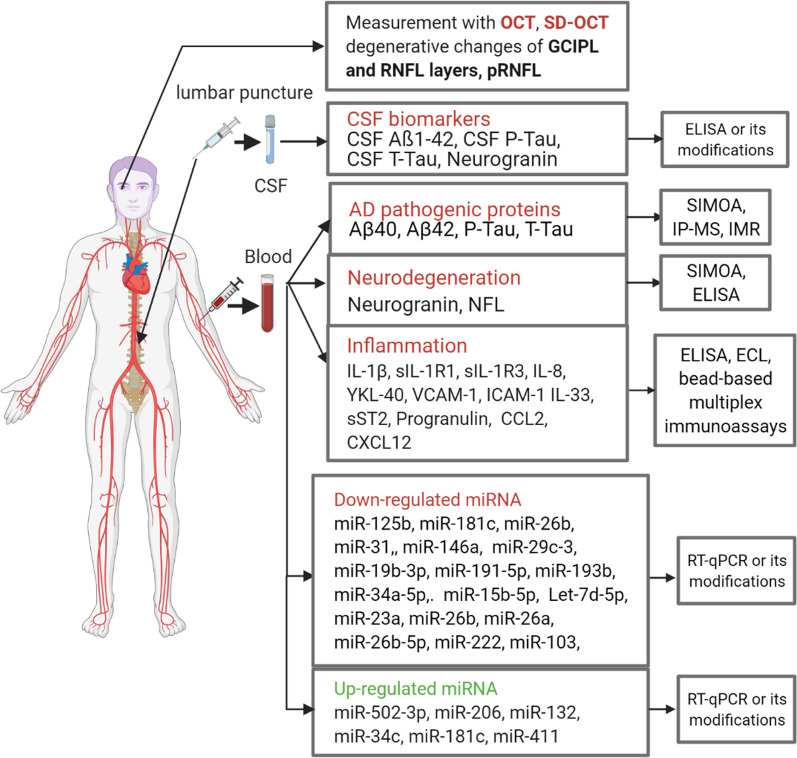
Alzheimer's disease (AD) is a complex, heterogeneous, progressive disease and is the most common type of neurodegenerative dementia. The prevalence of AD is expected to increase as the population ages, placing an additional burden on national healthcare systems. There is a large need for new diagnostic tests that can detect AD at an early stage with high specificity at relatively low cost. The development of modern analytical diagnostic tools has made it possible to determine several biomarkers of AD with high specificity, including pathogenic proteins, markers of synaptic dysfunction, and markers of inflammation in the blood. There is a considerable potential in using microRNA (miRNA) as markers of AD, and diagnostic studies based on miRNA panels suggest that AD could potentially be determined with high accuracy for individual patients. Studies of the retina with improved methods of visualization of the fundus are also showing promising results for the potential diagnosis of the disease. This review focuses on the recent developments of blood, plasma, and ocular biomarkers for the diagnosis of AD.
Overview
The claims and statistics of this paper haven’t been checked yet.
Free: it reads the open-access text and checks the first 5 claims that cite a source we can check. Create a free account to check every claim.
Integrity signals
Registry
Cites
Statistics
Figures
Verification
Claims the paper makes
The claims and statistics of this paper haven’t been checked yet.
Free: it reads the open-access text and checks the first 5 claims that cite a source we can check. Create a free account to check every claim.
Claims other papers make about this one
Each is checked against this paper’s own text: does it say what the citing paper says it does?
The source backs part of the claim, not all of it — or backs it for a different population, condition or comparison.
In the citing paper
“Many CSF biomarkers (like Aβ, P-tau, NfL, GFAP) also show promising applications in blood, with advancements in highly sensitive analytical platforms and detection techniques enhancing diagnostic precision and reliability.368,388,389”
From Recent advances in Alzheimer's disease: Mechanisms, clinical trials and new drug development strategies. (2024) · cites this paper as [368]
Experimental — accuracy not yet measuredThe cited source says what the claim attributes to it.
In the citing paper
“Studies have reported that amyloid PET exhibits 90% sensitivity and specificity in diagnosing AD, and tau PET can specifically identify AD dementia from other neurodegenerative diseases, showing higher diagnostic accuracy than MRI markers.368”
From Recent advances in Alzheimer's disease: Mechanisms, clinical trials and new drug development strategies. (2024) · cites this paper as [368]
The cited source says what the claim attributes to it.
In the citing paper
“Peripheral biomarkers are increasingly recognized as valuable for detecting early brain changes in MCI and AD, supporting diagnostic and therapeutic strategies at preclinical stages. 13”
From Plasma extracellular vesicles from APOE3 Christchurch carriers display a protective phenotype in early stages of autosomal dominant Alzheimer's disease (2026) · cites this paper as [13]
Self-check
Percentages, sums and reported differences re-computed from the paper’s own numbers.
The self-check needs the paper’s full text.
Citations
Cites
Huang, D., Swanson, E. A., Lin, C. P., Schuman, J. S., Stinson, W. G., Chang, W., Hee, M. R., Flotte, T., Gregory, K., Puliafito, C. A., et al. (1991) · Science · doi:10.1126/science.1957169 · Cited by 13,788
NIA‐AA Research Framework: Toward a biological definition of Alzheimer's disease
Jack, C. R., Bennett, D. A., Blennow, K., Carrillo, M. C., Dunn, B., Haeberlein, S. B., Holtzman, D. M., Jagust, W., Jessen, F., Karlawish, J., et al. (2018) · Alzheimer's & Dementia · doi:10.1016/j.jalz.2018.02.018 · Cited by 10,537
Regulation of microRNA biogenesis
Ha, M., & Kim, V. N. (2014) · Nature Reviews Molecular Cell Biology · doi:10.1038/nrm3838 · Cited by 5,462 · cited 1×
“MicroRNA (miRNA) biomarkers of AD Mature miRNAs are single-stranded RNA molecules of 20–25 nucleotides [134] that can regulate gene expression post-transcriptionally by binding to the 3’-untranslated region (3’UTR) of mRNAs and blocking protein synthesis or leading to the degradation of target mRNAs [135].”
BackgroundAnderson, N. L., & Anderson, N. G. (2002) · Molecular & Cellular Proteomics · doi:10.1074/mcp.r200007-mcp200 · Cited by 4,414
Research criteria for the diagnosis of Alzheimer's disease: revising the NINCDS–ADRDA criteria
Dubois, B., Feldman, H. H., Jacova, C., DeKosky, S. T., Barberger-Gateau, P., Cummings, J., Delacourte, A., Galasko, D., Gauthier, S., Jicha, G., et al. (2007) · The Lancet Neurology · doi:10.1016/s1474-4422(07)70178-3 · Cited by 4,411 · cited 1×
“The development of AD goes through three stages: the pre-symptomatic stage, the prodromal stage of mild cognitive impairment (MCI), and the clinical form of AD [4, 5].”
BackgroundClinical and biomarker changes in dominantly inherited Alzheimer's disease
Bateman, R. J., Xiong, C., Benzinger, T. L. S., Fagan, A. M., Goate, A., Fox, N. C., Marcus, D. S., Cairns, N. J., Xie, X., Blazey, T. M., et al. (2012) · New England Journal of Medicine · doi:10.1056/nejmoa1202753 · Cited by 3,814 · cited 1×
“Currently, AD can be identified in patients at the preclinical stage in vivo, for example, by the biological or molecular signature of the disease [13].”
BackgroundAlzheimer Disease: An Update on Pathobiology and Treatment Strategies
Long, J. M., & Holtzman, D. M. (2019) · Cell · doi:10.1016/j.cell.2019.09.001 · Cited by 3,204 · cited 2×
“Indeed, Aβ which is normally cleared by microglia can induce an activation phenotype of microglia, leading to chemokine release and local inflammation [15, 20].”
BackgroundNeuroinflammation and microglial activation in Alzheimer disease: where do we go from here?
Leng, F., & Edison, P. (2021) · Nature Reviews Neurology · doi:10.1038/s41582-020-00435-y · Cited by 3,179 · cited 1×
“While Aβ and Tau pathologies have a well-documented impact on brain physiology in AD, their appearance and accumulation are a consequence of early impairment of immune functions and arising neuroinflammation [18].”
Background2020 Alzheimer's disease facts and figures
(2020) · Alzheimer's & Dementia · doi:10.1002/alz.12068 · Cited by 2,353
Nelson, P. T., Alafuzoff, I., Bigio, E. H., Bouras, C., Braak, H., Cairns, N. J., Castellani, R. J., Crain, B. J., Davies, P., Tredici, K. D., et al. (2012) · Journal of Neuropathology & Experimental Neurology · doi:10.1097/nen.0b013e31825018f7 · Cited by 2,050 · cited 1×
“Furthermore, Tau pathologies alone can trigger neurodegeneration and the progression of Tau pathologies correlates with the severity of the cognitive impairment [17].”
Background
Research works printed but not linked: 1
- 182. Zeng Q, Zou L, Qian L, Zhou F, Nie H, Yu S, et al. Expression of microRNA-222 in serum of patients with Alzheimer's disease. Mol Med Rep. 2017;16(4):5575–5579. doi: 10.3892/mmr.2017.7301. · DOI
Cited by
Zhang, J., Zhang, Y., Wang, J., Xia, Y., Zhang, J., & Chen, L. (2024) · Signal Transduction and Targeted Therapy · doi:10.1038/s41392-024-01911-3 · Cited by 1,138
“366 368 However, sMRI and ( 18 FDG)-PET indicate neuro-degeneration or neuronal injury in the AT(N) framework with limitations in speci fi cally diagnosing AD.”
BackgroundPathogenesis, diagnostics, and therapeutics for Alzheimer's disease: Breaking the memory barrier
Kamatham, P. T., Shukla, R., Khatri, D. K., & Vora, L. K. (2024) · Ageing Research Reviews · doi:10.1016/j.arr.2024.102481 · Cited by 371
“Elevated levels of total tau in CSF were the first possible biomarker reported in 1993 (Klyucherev et al., 2022).”
BackgroundGlial Cell-Mediated Neuroinflammation in Alzheimer’s Disease
Al-Ghraiybah, N. F., Wang, J., Alkhalifa, A. E., Roberts, A. B., Raj, R., Yang, E., & Kaddoumi, A. (2022) · International Journal of Molecular Sciences · doi:10.3390/ijms231810572 · Cited by 202
The role of microRNAs in neurodegenerative diseases: a review
Li, S., Lei, Z., & Sun, T. (2023) · Cell Biology and Toxicology · doi:10.1007/s10565-022-09761-x · Cited by 183
“Reproduced with permission from reference (Klyucherev et al. 2022).”
Vrahatis, A. G., Skolariki, K., Krokidis, M. G., Lazaros, K., Exarchos, T. P., & Vlamos, P. (2023) · Sensors · doi:10.3390/s23094184 · Cited by 166
“Furthermore, analysis of blood-based samples can also provide early indications of AD pathology, by measuring levels of AD-related proteins such as A β and tau [14].”
BackgroundAlzheimer’s Disease Detection Using Deep Learning on Neuroimaging: A Systematic Review
Alsubaie, M. G., Luo, S., & Shaukat, K. (2024) · Machine Learning and Knowledge Extraction · doi:10.3390/make6010024 · Cited by 187
“The key challenge lies in accurately determining MCI and predicting disease progression [34,39].”
Hossain, M. S., & Hussain, M. H. (2025) · Pharmacology Research & Perspectives · doi:10.1002/prp2.70131 · Cited by 124
Eye-tracking paradigms for the assessment of mild cognitive impairment: a systematic review
Wolf, A., Tripanpitak, K., Umeda, S., & Otake, M. (2023) · Frontiers in Psychology · doi:10.3389/fpsyg.2023.1197567 · Cited by 98
“Hence, it is imperative to develop user-friendly cognitive scoring tools that would aid clinicians to accurately identify and classify a neurodegenerative condition as early as possible (Marandi and Gazerani, 2019; Alber et al., 2020; Majeed et al., 2021; Klyucherev et al., 2022).”
BackgroundMultipronged diagnostic and therapeutic strategies for Alzheimer's disease
Ramesh, M., & Govindaraju, T. (2022) · Chemical Science · doi:10.1039/d2sc03932j · Cited by 94
Plasma proteomics identify biomarkers and undulating changes of brain aging
Liu, W., You, J., Chen, S.-D., Zhang, Y., Feng, J., Xu, Y., Yu, J., & Cheng, W. (2024) · Nature Aging · doi:10.1038/s43587-024-00753-6 · Cited by 103
“Plasma-based biomarkers are accessible, cost effective and minimally invasive, thus being suitable for early identification and monitoring of brain aging and related disorders 34 .”
Bondarev, A. D., Attwood, M. M., Jonsson, J., Chubarev, V. N., Tarasov, V. V., Liu, W., & Schiöth, H. B. (2022) · Frontiers in Pharmacology · doi:10.3389/fphar.2022.1057083 · Cited by 80
“In AD, PDE4 inhibitors represent the bulk of investigational approaches (Klyucherev et al., 2022).”
BackgroundSelf-citationAbdullah, S. A., Najm, L., Ladouceur, L., Ebrahimi, F., Shakeri, A., Al‐Jabouri, N., Didar, T. F., & Dellinger, K. (2023) · Advanced Functional Materials · doi:10.1002/adfm.202302673 · Cited by 68
Salivary Biomarkers for Alzheimer’s Disease: A Systematic Review with Meta-Analysis
Nijakowski, K., Owecki, W., Jankowski, J., & Surdacka, A. (2024) · International Journal of Molecular Sciences · doi:10.3390/ijms25021168 · Cited by 70
“Currently, valid diagnostic tools for AD include both CSF biomarkers (A β 42 and Tau) and imaging methods (MRI and PET) for the study of brain atrophy and metabolism or accumulation of pathogenic substances [12].”
BackgroundBlood-Based Biomarkers in Alzheimer’s Disease: Advancing Non-Invasive Diagnostics and Prognostics
Dhauria, M., Mondal, R., Deb, S., Shome, G., Chowdhury, D., Sarkar, S., & Benito‐León, J. (2024) · International Journal of Molecular Sciences · doi:10.3390/ijms252010911 · Cited by 72
“A comparative analysis of microRNA networks between peripheral blood and brain tissue [Table 2] revealed that miR-93-5p exhibits significant interactions with validated genes in both tissues [Figure 5].”
BackgroundInfluentialPlasma proteomic evidence for increased β-amyloid pathology after SARS-CoV-2 infection
Duff, E. P., Zetterberg, H., Heslegrave, A., Dehghan, A., Elliott, P., Allen, N., Runz, H., Laban, R., Veleva, E., Whelan, C. D., et al. (2025) · Nature Medicine · doi:10.1038/s41591-024-03426-4 · Cited by 57
“CHI3L1 is highly expressed in astrocytes during neuroinflammation and is associated with increased brain amyloid and AD symptoms 34,35 .”
Garcia, G., Pinto, S., Ferreira, S., Lopes, D., Serrador, M. J., Fernandes, A., Vaz, A. R., Mendonça, A. D., Edenhofer, F., Malm, T., et al. (2022) · Cells · doi:10.3390/cells11213377 · Cited by 63
“New analytical tools, which include markers of synaptic dysfunction and inflammation in the blood, as well as microRNAs (miRNAs), suggest that AD may be diagnosed with accuracy in individual patients [7].”
BackgroundBiomarkers in Alzheimer’s disease
Rajendran, K., & Krishnan, U. M. (2024) · Clinica Chimica Acta · doi:10.1016/j.cca.2024.119857 · Cited by 58
Malaguarnera, M., & Cabrera‐Pastor, A. (2024) · International Journal of Molecular Sciences · doi:10.3390/ijms251810068 · Cited by 55
Early changes of fecal short‐chain fatty acid levels in patients with mild cognitive impairments
Gao, C., Li, B., He, Y., Huang, P., Du, J., He, G., Zhang, P., Tang, H., & Chen, S. (2023) · CNS Neuroscience & Therapeutics · doi:10.1111/cns.14252 · Cited by 50
“22– 26 In fact, stool is more accessible and noninvasive sample source compared with above samples.”
BackgroundSaggu, S., Bai, A., Aida, M., Rehman, H., Pless, A., Ware, D., Deák, F., Jiao, K., & Wang, Q. (2024) · GeroScience · doi:10.1007/s11357-024-01359-x · Cited by 55
“CSF analysis of neurotransmitter metabolites, including 5-HT and DA byproducts, can provide early indicators of MA-ergic dysregulation [191–193].”
Ryu, I. S., Kim, D. H., Ro, J.-Y., Park, B.-G., Kim, S. H., Im, J.-Y., Lee, J.-Y., Yoon, S. J., Kang, H., Iwatsubo, T., et al. (2023) · Clinical Biochemistry · doi:10.1016/j.clinbiochem.2023.110603 · Cited by 45
Gut-brain axis: gut dysbiosis and psychiatric disorders in Alzheimer’s and Parkinson’s disease
Denman, C. R., Park, S. M., & Jo, J. (2023) · Frontiers in Neuroscience · doi:10.3389/fnins.2023.1268419 · Cited by 47
“For extensive reviews on biomarkers in AD and PD, please refer to the following reviews (Li and Le, 2020; Klyucherev et al., 2022).”
BackgroundChen, L., Sun, Y., Li, J., Liu, S., Ding, H., Wang, G., & Li, X. (2023) · Cells · doi:10.3390/cells12232672 · Cited by 47
“AD is a multifaceted, diverse, and progressive pathology, hallmarked by extracellular plaques rich in β -amyloid (A β ), intracellular neurofibrillary tangles containing tau, neuronal degeneration, and neuroinflammation [1,5,6].”
BackgroundReelin links Apolipoprotein E4, Tau, and Amyloid‐β in Alzheimer’s disease
Yi, L. X., Zeng, L., Wang, Q., Tan, E. K., & Zhou, Z. D. (2024) · Ageing Research Reviews · doi:10.1016/j.arr.2024.102339 · Cited by 41
Xu, X., Lin, L., Sun, S., & Wu, S. (2023) · Reviews in the Neurosciences · doi:10.1515/revneuro-2022-0122 · Cited by 40
“…in Braak staging (Braak and Braak 1991), with biomarkers for beta-amyloid plaques detected 25 years before the onset of symptoms, biomarkers for Tau detected 10 years before symptom onset, followed by biomarkers for cellular dysfunction in the brain (Jack et al. 2010; Klyucherev et al. 2022).”
BackgroundKetone bodies mediate alterations in brain energy metabolism and biomarkers of Alzheimer’s disease
Ramezani, M., Fernando, M. G., Eslick, S., Asih, P. R., Shadfar, S., Bandara, E. M. S., Hillebrandt, H., Meghwar, S., Shahriari, M., Chatterjee, P., et al. (2023) · Frontiers in Neuroscience · doi:10.3389/fnins.2023.1297984 · Cited by 43
“…et al., 2021; Alberti et al., 2022) can change the level of these circulating biomarkers (Poff et al., 2021; Alberti et al., 2022), thereby making these biomarkers as the promising indicators for the early diagnosis of AD (Khoury and Ghossoub, 2019; Ausó et al., 2020; Klyucherev et al., 2022).”
BackgroundBiomarkers in neurodegenerative diseases: a broad overview
Sathish, S., & Ayyavoo, V. (2024) · Exploration of Neuroprotective Therapy · doi:10.37349/ent.2024.00075 · Cited by 44
PET brain imaging in neurological disorders
Xie, L., Zhao, J., Li, Y., & Bai, J. (2024) · Physics of Life Reviews · doi:10.1016/j.plrev.2024.03.007 · Cited by 44
Hcini, G., Jdey, I., & Dhahri, H. (2024) · Neural Processing Letters · doi:10.1007/s11063-024-11600-5 · Cited by 38
“Additionally, researchers have discovered new biomarkers that can detect early AD, including blood-based markers of amyloid-beta and tau proteins and retinal markers of neurodegeneration [10].”
Identification of a lncRNA/circRNA-miRNA-mRNA ceRNA Network in Alzheimer's Disease
Su, L., Zhang, Y., Wang, Y., & Wei, H. (2023) · Journal of Integrative Neuroscience · doi:10.31083/j.jin2206136 · Cited by 35
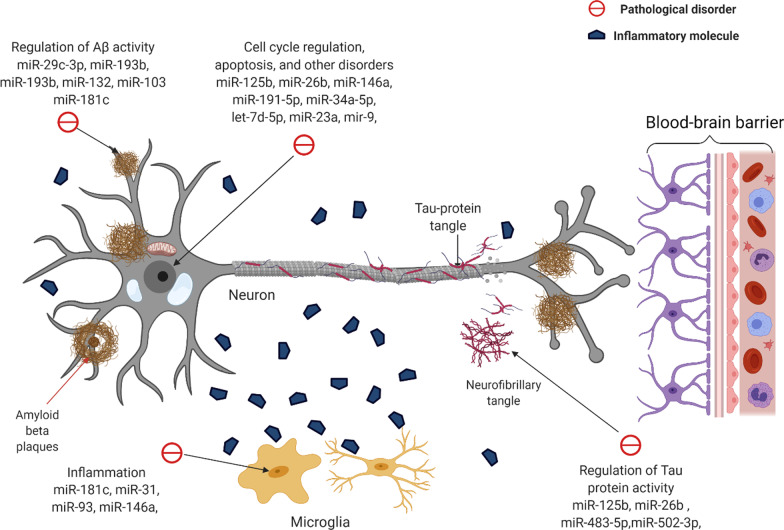
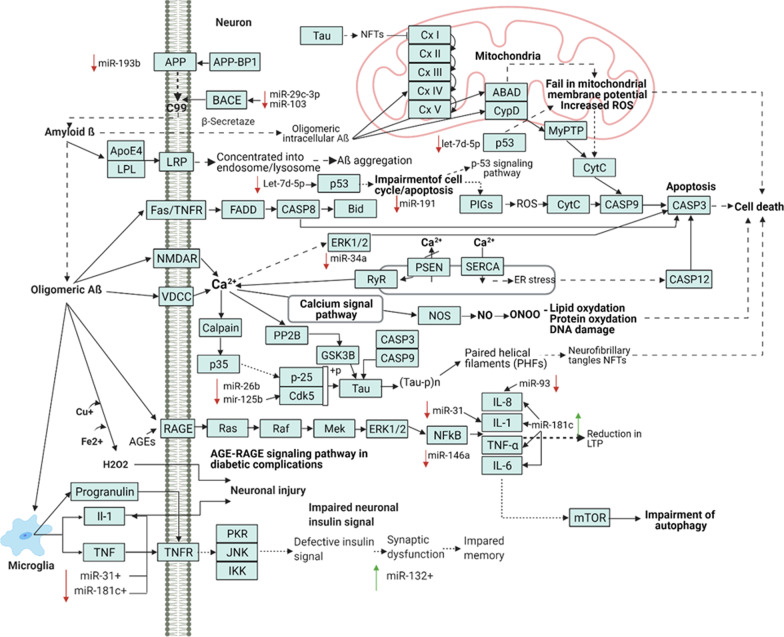
“Changes in the levels of several miRNAs and their targeted mRNA have been reported to affect the development and progression of the disease such as APP production, Tau aggregation, A β production, protein misfolding, neuroinflammation, and oxidative damage [8].”
BackgroundJain, S., Singh, R., Paliwal, S., & Sharma, S. K. (2023) · Mini-Reviews in Medicinal Chemistry · doi:10.2174/1389557523666230511122435 · Cited by 39
Intercellular communication in the brain through a dendritic nanotubular network
Chang, M., Krüssel, S., Parajuli, L. K., Kim, J., Lee, D., Merodio, A., Kwon, J., Okabe, S., & Kwon, H. (2025) · Science · doi:10.1126/science.adr7403 · Cited by 43
Nanofluidic Lab‐On‐A‐Chip Systems for Biosensing in Healthcare
Chong, S. W., Shen, Y., Palomba, S., & Vigolo, D. (2024) · Small · doi:10.1002/smll.202407478 · Cited by 34
Etekochay, M. O., Amaravadhi, A. R., González, G. V., Atanasov, A. G., Matin, M., Mofatteh, M., Steinbusch, H. W. M., Tesfaye, T., & Praticò, D. (2024) · Journal of Alzheimer s Disease · doi:10.3233/jad-231135 · Cited by 34
Li, D., Ma, J., Wei, B., Gao, S., Lang, Y., & Wan, X. (2023) · Frontiers in Aging Neuroscience · doi:10.3389/fnagi.2023.1124710 · Cited by 33
“Alzheimer’s disease (AD) is a progressive and insidious neurodegenerative disease common among the elderly (Klyucherev et al., 2022).”
BackgroundThe Sigma Receptors in Alzheimer’s Disease: New Potential Targets for Diagnosis and Therapy
Wang, T., & Jia, H. (2023) · International Journal of Molecular Sciences · doi:10.3390/ijms241512025 · Cited by 34
Casey, E., Li, Z., Liang, D., Ebelt, S., Levey, A. I., Lah, J. J., Wingo, T. S., & Hüls, A. (2024) · Environmental Health Perspectives · doi:10.1289/ehp13503 · Cited by 32
He, J., Liu, F., Xu, T., Ma, J., Yu, H., Zhao, J., Xie, Y., Luo, L., Yang, Q., Lou, T., et al. (2023) · Biomedicine & Pharmacotherapy · doi:10.1016/j.biopha.2023.115807 · Cited by 29
Alzheimer’s Disease: Models and Molecular Mechanisms Informing Disease and Treatments
Nystuen, K., McNamee, S. M., Akula, M., Holton, K. M., DeAngelis, M. M., & Haider, N. B. (2024) · Bioengineering · doi:10.3390/bioengineering11010045 · Cited by 31
Afrin, M. R., Upadhyaya, P. G., Hashim, A., Bhattacharya, K., Chanu, N. R., Das, D., Khanal, P., & Deka, S. (2025) · Ageing Research Reviews · doi:10.1016/j.arr.2025.102736 · Cited by 28
Harnessing Photo‐Energy Conversion in Nanomaterials for Precision Theranostics
Shi, J., Fan, Y., Zhang, Q., Huang, Y., & Yang, M. (2025) · Advanced Materials · doi:10.1002/adma.202501623 · Cited by 40
Genetic and epigenetic targets of natural dietary compounds as anti-Alzheimer’s agents
Ordoñez, W. O. C., Cajas‐Salazar, N., & Velasco-Reyes, M. A. (2023) · Neural Regeneration Research · doi:10.4103/1673-5374.382232 · Cited by 29
Fulcher, J. M., Ives, A. N., Tasaki, S., Kelly, S. S., Williams, S., Fillmore, T., Zhou, M., Moore, R., Qian, W., Paša‐Tolić, L., et al. (2025) · Molecular & Cellular Proteomics · doi:10.1016/j.mcpro.2025.100983 · Cited by 27
Recent Mechanisms of Neurodegeneration and Photobiomodulation in the Context of Alzheimer’s Disease
Su, M., Nizamutdinov, D., Liu, H., & Huang, J. H. (2023) · International Journal of Molecular Sciences · doi:10.3390/ijms24119272 · Cited by 28
“widely examined biomarkers associated with AD and reflects the different methods of pathogenesis [42,43].”
BackgroundMethodInfluentialSonwani, A., Pathak, A., & Jain, K. (2024) · Journal of Drug Delivery Science and Technology · doi:10.1016/j.jddst.2024.105855 · Cited by 29
Alvarez, M., Trent, E., Gonçalves, B. D. S., Pereira, D. G., Puri, R., Frazier, N. A., Sodhi, K., & Pillai, S. S. (2022) · Frontiers in Aging Neuroscience · doi:10.3389/fnagi.2022.1020092 · Cited by 26
Beltagy, D. M., Nawar, N. F., Mohamed, T. M., Tousson, E., & El-Keey, M. M. (2023) · Prostaglandins & Other Lipid Mediators · doi:10.1016/j.prostaglandins.2023.106791 · Cited by 27
Alzheimer's Disease Diagnosis in the Preclinical Stage: Normal Aging or Dementia
Marvi, F., Chen, Y.-H., & Sawan, M. (2024) · IEEE Reviews in Biomedical Engineering · doi:10.1109/rbme.2024.3376835 · Cited by 30
The role of the FKBP51–Hsp90 complex in Alzheimer’s disease: An emerging new drug target
Jeanne, X., Török, Z., Vígh, L., & Prodromou, C. (2024) · Cell Stress and Chaperones · doi:10.1016/j.cstres.2024.11.006 · Cited by 24
“76 Molecular chaper-ones maintain proteostasis, and as such, they are critical regulators of proteins associated with neurodegenerative disease.”
Koca, S., Kiris, İ., Şahin, Ş., Çınar, N., Karşıdağ, S., Hanağası, H. A., Yıldız, G. B., & Baykal, A. T. (2022) · Neuroscience Letters · doi:10.1016/j.neulet.2022.136799 · Cited by 24
Sarkar, S., Bhui, U., Kumar, B., Ashique, S., Kumar, P., Sharma, H., Bhowmick, M., Pal, R., & Kumar, T. (2024) · Current Psychiatry Research and Reviews · doi:10.2174/0126660822329981241007105405 · Cited by 31
Yuan, W., Qin, T., Chen, X., Liu, T., Wang, J., & Wang, X. (2025) · ACS Applied Materials & Interfaces · doi:10.1021/acsami.4c18204 · Cited by 22
Długosz, A., Błaszak, B., Czarnecki, D., & Szulc, J. (2025) · Molecules · doi:10.3390/molecules30030694 · Cited by 22
“However, it is miR-532-5p that has the most significant correlation with AD [54].”
Zinellu, A., Tommasi, S., Sedda, S., & Mangoni, A. A. (2023) · Ageing Research Reviews · doi:10.1016/j.arr.2023.102139 · Cited by 24
Yu, T., Xing, Y., Gao, Q., Wang, D., Chen, H., Wang, H., & Zhang, Y. (2023) · Pharmaceutics · doi:10.3390/pharmaceutics15122746 · Cited by 22
“Alzheimer’s disease (AD) is the most common neurodegenerative disease in dementia, characterized by synaptic dysfunction and brain atrophy, with toxic amyloid plaques and neurofibrillary tangles [1].”
BackgroundNanomodulators That Target Alzheimer’s Disease: A Review
Pradhan, N., & Jana, N. R. (2024) · ACS Applied Nano Materials · doi:10.1021/acsanm.3c04846 · Cited by 25
Present and Future of Blood-Based Biomarkers of Alzheimer’s Disease: Beyond the Classics
Grigoli, M. M., Pelegrini, L. N. D. C., Whelan, R., & Cominetti, M. R. (2024) · Brain Research · doi:10.1016/j.brainres.2024.148812 · Cited by 22
Inamdar, A., Bugadannavar, P., Palled, M. S., Umarani, S., Salve, P. S., Gurupadayya, B., Patil, P. D., & Sharma, H. (2025) · Frontiers in Aging Neuroscience · doi:10.3389/fnagi.2025.1614962 · Cited by 23
Zarei, O., moghaddam, M. T., & Vastegani, S. M. (2025) · Brain Research Bulletin · doi:10.1016/j.brainresbull.2025.111667 · Cited by 23
From Amyloid to Synaptic Dysfunction: Biomarker-Driven Insights into Alzheimer’s Disease
Agnello, L., Gambino, C. M., Ciaccio, A. M., Cacciabaudo, F., Massa, D., Masucci, A., Tamburello, M., Vassallo, R., Midiri, M., Scazzone, C., et al. (2025) · Current Issues in Molecular Biology · doi:10.3390/cimb47080580 · Cited by 27
“…progranulin (PGRN), triggering receptor expressed on myeloid cells 2 (TREM2), insulin-like growth factor 1 (IGF-1), fatty acid-binding proteins (FABPs), monocyte chemoattractant protein-1 (MCP-1), TAR DNA-binding protein 43 (TDP-43), and brain-derived neurotrophic factor (BDNF) [46,47] (Figure 4).”
Petrovskaya, A. V., Tverskoi, A. M., Medvedeva, A., & Nazarova, M. A. (2023) · Communications Biology · doi:10.1038/s42003-023-04717-1 · Cited by 21
Dolciotti, C., Righi, M., Grecu, E., Trucas, M., Maxia, C., Murtas, D., & Diana, A. (2025) · Frontiers in Cellular Neuroscience · doi:10.3389/fncel.2025.1553642 · Cited by 19
Innovations in noninvasive sensory stimulation treatments to combat Alzheimer’s disease
Park, J. M., & Tsai, L. (2025) · PLoS Biology · doi:10.1371/journal.pbio.3003046 · Cited by 27
Impact of corticoid receptors on Alzheimer’s disease: a neuroendocrine perspective
Goel, F., Kumar, D., & Sharma, A. (2025) · Inflammopharmacology · doi:10.1007/s10787-025-01734-w · Cited by 30
“Hippocampal atrophy is now recognized increasingly as one of the earliest and most reliable biomarkers of AD, often occurring before any obvious symptoms of cognition can be identified (Klyucherev et al. 2022).”
MiR-431 attenuates synaptic plasticity and memory deficits in APPswe/PS1dE9 mice
Ge, J., Xue, Z., Shu, S., Yu, L., Qin, R., Tao, W., Liu, P., Dong, X., Lan, Z., Bao, X., et al. (2023) · JCI Insight · doi:10.1172/jci.insight.166270 · Cited by 19
“Currently, the main diagnostic methods for AD are based on PET imaging and CSF analysis, which are relatively expensive and highly invasive; therefore, there is an urgent need to explore new diagnostic methods that can help diagnose AD at an early stage with high specificity at a lower cost (58, 59).”
Pyroptosis in Alzheimer’s Disease: Mechanisms and Therapeutic Potential
Tang, T. (2025) · Cellular and Molecular Neurobiology · doi:10.1007/s10571-025-01579-5 · Cited by 20
“This leads to subsequent tau misfolding, aggregation into NFTs, and intraneuronal deposition, ultimately resulting in neuroinflammation, neurodegeneration, and cognitive decline (Ossenkoppele et al. 2022; Klyucherev et al. 2022; Monteiro et al. 2023).”
Ren, H., Feng, Q., Chen, L., Li, L., Wang, J., Wu, J., Dong, L., Liu, T., & Wang, Z. (2024) · Frontiers in Psychiatry · doi:10.3389/fpsyt.2024.1429934 · Cited by 18
Navigating the Alzheimer’s Biomarker Landscape: A Comprehensive Analysis of Fluid-Based Diagnostics
Abiad, E. E., Al-Kuwari, A., Al-Aani, U., Jaidah, Y. A., & Châari, A. (2024) · Cells · doi:10.3390/cells13221901 · Cited by 21
“Additionally, increased NfL and YKL-40 levels, respectively, further support signs of neurodegeneration and inflammation, likely due to the underlying physiological pathways involved [45,52].”
Alzheimer’s Disease as a Disorder of Neuroimmune Dysregulation
Aranda-Abreu, G. E., Rojas-Durán, F., Hernández‐Aguilar, M. E., Herrera‐Covarrubias, D., Tlapa-Monge, L. R., & Mestizo-Gutiérrez, S. L. (2026) · Neurology International · doi:10.3390/neurolint18020037 · Cited by 18
β-Amyloid peptide modulates peripheral immune responses and neuroinflammation in rats
Adhikary, K., Mohanty, S., Bandyopadhyay, B., Maiti, R., Bhattacharya, K., & Karak, P. (2024) · BioMolecular Concepts · doi:10.1515/bmc-2022-0042 · Cited by 18
A Novel Serum‐Based Diagnosis of Alzheimer's Disease Using an Advanced Phage‐Based Biochip
Rizzo, M. G., Plano, L. M. D., Palermo, N., Franco, D., Nicolò, M. S., Sciuto, E. L., Calabrese, G., Oddo, S., Conoci, S., & Guglielmino, S. P. P. (2023) · Advanced Science · doi:10.1002/advs.202301650 · Cited by 16
Wang, J., Shi, L. D., Zhu, X., Tang, Q., Wu, M., Li, B., Liu, W., & Jin, Y. (2024) · Talanta · doi:10.1016/j.talanta.2024.125656 · Cited by 15
Biomarker profiling to determine clinical impact of microRNAs in cognitive disorders
Zhai, W., Zhao, M., Wei, C., Zhang, G., Qi, Y., Zhao, A., & Sun, L. (2024) · Scientific Reports · doi:10.1038/s41598-024-58882-2 · Cited by 15
Ortiz-Islas, E., Montes, P., Rodríguez-Pérez, C. E., Ruiz-Sánchez, E., Sánchez-Barbosa, T., Pichardo-Rojas, D., Zavala‐Tecuapetla, C., Carvajal, K., & Campos‐Peña, V. (2025) · Pharmaceutics · doi:10.3390/pharmaceutics17010128 · Cited by 16
Lim, M. J. H., Cheung, C. Y.-L., Chong, J. R., Chua, J., Hilal, S., Lai, M. K. P., Maier, A. B., Schmetterer, L. F., Tan, B. Y., Venketasubramanian, N., et al. (2025) · Journal of Alzheimer s Disease · doi:10.1177/13872877251389006 · Cited by 14
“Several have previously been explored in AD, 30,257 although there is a paucity of similar work in VCI, representing a critical investigational gap that the HARMONISATION extension study is to address.”
O’Day, D. H. (2023) · Journal of Clinical Medicine · doi:10.3390/jcm12227045 · Cited by 14
“A β and pTau continue to be the primary biomarkers for evaluating AD, and their levels in blood serum coupled with neurofilament light chain (NfL) or neurogranin (Ng, RCE, p17, BICKS), indicators of neuron damage, could be a way to track AD before symptoms appear [49,50].”
BackgroundEmerging perspectives of synaptic biomarkers in ALS and FTD
Krishnamurthy, K., & Pradhan, R. K. (2024) · Frontiers in Molecular Neuroscience · doi:10.3389/fnmol.2023.1279999 · Cited by 14
“This necessitates the development of more sensitive and robust assays for their detection (Klyucherev et al., 2022).”
BackgroundYu, X., Zhou, X., He, Z., He, B., Wan, K., Wei, M., Guo, T., & Han, Y. (2024) · CNS Neuroscience & Therapeutics · doi:10.1111/cns.14558 · Cited by 13
“9 Some studies revealed the potential utilization of neurofilament light chain (NfL) and glial fibrillary acidic protein (GFAP) concentration levels as biomarkers of sleep disorder and daytime drowsiness, as well as their roles in predicting decline in neurodegeneration and cognitive performance.”
BackgroundBoumali, R., Urli, L., Naïm, M., Soualmia, F., Kinugawa, K., Petropoulos, I., & Amri, C. E. (2024) · Biochimie · doi:10.1016/j.biochi.2024.04.001 · Cited by 13
Advances in development of biomarkers for brain damage and ischemia
Karimova, D., Rostami, E., Chubarev, V. N., Tarasov, V. V., Schiöth, H. B., & Rask‐Andersen, M. (2024) · Molecular Biology Reports · doi:10.1007/s11033-024-09708-x · Cited by 14
Self-citationBader, I., Groot, C., Tan, H. S., Milongo, J.-M. A., den Haan, J., Verberk, I. M. W., Yong, K. X. X., Orellina, J. A., Campbell, S. R., Wilson, D., et al. (2024) · Alzheimer s Research & Therapy · doi:10.1186/s13195-024-01545-1 · Cited by 12
“This will require low-cost, patient-friendly and scalable biomarkers for AD that are also suitable for implementation outside of a specialized memory clinic setting, such as blood-based and eye-based biomarkers [11].”
BackgroundDaskoulidou, N., Carpanini, S. M., Zelek, W. M., & Morgan, B. P. (2024) · Current topics in behavioral neurosciences · doi:10.1007/7854_2024_524 · Cited by 12
Natarajan, B., Zhou, Q., Maduraiveeran, G., & Kannan, P. (2026) · Coordination Chemistry Reviews · doi:10.1016/j.ccr.2026.217682 · Cited by 13
McInvale, J. J., Canoll, P., & Hargus, G. (2024) · Brain Pathology · doi:10.1111/bpa.13231 · Cited by 10
“While proteins have been canonical biomarkers, there is recent interest in exploring the potential of other bio-molecules such as lipids, microRNA, epigenetically modified genomic DNA [3, 4], and cell-free DNA [5] as biomarkers [1, 6 – 9].”
BackgroundNawar, N. F., Beltagy, D. M., Mohamed, T. M., Tousson, E., & El-Keey, M. M. (2024) · Toxicology Research · doi:10.1093/toxres/tfae054 · Cited by 13
Integrating NLP and LLMs to discover biomarkers and mechanisms in Alzheimer's disease
Song, J., Huang, J., & Liu, R. (2025) · SLAS TECHNOLOGY · doi:10.1016/j.slast.2025.100257 · Cited by 13
Signorini-Souza, I. D. L., Tureck, L. V., Batistela, M. S., de Almeida, R. C., de Almeida, S. M., Alle, L. F., & de Souza, R. L. R. (2024) · Brain Research · doi:10.1016/j.brainres.2024.149090 · Cited by 12
Wang, L.-X., Wang, Y., Han, C. H., Zhao, L., He, L., & Li, J. (2024) · Arquivos de Neuro-Psiquiatria · doi:10.1055/s-0044-1788657 · Cited by 20
Pei, J., Perumal, N. C., Meng, P., Long, Q., & Palanisamy, C. P. (2025) · Ageing Research Reviews · doi:10.1016/j.arr.2025.102904 · Cited by 37
Braissant, O., McLin, V. A., Sessa, D., & Pierzchała, K. (2025) · Scientific Reports · doi:10.1038/s41598-025-21054-x · Cited by 10
“Studies have shown reduced Aβ 42 levels in the plasma of AD patients 68 .”
Current and future perspectives of an early diagnosis of cognitive impairment
Giorelli, M. (2023) · Frontiers in Neurology · doi:10.3389/fneur.2023.1171681 · Cited by 11
“In this context, enormous efforts have been devoted to searching for imaging or molecular biomarkers (6, 7) that could become both enrolment and outcome requirements in clinical trials aimed at verifying the efficacy of DMDs.”
BackgroundPark, H. H., Kim, B., Leem, S. H., Park, Y., Hoe, H., Nam, Y., Kim, S., Shin, S. J., & Moon, M. (2023) · BMB Reports · doi:10.5483/bmbrep.2023-0071 · Cited by 10
miR-153-3p via PIK3R1 Is Involved in Cigarette Smoke-Induced Neurotoxicity in the Brain
Sun, Q., Wang, H., Yang, M., Xia, H., Wu, Y., Liu, Q., & Tang, H. (2023) · Toxics · doi:10.3390/toxics11120969 · Cited by 10
“They are now serving as biomarkers for various common diseases, including neurodegeneration and AD [17,18].”
BackgroundActive Immunotherapy for the Prevention of Alzheimer’s and Parkinson’s Disease
Vroom, M. M., & Dodart, J. (2024) · Vaccines · doi:10.3390/vaccines12090973 · Cited by 13
“Unfortunately, these approaches lack scalability due to expense, lack of accessibility, and/or physical invasiveness [44,109].”
BackgroundCirculating miRNAs modulating systemic low-grade inflammation and affecting neurodegeneration
der Auwera, S. V., Ameling, S., Wittfeld, K., Bülow, R., Nauck, M. A., Völzke, H., Völker, U., & Grabe, H. J. (2024) · Progress in Neuro-Psychopharmacology and Biological Psychiatry · doi:10.1016/j.pnpbp.2024.111130 · Cited by 9
Role of astroglia and microglia in Alzheimer's disease and multiple therapeutic interventions
Li, L., Wang, Y., Feng, Q., Ma, C., He, C., Wan, W., & Tang, L. (2025) · Journal of Alzheimer s Disease · doi:10.1177/13872877251335572 · Cited by 11
Choi, S. H., Kim, S., Ong, P. A., Chin, A., Dominguez, J. C., Chen, C., Senanarong, V., Hu, C. J., Tripathi, M., Mok, V., et al. (2025) · The Journal of Prevention of Alzheimer s Disease · doi:10.1016/j.tjpad.2025.100215 · Cited by 9
“These include amyloid positron emission tomography (PET) and markers of A 𝛽 , phosphorylated tau (p-tau), neurodegeneration/neuronal injury (neurofilament light chain [NfL]), and inflammation (glial fibrillary acidic protein) in the cerebrospinal fluid (CSF) and plasma [ 3–6 ].”
Bahman, M., Hosseini, M. R. M., & Jameie, S. B. (2026) · RSC Advances · doi:10.1039/d5ra07458d · Cited by 11
Bogdan, S., Puścion‐Jakubik, A., Klimiuk, K., Socha, K., Kochanowicz, J., & Gorodkiewicz, E. (2023) · Journal of Clinical Medicine · doi:10.3390/jcm12216855 · Cited by 9
“Up-regulation occurs in the case of miR-502-3p, miR-206 and miR-132 [45].”
BackgroundBio-Interface Analysis and Detection of Aβ using GaN HEMT-based Biosensor
Thakur, R. R., Sarathlal, K. C., Mishra, S., Taliyan, R., & Chaturvedi, N. (2024) · Journal of The Electrochemical Society · doi:10.1149/1945-7111/ad2cbc · Cited by 9
Metadata
- Authors
- Klyucherev, T. O., Olszewski, P., Shalimova, A. A., Chubarev, V. N., Tarasov, V. V., Attwood, M. M., Syvänen, S., & Schiöth, H. B.
- Affiliations
- Uppsala University (SE)
- Sechenov University (RU)
- Corresponding author
- Schiöth, Helgi B.
- ORCID
- Venue
- Translational Neurodegeneration
- Published
- 2022-04-21
- Volume
- 11
- Issue
- 1
- Pages
- 25-25
- ISSN
- 2047-9158 (ISSN-L)
- PMC
- PMC9027827
- OpenAlex
- W4224247151
- Cited by
- 241
- References
- 238
- Citations by year
- 2026: 34 · 2025: 65 · 2024: 85 · 2023: 47 · 2022: 10
- FWCI
- 8.88
- Type
- journal article
- Language
- en
- Open access
- gold
- doi.org
- Licence
- cc-by
- creativecommons.org/licenses/by/4.0 (tdm)
- creativecommons.org/licenses/by/4.0 (vor)
- Locations
- Translational Neurodegeneration (publishedVersion, cc-by)
- PubMed Central (publishedVersion, cc-by)
- PubMed (publishedVersion)
- KTH Publication Database DiVA (KTH Royal Institute of Technology) (submittedVersion, other-oa)
- DOAJ (DOAJ: Directory of Open Access Journals) (submittedVersion, cc-by-sa)
- Funders
- vetenskapsrådet
- hjärnfonden
- Uppsala University
- Topics
- Health Sciences › Medicine › Psychiatry and Mental health › Dementia and Cognitive Impairment Research
- Life Sciences › Neuroscience › Cellular and Molecular Neuroscience › Alzheimer's disease research and treatments
- Life Sciences › Neuroscience › Neurology › Neuroinflammation and Neurodegeneration Mechanisms
- Keywords
- Alzheimer's disease, biomarkers, early diagnosis, blood biomarkers, plasma biomarkers, ocular biomarkers, retina, microRNA, synaptic dysfunction, neuroinflammation, pathogenic proteins, diagnostic testing
- MeSH terms
- Alzheimer Disease, Humans, Retina, Biomarkers, Amyloid beta-Peptides, MicroRNAs
About these checks
Registry, retraction, Cites and statistics results are computed, not judged, with one exception: a printed reference that no index lists is read once by a model before it counts as a citation error. Claims are extracted by a model and kept only when their quote appears verbatim in the text; each cited source is then checked, with a model’s help, for whether it says what the claim relies on. Those verdicts can be wrong — read the claim’s quote and the cited source before relying on one.
Statistics and arithmetic are recomputed, not judged.
Confidence bands are shown only for fields calibrated on our annotated test set. None is calibrated yet, so no band is shown.
What counts as a claim ›How we measure confidence ›How we check this ›
Are you an author, or do you see a problem with this page? Request a review
Data sources
Bibliographic data: Semantic Scholar, OpenAlex, Crossref.
Contains information from the Semantic Scholar Academic Graph Datasets, made available under the ODC Attribution License (ODC-BY 1.0).
Semantic Scholar’s data is described in: Kinney, R., et al. (2023). The Semantic Scholar Open Data Platform. arXiv:2301.10140.
