

Defective lysosomal acidification: a new prognostic marker and therapeutic target for neurodegenerative diseases
Open accessThe DOI matches its Crossref record; 103 of the 103 references it cites were found in a registry or an index.
Abstract
Lysosomal acidification dysfunction has been implicated as a key driving factor in the pathogenesis of neurodegenerative diseases, including Alzheimer’s disease and Parkinson’s disease. Multiple genetic factors have been linked to lysosomal de-acidification through impairing the vacuolar-type ATPase and ion channels on the organelle membrane. Similar lysosomal abnormalities are also present in sporadic forms of neurodegeneration, although the underlying pathogenic mechanisms are unclear and remain to be investigated. Importantly, recent studies have revealed early occurrence of lysosomal acidification impairment before the onset of neurodegeneration and late-stage pathology. However, there is a lack of methods for organelle pH monitoring in vivo and a dearth of lysosome-acidifying therapeutic agents. Here, we summarize and present evidence for the notion of defective lysosomal acidification as an early indicator of neurodegeneration and urge the critical need for technological advancement in developing tools for lysosomal pH monitoring and detection both in vivo and for clinical applications. We further discuss current preclinical pharmacological agents that modulate lysosomal acidification, including small molecules and nanomedicine, and their potential clinical translation into lysosome-targeting therapies. Both timely detection of lysosomal dysfunction and development of therapeutics that restore lysosomal function represent paradigm shifts in targeting neurodegenerative diseases.
Overview
The claims and statistics of this paper haven’t been checked yet.
Free: it reads the open-access text and checks the first 5 claims that cite a source we can check. Create a free account to check every claim.
Integrity signals
Registry
Cites
Statistics
Figures
Verification
Claims the paper makes
The claims and statistics of this paper haven’t been checked yet.
Free: it reads the open-access text and checks the first 5 claims that cite a source we can check. Create a free account to check every claim.
Claims other papers make about this one
Each is checked against this paper’s own text: does it say what the citing paper says it does?
The source backs part of the claim, not all of it — or backs it for a different population, condition or comparison.
In the citing paper
“A key factor affecting lysosomal function is the pH controlled by the vacuolar (H+)-ATPase (V-ATPase), which uses the energy from ATP hydrolysis to drive H+ from the cytoplasm into the lysosome.”
From Recent advances in Alzheimer's disease: Mechanisms, clinical trials and new drug development strategies. (2024) · cites this paper as [265]
Experimental — accuracy not yet measured
Self-check
Percentages, sums and reported differences re-computed from the paper’s own numbers.
The self-check needs the paper’s full text.
Citations
Cites
Exosomes: biogenesis, biologic function and clinical potential
Zhang, Y., Liu, Y., Liu, H., & Tang, W. H. (2019) · Cell & Bioscience · doi:10.1186/s13578-019-0282-2 · Cited by 2,119 · cited 1×
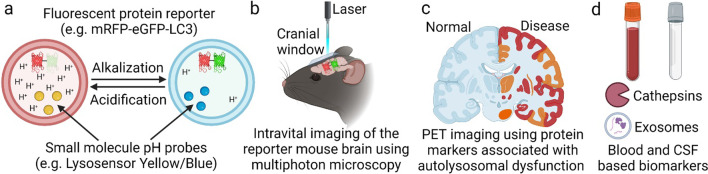
“Being regarded as the miniversion of parental cells [73], the CNS-derived exosomes are theoretically capable of reflecting the status of lysosomal acidification and function in neurons and glial cells in the brain.”
BackgroundLysosomal acidification mechanisms
Mindell, J. A. (2012) · Annual Review of Physiology · doi:10.1146/annurev-physiol-012110-142317 · Cited by 1,258 · cited 2×
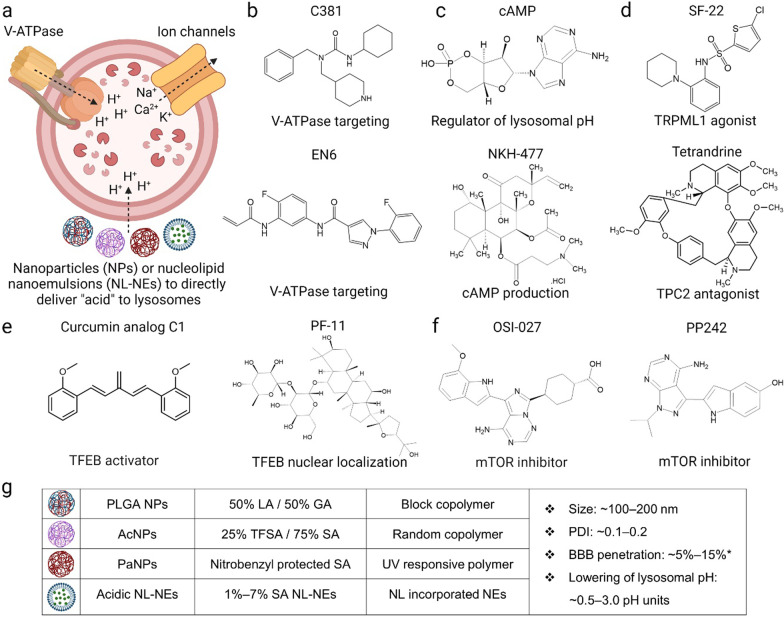
“Lysosomal acidification is maintained primarily by a proton-pump known as vacuolar (H+)-ATPase (V-ATPase), together with multiple ion channels found on the lysosomal membrane such as the transient receptor potential (TRP) channels, two-pore channels (TPC), transmembrane protein 175 (TMEM175), and chlorideproton exchan…”
BackgroundLee, J.-H., Yu, W. H., Kumar, A., Lee, S., Mohan, P. S., Peterhoff, C. M., Wolfe, D. M., Martinez-Vicente, M., Massey, A. C., Sovak, G., et al. (2010) · Cell · doi:10.1016/j.cell.2010.05.008 · Cited by 1,212 · cited 1×
“Blastocysts from PSEN1-knockout mice exhibit reduced expression of V-ATPase subunit V0a1 as well as defective maturation, trafficking, and assembly of the V-ATPase enzyme complex, resulting in lysosomal acidification dysfunction [10, 11].”
BackgroundThe lysosome as a cellular centre for signalling, metabolism and quality control
Lawrence, R. E., & Zoncu, R. (2019) · Nature Cell Biology · doi:10.1038/s41556-018-0244-7 · Cited by 920 · cited 1×
“Lysosome functions as a major signaling hub and regulatory platform for cellular processes and controls cell death and survival [3, 4].”
BackgroundPathogenic Lysosomal Depletion in Parkinson's Disease
Dehay, B., Bové, J., Rodríguez-Muela, N., Perier, C., Recasens, A., Boya, P., & Vila, M. (2010) · The Journal of Neuroscience · doi:10.1523/jneurosci.1920-10.2010 · Cited by 825 · cited 1×
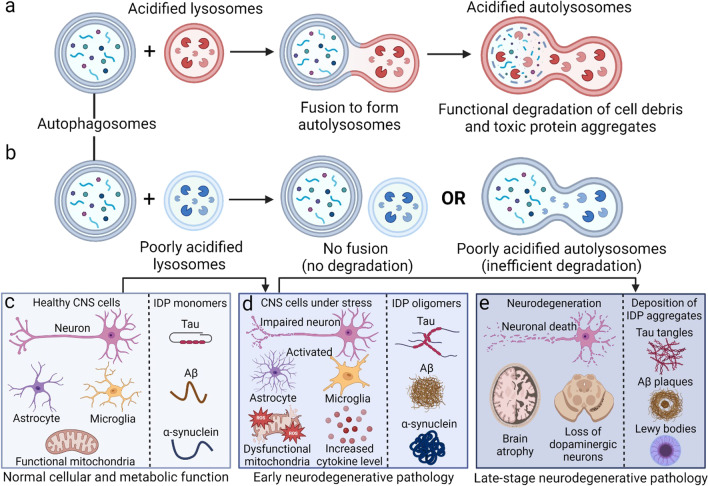
“Autophagic and lysosomal dysfunction were observed on day 1, preceding dopaminergic neuronal death observed on days 2 to 4, suggesting the role of early autolysosomal dysfunction in PD pathogenesis [53].”
BackgroundCataldo, A. M., Peterhoff, C. M., Troncoso, J. C., Gomez-Isla, T., Hyman, B. T., & Nixon, R. A. (2000) · The American Journal of Pathology · doi:10.1016/s0002-9440(10)64538-5 · Cited by 776 · cited 1×
“Similar PANTHOS phenomena driving neuronal death, including lysosome enlargement and membrane permeabilization, cathepsin release, glial activation, and Aβ plaque formation, were also present in post-mortem AD brain tissues at the Braak II stage, suggesting early lysosomal acidification defects in sporadic AD [12, 40].”
BackgroundLysosomes as a therapeutic target
Bonam, S. R., Wang, F., & Muller, S. (2019) · Nature Reviews Drug Discovery · doi:10.1038/s41573-019-0036-1 · Cited by 759 · cited 1×
“Introduction Lysosomal dysfunction in neurons and glial cells contributes to neurodegenerative diseases including Alzheimer’s disease (AD), frontotemporal dementia (FTD), Parkinson’s disease (PD), and amyotrophic lateral sclerosis (ALS), and has been a major field of research in the past decades [1, 2].”
BackgroundLipinski, M. M., Zheng, B., Lu, T., Yan, Z., Py, B. F., Ng, A., Xavier, R. J., Li, C., Yankner, B. A., Scherzer, C. R., et al. (2010) · Proceedings of the National Academy of Sciences · doi:10.1073/pnas.1009485107 · Cited by 680
Lee, J.-H., Yang, D.-S., Goulbourne, C. N., Im, E., Stavrides, P., Pensalfini, A., Chan, H., Bouchet-Marquis, C., Bleiwas, C., Berg, M. J., et al. (2022) · Nature Neuroscience · doi:10.1038/s41593-022-01084-8 · Cited by 638 · cited 5×
“Recent studies have demonstrated in different AD mouse models with APP and PSEN1 mutations, that early lysosomal acidification defects reduce autophagic degradation and increase accumulation of Aβ in neurons and late-stage deposition of Aβ plaques [12].”
BackgroundInfluentialPET radiotracers: crossing the blood–brain barrier and surviving metabolism
Pike, V. W. (2009) · Trends in Pharmacological Sciences · doi:10.1016/j.tips.2009.05.005 · Cited by 582
Cited by
Items 101–132 of 132
Liu, Q., Huang, M., Ji, X., Zhu, H., Chang, W., Shen, H., & Yu, Y. (2025) · Research Square · doi:10.21203/rs.3.rs-5718647/v1
Li, J., Wang, T., Lu, W., Jishkariani, D., Tsourkas, A., Kaja, S., Nair, R. M., Dunaief, J. L., & Mitchell, C. H. (2025) · bioRxiv (Cold Spring Harbor Laboratory) · doi:10.1101/2025.06.16.659991
“In the optic nerve head, impaired mitophagy was recently associated with retinal degeneration [56].”
Zhai, Y., Wang, T., Gong, M., Liang, Y., Li, W., Wang, X., & Zhang, Z. (2026) · PLoS ONE · doi:10.1101/2025.10.14.682338
Microglial activation and lysosomal dysfunction in hemorrhagic stroke
Lee, C.-H., Pang, C., Wang, M.-J., Hu, W.-F., Huang, H., Tsai, S., & Liew, H. (2025) · Tzu Chi Medical Journal · doi:10.4103/tcmj.tcmj_213_25
“Defective lysosomal acidification further hinders autophagic flux by impairing enzyme activity and autophagosome–lysosome fusion, accumulating cellular debris and autophagic vacuoles [64].”
Understanding how SMN protein regulates the autophagy-lysosome pathway in spinal muscular atrophy
Rosignol, I. (2024) · Qucosa (Saxon State and University Library Dresden)
Unraveling the Role of TMEM184B in Neuronal Endolysosomal Acidification
Wright, E., & Wright, E. (2025) · UA Campus Repository (The University of Arizona)
Wang, R., Zeng, X., Zhang, Z., & Ma, D. (2026) · iScience · doi:10.1016/j.isci.2026.114787
“64,108 In summary (Figure 10), the combination of computational modeling and in vivo experimental validation, particularly through the use of animal models and advanced recording technologies such as MEAs, represents a powerful strategy for understanding the role of ion channel dysfunction in PD.”
Yuan, L., Zhou, L., Chen, H., Hu, Y., Wang, J., Chen, J., Luo, W., & Zhang, J. (2026) · Ecotoxicology and Environmental Safety · doi:10.1016/j.ecoenv.2026.119735
Bioactive sesquiterpenes from heartwood of Pterocarpus santalinus as potent SIRT-1 activators
Lone, B. A., Choudhary, S., Dutt, M., Ayoub, N., Bhushan, A., Sharma, S., Gairola, S., Kumar, A., & Gupta, P. (2026) · Phytomedicine Plus · doi:10.1016/j.phyplu.2026.100973
Chen, Y., Zhang, D., Zhang, Q., Li, Q., Yan, D., Qin, H., Xiong, Y., Zhang, C., Wan, Y., & Yan, M. (2026) · Neurochemical Research · doi:10.1007/s11064-026-04738-2
Therapeutic potential of cAMP-mediated lysosomal pH modulation in ATP6V1B2-related neuropathology
Zheng, L., Zhao, W., Yang, G., Qiu, S., Li, Y., Gao, L., Wei, G., Ma, Y., xie, J., Gao, X., et al. (2026) · Cell Death Discovery · doi:10.1038/s41420-026-03056-4
Zhu, Y., Yang, J., Liu, N., Liang, R., Zhang, H., Xiong, Q., Chen, Y., Mi, J., Ma, H., Zhou, R., et al. (2026) · Ecotoxicology and Environmental Safety · doi:10.1016/j.ecoenv.2026.120231
Lysosomal ion homeostasis drives delayed hair cell death after aminoglycoside uptake.Preprint
Barros-Becker, F., Cholkar, A., Linbo, T. H., & Raible, D. W. (2026) · bioRxiv (Cold Spring Harbor Laboratory) · doi:10.64898/2026.06.10.731244
Eom, J.-W., Kim, K.-R., Kim, D.-H., Song, J. G., Han, C., Kim, H. W., Ha, S., Song, W. J., & Kim, Y. H. (2026) · Molecular Brain · doi:10.1186/s13041-026-01328-9
“Impaired lysosomal function and defective autophagic clearance are key contributors to the pathogenesis of neurodegenerative diseases, including Alzheimer’s disease (AD) [1–3].”
Yang, F., & Zhao, Y. (2026) · Food and Chemical Toxicology · doi:10.1016/j.fct.2026.116276
リソソーム指向性を標的としたRidaifen類縁体の抗がん機序解析
仙波, 悠. (2026) · Institutional Repositories DataBase (IRDB)
Jaganathan, R., Vijayakumar, S., Chen, Y., Ye, J., Bakthavatchalam, P., Wankhar, D., Yang, C., Iyaswamy, A., & Li, M. (2026) · Neurobiology of Disease · doi:10.1016/j.nbd.2026.107555
Dubey, A. R., Kumar, S., & Singh, R. (2026) · Cell Communication and Signaling · doi:10.1186/s12964-026-03118-1
Li, X., Li, L., Liu, X., Liu, S., Yang, W., Gao, J., Kang, S., Wang, L., Li, J., Wang, X., et al. (2026) · Frontiers in Immunology · doi:10.3389/fimmu.2026.1865721
“Abnormal vesicular sorting under pathological conditions may shift its role from homeostatic maintenance toward damage-associated effects, but this interpretation requires disease-speci fi c validation (56, 81, 182).”
Endolysosomal pathway and autophagy dysregulation in Alzheimer’s disease
Singh, A., Gulati, I., Darshna, D., & Tiwari, S. S. (2026) · International review of neurobiology · doi:10.1016/bs.irn.2026.08.002
Liu, J., Wang, J., Zeng, Y., Zhao, Z., Zhu, P., Liu, Y., Dong, Q., 赵君朋, Xia, X., Rong, R., et al. (2026) · Journal of Translational Medicine · doi:10.1186/s12967-026-08934-0
“This acidification is driven primarily by the V-ATPase, and defective lysosomal acidification has increasingly been implicated as an early pathogenic event in neurodegenerative disorders rather than a secondary consequence of degeneration [33, 42].”
Qiao, Q., Katsumata, Y., Lai, H.-Y., Lin, K. Z., Claas, S. A., Gabitto, M. I., Morganti, J. M., Nelson, P. T., Mukherjee, S., & Fardo, D. W. (2026) · Alzheimer s & Dementia · doi:10.1002/alz.71810
Zhang, M., Chen, B., Li, T., Li, X., Sun, J., Li, Q., Jin, M., Gao, Z., Chen, L., & Huang, W. (2026) · Pharmaceutics · doi:10.3390/pharmaceutics18091140
“Vacuolar-type H+-adenosine triphosphatase (V-ATPase), ion channels, and lysosomal pH homeostasis can all affect the clearance of aberrant proteins [104,105].”
Bai, Z., Peng, B., Luo, T., & Sun, L. (2026) · Journal of Immunology Research · doi:10.1155/jimr/2046607
Suarez, C. (2026) · Open Scholarship Institutional Repository (Washington University in St. Louis) · doi:10.7936/44qe-wk62
Chen, R., Xie, P., Fan, X., Zhou, Z., Mu, C., & Ji, Q. (2026) · Journal of Integrative Neuroscience · doi:10.31083/jin53296
Nanotechnology meets neurodegeneration: restoring lysosomal function with nanovectors
Haristoy, C., Kinet, R., & Dehay, B. (2026) · Expert Opinion on Drug Delivery · doi:10.1080/17425247.2026.2748109
Understanding lncRNA NL02 Deficiency in Parkinson's Disease
Wewalage, T. (2025) · Otago University Research Archive (University of Otago)
Circular RNAs in Alzheimer’s Disease: Mechanisms, Biomarkers, and EPAC Signalling in Ferroptosis
Yüksel, M., & Schmidt, M. (2026) · Antioxidants · doi:10.3390/antiox15101321
Cao, S., Cheng, X., Yang, Y., Lu, B., Li, S., 黄春田, Ba, M., Luo, L., & Zhao, C. (2026) · Frontiers in Medicine · doi:10.3389/fmed.2026.1961366
“Lysosomal acidification homeostasis, which determines degradative capacity and autophagic activity, is primarily regulated by V-ATPase, lysosomal ion channels, and lysosomal biogenesis pathways (111).”
Establishing a Biophotonic Signature of Brain Ageing
Slayo, M., Giummarra, L., Xavier, S., Singhaarachchi, P. H., Quinn, K. M., del Rosal, B., & Spencer, S. J. (2026) · Aging Cell · doi:10.1111/acel.70790
Yang, Y., Wang, Z., Guo, Y., & Zhao, Q. (2026) · Neurochemical Research · doi:10.1007/s11064-026-04910-8
Metadata
- Authors
- Lo, C. H., & Zeng, J.
- Affiliations
- Nanyang Technological University (SG)
- Corresponding author
- Lo, Chih Hung
- Zeng, Jialiu
- Venue
- Translational Neurodegeneration
- Published
- 2023-06-08
- Volume
- 12
- Issue
- 1
- Pages
- 29-29
- ISSN
- 2047-9158 (ISSN-L)
- PMC
- PMC10249214
- OpenAlex
- W4379740904
- Semantic Scholar
- 4ae9b7560158f0e6c917832af8a148be4786f0c5
- Cited by
- 117
- References
- 102
- Citations by year
- 2026: 39 · 2025: 40 · 2024: 27 · 2023: 11
- FWCI
- 4.57
- Type
- journal article
- Language
- en
- Open access
- gold
- doi.org
- Licence
- cc-by
- creativecommons.org/licenses/by/4.0 (tdm)
- creativecommons.org/licenses/by/4.0 (vor)
- Locations
- Translational Neurodegeneration (publishedVersion, cc-by)
- PubMed Central (publishedVersion, cc-by)
- PubMed (publishedVersion)
- DOAJ (DOAJ: Directory of Open Access Journals) (submittedVersion, cc-by-sa)
- DR-NTU (Nanyang Technological University) (submittedVersion, cc-by)
- Funders
- Lee Kong Chian School of Medicine, Nanyang Technological University (Dean's Postdoctoral Fellowship (Grant/Award Number: 021207-00001))
- Momental Foundation (Mistletoe Research Fellowship (Grant Award Number 022522-00001))
- Nanyang Technological University (Presidential Postdoctoral Fellowship (Grant/Award Number: 021229-00001))
- National Medical Research Council (Open Fund Young Investigator Research Grant (OF-YIRG) (Grant Award Number MOH-001147))
- Topics
- Life Sciences › Biochemistry, Genetics and Molecular Biology › Cell Biology › Autophagy in Disease and Therapy
- Life Sciences › Biochemistry, Genetics and Molecular Biology › Physiology › Calcium signaling and nucleotide metabolism
- Health Sciences › Medicine › Genetics (clinical) › Lysosomal Storage Disorders Research
- Keywords
- lysosomal acidification, lysosomal dysfunction, neurodegenerative diseases, Alzheimer's disease, Parkinson's disease, vacuolar ATPase, early biomarkers, nanomedicine
- MeSH terms
- Alzheimer Disease, Humans, Hydrogen-Ion Concentration, Lysosomes, Prognosis, Neurodegenerative Diseases, Vacuolar Proton-Translocating ATPases
About these checks
Registry, retraction, Cites and statistics results are computed, not judged, with one exception: a printed reference that no index lists is read once by a model before it counts as a citation error. Claims are extracted by a model and kept only when their quote appears verbatim in the text; each cited source is then checked, with a model’s help, for whether it says what the claim relies on. Those verdicts can be wrong — read the claim’s quote and the cited source before relying on one.
Statistics and arithmetic are recomputed, not judged.
Confidence bands are shown only for fields calibrated on our annotated test set. None is calibrated yet, so no band is shown.
What counts as a claim ›How we measure confidence ›How we check this ›
Are you an author, or do you see a problem with this page? Request a review
Data sources
Bibliographic data: Semantic Scholar, OpenAlex, Crossref.
Contains information from the Semantic Scholar Academic Graph Datasets, made available under the ODC Attribution License (ODC-BY 1.0).
Semantic Scholar’s data is described in: Kinney, R., et al. (2023). The Semantic Scholar Open Data Platform. arXiv:2301.10140.
