

Understanding collaboration in short food supply chains: a focus on collaborative relationships, interaction mechanisms and relational benefits
Open accessThe DOI matches its Crossref record; 51 of the 51 references it cites were found in a registry or an index.
Abstract
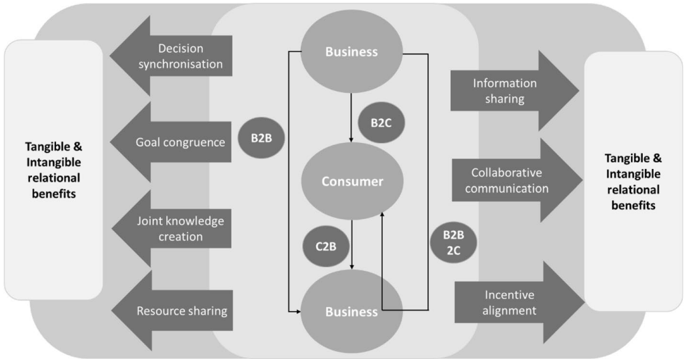
The article provides an original conceptual framework to advance the knowledge of short food supply chains (SFSCs) collaboration by bridging supply chain management approaches with empirical evidence from the agri-food sector. Through an in-depth analysis of 14 initiatives across Europe, it explores the multi-faceted nature of SFSCs collaboration, revealing a complex interplay between collaborative relationships, interaction mechanisms, and relational benefits. By identifying seven key interaction mechanisms—information sharing, decision synchronisation, goal congruence, incentive alignment, resource sharing, joint knowledge creation, and collaborative communication—the article shows how these mechanisms generate both tangible and intangible relational benefits, including fair pricing, reduced transaction costs, enhanced market knowledge, technological skills, and stronger community engagement. The findings demonstrate that SFSCs collaborations operate as dynamic ecosystems characterised by complex interdependencies among diverse actors. This diversity extends beyond traditional business-to-business (B2B) models to include business-to-consumer (B2C), consumer-to-business (C2B), and hybrid business-to-business-to-consumer (B2B2C) relationships. These varied collaborative structures facilitate mutual learning, innovation, and value co-creation, crucial for the resilience and adaptability of local food systems. The presence of robust interaction mechanisms is essential for fostering effective partnerships and generating relational benefits, even if not all mechanisms are consistently present in every type of collaborative relationships.
Overview
The claims and statistics of this paper haven’t been checked yet.
Free: it reads the open-access text and checks the first 5 claims that cite a source we can check. Create a free account to check every claim.
Integrity signals
Registry
Cites
Statistics
Figures
Verification
Claims the paper makes
The claims and statistics of this paper haven’t been checked yet.
Free: it reads the open-access text and checks the first 5 claims that cite a source we can check. Create a free account to check every claim.
Claims other papers make about this one
Each is checked against this paper’s own text: does it say what the citing paper says it does?
The source backs part of the claim, not all of it — or backs it for a different population, condition or comparison.
In the citing paper
“In contrast, intermediated direct-to-retail (DTR) channels (specialized shops, restaurants, institutional buyers) reduce marketing burdens and enable higher volumes but require compliance with stricter standards and coordination with intermediaries [1,2,4,27].”
From Who Reaches the Consumer? A Network Analysis of Market Reach Factors of Slovakia's Short Food Supply Chains (2026) · cites this paper as [2]
Experimental — accuracy not yet measuredThe source backs part of the claim, not all of it — or backs it for a different population, condition or comparison.
In the citing paper
“Smaller producers tend to rely on direct channels due to limited production volumes and capital constraints, whereas larger producers are structurally better positioned to supply intermediated channels, utilizing higher efficiency in terms of sales volume [2,23,27,40].”
From Who Reaches the Consumer? A Network Analysis of Market Reach Factors of Slovakia's Short Food Supply Chains (2026) · cites this paper as [2]
Experimental — accuracy not yet measuredThe source backs part of the claim, not all of it — or backs it for a different population, condition or comparison.
In the citing paper
“Food hubs, producer cooperatives, and hybrid intermediary organizations facilitate aggregation, standardization, and market negotiation, enabling small producers to access retail and institutional buyers [2,27,38].”
From Who Reaches the Consumer? A Network Analysis of Market Reach Factors of Slovakia's Short Food Supply Chains (2026) · cites this paper as [2]
Experimental — accuracy not yet measuredThe source backs part of the claim, not all of it — or backs it for a different population, condition or comparison.
In the citing paper
“Alternatively, they may represent newly formed cooperative or coordination structures able to actively manage product aggregation, distribution, and marketing; share infrastructure; and enhance bargaining power, resulting in improved access to retail and institutional markets [2,27].”
From Who Reaches the Consumer? A Network Analysis of Market Reach Factors of Slovakia's Short Food Supply Chains (2026) · cites this paper as [2]
Experimental — accuracy not yet measuredThe source backs part of the claim, not all of it — or backs it for a different population, condition or comparison.
In the citing paper
“This finding corresponds with existing literature indicating that greater production capacity, lower unit transaction costs, and stronger organizational capacity increase ability to engage in multiple distribution channels [2,3,27].”
From Who Reaches the Consumer? A Network Analysis of Market Reach Factors of Slovakia's Short Food Supply Chains (2026) · cites this paper as [2]
Experimental — accuracy not yet measured
3 more claims about this paper
Create a free account to see every claim other papers make about this one.
Self-check
Percentages, sums and reported differences re-computed from the paper’s own numbers.
The self-check needs the paper’s full text.
Citations
Cites
The Relational View: Cooperative Strategy and Sources of Interorganizational Competitive Advantage
Dyer, J. H., & Singh, H. (1998) · Academy of Management Review · doi:10.5465/amr.1998.1255632 · Cited by 9,943
The Relational View: Cooperative Strategy and Sources of Interorganizational Competitive Advantage
Dyer, J. H., & Singh, H. (1998) · The Academy of Management Review · doi:10.2307/259056 · Cited by 4,773
Supply chain collaboration: Impact on collaborative advantage and firm performance
Cao, M., & Zhang, Q. (2011) · Journal of Operations Management · doi:10.1016/j.jom.2010.12.008 · Cited by 2,049
Renting, H., Marsden, T. K., & Banks, J. (2003) · Environment and Planning A: Economy and Space · doi:10.1068/a3510 · Cited by 1,985
Communication Strategies in Marketing Channels: A Theoretical Perspective
Mohr, J., & Nevin, J. R. (1990) · Journal of Marketing · doi:10.1177/002224299005400404 · Cited by 1,485
Understanding the meaning of collaboration in the supply chain
Barratt, M. (2004) · Supply Chain Management: An International Journal · doi:10.1108/13598540410517566 · Cited by 1,475
Food Supply Chain Approaches: Exploring their Role in Rural Development
Marsden, T., Banks, J., & Bristow, G. (2000) · Sociologia Ruralis · doi:10.1111/1467-9523.00158 · Cited by 1,210
BHATT, G. D., & GROVER, V. (2005) · Journal of Management Information Systems · doi:10.1080/07421222.2005.11045844 · Cited by 1,117
The Collaborative Supply Chain
Simatupang, T. M., & Sridharan, R. (2002) · The International Journal of Logistics Management · doi:10.1108/09574090210806333 · Cited by 1,108
SUPPLY CHAIN COLLABORATION AND LOGISTICAL SERVICE PERFORMANCE
Stank, T. P., Keller, S. B., & Daugherty, P. J. (2001) · Journal of Business Logistics · doi:10.1002/j.2158-1592.2001.tb00158.x · Cited by 1,062
Research works printed but not linked: 12
- 7. Bozic A, Heger HM (2021). Supply chain collaboration within the automotive industry (Master's thesis, University of Lund, Sweden). Lund University. Available via https:// lup. lub. lu. se/ stude nt-papers/ record/ 90519 81. Accessed 13 March 2024
- 11. Celuch KG, Walz AM (2023) The role of relational benefits, customer-retailer identification, and advocacy in the co- creation of value. J Consum Satisf Dissatisfaction Complain Behav 36:22
- 20. Fondse M (2012) Grown close to home: a typology of short food supply chain business models in the Netherlands. MSc Thesis, Wageningen University & Research, Wageningen. Available at|: https:// edepot. wur. nl/ 243077. Accessed 21
- 25. Iguchi M, Terada M, Nakamura Y, Fujimura K (2003) A voucher-integrated trading model for C2B and C2C e-commerce system development. In: Monteiro JL, Swatman PMC, Tavares LV (eds) Towards the knowledge society: eCommerce, eBusiness and eGovernment. The second IFIP conference on E-Commerce, E-Business, E-Government (I3E 2002) October 7-9, 2002, Lisbon, Portugal. Springer US, Boston, MA, pp 415-429. https:// doi. org/ 10. 1007/ 978-0-387- 35604-4_ 33 · doi:10.1007/978-0-387-35604-4_33
- Kale P, Singh H, Perlmutter H (2000) Learning and protection of proprietary assets in strategic alliances: building relational capital. Strateg Manag J 21(3):217–237. https://doi.org/10.1002/(SICI)1097-0266(200003)21:3%3c217:AID-SMJ95%3e3.0.CO;2-Y · doi:10.1002/(sici)1097-0266(200003)21:3
- 35. Lambert DM, Emmelhainz MM, Gardner JT (1999) Building successful logistics partnerships. J Bus Logist 20(1):165-181
- 45. Narayanan V, Raman A (2004) Aligning Incentives in Supply Chains. Harvard Bus Rev 82(11):94-102
- 47. Ning C (2019) Discussion on the application of e-commerce in agricultural products trade. Sci J Econ Manag Res 1(2):8-13. Available at: https:// www. sjemr. org/ downl oad/ SJEMR-1-2-8-13. pdf. Accessed 08 Jan 2024
- 59. UNIDO (2020) Industrial Development Report 2020: Industrializing in the Digital Age. United Nations Industrial Develop- ment Organization, Vienna. https:// doi. org/ 10. 18356/ 97892 10042 800 · doi:10.18356/9789210042800
- 61. Van der Gulik J (2018) Serving the customer of the customer: Relationships in the B2B2C business concept. MSc Thesis, Erasmus University. https:// thesis. eur. nl/ pub/ 45555/ Joep. Gulik. thesis. pdf. Accessed 14 March 2024
- 62. Vittersø G, Vittersø J, Tocco B, Tsalis G (2018) Deliverable 1.2: literature review on short food supply chains in Europe. Strength2Food. https:// doi. org/ 10. 1016/j. foodp ol. 2018. 11. 008 · doi:10.1016/j.foodpol.2018.11.008
- 65. Xu X (2013) Collaboration mechanism in the horizontal logistics collaboration. PhD Thesis, Ecole Nationale Supérieure des Mines de Paris. https:// www. resea rchga te. net/ publi cation/ 27864 4877_ Colla borat ion_ Mecha nism_ in_ the_ Horiz ontal_ Logis tics_ Colla borat ion. Accessed 13 March 2024
Cited by
PINTO, G. D., Cassânego, V. M., Zanon, L. G., Ferraz, D. E., & Rebelatto, D. A. D. N. (2025) · International Journal of Production Economics · doi:10.1016/j.ijpe.2025.109732 · Cited by 15
Nie, Y., Hicks, B. J., Nassehi, A., & Valero, M. R. (2025) · International Journal of Production Research · doi:10.1080/00207543.2025.2600550 · Cited by 16
“At the same time, a normalised stakeholder feedback mechanism should be established to avoid the HCSIs being out of touch with actual needs (Stoeva et al. 2024).”
Vargas, A. M., de Moura, A. P., Deliza, R., & Cunha, L. M. (2026) · International Journal of Gastronomy and Food Science · doi:10.1016/j.ijgfs.2026.101420 · Cited by 7
Mengoni, M., Belletti, G., & Marescotti, A. (2025) · Agricultural and Food Economics · doi:10.1186/s40100-025-00397-z · Cited by 7
“…problems, collective responses are often devised at the organisational level, with the development of collaborative initiatives based on the joint management of certain distribution and logistics steps and activities characterised by the presence of minimum scale constraints (Stoeva et al. 2024).”
Sustainability of Supply Chains Through Digitalization: A Study on the Romanian Restaurant Industry
Grancea, A., Neacșu, N. A., Bălășescu, S., & Zamfirache, A. (2025) · Sustainability · doi:10.3390/su172310595 · Cited by 5
Biot, N., Hecquet, C., Maréchal, K., Lobet, G., & Dendoncker, N. (2025) · Agroecology and Sustainable Food Systems · doi:10.1080/21683565.2025.2597006 · Cited by 4
“In our study, several forms of collaboration were observed, corresponding to three of the types identified by Stoeva et al. (2024): decision synchronization (e.g. joint production planning through the cooperative), resource sharing (e.g. mutual exchange of equipment like a plow and a tiller), and…”
Developing a local food business model and innovation framework: a systematic literature review
Fobbe, L., & Hilletofth, P. (2025) · Frontiers in Sustainable Food Systems · doi:10.3389/fsufs.2025.1703973 · Cited by 3
Navigating the future of agri-food supply chain: A conceptual framework using bibliometric review
Kafi, A., Zainuddin, N., Mansor, M. F., Salleh, M. N., Saifudin, A. B. M., Arif, N. A., Shahron, S. A., Ramasamy, R., & Mohamud, I. H. (2025) · Journal of Agriculture and Food Research · doi:10.1016/j.jafr.2025.101707 · Cited by 7
Czeglédi, A. (2025) · Agricultural and Food Economics · doi:10.1186/s40100-025-00376-4 · Cited by 3
“These are not just additional benefits, but cornerstones of resilience and adaptability in local food systems (Stoeva et al. 2024).”
Scaramuzzi, S., Danese, F., Casini, L., & Piracci, G. (2025) · Agricultural and Food Economics · doi:10.1186/s40100-025-00405-2 · Cited by 2
Co-Creation of Cheese Tourism as a Business Development Strategy: Perspectives from Hoteliers
Spilioti, M., & Marinakos, K. (2026) · Administrative Sciences · doi:10.3390/admsci16030123 · Cited by 1
Adamson, C., Milestad, R., & Borgström, S. T. (2026) · Agroecology and Sustainable Food Systems · doi:10.1080/21683565.2026.2644220 · Cited by 3
“Supply chains in these supply systems are said to rely on unique governance structures and horizontal integration and collaboration (Renkema and Hilletofth 2022; Stoeva et al. 2024; Andersson et al. 2025).”
Salinas-Navarro, D. E., Vilalta-perdomo, E. L., Michel‐Villarreal, R., & Cho, A.-R. (2026) · Systems · doi:10.3390/systems14040400 · Cited by 1
Salman, D., Lairing, N., Nurfadila, J. S., Arsal, A., Amrawaty, A. A., & Witteveen, L. (2026) · Frontiers in Sociology · doi:10.3389/fsoc.2026.1821886 · Cited by 1
Food Culture: Strengthening Collaborative Entrepreneurship Between Tourism and Agri-Food Businesses
Spilioti, M., & Marinakos, K. (2025) · Administrative Sciences · doi:10.3390/admsci15080291 · Cited by 1
Varecha, L., Jarábková, J., & Hrivnák, M. (2026) · Agriculture · doi:10.3390/agriculture16060649
“Organizational capacity and accumulated market experience play a mediating role [2,31,39].”
InfluentialМАРКЕТИНГ ВІДНОСИН У ФОРМУВАННІ СТАЛИХ ПАРТНЕРСЬКИХ ЗВ'ЯЗКІВ АГРОПІДПРИЄМСТВ
Ryabokuchma, A. (2025) · Сталий розвиток економіки · doi:10.32782/2308-1988/2025-54-54
Hernández, J. L. S. (2025) · Economic geography · doi:10.1007/978-3-032-01602-7_7
Supply chain collaboration for sustainable dairy sector
Chivero, J., Pooe, D. R. I., & Takawira, B. (2026) · South African Journal of Business Management · doi:10.4102/sajbm.v57i1.5290 · Cited by 2
The Role of NGOs in Food Supply Chains: Case of Supporting Mechanisms for Dutch SFSC Stakeholders
Groothuismink, J., Burgess, P., & Sunmola, F. T. (2026) · Procedia Computer Science · doi:10.1016/j.procs.2026.02.397
“In relation to collaboration models, global food supply chains are often known for collaborating with large businesses to implement CSR initiatives, improve sourcing, and enhance transparency (though this can sometimes be controversial) [46,47].”
Investigating Sustainable Food Business Ecosystems: A Cluster Analysis
Bukhori, S. (2026) · Journal of Hunan University Natural Sciences · doi:10.55463/issn.1674-2974.53.3.6
Chen, X., Liu, S., Chen, H., & Kasturiratne, D. (2026) · Lecture notes in business information processing · doi:10.1007/978-3-032-25146-6_5
Gezahegn, T. W., Tadesse, T., Ramírez-Rodríguez, S., & Gil, J. M. (2026) · Journal of Cleaner Production · doi:10.1016/j.jclepro.2026.148646
Bošková, I., Kormaňáková, M., & Hlaváčková, J. (2026) · European Countryside · doi:10.2478/euco-2026-0013
“Moreover, the meso environment should also involve market mechanisms (Wen and Connolly, 2022) and benefit from social networks based on informal partnerships and trust (Stoeva et al ., 2024).”
Carolan, M. (2026) · Sustainability · doi:10.3390/su18147351
Can, Y., Chang, L., & Lifu, J. (2026) · International Journal of Software Engineering and Knowledge Engineering · doi:10.1142/s0218194026500683
Higashi, S. Y., Caleman, S. M. D. Q., Saito, B. N., & Monteiro, G. F. A. (2026) · Caderno de Administração · doi:10.4025/cadadm.v34i1.82179
Zhao, Z., Wei, X., Lv, G., & Wu, Y. (2026) · Economic Change and Restructuring · doi:10.1007/s10644-026-10074-w
“Due to the inherent characteristics of the agricultural industrial chain, such as multiple links and extensive coverage (Stoeva et al. 2024), coupled with sudden shocks including sluggish economic recovery, public health incidents, climate disasters, and regional conflicts, prominent industrial…”
Mulia, R., Tran, N. D., Le, T. N., Le, H. T., Mackay, H., & Jirström, M. (2026) · Contributions to economics · doi:10.1007/978-981-92-5237-4_6
The terroir paradox: institutional barriers to rural–urban food integration in western Türkiye
Aypar, S. A. T. I., & Aydın, A. (2026) · British Food Journal · doi:10.1108/bfj-04-2026-0545
Ariadi, G., Inggarwati, K., & Werastuti, D. N. S. (2026) · British Food Journal · doi:10.1108/bfj-09-2025-1224
Bisht, I. S. (2026) · Agroecology and Sustainable Food Systems · doi:10.1080/21683565.2026.2745711
Metadata
- Authors
- Stoeva, S., Van Gompel, R., Van den Bossche, L., Rogge, E., Slavova, P., Grivins, M., & Mileiko, I.
- Affiliations
- Bulgarian Academy of Sciences (BG)
- Instituut voor Landbouw en Visserijonderzoek (BE)
- Sofia University "St. Kliment Ohridski" (BG)
- Baltic Studies Centre (LV)
- Corresponding author
- Stoeva, S.
- Venue
- Agricultural and Food Economics
- Published
- 2024-12-30
- Volume
- 12
- Issue
- 1
- ISSN
- 2193-7532 (ISSN-L)
- OpenAlex
- W4405889280
- Cited by
- 32
- References
- 50
- Citations by year
- 2026: 20 · 2025: 12
- FWCI
- 7.78
- Type
- journal article
- Language
- en
- Open access
- gold
- doi.org
- Licence
- cc-by
- creativecommons.org/licenses/by/4.0 (tdm)
- creativecommons.org/licenses/by/4.0 (vor)
- Locations
- Agricultural and Food Economics (publishedVersion, cc-by)
- RePEc: Research Papers in Economics (submittedVersion)
- DOAJ (DOAJ: Directory of Open Access Journals) (submittedVersion)
- Funders
- HORIZON EUROPE Framework Programme (101000573)
- Topics
- Life Sciences › Agricultural and Biological Sciences › Plant Science › Organic Food and Agriculture
- Social Sciences › Business, Management and Accounting › Strategy and Management › Sustainable Supply Chain Management
- Life Sciences › Agricultural and Biological Sciences › General Agricultural and Biological Sciences › Agriculture and Agroindustry Studies
- Keywords
- short food supply chains, supply chain collaboration, interaction mechanisms, relationship benefits, collaborative relationships, information sharing, goal alignment, incentive alignment, resource sharing, collaborative communication, business-to-consumer relationships, value co-creation, local food systems, agribusiness, transaction costs, fair pricing
About these checks
Registry, retraction, Cites and statistics results are computed, not judged, with one exception: a printed reference that no index lists is read once by a model before it counts as a citation error. Claims are extracted by a model and kept only when their quote appears verbatim in the text; each cited source is then checked, with a model’s help, for whether it says what the claim relies on. Those verdicts can be wrong — read the claim’s quote and the cited source before relying on one.
Statistics and arithmetic are recomputed, not judged.
Confidence bands are shown only for fields calibrated on our annotated test set. None is calibrated yet, so no band is shown.
What counts as a claim ›How we measure confidence ›How we check this ›
Are you an author, or do you see a problem with this page? Request a review
Data sources
Bibliographic data: Semantic Scholar, OpenAlex, Crossref.
Contains information from the Semantic Scholar Academic Graph Datasets, made available under the ODC Attribution License (ODC-BY 1.0).
Semantic Scholar’s data is described in: Kinney, R., et al. (2023). The Semantic Scholar Open Data Platform. arXiv:2301.10140.
