

Targeting ST8SIA6-AS1 counteracts KRASG12C inhibitor resistance through abolishing the reciprocal activation of PLK1/c-Myc signaling
Open accessThe DOI matches its Crossref record; 69 of the 69 references it cites were found in a registry or an index.
Abstract
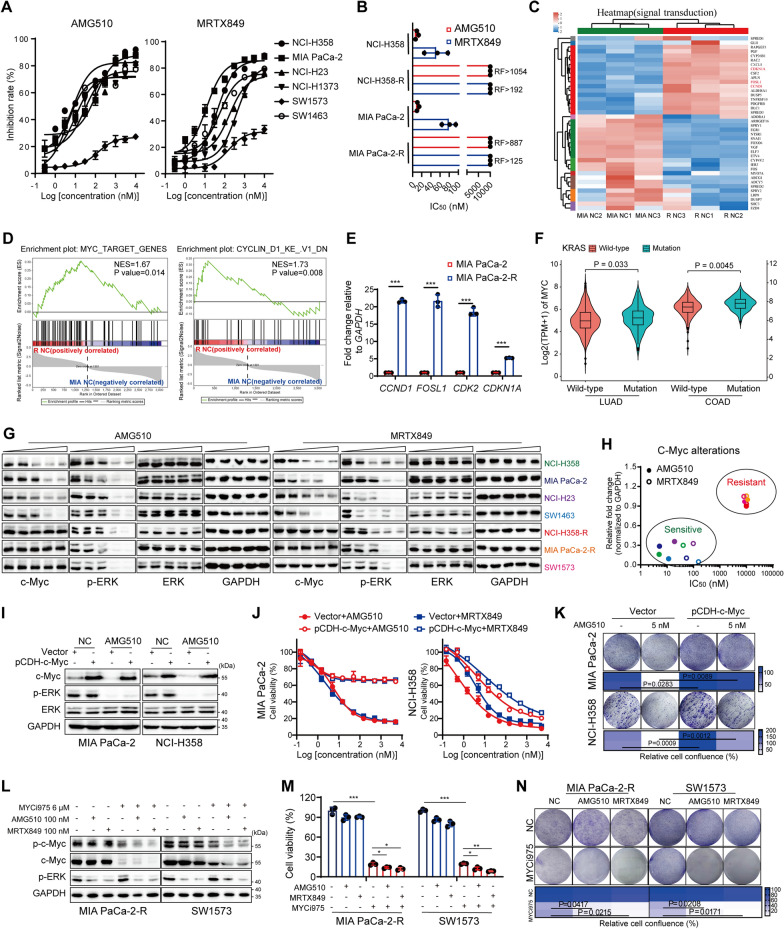
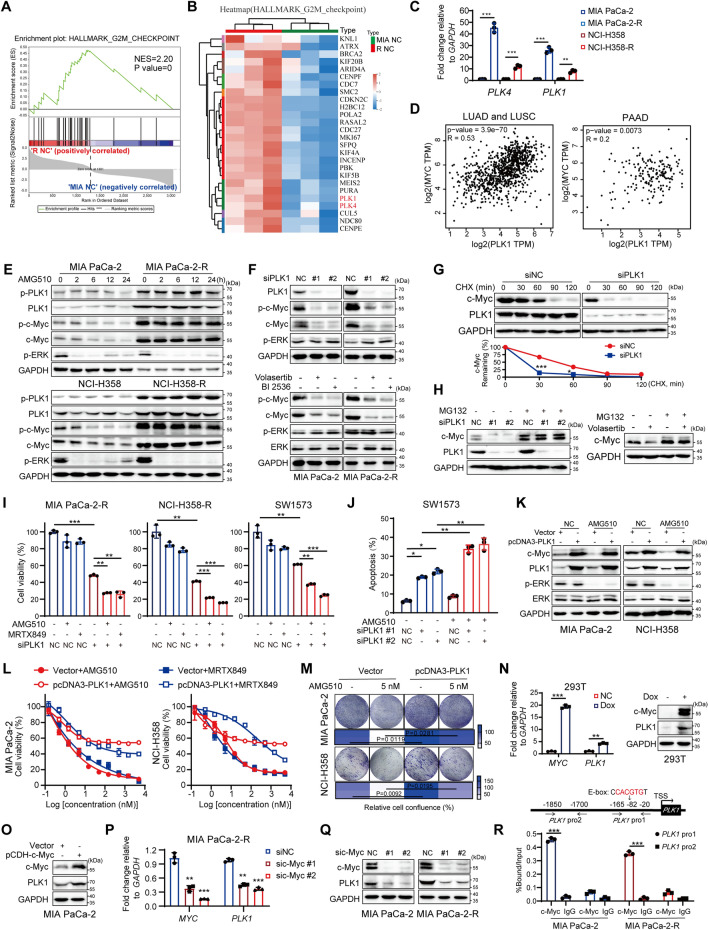
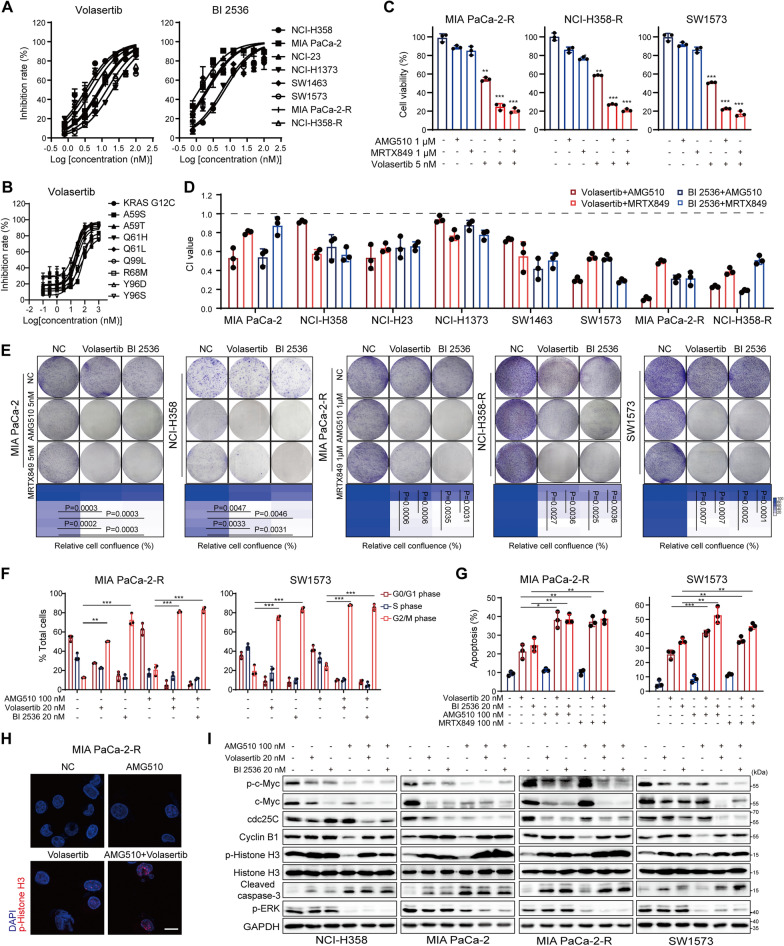
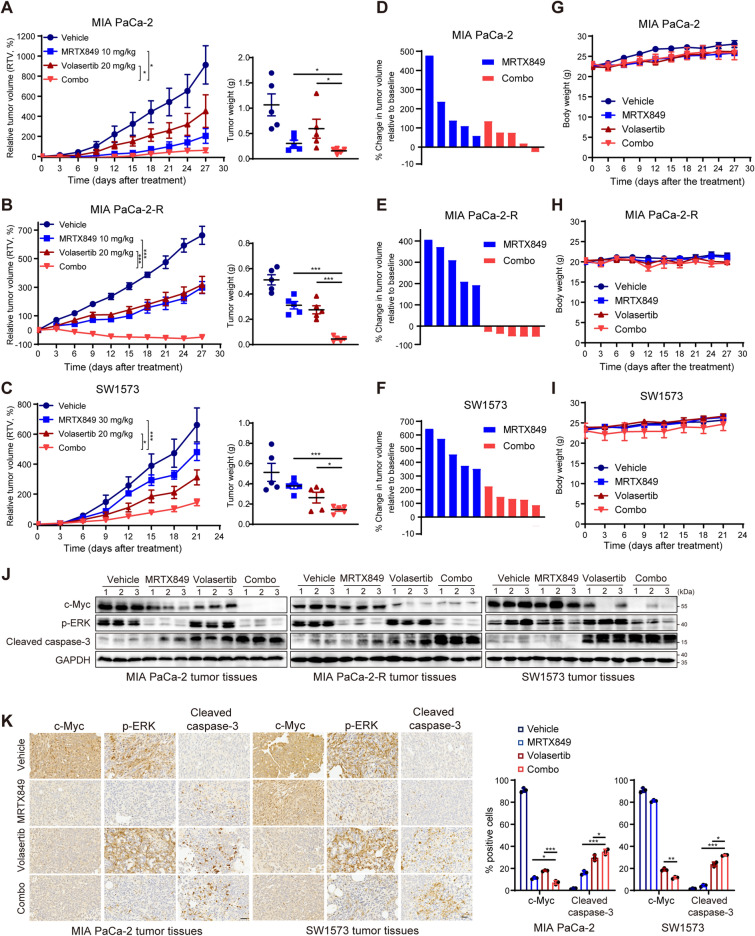
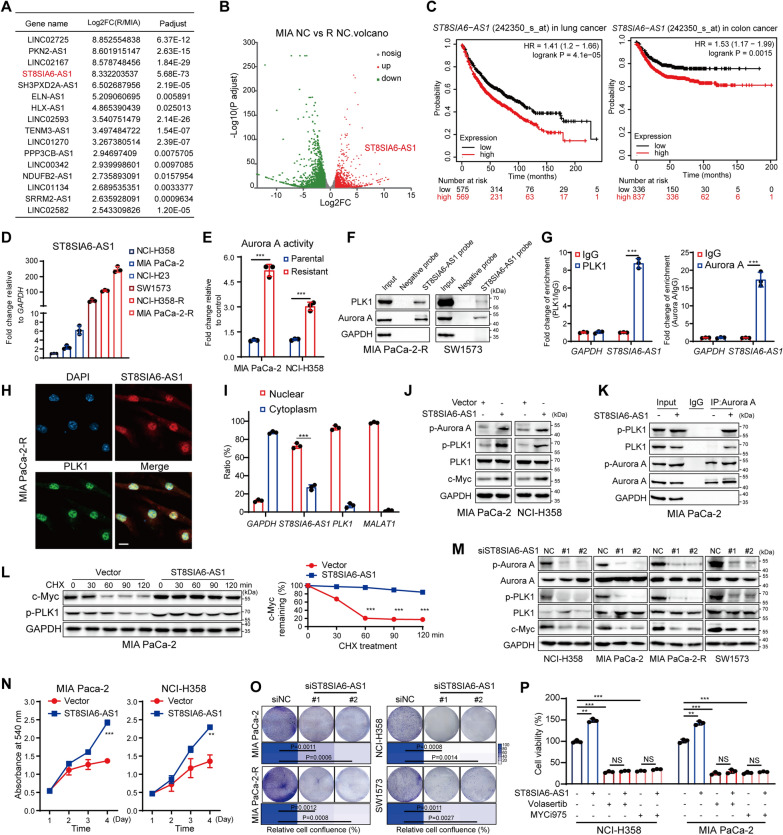
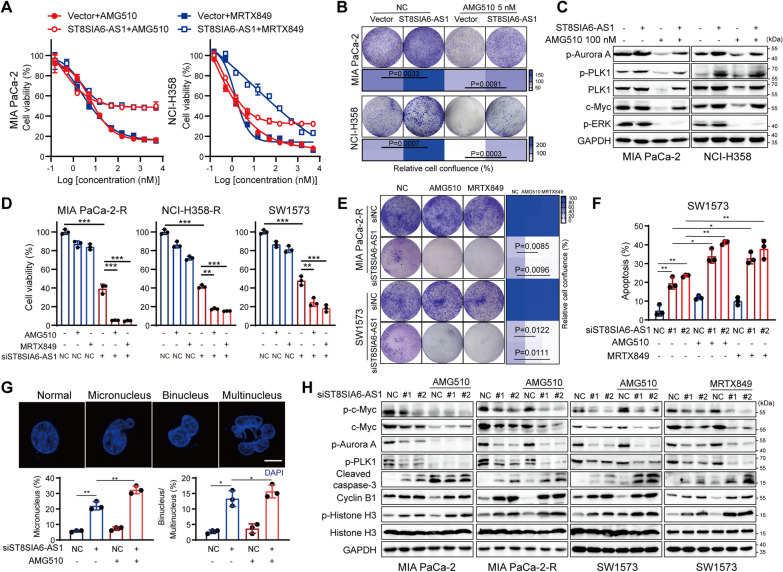
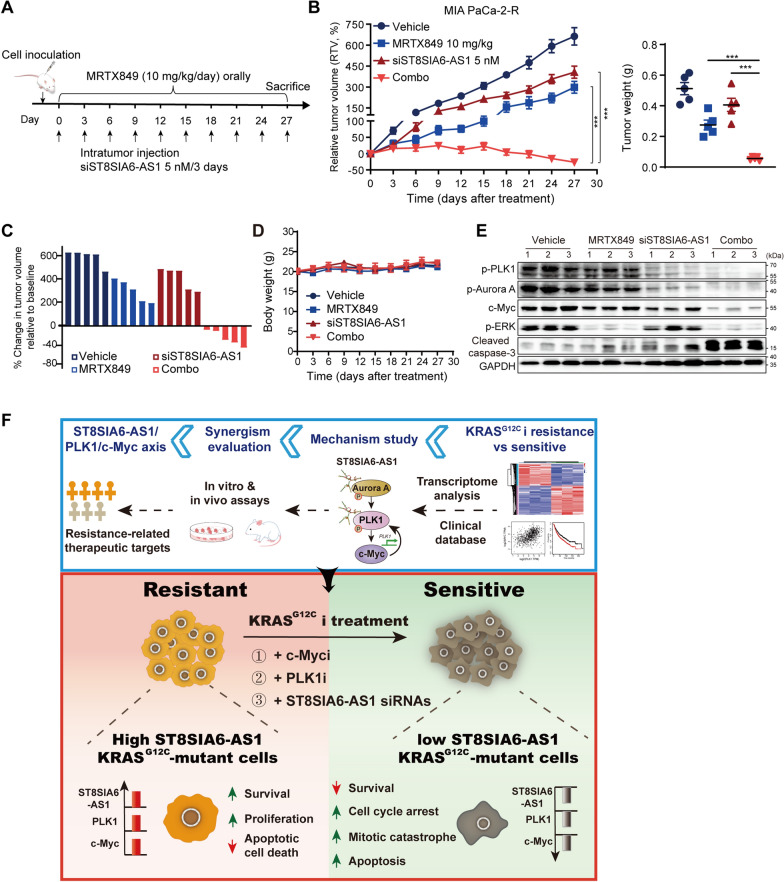
Background: KRAS G12C inhibitors (KRAS G12C i) AMG510 and MRTX849 have shown promising efficacy in clinical trials and been approved for the treatment of KRAS G12C-mutant cancers. However, the emergence of therapy-related drug resistance limits their long-term potential. This study aimed to identify the critical mediators and develop overcoming strategies. Methods: By using RNA sequencing, RT-qPCR and immunoblotting, we identified and validated the upregulation of c-Myc activity and the amplification of the long noncoding RNA ST8SIA6-AS1 in KRAS G12C i-resistant cells. The regulatory axis ST8SIA6-AS1/Polo-like kinase 1 (PLK1)/c-Myc was investigated by bioinformatics, RNA fluorescence in situ hybridization, RNA immunoprecipitation, RNA pull-down and chromatin immunoprecipitation. Gain/loss-of-function assays, cell viability assay, xenograft models, and IHC staining were conducted to evaluate the anti-cancer effects of co-inhibition of ST8SIA6-AS1/PLK1 pathway and KRAS both in vitro and in vivo. Results: KRAS G12C i sustainably decreased c-Myc levels in responsive cell lines but not in cell lines with intrinsic or acquired resistance to KRAS G12C i. PLK1 activation contributed to this ERK-independent c-Myc stability, which in turn directly induced PLK1 transcription, forming a positive feedback loop and conferring resistance to KRAS G12C i. ST8SIA6-AS1 was found significantly upregulated in resistant cells and facilitated the proliferation of KRAS G12C-mutant cancers. ST8SIA6-AS1 bound to Aurora kinase A (Aurora A)/PLK1 and promoted Aurora A-mediated PLK1 phosphorylation. Concurrent targeting of KRAS and ST8SIA6-AS1/PLK1 signaling suppressed both ERK-dependent and -independent c-Myc expression, synergistically led to cell death and tumor regression and overcame KRAS G12C i resistance. Conclusions: Our study deciphers that the axis of ST8SIA6-AS1/PLK1/c-Myc confers both intrinsic and acquired resistance to KRAS G12C i and represents a promising therapeutic target for combination strategies with KRAS G12C i in the treatment of KRAS G12C-mutant cancers.
Overview
The claims and statistics of this paper haven’t been checked yet.
Free: it reads the open-access text and checks the first 5 claims that cite a source we can check. Create a free account to check every claim.
Integrity signals
Registry
Cites
Statistics
Figures
Verification
Claims the paper makes
The claims and statistics of this paper haven’t been checked yet.
Free: it reads the open-access text and checks the first 5 claims that cite a source we can check. Create a free account to check every claim.
Claims other papers make about this one
Each is checked against this paper’s own text: does it say what the citing paper says it does?
The cited source says what the claim attributes to it.
In the citing paper
“Inhibition of PLK1 with volasertib could overcome the resistance to KRAS G12C inhibition in both in vitro and cell line xenograft models [142].”
From Differential Response and Resistance to KRAS-Targeted Therapy (2025) · cites this paper as [142]
The cited source says what the claim attributes to it.
In the citing paper
“PLK1 was found to be overexpressed and function in a positive feedback loop involving c-Myc and the long non-coding RNA (lncRNA) ST8SIA6-AS1 to promote resistance to KRAS G12C inhibition [142].”
From Differential Response and Resistance to KRAS-Targeted Therapy (2025) · cites this paper as [142]
Self-check
Percentages, sums and reported differences re-computed from the paper’s own numbers.
The self-check needs the paper’s full text.
Citations
Cites
The Clinical KRAS(G12C) Inhibitor AMG 510 Drives Anti-Tumour Immunity
Canon, J., Rex, K., Saiki, A. Y., Mohr, C., Cooke, K., Bagal, D., Gaida, K., Holt, T., Knutson, C. G., Koppada, N., et al. (2019) · Nature · doi:10.1038/s41586-019-1694-1 · Cited by 2,277 · cited 1×
“Notably, the sensitivity and resistance to KRAS G12C i were not predicted by KRAS allele zygosity status [3].”
BackgroundDelivery materials for siRNA therapeutics
Kanasty, R., Dorkin, J. R., Vegas, A., & Anderson, D. (2013) · Nature Materials · doi:10.1038/nmat3765 · Cited by 1,800 · cited 1×
“…resistance to KRAS G12C i. Recent preclinical studies suggest that RNA interference technologies including siRNAs, ASOs (antisense oligonucleotides) and LNAs (Locked nucleic acid) have been applied to inhibit target transcripts and hold promise for the treatment of various cancers [43, 44, 45].”
BackgroundPROMO: detection of known transcription regulatory elements using species-tailored searches
Messeguer, X., Escudero, R., Farré, D., Núñez, O., Martı́nez, J., & Albà, M. M. (2002) · Bioinformatics · doi:10.1093/bioinformatics/18.2.333 · Cited by 1,369
Hallin, J., Engstrom, L. D., Hargis, L., Calinisan, A., Aranda, R., Briere, D. M., Sudhakar, N., Bowcut, V., Baer, B. R., Ballard, J. A., et al. (2020) · Cancer Discovery · doi:10.1158/2159-8290.cd-19-1167 · Cited by 1,304 · cited 1×
“In recent years, breakthroughs in KRAS-based structure discoveries and mechanism studies lay the conceptual foundation for the clinical development of covalent and selective KRAS G12C inhibitors (KRAS G12C i), which have shown great efficacy in early clinical trials [1–4].”
BackgroundAcquired Resistance to KRAS G12C Inhibition in Cancer
Awad, M. M., Liu, S., Rybkin, I. I., Arbour, K. C., Dilly, J., Zhu, V. W., Johnson, M. L., Heist, R. S., Patil, T., Riely, G. J., et al. (2021) · New England Journal of Medicine · doi:10.1056/nejmoa2105281 · Cited by 1,247
m6A Modification in Coding and Non-coding RNAs: Roles and Therapeutic Implications in Cancer
Huang, H., Weng, H., & Chen, J. (2020) · Cancer Cell · doi:10.1016/j.ccell.2020.02.004 · Cited by 1,226
The STAT3-Binding Long Noncoding RNA lnc-DC Controls Human Dendritic Cell Differentiation
Wang, P., Xue, Y., Han, Y., Lin, L., Wu, C., Xu, S., Jiang, Z., Xu, J., Liu, Q., & Cao, X. (2014) · Science · doi:10.1126/science.1251456 · Cited by 1,105
A Genome-wide RNAi Screen Identifies Multiple Synthetic Lethal Interactions with the Ras Oncogene
Luo, J., Emanuele, M. J., Li, D., Creighton, C. J., Schlabach, M. R., Westbrook, T. F., Wong, K.-K., & Elledge, S. J. (2009) · Cell · doi:10.1016/j.cell.2009.05.006 · Cited by 1,017
Liu, B., Sun, L., Liu, Q., Gong, C., Yao, Y., Lv, X., Lin, L., Yao, H., Su, F., Li, D., et al. (2015) · Cancer Cell · doi:10.1016/j.ccell.2015.02.004 · Cited by 908 · cited 1×
“Long noncoding RNAs (lncRNAs, longer than 200 nucleotides) are transcribed widely from the human genome, and have been identified to be a critical layer of biological regulation via cooperating with DNA, RNA or protein partners [10–12].”
BackgroundPolo-like kinase-1 is activated by aurora A to promote checkpoint recovery
Macůrek, L., Lindqvist, A., Lim, D., Lampson, M. A., Klompmaker, R., Freire, R., Clouin, C., Taylor, S. S., Yaffe, M. B., & Medema, R. H. (2008) · Nature · doi:10.1038/nature07185 · Cited by 710 · cited 2×
“On account of its critical participation in mitotic and non-mitotic processes [31, 32], PLK1 is established as a favorable therapeutic target for cancer therapy.”
Background
Cited by
MYC and KRAS cooperation: from historical challenges to therapeutic opportunities in cancer
Casacuberta‐Serra, S., González-Larreategui, Í., Capitán-Leo, D., & Soucek, L. (2024) · Signal Transduction and Targeted Therapy · doi:10.1038/s41392-024-01907-z · Cited by 100
“436 Similarly, targeting CDK9 in KRAS-mutant PDAC cell lines resulted in MYC loss through both transcriptional and posttranslational mechanisms, effectively suppressing PDAC growth.”
BackgroundLuo, Z., Lin, C., Yu, C., Yuan, C., Wu, W., Xu, X., Sun, R., Jia, Y., Wang, Y., Shen, J., et al. (2024) · Cancer Research · doi:10.1158/0008-5472.can-24-1093 · Cited by 19
Self-citationYao, M., Yan, W., Yf, W., Zhao, Y., Xu, X., Chen, Y., Yu, C., Li, Y., Jiang, H., Shen, J., et al. (2025) · Experimental Hematology and Oncology · doi:10.1186/s40164-025-00605-y · Cited by 16
Self-citationShin, H. Y., Hwang, S., Jeong, J. H., Shin, S. C., Oh, Y., Kim, J. H., Hwang, I., Kim, E. E., Choo, H., & Song, E. J. (2025) · Pharmacological Research · doi:10.1016/j.phrs.2025.107722 · Cited by 13
Reciprocal interactions between lncRNAs and MYC in colorectal cancer: partners in crime
Lei, Z., Zhu, Z., Yao, Z., Dai, X., Dong, Y., Chen, B., Wang, S., Wang, S., Bentum‐Ennin, L., Jin, L., et al. (2024) · Cell Death and Disease · doi:10.1038/s41419-024-06918-w · Cited by 12
“Brie fl y, over-expression of ST8SIA6-AS1 mainly acts as a scaffold, promoting the binding between p-PLK1 and AURKA, thereby promoting MYC phosphorylation and enhancing the drug resistance [71].”
BackgroundWang, Y., Xu, L., Ling, L., Yao, M., Shi, S., Yu, C., Li, Y., Shen, J., Jiang, H., & Xie, C. (2024) · Advanced Science · doi:10.1002/advs.202404926 · Cited by 14
Self-citationChen, Y., Zhao, Y., Yao, M., Yf, W., Ma, M., Yu, C.-C., Jiang, H., Wu, W., Shen, J., Xu, X., et al. (2025) · Acta Pharmacologica Sinica · doi:10.1038/s41401-025-01479-w · Cited by 15
Self-citationKale, R. R., Samant, C., Nandakumar, K., Pai, K. S. R., & Bhonde, M. (2025) · Biochemical and Biophysical Research Communications · doi:10.1016/j.bbrc.2025.151688 · Cited by 12
Inverted chimeric RNAi molecules synergistically cotarget MYC and KRAS in KRAS-driven cancers
Chareddy, Y. S., Huggins, H. P., Sahoo, S. S., Stanland, L. J., Gutierrez-Ford, C., Whately, K. M., Edatt, L., Azam, S. H., Fleming, M. C., Im, J., et al. (2025) · Journal of Clinical Investigation · doi:10.1172/jci187204 · Cited by 13
Liu, X.-Q., Jiang, D., Liu, Y., Xie, K., Zhao, Y., & Liu, F. (2024) · CytoJournal · doi:10.25259/cytojournal_109_2024 · Cited by 13
“16-21] Then, we revealed the oncogenic downstream molecular mechanism and demonstrated the crucial role of lncRNA ST8SIA6-AS1 in the occurrence and progression of HCC. Feng et al. showed that ST8SIA6-AS1 inhibits HMGA1 expression by sponging miR-142-3p, wihich accelerated LIHC cell growth while…”
ST8SIA6-AS1, a novel lncRNA star in liver cancer
Qiu, C., Fan, H., Tao, S., Deng, Z., Luo, H., & Liu, F. (2024) · Frontiers in Cell and Developmental Biology · doi:10.3389/fcell.2024.1435664 · Cited by 8
Li, P., Zhao, Y., Lu, M., Chen, C., Li, Y., Wang, L., Zeng, S., Peng, Y., Liang, H., & Zhang, G. (2025) · Cell Death and Disease · doi:10.1038/s41419-025-07708-8 · Cited by 9
“Wherein, dysregulation of protein kinase is emerging as a critical driving factor for chemotherapy resistance [11 – 14].”
Differential Response and Resistance to KRAS-Targeted Therapy
Liu, Z., Lenz, H., Yu, J., & Zhang, L. (2025) · Molecular Carcinogenesis · doi:10.1002/mc.23908 · Cited by 7
Wang, D., Wang, X., Li, W., Liang, C.-H., Zou, Y.-X., Xiao, J.-W., Kang, Q., Wang, J., Mao, L., Chen, J., et al. (2025) · Molecular Therapy · doi:10.1016/j.ymthe.2025.08.036 · Cited by 7
Li, J., Song, N., Ma, R., & Qu, X. (2025) · International Journal of Biological Sciences · doi:10.7150/ijbs.118831 · Cited by 5
“Targeting ST8SIA6-AS1 can counteract resistance to KRAS G12C inhibitors by disrupting the mutual activation of PLK1 and c-Myc signaling [101].”
Li, C., Shi, S., Li, L., Wang, Y., Yao, M., Yu, C., Yu, C., & Xie, C. (2026) · Cell Death and Disease · doi:10.1038/s41419-025-08220-9 · Cited by 6
“Accordingly, our previous study showed that the PLK1/c-Myc pathway mediates resistance to KRAS G12C inhibitors in NSCLC, and co-inhibition of PLK1 and KRAS G12C synergistically suppresses tumor growth and overcomes this resistance [47].”
Self-citationSystematic and precise interventions for KRAS-mutant cancers
Liang, J., Wu, J., Zhang, Y., Wang, H., Zheng, Y., & He, Q. (2026) · Experimental Hematology and Oncology · doi:10.1186/s40164-026-00763-7 · Cited by 4
“Recently, targeting lncRNA ST8SIA6-AS1 has been shown to counteract KRASG12C inhibitor resistance by abolishing the reciprocal activation of PLK1 and c-Myc signaling, representing a novel non-genetic mechanism of acquired resistance [240].”
Synthesis and Anticancer Activity Evaluation of Novel Carborane-Containing Isoflavonoid Analogues
Zhang, Y., Yu, C., Wang, L., Zhou, L., Li, C., Yuan, C., Sun, N., Hao, G., Ma, C., Lin, Y., et al. (2025) · ACS Omega · doi:10.1021/acsomega.5c00262 · Cited by 5
Self-citationRosen, J. C., Cao, P. M., Pham, N., Waas, M., Li, Q., Hueniken, K., Wang, M., Navab, R., Wybenga-Groot, L. E., Radulovich, N., et al. (2025) · British Journal of Cancer · doi:10.1038/s41416-025-03216-w · Cited by 2
“3c), which have been implicated in G12Ci resistance [36, 46, 47].”
Yang, K., Qin, X., Wang, Y., Yan, W., Yao, M., Yu, C., Yu, C., Shi, S., Zhao, Y., Zhou, L., et al. (2026) · Journal of Advanced Research · doi:10.1016/j.jare.2026.02.013 · Cited by 2
Self-citationCould Drug Delivery Systems Be Enhancers for Therapy against KRAS-driven Cancers?
Khusnutdinov, R. (2024) · Reviews and Advances in Chemistry · doi:10.1134/s2634827624600312 · Cited by 2
Wen, Y., Yang, J., Zhan, S., Huang, Y.-Q., Chen, G.-Q., Zheng, S., & Zhu, S. (2025) · Frontiers in Genetics · doi:10.3389/fgene.2025.1648077 · Cited by 1
Rationally and in silico guided APOBEC3F-directed CBE for enhanced PDAC genetic therapy
Fang, Q., Zhang, J., Wang, K., Wang, Z., Lv, Z., Zhang, X., Bi, C., Zhang, X., Yu, J., Feng, Y., et al. (2026) · Communications Biology · doi:10.1038/s42003-026-09770-0 · Cited by 1
“Targeting MYC has been shown to restore sensitivity to KRASinhibitorsthroughmodulationof MAPK/ERK signaling or disruption of the PLK1/MYC axis 56,57 .”
KRAS and MYC synergistic inhibition: a powerful strategy targeting KRAS-mutant cancers
Yan, M., Liu, K., Xu, J., Liu, Y., Ji, L., & Zhang, S. (2026) · Molecular Cancer · doi:10.1186/s12943-026-02659-w · Cited by 1
“These findings provide further insight into the functional role of MYC in mediating resistance to KRAS-targeted therapies [141].”
Li, Y., Zhao, L., Xu, Z., Wang, W., Lu, S., Du, J., Chen, S., Chen, J., & Zou, F. (2026) · Free Radical Biology and Medicine · doi:10.1016/j.freeradbiomed.2026.07.017 · Cited by 1
MYC in Oncogenesis and Therapeutic Implications
Zhang, N., Wei, L., Tang, C., Pl, L., Zhong, W., & You, H. (2026) · MedComm · doi:10.1002/mco2.70893
Huang, Y., Xue, J., Luan, X., Zhang, H., Ding, J., JinTao, X., Zhao, Z., 李权达, Tu, K., Wang, X., et al. (2026) · Epigenetics · doi:10.1080/15592294.2026.2745292
“The long non-coding RNA ST8SIA6-AS1 , which is known to play an important role in various tumors [38,39], was found to be located within diverse Tumor-PMDs and exhibited abnormally upregulated expression (Figure 1d).”
Metadata
- Authors
- Wang, Y., Yao, M., Li, C., Yang, K., Qin, X., Xu, L., Shi, S., Yu, C., Meng, X., & Xie, C.
- Affiliations
- University of Science and Technology of China (CN)
- ShanghaiTech University (CN)
- Chinese Academy of Sciences (CN)
- Shanghai Jiao Tong University (CN)
- Corresponding author
- Xie, Chengying
- Venue
- Experimental Hematology & Oncology
- Published
- 2023-12-16
- Volume
- 12
- Issue
- 1
- Pages
- 105-105
- ISSN
- 2162-3619 (ISSN-L)
- PMC
- PMC10724920
- OpenAlex
- W4389832411
- Cited by
- 26
- References
- 69
- Citations by year
- 2026: 8 · 2025: 11 · 2024: 7
- FWCI
- 3.31
- Type
- journal article
- Language
- en
- Open access
- gold
- doi.org
- Licence
- cc-by
- creativecommons.org/licenses/by/4.0 (tdm)
- creativecommons.org/licenses/by/4.0 (vor)
- Locations
- Experimental Hematology and Oncology (publishedVersion, cc-by)
- PubMed Central (publishedVersion, cc-by)
- PubMed (publishedVersion)
- DOAJ (DOAJ: Directory of Open Access Journals) (submittedVersion, cc-by-sa)
- Funders
- Natural Science foundation of Shanghai, China (19ZR1467700)
- Lingang Laboratory, China (LG202101-01-06)
- Topics
- Life Sciences › Biochemistry, Genetics and Molecular Biology › Cancer Research › Cancer-related molecular mechanisms research
- Health Sciences › Medicine › Pulmonary and Respiratory Medicine › Lung Cancer Treatments and Mutations
- Life Sciences › Biochemistry, Genetics and Molecular Biology › Molecular Biology › Protein Kinase Regulation and GTPase Signaling
- Keywords
- KRAS G12C inhibitors, drug resistance, PLK1, c-Myc, long non-coding RNA, AURKA, sotorasib, adagrasib, PLK1 phosphorylation, combination therapy, tumor regression
About these checks
Registry, retraction, Cites and statistics results are computed, not judged, with one exception: a printed reference that no index lists is read once by a model before it counts as a citation error. Claims are extracted by a model and kept only when their quote appears verbatim in the text; each cited source is then checked, with a model’s help, for whether it says what the claim relies on. Those verdicts can be wrong — read the claim’s quote and the cited source before relying on one.
Statistics and arithmetic are recomputed, not judged.
Confidence bands are shown only for fields calibrated on our annotated test set. None is calibrated yet, so no band is shown.
What counts as a claim ›How we measure confidence ›How we check this ›
Are you an author, or do you see a problem with this page? Request a review
Data sources
Bibliographic data: Semantic Scholar, OpenAlex, Crossref.
Contains information from the Semantic Scholar Academic Graph Datasets, made available under the ODC Attribution License (ODC-BY 1.0).
Semantic Scholar’s data is described in: Kinney, R., et al. (2023). The Semantic Scholar Open Data Platform. arXiv:2301.10140.
