

Intestinal dysbiosis in children with short bowel syndrome is associated with impaired outcome
Open accessThe DOI matches its Crossref record; 21 of the 22 references it cites were found in a registry or an index.
Abstract
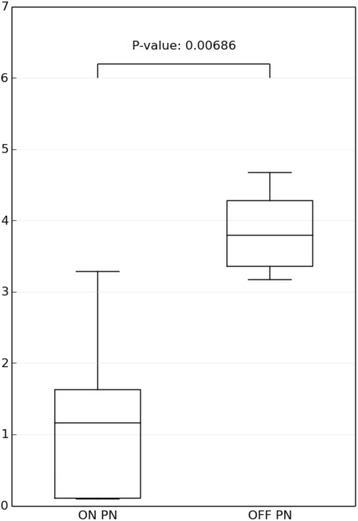
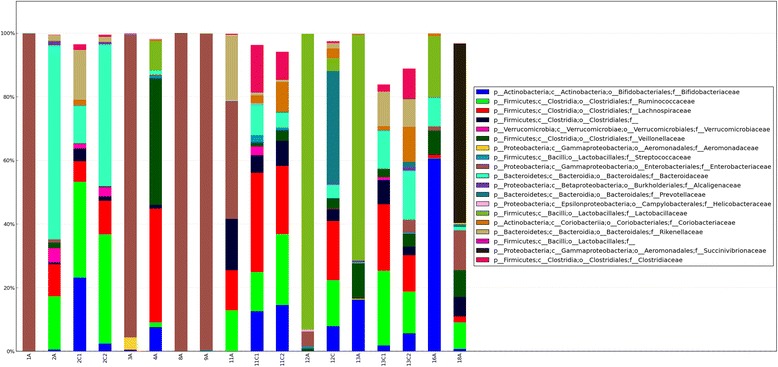
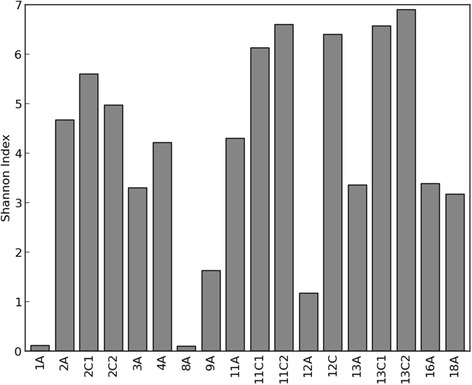
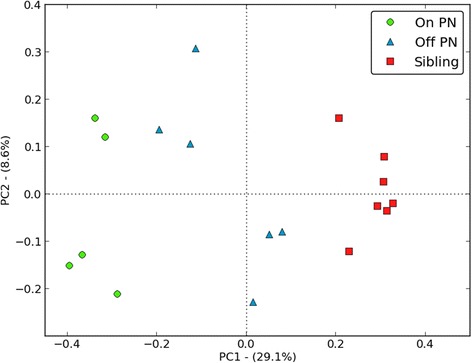
BACKGROUND: The composition of the intestinal microbiota seems to be an important factor in determining the clinical outcome in children with short bowel syndrome (SBS). Alterations in the microbiota may result in serious complications such as small bowel bacterial overgrowth (SBBO) and intestinal mucosal inflammation that lead to prolonged parenteral nutrition (PN) dependency with subsequently increased risk of liver failure and sepsis. To date, there are no reported mappings of the intestinal microbiome in children with SBS. Here, we present the first report on the intestinal microbial community profile in children with SBS. FINDINGS: The study includes children diagnosed with SBS in the neonatal period. Healthy siblings served as controls. Fecal samples were collected, and microbial profiles were analyzed by using 16S rRNA gene sequencing on the Illumina MiSeq platform. We observed a pronounced microbial dysbiosis in children with SBS on PN treatment with an increased and totally dominating relative abundance of Enterobacteriacae in four out of five children compared to children with SBS weaned from PN and healthy siblings. CONCLUSIONS: The overall decreased bacterial diversity in children with SBS is consistent with intestinal microbiome mappings in inflammatory bowel diseases such as Crohn's disease and necrotizing enterocolitis in preterm infants. Our findings indicate that intestinal dysbiosis in children with SBS is associated with prolonged PN dependency.
Overview
The claims and statistics of this paper haven’t been checked yet.
Free: it reads the open-access text and checks the first 5 claims that cite a source we can check. Create a free account to check every claim.
Integrity signals
Registry
Cites
Statistics
Figures
Verification
Claims the paper makes
The claims and statistics of this paper haven’t been checked yet.
Free: it reads the open-access text and checks the first 5 claims that cite a source we can check. Create a free account to check every claim.
Claims other papers make about this one
Each is checked against this paper’s own text: does it say what the citing paper says it does?
The source backs part of the claim, not all of it — or backs it for a different population, condition or comparison.
In the citing paper
“Dysbiosis in SBS also contributes to alterations such as impaired intestinal adaptation, worsened nutrient malabsorption, prolonged dependence on PN, increased susceptibility to sepsis, a higher risk of IFALD and an increased risk of SIBO [4,13,15].”
From Pre-, Pro-, Post- and Synbiotics in Pediatric Short Bowel Syndrome: A Narrative Review of Current Evidence (2026) · cites this paper as [4]
Experimental — accuracy not yet measured
Self-check
Percentages, sums and reported differences re-computed from the paper’s own numbers.
The self-check needs the paper’s full text.
Citations
Cites
QIIME allows analysis of high-throughput community sequencing data
Caporaso, J. G., Kuczynski, J., Stombaugh, J., Bittinger, K., Bushman, F. D., Costello, E. K., Fierer, N., Peña, A. G., Goodrich, J. K., Gordon, J. I., et al. (2010) · Nature Methods · doi:10.1038/nmeth.f.303 · Cited by 34,887 · cited 3×
“Primer sequences were trimmed away, and the pairedend reads produced by the sequencing instrument were merged using SeqPrep version 1.1 (https://github.com/ jstjohn/SeqPrep) with default parameters and thereafter processed with the QIIME 1.8.0 pipeline (Quantitative Insight into Microbial Ecology) [11].”
BackgroundMethodInfluentialSearch and clustering orders of magnitude faster than BLAST
Edgar, R. C. (2010) · Bioinformatics · doi:10.1093/bioinformatics/btq461 · Cited by 20,826
Human gut microbiome viewed across age and geography
Yatsunenko, T., Rey, F. E., Manary, M. J., Trehan, I., Dominguez-Bello, M. G., Contreras, M., Magris, M., Hidalgo, G., Baldassano, R. N., Anokhin, A. P., et al. (2012) · Nature · doi:10.1038/nature11053 · Cited by 7,815 · cited 2×
“Most cases of SBS occur in neonates during a period when the sterile intestines normally are colonized by bacteria, reaching a microbial profile characteristic of the adult gastrointestinal tract around 2 to 4 years of age [6].”
BackgroundMethodJakobsson, H. E., Abrahamsson, T. R., Jenmalm, M. C., Harris, K., Quince, C., Jernberg, C., Björkstén, B., Engstrand, L., & Andersson, A. F. (2014) · Gut · doi:10.1136/gutjnl-2012-303249 · Cited by 1,011 · cited 1×
“Her fecal bacterial diversity showed Lactobacillacae as the most relative abundant taxonomic family in accordance to our previous findings (Figure 2) [13].”
ResultSelf-citationWalker, A. W., Sanderson, J. D., Churcher, C., Parkes, G. C., Hudspith, B. N., Rayment, N., Brostoff, J., Parkhill, J., Dougan, G., & Petrovska, L. (2011) · BMC Microbiology · doi:10.1186/1471-2180-11-7 · Cited by 726
Therapeutic Potential of Fecal Microbiota Transplantation
Smits, L. P., Bouter, K. E. C., de Vos, W. M., Borody, T. J., & Nieuwdorp, M. (2013) · Gastroenterology · doi:10.1053/j.gastro.2013.08.058 · Cited by 717 · cited 6×
“A disruption in the balanced intestinal microbial community, that is, dysbiosis, with an increased relative abundance of facultative anaerobic Enterobacteriaceae in the large bowel is seen in inflammatory bowel disease (IBD) in mouse models, in humans with Crohn’s disease, and in NEC in preterm infants [7,8].”
BackgroundInfluentialHugerth, L. W., Wefer, H. A., Lundin, S., Jakobsson, H. E., Lindberg, M., Rodin, S., Engstrand, L., & Andersson, A. F. (2014) · Applied and Environmental Microbiology · doi:10.1128/aem.01403-14 · Cited by 480
Self-citationSerial transverse enteroplasty (STEP): A novel bowel lengthening procedure
Kim, H. B., Fauza, D., Garza, J., Oh, J.-T., Nurko, S., & Jaksic, T. (2003) · Journal of Pediatric Surgery · doi:10.1053/jpsu.2003.50073 · Cited by 417 · cited 2×
“Child 1A, 8A, and 13A underwent bowel lengthening procedure with serial transverse enteroplasty (STEP) [9].”
MethodShort-bowel syndrome in children and adults
Vanderhoof, J., & Langnas, A. (1997) · Gastroenterology · doi:10.1053/gast.1997.v113.pm9352883 · Cited by 318 · cited 2×
“Luminal/oral antibiotic long-term treatment has been recommended for SBBO in children [4,5].”
BackgroundMethodKaufman, S. S., Loseke, C. A., Lupo, J. V., Young, R. J., Murray, N. D., Pinch, L. W., & Vanderhoof, J. A. (1997) · The Journal of Pediatrics · doi:10.1016/s0022-3476(97)80058-3 · Cited by 259 · cited 1×
“Alterations in the microbiota can result in serious complications such as small bowel bacterial overgrowth (SBBO) and intestinal mucosal inflammation that may prevent weaning from PN by compromising intestinal absorptive functions [2,3].”
Background
Cited by
Items 101–146 of 146
Jin, D., Jin, S., Zhou, T., Sheng, G., Gao, P., & Li, G.-M. (2025) · Frontiers in Nutrition · doi:10.3389/fnut.2025.1667158 · Cited by 4
Bar‐Yoseph, H., Krekhno, Z., Cirstea, M. S., Holani, R., Moon, K., Foster, L. J., Wieck, M. M., Piper, H. G., & Finlay, B. B. (2023) · Journal of Nutrition · doi:10.1016/j.tjnut.2023.12.020 · Cited by 3
Intestinal microbial and metabolite profile in infants with small bowel stomas after bowel resection
Piper, H. G., Bording‐Jorgensen, M., Veniamin, S., Zhang, Z., Suarez, R. G. S., Armstrong, H., Silverman, J. A., & Wine, E. (2024) · Journal of Pediatric Gastroenterology and Nutrition · doi:10.1002/jpn3.12327 · Cited by 3
Cleminson, J. S., Thomas, J. E., Stewart, C. J., Campbell, D., Gennery, A. R., Embleton, N. D., Köglmeier, J., Wong, T., Spruce, M., & Berrington, J. E. (2024) · BMJ Open Gastroenterology · doi:10.1136/bmjgast-2024-001450 · Cited by 5
The Gut’s Secret Code: Bowel Microbiota as a Biomarker for Adaptation
Sochacka, J. B. , Sochacki, J., & Mik, M. (2025) · Nutrients · doi:10.3390/nu17132117 · Cited by 4
“When analyzing compositional changes, most studies on patients with SBS have reported a notable increase in Gram-negative Proteobacteria, particularly Gammapro-teobacteria and the Enterobacteriaceae family [6,12,14–18].”
Cao, J. L., Meltzer, R. S., Cohn, E., Benjamin, A., Keskey, R. C., & Alverdy, J. C. (2025) · Gut Microbes · doi:10.1080/19490976.2025.2552346 · Cited by 5
“TPN has been shown to cause a reduction in microbial diversity and in particular, domination by Proteobacteria , which are known to survive in nutrient-scarce states 82,83 .”
Alomari, M., Nusairat, L., Momani, L. A. A., Chadalavada, P. N., Covut, F., Olayan, M., Young, M., & Romero‐Marrero, C. (2019) · Nutrition in Clinical Practice · doi:10.1002/ncp.10437 · Cited by 3
de Laffolie, J., Sheridan, D., Reinshagen, K., Wessel, L. M., Zimmermann, C., Stricker, S., Lerch, M. M., Weigel, M., Hain, T., Domann, E., et al. (2020) · The FASEB Journal · doi:10.1096/fj.201901758rr · Cited by 3
Bacterial Overgrowth and Enteric Infections
Quigley, E. M. M. (2023) · Springer eBooks · doi:10.1007/978-3-031-22265-8_11 · Cited by 2
Post-Surgical Gut Microbiota Alterations in Pediatric Patients with Intestinal Disorders
Vaou, N., Zavras, N. J., Saldari, C., Voidarou, C. C., Vrioni, G., Tsakris, A., & Vaos, G. C. (2026) · Journal of Clinical Medicine · doi:10.3390/jcm15020789 · Cited by 4
Fernández, A., Desantadina, V., Balacco, M., Busoni, V., Cabral, A., Cosentino, S., Dalieri, M., Dlugozewski, C., Fabeiro, M., Fain, H., et al. (2021) · Archivos Argentinos de Pediatria · doi:10.5546/aap.2021.e441 · Cited by 2
Wolfschluckner, V., Obermüller, B., Horvath, A., Blanco, G. R., Fuchs, P., Miekisch, W., Mittl, B., Flucher, C., Till, H., & Singer, G. (2023) · Nutrients · doi:10.3390/nu15234949 · Cited by 2
“As a consequence, alterations in the microbiome associated with SBS have already been studied in a variety of experimental models as well as pediatric and adult patients [15,51–53].”
BackgroundDu, N., & Torres, C. (2024) · Journal of Pediatric Gastroenterology and Nutrition · doi:10.1002/jpn3.12191 · Cited by 2
Vajro, P., & Mandato, C. (2018) · MDPI eBooks · doi:10.3390/books978-3-03842-924-1 · Cited by 2
Cao, Y. L., Yan, W., Lu, L., Tao, Y., Feng, H., Wu, Q., Chu, Y., Cai, W., & Wang, Y. (2022) · World Journal of Pediatrics · doi:10.1007/s12519-022-00519-3 · Cited by 1
Thomassen, R. A., Kvammen, J. A., Bentsen, B. S., Bratlie, M., Bøhn, S. K., Farstad, H., Kahrs, C. R., Ngo, L., Nybø, C. J., Sæland, C., et al. (2025) · Journal of Pediatric Gastroenterology and Nutrition · doi:10.1002/jpn3.70186 · Cited by 1
Pinar, I., Nielsen, T. S. S., Brach, T., Moll, J. M., Nielsen, B. H., Hvistendahl, M., Berner-Hansen, M. A., & Jeppesen, P. B. (2026) · Clinical Nutrition ESPEN · doi:10.1016/j.clnesp.2026.102989 · Cited by 1
Olivares, D. V. F., Halverson, T., & Alagiakrishnan, K. (2026) · Future Pharmacology · doi:10.3390/futurepharmacol6020030 · Cited by 2
“The children also showed an increase in Enterobacteriaceae , which is a family of Gram-negative Proteobacteria [86].”
Goulet, O., Lacaille, F., & Lambe, C. (2017) · Springer eBooks · doi:10.1007/978-3-319-08049-9_19-1 · Cited by 1
Short Bowel Syndrome: A Clinical Update
Dudrick, S. J., Pimiento, J. M., & Latifi, R. (2017) · Springer eBooks · doi:10.1007/978-3-319-55868-4_25 · Cited by 1
Kitazawa, C., Bates, K., & Lew, S. (2018) · The Scholars Repository - LLU (Loma Linda University) · Cited by 1
Intestinal adaptation following gut resection
Křížová, J., Trachta, P., & Kotrlikova, E. (2017) · Vnitřní lékařství · doi:10.36290/vnl.2017.139 · Cited by 1
Lambe, C., & Goulet, O. (2021) · Springer eBooks · doi:10.1007/978-3-030-80068-0_43 · Cited by 2
Intestinal Failure in Children
Goulet, O., Lacaille, F., & Lambe, C. (2016) · Springer eBooks · doi:10.1007/978-3-319-42551-1_1 · Cited by 1
Bacterial Overgrowth and Intestinal Microbiome
Soden, J. S. (2016) · Springer eBooks · doi:10.1007/978-3-319-42551-1_3
Goulet, O., & Abboud, S. A. (2016) · Hamdan Medical Journal · doi:10.7707/hmj.705
Mechanisms of Neonatal Intestinal Failure-Associated Liver Disease: Exploring the Gut-Liver Axis
Lavallee, C. M. (2018) · ERA: Education and Research Archive (University of Alberta) · doi:10.7939/r35x25t85
Kaplan, A., Gabert, K., & Yazer, M. H. (2019) · Laboratory Medicine · doi:10.1093/labmed/lmz057
Controversies in Short Bowel Syndrome
Wessel, M. J. J. (2019) · Elsevier eBooks · doi:10.1016/b978-0-323-54502-0.00008-6
Le microbiote lors du syndrome du grêle court
Daoud, D. C., Thomas, M., & Joly, F. (2020) · Côlon & Rectum · doi:10.3166/cer-2020-0152
Quigley, E. M. M. (2016) · CRC Press eBooks · doi:10.1201/b20188-19
Goulet, O., Lacaille, F., & Lambe, C. (2018) · Springer eBooks · doi:10.1007/978-3-319-07284-5_19
Hu, X., Cheng, W., Fan, S., Huang, Y., Chen, X., Jiang, Z., & Wang, J. (2021) · Research Square · doi:10.21203/rs.3.rs-512644/v1
Intestinal Length Growth Differences Among Diseases Underlying Pediatric Short Bowel Syndrome
Cho, Y. J., Kwon, H., Kwon, Y. J., Kim, S. C., Kim, D. Y., & Namgoong, J. (2023) · Advances in Pediatric Surgery · doi:10.13029/aps.2023.29.1.24
Intestinal Failure in Childhood
Goulet, O., & Lambe, C. (2023) · Springer eBooks · doi:10.1007/978-3-031-22265-8_21
Elimination of Intestinal Hypoxia in Complex Treatment of Intestinal Failure (Case Report)
Быков, М. В., Lazarev, V. V., Mayorov, A. D., Tsesareva, M. S., Nafikov, V. S., Koroleva, A. S., Сытьков, В. В., Северинов, Д. А., Смирнов, Д. А., Frolov, N. S., et al. (2024) · I P Pavlov Russian Medical Biological Herald · doi:10.17816/pavlovj321911
Monitoring and Management of Trace Elements in Short Bowel Syndrome
Trifan, A. V., Huiban, L., Gîlcă-Blanariu, G.-E., & Chiriac, S. A. (2025) · Springer eBooks · doi:10.1007/978-3-031-95848-9_15
Hu, X., Cheng, W., Fan, S., Huang, Y., Chen, X., Jiang, Z., & Wang, J. (2021) · Figshare · doi:10.6084/m9.figshare.14795123
Hu, X., Cheng, W., Fan, S., Huang, Y., Chen, X., Jiang, Z., & Wang, J. (2021) · Figshare · doi:10.6084/m9.figshare.14795129
Hu, X., Cheng, W., Fan, S., Huang, Y., Chen, X., Jiang, Z., & Wang, J. (2021) · Figshare · doi:10.6084/m9.figshare.14795117
Coletta, R., Chioccioli, S., Meriggi, N., Cantagalli, M. M., Gigola, F., Oreglio, C., Lacava, E., Monroy, M. M., Renzi, S., Cerasuolo, B., et al. (2026) · Research Square · doi:10.21203/rs.3.rs-8406560/v1
Ossola, M., Merlo, F. D., Aimasso, U., Olimpio, E., Ferrocino, I., & Bo, S. (2026) · Clinical Nutrition ESPEN · doi:10.1016/j.clnesp.2026.103348
Soju, S. M., Uddin, Z., Begum, A., Hallal, A., Shibu, A. M., & Kamil, K. A. (2026) · Egyptian Pediatric Association Gazette · doi:10.1186/s43054-026-00567-8
Halašová, R., Ibrahim, R., Balogová, S., Štichhauer, R., Tichá, A., Hyšpler, R., Skutilová, V., Fencl, F., Bajerová, K., Karásková, E., et al. (2026) · Pediatric Research · doi:10.1038/s41390-026-05400-x
Morotti, F., Fiore, G., Mari, A., Bona, F., Dolor, J., Giorgio, V., Nibali, R. C., Coletta, R., Lacitignola, L., Leon, F. F., et al. (2026) · European Journal of Pediatrics · doi:10.1007/s00431-026-07376-6
The role of gut microbiota in paediatric short bowel syndrome
Zeng, C., Liang, L., & Lv, T. (2026) · Frontiers in Cellular and Infection Microbiology · doi:10.3389/fcimb.2026.1970119
“…studies have shown that children with higher baseline microbial diversity and lower abundance of Enterobacteriaceae are more likely to achieve PN independence, whereas persistent enrichment of Proteobacteria is associated with impaired intestinal adaptation (Engstrand Lilja et al., 2015).”
Metadata
- Authors
- Engstrand Lilja, H., Wefer, H., Nyström, N., Finkel, Y., & Engstrand, L.
- Affiliations
- Science for Life Laboratory (SE)
- Uppsala University (SE)
- Karolinska Institutet (SE)
- Venue
- Microbiome
- Published
- 2015-05-04
- Volume
- 3
- Issue
- 1
- Pages
- 18-18
- ISSN
- 2049-2618 (ISSN-L)
- PMC
- PMC4418071
- OpenAlex
- W2083337853
- Cited by
- 145
- References
- 22
- Citations by year
- 2026: 9 · 2025: 8 · 2024: 7 · 2023: 13 · 2022: 7 · 2021: 17 · 2020: 20 · 2019: 16 · 2018: 15 · 2017: 14 · 2016: 13 · 2015: 6
- FWCI
- 6.94
- Type
- journal article
- Language
- en
- Open access
- gold
- doi.org
- Locations
- Microbiome (publishedVersion, cc-by)
- Europe PMC (PubMed Central) (publishedVersion, cc-by)
- PubMed Central (publishedVersion, cc-by)
- PubMed (publishedVersion)
- Uppsala University Publications (Uppsala University) (submittedVersion, other-oa)
- Funders
- Vetenskapsrådet
- Topics
- Life Sciences › Biochemistry, Genetics and Molecular Biology › Molecular Biology › Gut microbiota and health
- Health Sciences › Nursing › Nutrition and Dietetics › Clinical Nutrition and Gastroenterology
- Health Sciences › Nursing › Nutrition and Dietetics › Infant Nutrition and Health
- Keywords
- short bowel syndrome, gut dysbiosis, gut microbiota, children, Enterobacteriaceae, bacterial diversity, small intestinal bacterial overgrowth, weaning from parenteral nutrition, neonates, fecal microbiota
About these checks
Registry, retraction, Cites and statistics results are computed, not judged, with one exception: a printed reference that no index lists is read once by a model before it counts as a citation error. Claims are extracted by a model and kept only when their quote appears verbatim in the text; each cited source is then checked, with a model’s help, for whether it says what the claim relies on. Those verdicts can be wrong — read the claim’s quote and the cited source before relying on one.
Statistics and arithmetic are recomputed, not judged.
Confidence bands are shown only for fields calibrated on our annotated test set. None is calibrated yet, so no band is shown.
What counts as a claim ›How we measure confidence ›How we check this ›
Are you an author, or do you see a problem with this page? Request a review
Data sources
Bibliographic data: Semantic Scholar, OpenAlex, Crossref.
Contains information from the Semantic Scholar Academic Graph Datasets, made available under the ODC Attribution License (ODC-BY 1.0).
Semantic Scholar’s data is described in: Kinney, R., et al. (2023). The Semantic Scholar Open Data Platform. arXiv:2301.10140.
